💪
••••••
/ˈsuːpər/
adjective
(सुपर)
••••••
-
••••••
सुपर
supar
••••••
-
••••••
-
••••••
-
••••••
-
••••••
••••••
She did a super job on the project.
••••••
उसने परियोजना पर शानदार काम किया।
Usne pariyojna par shandar kaam kiya.
••••••
-
••••••
-
••••••
-
••••••
excellent, great, outstanding, remarkable
••••••
••••••
super fast, super cool, super hero, super strong
••••••
Supar is super cool and super helpful!
••••••
🌊
••••••
/sɜːrdʒ/
verb
(सर्ज)
••••••
-
••••••
प्रवाहित होना
pravaahit hona
••••••
सर्जड
••••••
सर्जड
••••••
सर्जेस
••••••
सर्जिंग
••••••
to move suddenly and powerfully forward or upward
••••••
The crowd surged forward when the gates opened.
द क्राउड सर्जड फॉरवर्ड व्हेन द गेट्स ओपन्ड।
••••••
गेट्स खुलने पर भीड़ अचानक आगे बढ़ी।
Gets khulne par bheed achanak aage badhi.
••••••
सर्ज ऑफ एनर्जी
••••••
a sudden increase of energy or enthusiasm
••••••
ऊर्जा का प्रवाह
Urja ka pravah
••••••
rush, swell, rise, increase, outpouring
••••••
••••••
surge in demand, surge of energy, surge forward, surge upward
••••••
Surge का मतलब लहरों की तरह एक तेज़ बढ़ाव - सर्ज होकर आगे बढ़ जाता है।
••••••
💦
••••••
/swɛt/
verb
(स्वेट)
••••••
-
••••••
पसीना
pasina
••••••
स्वेटेड
••••••
स्वेटेड
••••••
स्वेट्स
••••••
स्वेटिंग
••••••
to produce liquid from your skin when you are hot or nervous
••••••
He was sweating after running for an hour.
वह एक घंटे दौड़ने के बाद पसीना बहा रहा था।
••••••
वह एक घंटे दौड़ने के बाद पसीना बहा रहा था।
Wah ek ghante daudne ke baad paseena baha raha tha.
••••••
पसीना बहाना
••••••
to begin to perspire, usually from physical effort
••••••
पसीना बहाना
paseena bahana
••••••
perspire, exude, drip, toil, labor
••••••
••••••
heavy sweat, cold sweat, sweat profusely, make someone sweat
••••••
Sweat करना मतलब पसीना आना, सो स्वीटर में पसीना (sweat) आते हैं!
••••••
💨
••••••
/swɛl/
verb
(स्वेल)
••••••
-
••••••
सूजन आना
soojan aana
••••••
स्वेल्ड
••••••
स्वेल्ड
••••••
स्वेल्स
••••••
स्वेलिंग
••••••
to increase in size or volume, often due to internal pressure or emotional intensity
••••••
Her ankle began to swell after the injury.
उसके टखने में चोट लगने के बाद सूजन आ गई।
••••••
उसके टखने में चोट लगने के बाद सूजन आ गई।
Uske takhane mein chot lagne ke baad soojan aa gayi.
••••••
गर्व से swell करना
••••••
••••••
गर्व से swell करना
Garv se swell karna
••••••
expand, enlarge, grow, bulge, inflate
••••••
••••••
swell up, swell with pride, swell in number
••••••
SWEater फूलने से सूजन आना, swell का मतलब है सूजन आना
••••••
⛓️
••••••
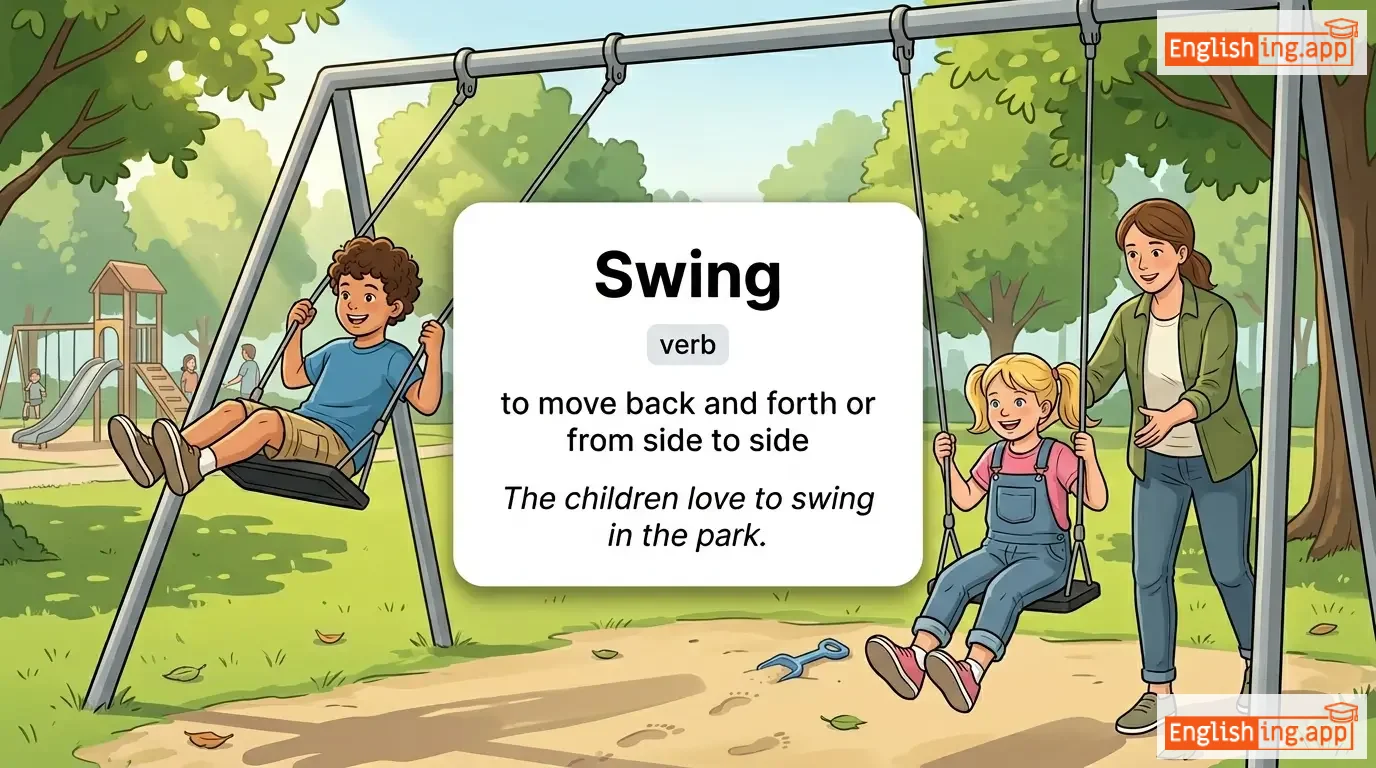
/swɪŋ/
verb
(स्विंग)
••••••
••••••
झूलना
jhoolna
••••••
स्वंग
••••••
स्वंग
••••••
स्विंग्स
••••••
स्विंगिंग
••••••
to move back and forth or from side to side
••••••
The children love to swing in the park.
द बच्चों को पार्क में स्विंग करना बहुत पसंद है।
••••••
बच्चों को पार्क में झूलना बहुत पसंद है।
bachon ko park mein jhoolna bahut pasand hai.
••••••
एक्शन में स्विंग करना
••••••
to start doing something quickly and effectively
••••••
तेजी से काम शुरू करना
teji se kaam shuru karna
••••••
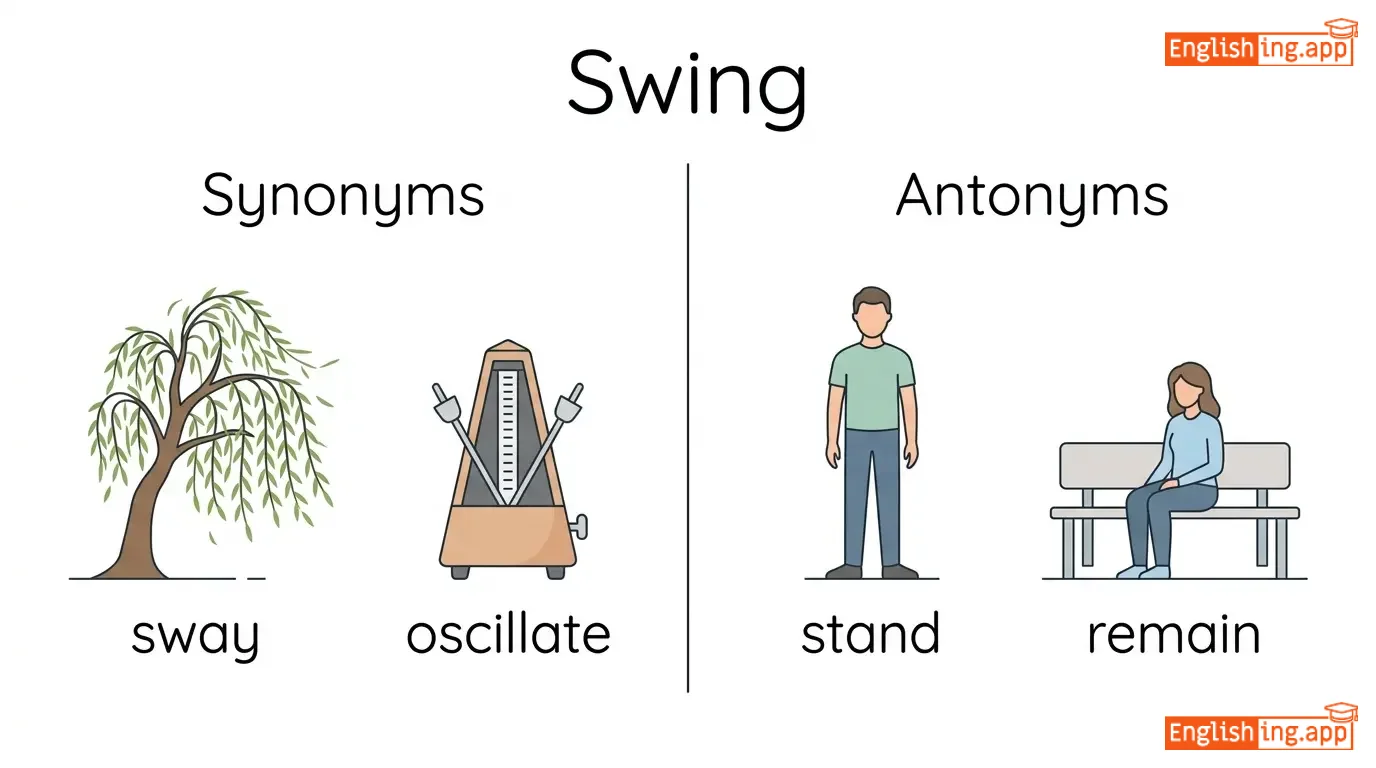
sway, oscillate, rotate, wave
••••••
••••••
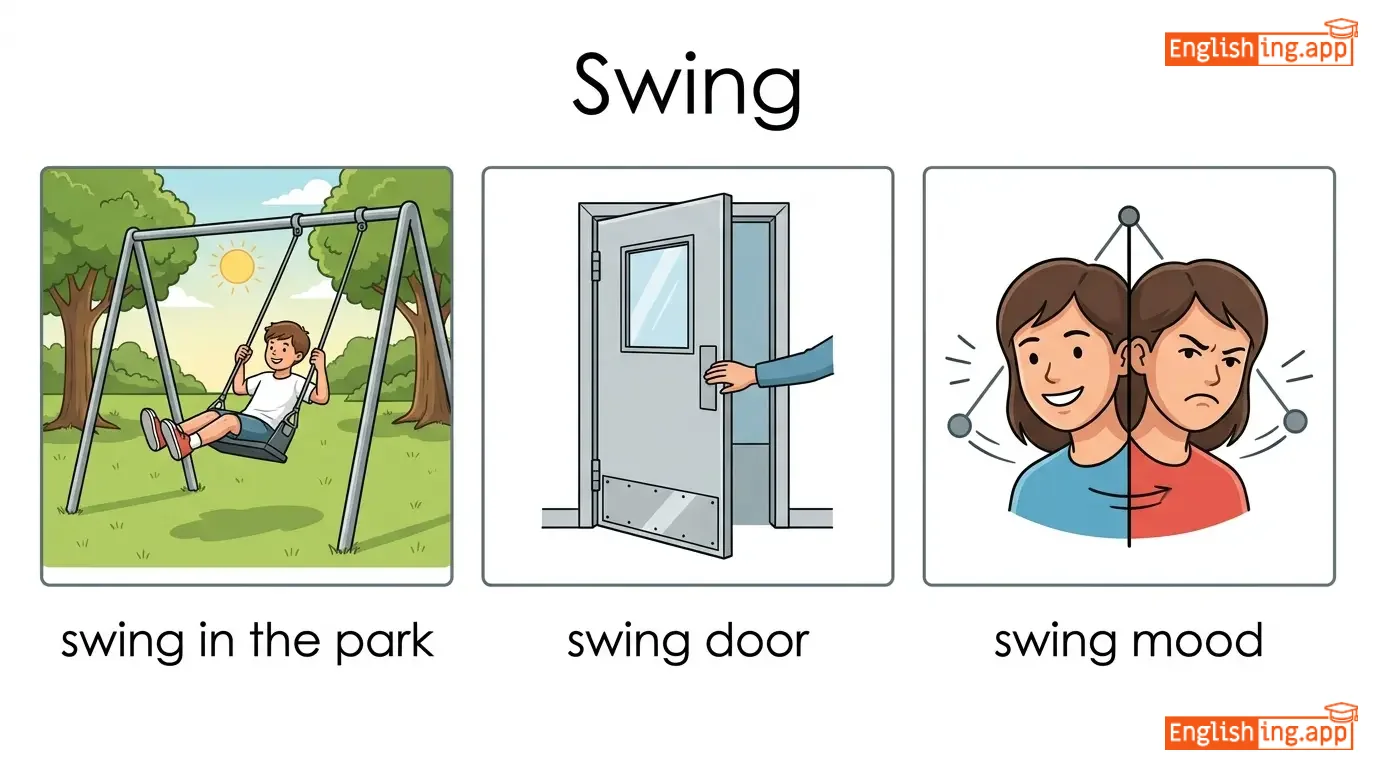
swing in the park, swing door, swing mood, swing votes
••••••
Swing का मतलब झूलना, जैसे झूलते हुए स्विंग करना
••••••
⚔️
••••••
/sɔːrd/
noun
(स्वॉर्ड)
••••••
-
••••••
तलवार
talwar
••••••
-
••••••
-
••••••
-
••••••
-
••••••
a weapon with a long metal blade used for fighting
••••••
The knight drew his sword to defend the castle.
••••••
रायट ने किले की रक्षा करने के लिए अपनी तलवार निकाली।
Knight ne kile ki raksha karne ke liye apni talwar nikali.
••••••
••••••
to argue or fight with someone
••••••
तलवारें क्रॉस करना
Talwarein cross karna
••••••
blade, dagger, saber, weapon, cutlass
••••••
••••••
draw a sword, sharp sword, sword fight, sword blade
••••••
SWOrd का मतलब है तलवार, जो युद्ध में काम आती है!
••••••
🍽️
••••••
/ˈteɪbəl/
noun
(टेबल)
••••••
-
••••••
टेबल
tebal
••••••
-
••••••
-
••••••
-
••••••
-
••••••
A piece of furniture with a flat top and legs, used for working at or placing items on.
••••••
They placed the documents on the table .
••••••
उन्होंने दस्तावेज़ टेबल पर रखे।
Unhone dastavez table par rakhe.
••••••
••••••
To reverse a situation and gain an advantage over someone.
••••••
सिद्धांत पलटना
siddhant palatna
••••••
desk, counter, bench, surface
••••••
••••••
dining table, coffee table, round table, table manners
••••••
टेबल (table) पर बैठकर काम करना 'turn the tables' - स्थिति पलट जाती है
••••••
🍰
••••••
/tɛmpt/
verb
(टेम्प्ट)
••••••
-
••••••
ललचाना
lalchana
••••••
टेम्प्टेड
••••••
टेम्प्टेड
••••••
टेम्प्ट्स
••••••
टेम्प्टिंग
••••••
to entice or attract someone to do something, often something wrong or unwise
••••••
The smell of fresh bread tempted him to enter the bakery.
द गंध ताजे ब्रेड की उसे बेकरी में प्रवेश करने के लिए ललचाया।
••••••
ताजे ब्रेड की खुशबू ने उसे बेकरी में प्रवेश करने के लिए ललचाया।
Taje bread ki khushboo ne use bakery mein pravesh karne ke liye lalchaya.
••••••
नसीब आजमाना
••••••
to take a risk that might lead to trouble or danger
••••••
नसीब आजमाना
naseeb aazmana
••••••
entice, lure, attract, seduce, persuade
••••••
••••••
tempt someone, tempt fate, tempting offer, hard to tempt
••••••
Tempt का मतलब है ललचाना, जैसे 'टेम्पटिंग' चॉकलेट केक देख कर खाने का मन करना।
••••••
📜
••••••
/tɜːmz/
noun
(टर्म्स)
••••••
-
••••••
शर्तें
sharten
••••••
-
••••••
-
••••••
-
••••••
-
••••••
plural of term; conditions or rules in a contract or agreement
••••••
The terms of the agreement are clearly outlined in the contract.
समझौते की शर्तें अनुबंध में स्पष्ट रूप से उल्लिखित हैं।
••••••
समझौते की शर्तें अनुबंध में स्पष्ट रूप से उल्लिखित हैं।
Samjhaute ki sharten anubandh mein spasht roop se ullikhit hain.
••••••
-
••••••
-
••••••
-
••••••
conditions, clauses, provisions, requirements
••••••
••••••
contract terms, payment terms, terms and conditions
••••••
Terms are the clauses - remember to check ‘sharten’ in the contract.
••••••
💼
••••••
/θɛft/
noun
(थेफ्ट)
••••••
-
••••••
चोरी
chori
••••••
-
••••••
-
••••••
-
••••••
-
••••••
the action or crime of stealing
••••••
The theft of his wallet was reported to the police.
उसके बटुए की चोरी की रिपोर्ट पुलिस में की गई।
••••••
उसके बटुए की चोरी की रिपोर्ट पुलिस में की गई।
Uske batue ki chori ki report police mein ki gayi.
••••••
-
••••••
-
••••••
-
••••••
burglary, robbery, larceny, stealing
••••••
••••••
committed theft, petty theft, reported theft
••••••
Chori se theft hota hai - Chori mein ek chaku (knife) ka istemal hota hai.
••••••
👨👩👧👦
••••••
/ðɛər/
pronoun
(धेर)
••••••
-
••••••
उनका
unka
••••••
-
••••••
-
••••••
-
••••••
-
••••••
belonging to or associated with the people or things previously mentioned
••••••
Their house is on the corner.
••••••
उनका घर कोने पर है।
Unka ghar kone par hai.
••••••
-
••••••
-
••••••
-
••••••
••••••
••••••
their car, their family, their opinion
••••••
Their - उनका (Unka) घर
••••••
🎨
••••••
/θiːm/
noun
(थीम)
••••••
••••••
थीम
thim
••••••
-
••••••
-
••••••
-
••••••
-
••••••
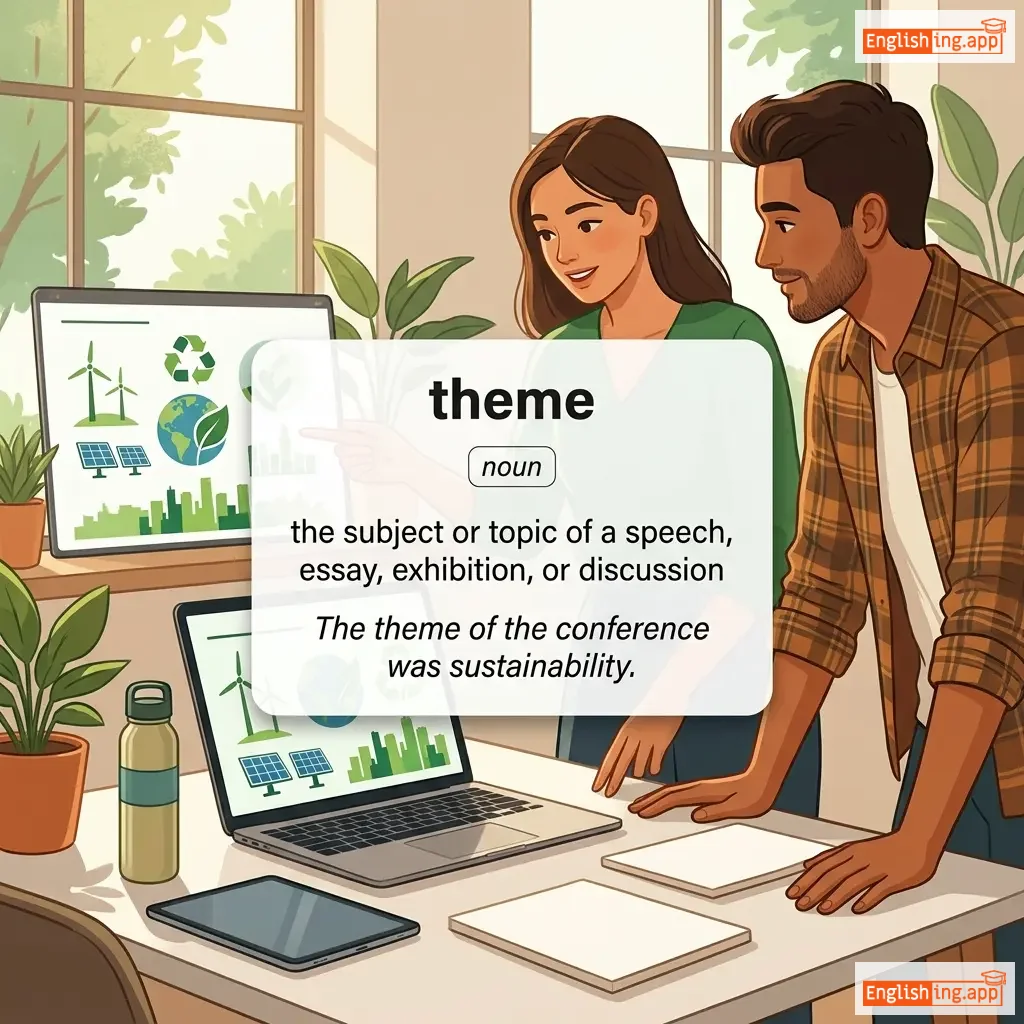
the subject or topic of a speech, essay, exhibition, or discussion
••••••
The theme of the conference was sustainability.
••••••
सम्मेलन का थीम स्थिरता था।
Sammelan ka thim sthirata tha.
••••••
-
••••••
-
••••••
-
••••••
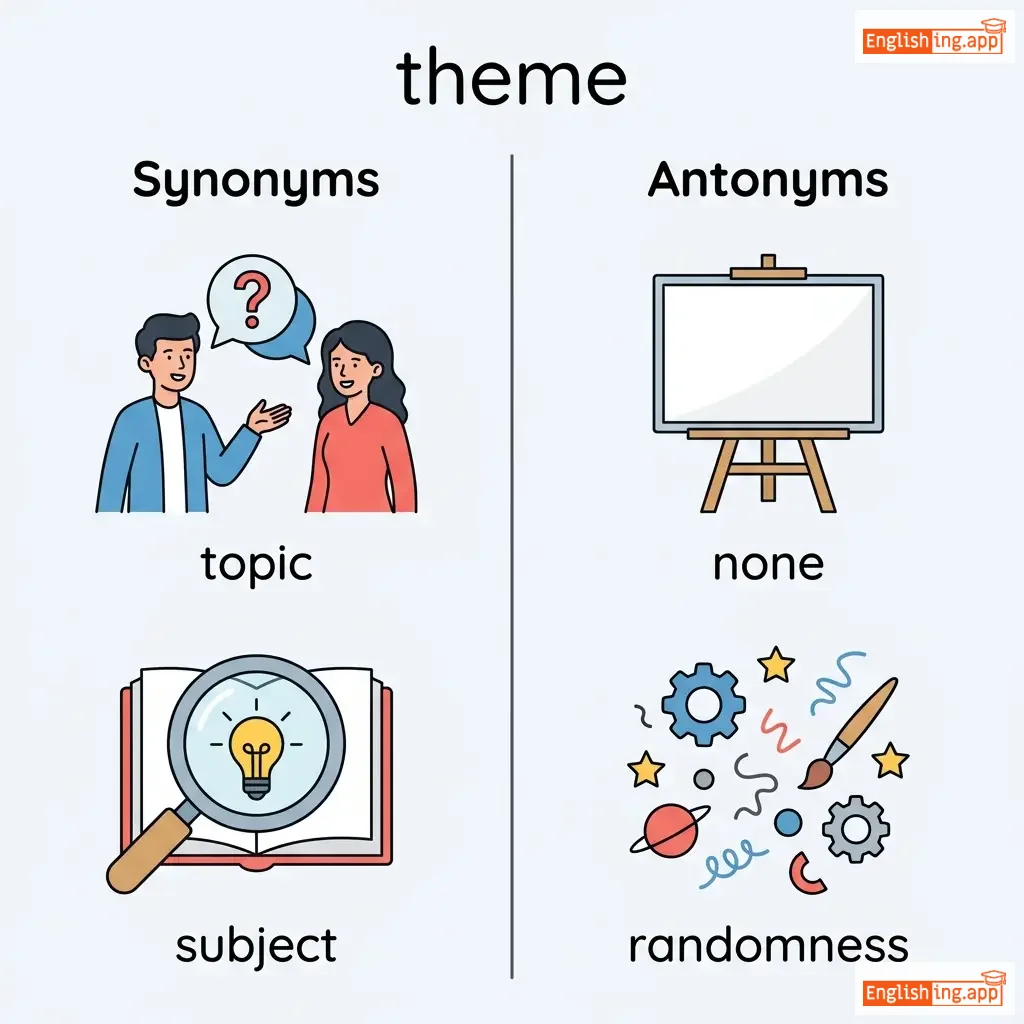
topic, subject, motif, idea
••••••
••••••
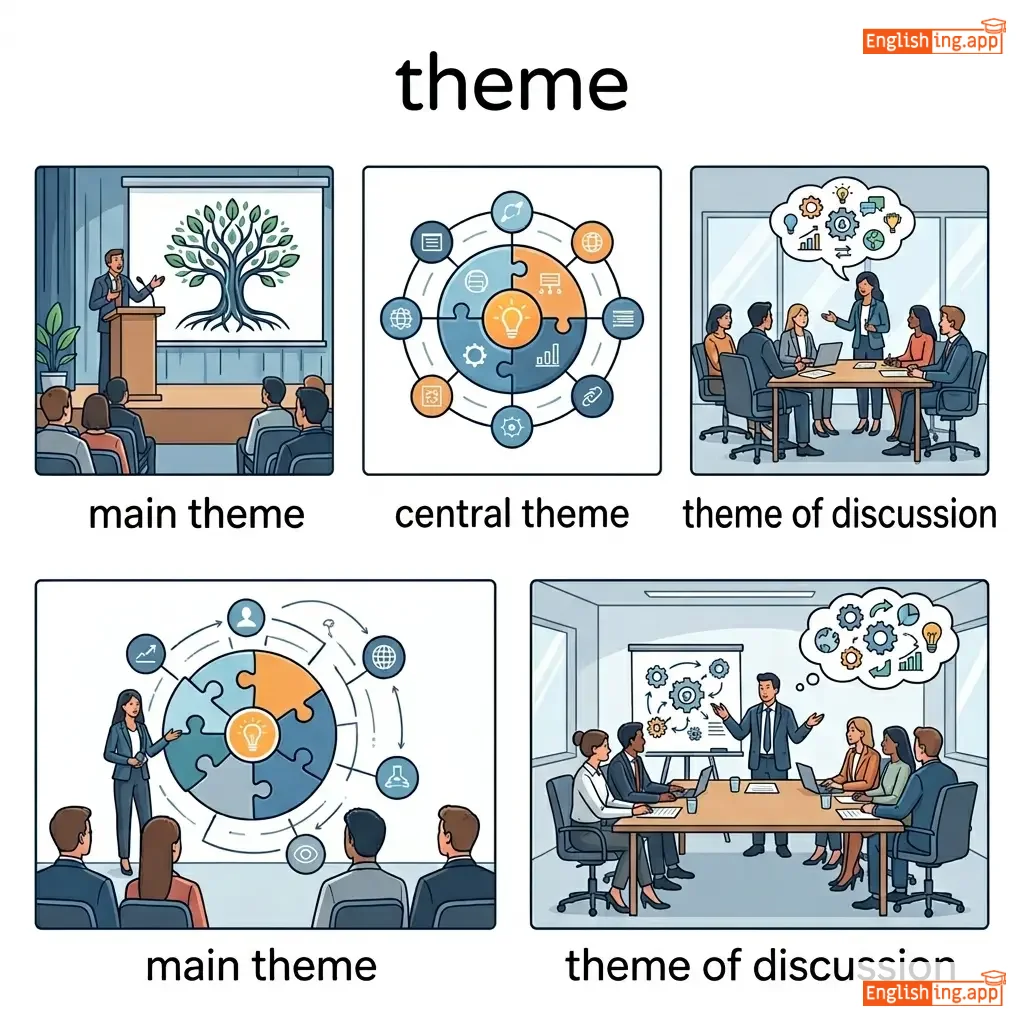
main theme, central theme, theme of discussion
••••••
थीम (theme) किसी भी चर्चा का मुख्य बिंदु होता है
••••••
👉
••••••
/ðeər/
adverb
(थेयर)
••••••
-
••••••
वहाँ
wahan
••••••
-
••••••
-
••••••
-
••••••
-
••••••
in or at that place; to that place
••••••
I will meet you there at 5 PM.
••••••
मैं तुमसे वहाँ 5 बजे मिलूंगा।
main tumse wahan 5 baje milunga.
••••••
-
••••••
-
••••••
-
••••••
over there, in that place, at that location
••••••
here, nowhere, everywhere
••••••
over there, right there, out there
••••••
वहाँ जाने के लिए 5 बजे तुमसे मिलना है।
••••••
👥
••••••
/ðiːz/
pronoun
(दीज़)
••••••
-
••••••
ये
ye
••••••
-
••••••
-
••••••
-
••••••
-
••••••
used to refer to things or people that are near or present
••••••
••••••
ये मेरे दोस्त हैं।
Ye mere dost hain.
••••••
-
••••••
-
••••••
-
••••••
••••••
••••••
these things, these people, these books
••••••
These things are close to me - ये चीज़ें मेरे पास हैं।
••••••
📚
••••••
/θɪk/
adjective
(थिक)
••••••
-
••••••
मोटा
mota
••••••
-
••••••
-
••••••
-
••••••
-
••••••
having a large distance between two sides; not thin
••••••
The book was so thick it took weeks to finish.
••••••
किताब इतनी मोटी थी कि उसे खत्म करने में हफ्ते लग गए थे।
Kitaab itni mota thi ki use khatam karne mein hafte lag gaye the.
••••••
••••••
through good times and bad
••••••
सुख-दुख
sukh-dukh
••••••
dense, heavy, wide, bulky
••••••
••••••
thick book, thick wall, thick hair, thick fog
••••••
Thick का मतलब मोटा, जैसे Thick किताब का मतलब बहुत पन्ने
••••••
🦵
••••••
/θaɪ/
noun
(थाई)
••••••
-
••••••
जंघा
jangha
••••••
-
••••••
-
••••••
-
••••••
-
••••••
the part of the leg between the hip and the knee
••••••
He felt pain in his right thigh after running for an hour.
••••••
एक घंटे दौड़ने के बाद उसे अपनी दाईं जंघा में दर्द महसूस हुआ।
Ek ghante daudne ke baad use apni daayi jangha mein dard mahsus hua.
••••••
thigh bone's connected to the hip bone
••••••
a phrase from a children's song describing body parts connection
••••••
जंघा हड्डी हिप हड्डी से जुड़ी हुई है
Jangha haddi hip haddi se judi hui hai
••••••
upper leg, femur, limb, lap
••••••
••••••
thigh muscle, chicken thigh, inner thigh, upper thigh
••••••
थाईफूड में आमतौर पर चिकन जंघा होती है 🍗 — याद रखें 'thigh' का मतलब जंघा होता है।
••••••
📦
••••••
/θɪŋ/
noun
(थिंग)
••••••
-
••••••
चीज
cheez
••••••
-
••••••
-
••••••
-
••••••
-
••••••
an object, idea, or matter that is being referred to or dealt with
••••••
This is the thing I was looking for.
••••••
यह वह चीज है जिसे मैं खोज रहा था।
Yeh vah cheez hai jise main khoj raha tha.
••••••
-
••••••
-
••••••
-
••••••
item, object, matter, article
••••••
••••••
the thing, a thing, important thing, one thing
••••••
Think of a 'thing' as a 'cheez' (चीज) you find every day.
••••••
3️⃣
••••••
/θɜrd/
adjective
(थर्ड)
••••••
-
••••••
तीसरा
teesra
••••••
-
••••••
-
••••••
-
••••••
-
••••••
constituting number three in a sequence
••••••
She finished in third place.
••••••
वह तीसरे स्थान पर finish हुई।
Wah teesre sthaan par finish hui.
••••••
-
••••••
-
••••••
-
••••••
thirdly, tertiary, trinal
••••••
••••••
third place, third time, third attempt
••••••
Remember 'third' by thinking of the 'third' place medal (🥉).
••••••
👢
••••••
/ðoʊz/
pronoun
(थोज)
••••••
-
••••••
वे
ve
••••••
-
••••••
-
••••••
-
••••••
-
••••••
used to refer to people or things that are far away or distant in space, time, or thought
••••••
Those are the shoes I want.
••••••
वे वे जूते हैं जो मुझे चाहिए।
Ve ve jute hain jo mujhe chahiye.
••••••
-
••••••
-
••••••
-
••••••
those ones, those people, those things
••••••
••••••
those shoes, those days, those people
••••••
दूर के 'वे' (ve)
••••••
3️⃣
••••••
/θriː/
numeral
(थ्री)
••••••
-
••••••
तीन
teen
••••••
-
••••••
-
••••••
-
••••••
-
••••••
the number equivalent to the sum of two and one
••••••
She has three dogs at home.
••••••
उसके पास घर में तीन कुत्ते हैं।
Uske paas ghar mein teen kutte hain.
••••••
-
••••••
-
••••••
-
••••••
••••••
••••••
three times, three people, three years
••••••
तीन परिवार में लकी नंबर होता है।
••••••