Wie Journaling die psychische Gesundheit verbessert

How Journaling Improves Mental Health

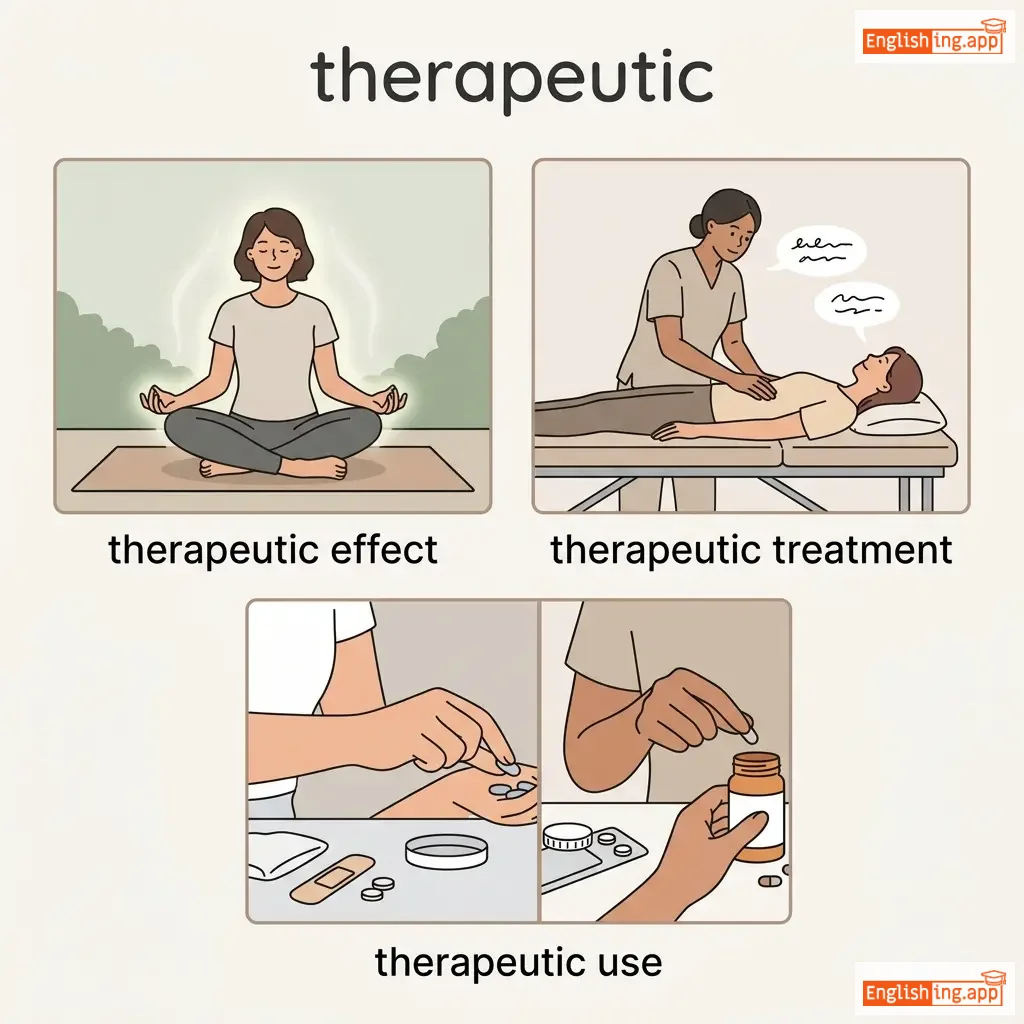
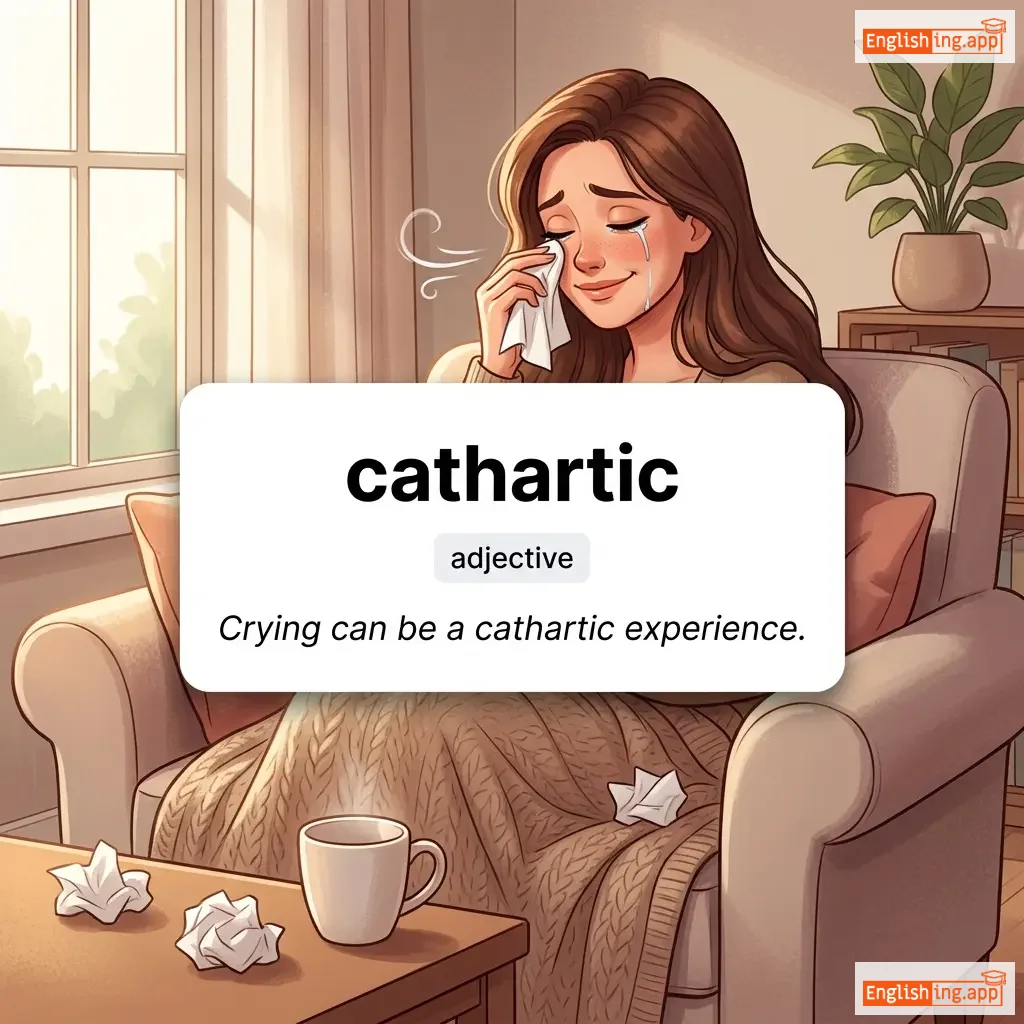
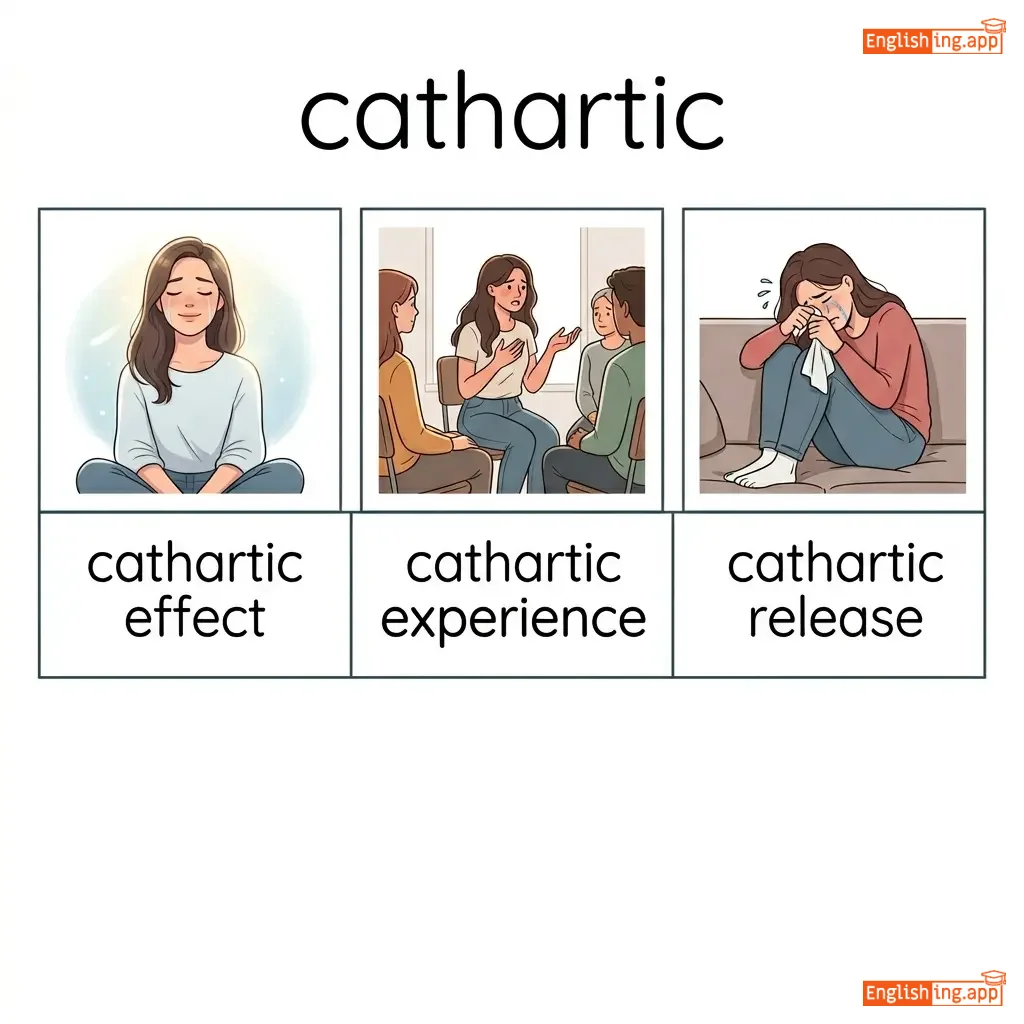
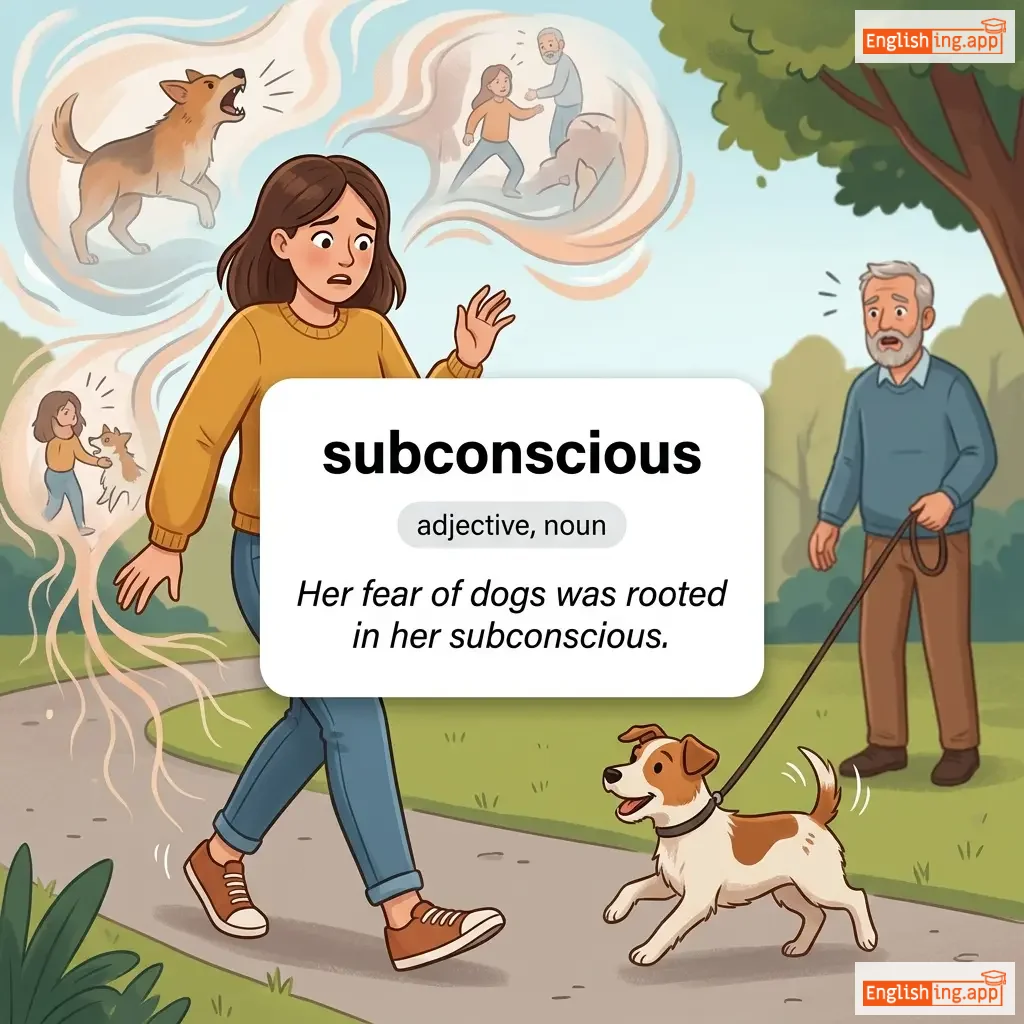
Journaling kann äußerst therapeutic für die psychische Gesundheit sein. Es bietet uns eine cathartic Möglichkeit, unsere Gedanken auszudrücken, wobei wir unsere subconscious Emotionen hervorbringen können.

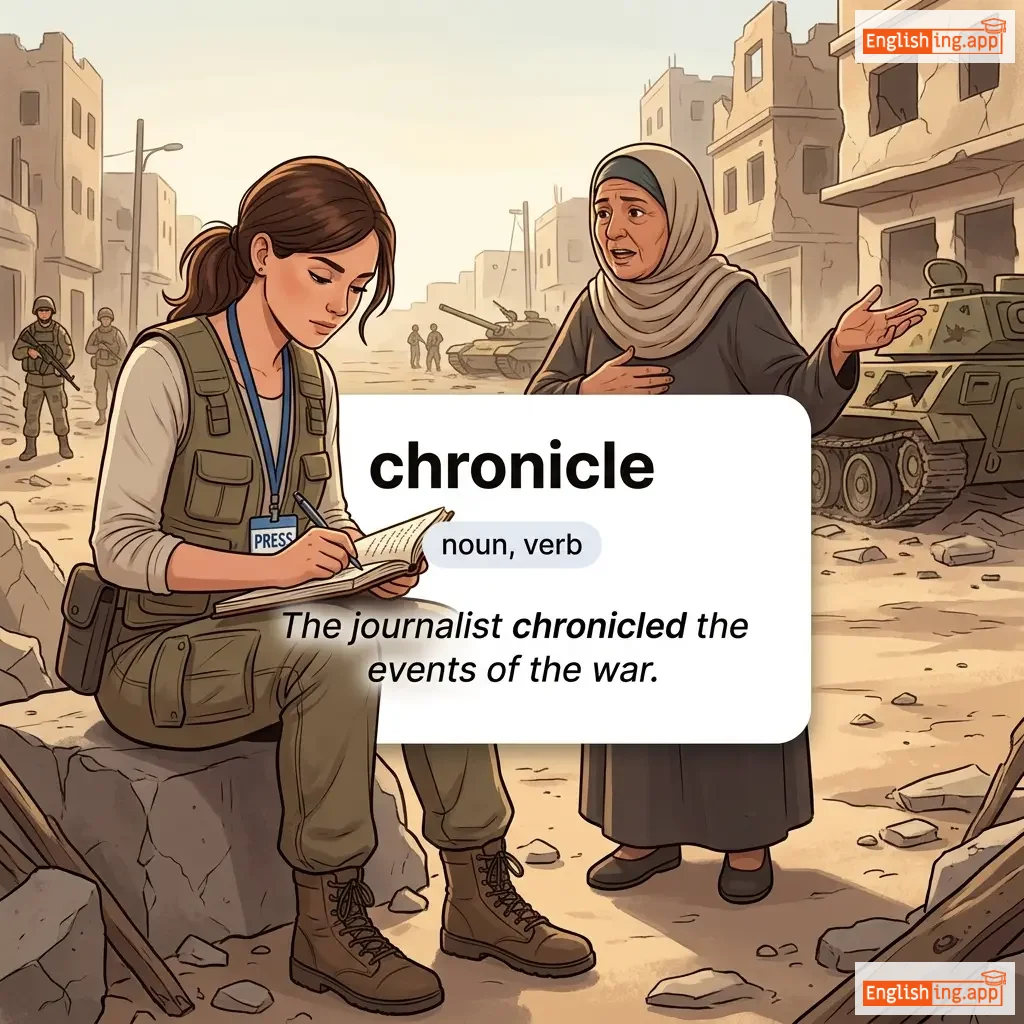
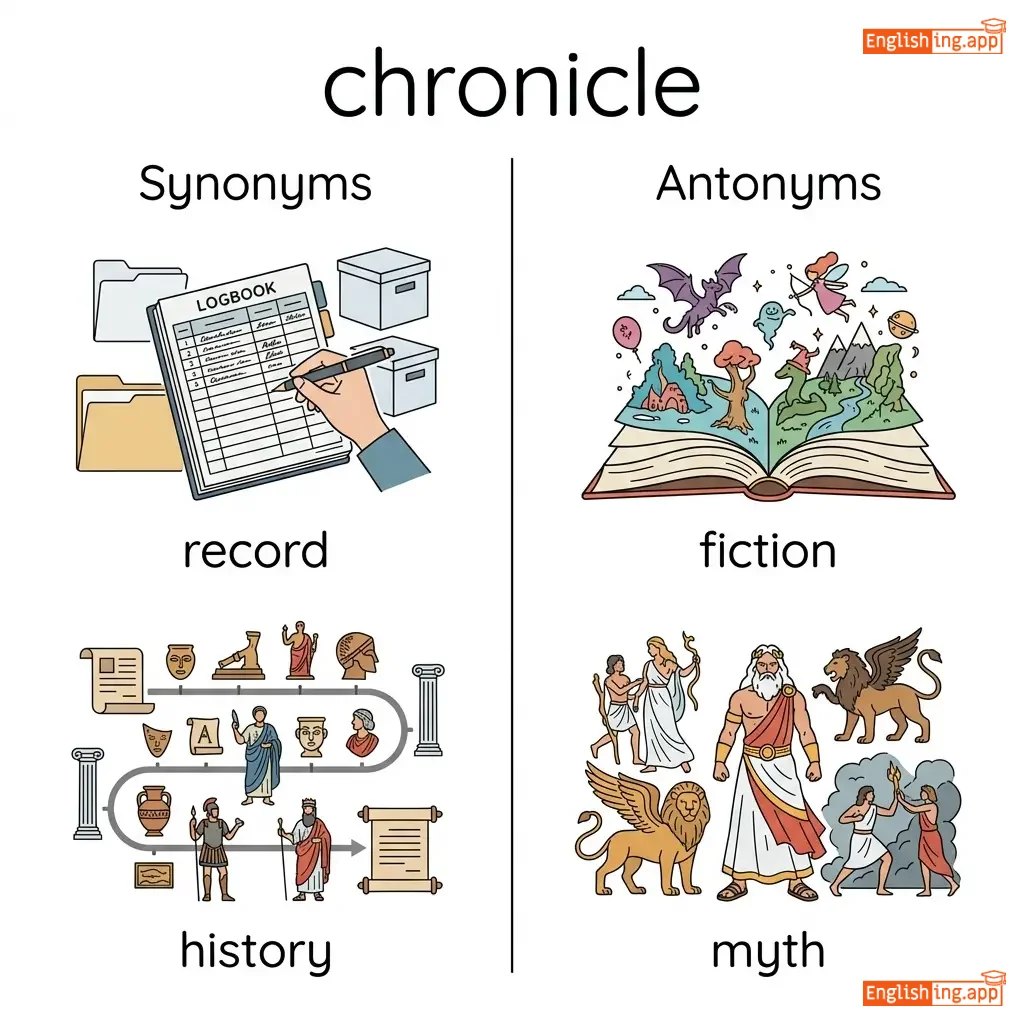
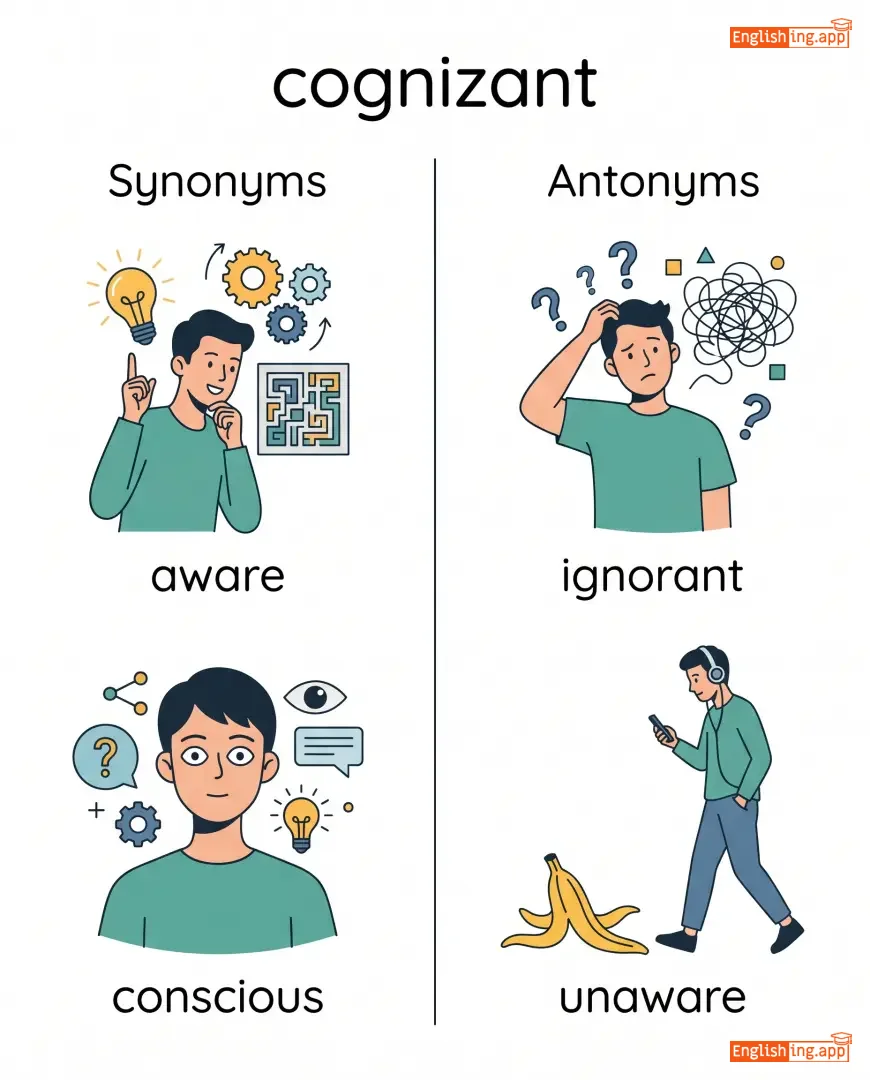
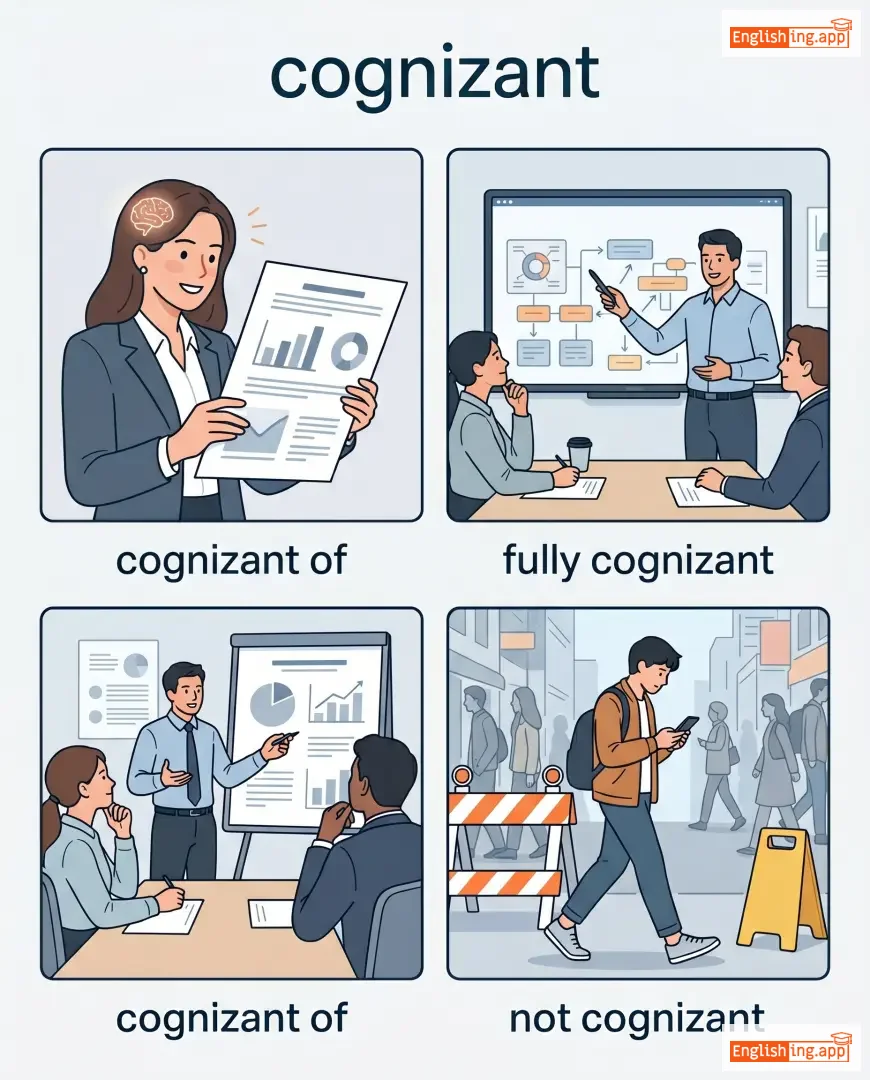
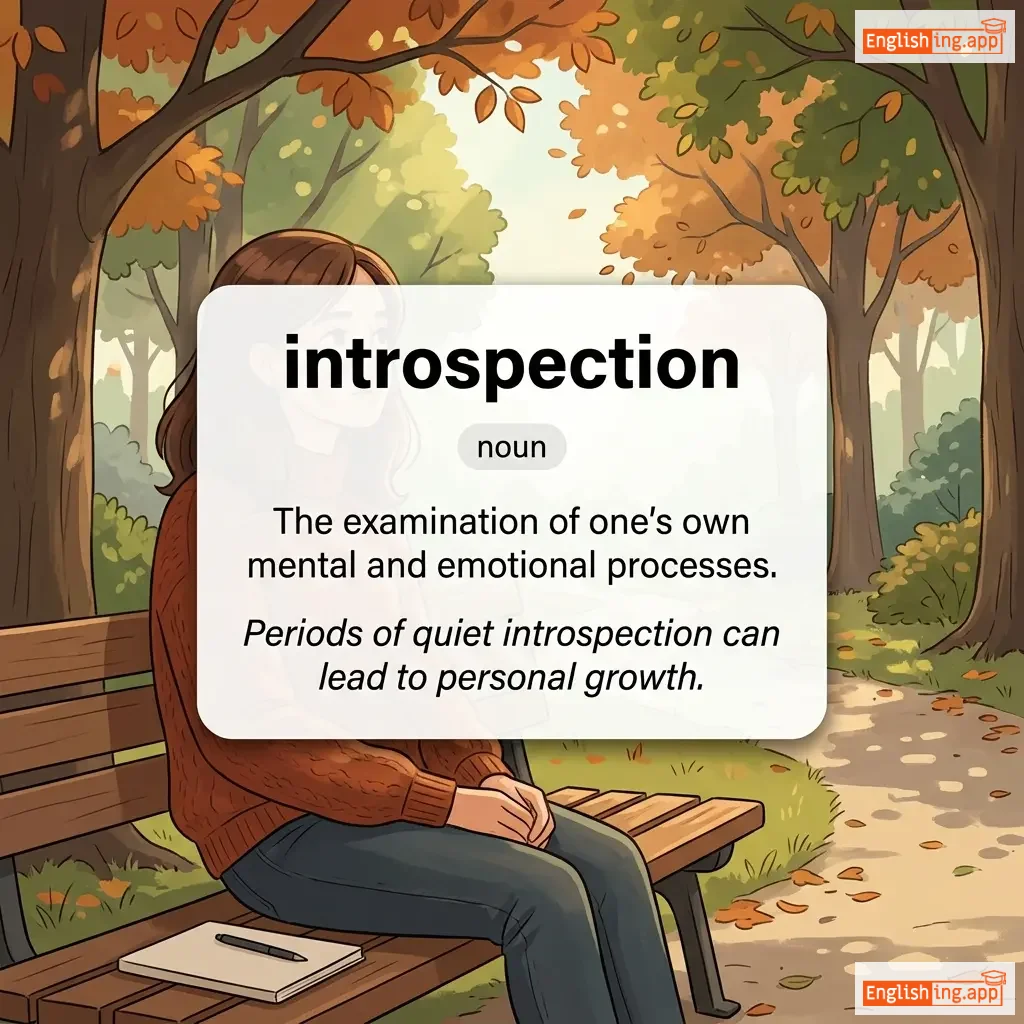
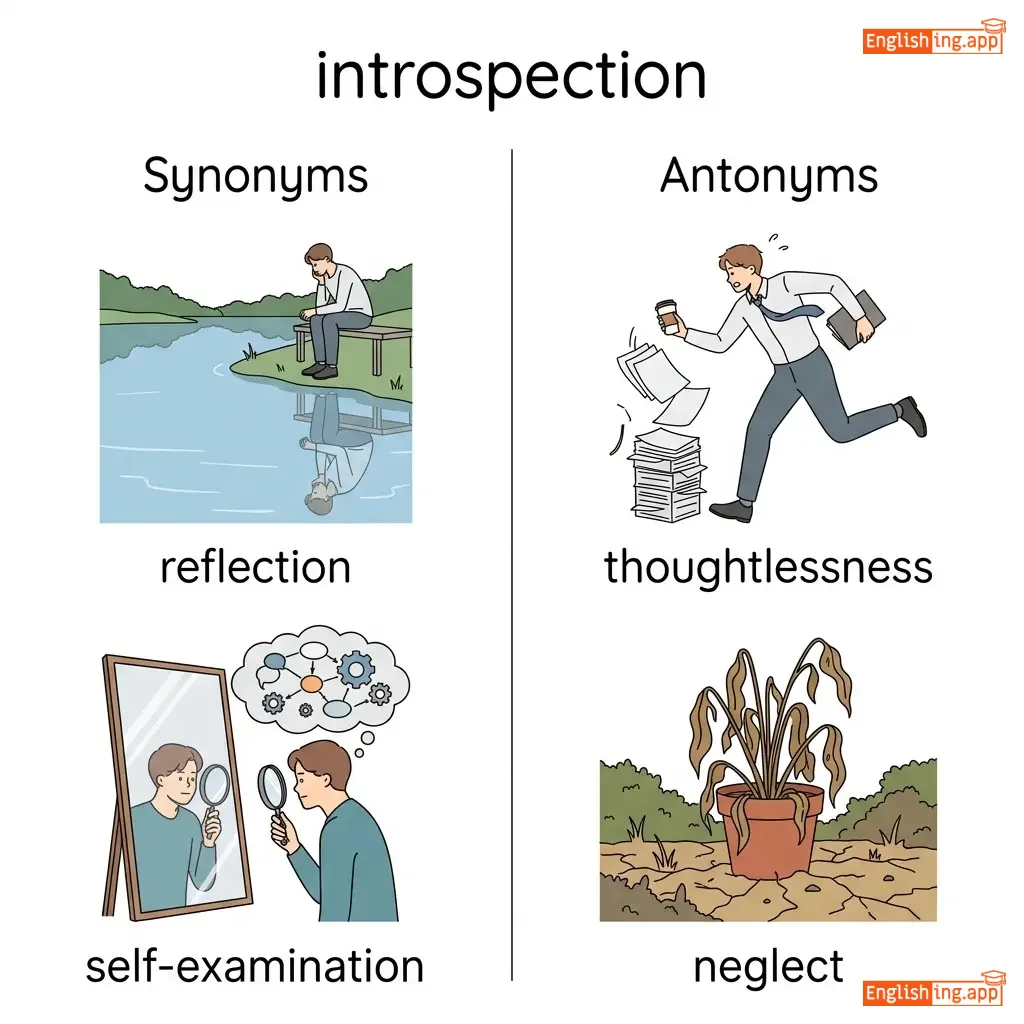
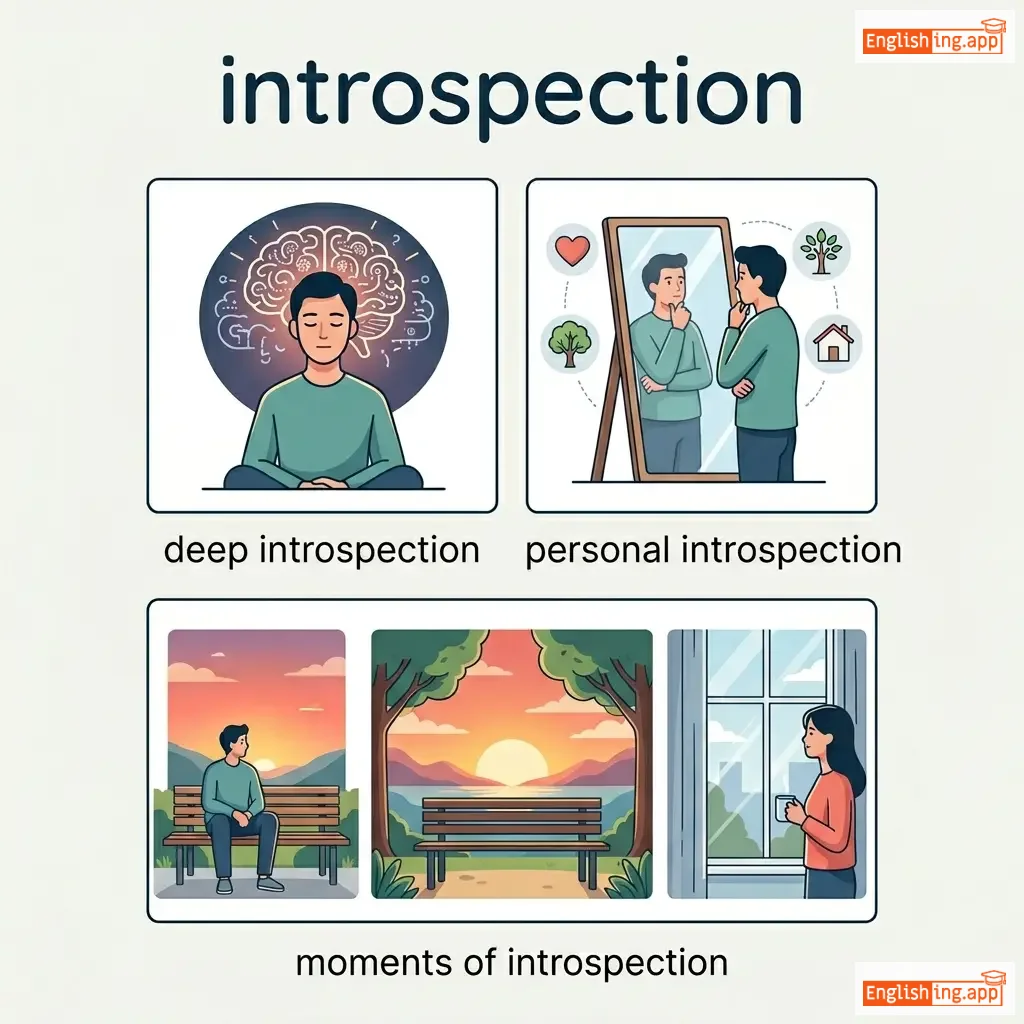
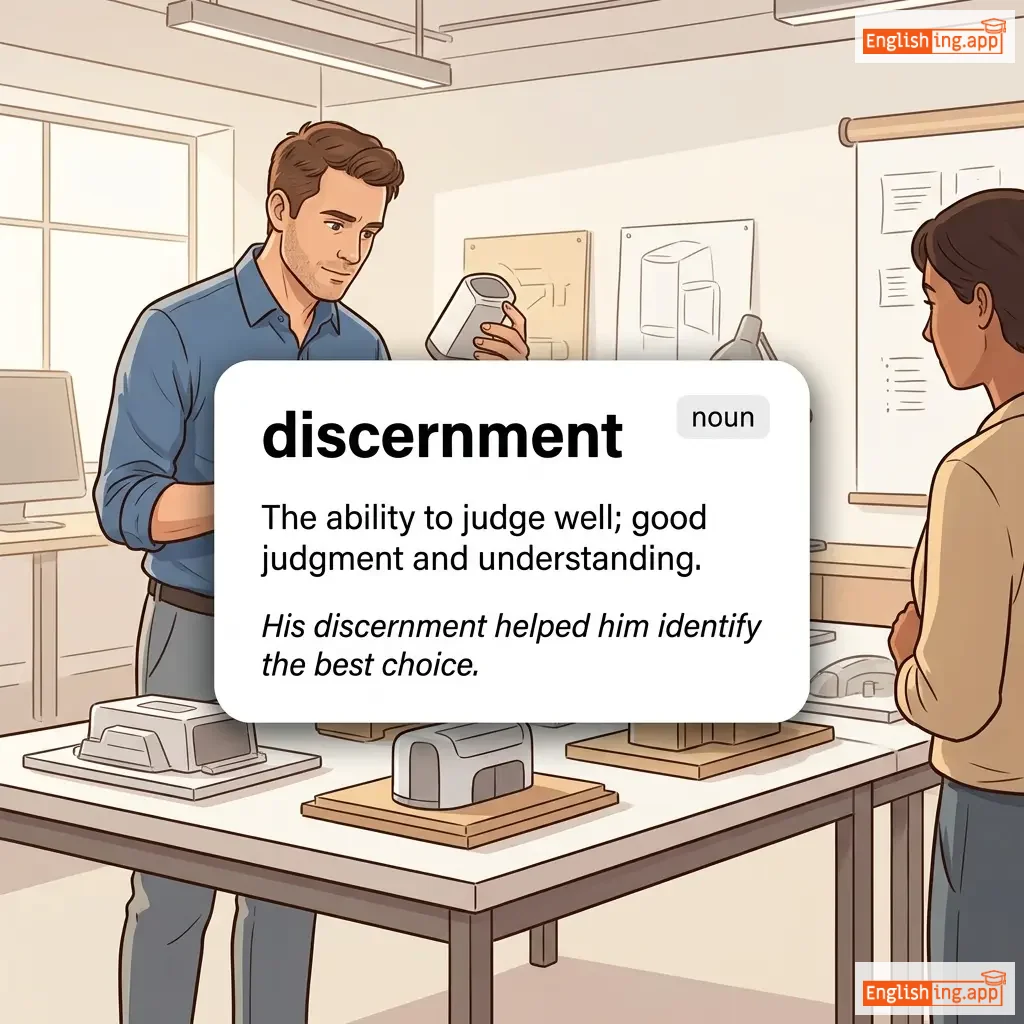
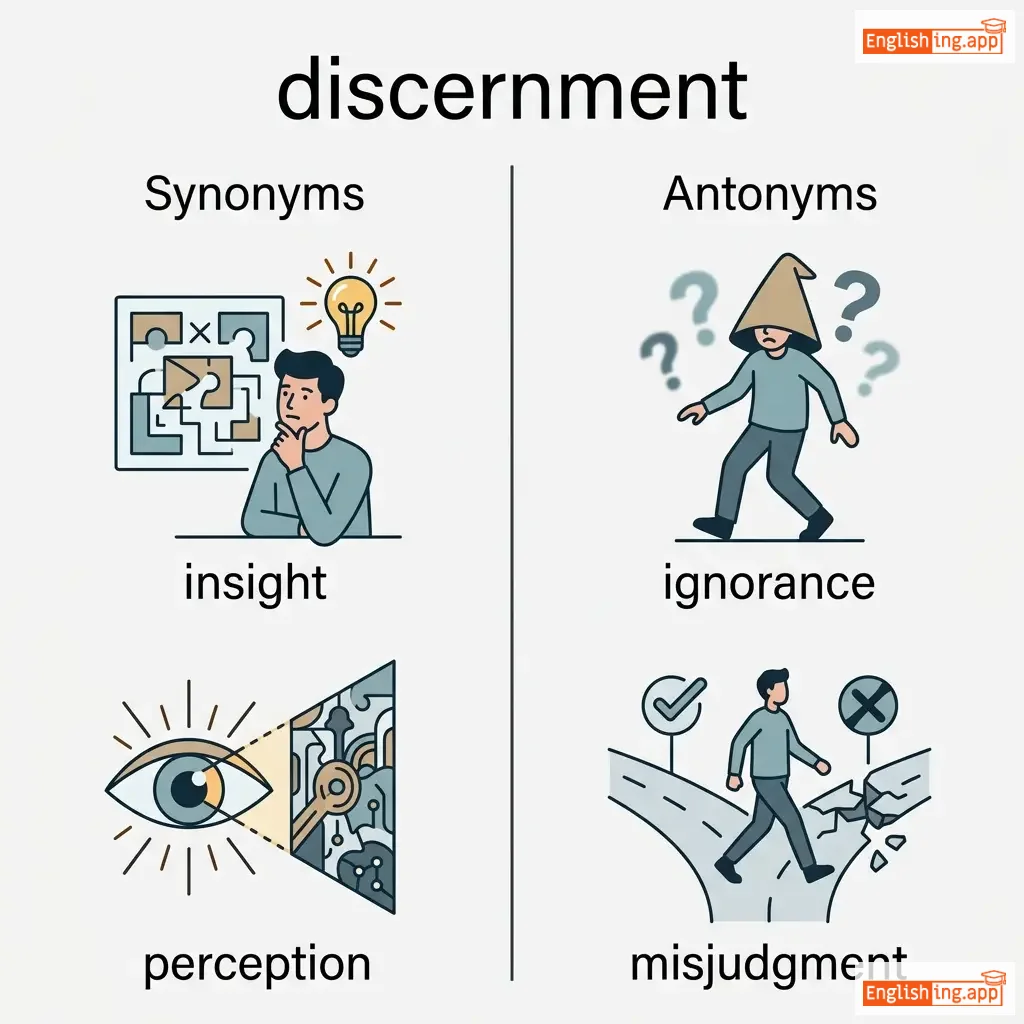
Wenn eine Person ihre Gefühle chronicles, wird sie sich ihrer Erfahrungen bewusster (cognizant). Das Aufschreiben täglicher Gedanken und Erfahrungen erhöht die introspection und verbessert unser discernment.

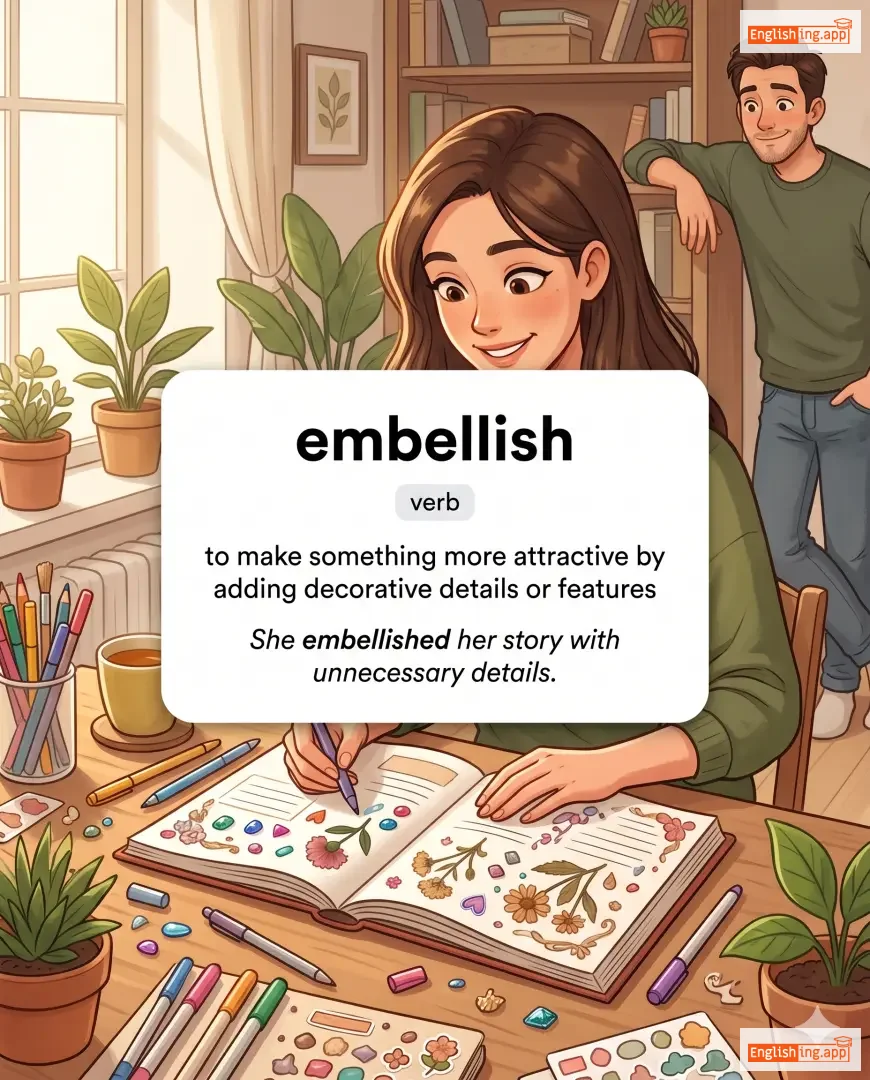
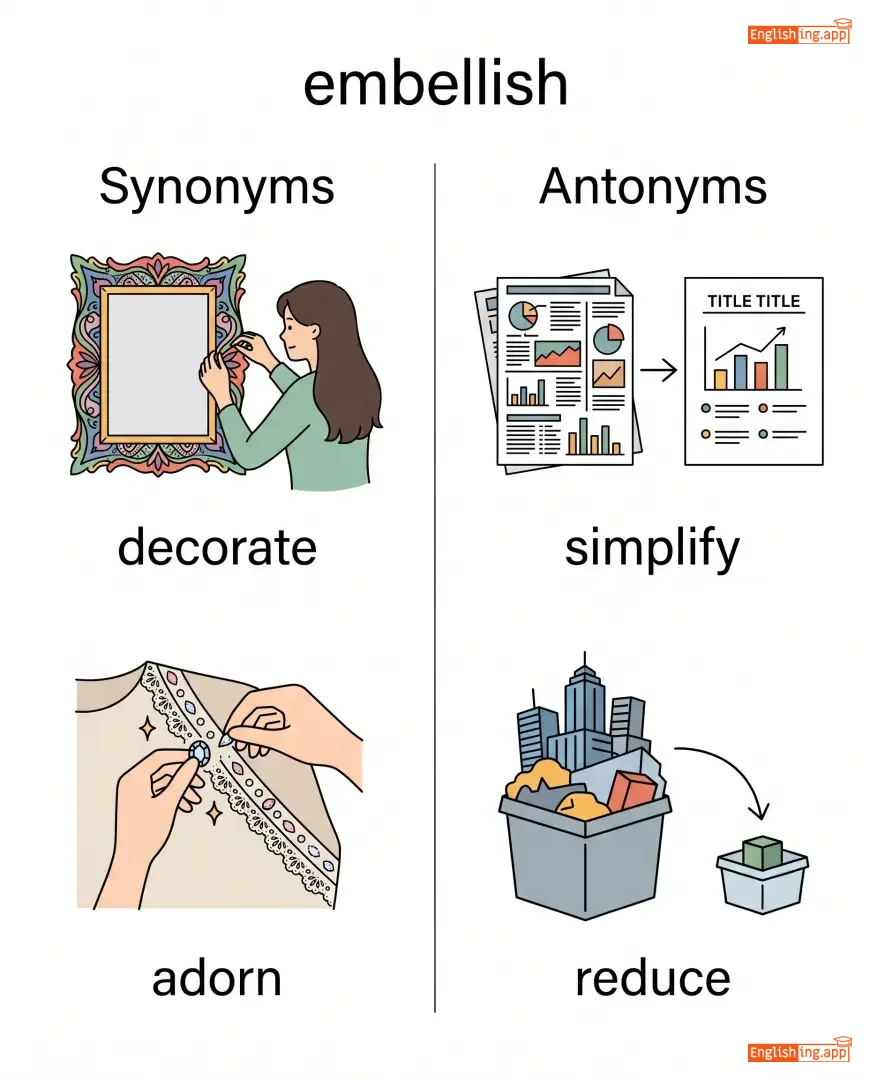
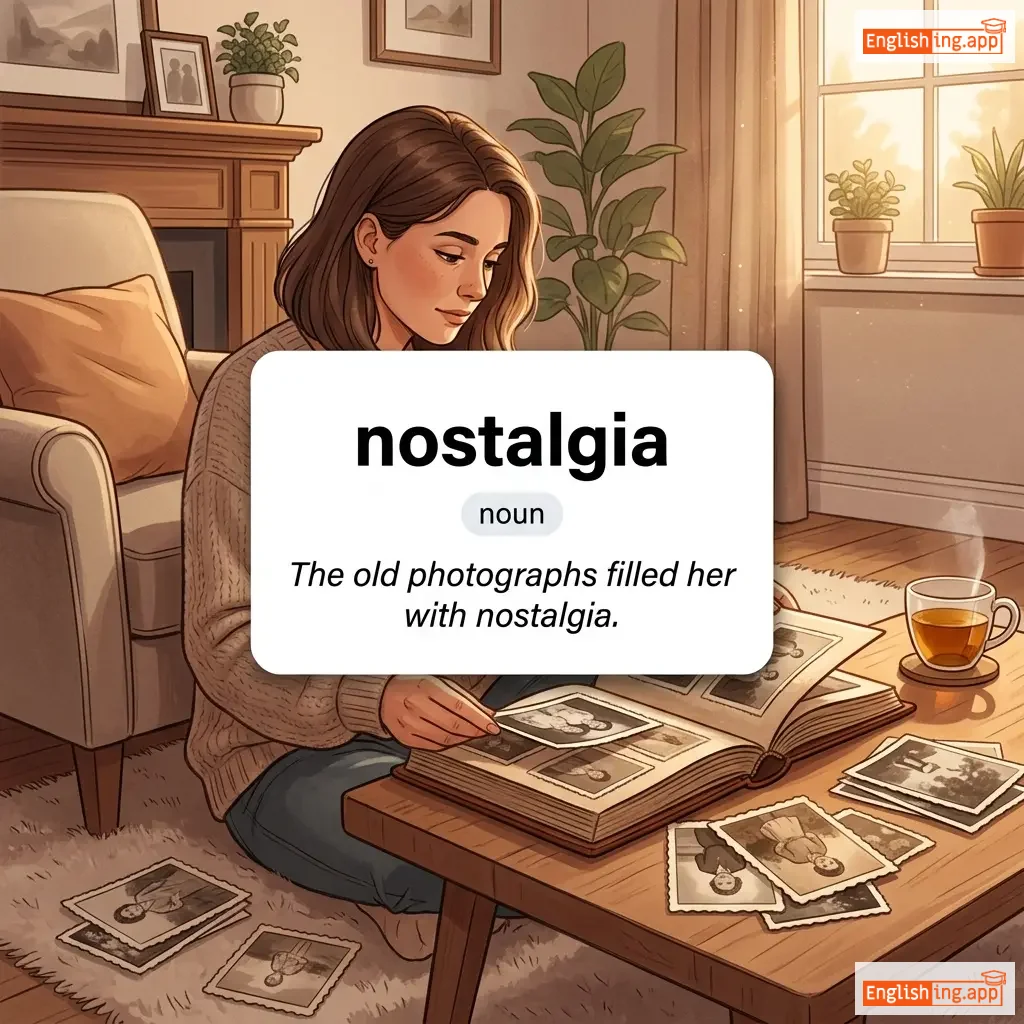
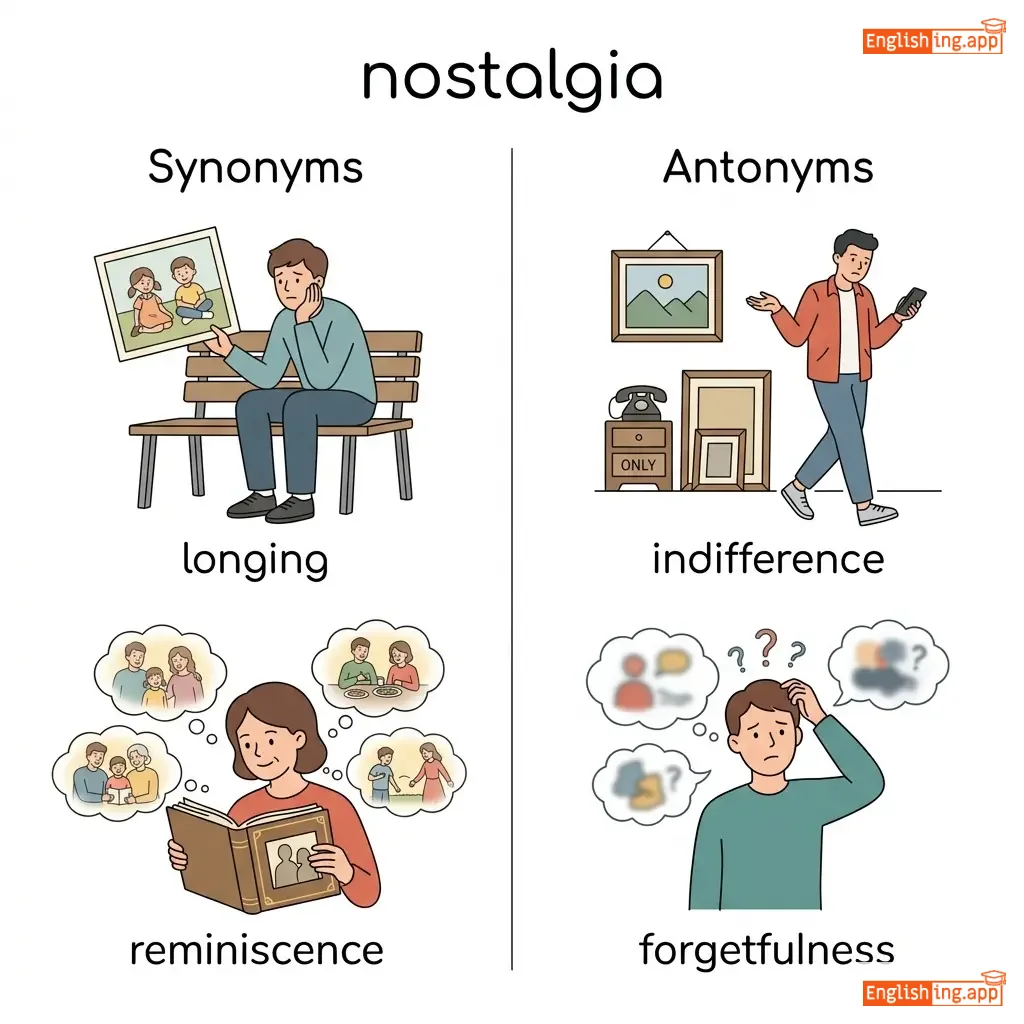
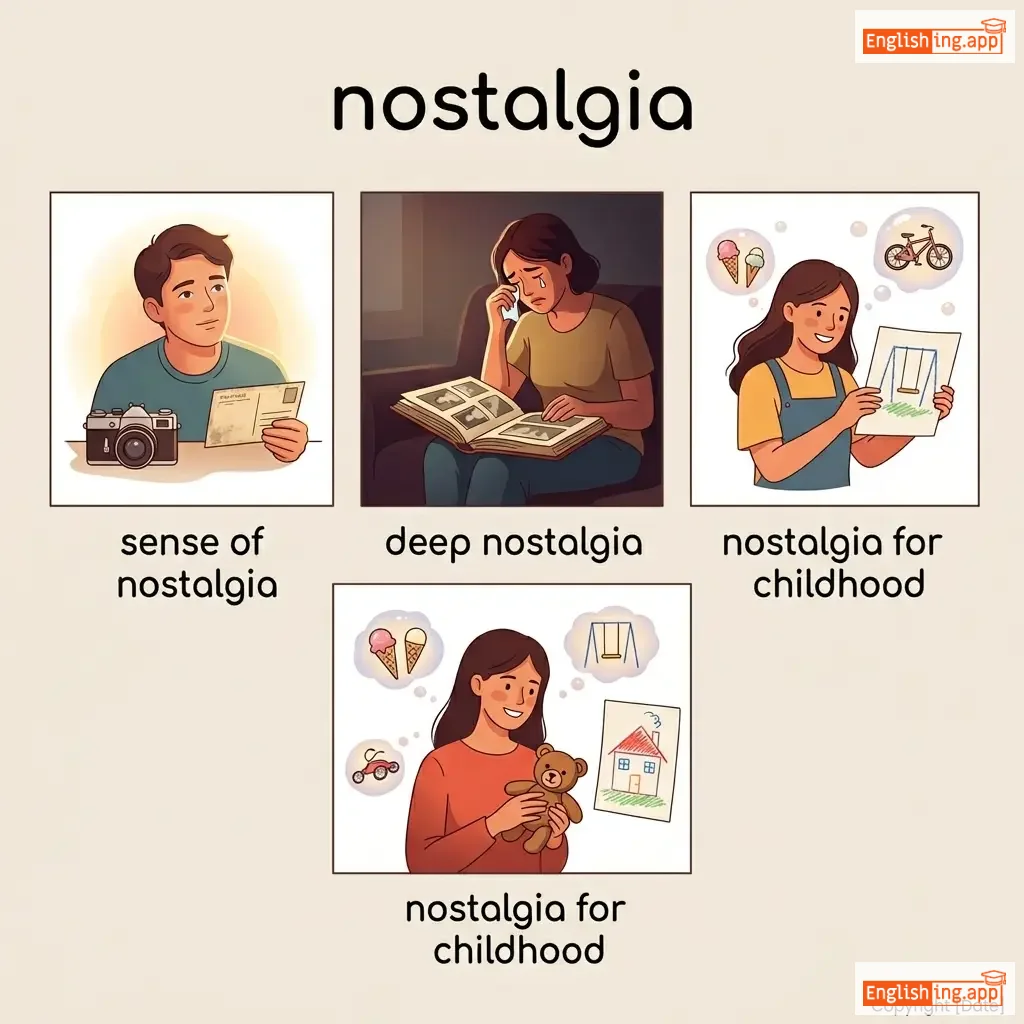
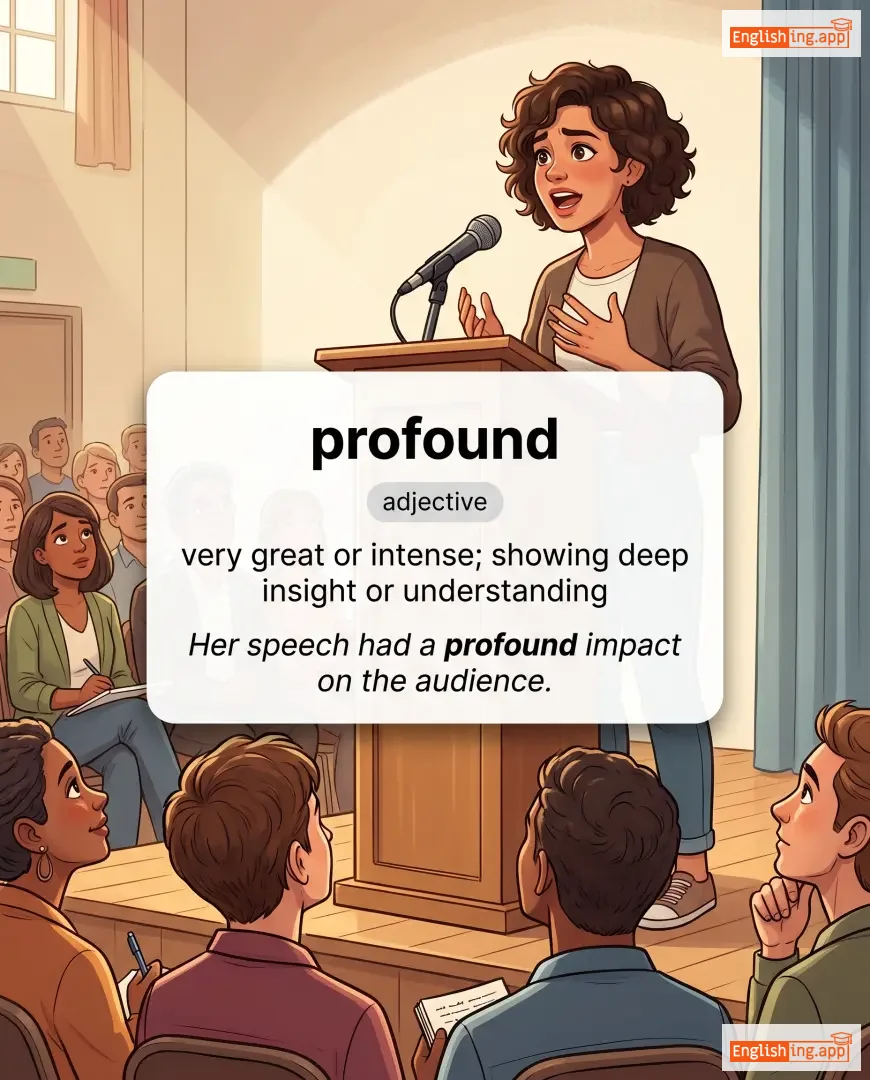
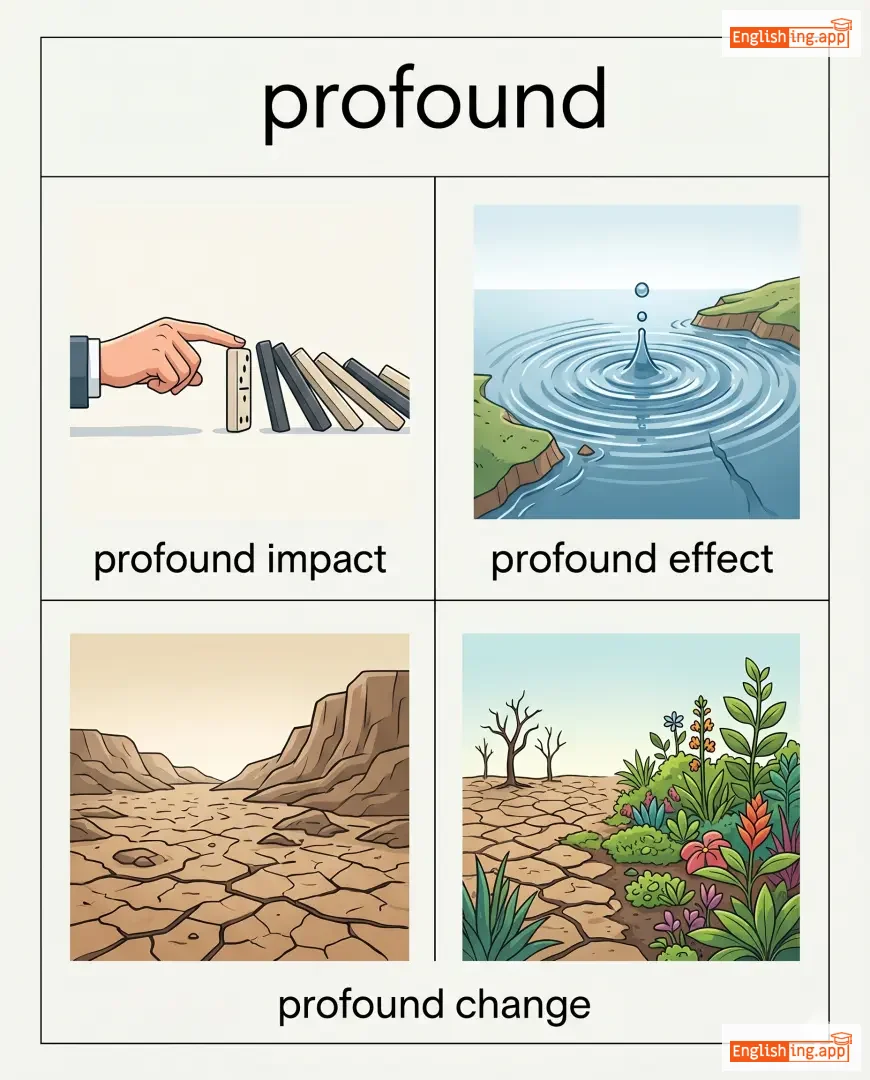
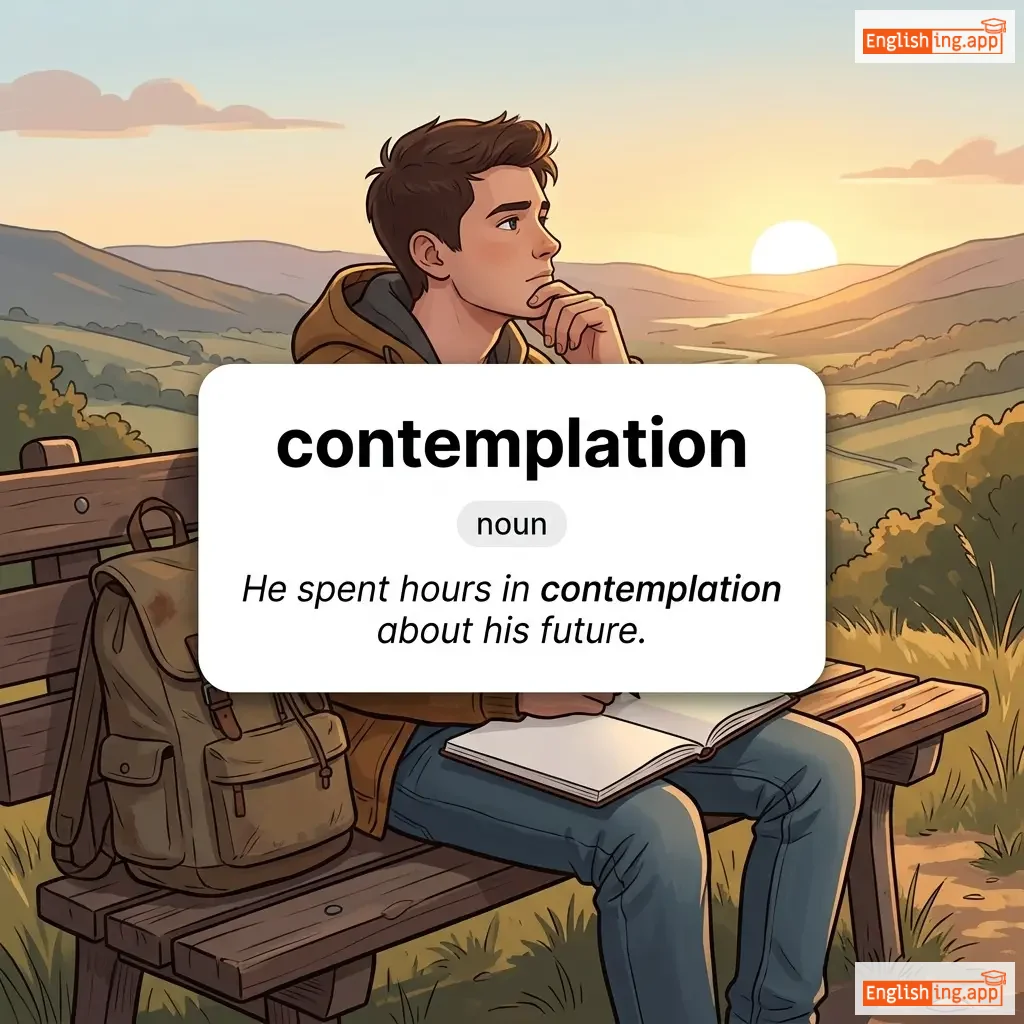
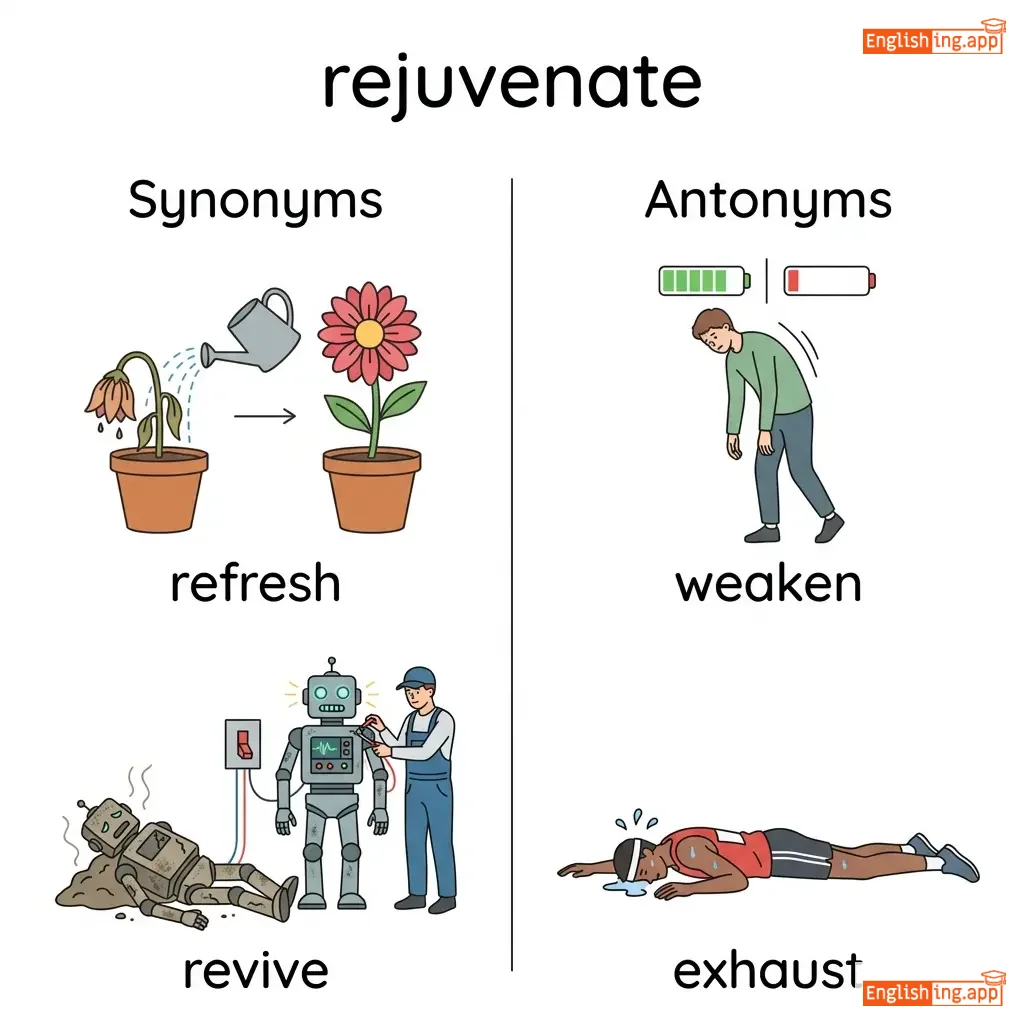
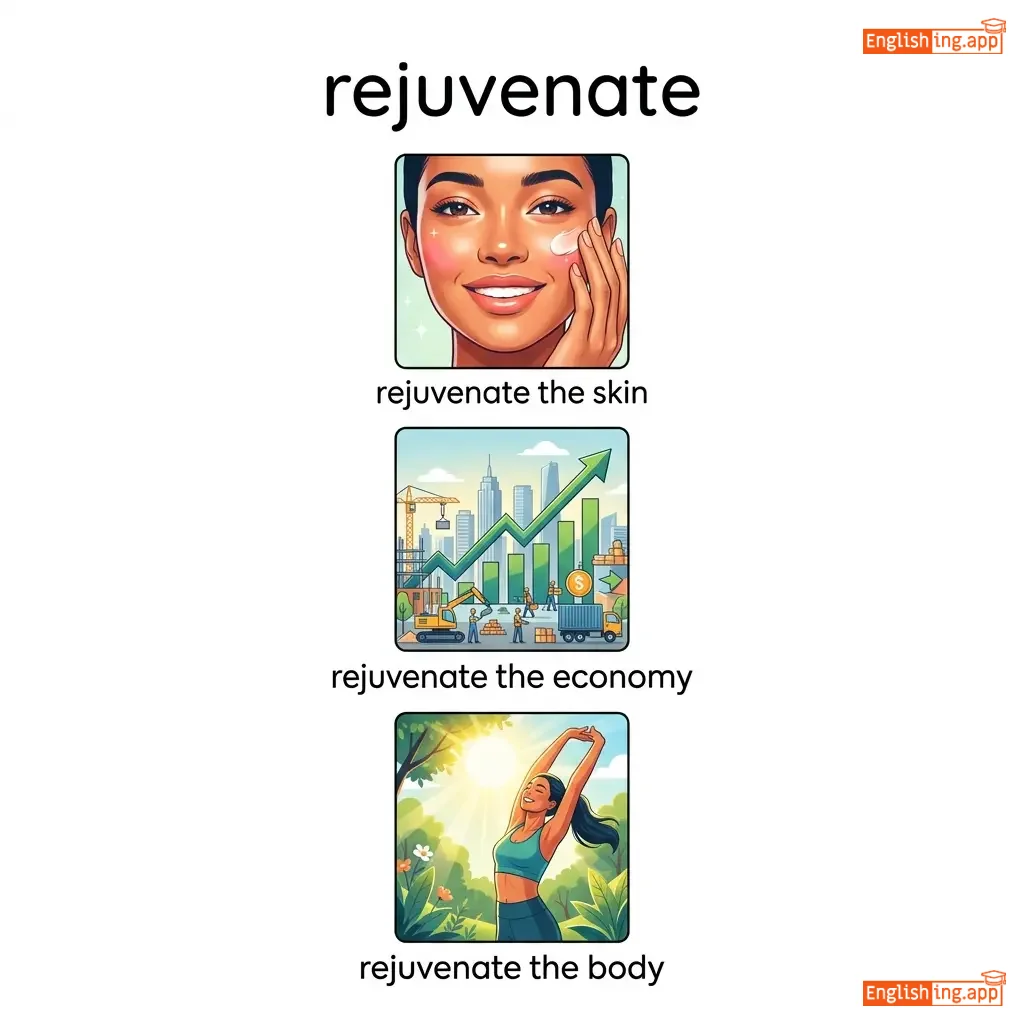
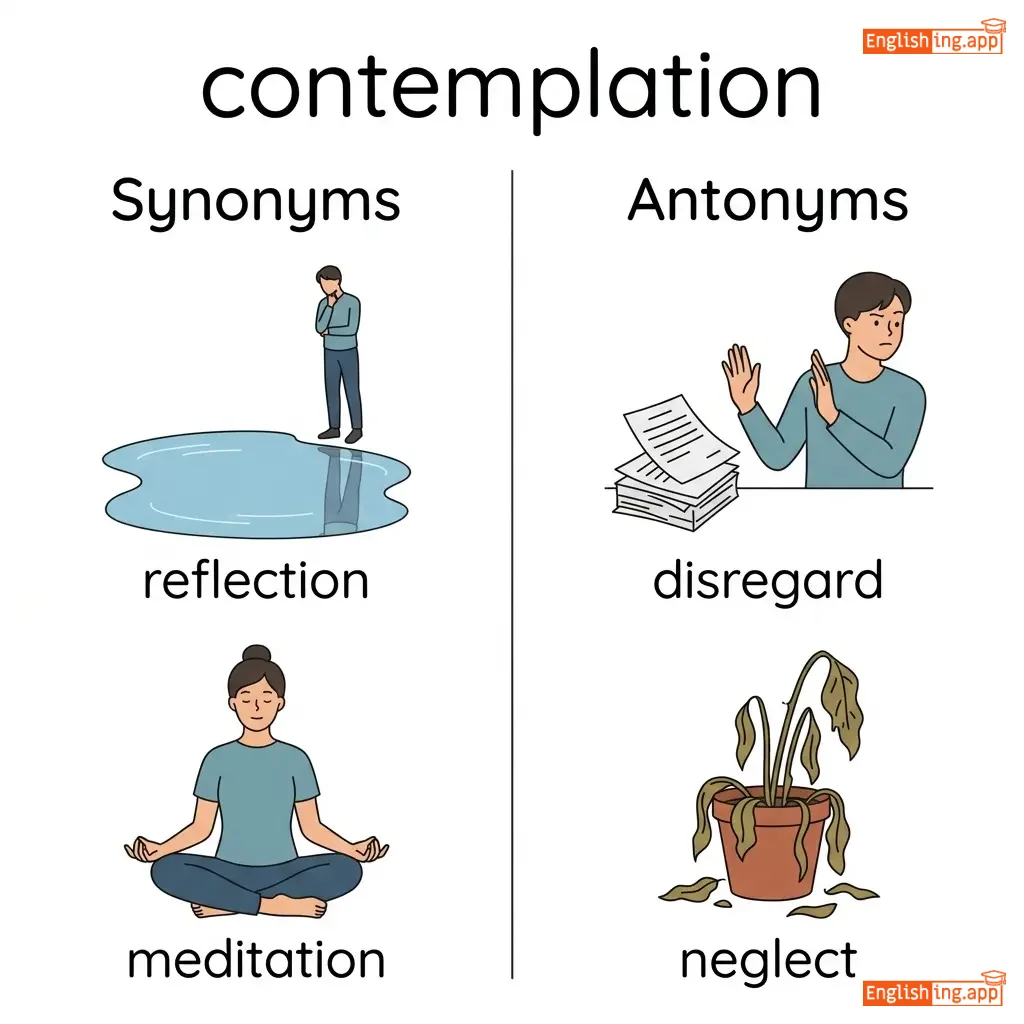
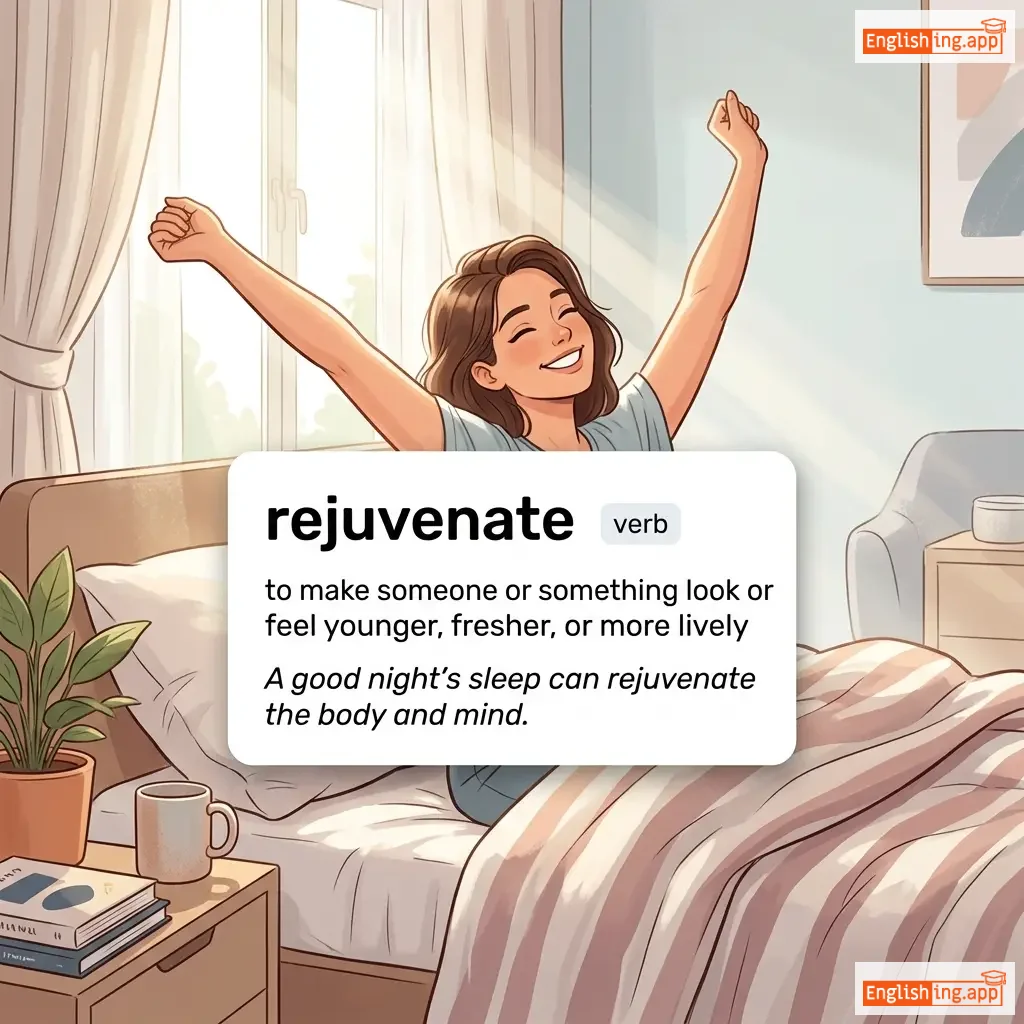
Oft embellishen wir unsere Erinnerungen, was unsere nostalgia verstärkt, aber Journaling bietet uns eine klarere (lucid) Sicht auf unsere Vergangenheit. Es ist nicht nur ein Medium zum Ausdruck von Emotionen, sondern lehrt uns profoundes Denken und steigert die contemplation. Regelmäßiges Schreiben kann unseren Geist rejuvenate und inneren Frieden bringen.
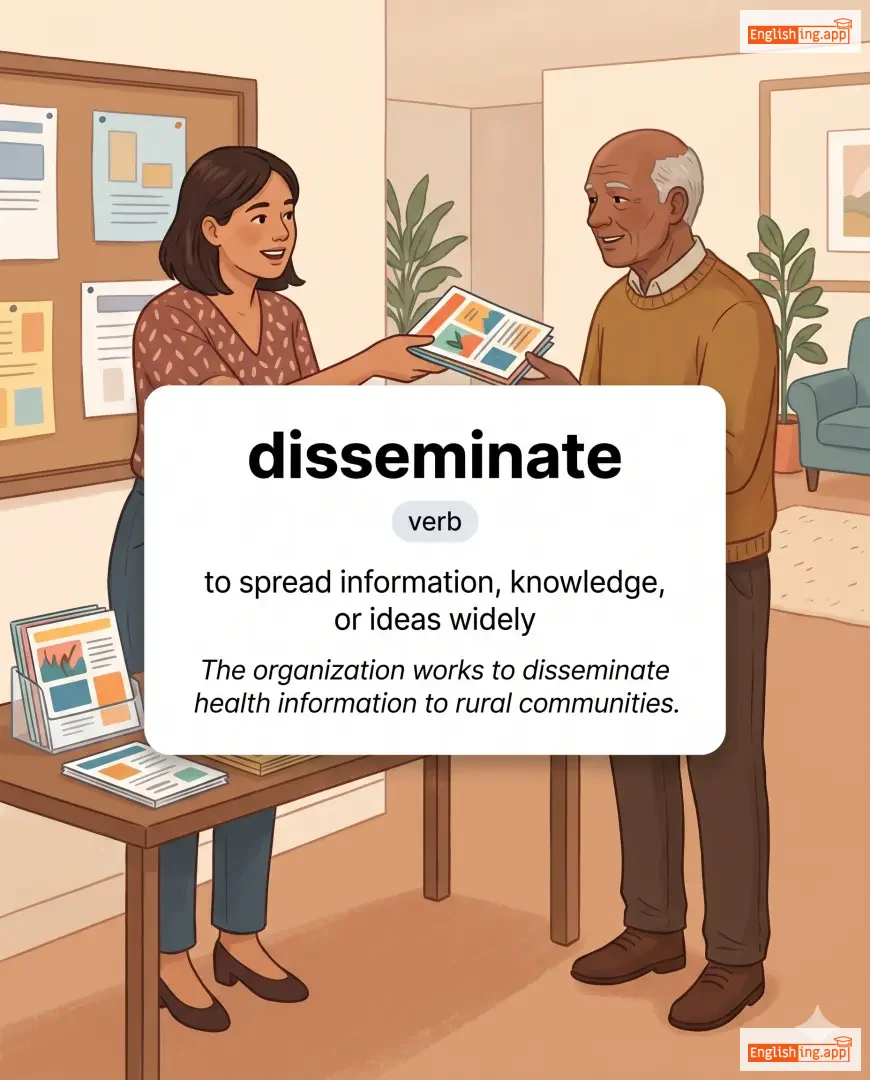
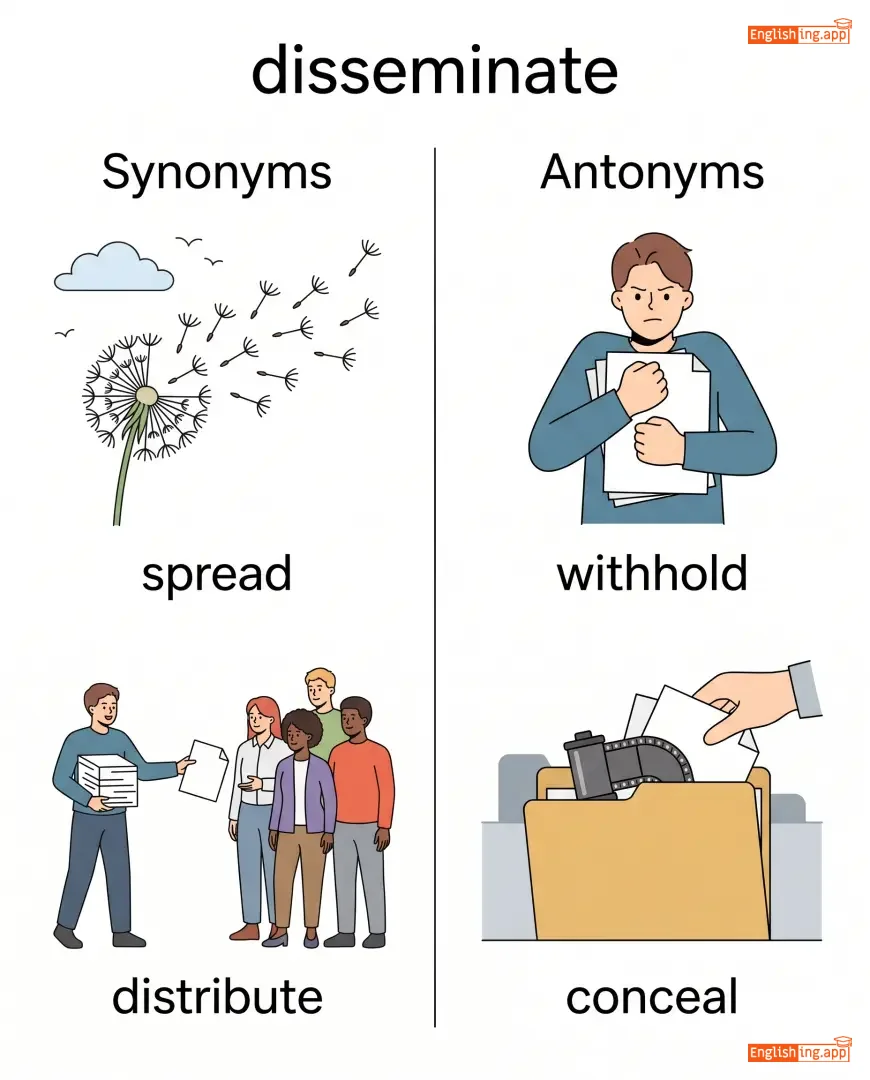
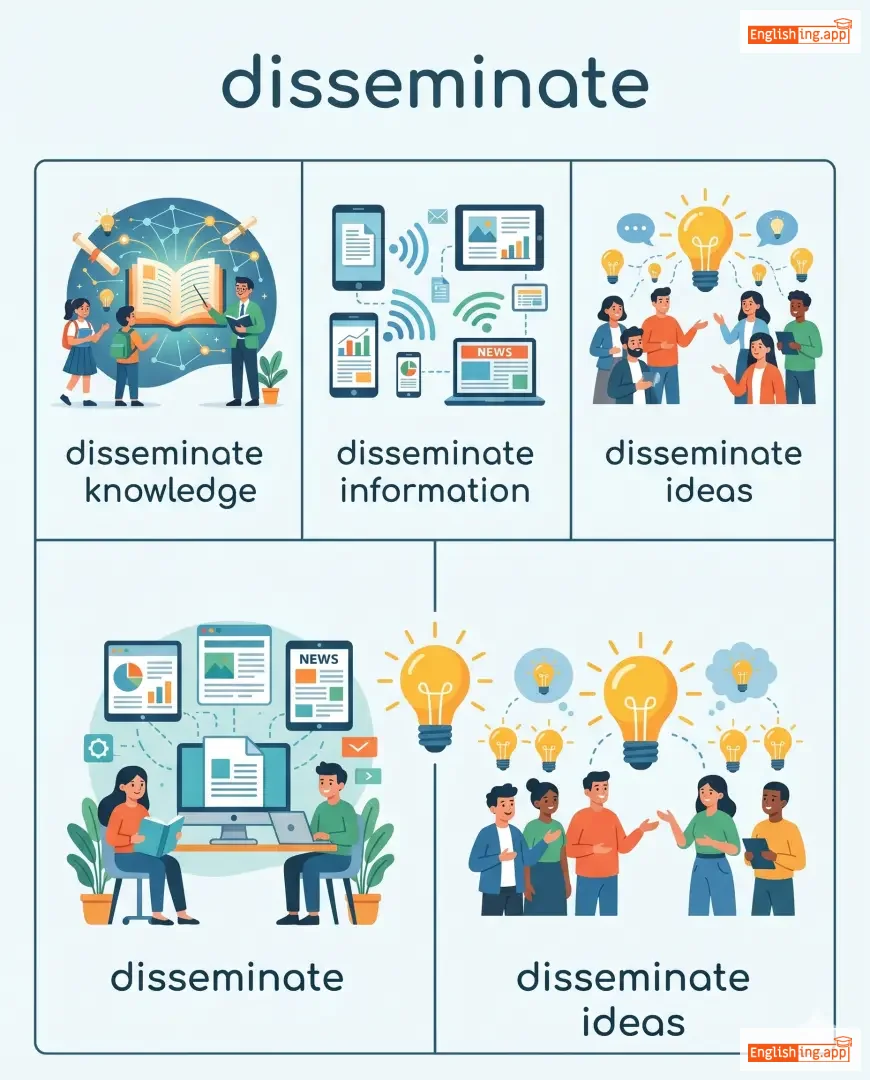
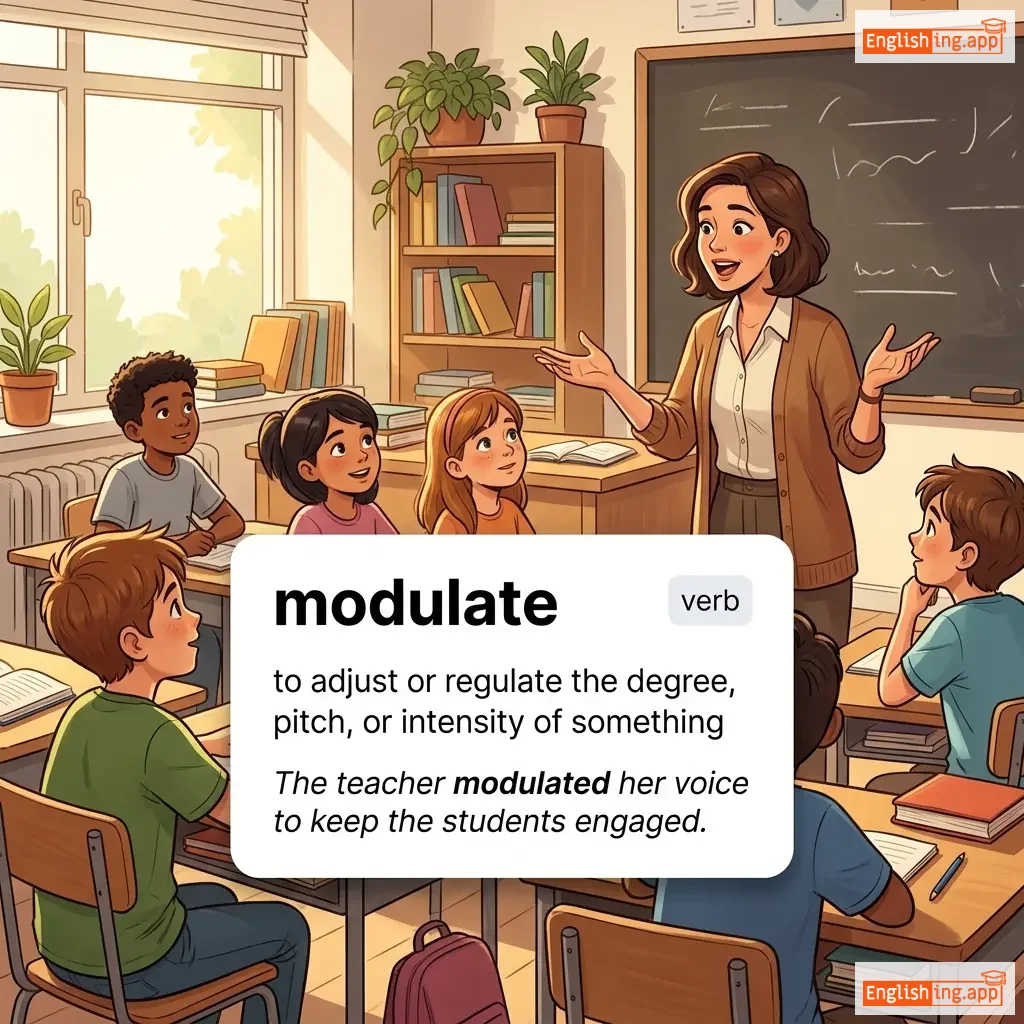
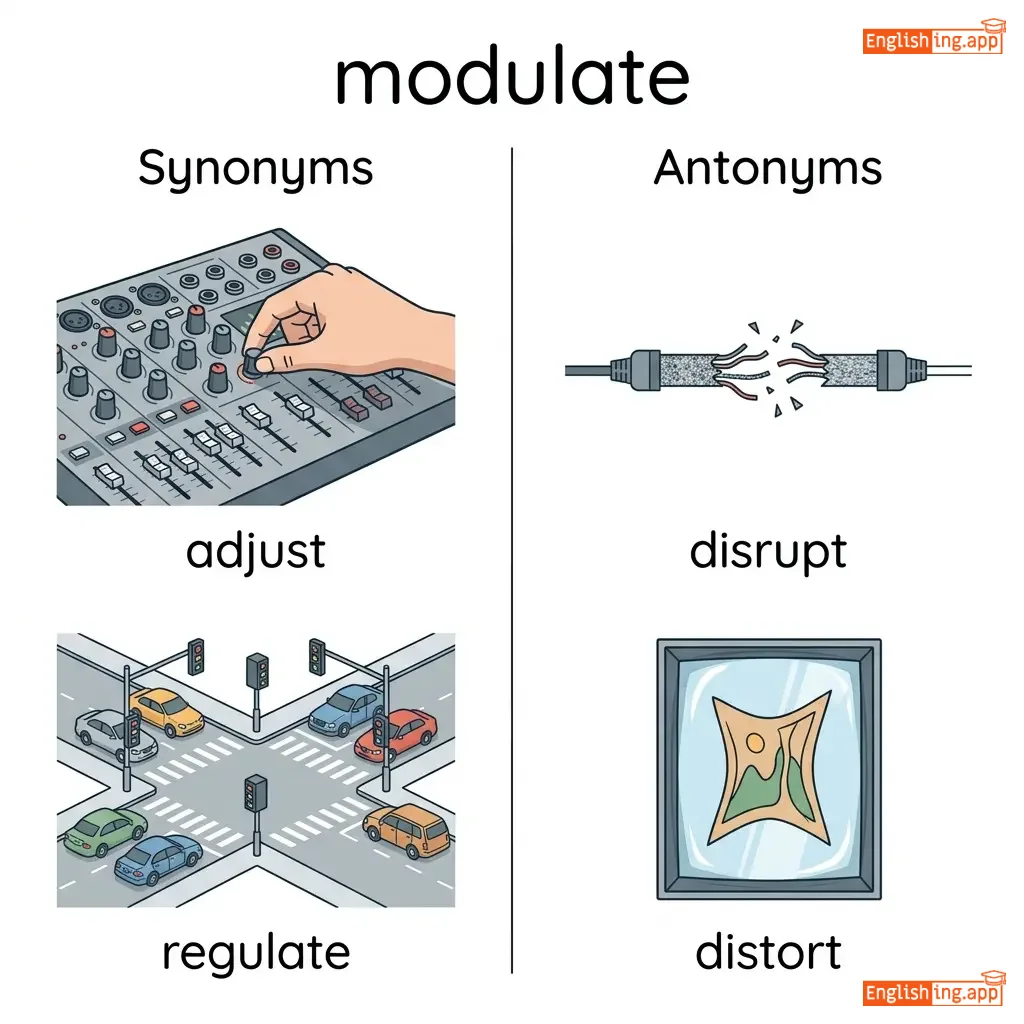
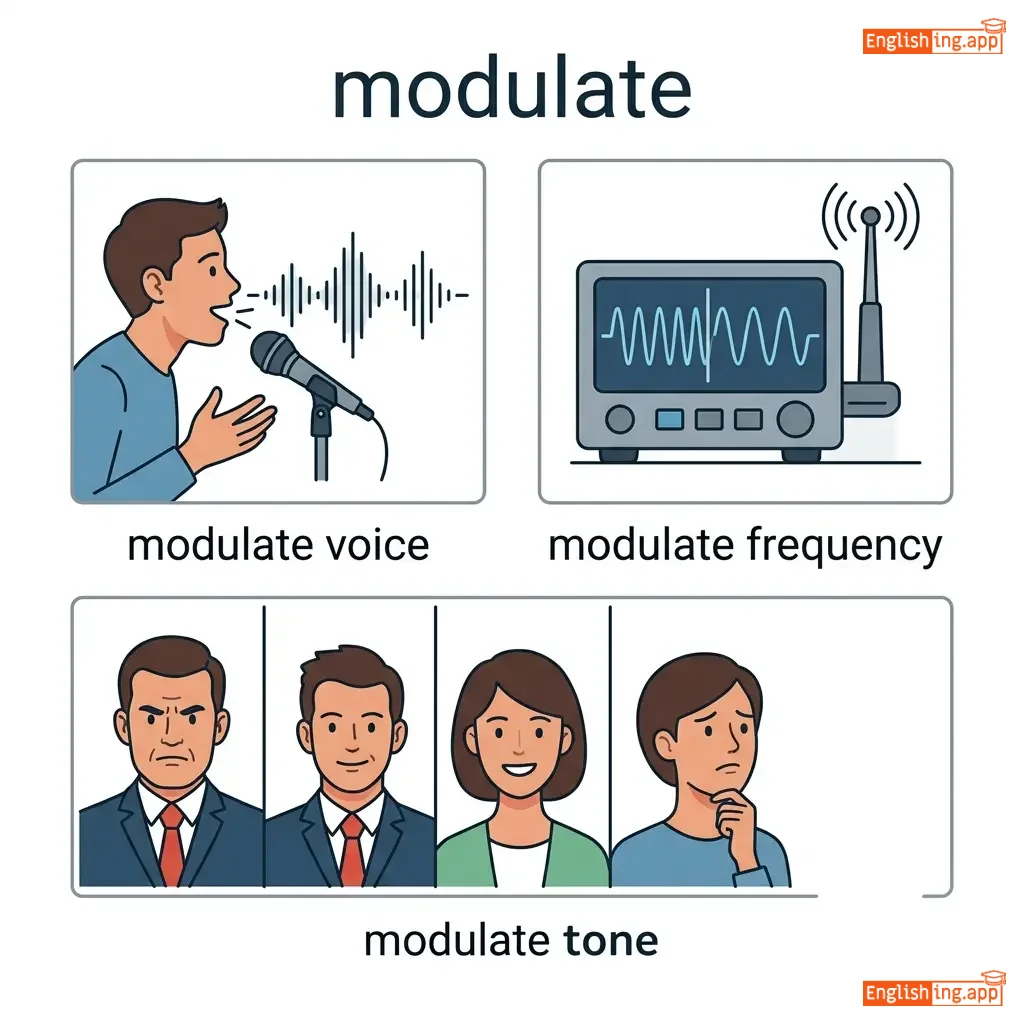
Daher dient Journaling nicht nur dazu, unsere aktuellen Gedanken zu disseminate, sondern hilft uns, unsere Zukunft besser zu modulate.

How Journaling Improves Mental HealthWie Journaling die psychische Gesundheit verbessert
/
/

How Journaling Improves Mental HealthWie Journaling die psychische Gesundheit verbessert - Maske umschalten

Emoji
Wort Images Bedeutung Beispielsatz Synonyme Antonyme
#2001
📝
••••••
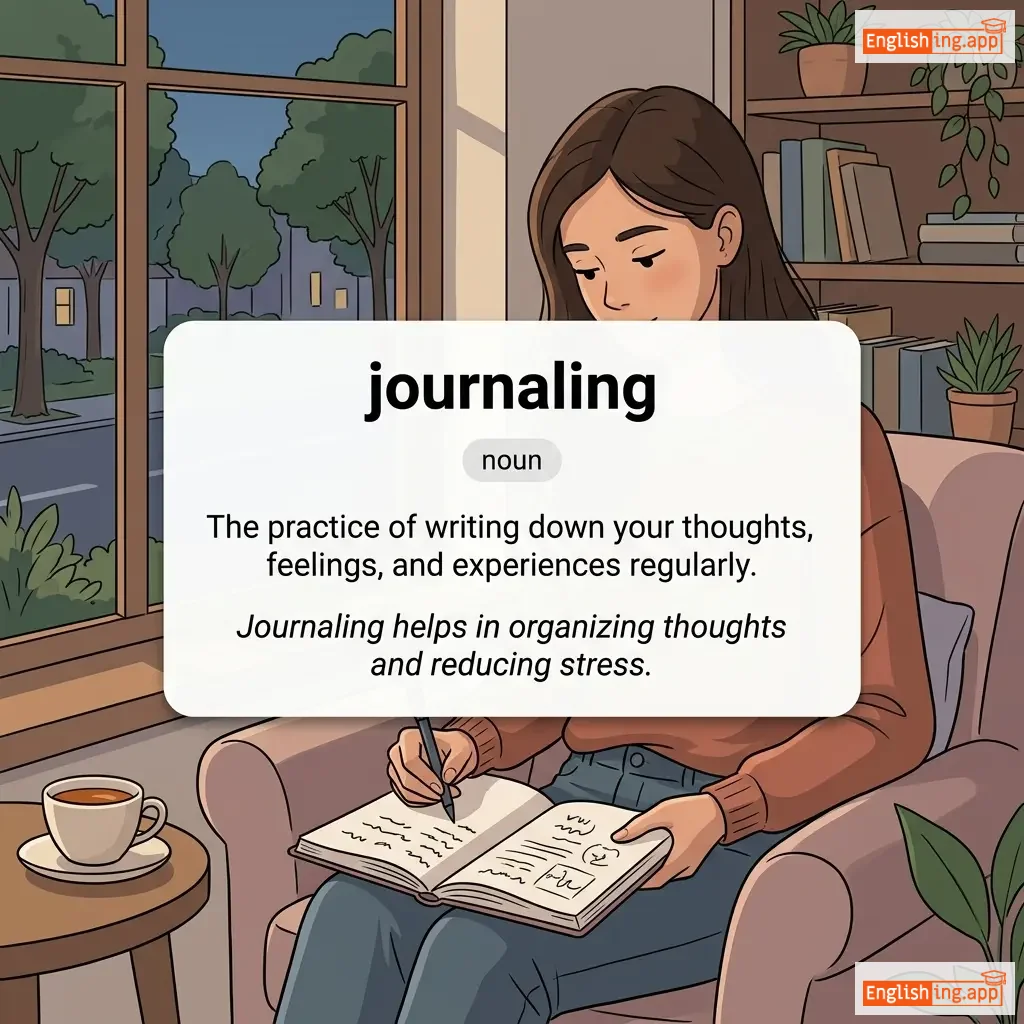
/ˈdʒɝː.nə.lɪŋ/
noun
••••••
••••••
The practice of writing down your thoughts, feelings, and experiences regularly.
••••••

Journaling helps in organizing thoughts and reducing stress.

••••••
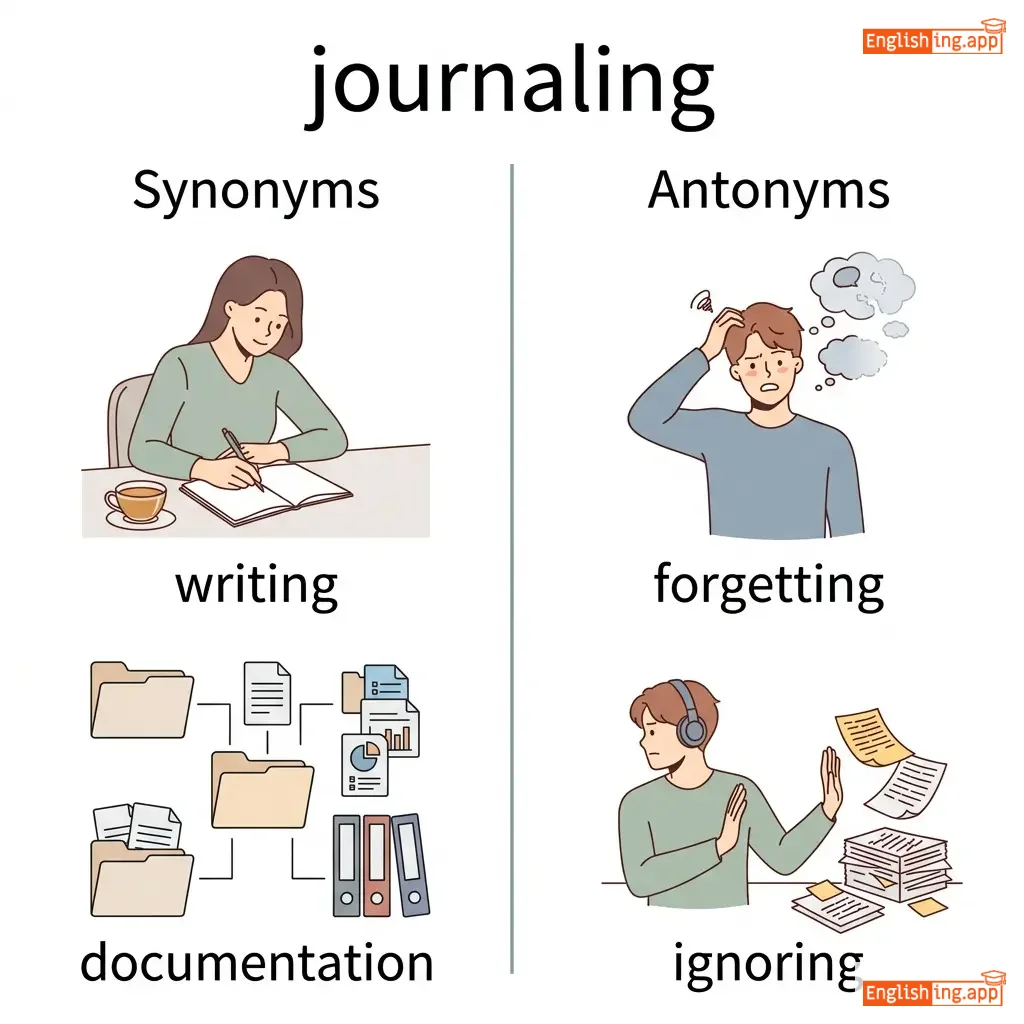
writing, documentation, diary-keeping
••••••
forgetting, ignoring, disregarding
••••••
#2002
💊
••••••
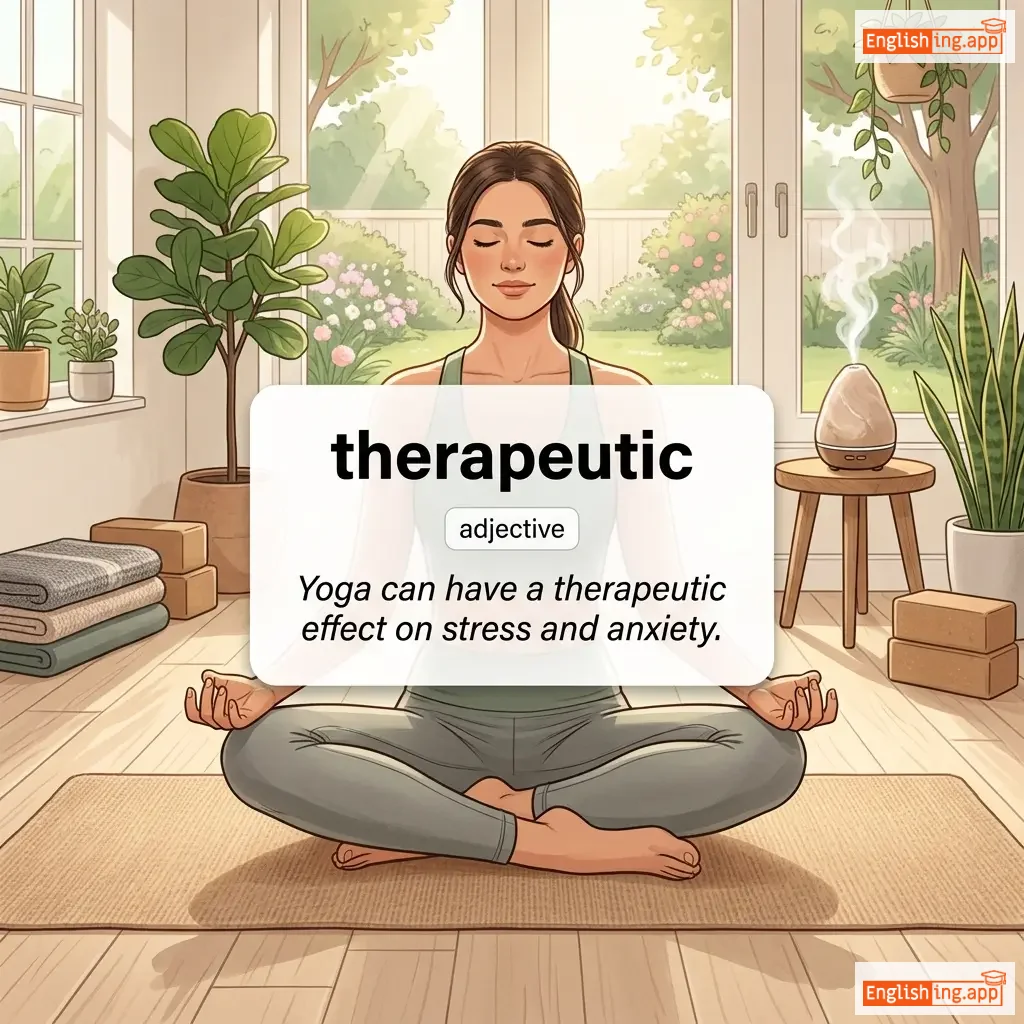
/ˌθɛr.əˈpjuː.tɪk/
adjective
••••••
••••••
Having a healing or beneficial effect on the body or mind.
••••••

Meditation is highly therapeutic for mental well-being.

••••••
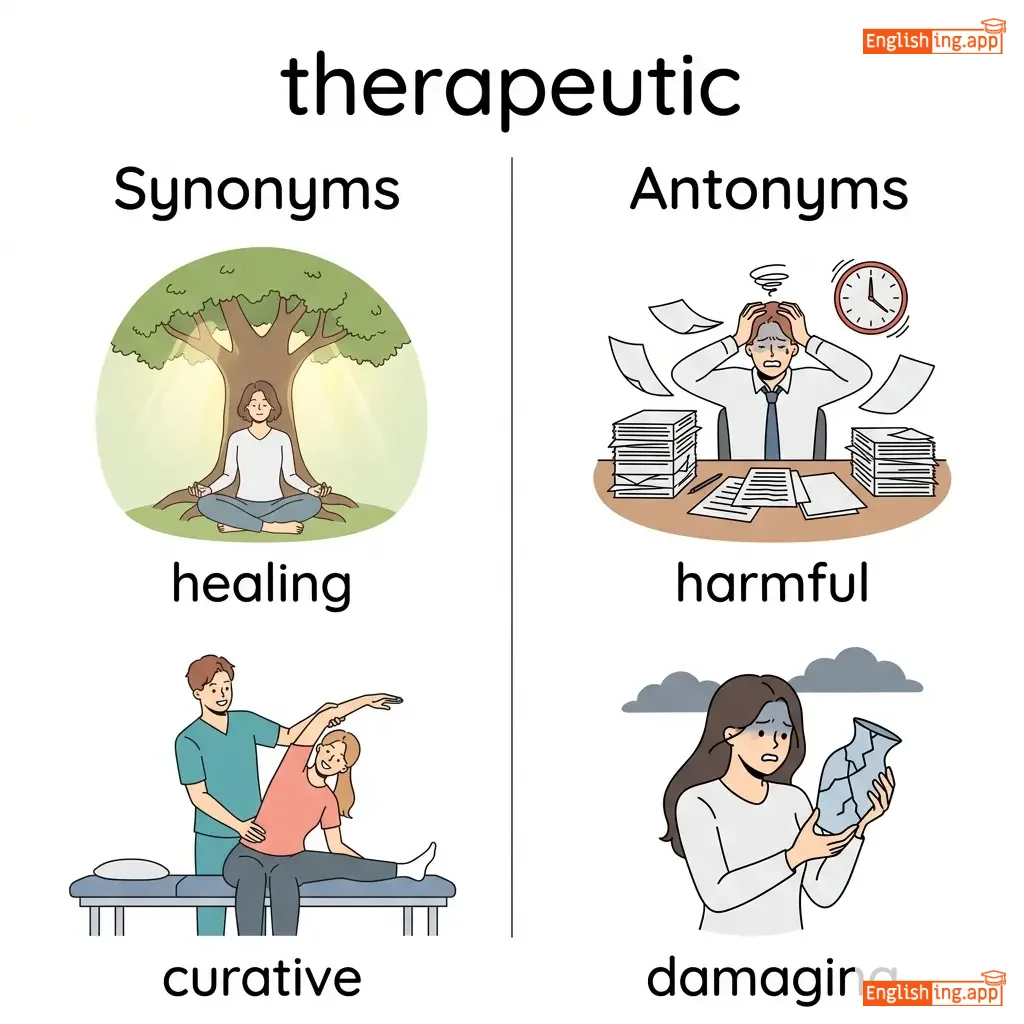
healing, restorative, soothing
••••••
harmful, stressful, aggravating
••••••
#2003
🌊
••••••
/kəˈθɑːr.tɪk/
adjective
••••••
••••••
Providing psychological relief through the open expression of strong emotions.
••••••

Writing about emotions can be a cathartic experience.

••••••
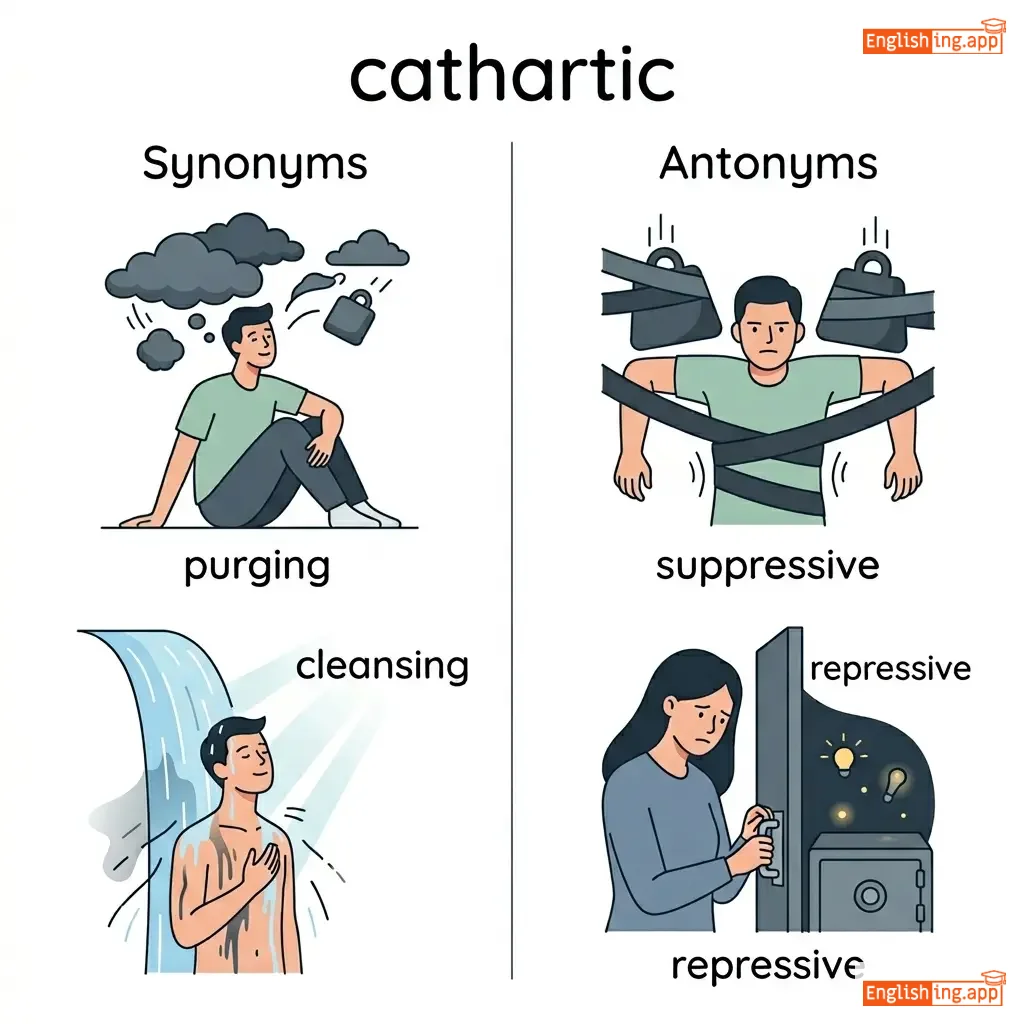
purging, cleansing, emotionally releasing
••••••
repressive, suppressive, unexpressive
••••••
#2004
🧠
••••••
/ˌsʌbˈkɒn.ʃəs/
adjective
••••••
••••••
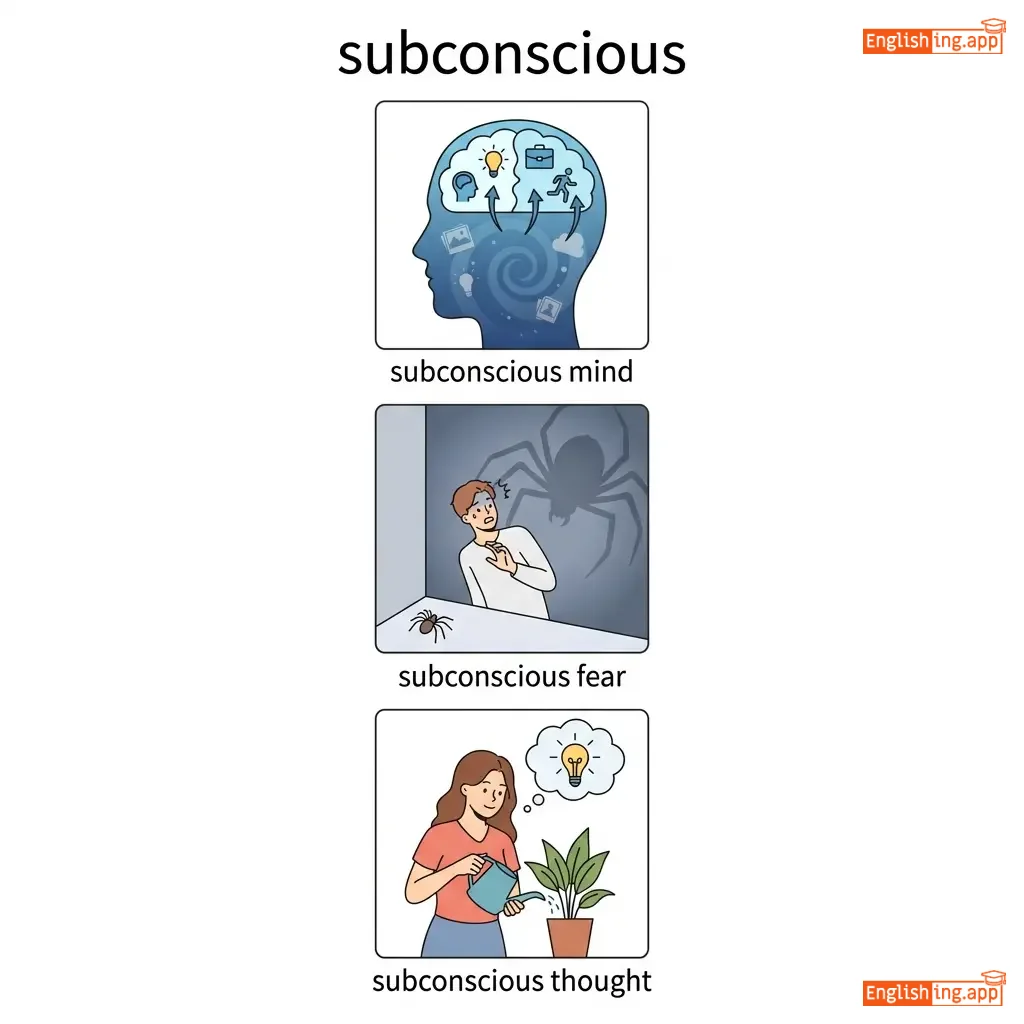
Of or concerning the part of the mind which one is not fully aware of but which influences actions and feelings.
••••••

Fears often come from the subconscious mind.

••••••
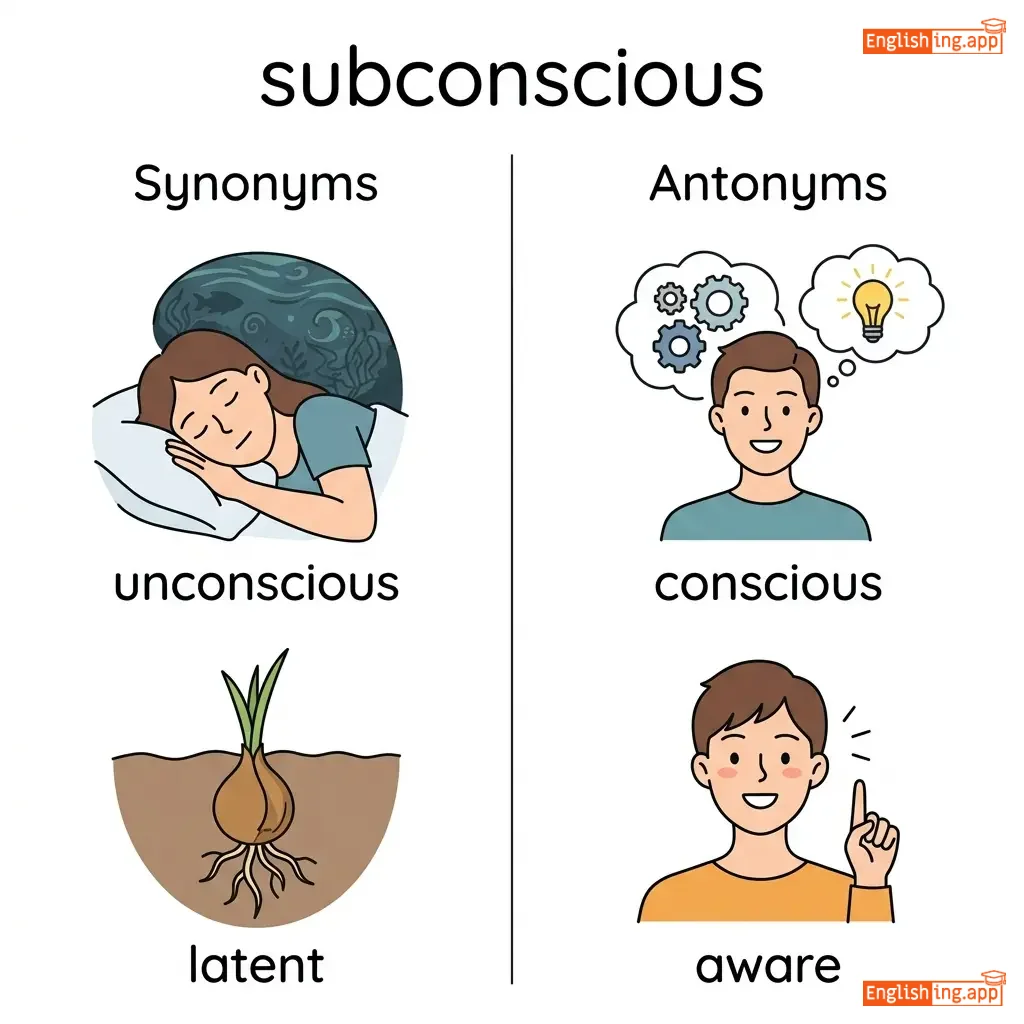
unconscious, deep-seated, instinctive
••••••
conscious, aware, deliberate
••••••
#2005
📚
••••••
/ˈkrɒn.ɪ.kəl/
verb/noun
••••••
••••••
To record events in the order in which they happened; a written record of historical events.
••••••

She decided to chronicle her journey through a blog.

••••••
record, document, log
••••••
erase, omit, suppress
••••••
#2006
👁️
••••••
/ˈkɒɡ.nɪ.zənt/
adjective
••••••
••••••
Having knowledge or being aware of something.
••••••

He was cognizant of the risks before making a decision.

••••••
aware, mindful, informed
••••••
oblivious, unaware, ignorant
••••••
#2007
🤔
••••••
/ˌɪn.trəˈspek.ʃən/
noun
••••••
••••••
The examination or observation of one's own mental and emotional processes.
••••••

Introspection helps people understand their emotions better.

••••••
self-reflection, contemplation, self-analysis
••••••
neglect, indifference, external focus
••••••
#2008
🔍
••••••
/dɪˈsɜːrn.mənt/
noun
••••••
••••••
The ability to judge well; good judgment and understanding.
••••••

His discernment helped him make wise decisions.

••••••
insight, perception, judgement
••••••
ignorance, misjudgment, indiscretion
••••••
#2009
••••••
/ɪmˈbɛl.ɪʃ/
verb
••••••
••••••
To make something more attractive by adding decorative details or exaggerating.
••••••

He tends to embellish stories to make them more interesting.

••••••
decorate, enhance, exaggerate
••••••
simplify, minimize, understate
••••••
#2010
🌅
••••••
/nɒsˈtæl.dʒə/
noun
••••••
••••••
A sentimental longing for the past, typically for a period or place with happy personal associations.
••••••

Listening to old songs fills me with nostalgia.

••••••
sentimentality, reminiscence, longing
••••••
indifference, disinterest, forgetfulness
••••••
#2011
💡
••••••
/ˈluː.sɪd/
adjective
••••••
••••••
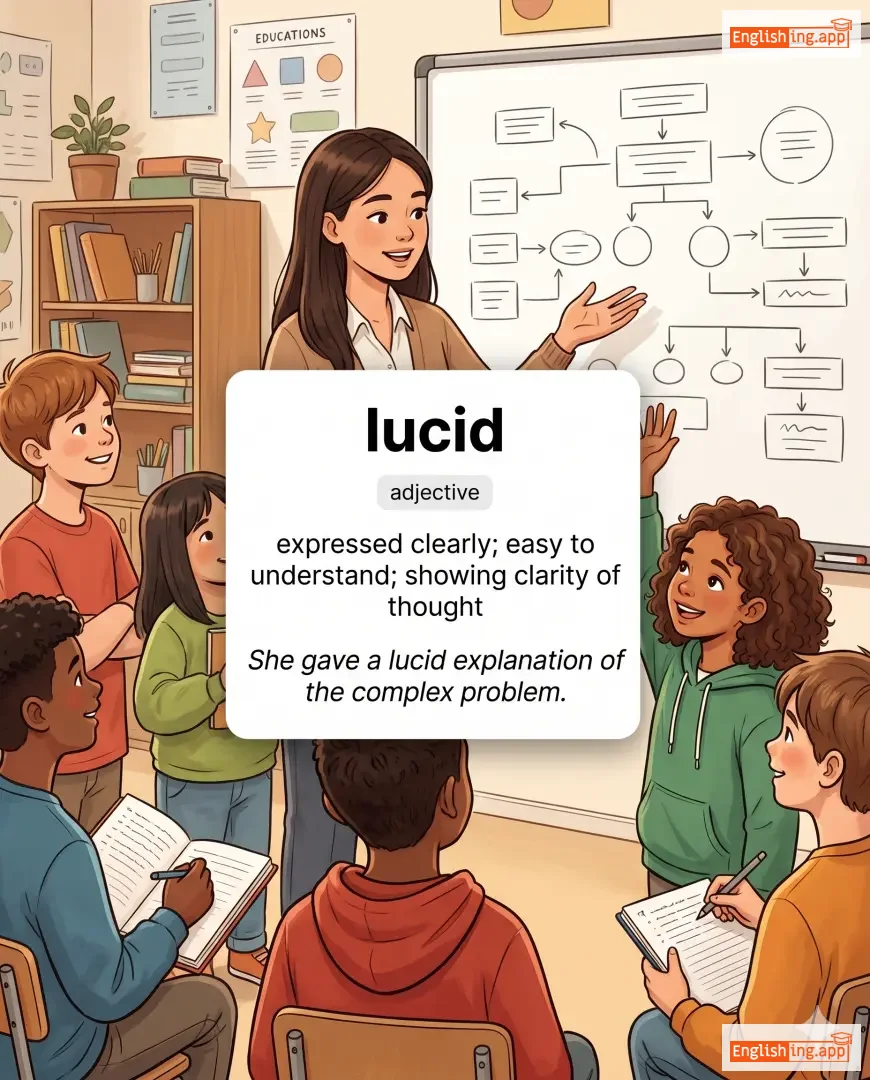
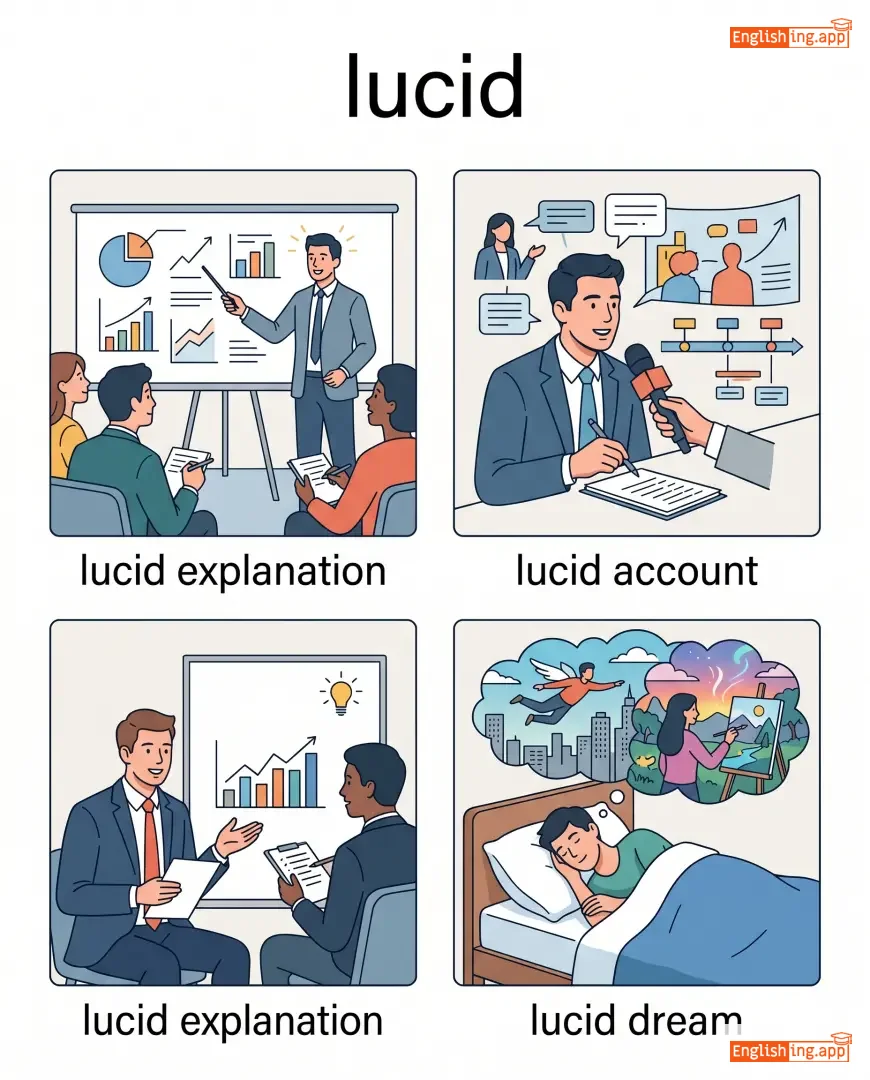
Expressed clearly; easy to understand.
••••••

His explanation was so lucid that everyone understood it.

••••••
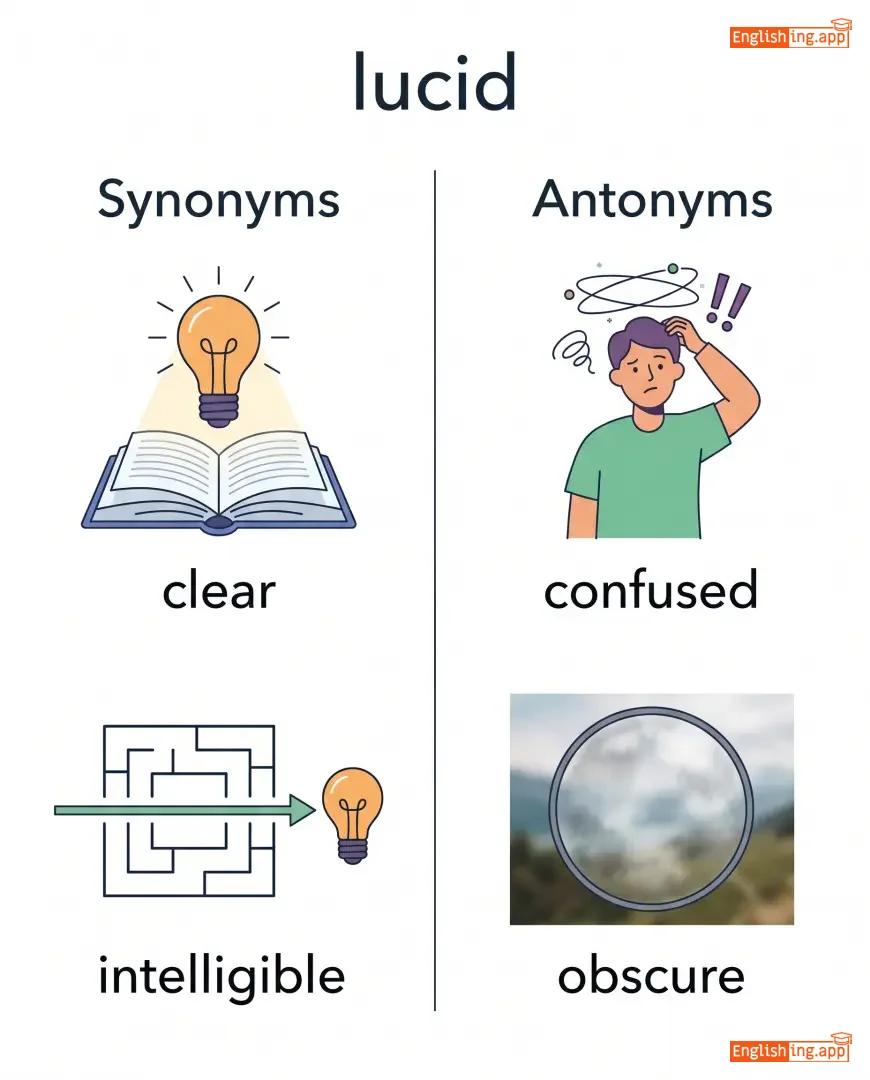
clear, coherent, transparent
••••••
confusing, ambiguous, obscure
••••••
#2012
🌊
••••••
/prəˈfaʊnd/
adjective
••••••
••••••
Very great or intense; having deep insight or understanding.
••••••

The speech had a profound impact on the audience.

••••••
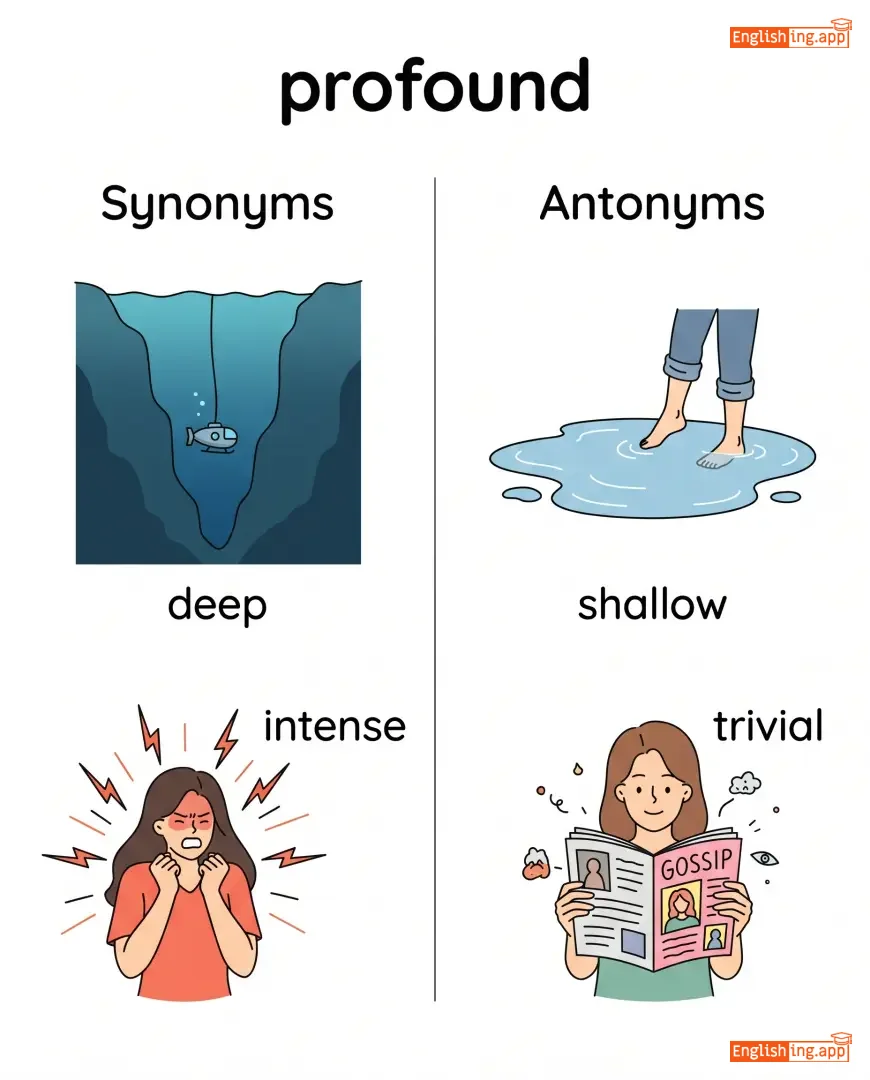
deep, intense, meaningful
••••••
superficial, shallow, insignificant
••••••
#2013
🧘
••••••
/ˌkɒn.təmˈpleɪ.ʃən/
noun
••••••
••••••
The action of looking thoughtfully at something for a long time; deep reflective thought.
••••••

She sat in contemplation before making her decision.

••••••
reflection, meditation, deliberation
••••••
impulsiveness, negligence, thoughtlessness
••••••
#2014
🌱
••••••
/rɪˈdʒuː.və.neɪt/
verb
••••••
••••••
To make someone or something look or feel younger, fresher, or more energetic.
••••••

A vacation can rejuvenate your mind and body.

••••••
revitalize, refresh, renew
••••••
exhaust, weaken, deteriorate
••••••
#2015
📡
••••••
/dɪˈsɛm.ɪ.neɪt/
verb
••••••
••••••
To spread or give out something, especially news, information, ideas, etc., to a lot of people.
••••••

Social media helps to disseminate information quickly.

••••••
distribute, spread, circulate
••••••
conceal, withhold, suppress
••••••
#2016
🎚️
••••••
/ˈmɒd.jʊ.leɪt/
verb
••••••
••••••
To change the strength, tone, or pitch of something; to adjust or regulate.
••••••

A good speaker knows how to modulate their voice.

••••••
adjust, regulate, modify
••••••
intensify, distort, unbalance
••••••