ভোকাবুলারিসমূহ

ইংরেজি শব্দের বাংলা অর্থ | English to Bangla Word Meaning Dictionary

noun
/ˈwɜːrkaʊt/
ব্যায়াম (byayam)

a session of physical exercise or training to improve fitness or health

"She does a full-body workout every morning before work."

"সে প্রতিদিন সকালে কাজের আগে পুরো শরীরের ব্যায়াম করে।" (Se protidin sokale kajer age puro sharirer byayam kore.)
noun
/ˈwɜːrkpleɪs/
কর্মস্থল (kormosthol)

a place where people work, such as an office, factory, or shop

"Maintaining good communication is vital in the workplace."

"কর্মস্থলে ভালো যোগাযোগ বজায় রাখা খুবই গুরুত্বপূর্ণ।" (Kormosthole bhalo jogajog bojay rakha khuboi guruttopurno.)
noun
/wɜːrks/
কাজগুলি (kajguli)

the physical or mental effort used to achieve something

"Her works have been exhibited in museums worldwide."

"তার কাজগুলি বিশ্বব্যাপী মিউজিয়ামে প্রদর্শিত হয়েছে।" (tar kajguli bishwobyaapi mujeeyame prodorshito hoyeche.)
noun
/ˈwɜːrkʃɒp/
ওয়ার্কশপ (workshop)

a room or building where people engage in work or creative activities

"The workshop focused on improving technical skills for young professionals."

"ওয়ার্কশপটি তরুণ পেশাদারদের জন্য প্রযুক্তিগত দক্ষতা উন্নত করার উপর মনোযোগী ছিল।" (workshoptī torun peshadarader jonno proyuktigoto dokkhota unnoto korar upore monojogi chhilo.)
noun
/wɜːrld/
বিশ্ব (bishwo)

the earth, together with all of its countries and people

"The world is becoming more interconnected every day."

"বিশ্ব প্রতিদিন আরও আন্তঃসংযুক্ত হয়ে উঠছে।" (Bishwo protidin aro antosongjukto hoye utchhe.)
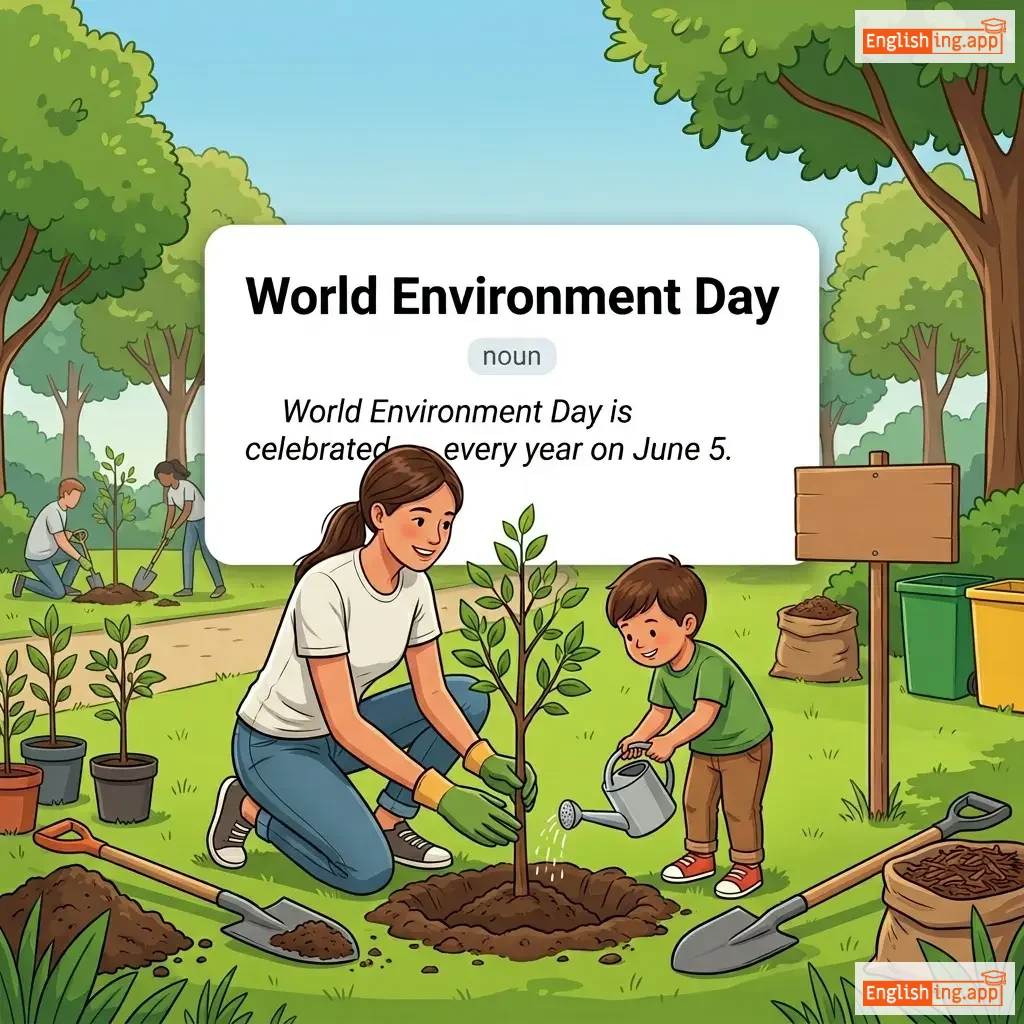
World Environment Day definition card — visual illustration of the meaning
noun
/wɜːrld ɪnˈvaɪrənmənt deɪ/
বিশ্ব পরিবেশ দিবস (bishho poribesh dibosh)

An annual global event celebrated on June 5 to raise awareness about environmental protection and encourage action for environmental conservation.

"World Environment Day is celebrated every year on June 5."

"প্রতি বছর ৫ জুন বিশ্ব পরিবেশ দিবস পালিত হয়।" (Proti bochor 5 jun bishho poribesh dibosh palit hoy.)
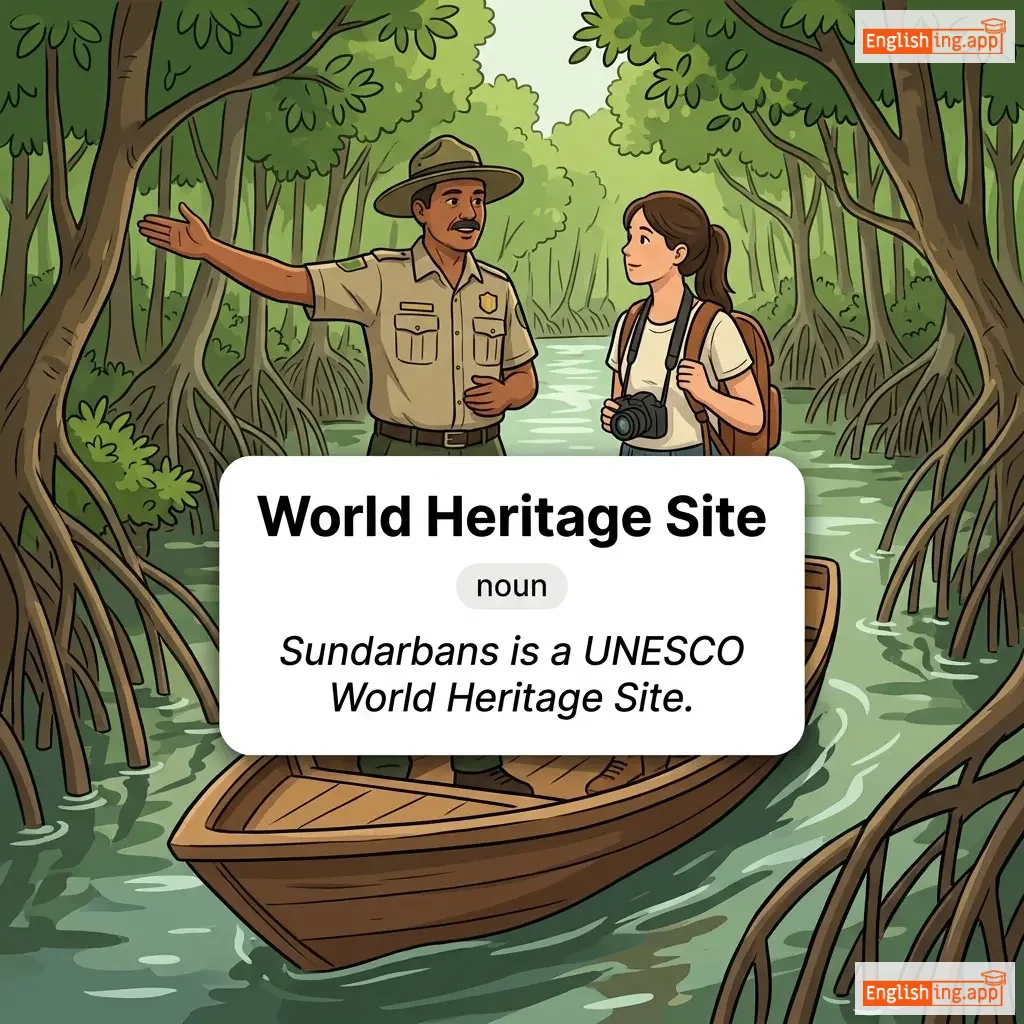
World Heritage Site definition card — visual illustration of the meaning
noun
wɜːrld ˈhɛrɪtɪdʒ saɪt
বিশ্ব ঐতিহ্যবাহী স্থান (bishwo oitihyobahi sthan)

A landmark or area selected by UNESCO for having cultural, historical, scientific or other form of significance.

"Sundarbans is a UNESCO World Heritage Site."

"সুন্দরবন একটি ইউনেস্কো বিশ্ব ঐতিহ্যবাহী স্থান।" (Shundorbon ekti UNESCO bishwo oitihyobahi sthan.)
adjective
/ˈwɜːldli/
ভৌতিক (voutik)

Concerned with material values or ordinary life rather than spiritual matters.

"He was more interested in worldly success than in spiritual growth."

"সে আধ্যাত্মিক উন্নতির চেয়ে ভৌতিক সাফল্যে বেশি আগ্রহী ছিল।" (Se adhyatmik unnotir cheye voutik safolye beshi agrohi chilo.)
adjective
/ˈwɜːrldwaɪd/
বিশ্বব্যাপী (bishwabyapi)

extending or reaching throughout the whole world

"The company has achieved worldwide recognition for its products."

"কোম্পানিটি তার পণ্যের জন্য বিশ্বব্যাপী পরিচিতি অর্জন করেছে।" (Kompani tar ponner jonno bishwabyapi porichiti arjon koreche.)
noun
/wɜːrm/
কীট (keet)

a small, long, soft-bodied invertebrate animal

"The gardener found a worm in the soil."

"বাগানকর্মী মাটির মধ্যে একটি কীট খুঁজে পেল।" (Bagankormi matir modhye ekti keet khunje pel.)
adjective, verb (past participle of wear)
/wɔːrn/
ক্ষয়প্রাপ্ত (khoypropto)

damaged, weakened, or deteriorated from use or age

"His shoes were old and worn."

"তার জুতাগুলো পুরোনো এবং ক্ষয়প্রাপ্ত ছিল।" (Tar jutagulo purono ebong khoypropto chhilo.)
adjective
/ˈwɜːrid/
উদ্বিগ্ন (udbigno)

feeling anxious or concerned about something

"She was worried about the upcoming exam."

"সে আসন্ন পরীক্ষার ব্যাপারে উদ্বিগ্ন ছিল।" (Se asonno porikkhar byapare udbigno chhilo.)
adjective
/ˈwʌrisəm/
বিরক্তিকর; উদ্বেগজনক; (udvegjonok)

causing anxiety or concern; troubling

"The student's declining grades were worrisome to his parents."

"ছাত্রের হ্রাসপ্রাপ্ত নম্বর তার বাবা-মায়ের কাছে উদ্বেগজনক ছিল।" (chhatro-r hrashoprapto nombor tar baba-mayer kachhe udvegjonok chhilo।)
verb
/ˈwʌri/
চিন্তা করা (chinta kora)

to feel anxious or concerned about something

"Don’t worry, everything will be okay."

"চিন্তা করবেন না, সবকিছু ঠিক হয়ে যাবে।" (Chinta korben na, shobkichu thik hoye jabe.)
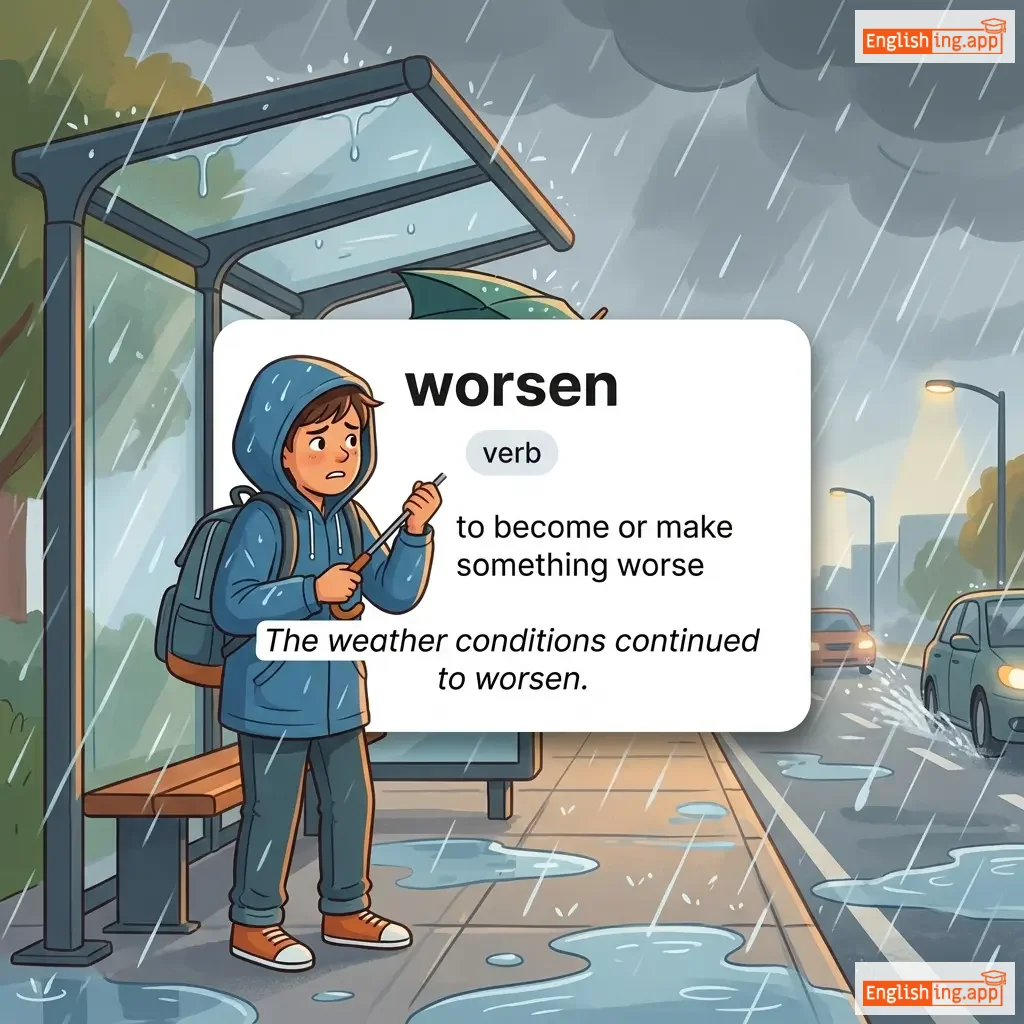
worsen definition card — visual illustration of the meaning
verb
/ˈwɜːrsən/
আরও খারাপ হওয়া (aro kharap howa)

to become or make something worse

"The weather conditions continued to worsen."

"আবহাওয়ার অবস্থা আরও খারাপ হতে থাকল।" (Abohawer obostha aro kharap hote thaklo.)
verb
/ˈwɜːʃɪp/
উপাসনা (upashona)

To show reverence and adoration for a deity or sacred being.

"They gathered at the temple to worship together."

"তারা মন্দিরে একসাথে উপাসনা করতে জড়ো হয়েছিল।" (Tara mondire eksathe upashona korte joro hoyechilo.)
adjective
/wɜːrθ/
মূল্যবান (mulyoban)

having a particular value, especially in terms of money

"The car is worth a lot of money."

"গাড়িটি অনেক অর্থের মূল্যবান।" (Gaditi onek arther mulyoban.)
adjective
/ˈwɜːrθləs/
অকেজো; মূল্যহীন; তুচ্ছ; (mulyoheen)

having no value; useless

"The old computer became worthless after the new software updates."

"নতুন সফটওয়্যার আপডেটের পর পুরানো কম্পিউটারটি মূল্যহীন হয়ে গেল।" (notun software update-er por purano computer-ti mulyoheen hoye gelo।)
adjective
/ˈwɜːrθˌwaɪl/
মূল্যবান (mullooban)

worth the time, effort, or money spent; valuable

"Volunteering at the shelter was a worthwhile experience."

"শেল্টারে স্বেচ্ছাসেবক হওয়া একটি মূল্যবান অভিজ্ঞতা ছিল।" (Shelter-e shochchasebok howa ekti mullooban obhiggota chhilo.)
adjective
/ˈwɜːði/
যোগ্য (joggo)

having value or merit; deserving respect or attention

"She is worthy of praise for her dedication."

"সে তার নিষ্ঠার জন্য প্রশংসার যোগ্য।" (She tar nishthar jonno proshongsar joggo.)
verb
/wʊd/
চাইবে (chaibe)

used to indicate a future possibility or action in the past

"He said he would help me tomorrow."

"সে বলল সে আমাকে কাল সাহায্য করবে।" (She bollo she amake kal sahajjo korbe.)
adjective
/ˈwʊd biː/
হতে ইচ্ছুক; সম্ভাব্য; (hotey ichchhuk)

prospective; intending to be; aspiring

"The would-be actor practiced his lines every day."

"সম্ভাব্য অভিনেতা প্রতিদিন তার সংলাপ অনুশীলন করতেন।" (shombhabyo ovhineta protidinn tar shongolap onushilon koroten.)
noun/verb
/wuːnd/
চোট (chot)

an injury to the body or to harm someone

"He received a deep wound on his arm."

"সে তার হাতে গভীর চোট পেয়েছিল।" (She tar hate gobhir chot peyechilo.)
interjection
/waʊ/
বিস্ময় প্রকাশের শব্দ (bishmoy prokash-er shobdo)

used to express great surprise, admiration, or pleasure

"Wow, that performance was amazing!"

"ওয়াও, পারফরম্যান্সটি সত্যিই অসাধারণ ছিল!" (Wow, performance-ti sottyoi osadharon chhilo!)
noun
/reɪθ/
ভূত (bhut)

A ghost or ghostlike image of someone, especially seen shortly before or after their death.

"A wraith appeared in the fog near the old castle."

"পুরানো দুর্গের কাছে কুয়াশায় একটি ভূত দেখা গেল।" (Purano durger kache kuyashay ekti bhut dekha gelo.)
verb
/ˈræŋɡl̩/
ঝগড়া করা (jhogra kora)

to argue or dispute noisily or angrily

"The two neighbors wrangled over the property line for hours."

"দুই প্রতিবেশী ঘন্টার পর ঘন্টা জমির সীমানা নিয়ে ঝগড়া করল।" (Dui protibeshi ghontar por ghonta jomir simana niye jhogra korlo.)
noun
/ˈræŋɡlər/
গবাদি পশুর রাখাল (gbadi poshur rakhal)

a person who argues noisily; or someone who takes care of livestock on a ranch

"The cowboy worked as a wrangler on the ranch."

"কাউবয় র‍্যাঞ্চে একজন র‍্যাংলার হিসেবে কাজ করত।" (Cowboy ranche ekjon wrangler hisebe kaj korto.)
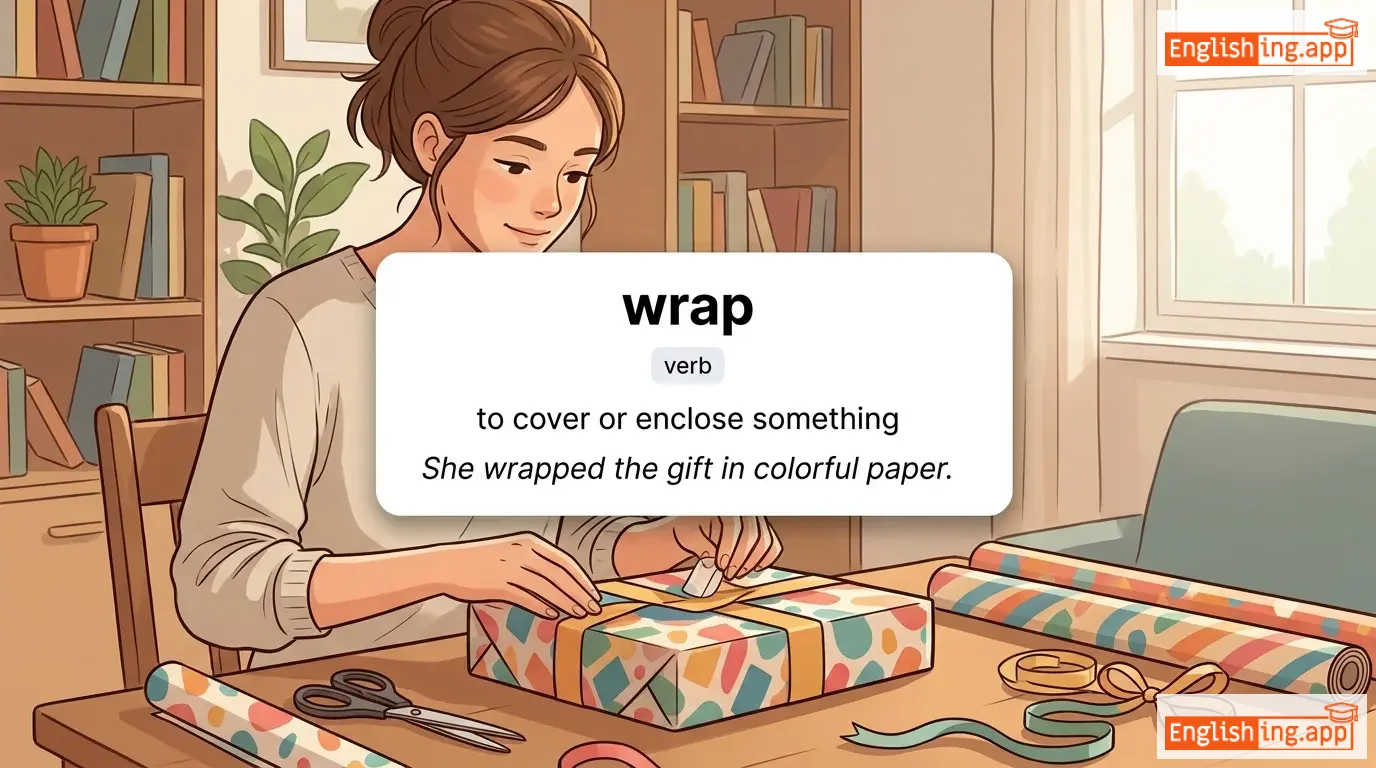
wrap definition card — visual illustration of the meaning
verb
/ræp/
মোড়ানো (morano)

to cover or enclose something

"She wrapped the gift in colorful paper."

"সে উপহারটি রঙিন কাগজে মোড়ানো ছিল।" (She upoharṭi rongin kagoje morano chhilo.)
noun
/ˈræp.ər/
আবরণ (aboron)

a loose garment worn around the body; covering material

"She put on a warm wrapper before going outside."

"বাইরে যাওয়ার আগে সে একটি উষ্ণ আবরণ পরে নিল।" (baire jawar age she ekti ushno aboron pore nilo.)
noun
/ræθ/
প্রচণ্ড রাগ (prochondo rag)

extreme anger or rage

"The king's wrath terrified the villagers."

"রাজার প্রচণ্ড রাগ গ্রামবাসীকে ভীত করেছিল।" (Rajar prochondo rag grambasike viti korechilo.)
verb
/riːk/
ক্ষতি সাধন করা (khoti shadhan kora)

to cause or inflict something, especially damage or harm

"The storm wreaked havoc on the coastal villages."

"ঝড়টি উপকূলীয় গ্রামগুলোতে ভয়াবহ ক্ষতি সাধন করেছিল।" (Jhorti upokoliyo gramgulo te bhoyaboh khoti shadhan korechilo.)
noun
/rek/
বিনাশ; ধ্বংস; (binash)

the destruction or disabling of a ship or vehicle; something that has been badly damaged or destroyed

"The car wreck blocked the highway for hours."

"গাড়ির দুর্ঘটনা ঘন্টার পর ঘন্টা ধরে রাজপথ বন্ধ রেখেছিল।" (garir durghothona ghonta por ghonta dhore rajpath bondho rekhechilo)
verb
/rɛntʃ/
মুচড়ে টানা (muchre tana)

to pull or twist suddenly and violently

"He wrenched the door open in anger."

"সে রাগে দরজাটি মুচড়ে খুলে ফেলল।" (Se rage dorjati muchre khule felllo.)
verb
/rɛst/
বলপ্রয়োগে ছিনিয়ে নেওয়া (bolproyoje chineye newa)

to forcibly pull something from a person's grasp; to seize with effort or struggle

"The police had to wrest the weapon from the suspect's hand."

"পুলিশকে সন্দেহভাজনের হাত থেকে অস্ত্র ছিনিয়ে নিতে হয়েছিল।" (Polishke shondehobajoner hat theke ostro chineye nite hoyechilo.)
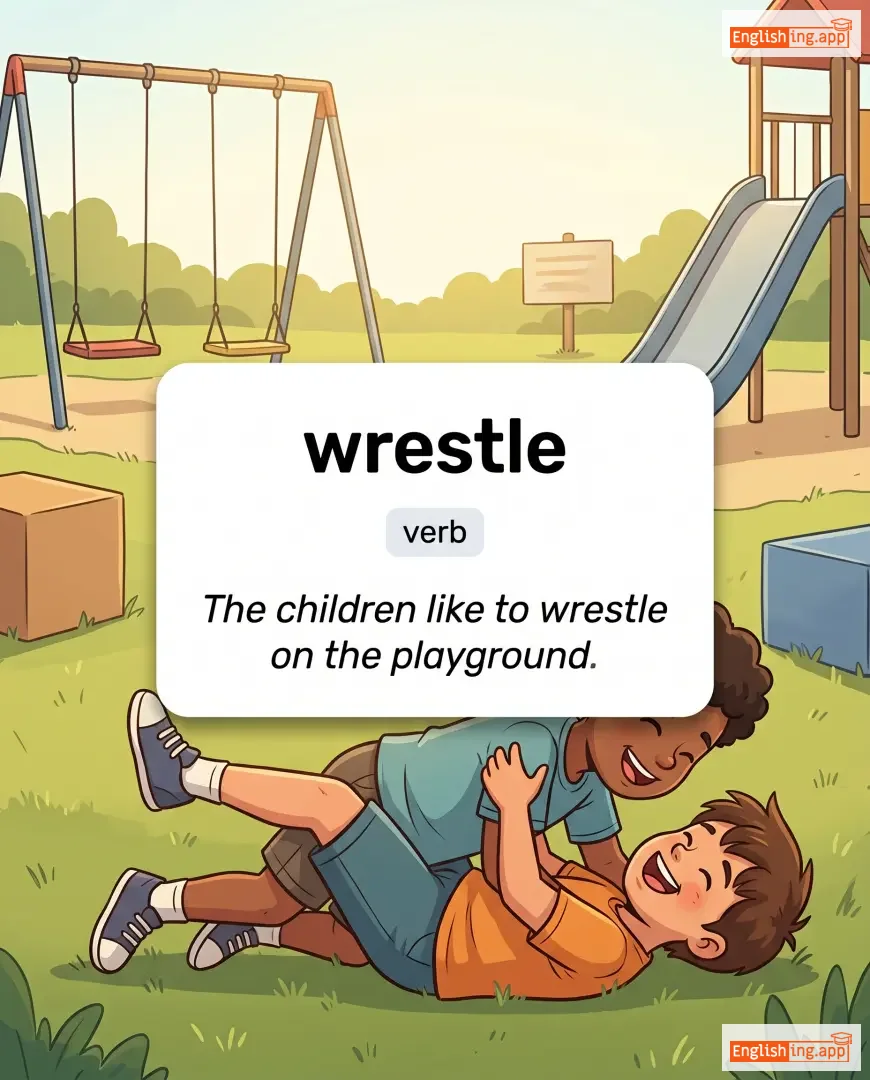
wrestle definition card — visual illustration of the meaning
verb
/ˈresəl/
কুস্তি করা (kushti kora)

to fight by grappling and trying to throw down an opponent; to struggle with a problem

"The children like to wrestle on the playground."

"বাচ্চারা খেলার মাঠে কুস্তি করতে পছন্দ করে।" (Bachchara khelar mathe kushti korte pochondo kore)
noun
/rɛtʃ/
অভাগা ব্যক্তি (obhaga bekti)

an unfortunate or miserable person; a despicable or contemptible person

"The poor wretch was left out in the cold with no shelter."

"অভাগা লোকটি ঠান্ডায় আশ্রয় ছাড়াই বাইরে ফেলে রাখা হয়েছিল।" (Obhaga lokti thanday asroy charai baire phele rakha hoyechilo.)
adjective
/ˈrɛtʃɪd/
দুর্দশাগ্রস্ত (durdoshagrosto)

in a very unhappy, miserable, or poor condition

"They lived in a wretched hut with no clean water."

"তারা একটি দুর্দশাগ্রস্ত কুঁড়েঘরে বাস করত যেখানে পরিষ্কার পানি ছিল না।" (Tara ekti durdoshagrosto kureghore bas korto jekhane porishkar pani chilo na.)
noun
/ˈrɛtʃɪdnəs/
দুর্দশা (durdosha)

a state of misery, unhappiness, or poor condition

"The novel depicts the wretchedness of war victims."

"উপন্যাসটি যুদ্ধের শিকারদের দুর্দশা চিত্রিত করেছে।" (Uponnashti juddher shikar der durdosha chitrito koreche.)
verb
/rɪŋ/
মোচড় দিয়ে চিপে ধরা (mochor diye chipe dhora)

to squeeze and twist something to force liquid out; to extract with effort

"She had to wring the towel after washing it."

"ধোয়ার পর তাকে তোয়ালেটি চিপে ধরতে হয়েছিল।" (Dhoar por take towaleti chipe dhorte hoyechilo.)
noun/verb
/ˈrɪŋ.kəl/
ভাঁজ (bhaj)

A small line or fold in the skin or fabric; to form small folds or lines.

"The old shirt had many wrinkles."

"পুরনো শার্টে অনেক ভাঁজ ছিল।" (Purono sharte onek bhaj chilo.)
noun
/rɪst/
কব্জি (kobji)

the joint connecting the hand with the forearm

"He wore a smartwatch on his left wrist."

"সে তার বাম কব্জিতে একটি স্মার্টওয়াচ পরেছিল।" (Se tar bam kobjite ekti smartwatch porechhilo.)
noun
/rɪt/
রিট (rit)

A formal written order issued by a court.

"The judge issued a writ of habeas corpus."

"বিচারক হেবিয়াস কর্পাস রিট জারি করেছিলেন।" (Bicharak habeas corpus rit jari korechilen.)
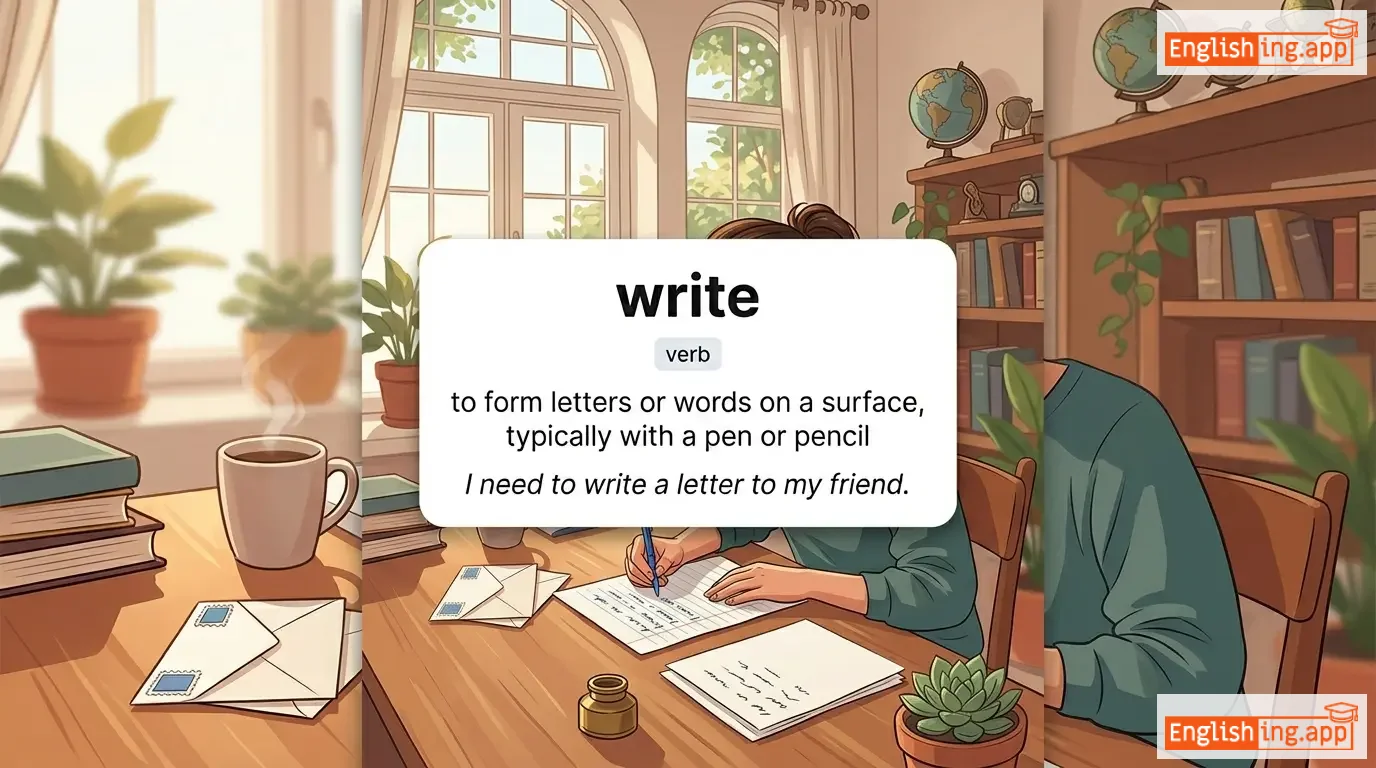
write definition card — visual illustration of the meaning
verb
/raɪt/
লিখা (likha)

to form letters or words on a surface, typically with a pen or pencil

"I need to write a letter to my friend."

"আমাকে আমার বন্ধুর কাছে একটি চিঠি লিখতে হবে।" (Amake amar bondhur kache ekti chithi likhte hobe.)
noun
/ˈraɪtər/
লেখক (lekhok)

a person who writes, especially as a profession

"The writer published a new novel last month."

"লেখক গত মাসে একটি নতুন উপন্যাস প্রকাশ করেছেন।" (Lekhoke gotho mashe ekta notun uponyash prokash korechhen.)
verb
/raɪð/
কাতরানো (katarano)

To twist or squirm in pain or discomfort.

"He writhed in pain after twisting his ankle."

"গোড়ালি মচকে যাওয়ার পর সে ব্যথায় কাতরাচ্ছিল।" (Gorali mochke jawar por se byathay katarachchhilo.)
noun/verb
/ˈraɪ.tɪŋ/
লেখা (lekha)

The activity of putting words on paper or composing text; the written form of communication.

"She spends hours every day on her creative writing."

"সে প্রতিদিন কয়েক ঘন্টা তার সৃজনশীল লেখায় কাটায়।" (Se protidin koyek ghonta tar srijonshil lekhay katae.)
adjective
/ˈrɪtən/
লিখিত (likhito)

expressed in writing rather than spoken; composed or recorded in written form

"The agreement must be in written form to be valid."

"চুক্তিটি বৈধ হতে হলে লিখিত আকারে হতে হবে।" (Chuktiti boidhho hote hole likhito akare hote hobe.)
adjective
/rɒŋ/
ভুল (bhul)

not correct or true; mistaken

"It is wrong to cheat on a test."

"পরীক্ষায় প্রতারণা করা ভুল।" (Porikkhay protorona kora bhul.)
adjective
/ˌrɒŋˈhɛd.ɪd/
ভুল ধারণাপ্রসূত (bhul dharanaprosuto)

Having or showing bad judgment or stubbornly holding to wrong ideas.

"The policy was considered wrongheaded and harmful."

"নীতিটিকে ভুল ধারণাপ্রসূত ও ক্ষতিকর হিসেবে বিবেচনা করা হয়েছিল।" (Nititike bhul dharanaprosuto o khotikor hisebe bichar kora hoyechhilo.)
adverb
/ˈrɒŋli/
ভুলভাবে (bhulbhabe)

in an incorrect or mistaken way; unfairly or unjustly

"He was wrongly accused of the crime."

"তাকে অপরাধের জন্য ভুলভাবে অভিযুক্ত করা হয়েছিল।" (take oporadher jonno bhulbhabe obhijukto kora hoyechilo)