ভোকাবুলারিসমূহ

ইংরেজি শব্দের বাংলা অর্থ | English to Bangla Word Meaning Dictionary

preposition
/wɪð/
সাথে (sathé)

indicating the person or thing that is accompanying or involved with someone or something else

"She went to the market with her friend."

"সে তার বন্ধুর সাথে বাজারে গিয়েছিল।" (Se tar bondhur sathe bajare giyechilo.)
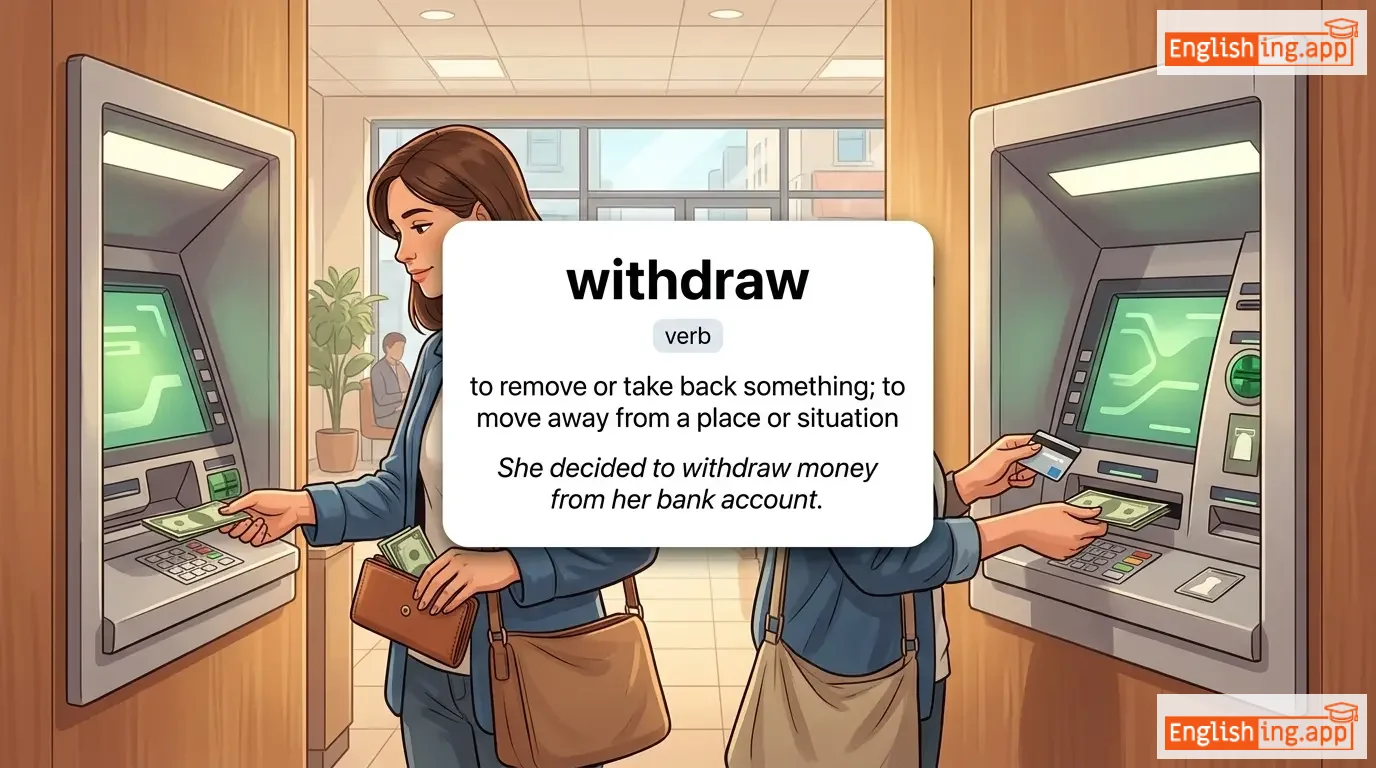
withdraw definition card — visual illustration of the meaning
verb
/wɪðˈdrɔː/
প্রত্যাহার করা (protyahar kora)

to remove or take back something; to move away from a place or situation

"She decided to withdraw money from her bank account."

"সে তার ব্যাংক অ্যাকাউন্ট থেকে টাকা তোলার সিদ্ধান্ত নিল।" (se tar bank account theke taka tolar siddhanto nilo.)
noun
/wɪðˈdrɔːəl/
প্রত্যাহার, উত্তোলন (protyahar, uttholon)

the act of taking something back or removing oneself from a situation

"He made a withdrawal of $500 from his bank account."

"সে তার ব্যাংক অ্যাকাউন্ট থেকে ৫০০ ডলার উত্তোলন করেছে।" (Se tar bank account theke 500 dollar uttholon koreche.)
adjective
/wɪðˈdrɔːn/
অন্তর্মুখী (ontormukhi)

quiet and shy; not wanting to talk to others

"After the incident, he became withdrawn and avoided his friends."

"ঘটনার পরে সে অন্তর্মুখী হয়ে গেল এবং তার বন্ধুদের এড়িয়ে চলল।" (ghotonar pore se ontormukhi hoye gelo ebong tar bondhuder eriye chollo.)
verb
/ˈwɪð.ər/
মলিন হওয়া (molin howa)

to dry up and die, typically used for plants

"The flowers will wither without enough water."

"ফুলগুলো পর্যাপ্ত পানি না পেলে ম্লান হয়ে যাবে।" (phulgulo porjapto pani na pele mlan hoye jabe.)
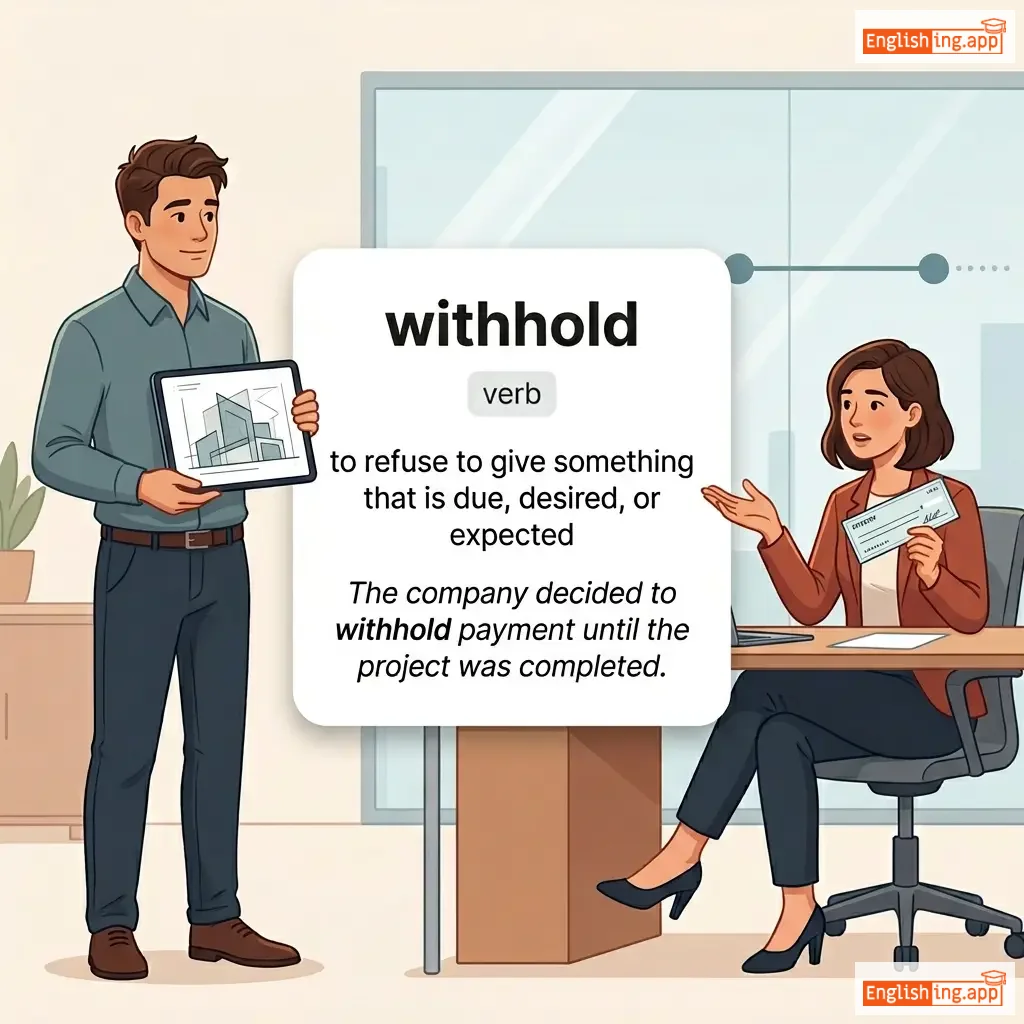
withhold definition card — visual illustration of the meaning
verb
/wɪðˈhoʊld/
প্রত্যাহার করা / আটকানো (protyahar kora / atkao)

to refuse to give something that is due, desired, or expected

"The company decided to withhold payment until the project was completed."

"প্রতিষ্ঠানটি প্রকল্প শেষ না হওয়া পর্যন্ত অর্থ আটকে রাখার সিদ্ধান্ত নিল।" (Protishtanti projokt shesh na hoa porjonto ortho atke rakhar siddhanto nilo.)
preposition
/wɪðˈɪn/
মধ্যে (modhye)

inside the limits of something, or as part of a particular space or time

"The keys are within the drawer."

"চাবিগুলো ড্রয়ারের মধ্যে রয়েছে।" (Chabigulo drawar er modhye royechhe.)
preposition
/wɪðˈaʊt/
ছাড়া (chara)

in the absence of, or not having something

"He left without saying goodbye."

"সে বিদায় না জানিয়ে চলে গেল।" (Se biday na janiye chole gechilo.)
verb
/wɪðˈstænd/
সহ্য করা / প্রতিরোধ করা (shohjo kora / protirodh kora)

to resist or endure something without being harmed

"This building can withstand strong earthquakes."

"এই ভবনটি শক্তিশালী ভূমিকম্প সহ্য করতে পারে।" (Ei bhobonti shoktishali bhumikompo shohjo korte pare.)
adjective
/ˈwɪtləs/
অবুদ্ধিমান / নির্বোধ (obuddhiman / nirbodh)

lacking intelligence or good sense

"It was a witless decision to leave the door unlocked."

"দরজা খোলা রেখে যাওয়া ছিল এক নির্বোধ সিদ্ধান্ত।" (Dorja khola rekhe jaoa chhilo ek nirbodh siddhanto.)
noun
/ˈwɪtlɪŋ/
বোকা / ভণ্ড বুদ্ধিমান (boka / bhondo buddhiman)

a person who has little wit or pretends to be witty

"He acted like a witling among scholars."

"সে পণ্ডিতদের মধ্যে এক বোকা সাজার চেষ্টা করেছিল।" (Se ponditder modhye ek boka sajar cheshta korechhilo.)
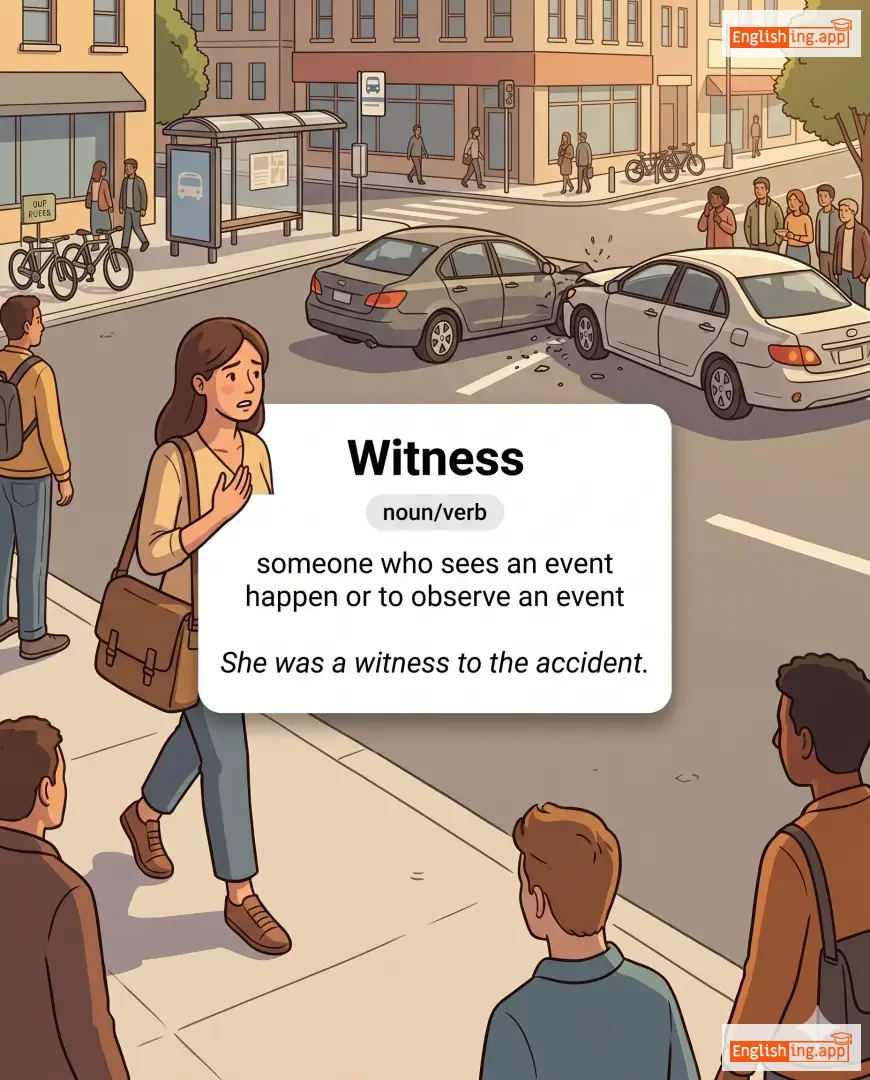
Witness definition card — visual illustration of the meaning
noun/verb
/ˈwɪtnɪs/
সাক্ষী (sakhshi)

someone who sees an event happen or to observe an event

"She was a witness to the accident."

"সে দুর্ঘটনার সাক্ষী ছিল।" (Se durghotonar sakhshi chhilo.)
noun
/ˈwɪtɪˌsɪzəm/
চতুর উক্তি / হাস্যরসাত্মক মন্তব্য (chotur ukkhi / hasyarosatmak montobbo)

a clever or funny remark

"Her witticism made everyone laugh during the meeting."

"তার বুদ্ধিদীপ্ত মন্তব্য সবাইকে হাসিয়েছিল মিটিং চলাকালীন।" (Tar buddhidipto montobbo sobaike hasiyachhilo meeting cholakaline.)
adverb
/ˈwɪtɪŋli/
ইচ্ছাকৃতভাবে (ichchhakritobhabe)

Consciously and intentionally; on purpose.

"He wittingly withheld information from the police."

"সে ইচ্ছাকৃতভাবে পুলিশের কাছ থেকে তথ্য গোপন করেছিল।" (Se ichchhakritobhabe polisher kach theke tothyo gopon korechilo.)
adjective
/ˈwɪt.i/
বুদ্ধিদীপ্ত; রসিক; চতুর; (buddhidipto; roshik; chatur)

having or showing quick intelligence; amusing in a clever way

"Her witty response to the critic's question impressed the entire audience."

"সমালোচকের প্রশ্নের প্রতি তার বুদ্ধিদীপ্ত উত্তর সমগ্র দর্শকদের মুগ্ধ করেছিল।" (shomalocheker proshner proti tar buddhidipto uttor shomogro dorshokder mugdho korechilo)
noun
/ˈwɪzərd/
জাদুকর; জাদুকর; বোঝাপড়; (jadukor)

a man who is supposed to have magical powers; a person who is very skilled in a particular area

"The wizard performed amazing magic tricks."

"জাদুকর অবিশ্বাস্য জাদুর কৌশল দেখাল।" (jadukor obishshashyo jadur koushol dekhalo)
noun
/ˈwɪzərdri/
যাদুকরী দক্ষতা (jadukori dakkhota)

The art or practice of magic; great skill or expertise in something.

"The programmer's wizardry amazed everyone in the room."

"প্রোগ্রামারের দক্ষতা সবাইকে অবাক করে দিয়েছিল।" (Programarer dakkhota sobaike abak kore diyechhilo.)
verb
/ˈwɪzn/
শুকিয়ে যাওয়া (shukie jaoya)

To become dry, shrunken, and wrinkled.

"The flowers began to wizen after days without water."

"পানি ছাড়া কয়েকদিন পর ফুলগুলো শুকিয়ে যেতে শুরু করল।" (Pani chhara koyekdin por phulgulo shukie jete shuru korlo.)
adjective
/ˈwɪzn feɪst/
কুঁচকানো মুখবিশিষ্ট (kuchkano mukhbishishto)

Having a dry, wrinkled, and withered face.

"A wizen-faced old man sat quietly in the corner."

"একজন কুঁচকানো মুখের বৃদ্ধ চুপচাপ কোণে বসে ছিল।" (Ekjôn kuchkano mukher bridho chupchap kone boshe chhilo.)
adjective
/ˈwɪznd/
কুঁচকানো (kuchkano)

Shriveled, wrinkled, or withered, often due to age.

"The wizened tree stood in the field for centuries."

"শতাব্দীর পর শতাব্দী ধরে সেই কুঁচকানো গাছটি মাঠে দাঁড়িয়ে ছিল।" (Shotabdir por shotabdi dhore sei kuchkano gachh-ti mathe darie chhilo.)
verb
/ˈwɒb.l̩/
ডগমগ করা (dogmog kora)

to move unsteadily from side to side; to shake or tremble slightly

"The table began to wobble when he leaned on it."

"সে টেবিলে হেলান দিলে টেবিলটি ডগমগ করতে শুরু করল।" (Se tebile helan dile tebilti dogmog korte shuru korlo.)
noun
/woʊ/
দুঃখ (dukkho)

great sorrow, distress, or trouble

"Her heart was filled with woe after hearing the sad news."

"দুঃখজনক খবর শুনে তার হৃদয় দুঃখে ভরে গিয়েছিল।" (Dukkhojonok khobor shune tar hridoy dukkhe bhore giyechhilo.)
adjective
/ˈwoʊ.fəl/
দুঃখজনক (dukkhojonok)

full of woe; very sad or miserable; also used to mean very bad or deplorable

"He gave me a woeful look when he lost the match."

"সে ম্যাচ হারানোর সময় আমাকে দুঃখজনক দৃষ্টিতে দেখেছিল।" (Se match haranor somoy amake dukkhojonok drishtite dekhechhilo.)
noun
/woʊz/
দুর্দশা (durdosha)

great sorrow or distress; troubles

"The company faced financial woes after the market crash."

"বাজার ধসের পর কোম্পানি আর্থিক দুর্দশার সম্মুখীন হয়েছিল।" (Bazar dhoser por company arthik durdoshar shommukhin hoyechhilo.)
noun
/wʊlf/
নেকড়ে (nekre)

a wild carnivorous animal related to the dog, living and hunting in packs

"The wolf howled loudly under the full moon."

"পূর্ণিমার চাঁদের নিচে নেকড়েটি জোরে ডাকছিল।" (Purnimar chander niche nekreti jore dakchhilo.)
noun
/ˈwɪmən/
মহিলা (mohila)

an adult human female

"The woman at the counter helped me."

"কাউন্টারে থাকা মহিলা আমাকে সাহায্য করেছিলেন।" (Counter-e thaka mohila amake sahajjo korechhilen.)
noun
/ˈwʌndər/
আশ্চর্য (ashchoryo)

a feeling of amazement and admiration, caused by something beautiful, remarkable, or unfamiliar

"The view from the mountain was a true wonder."

"পাহাড়ের চূড়া থেকে দৃশ্য ছিল একটি সত্যিকারের আশ্চর্য।" (Paharer chura theke drishyo chhilo ekti sothikare ashchoryo.)
adjective
/ˈwʌndərfəl/
অসাধারণ (osadharon)

extremely good or impressive

"She had a wonderful time at the party."

"সে পার্টিতে অসাধারণ সময় কাটিয়েছিল।" (Se partite osadharon shomoy katiyechhilo.)
adjective
/ˈwɒŋki/
নড়বড়ে; অনির্ভরযোগ্য; (norboro-e)

unstable; unreliable; not working properly

"The old chair was wonky and wobbled every time someone sat on it."

"পুরানো চেয়ারটি নড়বড়ে ছিল এবং যখনই কেউ তার উপর বসত তখন দুলত।" (purano cheyar-ti norboro-e chhilo ebong jokhon-i keu tar upor bosoto tokhon dulto।)
adjective
/woʊnt/ or /wɔːnt/
অভ্যস্ত (obhbosto)

accustomed or used to doing something

"She rose early, as she was wont to do."

"সে যেমন অভ্যস্ত, তেমনি ভোরে উঠেছিল।" (Se jemon obhbosto, temni bhore uthhechhilo.)
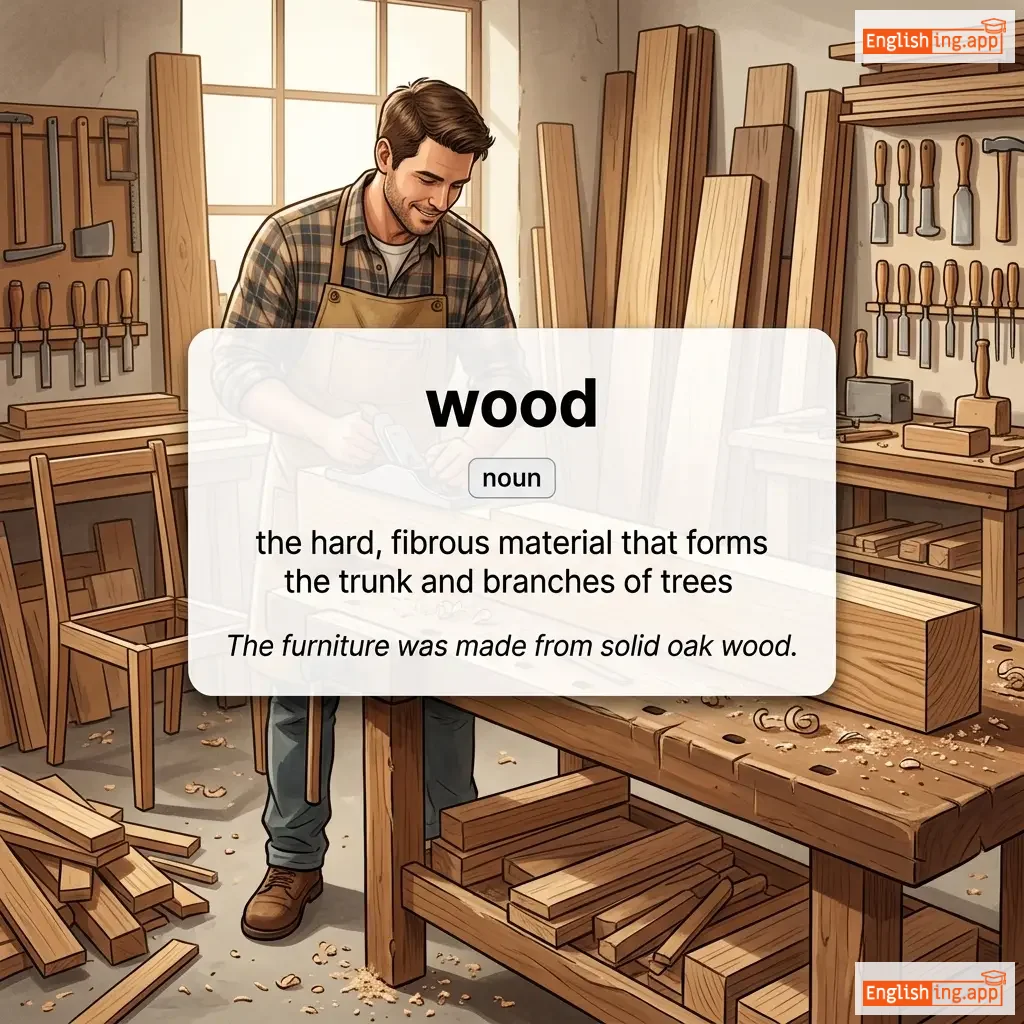
wood definition card — visual illustration of the meaning
noun
/wʊd/
কাঠ (kath)

the hard, fibrous material that forms the trunk and branches of trees

"The furniture was made from solid oak wood."

"ফার্নিচারটি সলিড ওক কাঠ থেকে তৈরি করা হয়েছিল।" (Furnichar ti solid oak kath theke toiri kora hoyechhilo.)
noun
/wʊd ˈæp.əl/
বেল (bel)

a hard-shelled tropical fruit with aromatic pulp used in beverages and medicine

"The wood apple has a hard shell but sweet pulp inside."

"বেল ফলের খোসা শক্ত কিন্তু ভিতরে মিষ্টি শাঁস থাকে।" (bel foler khosa shokto kintu bhitore mishti shash thake)
adjective
/ˈwʊdən/
কাঠের (kather)

made of wood

"The house had beautiful wooden floors."

"বাড়ির সুন্দর কাঠের মেঝে ছিল।" (Bari r sundor kather meze chhilo.)
noun
/ˈwʊd.ən ˈsæn.dəl/
খড়ম (khorom)

a type of footwear made of wood, typically worn as traditional shoes

"She wore wooden sandals to the traditional ceremony."

"তিনি ঐতিহ্যবাহী অনুষ্ঠানে খড়ম পরেছিলেন।" (tini oitihyabahi onushtthane khorom porechilen.)
noun
/ˈwʊd.pek.ər/
কাঠঠোকরা (kaththokra)

a bird that pecks at tree bark to find insects and create nesting holes

"The woodpecker hammered against the oak tree."

"কাঠঠোকরা ওক গাছের গায়ে ঠুকরে দিল।" (kaththokra oak gacher gaye thukre dilo)
noun
/ˈwʊlən dres/
উলেন পোশাক (ulen poshak)

a dress made from wool fabric, typically worn in cold weather

"She wore a warm woolen dress during the winter months."

"শীতের মাসগুলিতে তিনি একটি গরম উলেন পোশাক পরতেন।" (shiter mashgulite tini ekti gorom ulen poshak porten)
noun
/wɜːrd/
শব্দ (shobdo)

a single distinct meaningful element of speech or writing

"He looked up the word in the dictionary."

"সে অভিধানে শব্দটি খুঁজেছিল।" (Se abhidane shobdoti khujechhilo.)
noun
/wɜːrd fɔːrˈmeɪʃən/
শব্দ গঠন (shobdo gothon)

the process by which new words are created or existing words are modified in a language

"Word formation helps learners understand how new vocabulary develops in English."

"শব্দ গঠন ইংরেজিতে নতুন শব্দ কীভাবে তৈরি হয় তা বুঝতে সাহায্য করে।" (shobdo gothon ingrejite notun shobdo kivabe toiri hoy ta bujhte shahajjo kore)
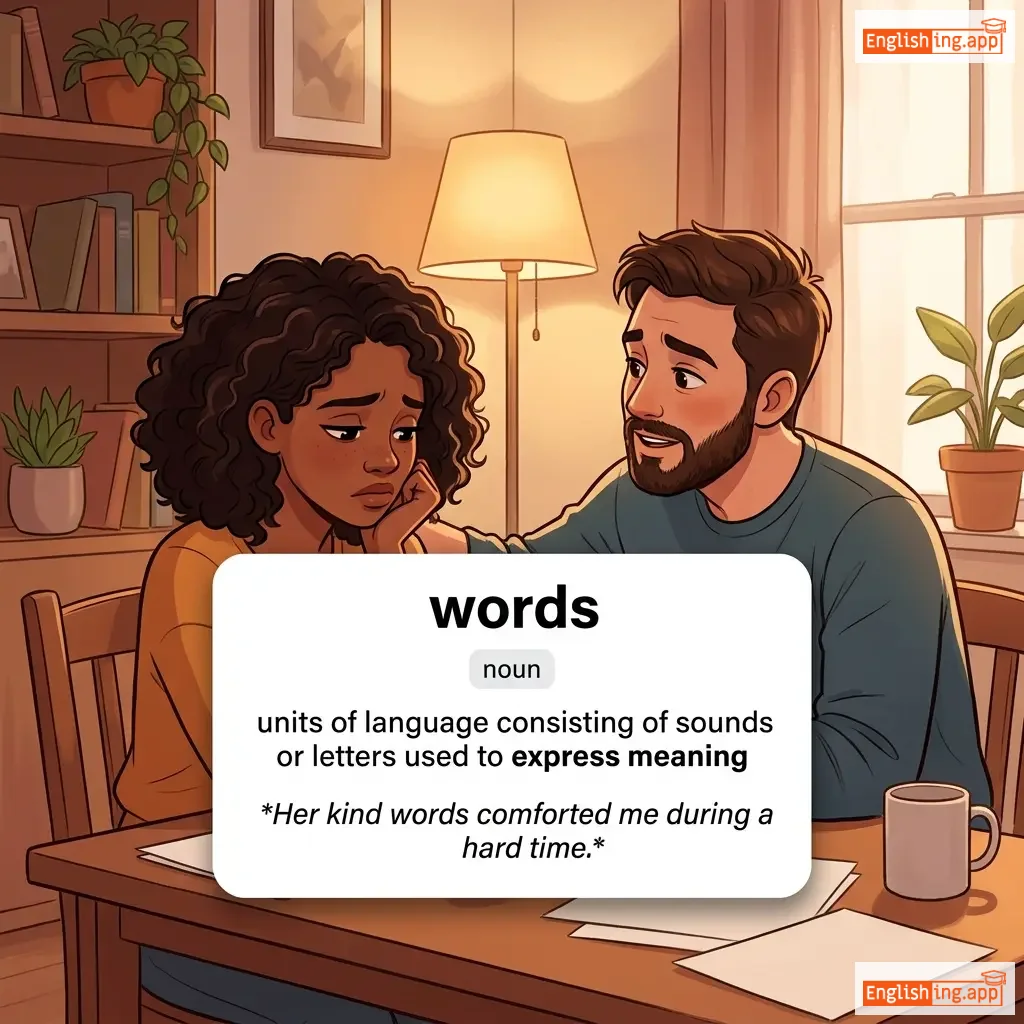
words definition card — visual illustration of the meaning
noun
/wɜːdz/
শব্দসমূহ (shobdosomuho)

units of language consisting of sounds or letters used to express meaning

"Her kind words comforted me during a hard time."

"তার মধুর শব্দগুলো কঠিন সময়ে আমাকে সান্ত্বনা দিয়েছিল।" (Tar modhur shobdogulo kothin somoye amake santona diyechhilo.)
work definition card — visual illustration of the meaning
verb, noun
/wɜːrk/
কাজ (kaj)

to perform a task or job; physical or mental effort

"She works at a software company."

"সে একটি সফটওয়্যার কোম্পানিতে কাজ করে।" (Se ekti software companyte kaj kore.)
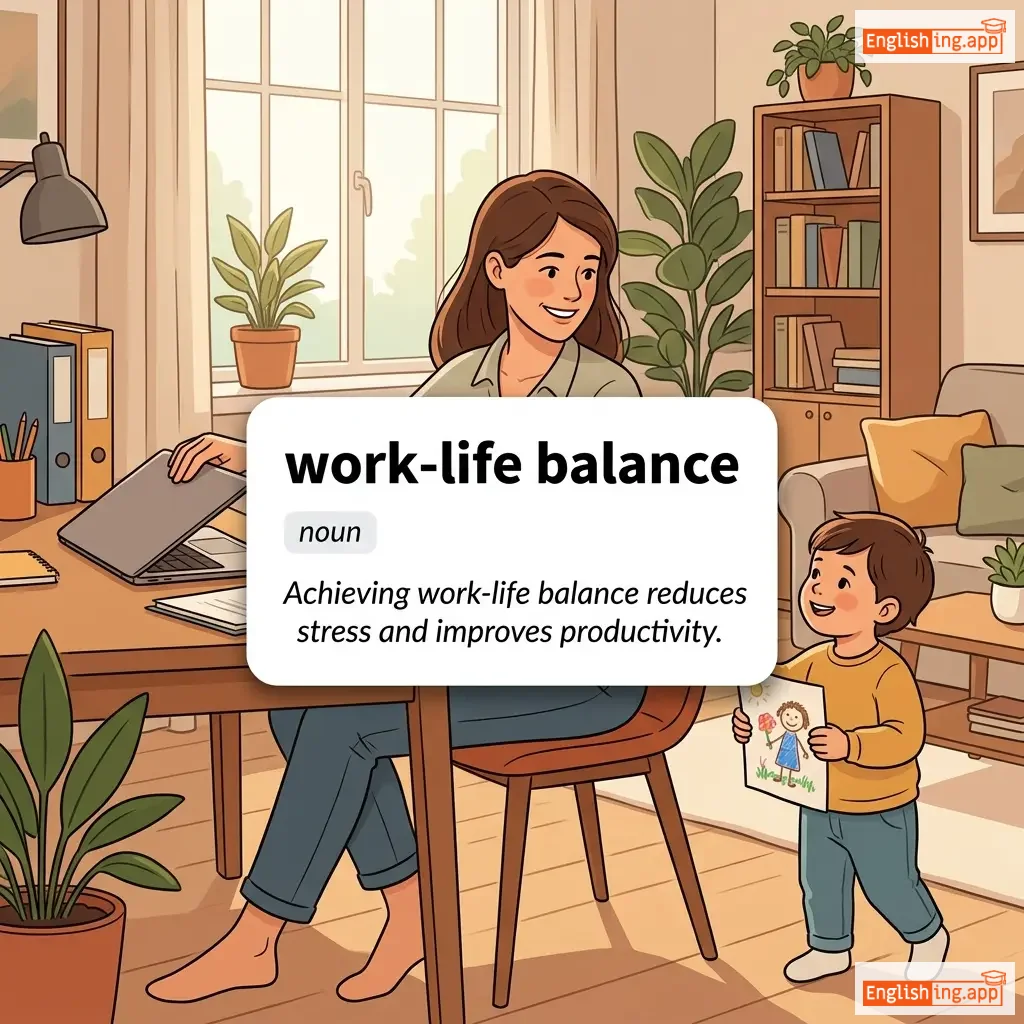
work-life balance definition card — visual illustration of the meaning
noun
/ˈwɜːrk laɪf ˈbæl.əns/
কাজ ও ব্যক্তিগত জীবনের ভারসাম্য (kaj o bektigoto jiboner bharoshammyo)

The equilibrium between personal and professional life, ensuring neither dominates at the expense of the other.

"Achieving work-life balance reduces stress and improves productivity."

"কাজ ও ব্যক্তিগত জীবনের ভারসাম্য বজায় রাখা চাপ কমায় এবং উৎপাদনশীলতা বৃদ্ধি করে।" (Kaj o bektigoto jiboner bharoshammyo bajay rakha chap komay ebong utpadonsheelota briddhi kore.)
adjective
/ˈwɜːrkəbəl/
কার্যকর; ব্যবহারযোগ্য; (karjokor)

capable of being done or put into effect; practical

"We need a workable solution to solve this problem quickly."

"এই সমস্যা দ্রুত সমাধানের জন্য আমাদের একটি কার্যকর সমাধান প্রয়োজন।" (ei shomoshya druto shomadhaner jonno amader ekti karjokor somadhan proyojon।)
noun
/ˈwɜːrkər/
কর্মী (kormi)

a person who is employed to perform tasks or duties

"The workers were busy building the bridge."

"কর্মীরা সেতু নির্মাণে ব্যস্ত ছিল।" (Kormira setu nirmane byasto chhilo.)
workflow definition card — visual illustration of the meaning
noun
/ˈwɜːk.fləʊ/
কাজের প্রবাহ, নির্দিষ্ট প্রক্রিয়া (kajer probah, nirdhishto prokriya)

The sequence of processes through which a piece of work passes from initiation to completion.

"A well-structured workflow enhances productivity."

"সুসংগঠিত ওয়ার্কফ্লো উৎপাদনশীলতা বাড়ায়।" (Sushongothito workflow utpadonsheelota baray.)
noun
/ˈwɜːrkˌfɔːrs/
শ্রমিক দল (shromik dol)

the people engaged in or available for work

"The company is looking to expand its workforce by 20%."

"কোম্পানিটি তার শ্রমিক দল ২০% বৃদ্ধি করতে চাচ্ছে।" (Kompaniti tar shromik dol 20% briddhi korte chachhe.)
adjective
/ˈwɜːrkɪŋ/
কাজ করা (kaj kora)

engaged in physical or mental effort to achieve a goal or task

"She is working on her project right now."

"তিনি বর্তমানে তার প্রকল্পে কাজ করছেন।" (Tini bortomane tar prokolpe kaj korchhen.)
noun
/ˈwɜːrkɪŋ mæn/
শ্রমিক (shromik)

a man engaged in manual labor or industrial work, often considered as part of the working class

"The working-man fought hard for better wages and conditions."

"শ্রমিক ভাল মজুরি এবং শর্তের জন্য কঠোর পরিশ্রম করেছিল।" (Shromik bhalo mojuri ebong shorther jonno kothor porishrom korechhilo.)
workload definition card — visual illustration of the meaning
noun
ˈwɜːrkˌləʊd
কাজের বোঝা, কর্মভার (kajer bojha, kormobar)

The amount of work to be done by someone or something.

"His workload has increased dramatically in the past month."

"গত মাসে তার কর্মভার ব্যাপকভাবে বেড়েছে।" (Goto mase tar kormobar byapokbhabe bereche.)
adjective
/ˈwɜːkmənˌlaɪk/
কারিগরি দক্ষতাপূর্ণ (karigori dokkhotpurno)

Showing efficient, competent, and practical skill, but without flair or creativity.

"The carpenter delivered a workmanlike performance on the project."

"কার্পেন্টার প্রকল্পে একটি কারিগরি দক্ষতাপূর্ণ কাজ সরবরাহ করেছিলেন।" (Carpenter prokolpe ekti karigori dokkhotpurno kaj sorborah korechilen.)
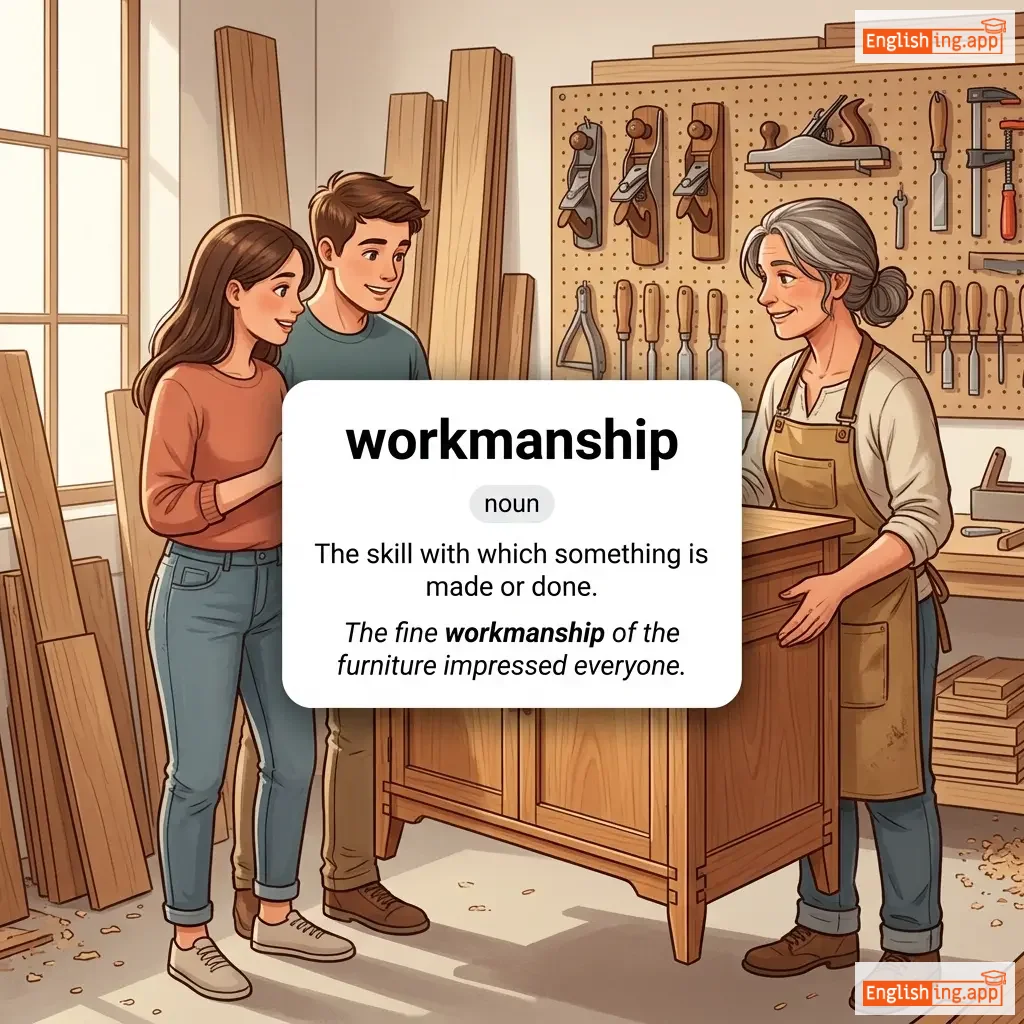
workmanship definition card — visual illustration of the meaning
noun
/ˈwɜːkmənˌʃɪp/
কারিগরি দক্ষতা (karigori dokkhota)

The skill with which something is made or done.

"The fine workmanship of the furniture impressed everyone."

"আসবাবের চমৎকার কারিগরি দক্ষতা সবাইকে মুগ্ধ করেছিল।" (Asbaber chomotkar karigori dokkhota sobaike mugdho korechilo.)