ভোকাবুলারিসমূহ

ইংরেজি শব্দের বাংলা অর্থ | English to Bangla Word Meaning Dictionary

noun
/ˈtoʊstər/
টোস্টার (toshtar)

an electric appliance used for toasting bread slices

"I put two slices of bread in the toaster for breakfast."

"আমি নাস্তার জন্য টোস্টারে দুটি রুটির টুকরো রাখলাম।" (ami nashtar jonno toshtare duti rutir tukro rakhlam)
noun
/təˈbækoʊ/
তামাক (tamak)

a plant grown for its leaves, which are used in making cigarettes and cigars

"He stopped smoking tobacco after his health scare."

"সে তার স্বাস্থ্য সংক্রান্ত সমস্যা থাকার পর তামাক খাওয়া বন্ধ করেছে।" (Se tar shastho songkranto somossa thakar por tamak khawa bondho korechhe.)
noun
/ˈtɒksɪn/
সতর্কঘণ্টা (satarkoghonta)

an alarm bell or signal; a warning that something bad is about to happen

"The data breach sounded a tocsin for stricter security."

"ডাটা ফাঁসের ঘটনা কঠোর নিরাপত্তার জন্য একটি সতর্কঘণ্টা হিসেবে কাজ করল।" (data faser ghotona kothor nirapottar jonno ekti satarkoghonta hisebe kaj korlo.)
noun, adverb
/təˈdeɪ/
আজ (aj)

on this present day

"She has a meeting today."

"আজ তার একটি মিটিং আছে।" (Aj tar ekti meeting ache.)
noun
/toʊ/
আঙুল (angul)

any of the five digits at the end of the human foot

"He injured his toe while playing football."

"সে ফুটবল খেলতে গিয়ে তার আঙুলে আঘাত পেয়েছিল।" (Se football khelte giye tar angule aghat peyechhilo.)
noun
/ˈtoʊɡə/
রোমান চাদর (roman chador)

A loose outer garment worn in ancient Rome, typically draped over the shoulders and body.

"The senator wore a white toga during the ceremony."

"সেনেটর অনুষ্ঠান চলাকালে সাদা টোগা পরেছিলেন।" (Senetor onusthan cholakale sada toga porechilen.)
adverb
/təˈɡɛðər/
একসাথে (eksathe)

with each other; in a group or combined form

"They worked together to solve the problem."

"তারা একসাথে কাজ করেছিল সমস্যা সমাধান করতে।" (Tara eksathe kaj korechhilo somossa somadhan korte.)
Toil definition card — visual illustration of the meaning
verb
/tɔɪl/
কঠোর পরিশ্রম (kothor porishrom)

To work extremely hard and continuously, often with difficulty.

"He had to toil for years to achieve success."

"সফলতা অর্জন করতে তাকে বছরের পর বছর কঠোর পরিশ্রম করতে হয়েছে।" (Sofolota orjon korte take bochorer por bochor kothor porishrom korte hoyeche.)
noun
/ˈtɔɪlət/
প্রস্রাবাগার (prosrabagar)

a fixture used for the disposal of human waste

"The public toilet was clean and well maintained."

"সার্বজনীন টয়লেটটি পরিষ্কার ও ভালোভাবে রক্ষণাবেক্ষণ করা হয়েছিল।" (Sarbajonin toilet ti porishkar o bhalo bhabe rokkhonabekkhon kora hoyechilo.)
adjective
/ˈtɔɪl.səm/
ক্লান্তিকর (klantikoro)

Involving hard or exhausting work; laborious.

"The workers had a toilsome day in the hot sun."

"শ্রমিকদের গরম রোদে ক্লান্তিকর দিন কাটাতে হয়েছে।" (Shromikder gorom rode klantikoro din katate hoyeche.)
noun
/ˈtoʊ.kən/
চিহ্ন / প্রতীক (chinho / protik)

A symbol or object that represents something, often given as a sign of appreciation or as a substitute for money.

"She gave him a small gift as a token of gratitude."

"তিনি কৃতজ্ঞতার প্রতীক হিসেবে তাকে একটি ছোট উপহার দিয়েছিলেন।" (Tini kritoggotar protik hisebe take ekti choto upohar diyechilen.)
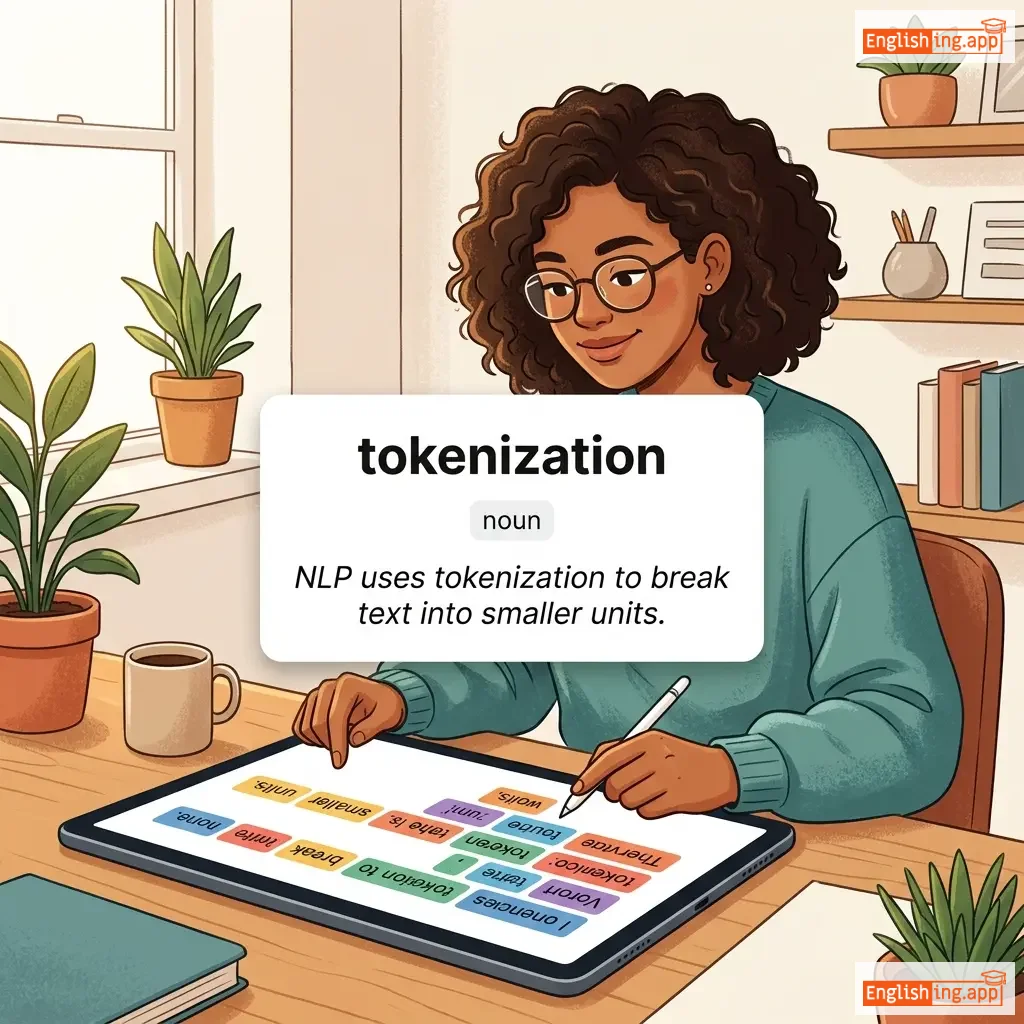
tokenization definition card — visual illustration of the meaning
noun
ˌtoʊ.kə.nɪˈzeɪ.ʃən
শব্দ বা বাক্যকে ছোট ছোট অংশে বিভক্তকরণ (tokenization)

The process of breaking text into smaller units like words, phrases, or symbols for analysis.

"NLP uses tokenization to break text into smaller units."

"এনএলপি পাঠকে ছোট অংশে বিভক্ত করতে টোকেনাইজেশন ব্যবহার করে।" (NLP pathke chhoto ongse bibhokto korte tokenization byabohar kore.)
adjective
/ˈtɒl.ər.ə.bəl/
সহনীয় (sohoniya)

Able to be endured or put up with; fairly acceptable.

"The pain was tolerable after the medicine."

"ওষুধ খাওয়ার পর ব্যথা সহনীয় হয়ে উঠেছিল।" (Oshudh khawar por byatha sohoniya hoye uthchhilo.)
noun
/ˈtɒlərəns/
সহনশীলতা (sohonsheelta)

The ability or willingness to accept or endure differences, behaviors, or opinions without hostility.

"Her tolerance for different cultures impressed everyone."

"ভিন্ন সংস্কৃতির প্রতি তার সহনশীলতা সবাইকে মুগ্ধ করেছিল।" (vinno songskrityr proti tar sohonsheelta sobaike mugdho korechilo.)
adjective
/ˈtɒlərənt/
সহিষ্ণু (sohishnu)

Showing willingness to allow the existence of opinions or behaviors that one dislikes or disagrees with.

"He is very tolerant of other people's beliefs."

"তিনি অন্যদের বিশ্বাসের প্রতি খুব সহিষ্ণু।" (tini onnoder bishwasher proti khub sohishnu.)
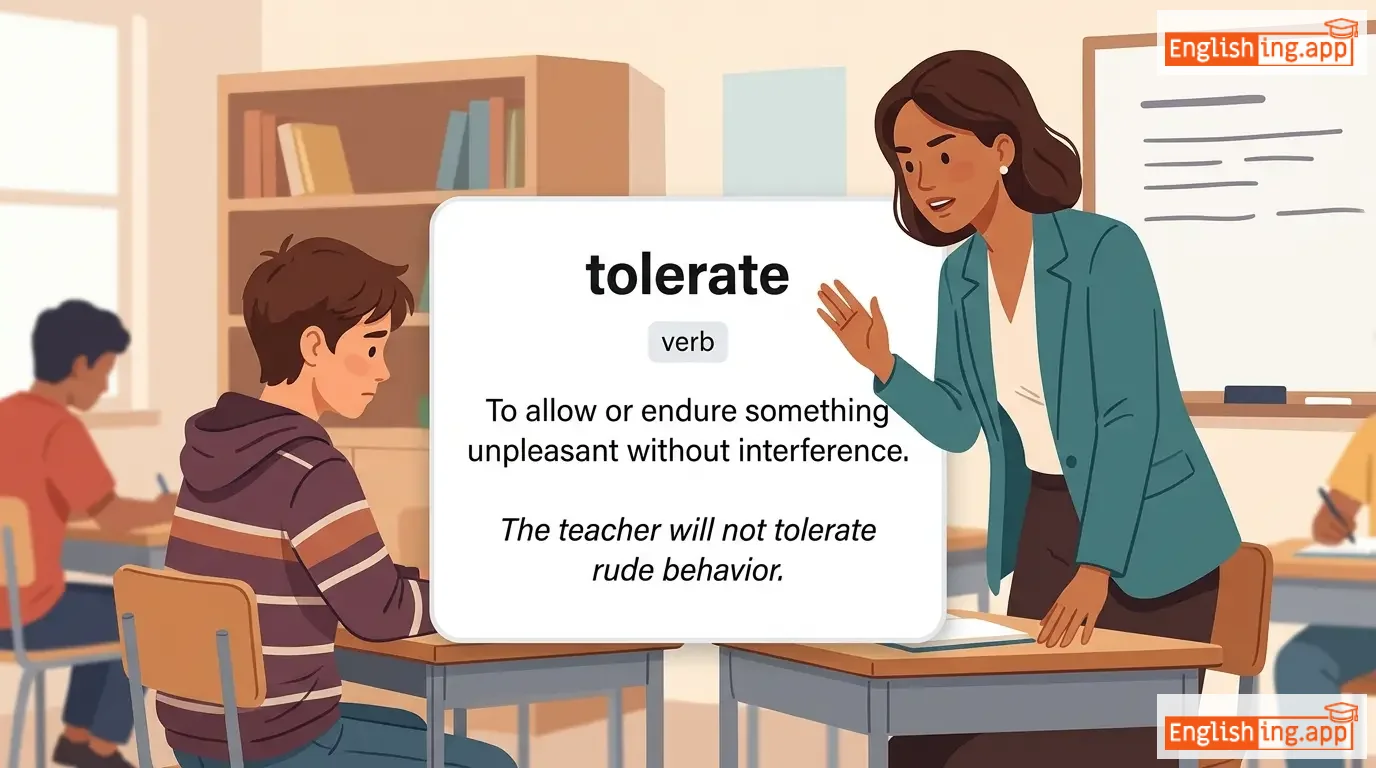
tolerate definition card — visual illustration of the meaning
verb
/ˈtɒləreɪt/
সহ্য করা (shohjo kora)

To allow or endure something unpleasant without interference.

"The teacher will not tolerate rude behavior."

"শিক্ষক রূঢ় আচরণ সহ্য করবেন না।" (shikkhok rudh acharon shohjo korben na.)
noun
/ˌtɒləˈreɪʃən/
সহিষ্ণুতা (sohishnota)

The practice of allowing something that one does not necessarily agree with.

"The government promoted religious toleration."

"সরকার ধর্মীয় সহিষ্ণুতা প্রচার করেছে।" (sorkar dhormiyo sohishnota prochar koreche.)
noun
/toʊl/
খাজনা / ক্ষয়ক্ষতি (khajna / khoykoti)

A charge payable for using a road or bridge; also the extent of damage or suffering caused by something.

"The flood took a heavy toll on the village."

"বন্যা গ্রামে প্রচুর ক্ষয়ক্ষতি করেছে।" (bonna grame prochur khoykoti koreche.)
noun
/təˈmeɪtoʊ/
টমেটো (tomato)

a red or yellowish fruit that is typically eaten as a vegetable

"I added some tomato to the salad."

"আমি স্যালাডে কিছু টমেটো যোগ করেছি।" (Ami salad-e kichu tomato jog korechi.)
tome definition card — visual illustration of the meaning
noun
/toʊm/
বড় বই (boro boi)

a large, heavy book, often scholarly or serious in nature

"She spent the afternoon reading an old tome on medieval history."

"সে বিকেলে মধ্যযুগীয় ইতিহাসের একটি পুরনো বড় বই পড়েছিল।" (Se bikele modyojugio itihasher ekti purono boro boi porechilo.)
noun, adverb
/təˈmɒroʊ/
কাল (kal)

the day after today

"We are meeting tomorrow for the project discussion."

"আমরা কাল প্রকল্প আলোচনা করতে দেখা হবে।" (Amra kal prokolpo alochona korte dekha hobe.)
noun
/tʌn/
টন (ṭon)

A unit of weight equal to 2,000 pounds (US) or 1,000 kilograms (metric); a large amount of something

"The truck carried a ton of apples to the market."

"ট্রাকটি বাজারে এক টন আপেল নিয়ে গেছে।" (Trakti bajar-e ek ton apel niye geche.)
noun, verb
/toʊn/
টোন (ton)

the general character or attitude of a place, piece of writing, situation, etc.

"The tone of the letter was very formal."

"চিঠির টোনটি খুব আনুষ্ঠানিক ছিল।" (Chithir ton ti khub anusthanik chhilo.)
noun
/tɒŋ/
চিমটা (chimta)

a tool with two movable arms used to pick up and hold objects

"He used the tong to pick up the hot coal."

"সে গরম কয়লা তুলতে টং ব্যবহার করেছিল।" (Se gorom koyla tulte tong byabohar korechilo.)
noun
/tɒŋz/
চিমটা (chimta)

a tool consisting of two movable arms that are joined at one end, used for picking up and holding things

"Use the tongs to pick up the hot pieces of meat from the grill."

"গ্রিল থেকে গরম মাংসের টুকরো তুলতে চিমটা ব্যবহার করুন।" (grill theke gorom mangsher tukro tulte chimta bebbohar korun.)
noun
/tʌŋ/
জিভ (jibh)

a fleshy muscular organ in the mouth used for tasting, swallowing, and speaking

"She stuck out her tongue playfully."

"সে খেলার জন্য জিভ বের করেছিল।" (She khelar jonno jibh ber korechhilo.)
noun
/ˈtɒnɪk/
টনিক (tonik)

a medicine or drink that restores or refreshes health and energy

"A glass of lemonade was the perfect tonic on a hot day."

"এক গ্লাস লেমনেড ছিল গরম দিনে উপযুক্ত টনিক।" (Ek glass lemonade chilo gorom dine upojukto tonik.)
adverb, noun
/təˈnaɪt/
আজ রাত (aj rat)

on or during the night of the current day

"We're going to the party tonight."

"আমরা আজ রাতে পার্টিতে যাচ্ছি।" (Amra aj rate partite jacchi.)
adjective
/tɒnˈsɔːriəl/
নাপিত সংক্রান্ত (napit songkranto)

relating to barbers or hairdressing

"The town's new barber offered a wide range of tonsorial services."

"শহরের নতুন নাপিত বিভিন্ন ধরনের নাপিত সংক্রান্ত সেবা প্রদান করেছিল।" (Shohorer notun napit bibhinno dhoroner napit songkranto sheba prodan korechilo.)
noun
/ˈtɒnʃər/
চুল মুণ্ডন (chul mundon)

the practice of shaving or cutting the hair on the scalp, especially in a religious context

"The monk received his tonsure as part of his religious initiation."

"ভিক্ষু ধর্মীয় দীক্ষার অংশ হিসেবে তার চুল মুণ্ডন করেছিল।" (Bhikkhu dhormiyo dikhar angsho hisebe tar chul mundon korechilo.)
adverb
/tuː/
বেশি (beshi)

to a higher degree than is desirable, permissible, or possible

"She is too tired to continue working."

"সে কাজ চালিয়ে যেতে খুবই ক্লান্ত।" (Se kaj chaliye jete khuboi klanto.)
noun
/tuːl/
যন্ত্র (jontrô)

a device or implement used to carry out a particular function

"He used a hammer as a tool to fix the chair."

"সে চেয়ার মেরামত করতে হ্যামার একটি টুল ব্যবহার করেছিল।" (Se cheyar meramot korte hammer ekṭi tool byabohar korechilo.)
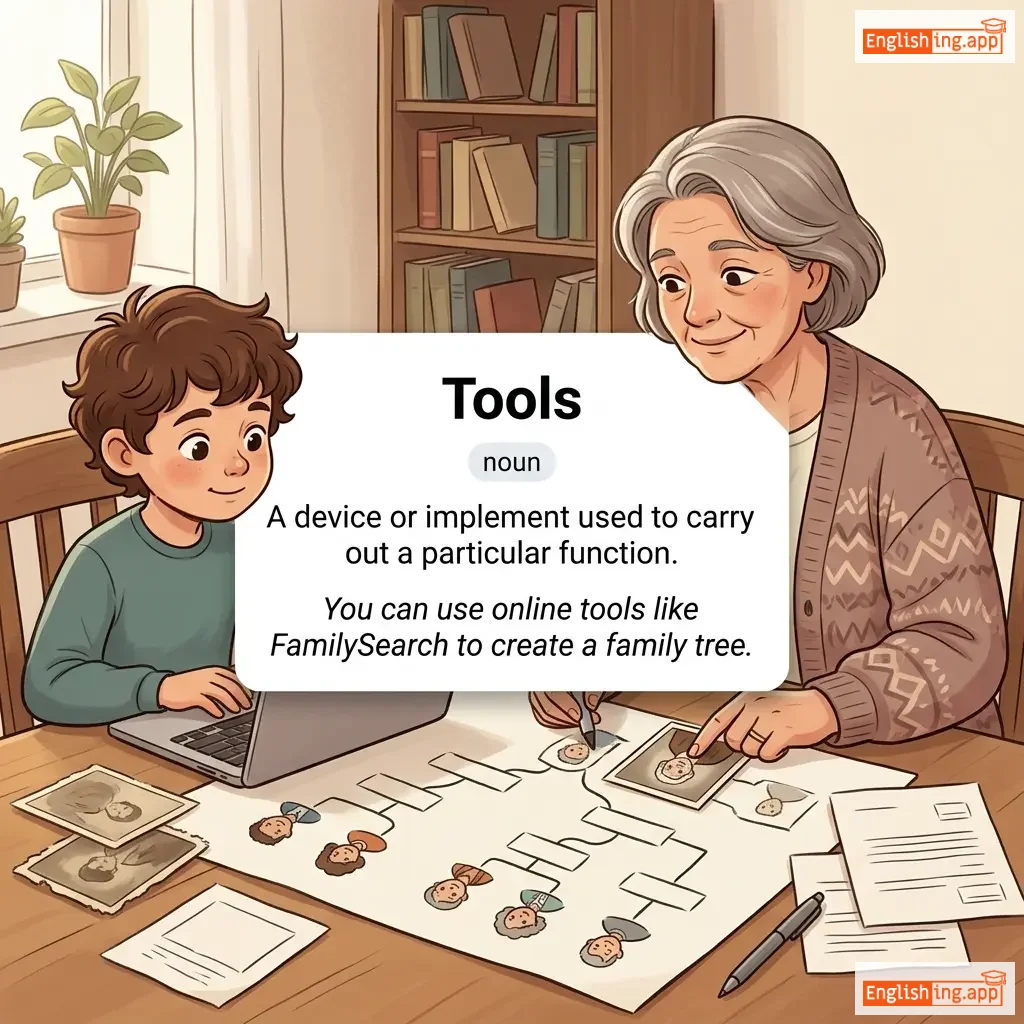
Tools definition card — visual illustration of the meaning
noun
tuːlz
সরঞ্জাম (shornjaam)

A device or implement used to carry out a particular function.

"You can use online tools like FamilySearch to create a family tree."

"ফ্যামিলি ট্রি তৈরি করতে আপনি FamilySearch এর মতো অনলাইন টুল ব্যবহার করতে পারেন।" (Family tree toiri korte aapni FamilySearch er moto onlaaein tool byobhaar korte paaren.)
noun
/tuːθ/
দাঁত (daat)

each of the hard, pointed structures in the mouth used for biting and chewing food

"He has a toothache and needs to see the dentist."

"তার দাঁতে ব্যথা আছে এবং তাকে দন্তবিশেষজ্ঞের কাছে যেতে হবে।" (Tar daat-e byatha ache ebong take dantabisheshojger kachhe jete hobe.)
noun
/tɒp/
শীর্ষ (shirsho)

the highest or uppermost point, part, or surface of something

"The book is on the top shelf."

"বইটি শীর্ষ তাকের উপরে।" (Boiti shirsho taker upore.)
noun
/ˈtoʊ.pæz/
পুখরাজ (pukhraj)

a precious stone, typically colorless, yellow, or blue, used in jewelry

"The queen's crown was adorned with a magnificent blue topaz."

"রানীর মুকুটটি একটি দুর্দান্ত নীল পুখরাজ দিয়ে সাজানো ছিল।" (ranir mukutti ekti durdanto nil pukhraj diye sajano chilo.)
noun
/ˈtɒpɪk/
বিষয় (bishoy)

a subject of conversation, discussion, or writing

"The topic of the meeting was company expansion."

"মিটিংয়ের বিষয় ছিল কোম্পানির সম্প্রসারণ।" (Meeting-er bishoy chhilo company-er somprosaron.)
adjective
/ˈtɒp.məʊst/
সর্বোচ্চ; শীর্ষস্থ; (shor-boc-cho)

highest in position or rank

"The flag was placed on the topmost branch of the tree."

"পতাকাটি গাছের সর্বোচ্চ ডালে স্থাপন করা হয়েছিল।" (potaka-ti gach-er shor-boc-cho dal-e sthapon kora hoy-e-chilo)
noun
/təˈpɒɡrəfi/
ভূ-প্রকৃতি (bhu-prokriti)

the arrangement of the natural and artificial physical features of an area

"The topography of the region made construction very challenging."

"অঞ্চলের ভূ-প্রকৃতি নির্মাণকে খুবই চ্যালেঞ্জিং করে তুলেছিল।" (Onchol er bhu-prokriti nirmank e khub challenge kora tulchhilo.)
verb
/ˈtɒpl/
উল্টে পড়া (ulte pora)

to fall or cause to fall over; to overthrow

"The earthquake caused the old building to topple."

"ভূমিকম্প পুরনো ভবনটিকে উল্টে দিয়েছিল।" (Bhumikompo purono bhobontike ulte diyechhilo.)
noun
/ˈtɒpˌsɔɪl/
উপরি মাটি (upari mati)

the top layer of soil, which is rich in organic matter and nutrients

"Farmers rely on healthy topsoil for good crop yields."

"চাষীরা ভালো ফসলের জন্য স্বাস্থ্যকর উপরি মাটির উপর নির্ভর করে।" (Chashira bhalo fosoler jonno shasthokor upari matir upor nirbhor kore.)
adjective
/ˌtɒpsi ˈtɜːvi/
অগোছালো (ogochhalo)

in a state of confusion, disorder, or upside down

"The sudden announcement left the office in a topsy-turvy state."

"হঠাৎ ঘোষণাটি অফিসকে একেবারে অগোছালো অবস্থায় ফেলে দিল।" (Hotat ghoshonati ofiske akebare ogochhalo obosthaye fele dilo.)
noun
/tɔːrtʃ/
টর্চ (torch)

a portable electric lamp powered by batteries; a flaming stick used for light

"Use the torch to find your way in the dark."

"অন্ধকারে পথ খুঁজে পেতে টর্চ ব্যবহার করো।" (ondhokare poth khuje pete torch bebohaar koro)
noun, verb
/ˈtɔːr.ment/
যন্ত্রণা (jontrona)

severe physical or mental suffering; to cause extreme suffering

"The prisoner was in constant torment."

"বন্দী ব্যক্তি ক্রমাগত যন্ত্রণায় ছিল।" (Bondi bekti kramagoto jontronay chilo.)
noun
/tɔːrˈneɪdoʊ/
ঘূর্ণিঝড় (ghurnijhor)

a rapidly rotating column of air in contact with the ground and clouds, often destructive

"The tornado destroyed several houses in the village."

"টর্নেডো গ্রামে বেশ কয়েকটি বাড়ি ধ্বংস করেছিল।" (Tornado grame bes koyekti bari dhongsho korechhilo.)
noun/verb
/tɔːrˈpiːdoʊ/
জলতরঙ্গ ক্ষেপণাস্ত্র (torpedo)

A self-propelled underwater missile; to attack or destroy something suddenly and forcefully.

"The submarine launched a torpedo at the enemy ship."

"সাবমেরিনটি শত্রু জাহাজে একটি টর্পেডো নিক্ষেপ করল।" (Sabmarinti shotru jahaje ekti torpedo nikhep korlo.)
adjective
/ˈtɔːrpɪd/
অলস (torpid)

Mentally or physically inactive; sluggish or lethargic.

"After the long hike, he felt torpid and unmotivated."

"দীর্ঘ হাঁটার পর সে অলস এবং অনুপ্রাণনাহীন অনুভব করল।" (Dirgho hatar por se olos ebong onuppranahin onuvob korlo.)
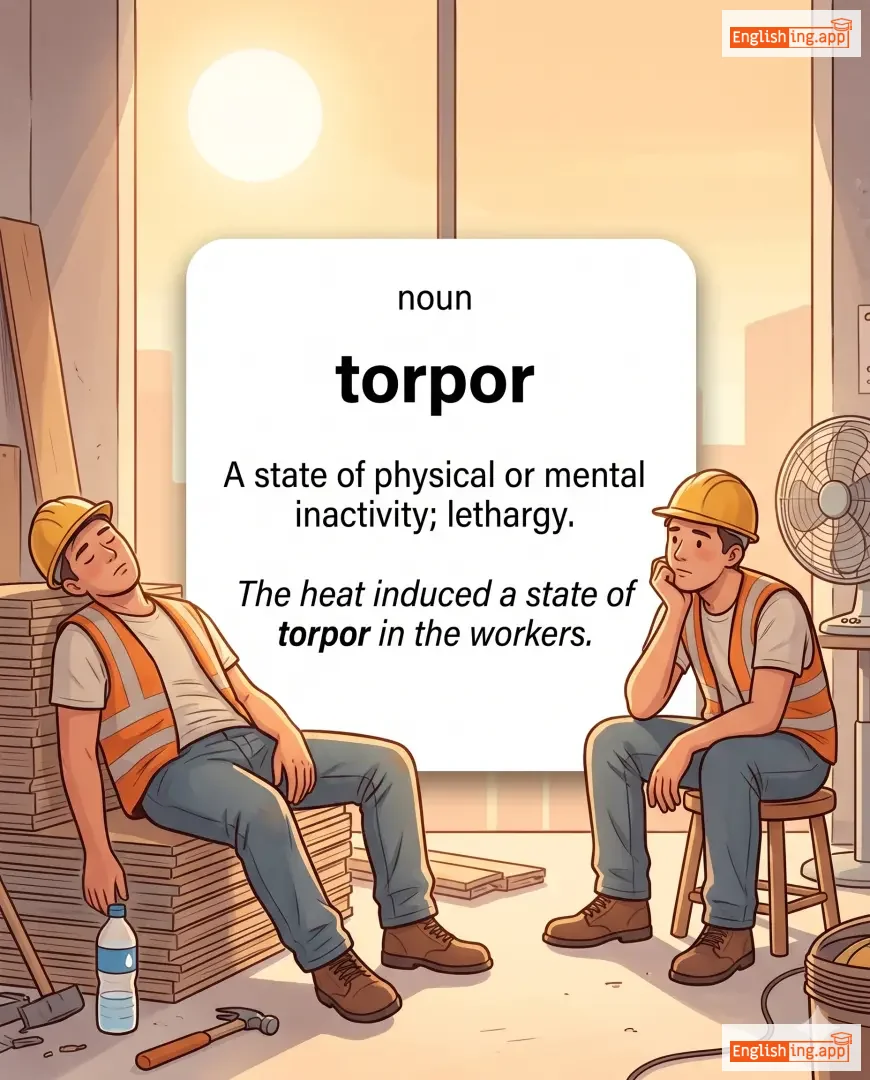
torpor definition card — visual illustration of the meaning
noun
/ˈtɔːrpər/
অলসতা (torpor)

A state of physical or mental inactivity; lethargy.

"The heat induced a state of torpor in the workers."

"গরম শ্রমিকদের মধ্যে অলসতার অবস্থা সৃষ্টি করেছিল।" (Gorom shromikder moddhe olosotar obostha srishti korechilo.)
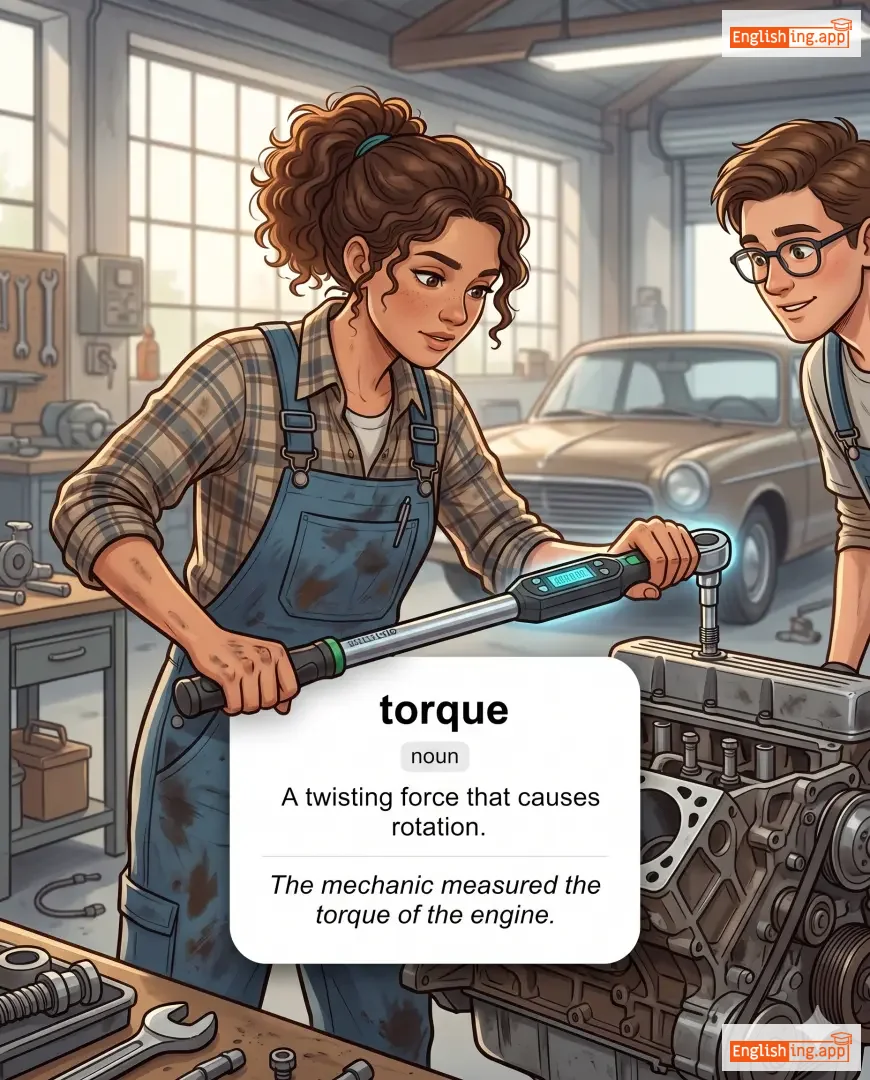
torque definition card — visual illustration of the meaning
noun
/tɔːrk/
বিক্রম (torque)

A twisting force that causes rotation.

"The mechanic measured the torque of the engine."

"মেকানিক ইঞ্জিনের টর্ক পরিমাপ করল।" (Mekanik injiner torque porimap korlo.)
noun
/ˈtɔːrənt/
প্রবাহ (torrent)

A strong and fast-moving stream of water; a sudden, violent outpouring of something.

"A torrent of rain flooded the streets."

"একটি প্রবল বৃষ্টির স্রোত রাস্তাগুলো প্লাবিত করল।" (Ekti probol brishtir srot rastagulo plabito korlo.)