ভোকাবুলারিসমূহ

ইংরেজি শব্দের বাংলা অর্থ | English to Bangla Word Meaning Dictionary

adverb
/ˈtaɪtli/
দৃঢ়ভাবে (drirhobabe)

in a way that is firm and difficult to move or open

"She held the baby tightly in her arms."

"সে শিশুটিকে তার বাহুতে দৃঢ়ভাবে ধরে রেখেছিল।" (Se shishutike tar bahute drirhobabe dhore rekhechhilo.)
noun
/ˈtaɪtwɒd/
মিতব্যয়ী, কৃপণ (mitbayoyi, kripon)

a person who is unwilling to spend money; a miser

"Everyone calls him a tightwad because he never buys gifts."

"সবাই তাকে টাইটওয়াড বলে কারণ সে কখনো উপহার কিনে না।" (Sobai take tightwad bole karon se kokhono upohar kine na.)
noun
/ˈtaɪ.ɡrəs/
বাঘিনী (baghini)

an adult female tiger

"The powerful tigress hunted silently through the jungle."

"শক্তিশালী বাঘিনী জঙ্গলের মধ্য দিয়ে নীরবে শিকার করল।" (shoktishali baghini jonggler modhyo diye nirobe shikar korlo)
noun
/tɪˈlɑpiə fɪʃ/
তেলাপিয়া মাছ (telapiya mach)

a freshwater fish native to Africa, widely farmed for food due to its mild taste and fast growth

"Tilapia fish is one of the most commonly farmed fish species worldwide."

"তেলাপিয়া মাছ বিশ্বব্যাপী সবচেয়ে বেশি চাষ করা মাছের প্রজাতিগুলির মধ্যে একটি।" (telapiya mach bishbobbyapi shobcheye beshi chash kora macher projatiguliir moddhe ekti)
noun
/taɪl/
টালি (tali)

a flat piece of baked clay or other material used for covering roofs, floors, or walls

"The kitchen floor is covered with ceramic tiles."

"রান্নাঘরের মেঝে সিরামিক টাইলস দিয়ে ঢাকা।" (Rannaghorer mejhe ceramic tiles diye dhaka.)
preposition
/tɪl/
পর্যন্ত (porjonto)

up to the time of; until

"She waited till midnight for his call."

"সে তার ফোনের জন্য মধ্যরাত পর্যন্ত অপেক্ষা করেছিল।" (Se tar phoner jonno modhyorat porjonto opekkha korechhilo.)
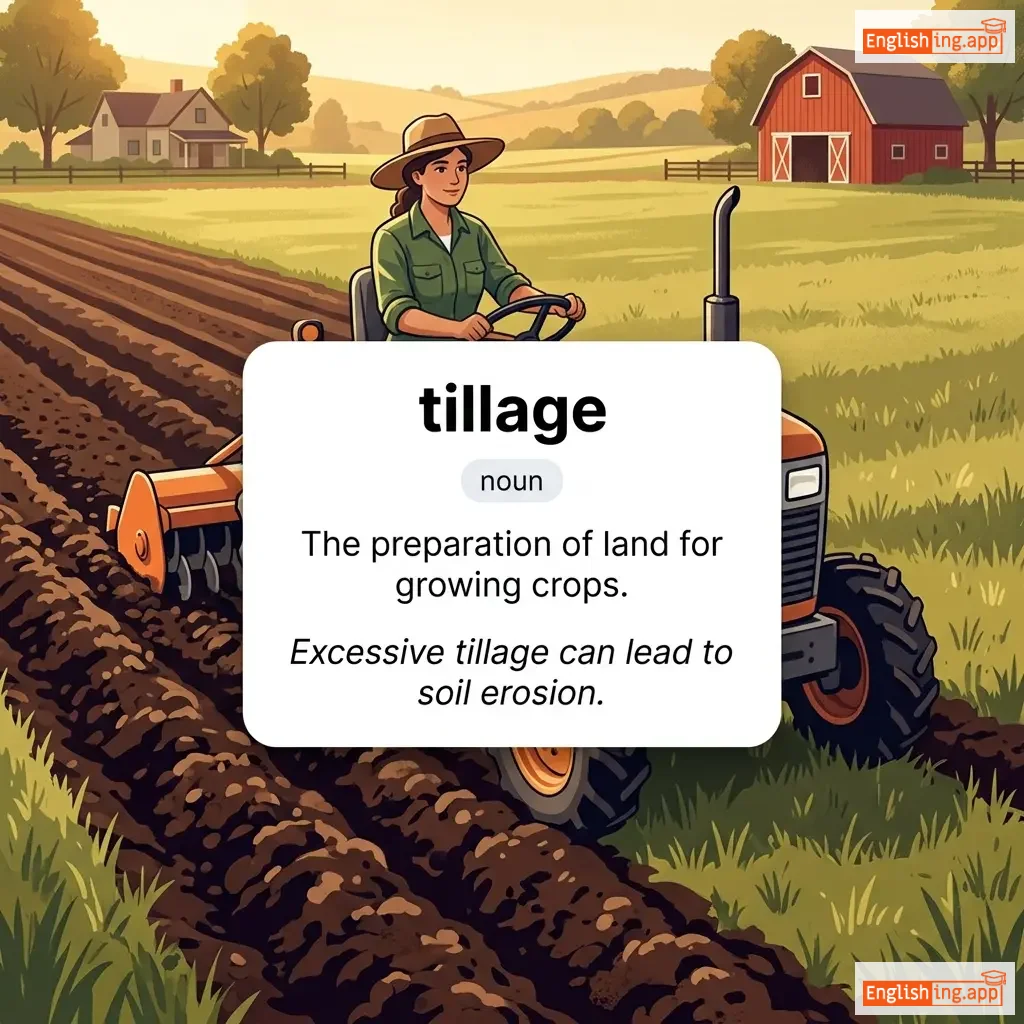
tillage definition card — visual illustration of the meaning
noun
ˈtɪl.ɪdʒ
মাটি চাষ বা চাষাবাদ (mati chash ba chashabadh)

The preparation of land for growing crops.

"Excessive tillage can lead to soil erosion."

"অতিরিক্ত চাষ মাটির ক্ষয় ঘটাতে পারে।" (Otirikto chash matir kkhoy ghotate pare.)
noun
/ˈtɪlər/
নৌকার চালকের হাতল / জমি চাষকারী (noukar chaloker hatol / jomi chashkari)

A lever used to steer a boat or a person who tills the soil.

"The sailor gripped the tiller firmly to keep the boat on course."

"নাবিকটি নৌকাটিকে সঠিক পথে রাখতে টিলার শক্ত করে ধরেছিল।" (Nabikti noukatike sothik pothe rakhte tilar shokt kore dhorechhilo.)
noun
/tɪlθ/
মাটির অবস্থা (চাষের উপযোগিতা) (matir obostha (chasher upojogita))

The physical condition of soil in relation to its suitability for planting crops.

"The farmer checked the soil's tilth before planting the seeds."

"কৃষক বীজ রোপণের আগে মাটির টিলথ পরীক্ষা করেছিলেন।" (Krishok bij roponer age matir tilth porikkha korechhilen.)
noun
/ˈtɪmbər/
কাঠ (kath)

wood prepared for use in building and carpentry

"The house was built entirely from local timber."

"বাড়িটি সম্পূর্ণ স্থানীয় কাঠ দিয়ে তৈরি করা হয়েছিল।" (Bariti sompurno sthanio kath diye toiri kora hoyechilo.)
noun
/ˈtæmbər/ or /ˈtɪmbər/
স্বরের গুণ / ধ্বনির রং (shorer gun / dhonir rong)

The character or quality of a musical sound or voice as distinct from its pitch and intensity.

"Her voice had a warm timbre that soothed the audience."

"তার কণ্ঠে এমন এক উষ্ণ টিম্বার ছিল যা দর্শকদের শান্ত করেছিল।" (Tar konthe emon ek usno timbre chhilo ja dorshokder shanto korechhilo.)
noun
/taɪm/
সময় (somoy)

a measured or measurable period during which an action, process, or condition exists or continues

"I don’t have enough time to finish the project."

"আমি প্রকল্পটি শেষ করতে পর্যাপ্ত সময় পাচ্ছি না।" (Ami prokolpoti shesh korte porjapto somoy pachhi na.)
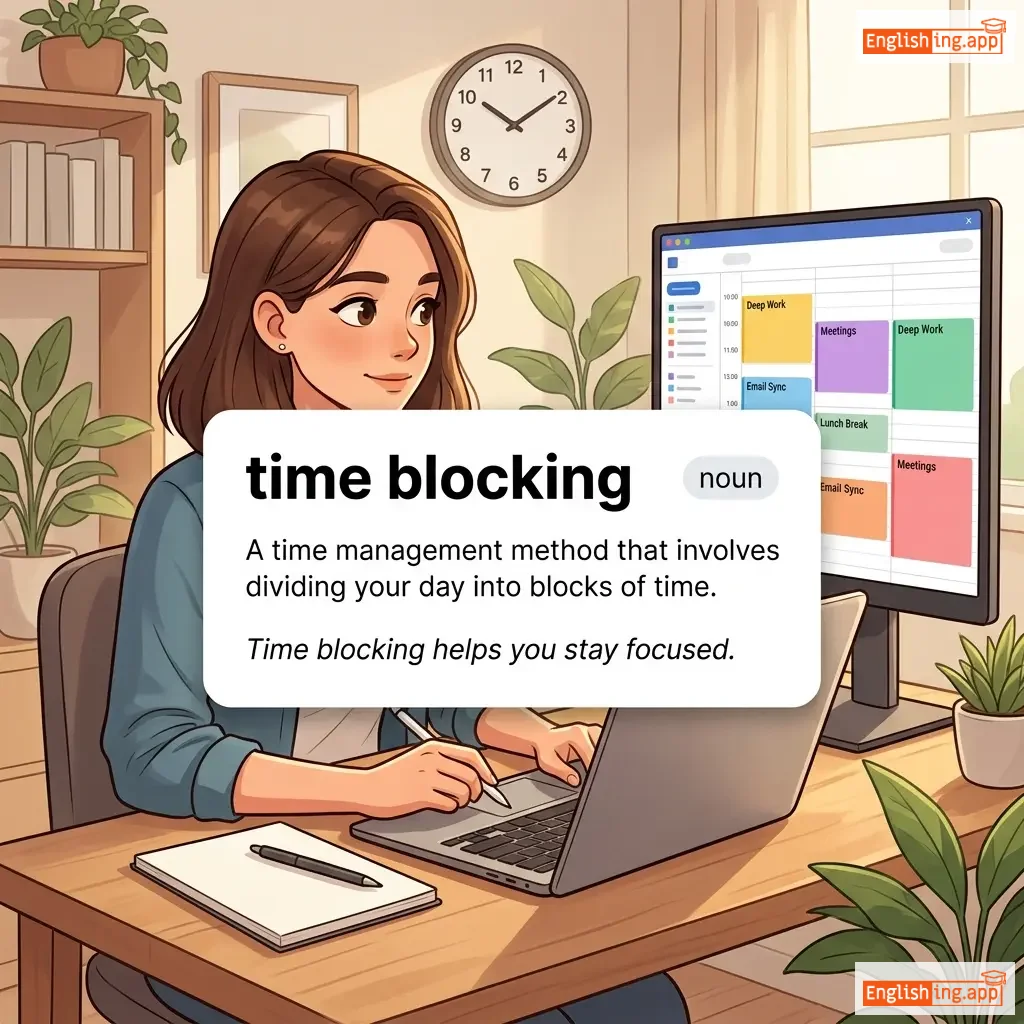
time blocking definition card — visual illustration of the meaning
noun
/taɪm ˈblɒk.ɪŋ/
সময় নির্ধারণ পদ্ধতি (somoy nirdharon poddhoti)

A time management technique where specific time slots are allocated for specific tasks or activities.

"Time-blocking helps in managing tasks efficiently."

"সময় নির্ধারণ পদ্ধতি কাজগুলো কার্যকরভাবে পরিচালনা করতে সাহায্য করে।" (Somoy nirdharon poddhoti kajgulo karyokorvaabe porichalona korte shahajjo kore.)
time management definition card — visual illustration of the meaning
noun
/taɪm ˈmæn.ɪdʒ.mənt/
সময় ব্যবস্থাপনা (shomoy bebosthapona)

The ability to plan and control time effectively to accomplish tasks efficiently.

"Effective time management improves productivity."

"কর্মক্ষমতা বাড়াতে কার্যকর সময় ব্যবস্থাপনা গুরুত্বপূর্ণ।" (Kormokhomota barate karjokoro shomoy bebosthapona gurutbopurno.)
verb
/taɪmd/
সময় নির্ধারণ করা (somoy nirdharon kora)

to measure or record the duration or speed of something

"He timed the race with a stopwatch."

"সে একটি স্টপওয়াচ দিয়ে দৌড়ের সময় মেপেছিল।" (Se ekti stopwatch diye dourer somoy mephechilo.)
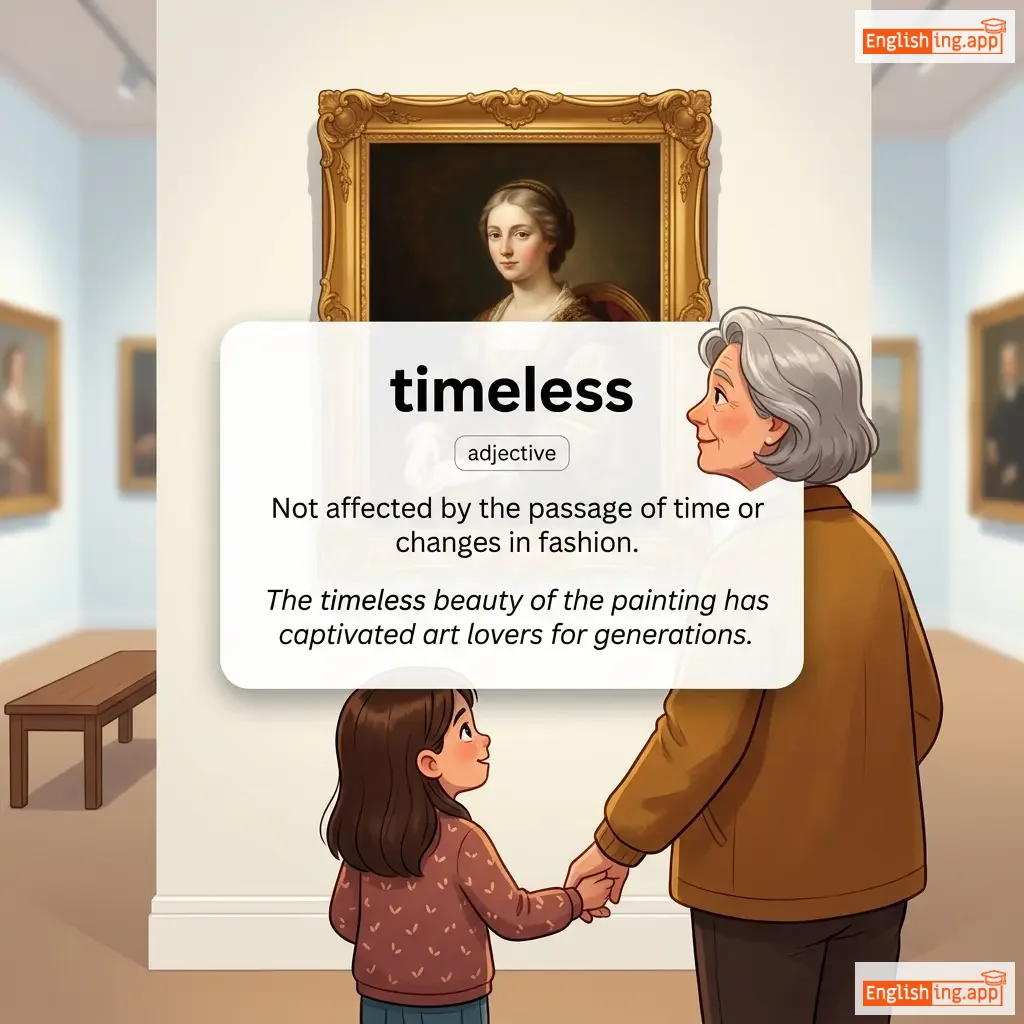
timeless definition card — visual illustration of the meaning
adjective
ˈtaɪmləs
চিরকালীন (chirokalin)

Not affected by the passage of time or changes in fashion.

"The timeless beauty of the painting has captivated art lovers for generations."

"চিত্রকর্মের চিরকালীন সৌন্দর্য প্রজন্মের পর প্রজন্ম শিল্পপ্রেমীদের মুগ্ধ করেছে।" (Chitrokormer chirokalin soundhorryo projonmer por projonmo shilpopremider mugdho koreche.)
adjective
/ˈtaɪmli/
সময়োপযোগী (somoyopojogi)

Done or occurring at a favorable or useful time; opportune.

"Her timely advice helped me avoid a big mistake."

"তার সময়োপযোগী পরামর্শ আমাকে বড় ভুল এড়াতে সাহায্য করেছে।" (Tar somoyopojogi poramorsho amake boro bhul erate sahajyo koreche.)
timer definition card — visual illustration of the meaning
noun
ˈtaɪmər
সময়সীমা নির্ধারণকারী, সময় গণনা যন্ত্র (shomoysheema nirdharnokari, shomoy gonona jontro)

An automatic mechanism for activating a device at a preset time; a device that measures time intervals.

"He set the timer for 30 minutes to complete the task."

"সে কাজটি সম্পন্ন করতে ৩০ মিনিটের জন্য টাইমার সেট করেছিল।" (She kajti shomponto korote 30 miniter jonno timer set korechilo.)
noun
/ˈtaɪm.teɪ.bəl/
সময়সূচি; সময়ের নিধারণ; (taimtebil)

a schedule showing planned activities or events at particular times

"Please check the train timetable for departure times."

"অনুগ্রহ করে ট্রেনের ছাড়ার সময়ের জন্য সময়সূচি দেখুন।" (onugroho kore trener chharar somoyer jonno somoyshuchi dekhun)
adjective
/ˈtaɪmwɔːrn/
অতিপ্রাচীন / জীর্ণ (otiprochin / jirno)

Worn or impaired by age; old and used many times.

"The timeworn house carried a sense of history and nostalgia."

"পুরনো বাড়িটিতে ইতিহাস এবং নস্টালজিয়ার ছাপ ছিল।" (Purono baritite itihash ebong nostalgia chhap chhilo.)
adjective
/ˈtɪmɪd/
ভীরু (viru)

lacking courage or confidence; easily frightened

"The timid child hid behind his mother when strangers approached."

"ভীরু শিশুটি অপরিচিতরা এলে মায়ের পেছনে লুকিয়ে পড়েছিল।" (viru shishuti aparichitora ele mayer pechone lukiye porechhilo.)
noun
/tɪˈmɪdəti/
ভীরুতা (viruta)

lack of courage or self-confidence

"His timidity kept him from speaking up during the meeting."

"তার ভীরুতা তাকে মিটিংয়ে কথা বলতে বাধা দিয়েছিল।" (tar viruta take mitinge kotha bolte badha diyechhilo.)
noun
/ˈtaɪmɪŋ/
সময় নির্ধারণ (shomoy nirdharon)

the choice, judgment, or control of when something should be done

"Good timing is essential in business negotiations."

"ব্যবসায়িক আলোচনায় ভালো সময় নির্ধারণ অত্যন্ত গুরুত্বপূর্ণ।" (Byabshayik alochonay bhalo shomoy nirdharon ottonto guruttopurno.)
adjective
/ˈtɪmərəs/
ভীত (bhit)

showing or suffering from nervousness, fear, or lack of confidence

"The timorous student hesitated to ask the teacher a question."

"ভীত ছাত্রটি শিক্ষককে প্রশ্ন করতে ইতস্তত করছিল।" (bhit chatroti shikhokke proshno korte itostoto korchhilo.)
noun
/tɪn/
টিন (tin)

a metal container; a chemical element (Sn)

"She bought a tin of biscuits from the store."

"সে দোকান থেকে একটি বিস্কুটের টিন কিনেছে।" (Se dokan theke ekti biskuter tin kineche.)
noun
/ˈtɪŋktʃər/
অল্প চিহ্ন, ঔষধি দ্রবণ (olpo chinho, oushodi drobon)

a slight trace of something; a medicine made by dissolving a drug in alcohol

"There was a tincture of sadness in her smile."

"তার হাসিতে দুঃখের একটি সামান্য চিহ্ন ছিল।" (tar hasite duhkher ekti samanno chinho chhilo.)
noun, verb
/tɪndʒ/
সামান্য রঙ বা ছোঁয়া (samanno rong ba chhoa)

a slight added color, flavor, or feeling; to add a slight amount of color or quality

"Her voice was tinged with sadness."

"তার কণ্ঠে দুঃখের সামান্য ছোঁয়া ছিল।" (tar konthe duhkher samanno chhoa chhilo.)
verb
/ˈtɪŋkər/
খুঁটিনাটি মেরামত করা (khutinati meramot kora)

to make small adjustments or repairs to something, often experimentally or imperfectly

"He likes to tinker with old radios in his garage."

"সে তার গ্যারেজে পুরোনো রেডিও নিয়ে খুঁটিনাটি মেরামত করতে পছন্দ করে।" (Se tar garage purono radio nie khutinati meramot korte pochondo kore.)
noun
/tɪnt/
হালকা রঙের আভা (halka ronger abha)

a slight shade or variation of a color

"The walls were painted white with a slight blue tint."

"দেয়ালগুলো সাদা রঙে রঙ করা হয়েছিল সামান্য নীল আভা দিয়ে।" (Deyalgo sadharange rong kora hoyechilo samanno nil abha diye.)
adjective
/ˈtaɪni/
খুব ছোট (khub choto)

very small

"She held a tiny kitten in her hands."

"সে তার হাতে একটি টাইনী বিড়াল ধরে রেখেছিল।" (She tar hate ekti tiny birdal dhore rekhechhilo.)
noun
/tɪp/
পরামর্শ (poramorsho)

a small but useful piece of advice

"I received a tip on how to improve my presentation."

"আমি কিভাবে আমার উপস্থাপন উন্নত করতে হবে সে সম্পর্কে একটি টিপ পেয়েছিলাম।" (Ami kibhabe amar uposthapon unnoto korte hobe se somporke ekti tip peyechhilam.)
verb
/ˈtɪpəl/
মদ্যপান করা (modyopan kora)

to drink alcohol, especially regularly or in small amounts

"He likes to tipple at the local pub after work."

"সে কাজের পর স্থানীয় পাবে মদ্যপান করতে পছন্দ করে।" (Se kajer por sthaniyo pabe modyopan korte pochondo kore.)
adjective
/ˈtɪpsi/
হালকা নেশাগ্রস্ত (halka neshagrosto)

slightly drunk

"She felt tipsy after just one glass of wine."

"সে মাত্র এক গ্লাস ওয়াইন খাওয়ার পর হালকা নেশাগ্রস্ত বোধ করছিল।" (Se matro ek glass wine khawar por halka neshagrosto bodh korchhilo.)
adjective
/ˈtɪp.tɒp/
চমৎকার; উৎকৃষ্ট; (chomotkar)

of the highest quality; excellent; in perfect condition

"The car is in tiptop condition."

"গাড়িটি চমৎকার অবস্থায় রয়েছে।" (gariti chomotkar obosthay royeche)
noun
/taɪˈreɪd/
দীর্ঘ রাগান্বিত বক্তৃতা (dirgho raganbito boktrita)

a long, angry, or critical speech

"The manager launched into a tirade about poor performance."

"ম্যানেজার খারাপ পারফরম্যান্স নিয়ে দীর্ঘ রাগান্বিত বক্তৃতা দিলেন।" (Manager kharap performance nie dirgho raganbito boktrita dilen.)
noun
/taɪər/
টায়ার (tayar)

a rubber covering around a wheel

"The car’s tire burst on the highway."

"গাড়ির টাইরটি হাইওয়ে তে ফেটে গিয়েছিল।" (Gari'r tayar'ti highway te phete giyechhilo.)
adjective
/ˈtaɪərd/
ক্লান্ত (klanto)

in need of rest or sleep

"I feel so tired after the long journey."

"আমি দীর্ঘ যাত্রার পর খুব ক্লান্ত অনুভব করছি।" (Ami dirgho jatrar por khub klanto onubhob korchhi.)
adjective
/ˈtaɪərləs/
অবিরাম (obiram)

Showing great effort or energy without becoming tired.

"She worked tirelessly to complete the project on time."

"সে সময়মতো প্রকল্প শেষ করতে অবিরাম পরিশ্রম করেছে।" (Se somoymoto projokto shesh korte obiram porishrom koreche.)
adjective
/ˈtaɪərsəm/
বিরক্তিকর (biroktikor)

Causing one to feel bored, annoyed, or tired.

"The long meeting became very tiresome."

"দীর্ঘ মিটিংটি খুবই বিরক্তিকর হয়ে উঠেছিল।" (Dirgho meetingti khubi biroktikor hoye uthchhilo.)
adjective
/ˈtaɪərɪŋ/
পরিশ্রমজনক (porishromjonok)

causing someone to feel exhausted or in need of rest

"The long journey was extremely tiring."

"দীর্ঘ যাত্রাটি অত্যন্ত পরিশ্রমজনক ছিল।" (dirgho jatrati otonto porishromjonok chhilo)
noun
/ˈtɪʃ.uː/
টিস্যু (tissyu)

a piece of soft absorbent paper or fabric

"She used a tissue to wipe her nose."

"সে তার নাক মুছতে একটি টিস্যু ব্যবহার করেছিল।" (Se tar nak mushte ekti tissyu babohar korechhilo.)
adjective
/taɪˈtænɪk/
অত্যন্ত বিশাল (ottyonto bishal)

Of exceptional strength, size, or power.

"The company made titanic efforts to expand into new markets."

"কোম্পানিটি নতুন বাজারে প্রবেশ করতে বিশাল প্রচেষ্টা চালিয়েছিল।" (Companiti notun bajar e probesh korte bishal prochesta chaliyechhilo.)
noun
/ˈtɪt.bɪt/
সুস্বাদু ছোট্ট টুকরোর খাদ্য; ছোটখাবার; (titbit)

a small piece of tasty food; a small interesting piece of information

"She served delicious titbits at the party."

"তিনি পার্টিতে সুস্বাদু ছোট খাবার পরিবেশন করলেন।" (tini partite sushadu chhoto khabar poribeshon korlen)
noun
/taɪð/
দশমাংশ (doshomangsho)

A tenth part of one’s income or produce, often given as a religious offering.

"He gave a tithe of his earnings to the church."

"সে তার আয়ের দশমাংশ গির্জায় দান করেছিল।" (Se tar ayer doshomangsho girjay dan korechhilo.)
verb
/ˈtɪtəleɪt/
উত্তেজিত করা (uttejito kora)

To excite or amuse, especially in a slightly sexual or playful way.

"The comedian's jokes titillated the audience."

"কৌতুক অভিনেতার রসিকতা দর্শকদের উত্তেজিত করেছিল।" (Koutuk abhinetar rosikota dorshokder uttejito korechhilo.)
noun
/ˈtaɪtəl/
শিরোনাম (shironam)

the name of a book, film, or piece of writing; also a formal designation or rank

"The book's title changed at the last minute."

"বইটির শিরোনাম শেষ মুহূর্তে বদলে গেছে।" (boitir shironam shesh muhurte bodle geche.)
verb
/ˈtɪtər/
খিলখিল করে হাসা (khilkhil kore hasa)

to laugh in a quiet, nervous, or restrained way

"The students began to titter when the projector froze."

"প্রজেক্টরটি আটকে গেলে ছাত্ররা খিলখিল করে হাসতে শুরু করল।" (projectorti atke gele chatrara khilkhil kore haste shuru korlo.)
adjective
/ˈtɪtjələr/
নামমাত্র (nammatra)

holding a title or position in name only without real power; relating to the title of a work

"She is the titular head of the committee, but decisions are made by the coordinator."

"তিনি কমিটির নামমাত্র প্রধান; সিদ্ধান্তগুলো নেন সমন্বয়কারী।" (tini komitira nammatra prodhan; siddhantogulo nen somonnoykari.)
preposition
/tuː/
এতে (ete)

used for expressing motion or direction

"She is going to the market."

"সে বাজারে যাচ্ছি।" (Se bajaray jachhi.)
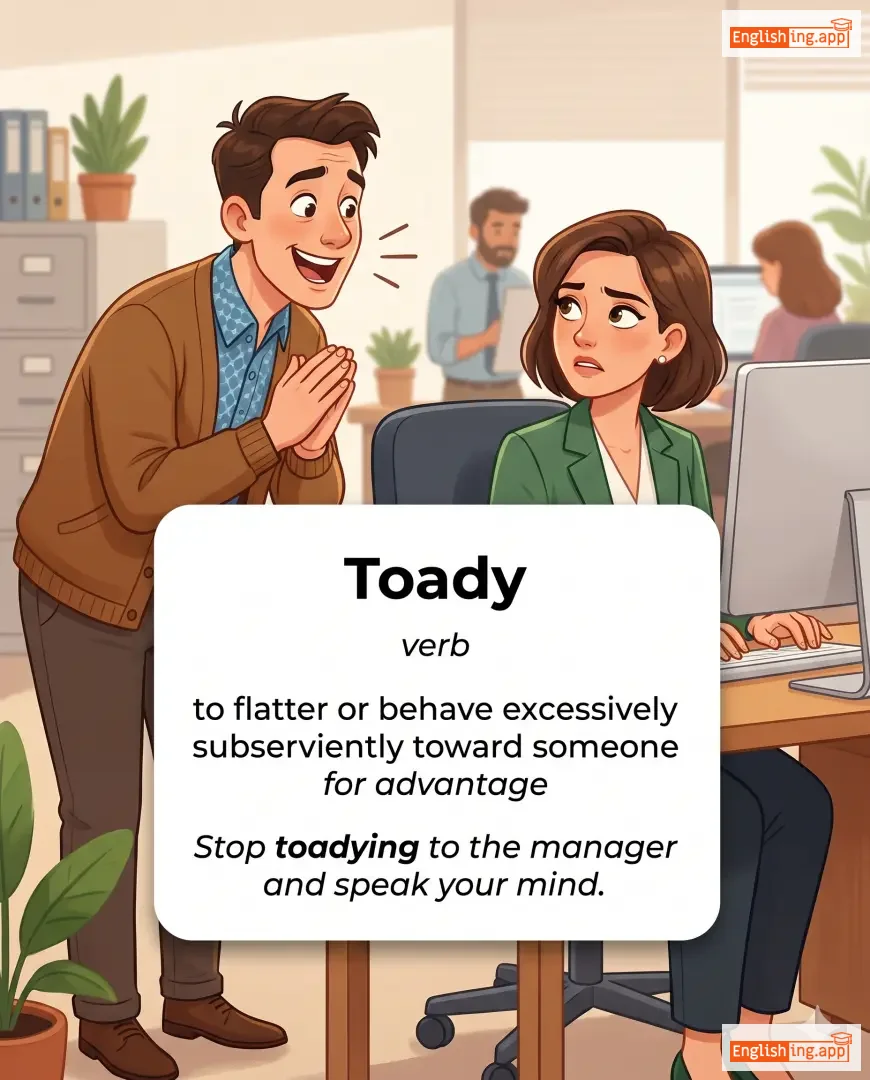
Toady definition card — visual illustration of the meaning
verb
/ˈtoʊdi/
তোষামোদ করা (toshamod kora)

to flatter or behave excessively subserviently toward someone for advantage

"Stop toadying to the manager and speak your mind."

"ম্যানেজারের তোষামোদ করা বন্ধ করুন এবং নিজের মতামত বলুন।" (managerer toshamod kora bondho korun ebong nijer motamot bolun.)