ভোকাবুলারিসমূহ

ইংরেজি শব্দের বাংলা অর্থ | English to Bangla Word Meaning Dictionary

noun
/ˈtiːtʃər/
শিক্ষক (shikkhok)

a person who teaches, especially in a school

"Mr. Smith is the teacher of the math class."

"মিঃ স্মিথ গণিত ক্লাসের শিক্ষক।" (Mr. Smith gonit klāsher shikkhok.)
noun
/ˈtiːtʃɪŋ/
শিক্ষণ (shikkhon)

the profession or practice of teaching

"Teaching is a noble profession."

"শিক্ষণ একটি মহৎ পেশা।" (Shikkhon ēkti mohat pēśā.)
noun
/tiːm/
দল (dal)

a group of people working together towards a common goal

"Our team won the match after a great effort."

"আমাদের টিম একটি দুর্দান্ত প্রচেষ্টার পর ম্যাচ জিতেছে।" (Āmādēr ṭim ēkti durdānta prôchēṣṭār pòr match jitéchē.)
noun
/ˈtiːmmeɪt/
সহ-দলীয় সদস্য (sho-doliyo sodossho)

a member of the same team

"He congratulated his teammate after scoring the goal."

"সে গোল করার পর তার সহ-দলীয় সদস্যকে অভিনন্দন জানাল।" (Se gol korar por tar sho-doliyo sodosshoke ovinondon janalo.)
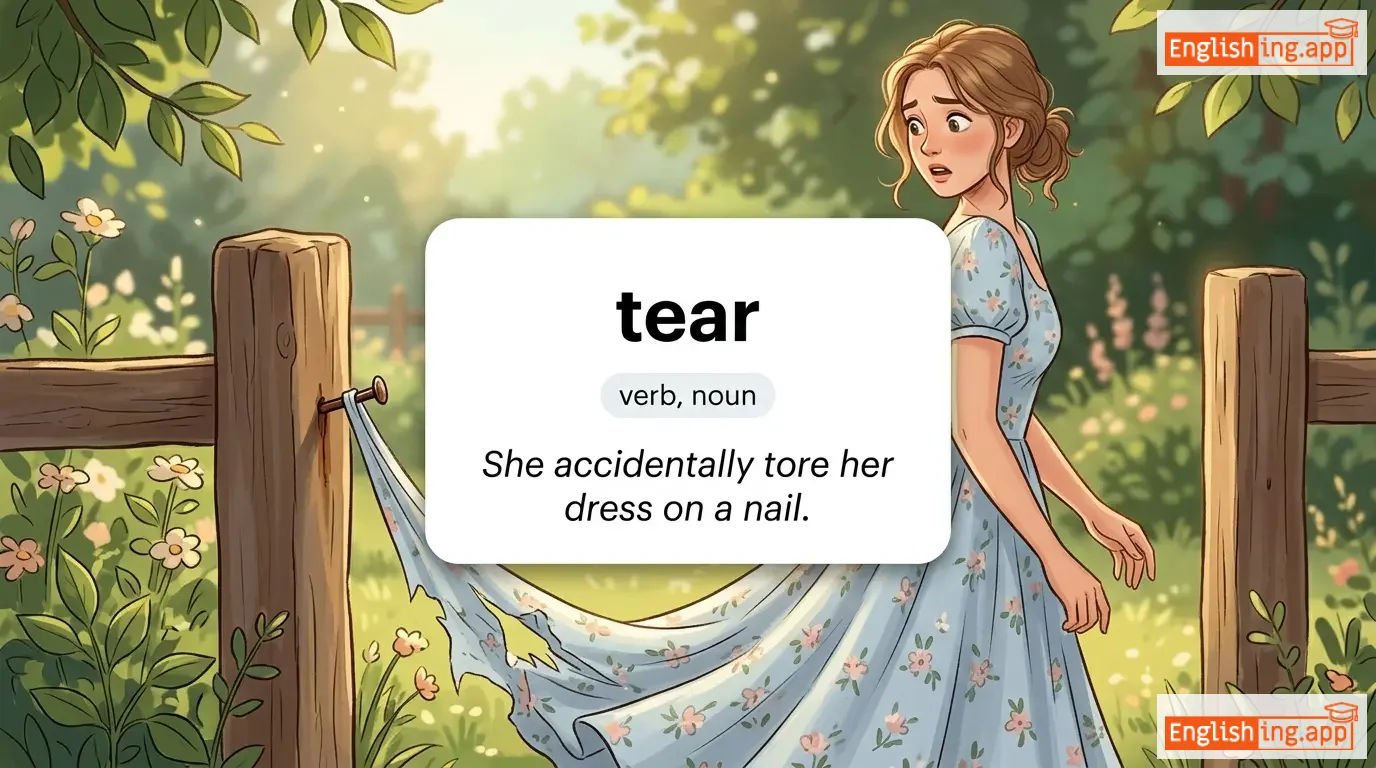
tear definition card — visual illustration of the meaning
verb, noun
/tɪər/ (noun: liquid) /tɛər/ (verb: rip)
ছিঁড়া / অশ্রু (chira / oshru)

As a verb: to pull apart or rip something. As a noun: a drop of clear salty liquid produced by glands in your eyes.

"She accidentally tore her dress on a nail."

"সে দুর্ঘটনাক্রমে তার পোশাকটি পেরেকের সাথে ছিঁড়ে ফেলেছিল।" (se durghotonakrome tar poshakti pereker sathe chire phelechhilo.)
adjective
/ˈtɪərfəl/
অশ্রুসিক্ত; কান্নাকাতর; (oshrusikto)

expressing or showing sadness and sorrow; inclined to weep

"She gave a tearful goodbye to her friends at the airport."

"সে বিমানবন্দরে তার বন্ধুদের কাছে অশ্রুসিক্ত বিদায় জানাল।" (she bimanbondore tar bondhudeer kachhe oshrusikto biday janal.)
verb
/tiːz/
ঠাট্টা করা (thatta kora)

to make fun of someone in a playful or unkind way

"Children often tease their younger siblings playfully."

"শিশুরা প্রায়ই তাদের ছোট ভাইবোনদের সাথে খেলাচ্ছলে ঠাট্টা করে।" (Shishura prayi tader chhoto bhaibonoder sathe khelachhle thatta kore.)
noun
/ˈtiːspuːn/
টিসপুন (ṭispun)

a small spoon used for stirring drinks or eating soft foods, or for measuring small amounts of ingredients.

"Add a teaspoon of sugar to the tea."

"চায়ে এক টিসপুন চিনি যোগ করুন।" (Chaye ek ṭispun chini jog korun.)
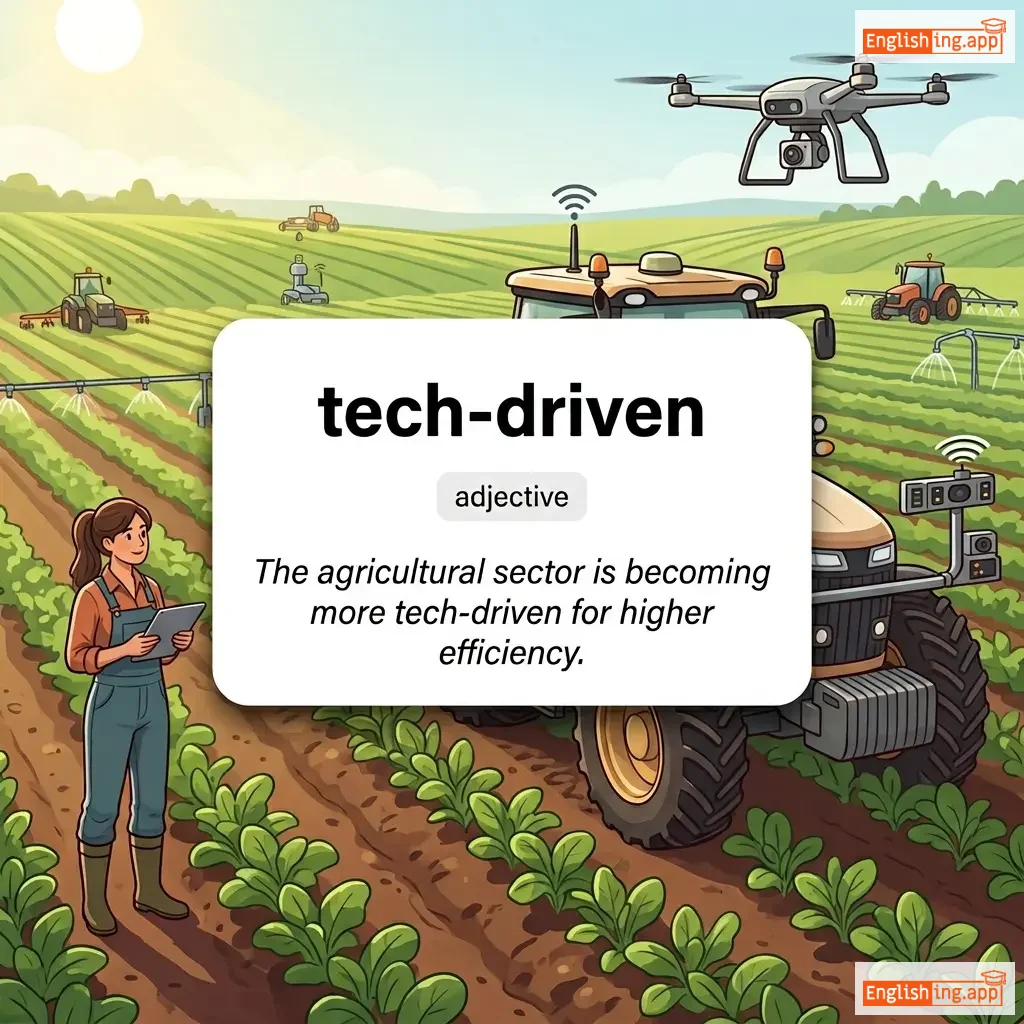
tech-driven definition card — visual illustration of the meaning
adjective
/tɛk ˈdrɪv.ən/
প্রযুক্তি-নির্ভর (proyukti-nirbhor)

Powered or guided by technology; dependent on technological advancement for operation.

"The agricultural sector is becoming more tech-driven for higher efficiency."

"উচ্চ দক্ষতার জন্য কৃষি খাত আরও প্রযুক্তি-নির্ভর হয়ে উঠছে।" (Uchcho dokkhatar jonno krishi khat aro proyukti-nirbhor hoye uthche.)
noun
/ˈtɛknɪk/
প্রযুক্তি / কৌশল (projukti / koushol)

A method, skill, or art in a particular field, especially in the arts or sciences.

"The artist’s technic in watercolor impressed the judges."

"ওয়াটারকালারে শিল্পীর কৌশল বিচারকদের মুগ্ধ করেছিল।" (watercolor e shilpir koushol bicharkoder mugdho korechhilo.)
adjective
/ˈtɛknɪkəl/
টেকনিক্যাল (ṭeknikyal)

relating to a specific subject, art, or craft, or its techniques.

"He has a technical background in engineering."

"তার একটি টেকনিক্যাল পটভূমি রয়েছে প্রকৌশলে।" (Tar ekṭi ṭeknikyal potbhumi royeche prokoushole.)
noun
/ˌtɛknɪˈkæləti/
আইনি খুঁটিনাটি (aini khutiniti)

A small detail of law, rule, or procedure; a minor point that affects an outcome.

"The case was dismissed on a technicality."

"মামলাটি একটি আইনি খুঁটিনাটির কারণে খারিজ করা হয়েছিল।" (mamlati ekti aini khutinarir karone kharij kora hoyechhilo.)
noun
/tɛkˈnɪʃən/
প্রযুক্তিবিদ (projukti-bid)

a person skilled in the practical aspects of a particular science, art, or job

"The technician repaired the computer within an hour."

"প্রযুক্তিবিদ এক ঘণ্টার মধ্যে কম্পিউটারটি মেরামত করলেন।" (Projuktibid ek ghontar moddhe computer ti meramot korlen.)
noun
/tɛkˈniːk/
কৌশল / প্রক্রিয়া (koshol / prokriya)

A particular way of carrying out a task, especially with skill.

"She learned a new breathing technique in yoga class."

"সে যোগা ক্লাসে একটি নতুন শ্বাস-প্রশ্বাসের কৌশল শিখেছিল।" (se joga clase ekti notun shash-prashasher koshol shikhchhilo.)
noun
/tɛkˈnɒɡrəfi/
প্রযুক্তি-লেখা (projukti lekha)

the descriptive study or writing about the practical arts, technologies, or technical methods of a society

"The anthropologist specialized in technography to understand indigenous tool-making traditions."

"মানববিদ টেকনোগ্রাফিতে বিশেষজ্ঞ ছিলেন যাতে তিনি আদিবাসী যন্ত্র তৈরির ঐতিহ্য বুঝতে পারেন।" (Manobbid technography te bisheshoggo chilen jate tini adibasi jontr toirir oithijjo bujh te paren.)
technological definition card — visual illustration of the meaning
adjective
/ˌteknəˈlɒdʒɪkəl/
প্রযুক্তিগত (projukti ghotito)

relating to or involving technology or technical processes

"The company is investing heavily in technological innovation."

"কোম্পানিটি প্রযুক্তিগত উদ্ভাবনে প্রচুর বিনিয়োগ করছে।" (Companiti projuktigoto udbabone prochur binoyog korche.)
technological advancement definition card — visual illustration of the meaning
noun
/tekˈnɒl.ə.dʒɪ.kəl ədˈvɑːns.mənt/
প্রযুক্তিগত উন্নতি (projuktiyoto unnoti)

Progress or improvement in technology that leads to better solutions or capabilities.

"Technological advancement is revolutionizing healthcare."

"প্রযুক্তিগত উন্নতি স্বাস্থ্যসেবাকে বদলে দিচ্ছে।" (Projuktiyoto unnoti swasthyosebake bodle dicche.)
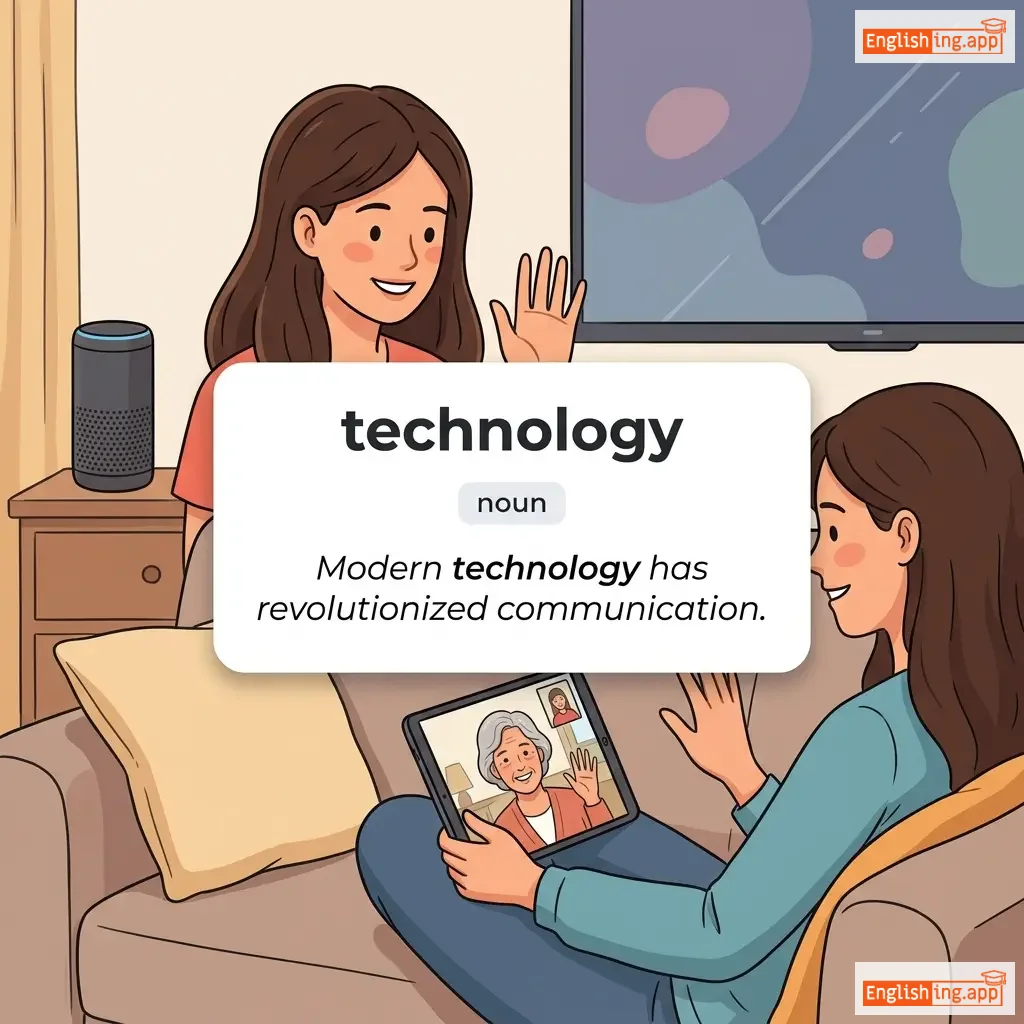
technology definition card — visual illustration of the meaning
noun
/tɛkˈnɒlədʒi/
প্রযুক্তি (projukti)

the application of scientific knowledge for practical purposes, especially in industry

"Modern technology has revolutionized communication."

"আধুনিক প্রযুক্তি যোগাযোগে বিপ্লব এনেছে।" (Adhunik projukti jogajoge biplob enechhe.)
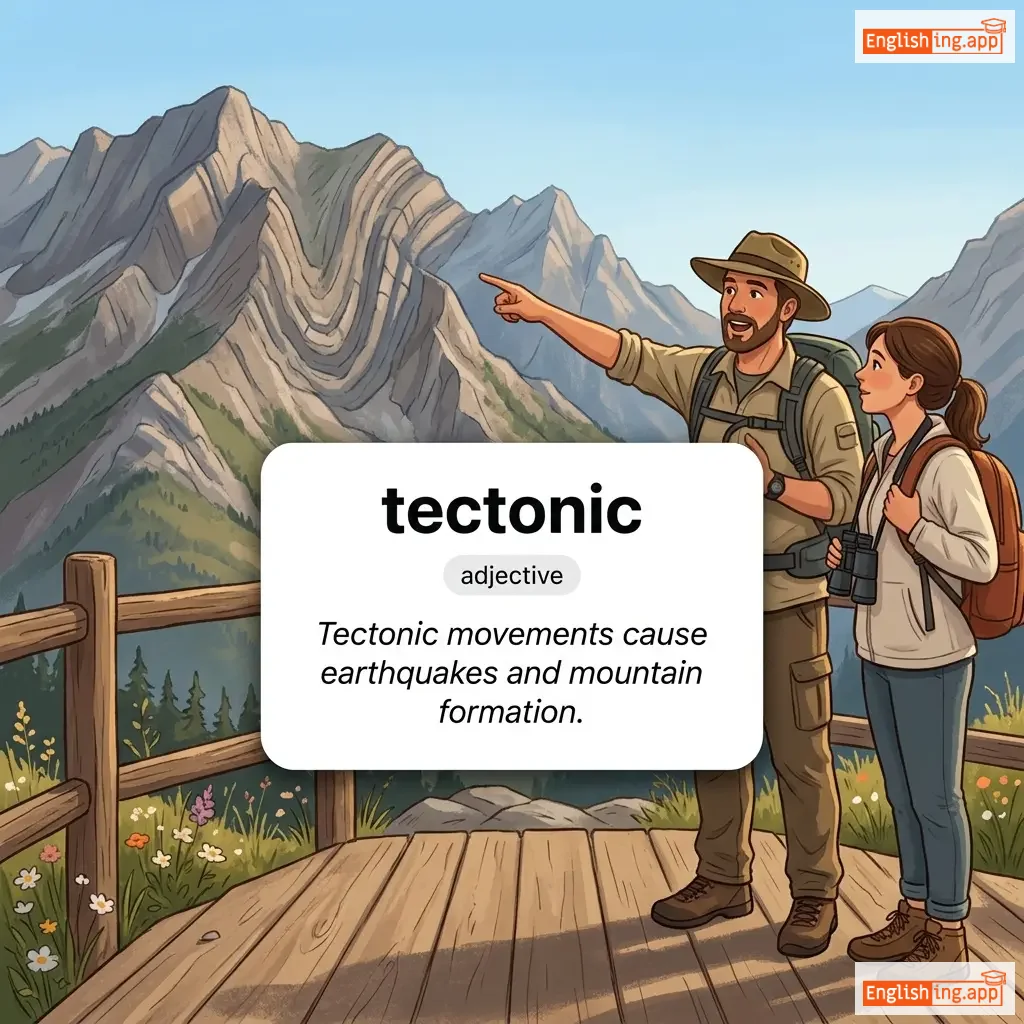
tectonic definition card — visual illustration of the meaning
adjective
/tɛkˈtɑː.nɪk/
ভূত্বকীয়, ভূপৃষ্ঠ সংক্রান্ত (bhutwokio, bhuprishtho shongkranto)

Relating to the structure of the earth's crust and the large-scale processes that take place within it.

"Tectonic movements cause earthquakes and mountain formation."

"টেকটনিক গতিবিধি ভূমিকম্প ও পর্বত গঠনের কারণ হয়।" (Tectonic gotibidhii bhumikompо о porboto gothoner karon hoy.)
adjective
/ˈtiːdiəs/
ক্লান্তিকর (klantikoro)

too long, slow, or dull; tiresome or monotonous

"Filling out endless forms can be a tedious task."

"অসীম ফর্ম পূরণ করা একটি ক্লান্তিকর কাজ হতে পারে।" (Oshim form puron kora ekti klantikoro kaj hote pare.)
noun
/ˈtiːdiəm/
একঘেয়েমি (ekgheyemi)

the state of being tedious; monotony or boredom

"The tedium of long meetings often drains motivation."

"দীর্ঘ সভার একঘেয়েমি প্রায়ই প্রেরণা হ্রাস করে।" (Dirgho shobar ekgheyemi prayoi prerona hras kore.)
verb
/tiːm/
ভরপুর হওয়া (vorpur howa)

to be full of or swarming with

"The forest teems with wildlife."

"জঙ্গল বন্যপ্রাণীতে ভরপুর।" (Jongol bonnoprani te vorpur.)
adjective
/ˈtiːmɪŋ/
ভরপুর (vorpur)

full of or swarming with things or people

"The market was teeming with shoppers."

"বাজারটি ক্রেতায় ভরপুর ছিল।" (Bajarti kretai vorpur chhilo.)
🧑‍🦱

teen (টিন)

noun
/tiːn/
কিশোর (kishor)

a person aged between 13 and 19 years.

"He's a teenager who loves sports."

"সে একজন কিশোর যে ক্রীড়া পছন্দ করে।" (Se ekjon kishor je krira pochhondo kore.)
adjective
/ˈtiːnˌeɪdʒ/
কিশোরবয়সী (kishorboyoshi)

relating to or characteristic of people aged between 13 and 19 years old

"She spent her teenage years in a small town."

"সে তার কিশোরবয়স একটি ছোট শহরে কাটিয়েছিল।" (Se tar kishorboyosh ekti choto shoher e katiyechhilo.)
noun
/ˈtiːneɪdʒər/
কিশোর (kishor)

a person aged between 13 and 19 years.

"Teenagers often enjoy hanging out with friends."

"কিশোররা প্রায়ই বন্ধুদের সঙ্গে আড্ডা দিতে পছন্দ করে।" (Kishorra proaye bandhudder shonge adda dite pochhondo kore.)
verb
/ˈtiːtər/
ডগমগ করা (dogmog kora)

to move or balance unsteadily; to wobble

"The glass began to teeter on the edge of the table."

"গ্লাসটি টেবিলের কিনারায় ডগমগ করতে শুরু করল।" (Glashti tebiler kinaray dogmog korte shuru korlo.)
noun
/tiːˈtoʊtəlɪzəm/
মদ্যপান থেকে সম্পূর্ণ বিরত থাকা (modyopan theke sompurno birat thaka)

the practice or principle of abstaining completely from alcoholic drinks

"He practiced teetotalism throughout his life."

"তিনি সারা জীবন টিটোটালিজম চর্চা করেছিলেন।" (Tini sara jibon teetotalism chorcha korechilen.)
telemetry definition card — visual illustration of the meaning
noun
ˈtɛlɪˌmɛtri
দূরবর্তী পর্যবেক্ষণ (durborti porjobokkhon)

The process of recording and transmitting the readings of an instrument.

"The spacecraft transmitted telemetry data back to Earth."

"স্পেসক্রাফটটি পৃথিবীতে টেলিমেট্রি ডেটা পাঠিয়েছে।" (Spacecraftti prithibite telemetry data pathiyeche.)
noun
/ˌtɛliˈɒlədʒi/
উদ্দেশ্যমূলক ব্যাখ্যা (uddesshomulok byakkha)

the explanation of phenomena by the purpose they serve rather than by cause

"Aristotle is often associated with the concept of teleology in philosophy."

"অ্যারিস্টটলকে প্রায়ই দর্শনে টেলিওলজির ধারণার সাথে যুক্ত করা হয়।" (Aristotle ke prai darsone teleologyr dharona shathe jukto kora hoy.)
noun
/təˈlɛpəθi/
মন-যোগাযোগ (mon-jogajog)

the supposed communication of thoughts or ideas by means other than the known senses

"The twins claimed to share telepathy with each other."

"যমজরা দাবি করেছিল যে তারা একে অপরের সাথে টেলিপ্যাথি শেয়ার করে।" (Jomojra dabi korechilo je tara eke oporer shathe telepathy share kore.)
noun
/ˈtɛlɪfəʊn/
টেলিফোন (ṭeliphon)

a system for transmitting voices over a distance using wire or radio, typically for communication.

"I need to make a telephone call to my friend."

"আমি আমার বন্ধুর সাথে একটি টেলিফোন কল করতে চাই।" (Ami amar bondhur shathe ekṭi ṭeliphon kol korte chai.)
noun
/təˈlɛfəni/
টেলিফোন ব্যবস্থা (telefon byabostha)

the technology and systems for transmitting voice over distances by telephone

"Modern telephony has evolved to include internet-based calls."

"আধুনিক টেলিফনি এখন ইন্টারনেট-ভিত্তিক কল অন্তর্ভুক্ত করেছে।" (Adhunik telephony ekhon internet-vittik call ontrukto koreche.)
noun
/ˈtɛlɪˌskoʊp/
দূরবীন (durbin)

An optical instrument used to make distant objects appear closer and larger by collecting and focusing light.

"The astronomer used a telescope to observe the distant planets."

"জ্যোতির্বিদ দূরবর্তী গ্রহ পর্যবেক্ষণ করতে একটি দূরবীন ব্যবহার করেছিলেন।" (Jyotirbid durborti groho porjobekkhon korte ekti durbin byabohar korechilen.)
noun
/ˈtɛlɪˌvɪʒən/
টেলিভিশন (ṭelibiśon)

a device that receives television signals and displays them on a screen

"I like to watch the news on television."

"আমি টেলিভিশনে সংবাদ দেখতে ভালোবাসি।" (Āmi ṭelibiśonē sangbād dēkhtē bhālōbāsi.)
tell definition card — visual illustration of the meaning
verb
/tɛl/
বলা (bola)

to communicate information, give an account of something, or instruct someone to do something

"She asked him to tell the truth."

"সে তাকে সত্য বলতে বলল।" (Se take shotto bolte bollo.)
noun
/ˈtɛl.ər/
ব্যাংক কর্মকর্তা; কাহিনী বলা ব্যক্তি (baengk karmakarta; kahini bola byakti)

A person who counts and manages money at a bank; a person who tells or relates something

"The bank teller counted the cash carefully before handing it over."

"ব্যাংক টেলারটি সাবধানে নগদ টাকা গণনা করল এবং হস্তান্তর করল।" (baengk tellerti sabdhane nogod taka gonona korlo ebong hastantor korlo.)
adjective
/ˈtɛlɪŋ/
গুরুত্বপূর্ণ প্রকাশক (guruttopurno prokashok)

Revealing something significant or giving important information.

"Her silence was more telling than words."

"তার নীরবতা কথার চেয়ে বেশি প্রকাশক ছিল।" (Tar nirbota kothar cheye besi prokashok chilo.)
adjective
/ˈtɛlˌteɪl/
প্রকাশক (prokashok)

Revealing something that is usually hidden; giving away a secret or clue.

"The telltale signs of fatigue were visible on his face."

"তার মুখে ক্লান্তির প্রকাশক চিহ্ন দেখা যাচ্ছিল।" (Tar mukhe klantir prokashok chihno dekha jachchhilo.)
adjective
/ˌtɛmɪˈrɛəriəs/
অবিবেচক (obibechok)

Reckless or rash; showing a lack of caution.

"It was a temerarious decision to cross the river during the storm."

"ঝড়ের সময় নদী পার হওয়া ছিল এক অবিবেচক সিদ্ধান্ত।" (Jhorer somoy nodi par howa chilo ek obibechok siddhanto.)
noun
/təˈmɛrɪti/
দুঃসাহস (duhsahas)

Excessive confidence or boldness; audacity.

"He had the temerity to challenge the professor’s argument."

"তিনি অধ্যাপকের যুক্তিকে চ্যালেঞ্জ করার দুঃসাহস করেছিলেন।" (Tini odhyapoker juktike challenge korar duhsahas korechhilen.)
verb
/ˈtɛmpər/
সংযত করা / রাগ (songjot kora / rag)

to moderate, soften, or tone down something; also to strengthen by heat treatment (as in metal).

"She tried to temper her criticism with kindness."

"সে দয়া দিয়ে তার সমালোচনাকে সংযত করার চেষ্টা করেছিল।" (Se doya diye tar somalochanake songjot korar chesta korechilo.)
noun
/ˈtɛmpərəmənt/
স্বভাব / মেজাজ (swabhav / mejaj)

a person's characteristic mood, disposition, or nature.

"He has a calm temperament that makes him a good leader."

"তার শান্ত স্বভাব তাকে একজন ভালো নেতা বানিয়েছে।" (Tar shanto swabhav take ekjon bhalo neta baniyeche.)
temperance definition card — visual illustration of the meaning
noun
/ˈtɛmpərəns/
সংযম (songjom)

moderation in action, thought, or feeling; restraint, especially regarding alcohol.

"The monk practiced temperance in all aspects of his life."

"সন্ন্যাসী তার জীবনের সব ক্ষেত্রে সংযম অনুশীলন করতেন।" (Sonnyasi tar jibon er shob khetre songjom onushilon korten.)
adjective
/ˈtɛmpərət/
মধ্যম / সংযত (madhyom / songjot)

showing moderation or self-restraint; also describing mild climate.

"He is known for his temperate behavior even in stressful situations."

"তিনি চাপযুক্ত পরিস্থিতিতেও তার সংযত আচরণের জন্য পরিচিত।" (Tini chapjukto poristhititeo tar songjot acharoner jonno porichito.)
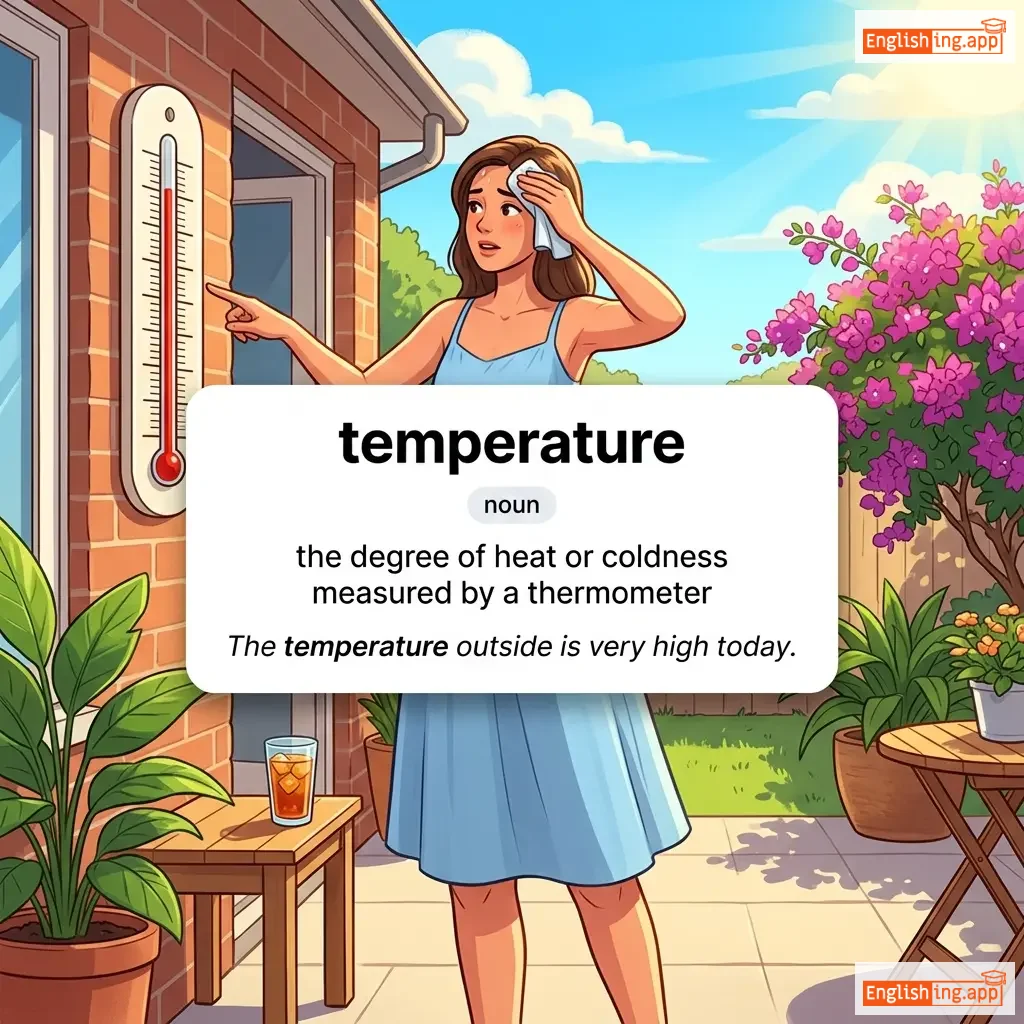
temperature definition card — visual illustration of the meaning
noun
/ˈtɛmpərətʃər/
তাপমাত্রা (ṭāpamātrā)

the degree of heat or coldness measured by a thermometer

"The temperature outside is very high today."

"বাইরে আজ খুব গরম তাপমাত্রা।" (Bā'irē āj khub garam tāpāmātrā.)
adjective
/ˈtɛmpərd/
সংযত / শক্ত করা (songjot / shokto kora)

having a specified temper or disposition; strengthened or moderated.

"She gave a tempered response to the criticism."

"তিনি সমালোচনার প্রতি একটি সংযত প্রতিক্রিয়া দিয়েছিলেন।" (Tini somalochanar proti ekti songjot protikria diyechilen.)
noun
/ˈtem.pɪst/
প্রবল ঝড়; (probol jhor)

a violent storm with strong winds; a state of great disturbance or tumult

"The sailors struggled to navigate through the fierce tempest."

"নাবিকরা প্রচণ্ড ঝড়ের মধ্য দিয়ে নৌচালনা করতে সংগ্রাম করেছিল।" (Nabikra prochondo jhorer moddho diey nouchalna korte songram korechilo.)
adjective
/tɛmˈpɛstjuəs/
ঝড়ো, অশান্ত (jhoro, ashanto)

Characterized by strong and turbulent emotions or stormy conditions.

"Their tempestuous relationship often swung between love and anger."

"তাদের ঝড়ো সম্পর্ক প্রায়ই ভালোবাসা এবং রাগের মধ্যে ঘুরে বেড়াত।" (tader jhoro somporko prai bhalobasha ebong rager modhye ghure berato.)
noun
/ˈtɛmpəl/
মন্দির (mondir)

a building used for the worship of a god or gods

"They visited an ancient temple during their trip to India."

"তারা ভারতের সফরে একটি প্রাচীন মন্দির পরিদর্শন করেছিল।" (Tara Bharoter sohore ekti prachin mondir poridorshon korechhilo.)