ভোকাবুলারিসমূহ

ইংরেজি শব্দের বাংলা অর্থ | English to Bangla Word Meaning Dictionary

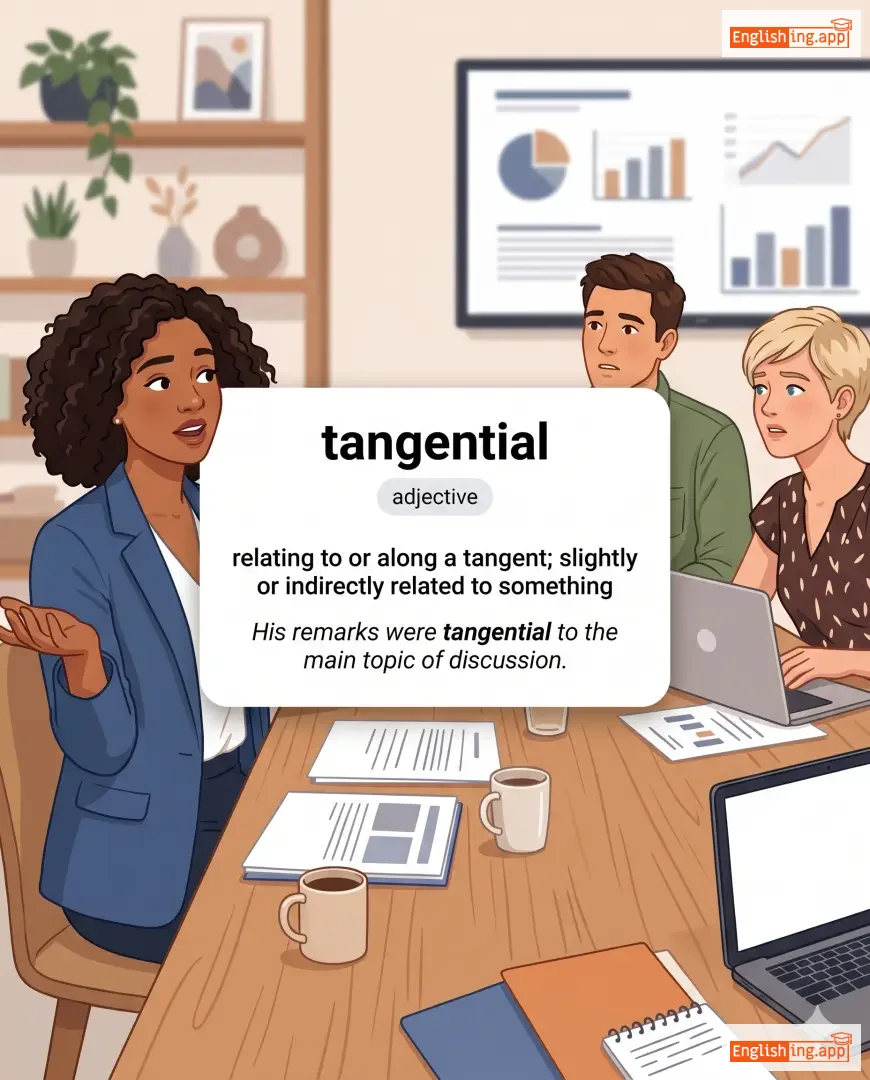
tangential definition card — visual illustration of the meaning
adjective
/tænˈdʒɛnʃəl/
আংশিক সম্পর্কিত (angshik somprokito)

relating to or along a tangent; slightly or indirectly related to something

"His remarks were tangential to the main topic of discussion."

"তার মন্তব্যগুলো আলোচনার মূল বিষয়ের সাথে সামান্য সম্পর্কিত ছিল।" (Tar montobbogulo alochonar mul bishoyer sathe samanno somprokito chhilo.)
tangible definition card — visual illustration of the meaning
adjective
/ˈtændʒəbl/
স্পর্শযোগ্য (sporshoyoggo)

perceptible by touch; real and concrete

"The excitement in the room was almost tangible."

"কক্ষে উত্তেজনা প্রায় স্পর্শযোগ্য ছিল।" (Kokhe uttejona pray sporshoyoggo chhilo.)
adjective
/ˈtæŋ.i/
ঝাঁঝালো (jhanjhallo)

Having a strong, sharp, and pleasantly biting flavor or taste.

"The sauce had a tangy flavor that brightened the dish."

"সসে একটি ঝাঁঝালো স্বাদ ছিল যা খাবারটিকে আরও সুস্বাদু করেছিল।" (Sose ekti jhanjhallo swad chilo ja khabartike aro suswadu korechilo.)
noun
/tæŋk/
ট্যাঙ্ক (tank)

a large, heavy military vehicle that moves on tracks and is armed with weapons

"The army sent tanks to the front lines."

"সেনা ফ্রন্ট লাইনে ট্যাঙ্ক পাঠিয়েছিল।" (Sena front line e tank pathiyechhilo.)
noun
/ˈtæn.ər/
চর্মশিল্পী (chormoshilpi)

A person whose job is to tan animal hides to make leather.

"The tanner worked long hours to produce fine leather."

"চর্মশিল্পী দীর্ঘ সময় ধরে কাজ করে উৎকৃষ্ট চামড়া তৈরি করলেন।" (Chormoshilpi dirgho somoy dhore kaj kore utkrishta chamra toiri korlen.)
noun
/ˈtæn.ə.ri/
চর্মকারখানা (chormokarkhana)

A place where animal hides are processed into leather.

"The tannery produced high-quality leather for export."

"চর্মকারখানাটি রপ্তানির জন্য উচ্চমানের চামড়া তৈরি করত।" (Chormokarkhanati roptanir jonno uchchomaner chamra toiri korto.)
verb
/ˈtæn.tə.laɪz/
আকৃষ্ট করে কষ্ট দেওয়া (akristo kore kosto deowa)

To tease or torment someone with the promise of something desirable but unattainable.

"The aroma of the bakery tantalized the hungry children."

"বেকারির সুগন্ধ ক্ষুধার্ত শিশুদের আকৃষ্ট করেছিল।" (Bekerir sugondh khudharto shishuder akristo korechilo.)
adjective
/ˈtæn.tə.laɪ.zɪŋ/
প্রলুব্ধকর (prolobdhokor)

Something that excites desire or interest, often by being just out of reach.

"She wore a tantalizing perfume that caught everyone's attention."

"সে এমন একটি প্রলুব্ধকর সুগন্ধি ব্যবহার করেছিল যা সবার মনোযোগ কেড়ে নিল।" (Se emon ekti prolobdhokor sugondhi byabohar korechilo ja sobar monojog kere nilo.)
adjective
/ˈtæntəmaʊnt/
সমতুল্য (somotulya)

Equivalent in seriousness or effect; virtually the same as.

"His refusal to speak was tantamount to an admission of guilt."

"তার কথা বলতে অস্বীকার করা অপরাধ স্বীকার করার সমতুল্য ছিল।" (tar kotha bolte oswikar kora oprod swikar korar somotulya chilo.)
noun
/ˈtæntrəm/
রাগের ঝাঁজ (rager jhaj)

An uncontrolled outburst of anger and frustration, typically in a young child.

"The child threw a tantrum when he didn’t get the toy."

"ছেলেটি খেলনাটি না পাওয়ায় রাগের ঝাঁজ দেখিয়েছিল।" (cheleti khelonati na pawaye rager jhaj dekhiechhilo.)
verb
/tæp/
ট্যাপ করা (tap kora)

to strike something lightly, usually with a quick, sharp sound

"He tapped on the door to get her attention."

"সে দরজায় ট্যাপ করল তার মনোযোগ আকর্ষণ করার জন্য।" (Se dorjay tap korlo tar monojog akorshon korar jonno.)
noun
/teɪp/
টেপ (tep)

a long, narrow strip of material, often sticky on one side, used for fastening or sticking things together

"I need some tape to seal this box."

"আমার এই বাক্সটি সিল করতে কিছু টেপ প্রয়োজন।" (Amar ei baksti seal korte kichu tep proyojon.)
verb
/ˈteɪpər/
ক্রমে সরু হওয়া (krome soru howa)

To gradually decrease in width, thickness, or intensity.

"The road tapers off as it reaches the mountains."

"রাস্তা ধীরে ধীরে পাহাড়ের দিকে গিয়ে সরু হয়ে যায়।" (rasta dhire dhire paharer dike giye soru hoye jay.)
noun
/ˈtæpəstri/
সুন্দর নকশা করা কাপড় (shundor noksha kora kapor)

A piece of thick textile fabric with pictures or designs woven into it, often hung on walls.

"The museum displayed an ancient tapestry from the 15th century."

"মিউজিয়ামে ১৫শ শতকের একটি প্রাচীন ট্যাপেস্ট্রি প্রদর্শিত হয়েছিল।" (museum e 15sho shatoker ekti prachin tapestry prodorshito hoyechhilo.)
noun
/təˈræntjʊlə/
বড় লোমশ মাকড়সা (boro lomosh makorsha)

A large hairy spider found in warm regions.

"The tarantula crawled across the desert floor."

"ট্যারান্টুলাটি মরুভূমির মাটির উপর দিয়ে হেঁটে যাচ্ছিল।" (tarantulati moruvumir matir upar diye hente jachhilo.)
adjective
/ˈtɑːrdi/
দেরি (deri)

Delayed; arriving or happening late.

"The student received a warning for being tardy to class."

"শিক্ষার্থী ক্লাসে দেরি করার জন্য একটি সতর্কবার্তা পেয়েছিল।" (Shikkharthi klase deri korar jonno ekti sotorkobarta peyechhilo.)
target definition card — visual illustration of the meaning
noun
/ˈtɑːɡɪt/
লক্ষ্য (lokkhyo)

a goal or objective that one aims to achieve

"The team set a target to increase sales by 20%."

"টিমটি ২০% বিক্রয় বাড়ানোর লক্ষ্যমাত্রা স্থির করেছে।" (Timti 20% bikroy baranor lokkhyo matra sthir koreche.)
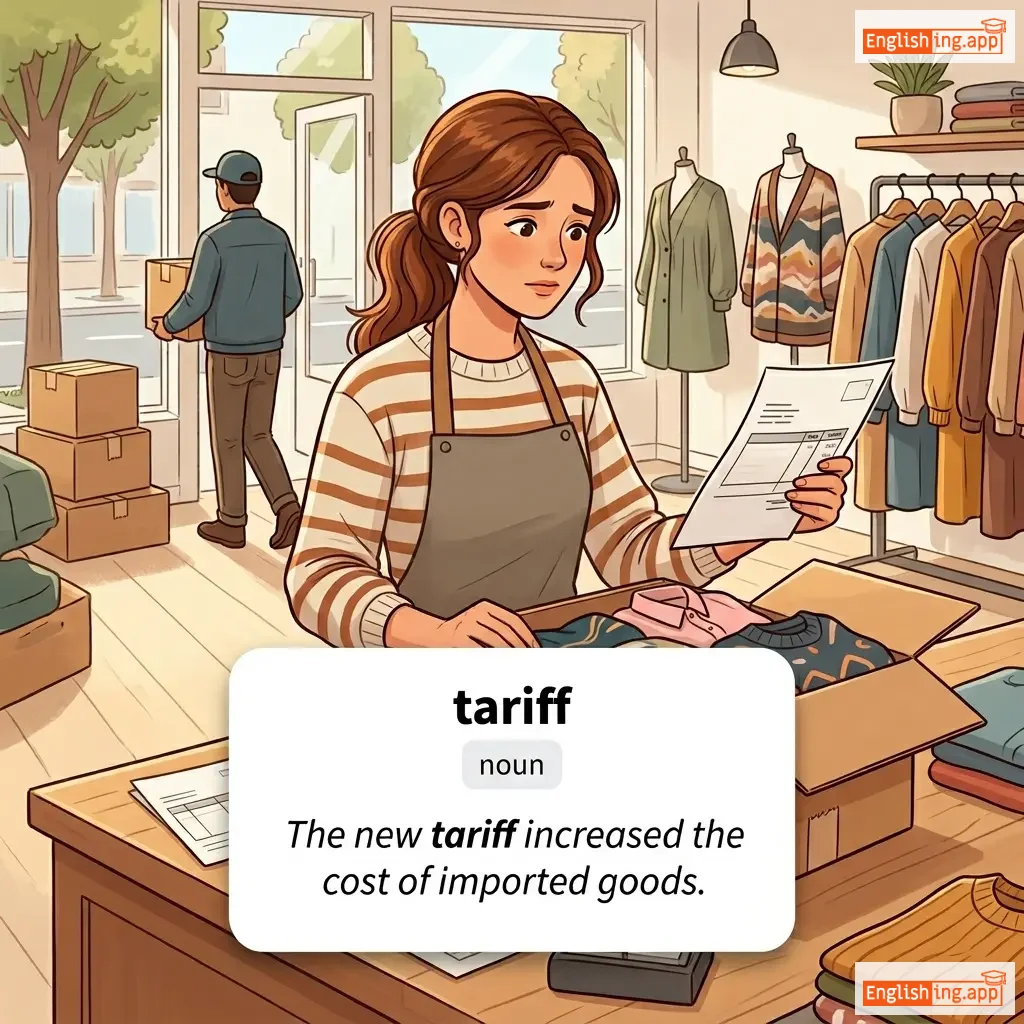
tariff definition card — visual illustration of the meaning
noun
/ˈtær.ɪf/
শুল্ক (shulko)

A tax imposed by the government on imported or exported goods, also known as duty, customs tax, or levy.

"The new tariff increased the cost of imported goods."

"নতুন শুল্ক আমদানিকৃত পণ্যের খরচ বৃদ্ধি করেছে।" (Notun shulko amdanikrito ponyer khoroch briddhi koreche.)
noun
/tɑːrn/
পর্বত হ্রদ (porbot hrod)

A small mountain lake or pool.

"We camped near a tranquil tarn in the highlands."

"আমরা পাহাড়ি এলাকার একটি শান্ত হ্রদের কাছে ক্যাম্প করেছিলাম।" (Amra pahari elakar ekti shanto hroder kache camp korechilam.)
verb
/ˈtɑːrnɪʃ/
কলঙ্কিত করা (kolonkito kora)

To lose luster, especially as a result of exposure to air or moisture; to damage reputation.

"The silver jewelry tarnished quickly when left in the open air."

"রূপার গয়নাগুলি খোলা বাতাসে রাখলে দ্রুত কলঙ্কিত হয়ে যায়।" (Rupar goynaguli khola batashe rakhle druto kolonkito hoye jay.)
noun
/tɑːrˈpɔːlɪn/
তাঁবুর কাপড় (tambu kapor)

A large sheet of strong, flexible, water-resistant material used for covering or protecting things.

"The workers used a tarpaulin to cover the construction materials from rain."

"শ্রমিকরা নির্মাণ সামগ্রী বৃষ্টির হাত থেকে রক্ষা করতে একটি তারপলিন ব্যবহার করেছিল।" (Shromikra nirman samogri brishtir hat theke rokkha korte ekti tarpulin byabohar korechhilo.)
verb
/ˈtæri/
থাকা/দেরি করা (thaka/deri kora)

To delay or linger; to stay longer than intended.

"Do not tarry, or you will miss the train."

"দেরি করো না, নাহলে তুমি ট্রেন মিস করবে।" (Deri koro na, nahole tumi train miss korbe.)
noun, adjective
/tɑːrt/
মিষ্টি পাই (tart)

A small pie with a sweet or savory filling; or having a sharp, sour taste.

"She served a delicious apple tart for dessert."

"সে ডেজার্টে সুস্বাদু আপেলের টার্ট পরিবেশন করেছিল।" (Se dezarte suswadu apeler tart poribeshon korechilo.)
noun
/tɑːsk/
কাজ (kaj)

a piece of work or duty to be done

"He completed the task before the deadline."

"সে সময়সীমার আগে কাজটি সম্পন্ন করেছে।" (Se somoyseemar aage kajti somponno koreche.)
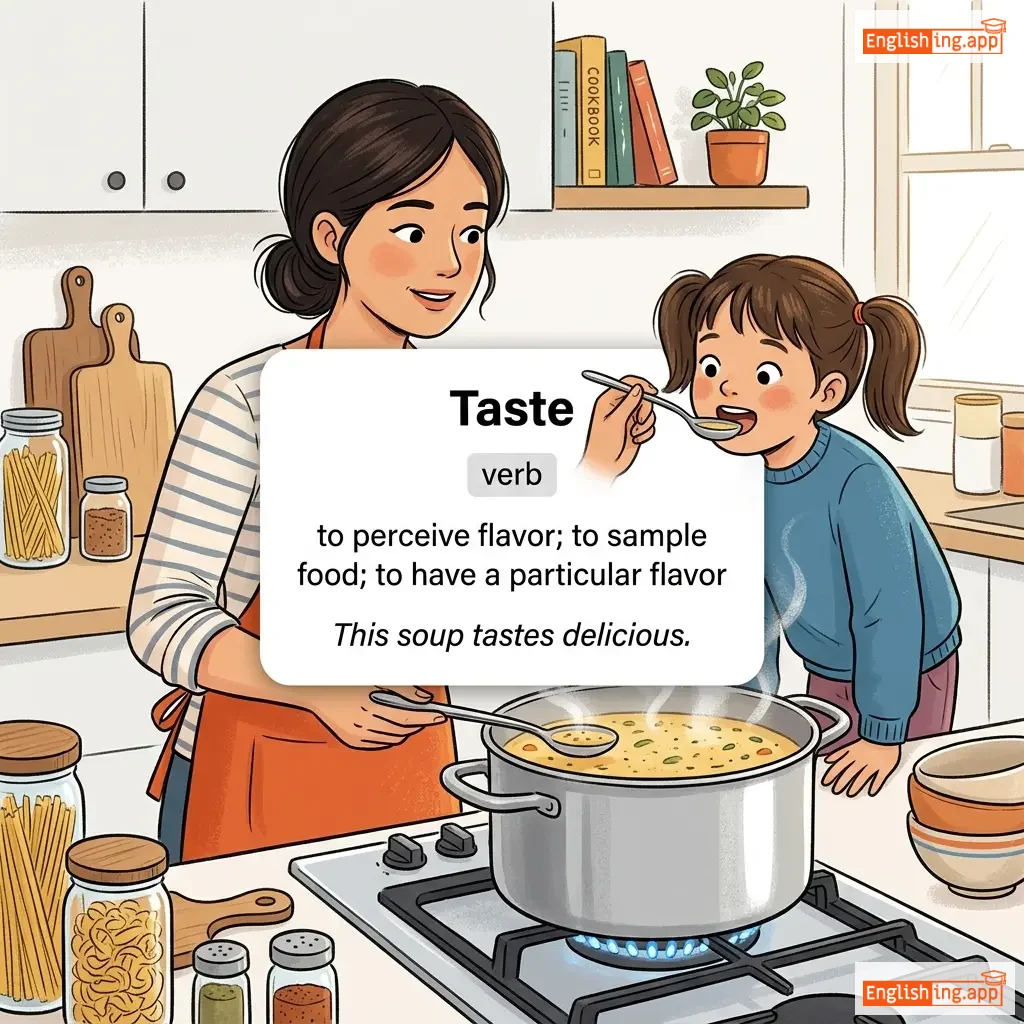
Taste definition card — visual illustration of the meaning
noun
/teɪst/
স্বাদ (swad)

the sensation of flavor perceived in the mouth

"The cake had a delicious taste."

"কেকটির একটি সুস্বাদু স্বাদ ছিল।" (Kektir ekti shushwadu swad chhilo.)
adjective
/ˈteɪst.fəl/
সুস্বাদু; রুচিসম্মত; সুনিপুণভাবে গঠিত; (ruchishommat)

showing good judgment in matters of style and beauty

"She decorated her home in a very tasteful manner."

"তিনি তার বাড়ি খুব রুচিসম্মতভাবে সাজিয়েছেন।" (tini tar bari khub ruchishommotbhabe sajiyechen)
adjective
/ˈteɪst.ləs/
স্বাদহীন; নিরস; (shadoheen)

lacking flavor; showing poor judgment in style

"The soup was completely tasteless and needed more seasoning."

"স্যুপটি সম্পূর্ণ স্বাদহীন ছিল এবং আরও মশলার প্রয়োজন।" (syupti shompurno shadoheen chilo ebong aro moshlar proyojon)
adjective
/ˈteɪsti/
সুস্বাদু (susradu)

Having a pleasant, distinct flavor; delicious.

"The chef prepared a very tasty curry."

"শেফ একটি খুব সুস্বাদু কারি রান্না করেছিলেন।" (Shef ekti khub suswadu kari ranna korechilen.)
noun, verb
/ˈtætər/
ছেঁড়া কাপড় (chhera kapor)

A torn piece of cloth or clothing; to become ragged or torn.

"The old flag hung in tatters after the storm."

"ঝড়ের পর পুরনো পতাকাটি ছেঁড়া অবস্থায় ঝুলে ছিল।" (Jhorrer por purono potakati chhera obosthay jhule chhilo.)
noun, adjective
/ˌtætərdɪˈmeɪliən/
ছেঁড়া পোশাক পরা ব্যক্তি (chhera poshak pora bekti)

A person dressed in ragged clothes; ragged or dilapidated in appearance.

"A tatterdemalion wandered the streets in search of food."

"একজন টাটারডেম্যালিয়ন খাবারের সন্ধানে রাস্তায় ঘুরছিল।" (Ekjohn tatterdemalion khabarer sondhane rastay ghurchhilo.)
adjective
/ˈtæti/
জীর্ণ (jirno)

Worn out, shabby, or in poor condition.

"The sofa looked old and tatty after years of use."

"বছরের পর ব্যবহারে সোফাটি পুরনো ও জীর্ণ হয়ে গিয়েছিল।" (Bochorer por byabahare sofati purono o jirno hoye giyechhilo.)
verb
/tɔːnt/
উত্যক্ত করা (utyokto kora)

to provoke or challenge someone with insulting remarks

"The bully tried to taunt him with cruel words."

"বুলিটি নিষ্ঠুর কথায় তাকে উত্যক্ত করার চেষ্টা করেছিল।" (buliti nisthur kathay take utyokto korar cheshta korechilo.)
adjective
/tɔːt/
টানটান (tantan)

stretched or pulled tight; tense

"The rope was pulled taut between the two poles."

"দুটি খুঁটির মধ্যে দড়িটি টানটান করে বাঁধা ছিল।" (duti khuti r modhye doriti tantan kore bandha chhilo.)
adjective
/ˌtɔːtəˈlɒdʒɪkəl/
অতিরিক্ত পুনরাবৃত্তিমূলক (otirikto punorabrittimulok)

expressing something by repeating the same idea in different words; redundant

"Saying 'free gift' is considered tautological."

"'ফ্রি গিফট' বলা অতিরিক্ত পুনরাবৃত্তিমূলক হিসাবে বিবেচিত হয়।" ('free gift' bola otirikto punorabrittimulok hishabe bibecharito hoy.)
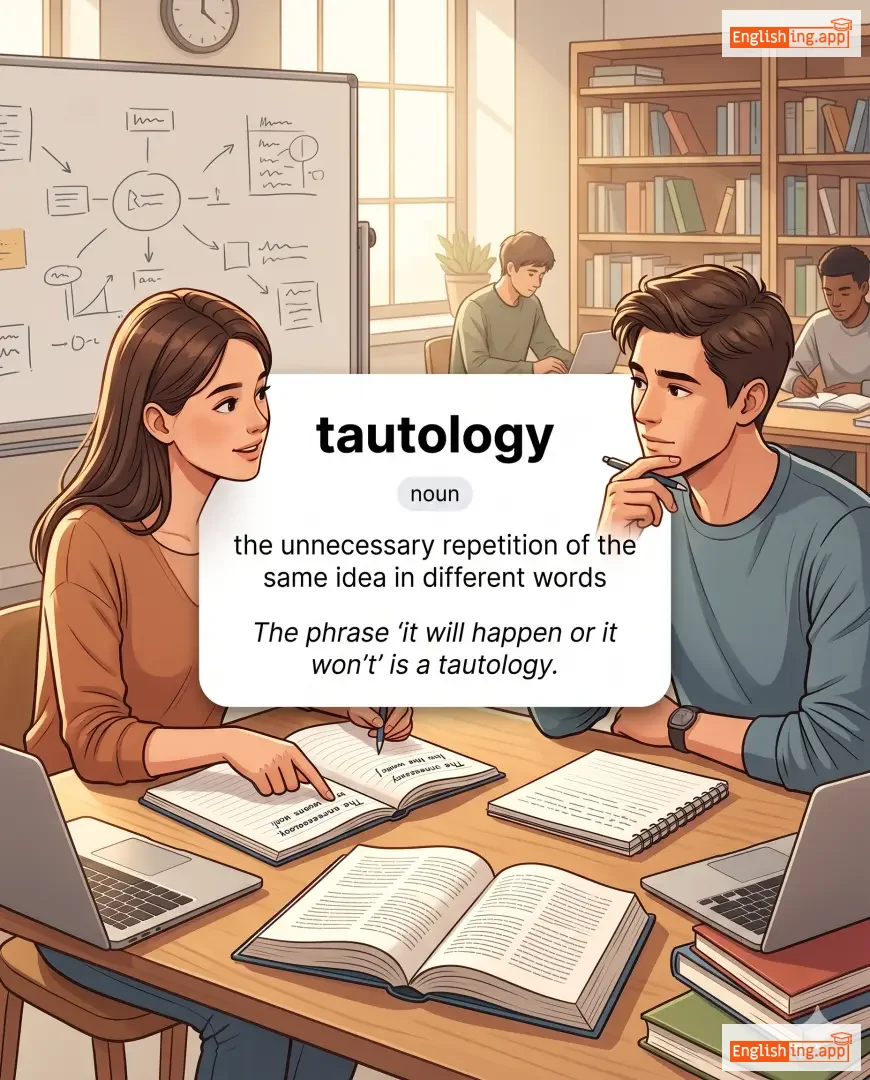
tautology definition card — visual illustration of the meaning
noun
/tɔːˈtɒlədʒi/
অতিরিক্ত পুনরাবৃত্তি (otirikto punorabritti)

the unnecessary repetition of the same idea in different words

"The phrase 'it will happen or it won’t' is a tautology."

"'এটা হবে অথবা হবে না' বাক্যটি একটি অপ্রয়োজনীয় পুনরাবৃত্তি।" ('eta hobe othoba hobe na' bakyoti ekti oprayojonio punorabritti.)
adjective
/ˈtɔːdri/
জাঁকজমকপূর্ণ কিন্তু সস্তা (jankjomokpurno kintu sosta)

cheap and showy but of poor quality

"She wore a tawdry necklace that broke easily."

"সে একটি সস্তা ও জাঁকজমকপূর্ণ হার পরেছিল যা সহজেই ভেঙে গিয়েছিল।" (se ekti sosta o jankjomokpurno har porechhilo ja sohojei bhenge giyechhilo.)
adjective
/ˈtɔːni/
হালকা বাদামী রঙ (halka badami rong)

A warm, sandy or golden-brown color.

"The owl's tawny feathers blended with the tree bark."

"পেঁচার টনি পালক গাছের বাকলের সাথে মিশে গিয়েছিল।" (Penchar toni palok gacher bakoler sathe mishe giechhilo.)
noun
/tæks/
কর (kor)

a compulsory contribution to state revenue, typically levied on income or sales

"The government increased the tax rate on luxury goods."

"সরকার বিলাসবহুল পণ্যগুলির উপর করের হার বাড়িয়েছে।" (Sorkar bilasbohul ponnyogulir upar korer har bariyeche.)
noun
/tækˈseɪʃən/
কর আরোপ ও সংগ্রহ (kor arop o songroho)

The system of imposing and collecting taxes.

"Taxation is necessary for funding public services."

"পাবলিক সার্ভিসের জন্য ট্যাক্সেশন প্রয়োজনীয়।" (Public services er jonno taxation proyojoniyo.)
noun
/ˈtæksi/
ট্যাক্সি (ṭaeksi)

A car licensed to transport passengers in exchange for payment of a fare.

"We hailed a taxi to get to the airport."

"আমরা বিমানবন্দরে যেতে একটি ট্যাক্সি ধরলাম।" (amra bimanbondere jete ekti ṭaeksi dhorlam.)
noun
/ˈtæk.si kæb/
ট্যাক্সি গাড়ি (takshi gari)

A car that carries passengers for a fare, usually in cities

"We took a taxi cab to the restaurant."

"আমরা রেস্টুরেন্টে যাওয়ার জন্য একটি ট্যাক্সি গাড়ি নিয়েছিলাম।" (amra resturente jawar jonno ekti takshi gari niyechilam.)
noun
/ˈtæksɪˌdɜːrmi/
প্রাণীর মৃতদেহ সংরক্ষণশিল্প (pranir mritodeho songrokkhon shilpo)

The art of preparing, stuffing, and mounting the skins of animals for display.

"The museum had a large collection of taxidermy animals."

"মিউজিয়ামে অনেক ট্যাক্সিডার্মি করা প্রাণীর সংগ্রহ ছিল।" (Museum e onek taxidermy kora pranir songroho chhilo.)
adjective
/ˈtæksɪŋ/
ক্লান্তিকর (klantikoro)

Requiring a lot of effort; physically or mentally demanding.

"Preparing for the exam was a taxing experience."

"পরীক্ষার প্রস্তুতি ছিল একটি ক্লান্তিকর অভিজ্ঞতা।" (Porikhar prostuti chhilo ekti klantikoro obhiggota.)
noun
/tækˈsɒnəmɪst/
শ্রেণীবিদ (shrenibid)

A scientist who classifies organisms into groups based on their characteristics.

"The taxonomist discovered a new species of insect."

"ট্যাক্সোনমিস্ট একটি নতুন পোকামাকড়ের প্রজাতি আবিষ্কার করেছিলেন।" (Taxonomist ekti notun pokamakorer projati abiskar korechhilen.)
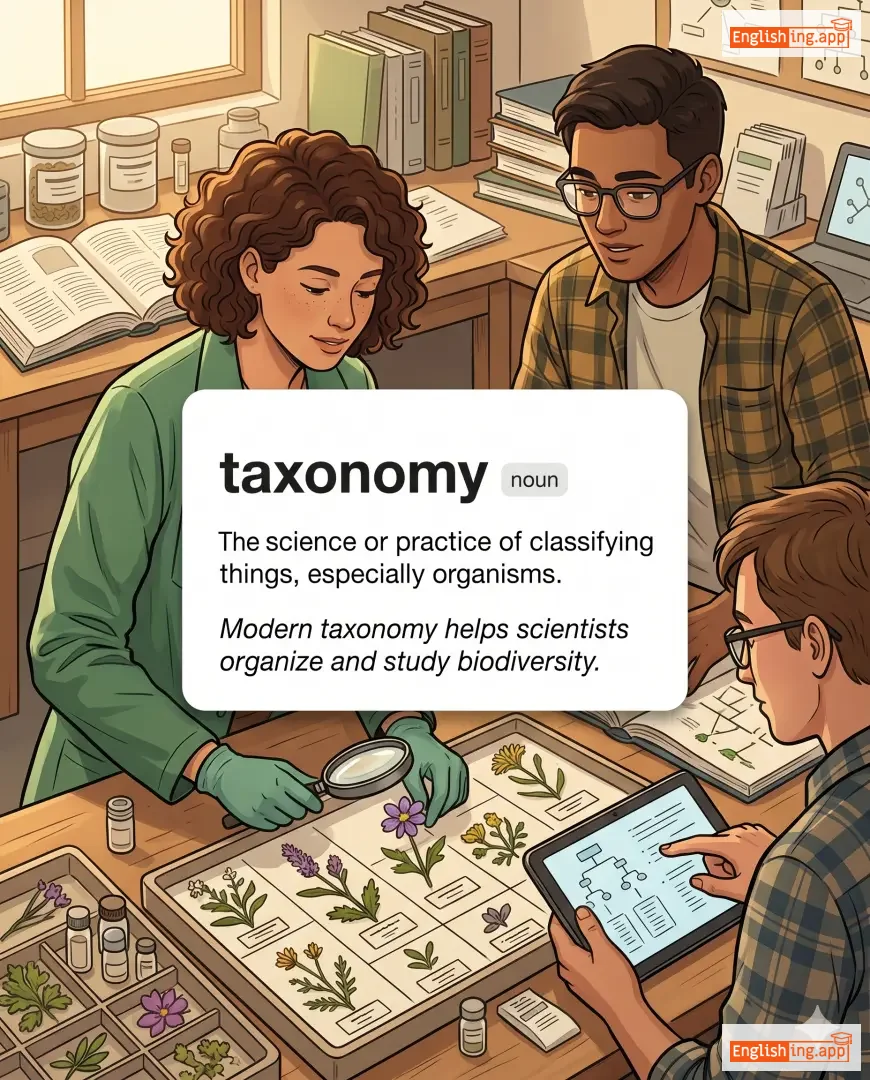
taxonomy definition card — visual illustration of the meaning
noun
/tækˈsɒnəmi/
শ্রেণীবিন্যাস বিজ্ঞান (srenibinash biggan)

The science or practice of classifying things, especially organisms.

"Modern taxonomy helps scientists organize and study biodiversity."

"আধুনিক শ্রেণীবিন্যাস বিজ্ঞান বিজ্ঞানীদের জীববৈচিত্র্য সংগঠিত ও অধ্যয়ন করতে সাহায্য করে।" (adhunik srenibinash biggan bigganider jibbaichitro songothito o odhyayan korte sahajyo kore.)
noun
/ˈtæksˌpeɪər/
করদাতা (kordata)

a person who pays tax to the government

"The taxpayers' money is used to fund public services."

"করদাতাদের টাকা জনসাধারণের সেবা তহবিল করার জন্য ব্যবহার করা হয়।" (Kordatar taka janasadharoner sheba tobhil korar jonno bebohar kora hoy.)
noun
/tiː/
চা (cha)

a hot drink made by infusing the dried, crushed leaves of the tea plant in boiling water

"I drink tea every morning to start my day."

"আমি প্রতিদিন সকালে চা পান করি দিন শুরু করতে।" (Āmi prôtidin śokālē chā pān kori din śuru kortē.)
noun
/ˈtiː.pɒt/
চা-পাত্র (cha-patro)

a container with a lid, handle, and spout for brewing and serving tea

"She poured hot water into the tea-pot to make tea."

"তিনি চা বানানোর জন্য চা-পাত্রে গরম পানি ঢাললেন।" (tini cha bananor jonno cha-patre gorom pani dhalllen)
noun
/tiː ˈstreɪnər/
চা-ছাকনি (cha-chhakni)

a small perforated device used to strain tea leaves from brewed tea

"I always use a tea-strainer when pouring tea into cups."

"কাপে চা ঢালার সময় আমি সর্বদা চা-ছাকনি ব্যবহার করি।" (kape cha dhalar somoy ami sorboda cha-chhakni byabohar kori.)
teach definition card — visual illustration of the meaning
verb
/tiːʧ/
শিক্ষণ (shikkhon)

to impart knowledge or skill to someone by instruction or example

"She teaches English to students at the local school."

"সে স্থানীয় স্কুলে শিক্ষার্থীদের ইংরেজি পড়ায়।" (She sthānīẏa skulē shikkhārthīdēr īngrējī poṛāẏ.)