ভোকাবুলারিসমূহ

ইংরেজি শব্দের বাংলা অর্থ | English to Bangla Word Meaning Dictionary

verb
/ˈstɪp.əl/
ছোট ছোট দাগে ভরা (chhoto chhoto dage vora)

to cover a surface with numerous small dots or specks, often in drawing or painting

"The artist stippled the canvas to create a textured effect."

"শিল্পী টেক্সচার তৈরির জন্য ক্যানভাসে ছোট ছোট দাগ দিয়েছিলেন।" (Shilpi texture toirir jonno canvas e chhoto chhoto dag diyechhilen.)
stipulate definition card — visual illustration of the meaning
verb
/ˈstɪp.jʊ.leɪt/
শর্ত নির্ধারণ করা (shorto nirdharon kora)

to demand or specify a condition in an agreement or contract

"The contract stipulates that payment must be made within 30 days."

"চুক্তিতে বলা আছে যে ৩০ দিনের মধ্যে অর্থ প্রদান করতে হবে।" (Chuktite bola ache je 30 diner moddhe ortho prodan korte hobe.)
verb
/stɜːr/
ঝাঁকানো (jhankano)

to mix or move something in a circular motion, especially in liquid

"She stirred the soup to make sure it didn't burn."

"সে স্যুপটি না পুড়ে যায় সেজন্য ঝাঁকানো করল।" (She soup-ti na pure jay sejonno jhankano korlo.)
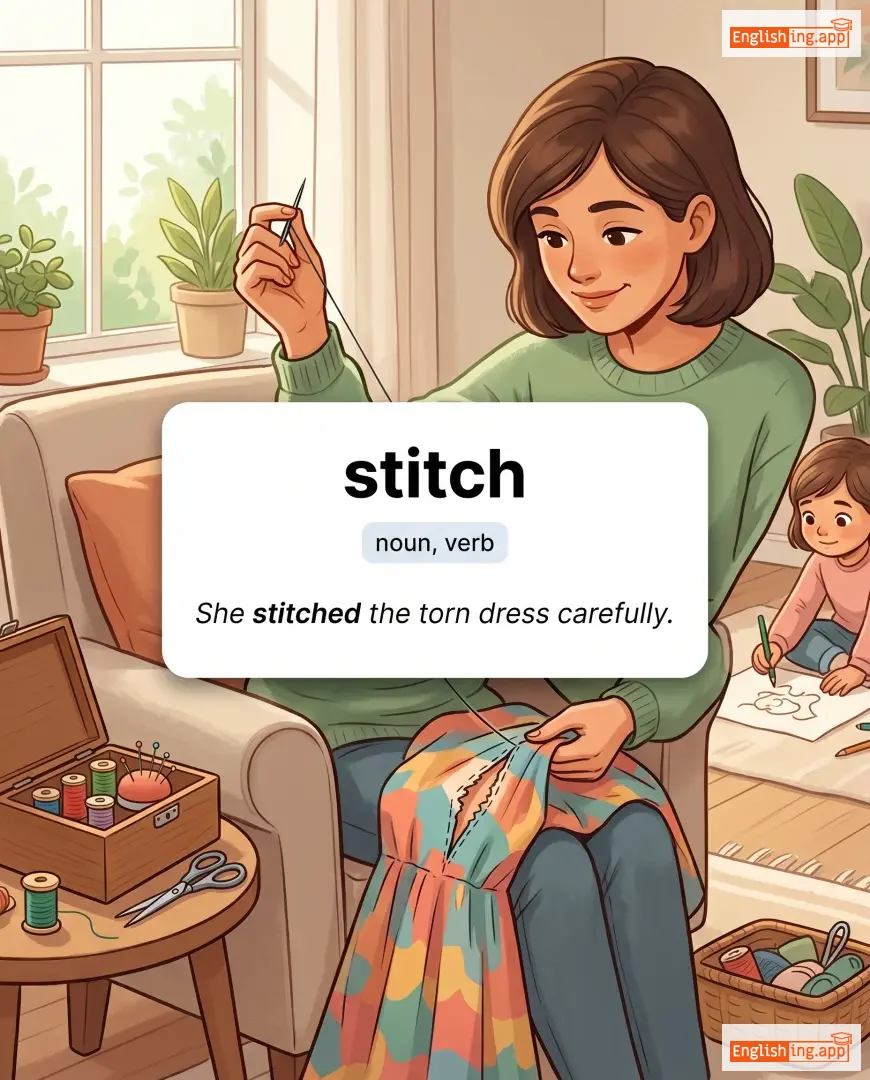
stitch definition card — visual illustration of the meaning
noun, verb
/stɪtʃ/
সেলাই করা (selai kora)

to sew fabric together using a needle and thread; also a single loop of thread in sewing

"She stitched the torn dress carefully."

"সে সাবধানে ছেঁড়া জামাটি সেলাই করল।" (Se sabdhane chhera jamati selai korlo.)
noun, verb
/stɒk/
মজুত (mojut)

a supply of goods kept for sale or use; to keep or fill with goods

"The shop stocks a wide variety of products."

"দোকানে নানারকম পণ্যের মজুত রয়েছে।" (Dokane nanarokom ponner mojut royeche.)
noun
/stɒˈkeɪd/
কাঠের ঘেরা প্রাচীর (kather ghera prachir)

a defensive barrier made of strong posts or timbers, often around a fort or prison

"The prisoners were kept inside the wooden stockade."

"কাঠের ঘেরা প্রাচীরের ভেতরে বন্দিদের রাখা হয়েছিল।" (Kather ghera prachirer vetore bondider rakha hoyechhilo.)
adjective
/ˈstɒdʒi/
বিরক্তিকর, সেকেলে (biraktikor, sekle)

Dull, uninspired, or old-fashioned; also heavy and hard to digest when referring to food.

"The lecture was so stodgy that many students struggled to stay awake."

"লেকচারটি এতটাই বিরক্তিকর ছিল যে অনেক ছাত্র জেগে থাকতে লড়াই করছিল।" (Lekcharti etotai biraktikor chilo je onek chatro jege thakte lorai korchilo.)
adjective
/ˈstoʊɪk/
ধীরস্থির, আবেগহীন (dhirshtir, abeg-hin)

Showing little or no emotion, even in difficult situations.

"She remained stoic during the crisis, never showing fear or panic."

"সে সংকটের সময় ধীরস্থির ছিল, ভয় বা আতঙ্ক প্রকাশ করেনি।" (Se songkot-er somoy dhirshtir chilo, voy ba atonk prokash koreni.)
stoicism definition card — visual illustration of the meaning
noun
/ˈstoʊɪˌsɪzəm/
ধৈর্য, সহিষ্ণুতা (dhorjo, sohisnota)

The endurance of pain or hardship without showing feelings or complaining.

"He faced the loss of his job with remarkable stoicism."

"সে তার চাকরি হারানো ধৈর্যের সাথে মেনে নিয়েছিল।" (Se tar chakri harano dhorjer sathe mene niechhilo.)
verb
/stoʊk/
আগুন জ্বালানো, উস্কে দেওয়া (agun jwalano, uske dewa)

To add fuel to a fire; to encourage or increase a strong feeling or activity.

"The politician’s speech stoked anger among the crowd."

"রাজনীতিবিদের বক্তৃতা জনতার মধ্যে রাগ উস্কে দিয়েছিল।" (Rajniti-bider boktrita jontar moddhe rag uske diyechhilo.)
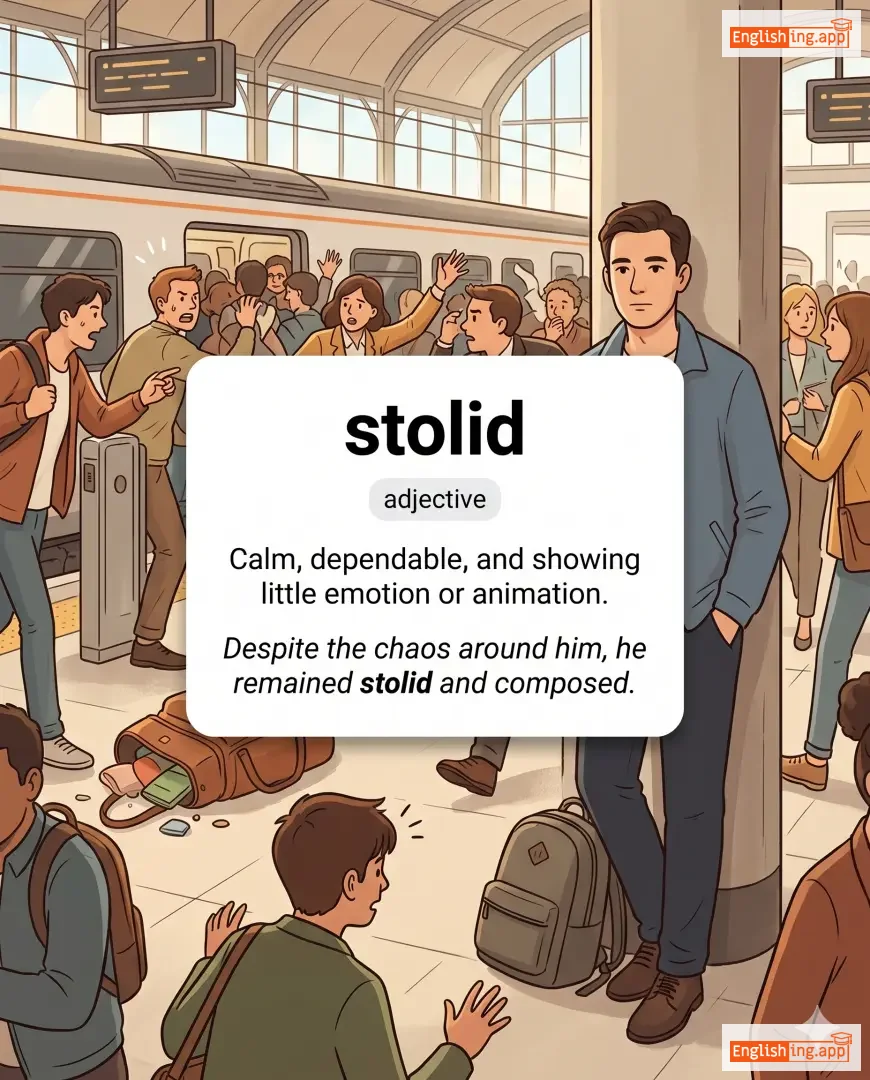
stolid definition card — visual illustration of the meaning
adjective
/ˈstɒlɪd/
শান্ত, আবেগহীন (shanto, abeg-hin)

Calm, dependable, and showing little emotion or animation.

"Despite the chaos around him, he remained stolid and composed."

"চারপাশের বিশৃঙ্খলার মাঝেও সে শান্ত ও স্থির ছিল।" (Charpash-er bishrinkhalar majheo se shanto o sthir chilo.)
noun/verb
/ˈstʌmək/
পেট / সহ্য করা (pet / sohojjo kora)

The internal organ in which food is digested; also to tolerate or endure something

"She couldn’t stomach the sight of violence."

"সে সহিংসতার দৃশ্য সহ্য করতে পারেনি।" (Se sohingshotar drishsho sohojjo korte pareni.)
noun
/ˈstʌmək eɪk/
পেটের ব্যথা (peter byatha)

Pain in the stomach or abdominal area

"I have a stomach ache after eating too much."

"আমি অতিরিক্ত খাওয়ার পর পেটের ব্যথা অনুভব করছি।" (ami otirikto khawar por peter byatha onuvob korchi)
noun
/stoʊn/
পাথর (pathor)

a hard, naturally occurring mineral material found in the earth

"He threw a stone into the lake."

"সে একটি পাথর হ্রদে ছুঁড়ে ফেলল।" (Se ekta pathor hride chhure phello.)
verb
/ˈstoʊnwɔːl/
বাধা দেওয়া (badha dewa)

To delay or block progress by refusing to cooperate or answer

"The witness tried to stonewall during the investigation."

"সাক্ষী তদন্তের সময় বাধা দেওয়ার চেষ্টা করেছিল।" (Sakshi tontother somoy badha dewar cheshta korechhilo.)
verb/noun
/stuːp/
নুয়ে পড়া / দোতলা সিঁড়ি (nuye pora / dotola shiri)

To bend one's body forward and downward; also a small porch or staircase at the entrance of a house

"He had to stoop to pick up the coin."

"সে মুদ্রাটি তুলতে নুয়ে পড়তে হয়েছিল।" (Se mudrati tulte nuye porte hoyechhilo.)
verb
/stɑːp/
থামা (thama)

to bring to an end or cause to cease

"Please stop talking while I’m working."

"আমি কাজ করার সময় দয়া করে কথা বলা বন্ধ করো।" (Ami kaj korar somoy doya kore kotha bola bondho koro.)
noun
/ˈstɒpɪdʒ/
বিরতি; থামা (birati; thama)

The act of stopping or ceasing; a halt in operation or activity

"The sudden stoppage of the train caused delays for all passengers."

"ট্রেনের হঠাৎ থামা সব যাত্রীদের জন্য বিলম্ব ঘটিয়েছে।" (Trener hotath thama shob jatrider jonno bilomb ghotieche.)
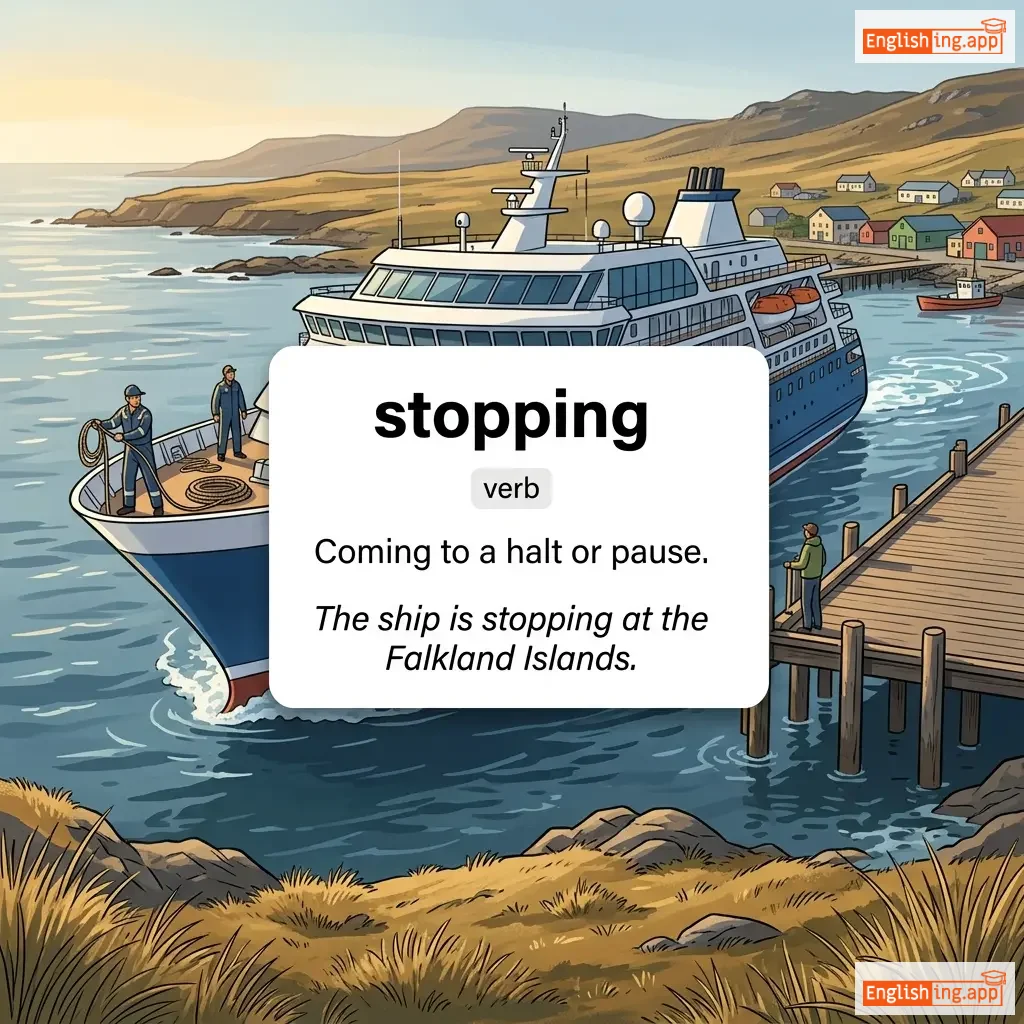
stopping definition card — visual illustration of the meaning
verb
/ˈstɒpɪŋ/
থামা (thama)

Coming to a halt or pause.

"The ship is stopping at the Falkland Islands."

"জাহাজটি ফকল্যান্ড দ্বীপপুঞ্জে থামছে।" (Jahajti Falkland dwippunnje thamche.)
noun
/ˈstɔːrɪdʒ/
সংগ্রহ (songroho)

the action or method of storing something for future use

"The warehouse offers plenty of storage space."

"গুদামঘরটি পর্যাপ্ত সংগ্রহ স্থান অফার করে।" (Gudamghar-ti porjapto songroho sthan offer kore.)
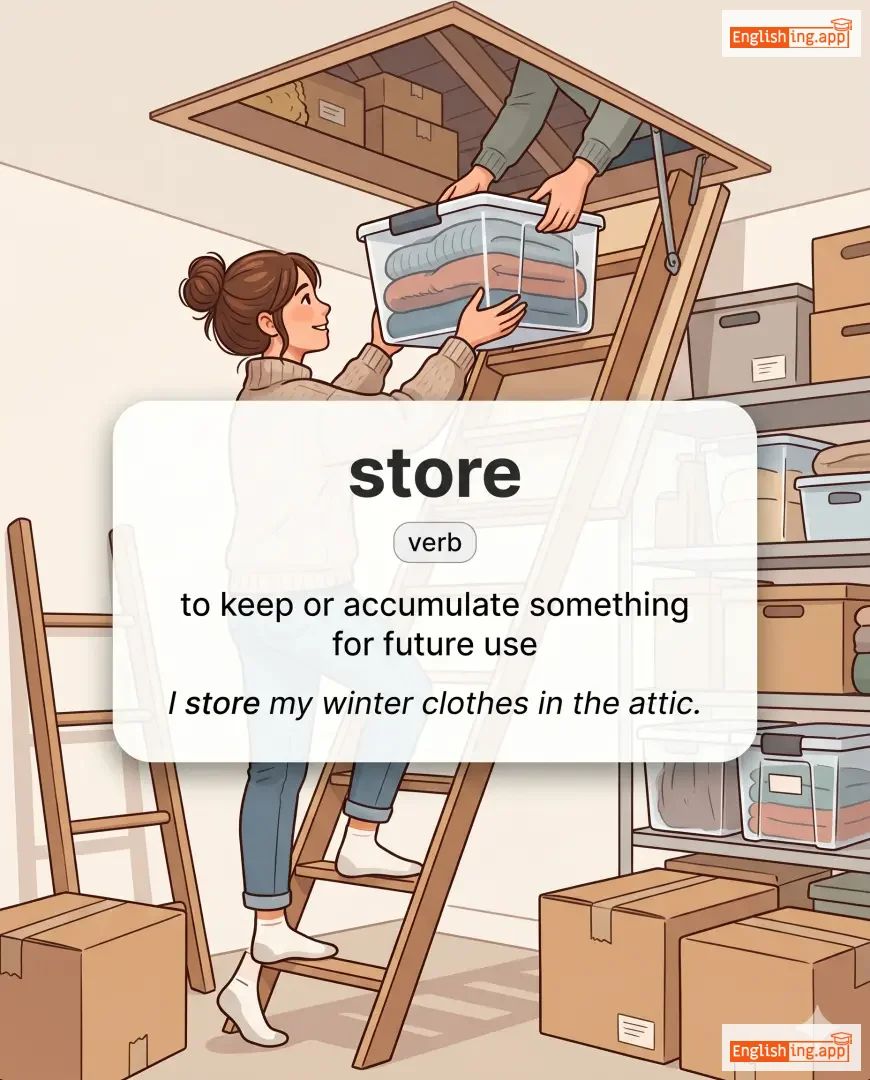
store definition card — visual illustration of the meaning
verb
/stɔːr/
সংগ্রহ করা (songroho kora)

to keep or accumulate something for future use

"I store my winter clothes in the attic."

"আমি আমার শীতের জামাকাপড় attic-এ সংগ্রহ করি।" (Ami amar shiter jamakapor attic-e songroho kori.)
noun
/ˈstɔːrhaʊs/
গুদাম (gudam)

A place where goods, supplies, or valuables are stored; a repository

"The warehouse acted as a storehouse for all the imported goods."

"গুদামটি সমস্ত আমদানি করা পণ্যের জন্য একটি স্টোরহাউস হিসাবে কাজ করেছিল।" (Gudamti samasto amdani kora ponner jonno ekti storehouse hishebe kaj korechhilo.)
noun
/stɔːrk/
সারস (sharosh)

large wading bird with long legs and a long neck

"The stork built its nest on top of the tall chimney."

"সারস পাখিটি উঁচু চিমনির উপরে তার বাসা তৈরি করেছিল।" (sharosh pakhi-ti unchu chimni-r upore tar basha toiri koreche-lo)
noun
/stɔːrm/
ঝড় (jhor)

a violent disturbance of the atmosphere with strong winds, rain, and often thunder

"The storm caused major flooding in the area."

"ঝড়টি এলাকায় বড় ধরনের বন্যা সৃষ্টি করেছে।" (Jhor-ti elakaye boro dhoroner bonna srishti korechhe.)
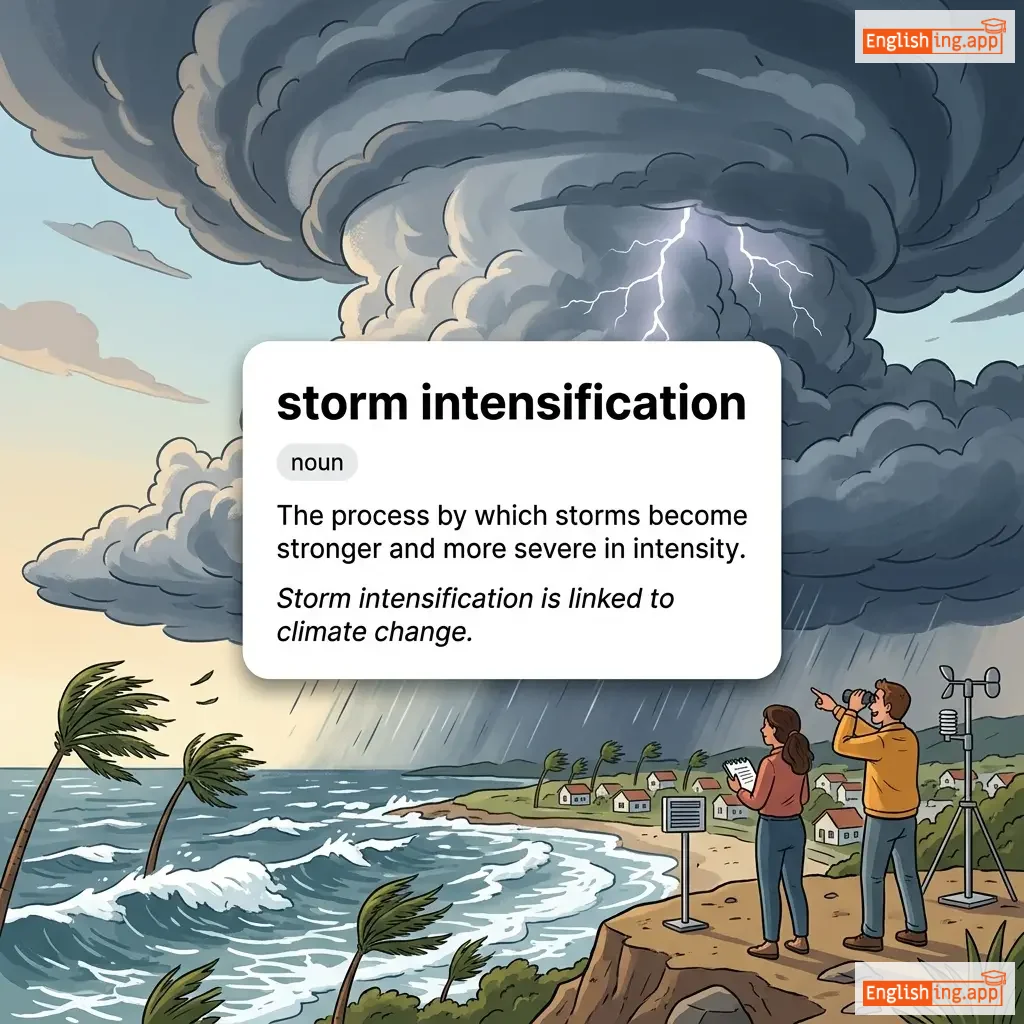
storm intensification definition card — visual illustration of the meaning
noun
stɔːrm ɪnˌtensɪfɪˈkeɪʃən
ঝড়ের তীব্রতা বৃদ্ধি (jhorer tibrota briddhi)

The process by which storms become stronger and more severe in intensity.

"Storm intensification is linked to climate change."

"ঝড়ের তীব্রতা বৃদ্ধি জলবায়ু পরিবর্তনের সঙ্গে সম্পর্কিত।" (Jhorer tibrota briddhi jolbayu poribortoner shonge shompoркito.)
noun
/ˈstɔːri/
গল্প (golpo)

a narrative of real or imaginary events

"She told a fascinating story about her travels."

"সে তার ভ্রমণের একটি মনোরম গল্প বলল।" (Se tar bhromoner ekta monorom golpo bolla.)
adjective/noun
/staʊt/
মোটা / শক্তিশালী (mota / shoktishali)

Strong, thick, or heavily built; also a kind of dark beer

"The stout man lifted the heavy box with ease."

"মোটা লোকটি সহজেই ভারী বাক্স তুলেছিল।" (Mota lokti sohojei bhari baksho tulchhilo.)
adjective
/ˌstaʊtˈhɑːrtɪd/
সাহসী / দৃঢ়চিত্ত (sahosi / drirochitto)

Brave, determined, and courageous

"The stouthearted soldier never gave up."

"সাহসী সৈনিক কখনও হাল ছাড়েনি।" (Sahosi soinik kokhono hal chhareni.)
noun
/stoʊv/
চুলা (chula)

a device that produces heat for cooking or heating

"She cooked rice on the gas stove."

"সে গ্যাস চুলায় ভাত রান্না করেছিল।" (Se gas chulay bhat ranna korechhilo.)
noun
/ˈstoʊəˌweɪ/
গোপন যাত্রী (gopon jatri)

A person who hides on a ship, plane, or other vehicle in order to travel secretly without paying.

"The crew discovered a stowaway hiding in the cargo hold."

"ক্রু কার্গো হোল্ডে লুকিয়ে থাকা এক গোপন যাত্রীকে আবিষ্কার করল।" (Kru kargo holde lukiye thaka ek gopon jatrike abishkar korlo.)
verb
/ˈstræɡəl/
অগোছালোভাবে ছড়িয়ে পড়া (ogochalovabe choriye pora)

To move or spread in an irregular, scattered, or untidy way.

"The children began to straggle behind on the long hike."

"দীর্ঘ হাঁটায় শিশুরা পিছিয়ে পড়তে শুরু করল।" (Dirgho hatay shishura pichiye porte suru korlo.)
adjective, adverb
/streɪt/
সোজা (soja)

Extending or moving uniformly in one direction only; not curved or bent.

"He walked straight to the door without stopping."

"সে থেমে না গিয়ে সোজা দরজার দিকে হাঁটল।" (Se theme na giye soja dorjar dike hatlo.)
adjective
/ˌstreɪt ˈfɔːr.wərd/
অকপট; সরল; (okopot, shorol)

honest and open; not complicated; easy to understand

"His explanation was very straightforward and easy to follow."

"তার ব্যাখ্যাটি খুবই সরল এবং অনুসরণ করা সহজ ছিল।" (Tar bakkhyati khuboi shorol ebong onushoron kora shohoj chhilo.)
verb
/ˈstreɪtən/
সোজা করা (soja kora)

to make something straight or tidy; to correct or organize

"She straightened her hair before the meeting."

"সে মিটিংয়ের আগে তার চুল সোজা করেছিল।" (Se meetinger age tar chul soja korechhilo.)
adjective
/ˌstreɪtˈfɔːwəd/
সরল (sorol)

easy to understand or do; simple

"Her explanation was straightforward and clear."

"তার ব্যাখ্যা সরল এবং স্পষ্ট ছিল।" (Tar byakkhya sorol ebong sposto chhilo.)
noun, verb
/streɪn/
চাপ / টান (chap / tan)

To force something beyond its normal limits; to injure by overexertion; or a type or variety of something.

"He strained his back while lifting the heavy box."

"সে ভারী বাক্স তুলতে গিয়ে পিঠে টান খেয়েছিল।" (Se bhari baks tulte giye pithe tan kheyechhilo.)
noun
/ˈstreɪnər/
ছাকনি (chhakni)

a device having holes punched in it or made of crossed wires for separating solid matter from a liquid

"Use a strainer to drain the pasta water."

"পাস্তার পানি ছাঁকার জন্য একটি ছাকনি ব্যবহার করুন।" (pastar pani chhankar jonno ekti chhakni byabohar korun.)
noun
/streɪt/
সংকীর্ণ প্রণালী (songkirno pronali)

A narrow passage of water connecting two seas or two large areas of water.

"The Strait of Gibraltar connects the Atlantic Ocean and the Mediterranean Sea."

"জিব্রাল্টার প্রণালী আটলান্টিক মহাসাগর এবং ভূমধ্যসাগরকে সংযুক্ত করে।" (Jibraltar pronali Atlantik mohasagor ebong vumedhosagorke songjukto kore.)
noun
/strəˈmoʊ.ni.əm ˌflaʊ.ər/
ধুতুরা ফুল (dhutura phul)

A trumpet-shaped white or purple flower from the jimsonweed plant, known for its toxic properties

"The stramonium flower blooms at night with a sweet fragrance."

"ধুতুরা ফুল রাতে মিষ্টি গন্ধ নিয়ে ফোটে।" (dhutura phul rate mishti gondho niye phote.)
noun, verb
/strænd/
সূতা / ফাঁসা (suta / fasha)

Noun: A single thin length of thread, wire, or similar. Verb: To leave someone or something without a way of moving or leaving.

"The storm stranded many tourists on the island."

"ঝড় অনেক পর্যটককে দ্বীপে আটকে দিয়েছিল।" (Jhor onek porjotokke dwipe atke diyechilo.)
adjective
/streɪndʒ/
অদ্ভুত (odbhut)

unusual or not normal

"It was strange to see him at the party after so long."

"এটি তার অনেকদিন পর পার্টিতে তাকে দেখে অদ্ভুত লাগছিল।" (Eti tar onekdin por partyte take dekhe odbhut lagchhilo.)
noun
/ˈstreɪndʒər/
অপরিচিত ব্যক্তি (oporichito bekti)

A person whom one does not know.

"A stranger knocked on the door at midnight."

"মধ্যরাতে এক অপরিচিত ব্যক্তি দরজায় কড়া নাড়ল।" (Madhyarate ek oporichito bekti dorjay kora narlo.)
verb
/ˈstræŋɡəl/
গলা টিপে ধরা (gola tipe dhora)

to kill or stop someone or something by squeezing the throat or restricting flow

"The villain tried to strangle his opponent in the dark alley."

"দুর্বৃত্ত অন্ধকার গলিতে তার প্রতিদ্বন্দ্বীকে গলা টিপে ধরার চেষ্টা করেছিল।" (Durbritto andhakar golite tar protidondike gola tipe dhorar chesta korechilo.)
noun
/ˈstrætədʒəm/
কৌশল (kaushal)

a plan or scheme designed to achieve a particular goal, often by trickery

"The general devised a clever stratagem to outwit the enemy."

"জেনারেল শত্রুকে হারাতে একটি চতুর কৌশল উদ্ভাবন করেছিলেন।" (General shotruke harate ekti chotur kaushal udbhabon korechilen.)
strategic definition card — visual illustration of the meaning
adjective
/strəˈtiːdʒɪk/
কৌশলগত (kaushalgoto)

relating to the identification of long-term or overall aims and interests and the means of achieving them

"His strategic thinking helped the company grow."

"তার কৌশলগত চিন্তাভাবনা কোম্পানির বৃদ্ধিতে সাহায্য করেছিল।" (Tar kaushalgoto chintabhavna kompani’r briddhite sahajjo korechhilo.)
strategic insights definition card — visual illustration of the meaning
noun
/strəˈtiː.dʒɪk ˈɪn.saɪts/
কৌশলগত অন্তর্দৃষ্টি (kousholghoto ontordrishti)

Deep understanding and wisdom gained through careful analysis for planning purposes.

"Strategic insights guide policymaking."

"কৌশলগত অন্তর্দৃষ্টি নীতি নির্ধারণে সহায়ক।" (Kousholghoto ontordrishti niti nirdharone sohayok.)
strategies definition card — visual illustration of the meaning
noun
ˈstræt.ə.dʒiz
কৌশল (koushol)

A plan of action designed to achieve a long-term or overall aim.

"Effective strategies ensure success."

"কার্যকর কৌশল সাফল্য নিশ্চিত করে।" (Karjokor koushol shafolyo nishchito kore.)
strategy definition card — visual illustration of the meaning
noun
/ˈstrætədʒi/
কৌশল (kaushal)

a plan of action designed to achieve a long-term or overall aim

"They developed a new strategy to increase sales."

"তারা বিক্রয় বাড়ানোর জন্য একটি নতুন কৌশল তৈরি করেছে।" (Tara bikroy baranor jonno ekta notun kaushal toiri korechhe.)
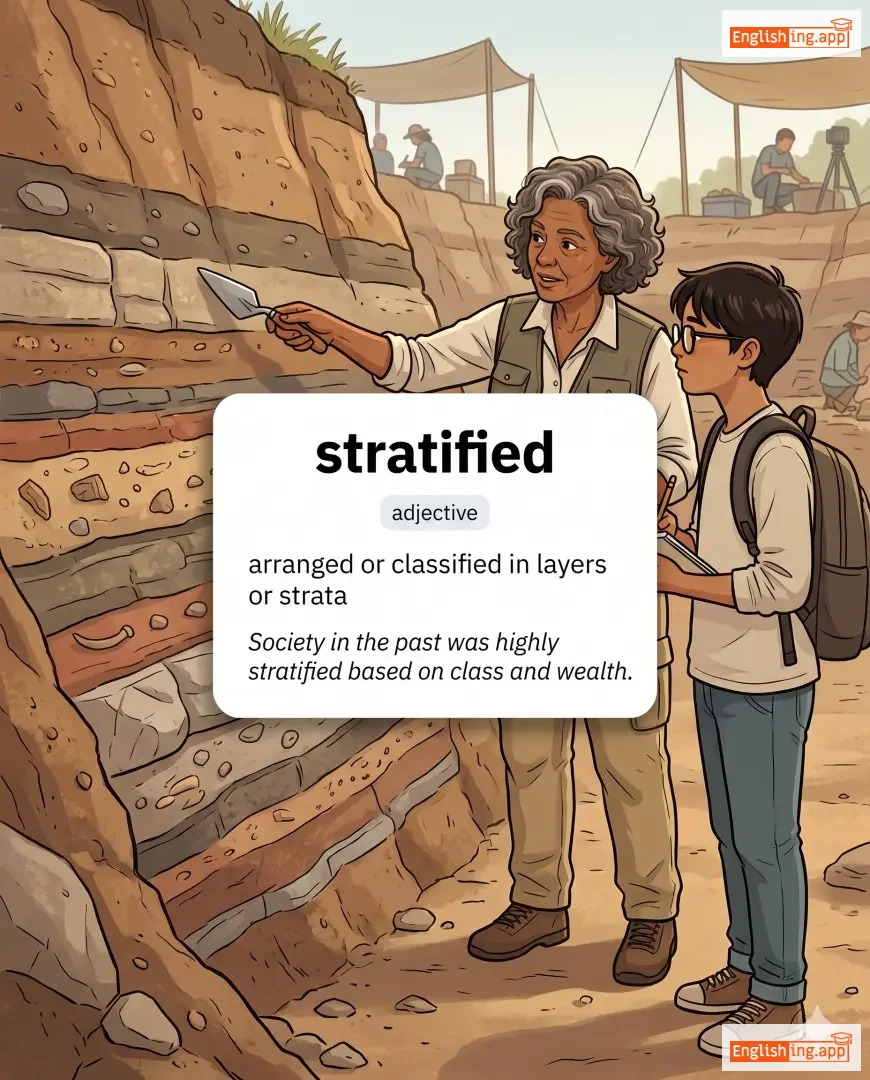
stratified definition card — visual illustration of the meaning
adjective
/ˈstrætɪfaɪd/
স্তরবিন্যস্ত (storbinnyosto)

arranged or classified in layers or strata

"Society in the past was highly stratified based on class and wealth."

"অতীতে সমাজ শ্রেণি ও সম্পদের ভিত্তিতে অত্যন্ত স্তরবিন্যস্ত ছিল।" (Otite somaj shreni o sompoder vitti te atonto storbinnyosto chilo.)
verb
/ˈstrætɪfaɪ/
স্তরভাগ করা (storbhag kora)

to arrange or divide into layers, classes, or categories

"The researchers plan to stratify the data based on age groups."

"গবেষকরা বয়স অনুযায়ী ডেটাকে স্তরভাগ করার পরিকল্পনা করছেন।" (Gobeshokra boyosh onujayi data ke storbhag korar porikalpona korchen.)