ভোকাবুলারিসমূহ

ইংরেজি শব্দের বাংলা অর্থ | English to Bangla Word Meaning Dictionary

adjective
/ˈspaɪn.ləs/
অবসাহসী; দুর্বলচিত্ত; ভীরু; (spainles)

lacking courage or determination; weak-willed

"He was too spineless to stand up for his beliefs."

"তিনি তার বিশ্বাসের জন্য দাঁড়ানোর মতো সাহসী ছিলেন না।" (tini tar bishshaser jonno darano moto sahoshi chhilen na.)
adjective
/ˈspaɪnəs/
কাঁটাযুক্ত (kantajukto)

Having spines or thorn-like projections

"The spinous cactus was difficult to handle without gloves."

"স্পিনাস ক্যাকটাস গ্লাভস ছাড়া ধরতে কষ্টকর ছিল।" (Spinous cactus gloves chara dhorte kostokor chilo.)
noun
/ˈspɪnstər/
অবিবাহিতা নারী (obibahita nari)

An unmarried woman, often one who is older and considered unlikely to marry

"The novel featured a kind-hearted spinster who cared for the village children."

"উপন্যাসে একজন দয়ালু অবিবাহিতা নারীকে দেখানো হয়েছে যিনি গ্রামের শিশুদের যত্ন নিতেন।" (Upannase ekjon doyaloo obibahita narike dekhano hoyeche jini gramer shishuder jotno niten.)
adjective
/ˈspaɪni/
কাঁটাযুক্ত (kantayukto)

covered with or full of spines; having sharp points

"The spiny cactus stood tall in the desert."

"কাঁটাযুক্ত ক্যাকটাস মরুভূমিতে উঁচু হয়ে দাঁড়িয়ে ছিল।" (Kantayukto cactus moruvumite unchu hoye darie chilo.)
adjective
/ˈspaɪ.rəl/
প্যাঁচানো; সর্পিল; (spairal)

winding in a continuous curve; helical

"The spiral staircase led to the top floor."

"সর্পিল সিঁড়িটি উপরের তলায় নিয়ে গেল।" (shorpil sirti uporer tolai niye gelo.)
noun
/ˈspaɪər/
চূড়া (chura)

a tall, pointed structure on top of a building, especially a church

"The church spire could be seen from miles away."

"গির্জার চূড়া অনেক দূর থেকে দেখা যেত।" (Girjar chura onek dur theke dekha jeto.)
noun
/ˈspɪrɪt/
আত্মা (atma)

the non-physical part of a person, regarded as their true self

"Her spirit remained unbroken despite the hardships."

"তার আত্মা কঠোর পরিশ্রমের পরেও অক্ষুণ্ণ ছিল।" (Tar atma kothor porishromer poreo okhunnno chhilo.)
adjective
/ˈspɪrɪtʃuəl/
আধ্যাত্মিক (adhyatmik)

relating to or affecting the human spirit or soul

"She practices spiritual meditation every morning."

"সে প্রতিদিন সকালে আধ্যাত্মিক ধ্যান চর্চা করে।" (Se protidin sokale adhyatmik dhyan chorcha kore.)
verb
/spɪt/
থুথু ফেলা (thuthu fela)

to force liquid, especially saliva, out of the mouth

"He spat on the ground in anger."

"সে রাগে মাটিতে থুথু ফেলেছিল।" (Se rage matite thuthu felchilo.)
noun
/spaɪt/
বিদ্বেষ (bidbesh)

a desire to hurt, annoy, or offend someone

"She refused the gift out of spite."

"সে বিদ্বেষবশত উপহারটি গ্রহণ করেনি।" (Se bidbeshbosoto upoharti grohon koreni.)
noun
/spliːn/
প্লীহা; ক্রোধ (pliha; krodh)

an organ in the body that produces lymphocytes and filters blood; also refers to bad temper or spite

"He vented his spleen on his coworkers after the meeting."

"সে মিটিংয়ের পর তার সহকর্মীদের উপর তার রাগ প্রকাশ করেছিল।" (Se meeting er por tar sohokormider upor tar rag prokash korechilo.)
adjective
/ˈsplendɪd/
অসাধারণ; চমৎকার; (oshadarano)

magnificent; excellent; very impressive

"The castle looked splendid in the sunset."

"দুর্গটি সূর্যাস্তে অসাধারণ দেখাচ্ছিল।" (durgoti shuryashte oshadarano dekhachilo.)
adjective
/splɪˈnɛtɪk/
রাগী, খিটখিটে (ragi, khitkhite)

bad-tempered, irritable, spiteful

"His splenetic remarks offended everyone in the room."

"তার খিটখিটে মন্তব্য কক্ষে উপস্থিত সবাইকে অপমান করেছিল।" (Tar khitkhite montobbo kakkhe uposthit sobaike opoman korechilo.)
verb
/splaɪs/
জোড়া লাগানো (jora lagano)

to join two pieces of rope, film, or other material by weaving or attaching them together

"The technician spliced the two wires to restore the connection."

"টেকনিশিয়ান দুটি তার জোড়া লাগিয়ে সংযোগ পুনরুদ্ধার করেছিল।" (Technician duti tar jora lagie songjog punoruddhar korechilo.)
/splɪnt/
পাট্টি (patti)

A rigid device used to support and immobilize a broken or injured body part.

"The doctor applied a splint to stabilize the patient's broken arm."

"ডাক্তার রোগীর ভাঙা হাত স্থির রাখতে একটি পাট্টি লাগালেন।" (Daktar rogir bhanga hat sthir rakhte ekta patti lagalen.)
verb
/splɪt/
বিভক্ত করা (bibhokto kora)

to divide or separate into parts or groups

"He split the log in two with an axe."

"সে একটা কুঠালি দিয়ে লটিকে দুটি ভাগে ভাগ করল।" (Se ekta kuthali diye lotike duti bhage bhag korlo.)
verb
/spɔɪl/
বিকৃত করা (bikr̥t kora)

to damage or ruin something

"The rain spoiled the outdoor event."

"বৃষ্টি আউটডোর ইভেন্টটি নষ্ট করে দিয়েছে।" (Briṣṭi ā'ūṭḍōr ībhēnṭṭi noṣṭo karē diẏēchē.)
noun
/ˈspɔɪlˌspɔːrt/
মজা নষ্টকারী (moja nostokari)

A person who ruins other people's enjoyment or fun.

"Don't be a spoilsport and let us enjoy the party."

"মজা নষ্টকারী হবেন না, আমাদের পার্টি উপভোগ করতে দিন।" (Moja nostokari hoben na, amader party upovog korte din.)
noun, verb
/spoʊk/
চাকা দণ্ড / বলেছিল (chaka dondo / bolechilo)

As a noun, a bar connecting the center of a wheel to its rim; as the past tense of 'speak'.

"The bicycle's spoke was bent after the accident."

"দুর্ঘটনার পর সাইকেলের স্পোক বাঁকা হয়ে গিয়েছিল।" (Durghotonar por cycle er spoke banka hoye giyechhilo.)
noun
/ˈspəʊksmən/
বক্তা (bokta)

a person who speaks on behalf of others, especially for a group or organization

"The spokesman addressed the crowd during the rally."

"বক্তা মিছিলের সময় জনতার সামনে বক্তৃতা দিয়েছিলেন।" (Bokta michiler shomoy jontar samne boktrita diyechhilo.)
noun
/ˈspəʊkspɜːrsən/
প্রবক্তা (prōbōktā)

a person who speaks on behalf of others or an organization

"The spokesperson addressed the press conference on behalf of the company."

"প্রবক্তা কোম্পানির পক্ষে প্রেস কনফারেন্সে ভাষণ দিয়েছিলেন।" (Prōbōktā kōmpāniẏēr pākṣē press kōnphārēnśē bhāṣaṇ diẏēchhēn.)
noun
/ˈspəʊkswɪmən/
উপস্থাপক মহিলা (uposthapok mohila)

a woman who speaks on behalf of a group or organization

"The spokeswoman for the company announced the new product."

"কোম্পানির উপস্থাপক মহিলা নতুন পণ্য ঘোষণা করেছিলেন।" (Kompani-r uposthapok mohila notun ponno ghoshona korechhilen.)
noun
/ˌspoʊliˈeɪʃən/
ধ্বংস (dhongsho)

The act of destroying or ruining something, often evidence or property.

"The court punished the company for the spoliation of evidence."

"আদালত প্রমাণ ধ্বংস করার জন্য কোম্পানিকে শাস্তি দিয়েছিল।" (Adalat proman dhongsho korar jonyo kompani ke shasti diyechhilo.)
adjective
/ˈspʌndʒi/
স্পঞ্জের মতো ছিদ্রময়; (spanger moto chidromoy)

soft and full of holes like a sponge; porous

"The cake had a light and spongy texture."

"কেকটির হালকা এবং স্পঞ্জি গঠন ছিল।" (kektir halka ebong spanji gathan chilo.)
noun
/spʌndʒ ɡɔːrd/
ধানকুমড়া (dhankumra)

a fibrous gourd that becomes sponge-like when dried, used for cleaning and in cooking when young

"The sponge gourd can be eaten when young or dried to make natural scrubbers."

"ধানকুমড়া কাঁচা অবস্থায় খাওয়া যায় অথবা শুকিয়ে প্রাকৃতিক মাজনি তৈরি করা যায়।" (dhankumra kancha obosthay khawa jay othoba shukiye prakritik majni toiri kora jay.)
noun
/ˈspɒnsər/
পৃষ্ঠপোষক (pishthoposhok)

a person or organization that provides funds for a project or activity in exchange for publicity or support

"The company became the main sponsor of the event."

"কোম্পানিটি অনুষ্ঠানের প্রধান পৃষ্ঠপোষক হয়ে উঠেছিল।" (Companyti onusthaner prodhan pishthoposhok hoye uthchilo.)
noun
/ˈspɒnsəʃɪp/
পৃষ্ঠপোষকতা (prishthoposhokota)

the act of supporting an event, activity, person, or organization financially or through other resources

"The event was made possible due to the sponsorship of several big companies."

"ইভেন্টটি কয়েকটি বড় কোম্পানির পৃষ্ঠপোষকতার কারণে সম্ভব হয়েছিল।" (Event-ti koyekti boro kompani-r prishthoposhokotar karone shomvob hoyechhilo.)
spontaneity definition card — visual illustration of the meaning
noun
/ˌspɑːntəˈneɪəti/
স্বতঃস্ফূর্ততা (swatohsfurtota)

The quality of being natural, impulsive, and unplanned.

"Her spontaneity made the trip more exciting."

"তার স্বতঃস্ফূর্ততা ভ্রমণকে আরও রোমাঞ্চকর করে তুলেছিল।" (Tar swatohsfurtota vromonke aro romanchokor kore tulechhilo.)
adjective
/spɒnˈteɪniəs/
স্বতঃস্ফূর্ত (swatospfurto)

Happening naturally without planning or external cause; impulsive or unplanned.

"Their spontaneous trip to the mountains turned out to be the highlight of the summer."

"তাদের হঠাৎ পাহাড়ে যাওয়ার ভ্রমণটাই গ্রীষ্মের সেরা অংশ হয়ে দাঁড়িয়েছিল।" (tader hotat pahar e jaowar vromontai grishmer sera angsho hoye dariyechilo.)
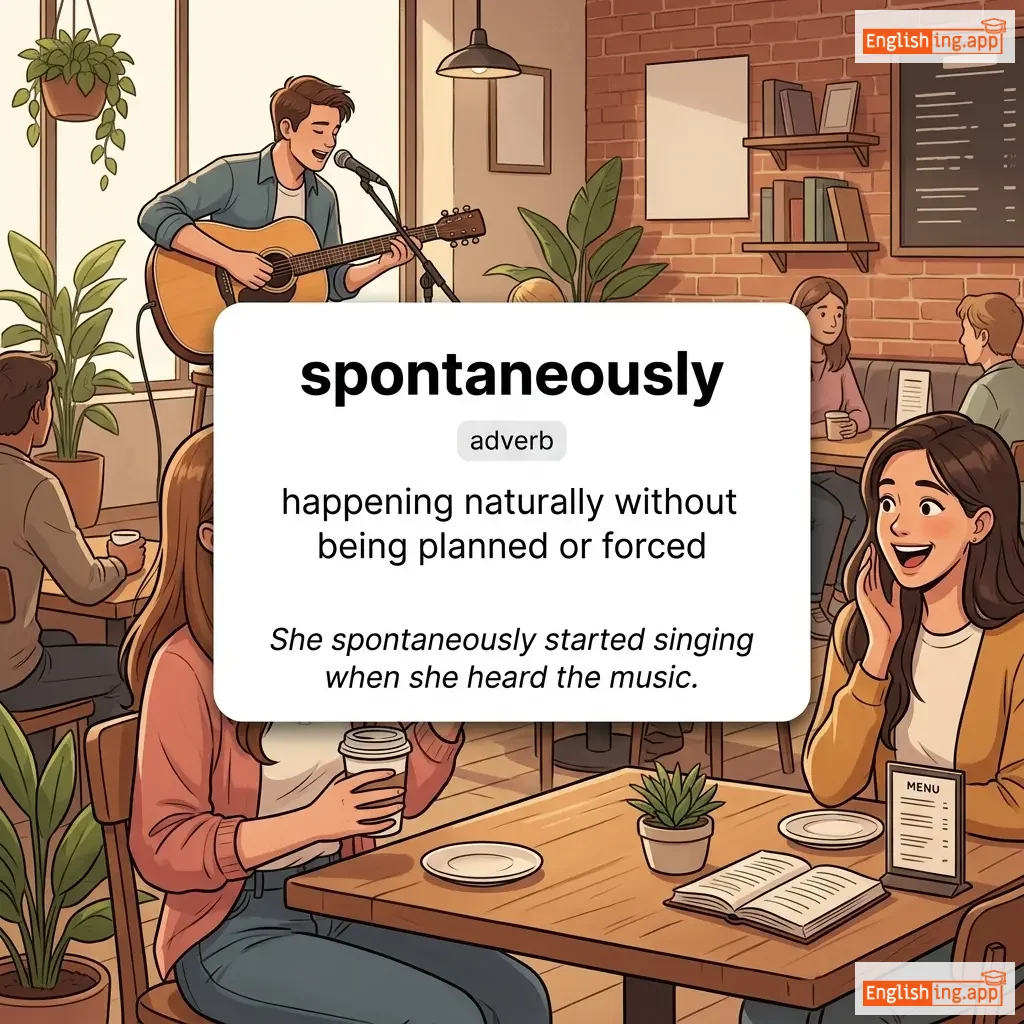
spontaneously definition card — visual illustration of the meaning
adverb
/spɒnˈteɪ.ni.əs.li/
স্বতঃস্ফূর্তভাবে; (shotoshfurtobhabe)

happening naturally without being planned or forced

"She spontaneously started singing when she heard the music."

"সে গান শুনে স্বতঃস্ফূর্তভাবে গাইতে শুরু করল।" (she gan shune shotoshfurtobhabe gaite shuru korlo.)
noun/verb
/spuːf/
বিদ্রূপাত্মক অনুকরণ (bidrupatmak onukoron)

A humorous imitation of something, or to trick or parody someone or something.

"The comedian spoofed the politician’s speech to entertain the audience."

"কমেডিয়ান রাজনীতিবিদের ভাষণকে বিদ্রূপ করে অনুকরণ করেছিলেন।" (komedian rajniti bider vashonke bidrup kore onukoron korechilen.)
noun
/spuːn/
চামচ (camoch)

a utensil consisting of a small shallow bowl with a handle, used for eating, stirring, or serving food

"She stirred her coffee with a silver spoon."

"সে রুপার চামচ দিয়ে তার কফি নাড়ল।" (Se rupar camoch diye tar coffee narlo.)
noun
/ˈspuːnərɪzəm/
বাক্যবিভ্রাট (bakkobibhrat)

A verbal error in which the initial sounds of words are swapped to create a humorous effect.

"He made a spoonerism by saying 'queer old dean' instead of 'dear old queen'."

"সে ভুল করে 'প্রিয় বুড়ো রাণী' এর বদলে 'বিস্ময়কর বুড়ো ডিন' বলেছিল।" (se vul kore 'priyo buro rani' er bodle 'bismoykor buro din' bolechilo.)
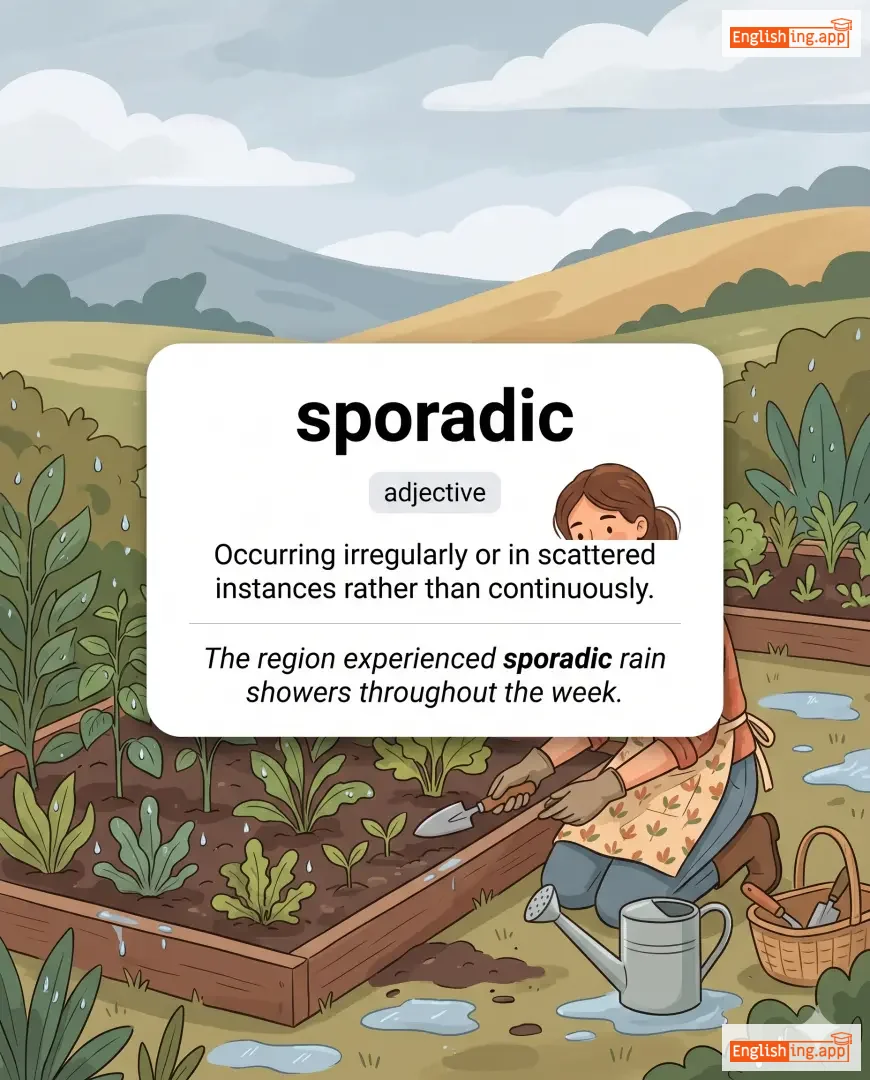
sporadic definition card — visual illustration of the meaning
adjective
/spəˈrædɪk/
বিক্ষিপ্ত (bikkhipto)

Occurring irregularly or in scattered instances rather than continuously.

"The region experienced sporadic rain showers throughout the week."

"সপ্তাহজুড়ে অঞ্চলে বিক্ষিপ্ত বৃষ্টি হয়েছিল।" (soptah jure onchole bikkhipto brishti hoyechilo.)
noun
/spɔːt/
খেলাধুলা (kheladhula)

an activity involving physical exertion and skill in which an individual or team competes against another or others for entertainment

"Football is a popular sport around the world."

"ফুটবল একটি জনপ্রিয় স্পোর্ট সারা বিশ্বে।" (Phutbol ekti jônôpriyo kheladhula sara bishwe.)
adjective
/ˈspɔːrtɪv/
খেলাচ্ছলে (khelachchole)

Playful, lively, or full of fun.

"The children were in a sportive mood during the picnic."

"পিকনিকে বাচ্চারা খেলাচ্ছলে মেজাজে ছিল।" (piknike bacchara khelachchole mejaje chilo.)
noun
/ˈspɔːrtsmən/
খেলোয়াড় (kheloyar)

A person who is skilled in sports or enjoys participating in athletic activities.

"He is a true sportsman, always fair and respectful to his opponents."

"সে একজন সত্যিকারের খেলোয়াড়, সবসময় ন্যায়পরায়ণ এবং প্রতিপক্ষের প্রতি শ্রদ্ধাশীল।" (Se ekjon sotyikorer kheloyar, shobshomoy nyayporayon ebong protipokher proti sroddhashil.)
noun
/spɒt/
স্থান (sthān)

a particular place or position

"I found a great spot for a picnic in the park."

"আমি পার্কে পিকনিক করার জন্য একটি চমৎকার স্পট খুঁজে পেয়েছি।" (Ami park-e picnic korar jonyo ekti chomotkar sthān khuji peyechi.)
noun
/ˈspɒt.laɪt/
আলোকপাত / মনোযোগের কেন্দ্র (alokpat / monojoger kendro)

a strong beam of light directed onto a particular area; figuratively, public attention

"The singer stood proudly in the spotlight."

"গায়ক গর্বের সাথে স্পটলাইটে দাঁড়িয়েছিল।" (Gayok gorber sathe spotlight e dariyechilo.)
adjective
/ˈspɒtɪd/
দাগযুক্ত; কলঙ্কিত; কোটাকুটি দাগপড়া; (dagojukto)

having spots or marks; noticed or seen

"The spotted leopard moved silently through the jungle."

"দাগযুক্ত চিতাবাঘ জঙ্গলের মধ্য দিয়ে নিঃশব্দে চলে গেল।" (dagojukto chitabagh jangler moddho diyo nisshabde chole gelo.)
noun
/ˈspɒt.ɪd sneɪk hed/
টাকি মাছ (taki mach)

a type of freshwater fish with spotted markings and an elongated head resembling a snake

"The spotted snake head is a popular fish for aquaculture in South Asia."

"টাকি মাছ দক্ষিণ এশিয়ায় মৎস্য চাষের জন্য একটি জনপ্রিয় মাছ।" (taki mach dokkhin eshiyay motsso chasher jonno ekti jonopriyo mach)
noun
/spaʊs/
জীবনসঙ্গী (jibonsongi)

a person's husband or wife

"Each employee may include their spouse in the health insurance plan."

"প্রতিটি কর্মচারী তার জীবনসঙ্গীকে স্বাস্থ্য বীমা পরিকল্পনায় অন্তর্ভুক্ত করতে পারে।" (Protiti kormochari tar jibonsongike shastho bima porikalpanay ontorbhukto korte pare.)
noun, verb
/spreɪn/
মচকানো (mochkano)

an injury to a joint in which the ligaments are stretched or torn

"She sprained her ankle while running in the park."

"সে পার্কে দৌড়ানোর সময় তার গোড়ালি মচকেছিল।" (Se parke douranor somoy tar gorali mochkhechilo.)
verb
/spreɪ/
ছিটানো (chitano)

to apply liquid to something in a fine mist

"She sprayed perfume on her wrist before leaving."

"বের হওয়ার আগে সে তার কব্জিতে পারফিউম ছিটিয়েছিল।" (Ber howar age se tar kobjite perfume chitiyechhilo.)
verb
/sprɛd/
বিস্তার করা (bistār kora)

to open or extend something over an area

"She spread the blanket on the grass for a picnic."

"সে ঘাসে পিকনিক করার জন্য কম্বল স্প্রেড করেছিল।" (Se ghas-e picnic korar jonyo kombol spread korechilo.)
adjective
/ˈspraɪtli/
চঞ্চল (chonchol)

full of energy and life; lively

"The sprightly old man danced with joy at the wedding."

"চঞ্চল বৃদ্ধটি বিয়েতে আনন্দে নাচলেন।" (Chonchol bridhti biyete anonde nachlen.)
noun
/sprɪŋ/
বসন্ত (bôsôntô)

the season between winter and summer when plants begin to grow

"Flowers bloom in the spring."

"ফুলগুলো স্প্রিংয়ে ফুটে।" (Phul-gulo spring-e phute.)
verb
/ˈsprɪŋkəl/
ছিটিয়ে দেওয়া (chitiye deowa)

to scatter small drops or particles of a substance over a surface

"She sprinkled sugar on top of the cake."

"সে কেকের উপর চিনি ছিটিয়ে দিল।" (Se keker upor chini chitiye dilo.)
verb, noun
/spraʊt/
অঙ্কুরোদ্গম (onkurodgom)

to begin to grow; to produce new leaves or shoots

"The seeds began to sprout after a few days of rain."

"কয়েক দিনের বৃষ্টির পর বীজগুলি অঙ্কুরিত হতে শুরু করল।" (Koyek diner brishtir por bijguli onkurito hote shuru korlo.)
verb, adjective, noun
/spruːs/
গোছানো / এক ধরনের গাছ (gochano / ek dhoroner gachh)

to make neat or tidy in appearance; also refers to an evergreen tree

"He spruced up his room before the guests arrived."

"অতিথিরা আসার আগে সে তার ঘরটা গোছাল।" (Otithira asar age se tar ghorta gochhalo.)