ভোকাবুলারিসমূহ

ইংরেজি শব্দের বাংলা অর্থ | English to Bangla Word Meaning Dictionary

noun
/smɔːl boʊl/
ছোট বাটি (choto bati)

a round, shallow container of small size used for serving food or liquids

"She served the soup in a small bowl."

"সে একটি ছোট বাটিতে স্যুপ পরিবেশন করল।" (she ekti choto batite soup poribeshhon korol)
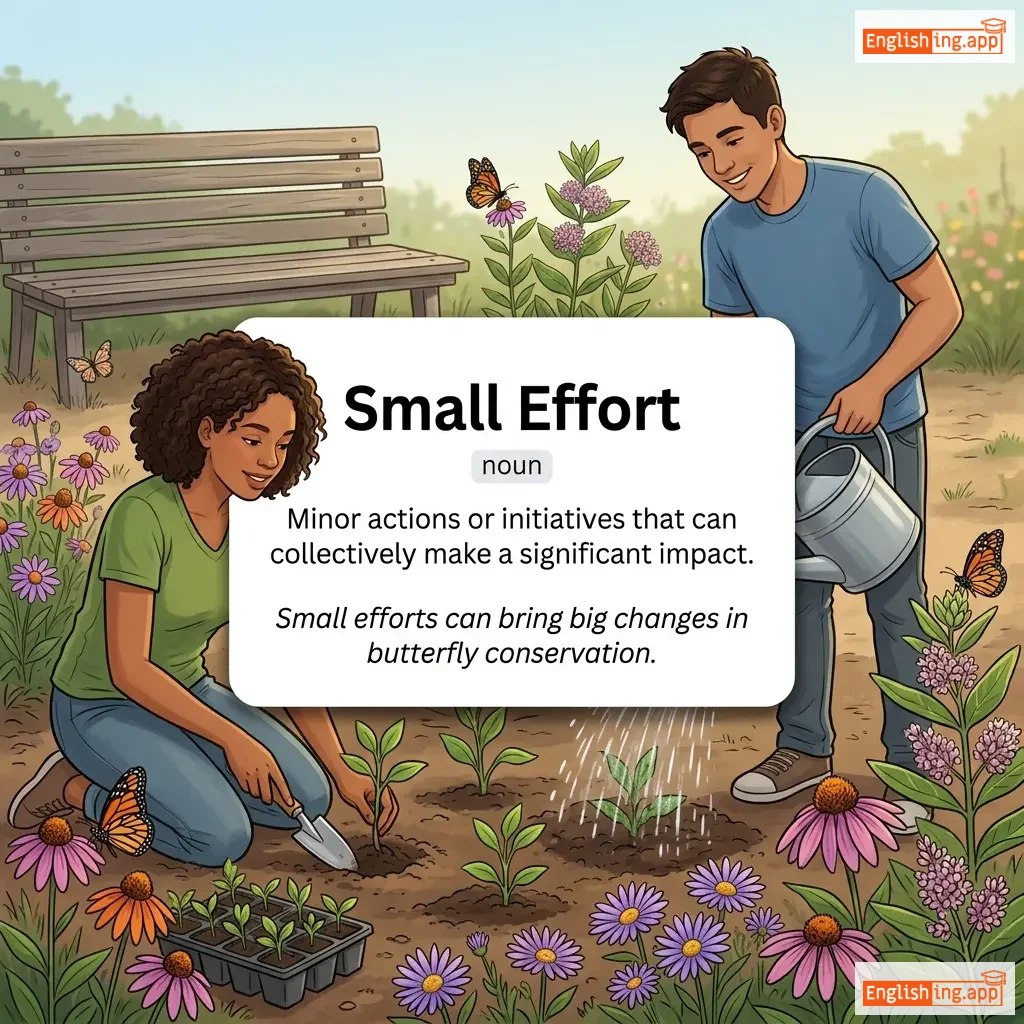
Small Effort definition card — visual illustration of the meaning
noun
smɔːl ˈɛfərt
ছোট প্রচেষ্টা (chhoto procheshta)

Minor actions or initiatives that can collectively make a significant impact.

"Small efforts can bring big changes in butterfly conservation."

"প্রজাপতি সংরক্ষণে ছোট প্রচেষ্টাও বড় পরিবর্তন আনতে পারে।" (Projapoti songrokkhone chhoto procheshta-o boro poriborton ante pare.)
adjective
/ˈsmɑːrmi/
চাটুকার / মিথ্যা ভদ্রতা (chatukar / mithya bhodrota)

Excessively flattering or ingratiating, often insincerely.

"The salesman gave a smarmy pitch that felt fake."

"বিক্রেতা এমন একটি চাটুকারী বক্তব্য দিল যা মিথ্যা মনে হচ্ছিল।" (Bikreta emon ekti chatukari boktobbo dilo ja mithya mone hochhilo.)
adjective, noun, verb
/smɑːrt/
বুদ্ধিমান / আড়ম্বরপূর্ণ (buddhiman / aramborpurno)

Clever and intelligent; also stylish in appearance; or to feel pain.

"She is a smart student who always excels in class."

"সে একজন বুদ্ধিমান ছাত্র, যে সবসময় ক্লাসে ভালো করে।" (Se ekjon buddhiman chatro, je sobsomoy klase bhalo kore.)
adverb
/ˈsmɑːt.li/
সুচারুভাবে; তীক্ষ্ণভাবে; দ্রুতভাবে; (sucharubhabe)

in a clever or intelligent way; neatly and stylishly; quickly

"He was smartly dressed for the business meeting."

"সে ব্যবসায়িক বৈঠকের জন্য সুচারুভাবে পোশাক পরেছিল।" (she beboshayik boithok-er jonno sucharubhabe poshak porechilo)
noun
/ˈsmɑːrt.nəs/
সর্বোত্তমতা; ফ্যাশন; (buddhimotta)

intelligence; cleverness; neat and fashionable appearance

"Her smartness in solving problems impressed everyone."

"সমস্যা সমাধানে তার বুদ্ধিমত্তা সবাইকে মুগ্ধ করেছিল।" (shomoshya shomadhane tar buddhimotta shobaike mugdho korechhilo.)
verb
/smæʃ/
ভাঙা (bhanga)

to break something into pieces violently

"She smashed the glass in frustration."

"সে হতাশায় কাচটি ভাঙল।" (Se hotashay kachti bhanglo.)
noun
/ˈsmætərɪŋ/
সামান্য জ্ঞান / অল্প পরিমাণ (samanjo gyan / olpo poriman)

A small amount or superficial knowledge of something.

"He has a smattering of Spanish."

"তার সামান্য স্প্যানিশ জ্ঞান আছে।" (Tar samanjo Spanish gyan ache.)
verb
/smɪr/
মাখানো / বদনাম করা (makhano / bodnam kora)

to spread or apply a substance messily; to damage someone's reputation with false or unfair words

"The child smeared paint across the wall."

"শিশুটি দেয়ালে রঙ মাখিয়েছিল।" (Shishuti deyaley rong makhiechelo.)
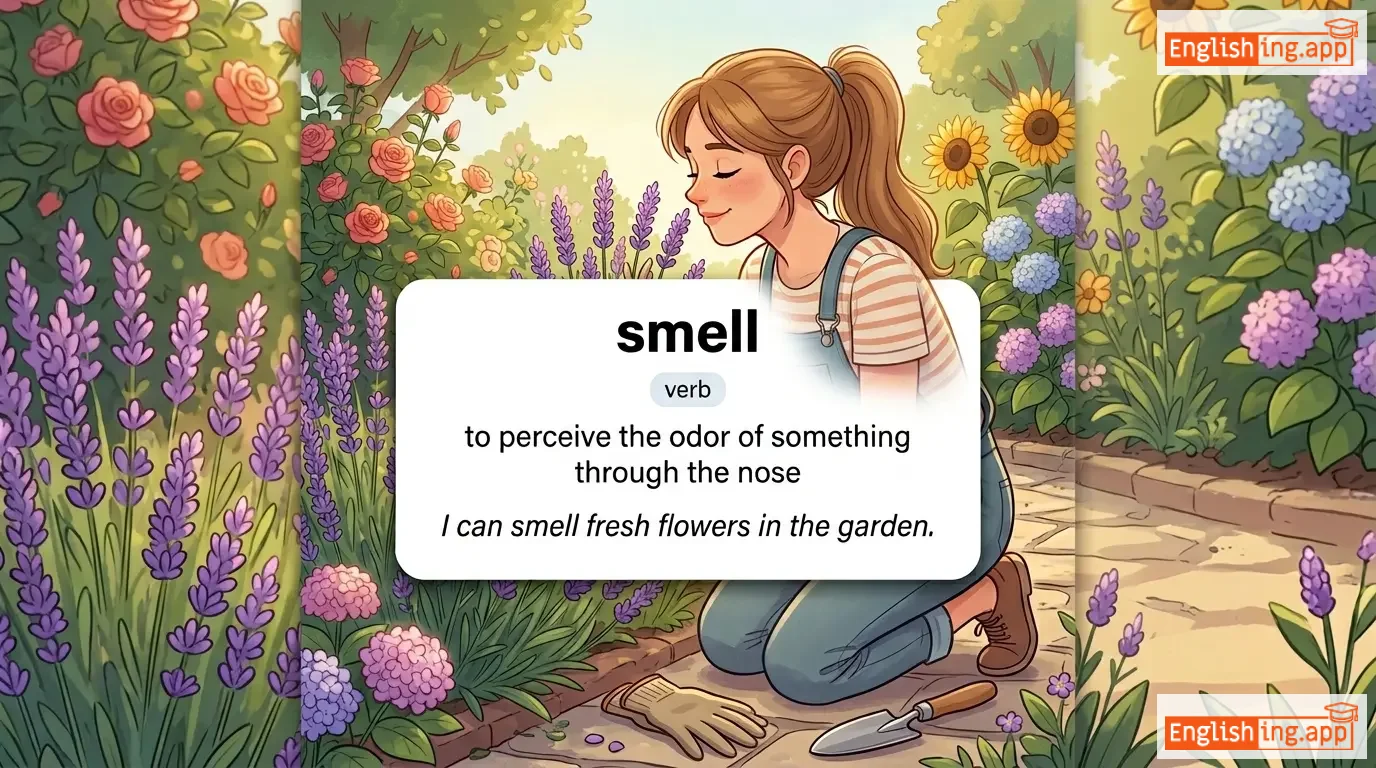
smell definition card — visual illustration of the meaning
verb
/smɛl/
গন্ধ নেওয়া (gondho neoya)

to perceive the odor of something through the nose

"I can smell fresh flowers in the garden."

"আমি বাগানে তাজা ফুলের গন্ধ পাচ্ছি।" (Ami bagane taja fuler gondho pachhi.)
verb
/smɛlt/
গলানো (golano)

to extract metal from its ore by heating and melting

"The workers smelt iron from its ore in the factory."

"কর্মীরা কারখানায় আকরিক থেকে লোহা গলিয়ে বের করল।" (Kormira karkhanay akrik theke loha goliye ber korlo.)
verb
/smaɪl/
হাসি (hasi)

to express happiness or friendliness by turning the corners of the mouth upwards

"She smiled when she saw the gift."

"সে উপহারটি দেখলে হাসলো।" (Se upohar ti dekhle haslo.)
verb
/smɜrk/
ঠাট্টাচ্ছলে হাসা (thatthachchole hasha)

to smile in a self-satisfied, smug, or silly way

"He smirked when he won the argument."

"তর্ক জেতার পর সে ঠাট্টাচ্ছলে হাসল।" (Torko jetar por se thatthachchole haslo.)
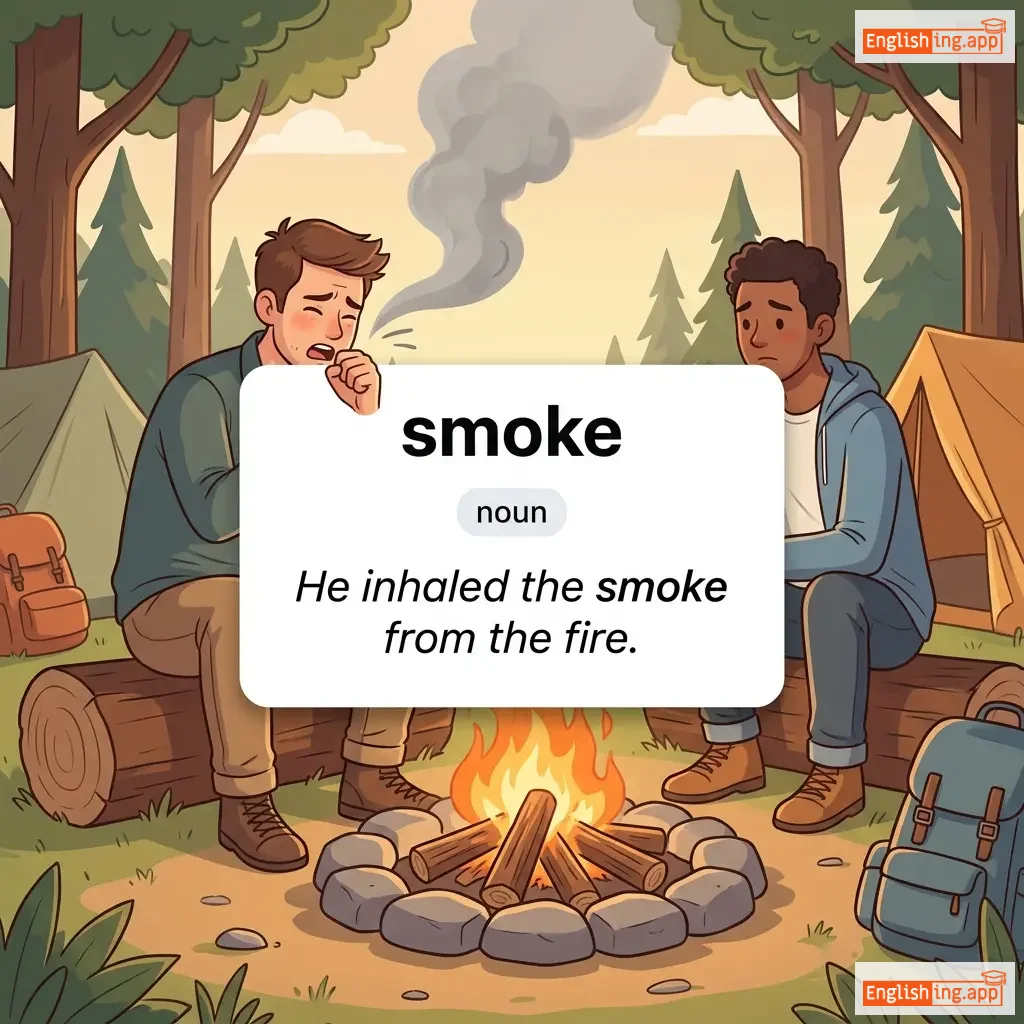
smoke definition card — visual illustration of the meaning
noun
/smoʊk/
ধোঁয়া (dhoya)

a visible suspension of fine particles of matter in the air, typically produced by combustion

"He inhaled the smoke from the fire."

"সে আগুন থেকে ধোঁয়া শ্বাসপ্রশ্বাসে নিয়েছিল।" (Se āgun theke dhoyā śwāśpraśwāse niyechhilo.)
noun
/ˈsmoʊkər/
ধূমপায়ী (dhumpayi)

A person who smokes tobacco or other substances

"He is a heavy smoker and tries to quit every year."

"সে একজন ভারী ধূমপায়ী এবং প্রতি বছর ছাড়ার চেষ্টা করে।" (Se ekjon bhari dhumpayi ebong proti bochor charar chesta kore.)
noun/adjective
/ˈsmoʊ.kɪŋ/
ধূমপান (dhumpan)

The act of inhaling and exhaling the smoke of tobacco or other substances; wearing a tuxedo (adjective, formal context).

"Smoking is prohibited inside the building."

"বিল্ডিং এর ভিতরে ধূমপান নিষিদ্ধ।" (building er bhitore dhumpan nishiddho.)
verb
/ˈsmoʊldər/
ধিকিধিকি জ্বলা (dhikidhiki jwala)

to burn slowly with smoke but no flame; to show suppressed anger or emotion

"The fire smoldered for hours before it went out."

"আগুনটি কয়েক ঘন্টা ধরে ধিকিধিকি জ্বলছিল।" (Agunti koyek ghonta dhore dhikidhiki jolchhilo.)
adjective
/smuːð/
মসৃণ (moshrin)

having an even surface without roughness; happening without difficulty

"The table has a smooth surface."

"টেবিলটির পৃষ্ঠ মসৃণ।" (Tebiltir pristha moshrin.)
adverb
/ˈsmuːð.li/
অবাধে; মসৃণভাবে; (obadhe)

without problems or difficulties; in an even and regular way

"The car runs smoothly on the new highway."

"গাড়িটি নতুন হাইওয়েতে মসৃণভাবে চলে।" (gari-ti notun highway-te moshrinbhabe chole)
verb
/ˈsmʌðər/
ঢেকে ফেলা / দম বন্ধ করা (dhake fela / dom bondho kora)

to kill someone by covering their nose and mouth to prevent breathing; to cover something completely; to overwhelm with excessive attention or affection

"She smothered the fire with a blanket."

"সে কম্বল দিয়ে আগুন ঢেকে ফেলল।" (Se kombol diye agun dhake felo.)
noun/verb
/smʌdʒ/
দাগ, ময়লা চিহ্ন (dag, moyla chinho)

a dirty mark or smear; to make something dirty or unclear by rubbing or touching

"She accidentally smudged her lipstick on the napkin."

"সে ভুলবশত ন্যাপকিনে তার লিপস্টিকের দাগ লেগে যায়।" (Se vulbosoto napkine tar lipsticker dag lege jay.)
adjective
/smʌɡ/
আত্মতুষ্ট (atmotrishto)

having or showing an excessive pride in oneself or one's achievements

"He wore a smug smile after winning the debate."

"বিতর্ক জেতার পর সে আত্মতুষ্ট হাসি দিল।" (Bitork jetar por se atmotrishto hasi dilo.)
verb
/ˈsmʌɡəl/
চোরা চালান (chora chalan)

to move goods illegally into or out of a country

"The gang tried to smuggle gold across the border."

"দলটি সীমান্ত পেরিয়ে স্বর্ণ চোরা চালান করার চেষ্টা করেছিল।" (Dolti simanto periye shorno chora chalan korar cheshta korechilo.)
noun
/sneɪl/
শামুক (shamuk)

a small soft creature with a shell on its back that moves very slowly

"The snail left a shiny trail as it crawled across the leaf."

"শামুকটি পাতার উপর দিয়ে হেঁটে যাওয়ার সময় একটি চকচকে দাগ রেখে গেল।" (shamukṭi patar upor diye heṭe jaoyar somoy ekṭi chokchoke dag rekhe gelo)
noun
/sneɪk/
সাপ (shap)

a long, legless reptile that moves by slithering

"A snake slithered across the garden path."

"একটি সাপ বাগানের পথ দিয়ে গড়িয়ে গেল।" (Ekti shap baganer poth diye goriye gelo.)
noun
/sneɪk ɡɔːrd/
চিচিঙ্গা (chichinga)

a long, curved vegetable that resembles a snake, commonly used in South Asian cuisine

"The snake gourd grows in a twisted, serpentine shape in the garden."

"চিচিঙ্গা বাগানে বাঁকা, সাপের মতো আকারে বৃদ্ধি পায়।" (chichinga bagane banka, shaper moto akare briddhi pay.)
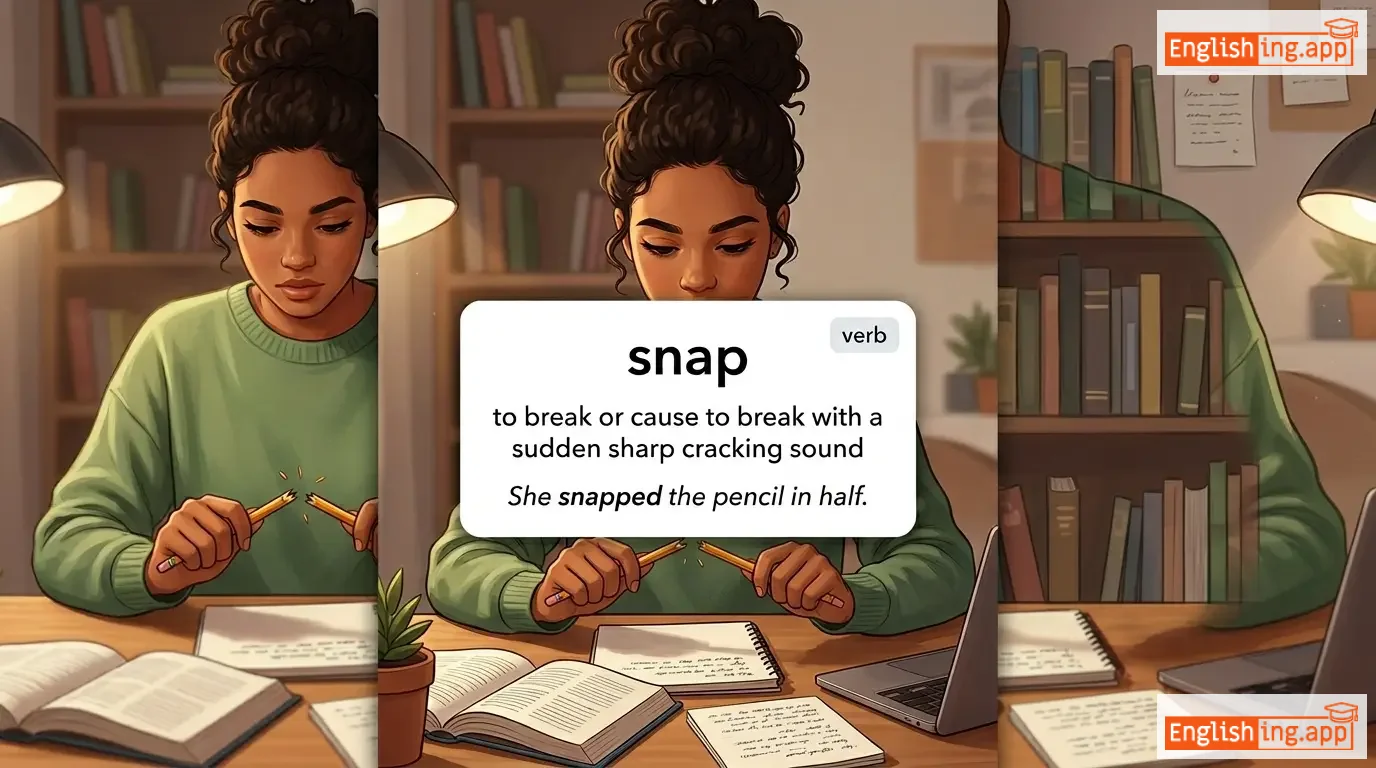
snap definition card — visual illustration of the meaning
verb
/snæp/
ভেঙে ফেলা (bheṅge felā)

to break or cause to break with a sudden sharp cracking sound

"She snapped the pencil in half."

"সে পেন্সিলটি অর্ধেক ভেঙে ফেলল।" (Se pensilṭi ardhēk bheṅge phēlo.)
noun/verb
/snɛər/
ফাঁদ (phad)

a trap for catching animals; to catch or trap

"The hunter set a snare to catch rabbits."

"শিকারি খরগোশ ধরতে একটি ফাঁদ পেতেছিল।" (Shikari khorgosh dhorte ekti phad pethechilo.)
verb/noun
/snɑːrl/
গর্জন, জট (gorjon, jot)

to growl aggressively with bared teeth; a tangle or mess

"The dog snarled at the stranger near the gate."

"কুকুরটি গেটের কাছে অপরিচিত ব্যক্তির দিকে গর্জন করল।" (Kukurt i geter kache oparichito bektir dike gorjon korlo.)
verb
/sniːk/
গোপনে চলাফেরা করা (gopone cholafara kora)

to move quietly and secretly to avoid being noticed

"He tried to sneak into the house without waking anyone."

"সে কাউকে না জাগিয়ে বাড়িতে ঢুকতে চেষ্টা করেছিল।" (Se kauke na jagiye barite dhukte cheshta korechilo.)
verb
/snɪər/
ঠাট্টা করে হাসা (thatta kore hasa)

to smile or speak in a mocking or contemptuous way

"She sneered at his attempt to sing."

"সে তার গান গাওয়ার চেষ্টাকে উপহাস করেছিল।" (Se tar gan gawar cheshtake upohas korechilo.)
verb, noun
/sniːz/
হাঁচি দেওয়া (hanchi dewa)

to expel air involuntarily from the nose and mouth due to irritation; the act of sneezing

"I had to sneeze during the meeting."

"আমি মিটিং চলাকালে হাঁচি দিতে হলো।" (ami meeting cholakale hanchi dite holo)
verb
/ˈsnɪkər/
চুপি চুপি হাসা (chupi chupi hasa)

to laugh quietly in a disrespectful or mocking way

"The students snickered when the teacher made a mistake."

"শিক্ষক ভুল করলে ছাত্ররা চুপি চুপি হাসল।" (Shikkhok vul korle chatrara chupi chupi haslo.)
adjective
/snaɪd/
বিদ্রুপমূলক (bidrupmulok)

mocking or insulting in an indirect way

"He couldn’t resist making a snide comment about her dress."

"সে তার পোশাক নিয়ে বিদ্রুপমূলক মন্তব্য করতে বিরত থাকতে পারেনি।" (Se tar poshak niye bidrupmulok montobbo korte birat thakte pareni.)
verb
/snɪp/
কেটে ফেলা (kete fela)

to cut something quickly with scissors or a sharp tool

"She snipped the loose thread from her dress."

"সে তার পোশাকের আলগা সুতো কেটে ফেলল।" (Se tar poshaker alga suto kete fello.)
verb
/ˈsnɪvəl/
কান্নাকাটি বা নালিশ করা (kannakati ba nalish kora)

to cry or complain in a weak or annoying way

"He began to snivel when he didn’t get his way."

"সে তার ইচ্ছা পূরণ না হলে কান্নাকাটি শুরু করল।" (Se tar iccha puron na hole kannakati shuru korlo.)
adjective
/ˈsnɒbɪʃ/
অহংকারী (ahongkari)

having or showing the attitude of people who think they are better than others

"She seemed snobbish because she avoided talking to the waiters."

"সে অহংকারী মনে হলো কারণ সে ওয়েটারদের সাথে কথা বলতে এড়িয়ে গেল।" (Se ahongkari mone holo karon se waiterder sathe kotha bolte eriye gelo.)
noun
/snoʊ/
তুষার (tushar)

frozen water vapor that falls from the sky as white flakes

"Children love to play in the snow."

"শিশুরা তুষারে খেলতে ভালোবাসে।" (Shishura tushare khelte bhalobashe.)
noun
/ˈsnoʊ.fɔːl/
তুষারপাত (tusharpat)

the process of snow falling from the sky; the amount of snow that falls

"The heavy snowfall blocked all the roads yesterday."

"গতকালের ভারী তুষারপাত সব রাস্তা বন্ধ করে দিয়েছে।" (gotkaler bhari tusharpat shob rasta bondho kore diyechhe)
verb
/snʌb/
অবজ্ঞা করা (obojna kora)

to insult or ignore someone by treating them rudely

"He felt hurt when his invitation was snubbed."

"তার আমন্ত্রণ অবজ্ঞা করা হলে সে কষ্ট পেল।" (Tar amontron obojna kora hole se koshto pelo.)
verb
/ˈsnʌfəl/
নাক দিয়ে শব্দ করে শ্বাস নেওয়া (nak diye shobdo kore shash newa)

to breathe noisily through the nose, often because of crying or a cold

"The child began to snuffle after crying for a long time."

"দীর্ঘ সময় কান্নার পর শিশুটি নাক দিয়ে শব্দ করে শ্বাস নিতে শুরু করল।" (Dirgho somoy kannar por shishuti nak diye shobdo kore shash nite shuru korlo.)
adverb
/soʊ/
এত (eto)

to such a degree or extent

"She was so happy with the gift."

"সে উপহারে এত খুশি ছিল।" (Se upahārē eto khushi chhilo.)
adjective
/ˈsoʊ kɔːld/
অভিযুক্ত (abhijukto)

referred to as or known by a particular name or title, often misleadingly

"The so-called expert couldn't answer the question."

"সো-কলড বিশেষজ্ঞ প্রশ্নের উত্তর দিতে পারলেন না।" (So-kolḍ biśēṣajña praśnēra uttara ditē pārēna nā.)
verb
/soʊk/
ভিজানো (bhijano)

to make something completely wet by immersing it in liquid

"She soaked the clothes in water before washing them."

"সে কাপড় ধোয়ার আগে পানিতে ভিজিয়ে রাখল।" (Se kapor dhoar age panite bhijiye rakhlo.)
noun
/soʊp/
সাবান (saban)

a substance used for washing and cleaning, typically made from fats and alkalis

"She washed her hands with soap and water."

"সে সাবান ও পানি দিয়ে হাত ধুয়েছিল।" (Se saban o pani diye hat dhuyechhilo.)
noun
/soʊp keɪs/
সাবানের বাক্স (shabaner bakso)

a container used to store soap

"She bought a beautiful soap case for the bathroom."

"সে বাথরুমের জন্য একটি সুন্দর সাবানের বাক্স কিনেছে।" (she bathroom er jonno ekti shundor shabaner bakso kineche)
adjective
/ˈsoʊpi/
সাবানের মতো; ফেনাযুক্ত; (sabaner moto; phenajukto)

covered with soap; having the characteristics of soap; foamy

"The dishes were still soapy after washing."

"ধোয়ার পরেও প্লেটগুলো এখনও সাবানযুক্ত ছিল।" (dhowar poreo pletgulo ekhono sabanjukto chilo)
verb
/sɔːr/
উঁচুতে ওড়া / দ্রুত বৃদ্ধি পাওয়া (unchute ora / druto brid'dhi pawa)

to fly or rise high in the air; to increase rapidly or dramatically

"The eagle soared high above the mountains."

"ঈগল পাহাড়ের ওপরে উঁচুতে উড়ছিল।" (Eagle paharer opere unchute urchhilo.)
verb
/sɑːb/
হাউমাউ করে কান্না (haumau kore kanna)

to cry noisily while taking short breaths

"She began to sob uncontrollably after hearing the news."

"খবর শোনার পর সে হাউমাউ করে কাঁদতে শুরু করল।" (Khobor shonar por se haumau kore kadte shuru korlo.)
adjective
/ˈsoʊbər/
সংযমী / গম্ভীর (songjomi / gombhir)

not affected by alcohol; serious, sensible, and solemn

"He gave a sober speech about the challenges ahead."

"সে ভবিষ্যতের চ্যালেঞ্জ নিয়ে একটি গম্ভীর বক্তৃতা দিল।" (Se vobisshoter challenge niye ekti gombhir boktrita dilo.)