ভোকাবুলারিসমূহ

ইংরেজি শব্দের বাংলা অর্থ | English to Bangla Word Meaning Dictionary

noun
/ˌræʃioʊsɪˈneɪʃən/
যুক্তি বিশ্লেষণ (jukti bishleshon)

the process of reasoning or logical thinking

"His ratiocination impressed the judges during the debate."

"তার যুক্তি বিশ্লেষণ বিতর্ক চলাকালে বিচারকদের মুগ্ধ করেছিল।" (Tar jukti bishleshon bitork cholakale bicharokder mugdho korechhilo.)
noun
/ˈræʃən/
রেশন (reshon)

a fixed amount of something, especially food, officially allowed to each person

"During the war, each family received a weekly ration of rice."

"যুদ্ধের সময় প্রতিটি পরিবার প্রতি সপ্তাহে নির্দিষ্ট পরিমাণ চাল রেশন পেত।" (Judhdher somoy protiti poribar proti soptah nirdisto poriman chal reshon peto.)
adjective
/ˈræʃənəl/
যুক্তিসঙ্গত (juktisonggoto)

based on or in accordance with reason or logic

"She made a rational decision after considering all the facts."

"সে সব তথ্য বিবেচনা করে একটি যুক্তিসঙ্গত সিদ্ধান্ত নিয়েছিল।" (Se sob tottho bibecona kore ekti juktisonggoto siddhanto niyechilo.)
noun
/ˌræʃəˈnæl/
যুক্তিসিদ্ধ কারণ (juktisiddho karon)

the underlying reason or explanation for something

"The rationale behind his decision was clearly explained."

"তার সিদ্ধান্তের পেছনের যুক্তি পরিষ্কারভাবে ব্যাখ্যা করা হয়েছিল।" (Tar siddhantor pechoner jukti porishkarbhabe byakkha kora hoyechilo.)
noun
/ˈræʃənəlɪzəm/
যুক্তিবাদ (juktibad)

a belief or theory that opinions and actions should be based on reason and knowledge rather than religious belief or emotion

"Rationalism emphasizes logic and reasoning over faith."

"যুক্তিবাদ বিশ্বাসের চেয়ে যুক্তি ও বিশ্লেষণকে গুরুত্ব দেয়।" (Juktibad bishasher cheye jukti o bishleshon ke gurutto deoy.)
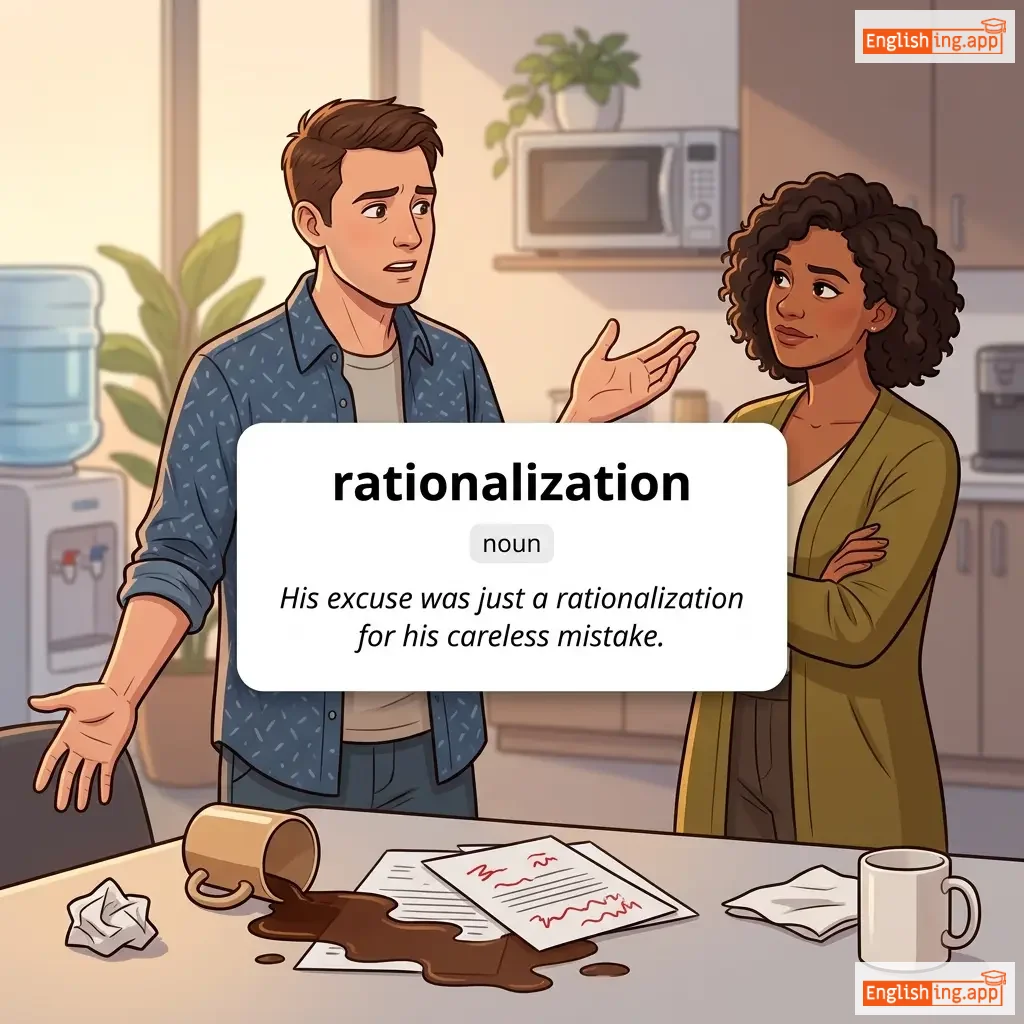
rationalization definition card — visual illustration of the meaning
noun
/ˌræʃənəlaɪˈzeɪʃən/
যুক্তিকরণ (juktikoron)

the action of attempting to explain or justify behavior or an attitude with logical reasons, even if these are not appropriate

"His excuse was just a rationalization for his careless mistake."

"তার অজুহাতটি ছিল তার অসাবধানী ভুলের যুক্তিকরণ।" (Tar ojuhat ti chilo tar osabdhanir vuler juktikoron.)
verb
/ˈræʃənəlaɪz/
যুক্তি দেখানো (jukti dekhano)

to attempt to explain or justify behavior or decisions with logical reasons, even if they are not true or appropriate

"She tried to rationalize her lateness by blaming the traffic."

"সে তার দেরি করার জন্য যানজটকে দোষ দিয়ে যুক্তি দেখানোর চেষ্টা করেছিল।" (Se tar deri korar jonno janjotke dosh diye jukti dekhano cheshta korechilo.)
verb
/ˈræʃənaɪz/
যুক্তিসঙ্গত ব্যাখ্যা দেওয়া (juktisongoto byakkha deowa)

to justify or explain something with logical reasons, even if not appropriate or true

"He tried to rationlize his mistake by blaming the system."

"সে তার ভুলকে সিস্টেমকে দোষারোপ করে যুক্তি দিয়ে বোঝানোর চেষ্টা করেছিল।" (Se tar vulke systemke dosharop kore jugti diye bojanor cheshta korechilo.)
noun, verb
/ˈrætəl/
ঝনঝন শব্দ করা; ঝুনঝুনি (jhonjhon shobdo kora; jhunjhuni)

to make a rapid series of short, sharp sounds; a device or object that makes such a sound

"The loose window began to rattle in the strong wind."

"জোর বাতাসে ঢিলা জানালাটি ঝনঝন করতে লাগল।" (jor batashe dhila janala-ti jhonjhon korte laglo)
adjective
/ˈrɔːkəs/
কর্কশ, হৈচৈপূর্ণ (korkosh, hoichoipurno)

loud, harsh, and unpleasant sound or behavior

"The crowd became raucous after the team scored."

"দলটি গোল করার পর ভিড় কর্কশ এবং হৈচৈপূর্ণ হয়ে ওঠে।" (Dollti gol korar por bhir korkosh ebong hoichoipurno hoye othe.)
verb
/ˈrævɪdʒ/
ধ্বংস করা (dhongsho kora)

to cause severe and extensive damage or destruction

"The hurricane ravaged the coastal villages."

"হারিকেন উপকূলীয় গ্রামগুলোকে ধ্বংস করে দিয়েছিল।" (Hariken upokulio gramgulo ke dhongsho kore diyechilo.)
verb
/reɪv/
প্রশংসা করা (proshongsha kora)

to speak or write about something with great enthusiasm or admiration

"Critics rave about the new movie."

"সমালোচকেরা নতুন সিনেমাটির প্রচুর প্রশংসা করেছেন।" (Somalochokera notun sinemati prochur proshongsha korechen.)
verb
/ˈrævəl/
জটানো / খুলে ফেলা (jotano / khule fela)

to tangle or complicate; to untangle or unravel depending on context

"She began to ravel the loose threads of the sweater."

"সে সোয়েটারের আলগা সুতো খুলতে শুরু করল।" (Se sweaterer alga suto khulte shuru korlo.)
noun
/ˈreɪ.vən/
দাঁতাল কাক (dan-tal kak)

a large, black bird with a thick bill and harsh croaking voice

"The raven perched on the old oak tree and cawed loudly."

"দাঁতাল কাকটি পুরানো ওক গাছে বসে জোরে ডাকল।" (dan-tal kak-ti pu-ra-no ok ga-che bo-she jo-re da-ko-lo)
adjective
/ˈrævənɪŋ/
ক্ষুধার্তভাবে লোভী (khudharto vabe lobhi)

Extremely hungry and greedy; voracious.

"The ravening wolves circled the camp."

"ক্ষুধার্ত নেকড়েরা শিবির ঘিরে ফেলেছিল।" (Khudharto nekre-ra shibir ghire phelechilo.)
adjective
/ˈrævənəs/
অত্যন্ত ক্ষুধার্ত (otonto khudharto)

Extremely hungry; famished.

"After the long hike, she was ravenous and ate quickly."

"দীর্ঘ হাঁটার পর সে এতটাই ক্ষুধার্ত ছিল যে দ্রুত খেয়ে নিল।" (Dirgho hatar por se etotai khudharto chilo je druto kheye nilo.)
noun
/rəˈviːn/
গিরিখাত (girikhat)

A deep, narrow valley with steep sides.

"The river carved a deep ravine through the mountains."

"নদীটি পাহাড়ের ভেতর দিয়ে একটি গভীর গিরিখাত তৈরি করেছিল।" (Noditi paharer vitor diye ekti gobhir girikhat toiri korechilo.)
verb
/ˈrævɪʃ/
মুগ্ধ করা (mugdho kora)

To fill with intense delight; to captivate or enchant.

"The beauty of the sunset ravished the travelers."

"সূর্যাস্তের সৌন্দর্য ভ্রমণকারীদের মুগ্ধ করেছিল।" (Surjaster soundorjo vromonkari-der mugdho korechilo.)
adjective
/rɔː/
কাঁচা (kancha)

not cooked or processed; in its natural state

"She ate raw vegetables for lunch."

"সে লাঞ্চে কাঁচা সবজি খেয়েছে।" (Se lunch-e kancha shobji kheyechhe.)
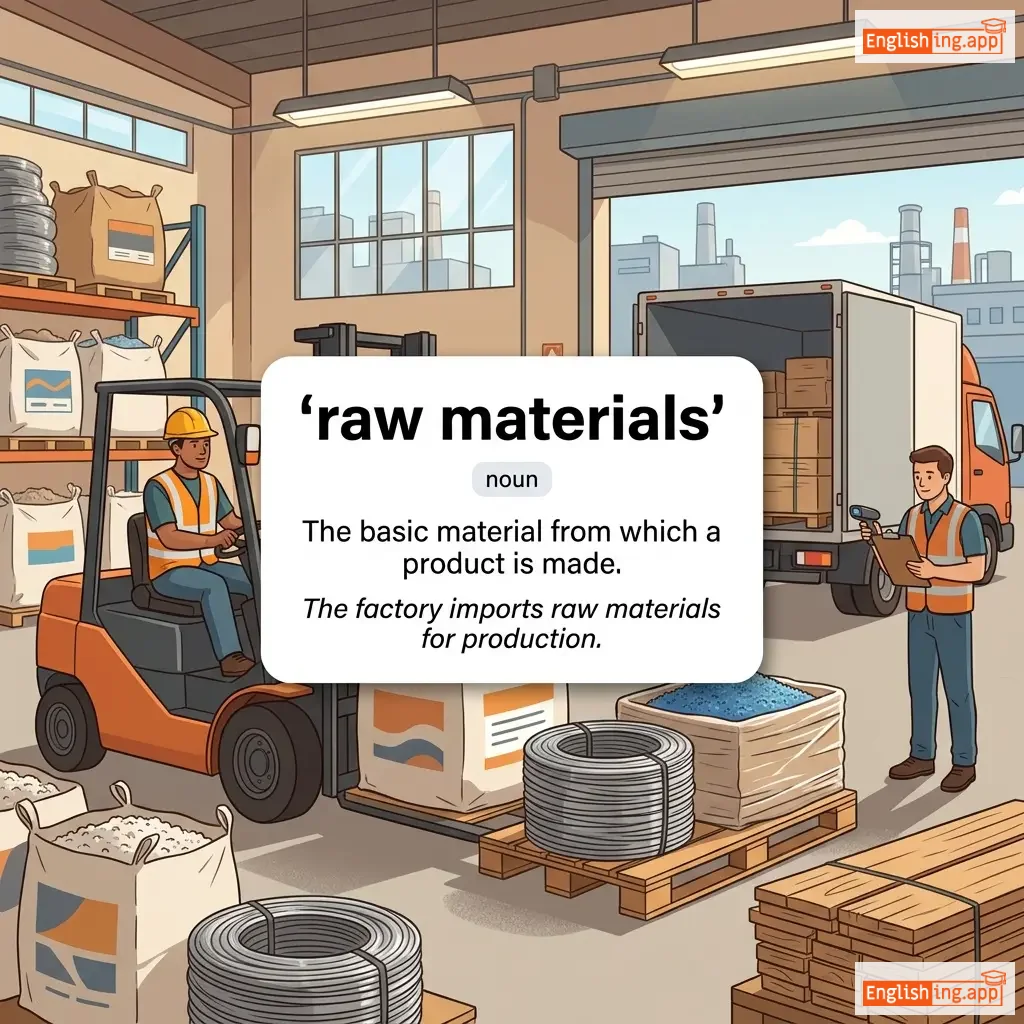
raw materials definition card — visual illustration of the meaning
noun
rɔː mətɪˈrɪəlz
কাঁচামাল (kachamal)

The basic material from which a product is made.

"The factory imports raw materials for production."

"কারখানাটি উৎপাদনের জন্য কাঁচামাল আমদানি করে।" (Karkhana-ti utpadoner jonyo kachamal amdani kore.)
noun
/rɔ ˈtɜrmərɪk/
কাঁচা হলুদ (kancha holud)

fresh unprocessed root of the turmeric plant used as a spice and medicine

"Grate raw turmeric into the curry for authentic flavor."

"খাঁটি স্বাদের জন্য তরকারিতে কাঁচা হলুদ কুঁচিয়ে দিন।" (khati shadher jonno torkarihte kancha holud kunchiye din)
noun
/reɪ/
রশ্মি (roshmi)

a narrow beam of light, heat, or radiation

"A ray of sunlight broke through the clouds."

"একটি সূর্যের রে মেঘের মধ্যে দিয়ে ফুটে উঠল।" (Ekti surjer ray megh-er modhe diye fute uthlo.)
verb
/reɪz/
ধ্বংস করা (dhongsho kora)

To completely destroy or demolish something, especially a building.

"The old factory was razed to make way for new apartments."

"পুরোনো কারখানাটি নতুন ফ্ল্যাটের জন্য ভেঙে ফেলা হয়েছিল।" (Purono karkhanati notun flater jonno bhenge fela hoyechilo.)
noun
/ˈreɪ.zər/
ক্ষুর (khur)

a sharp-edged instrument used for shaving hair from the skin

"He shaved his beard with a sharp razor."

"তিনি একটি ধারালো ক্ষুর দিয়ে তার দাড়ি কামান।" (tini ekti dharalo khur diye tar dari kaman.)
preposition
/riː/
সম্পর্কে (somproke)

concerning or about (used in formal letters or emails)

"The letter was sent re your recent application."

"চিঠিটি আপনার সাম্প্রতিক আবেদন সম্পর্কে পাঠানো হয়েছিল।" (Chithiti apnar sampratik abedon somproke pathano hoyechhilo.)
verb
/riːtʃ/
পোঁছানো (pochano)

to stretch out or extend to something or someone

"She reached for the book on the top shelf."

"সে শেলফের উপরে থাকা বইটি ধরতে পৌঁছেছে।" (Se shelfer upore thaka boi-ti dhorte pochhechhe.)
verb
/riˈækt/
প্রতিক্রিয়া দেখানো (pratikriya dekhano)

to respond or behave in a particular way to something

"She reacted angrily when she heard the news."

"সে খবরে রিঅ্যাক্ট করল রেগে গিয়ে।" (Se khobore riakt korlo rege giye.)
noun
/riˈæktənt/
প্রতিক্রিয়ক (protikriyak)

A substance that takes part in and undergoes change during a chemical reaction.

"Oxygen is a reactant in the process of combustion."

"অক্সিজেন হলো দহন প্রক্রিয়ার একটি প্রতিক্রিয়ক।" (Oksijen holo dohon prokriyar ekti protikriyak.)
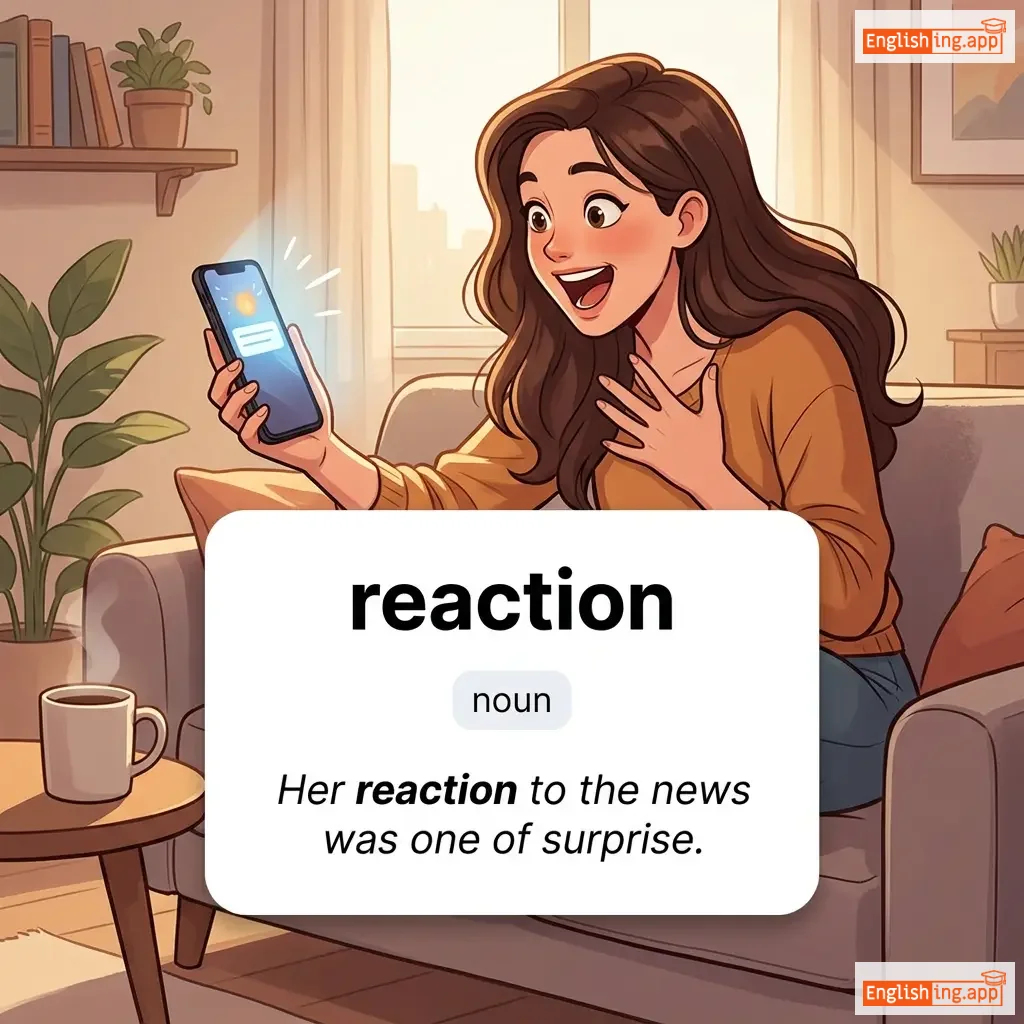
reaction definition card — visual illustration of the meaning
noun
/riˈækʃən/
প্রতিক্রিয়া (protikriya)

A response to a situation, event, or stimulus; also a chemical change involving reactants and products.

"Her reaction to the news was one of surprise."

"সংবাদের প্রতি তার প্রতিক্রিয়া ছিল বিস্ময়।" (Songbader proti tar protikriya chilo bismoy.)
adjective
/riˈækʃəˌneri/
প্রতিক্রিয়াশীল (protikriyashil)

Opposing political or social progress or reform; extremely conservative.

"The group took a reactionary stance against the new policies."

"গ্রুপটি নতুন নীতির বিরুদ্ধে একটি প্রতিক্রিয়াশীল অবস্থান নিয়েছিল।" (Groupti notun nitir biruddhe ekti protikriyashil obosthan niyechilo.)
adjective
/riˈæk.tɪv/
প্রতিক্রিয়াশীল; সক্রিয়; (protikriyasheel)

responding to situations rather than initiating them; chemically active

"The company took a reactive approach to customer complaints."

"কোম্পানিটি গ্রাহকদের অভিযোগের জন্য একটি প্রতিক্রিয়াশীল পদ্ধতি গ্রহণ করেছে।" (kompaniti grahokder ovijogher jonno ekti protikriyasheel poddhoti grohon koreche.)
verb
/riːd/
পড়া (pora)

to look at and comprehend the meaning of written or printed matter

"I like to read books before bed."

"আমি বিছানায় যাওয়ার আগে বই পড়তে ভালোবাসি।" (Ami bichanay jawar age boi porte bhalobashi.)
noun
/ˈriːdər/
পাঠক (pathok)

a person who reads or who is capable of reading

"She is a fast reader, finishing books in a day."

"সে একটি দ্রুত পাঠক, একদিনে বই শেষ করে।" (Se ekti druto pathok, ekdine boi shesh kore.)
adverb
/ˈrɛdəli/
সহজেই (sohojei)

Without hesitation or difficulty; willingly.

"She readily accepted the job offer."

"সে সহজেই চাকরির প্রস্তাব গ্রহণ করেছিল।" (Se sohojei chakrir prostab grohon korechilo.)
noun
/ˈriːdɪŋ/
পড়া (pora)

the action or skill of reading

"Reading is one of my favorite hobbies."

"পড়া হচ্ছে আমার প্রিয় শখের একটি।" (Pora hocche amar priya shokher ekti.)
verb
/ˌriːəˈdʒʌst/
পুনরায় সামঞ্জস্য করা (punoray samonjosso kora)

To change or move something again in order to achieve a better fit, condition, or balance.

"He readjusted the chair to make it more comfortable."

"সে চেয়ারটিকে আরও আরামদায়ক করতে পুনরায় সামঞ্জস্য করেছিল।" (Se cheyartike aro aramdoyok korte punoray samonjosso korechilo.)
noun
/ˌriː.əˈdʒʌst.mənt/
পুনঃসমন্বয় (punosomonnoe)

The act of changing or correcting something again to make it suitable or balanced.

"After moving to a new city, he went through a period of readjustment."

"একটি নতুন শহরে যাওয়ার পর তিনি একটি পুনঃসমন্বয়ের সময় অতিক্রম করেছিলেন।" (Ekti notun shohoore jawar por tini ekti punosomonnoer shomoy otikrom korechilen.)
adjective
/ˈrɛd.i/
প্রস্তুত (prostut)

Prepared or available for use or action.

"She was ready to leave for the airport."

"সে এয়ারপোর্টে যাওয়ার জন্য প্রস্তুত ছিল।" (Se airporte jawar jonno prostut chilo.)
verb
/ˌriːəˈfɜːrm/
পুনরায় নিশ্চিত করা (punoray nischit kora)

To state again strongly; to confirm or strengthen a statement or belief.

"The president reaffirmed his commitment to education reform."

"রাষ্ট্রপতি শিক্ষাব্যবস্থার সংস্কারের প্রতি তার প্রতিশ্রুতি পুনরায় নিশ্চিত করেছেন।" (Rastropti shikkha byabosthar songskarer proti tar protishruti punoray nischit korechen.)
adjective
/riːəl/
আসল (asol)

actually existing or happening; true and not imagined

"This is the real deal, no gimmicks."

"এটা আসল ব্যাপার, কোনো খেলাধুলা না।" (Eta asol byapar, kono kheladhula na.)
noun
/ˈrɪə.lɪ.zəm/
বাস্তববাদ (bastobbad)

The quality of representing things as they are; a practical or factual view.

"Her paintings are admired for their realism."

"তার চিত্রকর্মগুলো বাস্তববাদের জন্য প্রশংসিত।" (Tar chitrakormgulo bastobbader jonno proshongshito.)
adjective
/ˌriːəˈlɪstɪk/
বাস্তবসম্মত (bastobosommat)

having or showing a sensible and practical idea of what can be achieved or expected

"She gave a realistic estimate of the project's cost."

"সে প্রকল্পের খরচের একটি বাস্তবসম্মত অনুমান দিয়েছিল।" (Se projokter khorcher ekti bastobosommat onuman diyechhilo.)
reality definition card — visual illustration of the meaning
noun
/riˈæləti/
বাস্তবতা (bastobota)

the state of things as they actually exist, rather than as they may appear or might be imagined

"The reality of the situation is more complicated than we thought."

"পরিস্থিতির বাস্তবতা আমাদের ধারণার চেয়ে বেশি জটিল।" (Poristhitier bastobota amader dharanar cheye besi jatil.)
noun
/ˌrɪəlɪˈzeɪʃən/
অবগতি (obogoti)

the act of becoming fully aware of something as a fact

"Her realization of the problem helped solve the issue."

"তার রিয়ালাইজেশন সমস্যাটির সমাধানে সহায়ক ছিল।" (Tar realization shomosshatir somadhane sohayok chhilo.)
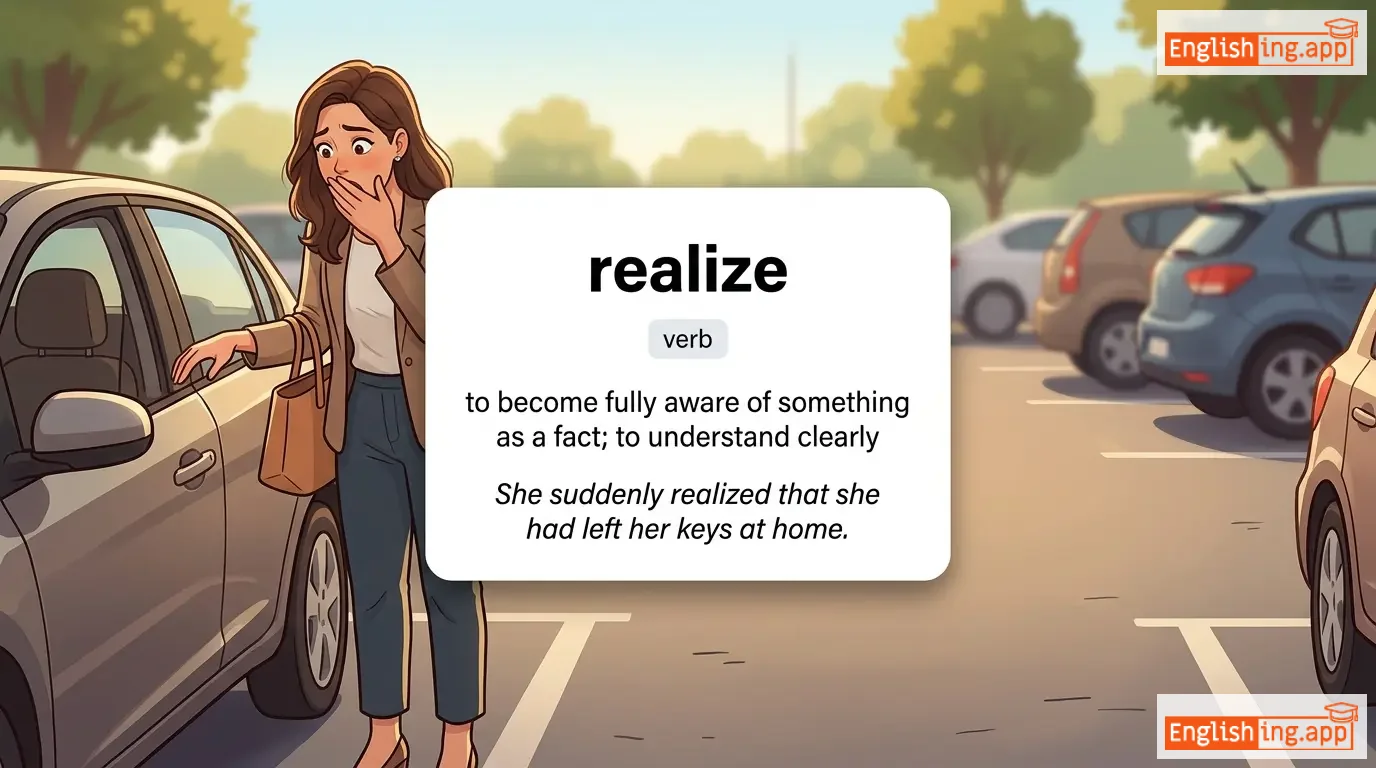
realize definition card — visual illustration of the meaning
verb
/ˈrɪəlaɪz/
বুঝতে পারা (bujhte para)

to become fully aware of something as a fact; to understand clearly

"She suddenly realized that she had left her keys at home."

"সে হঠাৎ বুঝতে পারলো যে সে তার চাবি বাড়িতে ভুলে রেখেছে।" (She hotath bujhte parlo je she tar chabi barite bhule rekhechhe.)
adverb
/ˈrɪəli/
সত্যিই (sottii)

used to emphasize a statement or description

"She really enjoyed the movie last night."

"সে সত্যিই গত রাতে সিনেমাটি উপভোগ করেছে।" (She sottii gôto raate sinemati upovog korechhe.)
noun
/rɛlm/
রাজ্য / ক্ষেত্র (rajjo / khetr)

A kingdom or domain; a field or area of activity or interest.

"He is well known in the realm of science."

"তিনি বিজ্ঞানের ক্ষেত্রে সুপরিচিত।" (Tini bigganer khetre suparichito.)
noun
/riːm/
কাগজের রিম / বিপুল পরিমাণ (kager rim / bipul poriman)

A large quantity of paper (typically 500 sheets); informally, a large amount of something.

"The office ordered ten reams of paper."

"অফিস দশ রিম কাগজ অর্ডার করেছিল।" (Office dosh rim kagoj order korechilo.)
verb
/riːp/
ফসল কাটা (foshol kata)

to cut or gather a crop; to receive as a consequence of actions

"Farmers reap wheat in the late summer."

"কৃষকরা দেরি গ্রীষ্মে গম কাটে।" (Krishokra deri grishme gom kate.)
noun
/ˈriːpər/
ফসল কাটার যন্ত্র বা ব্যক্তি (foshol katar jontra ba bekti)

a person or machine that cuts and gathers crops

"The reaper moved slowly through the golden fields."

"রিপারটি সোনালি মাঠের ভেতর দিয়ে ধীরে চলল।" (Riparti sonali mather vitor diye dhire choll.)