ভোকাবুলারিসমূহ

ইংরেজি শব্দের বাংলা অর্থ | English to Bangla Word Meaning Dictionary

noun
/rɪˈvaɪvəl/
পুনর্জীবন (punorjibon)

an improvement in the condition or strength of something

"The revival of the old traditions brought a sense of nostalgia."

"পুরানো ঐতিহ্যের রিভাইভাল একটি নস্টালজিক অনুভূতি নিয়ে এসেছিল।" (Purano oitihyer revival ekta nostalgic onubhuti niye esechilo.)
verb
/rɪˈvaɪv/
পুনরুজ্জীবিত করা (punorujjibito kora)

To bring back to life, consciousness, or activity.

"The paramedics managed to revive the unconscious man."

"প্যারামেডিকরা অচেতন মানুষটিকে পুনরুজ্জীবিত করতে সক্ষম হয়েছিল।" (Paramedicra ochoton manushke punorujjibito korte sokkhom hoyechilo.)
noun
/ˌrɛv.əˈkeɪ.ʃən/
বাতিলকরণ (batilkoron)

The act of officially canceling or withdrawing something.

"The court ordered the revocation of his license."

"আদালত তার লাইসেন্স বাতিলের নির্দেশ দিয়েছিল।" (Adalat tar license batiler nirdesh diyechilo.)
verb
/rɪˈvoʊk/
বাতিল করা (batil kora)

To officially cancel or withdraw a decision, privilege, or right.

"The government decided to revoke his passport."

"সরকার তার পাসপোর্ট বাতিল করার সিদ্ধান্ত নিয়েছে।" (Sorkar tar passport batil korar siddhanto niyeche.)
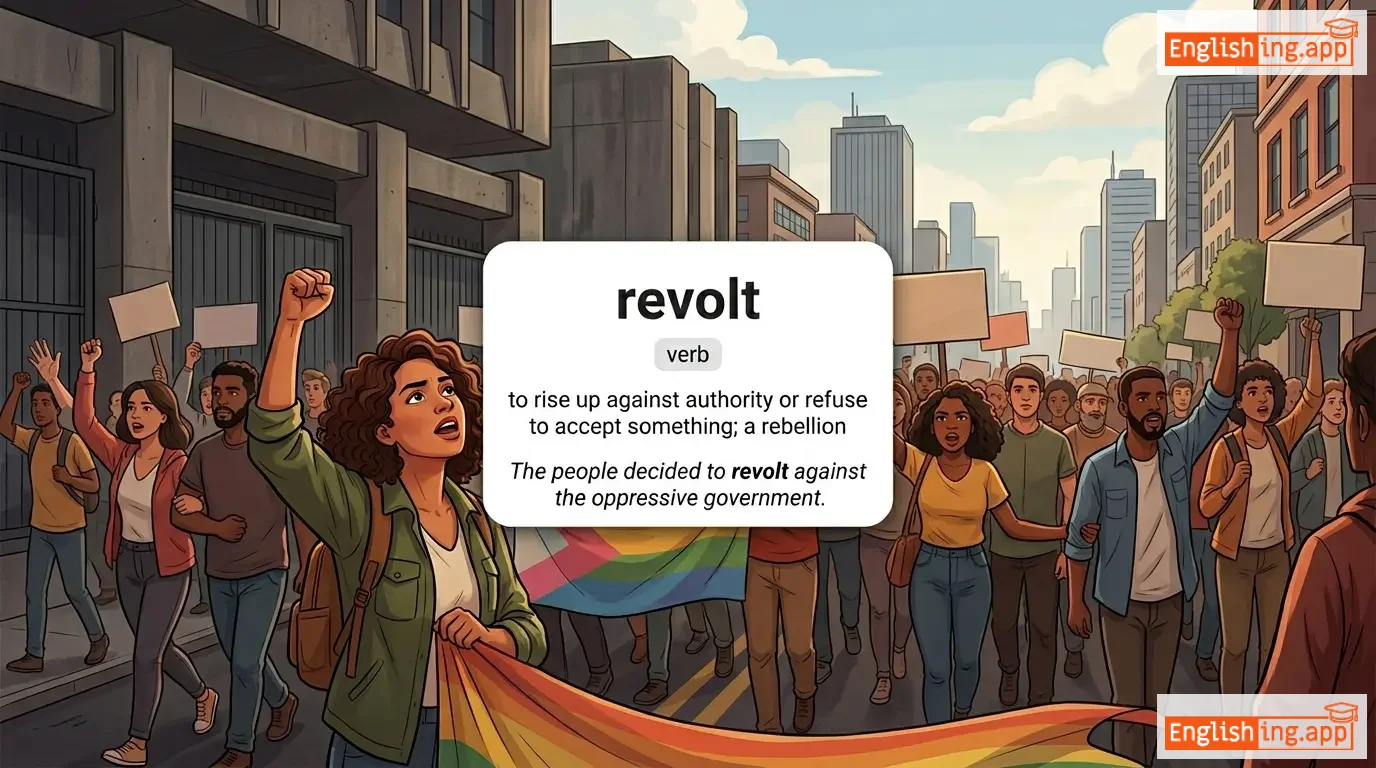
revolt definition card — visual illustration of the meaning
verb
/rɪˈvoʊlt/
বিদ্রোহ (bidroh)

to rise up against authority or refuse to accept something; a rebellion

"The people decided to revolt against the oppressive government."

"মানুষরা দমনমূলক সরকারের বিরুদ্ধে বিদ্রোহ করার সিদ্ধান্ত নিল।" (Manushra domonmulok sarkarer biruddhe bidroh korar siddhanto nilo.)
adjective
/rɪˈvoʊltɪŋ/
বিরক্তিকর (biroktikor)

extremely unpleasant or disgusting

"The smell of the garbage was revolting."

"আবর্জনার গন্ধটি ছিল বিরক্তিকর।" (Abojonar gondho ti chhilo biroktikor.)
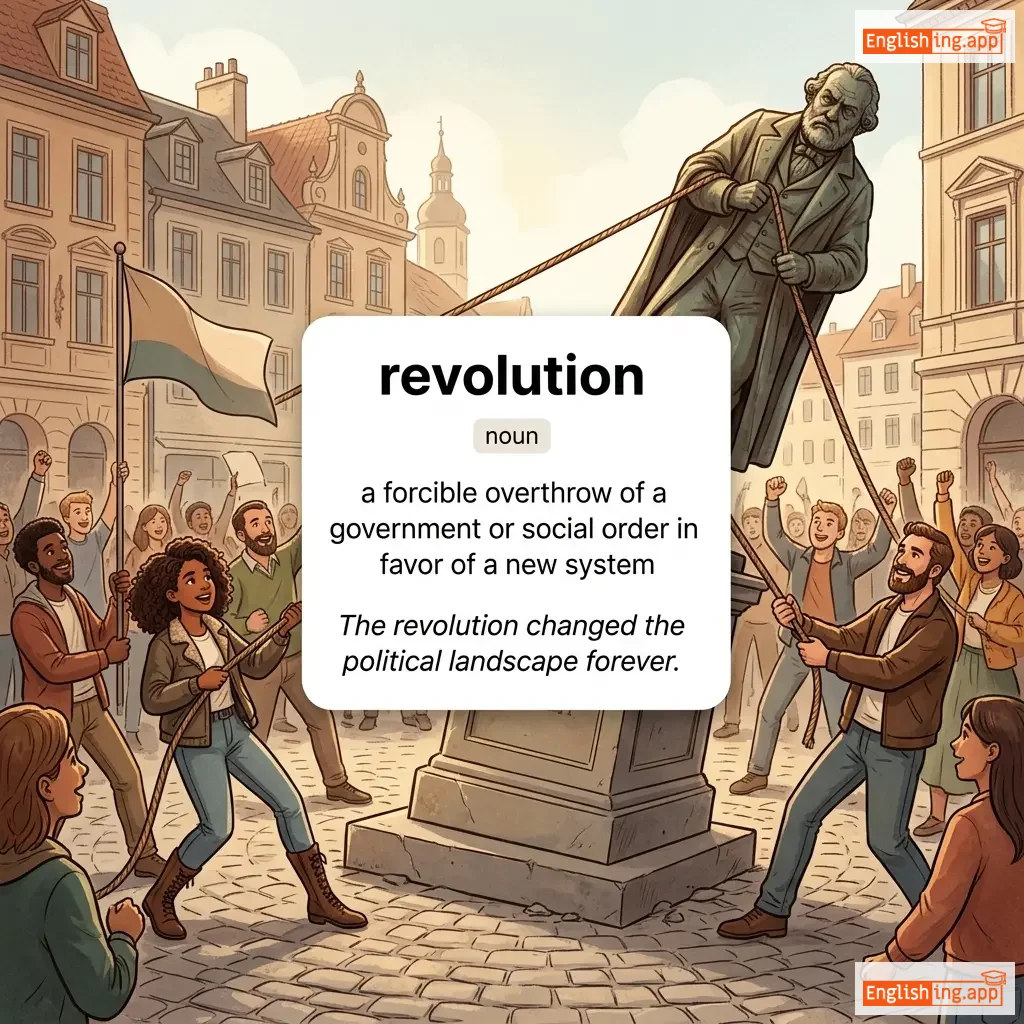
revolution definition card — visual illustration of the meaning
noun
/ˌrɛvəˈluːʃən/
বিপ্লব (biplob)

a forcible overthrow of a government or social order in favor of a new system

"The revolution changed the political landscape forever."

"বিপ্লব রাজনৈতিক দৃশ্যপট চিরতরে পরিবর্তন করেছিল।" (Biplob rajnoitik drishyopot chirotore poriborton korechhilo.)
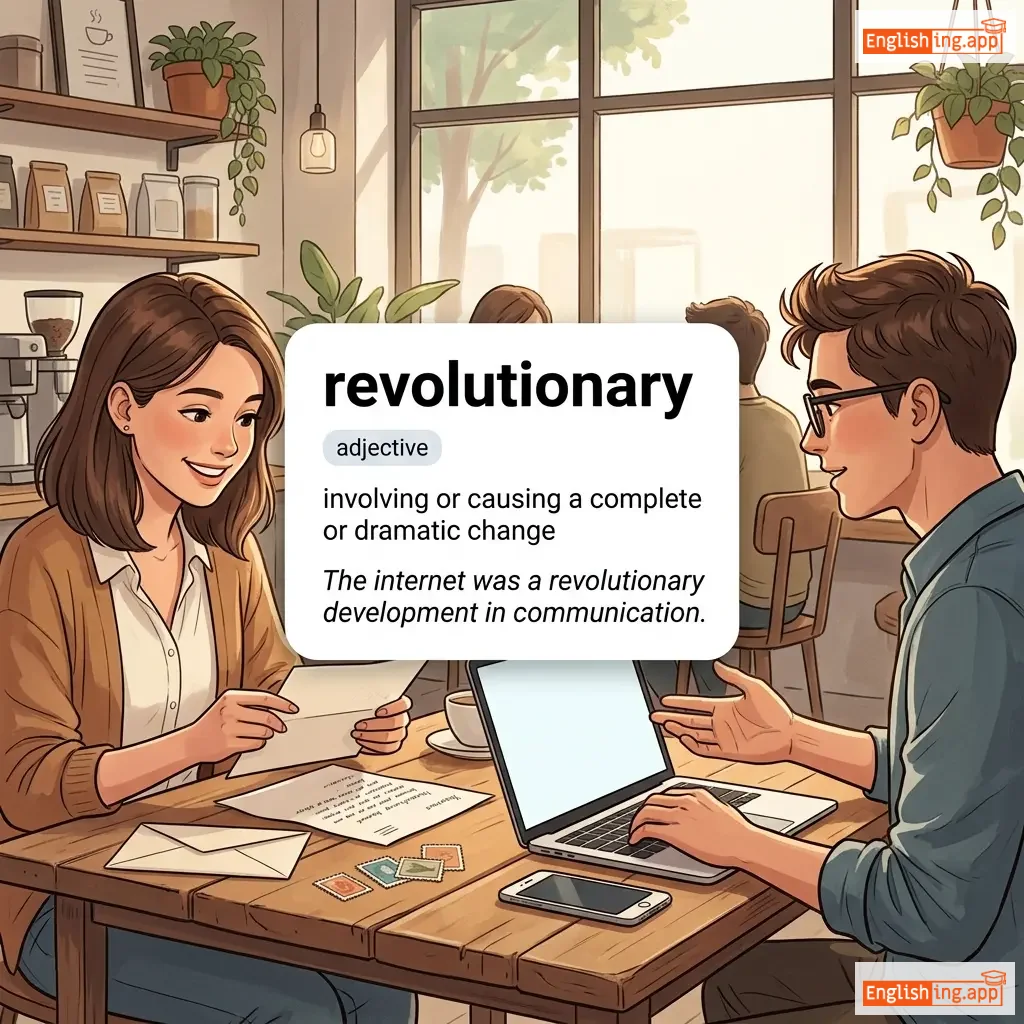
revolutionary definition card — visual illustration of the meaning
adjective
/ˌrɛvəˈluːʃəˌnɛri/
বিপ্লবাত্মক (biplobotmok)

involving or causing a complete or dramatic change

"The internet was a revolutionary development in communication."

"ইন্টারনেট যোগাযোগে একটি বিপ্লবাত্মক উন্নয়ন ছিল।" (Internet jogajoge ekti biplobotmok unnoyon chhilo.)
revolutionary breakthrough definition card — visual illustration of the meaning
noun
/ˌrev.əˈluː.ʃən.ər.i ˈbreɪk.θruː/
বিপ্লবী আবিষ্কার (biplobi abishkar)

A sudden, dramatic, and important discovery or development that changes everything.

"Robotic surgery is a revolutionary breakthrough in healthcare."

"রোবটিক সার্জারি স্বাস্থ্যসেবায় একটি বিপ্লবী আবিষ্কার।" (Robotik surgery swasthyosebay ekti biplobi abishkar.)
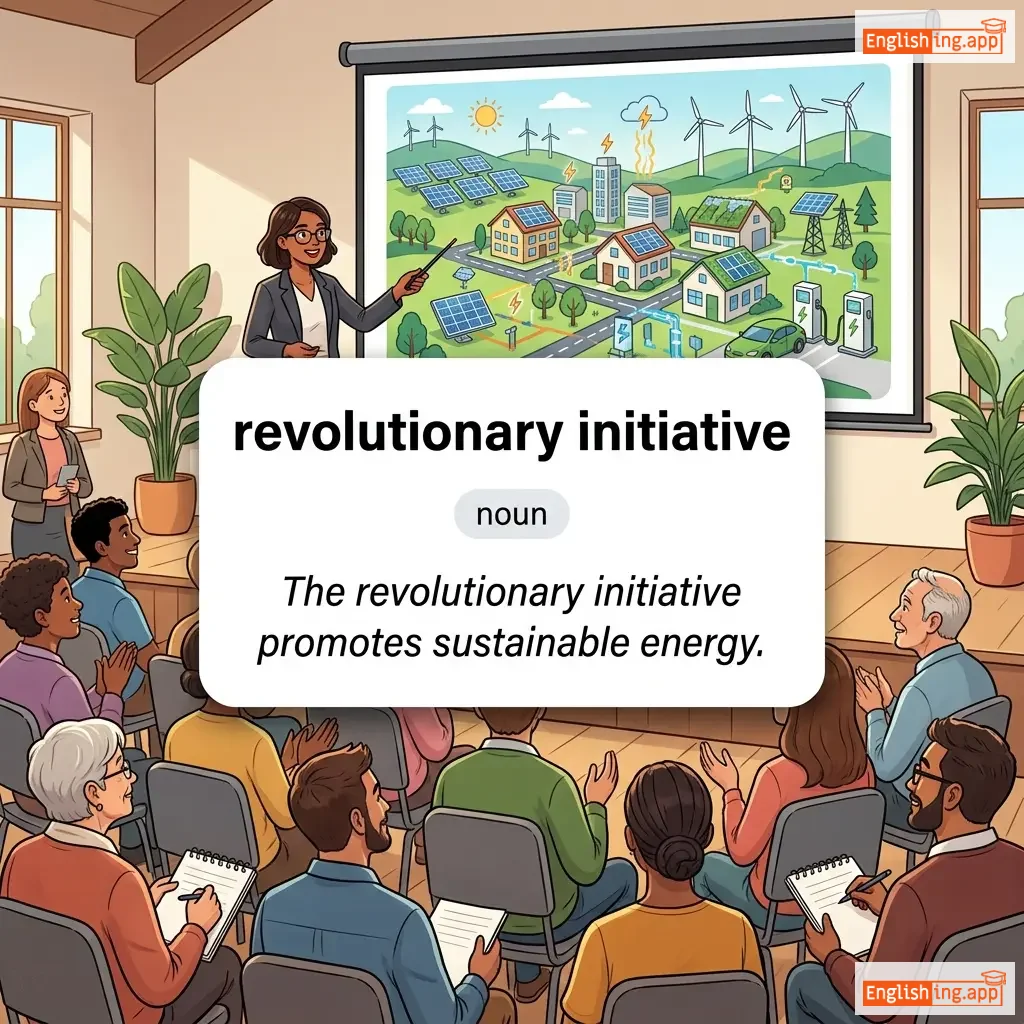
revolutionary initiative definition card — visual illustration of the meaning
noun
ˌrev.əˈluː.ʃən.ər.i ɪˈnɪʃ.ə.tɪv
বিপ্লবী উদ্যোগ (biplobi uddyog)

A groundbreaking action or plan that brings about significant change or transformation.

"The revolutionary initiative promotes sustainable energy."

"বিপ্লবী উদ্যোগ টেকসই শক্তিকে এগিয়ে নিয়ে যায়।" (Biplobi uddyog teksoi shokti ke egiye niye jay.)
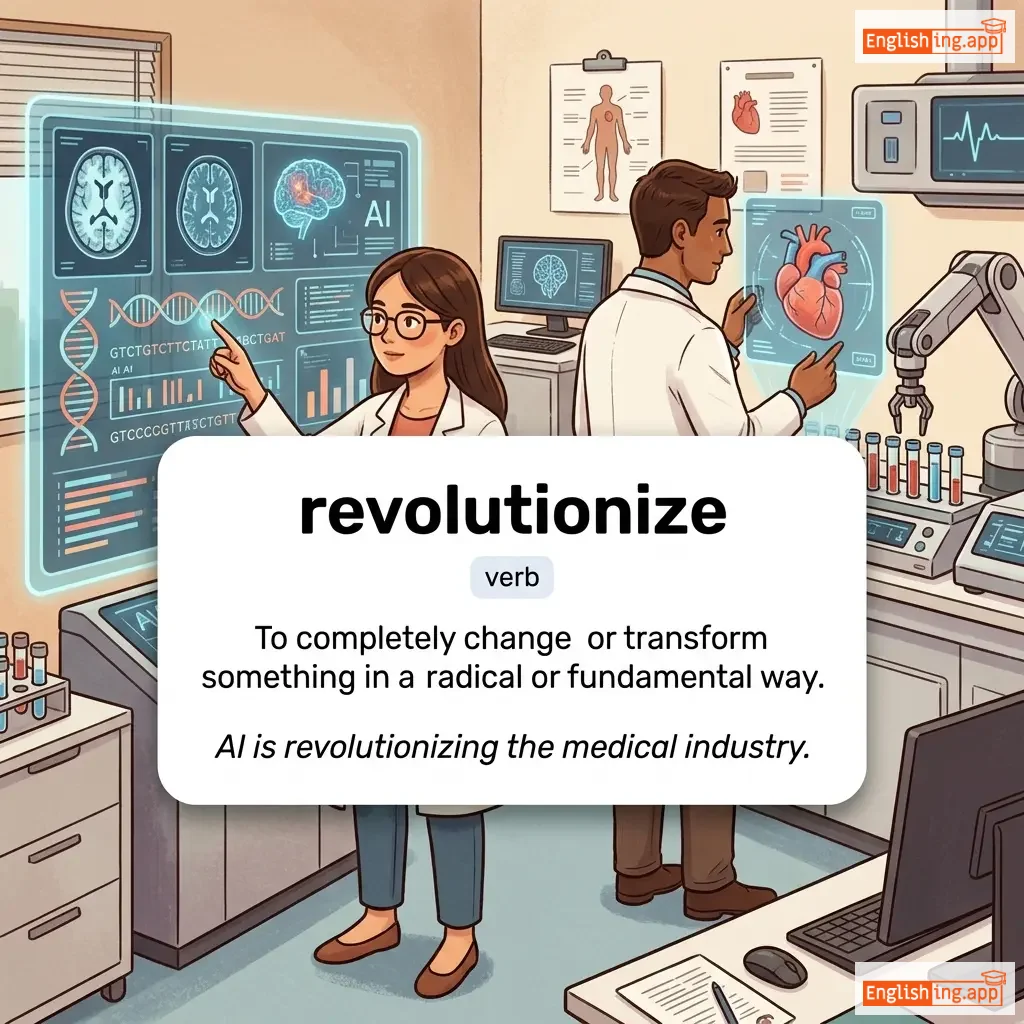
revolutionize definition card — visual illustration of the meaning
verb
ˌrev.əˈluː.ʃən.aɪz
বিপ্লব ঘটানো (biplob ghatano)

To completely change or transform something in a radical or fundamental way.

"AI is revolutionizing the medical industry."

"কৃত্রিম বুদ্ধিমত্তা চিকিৎসা শিল্পে বিপ্লব ঘটাচ্ছে।" (Krittim buddhimotta chikitsha shilpe biplob ghatacchhe.)
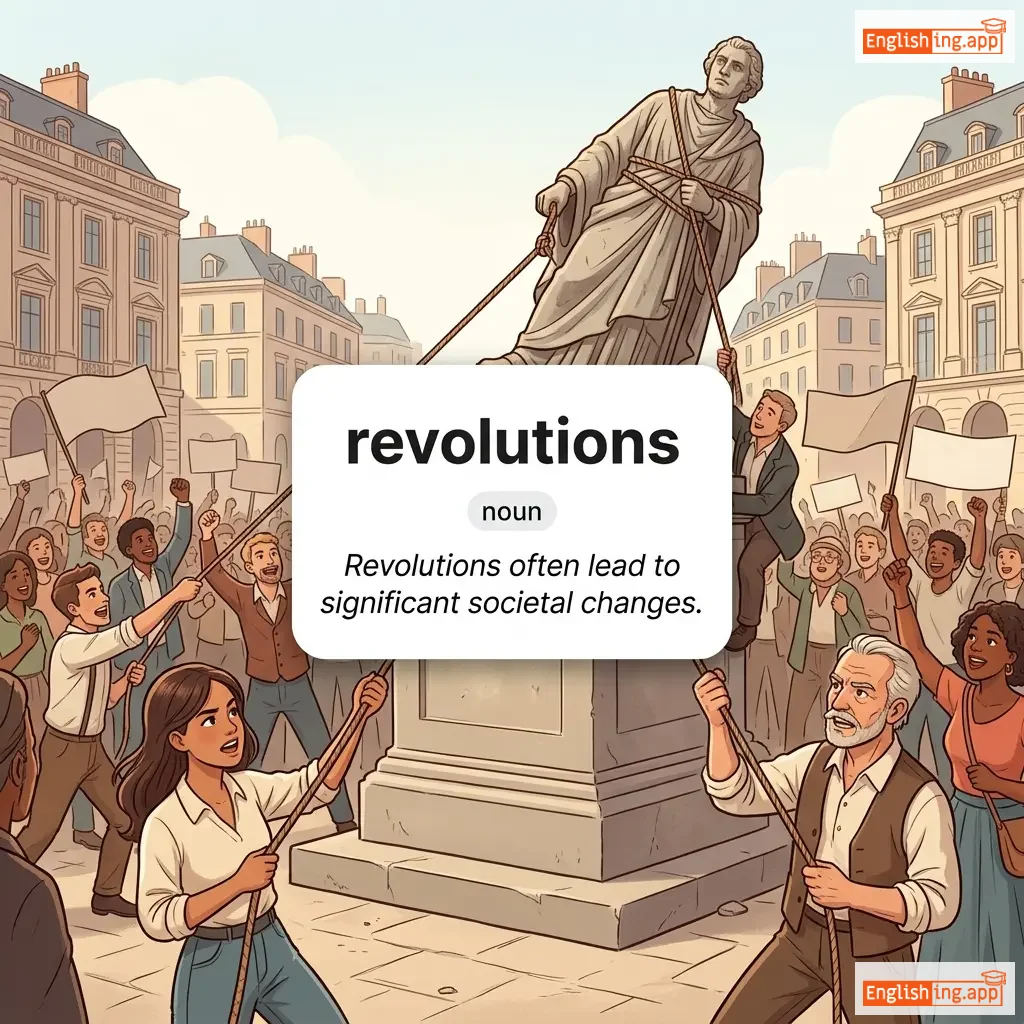
revolutions definition card — visual illustration of the meaning
noun
ˌrev.əˈluː.ʃənz
বিপ্লব (biplob)

Dramatic and wide-reaching changes in political, social, or economic systems, often involving the overthrow of a government or social order.

"Revolutions often lead to significant societal changes."

"বিপ্লব প্রায়ই গুরুত্বপূর্ণ সামাজিক পরিবর্তন আনে।" (Biplob prayoi guruttbopurno shamajik poriborton ane.)
noun
/rɪˈvɒl.vər/
রিভলভার (rivolvar)

a pistol with revolving chambers enabling several shots to be fired without reloading

"The detective drew his revolver from its holster."

"গোয়েন্দা তার হোলস্টার থেকে রিভলভার বের করল।" (goenda tar holstar theke rivolvar ber korol)
noun
/rɪˈvʌlʃən/
বিরক্তি (birokti)

a strong feeling of disgust or repulsion

"She felt revulsion at the sight of the cruel act."

"সে নিষ্ঠুর কাজ দেখে তীব্র বিরক্তি অনুভব করল।" (Se nisthur kaj dekhe tibro birokti onubhob korlo.)
noun
/rɪˈwɔːd/
পুরস্কার (puraskar)

something given in recognition of service, effort, or achievement

"He received a reward for returning the lost wallet."

"সে হারানো মানিব্যাগ ফিরিয়ে দেওয়ার জন্য পুরস্কার পেয়েছিল।" (Se harano manibag phiriye deowar jonno puraskar peyechhilo.)
verb
/ˈræpsəˌdaɪz/
অত্যধিক প্রশংসা করা (otjodhik proshongsha kora)

to speak or write with great enthusiasm and admiration

"He would often rhapsodize about his travels to Europe."

"সে প্রায়ই ইউরোপ ভ্রমণ সম্পর্কে অত্যধিক প্রশংসা করত।" (Se prayoi Europe bhromon somporke otjodhik proshongsha korto.)
noun
/ˈræpsədi/
উল্লাসিত গান/প্রশংসা (ullashito gan/proshongsha)

an expression of great enthusiasm or an epic musical composition

"The singer’s performance was a rhapsody of emotions."

"গায়কের পরিবেশনা ছিল আবেগের এক র্যাপসোডি।" (Gayoker poribeshona chilo abeger ek rhapsody.)
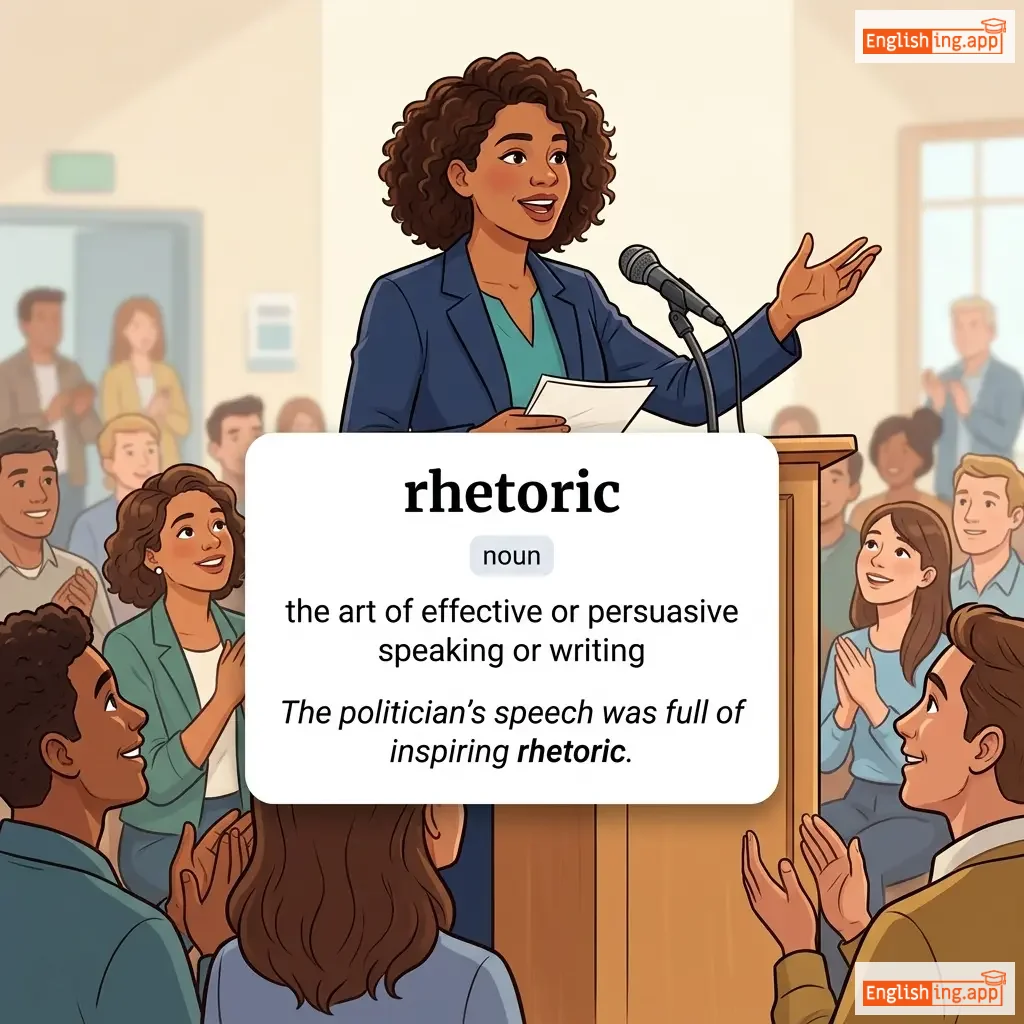
rhetoric definition card — visual illustration of the meaning
noun
/ˈrɛtərɪk/
অভিভাষণ কৌশল (obhibhashon koushol)

the art of effective or persuasive speaking or writing

"The politician’s speech was full of inspiring rhetoric."

"রাজনীতিবিদের বক্তৃতা অনুপ্রেরণামূলক বাগ্মিতায় ভরা ছিল।" (Rajniti bider boktrita onupreronamulok bagmitay vora chilo.)
adjective
/rɪˈtɔːrɪkəl/
অলঙ্কারশাস্ত্র সম্পর্কিত (olonkarshastro shomporkito)

relating to the art of effective or persuasive speaking or writing; often a question asked to make a point rather than get an answer

"He asked a rhetorical question during the debate."

"সে বিতর্ক চলাকালে একটি অলঙ্কারমূলক প্রশ্ন করেছিল।" (Se bitork cholakale ekti olonkar mulok proshno korechhilo.)
noun
/ˌrɛtəˈrɪʃən/
বাগ্মী (bagmi)

A person who is skilled in the art of rhetoric or persuasive speaking/writing.

"The rhetorician captivated the audience with his eloquence."

"বাগ্মী তার বাকপটুতায় শ্রোতাদের মুগ্ধ করেছিলেন।" (Bagmi tar bakpotutay shrotader mugdho korechilen.)
adjective
/ˈruːmi/
জলময় (jolmoy)

Watery, especially referring to the eyes.

"His rheumy eyes showed signs of age and fatigue."

"তার জলময় চোখে বার্ধক্য ও ক্লান্তির চিহ্ন দেখা যাচ্ছিল।" (Tar jolmoy chokhe bardhokyo o klantir chinho dekha jachhilo.)
noun
/raɪˈnɒs.ər.əs/
গণ্ডার (gondar)

a large, heavy animal with thick skin and one or two horns on its nose

"The rhinoceros charged through the grassland."

"গণ্ডারটি তৃণভূমির মধ্য দিয়ে ধেয়ে গেল।" (gondarṭi trinobhumi r moddho diẏe dheẏe gelo.)
noun
/ˈrɪðəm/
ছন্দ (chhondo)

a strong, regular, repeated pattern of movement or sound

"The rhythm of the music made everyone want to dance."

"সঙ্গীতের ছন্দ সবাইকে নাচানোর জন্য উত্সাহিত করেছিল।" (Songiter chhondo shobayke nachanor jonno utshahito korechhilo.)
noun
/rɪb/
পাঁজর (panjor)

one of the curved bones that form the rib cage in humans and animals, protecting the chest organs

"He broke a rib while playing football."

"সে ফুটবল খেলতে গিয়ে একটি পাঁজর ভেঙেছিল।" (Se football khelte giye ekti panjor bhengechhilo.)
adjective
/ˈrɪbɔːld/
অশ্লীল হাস্যরসাত্মক (oshlil hashyaroshatmak)

Referring to sexual matters in a humorous or vulgar way.

"The comedian’s ribald jokes made the audience laugh uncomfortably."

"কমেডিয়ানের অশ্লীল রসিকতা শ্রোতাদের অস্বস্তিতে হাসিয়েছিল।" (Comedian er oshlil roshikota shrotader ashostite hasiyechhilo.)
noun
/ˈrɪb.ən/
ফিতা (fita)

a long, narrow strip of fabric used for tying or decoration

"She tied her hair with a red ribbon."

"সে একটি লাল ফিতা দিয়ে চুল বেঁধেছিল।" (Se ekti lal fita diye chul bendhechhilo.)
noun
/raɪs/
ভাত (bhat)

a cereal grain that is the staple food of many countries

"Rice is an important part of the daily diet in many countries."

"ভাত অনেক দেশের দৈনিক আহারের একটি গুরুত্বপূর্ণ অংশ।" (Bhat onek desher dainik aharer ekti goruttopurno angsho.)
noun
/raɪs ˈkʊkər/
ভাত রান্নার ইলেকট্রিক পাত্র (raish kukar)

an electric appliance designed to cook rice automatically

"The rice cooker automatically switches off when the rice is perfectly cooked."

"চাল পুরোপুরি রান্না হয়ে গেলে রাইস কুকার এমনিতেই বন্ধ হয়ে যায়।" (chal puropuri ranna hoye gele raish kukar emnitei bondho hoye jay)
adjective
/rɪʧ/
ধনী (dhoni)

having a great deal of money or assets

"He became rich after his successful business venture."

"সে তার সফল ব্যবসায়িক উদ্যোগের পর ধনী হয়ে গিয়েছিল।" (Se tar sofol byabsaik udyoger por dhoni hoye giyechhilo.)
adjective
/ˈrɪkɪti/
দুর্বল (durbol)

Poorly made and likely to collapse; shaky.

"They crossed a rickety wooden bridge over the river."

"তারা নদীর উপর একটি দুর্বল কাঠের সেতু পার হয়েছিল।" (Tara nodir upor ekti durbol kather setu par hoyechhilo.)
noun
/ˈrɪk.ʃɔː/
রিকশা (riksha)

a light two-wheeled passenger vehicle drawn by one or more people

"We took a rickshaw to reach the busy marketplace."

"আমরা ব্যস্ত বাজারে পৌঁছানোর জন্য একটি রিকশা নিয়েছিলাম।" (amra byosto bajare pouchanor jonno ekti riksha niyechilam)
verb
/rɪd/
মুক্ত করা (mukt kora)

to remove or get rid of something

"I need to rid the house of all the clutter."

"আমি বাড়িটি সমস্ত অযথা জিনিসপত্র থেকে মুক্ত করতে চাই।" (Ami bariti somosto ojotha jinishpotro theke mukt korte chai.)
noun
/ˈrɪdəns/
মুক্তি (mukti)

The action of getting rid of something unwanted or unpleasant.

"His departure was considered a welcome riddance by the team."

"তার বিদায়কে দলটি স্বাগত মুক্তি হিসেবে বিবেচনা করেছিল।" (Tar bidayke dolti shagot mukti hisebe bichar korechhilo.)
adjective
/ˈrɪdən/
আক্রান্ত (akranto)

Full of or dominated by something unpleasant.

"The country was ridden with corruption."

"দেশটি দুর্নীতিতে আক্রান্ত ছিল।" (Desh ti durnitite akranto chhilo.)
noun
/ˈrɪdəl/
ধাঁধা (dhadha)

A question or statement designed to test ingenuity or puzzle the mind.

"The children enjoyed solving the riddle."

"শিশুরা ধাঁধা সমাধান করতে পছন্দ করত।" (Shishura dhadha somadhan korte pochhondo korto.)
verb
/raɪd/
চালানো (chalano)

to sit on and control the movement of something, typically a vehicle or animal

"She loves to ride her bike around the park."

"সে পার্কে তার বাইক চালাতে পছন্দ করে।" (Se park e tar bike chalate pochondo kore.)
noun
/ˈraɪdər/
আরোহী (arohi)

A person who rides a horse, bicycle, motorcycle, or other vehicle.

"The rider fell off the horse."

"আরোহী ঘোড়া থেকে পড়ে গিয়েছিল।" (Arohi ghora theke pore giyechhilo.)
noun
/rɪdʒ/
শৃঙ্গ বা পর্বতশ্রেণি (shring ba porbotshreni)

a long, narrow hilltop, mountain range, or raised strip

"We walked along the mountain ridge."

"আমরা পাহাড়ের শৃঙ্গ বরাবর হাঁটছিলাম।" (Amra paharer shring borabor hatchilam.)
verb
/ˈrɪdɪkjuːl/
উপহাস করা (upohash kora)

To make fun of someone or something in a cruel or dismissive way.

"He was ridiculed for his strange ideas."

"অদ্ভুত ধারণার জন্য তাকে উপহাস করা হয়েছিল।" (Odbhut dharanar jonno take upohash kora hoyechhilo.)
adjective
/rɪˈdɪkjʊləs/
হাস্যকর (hashokor)

Deserving mockery; absurd or unreasonable.

"The idea of flying pigs is ridiculous."

"উড়ন্ত শূকরের ধারণা হাস্যকর।" (Uronto shukorer dharana hashokor.)
adjective
/raɪf/
ব্যাপক (byapak)

widespread or common, often in a negative sense

"Corruption was rife in the old government system."

"পুরোনো সরকার ব্যবস্থায় দুর্নীতি ব্যাপক ছিল।" (Purono sarkar byabosthay durniti byapak chhilo.)
noun
/ˈraɪfəl/
রাইফেল (raifel)

a type of long-barreled gun designed for accurate shooting

"The hunter carried a rifle to catch game."

"শিকারী গেম ধরতে একটি রাইফেল নিয়ে চলছিল।" (Shikari game dhorte ekti raifel nie cholchhilo.)
noun
/rɪft/
ভাঙন (vangan)

a serious break in a relationship; a split or crack

"A rift developed between the two friends after the argument."

"বিতর্কের পর দুই বন্ধুর মধ্যে একটি ভাঙন তৈরি হয়েছিল।" (Bitorker por dui bondhur modhye ekti vangan toiri hoyechhilo.)
verb
/rɪɡ/
কারচুপি করা (karchupi kora)

to manipulate or control something dishonestly; to set up equipment

"The election was rigged by corrupt officials."

"দুর্নীতিপরায়ণ কর্মকর্তারা নির্বাচনে কারচুপি করেছিল।" (Durnitiporayon kormokartara nirbachone karchupi korechhilo.)
noun, adjective, adverb
/raɪt/
অধিকার (odhikar)

something that is morally good, fair, or just; or a legal/entitled claim

"Everyone has the right to free speech."

"প্রত্যেকেরই বাকস্বাধীনতার অধিকার আছে।" (Protyeker i bakswadhinotar odhikar ache.)
adjective
/ˈraɪtʃəs/
ন্যায়পরায়ণ (nyayporayon)

morally right or justifiable; virtuous

"She is known for her righteous actions and honesty."

"সে তার ন্যায়পরায়ণ কাজ এবং সততার জন্য পরিচিত।" (Se tar nyayporayon kaj ebong sottar jonno porichito.)
noun
/ˈraɪtʃəsnəs/
ন্যায়পরায়ণতা (nyayporayonota)

the quality of being morally right or justifiable

"His life was dedicated to righteousness and truth."

"তার জীবন ন্যায়পরায়ণতা ও সত্যের প্রতি উৎসর্গীকৃত ছিল।" (Tar jibon nyayporayonota o sotyer proti utsorgikrit chhilo.)
adjective
/ˈraɪtfəl/
ন্যায্য (nyajjo)

having a legitimate or just claim; proper or lawful

"She is the rightful owner of the property."

"সে সম্পত্তির ন্যায্য মালিক।" (Se sompottir nyajjo malik.)
adverb
/ˈraɪtli/
সঠিকভাবে; উপযুক্তভাবে; যথাযথভাবে; (shotikbhabe)

correctly; properly; justly

"She rightly pointed out the mistakes in the report."

"তিনি সঠিকভাবে রিপোর্টের ভুলগুলো নির্দেশ করেছেন।" (Tini shotikbhabe reporter bhulgulo nirdesh korechhen.)
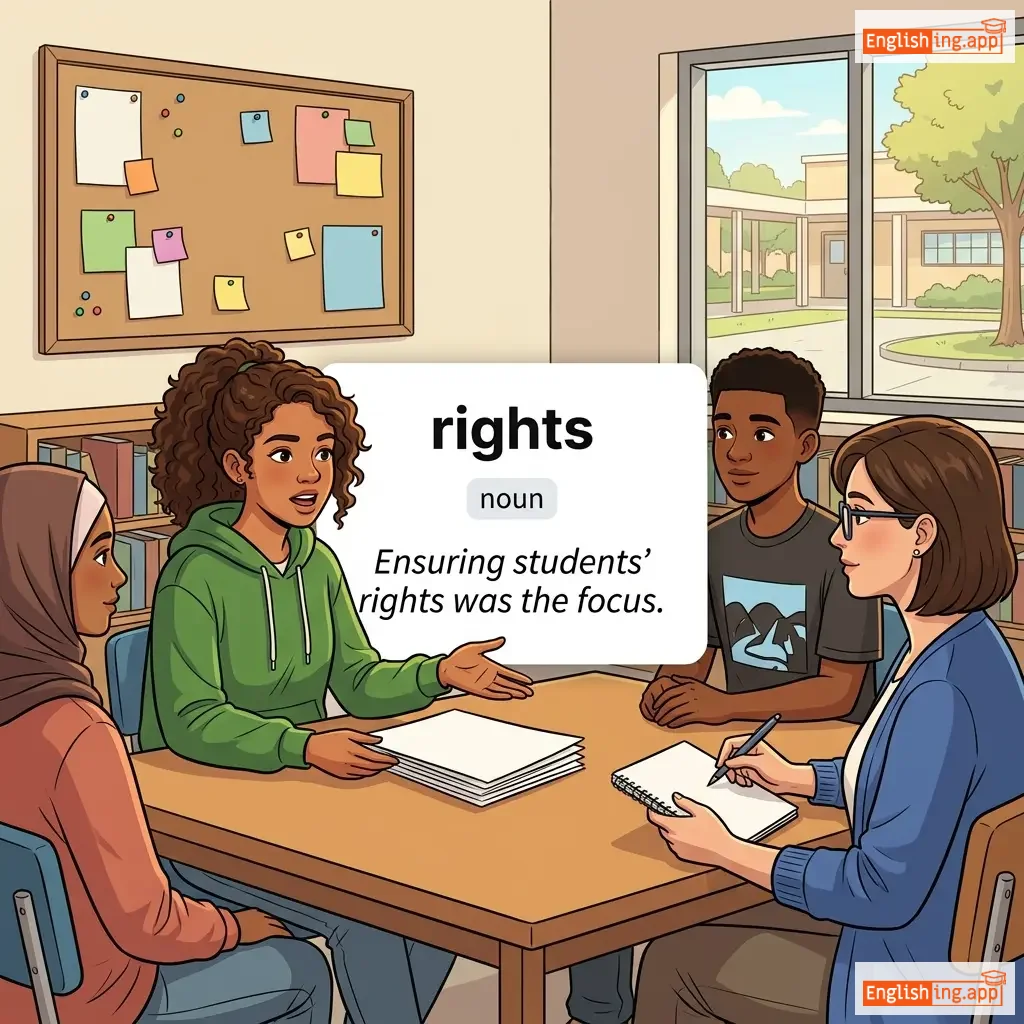
rights definition card — visual illustration of the meaning
noun
raɪts
অধিকার (adhikar)

Things to which one has a just claim; the authority or power of having something.

"Ensuring students' rights was the focus."

"শিক্ষার্থীদের অধিকার নিশ্চিত করাই লক্ষ্য ছিল।" (Shikkharthider adhikar nishchit korai lokkhyo chhilo.)