ভোকাবুলারিসমূহ

ইংরেজি শব্দের বাংলা অর্থ | English to Bangla Word Meaning Dictionary

adjective
/prɪˈdɒmɪnənt/
প্রধান (pradhan)

Having superior strength, influence, or authority; most common or noticeable.

"The predominant color in the painting is blue."

"চিত্রকর্মে প্রধান রং হলো নীল।" (Chitrakorme pradhan rong holo nil.)
adverb
/prɪˈdɒmɪnəntli/
প্রধানত (pradhanto)

mainly; for the most part

"The population in the city is predominantly young."

"শহরের জনসংখ্যা প্রধানত তরুণ।" (Shohorer jonsongkha pradhanto torun.)
verb
/prɪˈdɒmɪneɪt/
প্রাধান্য পাওয়া (pradhanyo paoa)

To be the strongest, most common, or most influential element.

"Traditional values still predominate in the community."

"সম্প্রদায়ে এখনও ঐতিহ্যবাহী মূল্যবোধ প্রাধান্য পায়।" (Somprodaye ekhono oitihjobahi muljobodh pradhanyo pay.)
noun
/priːˈɛmɪnəns/
অতুলনীয় শ্রেষ্ঠত্ব (otuloniyo shreshthotto)

The fact of surpassing all others; superiority.

"The university has gained preeminence in medical research."

"বিশ্ববিদ্যালয় চিকিৎসা গবেষণায় অতুলনীয় শ্রেষ্ঠত্ব অর্জন করেছে।" (Bishwobidyaloy chikitsa gobeshonay otuloniyo shreshthotto orjon koreche.)
adjective
/priːˈɛmɪnənt/
অতুলনীয় (otuloniyo)

Surpassing all others; very distinguished in some way.

"She is a preeminent scientist in the field of genetics."

"তিনি জেনেটিক্স ক্ষেত্রে একজন অতুলনীয় বিজ্ঞানী।" (Tini genetics khetre ekjon otuloniyo biggani.)
verb
/priːˈɛmpt/
আগেভাগে প্রতিরোধ করা (agebhage protirudh kora)

To take action in order to prevent something from happening; to take the place of something.

"The government acted quickly to preempt a financial crisis."

"সরকার দ্রুত একটি আর্থিক সংকট প্রতিরোধে ব্যবস্থা নেয়।" (Sorkar druto ekti arthik songkot protirudhe byabostha neye.)
noun
/priˈɛmpʃən/
অগ্রাধিকার অধিকার (agradhikar odhikar)

The act of taking action before someone else; the right to purchase or act before others.

"The company exercised preemption to acquire the land before competitors."

"কোম্পানি প্রতিযোগীদের আগে জমি অধিগ্রহণ করতে অগ্রাধিকার অধিকার ব্যবহার করেছে।" (Company protijogider age jomi odhigrohon korte agradhikar odhikar byabohar koreche.)
adjective
/priˈɛmptɪv/
প্রতিরোধমূলক (protibodhmulok)

Serving or intended to prevent something by taking action first.

"The government took preemptive measures to control inflation."

"সরকার মুদ্রাস্ফীতি নিয়ন্ত্রণে প্রতিরোধমূলক ব্যবস্থা গ্রহণ করেছে।" (Sorkar mudrasfiti niyontrone protibodhmulok byabastha grohon koreche.)
verb
/priːn/
আত্মপ্রসাধন করা (atmaprosadhon kora)

To groom or dress oneself with care; to show pride in one's appearance.

"She preened in front of the mirror before leaving for the party."

"সে পার্টিতে যাওয়ার আগে আয়নার সামনে আত্মপ্রসাধন করছিল।" (Se partyte jawar age aynar samne atmaprosadhon korchhilo.)
verb
/ˌpriːɪnˈɡeɪdʒ/
আগে থেকে নিয়োগ করা (age theke niyog kora)

To contract or engage beforehand; to arrange in advance.

"The workers were preengaged before the project officially started."

"প্রকল্প শুরু হওয়ার আগে কর্মীদের আগে থেকে নিয়োগ করা হয়েছিল।" (Prokolpo shuru howar age kormider age theke niyog kora hoyechhilo.)
verb
/ˌpriːɪˈstæblɪʃ/
আগে থেকে প্রতিষ্ঠা করা (age theke protistha kora)

To establish or set up beforehand.

"Certain rules were preestablished before the meeting."

"সভা শুরু হওয়ার আগে কিছু নিয়ম আগে থেকে প্রতিষ্ঠা করা হয়েছিল।" (Sobha shuru howar age kichu niyom age theke protistha kora hoyechhilo.)
verb
/ˌpriːɪɡˈzɪst/
আগে থেকেই অস্তিত্ব থাকা (age thekei ostittwo thaka)

to exist beforehand or before something else

"These customs preexist the arrival of modern technology."

"এই প্রথাগুলি আধুনিক প্রযুক্তির আগমনের আগেই বিদ্যমান ছিল।" (Ei prothaguli adhunic projuktir agomoner agei bidyoman chilo.)
noun
/ˌpriːɪɡˈzɪstəns/
পূর্ব অস্তিত্ব (purbo ostittwo)

the state of existing before something else

"Philosophers often debated the preexistence of the soul."

"দার্শনিকরা প্রায়শই আত্মার পূর্ব অস্তিত্ব নিয়ে বিতর্ক করতেন।" (Darshonikra prayoshi atmar purbo ostittwo niye bitork korten.)
noun
/ˈprɛfəs/
প্রস্তাবনা (prostabona)

an introduction to a book, speech, or other written work

"The author explained his motivation in the preface."

"লেখক তার প্রেরণাটি প্রস্তাবনায় ব্যাখ্যা করেছিলেন।" (Lekhok tar prerona protobonay byakkha korechilen.)
adjective
/ˈprɛfətɔːri/
প্রারম্ভিক (prarombhik)

serving as an introduction or preface

"He made some prefatory remarks before the lecture began."

"তিনি বক্তৃতা শুরু হওয়ার আগে কিছু প্রারম্ভিক মন্তব্য করেছিলেন।" (Tini boktrita suru howar age kichu prarombhik mormok korechilen.)
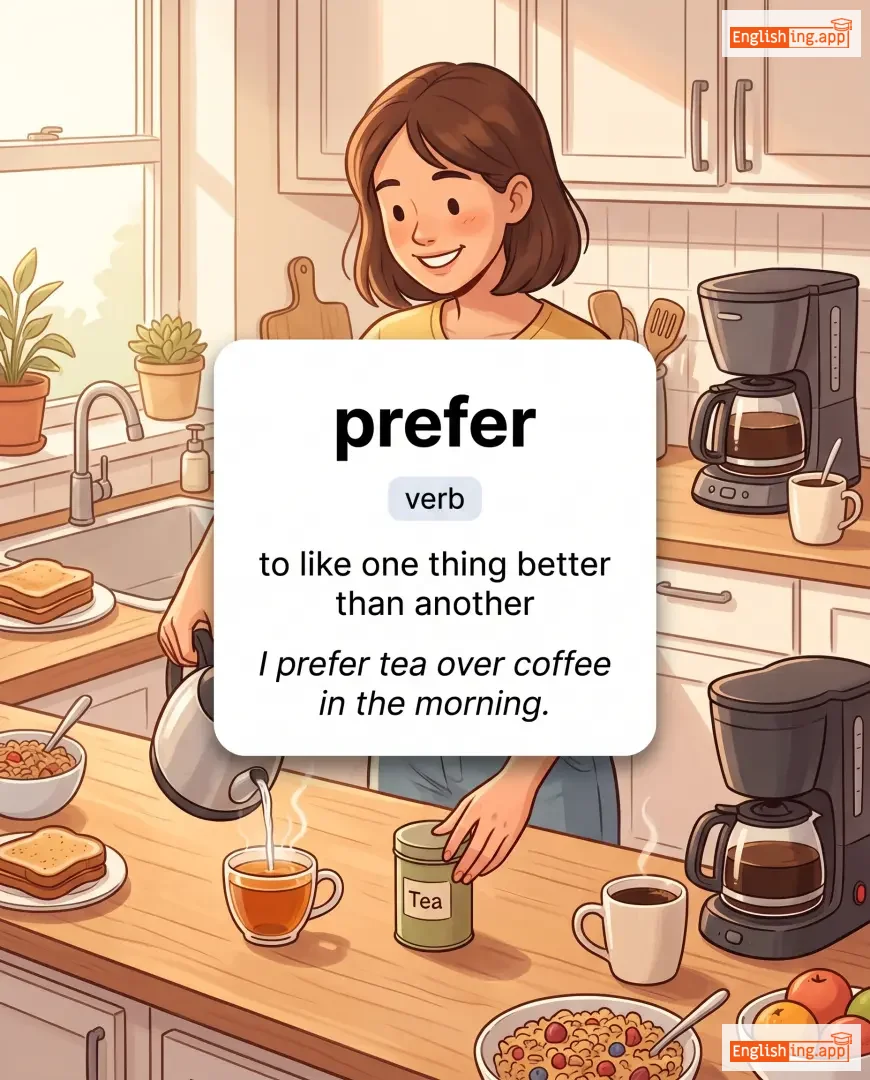
prefer definition card — visual illustration of the meaning
verb
/prɪˈfɜːr/
পছন্দ করা (pochondo kora)

to like one thing better than another

"I prefer tea over coffee in the morning."

"আমি সকালে কফির চেয়ে চা বেশি পছন্দ করি।" (Ami sokale kophir cheye cha beshi pochondo kori.)
adjective
/ˈprɛf(ə)rəb(ə)l/
পছন্দনীয় (pochondoniya)

more desirable or suitable; better than something else

"It is preferable to take the train rather than drive in heavy traffic."

"ভারী যানজটের সময় গাড়ি চালানোর চেয়ে ট্রেনে যাওয়াই পছন্দনীয়।" (Bari janjoter somoy gari chalano cheye trene jaoai pochondoniya.)
noun
/ˈprɛf(ə)rəns/
পছন্দ (pochondo)

a greater liking for one alternative over another

"She has a preference for tea over coffee."

"সে কফির চেয়ে চা বেশি পছন্দ করে।" (Se kofir cheye cha beshi pochondo kore.)
adjective
/ˌprɛfəˈrɛnʃəl/
বিশেষ সুবিধাপ্রাপ্ত (bishes subidaprapto)

showing or giving advantage to one over others

"Members receive preferential treatment at the club."

"সদস্যরা ক্লাবে বিশেষ সুবিধাপ্রাপ্ত আচরণ পান।" (Sodossora klabe bishes subidaprapto acharon pan.)
noun
/prɪˈfɜːrmənt/
পদোন্নতি (podonnoti)

promotion or advancement in rank, position, or office

"He hoped for preferment in the government office."

"সে সরকারি অফিসে পদোন্নতির আশা করেছিল।" (Se sarkari office e podonnitir asha korechilo.)
verb
/priːˈfɪɡjər/
আগাম ইঙ্গিত দেওয়া (agam ingit deowa)

to represent, show, or foreshadow something in advance

"The economic reforms prefigure major social changes."

"অর্থনৈতিক সংস্কার বড় সামাজিক পরিবর্তনের আগাম ইঙ্গিত দেয়।" (Arthonoitik songsar boro samajik poribortoner agam ingit dey.)
noun/verb
/ˈpriːfɪks/
উপসর্গ; আগে বসানো (upsorgo; age bosano)

a word, letter, or number placed before another; as a verb, to add something in front of something else

"Developers often prefix variables with an underscore."

"ডেভেলপাররা প্রায়ই ভেরিয়েবলের আগে আন্ডারস্কোর যোগ করে।" (Developerra prayoi variable er age underscore jog kore.)
noun
/ˈprɛɡnənsi/
গর্ভাবস্থা (gorbhabastha)

the condition of being pregnant; the period during which a woman carries a developing fetus

"Her pregnancy was carefully monitored by her doctor."

"তার গর্ভাবস্থা তার ডাক্তার দ্বারা সাবধানে মনিটর করা হচ্ছিল।" (Tar gorbhabastha tar daktar dara sabdhane monitor kora hochhilo.)
adjective
/ˈprɛɡnənt/
গর্ভবতী; অর্থবহ (gorbhoboti; orthoboh)

having a child developing in the womb; also, full of meaning or significance

"She announced that she was three months pregnant."

"সে জানাল যে সে তিন মাসের গর্ভবতী।" (Se janalo je se tin maser gorbhoboti.)
adjective
/prɪˈhɛnsɪbəl/
ধরা যায় এমন; গ্রাহ্য (dhora jay emon; grahyo)

capable of being grasped or seized

"The tool has a prehensible handle that improves safety."

"যন্ত্রটিতে একটি ধরার উপযোগী হ্যান্ডল আছে যা নিরাপত্তা বাড়ায়।" (Jontrotite ekti dhorar upojogi handle ache ja nirapotta baray.)
adjective
/prɪˈhɛnsaɪl/
ধরার উপযোগী; আঁকড়ে ধরতে সক্ষম (dhorar upojogi; ankore dhorte sokkhom)

adapted for seizing or grasping, especially by wrapping around an object

"The monkey used its prehensile tail to hang from the branch."

"বানরটি ডালের সাথে ঝুলতে তার ধরার উপযোগী লেজ ব্যবহার করেছিল।" (Banorti daler sathe jhulte tar dhorar upojogi lej byabohar korechhilo.)
noun
/prɪˈhɛnʃən/
আঁকড়ে ধরা; ধরার ক্ষমতা (ankore dhora; dhorar khomota)

the act of grasping or seizing; the ability to take hold of something

"Therapists assessed the patient's prehension during hand therapy."

"হাতের থেরাপির সময় থেরাপিস্টরা রোগীর ধরার ক্ষমতা মূল্যায়ন করেন।" (Hater therapy r somoy therapist ra rogir dhorar khomota mullyayon koren.)
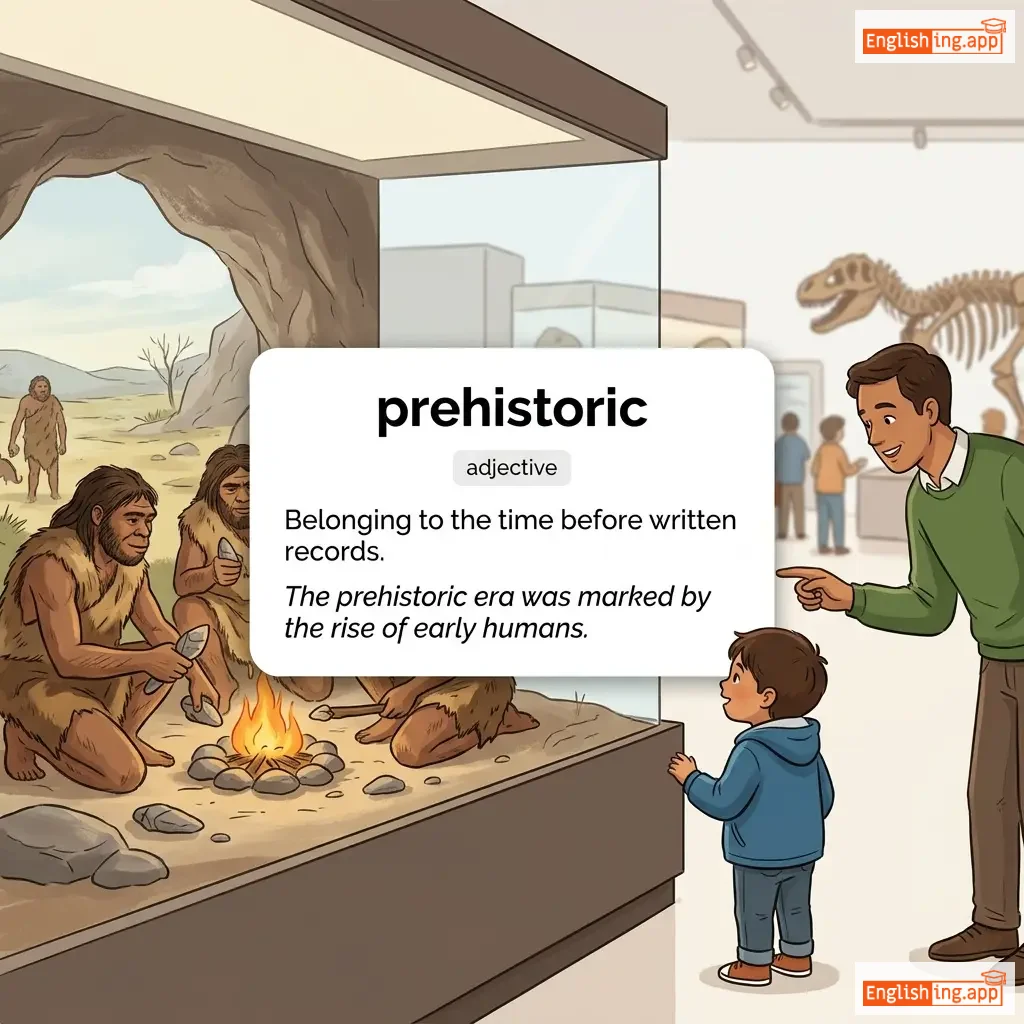
prehistoric definition card — visual illustration of the meaning
adjective
ˌpriːhɪˈstɒrɪk
প্রাগৈতিহাসিক, ইতিহাসের আগের সময়কাল (pragotihasik, itihasher ager shomoykal)

Belonging to the time before written records.

"The prehistoric era was marked by the rise of early humans."

"প্রাগৈতিহাসিক যুগটি প্রাথমিক মানুষের উত্থান দ্বারা চিহ্নিত ছিল।" (Pragotihasik zugti prathomik manusher utthan dwara chihnito chhilo.)
noun
/ˈprɛdʒədɪs/
পক্ষপাত (pokkhopat)

An unfair and unreasonable opinion or feeling, especially when formed without enough thought or knowledge.

"Prejudice often prevents people from seeing the truth about others."

"পক্ষপাত প্রায়শই মানুষকে অন্যদের সম্পর্কে সত্য দেখতে বাধা দেয়।" (Pokkhopat prayoshoi manushke onnoder somporke shotto dekhte badha dey.)
adjective
/ˈprɛdʒədɪst/
পক্ষপাতদুষ্ট (pokkhopatdusto)

having or showing a dislike or bias against a person or group without proper reason

"He was prejudiced against people from other regions."

"সে অন্য অঞ্চলের মানুষের প্রতি পক্ষপাতদুষ্ট ছিল।" (Se onno onchol er manusher proti pokkhopatdusto chilo.)
noun
/ˈprɛləsi/
ধর্মীয় পদমর্যাদা (dhormiyo podmorjada)

The office, dignity, or system of church government by prelates.

"The medieval church was dominated by prelacy and its traditions."

"মধ্যযুগীয় গির্জা প্রেলাসি এবং এর ঐতিহ্য দ্বারা প্রভাবিত ছিল।" (Maddhyajugiyo girja prelasi ebong er oitihho dara prabhobito chilo.)
noun
/ˈprɛlət/
উচ্চপদস্থ ধর্মযাজক (uchchopodostho dhormojajok)

A high-ranking member of the clergy, especially a bishop or abbot.

"The prelate delivered a sermon to the congregation."

"প্রেলেট সভায় একটি ধর্মোপদেশ দিয়েছিলেন।" (Prelet shobay ekti dhormopodesh diyechilen.)
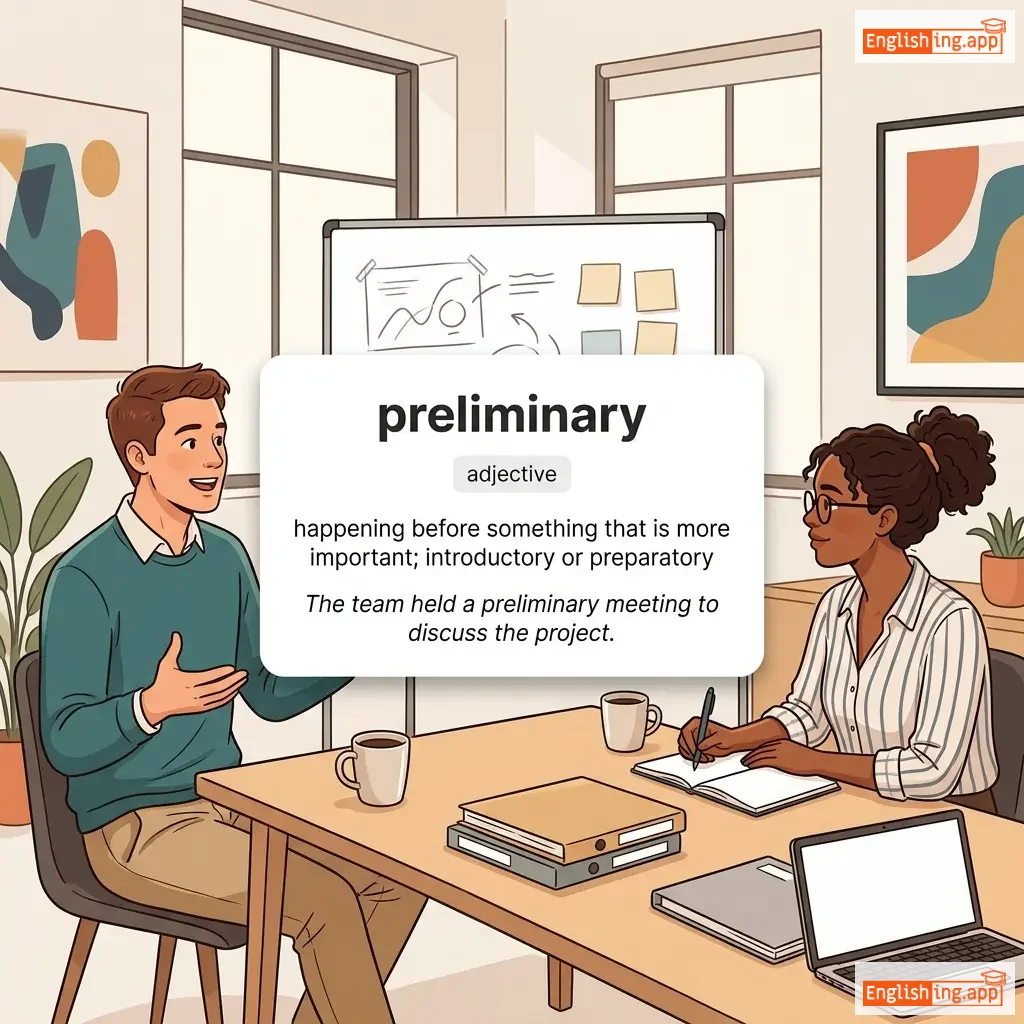
preliminary definition card — visual illustration of the meaning
adjective
/prɪˈlɪmɪˌneri/
প্রাথমিক (prathomik)

happening before something that is more important; introductory or preparatory

"The team held a preliminary meeting to discuss the project."

"দলটি প্রকল্প নিয়ে আলোচনা করার জন্য একটি প্রাথমিক সভা করেছিল।" (Dalti prokolpo niye alochona korar jonno ekti prathomik sobha korechhilo.)
noun
/ˈprɛljuːd/
প্রস্তাবনা (prostabona)

An action, event, or statement that serves as an introduction to something more important.

"The small fight was only a prelude to a bigger conflict."

"ছোট লড়াইটি একটি বড় সংঘর্ষের ভূমিকা মাত্র ছিল।" (Choto loraiti ekti boro songhorsher vhumika matro chilo.)
adjective
/ˌpriːməˈtjʊər/
অকাল (okal)

Happening or done before the usual or proper time.

"His decision to quit the job was premature."

"চাকরি ছাড়ার তার সিদ্ধান্তটি ছিল অকাল।" (Chakri charar tar siddhantoti chilo okal.)
verb
/ˌpriːˈmɛdɪteɪt/
পূর্বপরিকল্পনা করা (purbo porikolpona kora)

to think about and plan something (especially a crime) beforehand

"The suspect was accused of premeditating the crime."

"অভিযুক্তকে অপরাধ পূর্বপরিকল্পনা করার অভিযোগ আনা হয়েছিল।" (Ovhijukto ke oprod purbo porikolpona korar ovijog ana hoyechilo.)
adjective
/ˌpriːˈmɛdɪˌteɪtɪd/
পূর্বপরিকল্পিত (purbo porikolpito)

planned in advance; done deliberately

"The crime was clearly premeditated."

"অপরাধটি স্পষ্টতই পূর্বপরিকল্পিত ছিল।" (Oporadh ti spostotoyi purbo porikolpito chilo.)
noun, adjective
/prɪˈmɪər/ or /ˈpriːmiər/
প্রধানমন্ত্রী / সর্বোচ্চ (prodhanmontri / sorbocho)

the head of government in some countries; first in importance or rank

"The French premier addressed the nation."

"ফ্রান্সের প্রধানমন্ত্রী জাতির উদ্দেশ্যে ভাষণ দিয়েছেন।" (France er prodhanmontri jatio uddeshe vashon diyechen.)
noun
/ˈprɛmɪs/
মূল ধারণা / ভবন (mul dharana / bhobon)

a statement or idea on which reasoning or an argument is based; also a building or property

"His argument was based on a false premise."

"তার যুক্তি একটি ভুল ধারণার উপর ভিত্তি করে ছিল।" (Tar jukti ekti vul dharanar upor vitti kore chilo.)
noun
/ˈpriːmiəm/
প্রিমিয়াম (premium)

an amount of money paid regularly for an insurance policy; something of superior quality or value

"You need to pay your insurance premium every year."

"তোমাকে প্রতি বছর তোমার বীমার প্রিমিয়াম দিতে হবে।" (Tomake proti bochor tomar bimar premium dite hobe.)
noun
/ˌpriːməˈnɪʃən/ or /ˌprɛm-/
পূর্বাভাস / অশনি সংকেত (purbo vash / oshoni sonket)

a strong feeling that something is about to happen, often something negative

"She had a premonition of danger before the trip."

"ভ্রমণের আগে তার বিপদের পূর্বাভাস এসেছিল।" (Bhramon er age tar bipoder purbo vash esechilo.)
adjective
/prɪˈmɒnɪtəri/ or /ˌpriːməˈnɪtəri/
পূর্বাভাসমূলক / সতর্কতামূলক (purbo vash mulok / sotorkota mulok)

giving a warning or prediction about something, especially something unpleasant

"He ignored the premonitory signs of illness."

"সে অসুস্থতার পূর্বাভাসমূলক লক্ষণগুলো উপেক্ষা করেছিল।" (Se osustotar purbo vash mulok lokkhongulo upeksha korechilo.)
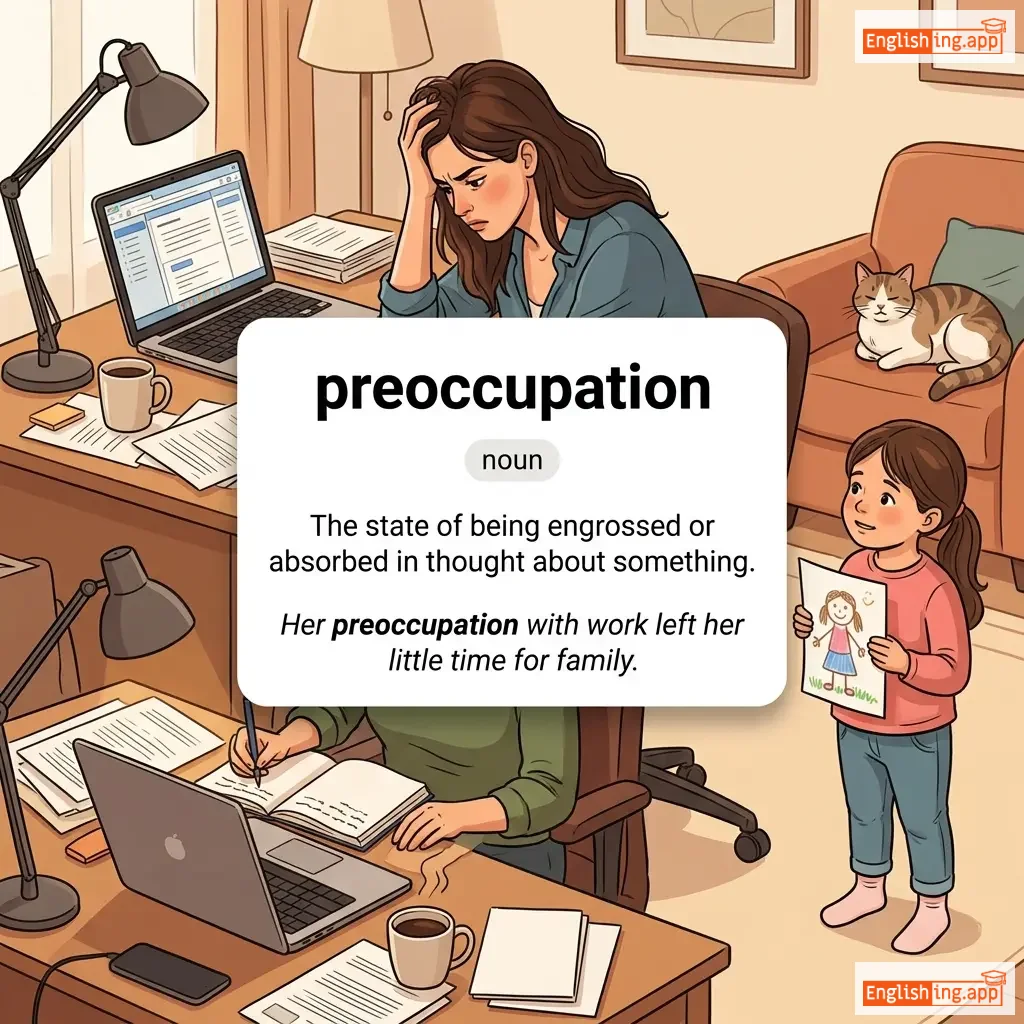
preoccupation definition card — visual illustration of the meaning
noun
/priːˌɒkjuˈpeɪʃən/
অধিক মনোযোগ, ব্যস্ততা (odhik monojog, byostota)

The state of being engrossed or absorbed in thought about something.

"Her preoccupation with work left her little time for family."

"তার কাজ নিয়ে অতিরিক্ত মনোযোগ পরিবারের জন্য সামান্য সময় রেখেছিল।" (tar kaj niye otirikto monojog paribarer jonno samanjo somoy rekhechhilo.)
verb
/priːˈɒkjʊpaɪ/
অধিক মনোযোগী করা, চিন্তায় মগ্ন করা (odhik monojogi kora, chintay mogno kora)

To dominate or engross the mind of someone to the exclusion of other thoughts.

"Worries about the future preoccupy him constantly."

"ভবিষ্যৎ নিয়ে উদ্বেগ তাকে সর্বদা মগ্ন রাখে।" (bhobishyot niye udbeg take sorboda mogno rakhe.)
verb
/ˌpriːɔːrˈdeɪn/
আগেই নির্ধারিত করা (agei nirdharito kora)

To decide or determine an outcome in advance, especially by fate or divine will.

"They believed their meeting was preordained by destiny."

"তারা বিশ্বাস করত তাদের দেখা হওয়া ভাগ্য দ্বারা আগেই নির্ধারিত ছিল।" (tara bishash korto tader dekha howa vaggo dvara agei nirdharito chhilo.)
noun
/ˌprɛpəˈreɪʃən/
প্রস্তুতি (prosthuti)

The act of getting ready or making arrangements for something.

"The team made careful preparation for the presentation."

"দলটি উপস্থাপনার জন্য সতর্ক প্রস্তুতি নিয়েছিল।" (dalti uposthapanar jonno sotorko prostuti niechhilo.)
adjective
/prɪˈpærətɔːri/
প্রস্তুতিমূলক (prostutimulok)

Serving as preparation or preliminary before the main event.

"They held a preparatory meeting before the main conference."

"তারা মূল সম্মেলনের আগে একটি প্রস্তুতিমূলক সভা করেছিল।" (tara mul sommeloner age ekti prostutimulok sobha korechhilo.)
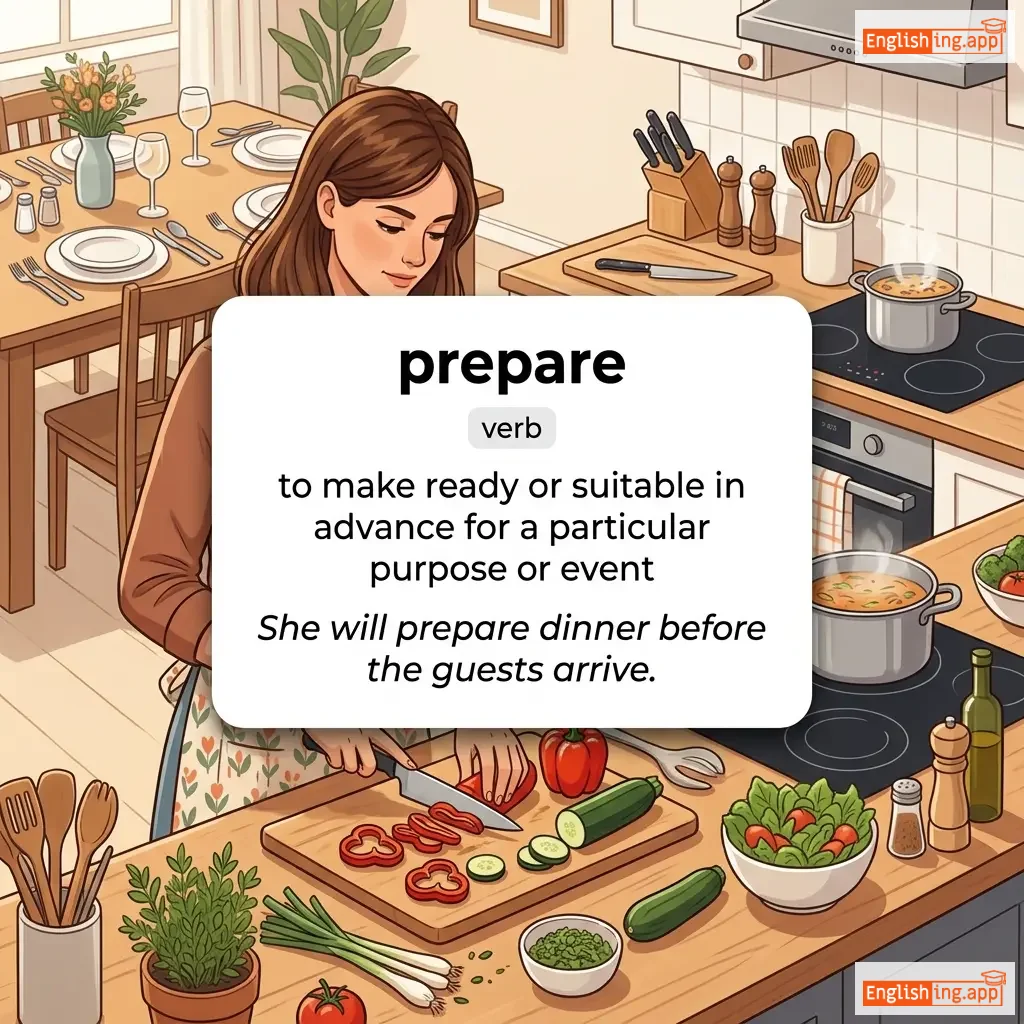
prepare definition card — visual illustration of the meaning
verb
/prɪˈpɛə/
প্রস্তুত করা (prostuṭ kora)

to make ready or suitable in advance for a particular purpose or event

"She will prepare dinner before the guests arrive."

"সে গেস্টদের আসার আগেই ডিনার প্রস্তুত করবে।" (Se guestder asar agei dinner prostut korbe.)
adjective; verb (past and past participle of prepare)
/prɪˈpɛrd/
প্রস্তুত (prostut)

made ready in advance; having made plans or taken steps beforehand

"She was fully prepared for the final exam."

"সে চূড়ান্ত পরীক্ষার জন্য সম্পূর্ণ প্রস্তুত ছিল।" (se churanto porikkhar jonne sompurno prostut chilo)
noun
/prɪˈpɒndərəns/
অধিকতা (odhikota)

The quality or fact of being greater in number, quantity, or importance.

"There was a preponderance of evidence against the defendant."

"আসামির বিরুদ্ধে প্রমাণের অধিকতা ছিল।" (Asamir biruddhe promaner odhikota chilo.)