ভোকাবুলারিসমূহ

ইংরেজি শব্দের বাংলা অর্থ | English to Bangla Word Meaning Dictionary

adjective
/ˈpɒndərəbl/
যা বিবেচনা করা যায়, বিবেচনাযোগ্য (ja bibechan kora jay, bibechanayoggo)

able to be considered or thought about

"The evidence was substantial and ponderable."

"প্রমাণটি যথেষ্ট গুরুত্বপূর্ণ এবং বিবেচনাযোগ্য ছিল।" (Praman ti jothesto goruttopurno ebong bibechanayoggo chhilo.)
adjective
/ˈpɑːndərəs/
ভারী এবং ধীর (bhari ebong dhir)

slow and clumsy because of great weight; dull and labored

"The ponderous lecture made it hard for students to stay awake."

"ভারি এবং ধীর বক্তৃতা ছাত্রদের জন্য জাগ্রত থাকা কঠিন করে দিয়েছিল।" (Bhari ebong dhir boktrita chatroder jonno jagrot thaka kothin kore diyechilo.)
noun
/ˈpɒntɪf/
পোপ বা উচ্চপদস্থ বিশপ (pop ba uchchopodostho bishop)

the pope or a high-ranking bishop in the Christian church

"The pontiff addressed the nation in a televised speech."

"পোপ টেলিভিশনে জাতিকে ভাষণ দিয়েছেন।" (Pop television-e jatike bhashon diyechhen.)
adjective
/pɒnˈtɪfɪkəl/
পোপ বা বিশপ সম্পর্কিত; আত্মমর্যাদাশীল (pop ba bishop somprosrito; atmarjyadashil)

relating to a pope or bishop; pompous or self-important

"His pontifical manner annoyed the other members of the committee."

"তার আত্মমর্যাদাশীল আচরণ কমিটির অন্য সদস্যদের বিরক্ত করেছে।" (Tar atmarjyadashil achoron komitir onno sodosyoder birakto korechhe.)
verb
/ˈpɒntɪfɪkeɪt/
অহংকারমূলক বক্তৃতা দেওয়া; পোপের মতো আচরণ করা (ahongkarmulok boktrita deowa; pope-er moto achoron kora)

to speak or act in a pompous or dogmatic way; to officiate as a pontiff

"He pontificated on the importance of education for over an hour."

"তিনি এক ঘন্টা ধরে শিক্ষার গুরুত্ব নিয়ে অহংকারপূর্ণ বক্তৃতা দিয়েছেন।" (Tini ek ghonta dhore shikkhar gurutto niye ahongkarpurno boktrita diyechhen.)
noun
/ˈpoʊni/
টাট্টু ঘোড়া (tattu ghora)

a small horse, typically under 14.2 hands high

"The children enjoyed riding the gentle pony at the farm."

"শিশুরা খামারে নমনীয় টাট্টু ঘোড়ায় চড়তে উপভোগ করেছিল।" (shishura khamare namoneeya tattu ghoray chorate upobhog korechilo.)
noun/verb
/puːl/
পুল (pul)

a small body of still water, or a game played in a rectangular table with balls

"The children swam in the pool all afternoon."

"বাচ্চারা সারা বিকেল পুলে সাঁতার কেটেছে।" (Bacchara sara bikel pule satar ketechhe.)
adjective
/pʊr/ or /pɔːr/
গরিব (gorib)

Lacking sufficient money, resources, or quality.

"The poor family struggled to buy food."

"গরিব পরিবার খাবার কিনতে সংগ্রাম করেছিল।" (Gorib poribar khabar kinte songram korechilo.)
verb
/pɒp/
ফাটানো (phatano)

to make a short, sharp sound, or to burst or break with such a sound

"The balloon popped when I accidentally pricked it with a pin."

"বেলুনটি ফেটে গিয়েছিল যখন আমি এটি আকস্মিকভাবে একটি পিন দিয়ে ফুটিয়ে দিলাম।" (Belunti phete giyechilo jokhon ami eti aksmikbhabe ekti pin diye phutiye dilam.)
noun
/ˈpɒp.i/
পপি (popi)

a bright red flower with black seeds, often used as a symbol of remembrance

"The red poppy bloomed beautifully in the garden."

"লাল পপি ফুলটি বাগানে সুন্দরভাবে ফুটেছে।" (laal popi phulti bagane shundorbhabe phuteche)
noun
/ˈpɒp.i siːdz/
পোস্তদানা (postodana)

tiny round seeds from the poppy plant used as a spice or garnish in cooking

"Poppy seeds are sprinkled on top of breads and used in Bengali curries."

"পোস্তদানা রুটির উপরে ছিটিয়ে দেওয়া হয় এবং বাঙালি তরকারিতে ব্যবহার করা হয়।" (postodana rutir upore chitiye deoya hoy ebong bangali torkaryte bebhar kora hoy.)
noun
/ˈpɒpjʊləs/
সাধারণ জনগণ (sadharono jonogon)

the general public; the ordinary people living in a country or area

"The new law was welcomed by the local populace."

"নতুন আইনটি স্থানীয় সাধারণ জনগণ দ্বারা স্বাগত জানানো হয়।" (Notun ain-ti sthaniyo sadharono jonogon dwara swagato janano hoy.)
adjective
/ˈpɒpjʊlər/
জনপ্রিয় (jonopriyo)

liked or admired by many people

"She is a popular singer with a huge fan base."

"সে একজন জনপ্রিয় গায়িকা যার বিশাল ফ্যান বেস আছে।" (Se ekjon jonopriyo gaika jar bishal fan bes ache.)
noun
/ˌpɒpjəˈlærəti/
জনপ্রিয়তা (jonopriyota)

the state of being liked, admired, or supported by many people

"The singer gained huge popularity after her new album release."

"গায়িকা তার নতুন অ্যালবাম প্রকাশের পর ব্যাপক জনপ্রিয়তা অর্জন করেন।" (Gayika tar notun album prokash er por byapak jonopriyota orjon koren.)
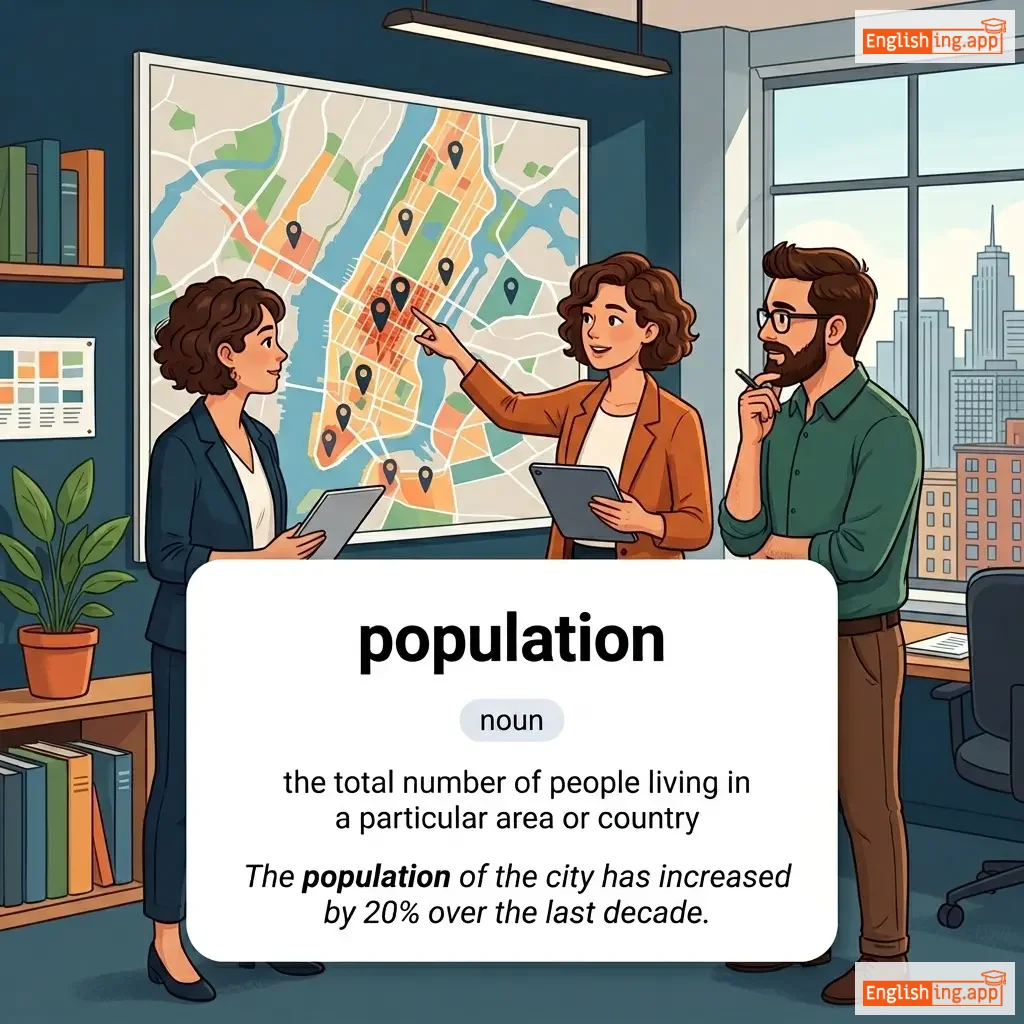
population definition card — visual illustration of the meaning
noun
/ˌpɒpjʊˈleɪʃən/
জনসংখ্যা (jonsongkha)

the total number of people living in a particular area or country

"The population of the city has increased by 20% over the last decade."

"শহরের জনসংখ্যা গত দশকে ২০% বৃদ্ধি পেয়েছে।" (Shohorer jonsongkha gota doshoke 20% briddhi peyechhe.)
noun
/ˈpɒpjʊlɪst/
জনবান্ধব নেতা (jonbandhob neta)

A politician or person who seeks to appeal to ordinary people who feel their concerns are ignored by elites.

"The populist leader promised to put the needs of common citizens first."

"জনবান্ধব নেতা সাধারণ মানুষের চাহিদাকে অগ্রাধিকার দেওয়ার প্রতিশ্রুতি দিয়েছেন।" (Jonbandhob neta samanno manusher chahida ke agrodhikar deowar protishruti diyechen.)
adjective
/ˈpɒpjələs/
জনবহুল (jonobohul)

Having a large population; densely inhabited.

"Dhaka is one of the most populous cities in the world."

"ঢাকা বিশ্বের অন্যতম জনবহুল শহর।" (Dhaka bishwer onnotomo jonobohul shohor.)
noun
/ˈpɔːrsəlɪn/
চীনামাটি (chinamati)

A white, hard ceramic material often used for dishes and ornaments.

"The museum displayed ancient porcelain vases from China."

"মিউজিয়ামে চীনের প্রাচীন চীনামাটির ফুলদানি প্রদর্শিত হয়েছিল।" (Muziume Chiner prachin chinamatir phuldani prodorshito hoyechhilo.)
noun
/pɔːrtʃ/
ভারান্দা (bharanda)

a covered area at the entrance of a building, often with a roof and open sides

"We sat on the porch and enjoyed the evening breeze."

"আমরা ভারান্দায় বসে সন্ধ্যার হাওয়া উপভোগ করেছি।" (Amra bharanday bose sondhya'r hawa upobhog korechi.)
noun
/ˈpɔːr.kjə.paɪn/
সজারু (shojaru)

a large rodent with defensive spines or quills on its body

"The porcupine raised its quills when threatened."

"সজারু হুমকির মুখে তার কাঁটা তুলে ধরেছিল।" (shojaru humkir mukhe tar kata tule dhoreche chilo)
noun/verb
/pɔːr/
ছিদ্র / গভীরভাবে পড়া (chhidro / gobirbhabe pora)

As a noun: a tiny opening in the skin or surface. As a verb: to study something carefully.

"She pored over the documents for hours before making a decision."

"সে সিদ্ধান্ত নেওয়ার আগে ঘন্টার পর ঘন্টা নথিগুলো গভীরভাবে পড়েছিল।" (Se shiddhanto newar age ghontar por ghonta nothigulo gobirbhabe porechhilo.)
noun
/pɔːrk/
শূকরের মাংস (shukorer mangsho)

the flesh of a pig used as food

"He doesn't eat pork for religious reasons."

"ধর্মীয় কারণে সে শূকরের মাংস খায় না।" (Dhormiyo karone se shukorer mangsho khay na.)
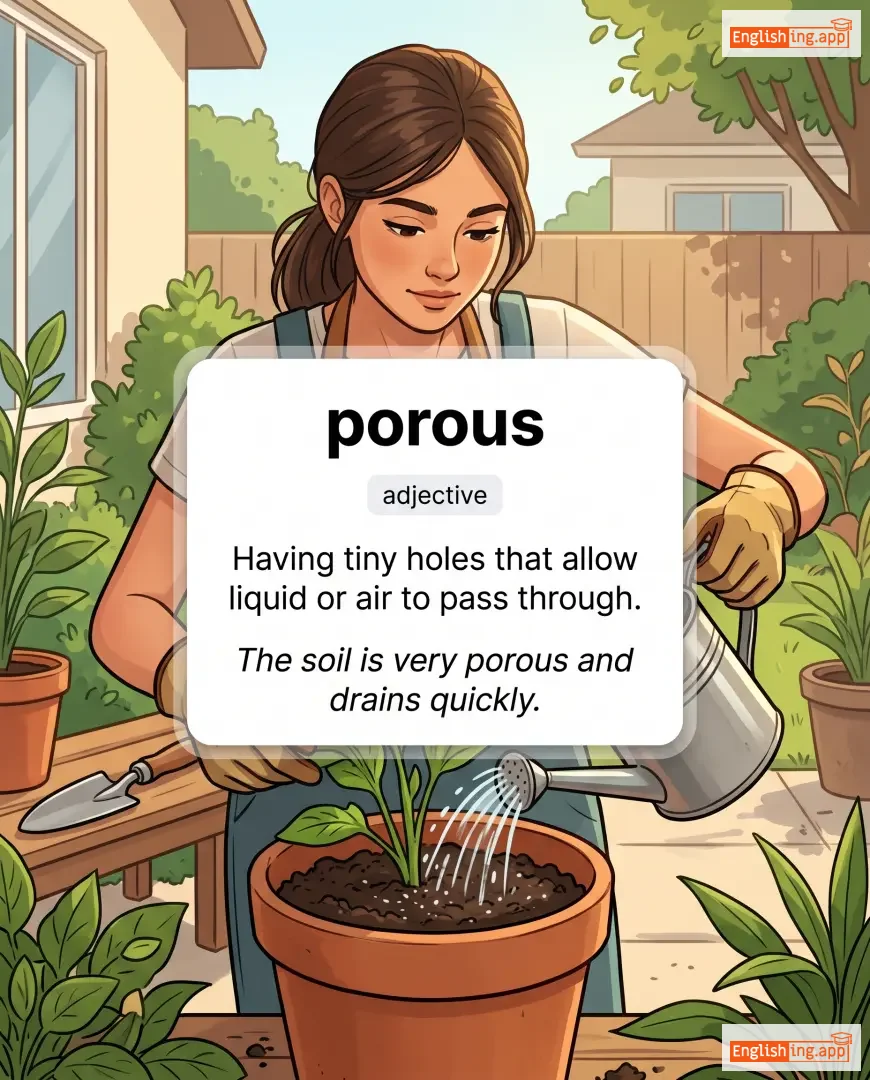
porous definition card — visual illustration of the meaning
adjective
/ˈpɔːrəs/
ছিদ্রযুক্ত (chhidroyukto)

Having tiny holes that allow liquid or air to pass through.

"The soil is very porous and drains quickly."

"মাটি খুব ছিদ্রযুক্ত এবং দ্রুত পানি নিষ্কাশন করে।" (Mati khub chhidroyukto ebong druto pani niskashon kore.)
noun
/ˈpɔːrfəri/
এক ধরনের আগ্নেয় শিলা (ek dhoroner agneya shila)

A hard igneous rock containing crystals, often used for decorative or building purposes.

"The ancient Romans used porphyry to make columns and statues."

"প্রাচীন রোমানরা স্তম্ভ ও মূর্তি তৈরিতে পর্ফিরি ব্যবহার করত।" (Prachin Romanra stombho o murti toirite porphiri byabohar korto.)
noun
/ˈpɔː.pəs/
শুশুক (shushuk)

a small toothed whale with a low triangular dorsal fin and a blunt rounded snout

"The porpoise jumped gracefully out of the water."

"শুশুকটি পানি থেকে অনুগ্রহে লাফিয়ে উঠল।" (shushukṭi pāni theke onugrohe lāphiye uṭholo.)
noun
/ˈpɔːrɪdʒ/
পায়েস বা পাতলা খিচুড়ি (payesh ba patla khichuri)

A soft food made by boiling oats or other grains in milk or water.

"She had a bowl of porridge for breakfast."

"সে নাশতায় এক বাটি পোরিজ খেয়েছিল।" (Se nashtay ek bati porij kheyechhilo.)
Port definition card — visual illustration of the meaning
noun
/pɔːrt/
বন্দর (bondor)

a harbor where ships dock to load and unload goods

"The ship docked at the port after a long voyage."

"জাহাজটি একটি দীর্ঘ যাত্রার পর বন্দরে ডক করেছিল।" (Jahajti ekti dirgho jatrar por bondore dok korechhilo.)
verb
/pɔːrˈtɛnd/
অশনি সংকেত দেওয়া (oshoni sonket deowa)

To be a sign or warning that something, especially something bad, is going to happen.

"Dark clouds portend a storm."

"কালো মেঘ ঝড়ের সংকেত দেয়।" (Kalo megh jhorer sonket dey.)
noun
/ˈpɔːrtɛnt/
অশনি সংকেত (oshoni sonket)

A sign or warning that something, especially something momentous or calamitous, is likely to happen.

"The sudden drop in stock prices was seen as a portent of economic trouble."

"শেয়ারবাজারে হঠাৎ পতন অর্থনৈতিক সমস্যার অশনি সংকেত হিসেবে দেখা হয়েছিল।" (Sheyarbajare hothat poton orthonitik somossar oshoni sonket hisebe dekha hoyechhilo.)
adjective
/pɔːrˈtɛntəs/
অশুভসূচক, ভয়ঙ্কর (oshubhosuchok, voyonkor)

Giving a sign or warning that something, often bad or serious, is going to happen; or overly solemn and pompous.

"His portentous tone made everyone nervous about the news."

"তার অশুভসূচক ভঙ্গি সবাইকে খবর নিয়ে উদ্বিগ্ন করেছিল।" (Tar oshubhosuchok bhongi sobaike khobor niye udbigno korechhilo.)
portfolio definition card — visual illustration of the meaning
noun
/pɔːrtˈfoʊlioʊ/
নথিপত্রের সংকলন (portfoliyo)

A collection of financial investments, artworks, or documents presented as a body of work.

"The designer showcased her portfolio during the interview."

"ডিজাইনার সাক্ষাৎকারে তার পোর্টফোলিও প্রদর্শন করেছিলেন।" (Designer sakhhatkare tar portfolio prodorshon korechilen.)
noun
/ˈpɔːrʃən/
অংশ (ongsho)

A part or share of something.

"She ate only a small portion of the meal."

"সে খাবারের একটি ছোট অংশই খেয়েছিল।" (Se khabarer ekti choto ongsho-i kheyechhilo.)
adjective
/ˈpɔːrtli/
মোটা-সোটা (portli)

Having a stout or somewhat fat body, often implying dignity or authority.

"The portly man entered the room with confidence."

"পোর্টলি মানুষটি আত্মবিশ্বাস নিয়ে ঘরে প্রবেশ করলেন।" (Portli manushṭi atmobishwas niye ghore probesh korlen.)
noun
/ˈpɔːtrət/
পোর্ট্রেট (portrait)

a painting, drawing, photograph, or engraving of a person, especially one showing the face

"The artist painted a beautiful portrait of his wife."

"শিল্পী তার স্ত্রীর একটি সুন্দর পোর্ট্রেট আঁকলেন।" (Shilpi tar strir ekti sundor portrait aṅklen.)
verb
/pɔːˈtreɪ/
বর্ণনা করা (barnona kora)

to describe or represent something or someone in a work of art or literature

"The novel portrays a vivid picture of life in the countryside."

"উপন্যাসটি গ্রামাঞ্চলে জীবনের একটি জীবন্ত চিত্র তুলে ধরে।" (Upanyasṭi grāmānchale jībaner ekti jībanto chitra tule dhore.)
verb
/poʊz/
অঙ্গভঙ্গি করা (poj)

To assume a particular position, especially for a photograph or display; to present a problem or question.

"She posed for a picture in front of the monument."

"সে স্মৃতিস্তম্ভের সামনে একটি ছবির জন্য পোজ দিয়েছিল।" (Se smritistombher samne ekti chobir jonno poj diyechhilo.)
noun
/poʊˈzɜːr/
ভণ্ড (pojar)

A person who pretends to be something they are not, often to impress others.

"Many considered him a poseur because he exaggerated his accomplishments."

"অনেকে তাকে ভণ্ড মনে করত কারণ সে তার সাফল্যকে বাড়িয়ে বলত।" (Oneke take bhondo mone korto karon se tar safollo ke barie bolto.)
verb
/ˈpɑːzɪt/
প্রস্তাব করা (pojit)

To assume or suggest something as a fact or basis for reasoning.

"The scientist posited a new theory to explain the phenomenon."

"বিজ্ঞানী ঘটনাটি ব্যাখ্যা করতে একটি নতুন তত্ত্ব প্রস্তাব করেছিলেন।" (Bigyani ghotonati byakkha korte ekti notun tottwo prostab korechhilen.)
position definition card — visual illustration of the meaning
noun
/pəˈzɪʃən/
অবস্থান / পদ (obosthan / podo)

A place, job, or status; the way in which someone or something is placed or arranged.

"She applied for a teaching position at the university."

"সে বিশ্ববিদ্যালয়ে একটি শিক্ষকতার পদে আবেদন করেছিল।" (Se bishwabidyaloye ekti shikhokotar pode abedon korechhilo.)
positive definition card — visual illustration of the meaning
adjective
/ˈpɒzɪtɪv/
ইতিবাচক (itibachok)

Characterized by optimism, certainty, or something favorable.

"She always tries to maintain a positive attitude."

"সে সবসময় ইতিবাচক মনোভাব বজায় রাখার চেষ্টা করে।" (Se sobsomoy itibachok monobhav bojay rakhar cheshta kore.)
noun
/ˈpɒsi/
দল / বন্ধুবৃত্ত (dol / bondhubritto)

A group of people, often friends or a group organized to support or enforce the law.

"He arrived at the party with his posse of friends."

"সে তার বন্ধুদের দল নিয়ে পার্টিতে এসেছিল।" (Se tar bondhuder dol niye partite esechhilo.)
verb
/pəˈzɛs/
অধিকার করা / মালিক হওয়া (odhikar kora / malik howa)

To have or own something; to hold a quality or characteristic.

"She possesses great talent in music."

"সে সঙ্গীতে অসাধারণ প্রতিভার অধিকারী।" (Se shonggite oshadharon protibar odhikari.)
noun
/pəˈzɛʃən/
অধিকার / মালিকানা (odhikar / malikana)

The state of owning, controlling, or holding something.

"The ring was her most valuable possession."

"আংটিটি তার সবচেয়ে মূল্যবান সম্পত্তি ছিল।" (Angtiti tar shobcheye mullyoban sompotti chhilo.)
adjective
/pəˈzɛsɪv/
অধিকারপ্রবণ (odhikarprobon)

Showing a desire to own or control; relating to possession.

"He became very possessive about his old books."

"সে তার পুরোনো বইগুলো নিয়ে খুব অধিকারপ্রবণ হয়ে উঠেছিল।" (Se tar purono boigulo niye khub odhikarprobon hoye uthchhilo.)
noun
/pəˈzɛsər/
অধিকারী (odhikari)

A person who owns or holds something.

"The possessor of the land built a new house."

"ভূমির অধিকারী একটি নতুন বাড়ি তৈরি করল।" (Bhumir odhikari ekti notun bari toiri korlo.)
noun
/ˌpɒsəˈbɪləti/
সম্ভাবনা (sombhabona)

something that may happen or be the case; a chance that something exists or might occur

"There is a strong possibility of rain tomorrow."

"আগামীকাল বৃষ্টির সম্ভাবনা প্রবল।" (Agamikal brishtir sombhabona probol.)
adjective
/ˈpɒsəbl̩/
সম্ভব (sombhob)

Able to be done or achieved.

"Anything is possible if you work hard."

"আপনি কঠোর পরিশ্রম করলে সবই সম্ভব।" (Apni kothor porishrom korle sobi sombhob.)
adverb
/ˈpɒsɪbli/
সম্ভবত (sombhoboto)

maybe, or in a way that is not certain

"It could possibly rain later today."

"এটা সম্ভবত আজ বিকেলে বৃষ্টি হতে পারে।" (Eta sombhoboto aaj bikelay brishti hote pare.)
noun, verb
/pəʊst/
পোস্ট (post)

a job or position, or to send something by mail

"She posted a letter to her friend yesterday."

"সে গতকাল তার বন্ধুকে একটি চিঠি পোস্ট করেছিল।" (Se gôtkal tar bondhuke ekti chithi post korechilo.)
noun
/ˈpoʊst ˌɒfɪs/
ডাকঘর (dakghor)

a public building or agency where mail is sent, received, and other postal services are provided

"I went to the post office to mail a package."

"আমি একটি পার্সেল পাঠাতে ডাকঘরে গিয়েছিলাম।" (ami ekti parsel pathate dakghore giyechhilam)