ভোকাবুলারিসমূহ

ইংরেজি শব্দের বাংলা অর্থ | English to Bangla Word Meaning Dictionary

persuasiveness definition card — visual illustration of the meaning
noun
/pərˈsweɪ.sɪv.nəs/
যুক্তিবাদী ক্ষমতা (juktibadi khomota)

The quality of being able to persuade someone to do or believe something.

"His persuasiveness helped secure the deal."

"তার যুক্তিবাদী ক্ষমতা চুক্তি নিশ্চিত করতে সাহায্য করেছে।" (Tar juktibadi khomota chukti nishchit korte shahajyo koreshshe.)
adjective
/pɜːrt/
দুষ্টু কিন্তু আকর্ষণীয় (dushtu kintu akorshoniyo)

attractively lively or cheeky in manner or style

"She gave a pert reply that made everyone laugh."

"সে একটি দুষ্টু উত্তর দিয়েছিল যা সবাইকে হাসিয়েছিল।" (Se ekti dushtu uttar diyechilo ja sobaike hasiyecilo.)
verb
/pərˈteɪn/
সম্পর্কিত হওয়া (somprokito howa)

to relate or have reference to something

"The rules pertain to all students in the school."

"নিয়মগুলো স্কুলের সকল শিক্ষার্থীর সাথে সম্পর্কিত।" (Niyomgulo skuler sokol shikharthir sathe somprokito.)
adjective
/ˌpɜːrtɪˈneɪʃəs/
অবিচল (obichol)

holding firmly to an opinion, purpose, or course of action; stubbornly persistent

"The pertinacious lawyer refused to give up the case."

"অবিচল আইনজীবী মামলাটি ছাড়তে অস্বীকার করেছিল।" (Obichol ainjibi mamla ti chharte aswikar korechilo.)
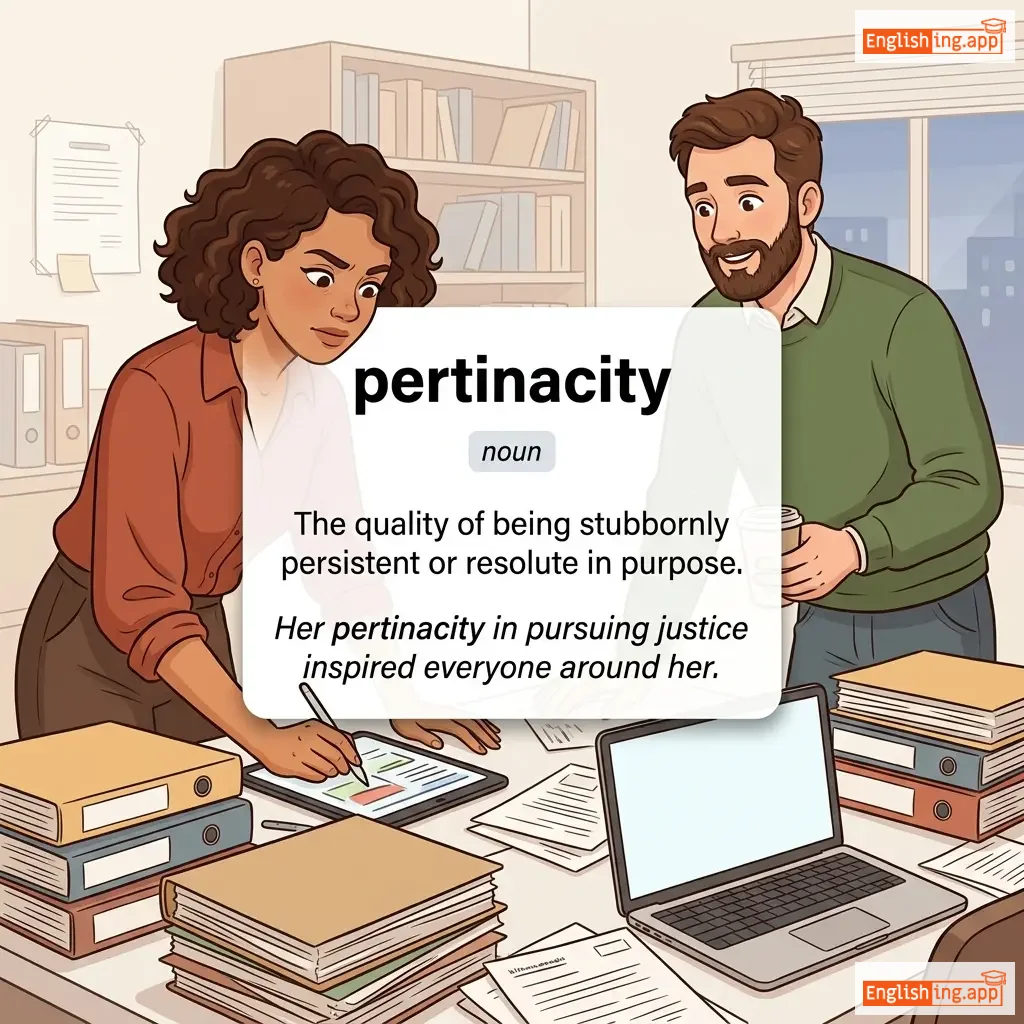
pertinacity definition card — visual illustration of the meaning
noun
/ˌpɜːrtɪˈnæsɪti/
অটলতা (otolta)

The quality of being stubbornly persistent or resolute in purpose.

"Her pertinacity in pursuing justice inspired everyone around her."

"ন্যায়বিচার অনুসরণে তার অটলতা চারপাশের সবাইকে অনুপ্রাণিত করেছিল।" (Naybichar onusorone tar otolta charpasher sobaike onupranito korechilo.)
adjective
/ˈpɜːrtɪnənt/
প্রাসঙ্গিক (prasongik)

Relevant or applicable to a particular matter.

"She asked a pertinent question during the meeting."

"সে সভার সময় একটি প্রাসঙ্গিক প্রশ্ন করেছিল।" (Se shovar somoy ekti prasongik prosno korechilo.)
noun
/ˈpɜːrtnəs/
দুর্বিনীততা (durbinitota)

boldness or forwardness in speech or behavior; sauciness

"Her pertness during the meeting surprised everyone."

"মিটিং চলাকালীন তার দুর্বিনীততা সবাইকে অবাক করেছিল।" (Meeting cholakaline tar durbinitota sobaike abakh korechhilo.)
verb
/pərˈtɜːrb/
বিক্ষিপ্ত করা (bikshipto kora)

To disturb or unsettle greatly in mind.

"The sudden noise perturbed the students during the exam."

"হঠাৎ শব্দ পরীক্ষার সময় ছাত্রদের অস্থির করে দিয়েছিল।" (Hotat shobdo porikkhar somoy chatroder osthir kore diyechilo.)
noun
/ˌpɜːrtərˈbeɪʃn/
অশান্তি (oshanti)

A state of anxiety, disturbance, or disorder.

"The announcement caused a perturbation in the financial markets."

"ঘোষণাটি আর্থিক বাজারে অশান্তি সৃষ্টি করেছিল।" (Ghosonati arthik bajare oshanti srishti korechilo.)
adjective
/pərˈtɜːrbd/
বিক্ষুব্ধ (bikkhubdho)

feeling anxious, unsettled, or disturbed

"He looked perturbed after hearing the bad news."

"খারাপ খবর শোনার পর তিনি বিক্ষুব্ধ দেখালেন।" (Kharap khobor shonar por tini bikkhubdho dekhale.)
noun
/pəˈruːzl/
মনোযোগ সহকারে পড়া (monojog shohokare pora)

The action of reading or examining something carefully.

"The contract was given to the lawyer for perusal."

"চুক্তিটি আইনজীবীর কাছে মনোযোগ সহকারে পড়ার জন্য দেওয়া হয়েছিল।" (Chuktiti ainjibir kache monojog shohokare porar jonno deowa hoyechilo.)
verb
/pəˈruːz/
মনোযোগ দিয়ে পড়া (monojog diye pora)

to read something carefully and thoroughly; sometimes used to mean to browse casually

"She sat down to peruse the contract before signing it."

"সে স্বাক্ষর করার আগে চুক্তিটি মনোযোগ দিয়ে পড়তে বসল।" (Se shakkhor korar age chuktiti monojog diye porte boslo.)
verb
/pəˈveɪd/
ব্যাপকভাবে ছড়িয়ে পড়া (byapokbhabe choriye pora)

to spread through and be present in every part of something

"The smell of fresh flowers pervaded the entire room."

"তাজা ফুলের গন্ধ পুরো ঘরে ছড়িয়ে পড়েছিল।" (Taja fuler gondho puro ghore choriye porechhilo.)
noun
/pəˈveɪʒən/
সর্বত্র বিস্তার (sorbotro bistar)

the act of spreading through or being present everywhere in something

"There was a pervasion of hope throughout the community."

"সমগ্র সম্প্রদায় জুড়ে আশার একটি বিস্তার ছিল।" (Shomogro shomprodai jure ashar ekti bistar chhilo.)
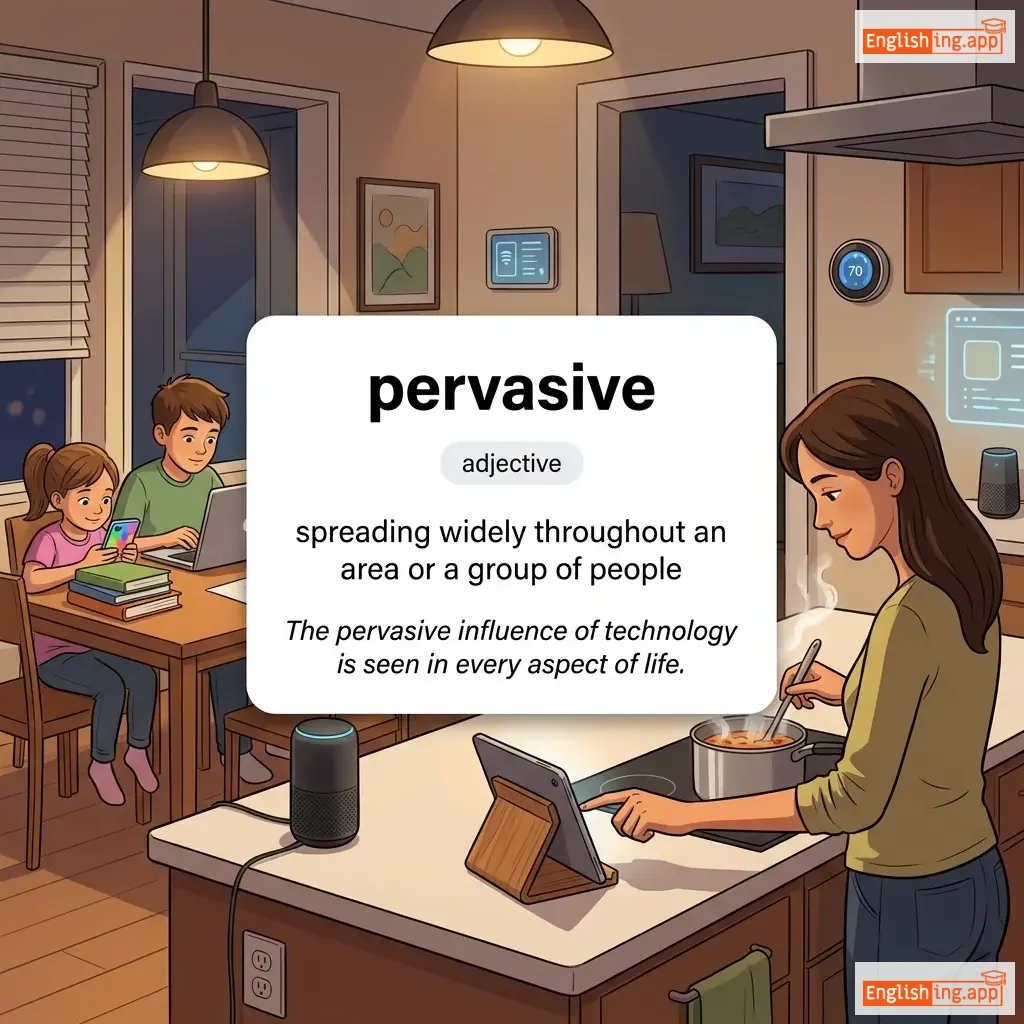
pervasive definition card — visual illustration of the meaning
adjective
/pərˈveɪsɪv/
সর্বব্যাপী (sorbobyaapi)

spreading widely throughout an area or a group of people

"The pervasive influence of technology is seen in every aspect of life."

"প্রযুক্তির সর্বব্যাপী প্রভাব জীবনের প্রতিটি ক্ষেত্রে দেখা যায়।" (Projuktiro sorbobyaapi probhab jiboner protiti khetre dekha jay.)
adjective
/pərˈvɜːrs/
বিকৃত (bikrit)

showing a deliberate desire to behave in a way that is unreasonable, contrary, or unacceptable

"He took a perverse pleasure in upsetting his colleagues."

"সে তার সহকর্মীদের বিরক্ত করে এক ধরনের বিকৃত আনন্দ পেত।" (Se tar shokormider birokt kore ek dhoroner bikrit anondo peto.)
noun
/pərˈvɜːrʒən/
বিকৃতি (bikrti)

The act of distorting or corrupting the original meaning, purpose, or state of something.

"The regime’s censorship was seen as a perversion of free speech."

"শাসন ব্যবস্থার সেন্সরশিপকে মুক্ত বক্তৃতার বিকৃতি হিসেবে দেখা হয়েছিল।" (shashon byabasthar censorshipke mukto boktritar bikriti hisebe dekha hoyechilo.)
noun
/pərˈvɜːrsəti/
অবাধ্যতা (obadhyata)

A deliberate and obstinate desire to behave in an unreasonable or unacceptable way.

"Out of sheer perversity, he refused to follow the simple instructions."

"শুধুমাত্র জেদ থেকে সে সহজ নির্দেশনা মানতে অস্বীকার করল।" (shudhumatro jed theke se sohoj nirdeshona mante aswikar korlo.)
verb/noun
/pərˈvɜːrt/
বিকৃত করা / বিকৃত মানুষ (bikrto kora / bikrto manush)

As a verb: to distort the meaning or purpose of something; as a noun: a person with abnormal or immoral sexual behavior.

"He tried to pervert the truth to escape punishment."

"সে শাস্তি থেকে বাঁচতে সত্যকে বিকৃত করার চেষ্টা করেছিল।" (se shasti theke bachte sottoke bikrito korar chesta korechilo.)
adjective
/ˈpɜːrviəs/
ছিদ্রযুক্ত / প্রবেশযোগ্য (chidrojukto / probeshjoggo)

Allowing water, air, or other substances to pass through; permeable.

"The soil here is pervious to rainwater."

"এখানকার মাটি বৃষ্টির পানির জন্য প্রবেশযোগ্য।" (ekhankar mati brishtir panir jonno probeshjoggo.)
noun
/ˈpesɪˌmɪzəm/
নৈরাশ্যবাদ (noirashjobad)

A tendency to see the worst aspect of things or believe the worst will happen.

"Her constant pessimism made it hard to stay optimistic."

"তার স্থায়ী নৈরাশ্যবাদ আশাবাদী থাকা কঠিন করে তুলেছিল।" (tar sthayi noirashjobad ashabadi thaka kothin kore tulchilo.)
noun
/ˈpes.ə.mɪst/
নিরাশাবাদী ব্যক্তি; হতাশাবাদী; (nirashabad)

a person who tends to see the worst aspect of things or believes that the worst will happen; someone who lacks hope or confidence in the future

"Being a pessimist, he always expected the worst outcome."

"একজন নিরাশাবাদী হিসেবে, তিনি সর্বদা সবচেয়ে খারাপ ফলাফল প্রত্যাশা করতেন।" (ekjon nirashabad hisebe, tini shorboda shobcheye kharap pholadhol protyasha koroten.)
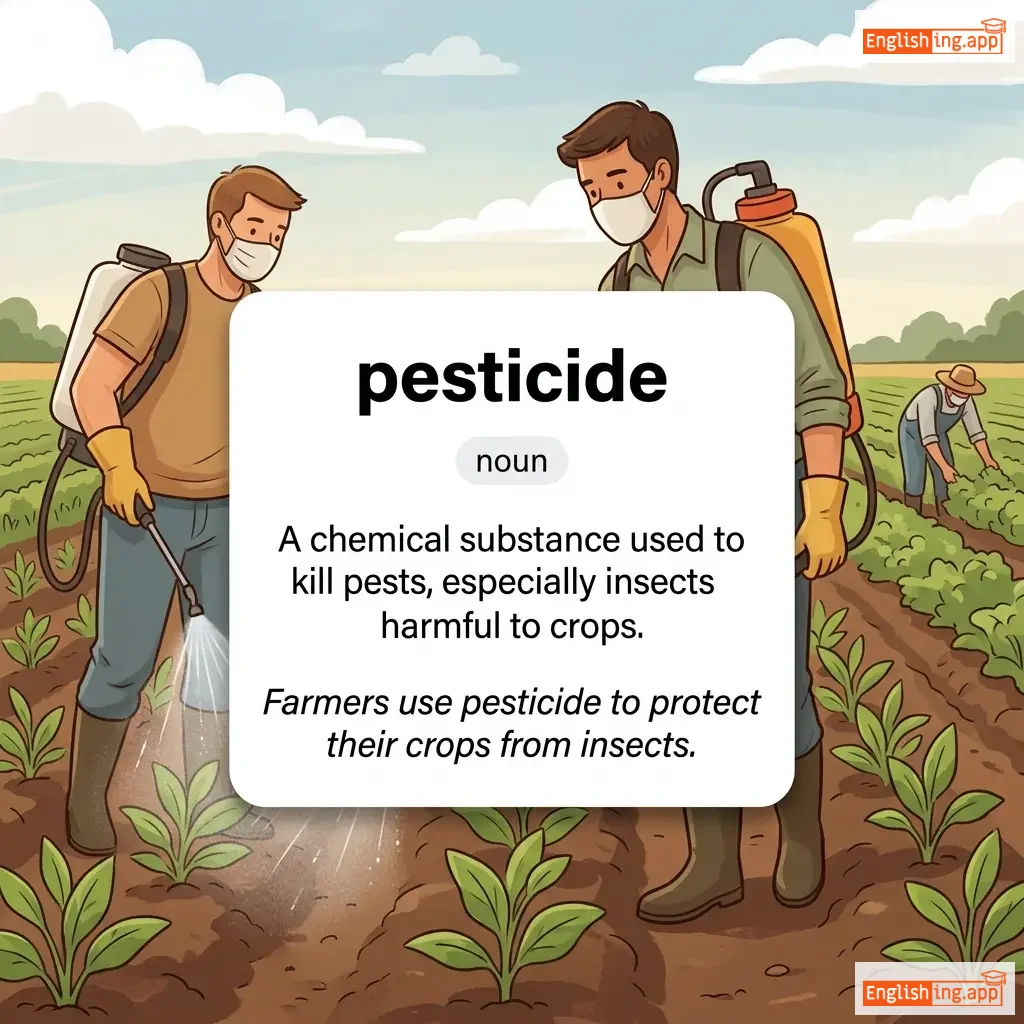
pesticide definition card — visual illustration of the meaning
noun
/ˈpɛstɪsaɪd/
কীটনাশক (kitnashok)

A chemical substance used to kill pests, especially insects harmful to crops.

"Farmers use pesticide to protect their crops from insects."

"কৃষকরা তাদের ফসলকে পোকামাকড় থেকে রক্ষা করতে কীটনাশক ব্যবহার করে।" (Krishokra tader fosholke pokamakor theke rokha korte kitnashok byabohar kore.)
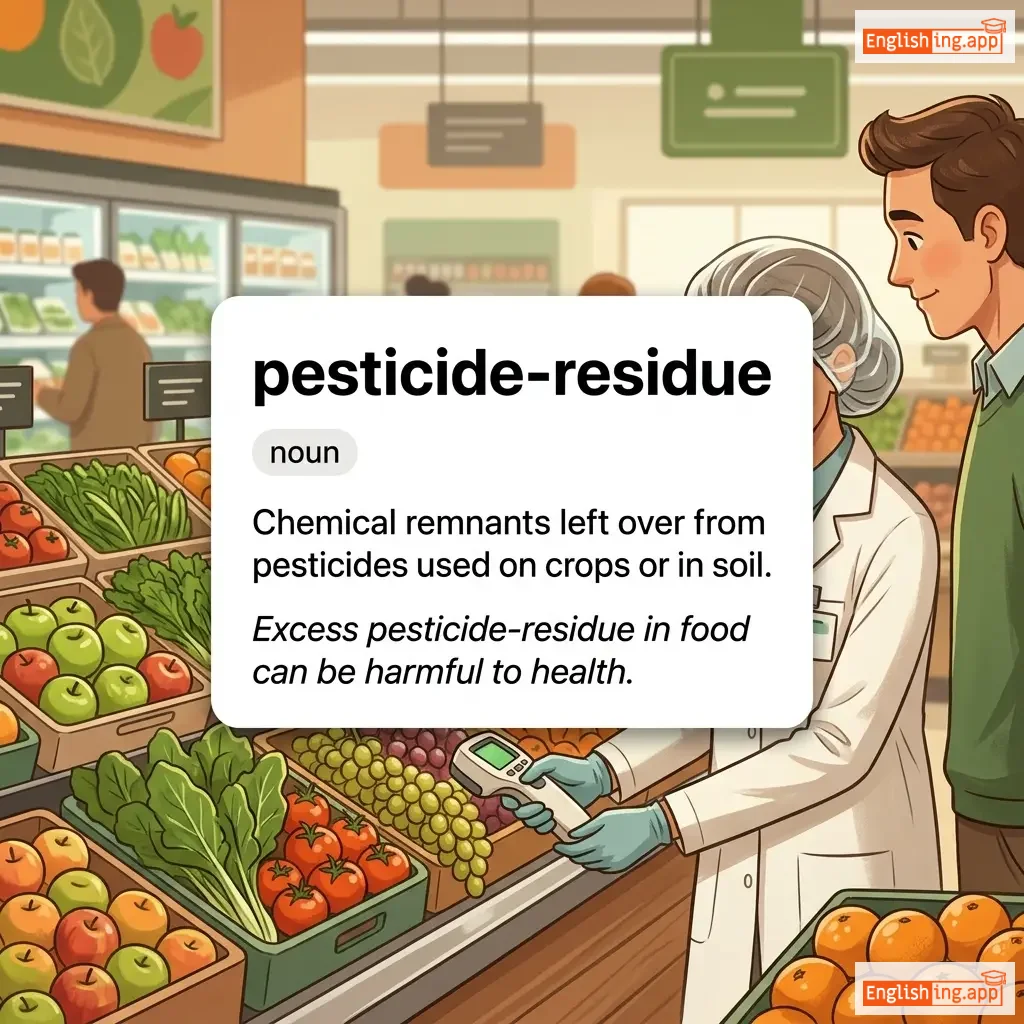
pesticide-residue definition card — visual illustration of the meaning
noun
/ˈpɛs.tɪ.saɪd ˈrɛz.ɪ.djuː/
কীটনাশকের অবশিষ্টাংশ (kitonashker oboshishtangsho)

Chemical remnants left over from pesticides used on crops or in soil.

"Excess pesticide-residue in food can be harmful to health."

"খাদ্যে কীটনাশকের অবশিষ্টাংশ স্বাস্থ্যের জন্য ক্ষতিকর হতে পারে।" (Khadye kitonashker oboshishtangsho swasthyer jonno khotikar hote pare.)
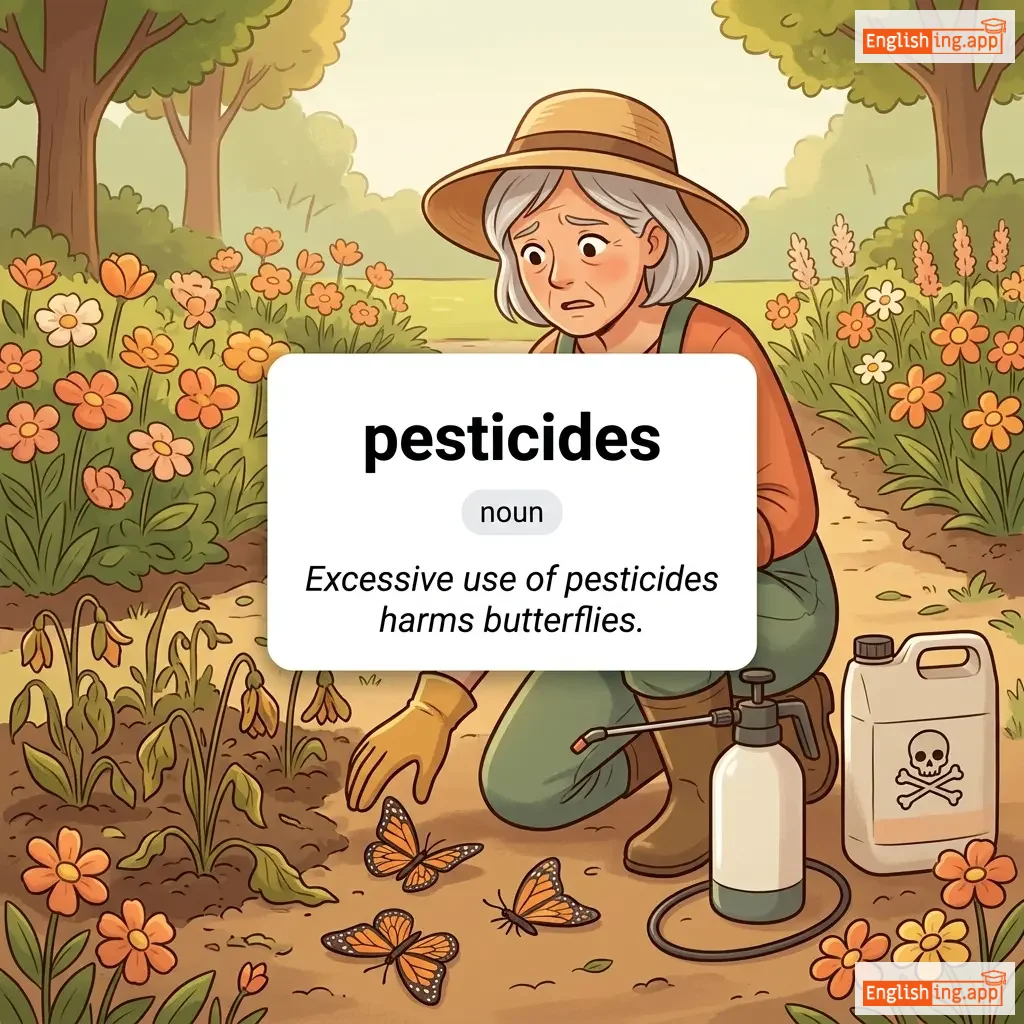
pesticides definition card — visual illustration of the meaning
noun
ˈpɛstɪsaɪdz
কীটনাশক (kitonashok)

Chemical substances used to kill pests, but harmful to beneficial insects like butterflies.

"Excessive use of pesticides harms butterflies."

"কীটনাশকের অতিরিক্ত ব্যবহার প্রজাপতিদের ক্ষতি করে।" (Kitonashker otiriktо bybohar projapotider khoti kore.)
noun
/ˈpɛstɪləns/
মহামারী (mohamari)

A deadly or virulent epidemic disease that spreads rapidly.

"The medieval city was devastated by a pestilence."

"মধ্যযুগীয় শহরটি একটি মহামারীতে ধ্বংস হয়েছিল।" (Maddhyajugiyo shohorti ekti mohamarite dhongsho hoyechilo.)
adjective
/ˈpɛstɪlənt/
মারাত্মক (maratmok)

Causing or tending to cause death or destruction; harmful or pernicious.

"The pestilent atmosphere of the swamp made people sick."

"জলার মারাত্মক পরিবেশ মানুষকে অসুস্থ করে তুলেছিল।" (Jolar maratmok poribesh manushke oshustho kore tulchilo.)
adjective
/ˌpɛstɪˈlɛnʃəl/
মারাত্মক রোগজনিত (maratmok rogjogito)

Relating to or causing pestilence; very harmful, troublesome, or dangerous.

"The pestilential smell of the garbage filled the street."

"আবর্জনার মারাত্মক গন্ধ রাস্তায় ছড়িয়ে পড়েছিল।" (Aborjonar maratmok gondho rastay choriye porechilo.)
noun
/ˈpɛsəl/
পেষণী (peshoni)

A heavy tool with a rounded end used for crushing or grinding substances in a mortar.

"She used a pestle to grind the spices."

"সে মশলা গুঁড়ো করতে পেষণী ব্যবহার করেছিল।" (Se moshla gudo korte peshoni byabohar korechilo.)
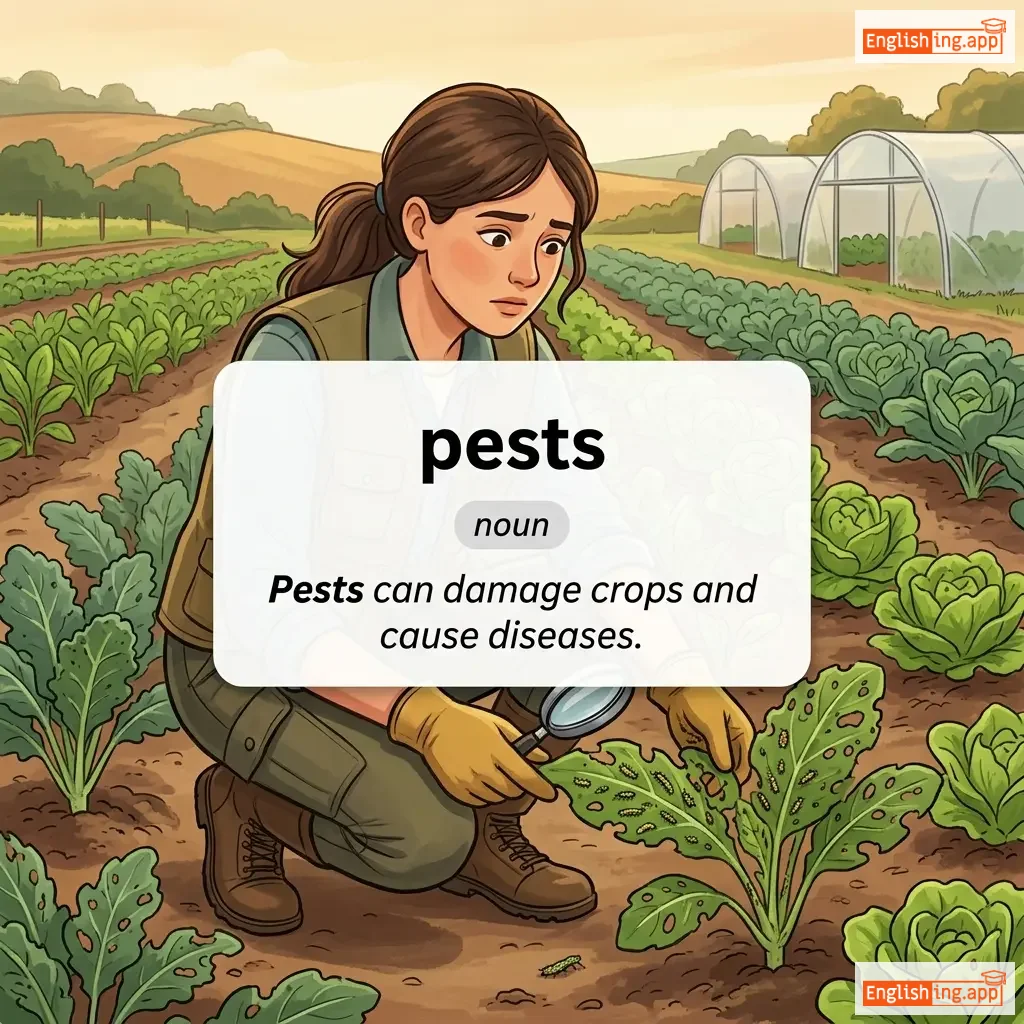
pests definition card — visual illustration of the meaning
noun
pɛsts
পোকামাকড়, ক্ষতিকর প্রাণী (pokamakod, khotikar prani)

Harmful or troublesome creatures, especially insects or small animals that damage crops, food, or living spaces.

"Pests can damage crops and cause diseases."

"পোকামাকড় ফসলের ক্ষতি করতে পারে এবং রোগ সৃষ্টি করতে পারে।" (Pokamakod fosher khoti korte pare ebong rog srishti korte pare.)
noun
/pɛt/
পোষ্য (poshyo)

a domesticated animal kept for companionship or pleasure

"My dog is my favorite pet."

"আমার কুকুর আমার প্রিয় পেট।" (Amar kukur amar priyo poshyo.)
noun
/ˈpetəl/
পাপড়ি (papri)

One of the colored segments of a flower that forms the corolla

"Each petal of the daisy was white with a yellow center."

"ডেইজির প্রতিটি পাপড়ি সাদা ছিল এবং কেন্দ্রটি হলুদ ছিল।" (deiji-r protiti papri shada chilo ebong kendro-ti holud chilo)
verb
/ˈpiːtər/
ধীরে ধীরে ক্ষীণ হওয়া (dhire dhire khin howa)

to diminish gradually and come to an end; to fade or dwindle away

"The excitement of the event began to peter out after a few hours."

"ইভেন্টের উত্তেজনা কয়েক ঘণ্টা পর ধীরে ধীরে ক্ষীণ হতে শুরু করল।" (Eventer uttejana koyek ghonta por dhire dhire khin hote shuru korlo.)
noun
/pəˈtɪʃən/
আবেদনপত্র (abedonpotro)

a formal written request, typically signed by many people, appealing to authority about a cause

"They signed a petition to improve road safety in the area."

"তারা এলাকায় সড়ক নিরাপত্তা উন্নত করতে একটি আবেদনপত্রে স্বাক্ষর করেছিল।" (Tara elakay sorok nirapotta unnot korte ekti abedonpotre shakshor korechilo.)
verb
/ˈpɛtrɪfaɪ/
ভয়ে জমে যাওয়া (bhoye jome jaoa)

to make someone so frightened that they are unable to move or think; to turn into stone

"The loud noise petrified the little child."

"উচ্চ শব্দটি ছোট শিশুটিকে ভয়ে জমে যেতে বাধ্য করল।" (Uchcho shobdoti chhoto shishutike bhoye jome jete badhyo korlo.)
noun
/ˈpɛtrəˌɡræf/
শিলার বর্ণনা (shilar bornoa)

a description or representation of rocks, especially in detailed scientific writing

"The scientist studied the petrograph to understand the rock composition."

"বিজ্ঞানী শিলার গঠন বোঝার জন্য পেট্রোগ্রাফটি অধ্যয়ন করেছিলেন।" (Biggani shilar gothon bojhar jonno petrograph ti oddhoyon korechilen.)
noun
/ˈpetɪkoʊt/
সায়া (shaya)

an undergarment worn by women under a dress or skirt

"She wore a white petticoat under her dress."

"তিনি তার পোশাকের নিচে একটি সাদা সায়া পরেছিলেন।" (tini tar poshaher niche ekti shada shaya porechilen.)
verb
/ˈpɛtɪˌfɒɡ/
তুচ্ছ বিষয়ে তর্ক করা (tuchcho bishoye torko kora)

to argue or quibble over trivial matters; to engage in petty, dishonest practices

"The lawyer was accused of trying to pettifog instead of addressing the real issue."

"আইনজীবীকে আসল বিষয় সমাধানের পরিবর্তে তুচ্ছ বিষয়ে তর্ক করার অভিযোগ আনা হয়েছিল।" (Ainjibi ke asal bishoy somadhaner poriborte tuchcho bishoye torko korar obhijog ana hoyechilo.)
adjective
/ˈpɛti/
তুচ্ছ (tuchcho)

Of little importance or trivial; also describes a person overly concerned with small or unimportant matters.

"She often gets upset over the most petty things."

"সে প্রায়ই সবচেয়ে তুচ্ছ বিষয়ে বিরক্ত হয়।" (Se prayoi sobcheye tuchcho bishoye birokt hoy.)
noun
/ˈpɛtjʊləns/
খিটখিটে স্বভাব (khitkhite shobhav)

The quality of being childishly sulky or bad-tempered.

"His petulance during the meeting annoyed everyone."

"মিটিং চলাকালীন তার খিটখিটে স্বভাব সবাইকে বিরক্ত করেছিল।" (Meeting cholakaline tar khitkhite shobhav sobaike birokt korechilo.)
adjective
/ˈpɛtjʊlənt/
খিটখিটে (khitkhite)

Childishly sulky or bad-tempered.

"The child became petulant when denied more candy."

"বেশি ক্যান্ডি না দেওয়ায় শিশুটি খিটখিটে হয়ে উঠল।" (Besi candy na deoway shishuti khitkhite hoye uthlo.)
noun
/ˈfeɪlæŋks/
সারিবদ্ধ দল (sariboddho dol)

A group of people or things arranged in a compact, close formation; also an ancient Greek military formation.

"A phalanx of reporters waited outside the courthouse."

"একটি সারিবদ্ধ রিপোর্টারদের দল আদালতের বাইরে অপেক্ষা করছিল।" (Ekti sariboddho reporter der dol adaloter baire opekkha korchilo.)
noun
/ˈfænˌtæzəm/
প্রেতাত্মা (pretatma)

an illusion, ghost, or figment of the imagination

"The child claimed to see a phantasm in the old house."

"শিশুটি দাবি করল যে সে পুরনো বাড়িতে একটি প্রেতাত্মা দেখেছে।" (Shishuti dabi korlo je se purono barite ekti pretatma dekhechhe.)
adjective
/ˌfæntæzməˈɡɒrɪkəl/
কল্পনাপ্রবণ (kolponaprobhon)

Having a fantastic, dreamlike, or surreal appearance, often shifting or illusory.

"The movie created a phantasmagorical vision of another world."

"সিনেমাটি আরেকটি বিশ্বের কল্পনাপ্রবণ চিত্র তৈরি করেছিল।" (Cinemati arekti bishwer kolponaprobhon chhitra toiri korechilo.)
adjective
/ˌfærɪˈseɪɪkəl/
ভণ্ডামিপূর্ণ (bhondamipurno)

Excessively concerned with formal rules or outward show of morality, often in a hypocritical way.

"His pharisaical behavior made people doubt his sincerity."

"তার ভণ্ডামিপূর্ণ আচরণ মানুষকে তার আন্তরিকতা নিয়ে সন্দিহান করেছিল।" (Tar bhondamipurno acharon manushke tar antorikota niye sondihan korechilo.)
noun
/ˈfærɪsiː/
ভণ্ড ধার্মিক (bhondo dharmik)

A member of an ancient Jewish sect; by extension, a self-righteous or hypocritical person.

"He acted like a pharisee, judging others while ignoring his own faults."

"সে একজন ভণ্ড ফারিসির মতো আচরণ করেছিল, অন্যদের বিচার করছিল কিন্তু নিজের ভুল উপেক্ষা করছিল।" (Se ekjon bhondo Pharisi moto acharon korechilo, onnoder bichar korchilo kintu nijer vul upekkha korechilo.)
noun
/ˌfɑːrməkəˈpiːə/
ঔষধ তালিকা (aushodh talika)

An official book listing medicinal drugs, their effects, and directions for use.

"The doctor referred to the pharmacopoeia to check the drug's proper dosage."

"ডাক্তার সঠিক ডোজ পরীক্ষা করতে ঔষধ তালিকা দেখলেন।" (Daktar shothik doze porikkha korte aushodh talika dekhlen.)
noun
/ˈfɑːrməsi/
ঔষধের দোকান (aushodher dokan)

A place where medicinal drugs are prepared and sold.

"I went to the pharmacy to buy antibiotics."

"আমি অ্যান্টিবায়োটিক কিনতে ফার্মেসিতে গিয়েছিলাম।" (Ami antibiotic kinte farmesi te giechilam.)
noun
/feɪz/
পর্যায় (porjay)

a distinct period or stage in a process of development

"We are in the final phase of the project."

"আমরা প্রকল্পের চূড়ান্ত পর্যায়ে আছি।" (Amra prokolper churanto porjay e achi.)
phase-out definition card — visual illustration of the meaning
noun
ˈfeɪz.aʊt
পর্যায়ক্রমে বিলোপ (porjayokrome bilop)

A gradual reduction and eventual elimination of something.

"A phase-out of fossil fuels was agreed upon."

"জীবাশ্ম জ্বালানির পর্যায়ক্রমে বিলোপে সম্মতি দেওয়া হয়েছে।" (Jibashm jwalanir porjayokrome bilope shommoti deoya hoyeche.)