ভোকাবুলারিসমূহ

ইংরেজি শব্দের বাংলা অর্থ | English to Bangla Word Meaning Dictionary

noun
/ˈɔːrθədɑːksi/
প্রচলিত মতবাদ (procholito motobad)

traditional or generally accepted beliefs and practices

"The religious leader defended the orthodoxy of the faith."

"ধর্মীয় নেতা বিশ্বাসের প্রচলিত মতবাদ রক্ষা করেছিলেন।" (Dhormiyo neta bishasher procholito motobad rokkha korechilen.)
adjective
/ɔːrˈθɑːɡənl/
সমকোণী (shomokoni)

at right angles; independent or unrelated

"In mathematics, two vectors are orthogonal if their dot product is zero."

"গণিতে, দুটি ভেক্টর সমকোণী হয় যদি তাদের ডট প্রোডাক্ট শূন্য হয়।" (Gonite, duti vector shomokoni hoy jodi tader dot product shunno hoy.)
noun
/ɔːrˈθɑːɡrəfi/
বানান পদ্ধতি (banan poddhoti)

The conventional spelling system of a language.

"English orthography can be confusing for learners."

"ইংরেজি বানান পদ্ধতি শিক্ষার্থীদের জন্য বিভ্রান্তিকর হতে পারে।" (Ingreji banan poddhoti shikkharthider jonyo bivrantikor hote pare.)
adjective
/ˌɔːrθəˈpiːdɪk/
হাড়ের চিকিৎসাবিষয়ক (harder chikitsabishoyok)

Relating to the correction of deformities of bones or muscles.

"She visited an orthopedic surgeon for her back pain."

"সে তার পিঠের ব্যথার জন্য একজন অর্থোপেডিক সার্জনের কাছে গিয়েছিল।" (Se tar pither byathar jonyo ekjon orthopedic surgeon er kache giechhilo.)
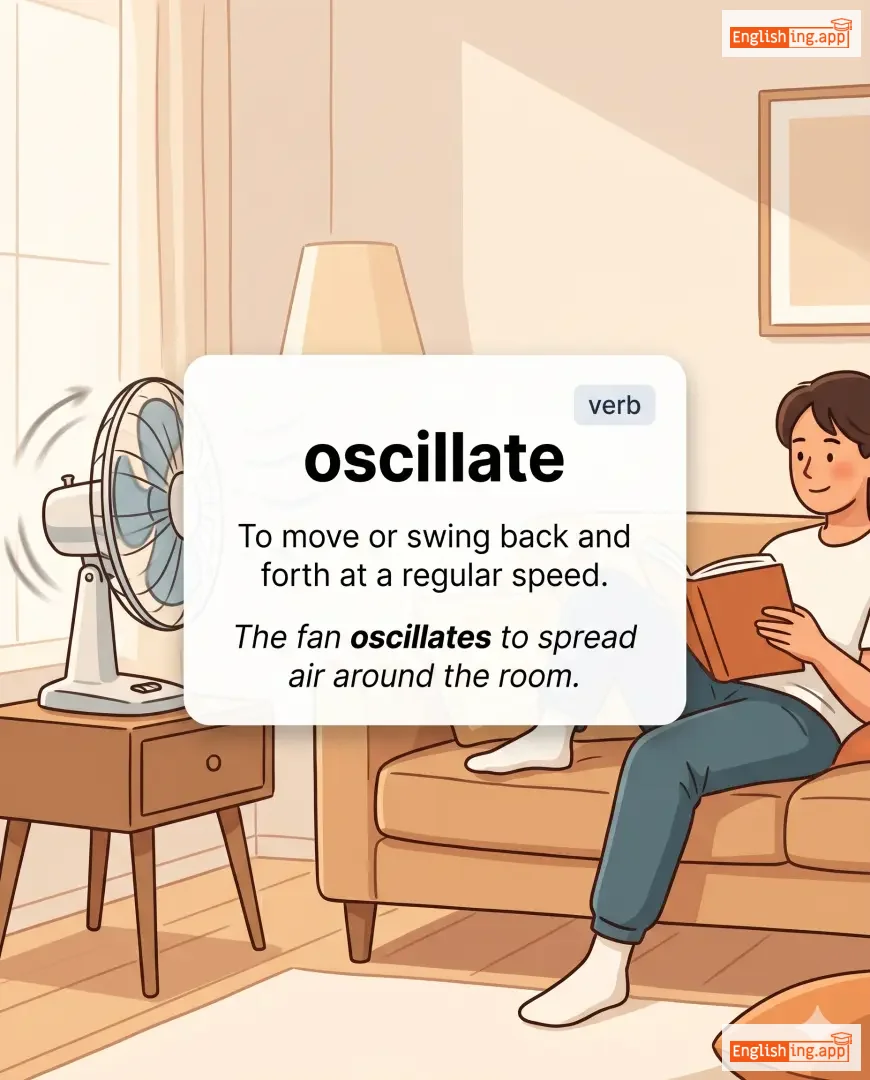
oscillate definition card — visual illustration of the meaning
verb
/ˈɑːsɪleɪt/
দুলতে থাকা (dulte thaka)

To move or swing back and forth at a regular speed.

"The fan oscillates to spread air around the room."

"ফ্যান রুমে বাতাস ছড়াতে দুলতে থাকে।" (Fan rume batas chharate dulte thake.)
noun
/ˌɑːsɪˈleɪʃən/
দোলন (dolon)

The movement back and forth at a regular speed.

"The oscillation of the pendulum controls the clock."

"পেন্ডুলামের দোলন ঘড়িকে নিয়ন্ত্রণ করে।" (Pendulamer dolon ghori ke niyontron kore.)
verb
/ˈɑːskjʊleɪt/
চুম্বন করা (chumbon kora)

To kiss.

"They osculated under the mistletoe during the party."

"তারা পার্টির সময় মিসলেটোর নিচে চুমু খেয়েছিল।" (Tara partyr somoy mistletoe r niche chumu kheyechhilo.)
adjective
/ˈɒsiəs/
অস্থিযুক্ত (osthijukto)

consisting of or turned into bone; bony

"The fossil showed osseous structures of the ancient creature."

"ফসিলে প্রাচীন প্রাণীর অস্থিযুক্ত গঠন দেখা গেছে।" (Fosile prachin pranir osthijukto gothon dekha geche.)
adjective
/ˈɑːsɪˌfaɪd/
অস্থিতে পরিণত, অনমনীয় (osthite porinoto, onmonio)

Turned into bone or become rigid; unwilling to change.

"The company had an ossified management structure that resisted innovation."

"কোম্পানির একটি অনমনীয় ব্যবস্থাপনা কাঠামো ছিল যা উদ্ভাবনকে বাধা দিয়েছিল।" (Companyr ekti onmonio byabosthapona kathamo chilo ja uddhabonke badha diyechilo.)
verb
/ˈɒsɪfaɪ/
অস্থিকরণ হওয়া (osthikoron howa)

to turn into bone or become rigid and inflexible

"With age, some tissues tend to ossify."

"বয়স বাড়ার সাথে সাথে কিছু টিস্যু অস্থিকরণ হয়ে যায়।" (Boyosh barar sathe sathe kichu tissue osthikoron hoye jay.)
adjective
/ɒˈstɛnsəbl/
প্রকাশ্য (prokashyo)

stated or appearing to be true, but not necessarily so

"His ostensible reason for leaving was illness, but many doubted it."

"তার চলে যাওয়ার প্রকাশ্য কারণ ছিল অসুস্থতা, তবে অনেকেই সন্দেহ করেছিল।" (Tar chole jaowar prokashyo karon chilo oshusthota, tobe oneke shondeho korechilo.)
adjective
/ɒˈstɛnsɪv/
প্রদর্শনমূলক (prodorshomulok)

clearly demonstrative or pointing out; explicitly shown

"The teacher gave an ostensive example to clarify the concept."

"শিক্ষক ধারণাটি পরিষ্কার করতে একটি প্রদর্শনমূলক উদাহরণ দিয়েছিলেন।" (Shikkhok dharanati porishkar korte ekti prodorshomulok udaharan diyechilen.)
noun
/ˌɒstɛnˈteɪʃən/
অপদর্শন (opodorshon)

excessive display of wealth or knowledge intended to attract admiration or envy

"The billionaire’s party was full of ostentation and luxury."

"কোটিপতির পার্টি অপদর্শন এবং বিলাসিতায় ভরা ছিল।" (Kotipoti'r party opodorshon ebong bilasitay bhora chilo.)
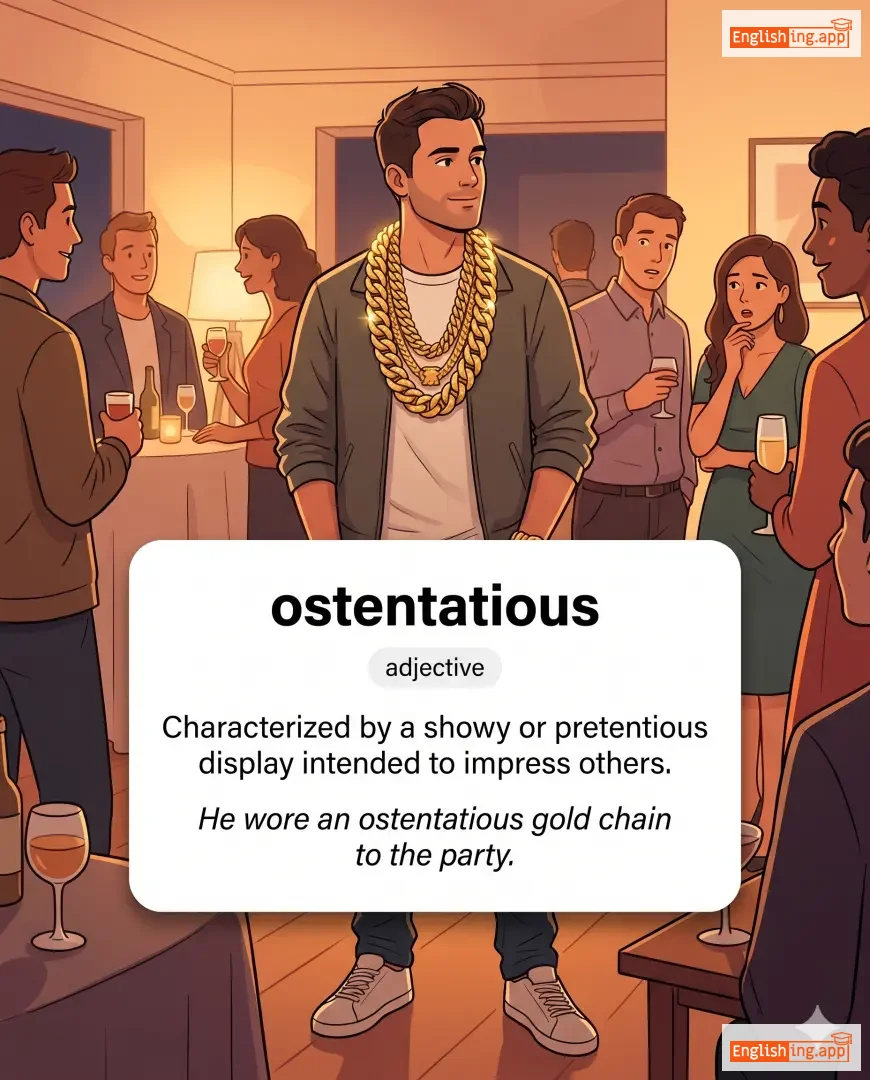
ostentatious definition card — visual illustration of the meaning
adjective
/ˌɒstɛnˈteɪʃəs/
আড়ম্বরপূর্ণ (armborpurno)

Characterized by a showy or pretentious display intended to impress others.

"He wore an ostentatious gold chain to the party."

"সে পার্টিতে আড়ম্বরপূর্ণ সোনার চেইন পরেছিল।" (Se partite armborpurno sonar chain porechilo.)
noun
/ˈɒstrəsɪzəm/
বহিষ্কার (bohishkar)

The act of excluding someone from a group or society.

"The student faced ostracism after breaking the rules."

"নিয়ম ভাঙার কারণে ছাত্রটি বহিষ্কারের সম্মুখীন হয়েছিল।" (Niyom bhangar karone chatroti bohishkarer sommukhin hoyechilo.)
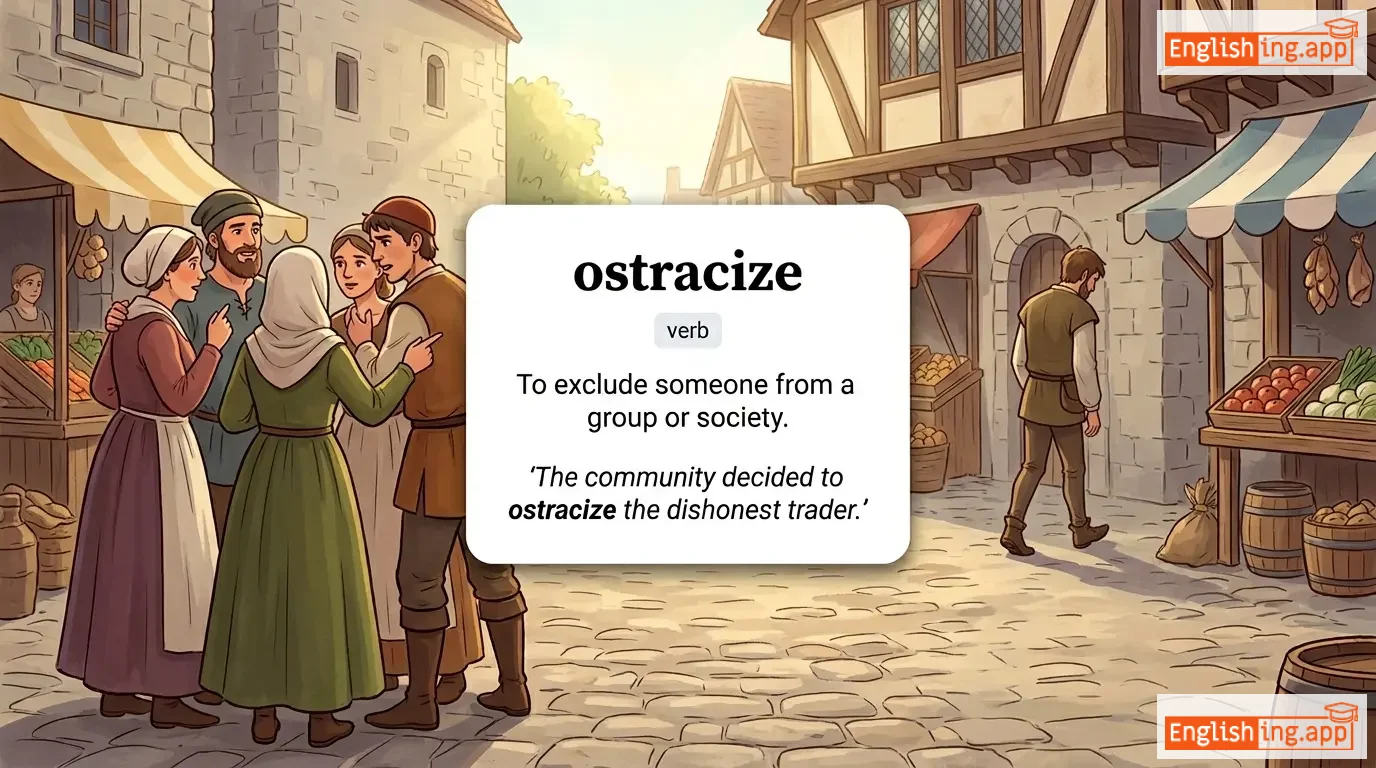
ostracize definition card — visual illustration of the meaning
verb
/ˈɒstrəsaɪz/
বহিষ্কার করা (bohishkar kora)

To exclude someone from a group or society.

"The community decided to ostracize the dishonest trader."

"সমাজ অসৎ ব্যবসায়ীকে বহিষ্কার করার সিদ্ধান্ত নিল।" (Somaj osot byabosayike bohishkar korar siddhanto nilo.)
noun
/ˈɒs.trɪtʃ/
উটপাখি (utpakhi)

a large flightless bird native to Africa with long legs and neck

"The ostrich is the world's largest bird."

"উটপাখি পৃথিবীর সবচেয়ে বড় পাখি।" (utpakhi prithibir shobcheye boro pakhi)
adjective
/ˈʌðər/
অন্যান্য (onyanno)

used to refer to something different from the one already mentioned or known

"I don't want this one, I will take the other one."

"আমি এটা চাই না, আমি অন্যটা নেব।" (Ami eta chai na, ami onno ta nebo.)
pronoun
/ˈʌðərz/
অন্যরা (onnora)

people or things distinct from the ones already mentioned or known

"I like to spend time with others."

"আমি অন্যদের সাথে সময় কাটাতে পছন্দ করি।" (Ami onnora sathe shomoy katate pochhondo kori.)
adverb
/ˈʌðərwaɪz/
অন্যথায় (onno thaye)

in a different or other way

"We need to hurry; otherwise, we'll miss the train."

"আমাদের তাড়াতাড়ি করতে হবে; অন্যথায়, আমরা ট্রেন মিস করব।" (Amader taratari korte hobe; onnothay, amra tren mis korbo.)
noun
/ˈɒt.ər/
ভোঁদড় (bhodor)

a mammal with webbed feet that lives near water and feeds on fish

"The playful otter swam gracefully in the river."

"খেলুড় ভোঁদড়টি নদীতে সুন্দরভাবে সাঁতার কাটল।" (khelur bhodorte nodiote sundorbhabe shatar katlo)
modal verb
/ɔːt/
উচিত (uchit)

Used to indicate duty, correctness, or moral obligation.

"You ought to respect your elders."

"তোমার বয়োজ্যেষ্ঠদের সম্মান করা উচিত।" (Tomar boyojesthoder somman kora uchit.)
pronoun
/aʊər/
আমাদের (amader)

belonging to or associated with the speaker and one or more other people

"This is our house."

"এটি আমাদের বাড়ি।" (Eti amader bari.)
pronoun
/aʊərz/
আমাদের (amader)

belonging to or associated with us

"This victory is ours."

"এই বিজয় আমাদের।" (Ei bijoy amader.)
pronoun
/aʊərˈsɛlvz/
আমরা নিজেদের (amra nijeder)

used by the speaker to refer to themselves and one or more others as the object of the verb

"We should help ourselves before helping others."

"আমাদের অন্যদের সাহায্য করার আগে নিজেকে সাহায্য করা উচিত।" (Amader onnoder sahajjo korar age nijeke sahajjo kora uchit.)
verb
/aʊst/
ক্ষমতাচ্যুত করা (khomotachyuto kora)

To remove someone from a position or place of power or authority.

"The rebels ousted the dictator from power."

"বিদ্রোহীরা স্বৈরশাসককে ক্ষমতা থেকে অপসারণ করেছিল।" (Bidrohi ra shoirashasokke khomota theke oposaron korechilo.)
adverb
/aʊt/
বাহিরে (bahire)

moving or appearing away from the inside or center; not at home or present

"He stepped out of the room quietly."

"সে চুপচাপ ঘর থেকে বেরিয়ে গেল।" (Se chupchap ghor theke beriye galo.)
adjective
/ˌaʊt ən ˈaʊt/
সম্পূর্ণ (sompunno)

complete; absolute; used to emphasize something extreme

"The speech was an out-and-out lie."

"ভাষণটি ছিল একেবারে মিথ্যা।" (Bhashonti chilo ekebare mithya.)
noun
/ˈaʊt.breɪk/
প্রাদুর্ভাব; বিস্তার; (pradurbhab)

a sudden occurrence or eruption of something, especially disease or violence

"The outbreak of flu affected many students in the school."

"ইনফ্লুয়েন্জার প্রাদুর্ভাব স্কুলের অনেক ছাত্রকে আক্রান্ত করেছে।" (influenzar pradurbhab skule onek chatrote akranto korechhe.)
adjective
/ˌaʊt əv ðə ˈweɪ/
অপ্রচলিত বা দূরবর্তী (oprocholito ba durborti)

remote or unusual; not in a convenient or usual location

"They stayed in an out-of-the-way village."

"তারা একটি দূরবর্তী গ্রামে ছিল।" (Tara ekti durborti grame chilo.)
noun
/ˈaʊt.saɪ.dər/
বহিরাগত; (bohiragoto)

a person who does not belong to a particular group; someone not accepted by a group

"As an outsider, he found it difficult to understand their traditions."

"একজন বহিরাগত হিসেবে, তাদের ত্রাদিশন বুঝতে তার কষ্ট হয়েছিল।" (ekjon bohiragoto hisebe, tader tradition bujhte tar koshto hoyechhilo.)
noun
/ˈaʊtˌbreɪk/
হঠাৎ প্রাদুর্ভাব (hotath pradurbhab)

a sudden start or occurrence of something unpleasant, like disease or violence

"There was an outbreak of flu in the city."

"শহরে ফ্লুর প্রাদুর্ভাব দেখা দিয়েছিল।" (Shohore flur pradurbhab dekha diyechilo.)
noun
/ˈaʊtbɜːrst/
হঠাৎ আবেগপ্রকাশ (hotath abeg prokash)

a sudden release of strong emotion or activity

"She had an angry outburst during the meeting."

"সে মিটিং চলাকালীন রাগের বিস্ফোরণ ঘটিয়েছিল।" (Se meeting cholakaline rager bisforon ghotiechilo.)
noun
/ˈaʊtkæst/
বহিষ্কৃত ব্যক্তি (bohiskrito bekti)

a person who is rejected or excluded from society or a group

"He felt like an outcast at school."

"সে স্কুলে একজন বহিষ্কৃত মনে করেছিল।" (Se schoole ekjon bohiskrito mone korechilo.)
noun
/ˈaʊtkʌm/
ফলাফল (folafol)

the result or consequence of an action or situation

"The outcome of the project was beyond expectations."

"প্রকল্পের ফলাফল প্রত্যাশার চেয়ে বেশী ছিল।" (Prokolper folafol protyashar cheye beshi chhilo.)
noun
/ˈaʊtˌkraɪ/
প্রচণ্ড প্রতিবাদ (prochondo protibad)

A strong expression of public anger or disapproval.

"The decision sparked an outcry among the citizens."

"সিদ্ধান্তটি নাগরিকদের মধ্যে তীব্র প্রতিবাদের সৃষ্টি করেছিল।" (Siddhantoti nagorikder moddhe tibro protibader sristi korechilo.)
adjective
/ˌfæʃ.ənd/
যুগের পর; অপ্রচলিত; (juger por, oprocholito)

obsolete; no longer current

"This computer software is completely outdated."

"এই কম্পিউটার সফটওয়ারটি সম্পূর্ণভাবে পুরানো।" (ei computer softwareti sompoornobhabe purano.)
verb
/ˌaʊtˈduː/
ছাড়িয়ে যাওয়া (chariye jaoa)

To do better than someone else; to surpass.

"She always tries to outdo her classmates in exams."

"সে সবসময় পরীক্ষায় সহপাঠীদের ছাড়িয়ে যাওয়ার চেষ্টা করে।" (Se sobsomoy porikkhay sohopathider chariye jaoar cheshta kore.)
adjective
/ˈaʊtdɔːr/
বহিরাঙ্গন (bohirangon)

situated, existing, or done outside a building

"We planned an outdoor picnic for the weekend."

"আমরা সপ্তাহান্তে একটি বহিরাঙ্গন পিকনিক পরিকল্পনা করেছি।" (Amra soptahante ekti bohirangon picnic porikolpona korechi.)
adverb; noun
/ˌaʊtˈdɔːrz/
বাইরে; খোলা পরিবেশ (baire; khola poribesh)

outside a building; the natural environment outside

"We spent the whole afternoon outdoors enjoying the fresh air."

"আমরা পুরো বিকেলটা বাইরে কাটিয়েছি তাজা বাতাস উপভোগ করে।" (amra puro bikelta baire katiyechi taja batas upobhog kore)
adjective
/ˈaʊtər/
বাহ্যিক (bahyik)

situated on or toward the outside; external

"The outer layer of the jacket is waterproof."

"জ্যাকেটের বাহ্যিক স্তরটি জলরোধী।" (Jacket er bahyik star ti jolrodhi.)
noun
/ˈaʊtˌfɪt/
পোশাক (poshak)

A set of clothes worn together, often for a particular occasion.

"She wore a beautiful outfit to the party."

"সে পার্টিতে একটি সুন্দর পোশাক পরেছিল।" (Se partite ekti sundor poshak porechilo.)
adjective
/ˈaʊtˌɡoʊɪŋ/
মিশুক (mishuk)

Friendly and sociable; inclined to mix with others.

"He is an outgoing person who loves meeting new people."

"সে একজন মিশুক মানুষ যে নতুন মানুষের সাথে দেখা করতে ভালোবাসে।" (Se ekti mishuk manush je notun manusher sathe dekha korte bhalobashe.)
noun
/ˈaʊtˌɡroʊθ/
ফলাফল (folafol)

something that grows out of something else; a natural development or result

"The new policy was an outgrowth of years of debate."

"নতুন নীতিটি বহু বছরের বিতর্কের একটি ফলাফল ছিল।" (Notun nititi bohu bochorer bitorker ekti folafol chilo.)
noun
/ˈaʊtɪŋ/
ভ্রমণ (bhramon)

a short trip or excursion, often for leisure or enjoyment

"They had a lovely outing at the beach last weekend."

"তারা গত সপ্তাহে সৈকতে একটি সুন্দর আউটিং করেছিল।" (Tara goth shoptahae soikte ekti sundor outing korechhilo.)
adjective
/ˌaʊtˈlændɪʃ/
অদ্ভুত (odbhut)

Looking or sounding bizarre or unfamiliar; strange.

"He wore an outlandish costume to the festival."

"সে উৎসবে একটি অদ্ভুত পোশাক পরেছিল।" (Se utsobe ekti odbhut poshak porechilo.)
verb
/aʊtˈlæst/
অধিককাল টিকে থাকা (odhikkal tike thaka)

to continue longer than; to endure beyond someone or something else

"The old castle has outlasted many generations."

"পুরানো দুর্গ অনেক প্রজন্মের চেয়ে দীর্ঘকাল টিকে আছে।" (Purano durgo onek projonmer cheye dirghokal tike ache.)
noun, verb
/ˈaʊtlɔː/
আইনভঙ্গকারী, নিষিদ্ধ করা (ainbhongkari, nishedh kora)

as a noun: a person who breaks the law and lives outside its protection; as a verb: to make something illegal

"The government decided to outlaw the harmful practice."

"সরকার ক্ষতিকর প্রথাটি নিষিদ্ধ করার সিদ্ধান্ত নিল।" (Sorkar khotikoro prothati nishedh korar siddhanto nilo.)
noun
/ˈaʊtlet/
নিষ্ক্রমণ পথ (nishkromon poth)

a means by which something is released, expressed, or distributed

"Art is a great outlet for emotions."

"শিল্প হলো আবেগ প্রকাশের একটি দুর্দান্ত মাধ্যম।" (Shilpo holo abeg prokasher ekti durdanto madhom.)
noun, verb
/ˈaʊtlaɪn/
খসড়া, সারাংশ (khosra, sarangsho)

a general description or plan that gives the main ideas without details; to describe something briefly or highlight main points

"The teacher asked us to outline our research project before writing the report."

"শিক্ষক আমাদের রিপোর্ট লেখার আগে গবেষণা প্রকল্পের খসড়া তৈরি করতে বলেছিলেন।" (Shikkhok amader report lekhar age gobeshona prokolper khosra toiri korte bolchilen.)