ভোকাবুলারিসমূহ

ইংরেজি শব্দের বাংলা অর্থ | English to Bangla Word Meaning Dictionary

noun
/ˈɒkjʊlɪst/
চক্ষু চিকিৎসক (okulist)

An old-fashioned term for an eye doctor or ophthalmologist.

"The village oculist was known for treating various eye diseases."

"গ্রামের অকুলিস্ট বিভিন্ন চোখের রোগের চিকিৎসার জন্য পরিচিত ছিলেন।" (Gramer okulist bibhinno chokher roger chikitsar jonno porichito chilen.)
adjective
/ɒd/
অদ্ভুত (odbhut)

different from what is usual or expected; strange or peculiar

"He has some odd habits that surprise everyone."

"তার কিছু অদ্ভুত অভ্যাস আছে যা সবাইকে অবাক করে।" (Tar kichu odbhut obhash ache ja sobaike obak kore.)
noun
/ˈɒdəti/
অদ্ভুত জিনিস (oditi)

Something strange or unusual.

"The bright pink building was an oddity in the small town."

"উজ্জ্বল গোলাপি রঙের ভবনটি ছোট শহরে একটি অদ্ভুত ব্যাপার ছিল।" (Ujjol golapi ronger bhobonti choto shohoore ekti oddbhut byapar chilo.)
adverb
/ˈɒdli/
অদ্ভুতভাবে (odbhutbhabe)

in a strange or unusual way; unexpectedly

"Oddly, he didn’t seem upset by the bad news."

"অদ্ভুতভাবে, খারাপ খবরেও সে বিচলিত হয়নি।" (odbhutbhabe, kharap khoboreo se bicholito hoyni)
noun
/ɒdz/
সম্ভাবনা (sombhabona)

the likelihood or probability of something happening; chances for or against something

"The odds of winning the lottery are very low."

"লটারি জেতার সম্ভাবনা খুবই কম।" (Lotari jetar sombhabona khubi kom.)
noun
/oʊd/
প্রশস্তি কবিতা (proshosti kobita)

a lyrical poem, often expressing praise or strong emotions

"The poet wrote an ode to the beauty of nature."

"কবি প্রকৃতির সৌন্দর্যের প্রশংসায় একটি ওড লিখেছিলেন।" (Kobi prokritir soundorjer proshongsay ekti ode likhechilen.)
adjective
/ˈoʊdiəs/
ঘৃণ্য (ghrinno)

extremely unpleasant or repulsive

"The dictator was remembered for his odious crimes."

"একনায়ক তার ঘৃণ্য অপরাধের জন্য স্মরণীয় ছিলেন।" (Eknayok tar ghrinno oparadher jonno smoroniya chilen.)
noun
/ˈoʊdiəm/
অপমান/ঘৃণা (opoman/ghrina)

general or widespread hatred or disgust directed toward someone as a result of their actions

"The scandal brought public odium on the corrupt minister."

"কেলেঙ্কারিটি দুর্নীতিগ্রস্ত মন্ত্রীর ওপর জনসাধারণের ঘৃণা নিয়ে আসে।" (Kelenkariti durnitigrosto montrir opar jonsadharoner ghrina niye ase.)
adjective
/ˌoʊdəˈrɪfərəs/
সুগন্ধি (sugondhi)

having or giving off a smell, especially a strong or pleasant one

"The garden was filled with odoriferous flowers."

"বাগানটি সুগন্ধি ফুলে ভরে গিয়েছিল।" (Baganti sugondhi fule bhore giyechhilo.)
adjective
/ˈoʊdərəs/
দুর্গন্ধযুক্ত (durgondhojukto)

having or giving off a smell, often unpleasant

"The odorous garbage had to be taken out immediately."

"দুর্গন্ধযুক্ত আবর্জনা দ্রুত বাইরে ফেলা দরকার ছিল।" (durgondhojukto aborjona druto baire fela dorkar chilo.)
noun
/ˈoʊ.dər/
গন্ধ; সুগন্ধ বা দুর্গন্ধ; (gondho)

a distinctive smell, especially an unpleasant one

"The odour of fresh bread filled the kitchen."

"তাজা রুটির গন্ধ রান্নাঘর ভরে দিল।" (taja rutir gondho rannaghore bhore dilo.)
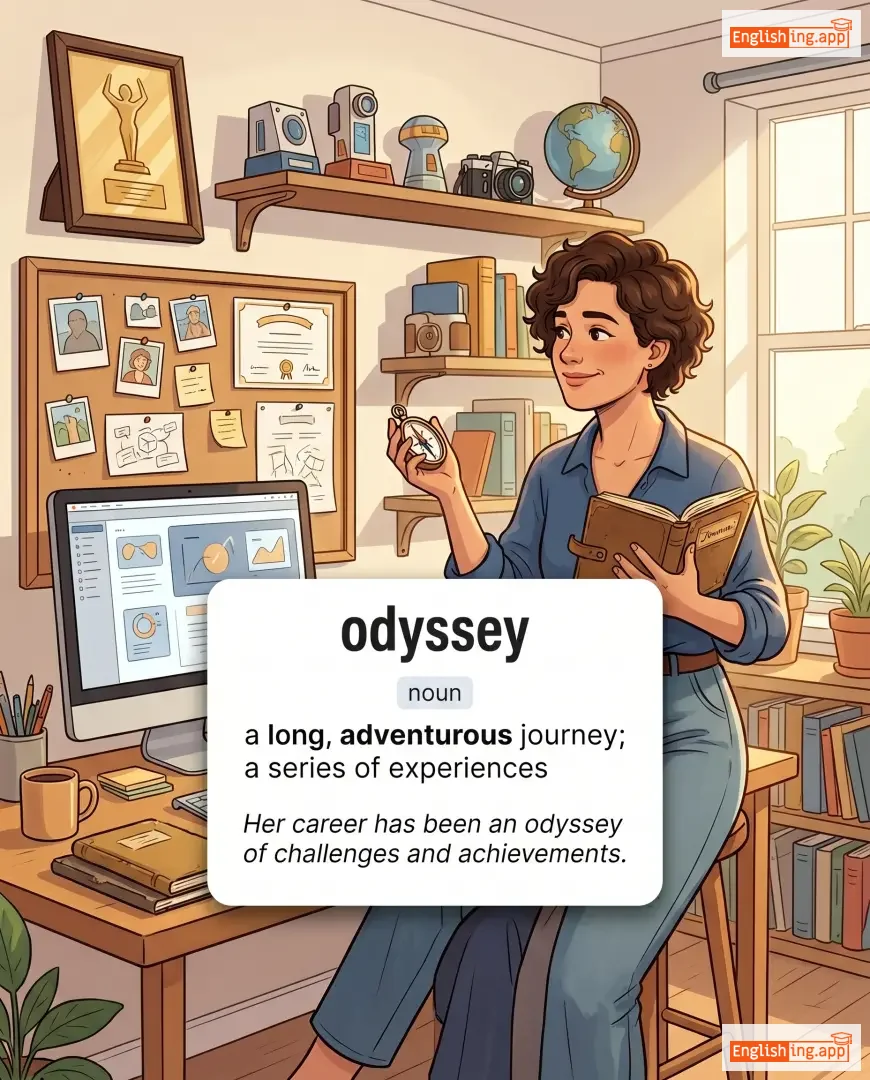
odyssey definition card — visual illustration of the meaning
noun
/ˈɑːdəsi/
দীর্ঘ যাত্রা (dirgho jatra)

a long, adventurous journey; a series of experiences

"Her career has been an odyssey of challenges and achievements."

"তার কর্মজীবন ছিল চ্যালেঞ্জ ও অর্জনের একটি দীর্ঘ যাত্রা।" (tar kormojibon chilo challenge o orjoner ekti dirgho jatra.)
preposition
/ʌv/
এর (er)

expressing the relationship between a part and a whole

"The book is on the table, in front of the window."

"বইটি টেবিলের উপর, জানালার সামনে রয়েছে।" (boi ti tebil er upore, janalar samne royechhe.)
adverb
/ɔːf/
বন্ধ (bondho)

away from a place, position, or time; not functioning

"He turned off the light before leaving the room."

"ঘর ছাড়ার আগে সে লাইটটি বন্ধ করে দিল।" (ghar charar age se lightti bondho kore dilo.)
adjective
/ˌɔːfˈkiː/
সুরভ্রষ্ট (survroshto)

out of tune; not in accordance with expected standards

"The singer was slightly off-key during the performance."

"গানের সময় গায়কটি সামান্য সুরভ্রষ্ট ছিলেন।" (ganer somoy gayokti samanno survroshto chilen.)
noun
/ˈɔːfəl/
পশুর ভুঁড়ি (poshur bhuri)

the internal organs and entrails of an animal used as food; waste parts

"The butcher prepared sausages using pork offal."

"কসাই শূকরের ভুঁড়ি ব্যবহার করে সসেজ তৈরি করেছিল।" (kosai shukorer bhuri byabohar kore sosej toiri korechilo.)
adjective
/ˈɒf.biːt/
অস্বাভাবিক (oswabhavik)

Unusual, unconventional, or different from the norm.

"She has a very offbeat sense of humor."

"তার হাস্যরসের অনুভূতি খুবই অস্বাভাবিক।" (tar hashyaroser onubhuti khubi oswabhavik.)
noun
/əˈfens/
অপরাধ; অপরাধী; অপমানজনক কার্য; (oporadh)

a breach of law or rule; an annoyance or resentment

"Stealing is a serious offence punishable by law."

"চুরি একটি গুরুতর অপরাধ যা আইন অনুযায়ী দণ্ডনীয়।" (churi ekti gurutor oporadh ja ain onujayye dondoniyo.)
verb
/əˈfɛnd/
অপমান করা (opoman kora)

to cause someone to feel upset, insulted, or annoyed

"She didn’t mean to offend anyone with her remarks."

"তার মন্তব্য দিয়ে তিনি কাউকে অপমান করতে চাননি।" (Tar mottomo dwoe tini kauke opoman korte chaan ni.)
noun
/əˈfɛndər/
অপরাধী (oporadhi)

a person who commits a crime or does something wrong

"The police caught the offender quickly."

"পুলিশ দ্রুত অপরাধীকে ধরেছিল।" (Police druto oporadhike dhorechhilo.)
noun
/əˈfɛns/
অপরাধ (oprodh)

an illegal act; a crime

"The offense was committed in broad daylight."

"অপরাধটি বিস্তৃত দিনে সংঘটিত হয়েছিল।" (Oprodhti bistirno dine songhotito hoyechilo.)
adjective
/əˈfɛnsɪv/
অপমানজনক (opmanjonok)

Causing hurt, anger, or annoyance; also relating to attacking in sports or war.

"His offensive remarks upset everyone at the meeting."

"তার অপমানজনক মন্তব্য সবার মন খারাপ করে দিল।" (tar opmanjonok montobbo sabar mon kharap kore dilo.)
offer definition card — visual illustration of the meaning
verb
/ˈɔːfər/
প্রস্তাব করা (prostab kora)

to present or give something to someone

"She offered him a gift for his birthday."

"সে তাকে তার জন্মদিনের জন্য একটি উপহার প্রস্তাব করেছিল।" (Se take tar jonmodiner jonno ekti upohar prostab korechhilo.)
noun
/ˈɒfərɪŋ/
উপহার বা নিবেদন (upohar ba nibedon)

something that is given, especially as a gift or contribution

"The company’s latest offering is an eco-friendly car."

"কোম্পানির নতুন উপহার হলো একটি পরিবেশবান্ধব গাড়ি।" (Companyr notun upohar holo ekti poribeshbandhob gari.)
noun
/ˈɒfərtɔːri/
দান (dan)

The part of a religious service when offerings are collected; the offering itself.

"The offertory was taken during the Sunday service."

"রবিবারের প্রার্থনার সময় দান সংগ্রহ করা হয়েছিল।" (robibarer prarthonar somoy dan songroho kora hoyechhilo.)
adjective/adverb
/ˌɒfˈhænd/
অসাবধানী (osabdhani)

Without previous thought or preparation; casual and sometimes dismissive.

"She gave an offhand reply to his serious question."

"সে তার গম্ভীর প্রশ্নের অসাবধানী উত্তর দিল।" (se tar gombhir proshner osabdhani uttor dilo.)
noun
/ˈɒf.ɪs/
অফিস (ofis)

a room or building where people work, usually at desks

"She left the office early to attend a family event."

"তিনি একটি পারিবারিক অনুষ্ঠানে যোগ দিতে অফিস থেকে আগে বেরিয়ে গেলেন।" (Tini ekti paribarik onusthane jog dite ofis theke age beriye gelen.)
noun
/ˈɔːfɪsər/
কর্মকর্তা (kormokorta)

a person in a position of authority, especially in law enforcement

"The officer gave him a ticket for speeding."

"কর্মকর্তা তাকে গতির জন্য একটি টিকেট দিয়েছিল।" (Kormokorta take gotir jonno ekti ticket diyechhilo.)
adjective
/əˈfɪʃəl/
আধিকারিক (adhikarik)

relating to or connected with an authority or public office

"He is the official spokesperson for the company."

"সে কোম্পানির অফিসিয়াল মুখপাত্র।" (Se company-r official mukhpatro.)
adverb
/əˈfɪʃəli/
আনুষ্ঠানিকভাবে (anusthanikvabe)

in a formal or authorized way

"The building was officially opened by the mayor."

"ভবনটি মেয়র দ্বারা আনুষ্ঠানিকভাবে উদ্বোধন করা হয়েছিল।" (Bhobonti mayor dara anusthanikvabe uddhapon kora hoyechhilo.)
verb
/əˈfɪʃieɪt/
আনুষ্ঠানিক কাজ সম্পাদন করা (anusthanik kaj sompadon kora)

To perform official duties, especially in a ceremony or as a referee.

"The priest will officiate the wedding ceremony."

"পুরোহিত বিবাহ অনুষ্ঠান পরিচালনা করবেন।" (purohit bibaho onusthan porichalona korben.)
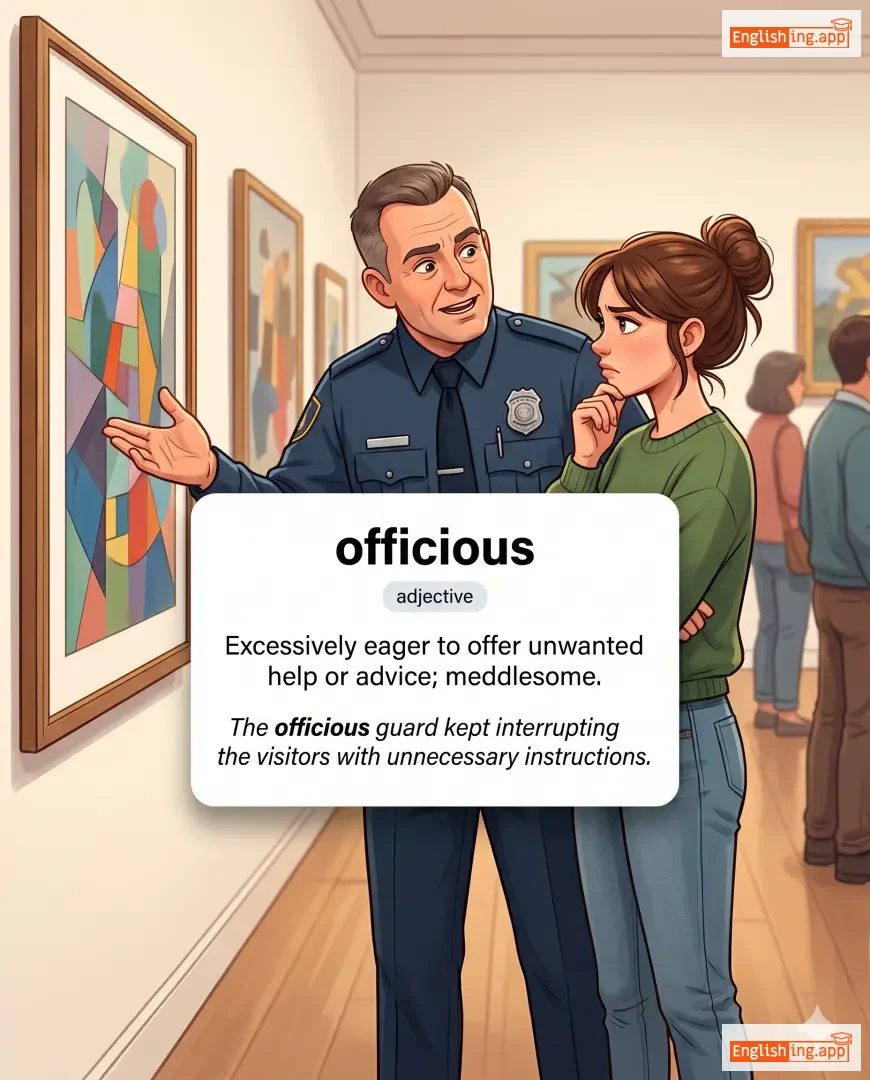
officious definition card — visual illustration of the meaning
adjective
/əˈfɪʃəs/
হস্তক্ষেপপ্রবণ (hostokhepopron)

Excessively eager to offer unwanted help or advice; meddlesome.

"The officious guard kept interrupting the visitors with unnecessary instructions."

"অফিশাস প্রহরী অযথা নির্দেশ দিয়ে দর্শনার্থীদের বারবার ব্যাহত করছিল।" (Offishas prohori oyotha nirdesh diye dorshonarthider bar bar byahoto korchilo.)
adjective
/ˈɒfɪʃ/
অমায়িক (omayik)

Unfriendly, distant, or reserved in manner.

"He seemed offish at the party and avoided most conversations."

"সে পার্টিতে অফিশ মনে হচ্ছিল এবং বেশিরভাগ কথোপকথন এড়িয়ে চলেছিল।" (Se party te offish mone hochhilo ebong beshirbhag kothopokothon ariye cholchhilo.)
verb
/ˈɒfsɛt/
ক্ষতিপূরণ (khotipuron)

To counterbalance or compensate for something.

"The company's losses were offset by gains in other departments."

"কোম্পানির ক্ষতিগুলি অন্য বিভাগের লাভ দিয়ে অফসেট করা হয়েছিল।" (Companyr khotiguli onno bibhager labh diye offset kora hoyechhilo.)
noun
/ˈɒfʃuːt/
শাখা (shakha)

A branch or result that develops from something larger or more important.

"The startup was an offshoot of a major tech company."

"স্টার্টআপটি একটি বড় টেক কোম্পানির অফশুট ছিল।" (Startupti ekti boro tech companyr offshoot chhilo.)
noun
/ˈɒf.sprɪŋ/
সন্তান (shontan)

a person's child or children; an animal's young

"The bird carefully fed its offspring."

"পাখিটি তার সন্তানকে যত্ন সহকারে খাওয়ালো।" (Pakhiti tar shontanke jotno shoho kore khawalo.)
adverb
/ˈɔːfən/
প্রায়ই (proai)

frequently, many times

"I often visit my grandparents on weekends."

"আমি প্রায়ই আমার দাদী-দাদীর বাড়ি সপ্তাহান্তে যাই।" (Ami proai amar dadi-dadir bari shoptahante jai.)
verb
/ˈoʊɡəl/
তাকানো (takano)

To look at someone with obvious sexual interest.

"He kept ogling the models on the runway."

"সে রানওয়েতে মডেলদের দিকে বারবার লোলুপভাবে তাকাচ্ছিল।" (Se runway te modelder dike bar bar lolupbhabe takachhilo.)
noun
/ˈoʊɡər/
রাক্ষস (rakshos)

A mythical monster, often depicted as large, hideous, and cruel; metaphorically, a cruel or terrifying person.

"The villagers feared the ogre who lived in the dark forest."

"গ্রামবাসীরা অন্ধকার জঙ্গলে বসবাসকারী রাক্ষসকে ভয় পেত।" (Grambasira ondhokar jongole bosobashkori rakshoske voy peto.)
interjection
/oʊ/
ওহ (oh)

used to express surprise, realization, or understanding

"Oh, I didn't know you were here!"

"ওহ, আমি জানতাম না তুমি এখানে ছিলে!" (Oh, ami janatam na tumi ekhane chhile!)
noun
/ɔɪl/
তেল (tel)

a viscous liquid derived from plants or animals, used for cooking, lubrication, or fuel

"She added some oil to the pan to fry the vegetables."

"সে সবজি ভাজার জন্য প্যানে কিছু তেল যোগ করল।" (Se sobji bhajar jonyo paane kichu tel jog korlo.)
noun
/ˈɔɪl.mən/
তেলওয়ালা/তেল ব্যবসায়ী (telowala)

a person who works in the oil industry; someone who sells oil or petroleum products

"The oilman discovered a new oil field in the desert."

"তেল ব্যবসায়ী মরুভূমিতে একটি নতুন তেলক্ষেত্র আবিষ্কার করেছে।" (tel byabshayi morubhumite ekti notun telkhettro abishkar koreche.)
adjective
/ˈɔɪl.i/
তেলের মতো; তেল মাখানো; তেলতেলে; (teler moto; tel makhano; teltele)

covered with oil; containing oil; greasy

"Her oily skin needs special care."

"তার তেলতেলে ত্বকের বিশেষ যত্নের প্রয়োজন।" (tar teltele twoker bishesh jotner proyojon.)
noun
/ˈɔɪntmənt/
মলম (molom)

A smooth, oily substance applied to the skin for healing or soothing.

"The doctor prescribed an ointment for the burn on his arm."

"ডাক্তার তার হাতে পোড়ার জন্য একটি মলম প্রেসক্রাইব করেছিলেন।" (Daktar tar hate porar jonno ekti molom prescribe korechilen.)
adjective
/oʊˈkeɪ/
ঠিক আছে (thik ache)

used to indicate agreement, approval, or understanding

"Okay, let's go to the park."

"ঠিক আছে, চল park এ যাই।" (Thik ache, cholo park-e jai.)
adjective
/əʊˈkeɪ/
ঠিক আছে (thik ache)

used to express agreement or acceptance

"It's okay to leave early today."

"এটি আজ তাড়াতাড়ি চলে যাওয়ার জন্য ঠিক আছে।" (Eti aaj ṭadātāri chole yāwar jonno thik āchhe.)
adjective
/oʊld/
পুরনো (purono)

having lived for a long time; not new or young

"He still drives his old car."

"সে এখনও তার পুরনো গাড়ি চালায়।" (Se ekhono tar purono gari chalai.)
adjective
/ˌoʊld ˈfæʃənd/
পুরোনো ধাঁচের (purono dhacher)

not modern; belonging to an earlier time

"He still wears an old-fashioned hat."

"সে এখনও পুরোনো ধাঁচের টুপি পরে।" (Se ekhono purono dhacher topi pore.)
noun
/oʊliˈændər/
করবী (korbi)

a poisonous evergreen shrub with clusters of white, pink, or red flowers

"The beautiful oleander flowers bloomed in the garden despite their toxic nature."

"বিষাক্ত প্রকৃতি সত্ত্বেও বাগানে সুন্দর করবী ফুল ফুটেছিল।" (bishakto prokhriti shottveo bagane shundor korbi phul phutechchilo.)
noun
/ɑːlˈfækʃən/
ঘ্রাণেন্দ্রিয় (ghranendriyo)

The sense of smell; the process of detecting and perceiving odors.

"Dogs have a highly developed sense of olfaction."

"কুকুরের ঘ্রাণেন্দ্রিয় অত্যন্ত উন্নত।" (Kukurer ghranendriyo ottonto unnoto.)