ভোকাবুলারিসমূহ

ইংরেজি শব্দের বাংলা অর্থ | English to Bangla Word Meaning Dictionary

noun
/ˈnoʊzˌɡeɪ/
ফুলের তোড়া (fuler tora)

a small bunch of flowers, typically given as a gift or carried for decoration

"She carried a nosegay of fresh roses to the ceremony."

"সে অনুষ্ঠানে তাজা গোলাপের একটি তোড়া বহন করেছিল।" (Se onusthane taja golaper ekti tora bohon korechhilo.)
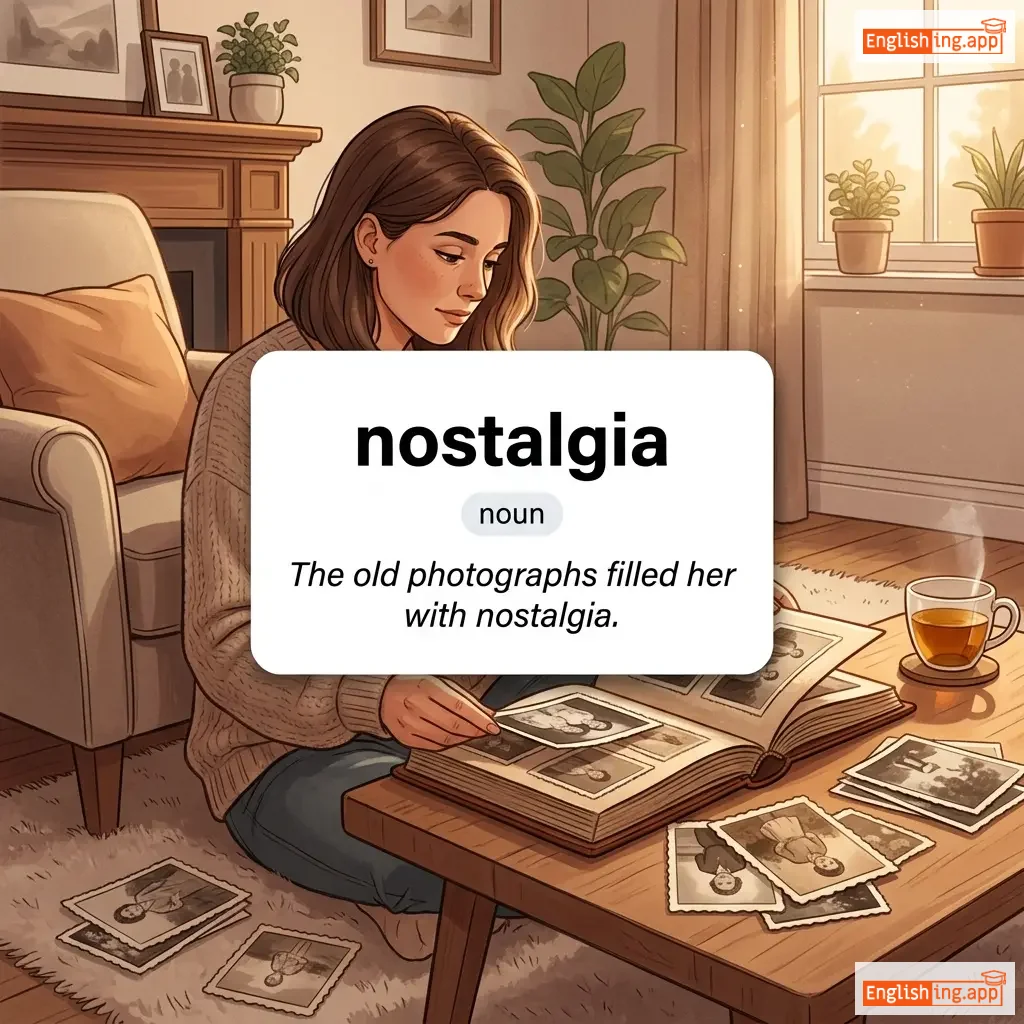
nostalgia definition card — visual illustration of the meaning
noun
/nəˈstældʒə/
অতীত স্মৃতির আকাঙ্ক্ষা (otit smritir akankkha)

a sentimental longing for the past, often for a period or place with happy memories

"The old photographs filled her with nostalgia."

"পুরনো ছবিগুলো তাকে নস্টালজিয়ায় ভরে দিয়েছিল।" (Purono chhbigulo take nostalgiae bhore diyechhilo.)
noun
/ˈnɒs.trɪl/
নাসারন্ধ্র (nasarondhro)

either of the two openings in the nose through which air passes

"The doctor checked each nostril for any blockage."

"ডাক্তার যেকোনো বাধার জন্য প্রতিটি নাসারন্ধ্র পরীক্ষা করলেন।" (daktar jekono badhar jonno protiti nasarondhro poriksha korlen.)
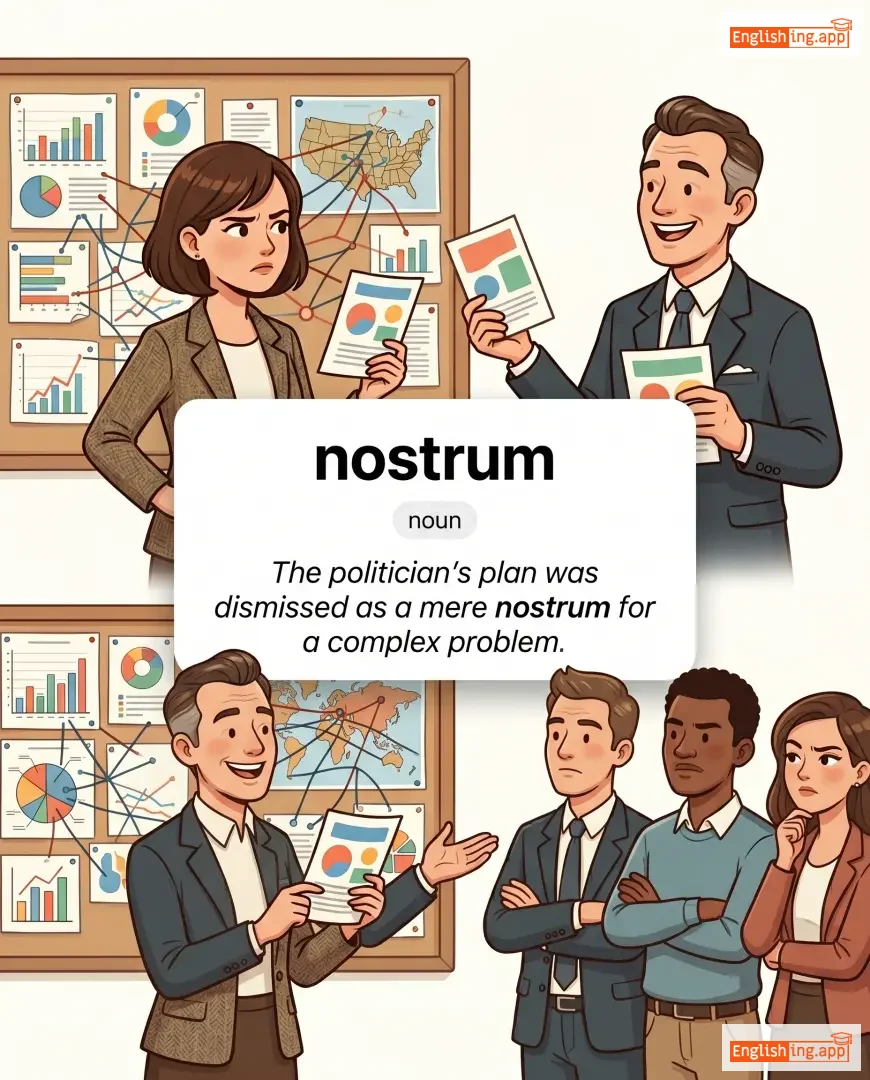
nostrum definition card — visual illustration of the meaning
noun
/ˈnɑːstrəm/
অবিশ্বস্ত ওষুধ (obishwasto oshudh)

a medicine or remedy, especially one that is not considered effective; a questionable solution

"The politician’s plan was dismissed as a mere nostrum for a complex problem."

"রাজনীতিবিদের পরিকল্পনাটি একটি জটিল সমস্যার জন্য কেবলমাত্র এক অবিশ্বস্ত প্রতিকার হিসেবে বাতিল করা হয়েছিল।" (Rajnaitibidder porikolpanati ekti jatil somashyar jonno kebolmatro ek obishwasto protikar hishebe batil kora hoyechhilo.)
adverb
/nɒt/
না (na)

used to make a word or phrase negative

"I do not like spicy food."

"আমি মসলাযুক্ত খাবার পছন্দ করি না।" (Ami mosolajukto khabar pochondo kori na.)
adjective
/ˈnoʊtəbl/
উল্লেখযোগ্য (ullekjoygo)

worthy of attention or notice; remarkable

"She made a notable contribution to the project."

"সে প্রকল্পে একটি উল্লেখযোগ্য অবদান রেখেছিল।" (Se projekte ekti ullekjoygo obodan rekhechhilo.)
adverb
/ˈnoʊtəbli/
বিশেষভাবে (biseshbhabe)

used to indicate something worthy of attention or significant

"She is notably talented in painting."

"সে চিত্রাঙ্কনে নোটাবলি প্রতিভাবান।" (Se chitrânkone biseshbhabe pratibhaban.)
noun
/noʊˈteɪʃən/
প্রতীকলিপি (protikolipi)

A system of symbols or signs used to represent information, especially in mathematics or music.

"The teacher explained the notation used in the algebra equations."

"শিক্ষক অ্যালজেব্রার সমীকরণে ব্যবহৃত প্রতীকলিপি ব্যাখ্যা করলেন।" (Shikkhok algebrar somikorone byabohrito protikolipi byakkha korlen.)
noun
/nɑːtʃ/
খাঁজ (khaj)

A small cut or groove on the edge or surface of something; a level or degree of achievement.

"He carved a notch on the stick to mark the days."

"সে দিন গোনার জন্য লাঠিতে একটি খাঁজ কেটেছিল।" (Se din gonar jonno lathite ekti khaj ketecchilo.)
note definition card — visual illustration of the meaning
noun, verb
/noʊt/
নোট (not)

a brief record of facts, topics, or thoughts written down; to observe or remark upon something

"She wrote a quick note to remind herself of the meeting."

"সে বৈঠকের কথা মনে করিয়ে দেওয়ার জন্য দ্রুত একটি নোট লিখেছিল।" (Se boithoker kotha mone koriye dewar jonno druto ekti not likhechilo.)
noun
/ˈnoʊtbʊk/
নোটবুক (notebook)

a small book with blank or ruled pages for writing notes; also a portable computer

"She opened her notebook to jot down some ideas."

"সে তার নোটবুক খুলে কিছু ধারণা লিখে নিল।" (se tar notebook khule kichu dharana likhe nilo.)
adjective, verb
/ˈnoʊtɪd/
খ্যাতিমান (khyatiman)

well known or famous; written down or observed

"He is a noted author in the field of history."

"তিনি ইতিহাসের ক্ষেত্রে একজন খ্যাতিমান লেখক।" (Tini itihasher khetre ekti khyatiman lekhok.)
pronoun
/ˈnʌθɪŋ/
কিছুই নয় (kichui noy)

not anything; no thing

"She has nothing to worry about."

"তার কিছু ভাবনা নেই।" (Tar kichu bhabna nei.)
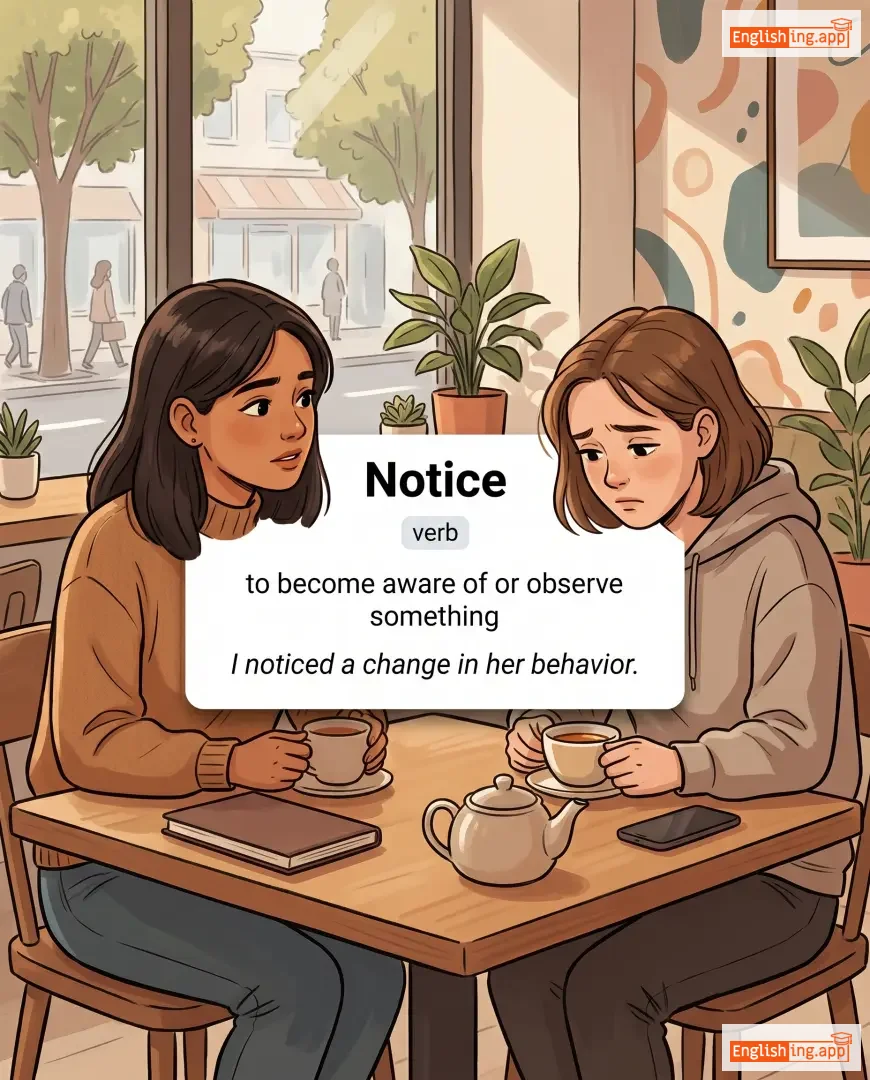
Notice definition card — visual illustration of the meaning
noun
/ˈnoʊtɪs/
নোটিস (notis)

a written or printed announcement or notification

"He gave me a notice about the meeting."

"তিনি আমাকে মিটিংয়ের নোটিস দিয়েছেন।" (Tini amake meeting-er notis diyechhen.)
adjective
/ˈnoʊtɪsəbl/
দৃশ্যমান (drishyoman)

Easily seen, observed, or recognized.

"There was a noticeable improvement in her performance."

"তার পারফরম্যান্সে একটি দৃশ্যমান উন্নতি ছিল।" (Tar performance e ekti drishyoman unnati chhilo.)
noun
/ˌnəʊtɪfɪˈkeɪʃən/
বিজ্ঞপ্তি (biggopti)

an official or formal notice or message informing someone of something; an alert delivered by a system or device

"You will receive a notification when your application is approved."

"আপনার আবেদন অনুমোদিত হলে আপনি একটি বিজ্ঞপ্তি পাবেন।" (apnar abedon onumodito hole apni ekti biggopti paben)
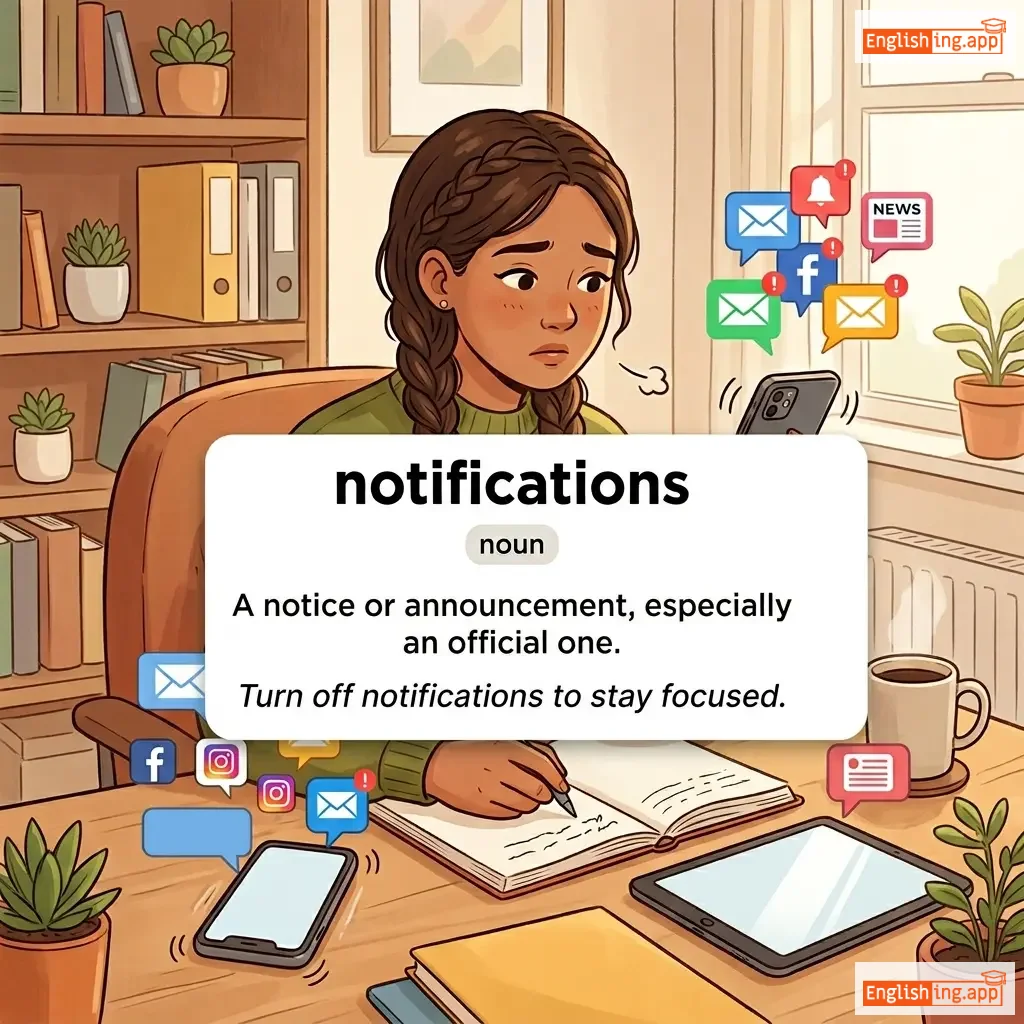
notifications definition card — visual illustration of the meaning
noun
/ˌnoʊtɪfɪˈkeɪʃənz/
নোটিফিকেশন (notifikeশন)

A notice or announcement, especially an official one.

"Turn off notifications to stay focused."

"মনোযোগী থাকতে নোটিফিকেশন বন্ধ করুন।" (Monojogi thakte notifikeশন bondho korun.)
verb
/ˈnoʊtɪfaɪ/
অবহিত করা (obohito kora)

to inform someone officially about something

"The manager will notify the staff about the schedule change."

"ম্যানেজার সময়সূচির পরিবর্তন সম্পর্কে কর্মীদের অবহিত করবেন।" (Manager somoysuchir poriborton somporke kormider obohito korben.)
noun
/ˈnoʊʃən/
ধারণা (dharrona)

An idea, belief, or concept about something.

"He had a vague notion of what she wanted."

"সে কী চাইছিল তার একটি অস্পষ্ট ধারণা ছিল।" (Se ki chaichhilo tar ekti osposto dharrona chhilo.)
noun
/ˌnoʊtəˈraɪəti/
কুখ্যাতি (kukhyati)

The state of being famous or well-known for something bad.

"The criminal gained notoriety for his daring escapes."

"অপরাধী তার দুঃসাহসী পালানোর জন্য কুখ্যাতি অর্জন করেছিল।" (Oporadhi tar dusshahosi palaonor jonno kukhyati arjon korechhilo.)
adjective
/nəˈtɔːriəs/
কুখ্যাত (kukhyat)

Famous or well-known for something bad or undesirable

"The area is notorious for its high crime rate."

"এলাকাটি তার উচ্চ অপরাধ হারের জন্য কুখ্যাত।" (Elakati tar uccho oparadh harer jonno kukhyat.)
preposition/adverb/conjunction
/ˌnɒtwɪθˈstændɪŋ/
সত্ত্বেও (sottweo)

In spite of; despite

"Notwithstanding the challenges, the team completed the project."

"চ্যালেঞ্জ থাকা সত্ত্বেও দলটি প্রকল্প সম্পন্ন করেছে।" (Challenge thaka sottweo dolti prokolpo somponno koreche.)
verb
/ˈnʌrɪʃ/
পুষ্টি জোগানো (pushti jogano)

To provide with food or other substances necessary for growth, health, and good condition

"Good books nourish the mind."

"ভালো বই মনকে পুষ্টি জোগায়।" (Bhalo boi monke pushti jogay.)
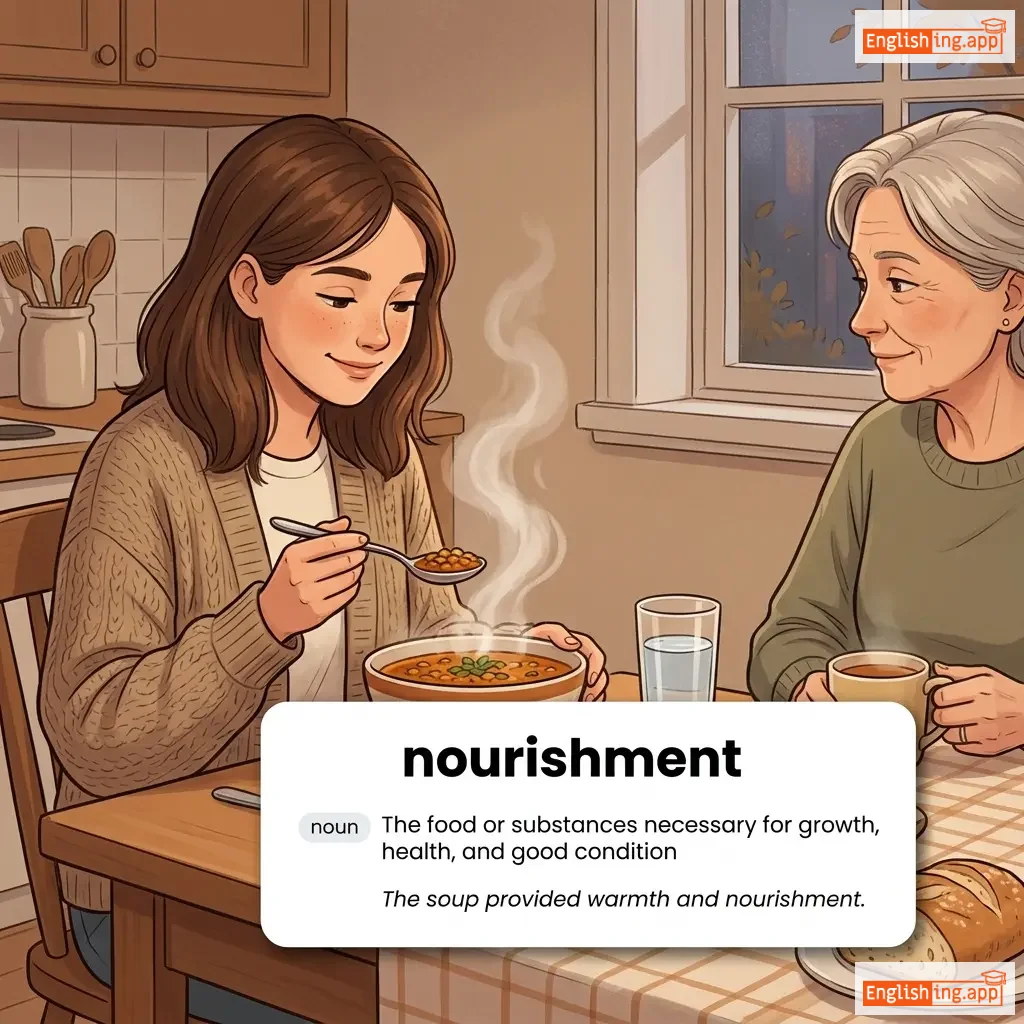
nourishment definition card — visual illustration of the meaning
noun
/ˈnʌrɪʃmənt/
পুষ্টি (pushti)

The food or substances necessary for growth, health, and good condition

"The soup provided warmth and nourishment."

"স্যুপ উষ্ণতা ও পুষ্টি দিয়েছিল।" (Soup ushnata o pushti diyechilo.)
noun
/ˈnoʊvə/
নোভা (হঠাৎ উজ্জ্বল হয়ে ওঠা নক্ষত্র) (nova)

A star showing a sudden large increase in brightness and then slowly returning to its original state

"Astronomers observed a bright nova in the sky."

"জ্যোতির্বিদরা আকাশে একটি উজ্জ্বল নোভা পর্যবেক্ষণ করলেন।" (Jyotirbidra akashe ekti ujjol nova porjobekkhon korlen.)
noun/adjective
/ˈnɒvəl/
উপন্যাস / নতুন (uponyas / notun)

A long fictional narrative; also something new or unusual.

"She spent the weekend reading a historical novel."

"সে সপ্তাহান্তে একটি ঐতিহাসিক উপন্যাস পড়েছিল।" (Se soptahante ekti oitihasik uponyas porechhilo.)
noun
/ˈnɒvəlɪst/
উপন্যাসকার (uponyaskar)

a person who writes novels

"The novelist spent years writing his new book."

"নভেলিস্ট তার নতুন বই লেখতে কয়েক বছর কাটিয়েছিলেন।" (Upônyaskar tar notun boi lekhtê koyek bochhor katiyechhilen.)
noun
/ˌnɒvəˈlɛt/
ক্ষুদ্র উপন্যাস (khudro uponyas)

A short novel or long short story.

"The author published a novellette as a preview of her upcoming series."

"লেখক তার আসন্ন সিরিজের প্রিভিউ হিসেবে একটি ছোট উপন্যাস প্রকাশ করেছিলেন।" (Lekhok tar asonn shirijer preview hisebe ekti choto uponyas prokash korechhilen.)
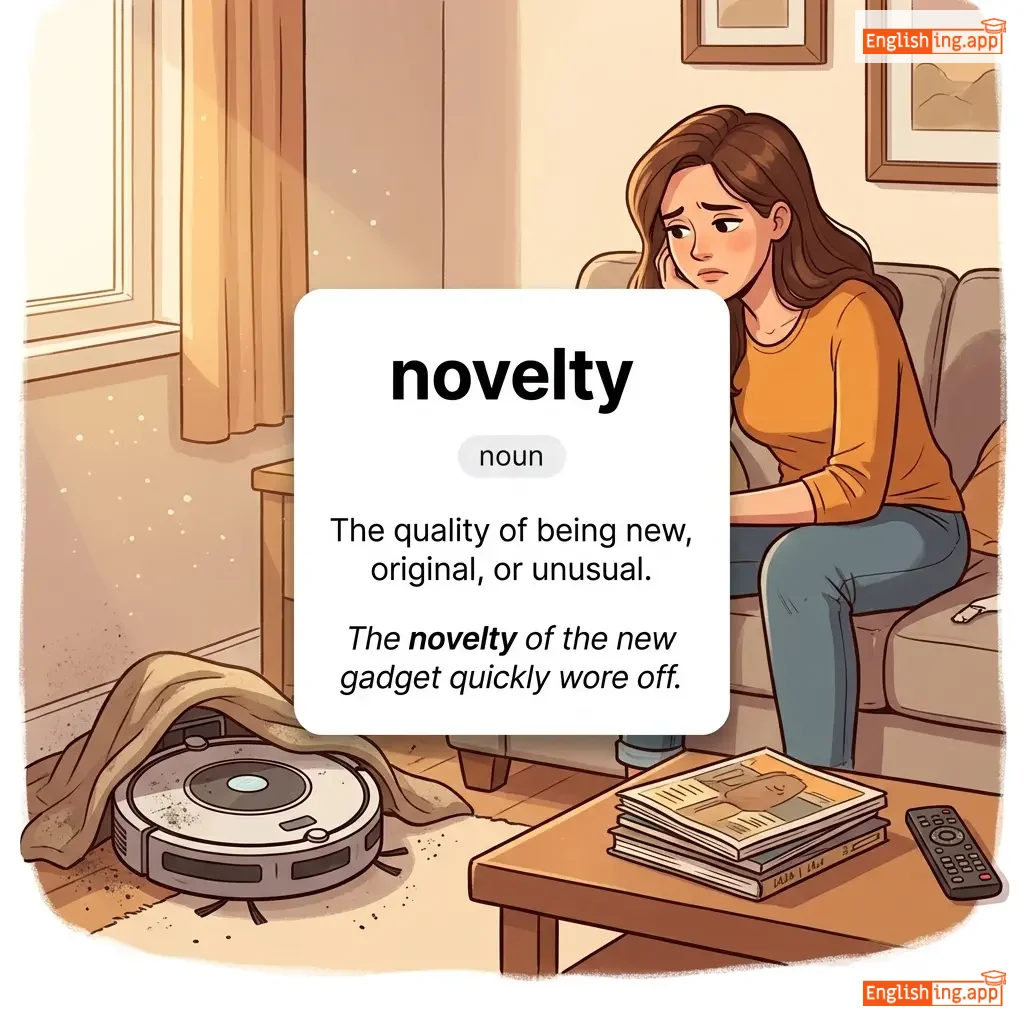
novelty definition card — visual illustration of the meaning
noun
/ˈnɒvəlti/
নতুনত্ব (notunotto)

The quality of being new, original, or unusual.

"The novelty of the new gadget quickly wore off."

"নতুন গ্যাজেটের নতুনত্ব দ্রুত শেষ হয়ে গেল।" (Notun gadget er notunotto druto shesh hoye galo.)
noun
/noʊˈvɛmbər/
নভেম্বর (nobhembar)

the eleventh month of the year in the Gregorian calendar

"November is often cool and quiet before winter begins."

"নভেম্বর সাধারণত শীত শুরুর আগে ঠান্ডা ও শান্ত থাকে।" (nobhembar sadharonoto shit shurur age thanda o shanto thake)
noun
/ˈnɒvɪs/
শিক্ষানবিস (shikhanobis)

A person new to or inexperienced in a field or activity.

"He is still a novice at playing the guitar."

"সে এখনো গিটার বাজানোয় শিক্ষানবিস।" (Se ekhono guitar bajanoy shikhanobis.)
adverb
/naʊ/
এখন (ekhon)

at the present moment or time

"I am studying now."

"আমি এখন পড়ছি।" (Ami ekhon porchi.)
adverb
/ˈnaʊədeɪz/
আজকাল; বর্তমানে; (ajkal)

at the present time; in these times

"Now-a-days, people prefer online shopping."

"আজকাল মানুষ অনলাইন কেনাকাটা পছন্দ করে।" (ajkal manush online kenakata poshondo kore)
adverb
/ˈnaʊədeɪz/
আজকাল (ajkal)

At the present time; in contrast with the past.

"Nowadays, many people prefer shopping online."

"আজকাল অনেক মানুষ অনলাইনে কেনাকাটা করতে পছন্দ করে।" (Ajkal onek manush online e kenakata korte pochondo kore.)
adverb
/ˈnoʊˌwɛr/
কোথাও নয় (kothao noy)

in or to no place; not anywhere

"The missing keys were nowhere to be found."

"হারানো চাবিগুলো কোথাও পাওয়া যায়নি।" (Harano chabigulo kothao pawa jayni.)
adjective
/ˈnɑːkʃəs/
ক্ষতিকর (khotikor)

harmful, poisonous, or very unpleasant

"The factory released noxious fumes into the air."

"কারখানাটি বাতাসে ক্ষতিকর ধোঁয়া ছেড়েছিল।" (Karkhanati batashe khotikor dhoya cherechhilo.)
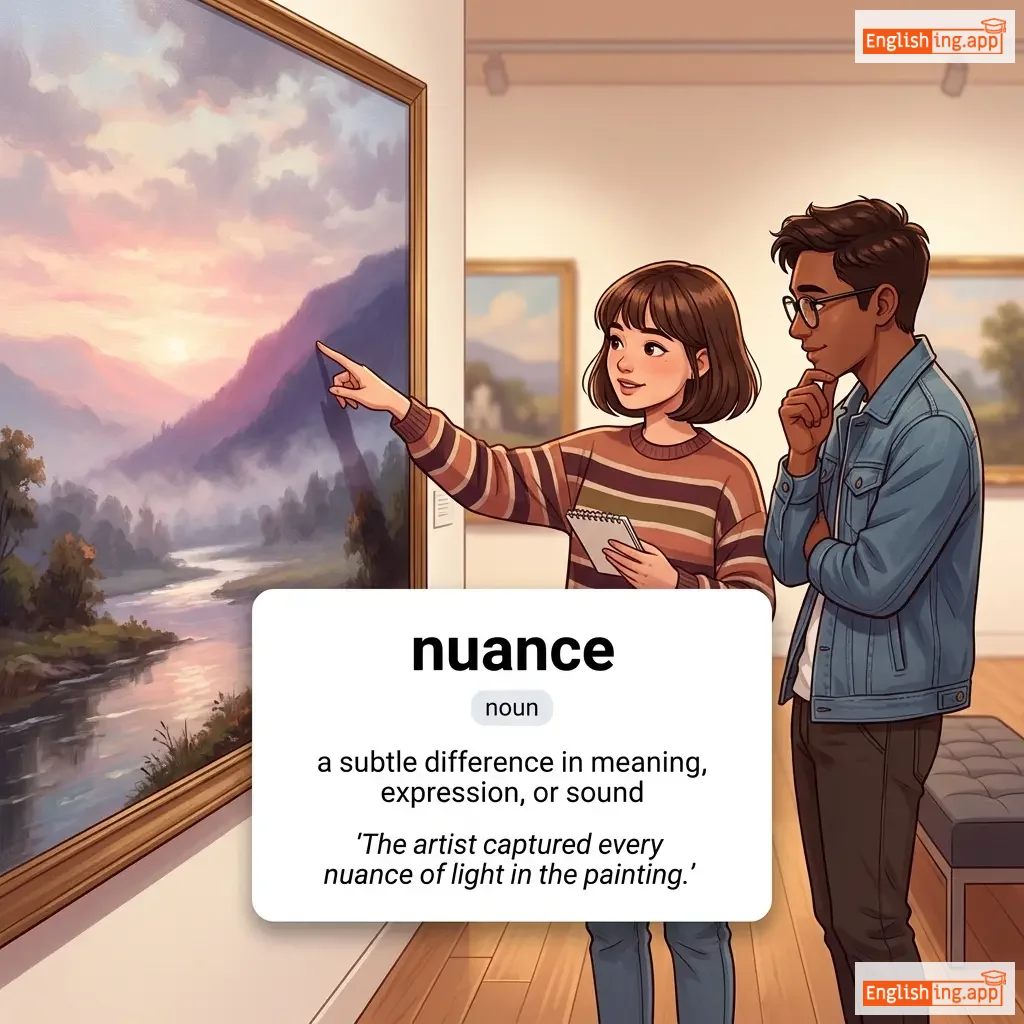
nuance definition card — visual illustration of the meaning
noun
/ˈnuːˌɑːns/
সূক্ষ্ম পার্থক্য (sukhmo parthokko)

a subtle difference in meaning, expression, or sound

"The artist captured every nuance of light in the painting."

"শিল্পী ছবিতে আলোর প্রতিটি সূক্ষ্ম পার্থক্য ধরতে পেরেছিলেন।" (Shilpi chobite alor protiti sukhmo parthokko dhorte perechhilen.)
adjective
ˈnuː.ɑːnst
সূক্ষ্ম পার্থক্য যুক্ত (shukshmo parthokko jukto)

Characterized by subtle shades of meaning or expression; having or characterized by subtle and often appealingly complex qualities.

"His argument was nuanced and well-structured."

"তার যুক্তিটি সূক্ষ্ম ও সুগঠিত ছিল।" (Tar juktiti shukshmo o shugothito chhilo.)
adjective
/ˈnjuːbaɪl/
যুবতী (juboti)

of a young woman, sexually mature and suitable for marriage

"The village was celebrating the festival with its nubile maidens dancing."

"গ্রামটি তার যুবতী কন্যাদের নাচ দিয়ে উৎসব উদযাপন করছিল।" (Gramti tar juboti konyader nach diye utsob ujjapon korchhilo.)
adjective
/ˈnuːkliər/
নিউক্লিয়ার (nuclear)

relating to the nucleus of an atom or to nuclear energy

"The country is developing nuclear energy."

"দেশটি নিউক্লিয়ার শক্তি বিকাশ করছে।" (Desh ti nuclear shakti bikash korche.)
verb
/ˈnuːkliˌeɪt/
কেন্দ্রীভূত হওয়া (kendributo howa)

to form into a nucleus or bring together into a central part

"The droplets began to nucleate around tiny particles in the air."

"বিন্দুগুলো বাতাসে ছোট কণার চারপাশে কেন্দ্রীভূত হতে শুরু করল।" (Bindugulo batashe chhoto konar charpashe kendributo hote shuru korlo.)
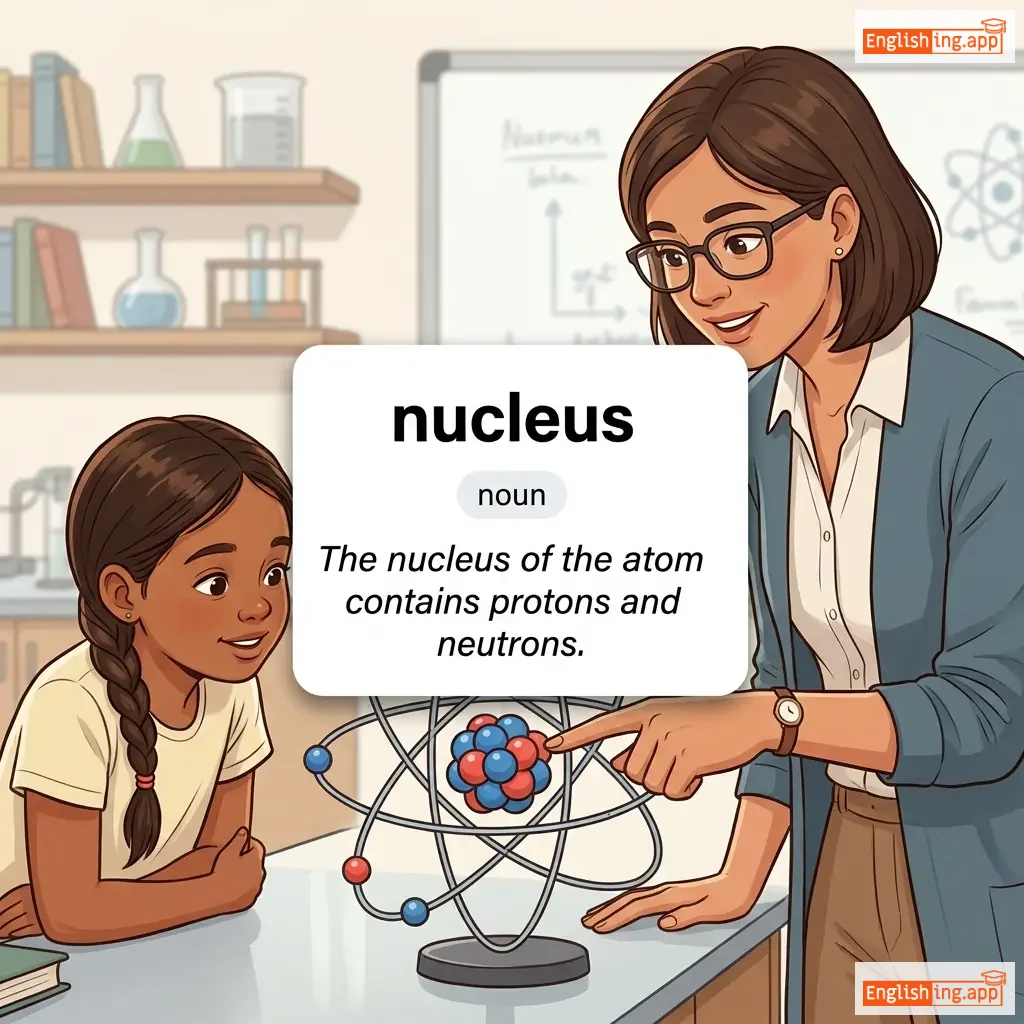
nucleus definition card — visual illustration of the meaning
noun
/ˈnjuː.kli.əs/
কেন্দ্রবিন্দু (kendrobindu)

The central and most important part of something, forming the basis for its activity and growth; in biology, the central part of a cell.

"The nucleus of the atom contains protons and neutrons."

"পরমাণুর নিউক্লিয়াসে প্রোটন এবং নিউট্রন থাকে।" (Poromanur nucleus e proton ebong neutron thake.)
adjective
/nuːd/
উলঙ্গ (ulonggo)

Wearing no clothes; naked.

"The artist painted a nude model."

"শিল্পী একটি উলঙ্গ মডেলের ছবি এঁকেছিলেন।" (Shilpi ekti ulonggo model er chobi enkhechilen.)
verb
/nʌdʒ/
কনুই দিয়ে আলতো ঠেলা (konui diye alto thela)

To push someone gently, usually with your elbow, in order to attract attention.

"She nudged him to be quiet during the meeting."

"মিটিং চলাকালীন সে তাকে চুপ থাকতে আলতো করে কনুই দিয়ে ঠেলে দিল।" (Meeting cholakaline se take chup thakte alto kore konui diye thele dilo.)
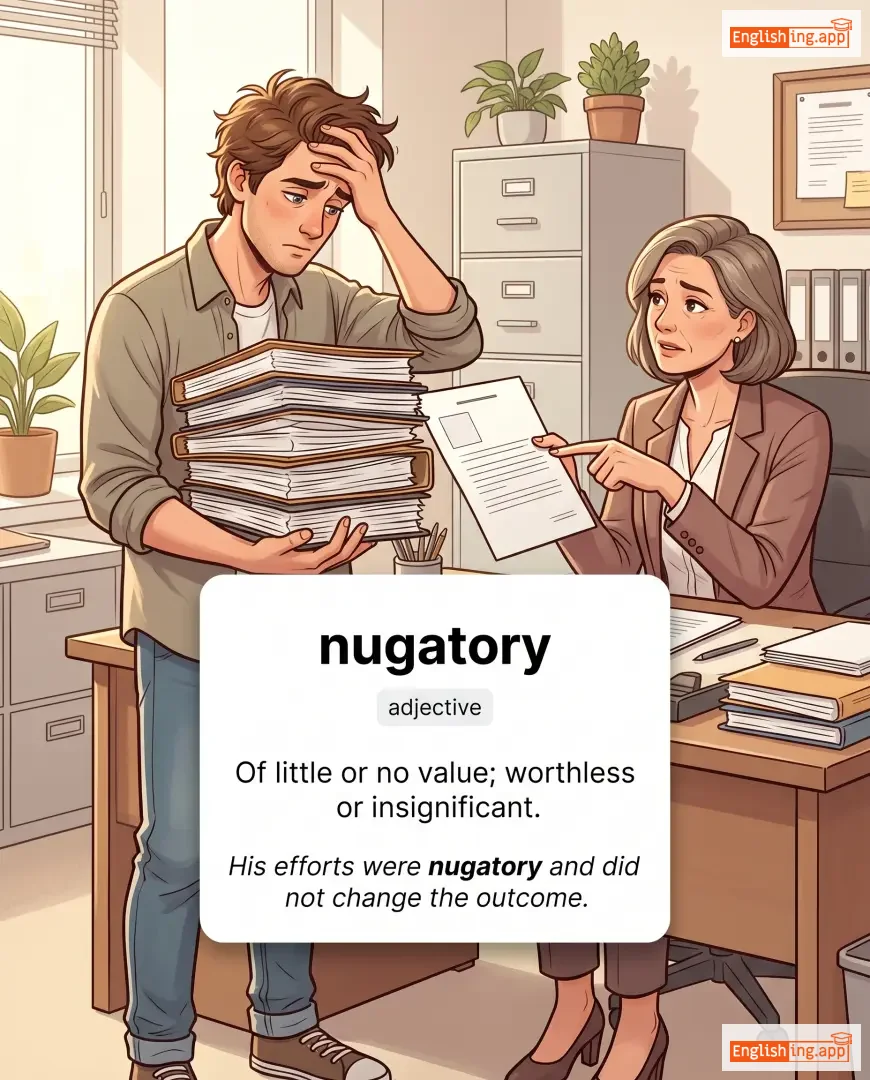
nugatory definition card — visual illustration of the meaning
adjective
/ˈnjuː.ɡə.tɔːr.i/
অমূল্য / তুচ্ছ (omulya / tuchcho)

Of little or no value; worthless or insignificant.

"His efforts were nugatory and did not change the outcome."

"তার প্রচেষ্টা অমূল্য ছিল এবং ফলাফল পরিবর্তন করতে পারেনি।" (Tar prochesta omulya chhilo ebong folafol poriborton korte pareni.)
noun
/ˈnjuː.səns/
উপদ্রব / বিরক্তি (upodrob / birokti)

A person, thing, or situation that causes inconvenience or annoyance.

"The loud construction noise was a nuisance to the neighbors."

"জোরে নির্মাণ কাজের শব্দ প্রতিবেশীদের জন্য একটি বিরক্তির কারণ ছিল।" (Jore nirman kajer shobdo protibeshider jonno ekti biroktir karon chhilo.)
nullify definition card — visual illustration of the meaning
verb
/ˈnʌlɪfaɪ/
অকার্যকর করা (okarjokor kora)

to make legally null and void; to cancel or invalidate

"The contract was nullified due to fraud."

"প্রতারণার কারণে চুক্তিটি বাতিল করা হয়েছিল।" (Protaronar karone chuktiti batil kora hoyechilo.)
noun
/ˈnʌmbər/
সংখ্যা (sonkha)

a mathematical value used to count, measure, or label

"She gave me her phone number."

"সে আমাকে তার ফোন নাম্বার দিয়েছে।" (Se amake tar phone number diyechhe.)
adjective
/ˈnjuː.mər.ə.bəl/
গণনাযোগ্য; গণনা করা যায় এমন; (gonona-joggo)

capable of being counted; countable

"The stars in the sky are not numerable."

"আকাশের তারাগুলো গণনাযোগ্য নয়।" (akasher taragulo gonona-joggo noy)
noun
/ˌnjuːməˈreɪʃən/
সংখ্যা গণনা (sonkha ganna)

the action or process of counting or assigning numbers

"The teacher explained the basics of numeration to the students."

"শিক্ষক শিক্ষার্থীদের সংখ্যা গণনার মৌলিক বিষয়গুলো ব্যাখ্যা করলেন।" (Shikkhok shikkharthider sonkha gannar moulik bishoygulo byakhya korlen.)