ভোকাবুলারিসমূহ

ইংরেজি শব্দের বাংলা অর্থ | English to Bangla Word Meaning Dictionary

noun
/ˈnoʊmæd/
যাযাবর (jajabor)

A person who has no permanent home and moves from place to place.

"The desert was once home to nomads who lived by herding animals."

"মরুভূমি একসময় যাযাবরদের আবাস ছিল যারা পশুপালন করে বেঁচে থাকত।" (Morubhumi eksomoy jajabor der abash chhilo jara poshupalan kore beche thakto.)
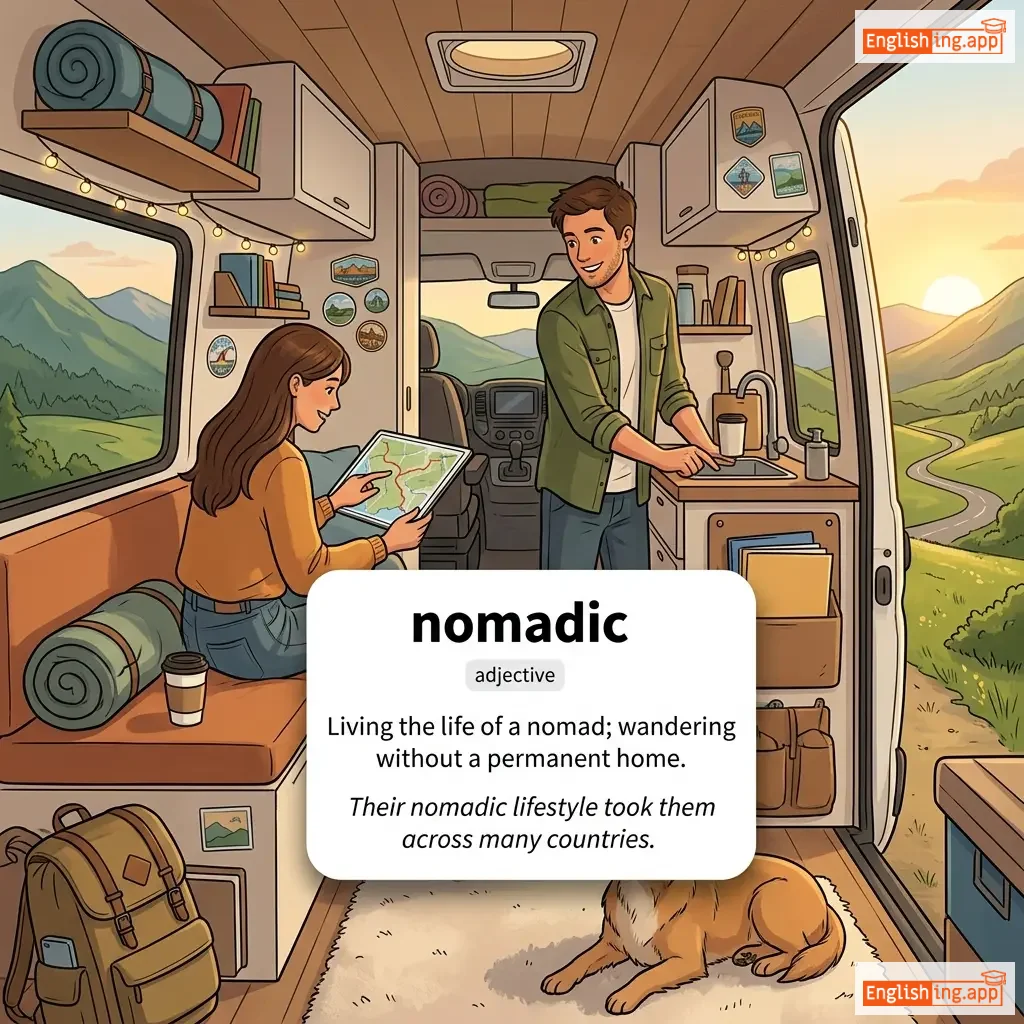
nomadic definition card — visual illustration of the meaning
adjective
/noʊˈmædɪk/
যাযাবর জীবনযাপন (jajabor jibonjapon)

Living the life of a nomad; wandering without a permanent home.

"Their nomadic lifestyle took them across many countries."

"তাদের যাযাবর জীবনযাপন তাদের অনেক দেশে নিয়ে গেছে।" (Tader jajabor jibonjapon tader onek deshe niye gechhe.)
noun
/ˈnoʊmənˌkleɪtʃər/
নামকরণ পদ্ধতি (namkoron poddhoti)

A system of names or terms used in a particular science, art, or field.

"The chemical nomenclature can be difficult for beginners to understand."

"রাসায়নিক নামকরণ পদ্ধতি শিক্ষার্থীদের জন্য কঠিন হতে পারে।" (Rasayonik namkoron poddhoti shikharthider jonno kothin hote pare.)
adjective
/ˈnɒmɪk/
আইনসংক্রান্ত (ainsongkranto)

Relating to laws, rules, or systems.

"The philosopher discussed the nomic necessity of natural laws."

"দার্শনিক প্রাকৃতিক আইনের নোমিক প্রয়োজনীয়তা নিয়ে আলোচনা করেছেন।" (Darshonik prakritik ainer nomik proyojoniyota niye alochona korechhen.)
adjective
/ˈnɒmɪnəl/
নামমাত্র (nammatro)

Existing in name only; very small in amount.

"He was the nominal leader of the group but had no real power."

"সে দলের নামমাত্র নেতা ছিল কিন্তু প্রকৃতপক্ষে কোনো ক্ষমতা ছিল না।" (Se daler nammatro neta chilo kintu prokrito pokkhe kono khomota chilo na.)
nominate definition card — visual illustration of the meaning
verb
/ˈnɒməˌneɪt/
মনোনীত করা (mononito kora)

To formally suggest someone for a position, role, or award.

"The committee decided to nominate her for the leadership position."

"কমিটি তাকে নেতৃত্বের পদে মনোনীত করার সিদ্ধান্ত নিয়েছিল।" (Komiti take netrittwer pode mononito korar siddhanto niechhilo.)
noun
/ˌnɒməˈneɪʃən/
মনোনয়ন (mononoyon)

The act of formally proposing someone for a role, position, or award.

"Her nomination for the award surprised everyone."

"তার পুরস্কারের জন্য মনোনয়ন সবাইকে বিস্মিত করেছিল।" (Tar puraskarer jonno mononoyon sobaike bismito korechhilo.)
noun
/ˌnɒmɪˈniː/
মনোনীত ব্যক্তি (mononito bekti)

a person who is formally suggested or chosen for a position, award, or role

"She was the nominee for the Best Actress award."

"তিনি সেরা অভিনেত্রীর পুরস্কারের জন্য মনোনীত হয়েছিলেন।" (Tini sera abinetri puraskarer jonno mononito hoyechilen.)
noun
/ˌnɒn ˈsɛkwɪtər/
অযৌক্তিক মন্তব্য (ojojktik mormok)

a statement or conclusion that does not logically follow from the previous statement

"His comment about the weather was a complete non sequitur during the budget discussion."

"আবহাওয়া নিয়ে তার মন্তব্য বাজেট আলোচনার সময় সম্পূর্ণ অযৌক্তিক ছিল।" (Abahawa niye tar mormok bajet alochonar somoy sompurno ojojktik chilo.)
noun, adjective
/nɒn ˈkɒmbətənt/
অযোদ্ধা (oyoddha)

a person not engaged in fighting during a war, such as civilians or medical staff

"The Red Cross workers were treated as non-combatants in the conflict."

"রেড ক্রস কর্মীদের সংঘর্ষে অযোদ্ধা হিসেবে গণ্য করা হয়েছিল।" (Red Cross kormider songhorshe oyoddha hisebe gonno kora hoyechilo.)
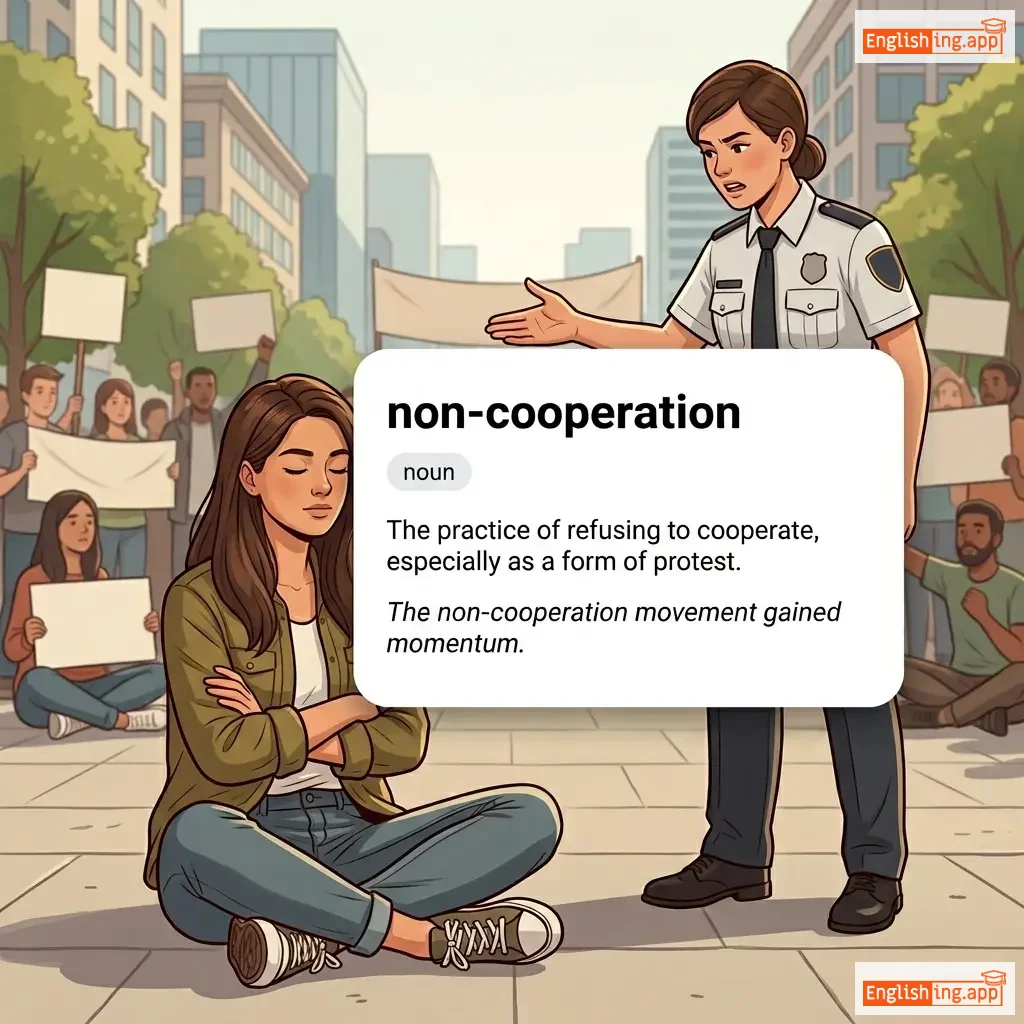
non-cooperation definition card — visual illustration of the meaning
noun
ˌnɒn.kəʊˌɒp.ərˈeɪ.ʃən
অসহযোগিতা (oshohoygita)

The practice of refusing to cooperate, especially as a form of protest.

"The non-cooperation movement gained momentum."

"অসহযোগ আন্দোলন গতি অর্জন করে।" (Oshohovogg andolon goti orjon kore.)
adjective
/ˌnɒn ɪɡˈzɪstənt/
অস্তিত্বহীন (ostittohin)

not real or not present; lacking existence

"The supposed evidence turned out to be non-existent."

"অভিযোগিত প্রমাণ আসলে অস্তিত্বহীন ছিল।" (Ovjogito proman asole ostittohin chilo.)
noun; adjective
/ˌnɒnˈprɒfɪt/
অলাভজনক (olabhjonok)

an organization that does not operate for profit and reinvests surplus to achieve social goals; not intended to make financial profit

"She works for a non-profit that provides free education to underprivileged children."

"সে একটি অলাভজনক প্রতিষ্ঠানে কাজ করে যা সুবিধাবঞ্চিত শিশুদের বিনা মূল্যে শিক্ষা দেয়।" (se ekti olabhjonok protisthane kaj kore ja subidhabonchito shishuder bina mulye shikkha dey)
noun, adjective
/ˌnɒn ˈrɛzɪdənt/
অ-নিবাসী (o-nibashi)

a person who does not live in a particular country or place permanently

"Non-resident students often pay higher tuition fees."

"অ-নিবাসী শিক্ষার্থীদের প্রায়শই বেশি টিউশন ফি দিতে হয়।" (O-nibashi shikkharthider prayoshoy beshi tuition fee dite hoy.)
adverb
/ˌnɒnˈstɒp/
কোনো বিরতি ছাড়া; নিরবচ্ছিন্নভাবে; (kono birti chara)

continuing without stopping; without interruption

"The train traveled non-stop from London to Paris."

"ট্রেনটি লন্ডন থেকে প্যারিস পর্যন্ত কোনো বিরতি ছাড়াই ভ্রমণ করেছিল।" (trenti london theke paris porjonto kono birti charai bhromon korechilo)
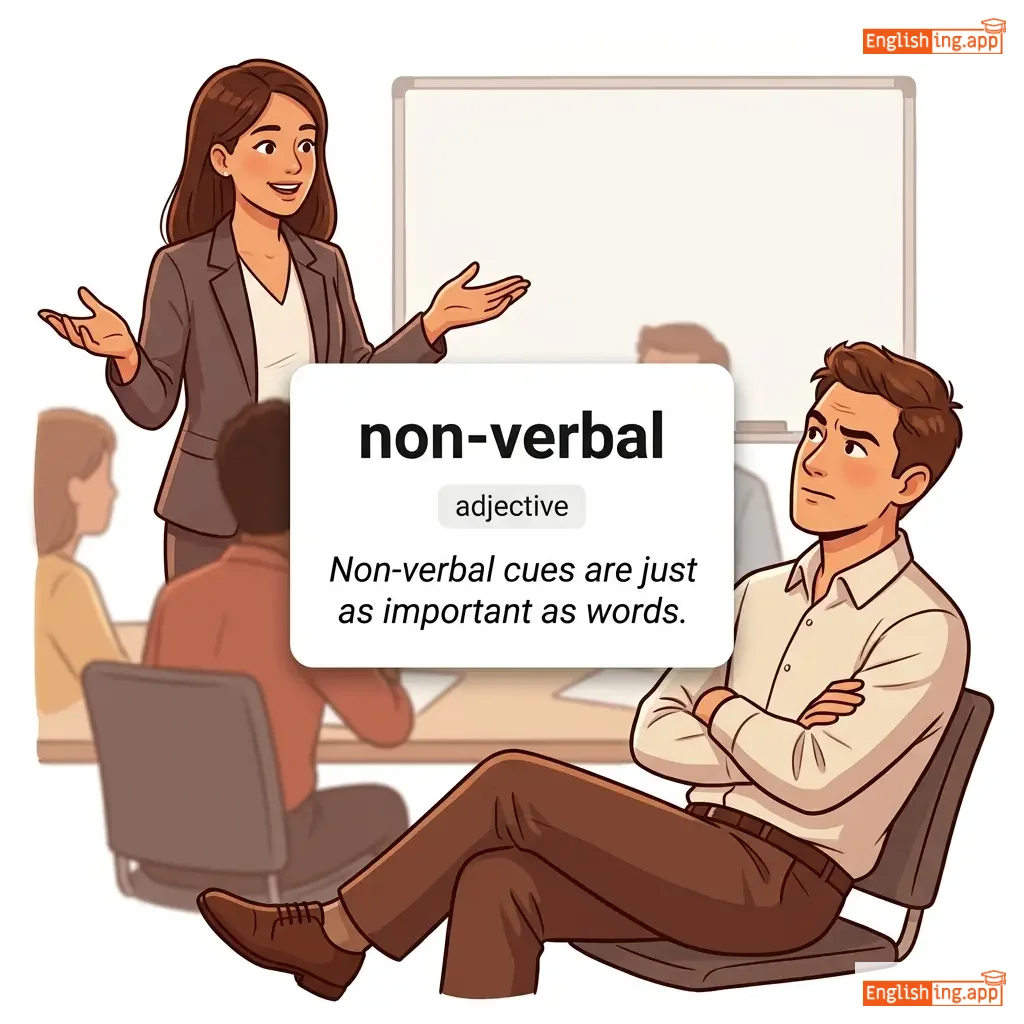
non-verbal definition card — visual illustration of the meaning
adjective
/ˌnɒnˈvɜː.bəl/
মৌখিক নয়, শরীরী ভাষা বা চেহারা দিয়ে প্রকাশিত (moukhik noy, shoriri bhasha ba chehara diye prokashito)

Not involving or using words or speech; communicated through gestures, body language, or facial expressions.

"Non-verbal cues are just as important as words."

"মৌখিক নয় এমন সংকেতও শব্দের মতোই গুরুত্বপূর্ণ।" (Moukhik noy emon sonketeo shobder motoyi guruttopurno.)
noun
/ˈnɒn.ɪʤ/
অল্পবয়স; অপরিণতাবস্থা; (olpoboyes)

the period of being under the legal age of majority; youth or immaturity

"During his nonage, all legal decisions were made by his guardian."

"তার অল্পবয়সে, সব আইনি সিদ্ধান্ত তার অভিভাবক নিতেন।" (tar olpoboyshe, shob aini siddhanto tar obhibabok niten.)
noun
/ˈnɒnʃələns/
উদাসীনতা (udasinta)

A relaxed and calm state, showing lack of concern or interest.

"She answered the tough questions with surprising nonchalance."

"সে আশ্চর্যজনক উদাসীনতার সাথে কঠিন প্রশ্নগুলোর উত্তর দিয়েছিল।" (Se aschorjjonok udasinotar sathe kothin proshnogulor uttor diyechhilo.)
adjective
/ˈnɒnʃələnt/
উদাসীন (udasheen)

Appearing calm, casual, and unconcerned.

"He gave a nonchalant shrug and walked away."

"সে উদাসীনভাবে কাঁধ ঝাঁকিয়ে চলে গেল।" (Se udasheenbhabe kandh jhakiye chole gelo.)
adjective
/ˌnɒnkəˈmɪtl̩/
অঙ্গীকারহীন (ongikarhin)

Not expressing or showing a clear opinion, decision, or commitment.

"She gave a noncommittal reply when asked about her future plans."

"তার ভবিষ্যৎ পরিকল্পনা সম্পর্কে জিজ্ঞাসা করলে সে একটি অঙ্গীকারহীন উত্তর দিয়েছিল।" (Tar vobishyot porikolpona somporke jigyasa korle se ekti ongikarhin uttar diyechhilo.)
adjective
/ˌnɒndɪˈskrɪpt/
সাধারণ (sadharon)

Lacking distinctive or interesting features; dull and unremarkable.

"He lives in a nondescript apartment building on the edge of town."

"সে শহরের প্রান্তে একটি সাধারণ অ্যাপার্টমেন্ট ভবনে থাকে।" (Se shohorer prante ekti sadharon apartment vobone thake.)
pronoun
/nʌn/
কেউও না (keo-o na)

not any; no one; not one

"None of the students passed the exam."

"কোনো ছাত্রই পরীক্ষায় উত্তীর্ণ হয়নি।" (Kono chatroi porikkhay utteern hoyni.)
noun
/nɒnˈentəti/
অপ্রয়োজনীয় ব্যক্তি (oproyojoniyo bekti)

A person or thing of no importance or significance.

"Once a powerful leader, he is now treated as a political nonentity."

"একসময় শক্তিশালী নেতা ছিলেন, এখন তাকে একটি রাজনৈতিক অপ্রয়োজনীয় ব্যক্তি হিসেবে গণ্য করা হয়।" (Eksomoy shoktishali neta chhilen, ekhon take ekti rajnoitik oproyojoniyo bekti hisebe gonno kora hoy.)
adverb
/ˌnʌnðəˈlɛs/
তবুও (to-bu-o)

in spite of that; nevertheless

"It was raining, but nonetheless, they went hiking."

"বৃষ্টি হচ্ছিল, তবে তাও তারা হাইকিংয়ে গিয়েছিল।" (Brishti hochchhilo, tobe tao tara hiking-e giyechhilo.)
adjective
/ˌnɒnpəˈreɪl/
অতুলনীয় (otuloniyo)

Having no equal; unrivaled or matchless.

"Her beauty was considered nonpareil in the region."

"তার সৌন্দর্য অঞ্চলটিতে অতুলনীয় বলে গণ্য করা হত।" (tar soundorjo oncholotite otuloniyo bole gonno kora hoto.)
verb
/ˌnɒnˈplʌs/
হতবুদ্ধি করা (hotobuddhi kora)

To surprise and confuse someone so much that they are unsure how to react.

"The unexpected question seemed to nonplus the speaker."

"অপ্রত্যাশিত প্রশ্নটি বক্তাকে হতবুদ্ধি করে তুলল।" (oprotyashito proshnoti boktake hotobuddhi kore tullo.)
verb
/ˌnɒnˈplʌst/
হতবুদ্ধি হয়েছিল (hotobuddhi hoyechilo)

Past tense of nonplus; surprised and confused.

"She was completely nonplused by his sudden decision."

"তার হঠাৎ সিদ্ধান্তে সে সম্পূর্ণ হতবুদ্ধি হয়ে গিয়েছিল।" (tar hotat siddhante se sompurno hotobuddhi hoye giechilo.)
verb
/ˌnɒnˈplʌst/
হতবুদ্ধি হয়েছিল (hotobuddhi hoyechilo)

Past tense of nonplus; surprised and unsure how to react.

"He stood nonplussed at the strange remark."

"অদ্ভুত মন্তব্যে সে হতবুদ্ধি হয়ে দাঁড়িয়েছিল।" (odbhut mottomoje se hotobuddhi hoye dariyechilo.)
adjective
/ˌnɒnˈprɒfɪt/
অলাভজনক (olabhojonok)

an organization that does not aim to make a profit, often serving a social or charitable purpose.

"She works for a nonprofit organization that helps children."

"সে শিশুদের সাহায্য করে এমন একটি অলাভজনক সংস্থায় কাজ করে।" (Se shishuder sahajjo kore emon ekti olabhojonok sangsthay kaj kore.)
noun
/ˈnɒnsəns/
বাজে কথা (baje kotha)

Words or ideas that have no meaning or make no sense.

"His explanation was pure nonsense."

"তার ব্যাখ্যাটি সম্পূর্ণ বাজে কথা ছিল।" (tar byakkhyati sompurno baje kotha chilo.)
adjective
/ˌnɒnˈtrɪviəl/
জটিল (jotil)

Not simple or easy; requiring effort or significant thought.

"Solving the equation turned out to be a nontrivial task."

"সমীকরণ সমাধান করা একটি জটিল কাজ হয়ে দাঁড়িয়েছিল।" (Somikaron somadhan kora ekti jotil kaj hoye dariyechhilo.)
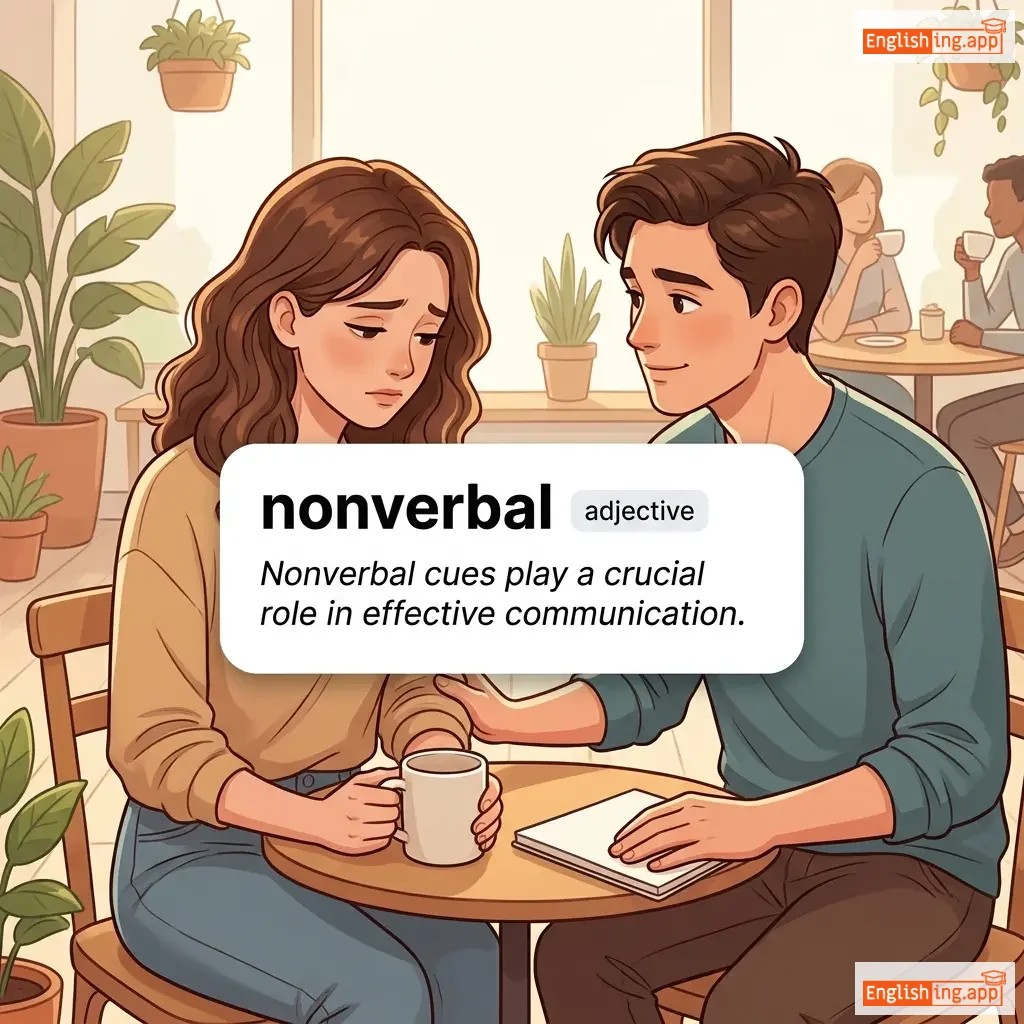
nonverbal definition card — visual illustration of the meaning
adjective
ˌnɒnˈvɜːr.bəl
অবাক ভাষিক (obak bhashik)

Communication using body language, facial expressions, or gestures instead of words

"Nonverbal cues play a crucial role in effective communication."

"অবাক ভাষিক সংকেত কার্যকর যোগাযোগে গুরুত্বপূর্ণ ভূমিকা রাখে।" (Obak bhashik songket karjokor jogatoge gurutbopurno bhumika rakhe.)
noun (plural)
/ˈnuːdəlz/
নুডলস (nudols)

long, thin strips of dough made from flour, water, or eggs, cooked and eaten as food

"She cooked noodles with vegetables for dinner."

"সে রাতের খাবারের জন্য সবজি দিয়ে নুডলস রান্না করেছিল।" (se rater khabarer jonno shobji diye nudols rannna korechilo)
noun
/nuːn/
দুপুর (dupur)

12 o'clock in the daytime; midday

"The meeting will start at noon."

"মিটিং দুপুর বারোটায় শুরু হবে।" (miting dupur barotay shuru hobe.)
noun
/nuːs/
ফাঁস (fas)

A loop with a running knot, used especially for trapping or hanging.

"The cowboy tied a noose to catch the wild horse."

"কাউবয় বন্য ঘোড়া ধরতে একটি ফাঁস বেঁধেছিল।" (Cowboy bonno ghora dhorte ekti fas bendhechhilo.)
🚫➡️🚫

nor (নর)

conjunction
/nɔːr/
অথবা না (othoba na)

used to introduce a negative clause after a negative statement

"He didn't call, nor did he send a message."

"সে কল করেনি, নর সে একটি মেসেজও পাঠায়নি।" (She kol koreni, nor she ekti message-o pathayni.)
noun
/nɔːrm/
প্রচলিত নিয়ম (procholito niyom)

An accepted standard or a usual practice.

"Wearing uniforms is the norm in many schools."

"অনেক স্কুলে ইউনিফর্ম পরা প্রচলিত নিয়ম।" (Onek schoole uniform pora procholito niyom.)
adjective
/ˈnɔː.məl/
স্বাভাবিক (swabhabik)

conforming to a standard; usual, typical, or expected

"It is normal to feel nervous before an interview."

"ইন্টারভিউয়ের আগে নার্ভাস হওয়া স্বাভাবিক।" (interviewer age nervous howa swabhabik.)
noun
/ˈnɔːrməlsi/
স্বাভাবিক অবস্থা (shadharon obostha)

The condition of being normal; a return to usual or expected conditions.

"After the flood, the town struggled to regain a sense of normalcy."

"বন্যার পরে শহরটি স্বাভাবিক অবস্থা ফিরে পেতে লড়াই করেছিল।" (Bonnar pore shohorti shadharon obostha fire pete lorai korechhilo.)
verb
/ˈnɔːrməlaɪz/
স্বাভাবিক করা (swabhabik kora)

to bring something back to a normal or standard condition; to make something conform to a standard

"The government took steps to normalize relations with neighboring countries."

"সরকার প্রতিবেশী দেশগুলোর সঙ্গে সম্পর্ক স্বাভাবিক করতে পদক্ষেপ নিয়েছে।" (sarkar protibeshi deshgulor sathe somporko swabhabik korte podokkhep niyeche)
adverb
/ˈnɔːməli/
সাধারণত (sadharanoto)

in a usual or expected way

"I normally wake up at 7 AM."

"আমি সাধারণত ৭ টায় উঠে।" (Ami sadharanoto 7 ta-e uthe.)
noun
/ˈnɔːrmən/
নরম্যান (Norman)

A member of a people of mixed Scandinavian and Frankish origin who settled in Normandy, or relating to their culture.

"The Normans conquered England in 1066."

"নরম্যানরা ১০৬৬ সালে ইংল্যান্ড জয় করেছিল।" (Normanra 1066 sale England joy korechhilo.)
adjective
/ˈnɔːrmətɪv/
মানদণ্ডমূলক (mandandamulok)

relating to rules, standards, or norms that govern behavior or beliefs

"The study focused on the normative aspects of cultural behavior."

"গবেষণাটি সাংস্কৃতিক আচরণের মানদণ্ডমূলক দিকগুলোর উপর কেন্দ্রীভূত ছিল।" (Gobeshonati sangskritik acharoner mandandamulok dikguler upar kendrit chhilo.)
noun
/nɔːrθ/
উত্তর (uttor)

the direction toward the top of a map or the opposite of south

"We traveled north to reach the mountains."

"আমরা পর্বতগুলিতে পৌঁছানোর জন্য উত্তর দিকে যাত্রা করেছিলাম।" (Amra porbotguli te pouchhano jonno uttor dike jatra korechhilam.)
noun
/ˌnɔːrθˈiːst/
উত্তর-পূর্ব (uttor-purbo)

the direction between north and east; a region or area located in that direction.

"The storm is moving toward the northeast."

"ঝড়টি উত্তর-পূর্ব দিকে অগ্রসর হচ্ছে।" (Jhorti uttar-purbo dike ogrosor hochhe.)
adjective
/ˈnɔːðərn/
উত্তরের (uttorer)

relating to the north or situated in the north

"The northern part of the country is known for its cold climate."

"দেশটির উত্তরাঞ্চল তার শীতল আবহাওয়ার জন্য পরিচিত।" (Deshtir uttorancho tar shitol abohawar jonno porichito.)
adverb
/ˈnɔːθwədz/
উত্তরের দিকে; উত্তরাভিমুখে; (uttorer dike)

towards the north; in a northerly direction

"The birds migrate northwards in spring."

"পাখিরা বসন্তকালে উত্তরের দিকে পরিযায়ী হয়।" (pakhira boshontokale uttorer dike porijayee hoy)
noun, adjective, adverb
/ˌnɔːrθˈwest/
উত্তর-পশ্চিম (uttor-poshchim)

the direction that is between north and west; situated in or moving toward this direction

"Seattle is located in the northwest of the United States."

"সিয়াটল যুক্তরাষ্ট্রের উত্তর-পশ্চিম অংশে অবস্থিত।" (Seattle juktorashtrer uttar-poshchim angshe obosthito.)
noun
/noʊz/
নাক (nak)

the part of the face that contains the nostrils and is used for breathing and smelling

"He has a sharp nose and can smell things from far away."

"তার একটি তীক্ষ্ণ নাক রয়েছে এবং সে দূর থেকে জিনিসগুলো গন্ধ পেতে পারে।" (Tar ekti tikshno nak royeche ebong se dur theke jinishgulo gondho pete pare.)
noun
/noʊz rɪŋ/
নথ (noth)

a piece of jewelry worn through a piercing in the nose

"She got a small gold nose ring for her birthday."

"তার জন্মদিনে সে একটি ছোট সোনার নথ পেয়েছিল।" (tar jonmodine se ekti choto sonar noth peyechilo.)