ভোকাবুলারিসমূহ

ইংরেজি শব্দের বাংলা অর্থ | English to Bangla Word Meaning Dictionary

noun
/ˈnuː.kʌm.ər/
আগত; নতুন আগন্তুক; (agoto)

a person who has recently arrived in a place or joined a group

"The newcomer was warmly welcomed by the team."

"নতুন আগতকে দল উষ্ণ ভালোবাসার সাথে স্বাগত জানিয়েছে।" (notun agotoke dol ushno bhalobasha r sathe swagoto janiyechhe.)
adverb
/ˈnjuːli/
নতুনভাবে (notunbhabe)

in a new or recent manner

"She has newly renovated her house."

"সে তার বাড়িটি নতুনভাবে সংস্কার করেছে।" (Se tar bariti notunbhabe songskar korechhe.)
noun
/nuːz/
খবর (khobor)

newly received or noteworthy information, especially about recent events

"The news about the storm spread quickly."

"ঝড় সম্পর্কে খবর দ্রুত ছড়িয়ে পড়েছিল।" (Jhor somproke khobor druto chhoriye porchhilo.)
noun
/ˈnjuːzˌlɛtər/
নিউজলেটার (newzletter)

a printed or electronic report containing news or information about a company or organization

"The company sends a weekly newsletter to its employees."

"কোম্পানি তার কর্মচারীদের প্রতি সপ্তাহে একটি নিউজলেটার পাঠায়।" (company tar kormocharider proti soptaho ekti newsletter pathay.)
noun
/ˈnjuːzˌpeɪpər/
পত্রিকা (patrika)

a printed publication (usually daily or weekly) containing news, articles, advertisements, and correspondence

"I read the newspaper every morning."

"আমি প্রতিদিন সকালে পত্রিকা পড়ি।" (Ami protidin sokale patrika pori.)
noun
/nuːt/
গোপাল (gopal)

a small amphibian with a long tail that lives both in water and on land

"The newt swam gracefully in the pond."

"গোপালটি পুকুরে সুন্দরভাবে সাঁতার কাটল।" (gopalti pukure shundorbhabe shatar katol)
adjective
/njuːˈtoʊniən/
নিউটনের সূত্র সম্পর্কিত (newtoner sutro somprokito)

relating to the laws of motion and gravitation formulated by Sir Isaac Newton

"The scientist explained the Newtonian laws of motion."

"বিজ্ঞানী নিউটনের গতিসূত্র ব্যাখ্যা করেছিলেন।" (Biggani Newtoner gotisutro byakkha korechilen.)
adjective
/nɛkst/
পরবর্তী (poroborti)

immediately following in time, order, or place

"The next train leaves at 9:00 AM."

"পরবর্তী ট্রেন ৯:০০ এএম-এ ছেড়ে যাবে।" (Poroborti tren 9:00 AM-e chhere jabe.)
noun
/ˈnɛksəs/
সংযোগ (songjog)

a connection or series of connections linking two or more things

"The town was a nexus for trade routes in the region."

"শহরটি ছিল অঞ্চলের বাণিজ্য রুটগুলির সংযোগস্থল।" (Shohorti chilo onchol-er banijyo rutgulier songjogsthol.)
noun
/nɪb/
কলমের নিব (kolomer nib)

the pointed end of a pen used for writing or drawing

"He dipped the nib into the ink before writing."

"সে লেখার আগে নিবটি কালি ডুবিয়ে নিল।" (Se lekhar age nibti kali dubiye nilo.)
verb
/ˈnɪbəl/
আস্তে আস্তে কামড়ানো (aste aste kamrano)

to take small bites of food

"The rabbit nibbled on a carrot."

"খরগোশটি একটি গাজর আস্তে আস্তে খাচ্ছিল।" (Khorgoshti ekti gajor aste aste khachchhilo.)
adjective
/naɪs/
ভাল (bhalo)

pleasant, kind, or enjoyable

"She is a very nice person to work with."

"তার সাথে কাজ করা খুব ভালো লাগে।" (tar sathe kaj kora khub bhalo lage.)
adverb
/ˈnaɪsli/
ভালভাবে (bhalobhabe)

in a pleasant, kind, or satisfactory manner; carefully and appropriately

"She explained the problem nicely so everyone could understand."

"সে সমস্যাটি ভালভাবে ব্যাখ্যা করেছিল যাতে সবাই বুঝতে পারে।" (se shomossyati bhalobhabe byakkha korechilo jate shobai bujhte pare)
noun
/ˈnaɪsəti/
সূক্ষ্মতা (sukhmota)

a fine or subtle detail, or a refined, delicate aspect of something

"The lawyer explained the legal niceties of the case."

"আইনজীবী মামলার আইনি সূক্ষ্ম দিকগুলো ব্যাখ্যা করলেন।" (Ainjibi mamlar aini sukhmo diggulo byakhya korlen.)
Niche definition card — visual illustration of the meaning
noun
/niːʃ/
বিশেষ স্থান (bishes sthan)

a comfortable or suitable position in life or employment

"He has found his niche in the marketing industry."

"সে মার্কেটিং শিল্পে তার বিশেষ স্থান পেয়েছে।" (she marketing shilpe tar bishes sthan peyeche.)
noun
/ˈnɪkəl/
নিকেল (nikel)

a small coin, typically worth five cents in the United States

"He found a nickel on the ground."

"সে মাটিতে একটি নিকেল পেয়েছিল।" (Se mâtite êkti nikel pêychhilo.)
noun
/ˈnɪk.neɪm/
উপনাম; ডাকনাম; (daknaam)

a familiar or humorous name given to a person instead of their real name

"His nickname is 'Tiger' because he's so brave."

"তার ডাকনাম 'টাইগার' কারণ সে অত্যন্ত সাহসী।" (tar daaknaam 'taigar' karon she otyonto sahoshi.)
noun
/niːs/
ভাতিজি (bhatiji)

the daughter of one's brother or sister

"My niece is studying at the university this year."

"আমার ভাতিজি এ বছর বিশ্ববিদ্যালয়ে পড়ছে।" (amar bhatiji e bochor bishwabidyaloye porchhe)
noun
/naɪˈdʒel.ə/
কালোজিরা (kalojira)

small black seeds with a nutty, slightly bitter flavor, also known as black cumin or black seed

"Sprinkle nigella seeds on top of the bread before baking."

"রুটি বেক করার আগে তার উপরে কালোজিরা ছিটিয়ে দিন।" (ruti bek korar age tar upore kalojira chitiye din)
adjective
/ˈnɪɡərdli/
কৃপণ (kripon)

unwilling to spend or give; stingy or miserly

"He was too niggardly to leave a decent tip."

"সে এত কৃপণ ছিল যে ভালো টিপস দিতে চাইলো না।" (Se eto kripon chilo je bhalo tips dite chailo na.)
verb
/ˈnɪɡəl/
সামান্য বিরক্ত করা (samanno birokt kora)

to cause slight but persistent annoyance, discomfort, or worry

"A small doubt niggled at her mind."

"একটি ছোট সন্দেহ তার মনে বারবার আসছিল।" (Ekti choto sondheho tar mone bar bar aschhilo.)
noun
/naɪt/
রাত্রি (ratri)

the time of darkness between one day and the next, when most people sleep

"She loves going for walks at night."

"সে রাতে হাঁটার জন্য পছন্দ করে।" (Se raate hatar jonno pochondo kore.)
noun
/naɪt kwiːn/
রজনীগন্ধা (rojnigondha)

a fragrant white flower that blooms at night and releases strong sweet scent

"The night queen flowers filled the garden with their sweet fragrance."

"রজনীগন্ধা ফুলগুলো বাগানকে তাদের মিষ্টি সুগন্ধে ভরিয়ে দিয়েছে।" (rojnigondha fulgulo bagankhe tader mishti sugondhe bhoriye diyeche)
noun
/naɪt ˈdʒæz.mɪn/
শেফালী (shephali)

a fragrant flowering tree that blooms at night with small white flowers

"The night-jasmine tree blooms only after sunset with its tiny white flowers."

"শেফালী গাছ কেবল সূর্যাস্তের পর তার ছোট সাদা ফুল নিয়ে ফোটে।" (Shephali gach kebol shuryastoer por taar choto shada phul niye photey.)
noun
/ˈnaɪt.fɔːl/
সন্ধ্যা (shondha)

the time when night begins; dusk

"They decided to return home before nightfall."

"তারা রাত নামার আগে বাড়ি ফেরার সিদ্ধান্ত নিল।" (tara rat namar age bari ferar shiddhanto nilo.)
noun
/ˈnaɪ.tɪŋ.ɡeɪl/
বুলবুলি (bulbuli)

small songbird known for its beautiful singing, especially at night

"The nightingale sang sweetly in the moonlight."

"বুলবুলি চাঁদের আলোয় মধুর গান গেয়েছিল।" (bulbuli chander aloy modhur gan geyechilo)
noun
/ˈnaɪtˌmɛər/
দুঃস্বপ্ন (duhshopno)

a frightening or unpleasant dream; a very distressing experience.

"Last night, she had a terrifying nightmare."

"গত রাতে সে একটি ভয়ানক দুঃস্বপ্ন দেখেছিল।" (Goto rate se ekti bhoyankor duhshopno dekhechhilo.)
noun
/ˈnaɪɪˌlɪzəm/
নৈরাশ্যবাদ (noirashobad)

The rejection of all religious and moral principles, often in the belief that life is meaningless.

"The philosopher was criticized for promoting nihilism."

"দার্শনিককে নিহিলিজম প্রচারের জন্য সমালোচনা করা হয়েছিল।" (Darshonik ke nihilism procharer jonno somalochona kora hoyechilo.)
noun
/ˈnaɪəlɪst/
নৈরাশ্যবাদী (noirashobadi)

A person who rejects all religious and moral principles, often believing that life is meaningless.

"He was called a nihilist for rejecting all social norms."

"সে সব সামাজিক নিয়ম প্রত্যাখ্যান করার জন্য নৈরাশ্যবাদী বলা হয়েছিল।" (Se sob samajik niyom protyakhyan korar jonno noirashobadi bola hoyechilo.)
noun
/nɪl/
শূন্য (shunno)

Nothing; zero.

"The score remained nil after the first half."

"প্রথমার্ধের পর স্কোর শূন্য রয়ে গেল।" (Prothomardher por skor shunno roye gelo.)
adjective
/ˈnɪmbəl/
চটপটে (chotpotte)

Quick and light in movement or thought.

"The dancer’s nimble steps impressed the audience."

"নৃত্যশিল্পীর চটপটে পদক্ষেপ দর্শকদের মুগ্ধ করেছিল।" (Nrityoshilpir chotpotte podokhep dorkshokder mugdho korechilo.)
noun
/naɪn/
নয় (noy)

the number that is one more than eight

"She has nine books in her collection."

"তার সংগ্রহে নয়টি বই রয়েছে।" (Tar songrohe noyti boi royeche.)
noun
/ˈnɪn.i/
হাবা; বোকাসোকা; (haba)

a silly or foolish person; someone who lacks common sense

"Don't be such a ninny, use your brain!"

"এত হাবা হয়ো না, মাথা ব্যবহার করো!" (eto haba hoyo na, matha byabohar koro!)
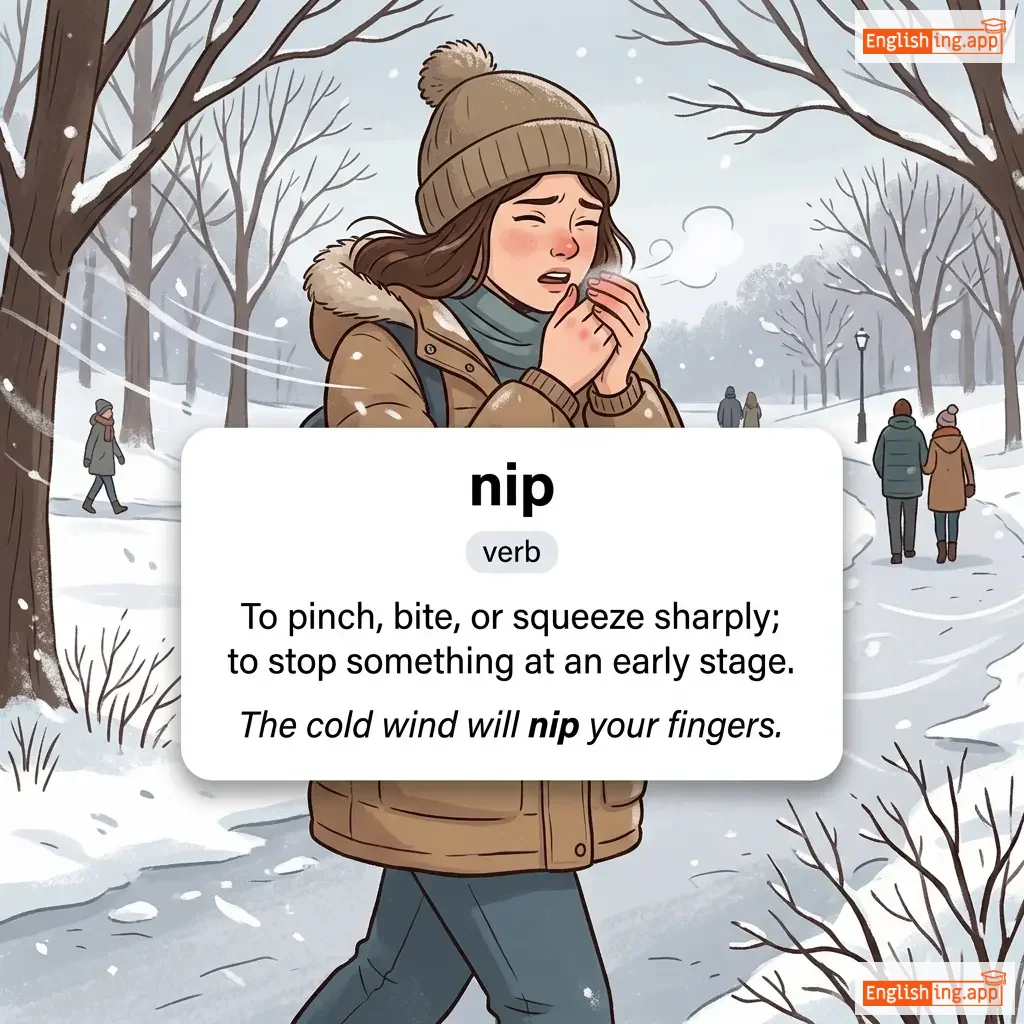
nip definition card — visual illustration of the meaning
verb
/nɪp/
চিমটি কাটা (chimti kata)

To pinch, bite, or squeeze sharply; to stop something at an early stage.

"The cold wind will nip your fingers."

"ঠান্ডা হাওয়া তোমার আঙুল চিমটি কাটবে।" (Thanda hawa tomar angul chimti katbe.)
adjective
/ˈnɪp.i/
কর্পন; ঠান্ডা; (thanda)

cold; chilly; quick and agile in movement

"It's quite nippy outside today, you should wear a jacket."

"আজ বাইরে বেশ ঠান্ডা, তোমার একটি জ্যাকেট পরা উচিত।" (aj baire besh thanda, tomar ekti jacket pora uchit)
noun
/nɪərˈvɑːnə/
নির্বাণ (nirban)

A state of perfect happiness, peace, and freedom from suffering; in Buddhism, the ultimate goal of liberation.

"Meditation helps some people seek nirvana in their lives."

"ধ্যান কিছু মানুষকে তাদের জীবনে নির্বাণ খুঁজতে সাহায্য করে।" (Dhyan kichu manushke tader jibone nirban khujte sahajyo kore.)
noun
/nɪt/
উকুনের ডিম (ukuner dim)

The egg or young form of a louse or other parasitic insect.

"The teacher noticed nits in the child’s hair."

"শিক্ষক শিশুর চুলে উকুনের ডিম লক্ষ্য করলেন।" (Shikkhok shishur chule ukuner dim lokkho korlen.)
verb
/ˈnɪtˌpɪk/
ক্ষুদ্র দোষ খোঁজা (khudro dosh khoja)

To find and criticize small or unimportant faults in someone or something.

"She tends to nitpick about every little detail."

"সে প্রতিটি ছোটখাটো বিষয়ে দোষ খুঁজতে থাকে।" (Se protiti chotkhato bishoye dosh khujte thake.)
adverb
/noʊ/
না (na)

used to give a negative response or to show disagreement

"She said no to the invitation."

"সে আমন্ত্রণে না বলেছিল।" (Se amontron-e na bolechhilo.)
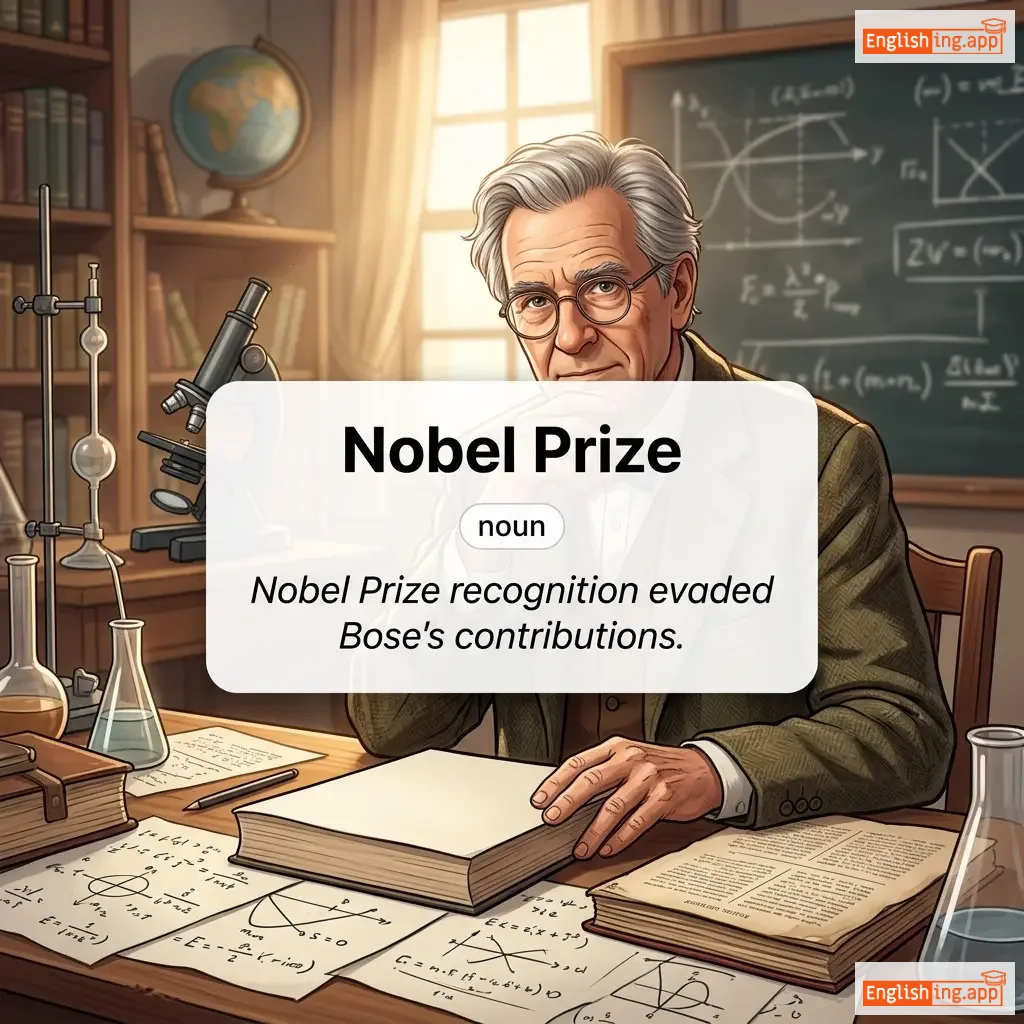
Nobel Prize definition card — visual illustration of the meaning
noun
noʊˈbel praɪz
নোবেল পুরস্কার (Nobel puroshkar)

Any of six international prizes awarded annually for outstanding work in physics, chemistry, physiology or medicine, literature, economics, and the promotion of peace.

"Nobel Prize recognition evaded Bose's contributions."

"নোবেল পুরস্কার বোসের অবদানে স্বীকৃতি দেয়নি।" (Nobel puroshkar Bosher obdane shikkriti deyni.)
noun
/nəʊˈbɪləti/
অভিজাত্য (obhijattyo)

the quality of being noble in character or the group of people belonging to the aristocracy

"The king praised her for her nobility and courage."

"রাজা তার অভিজাত্য এবং সাহসের জন্য তাকে প্রশংসা করেছিলেন।" (raja tar obhijattyo ebong sahoser jonno take proshongsha korechilen.)
adjective
/ˈnoʊbəl/
উচ্চ বংশীয়/উচ্চ নৈতিক গুণসম্পন্ন (uccho bongshio/uccho noitik gunshomponno)

Having or showing fine personal qualities, high moral principles, or being of high social rank.

"He is admired for his noble character and generosity."

"তিনি তার মহৎ চরিত্র এবং উদারতার জন্য প্রশংসিত।" (Tini tar mohot choritro ebong udarotar jonno proshongshit.)
pronoun
/ˈnoʊˌbɑːdi/
কেউ না (keu na)

no person; not anyone

"Nobody came to the party."

"কেউ পার্টিতে আসেনি।" (Keu party-te aseni.)
adjective
/nɒkˈtɜːrnəl/
রাত্রিচর (ratri chor)

Active at night and sleeping during the day.

"Owls are nocturnal animals that hunt at night."

"পেঁচা হলো রাত্রিচর প্রাণী যারা রাতে শিকার করে।" (Pecha holo ratrichor prani jara rate shikar kore.)
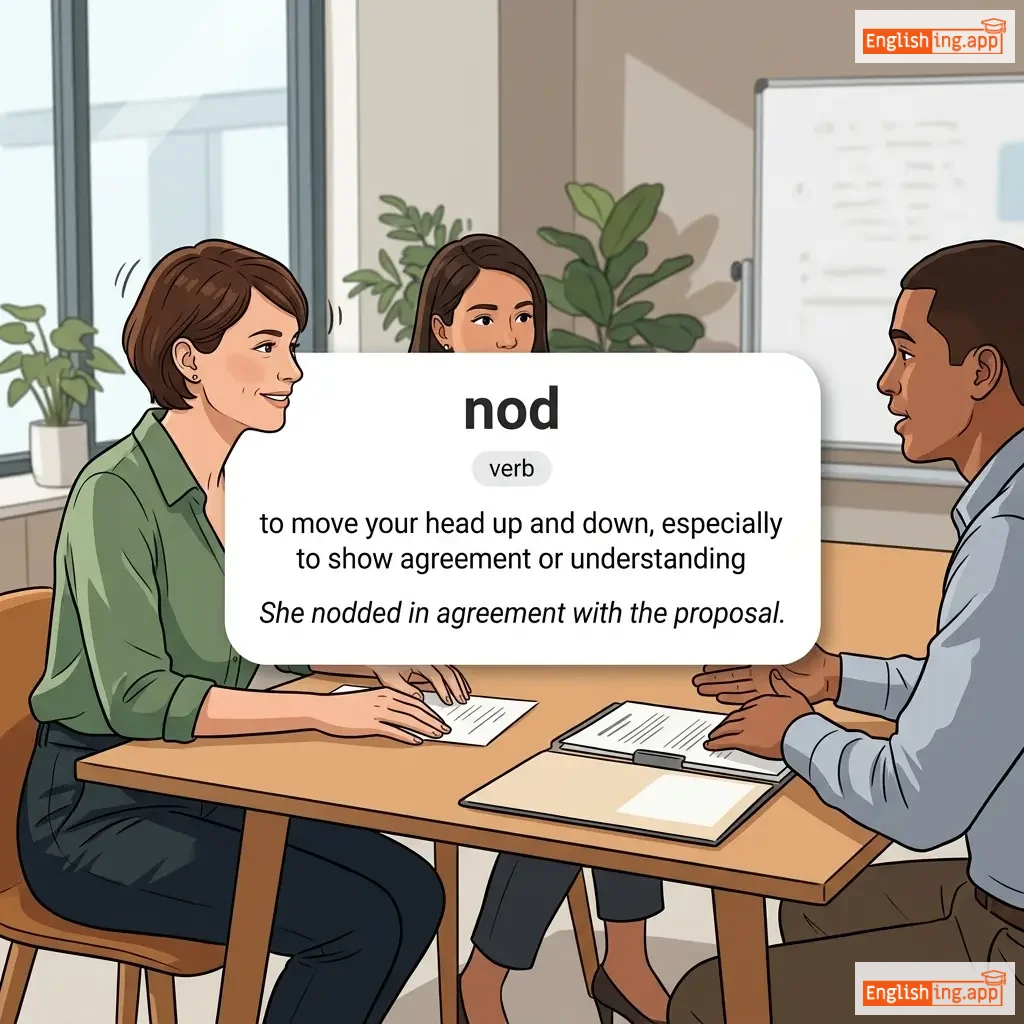
nod definition card — visual illustration of the meaning
verb
/nɒd/
মাথা নাড়া (matha nara)

to move your head up and down, especially to show agreement or understanding

"She nodded in agreement with the proposal."

"সে প্রস্তাবের সাথে সম্মতিতে নড করেছিল।" (Se prostaber sathe sommontite nod korechhilo.)
noun
/nɔɪz/
শব্দ (shobdo)

a sound, especially when it is unwanted, unpleasant, or loud

"The noise from the construction site was unbearable."

"কন্সট্রাকশন সাইটের শব্দ অস্বীকারযোগ্য ছিল।" (Construction site-er shobdo obiskaarjoggo chhilo.)
adjective
/ˈnɔɪzləs/
নিঃশব্দ (nihshobdo)

Completely silent; without any noise.

"The cat made a noiseless leap onto the table."

"বিড়ালটি নিঃশব্দে টেবিলে লাফ দিল।" (Biralti nihshobde tebile laf dilo.)
adverb
/ˈnɔɪzɪli/
শব্দপূর্ণভাবে; কোলাহলপূর্ণভাবে; (shobdopurnobhabe)

in a way that makes a lot of noise; loudly

"The children were playing noisily in the playground."

"শিশুরা খেলার মাঠে শব্দপূর্ণভাবে খেলছিল।" (shishura khelar mathe shobdopurnobhabe khelchilo)
adjective
/ˈnɔɪsəm/
দুর্গন্ধযুক্ত (durgandhajukto)

Having an extremely unpleasant smell; offensive or harmful.

"The dump emitted a noisome odor that spread through the town."

"আবর্জনার ভাগাড় থেকে দুর্গন্ধযুক্ত গন্ধ শহর জুড়ে ছড়িয়ে পড়ল।" (Aborjonar bhagar theke durgandhajukto gondho shohor jure choriye porlo.)
adjective
/ˈnɔɪzi/
শোরগোলপূর্ণ (shorgolpurno)

Making a lot of loud sounds; full of noise.

"The children were noisy during the party."

"বাচ্চারা পার্টির সময় খুব শোরগোল করছিল।" (Bachchara partyr somoy khub shorgol korchhilo.)