ভোকাবুলারিসমূহ

ইংরেজি শব্দের বাংলা অর্থ | English to Bangla Word Meaning Dictionary

adjective
/nɪˈɡoʊ.ʃi.ə.bəl/
আলোচনাযোগ্য (alochonayoggo)

Open to discussion or modification; capable of being bargained for.

"The salary offered is negotiable."

"প্রদত্ত বেতন আলোচনা করে নির্ধারণযোগ্য।" (Prodotto betan alochona kore nirdharonyo.)
verb
/nɪˈɡoʊ.ʃi.eɪt/
আলোচনা করা (alochona kora)

To discuss something formally in order to reach an agreement.

"They negotiated a fair deal with the supplier."

"তারা সরবরাহকারীর সাথে একটি ন্যায্য চুক্তি আলোচনা করেছিল।" (Tara sorborahkarir sathe ekti nayjo chukti alochona korechhilo.)
noun
/nɪɡoʊˈʃiːeɪʃən/
আলোচনা (alochona)

a discussion aimed at reaching an agreement

"The negotiation between the two companies was successful."

"দ্বিতীয় কোম্পানির মধ্যে আলোচনা সফল ছিল।" (Dwitiyo kompani er modhe alochona sofol chhilo.)
noun
/ˈneɪbər/
পাড়া (para)

a person living next door or nearby

"My neighbor lent me some sugar when I ran out."

"আমার প্রতিবেশী আমাকে কিছু চিনি দেন যখন আমি শেষ হয়ে গিয়েছিলাম।" (Amar protibeeshi amake kichu chini den jokhon ami shesh hoye giyechhilam.)
noun
/ˈneɪbərˌhʊd/
পাড়া (para)

a district or area around or near a particular place

"I grew up in a quiet neighborhood."

"আমি একটি শান্ত পাড়ায় বেড়ে উঠেছিলাম।" (Ami ekti shanto paray bere uthiyechhilam.)
adjective
/ˈneɪbərɪŋ/
পাশের (pash-er)

situated near or next to another place; adjacent or nearby.

"They visited a neighboring village for the festival."

"তারা উৎসবের জন্য পাশের গ্রামে গিয়েছিল।" (Tara utsober jonno pasher grame giechhilo.)
noun
/ˈneɪ.bər/
প্রতিবেশী; পাশের; (protibeshi)

a person who lives near or next to another person

"My neighbour is very friendly and helpful."

"আমার প্রতিবেশী অত্যন্ত বন্ধুত্বপূর্ণ এবং সাহায্যকারী।" (amar protibeshi otyonto bondhuttopurno ebong sahajjokari.)
adjective
/ˈneɪ.bər.ɪŋ/
নিকটবর্তী; পাশ্ববর্তী; সন্নিহিত; (nikotborti)

situated next to or very near; adjacent; bordering

"We often visit our neighbouring countries for trade."

"আমরা প্রায়ই ব্যবসার জন্য আমাদের প্রতিবেশী দেশগুলি পরিদর্শন করি।" (amra prayoi bebshar jonno amader protibeshi deshguli poridorshon kori.)
conjunction
/ˈniːðər/
কোনওটি নয় (konoti noy)

used to connect two negative alternatives

"Neither the manager nor the assistant could attend the meeting."

"না ম্যানেজার এবং না সহকারী মিটিংয়ে উপস্থিত হতে পারেনি।" (Na manager ebong na sohokari meeting-e uposthit hote pareni.)
noun
/ˈnɛm.ə.sɪs/
শত্রু / প্রতিদ্বন্দ্বী (shotru / protidondbi)

A long-standing rival or an inescapable agent of downfall.

"For years, he considered his colleague to be his nemesis."

"বছরের পর বছর ধরে সে তার সহকর্মীকে নিজের প্রতিদ্বন্দ্বী মনে করত।" (Bochorer por bochor dhore se tar shokormi ke nijer protidondbi mone korto.)
noun
/ˌniːoʊˈdɑːrwɪnɪzəm/
আধুনিক ডারউইনবাদ (adhunik darwinbad)

A modern interpretation of Darwin's theory of evolution, integrating genetics and natural selection.

"Neo-Darwinism combines Darwin’s theory of natural selection with modern genetics."

"নিও-ডারউইনিজম ডারউইনের প্রাকৃতিক নির্বাচন তত্ত্বকে আধুনিক জেনেটিক্সের সাথে একত্রিত করে।" (Neo-Darwinism Darwiner prakritik nirbachon tottwoke adhunik genetics er sathe ektrito kore.)
noun
/ˌniːoʊˈlætɪn/
আধুনিক ল্যাটিন (adhunik latin)

The use of Latin language for scholarly, scientific, and literary purposes after the medieval period.

"Many scientific names are derived from Neo-Latin."

"অনেক বৈজ্ঞানিক নাম নিও-ল্যাটিন থেকে এসেছে।" (Onek boigganik nam neo-latin theke esheche.)
noun
/niːˈɒkrəsi/
নবীন নেতৃত্বের সরকার (nobin netrittwer sarkar)

A government or leadership run by inexperienced or new officials.

"The sudden revolution led to a neocracy with inexperienced leaders."

"হঠাৎ বিপ্লব একটি নিওক্রেসির সৃষ্টি করেছিল যেখানে নেতারা অনভিজ্ঞ ছিলেন।" (Hotat biplob ekti neocracyr sristi korechhilo jekhane netara onobiggya chhilen.)
adjective
/ˌniːoʊˈlɪθɪk/
নব্যপ্রস্তর যুগ (nobyoprostor jug)

Relating to the later part of the Stone Age, when ground or polished stone weapons and tools prevailed.

"Neolithic communities began practicing agriculture and domesticating animals."

"নিওলিথিক যুগের মানুষ কৃষি ও প্রাণী গৃহপালন শুরু করেছিল।" (Neolithic juger manush krishi o prani gruhpalon suru korechhilo.)
noun
/niːˈɒlədʒɪzəm/
নতুন শব্দ (notun shobdo)

A newly coined word or expression.

"The internet has given rise to many neologisms like 'selfie' and 'hashtag'."

"ইন্টারনেট অনেক নিওলজিজম সৃষ্টি করেছে যেমন 'সেলফি' ও 'হ্যাশট্যাগ'।" (Internet onek neologism sristi koreche jemon 'selfie' o 'hashtag'.)
noun
/niˈɒlədʒi/
নতুন শব্দ ব্যবহারের অধ্যয়ন (notun shobdo byaboharer odhyayon)

The use of new words or the study of their origin.

"The professor specialized in neology, studying the creation of modern slang."

"অধ্যাপক নিওলজি-তে বিশেষজ্ঞ ছিলেন, আধুনিক স্ল্যাং এর উৎপত্তি নিয়ে গবেষণা করতেন।" (Odhapok neology te bisheshoggo chilen, adhunik slang er utpotti niye gobeshona korten.)
noun
/ˌniːoʊˈpeɪɡənɪzəm/
আধুনিক পৌত্তলিক ধর্ম (adhunik poustholik dhormo)

Modern religious movements influenced by or claiming to be derived from the various historical pagan beliefs of pre-modern Europe.

"Neopaganism has gained popularity as people seek spiritual alternatives to mainstream religions."

"নিওপেগানিজম জনপ্রিয়তা পেয়েছে কারণ মানুষ মূলধারার ধর্মের বিকল্প খুঁজছে।" (Neopaganism jonopriota peyechhe karon manush muldharar dhormer bikalpo khujchhe.)
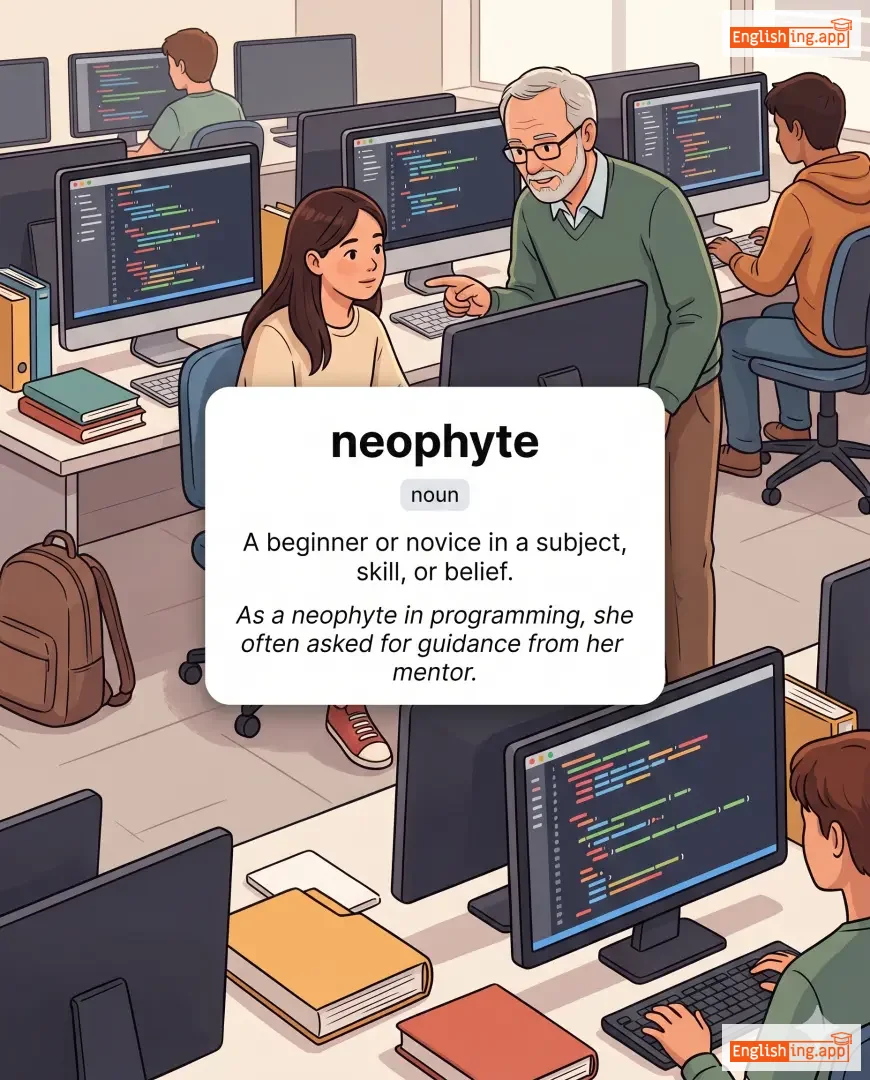
neophyte definition card — visual illustration of the meaning
noun
/ˈniːəˌfaɪt/
শিক্ষানবিস (shikhanobis)

A beginner or novice in a subject, skill, or belief.

"As a neophyte in programming, she often asked for guidance from her mentor."

"প্রোগ্রামিং-এ একজন নিওফাইট হিসেবে, সে প্রায়ই তার মেন্টরের কাছে দিকনির্দেশনা চাইত।" (Programming e ekjon neophyte hisebe, se prai tar mentor er kache diknirdeshona chaito.)
noun
/ˈnefjuː/
ভাগ্নে (bhagne)

the son of one’s brother or sister

"My nephew is studying at the university."

"আমার ভাগ্নে বিশ্ববিদ্যালয়ে পড়াশোনা করছে।" (amar bhagne bishwabidyaloye porashona korche)
noun
/ˈnɛpətɪzəm/
আত্মীয়প্রীতি (atmioprioti)

The practice of giving unfair advantages to relatives, especially in jobs or positions of power.

"The company was accused of nepotism after the manager hired his brother."

"ম্যানেজার তার ভাইকে নিয়োগ দেওয়ায় কোম্পানিকে নেপোটিজমের অভিযোগে অভিযুক্ত করা হয়েছিল।" (Manager tar bhaike niyog deway companyke nepotism er abhijoge abhijukto kora hoyechhilo.)
noun, verb
/nɜːrv/
স্নায়ু; সাহস (snayu; sahos)

A bundle of fibers in the body that transmits signals between the brain and other parts; also courage or audacity.

"She gathered the nerve to speak in front of the large audience."

"সে বড় দর্শকের সামনে কথা বলার সাহস জোগাড় করেছিল।" (Se boro dorshoker samne kotha bolar sahos jogad korechhilo.)
adjective
/ˈnɜːrvəs/
উদ্বিগ্ন (udbigno)

anxious, worried, or fearful about something

"She felt nervous before giving her presentation."

"প্রেজেন্টেশন দেওয়ার আগে সে উদ্বিগ্ন বোধ করেছিল।" (Presentation dewar age se udbigno bodh korechilo.)
noun
/nɛst/
বাসা (basha)

a structure built by birds or other animals to hold their eggs or young.

"The bird built a nest in the tall tree."

"পাখিটি একটি লম্বা গাছে একটি বাসা তৈরি করেছিল।" (Pakhiti ekti lomba gache ekti basha toiri korechhilo.)
verb
/ˈnɛsəl/
আশ্রয় নেওয়া (ashroy neowa)

to settle or lie comfortably within or against something

"The child nestled into her mother's arms."

"শিশুটি তার মায়ের বাহুতে আশ্রয় নিল।" (Shishuti tar mayer bahute ashroy nilo.)
noun
/ˈnɛslɪŋ/
ছোট পাখির ছানা (choto pakhir chana)

a young bird that has not yet left the nest

"The nestling waited for its parent to bring food."

"পাখির ছানাটি তার মায়ের খাবার আনার অপেক্ষায় ছিল।" (Pakhir chanati tar mayer khabar anar opekkhay chhilo.)
noun
/nɛt/
জাল (jal)

a piece of material made of threads or ropes woven together, used to catch or hold things

"The fisherman cast his net into the sea."

"মাছ ধরার জেলে সমুদ্রে জাল ফেলল।" (Mach dhorar jele somudre jal phello.)
adjective
/ˈnɛðər/
নীচে অবস্থিত (niche obosthito)

situated down or below; lower

"They explored the nether regions of the cave."

"তারা গুহার নীচের অঞ্চলগুলো অন্বেষণ করেছিল।" (Tara guhar nicher onchol gulo onbeshon korechhilo.)
noun
/ˈnɛtl̩/
কাঁটা গাছ (kanta gachh)

a plant with stinging hairs that cause irritation when touched

"He accidentally brushed against the nettle and felt a sharp sting."

"সে দুর্ঘটনাক্রমে কাঁটা গাছে হাত লাগিয়ে তীব্র জ্বালা অনুভব করল।" (Se durghotonakrome kanta gache hat lagiye tibro jwala onuvob korlo.)
adjective
/ˈnɛtlˌsʌm/
বিরক্তিকর (biraktikor)

Causing irritation, annoyance, or difficulty.

"The nettlesome rules frustrated the workers."

"বিরক্তিকর নিয়মগুলো শ্রমিকদের হতাশ করেছিল।" (Biraktikor niyomgulo shromikder hotash korechilo.)
noun
/ˈnɛtˌwɜrk/
নেটওয়ার্ক (network)

A system of interconnected people, things, or computers.

"She built a strong professional network."

"সে একটি শক্তিশালী পেশাদার নেটওয়ার্ক তৈরি করেছিল।" (Se ekti shoktishali peshadar network toiri korechilo.)
networking definition card — visual illustration of the meaning
noun
/ˈnɛtˌwɜːkɪŋ/
যোগাযোগ স্থাপন, পেশাদার সম্পর্ক তৈরি করা (jogajog sthapono, peshadar shomporko toiri kora)

The action of establishing connections and relationships, especially for career or business purposes.

"Networking is important for career development."

"নেটওয়ার্কিং পেশাগত উন্নয়নের জন্য গুরুত্বপূর্ণ।" (Networking peshagoto unnoyoner jonno guruttopurno.)
adjective
/ˈnjʊrəl/
স্নায়বিক (snayobik)

Relating to nerves or the nervous system.

"Scientists study neural connections in the brain."

"বিজ্ঞানীরা মস্তিষ্কে স্নায়বিক সংযোগ অধ্যয়ন করেন।" (Bigganira mostishe snayobik songjog oddhoyon koren.)
noun
/njʊˈrældʒə/
স্নায়ুর ব্যথা (snayur byatha)

intense, often intermittent pain along a nerve pathway

"The patient suffers from neuralgia in her face."

"রোগী তার মুখে নিউরালজিয়ায় ভুগছেন।" (Rogi tar mukhe neuraljiay vugchhen.)
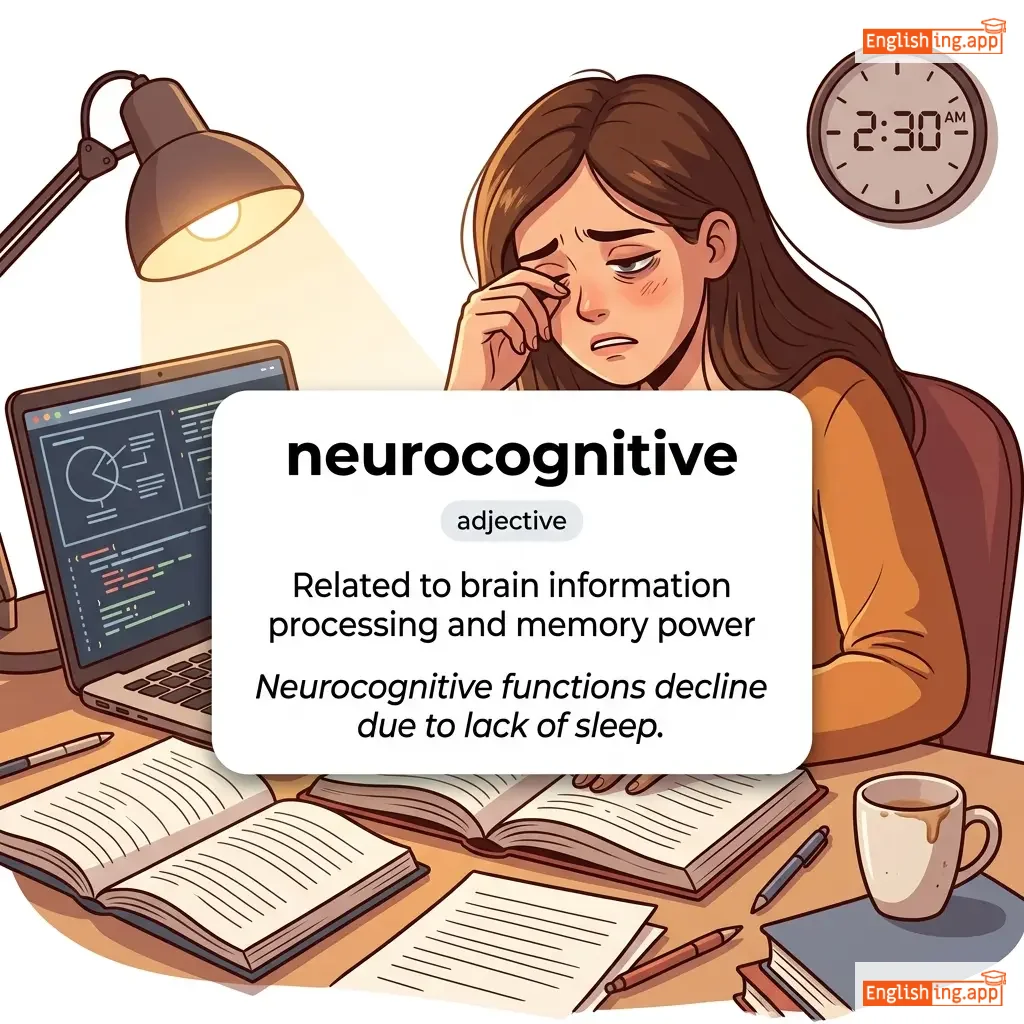
neurocognitive definition card — visual illustration of the meaning
adjective
ˌnjʊəroʊˈkɒɡnɪtɪv
স্নায়বিক ও জ্ঞানসংক্রান্ত (snayobik o gyansongkranto)

Related to brain information processing and memory power

"Neurocognitive functions decline due to lack of sleep."

"পর্যাপ্ত ঘুমের অভাবে স্নায়বিক ও জ্ঞানসংক্রান্ত কার্যক্ষমতা হ্রাস পায়।" (Porjapto ghumr abhabe snayobik o gyansongkranto karyokkhomota hras pay.)
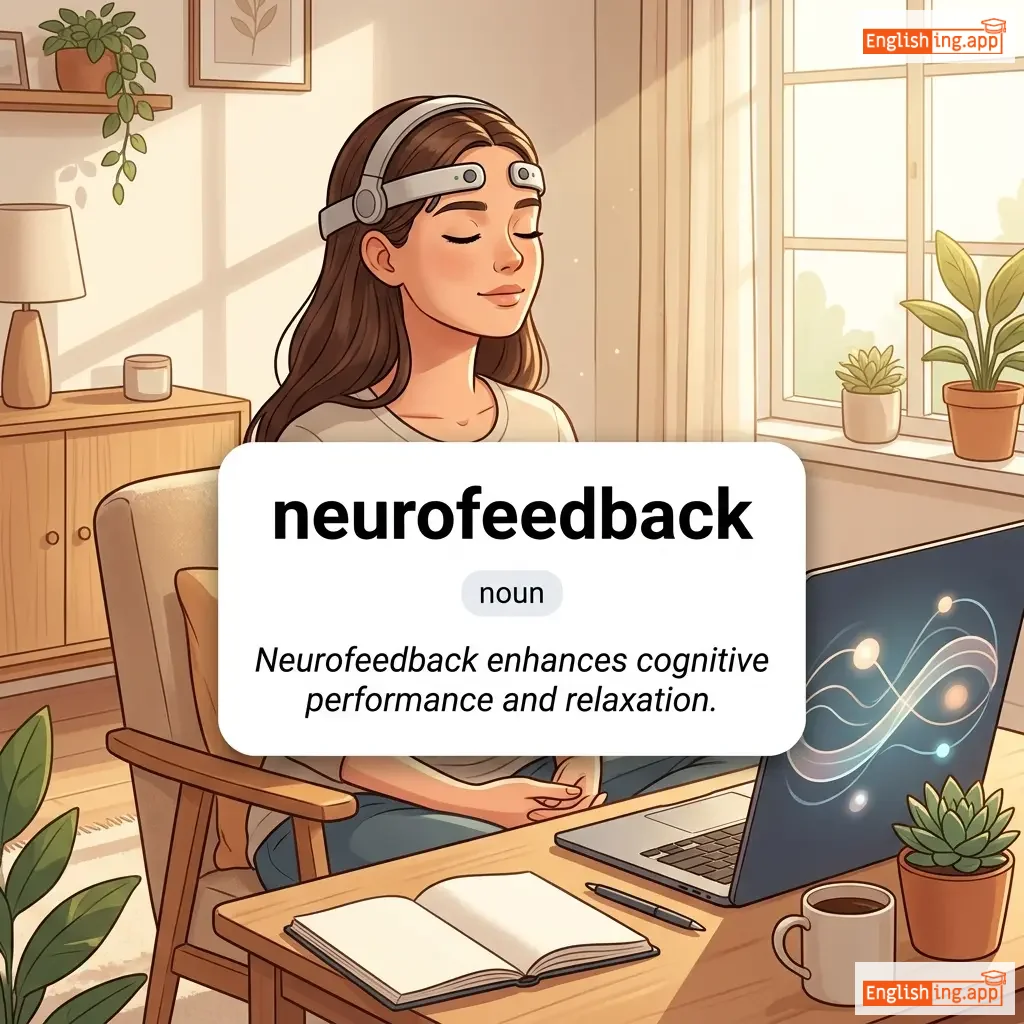
neurofeedback definition card — visual illustration of the meaning
noun
ˈnjʊə.rəʊ ˌfiːd.bæk
মস্তিষ্কের কার্যকলাপ পর্যবেক্ষণ ও নিয়ন্ত্রণের প্রযুক্তি (mosto shtiker karyokolap poryobekkhon o niyontroner projukti)

A technique that uses real-time displays of brain activity to teach self-regulation of brain function.

"Neurofeedback enhances cognitive performance and relaxation."

"নিউরোফিডব্যাক জ্ঞানীয় কার্যকারিতা এবং শিথিলতা বাড়ায়।" (Neurofeedback gyaniyo karyokarita ebong shithilota baraye.)
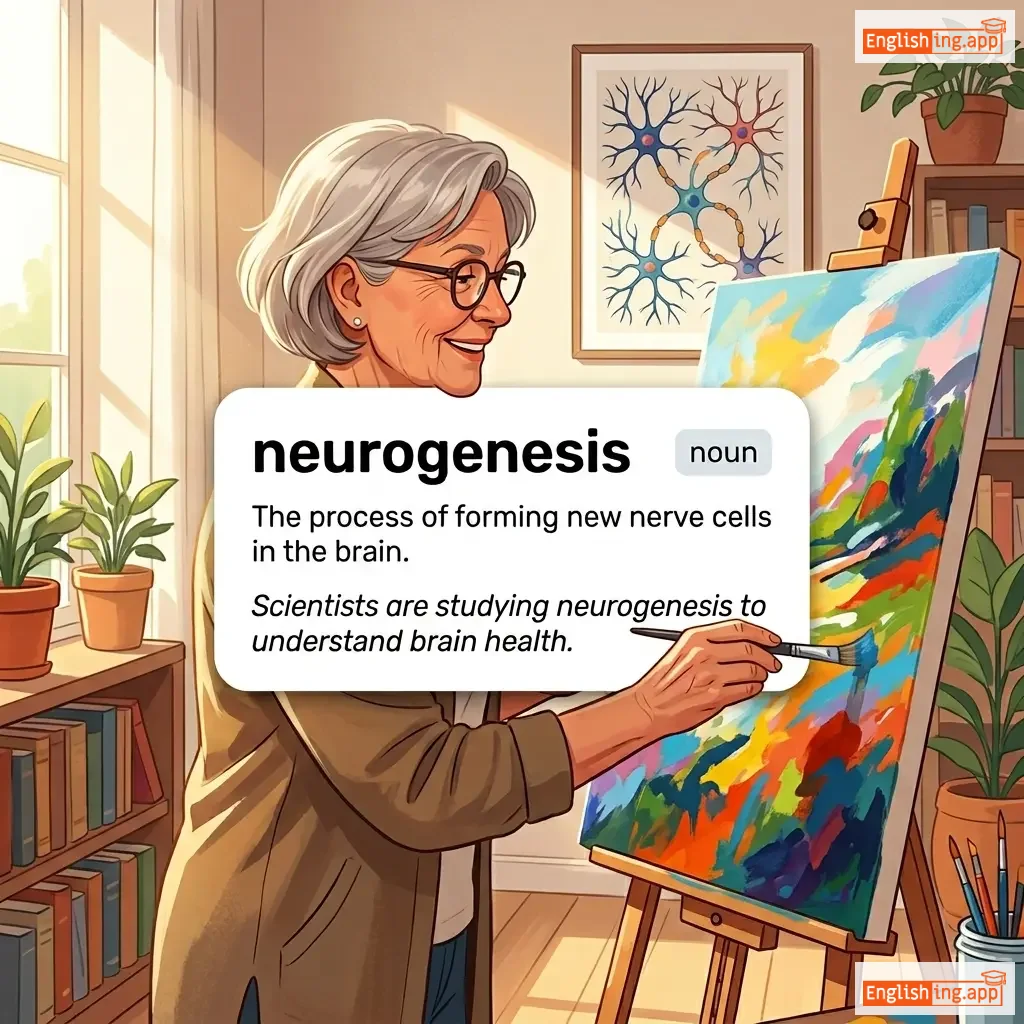
neurogenesis definition card — visual illustration of the meaning
noun
/ˌnjʊə.rəʊˈdʒɛn.ɪ.sɪs/
নতুন নিউরন সৃষ্টির প্রক্রিয়া (notun neuron srishtir prokriya)

The process of forming new nerve cells in the brain.

"Scientists are studying neurogenesis to understand brain health."

"বিজ্ঞানীরা মস্তিষ্কের স্বাস্থ্য বোঝার জন্য নিউরোজেনেসিস নিয়ে গবেষণা করছেন।" (Bigganira mostishker shasthyo bojhar jonno neurogenesis niye gobeshona korchhen.)
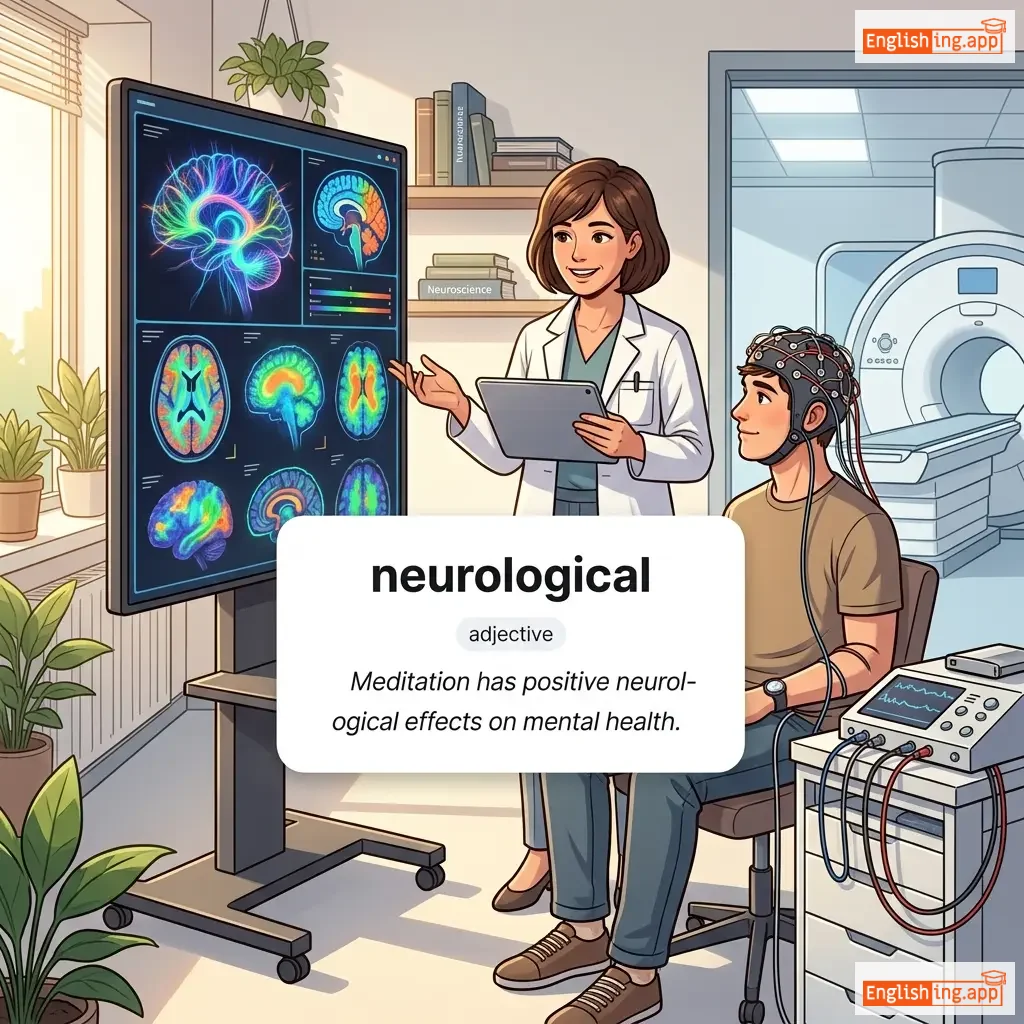
neurological definition card — visual illustration of the meaning
adjective
/ˌnjʊə.rəˈlɒdʒ.ɪ.kəl/
স্নায়ুবৈজ্ঞানিক বা স্নায়ুসম্পর্কিত (snayubaiggyanik ba snayushomporkito)

Relating to the anatomy, functions, and organic disorders of nerves and the nervous system.

"Meditation has positive neurological effects on mental health."

"ধ্যান মানসিক স্বাস্থ্যের উপর ইতিবাচক স্নায়ুবৈজ্ঞানিক প্রভাব ফেলে।" (Dhyan manoshik swasther upor itibachok snayubaiggyanik prabhab phele.)
noun
/njʊˈrɑːlədʒi/
স্নায়ুবিজ্ঞান (snayubiggan)

The branch of medicine that deals with disorders of the nervous system.

"She specializes in neurology and treats patients with brain diseases."

"সে স্নায়ুবিজ্ঞানে বিশেষজ্ঞ এবং মস্তিষ্কের রোগে আক্রান্ত রোগীদের চিকিৎসা করে।" (Se snayubiggane bisheshoggo ebong mostisher roge akrosto rogider chikitsha kore.)
neuroplasticity definition card — visual illustration of the meaning
noun
ˌnjʊə.rəʊ.plæsˈtɪ.sɪ.ti
মস্তিষ্কের অভিযোজন ক্ষমতা (mostishker obhijojon kkhomota)

The ability of the brain to reorganize itself by forming new neural connections throughout life.

"Meditation enhances neuroplasticity, improving memory and focus."

"ধ্যান নিউরোপ্লাস্টিসিটি বৃদ্ধি করে, যা স্মৃতি ও মনোযোগ উন্নত করে।" (Dhyan neuroplasticity briddhi kore, ja smriti o monojog unnoto kore.)
neuroprotective definition card — visual illustration of the meaning
adjective
ˌnjʊə.rəʊ.prəˈtek.tɪv
মস্তিষ্কের কোষ রক্ষাকারী (moshtishker kosh rokkha-kari)

Having the ability to protect nerve cells from damage, degeneration, or impaired function.

"Omega-3 fatty acids have neuroprotective benefits."

"ওমেগা-৩ ফ্যাটি এসিডের নিউরোপ্রোটেকটিভ উপকারিতা রয়েছে।" (Omega-3 fatty acid-er neuroprotective upokarita royeche.)
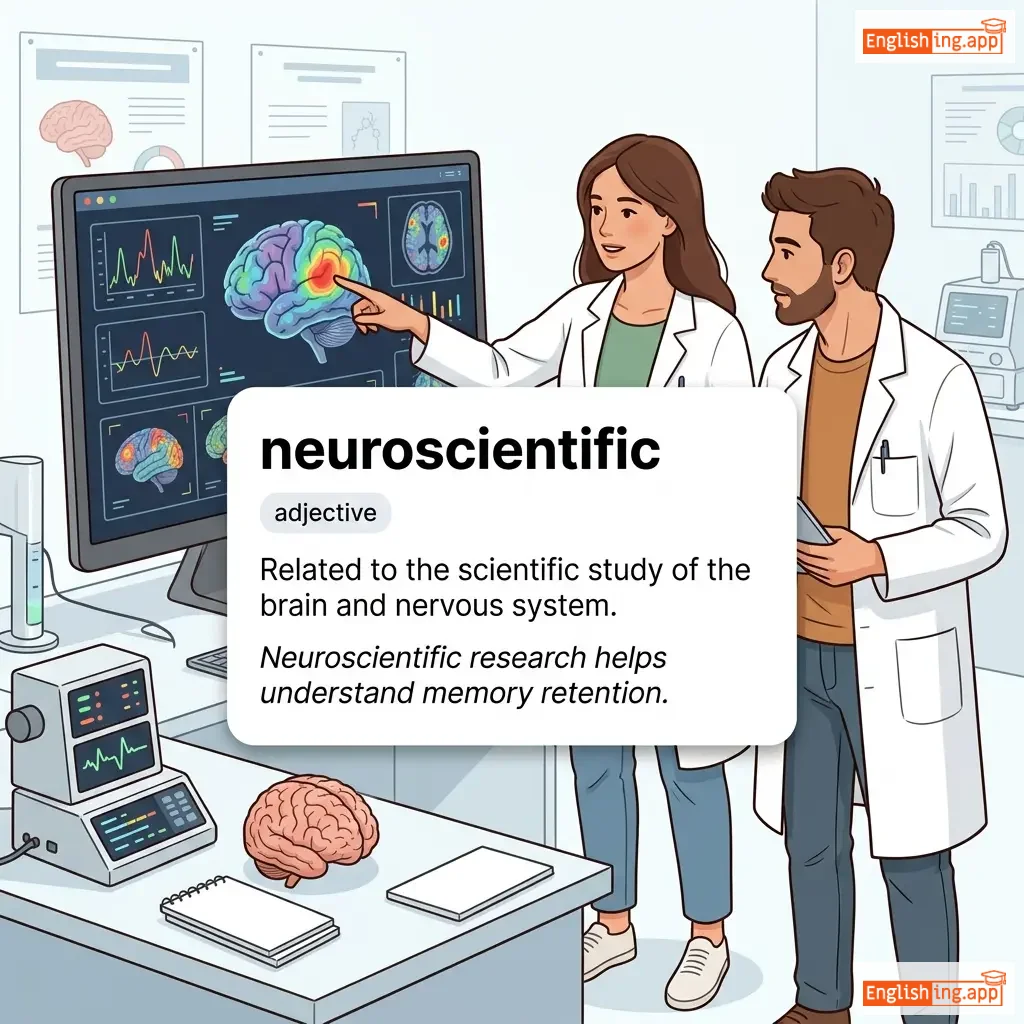
neuroscientific definition card — visual illustration of the meaning
adjective
ˌnjʊə.rəʊ.saɪənˈtɪ.fɪk
স্নায়ুবিজ্ঞান সম্পর্কিত (snayu biggan shomporki to)

Related to the scientific study of the brain and nervous system.

"Neuroscientific research helps understand memory retention."

"স্নায়ুবৈজ্ঞানিক গবেষণা স্মৃতিশক্তি ধরে রাখার প্রক্রিয়া বুঝতে সহায়ক।" (Snayuboygyhanik gobeshona smritishokti dhore rakhar prokriya bujhte shohayok.)
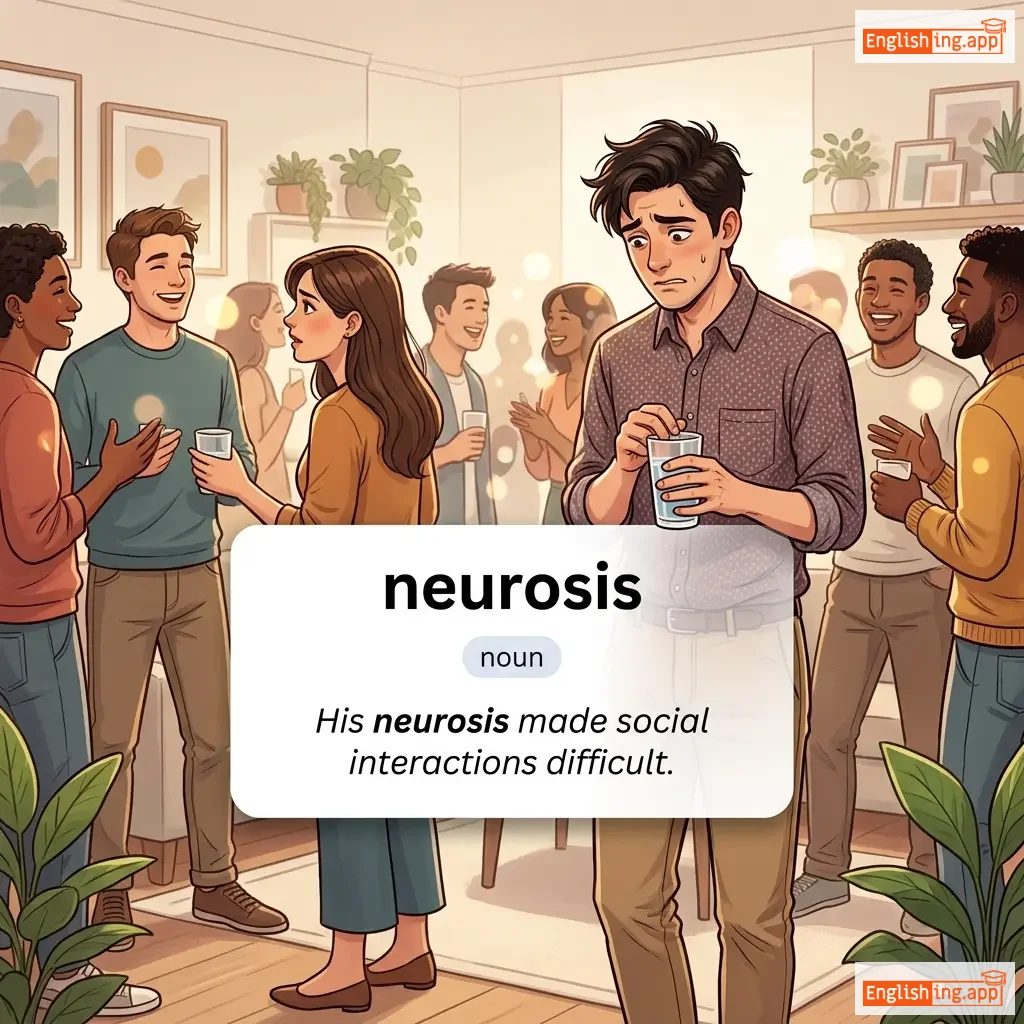
neurosis definition card — visual illustration of the meaning
noun
/njʊəˈrəʊ.sɪs/
মানসিক ব্যাধি (manoshik byadhi)

A relatively mild mental illness that is not caused by organic disease, involving symptoms of stress.

"His neurosis made social interactions difficult."

"তার মানসিক ব্যাধি সামাজিক মেলামেশাকে কঠিন করে তুলেছিল।" (Tar manoshik byadhi shamajik melameshakey kothin kore tulechchilo.)
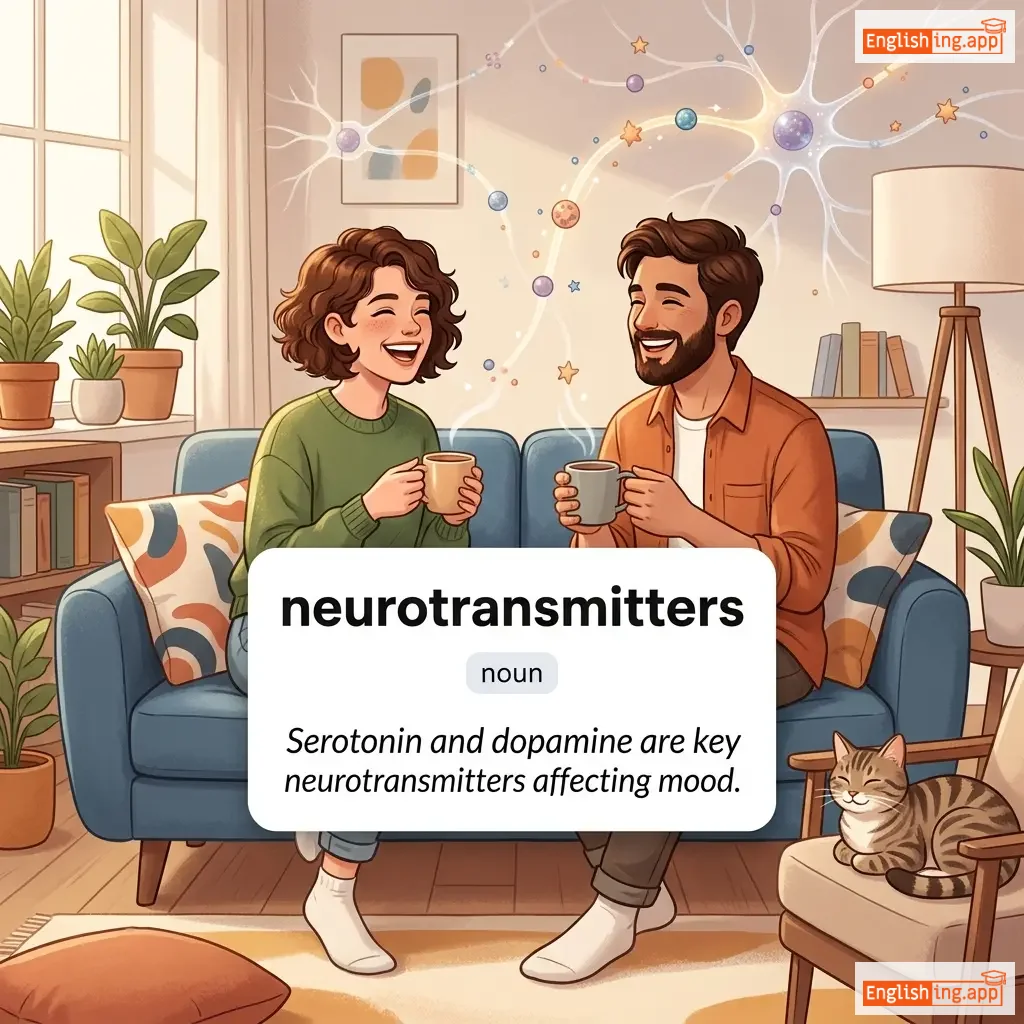
neurotransmitters definition card — visual illustration of the meaning
noun
/ˈnjʊə.rəʊ.trænsˌmɪt.ərs/
স্নায়বিক সংকেত বাহক (snayubik shonket bahok)

Chemical messengers that transmit signals across nerve synapses, affecting mood, behavior, and cognitive functions.

"Serotonin and dopamine are key neurotransmitters affecting mood."

"সেরোটোনিন ও ডোপামিন মেজাজের উপর প্রভাব ফেলা প্রধান নিউরোট্রান্সমিটার।" (Serotonin o dopamine mejajer upor prabhab fela pradhan neurotransmitter.)
verb
/ˈnuːtər/
বন্ধ্যা করা (bondhya kora)

To remove the reproductive organs of an animal; or having no gender.

"They decided to neuter their cat to prevent more kittens."

"তারা তাদের বিড়ালকে আরও বিড়ালছানা জন্মানো থেকে বিরত রাখতে বন্ধ্যা করার সিদ্ধান্ত নেয়।" (Tara tader biralk e aro biralchana jonmao theke birat rakhte bondhya korar siddhanto ney.)
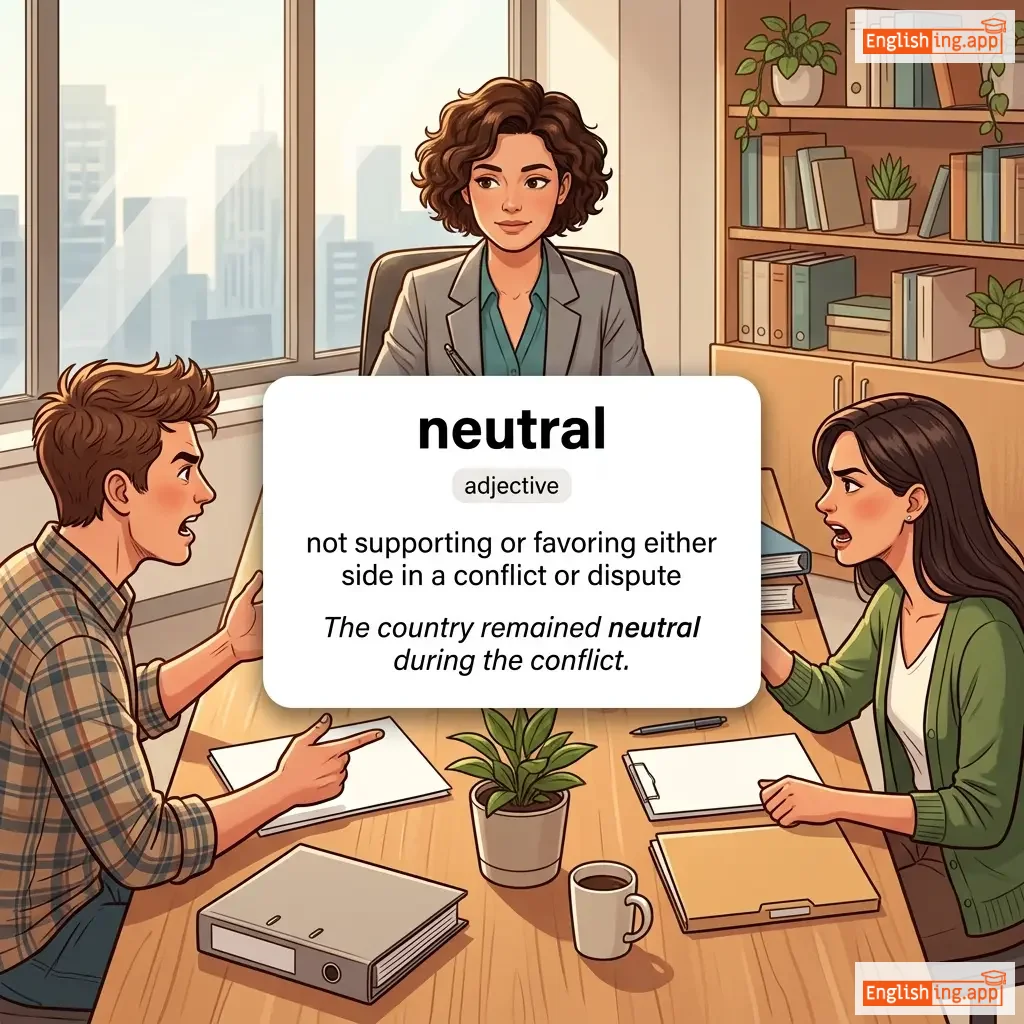
neutral definition card — visual illustration of the meaning
adjective
/ˈnjuːtrəl/
নিরপেক্ষ (niropekkho)

not supporting or favoring either side in a conflict or dispute

"The country remained neutral during the conflict."

"দেশটি সংঘাতের সময় নিরপেক্ষ ছিল।" (Deshti songhater somoy niropekkho chilo.)
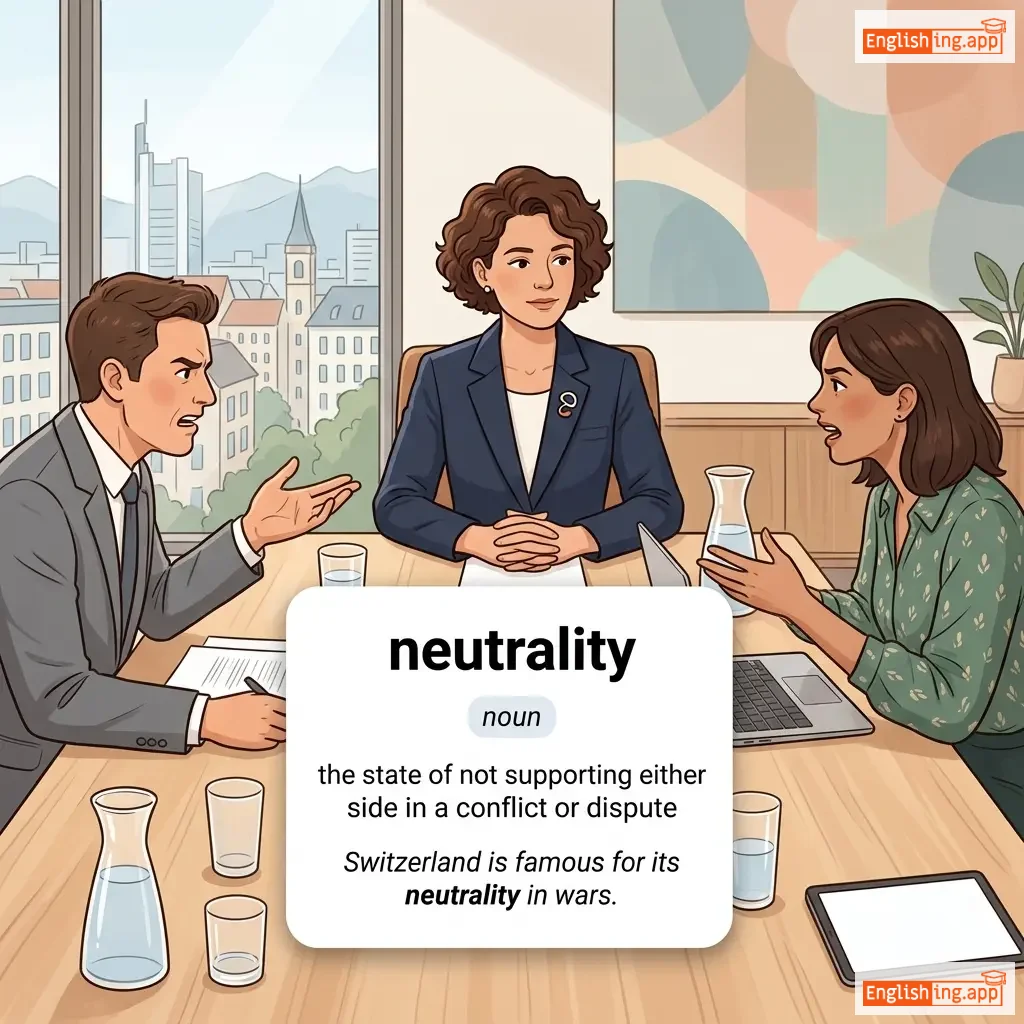
neutrality definition card — visual illustration of the meaning
noun
/nuːˈtræl.ə.ti/
নিরপেক্ষতা; পক্ষপাতহীনতা; (nirapekkkhota)

the state of not supporting either side in a conflict or dispute

"Switzerland is famous for its neutrality in wars."

"সুইজারল্যান্ড যুদ্ধে তার নিরপেক্ষতার জন্য বিখ্যাত।" (suitjarland juddhe tar nirapekkkhota r jonno bikhyato.)
verb
/ˈnjuːtrəlaɪz/
নিরপেক্ষ করা (niropekkho kora)

to make something ineffective or harmless

"The medicine helped neutralize the poison in his system."

"ঔষধটি তার শরীরে বিষকে নিরপেক্ষ করতে সাহায্য করেছিল।" (Oushodti tar shorire bishke niropekkho korte sahajyo korechilo.)
adverb
/ˈnɛvər/
কখনও নয় (kokhono noy)

at no time in the past or future; not ever

"I have never seen such a beautiful sunset."

"আমি কখনও এমন সুন্দর সূর্যাস্ত দেখিনি।" (Ami kokhono emon shundor surjasto dekhini.)
adverb
/ˌnɛvəðəˈlɛs/
তবুও (tobuo)

in spite of that; however

"He was tired; nevertheless, he kept working."

"সে ক্লান্ত ছিল; তবুও, সে কাজ চালিয়ে গেল।" (Se klanto chilo; tobuo, se kaj chaliye gelo.)
adjective
/njuː/
নতুন (notun)

recently made, discovered, or introduced; not existing before

"He bought a new car yesterday."

"সে গতকাল একটি নতুন গাড়ি কিনেছিল।" (Se gotokal ekti notun gari kinechhilo.)