ভোকাবুলারিসমূহ

ইংরেজি শব্দের বাংলা অর্থ | English to Bangla Word Meaning Dictionary

pronoun
/maɪ/
আমার (amar)

used to indicate possession or ownership

"This is my book."

"এটা আমার বই।" (Eta amar boi.)
noun
/ˈmaɪ.nə/
ময়না (moyna)

a tropical bird with dark feathers that can mimic human speech

"The mynah bird repeated every word I said."

"ময়না পাখিটি আমার বলা প্রতিটি কথা পুনরাবৃত্তি করল।" (moyna pakhiti amar bola protiti kotha punorabrritti korlo)
adjective
/maɪˈɑːpɪk/
ক্ষীণদৃষ্টি, সংকীর্ণ দৃষ্টি (khindrishti, sonkirno drishti)

lacking foresight or long-term perspective; also refers to nearsightedness

"The company’s myopic strategy led to long-term losses."

"কোম্পানির ক্ষীণদৃষ্টি কৌশল দীর্ঘমেয়াদে ক্ষতির কারণ হয়েছে।" (Companyr khindrishti koushol dirghomoyade khotir karon hoyeche.)
noun/adjective
/ˈmɪriəd/
অসংখ্য (osonkho)

a countless or extremely great number

"There are myriad stars in the night sky."

"রাতের আকাশে অসংখ্য তারা রয়েছে।" (Rater akashe osonkho tara royeche.)
pronoun
/maɪˈsɛlf/
নিজেকে (nijeke)

used for emphasis or to refer to oneself

"I will do it myself."

"আমি এটি নিজে করব।" (Ami eti nije korbo.)
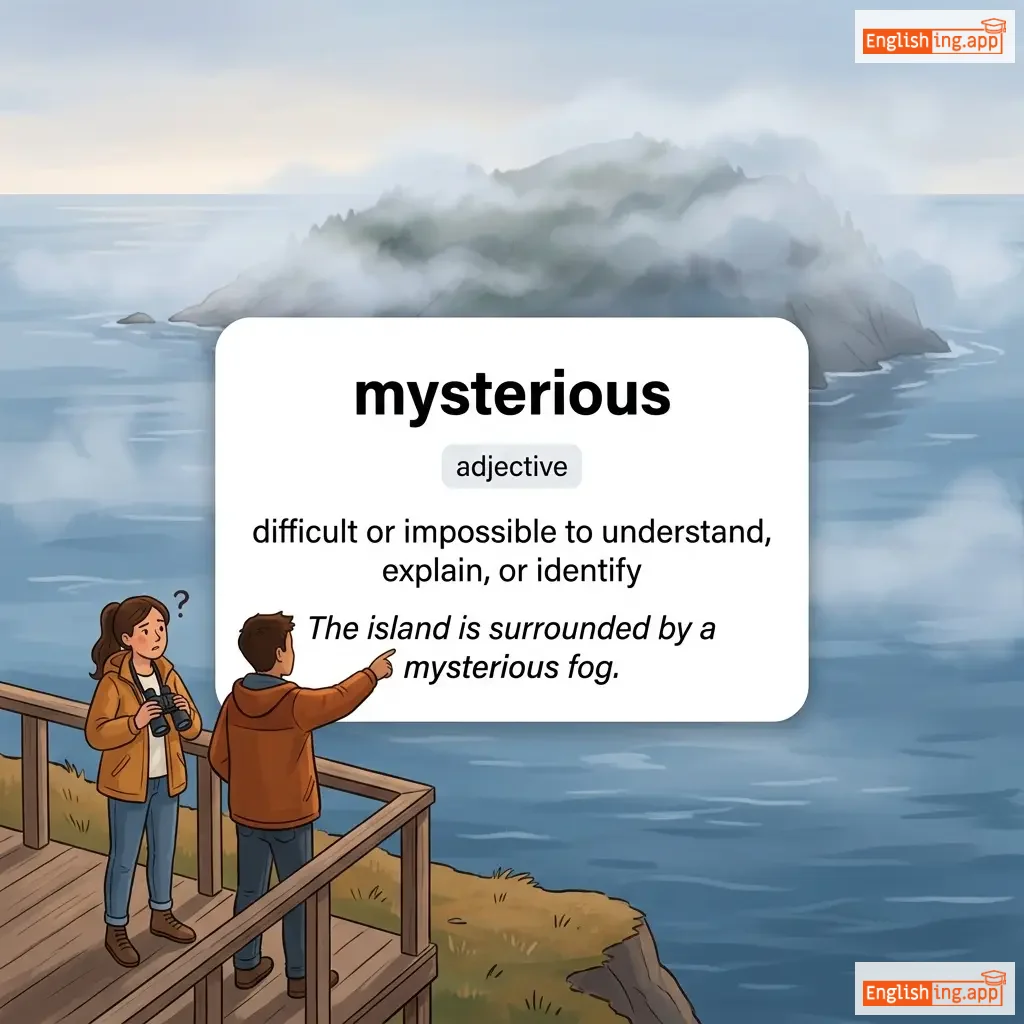
mysterious definition card — visual illustration of the meaning
adjective
/mɪˈstɪəriəs/
রহস্যময় (rohosshomoy)

difficult or impossible to understand, explain, or identify

"The island is surrounded by a mysterious fog."

"দ্বীপটি একটি রহস্যময় কুয়াশায় আচ্ছাদিত।" (Dipto ekti rohosshomoy kuashay achchadito.)
noun
/ˈmɪstəri/
রহস্য (rohosso)

something that is difficult or impossible to understand or explain

"The mystery of the missing book remained unsolved."

"গুম হওয়া বইয়ের রহস্য অমীমাংসিত রয়ে গেছে।" (Gum howa boier rohosso omimangshit roye geche.)
noun/adjective
/ˈmɪstɪk/
রহস্যময়, আধ্যাত্মিক সাধক (rohosshomoy, addhatmik sadhok)

relating to mysteries, spirituality, or hidden truths; a person who seeks spiritual insight

"The mystic devoted his life to meditation and spiritual discovery."

"সেই আধ্যাত্মিক সাধক ধ্যান ও আধ্যাত্মিক আবিষ্কারে তার জীবন উৎসর্গ করেছিলেন।" (Sei addhatmik sadhok dhyan o addhatmik abiskare tar jibon utsorgo korechilen.)
noun
/ˌmɪstɪfɪˈkeɪʃən/
বিস্ময়, বিভ্রান্তি (bismoy, bivranti)

the act of making something unclear or confusing; a state of being puzzled or bewildered

"The audience watched in mystification as the magician performed his tricks."

"যাদুকর যখন তার কৌশল দেখালেন, দর্শকরা বিস্ময়ে হতবুদ্ধি হয়ে তাকিয়ে রইল।" (Jadukar jokhon tar koushol dekhale, dorshokra bismoye hotobuddhi hoye takiye roilo.)
noun
/mɪθ/
কিংবদন্তি (kingbodonti)

A traditional story explaining natural or social phenomena, often involving supernatural beings; a widely held but false belief.

"The myth of the phoenix tells of a bird reborn from its ashes."

"ফিনিক্সের মিথে বলা হয়েছে এক পাখির কথা যে নিজের ছাই থেকে পুনর্জন্ম লাভ করে।" (Phinix er mithe bola hoyeche ek pakhir kotha je nijer chai theke punorjonmo lav kore.)
adjective
/ˈmɪθɪkəl/
লোকজ; লোকালিক; কল্পকাহিনিময়; (mithikaal)

existing only in myths or legends; imaginary or fictitious

"Dragons are mythical creatures that appear in many cultures."

"ড্রাগন হচ্ছে পৌরাণিক প্রাণী যা অনেক সংস্কৃতিতে দেখা যায়।" (dragon hochche pouranik prani ja onek shongskritite dekha jay.)
noun
/mɪˈθɒlədʒi/
পুরাণ (puran)

A collection of myths, especially belonging to a particular culture or religion.

"Greek mythology is filled with stories of gods and heroes."

"গ্রিক পুরাণে দেবতা ও বীরদের অসংখ্য গল্প রয়েছে।" (Grik purane debota o birder oshonkho golpo royeche.)