ভোকাবুলারিসমূহ

ইংরেজি শব্দের বাংলা অর্থ | English to Bangla Word Meaning Dictionary

multitasking definition card — visual illustration of the meaning
noun
ˈmʌltɪˌtɑːskɪŋ
একাধিক কাজ একসঙ্গে করা (ekadhik kaj eksongge kora)

The practice of doing multiple tasks at the same time.

"Multitasking may reduce the quality of each individual task."

"মাল্টিটাস্কিং প্রতিটি পৃথক কাজের গুণগত মান কমাতে পারে।" (Multitasking protiți pṛthok kajer guṇgoto man kamate pare.)
noun
/ˈmʌltɪtuːd/
অসংখ্য (osonkho)

A large number of people or things.

"A multitude of fans gathered at the stadium."

"অসংখ্য ভক্ত স্টেডিয়ামে জড়ো হয়েছিল।" (Osonkho bhokto stediume joro hoyechilo.)
adjective
/mʌm/
নীরব; স্তব্ধ; (nirob)

silent; saying nothing; keeping quiet

"He kept mum about the surprise party plans."

"তিনি সারপ্রাইজ পার্টির পরিকল্পনা সম্পর্কে নীরব থাকলেন।" (tini surprise party-r porikalpona shomporke nirob thaklben.)
verb
/ˈmʌmbəl/
অস্পষ্টভাবে বলা (osposhto vabe bola)

To speak quietly and not clearly so that words are difficult to understand.

"He mumbled an apology before leaving."

"সে বের হওয়ার আগে আস্তে আস্তে একটি দুঃখপ্রকাশ করল।" (Se ber howar age aste aste ekti dukhhoprokkash korlo.)
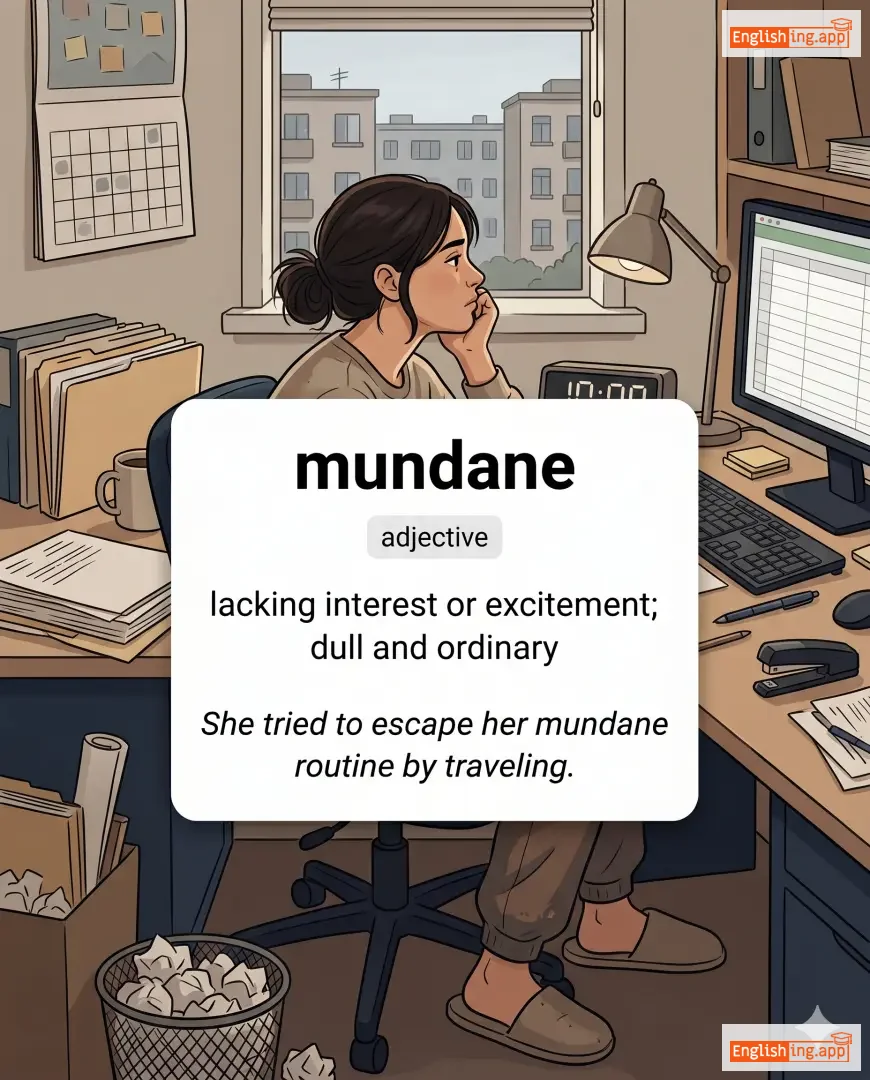
mundane definition card — visual illustration of the meaning
adjective
/mʌnˈdeɪn/
সাধারণ (sadharon)

lacking interest or excitement; dull and ordinary

"She tried to escape her mundane routine by traveling."

"সে ভ্রমণের মাধ্যমে তার একঘেয়ে রুটিন থেকে পালানোর চেষ্টা করেছিল।" (Se vromoner maddhome tar ekgheye rutin theke palanor chesta korechilo.)
mundanity definition card — visual illustration of the meaning
noun
mʌnˈdeɪ.nɪ.ti
সাধারণত্ব বা একঘেয়েমি (sadharonotto ba ekgheyemi)

The quality of being ordinary, routine, or lacking excitement.

"The mundanity of office life can be exhausting."

"অফিস জীবনের একঘেয়েমি ক্লান্তিকর হতে পারে।" (Office jiboner ekgheyemi klantikor hote pare.)
adjective
/mjuːˈnɪsɪpəl/
পৌর (pour)

relating to a city or town or its local government

"The municipal authority is responsible for maintaining the park."

"পৌর কর্তৃপক্ষ পার্ক রক্ষণাবেক্ষণের দায়িত্বে রয়েছে।" (Pour kortipokkho park rokkhonabekhoner daitto reyeche.)
noun
/ˌmjuːnɪsɪˈpæləti/
পৌরসভা (poursova)

a city or town that has its own local government

"The municipality is planning to build a new library."

"পৌরসভা একটি নতুন লাইব্রেরি নির্মাণের পরিকল্পনা করছে।" (Poursova ekti notun library nirmaner porikolpona korche.)
noun
/mjuːˈnɪfəsəns/
উদারতা (udarota)

great generosity or lavish giving

"The hospital was built thanks to the munificence of a wealthy donor."

"একজন ধনী দাতার উদারতার জন্য হাসপাতালটি নির্মিত হয়েছিল।" (EkjOn dhoni datar udarotar jonno hospitalti nirmito hoyechhilo.)
adjective
/mjuːˈnɪfɪsənt/
অত্যন্ত উদার (otyonto udar)

extremely generous; giving freely and abundantly

"She made a munificent donation to the orphanage."

"সে অনাথ আশ্রমে অত্যন্ত উদার দান করেছে।" (Se onath ashrame otyonto udar dan koreche.)
noun
/ˈmjʊərəl/
দেয়ালচিত্র (dewalchitra)

A large painting or artwork applied directly to a wall or ceiling surface.

"The artist painted a mural on the side of the school building."

"শিল্পী স্কুল ভবনের পাশে একটি দেয়ালচিত্র এঁকেছিলেন।" (Shilpi school bhoboner pase ekti dewalchitra enkhechilen.)
noun, verb
/ˈmɜːrdər/
খুন (khun)

the unlawful killing of a person; to kill someone unlawfully and intentionally

"The detective investigated the murder that shocked the town."

"গোয়েন্দা সেই খুনের তদন্ত করেছিলেন যা শহরকে হতবাক করেছিল।" (goyenda sei khuner tontro kortechhilo ja shohorke hotbak korechhilo.)
noun
/ˈmɜːrdərər/
খুনি (khuni)

a person who unlawfully kills another human being with intent

"The murderer was caught by the police within hours."

"পুলিশ কয়েক ঘণ্টার মধ্যে খুনিকে ধরেছিল।" (Police koyek ghontar modhye khunike dhorechhilo.)
adjective
/ˈmɜː(r)dərəs/
খুনে; খুন করার মতো; ভয়ংকর; রক্তপিপাসু; (murdaaraash)

having the intent to kill; extremely violent; bloodthirsty

"The murderous look in his eyes frightened everyone."

"তার চোখের খুনে দৃষ্টি সবাইকে ভয় পাইয়ে দিয়েছিল।" (taar chokher khune drishthi shobaike bhoy paiye diyechilo.)
noun
/ˈmɜːkinəs/
অস্পষ্টতা (osposhtota)

The quality of being dark, gloomy, or unclear.

"The murkiness of the water made it hard to see the fish."

"জলের অস্পষ্টতার কারণে মাছগুলো দেখা কঠিন হয়ে পড়েছিল।" (Joler osposhtotar karone machgulo dekha kothin hoye porechhilo.)
adjective
/ˈmɜːki/
অস্পষ্ট (osposhto)

Dark, gloomy, and difficult to see through; obscure.

"We avoided swimming in the murky river."

"আমরা মলিন নদীতে সাঁতার কাটা এড়িয়ে গিয়েছিলাম।" (Amra molin nodite satar kata eire giyechhilam.)
verb
/ˈmɜːrmər/
ফিসফিস করা (fisfis kora)

To say something in a low, soft, or indistinct voice.

"She murmured a prayer before going to sleep."

"সে ঘুমোতে যাওয়ার আগে একটি প্রার্থনা ফিসফিস করে বলেছিল।" (Se ghumote jawar age ekti prarthona fisfis kore bolechhilo.)
noun
/ˈmʌrɪn/
গবাদি পশুর মহামারি (gbadi poshur mohamari)

An infectious disease that affects cattle and other animals, often fatal.

"The farmer lost many cows during the outbreak of murrain."

"মারেইনের প্রাদুর্ভাবে কৃষক অনেক গরু হারিয়েছিলেন।" (Mareiner pradurbhabe krishok onek goru hariyechhilen.)
noun
/ˈmʌsl/
পেশী (peshi)

a band of fibrous tissue in the body that produces movement; physical strength

"He exercises daily to build strong muscles."

"সে প্রতিদিন ব্যায়াম করে শক্তিশালী পেশী গড়ে তোলে।" (se protidin byayam kore shoktishali peshi gore tole.)
musculoskeletal condition definition card — visual illustration of the meaning
noun
মাসকুলোস্কেলেটাল কন্ডিশন
পেশি ও হাড় সম্পর্কিত সমস্যা (peshi o har shomporkit shomoshya)

A disorder that affects the muscles, bones, joints, tendons, ligaments, or other structures that support the limbs, neck, and back.

"De Quervain's Syndrome is a common musculoskeletal condition."

"ডি কোয়ার্ভাইন'স সিনড্রম একটি সাধারণ পেশি ও হাড় সম্পর্কিত সমস্যা।" (De Quervain's Syndrome ekti shadharon peshi o har shomporkit shomoshya.)
verb, noun
/mjuːz/
গভীরভাবে চিন্তা করা / অনুপ্রেরণার উৎস (gobhirbhabe chinta kora / onupreonar utsho)

to think deeply about something; a source of inspiration, especially for an artist or writer

"She sat by the window to muse about her future."

"সে জানালার পাশে বসে ভবিষ্যৎ নিয়ে গভীরভাবে চিন্তা করছিল।" (Se janalar pashe bose bhobishshot niye gobhirbhabe chinta korchhilo.)
noun
/mjuˈziːəm/
জাদুঘর (jadughor)

a building in which objects of historical, scientific, artistic, or cultural interest are stored and exhibited

"We visited the art museum to see the new exhibition."

"আমরা নতুন প্রদর্শনী দেখতে আর্ট জাদুঘরে গিয়েছিলাম।" (amra notun prodorshoni dekhte art jadughore giechilam.)
noun
/ˈmʌʃruːm/
মাশরুম (এক ধরনের ছত্রাক) (mashrum)

a type of fungus with a round top and a short stem, some of which are edible

"We cooked a delicious soup with fresh mushrooms."

"আমরা তাজা মাশরুম দিয়ে সুস্বাদু স্যুপ রান্না করেছিলাম।" (Amra taza mashrum diye suswadu soup ranna korechhilam.)
noun
/ˈmjuːzɪk/
সঙ্গীত (songit)

vocal or instrumental sounds combined to produce harmony, melody, or rhythm

"She loves listening to classical music."

"সে ক্লাসিক্যাল সঙ্গীত শোনতে ভালোবাসে।" (Se classical songit shonte bhalobashe.)
adjective
/ˈmɪzɪkəl/
সঙ্গীতপূর্ণ (songitpurno)

related to or consisting of music

"She has a very musical voice."

"তার একটি খুব সঙ্গীতপূর্ণ কণ্ঠ রয়েছে।" (Tar ekti khub songitpurno kontho royeche.)
noun
/mjuːˈzɪʃən/
সঙ্গীতজ্ঞ (songitjno)

a person who plays a musical instrument or is musically talented

"He is a talented musician."

"সে একটি প্রতিভাবান সঙ্গীতজ্ঞ।" (Se ekti protibhaban songitjno.)
noun
/mʌsk/
কস্তুরি (kosturi)

a strong-smelling substance secreted by certain animals, used in perfumes and traditional medicine

"The perfume contained natural musk that gave it an exotic fragrance."

"সুগন্ধিতে প্রাকৃতিক কস্তুরি ছিল যা এটিকে একটি বিদেশী সুগন্ধ দিয়েছিল।" (sugandhite prakritik kosturi chilo ja etike ekti bideshi sugandh diyechilo)
noun
/ˈmʌskɪt/
পুরনো ধরণের লম্বা বন্দুক (purono dhoroner lomba banduk)

a type of long gun used in the past, especially by infantry soldiers

"The soldiers carried muskets into the battlefield."

"সৈন্যরা যুদ্ধক্ষেত্রে মাস্কেট বহন করেছিল।" (Soinyora juddokhetre musket bohon korechhilo.)
adjective
/ˈmʌski/
কস্তুরী ঘ্রাণযুক্ত (kosturi ghran jukto)

having a strong, sweet, earthy smell like musk

"The perfume had a musky fragrance."

"সুগন্ধিতে কস্তুরীর ঘ্রাণ ছিল।" (Sugondhite kosturir ghran chhilo.)
noun
/ˈmʊzlɪm/
মুসলিম (muslim)

a follower of Islam

"He is a devout Muslim."

"সে একজন একনিষ্ঠ মুসলিম।" (Se ekjon eknistho Muslim.)
verb
/mʌst/
ত করতে হবে (korite hobe)

to be required or obligated to

"You must complete your homework before you go out."

"তোমাকে বাড়ির কাজ শেষ করতে হবে, তারপর বাইরে যেতে পারবে।" (Tomake barir kaj shesh korte hobe, tarpor bairay jete parbe.)
noun
/ˈmʌs.tərd/
সরিষা (shorisha)

A pungent seed or condiment made from ground mustard seeds

"She added mustard seeds to the curry for extra flavor."

"অতিরিক্ত স্বাদের জন্য সে তরকারিতে সরিষার দানা যোগ করল।" (otirikto swader jonno she torkarite shorishar dana jog korlo)
noun
/ˈmʌs.tərd liːf/
সরিষার শাক (shorisher shak)

green leafy vegetable from the mustard plant; edible leaves used in cooking

"We cooked mustard leaf with fish in a traditional Bengali curry."

"আমরা ঐতিহ্যবাহী বাঙালি তরকারিতে মাছের সাথে সরিষার শাক রান্না করেছি।" (amra oitihobaahi bangali torkariye macher shathe shorisher shak ranna korechhi.)
noun
/ˈmʌstərd ɔɪl/
সরিষার তেল (shorishore tel)

oil extracted from mustard seeds, commonly used for cooking and medicinal purposes

"We use mustard oil for cooking vegetables in our kitchen."

"আমরা আমাদের রান্নাঘরে সবজি রান্নার জন্য সরিষার তেল ব্যবহার করি।" (amra amader rannaghore shobji rannar jonno shorishore tel bebhar kori.)
noun
/ˈmʌs.tərd siːdz/
সরিষার বীজ (shorishar bij)

small round seeds from the mustard plant, used as a spice and for making mustard condiment

"Mustard seeds are often tempered in hot oil to release their nutty flavor before adding to dishes."

"সরিষার বীজ প্রায়ই গরম তেলে ছড়িয়ে দেওয়া হয় তাদের বাদামি স্বাদ বের করার জন্য খাবারে যোগ করার আগে।" (shorishar bij prayoi gorom tele choriye deoya hoy tader badami swad ber korar jonno khabare jog korar age.)
verb, noun
/ˈmʌstər/
জড়ো করা / সাহস জোগাড় করা (joro kora / sahos jogar kora)

to gather people, especially soldiers; to summon courage or strength

"He mustered enough courage to face the challenge."

"সে চ্যালেঞ্জের মুখোমুখি হওয়ার মতো সাহস জোগাড় করেছিল।" (Se challenge-er mukhomukhi howar moto sahos jogar korechhilo.)
adjective
/ˈmʌsti/
আবছা স্যাঁতসেঁতে গন্ধযুক্ত (abcha syaatsente ghandho jukto)

having a stale, moldy, or damp smell

"The old books had a musty odor."

"পুরনো বইগুলোতে স্যাঁতসেঁতে গন্ধ ছিল।" (Purono boigulote syaatsente ghandho chhilo.)
noun
/ˌmjuːtəˈbɪləti/
পরিবর্তনশীলতা (poribortonshilota)

The quality of being changeable or capable of change.

"The mutability of fashion trends makes it hard to keep up."

"ফ্যাশনের প্রবণতার পরিবর্তনশীলতা অনুসরণ করা কঠিন করে তোলে।" (Fashioner pronotar poribortonshilota onushoron kora kothin kore tole.)
adjective
/ˈmjuːtəbl/
পরিবর্তনশীল (poribortonshil)

Capable of change or alteration.

"Human emotions are mutable and can shift rapidly."

"মানবিক আবেগ পরিবর্তনশীল এবং দ্রুত বদলাতে পারে।" (Manobik abeg poribortonshil ebong druto bodlate pare.)
noun
/ˌmjuːtəˈbɪləti/
মিউটাবিলিটি (ভুল বানান) (mutability (bhul banan))

A misspelled form of 'mutability', meaning the quality of being changeable.

"The document contained the misspelled word 'mutablility' instead of 'mutability'."

"নথিতে 'mutability' এর পরিবর্তে ভুল বানান 'mutablility' ছিল।" (Nothite 'mutability' er poriborte bhul banan 'mutablility' chilo.)
verb
/ˈmjuːteɪt/
রূপান্তরিত হওয়া (rupantorito howa)

To change or cause to change in form, nature, or character.

"The virus can mutate into a more dangerous strain."

"ভাইরাস আরও বিপজ্জনক রূপে পরিবর্তিত হতে পারে।" (Virus aro bipodjonok rupe poribortito hote pare.)
noun
/mjuːˈteɪʃn/
পরিবর্তন, জেনেটিক রূপান্তর (poriborton, genetic rupantor)

A change in form, structure, or nature, especially in genetics.

"Scientists discovered a genetic mutation that caused the disorder."

"বিজ্ঞানীরা একটি জেনেটিক মিউটেশন আবিষ্কার করেছিলেন যা ব্যাধির কারণ হয়েছিল।" (Bigganira ekti genetic mutation abiskar korechilen ja byadhir karon hoyechilo.)
adjective
/mjuːt/
নিঃশব্দ (nihshobdo)

silent or unable to speak; not expressed in words

"She remained mute during the entire meeting."

"সে পুরো বৈঠক জুড়ে নীরব ছিল।" (Se puro boithok jure nirob chilo.)
adjective
/ˈmjuːtɪd/
ফিকে (phike)

softened in sound, color, or effect; subdued

"The room was painted in muted shades of blue and grey."

"ঘরটি নীল ও ধূসর ফিকে রঙে রাঙানো ছিল।" (Ghor ti nil o dhushor phike range rangano chilo.)
verb
/ˈmjuːtɪleɪt/
বিকৃত করা (bikrito kora)

to inflict serious damage on something, often by cutting or tearing

"The ancient manuscript was mutilated by careless handling."

"অবহেলার কারণে প্রাচীন পাণ্ডুলিপিটি বিকৃত হয়েছিল।" (Obohelar karone prachin pandulipiti bikrito hoyechhilo.)
adjective
/ˈmjuːtɪnəs/
বিদ্রোহী (bidrohi)

refusing to obey authority; rebellious

"The soldiers grew mutinous after months without pay."

"মাসের পর মাস বেতন না পাওয়ায় সৈন্যরা বিদ্রোহী হয়ে উঠেছিল।" (Masher por mash betan na pawaya soinnora bidrohi hoye uthchhilo.)
noun
/ˈmjuːtɪni/
বিদ্রোহ (bidroho)

an open rebellion against authority, especially by soldiers or sailors

"The sailors staged a mutiny against their captain."

"নাবিকরা তাদের ক্যাপ্টেনের বিরুদ্ধে বিদ্রোহ করেছিল।" (Nabikra tader captain er biruddhe bidroho korechhilo.)
verb
/ˈmʌtər/
বিড়বিড় করা (birbir kora)

to speak in a low or barely audible voice, often in dissatisfaction or irritation

"He muttered something under his breath as he walked away."

"সে চলে যাওয়ার সময় নিচু স্বরে কিছু বিড়বিড় করল।" (Se chole jawar somoy nichu shore kichu birbir korlo.)
noun
/ˈmʌtn/
খাসির মাংস (khasir mangsho)

meat from an adult sheep; lamb meat

"The restaurant serves delicious mutton curry with rice."

"রেস্তোরাঁটি ভাতের সাথে সুস্বাদু খাসির মাংসের তরকারি পরিবেশন করে।" (restorati bhater sathe sushadu khasir mangsher torkari poribeshon kore.)
adjective
/ˈmjuːtʃuəl/
পারস্পরিক (parosporik)

felt, shared, or done by two or more people equally

"They have mutual respect for each other."

"তারা একে অপরের প্রতি পারস্পরিক শ্রদ্ধা রাখে।" (Tara eke operer proti parosporik shroddha rakhe.)