ভোকাবুলারিসমূহ

ইংরেজি শব্দের বাংলা অর্থ | English to Bangla Word Meaning Dictionary

adjective, adverb, pronoun
/mɔːr/
অধিক (odhik)

A greater or additional amount or degree.

"She wanted more time to finish the project."

"সে প্রকল্প শেষ করতে আরও সময় চাইছিল।" (Se projokto shesh korte aro shomoy chaichhilo.)
adverb
/mɔːrˈoʊvər/
তদুপরি (todupari)

Used to add information that supports or emphasizes what has already been said.

"The job is challenging; moreover, it requires excellent communication skills."

"কাজটি চ্যালেঞ্জিং; তদুপরি, এতে চমৎকার যোগাযোগ দক্ষতার প্রয়োজন।" (Kajti challenging; todupari, ete chomotkar jogajog dokkhotar proyojon.)
noun
/ˈmɔːreɪz/
রীতি-নীতি (riti-niti)

the essential or characteristic customs and conventions of a community

"Social mores often dictate how people behave in public."

"সামাজিক রীতি-নীতি প্রায়ই মানুষের জনসমক্ষে আচরণ নির্ধারণ করে।" (Samajik riti-niti prayoi manusher jonsomokhe acharon nirdharon kore.)
adjective
/ˌmɔːrɡəˈnætɪk/
অসামাজিক বিবাহ (osamajik bibaho)

relating to a marriage in which one partner, usually of lower social rank, does not share the titles or privileges of the other

"The prince entered into a morganatic marriage with a commoner."

"রাজপুত্র একজন সাধারণ মানুষের সঙ্গে মর্গানাটিক বিবাহ করেছিলেন।" (Rajputro ekjon sadharon manusher songe morganatic bibaho korechilen.)
noun
/mɔːrɡ/
মর্গ (morg)

a place where dead bodies are kept, especially to be identified or claimed

"The police took the body to the morgue for identification."

"পুলিশ মৃতদেহটি শনাক্তকরণের জন্য মর্গে নিয়ে গেল।" (Police mrttodeh ti shonaktokoroner jonno morge niye gelo.)
adjective
/ˈmɔːrɪbʌnd/
মৃতপ্রায় (mrttoproy)

in a dying state; near death or becoming obsolete

"The moribund industry was soon replaced by modern technology."

"মৃতপ্রায় শিল্পখাত শীঘ্রই আধুনিক প্রযুক্তি দ্বারা প্রতিস্থাপিত হয়েছিল।" (Mrttoproy shilpkhat shighroi adunik projukti dvara protisthapit hoyechilo.)
noun
/ˈmɔːrnɪŋ/
সকাল (sokal)

the early part of the day, typically from sunrise until noon

"I like to go for a run in the morning."

"আমি সকালে দৌড়াতে যেতে পছন্দ করি।" (Ami sokale dourate jete pochhondo kori.)
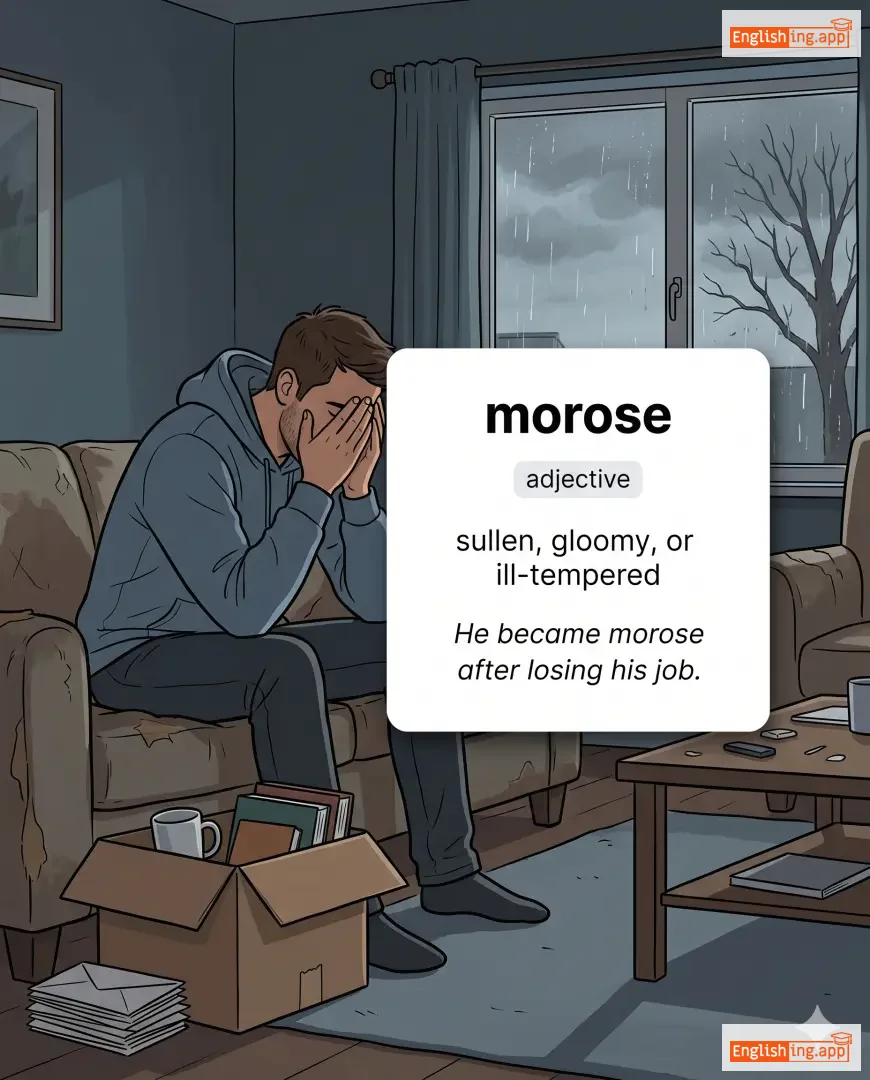
morose definition card — visual illustration of the meaning
adjective
/məˈroʊs/
বিষণ্ণ (bishonno)

sullen, gloomy, or ill-tempered

"He became morose after losing his job."

"চাকরি হারানোর পর সে বিষণ্ণ হয়ে গেল।" (Chakri haranor por se bishonno hoye gelo.)
verb
/mɔːrf/
রূপান্তরিত হওয়া (rupantorito howa)

to change smoothly from one form, shape, or character into another

"The caterpillar will morph into a butterfly."

"শুঁয়োপোকা একটি প্রজাপতিতে রূপান্তরিত হবে।" (Shuyopoka ekti projapati te rupantorito hobe.)
morphological definition card — visual illustration of the meaning
adjective
ˌmɔː.fəˈlɒdʒ.ɪ.kəl
শব্দগঠন ও পরিবর্তনের বিশ্লেষণ (morphological)

Related to the structure and formation of words; concerning morphology in linguistics.

"Morphological analysis helps AI understand word structures."

"মর্ফোলজিকাল বিশ্লেষণ এআইকে শব্দের গঠন বুঝতে সাহায্য করে।" (Morphological bishshleshon AIke shobder gothon bujhte sahayyo kore.)
noun
/mɔːrˈfɑːlədʒi/
রূপতত্ত্ব (ruptotto)

the study of the form and structure of things, especially in language and biology

"Morphology studies the structure of words and how they are formed."

"রূপতত্ত্ব শব্দের গঠন এবং কীভাবে তা তৈরি হয় তা নিয়ে গবেষণা করে।" (Ruptotto shobder gothon ebong kivabe ta toiri hoy ta niye gobeshona kore.)
adjective
/ˈmɔːtəl/
মরণশীল; নশ্বর; প্রাণধারী; (mortal)

subject to death; having a limited lifespan; human

"All human beings are mortal and will eventually die."

"সকল মানুষ মরণশীল এবং অবশেষে মারা যাবে।" (shokol manush moronshil ebong obosheshe mara jabe.)
noun
/mɔːˈtæləti/
মৃত্যুহার (mrityuhar)

the state of being subject to death; the death rate of a population

"Advancements in medicine have reduced child mortality significantly."

"চিকিৎসা বিজ্ঞানের উন্নতির ফলে শিশু মৃত্যুহার উল্লেখযোগ্যভাবে কমেছে।" (Chikitsha bigganer unnottir fole shishu mrityuhar ullekhjoggo bhabe komeche.)
noun
/ˈmɔːrtər/
গাঁথুনির মিশ্রণ / ছোট কামান (gathunir mishron / chhoto kaman)

a mixture used in building to bond bricks or stones together; also, a small cannon for firing shells

"The workers applied mortar between the bricks."

"কর্মীরা ইটের মাঝখানে মর্টার প্রয়োগ করল।" (Kormira iter majkhane mortar proyog korlo.)
noun
/ˈmɔː.tər ænd ˈpes.əl/
শিল্প মুসল (shilpo mushol)

a bowl and grinding tool used to crush and grind spices, herbs, and other substances

"She ground the spices using a mortar and pestle."

"সে শিল্প ও মুসল ব্যবহার করে মশলা পিষল।" (she shilpo o mushol bebhar kore moshla pishlo.)
noun
/ˈmɔːrɡɪdʒ/
বন্ধক ঋণ (bondhok rin)

a legal agreement where a person borrows money to buy property and pays it back over time

"They applied for a mortgage to buy their new house."

"তারা তাদের নতুন বাড়ি কেনার জন্য একটি বন্ধক ঋণ নিয়েছিল।" (Tara tader notun bari kenar jonno ekti bondhok rin niyechilo.)
noun
/mɔːrˈtɪʃən/
শবসজ্জাকারী (shobsajjokari)

a person whose job is to prepare dead bodies for burial or cremation and to arrange funerals

"The mortician prepared the body for the funeral service."

"শবসজ্জাকারী অন্ত্যেষ্টিক্রিয়ার জন্য দেহটি প্রস্তুত করলেন।" (Shobsajjokari ontyestikriyar jonno deho ti prostut korlen.)
verb
/ˈmɔːrtɪfaɪ/
লজ্জিত করা (lojito kora)

to cause someone to feel great embarrassment or shame

"She was mortified when she tripped on stage."

"সে মঞ্চে হোঁচট খেলে প্রচণ্ড লজ্জিত হয়েছিল।" (Se monche honchot kheye prochondo lojito hoyechilo.)
noun
/moʊˈzeɪɪk/
মোজাইক (mozaik)

A picture or pattern produced by arranging together small pieces of stone, tile, or glass.

"The church ceiling was decorated with a beautiful mosaic."

"গির্জার ছাদ একটি সুন্দর মোজাইক দিয়ে সাজানো ছিল।" (Girjar chad ekti sundor mozaik diye sajano chhilo.)
noun
/mɒsk/
মসজিদ (mosjid)

A Muslim place of worship.

"They gathered at the mosque for the Friday prayer."

"তারা জুমার নামাজের জন্য মসজিদে জমায়েত হয়েছিল।" (Tara jumar namazer jonno mosjide jamayet hoyechhilo.)
noun
/məˈskiːtəʊ/
মশা (mosha)

a small flying insect known for biting and spreading diseases such as malaria

"The mosquito bit me while I was sleeping under the net."

"মশা আমাকে কামড়িয়েছিল যখন আমি জাল টাঙিয়ে ঘুমাচ্ছিলাম।" (Mosha amake kamriyechhilo jokhon ami jala tangiye ghumachchhilam.)
noun
/məˈskiː.toʊ net/
মশারী (moshari)

a fine mesh fabric used to cover beds or windows to keep mosquitoes and other insects out

"We use a mosquito net to protect ourselves from insect bites."

"আমরা পোকামাকড়ের কামড় থেকে রক্ষা পেতে মশারী ব্যবহার করি।" (amra pokamakorer kamor theke roksha pete moshari bebhohar kori)
noun
/mɔːs/
শেওলা; শ্যাওলা; (sheola)

a small flowerless plant that grows in clumps in moist places

"Green moss covered the old stone wall."

"সবুজ শেওলা পুরানো পাথরের দেয়াল ঢেকে দিয়েছিল।" (shobuj sheola purano pathorer deyal dheke diyechilo.)
adjective
/ˈmɒsi/
শেওলা পড়া; শেওলা ঢাকা; শৈবালময়; (moshi)

covered with moss; having moss growing on it

"The old tree trunk was mossy and covered with green vegetation."

"পুরানো গাছের কাণ্ড শেওলা পড়া এবং সবুজ উদ্ভিদে ঢাকা ছিল।" (purano gachher kando sheola pora ebong shobuj udbhide dhaka chhilo.)
adjective, adverb, pronoun
/moʊst/
অধিকাংশ (odhikangsho)

the greatest in amount, degree, or number

"Most people like to relax on weekends."

"অধিকাংশ মানুষ সাপ্তাহিক ছুটিতে বিশ্রাম নিতে পছন্দ করে।" (Odhikangsho manush saptahik chutite bishram nite pochhondo kore.)
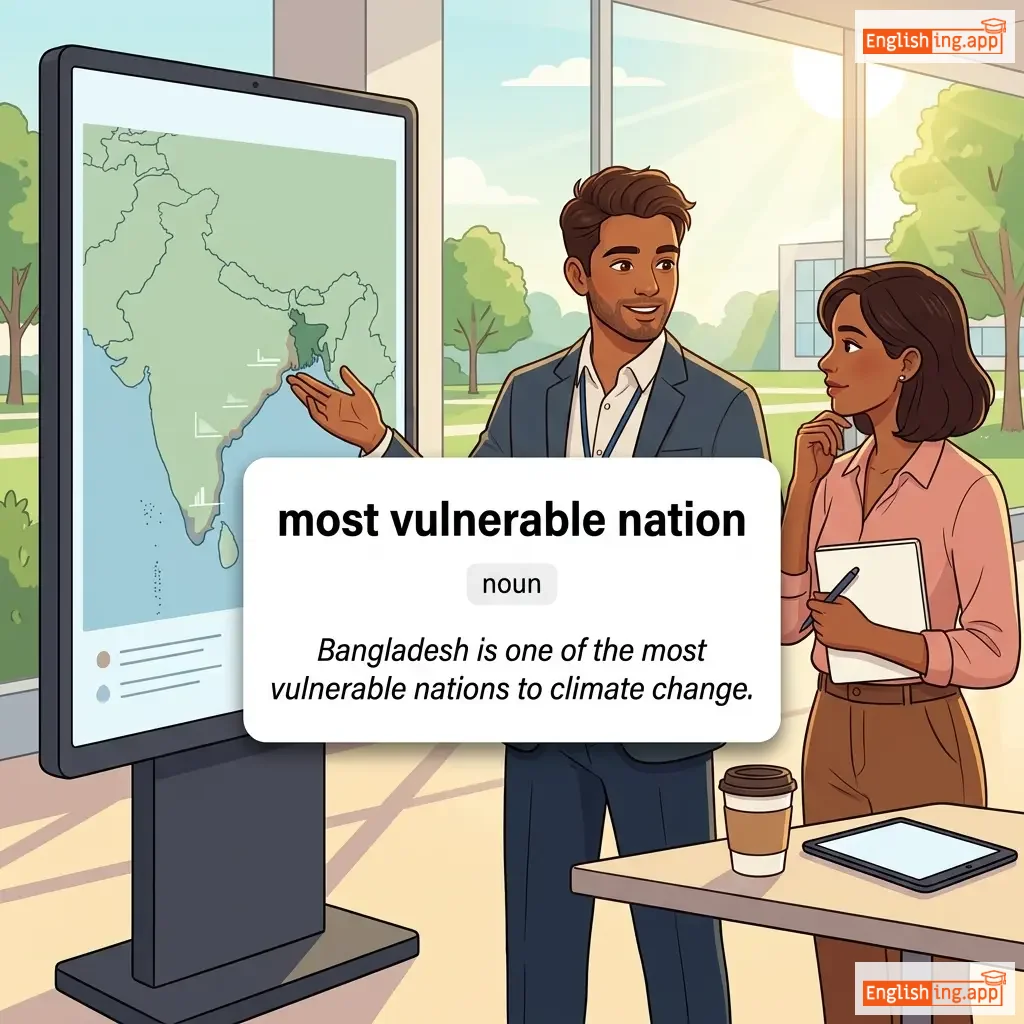
most vulnerable nation definition card — visual illustration of the meaning
noun
moʊst ˈvʌlnərəbəl ˈneɪʃən
সর্বাধিক ঝুঁকিপূর্ণ দেশ (shorbadhi jhukipurno desh)

A country that is highly exposed to risks and lacks adequate protection or resilience.

"Bangladesh is one of the most vulnerable nations to climate change."

"বাংলাদেশ জলবায়ু পরিবর্তনের জন্য সবচেয়ে ঝুঁকিপূর্ণ দেশগুলোর একটি।" (Bangladesh jolbayu poribortoner jonno shobcheye jhukipurno deshgulor ekti.)
adverb
/ˈmoʊstli/
মূলত (muloto)

for the most part; mainly

"She is mostly interested in art and literature."

"সে মূলত শিল্পকলা এবং সাহিত্যে আগ্রহী।" (She muloto shilpokola ebong sahitye agrohi.)
noun
/moʊt/
ধূলিকণা (dhulikona)

A tiny particle or speck, especially of dust.

"A mote of dust floated in the sunlight."

"সূর্যালোকে একটি ধূলিকণা ভাসছিল।" (Surjaloke ekti dhulikona vashchhilo.)
adjective
/ˈmɒθ ˌiːtən/
পোকায় খাওয়া (pokay khawa)

Damaged or worn out, especially by moths or age.

"He wore a moth-eaten sweater on the cold day."

"সে ঠান্ডা দিনে একটি পোকায় খাওয়া সোয়েটার পরেছিল।" (Se thanda dine ekti pokay khawa sweater porechhilo.)
noun
/ˈmʌðər/
মা (ma)

a female parent

"Her mother is a kind and caring person."

"তার মা একজন দয়ালু এবং যত্নশীল ব্যক্তি।" (Tar ma ekjon doyaloo ebong jotnoshil bekti.)
noun
/ˈmʌðər ˈlæŋɡwɪdʒ/
মাতৃভাষা (matribhasha)

the first language a person learns from childhood; native language

"Children learn best when they are taught in their mother language."

"শিশুরা মাতৃভাষায় পড়লে সবচেয়ে ভালো শেখে।" (shishura matribhashay porle shobcheye bhalo shekhe)
noun
/ˈmʌð.ər.hʊd/
মাতৃত্ব; (matritvo)

the state of being a mother; the qualities of a mother

"She embraced the joys and challenges of motherhood."

"তিনি মাতৃত্বের আনন্দ এবং চ্যালেঞ্জগুলো সাদরে গ্রহণ করেছেন।" (tini matritver anondo ebong challengegulo shadore grohon korechhen.)
noun
/ˈmʌð.ər.lænd/
মাতৃভূমি; স্বদেশ; (matribhumi)

the country where one was born or has citizenship; homeland

"He always spoke fondly of his motherland."

"তিনি সর্বদা তার মাতৃভূমির কথা ভালোবাসা সহকারে বলতেন।" (tini shorboda tar matribhumire kotha bhalobasha shohokare bolten.)
adjective
/ˈmʌðərli/
মাতৃসুলভ; (matrishulokh)

having qualities characteristic of a mother; caring and protective

"She showed motherly care and affection towards all the children."

"তিনি সকল শিশুর প্রতি মাতৃসুলভ যত্ন ও স্নেহ দেখিয়েছিলেন।" (tini shokol shishur proti matrishulokh jotno o sneho dekhiyechhilen.)
noun
/moʊˈtiːf/
মূল ভাব (mul bhab)

A recurring theme, subject, or idea in a work of art or literature.

"The motif of love is central to the novel."

"ভালোবাসার মোটিফ উপন্যাসের মূল কেন্দ্র।" (Bhalobashar motif upannaser mul kendra.)
adjective
/ˈmoʊtaɪl/
চলনশীল (cholonshil)

Capable of movement or locomotion.

"Certain bacteria are motile and can swim toward nutrients."

"কিছু ব্যাকটেরিয়া চলনশীল এবং পুষ্টির দিকে সাঁতার কাটতে পারে।" (Kichu bacteria cholonshil ebong pushter dike satar katte pare.)
noun
/moʊˈtɪləti/
চলনশক্তি (cholonshokti)

The ability of an organism or cell to move independently.

"The motility of sperm is crucial for successful fertilization."

"সফল নিষেকের জন্য শুক্রাণুর চলনশক্তি অত্যন্ত গুরুত্বপূর্ণ।" (Sofol nisheker jonno shukranur cholonshokti otonto guruttopurno.)
noun
/ˈmoʊʃən/
গতি (goti)

the act or process of moving; a change of place or position

"The motion of the car made her sleepy."

"গাড়ির গতিশীলতা তাকে ঘুম পেতে বাধ্য করেছিল।" (Gari-r gotishilota take ghum pete badhyo korechilo.)
verb
/ˈmoʊtɪveɪt/
উদ্দীপিত করা (uddipito kora)

To provide someone with a reason or incentive to do something.

"The coach motivated the players to give their best performance."

"কোচ খেলোয়াড়দের সেরা পারফরমেন্স দিতে উদ্বুদ্ধ করেছিলেন।" (Coach khelowarder sera performance dite udbuddho korechilen.)
noun
/ˌmoʊtɪˈveɪʃən/
প্রেরণা (prerona)

the reason or drive for acting or behaving in a particular way

"She lost her motivation to continue the project."

"সে প্রকল্প চালিয়ে যাওয়ার প্রেরণা হারিয়ে ফেলেছিল।" (Se projokt chaliye jaowar prerona hariye phelechilo.)
noun
/ˈmoʊtɪv/
উদ্দেশ্য (uddoshsho)

a reason for doing something, especially one that is hidden or not obvious

"The police could not determine the motive behind the crime."

"পুলিশ অপরাধের পেছনের উদ্দেশ্য নির্ধারণ করতে পারেনি।" (Polish oporadher pechhoner uddoshsho nirdharon korte pareni.)
adjective
/ˈmɒtli/
বিবিধ (bibid)

Made up of different, often incongruous or diverse elements.

"The festival attracted a motley crowd of artists, musicians, and tourists."

"উৎসবটি শিল্পী, সঙ্গীতশিল্পী এবং পর্যটকদের একটি বিবিধ ভিড় আকর্ষণ করেছিল।" (Utsobti shilpi, shongit shilpi ebong porjotokder ekti bibid bhir akorshon korechilo.)
noun
/ˈmoʊtər/
যন্ত্র (jontra)

a machine that produces motion or power to make something work

"The car’s motor stopped suddenly."

"গাড়ির মোটর হঠাৎ বন্ধ হয়ে গেল।" (Garir motor hotat bondho hoye gelo.)
noun
/ˈmoʊ.tər ˌsaɪ.kəl/
মোটর সাইকেল (motor saikel)

a two-wheeled vehicle powered by an engine

"He rides his motorcycle to work every day."

"তিনি প্রতিদিন তার মোটরসাইকেল চালিয়ে কাজে যান।" (tini protidin tar motarsaikel chaliye kaje jan)
noun
/ˈmoʊ.tər ˈlɔː.ri/
যানবাহন গাড়ি (motor lori)

a large motor vehicle used for transporting goods; truck

"The motor lorry delivered fresh vegetables to the market."

"মোটর লরি বাজারে তাজা সবজি সরবরাহ করেছে।" (motor lori bajare taja shobji shorborahho korechhe)
noun
/ˈmoʊtərˌsaɪkəl/
মোটরসাইকেল (motorsaiykel)

a two-wheeled motor-powered vehicle designed for transportation

"He rides his motorcycle to work every morning."

"সে প্রতিদিন সকালে তার মোটরসাইকেল চালিয়ে কাজে যায়।" (se protidin sokale tar motorsaiykel chaliye kaje jay)
noun
/ˈməʊtərɪst/
মোটরযানচালক (motoryan-chalok)

a person who drives a motor vehicle, especially a car or motorcycle

"The motorist stopped to help after seeing the accident on the highway."

"হাইওয়েতে দুর্ঘটনা দেখে মোটরযানচালকটি থেমে সাহায্য করল।" (haiwete durghotona dekhe motoryan-chalokti theme sahajjo korlo)
verb
/ˈmɒtl/
দাগ দিয়ে ঢেকে দেওয়া (dag diye dhake deowa)

To mark with spots or patches of color.

"The leaves were mottled with shades of yellow and brown."

"পাতাগুলো হলুদ এবং বাদামি ছোপ দিয়ে দাগানো ছিল।" (Patagulo holud ebong badami chop diye dagano chhilo.)
adjective
/ˈmɒtld/
দাগযুক্ত (dagjukto)

Marked with spots, streaks, or blotches of different shades or colors.

"The snake's mottled skin helped it blend into the forest floor."

"সাপের দাগযুক্ত চামড়া তাকে জঙ্গলের মাটিতে মিশে যেতে সাহায্য করেছিল।" (Shaper dagjukto chamra take jongoler matite mishe jete sahajyo korechilo.)
noun
/ˈmɒtəʊ/
নীতিবাক্য (nitibakko)

A short sentence or phrase that expresses a guiding belief or principle.

"Her motto in life is 'never give up.'"

"তার জীবনের নীতিবাক্য হলো 'কখনো হাল ছেড়ে দিও না।'" (Tar jibon-er nitibakko holo 'kokhono hal chhere diyo na.')