ভোকাবুলারিসমূহ

ইংরেজি শব্দের বাংলা অর্থ | English to Bangla Word Meaning Dictionary

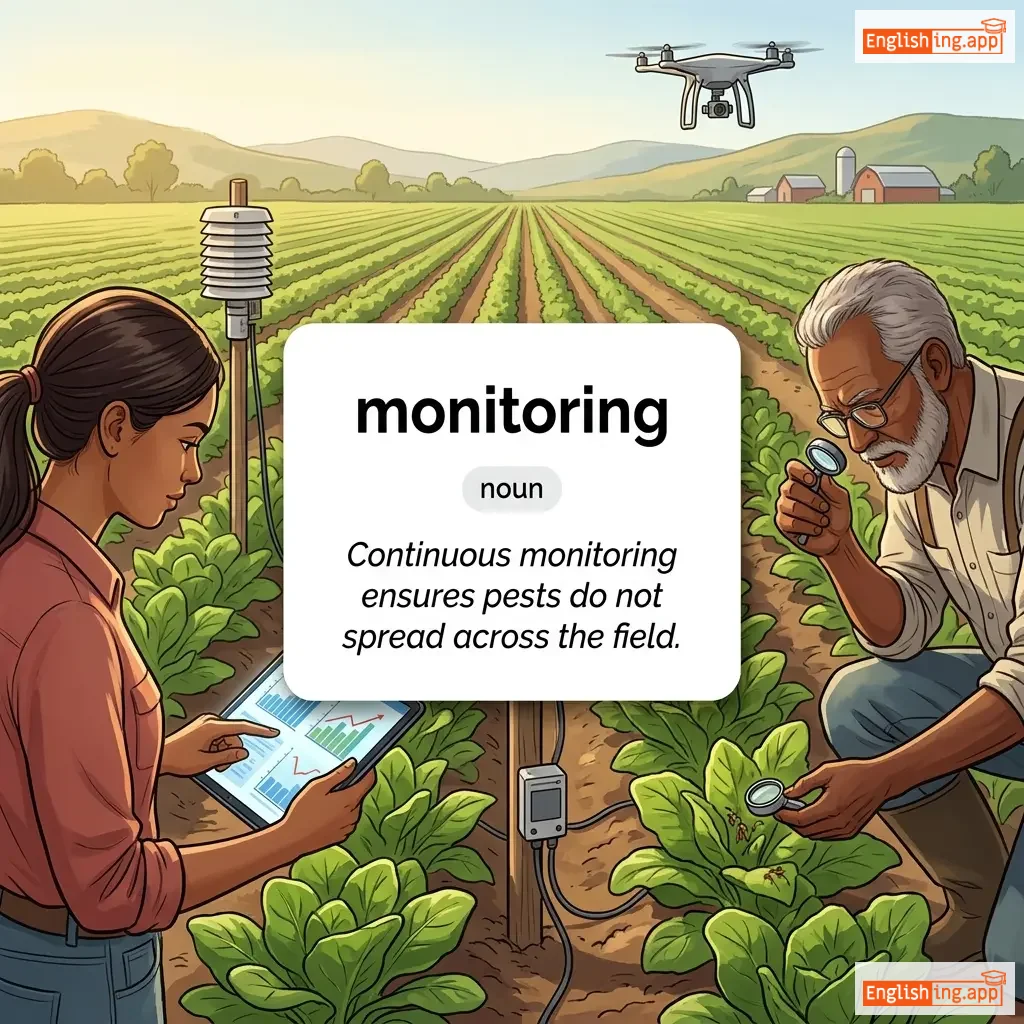
monitoring definition card — visual illustration of the meaning
noun
ˈmɒnɪtərɪŋ
পর্যবেক্ষণ, নিয়মিত পর্যালোচনা (porjobeksho, niyomito porjalocha)

The action of observing and checking the progress or quality of something over a period of time.

"Continuous monitoring ensures pests do not spread across the field."

"অবিরত মনিটরিং নিশ্চিত করে যে পোকামাকড় মাঠের মধ্যে ছড়িয়ে পড়বে না।" (Abirato monitoring nishchito kore je pokamakod mather moddhe chhorie porbe na.)
adjective
/ˈmɒnɪtəri/
সতর্কতামূলক (sotorkatamulok)

Giving a warning or cautionary advice; serving to warn.

"His monitory tone made everyone cautious about their next move."

"তার সতর্কতামূলক স্বর সবাইকে তাদের পরবর্তী পদক্ষেপ সম্পর্কে সতর্ক করে তুলেছিল।" (Tar sotorkatamulok swor sobaike tader poroborti podokkhep somporke sotorko kore tulchhilo.)
noun
/mɒŋk/
ভিক্ষু (bhikkhu)

a member of a religious community living under vows of poverty, chastity, and obedience

"The monk lived a simple and peaceful life in the monastery."

"ভিক্ষু মঠে সাদাসিধা এবং শান্তিপূর্ণ জীবনযাপন করতেন।" (Bhikkhu mothe shadasidha ebong shantipurno jibonjapon korten.)
noun
/ˈmʌŋki/
বানর (banor)

a small to medium-sized primate with a long tail, known for its playfulness

"A monkey was jumping from tree to tree in the forest."

"একটি বানর জঙ্গলে গাছ থেকে গাছে লাফাচ্ছিল।" (Ekti banor jongole gach theke gache lafachchhilo.)
adjective
/ˌmɒnəkrəˈmætɪk/
একবর্ণ (ekborno)

Consisting of or displaying only one color.

"The artist created a striking monochromatic painting in shades of blue."

"শিল্পী নীল রঙের বিভিন্ন শেড দিয়ে একটি একবর্ণ চিত্র এঁকেছিলেন।" (Shilpi nil ronger bibhinno shed diye ekti ekborno chitra ekhchhilen.)
noun/adjective
/ˈmɒnəkrəʊm/
সাদাকালো (sadakalo)

A photograph, painting, or screen image in black and white or varying tones of one color.

"The old film was shot entirely in monochrome."

"পুরোনো চলচ্চিত্রটি পুরোপুরি সাদাকালোতে ধারণ করা হয়েছিল।" (Purono cholchhitrati purotori sadakalote dharhon kora hoyechhilo.)
noun
/ˈmɒnəkl/
একচোখা চশমা (ekchokha choshma)

A single round lens for one eye, used to correct or enhance vision.

"The old gentleman wore a monocle at formal events."

"বৃদ্ধ ভদ্রলোক আনুষ্ঠানিক অনুষ্ঠানে একটি একচোখা চশমা পরতেন।" (Briddho bhodrolok anushtanik onusthane ekti ekchokha choshma porten.)
noun
/məˈnɒkrəsi/
একনায়কতন্ত্র (eknayoktontro)

A system of government by a single person; autocracy.

"The nation suffered under decades of monocracy."

"জাতি কয়েক দশক ধরে একনায়কতন্ত্রের অধীনে ভুগছিল।" (Jati koyek doshok dhore eknayoktontro adhine vugchhilo.)
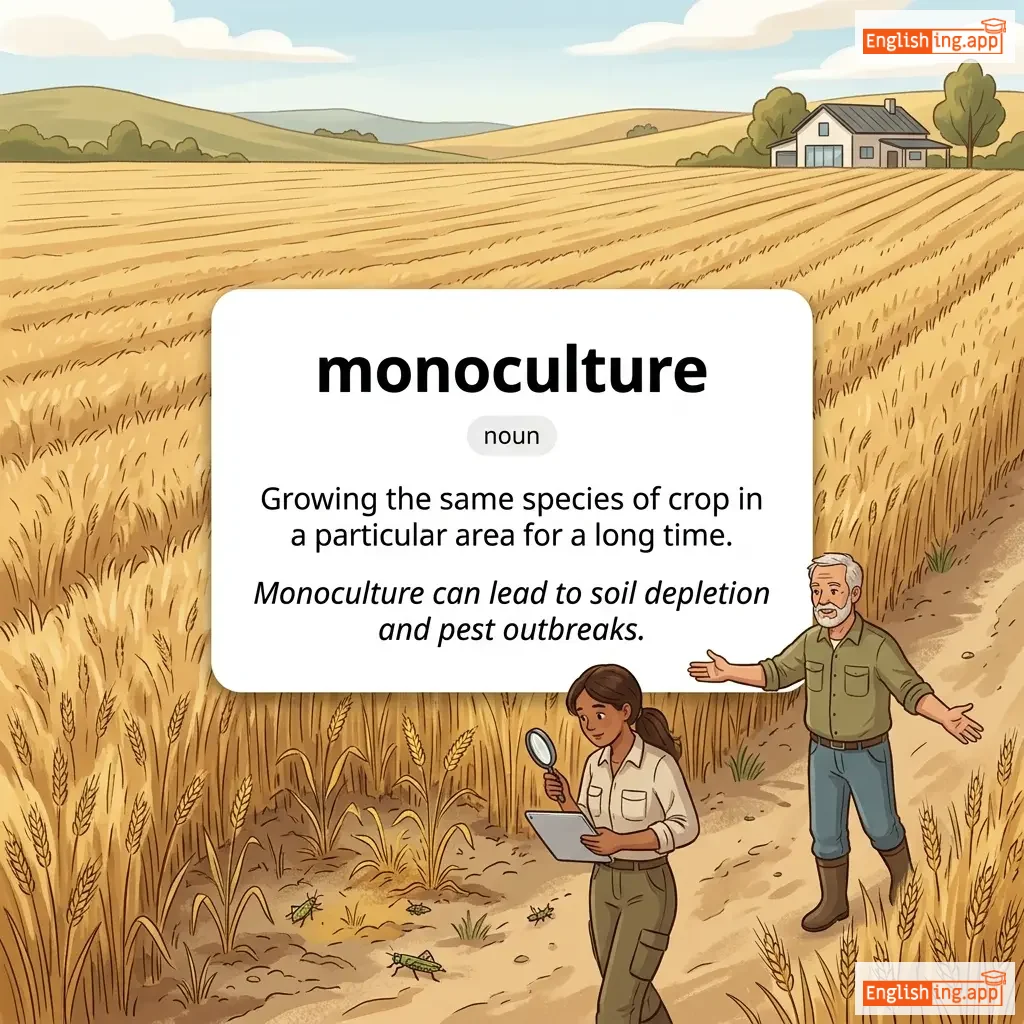
monoculture definition card — visual illustration of the meaning
noun
ˈmɒn.əˌkʌl.tʃər
একক ফসল চাষ (ekko foshol chash)

Growing the same species of crop in a particular area for a long time.

"Monoculture can lead to soil depletion and pest outbreaks."

"একক ফসল চাষ মাটির উর্বরতা হ্রাস ও কীটপতঙ্গ বৃদ্ধির কারণ হতে পারে।" (Ekko foshol chash matir urborota hrash o kitpotongo briddhir karon hote pare.)
noun
/məˈnɒɡəmi/
একবিবাহ (ekbibah)

The practice of being married to or in a relationship with only one person at a time.

"Many cultures encourage monogamy as the ideal form of marriage."

"অনেক সংস্কৃতি একবিবাহকে আদর্শ বিবাহরূপে উৎসাহিত করে।" (onek songskriti ekbibahke adorsho bibahrup e utsahito kore.)
noun
/ˈmɒnəɡræm/
মনোগ্রাম (monogram)

A design consisting of two or more letters, typically a person's initials, combined or interwoven.

"The towel was embroidered with her monogram."

"তোয়ালেটি তার মনোগ্রাম দিয়ে সূচিকর্ম করা ছিল।" (toyaleti tar monogram diye suchikorm kora chhilo.)
noun
/ˈmɒnəɡrɑːf/
মনোগ্রাফ (monograph)

A detailed written study of a single specialized subject or aspect of it.

"The professor published a monograph on ancient pottery."

"প্রফেসর প্রাচীন মৃৎশিল্প নিয়ে একটি মনোগ্রাফ প্রকাশ করেছিলেন।" (professor prachin mritshilpo niye ekti monograph prokash korechhilen.)
noun
/ˈmɒnəlɪθ/
একক পাথরের স্তম্ভ (ekok pathorer stombho)

A large single upright block of stone, or a large, powerful, indivisible organization or system.

"The ancient monolith stood in the desert for centuries."

"শতাব্দীর পর শতাব্দী ধরে মরুভূমিতে প্রাচীন মনোলিথ দাঁড়িয়ে ছিল।" (shotabdir por shotabdi dhore moruvumite prachin monolith dariye chhilo.)
adjective
/ˌmɒnəˈlɪθɪk/
অখণ্ড (okhondo)

Massive, uniform, and indivisible; resembling a large single stone or structure.

"The company maintained a monolithic structure resistant to change."

"কোম্পানিটি পরিবর্তনের বিরুদ্ধে প্রতিরোধী একটি মনোলিথিক কাঠামো বজায় রেখেছিল।" (companyti poribortoner biruddhe protirodhi ekti monolithic katham o bajay rekhechhilo.)
noun
/ˈmɒnəˌlɒɡ/
একক বক্তৃতা (ekok boktrita)

A long speech by one person, often in a play or performance.

"The actor delivered a powerful monologue on stage."

"অভিনেতা মঞ্চে একটি শক্তিশালী মনোলগ প্রদান করেছিলেন।" (Obhineta monche ekti shoktishali monolog prodan korechilen.)
noun
/ˌmɒnəˈmeɪniə/
একবিষয়ে আসক্তি (ek bishoye asokti)

Excessive concentration or obsession with a single subject or idea.

"His monomania for collecting stamps worried his family."

"ডাকটিকিট সংগ্রহের প্রতি তার মনোম্যানিয়া তার পরিবারকে চিন্তিত করেছিল।" (Daktikit songroher proti tar monomania tar poribar ke chintito korechilo.)
monopolization definition card — visual illustration of the meaning
noun
məˌnɒp.ə.laɪˈzeɪ.ʃən
একচেটিয়া নিয়ন্ত্রণ (ekchetiya niyontron)

The process of gaining exclusive possession or control of a trade, commodity, or service.

"The monopolization of industries can limit consumer choices."

"শিল্পের একচেটিয়া নিয়ন্ত্রণ ভোক্তাদের বিকল্প কমিয়ে দিতে পারে।" (Shilper ekchetiya niyontron bhoktader bikola komiye dite pare.)
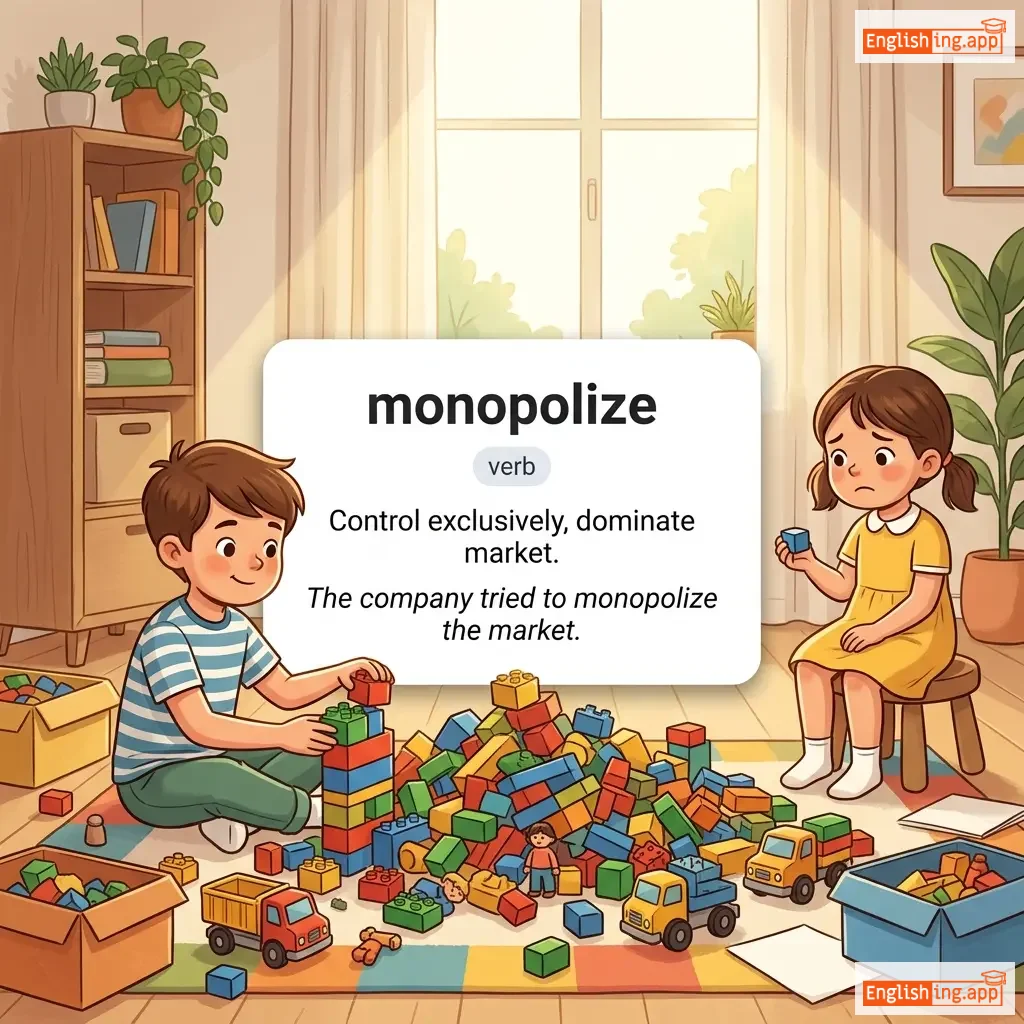
monopolize definition card — visual illustration of the meaning
verb
məˈnɒp.ə.laɪz
একচেটিয়া দখল করা, নিয়ন্ত্রণ করা (ekchetiya dokhol kora, niyontron kora)

Control exclusively, dominate market.

"The company tried to monopolize the market."

"কোম্পানিটি বাজার মনোপোলাইজ করার চেষ্টা করেছিল।" (Companiti bajar monopolize korar cheshta korechilo.)
monopoly definition card — visual illustration of the meaning
noun
/məˈnɒpəli/
একচেটিয়া অধিকার (ekchetiyo odhikar)

Exclusive control over a market, product, or service.

"The company gained a monopoly over the mobile phone industry."

"কোম্পানিটি মোবাইল ফোন শিল্পের উপর একচেটিয়া অধিকার লাভ করেছিল।" (Companyti mobile phone shilper upor ekchetiyo odhikar labh korechilo.)
noun
/ˈmɒnəˌsɪləbəl/
এক অক্ষরের শব্দ (ek okkhorer shobdo)

A word consisting of only one syllable.

"Words like 'yes' and 'no' are monosyllables."

"'হ্যাঁ' এবং 'না' শব্দ দুটি মনোসিলেবল।" ('Hya' ebong 'na' shobdo duti monosyllable.)
noun
mɒnəˈtɑːskɪŋ
একক কাজ করা, এক সময়ে এক কাজ করা (ekok kaj kora, ek somoye ek kaj kora)

The practice of dedicating oneself to a given task and minimizing potential interruptions until the task is completed or a significant period of time has elapsed.

"Monotasking can often lead to higher quality work."

"মনোটাস্কিং সাধারণত উচ্চ মানের কাজের দিকে নিয়ে যায়।" (Monotasking sadharonoto uccho maner kajer dike niye jay.)
noun
/ˈmɒnəˌθiːɪzəm/
একেশ্বরবাদ (ekeshworbad)

The belief in the existence of only one God.

"Islam and Christianity are religions based on monotheism."

"ইসলাম এবং খ্রিস্টান ধর্ম একেশ্বরবাদের উপর ভিত্তি করে।" (Islam ebong Khristan dhormo ekeshworbader upor vitti kore.)
noun
/ˈmɒn.ə.təʊn/
একঘেয়ে স্বর (ekgheye shor)

A continuous sound, especially of a person's voice, that does not rise and fall in pitch.

"The teacher's monotone made the lecture hard to follow."

"শিক্ষকের একঘেয়ে স্বর লেকচারটি অনুসরণ করা কঠিন করে তুলেছিল।" (Shikkhoker ekgheye shor lekcharti onushoron kora kothin kore tulchilo.)
adjective
/məˈnɒt.ən.əs/
একঘেয়ে (ekgheye)

Dull, tedious, and repetitious; lacking in variety and interest.

"The monotonous routine of office work tired him out."

"অফিসের একঘেয়ে রুটিন তাকে ক্লান্ত করে তুলেছিল।" (Ofiser ekgheye rutin take klanto kore tulchilo.)
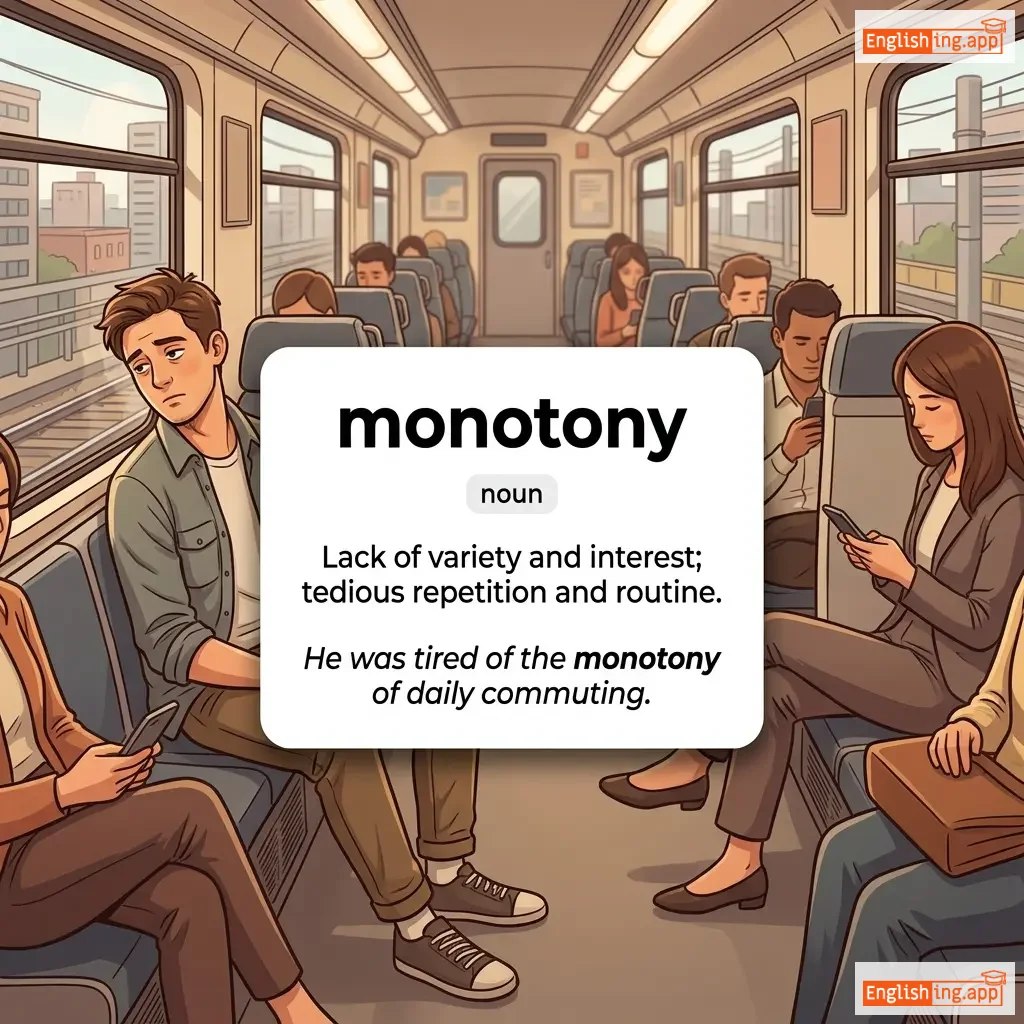
monotony definition card — visual illustration of the meaning
noun
/məˈnɒt.ə.ni/
একঘেয়েমি (ekgheyemi)

Lack of variety and interest; tedious repetition and routine.

"He was tired of the monotony of daily commuting."

"সে প্রতিদিনের যাতায়াতের একঘেয়েমিতে বিরক্ত ছিল।" (Se protidiner jatrayater ekgheyemite birokt chilo.)
noun
/ˈmɒnstər/
দানব (danob)

an imaginary or large frightening creature

"The child was afraid that a monster was hiding under the bed."

"শিশুটি ভয় পেয়েছিল যে বিছানার নিচে একটি দানব লুকিয়ে আছে।" (Shishuti voy peyechhilo je bichanar niche ekti danob lukiye ache.)
adjective
/ˈmɒnstrəs/
প্রচণ্ড; অমানবিক; ভয়ংকর; অপ্রাকৃত; (monsṭrās)

extremely large; shockingly evil or wrong; abnormal or unnatural

"The monstrous crime shocked the entire community."

"ভয়ংকর অপরাধটি পুরো সম্প্রদায়কে হতবাক করেছিল।" (bhaẏaṅkar aparādhṭi puro sampradāẏake hatabāk karechilo.)
noun
/mɒnˈtɑːʒ/
ছবির সংকলন (chobir songkolon)

A sequence of film editing or a composite image made by combining several separate pictures.

"The film opened with a montage of city life."

"ছবিটি শহরের জীবনের একটি মন্টাজ দিয়ে শুরু হয়েছিল।" (Chobiti shohorer jiboner ekti montage diye shuru hoyechilo.)
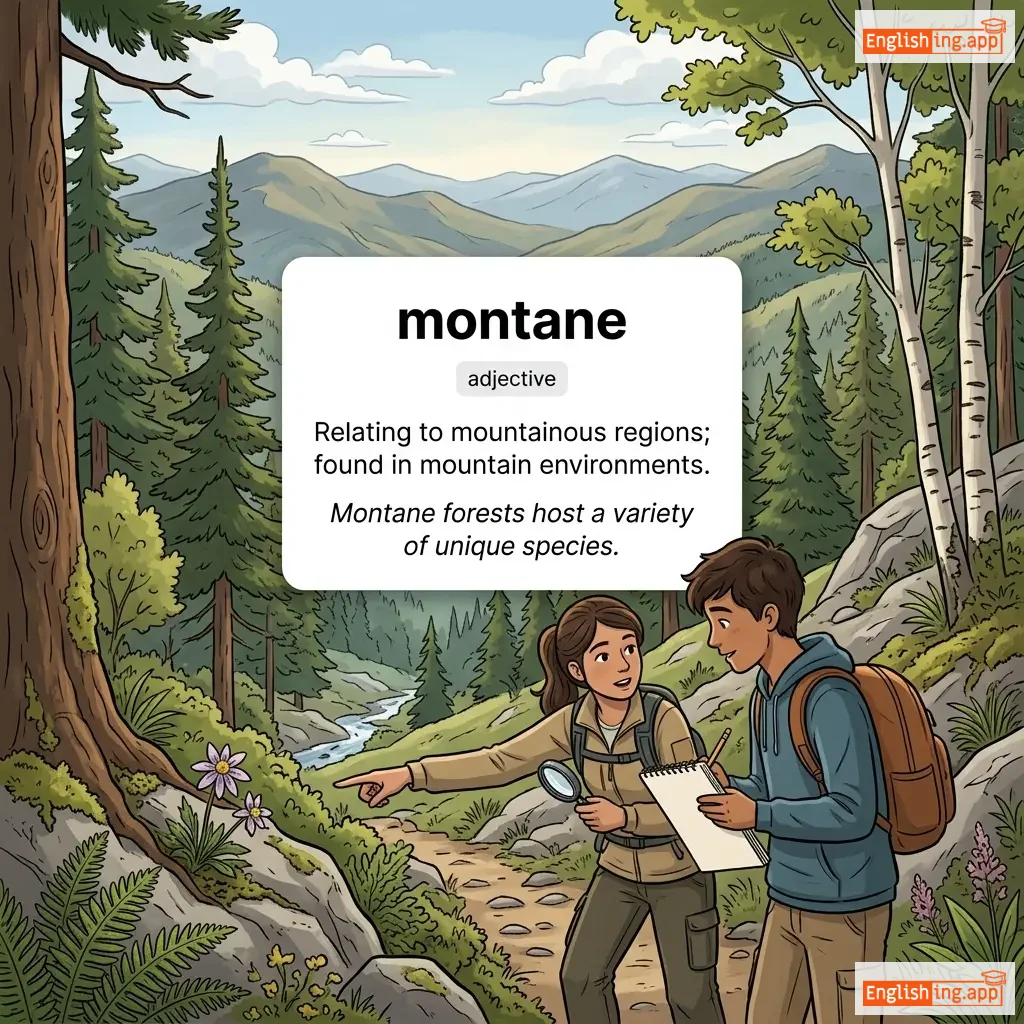
montane definition card — visual illustration of the meaning
adjective
/ˈmɒn.teɪn/
পর্বতসংক্রান্ত বা পাহাড়ি পরিবেশে সম্পর্কিত (porbot-shongkranto ba pahari poribesh-e shomporkit)

Relating to mountainous regions; found in mountain environments.

"Montane forests host a variety of unique species."

"পর্বতমালার বন বহু অনন্য প্রজাতির আবাসস্থল।" (Porbot-malar bon bohu ononnyo projatir abashsthal.)
noun
/mʌnθ/
মাস (mas)

a period of about four weeks or one-twelfth of a year

"She visits her grandparents once a month."

"সে মাসে একবার তার দাদা-দাদিকে দেখতে যায়।" (Se mase ekbar tar dada-dadike dekhte jay.)
adjective
/ˈmʌnθli/
মাসিক (masik)

happening, done, or published once a month

"Employees receive their salary on a monthly basis."

"কর্মচারীরা প্রতি মাসে তাদের বেতন পান।" (Kormocharira proti mase tader beton pan.)
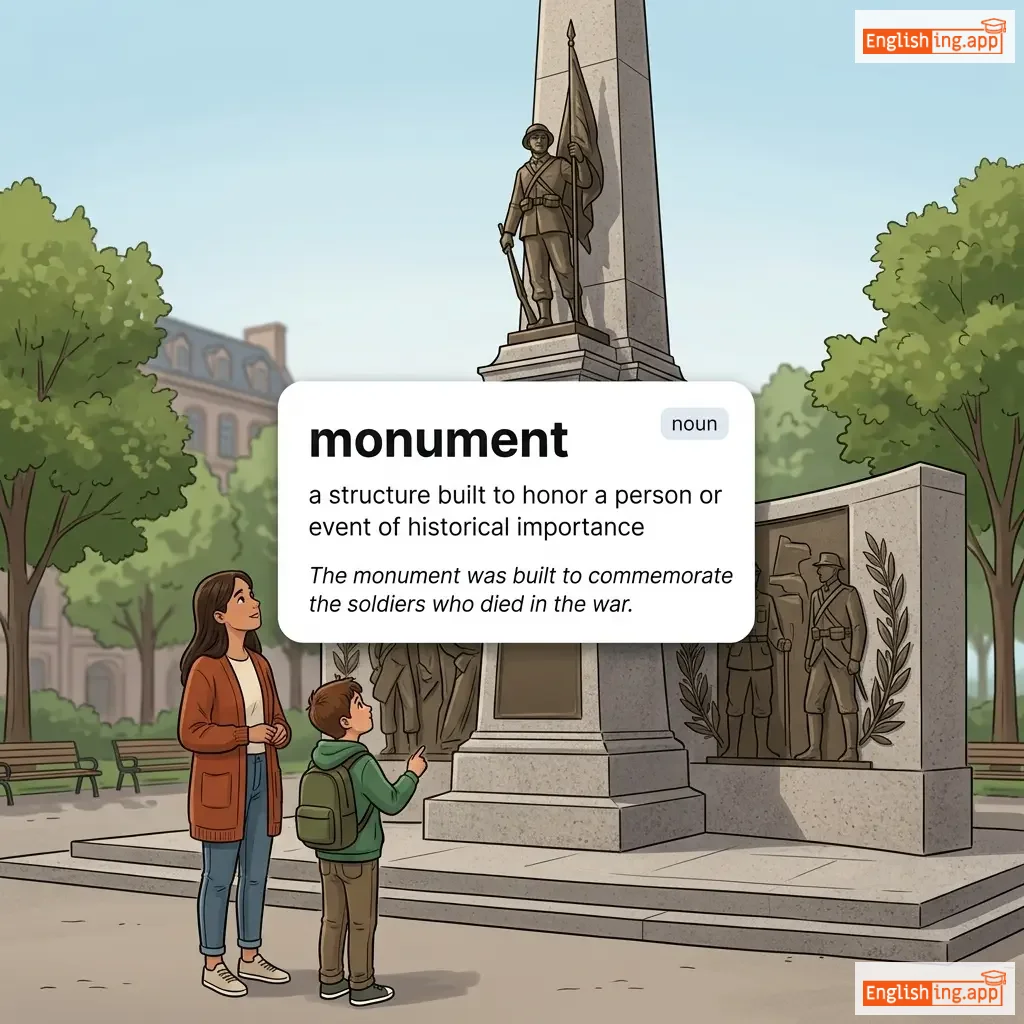
monument definition card — visual illustration of the meaning
noun
/ˈmɒnjumənt/
স্মৃতিস্তম্ভ (smritistombho)

a structure built to honor a person or event of historical importance

"The monument was built to commemorate the soldiers who died in the war."

"যুদ্ধের সময় নিহত সৈনিকদের স্মরণে স্মৃতিস্তম্ভটি নির্মিত হয়েছিল।" (Judher somoy nihoto soinikder smorone smritistombhoti nirmito hoyechhilo.)
monumental definition card — visual illustration of the meaning
adjective
/ˌmɒn.jʊˈmen.təl/
স্মরণীয় / বিশাল (smoroniya / bishal)

Great in importance, extent, or size; resembling or serving as a monument.

"The project was a monumental achievement for the team."

"প্রকল্পটি দলের জন্য একটি স্মরণীয় অর্জন ছিল।" (Prokolpoti daler jonno ekti smoroniya orjon chilo.)
noun
/muːd/
মেজাজ (mejaj)

a temporary state of mind or feeling

"He was in a good mood after getting the job."

"চাকরি পাওয়ার পর সে ভালো মেজাজে ছিল।" (Chakri pawar por se bhalo mejaje chilo.)
noun
/ˈmuːdi.nəs/
মেজাজের পরিবর্তনশীলতা (mejajer poribortonshilota)

The state of being frequently subject to changes in mood, especially irritability or sadness.

"Her moodiness made it difficult to predict how she would react."

"তার মেজাজের পরিবর্তনশীলতা বুঝতে কঠিন করে তুলেছিল কিভাবে সে প্রতিক্রিয়া দেখাবে।" (tar mejajer poribortonshilota bujhte kothin kore tulchhilo kivabe se protikria dekhabe.)
noun
/muːn/
চাঁদ (chand)

the natural satellite of the earth, visible mainly at night by reflected light from the sun

"The moon shines brightly in the night sky."

"চাঁদ রাতের আকাশে উজ্জ্বলভাবে জ্বলে।" (Chand rater akashe ujjol vabe jole.)
noun
/ˈmuːn.biːm/
চাঁদের আলো (chander alo)

A ray of light from the moon.

"A moonbeam lit up the quiet forest clearing."

"একটি চাঁদের আলো নীরব জঙ্গলের ফাঁকা জায়গা আলোকিত করল।" (ekti chander alo nirob jongoler faka jayga alokit korlo.)
verb, noun
/mʊər/
নৌকা বাঁধা / খোলা জমি (nouka bandha / khola jomi)

As a verb: to tie a ship so that it stays in place. As a noun: open, uncultivated land.

"The sailors moored the ship at the dock."

"নাবিকরা জাহাজটি ঘাটে বেঁধে রেখেছিল।" (nabikra jahajti ghate bendhe rekhechhilo.)
adjective, verb
/muːt/
বিতর্কযোগ্য / অপ্রাসঙ্গিক (bitorkojogyo / aprasangik)

Adjective: subject to debate or irrelevant. Verb: to suggest an idea for discussion.

"The issue of funding became a moot point after the project was canceled."

"প্রকল্পটি বাতিল হওয়ার পর অর্থায়নের বিষয়টি অপ্রাসঙ্গিক হয়ে গেল।" (prokolpoti batil howar por orthayaner bishoyti aprasangik hoye gelo.)
adjective, noun
/ˈmɔːrəl/
নৈতিক (noitik)

Adjective: concerned with principles of right and wrong. Noun: a lesson about right and wrong from a story or experience.

"The moral of the story is that honesty is the best policy."

"গল্পটির শিক্ষা হলো সততাই সর্বোত্তম নীতি।" (golpoti shikkha holo sototai sorbottam niti.)
noun
/məˈræl/
মানসিক অবস্থা (manoshik obostha)

The confidence, enthusiasm, and discipline of a person or group at a particular time.

"The team's morale improved after their recent victory."

"দলের মানসিক অবস্থা তাদের সাম্প্রতিক জয়ের পর উন্নত হয়েছে।" (Doler manoshik obostha tader samprotik joyer por unnoto hoyeche.)
noun
/ˈmɒrəlɪst/
নৈতিক শিক্ষক (noitik shikkhok)

A person who teaches or promotes moral principles and values.

"The author was known as a strict moralist in his writings."

"লেখক তাঁর লেখায় একজন কঠোর নৈতিক শিক্ষক হিসেবে পরিচিত ছিলেন।" (Lekhok tar lekhay ekjon kothor noitik shikkhok hisebe porichito chilen.)
noun
/məˈrælɪti/
নৈতিকতা (noitikota)

Principles concerning the distinction between right and wrong or good and bad behavior.

"Society's sense of morality changes over time."

"সমাজের নৈতিকতা সময়ের সাথে সাথে পরিবর্তিত হয়।" (Somajer noitikota somoyer sathe sathe poribortito hoy.)
verb
/ˈmɒrəlaɪz/
নৈতিক শিক্ষা দেওয়া (noitik shikkha dewa)

To comment on issues of right and wrong, often with an air of superiority.

"He tends to moralize about other people's choices."

"সে প্রায়ই অন্যদের পছন্দ নিয়ে নৈতিক শিক্ষা দিতে থাকে।" (Se prayoi onnoder pochondo nie noitik shikkha dite thake.)
adverb
/ˈmɔːrəli/
নীতিগতভাবে; নৈতিকভাবে; (nitigotobhabe)

in accordance with principles of right and wrong behavior; ethically

"She felt morally obligated to help the refugees."

"তিনি শরণার্থীদের সাহায্য করতে নৈতিকভাবে বাধ্য বোধ করেছিলেন।" (tini shoronarthider shahajjo korte noitikbhabe badho bodh korechilen)
noun
/məˈræs/
জটিল অবস্থা (jotil obostha)

A complicated or confused situation; a swampy or boggy ground.

"The project got stuck in a bureaucratic morass."

"প্রকল্পটি একটি আমলাতান্ত্রিক জটিল অবস্থায় আটকে গিয়েছিল।" (Prokolpti ekti amlatantrik jotil obosthay atke gie chilo.)
noun
/ˌmɔːrəˈtɔːriəm/
সাময়িক স্থগিতাদেশ (samoyik sthogitodesh)

A temporary suspension or delay of an activity, law, or obligation.

"The government announced a moratorium on new mining licenses."

"সরকার নতুন খনির লাইসেন্সে সাময়িক স্থগিতাদেশ ঘোষণা করেছে।" (Sorkar notun khonir license samoyik sthogitodesh ghosona koreche.)
adjective
/ˈmɔːrbɪd/
অসুস্থকর বা ভয়ঙ্কর বিষয়ে অস্বাভাবিক আগ্রহ (osusthokor ba voyonkor bishoye ashobhabik agroho)

Having an abnormal interest in disturbing or unpleasant subjects such as death or disease.

"She had a morbid fascination with crime stories."

"তার অপরাধ কাহিনীর প্রতি ভয়ঙ্কর আগ্রহ ছিল।" (Tar oprodho kahinir proti voyonkor agroho chhilo.)
adjective
/mɔːrˈdeɪʃəs/
তিক্ত বা বিদ্রূপাত্মক (tiktoba bidrupatmak)

Sharp or biting in style, tone, or remark; sarcastic.

"The critic’s mordacious review offended the author."

"সমালোচকের তীব্র বিদ্রূপাত্মক সমালোচনা লেখককে আহত করেছিল।" (Somalochoker tibro bidrupatmak somalochona lekhokke ahoto korechhilo.)
adjective
/ˈmɔːrdənt/
তিক্ত, তীক্ষ্ণ বা বিদ্রূপাত্মক (tikt, tikshno ba bidrupatmak)

Having a sharp, critical, or biting quality; especially in humor.

"Her mordant wit often left her friends speechless."

"তার তীক্ষ্ণ রসিকতা প্রায়শই বন্ধুদের বাকরুদ্ধ করে দিত।" (Tar tikshno rosikota prayoshchoi bondhuder bakruddho kore dito.)