ভোকাবুলারিসমূহ

ইংরেজি শব্দের বাংলা অর্থ | English to Bangla Word Meaning Dictionary

noun
/ˈlɪstɪŋ/
তালিকা (talika)

a series of items or names written or printed in a specific order

"The listing of available jobs was updated daily."

"উপলব্ধ চাকরির তালিকা দৈনিক আপডেট করা হতো।" (Upolobdho chakrir talika dainik update kora hoto.)
adjective
/ˈlɪstləs/
অবসন্ন (obosonno)

lacking energy, enthusiasm, or interest

"She felt listless after working long hours without rest."

"দীর্ঘ সময় বিশ্রাম ছাড়া কাজ করার পর সে অবসন্ন বোধ করেছিল।" (Dirgho shomoy bishram chhara kaj korar por se obosonno bodh korechhilo.)
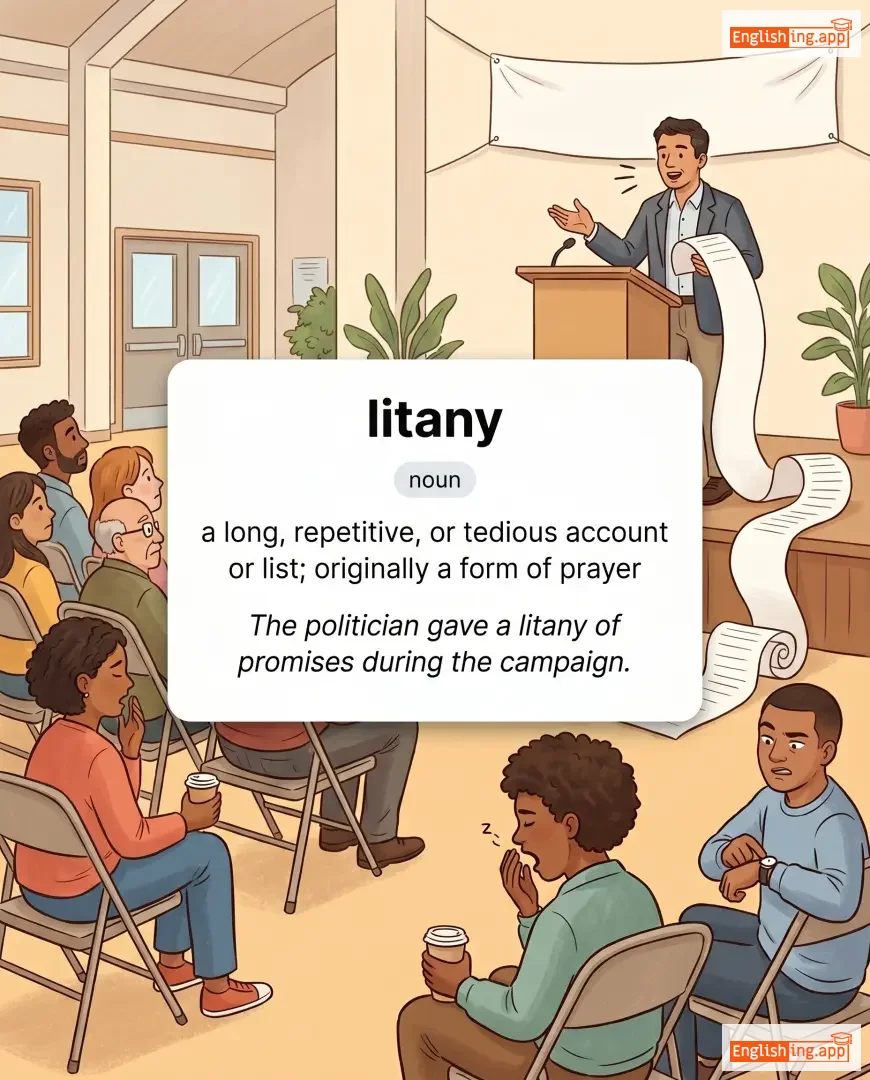
litany definition card — visual illustration of the meaning
noun
/ˈlɪtəni/
অন্তহীন তালিকা (ontohin talika)

a long, repetitive, or tedious account or list; originally a form of prayer

"The politician gave a litany of promises during the campaign."

"প্রচারণার সময় রাজনীতিবিদ প্রতিশ্রুতির একটি দীর্ঘ তালিকা দিয়েছিলেন।" (Procharonar shomoy rajnaitibid protishruter ekti dirgho talika diyechhilen.)
noun
/ˈlaɪtʃi/
লিচু (lichu)

a small oval pink-red tropical fruit with white translucent flesh and sweet taste

"The litchi has a rough pink shell that you peel to eat the sweet white fruit inside."

"লিচুর একটি রুক্ষ গোলাপি খোসা আছে যা আপনি ছাড়িয়ে ভিতরের মিষ্টি সাদা ফল খান।" (lichur ekti ruksha golapi khosa ache ja apni chariye vitorer mishti shada phol khan.)
noun
/ˈlɪtə(r)/
লিটার (litar)

a metric unit of volume equal to one cubic decimeter

"The recipe calls for two liters of water."

"রেসিপিটি দুটি লিটার পানি চায়।" (Resipti duti liter pani chay.)
noun
/ˈlɪtərəsi/
সাক্ষরতা (sakhhoro ta)

the ability to read and write

"Literacy programs help reduce poverty in rural areas."

"সাক্ষরতা কর্মসূচি গ্রামীণ অঞ্চলে দারিদ্র্য কমাতে সাহায্য করে।" (Sakhhorota kormosuchi grameen onchole daridryo komate sahajyo kore.)
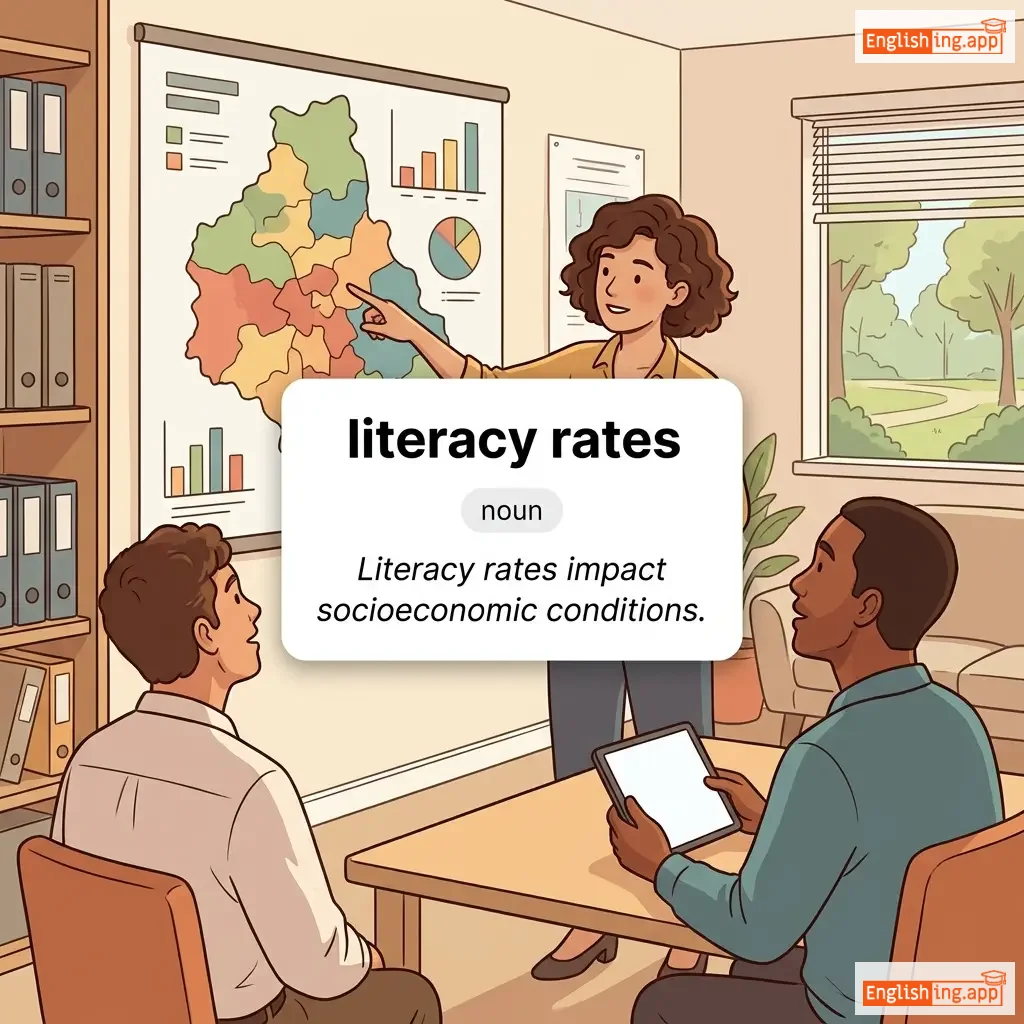
literacy rates definition card — visual illustration of the meaning
noun
ˈlɪt.ər.ə.si ˌreɪts
সাক্ষরতার হার (shakkhrotar har)

The percentage of people in a population who can read and write; measures of educational levels in a population.

"Literacy rates impact socioeconomic conditions."

"সাক্ষরতার হার আর্থসামাজিক অবস্থার উপর প্রভাব ফেলে।" (Shakkhrotar har arthoshamajik obosthar upor prohabo phele.)
adjective
/ˈlɪtərəl/
আক্ষরিক (akshorik)

taking words in their usual or most basic sense without metaphor or exaggeration

"His comment was meant as a joke, not to be taken in a literal sense."

"তার মন্তব্যটি একটি রসিকতা হিসেবে বলা হয়েছিল, আক্ষরিক অর্থে নয়।" (Tar montobotiti ekti roshikota hisebe bola hoyechhilo, akshorik orthe noy.)
adverb
/ˈlɪtərəli/
আক্ষরিকভাবে (akshorikvabe)

in a literal manner or sense; exactly

"He was literally running for three hours without stopping."

"সে আক্ষরিকভাবে তিন ঘন্টা ধরে থেমে না থেকে দৌড়াচ্ছিল।" (Se akshorikvabe tin ghonta dhore theme na theke dourachchilo.)
adjective
/ˈlɪtərɛri/
সাহিত্যিক (sahittik)

concerning the writing, study, or content of literature

"She is a well-known figure in the literary world."

"সে সাহিত্য জগতে সুপরিচিত একজন ব্যক্তিত্ব।" (Se sahitto jogote suparichito ekjon bektitto.)
adjective
/ˈlɪt.ər.ət/
অক্ষরজ্ঞানসম্পন্ন; শিক্ষিত; সুশিক্ষিত; (litaret)

able to read and write; educated; well-educated

"She is a very literate person who reads extensively."

"তিনি একজন অত্যন্ত শিক্ষিত ব্যক্তি যিনি ব্যাপকভাবে পড়াশোনা করেন।" (tini ekjon ottyonto shikkhito byokti jini byapokbhabe porasona koren.)
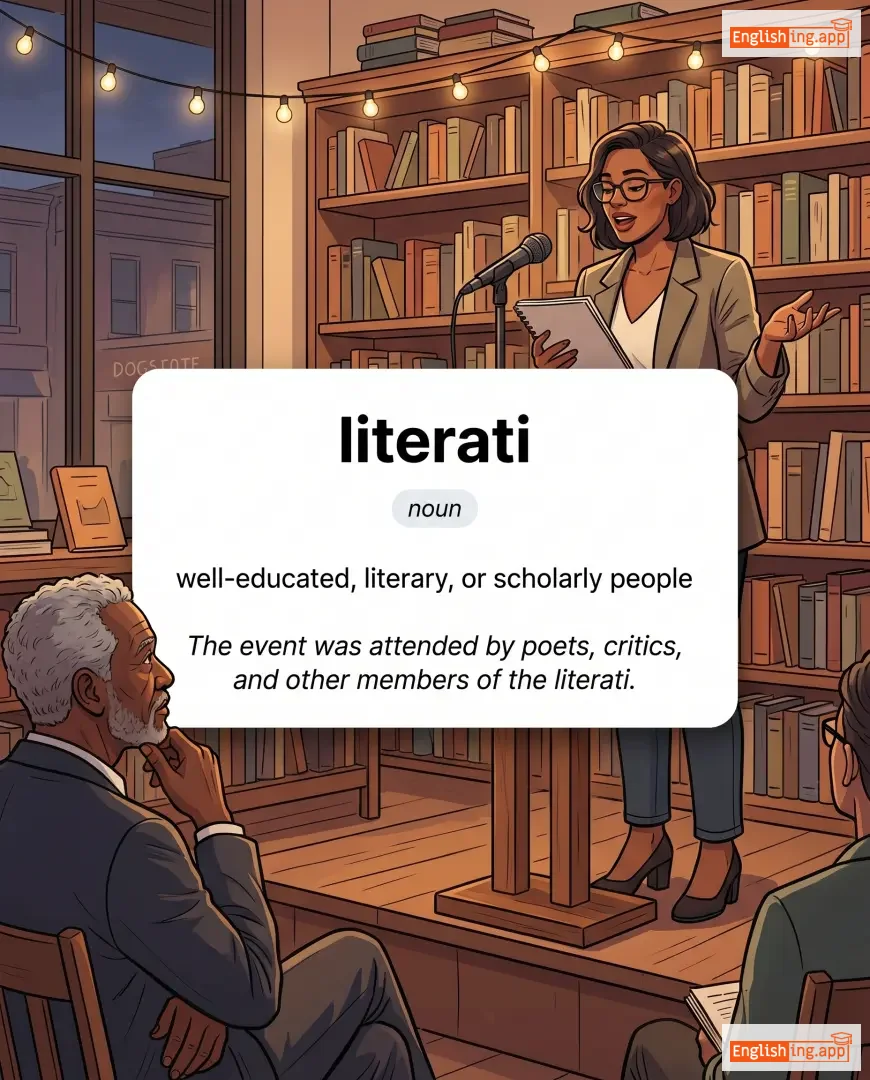
literati definition card — visual illustration of the meaning
noun
/ˌlɪt.əˈrɑː.ti/
সাহিত্যপ্রেমী পণ্ডিতগণ (sahittopremi ponditgon)

well-educated, literary, or scholarly people

"The event was attended by poets, critics, and other members of the literati."

"অনুষ্ঠানে কবি, সমালোচক এবং অন্যান্য সাহিত্যপ্রেমী পণ্ডিতগণ উপস্থিত ছিলেন।" (Onushthane kobi, somalochok ebong onnyanno sahittopremi ponditgon uposthit chilen.)
noun
/ˈlɪtərətʃər/
সাহিত্য (sahitto)

written works, especially those considered of superior or lasting artistic merit

"He studied English literature at university."

"সে বিশ্ববিদ্যালয়ে ইংরেজি সাহিত্য অধ্যয়ন করেছিল।" (Se bishwobidyaloye ingreji sahitto oddhoyon korechhilo.)
/laɪð/
নমনীয় ও সুশ্রী (nomoniyo o sushri)

thin, supple, and graceful in movement

"The lithe dancer captivated the audience with her graceful spins."

"নমনীয় নর্তকী তার সুশ্রী ঘূর্ণনে দর্শকদের মুগ্ধ করেছিল।" (nomoniyo nartoki tar sushri ghurnone dorshokder mugdho korechilo.)
adjective
/ˈlaɪðsəm/
সুন্দরভাবে নমনীয় (sundorbhabhe nomoniyo)

gracefully flexible and supple

"Her lithesome figure allowed her to move like a ballerina."

"তার নমনীয় দেহ তাকে ব্যালেরিনার মতো নাচতে সাহায্য করেছিল।" (tar nomoniyo deho take balerinar moto nachte sahajyo korechilo.)
noun
/ˈlɪθəˌɡræf/
লিথোগ্রাফ (ছাপচিত্র) (lithograph (chapchitra))

a print made by lithography, often artistic

"The museum displayed a rare lithograph from the 19th century."

"মিউজিয়ামে উনবিংশ শতাব্দীর একটি বিরল লিথোগ্রাফ প্রদর্শিত হয়েছিল।" (museum e unobingsho shotabdir ekti biral lithograph prodorshito hoyechilo.)
noun
/ˈlɪθəˌtaɪp/
লিথোটাইপ (মুদ্রণ প্রকার) (lithotype (mudron prokar))

a printing surface or type made for lithography

"The printer used a lithotype to produce multiple copies of the design."

"প্রিন্টারটি ডিজাইনের একাধিক কপি তৈরি করতে লিথোটাইপ ব্যবহার করেছিল।" (printerti design er ekadhik copy toiri korte lithotype byabohar korechilo.)
noun
/ˈlɪtɪɡənt/
মামলার পক্ষভুক্ত ব্যক্তি (mamlar pokkho bhukto bekti)

a person involved in a lawsuit

"The court summoned both litigants for the hearing."

"আদালত শুনানির জন্য উভয় পক্ষভুক্ত ব্যক্তিকে তলব করেছিল।" (adalot shunani r jonno ubhoy pokkho bhukto bektike tolab korechilo.)
verb
/ˈlɪtɪˌɡeɪt/
মামলা করা (mamla kora)

to engage in legal proceedings or take a dispute to court

"The company decided to litigate the contract dispute."

"কোম্পানিটি চুক্তি বিরোধ নিয়ে মামলা করার সিদ্ধান্ত নেয়।" (Kompani ti chukti birodh niye mamla korar siddhanto neye.)
litigation definition card — visual illustration of the meaning
noun
/ˌlɪtɪˈɡeɪʃən/
মামলা (mamla)

the process of taking legal action or resolving disputes in court

"The litigation lasted for over three years."

"মামলাটি তিন বছরেরও বেশি সময় ধরে চলেছিল।" (Mamla ti tin bochorer o beshi somoy dhore cholchilo.)
adjective
/lɪˈtɪdʒəs/
মামলাবাজ (mamlabaj)

prone to engage in lawsuits or overly inclined to argue legally

"He is known as a litigious neighbor who often sues people."

"সে একজন মামলাবাজ প্রতিবেশী হিসেবে পরিচিত, যিনি প্রায়ই মামলা করেন।" (Se ekjon mamlabaj protibeshi hisebe porichito, jini prayoi mamla koren.)
noun
/ˈlaɪtoʊtiːz/
অল্পোক্তি (olpokti)

a figure of speech in which an affirmative is expressed by the negative of its contrary

"Saying 'not bad' as a compliment is an example of litotes."

"'খারাপ না' বলা প্রশংসা হিসেবে লিটোটিস এর উদাহরণ।" ('Kharap na' bola proshongsha hisebe litotis er udahoron.)
noun
/ˈliːtər/
লিটার (litar)

a metric unit of volume equal to 1,000 cubic centimeters; commonly used to measure liquids

"She bought a litre of milk from the shop."

"সে দোকান থেকে এক লিটার দুধ কিনেছে।" (se dokan theke ek litar dudh kineche)
noun/verb
/ˈlɪtər/
আবর্জনা (aborjona)

rubbish or waste left lying in a public place; to make a place untidy by leaving rubbish

"The park was full of litter after the festival."

"উৎসবের পর পার্কটি আবর্জনায় ভর্তি ছিল।" (Utsober por parkti aborjonay vorti chilo.)
adjective
/ˈlɪtl/
ছোট (chhoto)

Small in size, amount, or degree.

"He drank a little water before going to bed."

"সে ঘুমাতে যাওয়ার আগে অল্প পানি পান করেছিল।" (Se ghumate jawar age olpo pani pan korechilo.)
adjective
/ˈlɪtərəl/
সৈকতসংলগ্ন (soikotsonglogno)

Related to or situated on the shore of the sea or a lake.

"The littoral zone is home to many unique marine species."

"লিটারাল অঞ্চল অনেক অনন্য সামুদ্রিক প্রাণীর আবাস।" (Littoral onchol onek ononno samudrik pranir abash.)
noun
/ˈlɪtərdʒi/
ধর্মীয় আচারপদ্ধতি (dhormiyo acharpoddhoti)

A form or formulary according to which public religious worship is conducted.

"The priest followed the liturgy during the Sunday mass."

"যাজক রবিবারের প্রার্থনায় লিটারজি অনুসরণ করেছিলেন।" (Jajak robibarer prarthonay liturgy onusoron korechilen.)
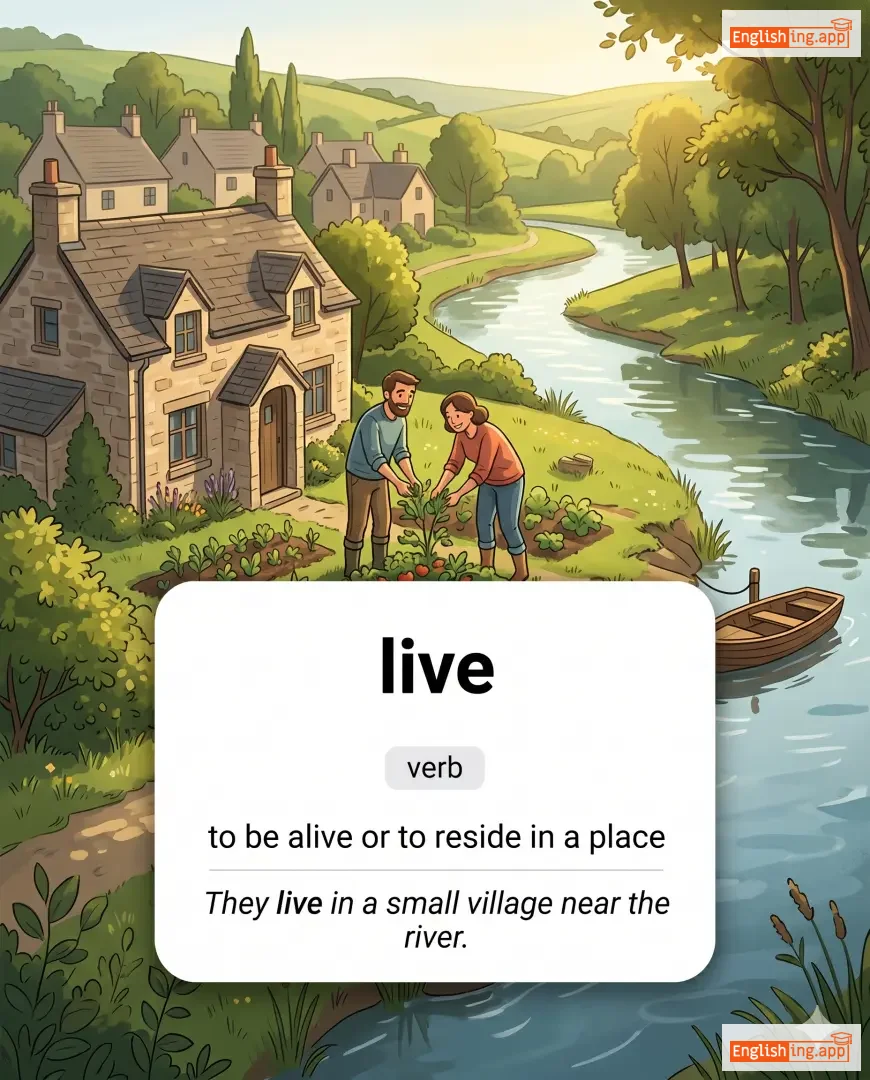
live definition card — visual illustration of the meaning
verb
/lɪv/
বাস করা / বাঁচা (bash kora / bacha)

to be alive or to reside in a place

"They live in a small village near the river."

"তারা নদীর পাশে একটি ছোট গ্রামে থাকে।" (tara nodir pashe ekti choto grame thake.)
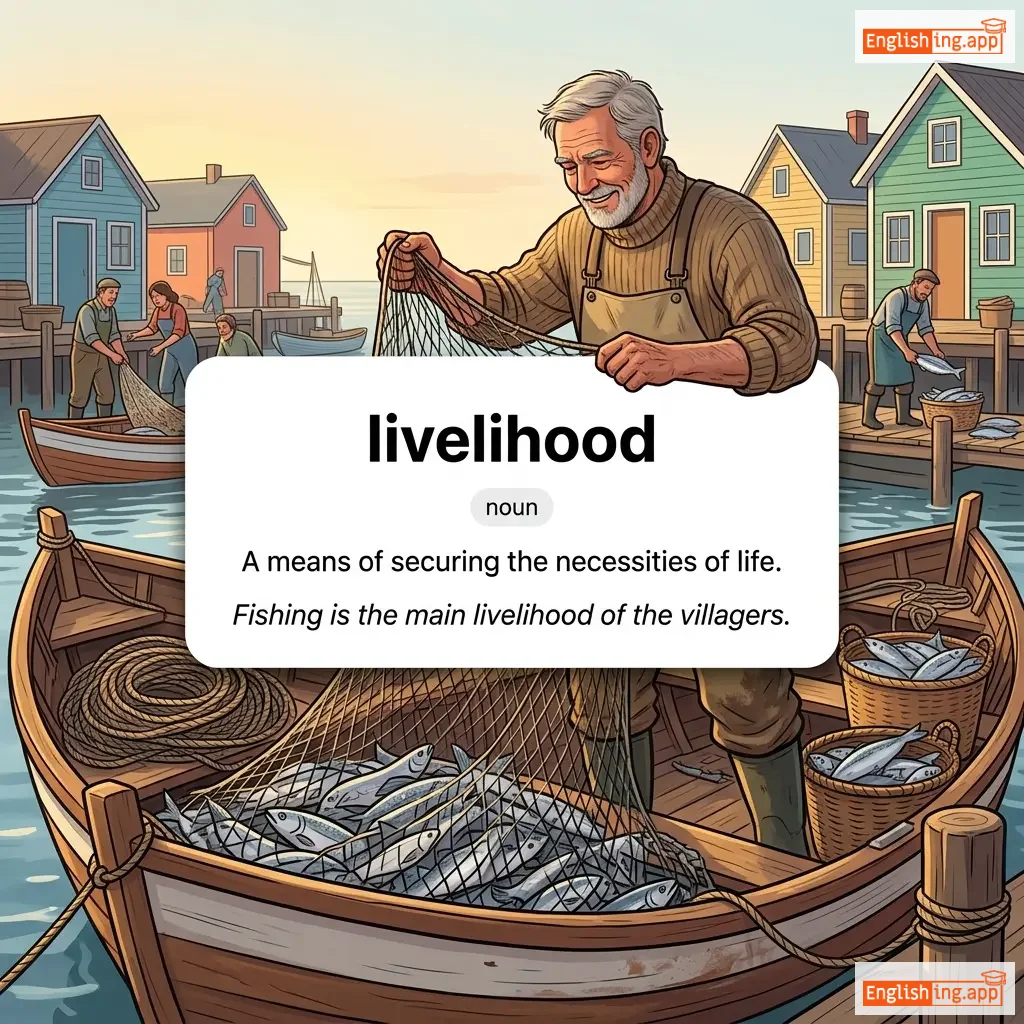
livelihood definition card — visual illustration of the meaning
noun
/ˈlaɪvlihʊd/
জীবিকা (jibika)

A means of securing the necessities of life.

"Fishing is the main livelihood of the villagers."

"মাছ ধরা গ্রামবাসীর প্রধান জীবিকা।" (Mach dhora grambashir prodhan jibika.)
adjective
/ˈlaɪv.li/
প্রাণবন্ত; চঞ্চল; হাসিখুশি; (laibli)

full of life and energy; animated; cheerful

"The children had a lively discussion about their favorite books."

"শিশুরা তাদের প্রিয় বই নিয়ে একটি প্রাণবন্ত আলোচনা করেছিল।" (shishura tader priyo boi niye ekti pranbonto alochona korechilo.)
noun
/ˈlɪvər/
যকৃত (jokrit)

a large organ in the body that cleans the blood and produces bile to help digest food.

"The liver plays a vital role in removing toxins from the body."

"যকৃত দেহ থেকে বিষাক্ত পদার্থ অপসারণে গুরুত্বপূর্ণ ভূমিকা পালন করে।" (Jokrit deho theke bishokto podartho opsorone guruttopurno bhumika palon kore.)
noun
/ˈlaɪv.stɒk/
গৃহপালিত পশু (gruhopalito poshu)

farm animals such as cattle, sheep, and pigs that are kept for use or profit

"The farmer raised livestock to supply meat and milk for the market."

"কৃষক বাজারে মাংস ও দুধ সরবরাহের জন্য গৃহপালিত পশু পালন করতেন।" (Krishok bajare mangsho o dudh soraboraher jonno gruhopalito poshu palon korten.)
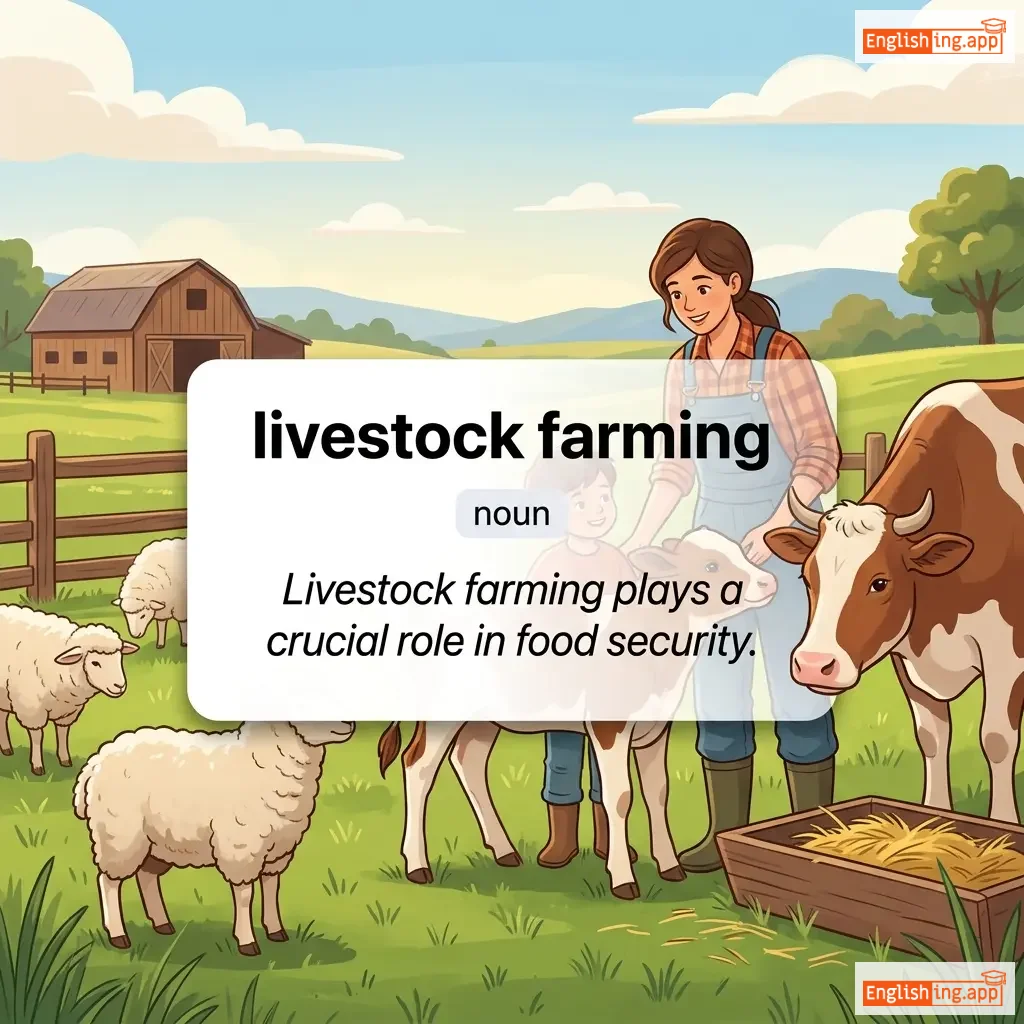
livestock farming definition card — visual illustration of the meaning
noun
ˈlaɪv.stɒk ˈfɑː.mɪŋ
গবাদি পশু পালন, পশু খামার ব্যবস্থাপনা, প্রাণিসম্পদ চাষ (gobadi poshu palon, poshu khamar bebostthapona, pranisomp0d chas)

The breeding, raising, and care of farm animals such as cattle, horses, sheep, and pigs for food, fiber, and other products.

"Livestock farming plays a crucial role in food security."

"লাইভস্টক ফার্মিং খাদ্য নিরাপত্তায় গুরুত্বপূর্ণ ভূমিকা রাখে।" (Livestock farming khaddo nirappottay gurutpurno bhumika rakhe.)
adjective
/ˈlɪvɪd/
ক্রুদ্ধ (kruddho)

Extremely angry; furious.

"She was livid when she found out about the betrayal."

"বিশ্বাসঘাতকতার কথা জানতে পেরে সে প্রচণ্ড রেগে গিয়েছিল।" (Bishashghatokotar kotha jante pere se prochondo rege giyechilo.)
noun/adjective
/ˈlɪvɪŋ/
জীবন / জীবিকা (jibon / jibika)

the state of being alive; or a way of earning money

"He makes his living as a teacher."

"সে একজন শিক্ষক হিসেবে জীবিকা নির্বাহ করে।" (se ekjon shikkhok hisebe jibika nirbah kore.)
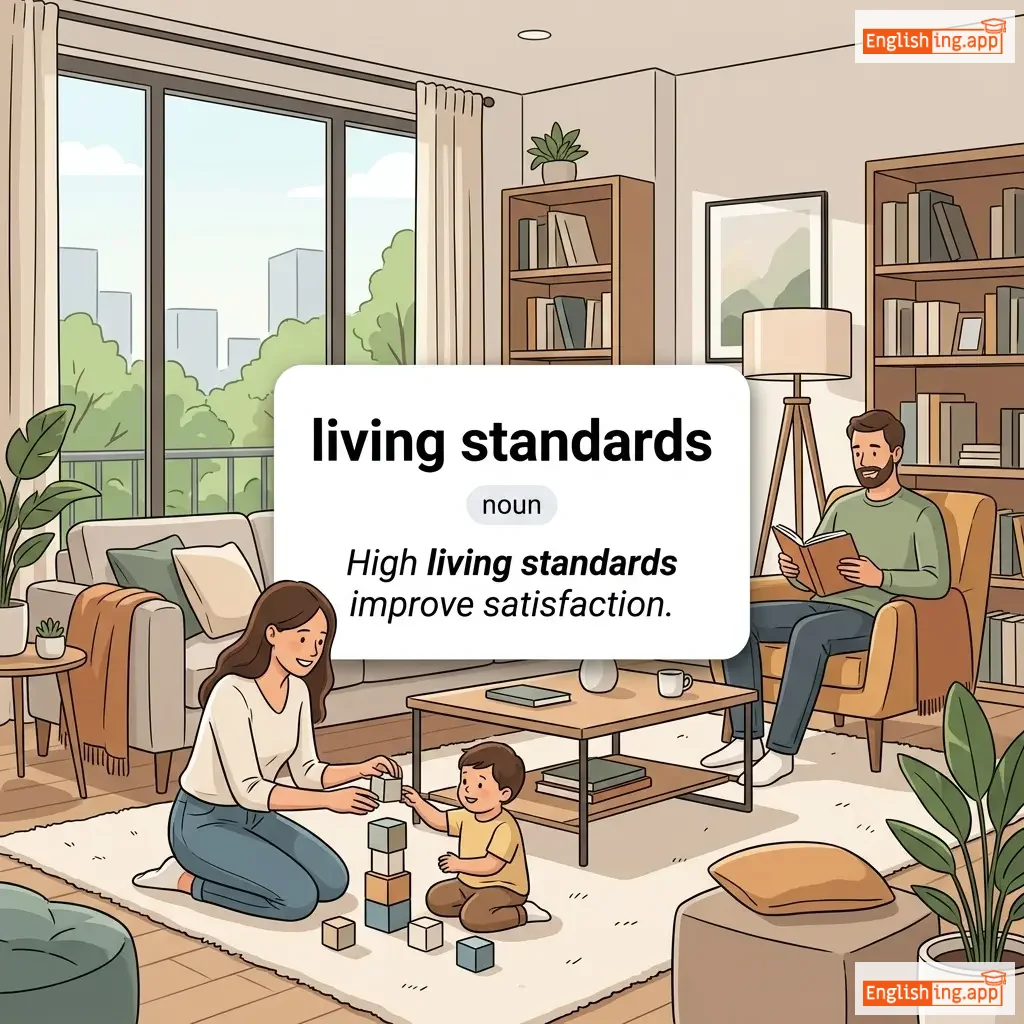
living standards definition card — visual illustration of the meaning
noun
ˈlɪv.ɪŋ ˈstæn.dədz
জীবনমান (jibonman)

The degree of wealth and material comfort available to a person or community; quality of life.

"High living standards improve satisfaction."

"উচ্চ জীবনমান সন্তুষ্টি বাড়ায়।" (Uccho jibonman santushti baray.)
noun
/ˈlɪzərd/
টিকটিকি (tiktiki)

A small reptile with a long body, four legs, and a tail, often found on walls or in gardens.

"A lizard crawled across the wall."

"একটি টিকটিকি দেয়াল বেয়ে চলছিল।" (Ekti tiktiki deyal beye cholchhilo.)
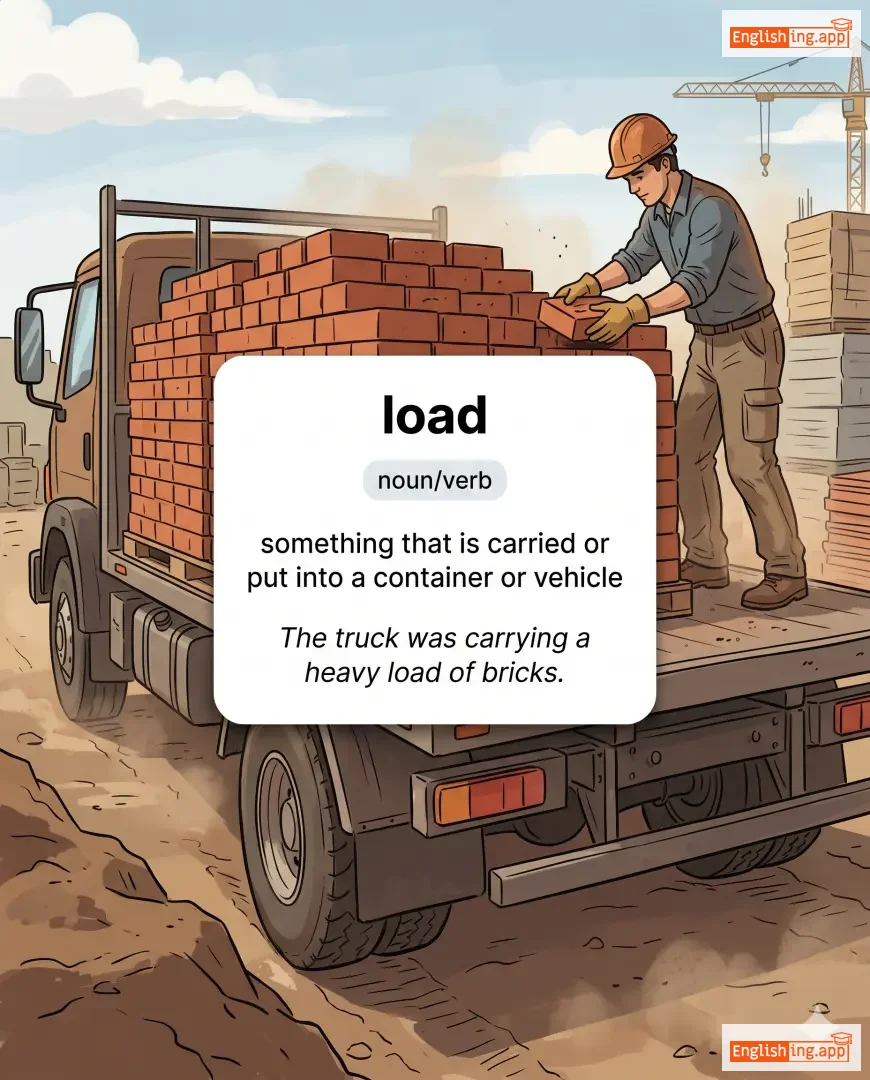
load definition card — visual illustration of the meaning
noun/verb
/loʊd/
বোঝা / ভার (boja / vhar)

something that is carried or put into a container or vehicle

"The truck was carrying a heavy load of bricks."

"ট্রাকটি ইটের একটি ভারী বোঝা বহন করছিল।" (trakti iter ekti vhari boja boron korchhilo.)
noun
/loʊf/
পাউরুটি (pauruti)

a shaped mass of bread baked as a unit

"She bought a fresh loaf of bread from the bakery."

"সে বেকারি থেকে একটি তাজা পাউরুটি কিনেছে।" (she bakari theke ekti taja pauruti kinechhe.)
noun
/ˈloʊfər/
আলসে (alse)

A person who is lazy and avoids work; also a type of slip-on shoe.

"He was called a loafer because he never did his job properly."

"তাকে লোফার বলা হতো কারণ সে কখনো সঠিকভাবে কাজ করত না।" (Take loafer bola hoto karon se kokhono shothikbhabe kaj korto na.)
noun
/loʊm/
উর্বর মাটি (urbor mati)

A fertile soil of clay and sand containing humus.

"The farmer used loam to improve the fertility of the field."

"কৃষক জমির উর্বরতা বাড়াতে লোম ব্যবহার করেছিলেন।" (Krishok jomir urborota barate loam byabohar korechilen.)
noun
/loʊn/
ঋণ (rin)

money that is borrowed and expected to be paid back with interest

"She took a loan from the bank to buy a house."

"সে একটি বাড়ি কেনার জন্য ব্যাংক থেকে ঋণ নিয়েছিল।" (se ekti bari kenar jonyo bank theke rin niyechhilo.)
adjective
/loʊθ/
অনিচ্ছুক (onichchhuk)

reluctant or unwilling to do something

"She was loath to admit her mistake in front of everyone."

"সে সবার সামনে তার ভুল স্বীকার করতে অনিচ্ছুক ছিল।" (Se sobar samne tar bhul swikar korte onichchhuk chilo.)
verb
/loʊð/
অত্যন্ত ঘৃণা করা (ottyonto ghrena kora)

to feel intense dislike or disgust for

"He absolutely loathes being late to meetings."

"সে একদমই মিটিংয়ে দেরি করা ঘৃণা করে।" (Se ekdomi meetinge deri kora ghrena kore.)
adjective
/ˈloʊð.səm/
বিরক্তিকর; ঘৃণ্যকর; (lothsom)

causing hatred or disgust; repulsive

"The loathsome smell from the garbage made everyone leave the room."

"আবর্জনার ঘৃণ্য গন্ধে সবাই ঘর ছেড়ে চলে গেল।" (abrjonar ghrinno gondhe sobai ghor chere chole gelo.)
noun
/ˈlɒbi/
প্রবেশদ্বার হল (probeshdwar hol)

a large open area near the entrance of a building; also a group trying to influence decisions.

"We met the manager in the hotel lobby before the meeting."

"আমরা মিটিংয়ের আগে হোটেলের লবিতে ম্যানেজারের সাথে দেখা করেছিলাম।" (Amra meetinger age hotel er lobite manager er sathe dekha korechilam.)
noun
/ˈlɒbstər/
গলদা চিংড়ি (golda chingri)

a large marine crustacean with claws and a hard shell

"The lobster was served with melted butter and lemon."

"গলদা চিংড়ি গলানো মাখন এবং লেবু দিয়ে পরিবেশন করা হয়েছিল।" (golda chingri golano makhon ebong lebu diye poribekhon kora hoyechilo.)
adjective/noun
/ˈloʊkəl/
স্থানীয় (sthaniyo)

relating to a particular area or neighborhood

"We prefer buying fruits from the local market."

"আমরা স্থানীয় বাজার থেকে ফল কিনতে পছন্দ করি।" (amra sthaniyo bajar theke fol kinte pochondo kori.)
verb
/loʊˈkeɪt/
অবস্থান নির্ণয় করা (obosthan nirnoy kora)

to find the exact position or place of something

"They managed to locate the missing keys under the couch."

"তারা হারানো চাবিগুলো সোফার নিচে খুঁজে বের করতে পেরেছিল।" (Tara harano chabigulo sofar niche khuje ber korte perechilo.)
noun
/loʊˈkeɪʃən/
অবস্থান (obosthan)

a particular place or position

"This cafe is in a beautiful location near the lake."

"এই ক্যাফেটি হ্রদের কাছে একটি সুন্দর স্থানে অবস্থিত।" (Ei cafeti hrader kache ekti sundor sthane obosthito.)