ভোকাবুলারিসমূহ

ইংরেজি শব্দের বাংলা অর্থ | English to Bangla Word Meaning Dictionary

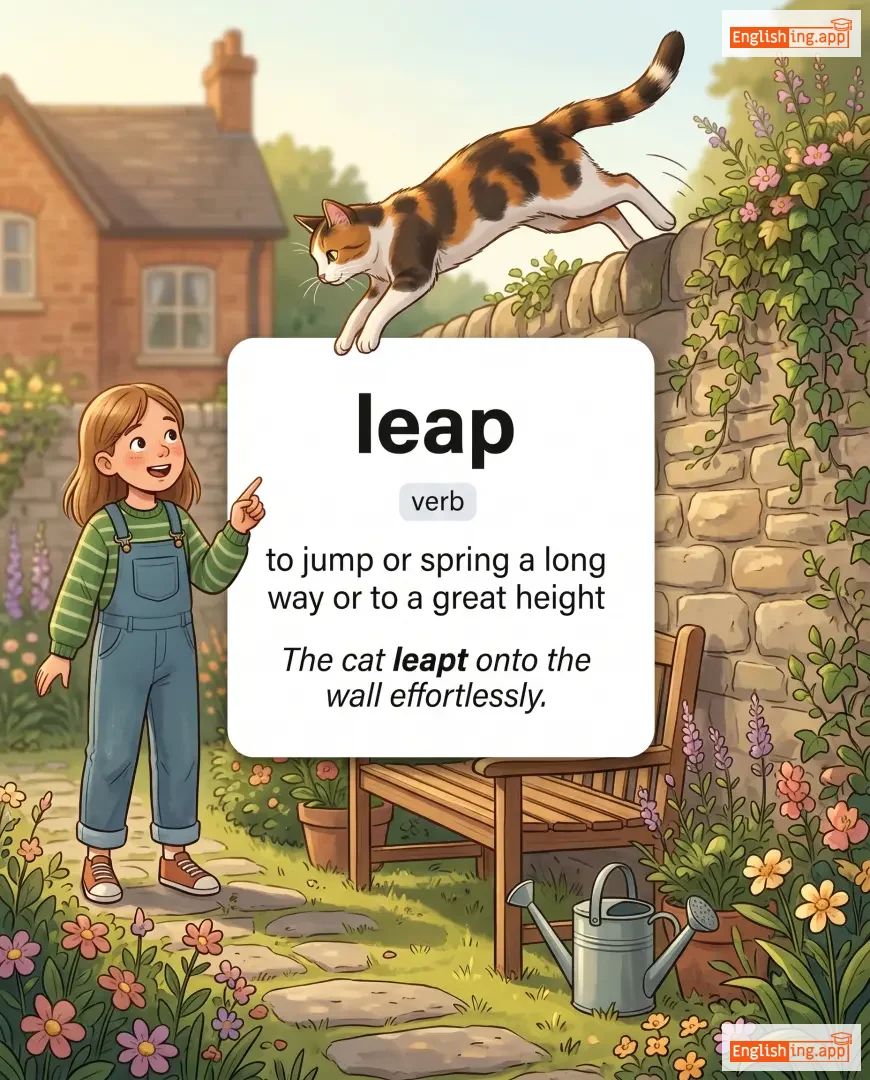
leap definition card — visual illustration of the meaning
🏃‍♂️

leap (লিপ)

verb
/liːp/
লাফ দেওয়া (laf deowa)

to jump or spring a long way or to a great height

"The cat leapt onto the wall effortlessly."

"বিড়ালটি সহজে দেয়ালে লাফিয়ে উঠল।" (Biralti sohoje deyal e lafie uthlo.)
learn definition card — visual illustration of the meaning
verb
/lɜːrn/
শিখা (shikha)

to gain knowledge or skill by studying or experience

"Children learn new things quickly."

"শিশুরা দ্রুত নতুন জিনিস শিখে ফেলে।" (Shishura druto notun jinish shikhe fele.)
adjective; verb (past and past participle)
/lɜːrnd/
বিদ্বান (bidwan)

having acquired much knowledge through study; gained knowledge or skill through experience or teaching

"She is a learned scholar with deep knowledge of history."

"তিনি ইতিহাস সম্পর্কে গভীর জ্ঞানসম্পন্ন একজন বিদ্বান গবেষক।" (tini itihas somporke govir gyan-sompanno ekjon bidwan gobeshok)
noun
/ˈlɜːrnər/
শিক্ষার্থী (shikkharthi)

a person who is acquiring knowledge or skill through study or experience

"She is a fast learner."

"সে খুব দ্রুত শেখে।" (se khub druto shekhe)
noun
/ˈlɜrnɪŋ/
শিক্ষা (shikkha)

The process of gaining knowledge or skills through study or experience.

"Learning a new language can be exciting."

"একটি নতুন ভাষা শেখা উত্তেজনাপূর্ণ হতে পারে।" (ekti notun vasha shekha uttejanapurno hote pare.)
Lease definition card — visual illustration of the meaning
noun
/liːs/
ইজারা; ভাড়া চুক্তি; (lij)

a contract by which one party conveys land, property, services, etc. to another for a specified time, usually in return for a periodic payment

"They signed a two-year lease for the apartment."

"তারা অ্যাপার্টমেন্টের জন্য দুই বছরের ইজারা চুক্তি সই করল।" (tara apartment er jonno dui bochhorer ijara chukthi shoi korlo)
noun/verb
/liːʃ/
শিকল (shikol)

a strap or cord used to control or guide an animal; to restrain or control

"The dog was on a leash during the walk."

"কুকুরটি হাঁটার সময় শিকলে বাঁধা ছিল।" (Kukturti hantar somoy shikole bandha chilo.)
adjective
/liːst/
সবচেয়ে কম (shobcheye kom)

smallest in amount, extent, or importance

"She showed the least interest in the project."

"সে প্রকল্পে সবচেয়ে কম আগ্রহ দেখিয়েছিল।" (Se projekte shobcheye kom agroho dekhiechhilo.)
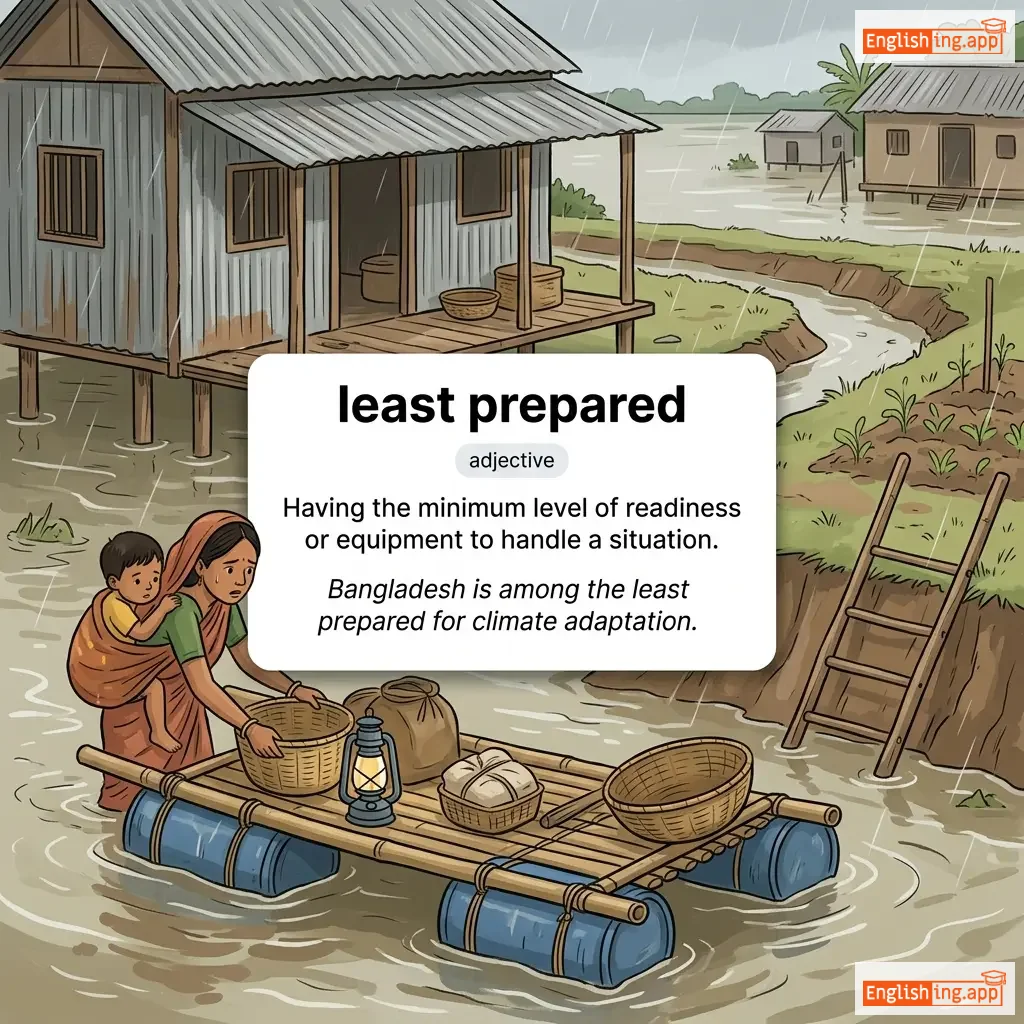
least prepared definition card — visual illustration of the meaning
adjective
liːst prɪˈpeərd
সবচেয়ে কম প্রস্তুত (shobcheye kom prostuto)

Having the minimum level of readiness or equipment to handle a situation.

"Bangladesh is among the least prepared for climate adaptation."

"বাংলাদেশ জলবায়ু অভিযোজনে সবচেয়ে কম প্রস্তুত দেশগুলোর মধ্যে একটি।" (Bangladesh jolbayu obhijojone shobcheye kom prostuto deshgulor moddhe ekti.)
noun
/ˈlɛðər/
চামড়া (chamra)

A material made from the skin of an animal, usually treated and used to make clothing, shoes, or furniture.

"He bought a leather jacket for winter."

"সে শীতের জন্য একটি চামড়ার জ্যাকেট কিনেছিল।" (se shiter jonno ekti chamrar jacket kinechhilo.)
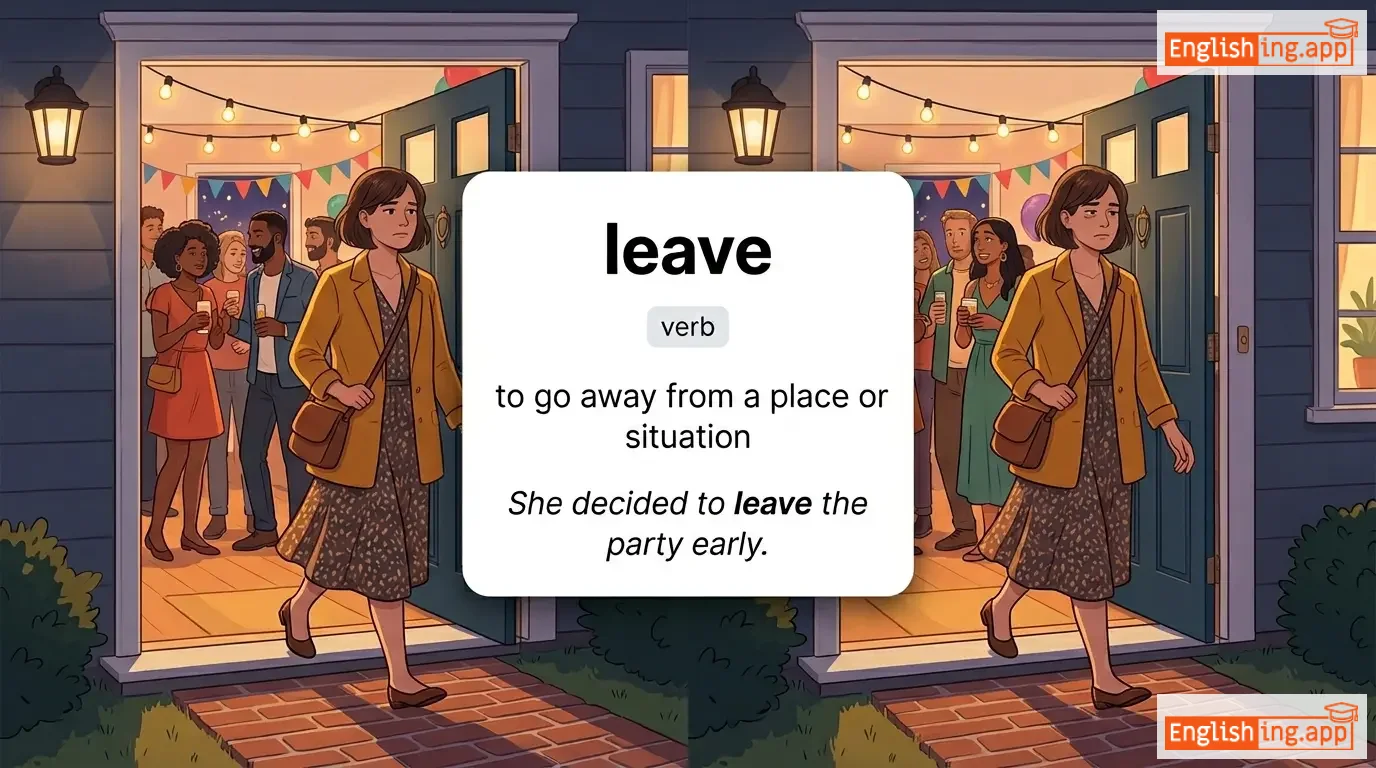
leave definition card — visual illustration of the meaning
🚶‍♂️

leave (লিভ)

verb
/liːv/
ছেড়ে যাওয়া (chere jaoya)

to go away from a place or situation

"She decided to leave the party early."

"সে সিদ্ধান্ত নিয়েছিল পার্টি থেকে তাড়াতাড়ি চলে যাবে।" (Se siddhanto niechhilo party theke taratari chole jabe.)
noun
/ˈliːvˌteɪ.kɪŋ/
বিদায় (biday)

an act of saying goodbye; farewell

"His leave-taking from his friends was emotional."

"বন্ধুদের কাছ থেকে তার বিদায় ছিল আবেগপূর্ণ।" (Bondhuder kach theke tar biday chilo abegpurno.)
noun/verb
/ˈlɛv.ən/
খামির (khamir)

a substance, typically yeast, that causes dough to rise; to permeate and modify

"A little yeast will leaven the bread dough."

"একটু খামির রুটির ময়দাকে ফুলিয়ে তুলবে।" (Ektu khamir rutir moydake phuliye tulbe.)
noun
/ˈliː.vɪŋz/
উচ্ছিষ্ট; অবশিষ্ট; (livings)

things that have been left behind or remain; remnants or scraps

"The leavings from dinner were given to the dog."

"রাতের খাবারের উচ্ছিষ্ট কুকুরকে দেওয়া হল।" (rater khabarer uchchishto kukurke deoya holo)
noun
/ˈleʧ.ər/
লম্পট ব্যক্তি; কামুক; (lechar)

a man who behaves in a sexually inappropriate way towards women

"The company fired him for being a lecher."

"কোম্পানি তাকে লম্পট আচরণের জন্য বরখাস্ত করেছে।" (company take lompot achorone jonno borokhasto koreche)
adjective
/ˈlɛtʃ.ər.əs/
লম্পট (lompot)

having or showing excessive or offensive sexual desire

"The character was portrayed as a lecherous old man."

"চরিত্রটিকে একজন লম্পট বৃদ্ধ মানুষ হিসেবে দেখানো হয়েছিল।" (Choritroti ke ekjon lompot bridho manush hisebe dekhano hoyechilo.)
noun
/ˈlɛtʃ.əri/
লালসা (lalsha)

excessive or offensive sexual desire; lustfulness

"The novel depicted the lechery of corrupt nobles."

"উপন্যাসে দুর্নীতিগ্রস্ত অভিজাতদের লালসা চিত্রিত করা হয়েছিল।" (Uponyase durnitigrasto abhijatder lalsha chitrito kora hoyechilo.)
noun
/ˈlɛktən/
বক্তৃতার মঞ্চ (boktritar moncho)

A tall stand with a sloping top used to support a book, notes, or script during a speech or lecture.

"The professor placed her notes on the lectern before starting her lecture."

"অধ্যাপক তার বক্তৃতা শুরু করার আগে নোটগুলো লেকটার্নে রাখলেন।" (Odhapok tar boktrita shuru korar age notgulo lektarne rakhlen.)
noun
/ˈlektʃər/
বক্তৃতা (boktrita)

a talk given to a group of people to teach them about a subject

"The professor gave a lecture on climate change."

"অধ্যাপক জলবায়ু পরিবর্তন বিষয়ে একটি বক্তৃতা দেন।" (Odhapok jolbayu poriborton bishoye ekti boktrita den.)
noun
/ˈlɛktʃərər/
প্রভাষক (probhahshok)

a person who gives lectures, especially at a college or university

"The lecturer explained the theory with clear examples."

"প্রভাষক স্পষ্ট উদাহরণ দিয়ে তত্ত্বটি ব্যাখ্যা করেছিলেন।" (probhahshok sposto udahoron diye totto ti byakkha korechilen)
noun
/ˈledʒ.ər/
লেনদেন খাতা; হিসাবের বই; (lejar)

a book or other collection of financial accounts of a particular type

"The accountant updated the company ledger daily."

"হিসাবরক্ষক প্রতিদিন কোম্পানির লেজার ডোকত।" (hishabrokkhok protidin companir lejar date)
noun
/liːt͡ʃ/
জোঁক (jonk)

a blood-sucking worm that lives in water or moist ground

"The doctor used a medical leech to reduce swelling after surgery."

"ডাক্তার অস্ত্রোপচারের পর ফোলা কমানোর জন্য একটি চিকিৎসা জোঁক ব্যবহার করেছিলেন।" (daktar ostropocharer por phola komanor jonno ekti chikitsa jonk byabohar korechilen)
noun
/liːk/
পেঁয়াজপাতা (peyajpata)

vegetable related to onion with long green leaves and white bulb, milder than onion

"The soup was made with potatoes and leeks."

"স্যুপটি আলু এবং পেঁয়াজপাতা দিয়ে তৈরি করা হয়েছিল।" (syupti alu ebong peyajpata diye toiri kora hoyechilo)
verb
/lɪr/
কুদৃষ্টি (kudrishti)

To look at someone in an unpleasant, sly, or sexually suggestive way.

"He leered at her in a way that made her uncomfortable."

"সে তাকে এমনভাবে কুদৃষ্টিতে তাকাল যা তাকে অস্বস্তিতে ফেলল।" (Se take emonbhabe kudrishtite takalo ja take asostite felllo.)
adjective
/ˈlɪəri/
সন্দেহজনক (sondehojonok)

Cautious or wary due to suspicion or distrust.

"She was leery of investing in the new business."

"সে নতুন ব্যবসায় বিনিয়োগ করতে সন্দেহপ্রবণ ছিল।" (Se notun byabsay binioyog korte sondehoprobon chilo.)
adjective
/ˈliːwərd/
বাতাসবিহীন দিক (batasbihin dik)

On or toward the sheltered side away from the wind.

"They built their camp on the leeward side of the hill."

"তারা পাহাড়ের বাতাসবিহীন দিকে তাদের ক্যাম্প তৈরি করেছিল।" (Tara paharer batasbihin dike tader camp toiri korechilo.)
noun
/ˈliːweɪ/
অবকাশ (obokash)

Freedom to act within certain limits; extra space or time.

"The manager gave the team some leeway to finish the project."

"ম্যানেজার দলকে প্রকল্প শেষ করার জন্য কিছু অবকাশ দিলেন।" (Manager dolke projokt shesh korar jonno kisu obokash dilen.)
adjective, noun, adverb, verb (past tense of leave)
/lɛft/
বাম (bam)

on or towards the side of the body that is to the west when facing north

"He turned left at the intersection."

"সে মোড়ে বামে ঘুরল।" (Se more bame ghurl.)
adjective
/ˌlɛftˈhændɪd/
বামহাতি (bamhatI)

Using or done with the left hand; also can mean clumsy or awkward.

"She is left-handed and writes beautifully with her left hand."

"সে বামহাতি এবং তার বাম হাতে সুন্দরভাবে লেখে।" (Se bamhatI ebong tar bam hate sundorbhabe lekhe.)
noun
/lɛɡ/
পা (pa)

one of the limbs on which a person or animal walks and stands

"He injured his leg while playing football."

"ফুটবল খেলার সময় সে তার পায়ে আঘাত পেয়েছিল।" (Football khelar somoy se tar pye aghat peyechhilo.)
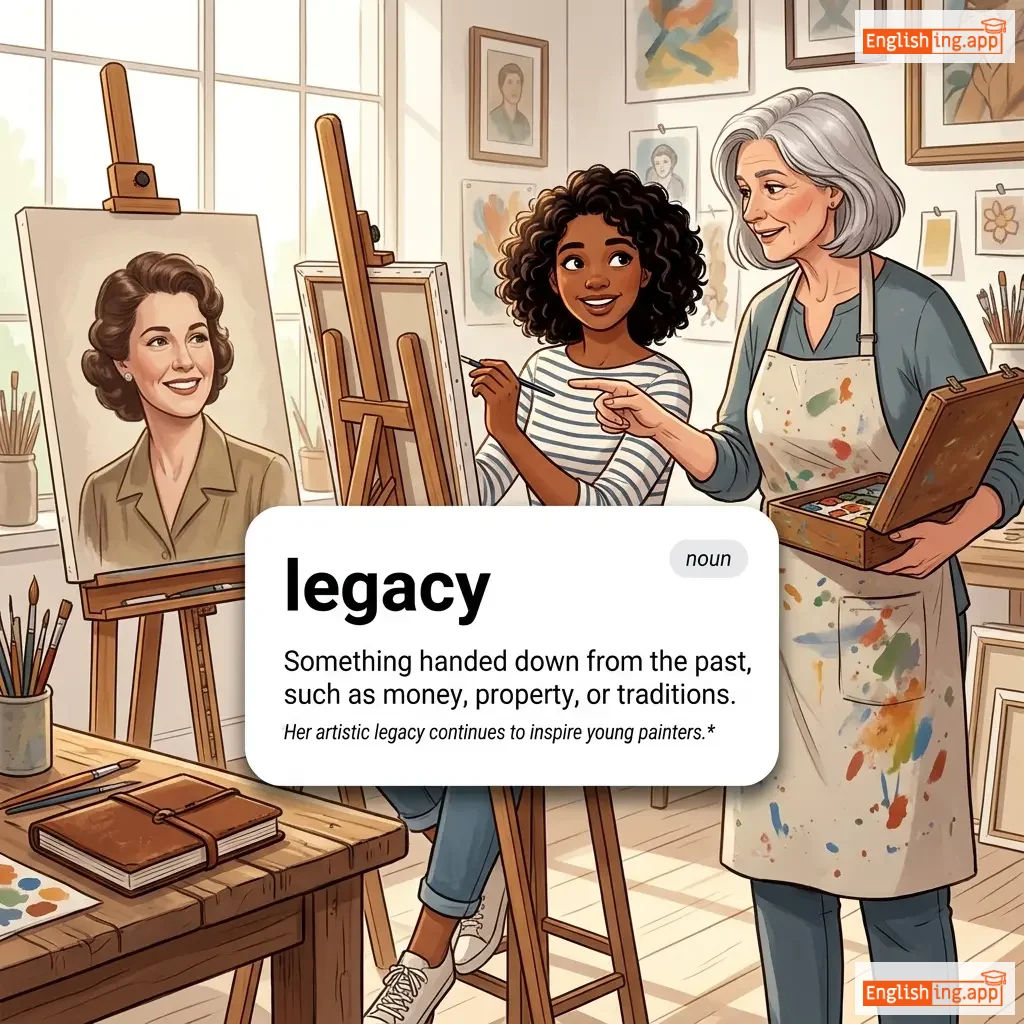
legacy definition card — visual illustration of the meaning
noun
/ˈlɛɡəsi/
উত্তরাধিকার (uttoradhikar)

Something handed down from the past, such as money, property, or traditions.

"Her artistic legacy continues to inspire young painters."

"তার শিল্পকলা উত্তরাধিকার তরুণ চিত্রশিল্পীদের অনুপ্রাণিত করে।" (Tar shilpokola uttaradhikar torun chitroshilpider onupranito kore.)
legal definition card — visual illustration of the meaning
adjective
/ˈliːɡəl/
আইনগত (aingoto)

relating to the law

"He sought legal advice before signing the contract."

"চুক্তিতে স্বাক্ষর করার আগে তিনি আইনগত পরামর্শ নিয়েছিলেন।" (Chuktite sakhkhor korar age tini aingoto poramorsho niechhilen.)
noun
/lɪˈɡæl.ə.ti/
বৈধতা; (ligyaliti)

the quality or state of being legal; accordance with the law

"The lawyer questioned the legality of the contract."

"আইনজীবী চুক্তির বৈধতা নিয়ে প্রশ্ন তুললেন।" (ainjibi chuktir boidhota niye proshno tullen)
verb
/ˈliːɡəlaɪz/
আইনসিদ্ধ করা (ainsiddho kora)

To make something lawful by official approval.

"The government decided to legalize online businesses."

"সরকার অনলাইন ব্যবসাকে বৈধ করার সিদ্ধান্ত নিয়েছে।" (Sorkar online byabshake boidho korar siddhanto niyeche.)
adverb
/ˈliːɡəli/
আইনগতভাবে (aingotobhabhe)

in a way that is allowed by law

"He is legally responsible for his actions."

"সে আইনগতভাবে তার কাজের জন্য দায়ী।" (Se aingotobhabhe tar kajer jonno dayi.)
adverb/adjective
/lɪˈɡɑːtoʊ/
মসৃণভাবে (সঙ্গীতে) (mosrinbhabe (sangite))

In music, played or sung smoothly and connectedly.

"The pianist played the passage legato, with each note flowing into the next."

"পিয়ানোবাদক অংশটি লেগাটোভাবে বাজালেন, যেখানে প্রতিটি নোট পরেরটির সাথে মিশে যাচ্ছিল।" (Pianobadok onshoti legatobhabe bajalen, jekhane protiti not porertir sathe mishe jachchhilo.)
noun
/ˈlɛdʒənd/
কিংবদন্তি (kingbodonti)

A traditional story popularly regarded as historical but unauthenticated; also a famous person admired for achievements.

"The footballer is considered a legend in his country."

"ফুটবলারকে তার দেশে একজন কিংবদন্তি হিসেবে গণ্য করা হয়।" (Futbolarke tar deshe ekjon kingbodonti hisebe gonno kora hoy.)
adjective
/ˈlɛdʒəndɛri/
প্রসিদ্ধ (proshiddho)

remarkable enough to be famous; often used to describe something that is iconic or widely known

"The legendary musician performed in front of a packed stadium."

"প্রসিদ্ধ সঙ্গীতশিল্পী একটি পূর্ণ স্টেডিয়ামের সামনে পরিবেশন করেছেন।" (Proshiddho songitshilpi ekti purno stadium-er samne poribeshon korechhe.)
noun
/ˌlɛdʒərdəˈmeɪn/
হাতের কারসাজি, প্রতারণা (hater karsaji, protorona)

skillful use of one's hands when performing tricks; deception or trickery

"The magician's legerdemain left the audience amazed."

"যাদুকরের হাতের কারসাজি দর্শকদের বিস্মিত করেছিল।" (jadukorer hater karsaji dorshokder bismito korechilo.)
noun
/ˈlɛɡɪŋ/
টাইট প্যান্ট (tight pant)

tight-fitting stretch pants, typically worn by women for exercise or casual wear

"She bought a new pair of black leggings for the gym."

"সে জিমের জন্য নতুন একটি কালো লেগিং কিনেছিল।" (se jimer jonno notun ekti kalo legging kinechilo.)
adjective
/ˈlɛdʒəbl/
পড়া যায় এমন (pora jay emon)

clear enough to read

"Her handwriting was barely legible."

"তার হাতের লেখা প্রায় পড়া যাচ্ছিল না।" (tar hater lekha pray pora jachhilo na.)
noun
/ˈliːdʒən/
বহুসংখ্যক দল, সেনাদল (bohusongkhok dol, senadol)

a large group of people, especially soldiers; a great number

"The Roman army was divided into legions."

"রোমান সেনাবাহিনীকে বিভিন্ন লিজনে ভাগ করা হয়েছিল।" (roman senabahini ke bibhinno lijone vag kora hoyechilo.)
noun
/ˈliːdʒənəri/
রোমান সৈন্য (roman soyno)

a soldier in the Roman army

"Each legionary carried a shield and a short sword."

"প্রতিটি লিজনারি একটি ঢাল এবং একটি ছোট তলোয়ার বহন করত।" (protiti lijonari ekti dhal ebong ekti choto talowar bohon korto.)
verb
/ˈlɛdʒɪsˌleɪt/
আইন প্রণয়ন করা (ain pronoyon kora)

to make or enact laws

"The government plans to legislate new safety standards."

"সরকার নতুন নিরাপত্তা মানদণ্ড প্রণয়নের পরিকল্পনা করছে।" (Sorkar notun nirapotta mandando pronoyoner porikolpona korche.)
noun
/ˌledʒɪsˈleɪʃən/
আইন প্রণয়ন (ain pronoyon)

laws considered collectively, or the act of making laws

"The government passed new legislation to protect the environment."

"সরকার পরিবেশ রক্ষার জন্য নতুন আইন প্রণয়ন করেছে।" (Sorkar poribesh rokkhar jonno notun ain pronoyon koreche.)
adjective
/ˈlɛdʒɪslətɪv/
বিধানসভা সম্পর্কিত (bidhan shova somprokito)

relating to the making of laws

"The legislative body passed the new tax bill."

"বিধানসভা নতুন কর বিল পাস করেছে।" (Bidhan shova notun kor bill pass koreche.)
noun
/ˈlɛdʒɪsleɪtər/
বিধায়ক (bidhayok)

a person who makes laws, especially a member of a legislative body

"The legislator introduced a bill to improve healthcare."

"বিধায়ক স্বাস্থ্যসেবা উন্নত করতে একটি বিল উত্থাপন করেছেন।" (Bidhayok shasthoseba unnoto korte ekti bill utthapon korechen.)
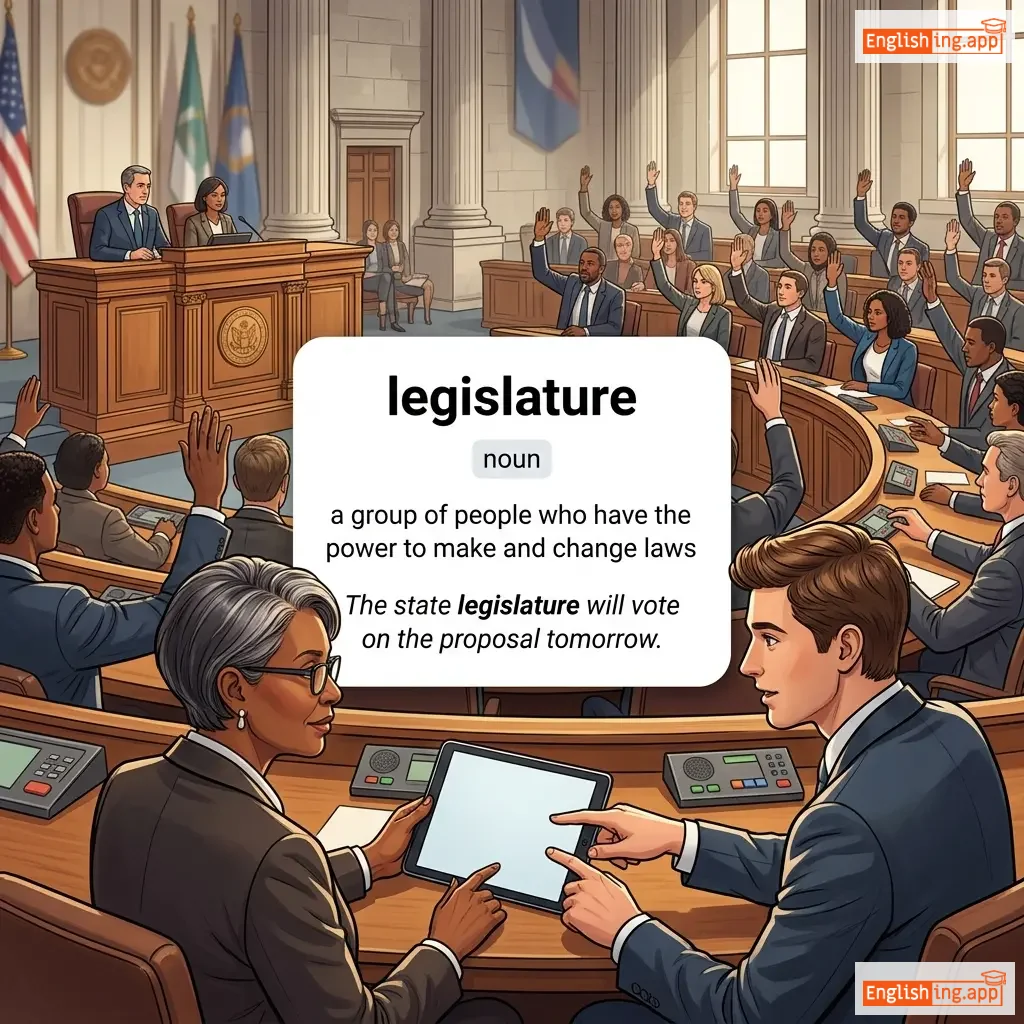
legislature definition card — visual illustration of the meaning
noun
/ˈlɛdʒɪsˌleɪtʃər/
বিধানসভা (bidhan shova)

a group of people who have the power to make and change laws

"The state legislature will vote on the proposal tomorrow."

"রাজ্যের বিধানসভা আগামীকাল প্রস্তাবের উপর ভোট দেবে।" (Rajyer bidhan shova agamikal prostaber upor vote debe.)
noun
/lɪˈdʒɪtɪməsi/
বৈধতা (boidhota)

the quality of being accepted as right, proper, or lawful

"The legitimacy of the election was questioned by observers."

"নির্বাচনের বৈধতা পর্যবেক্ষকদের দ্বারা প্রশ্নবিদ্ধ হয়েছিল।" (Nirbachoner boidhota porjobekhkoder dvara proshnobiddho hoyechilo.)
adjective
/lɪˈdʒɪtɪmət/
বৈধ (baidh)

Conforming to the law or to rules; valid or acceptable.

"She presented a legitimate reason for her absence."

"সে তার অনুপস্থিতির জন্য একটি বৈধ কারণ উপস্থাপন করেছিল।" (Se tar onuposthitir jonno ekti baidh karon uposthapon korechilo.)