ভোকাবুলারিসমূহ

ইংরেজি শব্দের বাংলা অর্থ | English to Bangla Word Meaning Dictionary

noun
/ˈlæn.sɪt/
শল্যচিকিৎসার ছোট ছুরি (shollochikitshar choto chhuri)

a small, sharp, two-edged surgical knife used for making small incisions

"The doctor used a lancet to prick the patient’s finger for a blood test."

"ডাক্তার রোগীর আঙুল ফোটাতে রক্ত পরীক্ষার জন্য একটি ল্যানসেট ব্যবহার করলেন।" (Daktar rogir angul photate rokto porikhar jonno ekta lancet byabohar korlen.)
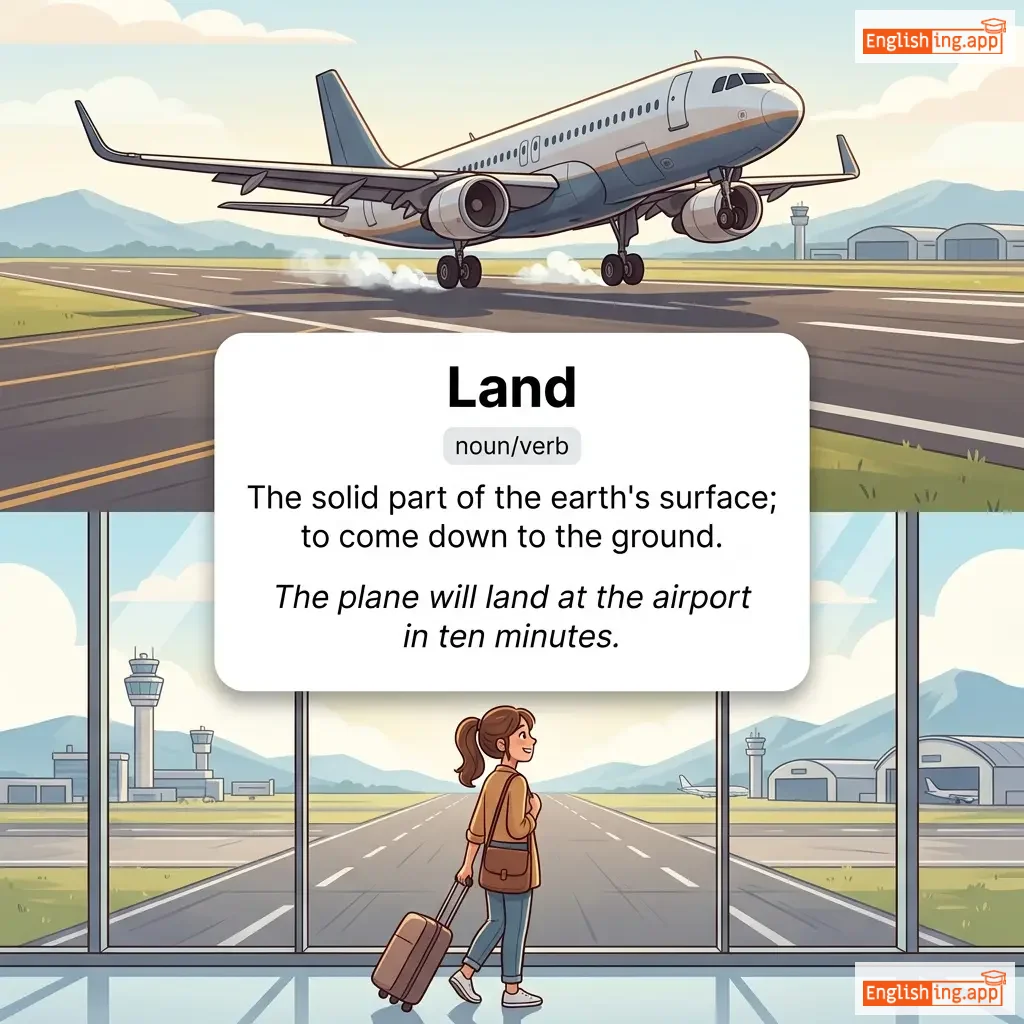
Land definition card — visual illustration of the meaning
noun/verb
/lænd/
ভূমি / অবতরণ করা (bhumi / obotoron kora)

The solid part of the earth's surface; to come down to the ground.

"The plane will land at the airport in ten minutes."

"বিমানটি দশ মিনিটের মধ্যে বিমানবন্দরে অবতরণ করবে।" (Biman ti dosh miniter moddhe bimanbondore obotoron korbe.)
noun
/ˈlænd.lɔːrd/
জমিদার (jomider)

a person who owns property and rents it to tenants

"The landlord collected the monthly rent from all tenants."

"জমিদার সকল ভাড়াটেদের কাছ থেকে মাসিক ভাড়া সংগ্রহ করলেন।" (jomider shokhol bharateyder kach theke mashik bhara shonggroho korlen.)
noun
/ˈlænd.fɪl/
আবর্জনা ভরাট স্থান (aborjona bharat sthan)

a site where waste material is buried under the ground

"The city built a new landfill to manage its growing waste problem."

"শহরটি ক্রমবর্ধমান বর্জ্য সমস্যার সমাধানের জন্য একটি নতুন ল্যান্ডফিল তৈরি করেছে।" (Shohorte krombordhoman borjyo somossar somadhaner jonno ekta notun landfill toiri koreche.)
noun
/ˈlændˌhoʊl.dər/
ভূমির মালিক (vhumir malik)

a person who owns land, especially in large amounts

"The landholder leased part of his property to local farmers."

"ভূমির মালিক তার সম্পত্তির একটি অংশ স্থানীয় কৃষকদের লিজে দিলেন।" (Vhumir malik tar sompottir ekta angsho sthanio krishokder lize dilen.)
noun
/ˈlændɪŋ/
অবতরণ (obotoron)

the act of coming down to the ground or a surface from the air

"The plane made a smooth landing on the runway."

"বিমানটি রানওয়েতে মসৃণভাবে অবতরণ করল।" (Biman ti runway te mosrin vabe obotoron korlo.)
noun
/ˈlænd.leɪ.di/
বাড়িওয়ালী; (bariowali)

a woman who rents out land, a building, or accommodation; a female property owner

"The friendly landlady provided fresh towels and showed us around the apartment."

"বন্ধুত্বপূর্ণ বাড়িওয়ালী তাজা তোয়ালে দিয়েছিলেন এবং আমাদের অ্যাপার্টমেন্ট ঘুরিয়ে দেখিয়েছিলেন।" (bondhuttopurno bariowali taja toyale diyechhilen ebong amader apartment ghuriye dekhiyechhilen.)
noun
/ˈlændlɔːrd/
বাড়িওয়ালা (bariwala)

A person who owns and rents out land, buildings, or accommodation.

"The landlord increased the rent for all tenants this year."

"এই বছর বাড়িওয়ালা সব ভাড়াটিয়ার ভাড়া বাড়িয়েছেন।" (Ei bochor bariwala shob bharatiyar bhara bariechen.)
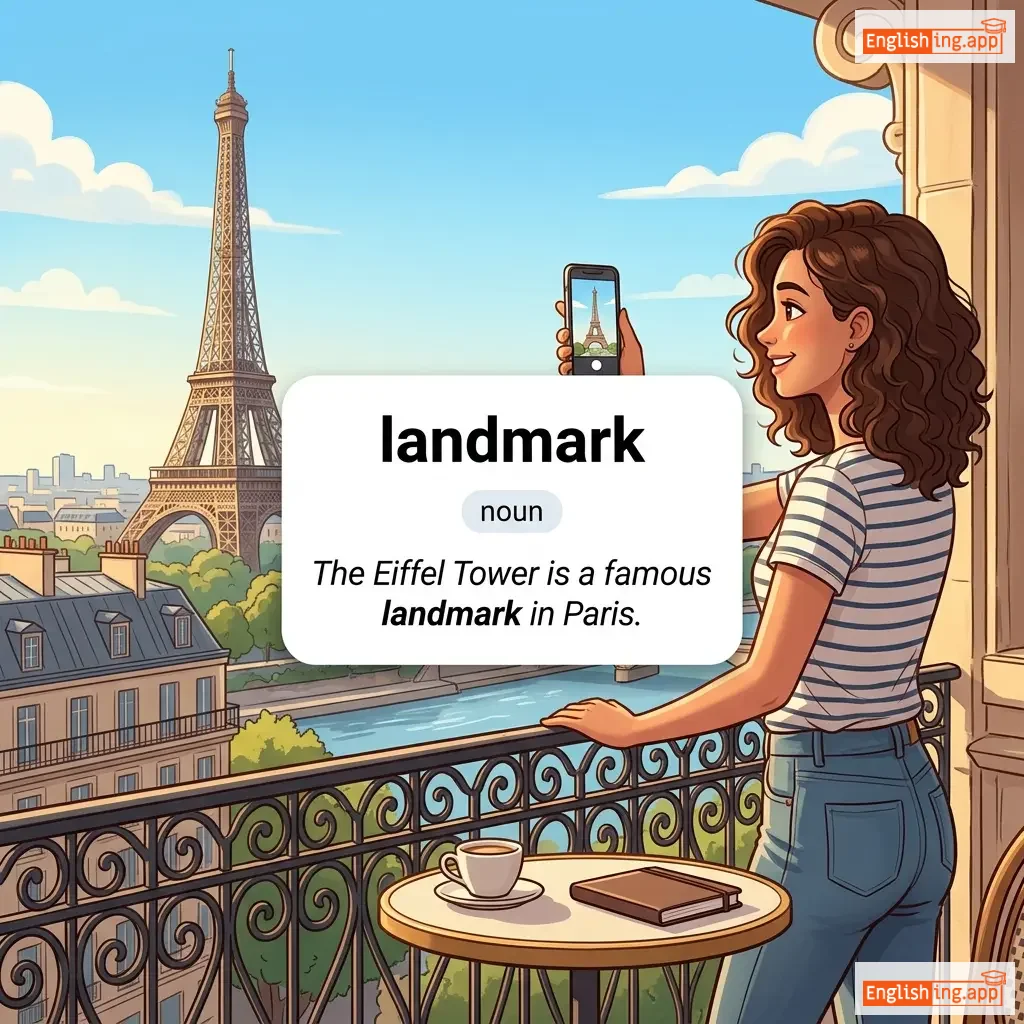
landmark definition card — visual illustration of the meaning
noun
/ˈlændmɑːrk/
গুরুত্বপূর্ণ চিহ্ন / নিদর্শন (gurutto purno chinho / nidorshon)

A recognizable object or structure that serves as a point of reference, or an event marking an important stage.

"The Eiffel Tower is a famous landmark in Paris."

"আইফেল টাওয়ার প্যারিসের একটি বিখ্যাত নিদর্শন।" (Aifel Tower Paris er ekti bikhat nidorshon.)
noun
/ˈlændskeɪp/
প্রাকৃতিক দৃশ্য (prakritik drishsho)

All the visible features of an area of land, often considered in terms of their aesthetic appeal.

"The mountain landscape was breathtaking."

"পাহাড়ের দৃশ্য ছিল মুগ্ধকর।" (Paharer drishsho chilo mugdhokor.)
noun
/ˈlænd.slaɪd/
ভূমিধস; (bhumidhos)

a collapse of a mass of earth or rock from a mountain or cliff; an overwhelming victory in an election

"Heavy rains triggered a massive landslide that blocked the mountain highway."

"প্রবল বৃষ্টি একটি বিশাল ভূমিধস ঘটিয়েছিল যা পাহাড়ি মহাসড়ক বন্ধ করে দিয়েছিল।" (probol brishti ekti bishal bhumidhos ghotiyechhilo ja pahari mohashorok bondho kore diyechhilo.)
noun
/leɪn/
গলি (goli)

a narrow road or path, often in the countryside or for specific traffic

"They walked down a quiet country lane."

"তারা শান্ত একটি গ্রামের সরু গলিতে হাঁটল।" (Tara shanto ekti gramer soru golite hatlo.)
noun
/læŋ'ɡʊər/
হনুমান (hanuman)

a long-tailed monkey found in Asia, especially India and Southeast Asia

"The langoor was sitting on the tree branch eating fruits."

"হনুমানটি গাছের ডালে বসে ফল খাচ্ছিল।" (hanumanti gacher dale bose fol khacchilo)
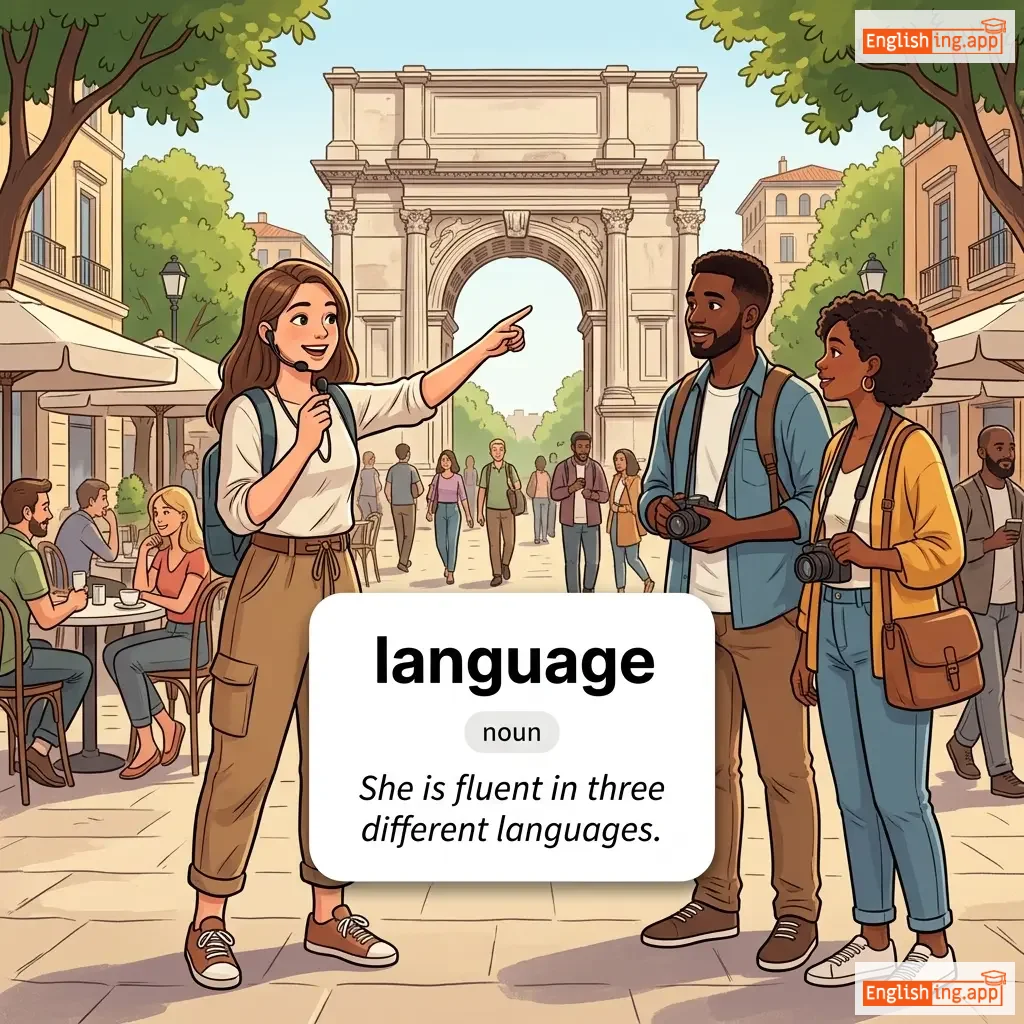
language definition card — visual illustration of the meaning
noun
/ˈlæŋɡwɪdʒ/
ভাষা (bhasha)

the system of communication used by a particular community, including spoken and written words

"She is fluent in three different languages."

"সে তিনটি ভিন্ন ভাষায় সাবলীল।" (Se tin ti bhinno bhashay sablil.)
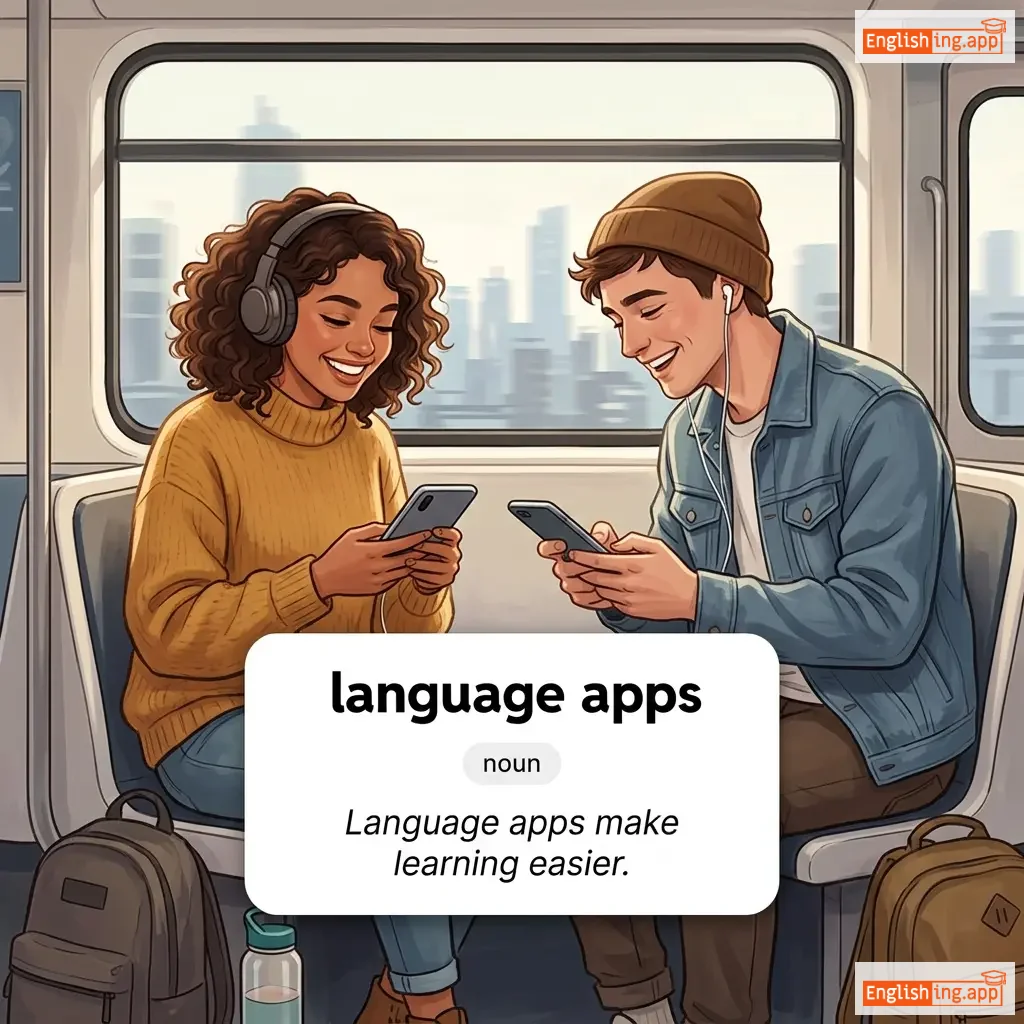
language apps definition card — visual illustration of the meaning
noun
ˈlæŋɡwɪdʒ æps
ভাষা শেখার অ্যাপ (bhasha shekhar app)

Mobile or computer applications designed to help users learn new languages through interactive lessons and exercises.

"Language apps make learning easier."

"ভাষা শেখার অ্যাপ শেখাকে সহজ করে তোলে।" (Bhasha shekhar app shekhake sohoj kore tole.)
adjective
/ˈlæŋɡwɪd/
অলস (olos)

Displaying or having a disinclination for physical exertion; weak or faint.

"He gave a languid wave before leaving the room."

"সে ঘর ছাড়ার আগে একটি অলস ভঙ্গিতে হাত নাড়ল।" (Se ghor charar age ekti olos bhongite hat narlo.)
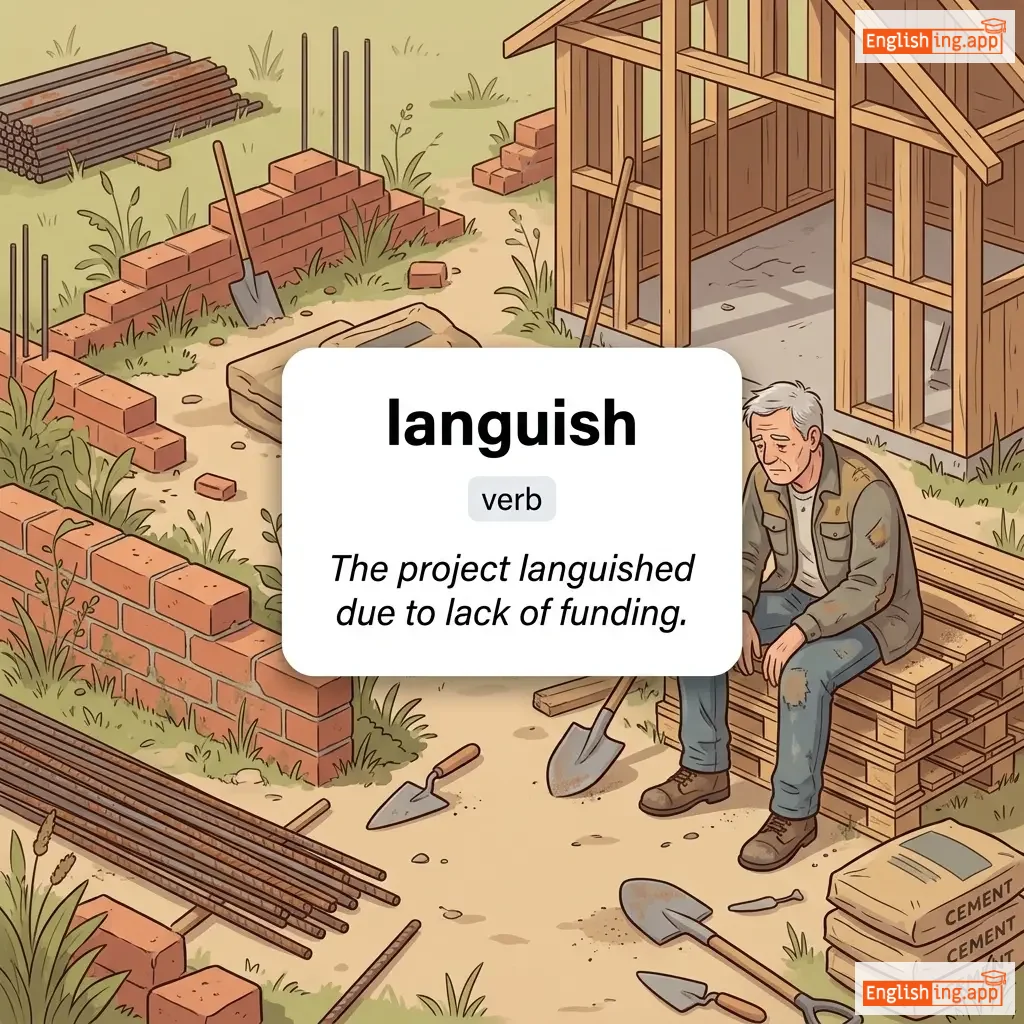
languish definition card — visual illustration of the meaning
verb
/ˈlæŋɡwɪʃ/
দুর্বল হওয়া / অবহেলিত থাকা (durbol howa / obhelito thaka)

To become weak or feeble; to suffer neglect or remain in an unpleasant situation for a long time.

"The project languished due to lack of funding."

"অর্থের অভাবে প্রকল্পটি স্থবির হয়ে পড়েছিল।" (Orther obhave prokolpoti sthobir hoye porchilo.)
noun
/ˈlæŋɡər/
অবসাদ (obsad)

A state of tiredness, inertia, or dreamy relaxation.

"The hot afternoon filled her with languor."

"গরম দুপুর তাকে অবসাদে ভরিয়ে তুলেছিল।" (Gorom dupur take obsade bhoriye tulechhilo.)
adjective
/læŋk/
লম্বা ও রোগা (lomba o roga)

Tall, thin, and often awkward in appearance.

"The lank teenager towered over his classmates."

"লম্বা রোগা কিশোর তার সহপাঠীদের চেয়ে অনেক উঁচু ছিল।" (Lomba roga kishor tar shopathider cheye onek unchu chhilo.)
noun
/lænˈtɑː.nə/
লান্টানা (lantana)

a tropical flowering plant with clusters of small colorful flowers

"The lantana flowers attract butterflies to the garden."

"লান্টানা ফুল বাগানে প্রজাপতিদের আকর্ষণ করে।" (lantana phul bagane projapotider akorshon kore.)
noun
/ˈlæn.tərn/
লণ্ঠন (lonthon)

a portable lamp with a protective covering, often used outdoors

"We carried a lantern during our camping trip."

"আমরা ক্যাম্পিং ট্রিপের সময় একটি লণ্ঠন নিয়ে গিয়েছিলাম।" (amra camping triper shomoy ekti lonthon niye giyechilam)
noun/verb
/læp/
কোল (kol)

As noun: the flat area between the waist and knees of a seated person; As verb: to drink liquid with the tongue.

"The child sat on her mother's lap."

"শিশুটি তার মায়ের কোলে বসেছিল।" (Shishuti tar mayer kole boshchhilo.)
noun/adjective
/ˈlæpɪˌdɛri/
রত্নকার (ratnakar)

As noun: a person who cuts, polishes, or engraves precious stones; As adjective: relating to such work.

"The museum displayed lapidary tools used in ancient times."

"যাদুঘরে প্রাচীন সময়ে ব্যবহৃত রত্নকারের সরঞ্জাম প্রদর্শিত হয়েছিল।" (Jadughore prachin somoye byobohrito ratnakerer soronjam prodorshito hoyechhilo.)
noun/verb
/læps/
ত্রুটি (truti)

As noun: a temporary failure or slip; As verb: to end or fall into disuse.

"She apologized for her lapse in judgment."

"সে তার বিচারে ত্রুটির জন্য ক্ষমা চেয়েছিল।" (Se tar bichare trutir jonno khoma cheyechhilo.)
noun
/ˈlɑːrsəni/
চুরি (churi)

The unlawful taking of personal property with intent to deprive the rightful owner of it.

"He was arrested for committing larceny at the store."

"তিনি দোকানে চুরির অপরাধে গ্রেপ্তার হয়েছিলেন।" (Tini dokane churir oprodhe greptar hoyechilen.)
noun
/ˈlɑːrdər/
খাদ্যভান্ডার (khadyobhandar)

A place, such as a pantry, where food is stored.

"The larder was full of fresh bread and cheese."

"খাদ্যভান্ডারটি তাজা রুটি এবং চীজে ভরা ছিল।" (Khadyobhandarti taza ruti ebong chije vora chhilo.)
adjective
/lɑrdʒ/
বড় (boro)

big in size, amount, or number

"They live in a large house near the river."

"তারা নদীর ধারে একটি বড় বাড়িতে থাকে।" (Tara nodir dhare ekti boro barite thake.)
adjective
/lɑːrdʒ skeɪl/
বৃহৎ আকার (brihot akar)

involving a large number or quantity, or covering a large area

"The company is planning a large-scale expansion into international markets."

"কোম্পানিটি আন্তর্জাতিক বাজারে একটি বৃহৎ আকার সম্প্রসারণের পরিকল্পনা করছে।" (Kompani ti antorjatik bajare ekti brihot akar samprosaroner porikalpona korche.)
adverb
/ˈlɑːrdʒli/
মূলত (muloto)

to a great extent; mostly or mainly

"The success of the project was largely due to teamwork."

"প্রকল্পের সাফল্য মূলত দলগত কাজের কারণে হয়েছিল।" (Prokolper safollo muloto dolgato kajer karone hoyechilo.)
noun
/lɑːrˈʒes/
উদারতা (udarota)

Generosity in giving gifts or money.

"The foundation survived thanks to the largess of wealthy donors."

"ধনী দাতাদের উদারতার কারণে ফাউন্ডেশনটি টিকে ছিল।" (Dhoni datader udarotar karone foundationti tike chhilo.)
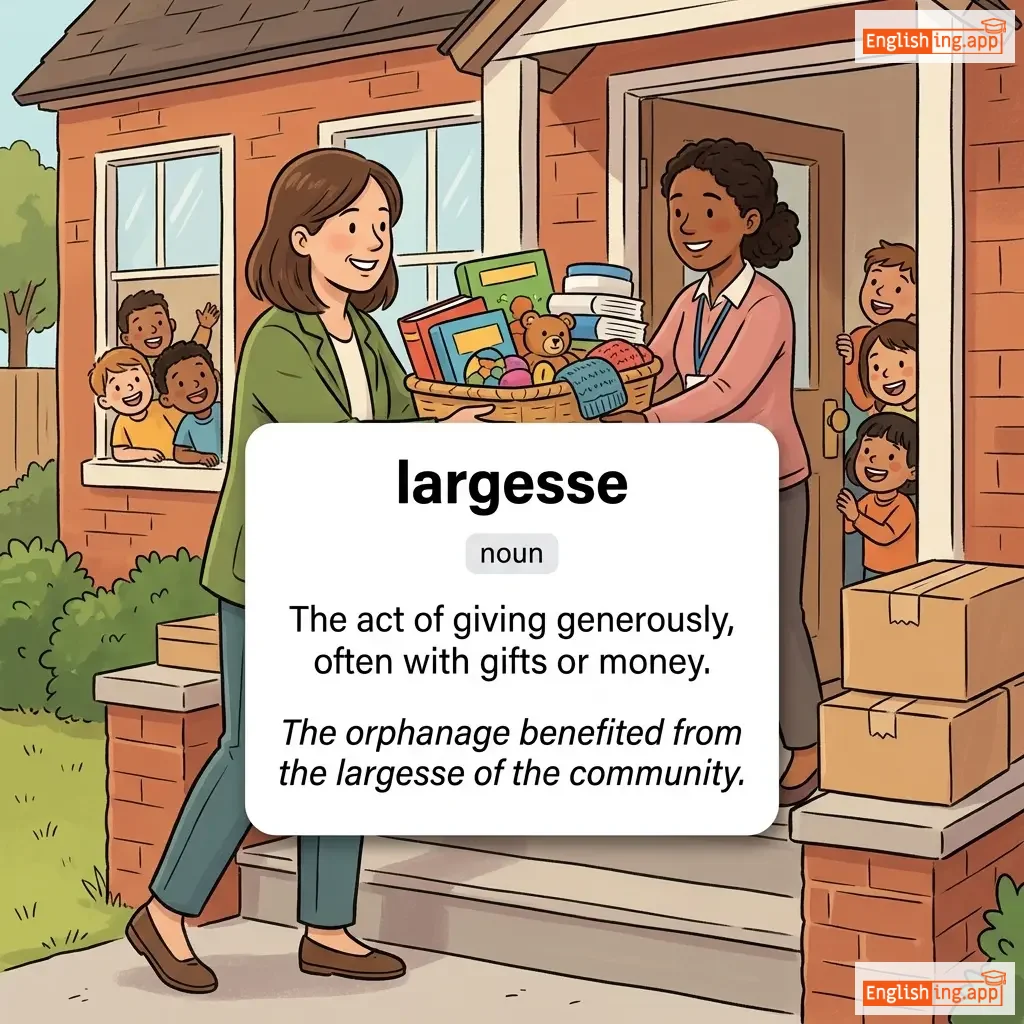
largesse definition card — visual illustration of the meaning
noun
/lɑːrˈʒɛs/
দানশীলতা (danshilota)

The act of giving generously, often with gifts or money.

"The orphanage benefited from the largesse of the community."

"অনাথাশ্রমটি সম্প্রদায়ের দানশীলতার দ্বারা উপকৃত হয়েছিল।" (Onathashromti somprodayer danshilotar dara upokrito hoyechhilo.)
noun
/ˈlæriət/
ফাঁসযুক্ত দড়ি (fashjukto dori)

A long rope with a noose at one end used to catch animals such as cattle or horses.

"The cowboy threw his lariat to catch the stray horse."

"কাউবয় তার লারিয়েট ছুড়ে দিয়ে পথভ্রষ্ট ঘোড়াটিকে ধরল।" (Cowboy tar lariat chure diye pothbhrosto ghoratike dhorlo.)
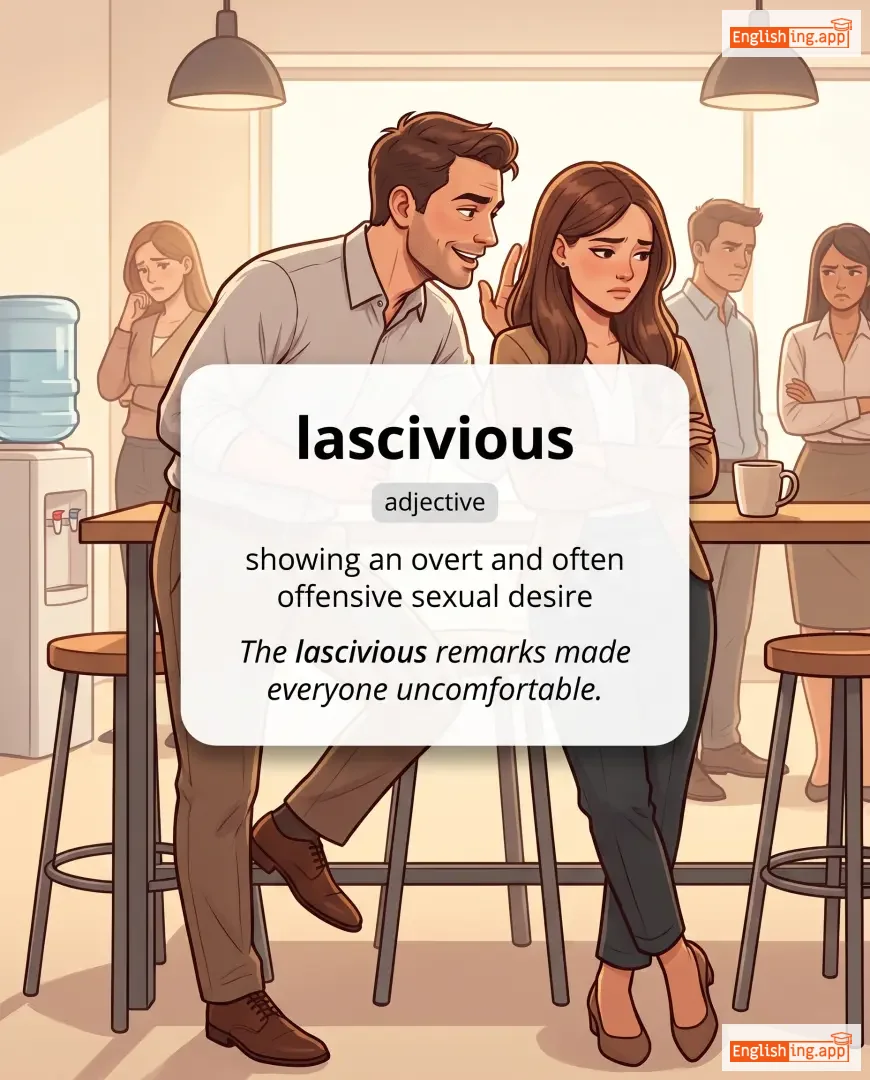
lascivious definition card — visual illustration of the meaning
adjective
/ləˈsɪviəs/
কামুক (kamuk)

showing an overt and often offensive sexual desire

"The lascivious remarks made everyone uncomfortable."

"কামুক মন্তব্য সবাইকে অস্বস্তিকর করেছিল।" (kamuk montobbo sobaike asostikor korechilo.)
noun
/ˈleɪzər/
লেজার (lejar)

a device that emits a concentrated beam of light

"The doctor used a laser to perform eye surgery."

"ডাক্তার চোখের অপারেশনের জন্য একটি লেজার ব্যবহার করেছিলেন।" (Daktar chokher operations er jonno ekti lejar byabohar korechhilen.)
verb
/læʃ/
চাবুক মারা/বেঁধে ফেলা (chabuk mara/bendhe fela)

to strike with a whip or to fasten tightly

"The sailor lashed the rope to the mast."

"নাবিক দড়িটিকে মাস্তুলে শক্ত করে বেঁধে ফেলল।" (nabik doritike mastule shokto kore bendhe fello.)
noun
/ˈlæsi/
ছোট মেয়ে (chhoto meye)

a young girl (informal, mainly Scottish)

"The old man greeted the little lassie warmly."

"বৃদ্ধ লোকটি ছোট মেয়েটিকে আন্তরিকভাবে স্বাগত জানাল।" (briddho lokti chhoto meyetike antorikvabe swagoto janalo.)
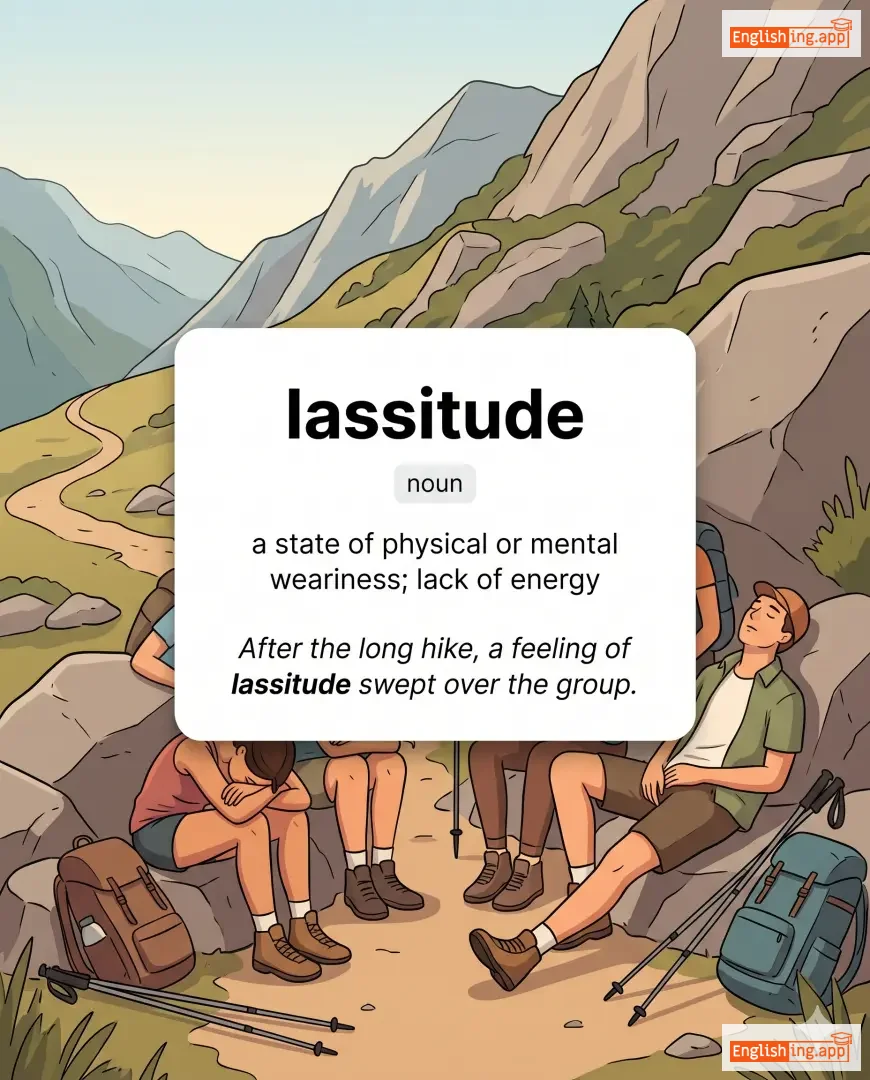
lassitude definition card — visual illustration of the meaning
noun
/ˈlæsɪtjuːd/
অবসাদ (obsad)

a state of physical or mental weariness; lack of energy

"After the long hike, a feeling of lassitude swept over the group."

"দীর্ঘ হাঁটার পর, অবসাদের অনুভূতি দলটির উপর ছড়িয়ে পড়েছিল।" (dirgho hatar por, obsader onubhuti doltir upor chhoriye porichhilo.)
noun/verb
/læˈsuː/
ফাঁসের দড়ি (fash-er dori)

a rope with a loop used to catch animals; to catch with such a rope

"The cowboy lassoed the horse quickly."

"কাউবয় দ্রুত ঘোড়াটিকে ফাঁসের দড়ি দিয়ে ধরল।" (Cowboy druto ghoratike fash-er dori diye dhorlo.)
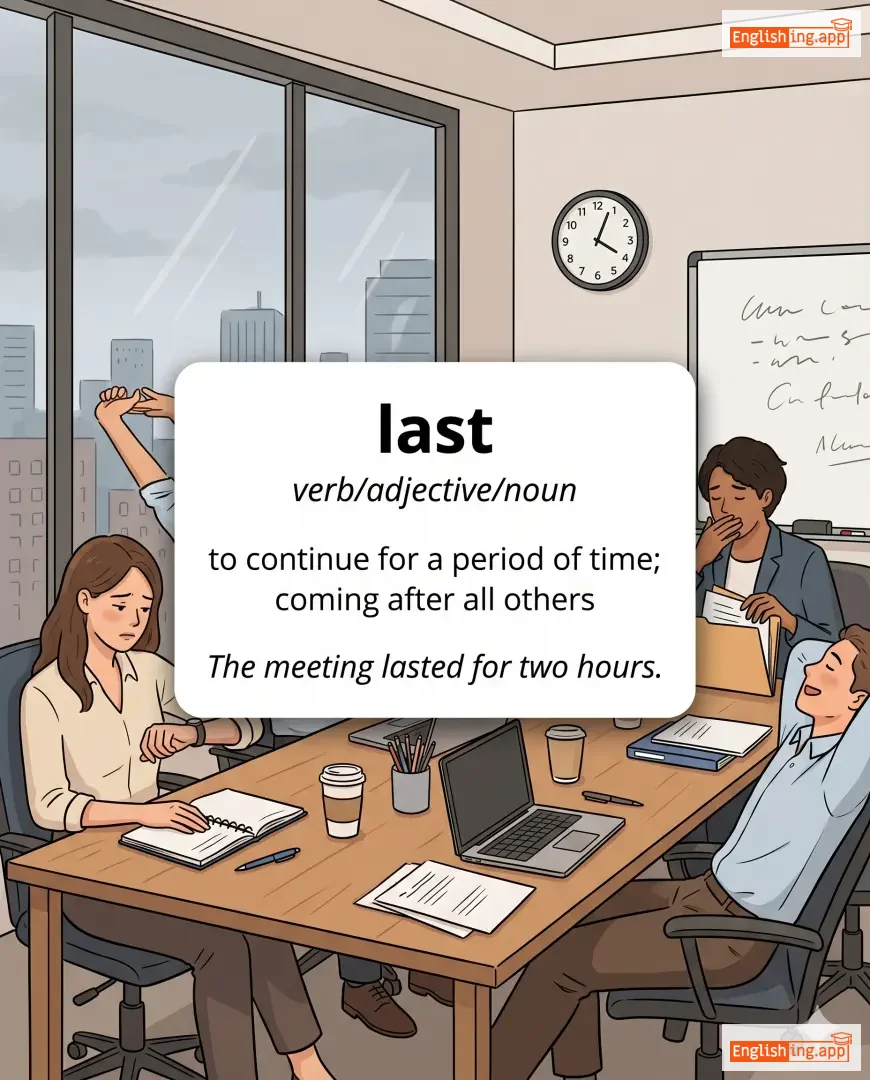
last definition card — visual illustration of the meaning
verb/adjective/noun
/læst/
স্থায়ী হওয়া / শেষ (sthai howa / shesh)

to continue for a period of time; coming after all others

"The meeting lasted for two hours."

"মিটিংটি দুই ঘণ্টা স্থায়ী হয়েছিল।" (Meetingti dui ghonta sthai hoyechhilo.)
adjective
/ˈlæstɪŋ/
স্থায়ী; টেকসই; (sthayi)

enduring for a long time; permanent; durable

"Their friendship had a lasting impact on both their lives."

"তাদের বন্ধুত্ব তাদের উভয়ের জীবনে স্থায়ী প্রভাব ফেলেছিল।" (Tader bondhutto tader ubhoyer jibone sthayi probhab felechilo.)
verb
/lætʃ/
কপাট লাগানো/বন্ধ করা (kopat lagano/bondho kora)

to fasten or close something with a latch

"She latched the door before leaving the house."

"সে বাড়ি ছাড়ার আগে দরজাটি কপাট দিয়ে বন্ধ করল।" (se bari charar age dorjati kopat diye bondho korlo.)
adjective/adverb
/leɪt/
দেরি (deri)

arriving, happening, or done after the expected time

"He arrived late to the meeting."

"সে মিটিংয়ে দেরিতে এসেছিল।" (Se meetinge derite esechilo.)
adverb
/ˈleɪtli/
সম্প্রতি (sompriti)

recently; during a period of time not long ago

"I haven’t seen her much lately."

"আমি সম্প্রতি তাকে খুব একটা দেখি না।" (Ami sompriti take khub ekta dekhi na.)
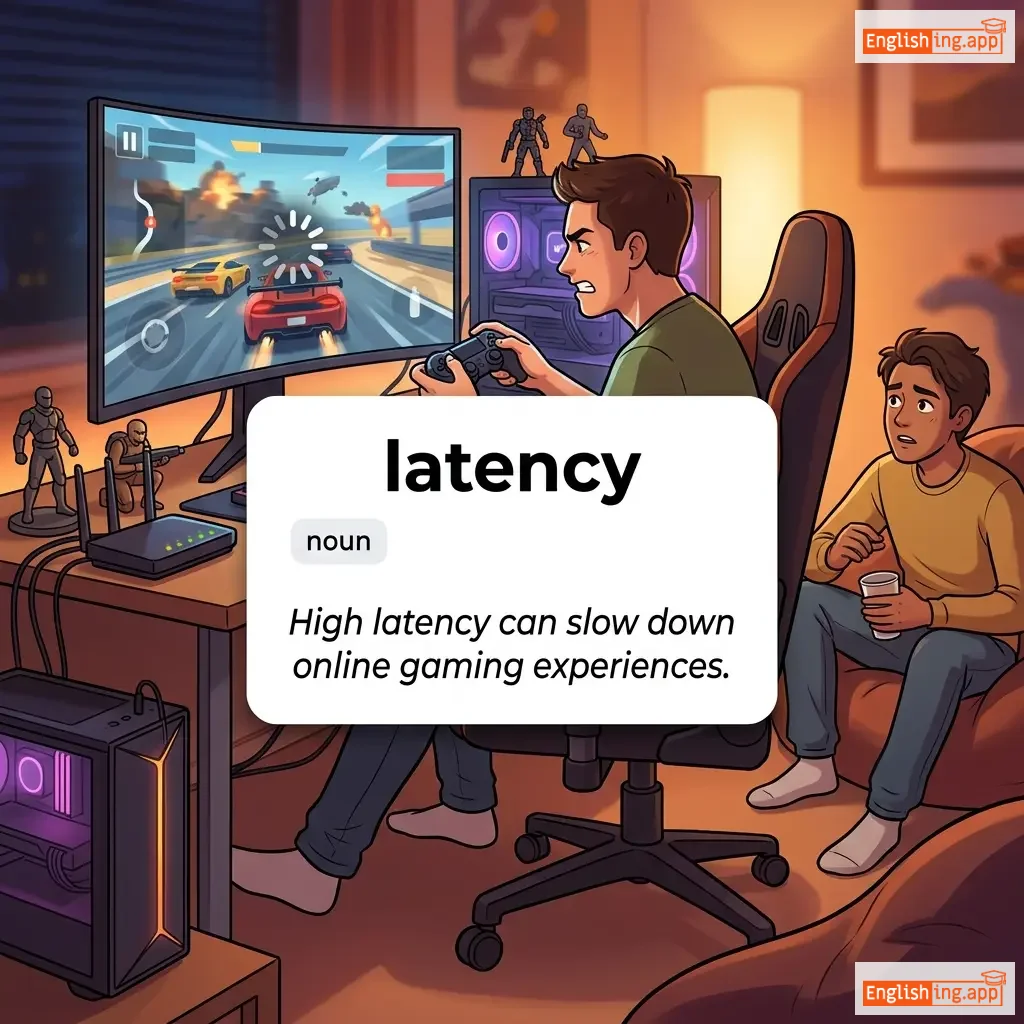
latency definition card — visual illustration of the meaning
noun
/ˈleɪtənsi/
বিলম্ব (bilomb)

The delay before a transfer of data begins following an instruction for its transfer.

"High latency can slow down online gaming experiences."

"উচ্চ লেটেন্সি অনলাইন গেমিং অভিজ্ঞতাকে ধীর করতে পারে।" (uccho letency online gaming obhiggokatake dhir korte pare.)
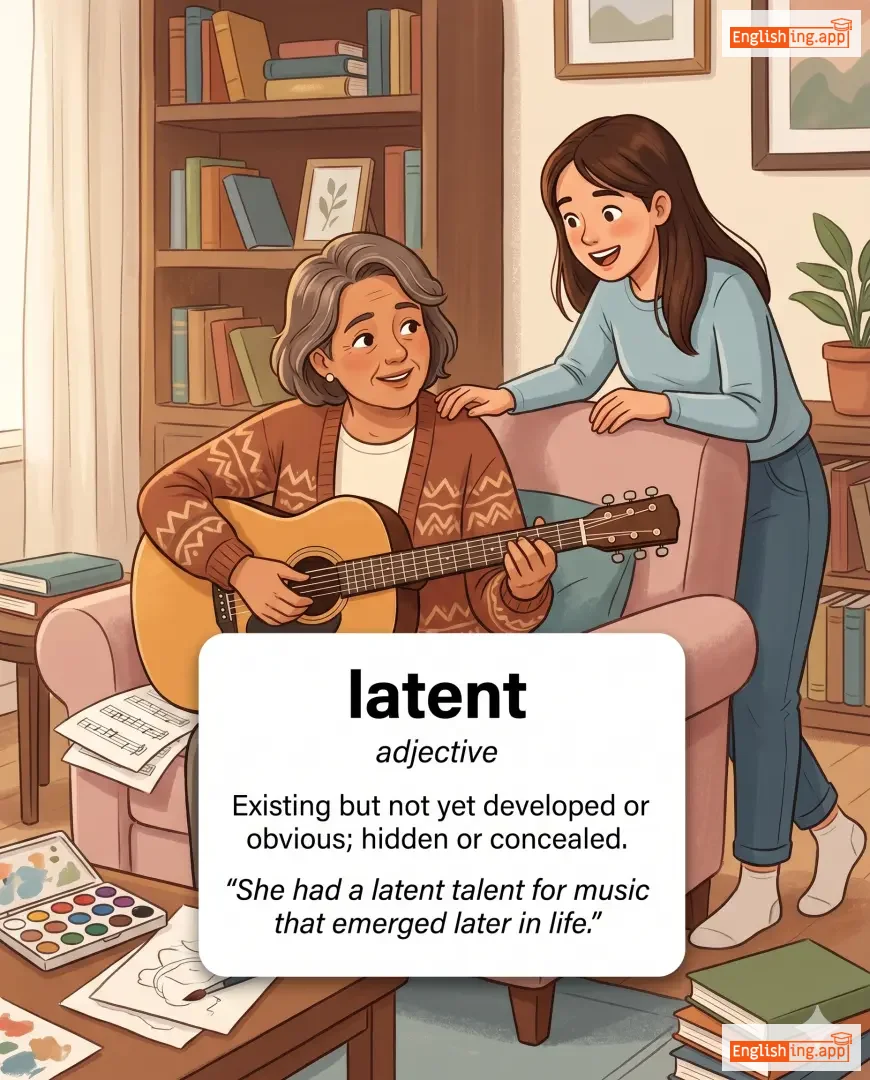
latent definition card — visual illustration of the meaning
adjective
/ˈleɪtənt/
গোপন (gopon)

Existing but not yet developed or obvious; hidden or concealed.

"She had a latent talent for music that emerged later in life."

"তার জীবনে পরে সংগীতের প্রতি তার গোপন প্রতিভা প্রকাশিত হয়েছিল।" (tar jibone pore sangeeter proti tar gopon protibha prokashito hoyechilo.)
adverb
/ˈleɪtər/
পরে (pore)

At a time subsequent to a reference time; afterwards.

"We will discuss the details later."

"আমরা পরে বিস্তারিত নিয়ে আলোচনা করব।" (amra pore bistrito niye alochona korbo.)
adjective
/ˈlætərəl/
পাশের (pasher)

Relating to the side or sideways movement.

"The football player made a quick lateral pass."

"ফুটবল খেলোয়াড় একটি দ্রুত পাশের পাস করল।" (futbol khelowar ekti druto pasher pass korlo.)
adjective
/ˈleɪtɪst/
সর্বশেষ (sorbosesh)

most recent in time; newest available

"She shared the latest updates with the team."

"সে দলের সাথে সর্বশেষ আপডেটগুলো শেয়ার করেছে।" (se doler sathe sorbosesh apdetgulo sheyar koreche)
noun
/leɪð/
লেদ যন্ত্র (led jontra)

A machine for shaping wood, metal, or other material by rotating it against a cutting tool.

"The carpenter used a lathe to shape the wooden bowl."

"কার্পেন্টার কাঠের বাটি আকার দিতে লেদ ব্যবহার করেছিল।" (karpenter kather bati akar dite led byabohar korechilo.)
noun/adjective
/ˈlætɪn/
ল্যাটিন (latin)

the language of ancient Rome; relating to Latin culture or language

"Many English words are derived from Latin."

"অনেক ইংরেজি শব্দ ল্যাটিন থেকে এসেছে।" (Onek ingreji shobdo latin theke esheche.)