ভোকাবুলারিসমূহ

ইংরেজি শব্দের বাংলা অর্থ | English to Bangla Word Meaning Dictionary

noun
/lɒs/
ক্ষতি (khoti)

The state of no longer having something or someone; the harm resulting from losing.

"The company suffered a huge financial loss last year."

"কোম্পানিটি গত বছর বিশাল আর্থিক ক্ষতির সম্মুখীন হয়েছিল।" (Companiti got bochor bishal arthik khotir sommukhin hoyechilo.)
verb/adjective
/lɒst/
হারানো (harano)

Unable to find the way; no longer in possession of something.

"He lost his keys and couldn’t enter the house."

"সে তার চাবি হারিয়ে ফেলেছিল এবং ঘরে প্রবেশ করতে পারেনি।" (Se tar chabi hariye phelechilo ebong ghore probesh korte pareni.)
noun
/lɒt/
অনেক (onek)

A large number or amount; a group or portion.

"She bought a lot of books at the fair."

"সে মেলায় অনেক বই কিনেছিল।" (Se melay onek boi kinechhilo.)
pronoun/noun
/lɒts/
অনেক (onek)

A large number or amount of something.

"She has lots of friends in the city."

"তার শহরে অনেক বন্ধু আছে।" (Tar shohore onek bondhu ache.)
noun
/ˈlɒtəri/
লটারি (lotari)

A means of raising money by selling numbered tickets and giving prizes to the holders of numbers drawn at random.

"He won a car in the national lottery."

"সে জাতীয় লটারিতে একটি গাড়ি জিতেছিল।" (Se jatio lotarite ekti gari jitechhilo.)
noun
/ˈloʊ.təs/
পদ্ম (podmo)

a large water flower that floats on the surface of ponds and lakes

"The lotus flower blooms beautifully in the quiet pond."

"পদ্ম ফুল শান্ত পুকুরে সুন্দরভাবে ফোটে।" (podmo ful shanto pukure shundobhabe fote)
adjective/adverb
/laʊd/
জোরে (jore)

Producing or capable of producing much noise.

"The music was too loud to concentrate."

"সঙ্গীত এত জোরে বাজছিল যে মনোযোগ দেওয়া যাচ্ছিল না।" (Shongit eto jore bajchhilo je monojog deowa jachhilo na.)
adverb
/ˈlaʊdli/
জোরে (jore)

in a way that produces a lot of sound; with a high volume

"He spoke loudly so everyone in the room could hear him."

"সবাই শুনতে পারে বলে সে জোরে কথা বলল।" (shobai shunte pare bole se jore kotha bollo)
noun
/lɒx/ or /lɒk/
হ্রদ (hrod)

An Irish or Scottish word for a lake or sea inlet.

"The fishermen lived by the lough for generations."

"জেলেরা প্রজন্মের পর প্রজন্ম ধরে হ্রদের ধারে বাস করেছিল।" (Jelera projonmer por projonmo dhore hroder dhare bash korechhilo.)
noun, verb
/laʊndʒ/
বিশ্রামকক্ষ / অলসভাবে বসা (bishramkakkho / olosh vabe bosa)

A public room for relaxing; or to sit, lie, or stand in a relaxed way.

"They lounged on the sofa after dinner."

"তারা রাতের খাবারের পর সোফায় অলসভাবে বসেছিল।" (Tara rater khabarer por sofay olosh vabe bosechhilo.)
noun
/laʊs/
উকুন (ukun)

A small parasitic insect that lives on the skin of mammals and birds; also used as an insult for a contemptible person.

"The child had to be treated for head louse infestation."

"শিশুকে মাথায় উকুনের কারণে চিকিৎসা করতে হয়েছিল।" (Shishuke mathay ukuner karone chikitsa korte hoyechilo.)
adjective
/ˈlaʊzi/
খারাপ (kharap)

of very poor quality; bad or unpleasant

"He felt lousy after catching the flu."

"ফ্লু হওয়ার পর সে খুব খারাপ লাগছিল।" (Flu howar por se khub kharap lagchilo.)
noun
/laʊt/
অসভ্য ব্যক্তি (oshobho byakti)

An uncouth or aggressive man or boy.

"The drunken lout caused a scene at the party."

"মদ্যপ অসভ্য ব্যক্তি পার্টিতে গোলমাল করেছিল।" (Modyopo oshobho byakti partite golmal korechilo.)
adjective
/ˈlaʊtɪʃ/
অসভ্য (oshobho)

Clumsy, rude, or aggressive in behavior.

"His loutish remarks offended everyone at the meeting."

"তার অসভ্য মন্তব্য সভায় সবাইকে বিরক্ত করেছিল।" (Tar oshobho montobbo sobhaye sobaike birokt korechilo.)
adjective
/ˈlʌvəbəl/
ভালোবাসার যোগ্য (bhalobashar jogyo)

Inspiring or deserving love or affection.

"The puppy was so lovable that everyone wanted to hold it."

"কুকুরছানাটি এত সুন্দর ছিল যে সবাই তাকে কোলে নিতে চেয়েছিল।" (Kukurchanati eto sundor chilo je sobai take kole nite cheyechilo.)
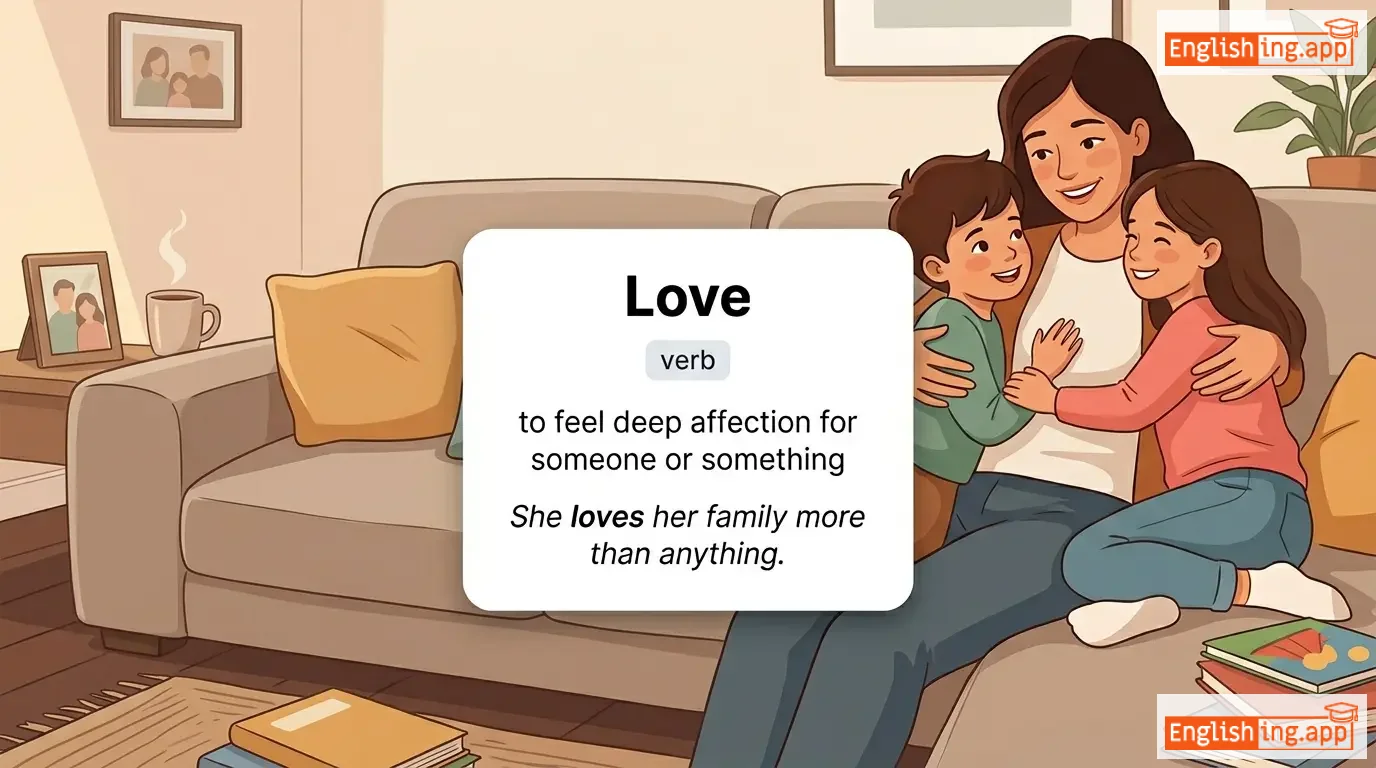
Love definition card — visual illustration of the meaning
verb
/lʌv/
ভালবাসা (bhalobasha)

to feel deep affection for someone or something

"She loves her family more than anything."

"সে তার পরিবারকে সবকিছুর চেয়ে বেশি ভালোবাসে।" (Se tar poribarke sobkichur cheye beshi bhalobashe.)
adjective
/ˈlʌvəbl̩/
ভালোবাসার যোগ্য (bhalobasar joggo)

easy to love; endearing or charming

"The puppy was so loveable that everyone wanted to hold it."

"কুকুরছানাটি এতটাই ভালোবাসার যোগ্য ছিল যে সবাই এটিকে কোলে নিতে চেয়েছিল।" (Kukurchanati ettai bhalobasar joggo chilo je sobai etike kole nite cheyechilo.)
adjective
/ˈlʌvli/
সুন্দর (shundor)

Delightful or very pleasing; beautiful.

"It was a lovely evening by the beach."

"এটি ছিল সমুদ্রতীরে একটি সুন্দর সন্ধ্যা।" (Eti chhilo somudrotire ekti shundor sondhya.)
noun
/ˈlʌvər/
প্রেমিক (premik)

a person who is in a romantic relationship or has strong affection for someone

"She met her lover at the café every evening."

"সে প্রতিদিন সন্ধ্যায় ক্যাফেতে তার প্রেমিকের সঙ্গে দেখা করত।" (Se protidin sondhaye cafete tar premiker songe dekha korto.)
adjective
/ˈlʌv.ɪŋ/
দয়ালুক; সহানুভূতিপূর্ণ; প্রেমপূর্ণ; (dayaluk)

affectionate; caring; showing love and warmth

"She is a loving mother who cares deeply for her children."

"তিনি একজন স্নেহময়ী মা যিনি তার সন্তানদের গভীরভাবে ভালোবাসেন।" (tini ekjon snehomoyee ma jini tar santander gobhirbhabe bhalobason.)
adjective
/loʊ/
নিম্ন (nimno)

Small in amount, degree, or position; not high.

"The river is at its lowest level in years."

"নদী বহু বছরের মধ্যে সবচেয়ে নিচু স্তরে রয়েছে।" (Nodi bohu bochorer modhye sobcheye nichu store royeche.)
adjective
/ˌloʊ ˈspɪrɪtɪd/
মনমরা (monmora)

feeling sad, depressed, or lacking enthusiasm

"He felt low-spirited after hearing the bad news."

"খারাপ খবর শোনার পর সে মনমরা হয়ে গেল।" (Kharap khobor shonar por se monmora hoye gelo.)
verb
/ˈloʊər/
কমানো (komano)

to move something to a lower position or to reduce

"The company decided to lower the prices."

"কোম্পানিটি দাম কমানোর সিদ্ধান্ত নিল।" (Companyti dam komanor siddhanto nilo.)
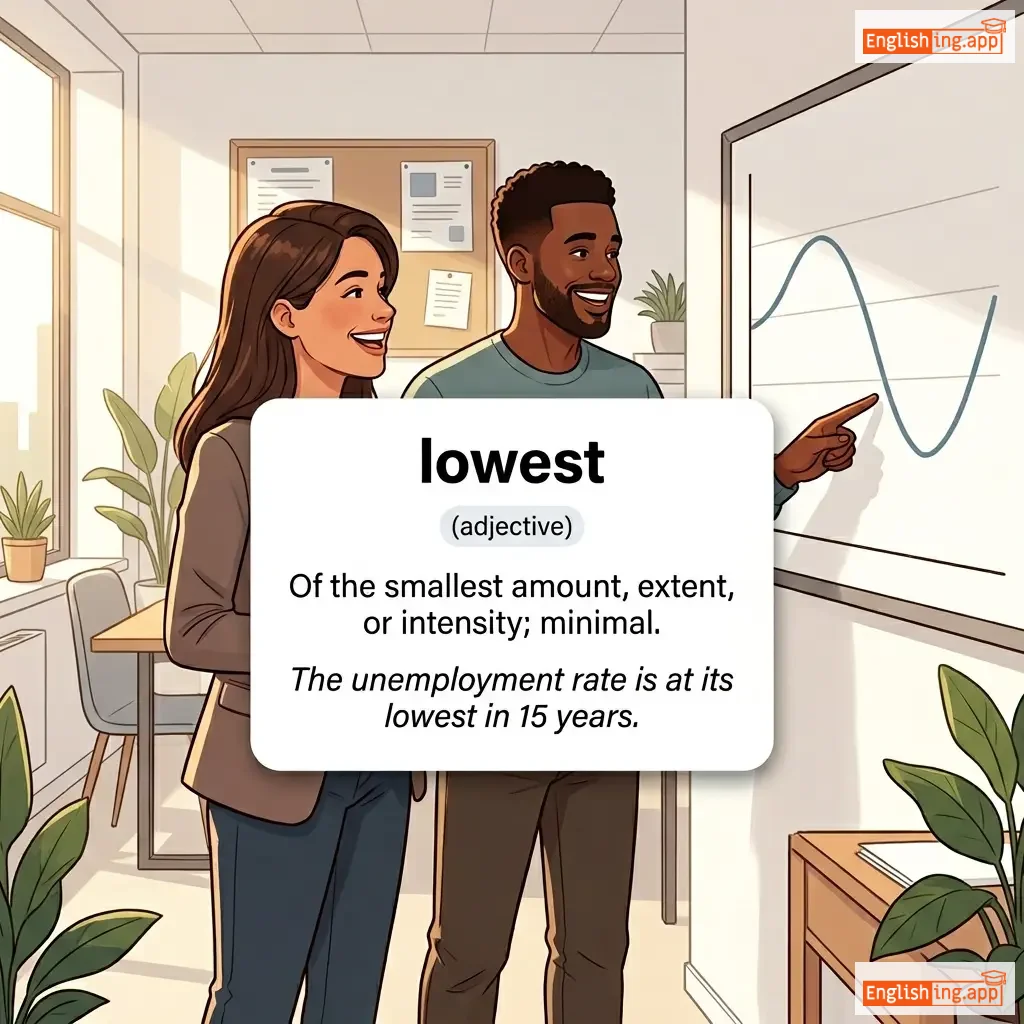
lowest definition card — visual illustration of the meaning
adjective
/ˈloʊɪst/
সর্বনিম্ন (shorbônimno)

Of the smallest amount, extent, or intensity; minimal.

"The unemployment rate is at its lowest in 15 years."

"বেকারত্বের হার ১৫ বছরের মধ্যে সর্বনিম্ন।" (Bekarotber har 15 bochorer modhye shorbônimno.)
adjective
/ˈloʊli/
নম্র (nomro)

humble in status, position, or manner

"She rose from a lowly position to become the company's CEO."

"সে একটি সাধারণ পদ থেকে উঠে কোম্পানির সিইও হয়েছে।" (Se ekti shadharon pod theke uthe kompanir CEO hoyeche.)
adjective
/ˈlɔɪəl/
বিশ্বস্ত, অনুগত (bishwasto, onugoto)

showing firm and constant support or allegiance to someone or something

"She remained loyal to her friends even in hard times."

"সে কঠিন সময়েও তার বন্ধুদের প্রতি বিশ্বস্ত ছিল।" (Se kothin somoyeo tar bondhuder proti bishwasto chhilo.)
noun
/ˈlɔɪəlti/
আনুগত্য (anugotto)

a strong feeling of support or allegiance

"His loyalty to the company earned him great respect."

"কোম্পানির প্রতি তার আনুগত্য তাকে অনেক সম্মান এনে দিয়েছিল।" (Companyr proti tar anugotto take onek shomman ane diyechhilo.)
verb
/ˈluːbrɪkeɪt/
তেল লাগানো (tel lagano)

to apply oil or grease to reduce friction between surfaces

"The mechanic lubricated the car engine parts."

"মেকানিক গাড়ির ইঞ্জিনের অংশে তেল লাগিয়েছিল।" (Mekanik garir injiner angshe tel lagiyechhilo.)
lubrication definition card — visual illustration of the meaning
noun
ˌluː.brɪˈkeɪ.ʃən
মসৃণতা (mosrinota)

The application of a substance such as oil or grease to reduce friction between moving parts.

"Lubrication reduces wear and tear in machines."

"লুব্রিকেশন যন্ত্রের ঘর্ষণ কমায় এবং ক্ষয় প্রতিরোধ করে।" (Lubrication jontrer ghorsshon komay ebong kkhoy protirodh kore.)
noun
/luːˈbrɪsɪti/
পিচ্ছিলতা (pichhilota)

the quality of being slippery or smooth; sometimes also refers to lewdness

"The lubricity of the surface made it difficult to walk on."

"পৃষ্ঠের পিচ্ছিলতা হাঁটা কঠিন করে তুলেছিল।" (Prishtir pichhilota hanta kothin kore tulchhilo.)
adjective
/ˈluːsənt/
উজ্জ্বল (ujjol)

shining or glowing with light

"The lucent stars brightened the night sky."

"উজ্জ্বল তারাগুলো রাতের আকাশকে আলোকিত করেছিল।" (Ujjol taragulo rater akashke alokito korechhilo.)
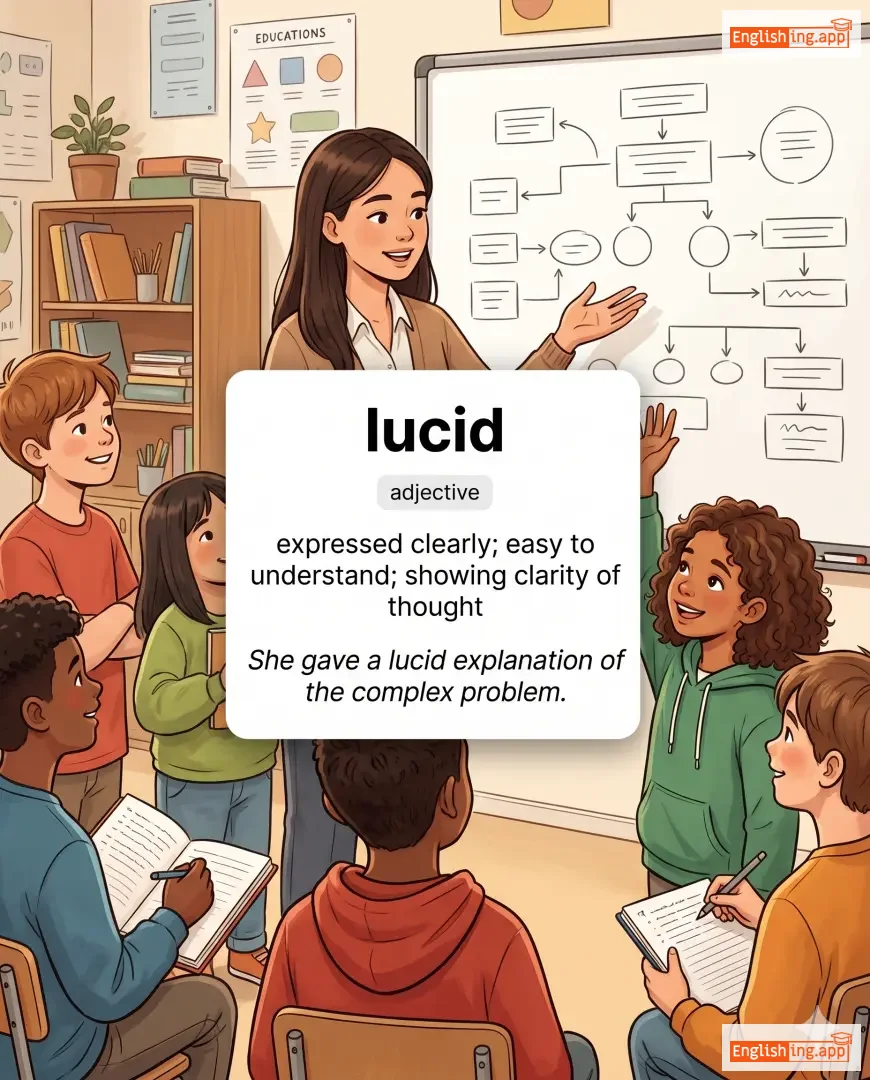
lucid definition card — visual illustration of the meaning
adjective
/ˈluːsɪd/
পরিষ্কার (porishkar)

expressed clearly; easy to understand; showing clarity of thought

"She gave a lucid explanation of the complex problem."

"সে জটিল সমস্যার একটি পরিষ্কার ব্যাখ্যা দিয়েছিল।" (Se jatil somossar ekti porishkar byakkha diyechilo.)
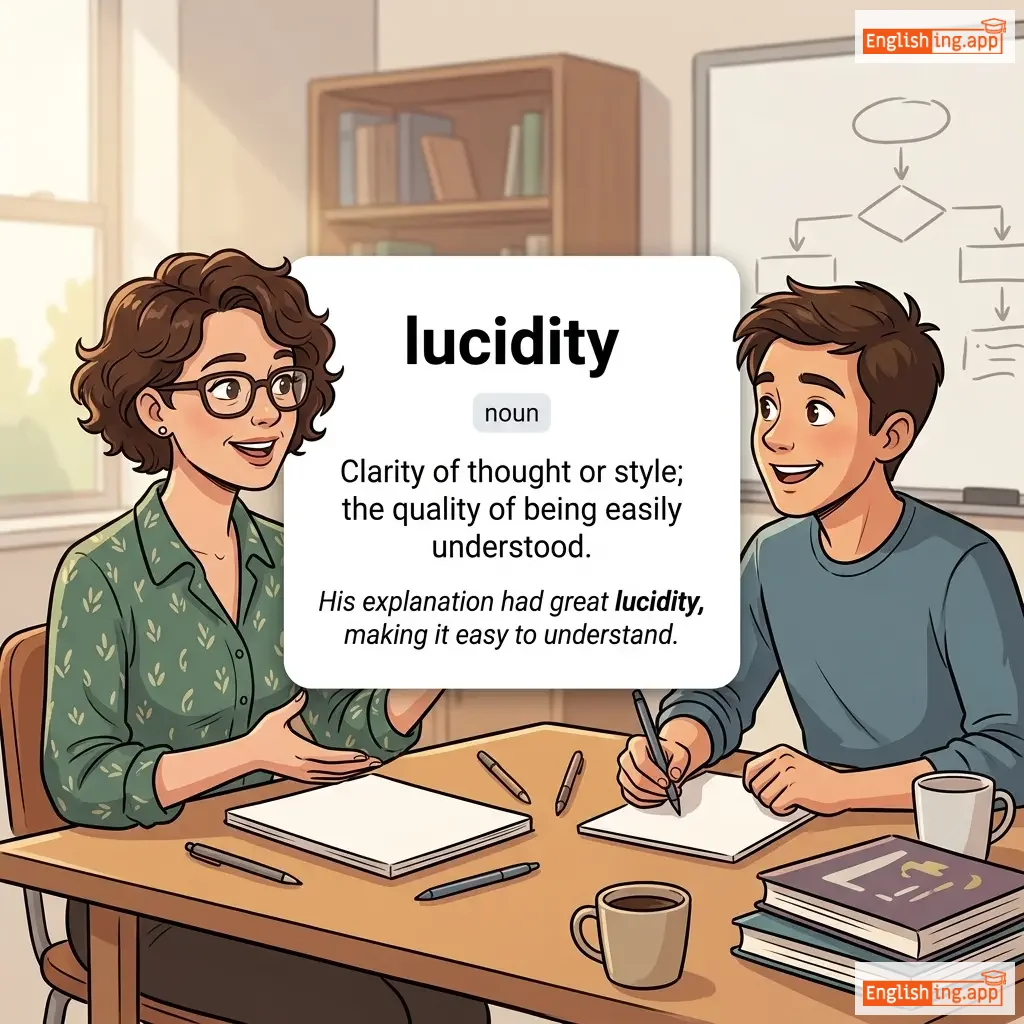
lucidity definition card — visual illustration of the meaning
noun
/luːˈsɪd.ə.ti/
স্পষ্টতা বা বোধগম্যতা (sphoshttota ba bodhgomyota)

Clarity of thought or style; the quality of being easily understood.

"His explanation had great lucidity, making it easy to understand."

"তার ব্যাখ্যায় দুর্দান্ত স্পষ্টতা ছিল, যা বুঝতে সহজ করে তুলেছে।" (Tar byakhyay durdanto sphoshttota chhilo, ja bujhte sohoj kore tulche.)
noun
/lʌk/
ভাগ্য (bhaggo)

success or failure apparently brought by chance rather than through one’s actions

"He had the luck to find a good job quickly."

"সে দ্রুত একটি ভালো চাকরি পাওয়ার সৌভাগ্য অর্জন করেছিল।" (Se druto ekti bhalo chakri pawar soubhaggo orjon korechilo.)
adjective
/ˈlʌki/
সৌভাগ্যবান (soubhaggoban)

having good fortune or favorable circumstances

"She felt lucky to have such supportive friends."

"সে এমন সহায়ক বন্ধু পেয়ে নিজেকে সৌভাগ্যবান মনে করেছিল।" (Se emon shohayok bondhu peye nije ke soubhaggoban mone korechilo.)
lucrative definition card — visual illustration of the meaning
adjective
/ˈluːkrətɪv/
লাভজনক (labhjonok)

producing a great deal of profit

"He left his job for a more lucrative business opportunity."

"সে আরও লাভজনক ব্যবসায়িক সুযোগের জন্য চাকরি ছেড়ে দিল।" (Se aro labhjonok byabshaik sujoger jonno chakri chere dilo.)
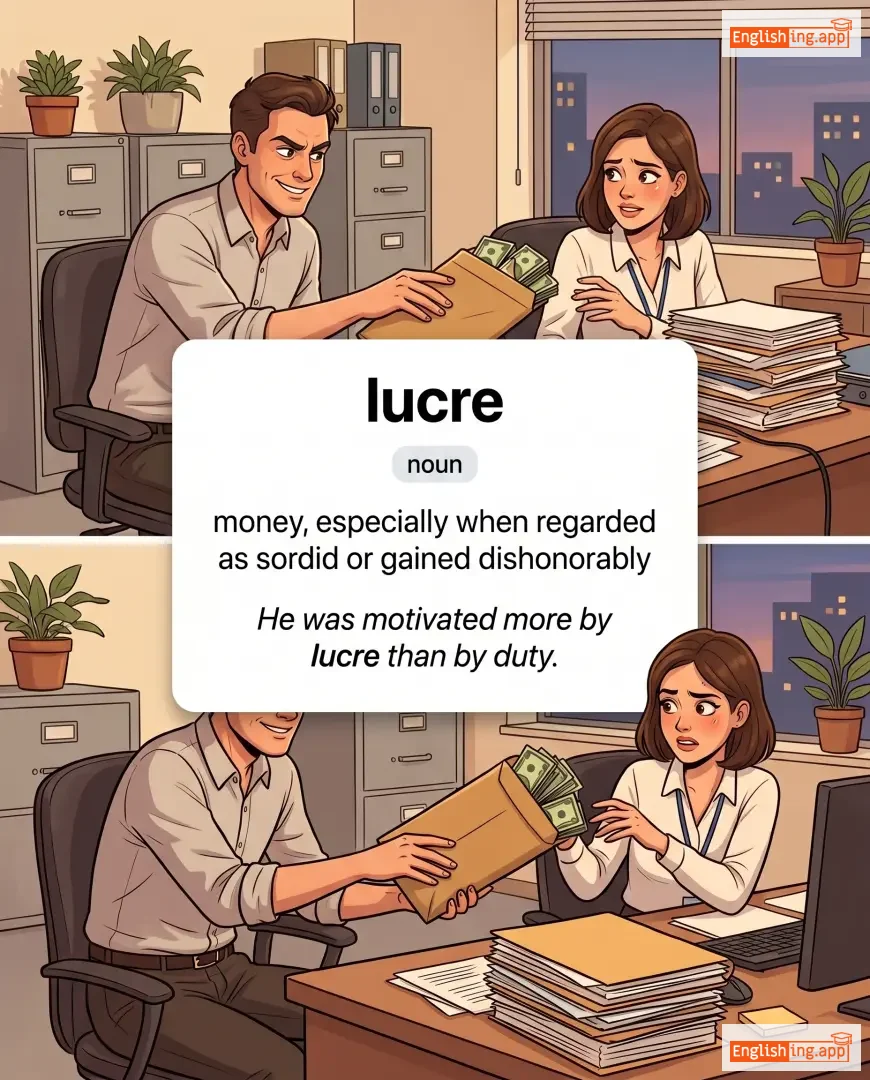
lucre definition card — visual illustration of the meaning
noun
/ˈluːkər/
অপবিত্র অর্থ (opobitro ortho)

money, especially when regarded as sordid or gained dishonorably

"He was motivated more by lucre than by duty."

"সে কর্তব্যের চেয়ে অর্থ দ্বারা বেশি অনুপ্রাণিত হয়েছিল।" (Se kortobber cheye ortho dara beshi onupranito hoyechilo.)
noun
/ˌluːkjʊˈbreɪʃən/
রাত্রিকালীন অধ্যয়ন (ratri kalin oddhoyon)

study or meditation, especially at night

"His novel was the result of long lucubration."

"তার উপন্যাস দীর্ঘ রাত্রিকালীন অধ্যয়নের ফলাফল ছিল।" (Tar uponnash dirgho ratri kalin oddhoyoner folafol chilo.)
adjective
/ˈluːdɪkrəs/
হাস্যকর (hashshokor)

so foolish, unreasonable, or out of place as to be amusing

"It is ludicrous to think the Earth is flat."

"পৃথিবী সমতল এই চিন্তাটি একেবারেই হাস্যকর।" (Prithibi somotol ei chintati akebarei hashshokor.)
verb
/lʌɡ/
ভারী বস্তু টেনে বা কষ্ট করে বহন করা (bhari bostu tene ba koshto kore bohon kora)

to carry or drag something heavy or cumbersome with effort

"He had to lug the suitcase up three flights of stairs."

"তাকে তিনতলা সিঁড়ি বেয়ে স্যুটকেসটি টেনে তুলতে হয়েছিল।" (Take tintola sindri beye suitcase ti tene tulte hoyechhilo.)
noun
/ˈlʌɡ.ɪdʒ/
সামগ্রী; লাগেজ; (lagej)

suitcases or other bags in which to pack personal belongings for traveling

"Please check your luggage at the airport counter."

"অনুগ্রহ করে এয়ারপোর্ট কাউন্টারে আপনার লাগেজ চেক করুন।" (onugroho kore airport counter e apnar lagej chek korun)
noun
/ˈlʌɡ.ɪdʒ væn/
যানবাহী গাড়ি (janbahi gari)

a vehicle designed for carrying luggage and cargo

"The luggage van carried all the passengers' suitcases."

"যানবাহী গাড়িটি সমস্ত যাত্রীদের স্যুটকেস বহন করল।" (janbahi garita shomosto jatridder suitcase bohan korlo)
adjective
/luːˈɡuːbriəs/
দুঃখপূর্ণ (dukkhopurno)

looking or sounding sad and dismal

"His lugubrious expression made everyone feel uneasy."

"তার বিমর্ষ অভিব্যক্তি সবাইকে অস্বস্তিতে ফেলেছিল।" (Tar bimosro obhibyakti shobaike asostite felyechhilo.)
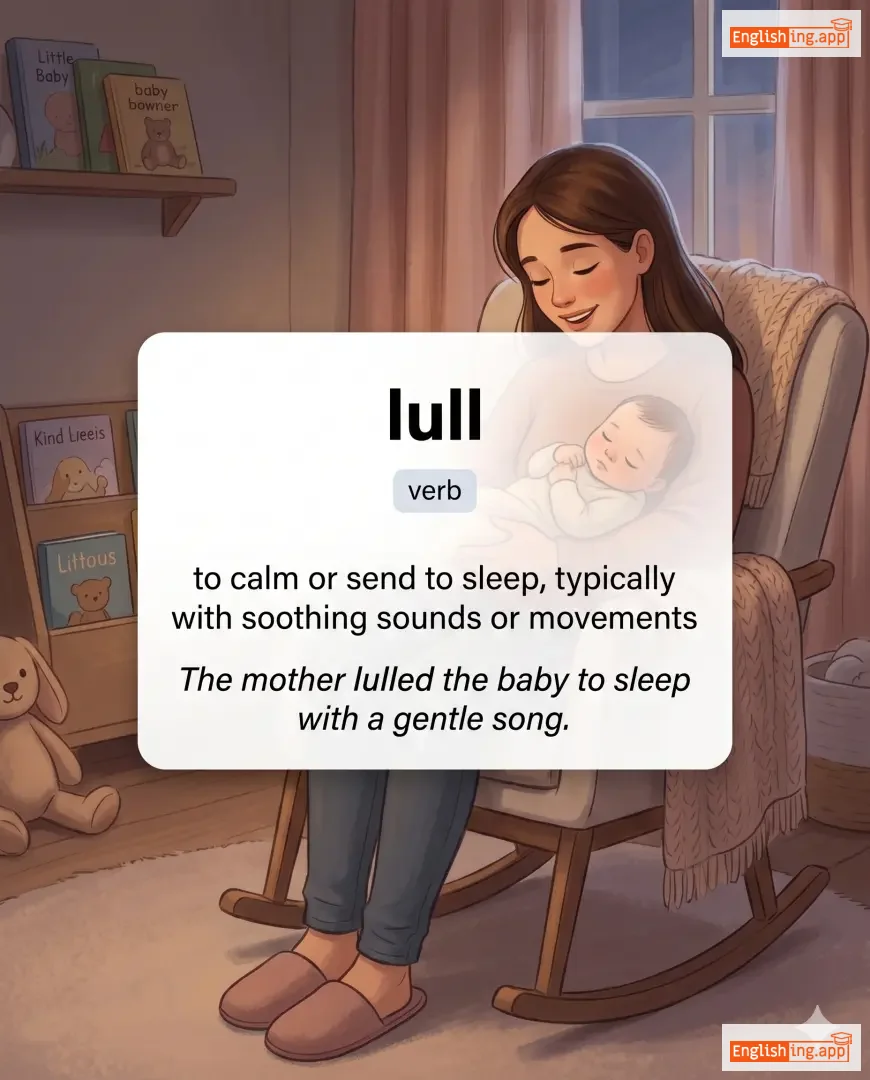
lull definition card — visual illustration of the meaning
verb
/lʌl/
ঘুম পাড়ানো (ghum parano)

to calm or send to sleep, typically with soothing sounds or movements

"The mother lulled the baby to sleep with a gentle song."

"মা কোমল গান গেয়ে শিশুকে ঘুম পাড়ালেন।" (Ma komol gan geye shishuke ghum paralon.)
noun
/ˈlʌləˌbaɪ/
ঘুমপাড়ানি গান (ghumparani gan)

a soothing song sung to help a child fall asleep

"She sang a lullaby to her baby every night."

"সে প্রতিদিন রাতে তার শিশুকে ঘুমপাড়ানি গান গাইত।" (Se protidin rate tar shishuke ghumparani gan gaito.)
verb
/ˈlʌmbər/
ভারীভাবে হাঁটা (bharibhabe hata)

to move in a slow, heavy, awkward way

"The bear lumbered through the forest in search of food."

"ভালুকটি খাবারের সন্ধানে জঙ্গলের মধ্যে ধীরে ধীরে চলল।" (Bhalukti khabarer sondhane jongoler modhye dhire dhire choll.)
noun
/ˈluː.mən/
আলোকপ্রবাহের একক (alokprobaher ekok)

A unit of luminous flux, measuring the amount of visible light emitted by a source.

"The bulb produces 800 lumens of light."

"বাতিটি ৮০০ লুমেন আলো উৎপাদন করে।" (batiti 800 lumen alo utpadon kore.)
noun
/ˈluː.məˌnɛr.i/
বিখ্যাত ব্যক্তি (bikhyato bekti)

A person who inspires or influences others, especially in a particular field.

"He is considered a luminary in the world of science."

"তিনি বিজ্ঞান জগতে একজন luminary হিসেবে বিবেচিত।" (tini biggan jogote ekjon luminary hisebe bibechito.)
noun
/ˌluː.mɪˈnɛs.əns/
আলোকোজ্জ্বলতা (alokojjolota)

The emission of light by a substance not resulting from heat; a type of cold light.

"The luminescence of the fireflies lit up the forest."

"জোনাকির luminescence বনকে আলোকিত করেছিল।" (jonakir luminescence bonke alokit korechilo.)
adjective
/ˌluː.mɪˈnɛs.ənt/
আলোকোজ্জ্বল (alokojjol)

Emitting light without heat, glowing softly.

"The luminescent watch dial was visible in the dark."

"লুমিনেসেন্ট ঘড়ির ডায়াল অন্ধকারে দৃশ্যমান ছিল।" (luminescent ghorir dial andhokare drishyoman chhilo.)