ভোকাবুলারিসমূহ

ইংরেজি শব্দের বাংলা অর্থ | English to Bangla Word Meaning Dictionary

adjective
/ˌɪɡ.nəˈmɪn.i.əs/
লজ্জাজনক (lojajonok)

Marked by shame, disgrace, or humiliation.

"The team suffered an ignominious defeat in the finals."

"ফাইনালে দলটি এক লজ্জাজনক পরাজয়ের সম্মুখীন হয়েছিল।" (Finale dalti ek lojajonok porajoyer sommukhino hoyechilo.)
noun
/ˈɪɡ.nəˌmɪn.i/
অপমান (opman)

Public shame, disgrace, or dishonor.

"He lived the rest of his life in ignominy after the scandal."

"কেলেঙ্কারির পর সে জীবনের বাকি সময় অপমানে কাটিয়েছিল।" (Kelenkarir por se jiboner baki somoy opmane katiyechilo.)
noun
/ˈɪɡnərəns/
অজ্ঞতা (ajnata)

lack of knowledge or awareness in general

"His ignorance about the subject was evident."

"তার এই বিষয়ে অজ্ঞতা স্পষ্ট ছিল।" (Tar ei bishoye ajnata sposhṭo chhilo.)
adjective
/ˈɪɡ.nər.ənt/
অজ্ঞ (oggo)

lacking knowledge, awareness, or education

"He made an ignorant comment about the culture."

"সে সংস্কৃতি সম্পর্কে একটি অজ্ঞ মন্তব্য করেছিল।" (Se songskriti somporke ekti oggo mormobbo korechilo.)
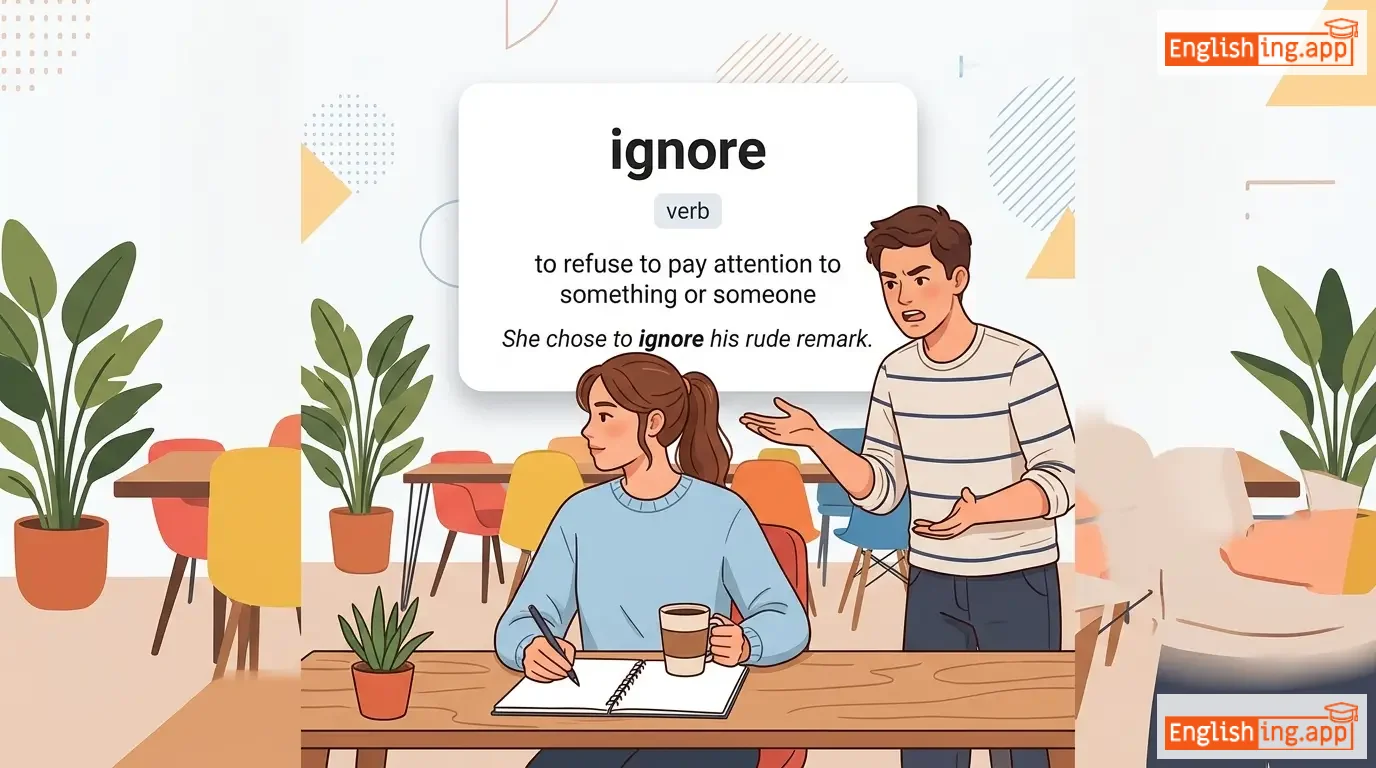
ignore definition card — visual illustration of the meaning
verb
/ɪɡˈnɔːr/
উপেক্ষা করা (upekkha kora)

to refuse to pay attention to something or someone

"She chose to ignore his rude remark."

"সে তার রূঢ় মন্তব্যকে উপেক্ষা করার সিদ্ধান্ত নেয়।" (Se tar rudh mormobbo ke upekkha korar siddhanto neya.)
noun
/ˈaɪ.kɒn/
ধর্মীয় প্রতীক (dhormiyo protik)

A religious image or symbol, especially in the Eastern Orthodox Church.

"The church displayed a beautifully painted ikon of the Virgin Mary."

"গির্জায় ভার্জিন মেরির একটি সুন্দর আঁকা আইকন প্রদর্শন করা হয়েছিল।" (Girjay Virgin Maryr ekti sundor anka ikon prodorshon kora hoyechhilo.)
noun
/ˈɪl.i.æd/
ইলিয়াড (Iliad)

An ancient Greek epic poem attributed to Homer, describing the events of the Trojan War.

"Students studied the Iliad to understand Greek mythology and heroism."

"ছাত্ররা গ্রিক পুরাণ এবং বীরত্ব বোঝার জন্য ইলিয়াড অধ্যয়ন করেছিল।" (Chatrara Greek puran ebong birotto bojhar jonno Iliad odhyayon korechhilo.)
adjective
/ɪl/
অসুস্থ (osustho)

Not in good health; sick or unwell.

"He has been feeling ill since yesterday."

"সে গতকাল থেকে অসুস্থ বোধ করছে।" (Se gotokal theke osustho bodh korche.)
adjective
/ˈɪl bred/
অসভ্যতাপূর্ণ; ভুলভদ্রতা; কুৎসাময়; (il-bred)

lacking good manners; rude; showing poor upbringing

"His ill-bred behavior shocked everyone at the dinner party."

"তার অসভ্য আচরণ ডিনার পার্টিতে সবাইকে হতবাক করেছিল।" (tar oshobho acharan dinner partite shobaike hotobak korechilo.)
adjective
/ˌɪlˈneɪ.tʃəd/
দুর্বিনীত (durbinito)

Having a bad or unpleasant character; unkind or malicious.

"He made an ill-natured remark about his colleague."

"সে তার সহকর্মী সম্পর্কে একটি দুর্বিনীত মন্তব্য করেছিল।" (Se tar shokormi somporke ekti durbinito mormobbo korechhilo.)
adjective
/ɪˈliː.ɡəl/
অবৈধ (obaidh)

Not allowed by law; unlawful.

"It is illegal to drive without a valid license."

"বৈধ লাইসেন্স ছাড়া গাড়ি চালানো অবৈধ।" (Boidho license chhara gari chalano obaidh.)
noun
/ɪˌledʒ.əˈbɪl.ə.ti/
দুর্বোধ্যতা; অপঠ্যতা; (durbodhyota, opothyota)

the quality of being impossible or difficult to read; unclear writing or print

"The doctor's handwriting was famous for its illegibility among the pharmacy staff."

"ডাক্তারের হাতের লেখা ফার্মেসির কর্মীদের মধ্যে তার অপঠনযোগ্যতার জন্য বিখ্যাত ছিল।" (daktarer hater lekha pharmacir kormider modhye tar opojonoggyotar jonno bikhyato chhilo.)
adjective
/ɪˈledʒ.ə.bəl/
অপাঠযোগ্য (opathjoggo)

Not clear enough to be read; unreadable.

"The doctor’s handwriting was almost illegible."

"ডাক্তারের হাতের লেখা প্রায় অপাঠযোগ্য ছিল।" (Daktar er hater lekha pray opathjoggo chhilo.)
adjective
/ˌɪlɪˈdʒɪtɪmət/
অবৈধ (obaidh)

Not authorized by law, rules, or standards; not recognized as valid.

"The court ruled the contract to be illegitimate."

"আদালত চুক্তিটিকে অবৈধ ঘোষণা করেছিল।" (Adalat chuktitike obaidh ghoshona korechilo.)
adjective
/ɪˈlɪbərəl/
অসহিষ্ণু (oshhohishnu)

Opposed to liberal principles; restricting freedom of thought or behavior.

"The government was criticized for its illiberal policies."

"সরকারকে তার অসহিষ্ণু নীতির জন্য সমালোচনা করা হয়েছিল।" (Sorkarke tar oshhohishnu nitiro jonno somalochona kora hoyechilo.)
noun
/ˌɪlɪbəˈræləti/
অসহিষ্ণুতা (oshhohishnota)

The quality of being illiberal; lack of tolerance or generosity.

"The illiberality of the new laws alarmed the citizens."

"নতুন আইনগুলির অসহিষ্ণুতা নাগরিকদের আতঙ্কিত করেছিল।" (Notun aingulir oshhohishnota nagorikder atonkito korechilo.)
adjective
/ɪˈlɪsɪt/
অবৈধ (obaidh)

Forbidden by law, rules, or custom.

"The police shut down the illicit drug operation."

"পুলিশ অবৈধ মাদক ব্যবসা বন্ধ করে দিয়েছিল।" (Police obaidh madok byabsha bondho kore diyechilo.)
adjective
/ɪˈlɪmɪtəbl/
অসীম (oshim)

Without limits or bounds.

"The universe is often described as illimitable."

"মহাবিশ্বকে প্রায়ই অসীম বলা হয়।" (Mohabishwoke prayoi oshim bola hoy.)
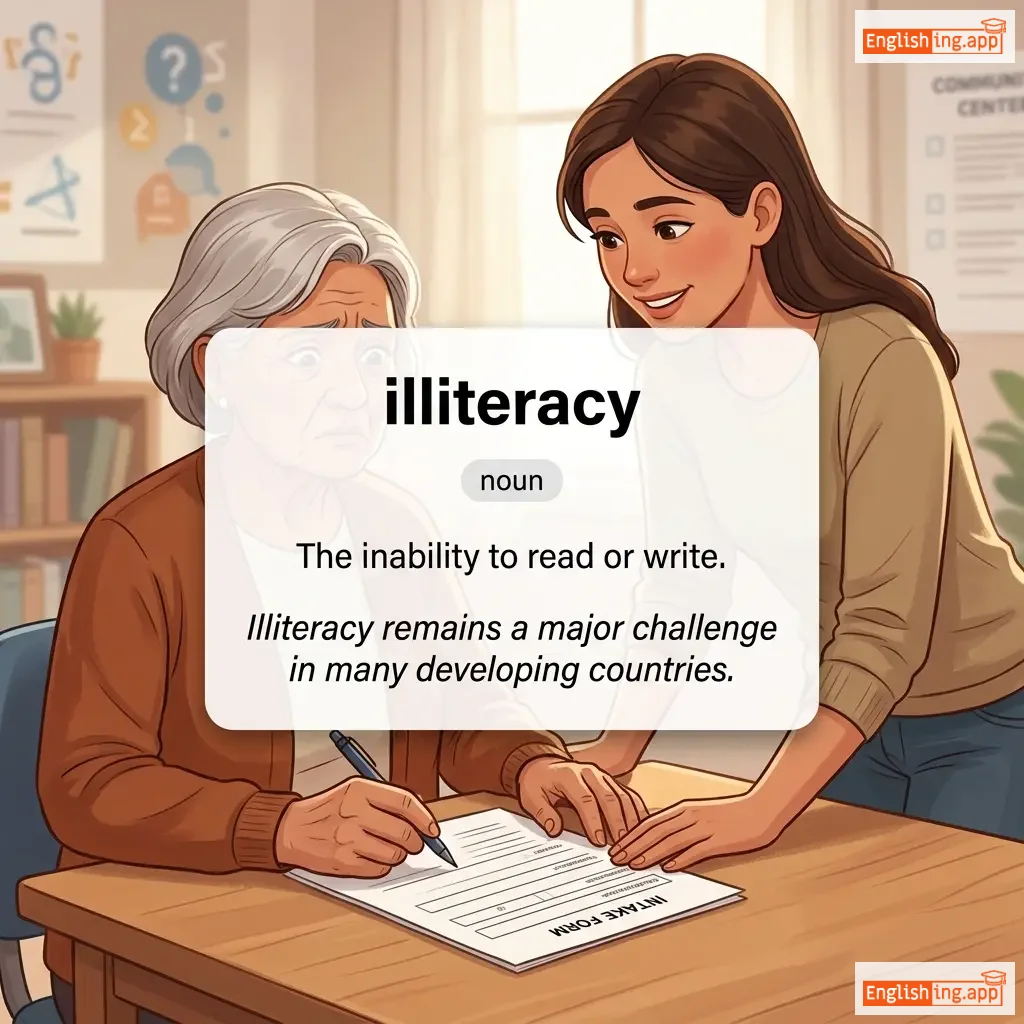
illiteracy definition card — visual illustration of the meaning
noun
/ɪˈlɪtərəsi/
অশিক্ষা (oshikkha)

The inability to read or write.

"Illiteracy remains a major challenge in many developing countries."

"অশিক্ষা অনেক উন্নয়নশীল দেশে একটি বড় চ্যালেঞ্জ রয়ে গেছে।" (Oshikkha onek unnoionshil deshe ekti boro challenge roye geche.)
adjective
/ɪˈlɪtərət/
অশিক্ষিত (oshikkhito)

Unable to read or write.

"Many villagers were still illiterate in the past."

"অনেক গ্রামবাসী অতীতে এখনও অশিক্ষিত ছিলেন।" (Onek gram bashi otite ekhono oshikkhito chilen.)
noun
/ˈɪlnəs/
অসুস্থতা (osusthota)

A condition of being unwell or suffering from a disease.

"She missed school due to a serious illness."

"সে একটি গুরুতর অসুস্থতার কারণে স্কুল মিস করেছিল।" (Se ekti gurutor osusthatar karone school miss korechilo.)
adjective
/ɪˈlɒdʒɪkl/
অযুক্তিক (ojuktik)

Not making sense or lacking clear reasoning.

"It is illogical to blame children for adult mistakes."

"প্রাপ্তবয়স্কদের ভুলের জন্য শিশুদের দোষ দেওয়া অযুক্তিক।" (Praptoboyosker bhuler jonno shishuder dosh dewa ojuktik.)
noun
/ɪˈluːmɪnənt/
আলোকস্বরূপ বস্তু (alokshworoop bostu)

A substance or device that produces light.

"The lamp acted as an illuminant in the dark cave."

"অন্ধকার গুহায় বাতিটি আলোস্বরূপ কাজ করেছিল।" (Ondhokar guhaye batiti alosworoop kaj korechilo.)
verb
/ɪˈluːmɪneɪt/
আলোকিত করা (alokito kora)

To light up or make something clearer.

"Streetlights illuminate the road at night."

"রাতে রাস্তা আলোকিত করে স্ট্রিটলাইট।" (Rate rasta alokito kore streetlight.)
noun
/ɪˌluːmɪˈnɑːti/
গোপন সমাজ (gopon somaj)

a group of people claiming to have special enlightenment or secret knowledge, often linked to conspiracies

"Many conspiracy theories involve the Illuminati as a secret world-controlling group."

"অনেক ষড়যন্ত্র তত্ত্বে ইলুমিনাটিকে একটি গোপন বিশ্ব-নিয়ন্ত্রণকারী দল হিসেবে অন্তর্ভুক্ত করা হয়।" (Onek sorojontro tottwo te Illuminatike ekti gopon bishsho-niyontronkari dol hisebe ontorbhukto kora hoy.)
noun
/ɪˌluːmɪˈneɪʃən/
আলোকসজ্জা (aloksojja)

the act of lighting something or making something clear

"The street was filled with bright illumination from the lamps."

"রাস্তা ল্যাম্পের উজ্জ্বল আলোয় ভরে গিয়েছিল।" (Rasta lamper ujjol aloy bhore giyechilo.)
verb
/ɪˈluːmɪn/
আলোকিত করা (alokit kora)

to light up or make clear

"The rising sun illumined the mountain peaks."

"উদীয়মান সূর্য পাহাড়ের চূড়াগুলো আলোকিত করেছিল।" (Uddiyoman surjo paharer churagulo alokit korechilo.)
noun
/ɪˈluːʒən/
ভ্রম (bhram)

a false idea or belief; a deceptive appearance

"The magician created the illusion of a floating woman."

"যাদুকর ভাসমান এক নারীর ভ্রম সৃষ্টি করেছিল।" (Jadukar vashoman ek narir bhram srishti korechilo.)
adjective
/ɪˈluːsɪv/
প্রতারণাপূর্ণ (protarona-purno)

deceptive or misleading; based on illusion

"His hopes of sudden wealth proved to be illusive."

"হঠাৎ সম্পদের তার আশা প্রতারণাপূর্ণ প্রমাণিত হয়েছিল।" (Hothat sompoder tar asha protarona-purno promanito hoyechilo.)
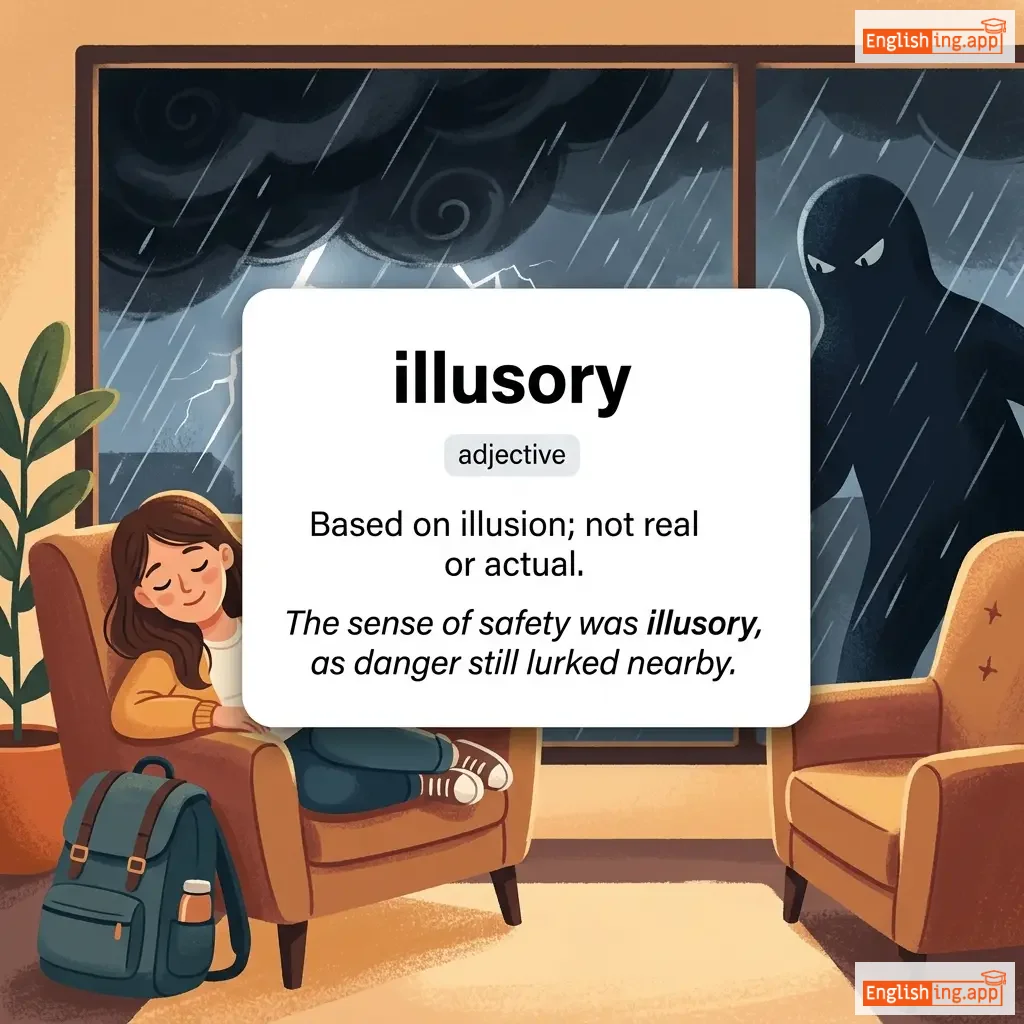
illusory definition card — visual illustration of the meaning
adjective
/ɪˈluːsəri/
ভ্রমমূলক (bhrommulok)

Based on illusion; not real or actual.

"The sense of safety was illusory, as danger still lurked nearby."

"নিরাপত্তার অনুভূতি ভ্রমমূলক ছিল, কারণ আশেপাশে এখনো বিপদ ছিল।" (Nirapottar onubhuti bhrommulok chhilo, karon ashepashe ekhono bipod chhilo.)
verb
/ˈɪl.ə.streɪt/
ব্যাখ্যা করা, চিত্রায়িত করা (byakkha kora, chitrayito kora)

to explain or make something clear by using examples, pictures, or comparisons

"The teacher used diagrams to illustrate the concept."

"শিক্ষক ধারণাটি বোঝাতে ডায়াগ্রাম ব্যবহার করেছিলেন।" (Shikkhok dharanati bozhate diagram byabohar korechilen.)
adjective
/ɪˈlʌstriəs/
বিখ্যাত (bikhato)

Well known, respected, and admired for past achievements.

"She had an illustrious career in medicine."

"তিনি চিকিৎসা ক্ষেত্রে এক বিখ্যাত কর্মজীবন কাটিয়েছিলেন।" (Tini chikitsa khetre ek bikhaato kormojibon katiyechhilen.)
noun
/ˈɪmɪdʒ/
ছবি (chhobi)

A visual representation of something, such as a picture or likeness.

"The magazine published a clear image of the celebrity."

"ম্যাগাজিনটি সেলিব্রিটির একটি স্পষ্ট ছবি প্রকাশ করেছিল।" (Magazine ti celebrityr ekti spostho chhobi prokash korechilo.)
noun
/ˈɪmɪdʒəri/
চিত্রকল্প (chitrakolpo)

visually descriptive or figurative language, especially in a literary work

"The poet's use of imagery brought the scene to life."

"কবির চিত্রকল্প ব্যবহারে দৃশ্যটি জীবিত হয়ে উঠেছিল।" (Kabir chitrakolpo byabohare drishṭiṭi jībit hoye uṭhechhilo.)
adjective
/ɪˈmædʒɪnəbl/
কল্পনাযোগ্য (kolponayoggo)

Capable of being imagined or conceived.

"They offered every imaginable type of food at the festival."

"তারা উৎসবে প্রতিটি কল্পনাযোগ্য ধরণের খাবার সরবরাহ করেছিল।" (Tara utsobe protiti kolponayoggo dhoroner khabar sorborah korechhilo.)
adjective
/ɪˈmædʒɪnəri/
কাল্পনিক (kalponik)

Existing only in the imagination; not real.

"Children often have imaginary friends."

"শিশুরা প্রায়ই কাল্পনিক বন্ধু রাখে।" (Shishura prayoi kalponik bondhu rakhe.)
noun
/ɪˌmædʒɪˈneɪʃən/
কল্পনা (kolpona)

The ability of the mind to create ideas or pictures not present to the senses.

"Children often use their imagination while playing."

"শিশুরা খেলাধুলার সময় প্রায়ই তাদের কল্পনা ব্যবহার করে।" (Shishura kheladhular somoy prai tader kolpona byabohar kore.)
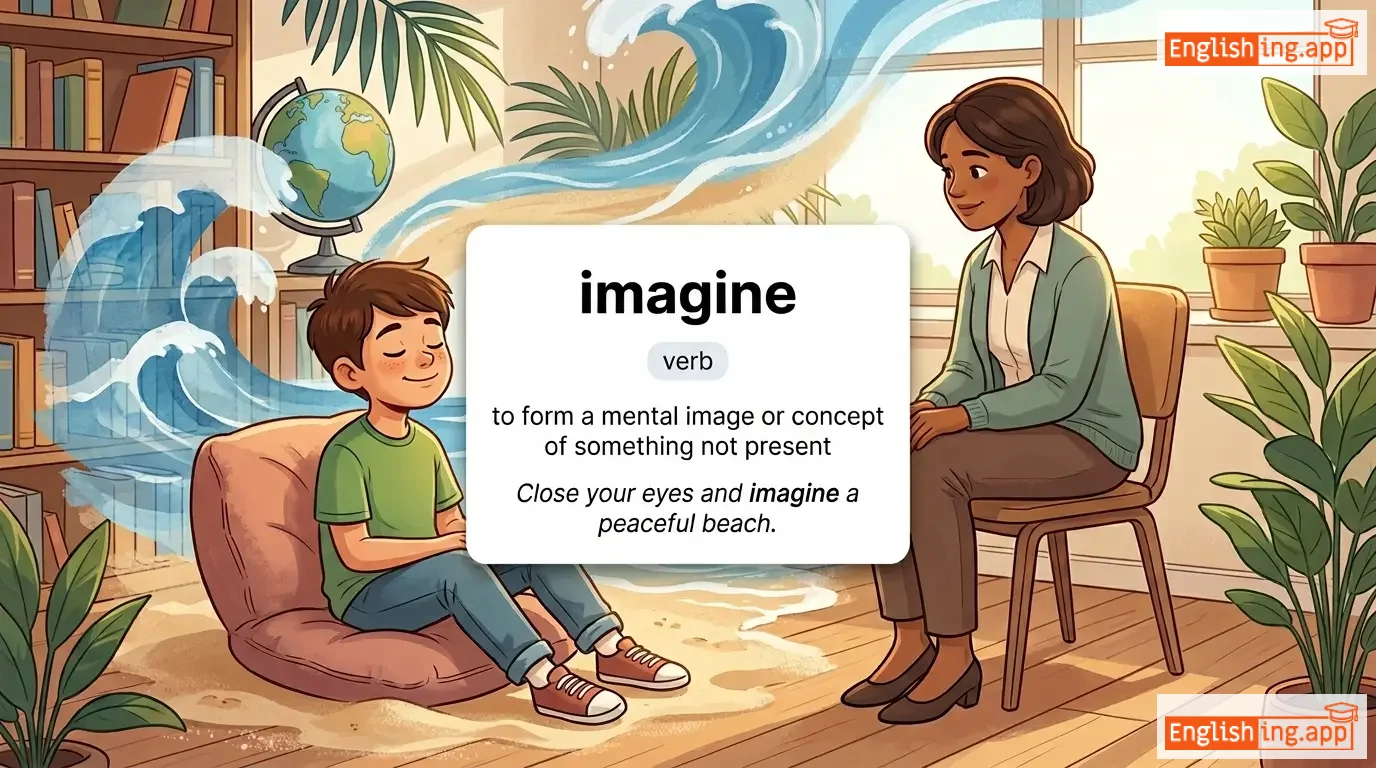
imagine definition card — visual illustration of the meaning
verb
/ɪˈmædʒ.ɪn/
কল্পনা করা (kolpona kora)

to form a mental image or concept of something not present

"Close your eyes and imagine a peaceful beach."

"চোখ বন্ধ করো এবং একটি শান্ত সমুদ্র সৈকতের কল্পনা করো।" (Chokh bondho koro ebong ekti shanto somudro soikot er kolpona koro.)
noun
/ɪmˈbæləns/
অসাম্য (osamyo)

A lack of balance; a state of inequality or disproportion.

"The imbalance of power led to conflict."

"ক্ষমতার অসাম্য সংঘর্ষের দিকে নিয়ে গিয়েছিল।" (Khhamatar osamyo songhorsher dike niye giyechhilo.)
noun
/ˌɪmbəˈsɪləti/
মূর্খতা (murkhota)

Extreme foolishness, stupidity, or weakness of mind.

"The plan was abandoned due to its sheer imbecility."

"পরিকল্পনাটি এর চরম মূর্খতার কারণে পরিত্যক্ত হয়েছিল।" (Porikolpanati er chorom murkhotar karone porityokto hoyechilo.)
verb
/ɪmˈbɛd/
গেঁথে দেওয়া (genthe deowa)

To fix firmly or deeply in a surrounding mass.

"The journalist imbedded himself with the troops to report firsthand."

"সাংবাদিক সরাসরি রিপোর্ট করার জন্য সেনাদের সঙ্গে নিজেকে গেঁথে নিয়েছিলেন।" (Sangbadik sorasori report korar jonno senader songe nije ke genthe niyechilen.)
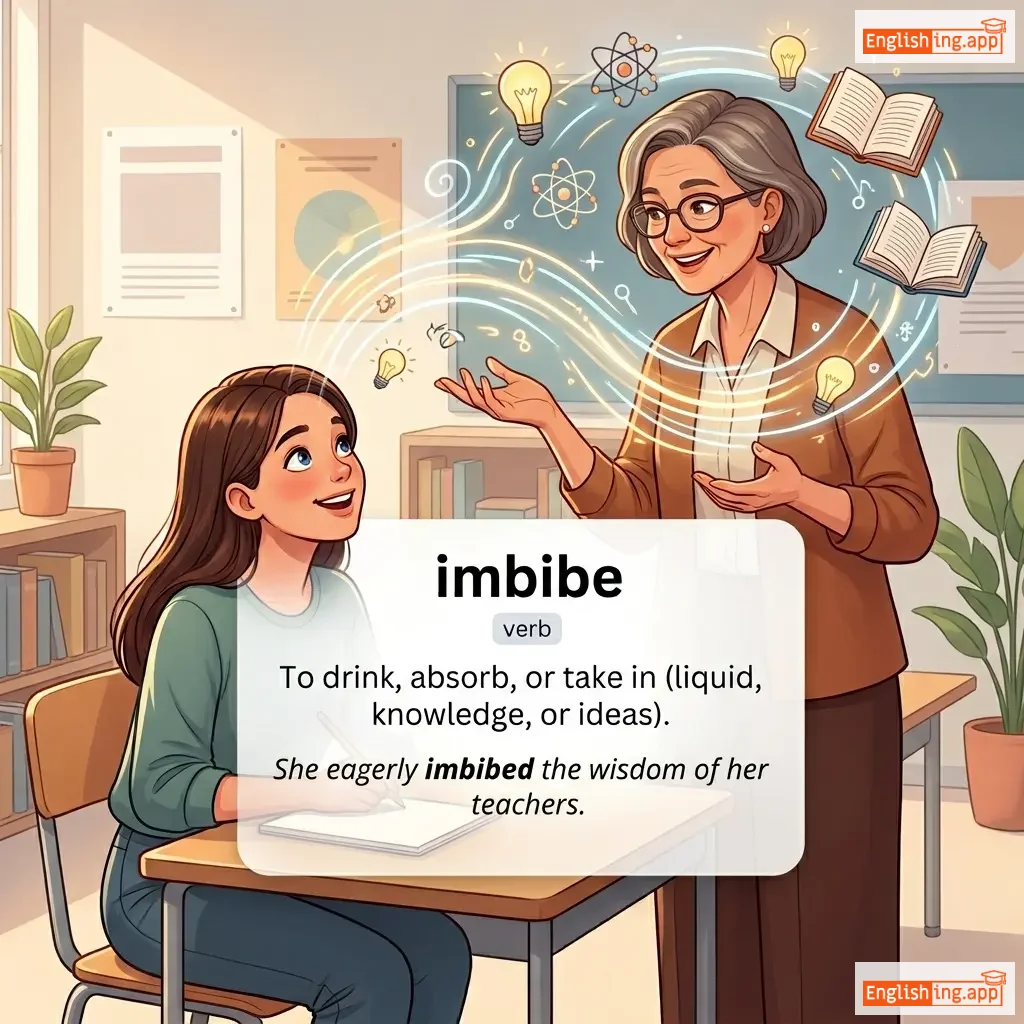
imbibe definition card — visual illustration of the meaning
verb
/ɪmˈbaɪb/
আত্মস্থ করা (atmostho kora)

To drink, absorb, or take in (liquid, knowledge, or ideas).

"She eagerly imbibed the wisdom of her teachers."

"সে আগ্রহের সাথে তার শিক্ষকদের জ্ঞান আত্মস্থ করেছিল।" (Se agroher sathe tar shikkhokder gyan atmostho korechilo.)
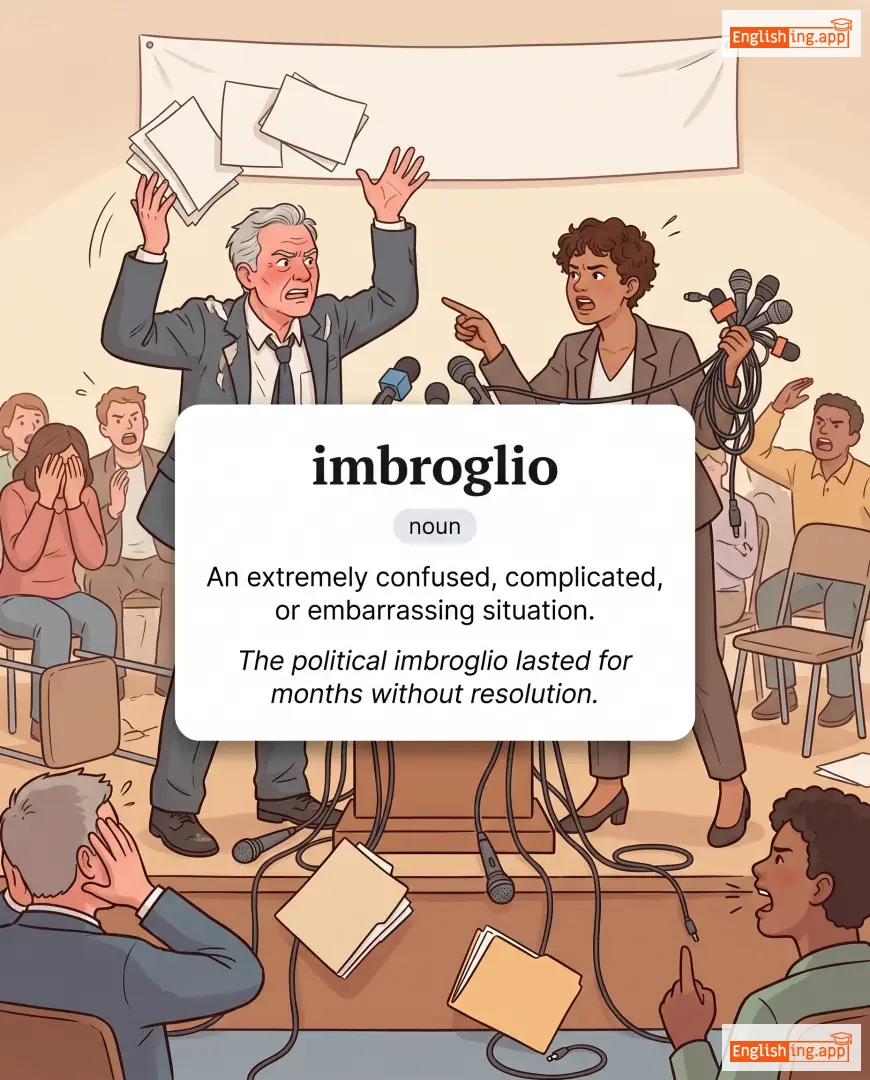
imbroglio definition card — visual illustration of the meaning
noun
/ɪmˈbroʊlioʊ/
জটিলতা (jotilota)

An extremely confused, complicated, or embarrassing situation.

"The political imbroglio lasted for months without resolution."

"রাজনৈতিক জটিলতা মাসের পর মাস ধরে চলেছিল কোনো সমাধান ছাড়া।" (Rajnaitik jotilota maser por mas dhore cholchilo kono somadhan chara.)
verb
/ɪmˈbruː/
রঞ্জিত করা (ronjito kora)

To stain, especially with blood.

"His hands were imbrued with blood after the battle."

"যুদ্ধের পর তার হাত রক্তে রঞ্জিত ছিল।" (Judher por tar hat rokte ronjito chilo.)
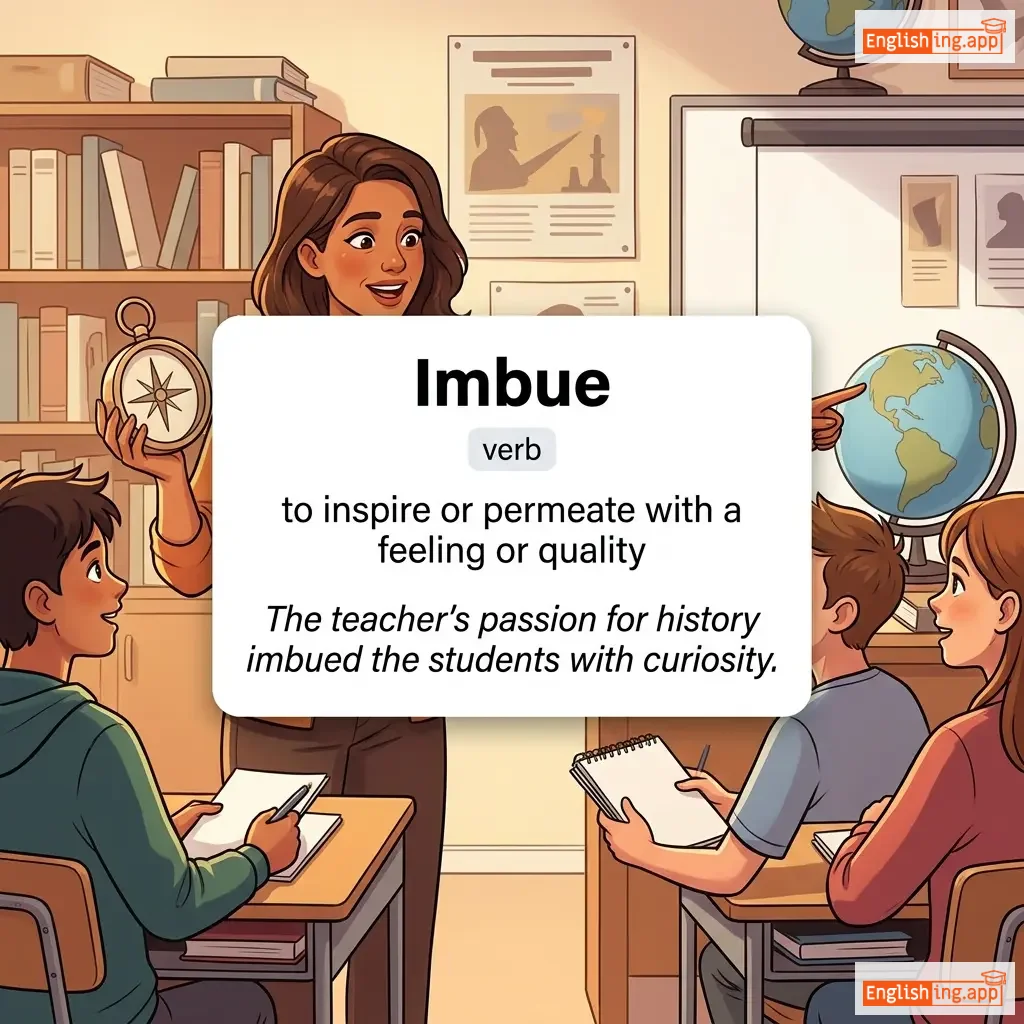
Imbue definition card — visual illustration of the meaning
verb
/ɪmˈbjuː/
আত্মস্থ করা (atmostho kora)

to inspire or permeate with a feeling or quality

"The teacher's passion for history imbued the students with curiosity."

"শিক্ষকের ইতিহাসের প্রতি আগ্রহ ছাত্রদের কৌতূহলে পূর্ণ করেছিল।" (Shikkhoker itihasher proti agroho chatroder koutuhole purno korechilo.)
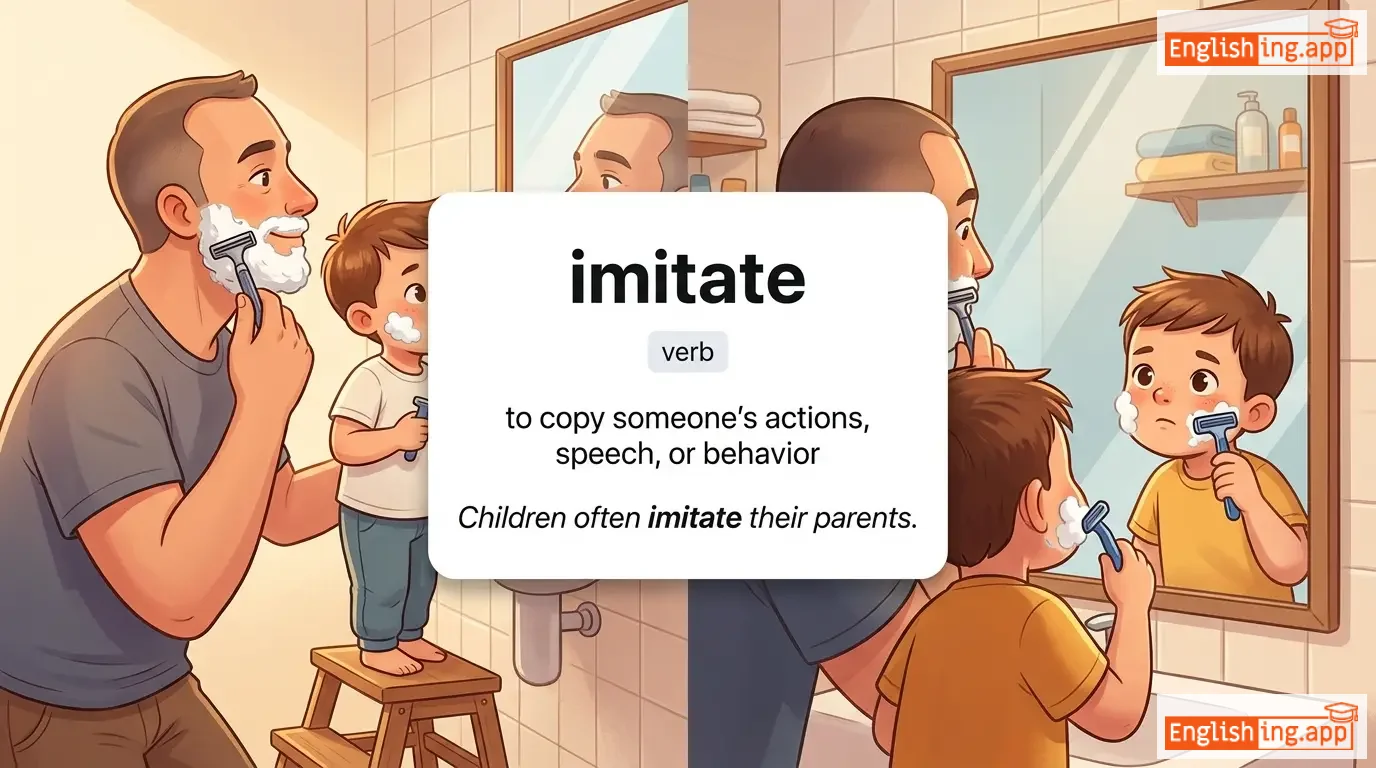
imitate definition card — visual illustration of the meaning
verb
/ˈɪmɪteɪt/
অনুকরণ করা (onukoron kora)

to copy someone's actions, speech, or behavior

"Children often imitate their parents."

"শিশুরা প্রায়শই তাদের বাবা-মাকে অনুকরণ করে।" (Shishura prayoshoi tader baba-make onukoron kore.)
noun
/ˌɪmɪˈteɪʃən/
অনুকরণ (onukoron)

the act of copying or mimicking someone or something

"Children learn many skills through imitation."

"শিশুরা অনেক দক্ষতা অনুকরণের মাধ্যমে শেখে।" (Shishura onek dokkhota onukoroner maddhome shekhe.)
noun
/ˈɪmɪˌteɪtər/
অনুকারী (onukari)

a person who copies the behavior, style, or actions of others

"He became famous as an imitator of popular singers."

"তিনি জনপ্রিয় গায়কদের অনুকারী হিসেবে বিখ্যাত হয়েছিলেন।" (Tini jonopriyo gayoker onukari hisebe bikhyato hoyechilen.)
adjective
/ɪˈmækjələt/
নির্মল (nirmol)

perfectly clean, neat, or free from flaws

"Her room was immaculate, with everything in its place."

"তার ঘর ছিল নির্মল, সবকিছু নিজের জায়গায় ছিল।" (Tar ghor chilo nirmol, sobkichu nijer jaygay chilo.)
adjective
/ˈɪmənənt/
অন্তর্নিহিত (ontornihito)

existing or operating within; inherent

"He believed that moral values are immanent in human nature."

"সে বিশ্বাস করত যে নৈতিক মূল্যবোধ মানুষের প্রকৃতির অন্তর্নিহিত।" (Se bishash korto je noitik mulyobodh manusher prokritir ontornihito.)