ভোকাবুলারিসমূহ

ইংরেজি শব্দের বাংলা অর্থ | English to Bangla Word Meaning Dictionary

noun
/ˈhɛksəˌɡɒn/
ষড়ভুজ (shorbhuj)

A six-sided polygon.

"A honeycomb cell is shaped like a hexagon."

"মৌচাকের ঘরটি ষড়ভুজ আকৃতির।" (Mouchaker ghorti shorbhuj akritir.)
adjective
/hɛkˈsæŋɡjələr/
ষড়কোণী (shorkoni)

Having six angles or corners.

"The artist designed a hexangular frame for the mirror."

"শিল্পী আয়নার জন্য একটি ষড়কোণী ফ্রেম ডিজাইন করেছিলেন।" (Shilpi aynar jonyo ekti shorkoni frame design korechilen.)
noun
/ˈhɛksəˌpɒd/
ষড়পদী (shorpodi)

An insect or other organism with six legs.

"The scientist observed a hexapod crawling on the leaf."

"বিজ্ঞানী একটি পাতার উপর একটি ষড়পদীকে হামাগুড়ি দিতে দেখলেন।" (Bigyani ekti patar upor ekti shorpodike hamaguri dite dekhlen.)
interjection
/heɪ/
এই (ei)

used to attract attention, express surprise, or greet someone

"Hey, how are you doing today?"

"এই, তুমি আজ কেমন আছো?" (Ei, tumi aj kemon acho?)
noun
/ˈheɪ.deɪ/
সর্বশ্রেষ্ঠ; সোনালি সময়; সুখসময়; (shorboshshreshtho, shonali shomoy, shukhshomoy)

the period of a person's or thing's greatest success, popularity, or vigor; prime time

"During her heyday as a singer, she performed in sold-out concerts around the world."

"একজন গায়িকা হিসেবে তার স্বর্ণযুগে, তিনি বিশ্বজুড়ে বিক্রিত টিকিটের কনসার্টে পারফর্ম করেছিলেন।" (ekjon gayika hishebe tar shornoijuge, tini bishwajure bikrito tiketr concerte perform korechhilen.)
noun
/ˈheɪˌdeɪ/
সোনালী সময় (sonali somoy)

The period of greatest success, popularity, or power.

"In its heyday, the company dominated the market."

"সোনালী সময়ে, কোম্পানিটি বাজার দখল করেছিল।" (sonali somoye, kompaniti bajar dokhol korechilo.)
interjection
/haɪ/
হাই (hai)

a friendly greeting used when meeting someone

"Hi, it's nice to meet you!"

"হাই, তোমার সাথে দেখা করে ভালো লাগলো!" (Hai, tomar sathe dekha kore bhalo laglo!)
noun
/haɪˈeɪtəs/
বিরতি (birti)

A pause or break in continuity of a process or activity.

"The show returned after a long hiatus."

"দীর্ঘ বিরতির পর অনুষ্ঠানটি আবার শুরু হলো।" (dirgho birtir por onusthanoti abar suru holo.)
adjective
/haɪˈbɜːrnəl/
শীতকালীন (shitkalin)

Relating to or occurring in winter.

"The hibernal season is often harsh in the mountains."

"পাহাড়ে শীতকালীন ঋতুটি প্রায়ই কঠোর হয়।" (pahar e shitkalin rituti prayoi kothor hoy.)
verb
/ˈhaɪbərˌneɪt/
শীত নিদ্রায় থাকা (shit nidray thaka)

To spend the winter in a dormant state, as some animals do.

"Bears hibernate in caves during the winter."

"ভাল্লুকরা শীতকালে গুহায় শীতনিদ্রায় থাকে।" (vallukra shitkale guhaye shitnidraye thake.)
adjective/noun
/haɪˈbɜːrniən/
আয়ারল্যান্ডীয় (aayarlandiyo)

Relating to Ireland or the Irish.

"He enjoyed reading about Hibernian culture and history."

"সে হাইবার্নিয়ান সংস্কৃতি ও ইতিহাস পড়তে পছন্দ করত।" (se hibernian songskriti o itihash porte pochondo korto.)
adjective
/hɪk/
গ্রাম্য; চাষা; (gramy)

unsophisticated person from a rural area; country bumpkin

"He had a hick accent from growing up in a small town."

"ছোট শহরে বেড়ে ওঠার কারণে তার গ্রাম্য উচ্চারণ ছিল।" (choto shohore bere othar karone tar gramy uccharon chilo)
adjective
/ˈhɪdən/
লুকানো (lukano)

kept out of sight; concealed.

"The treasure was hidden under the old tree."

"ধনরত্নটি পুরনো গাছের নিচে লুকানো ছিল।" (Dhonrotno ti purono gachher niche lukano chhilo.)
hide definition card — visual illustration of the meaning
verb
/haɪd/
লুকানো (lukano)

to put something or oneself out of sight; to conceal

"She tried to hide the letter under the pillow."

"সে চিঠিটি বালিশের নিচে লুকানোর চেষ্টা করেছিল।" (Se chithiti balisher niche lukano chesta korechilo.)
noun
/ˈhaɪdəweɪ/
আশ্রয়স্থল (ashroyosthol)

A place used as a retreat or a place to hide.

"The cabin in the woods was their secret hideaway."

"জঙ্গলের কুটিরটি ছিল তাদের গোপন আশ্রয়স্থল।" (Jongoler kutirti chhilo tader gopon ashroyosthol.)
adjective
/ˈhaɪd.baʊnd/
রক্ষণশীল (rokkhonshil)

unwilling or unable to change because of tradition or convention

"He is too hidebound to accept new ideas."

"সে এতটাই রক্ষণশীল যে নতুন ধারণা গ্রহণ করতে চায় না।" (Se etotai rokkhonshil je notun dharana grohon korte chay na.)
adjective
/ˈhɪd.i.əs/
ভয়ঙ্কর (bhoyonkor)

extremely ugly or unpleasant

"The crime was so hideous that it shocked the whole town."

"অপরাধটি এতটাই ভয়ঙ্কর ছিল যে এটি পুরো শহরকে স্তম্ভিত করেছিল।" (Oporadhti etotai bhoyonkor chilo je eti puro shohorke stombhito korechilo.)
verb
/haɪ/
তাড়াতাড়ি যাওয়া (taratari jaoa)

to go quickly; hasten

"He hied to the station to catch the train."

"সে ট্রেন ধরার জন্য দ্রুত স্টেশনে গেল।" (Se train dhorar jonno druto statione gelo.)
adjective
/ˌhaɪəˈrɑː.kɪ.kəl/
ধাপভিত্তিক (dhapbhittik)

arranged in order of rank or authority

"The company has a strict hierarchical structure."

"কোম্পানির একটি কঠোর ধাপভিত্তিক কাঠামো রয়েছে।" (Companyr ekti kothor dhapbhittik kachamo royeche.)
noun
/ˈhaɪəˌrɑːrki/
ক্রমবিন্যাস / শ্রেণীবিন্যাস (krombinash / srenibinash)

A system in which people or things are arranged in levels of importance or authority.

"The corporate hierarchy determines who makes the final decision."

"কর্পোরেট ক্রমবিন্যাস নির্ধারণ করে কে চূড়ান্ত সিদ্ধান্ত নেবে।" (Corporate krombinash nirdharon kore ke churanto siddhanto nebe.)
noun
/ˈhaɪərəˌɡlɪf/
চিত্রলিপি (chitrolipi)

A picture or symbol used in ancient writing systems, especially Egyptian writing.

"The walls of the temple were covered in hieroglyphs."

"মন্দিরের দেয়ালে হায়ারোগ্লিফ দ্বারা আচ্ছাদিত ছিল।" (Mondirer deale hieroglyph dara achadito chilo.)
adjective/noun
/ˌhaɪərəˈɡlɪfɪk/
চিত্রলিপি সম্পর্কিত (chitrolipi somprokito)

Relating to or written in hieroglyphs; symbols or writing that is difficult to understand.

"The archaeologists studied the hieroglyphic inscriptions carefully."

"পুরাতত্ত্ববিদরা হায়ারোগ্লিফিক শিলালিপি সাবধানে অধ্যয়ন করেছেন।" (Purattobbidra hieroglyphic shilalipi sabdhane oddhoyon korechen.)
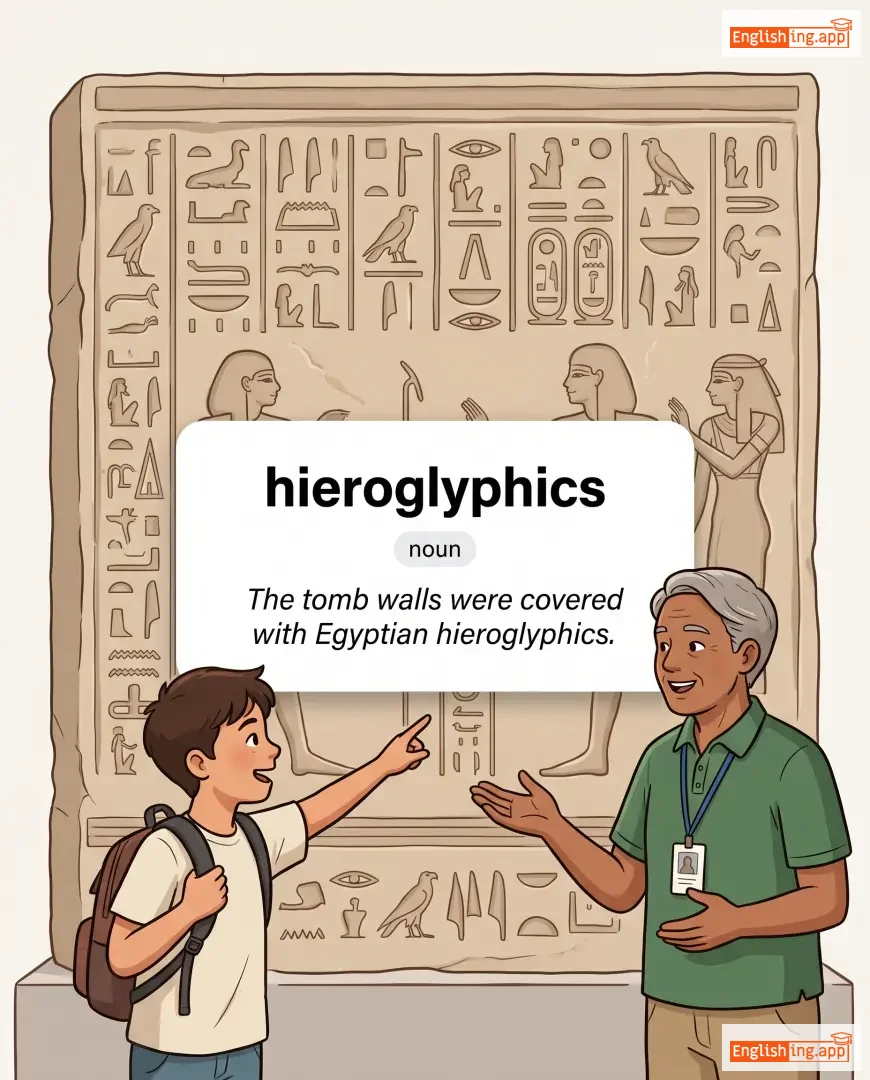
hieroglyphics definition card — visual illustration of the meaning
noun
/ˌhaɪ.roʊˈɡlɪf.ɪks/
চিত্রলিপি (chitrolipi)

a system of writing using pictures or symbols, used especially by ancient Egyptians

"The tomb walls were covered with Egyptian hieroglyphics."

"সমাধির দেয়ালে মিশরীয় চিত্রলিপি খোদাই করা ছিল।" (Somadhir dewale mishoriyo chitrolipi khodai kora chilo.)
adjective
/haɪ/
উচ্চ (uchcho)

At or to a great height; greater than normal in amount, degree, or intensity.

"The mountain peak is very high."

"পর্বতের চূড়া খুব উঁচু।" (Porboter churra khub unchu.)
adjective
/ˌhaɪ ˈfloʊn/
অলঙ্কৃত / বাড়াবাড়ি ধরনের (olonkrio / barabari dhoroner)

Using fancy or pretentious language; lofty in style but often overblown.

"The politician gave a high-flown speech full of promises."

"রাজনীতিবিদ একটি বাড়াবাড়ি ধরনের বক্তৃতা দিয়েছিলেন যা প্রতিশ্রুতিতে ভরা ছিল।" (Rajnittibid ekti barabari dhoroner boktrita diyechilen ja protishruti te vora chilo.)
adjective
/ˈhaɪˌprəʊfaɪl/
উচ্চ-প্রোফাইল (uccho-profile)

having a lot of attention or public notice

"The CEO attended a high-profile conference in New York."

"সিইও নিউ ইয়র্কে একটি উচ্চ-প্রোফাইল কনফারেন্সে অংশ নিয়েছিল।" (CEO New Yorke ekti uccho-profile conference-e angsho niyechilo.)
adjective
/ˌhaɪ ˈtɛk/
উচ্চ প্রযুক্তির (uchcho projuktir)

using or involving advanced technology.

"The company produces high-tech medical devices."

"কোম্পানিটি উচ্চ প্রযুক্তির চিকিৎসা যন্ত্র তৈরি করে।" (Companyti uchcho projuktir chikitsa jontra toiri kore.)
adjective
/ˈhaɪˌbraʊ/
উচ্চ সংস্কৃতিমূলক (uccho sanskritimulok)

intellectually superior or cultured; often describing art, literature, or activities appealing to intellectual tastes

"The museum is known for its highbrow exhibitions."

"মিউজিয়ামটি তার উচ্চ সংস্কৃতিমূলক প্রদর্শনীর জন্য পরিচিত।" (Museumti tar uccho sanskritimulok prodorshonir jonno porichito.)
verb
/ˈhaɪˌlaɪt/
গুরুত্ব দেওয়া (gurutto dewa)

to emphasize or make something stand out

"The teacher highlighted the most important points in the text."

"শিক্ষক পাঠ্যের সবচেয়ে গুরুত্বপূর্ণ বিষয়গুলো হাইলাইট করেছিলেন।" (Shikkhok pathyer sobcheye guruttopurno bishoygulo highlight korechhilen.)
adverb
/ˈhaɪli/
অত্যন্ত (ottyonto)

to a great degree; very

"She is highly respected in her field."

"সে তার ক্ষেত্রে অত্যন্ত সম্মানিত।" (Se tar khetre ottyonto sommanito.)
noun
/ˈhaɪ.nəs/
মহামান্য; মর্যাদা; (mohamanyo, morjada)

a title given to a person of royal rank; the quality or state of being high or elevated

"Your Highness, the royal carriage is ready to take you to the state banquet this evening."

"মহামান্য, রাজকীয় গাড়ি আজ সন্ধ্যায় আপনাকে রাষ্ট্রীয় ভোজে নিয়ে যাওয়ার জন্য প্রস্তুত।" (mohamanyo, rajkiyo gari aj shondhya apnake rashtriy voje niye jawar jonno prostuto.)
noun
/ˈhaɪ.weɪ/
মহাসড়ক (mahasorok)

A main road, especially one connecting major towns or cities.

"The highway was blocked due to an accident."

"একটি দুর্ঘটনার কারণে মহাসড়কটি বন্ধ ছিল।" (ekti durghotonar karone mahasorokti bondho chhilo.)
hijack definition card — visual illustration of the meaning
verb
/ˈhaɪdʒæk/
হাইজ্যাক করা (hijack kora)

to take control of a vehicle or situation illegally or by force

"The criminals attempted to hijack the airplane."

"অপরাধীরা বিমানটি হাইজ্যাক করার চেষ্টা করেছিল।" (Oporadhira bimonti hijack korar cheshta korechilo)
verb/noun
/haɪk/
হাঁটা / বৃদ্ধি (hata / briddhi)

To take a long walk in the countryside or mountains; also to increase suddenly (prices, rates, etc.).

"We decided to hike in the hills this weekend."

"আমরা এই সপ্তাহান্তে পাহাড়ে হাঁটতে যাওয়ার সিদ্ধান্ত নিয়েছিলাম।" (Amra ei soptahante pahare hatte jawar siddhanto niechhilam.)
adjective
/hɪˈlɛəriəs/
অত্যন্ত মজার (otonto mojar)

Extremely funny or amusing.

"The comedian told a hilarious story that had everyone laughing."

"কৌতুক অভিনেতা একটি অত্যন্ত মজার গল্প বলেছিলেন যা সবাইকে হাসিয়েছিল।" (Koutuk onikt a ekTi otonto mojar golpo bolechilen ja sobaike hasiyachilo.)
noun
/hɪˈlærɪti/
হাসি-আনন্দ (hasi-anondo)

Extreme amusement, especially when expressed by laughter.

"The movie caused great hilarity among the audience."

"ছবিটি দর্শকদের মধ্যে প্রচণ্ড হাসি-আনন্দ সৃষ্টি করেছিল।" (Chobiti dorshokder modhye prochondo hasi-anondo sristi korechilo.)
noun
/hɪl/
টিলা (tila)

A naturally raised area of land, smaller than a mountain.

"We climbed the hill to see the sunset."

"আমরা সূর্যাস্ত দেখার জন্য টিলায় উঠেছিলাম।" (amra surjasto dekhar jonno tilay uthhechhilam.)
noun
/ˈhɪlək/
টিলা (tila)

A small hill or mound.

"The children climbed up the grassy hillock to watch the sunset."

"শিশুরা সূর্যাস্ত দেখার জন্য ঘাসে ঢাকা টিলায় উঠেছিল।" (Shishura surjasto dekhar jonyo ghase dhaka tilay uthchilo.)
adjective
/ˈhɪli/
পাহাড়ি (pahari)

having many hills; characterized by hills or slopes

"The village is located in a beautiful hilly region."

"গ্রামটি একটি সুন্দর পাহাড়ি অঞ্চলে অবস্থিত।" (gramti ekti shundor pahari anchole obosthito)
noun
/ˈhɪl.sə fɪʃ/
ইলিশ মাছ (ilish mach)

a popular fish species found in South Asian rivers, especially prized in Bengali cuisine

"Hilsa fish is considered a delicacy in Bengali culture."

"ইলিশ মাছ বাঙালি সংস্কৃতিতে একটি উপাদেয় খাবার হিসেবে বিবেচিত হয়।" (Ilish mach Bangali songskritite ekti upadey khabar hisebe bibechito hoy.)
pronoun
/hɪm/
তাকে (take)

Used to refer to a male person or animal already mentioned.

"I saw him at the park yesterday."

"আমি গতকাল তাকে পার্কে দেখেছি।" (ami gotkal take parke dekhechi.)
pronoun
/hɪmˈself/
নিজে (nije)

Used to emphasize that a male person does something by his own effort.

"He fixed the car himself."

"সে নিজে গাড়ি মেরামত করেছিল।" (se nije gari meramot korechhilo.)
noun
/haɪnd/
হরিণী (horinee)

a female deer, especially a red deer

"The hind protected her fawn from predators."

"হরিণীটি তার বাচ্চাকে শিকারীদের থেকে রক্ষা করেছিল।" (horineeti tar bacchake shikarideer theke rakkha korechilo.)
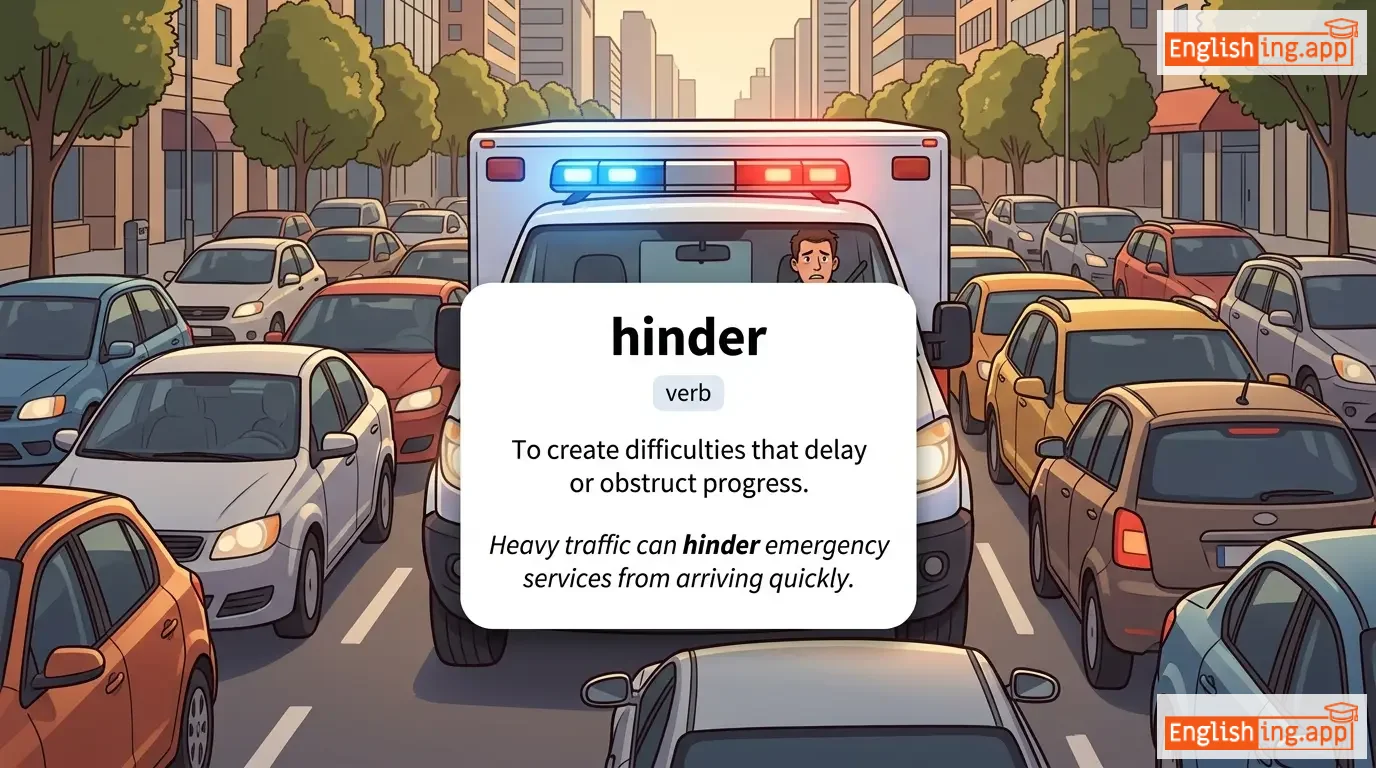
hinder definition card — visual illustration of the meaning
verb
/ˈhɪndər/
বাধা দেওয়া (badha deoya)

To create difficulties that delay or obstruct progress.

"Heavy traffic can hinder emergency services from arriving quickly."

"ভারী যানজট জরুরি সেবাগুলোকে দ্রুত পৌঁছাতে বাধা দিতে পারে।" (Bari janjot joruri sebaguloke druto pouchhate badha dite pare.)
adjective
/ˈhaɪndmoʊst/
সবচেয়ে পেছনের (sobcheye pechon-er)

Farthest back; last in position.

"The hindmost car in the convoy broke down first."

"কনভয়ের সবচেয়ে পেছনের গাড়িটি প্রথমে নষ্ট হয়েছিল।" (Convoyer sobcheye pechoner gariti prothome noshto hoyechilo.)
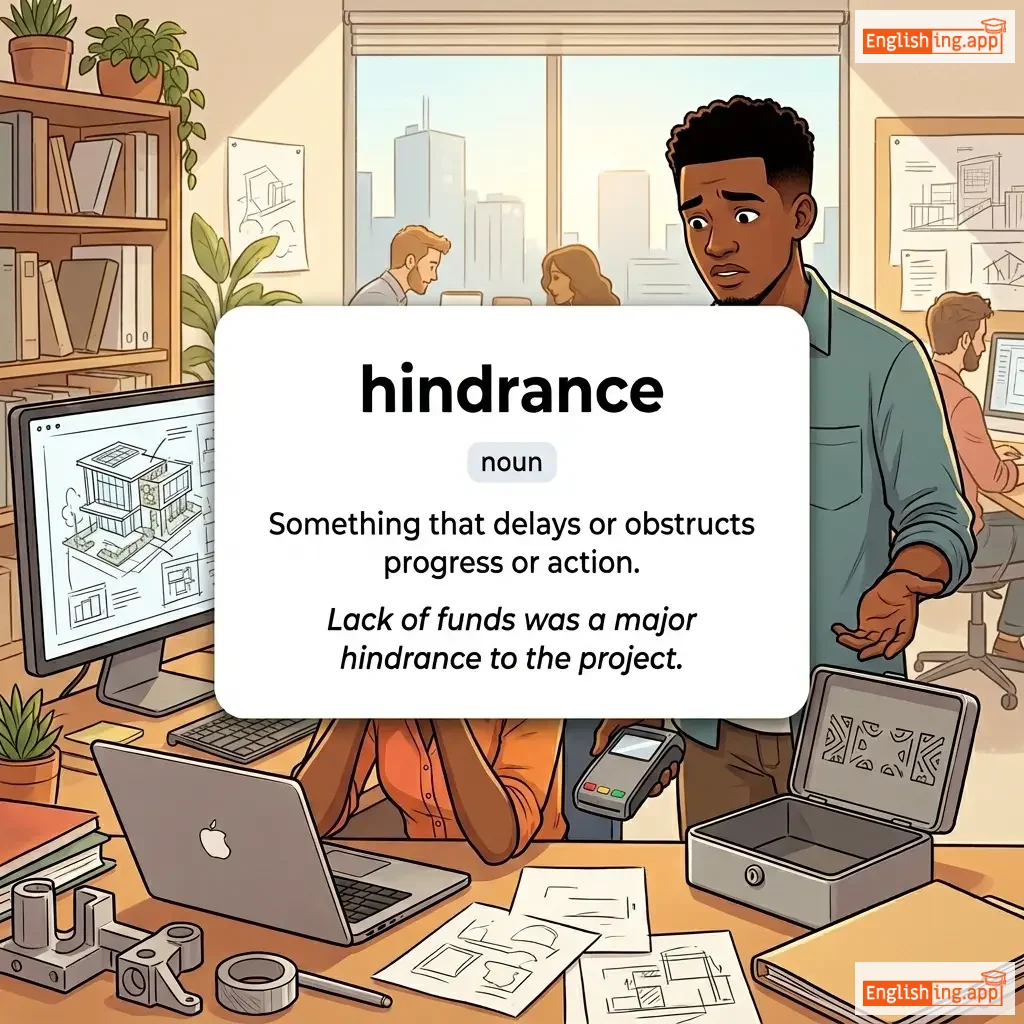
hindrance definition card — visual illustration of the meaning
noun
/ˈhɪndrəns/
বাধা (badha)

Something that delays or obstructs progress or action.

"Lack of funds was a major hindrance to the project."

"তহবিলের অভাব প্রকল্পের জন্য একটি বড় বাধা ছিল।" (Tahbiler obhab prokopter jonno ekti boro badha chilo.)
noun
/ˈhaɪndsaɪt/
পরবর্তী উপলব্ধি (poroborti upolobdhi)

Understanding of a situation only after it has happened.

"With the benefit of hindsight, we realized the decision was a mistake."

"পরে উপলব্ধি করে আমরা বুঝতে পারলাম যে সিদ্ধান্তটি ভুল ছিল।" (Pore upolobdhi kore amra bujhte parlam je siddhantoti bhul chilo.)
noun/verb
/hɪnt/
ইঙ্গিত (ingit)

a small piece of advice or suggestion; to suggest something indirectly

"She gave me a hint about the surprise party."

"সে আমাকে চমকপ্রদ পার্টি সম্পর্কে একটি ইঙ্গিত দিয়েছিল।" (Se amake chomokprod party somporke ekti ingit diyechhilo.)
noun
/ˈhɪntərlænd/
অভ্যন্তরীণ অঞ্চল (abhyontrinik onchol)

The remote or less developed areas away from the coast or a city.

"The farmers came from the rural hinterland to sell their produce in the city."

"কৃষকরা শহরে তাদের পণ্য বিক্রি করতে গ্রামীণ অভ্যন্তর থেকে এসেছিল।" (Krishokra shohore tader ponno bikri korte gramir abhyontr theke esechilo.)
noun (plural)
/ˈhɪntərlændz/
অভ্যন্তরীণ অঞ্চলসমূহ (abhyontrinik oncholshomuh)

Plural of hinterland; remote or less developed regions.

"Explorers traveled deep into the hinterlands of the country."

"অন্বেষকরা দেশের অভ্যন্তরের দূরবর্তী অঞ্চলে ভ্রমণ করেছিলেন।" (Onbeshokra desher abhyontrer durboroti onchole vromon korechilen.)