ভোকাবুলারিসমূহ

ইংরেজি শব্দের বাংলা অর্থ | English to Bangla Word Meaning Dictionary

verb
/ˈhɑːrpɪŋ/
অবিরত অভিযোগ করা (obirot obhijog kora)

continuously talking or complaining about something in a tiresome way

"She kept harping on about the mistakes I made."

"সে বারবার আমার করা ভুল নিয়ে অভিযোগ করছিল।" (Se barbar amar kora bhul nie obhijog korchilo.)
adjective
/ˈhæriːd/
অত্যধিক ব্যস্ত বা চিন্তিত (otyodhik byosto ba chintito)

feeling strained or stressed due to being overworked or constantly bothered

"The harried teacher struggled to calm the noisy classroom."

"অত্যধিক ব্যস্ত শিক্ষক শব্দময় ক্লাসরুমকে শান্ত করতে লড়াই করছিলেন।" (Otyodhik byosto shikkhok shobdomoy classroomke shanto korte lorai korchilen.)
verb
/ˈhæroʊ/
যন্ত্রণা দেওয়া / জমি চাষ করা (jontrona dewa / jomi chash kora)

to cause distress or torment; also to break up and smooth soil with a farm tool

"The tragic news harrowed the entire family."

"দুঃখজনক খবর পুরো পরিবারকে যন্ত্রণাগ্রস্ত করেছিল।" (Dukhjonok khobor puro poribar ke jontronagrosto korechilo.)
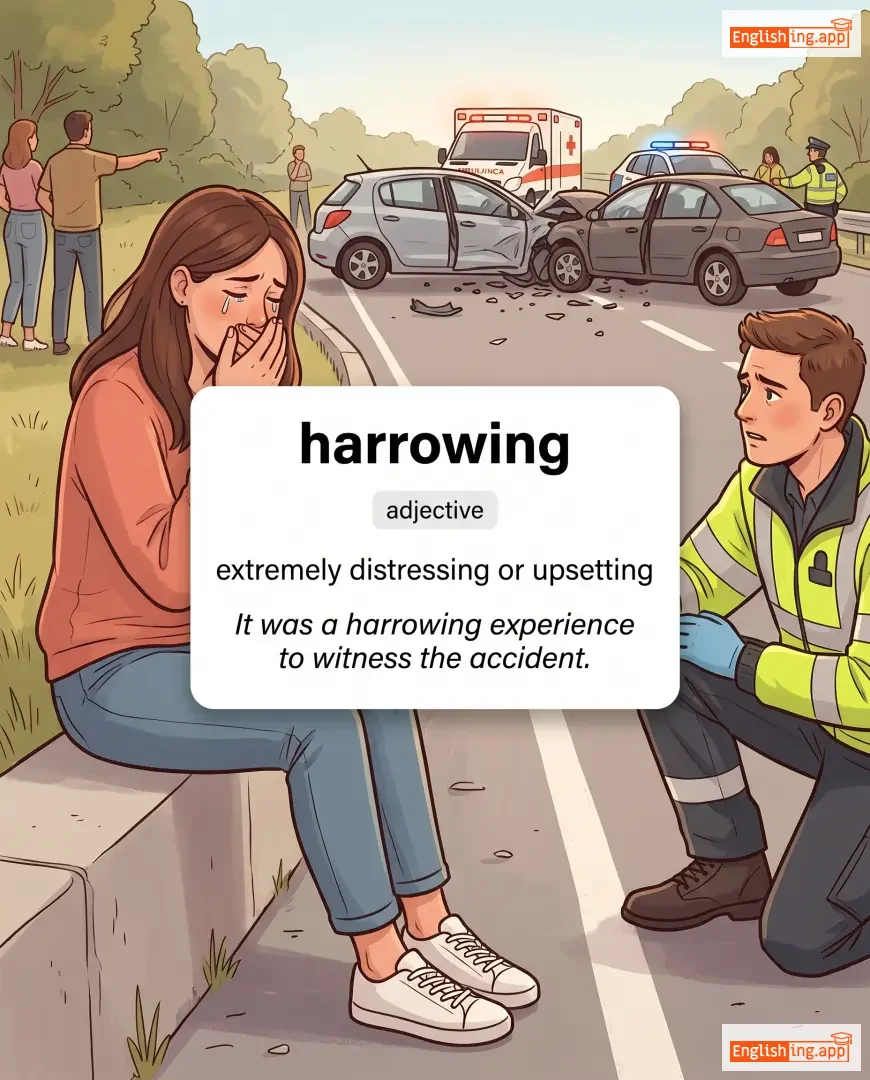
harrowing definition card — visual illustration of the meaning
adjective
/ˈhær.oʊ.ɪŋ/
ভয়ঙ্কর ও যন্ত্রণাদায়ক (bhoyonkor o jontronadayok)

extremely distressing or upsetting

"It was a harrowing experience to witness the accident."

"দুর্ঘটনা প্রত্যক্ষ করা একটি ভয়ঙ্কর অভিজ্ঞতা ছিল।" (Durghotona prottokkh kora ekti bhoyonkor obhiggota chilo.)
verb
/ˈhæri/
পীড়ন করা, হামলা করা (piron kora, hamla kora)

to constantly attack, harass, or annoy

"The army harried the enemy with sudden raids."

"সেনারা হঠাৎ আক্রমণ করে শত্রুকে পীড়ন করেছিল।" (Senara hotat akramon kore shotru ke piron korechilo.)
adjective
/hɑːrʃ/
কঠোর (kothor)

Unpleasantly rough or severe in sound, taste, conditions, or treatment.

"The teacher's harsh tone frightened the students."

"শিক্ষকের কঠোর স্বর শিক্ষার্থীদের ভয় পাইয়ে দিল।" (Shikkhoker kothor swor shikkharthider voy paie dilo.)
noun
/ˈhɑːrvɪst/
ফসল কাটা (foshol kata)

the process or period of gathering crops

"Farmers are busy during the rice harvest season."

"কৃষকরা ধান কাটার মৌসুমে ব্যস্ত থাকে।" (Krisokra dhan katar mousume byosto thake.)
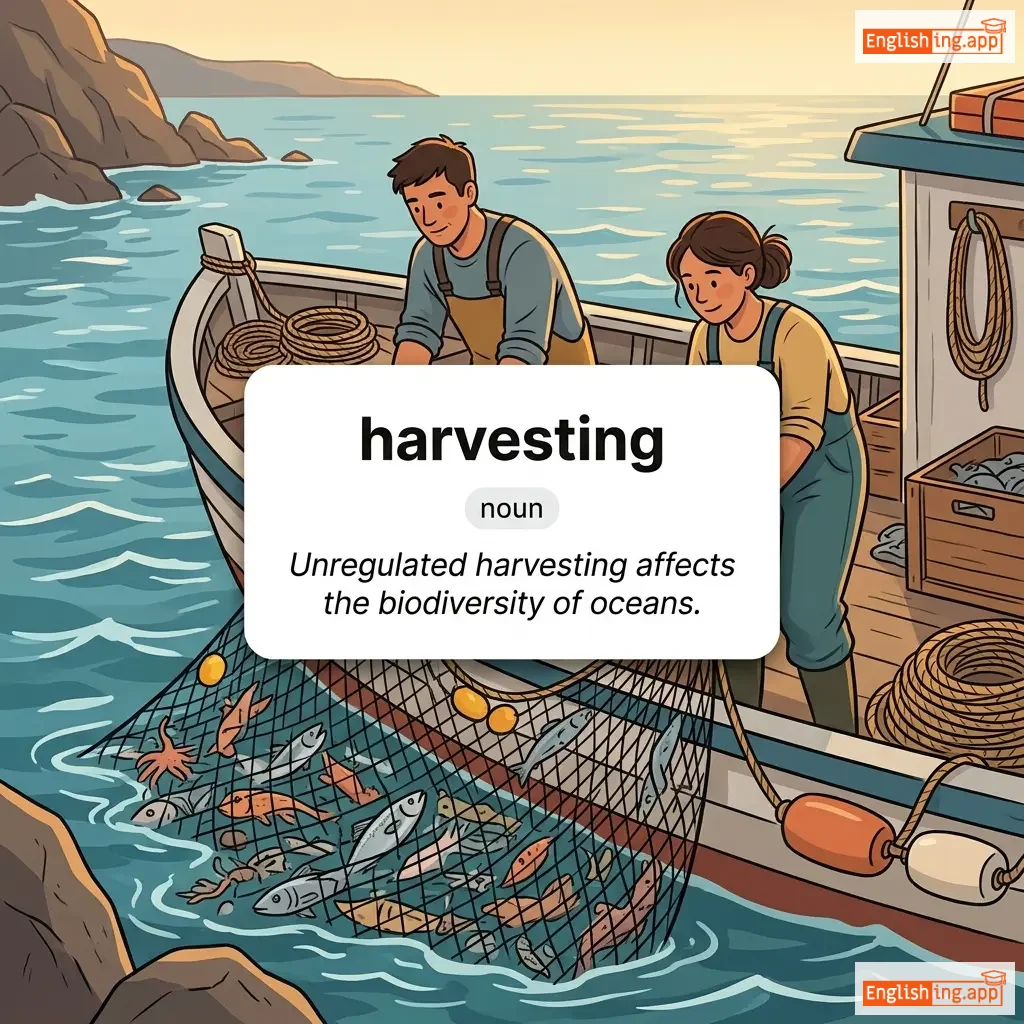
harvesting definition card — visual illustration of the meaning
noun
ˈhɑːrvɪstɪŋ
আহরণ (ahoron)

The process of gathering a ripe crop from the fields or collecting natural resources.

"Unregulated harvesting affects the biodiversity of oceans."

"অনিয়ন্ত্রিত আহরণ সাগরের জীববৈচিত্র্যকে প্রভাবিত করে।" (Oniyontrito ahoron shagorer jibboichitrotyoke probhabito kore.)
noun
/hæˈʃiːʃ/
হাশিশ (hashish)

a drug made from the resin of the cannabis plant

"The police arrested him for possessing hashish."

"পুলিশ তাকে হাশিশ রাখার জন্য গ্রেপ্তার করেছিল।" (Polish take hashish rakhar jonno greptar korechilo.)
noun
/ˈhæs.əl/
ঝামেলা; গোলযোগ; তর্কবিতর্ক; (jhamela, golojog, torkobitorko)

irritating inconvenience; trouble or difficulty; a situation causing problems

"Booking tickets online can save you the hassle of waiting in long queues at the theater."

"অনলাইনে টিকিট বুকিং থিয়েটারে লম্বা সারিতে অপেক্ষার ঝামেলা থেকে আপনাকে বাঁচাতে পারে।" (onlaine ticket booking theatre e lomba sharite opekkar jhamela theke apnake bachate pare.)
noun
/heɪst/
দ্রুততা; তাড়াহুড়ো; (drutotra, tarahuro)

swiftness of motion; urgent need of quick action; excessive speed or urgency

"In his haste to catch the train, he forgot to take his wallet from the table."

"ট্রেন ধরার তাড়াহুড়োয় তিনি টেবিল থেকে তার মানিব্যাগ নিতে ভুলে গিয়েছিলেন।" (train dhorar tarahuroye tini table theke tar manibyag nite bhule giyechhilen.)
verb
/ˈheɪsən/
ত্বরান্বিত করা (twaranbit kora)

To move or act quickly; to cause something to happen sooner.

"He hastened to finish his work before the deadline."

"সে সময়সীমার আগে তার কাজ শেষ করতে ত্বরান্বিত করল।" (Se shomoysimar age tar kaj shesh korte twaranbit korlo.)
adverb
/ˈheɪs.tɪ.li/
তাড়াহুড়ো করে; (tarahu-ro ko-re)

in a hurried or rushed manner; quickly and carelessly

"She hastily packed her bags before leaving for the airport."

"বিমানবন্দরে যাওয়ার আগে সে তাড়াহুড়ো করে তার ব্যাগ গুছিয়েছিল।" (bi-man-bon-do-re ja-war a-ge she ta-ra-hu-ro ko-re tar bag gu-chi-ye-chi-lo.)
adjective
/ˈheɪsti/
অতিদ্রুত (otidruto)

Done with excessive speed or urgency, often without careful thought.

"She made a hasty decision without considering the consequences."

"সে পরিণতি বিবেচনা না করে একটি তাড়াহুড়ো সিদ্ধান্ত নিল।" (Se porinoti bibecona na kore ekti tarahuro shidhdhanto nilo.)
noun
/hæt/
টুপি (tupi)

a shaped covering for the head, often with a brim

"He wore a black hat to the party."

"সে পার্টিতে একটি কালো টুপি পরেছিল।" (Se partyte ekti kalo tupi porechhilo.)
verb
/hætʃ/
ডিম ফুটানো / পরিকল্পনা করা (dim futano / porikolpona kora)

To cause a young animal to emerge from an egg; to plan secretly.

"The chicks hatched early in the morning."

"মুরগির ছানাগুলো ভোরে ডিম থেকে বের হলো।" (Murgir chanagulo bhore dim theke ber holo.)
hate definition card — visual illustration of the meaning
verb
/heɪt/
ঘৃণা করা (ghrina kora)

to dislike intensely or have a strong aversion to

"She hates waking up early in the morning."

"সে সকালে তাড়াতাড়ি উঠতে ঘৃণা করে।" (She sokale taratari uthte ghrina kore.)
adjective
/ˈheɪt.fəl/
ঘৃণ্য; (ghrinno)

causing or deserving hatred; extremely unpleasant or offensive

"His hateful comments hurt everyone's feelings."

"তার ঘৃণ্য মন্তব্য সবার মনে আঘাত দিয়েছে।" (tar ghrinno montobbo sobार mone aghato diyeche.)
noun
/ˈheɪtrɪd/
ঘৃণা (ghrina)

intense dislike or ill will

"His hatred for the enemy was evident in his actions."

"তার শত্রুর প্রতি ঘৃণা তার কাজের মধ্যে স্পষ্ট ছিল।" (Tar shotrur proti ghrina tar kajer modhe sposto chhilo.)
noun
/ˈhɔːtɪnəs/
অহংকার (ohongkar)

The appearance or quality of being arrogantly superior and disdainful.

"His haughtiness made him unpopular among his peers."

"তার অহংকার তাকে সহকর্মীদের মধ্যে অজনপ্রিয় করে তুলেছিল।" (Tar ohongkar take shokormider moddhe ojonopriyo kore tulchhilo.)
adjective
/ˈhɔːti/
অহংকারী (ohonkari)

arrogantly superior and disdainful

"She gave him a haughty look and walked away."

"সে তাকে অহংকারী দৃষ্টিতে দেখল এবং চলে গেল।" (Se take ohonkari dristite dekhlo ebong chole gelo.)
verb
/hɔːl/
টেনে নেওয়া (tene neowa)

to pull or drag something heavy with effort

"The workers hauled the boxes into the truck."

"কর্মীরা বাক্সগুলো ট্রাকে তুলেছিল।" (Kormira baksgulo trake tulechhilo.)
haunt definition card — visual illustration of the meaning
verb
/hɔːnt/
ভূতুড়ে বা মনে লেগে থাকা (vutore ba mone lege thaka)

to appear frequently in or fill the mind of someone; to visit a place regularly

"The old memories still haunt him."

"পুরনো স্মৃতিগুলো এখনো তাকে তাড়া করে।" (Purono smritigulo ekhono take tara kore.)
noun
/oʊˈtɜːr/
অহংকার (ohongkar)

disdainful pride; arrogance

"His hauteur made it difficult for others to approach him."

"তার অহংকারের কারণে অন্যদের তার কাছে যাওয়া কঠিন হয়ে উঠেছিল।" (Tar ohonkarer karone onnader tar kache jawa kothin hoye uthchhilo.)
verb
/hæv/
রাখা / থাকা (rakha / thaka)

to possess, own, or hold

"They have three children."

"তাদের তিনটি সন্তান আছে।" (Tader tin ti shontan ache.)
noun
/ˈheɪvən/
আশ্রয়স্থল (ashroyosthol)

a safe place or shelter

"The library became a haven for students during exams."

"পরীক্ষার সময় লাইব্রেরি শিক্ষার্থীদের জন্য আশ্রয়স্থল হয়ে উঠেছিল।" (Porikhar somoy library shikkharthider jonno ashroyosthol hoye uthchhilo.)
noun
/ˈhævək/
ধ্বংসযজ্ঞ (dhongshojogg)

widespread destruction or disorder

"The storm caused havoc in the coastal villages."

"ঝড় উপকূলীয় গ্রামগুলোতে ধ্বংসযজ্ঞ সৃষ্টি করেছিল।" (Jhor upokuliya gramgulo te dhongshojogg sristi korechhilo.)
noun
/hɔːk/
বাজ (baj)

A bird of prey with keen eyesight and sharp talons; also refers to a person who strongly supports aggressive or warlike policies.

"The hawk soared high above the valley."

"বাজ উপত্যকার উপরে উঁচুতে উড়ছিল।" (Baj upottyakar upore unchute urchhilo.)
noun
/ˈhɔː.kər/
হকার/ফেরিওয়ালা (hokar/ferioyala)

a person who travels about selling goods, typically from door to door or on the street

"The hawker sold fresh fruits from his cart."

"হকার তার ঠেলাগাড়ি থেকে তাজা ফল বিক্রি করলেন।" (hokar tar thelagari theke taja phol bikri korlen.)
noun
/ˈhɔːzər/
জাহাজ বাঁধার মোটা দড়ি (jahaj bandhar mota dori)

A thick rope or cable used in mooring or towing a ship.

"The sailors secured the ship to the dock with a heavy hawser."

"নাবিকরা একটি ভারী হসার দিয়ে জাহাজকে ঘাটে বেঁধে রাখল।" (Nabikra ekti bhari hosar diye jahajke ghate bendhe rakhlo.)
noun
/ˈhɔːθɔːrn/
কাঁটাযুক্ত ছোট গাছ (kantajukto choto gachh)

A thorny shrub or small tree with white or pink flowers, often used for hedges.

"The garden was lined with blooming hawthorn bushes."

"বাগানটি ফুল ফোটা হথর্ন ঝোপ দিয়ে ঘেরা ছিল।" (Baganti ful phota hothorn jhop diye ghera chhilo.)
noun
/heɪ/
খড় (khod)

grass that has been cut, dried, and stored for use as animal feed

"The cows were eating hay in the barn."

"গরুগুলো খামারে খড় খাচ্ছিল।" (Gorugulo khamare khod khachchhilo.)
noun
/ˈhæzərd/
ঝুঁকি (jhuki)

A danger or risk.

"Wet floors are a common hazard in the workplace."

"ভেজা মেঝে কর্মক্ষেত্রে একটি সাধারণ ঝুঁকি।" (Bheja mejhe karmokhetre ekti samanno jhuki.)
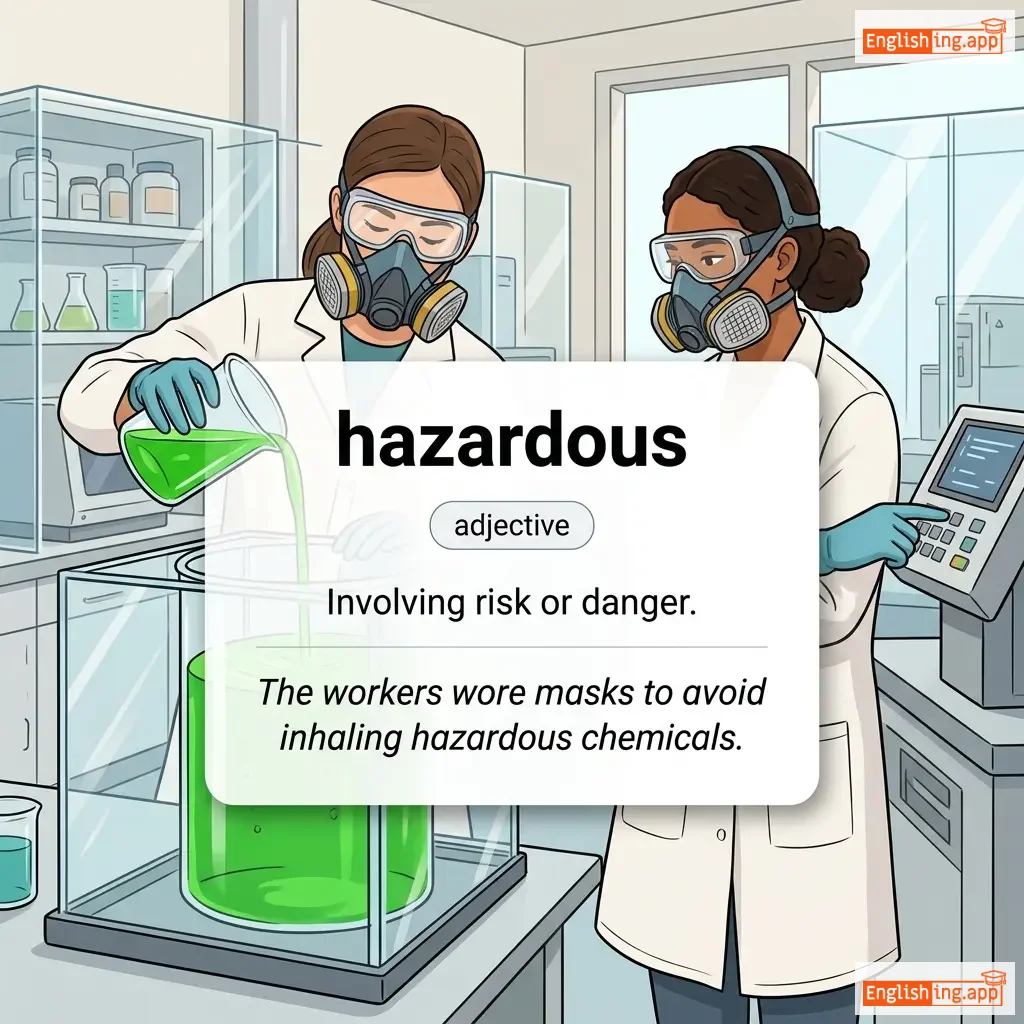
hazardous definition card — visual illustration of the meaning
adjective
/ˈhæzərdəs/
বিপজ্জনক (bipojjonok)

Involving risk or danger.

"The workers wore masks to avoid inhaling hazardous chemicals."

"শ্রমিকরা বিপজ্জনক রাসায়নিক শ্বাস নেওয়া এড়াতে মাস্ক পরেছিল।" (Shromikra bipojjonok rashayonik shash newa erate mask porechhilo.)
noun
/heɪz/
পাতলা কুয়াশা; (patla kuyasha)

a slight obscuration of the lower atmosphere, typically caused by fine suspended particles; confusion

"The morning haze lifted gradually as the sun rose higher in the sky."

"আকাশে সূর্য উঁচুতে ওঠার সাথে সাথে সকালের কুয়াশা ধীরে ধীরে উঠে গেল।" (akashe surjo unchute othar shathe shathe shokaler kuyasha dhire dhire uthe gelo.)
adjective
/ˈheɪzi/
অস্পষ্ট (osposto)

Unclear, misty, or not easy to see; also vague or uncertain.

"The mountains looked hazy in the morning light."

"সকালের আলোয় পাহাড়গুলো ঝাপসা লাগছিল।" (Sokal er aloy pahar gulo jhapsha lagchhilo.)
pronoun
/hiː/
সে (পুরুষ) (se (purush))

used to refer to a male person or animal already mentioned or easily identified

"He is my best friend."

"সে আমার সেরা বন্ধু।" (Se amar sera bondhu.)
noun, verb
/hɛd/
মাথা / প্রধান (matha / prodhan)

The upper part of the human body or to lead or be in charge of something.

"She turned her head to look out the window."

"সে জানালার বাইরে তাকাতে মাথা ঘুরিয়েছিল।" (Se janalar baire takate matha ghuriyechhilo.)
adverb
/ˈhed ɑn/
মুখোমুখি; (mu-kho-mu-khi)

directly facing; in direct confrontation or collision

"The two cars collided head-on at the intersection."

"আক্রমণের স্থানে দুটি গাড়ি মুখোমুখি সংঘর্ষে লিপ্ত হয়েছিল।" (a-kro-mo-ner sthan-e du-ti ga-ri mu-kho-mu-khi shon-ghor-she lip-to ho-ye-chi-lo.)
noun
/ˈhɛdeɪk/
মাথাব্যথা (mathabetha)

a continuous pain in the head; something that causes worry or difficulty

"Too much screen time can give you a terrible headache."

"অতিরিক্ত স্ক্রিন টাইম তোমাকে মারাত্মক মাথাব্যথা দিতে পারে।" (Otirikto screen time tomake maratmak mathabetha dite pare.)
adverb
/ˌhɛdˈfɜrst/
মাথা আগে (matha age)

With the head leading; in a reckless or hasty manner.

"He dived headfirst into the pool."

"সে মাথা আগে দিয়ে পুলে ঝাঁপ দিয়েছিল।" (Se matha age diye pule jhap diyechhilo.)
heading definition card — visual illustration of the meaning
noun
/ˈhed.ɪŋ/
শিরোনাম; (shironam)

a title at the head of a page or section of a book; the direction or course being followed

"The newspaper article had a bold heading that immediately caught the reader's attention."

"সংবাদপত্রের নিবন্ধটির একটি মোটা শিরোনাম ছিল যা তৎক্ষণাৎ পাঠকের মনোযোগ আকর্ষণ করেছিল।" (shongbadpotrer nibondhoti r ekti mota shironam chhilo ja totkhonath pathokr monojoger akorshon korechhilo.)
noun
/ˈhɛdˌlaɪn/
শিরোনাম (shironam)

The title of a newspaper article printed in large letters.

"The scandal made front-page headlines."

"কেলেঙ্কারিটি প্রথম পাতার শিরোনাম হয়েছিল।" (Kelenkariti prothom patar shironam hoyechhilo.)
adverb
/ˈhɛdˌlɔŋ/
বেপরোয়া ভাবে (beproya vabe)

With the head leading; in a rush or without thinking.

"She rushed headlong into the new project."

"সে হঠাৎ করে নতুন প্রজেক্টে ঝাঁপিয়ে পড়ল।" (Se hotath kore notun projekte jhapiye porlo.)
noun
/ˈhɛdˌkwɔːrtərz/
প্রধান কার্যালয় (prodhan karyalay)

The main office or center of operations of an organization.

"The company’s headquarters is located in New York."

"কোম্পানির প্রধান কার্যালয় নিউ ইয়র্কে অবস্থিত।" (Companyr prodhan karyalay New Yorke obosthito.)
adjective
/ˈhɛdˌstrɔŋ/
একগুঁয়ে (ekguyye)

Determined to do what one wants, even if it is not sensible.

"The headstrong child refused to listen to anyone."

"একগুঁয়ে শিশুটি কারো কথা শুনতে রাজি হয়নি।" (Ekguyye shishuti karo kotha shunte raji hoyni.)
noun
/ˈhed.weɪ/
অগ্রগতি; উন্নতি; অগ্রসরতা; (ogrogoti, unnoti, ogroshoro)

forward movement or progress, especially when this is slow or difficult

"Despite the challenges, the research team made significant headway in developing the new vaccine."

"চ্যালেঞ্জ সত্ত্বেও, গবেষণা দলটি নতুন টিকা উন্নয়নে উল্লেখযোগ্য অগ্রগতি করেছে।" (challenge shottweo, gobeshona dolti notun tika unnoyane ullekhjogyo ogrogoti korechhe.)
adjective
/ˈhɛdi/
মাতাল করা (matal kora)

Exciting or intoxicating; having a strong or exhilarating effect.

"The heady aroma of the flowers filled the room."

"ফুলের মাতাল করা ঘ্রাণ ঘর ভরে দিল।" (Phuler matal kora ghran ghor bhore dilo.)
heal definition card — visual illustration of the meaning
verb
/hiːl/
সুস্থ করা (shustho kora)

to make or become healthy again after an injury or illness

"Time helps to heal both physical and emotional wounds."

"সময় শারীরিক ও মানসিক ক্ষত সারাতে সাহায্য করে।" (Somoy sharirik o manoshik khoto sarate sahajyo kore.)
noun
/hɛlθ/
স্বাস্থ্য (shasthya)

The state of being free from illness or injury.

"Exercise is important for good health."

"ভালো স্বাস্থ্যের জন্য ব্যায়াম গুরুত্বপূর্ণ।" (Bhalo shasthy er jonno byayam guruttopurno.)