ভোকাবুলারিসমূহ

ইংরেজি শব্দের বাংলা অর্থ | English to Bangla Word Meaning Dictionary

adjective
/fɔːls/
মিথ্যা (mithya)

not true or correct; intended to deceive

"He was accused of giving false information."

"তিনি মিথ্যা তথ্য দেওয়ার অভিযোগে অভিযুক্ত হন।" (Tini mithya totho dewar obhijoge obhijukto hon.)
noun
/ˈfɔːlshʊd/
মিথ্যা (mithya)

the state of being untrue or a lie

"He was punished for spreading falsehoods about his colleague."

"সে সহকর্মীর সম্পর্কে মিথ্যা ছড়ানোর জন্য শাস্তি পেয়েছিল।" (Se sohokormir somporke mithya charanor jonno shasti peyechilo.)
verb
/ˈfɔːlsɪfaɪ/
মিথ্যা করা বা ভুয়া বানানো (mithya kora ba bhuya banano)

to make something false or to misrepresent

"He tried to falsify the documents to avoid taxes."

"সে কর এড়াতে নথিগুলো ভুয়া করার চেষ্টা করেছিল।" (Se kor erate nothigulo bhuya korar chesta korechilo.)
verb
/ˈfɔːltər/
দ্বিধা করা বা শক্তি হারানো (dhidha kora ba shokti harano)

to hesitate or lose strength or momentum

"Her voice faltered as she delivered the speech."

"সে বক্তৃতা দিচ্ছে বলার সময় তার কণ্ঠ দ্বিধাগ্রস্ত হয়ে উঠল।" (Se boktrita dichhe bolar somoy tar kontho dhidha-grosto hoye uthlo.)
noun
/feɪm/
খ্যাতি (khyati)

the state of being known or recognized by many people

"She achieved worldwide fame for her acting."

"তার অভিনয়ের জন্য সে বিশ্বব্যাপী খ্যাতি অর্জন করেছিল।" (Tar obhiner jonno se bishwabyapi khyati orjon korechhilo.)
adjective
/fəˈmɪliər/
পরিচিত (porichito)

Well known or easily recognized from previous experience.

"The town looked familiar to me after so many years."

"অনেক বছর পর শহরটি আমার কাছে পরিচিত মনে হলো।" (Onek bochor por shohorti amar kache porichito mone holo.)
👨‍👩‍👧‍👦

family (ফ্যামিলি)

noun
/ˈfæməli/
পরিবার (poribar)

A group consisting of parents and their children, or all the descendants of a common ancestor.

"She spends most of her weekends with her family."

"সে তার বেশিরভাগ সপ্তাহান্ত তার পরিবারের সাথে কাটায়।" (Se tar besirbhag soptahanto tar poribarer sathe katay.)
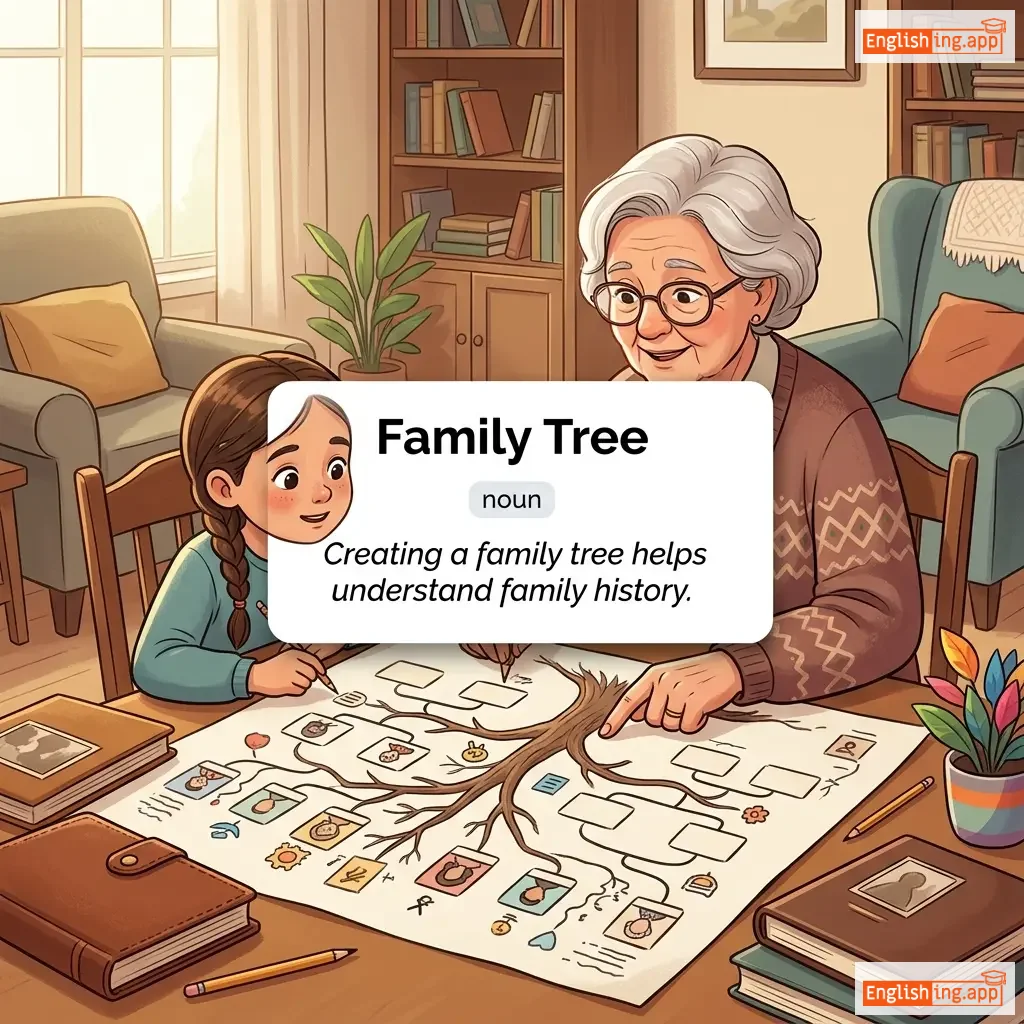
Family Tree definition card — visual illustration of the meaning
noun
ˈfæmɪli triː
পারিবারিক গাছ (paribaarik gaach)

A diagram showing the relationships between people in several generations of a family.

"Creating a family tree helps understand family history."

"একটি পারিবারিক গাছ তৈরি করা পরিবারের ইতিহাস বুঝতে সহায়ক।" (Ekti paribaarik gaach toiri kora poribaarer itihaash bujhte shahaayok.)
noun
/ˈfæm.ɪn/
দুর্ভিক্ষ; (durbhikkho)

extreme scarcity of food; a period when food is extremely scarce

"The severe drought led to widespread famine in the region."

"তীব্র খরা এই অঞ্চলে ব্যাপক দুর্ভিক্ষের কারণ হয়েছিল।" (tibro khora ei onchle byapok durbhikksher karon hoyechhilo.)
verb
/ˈfæmɪʃ/
ভুখার্ত হওয়া (bhukharto howa)

to suffer or cause to suffer from extreme hunger

"The stranded hikers began to famish after several days without food."

"কয়েক দিন খাবার ছাড়া আটকে থাকা পর্বতারোহীরা ক্ষুধার্ত হতে শুরু করল।" (Koyek din khabar chara atke thaka porbotarohira khudharot hote shuru korlo.)
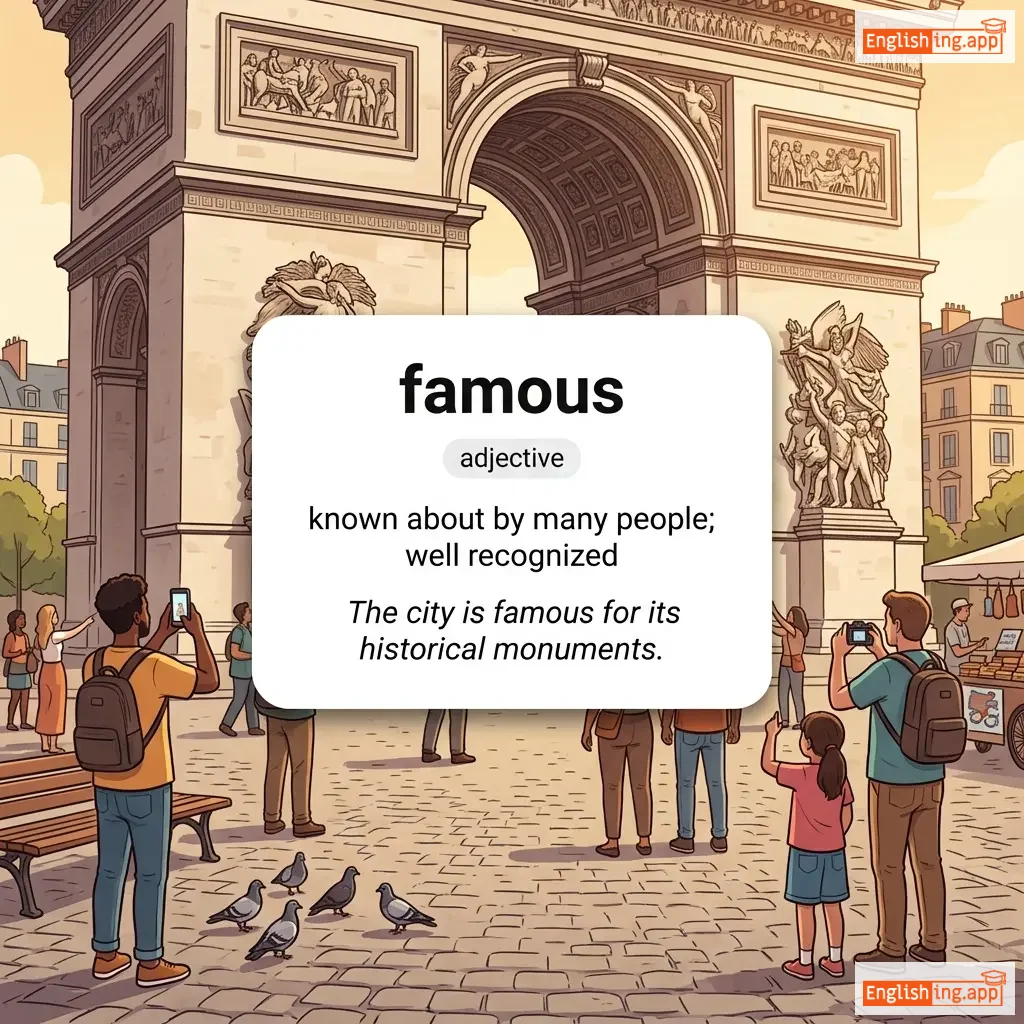
famous definition card — visual illustration of the meaning
adjective
/ˈfeɪməs/
বিখ্যাত (bikhato)

known about by many people; well recognized

"The city is famous for its historical monuments."

"শহরটি তার ঐতিহাসিক স্থাপত্যের জন্য বিখ্যাত।" (Shohorti tar oitihashik sthapatyer jonno bikhato.)
noun
/fæn/
পাখা / ভক্ত (pakha / bhokto)

a device with rotating blades that creates a current of air; also a person who admires or supports someone or something

"The fan kept the room cool during the hot summer day."

"পাখাটি গরমের দিনে ঘরকে ঠান্ডা রেখেছিল।" (Pakha gomer dine ghorke thanda rekhechilo.)
noun
/fəˈnætɪk/
উত্সাহী fanatic (utsahi fanatic)

a person with extreme and uncritical enthusiasm for a cause or belief

"He is a football fanatic, never missing a match of his favorite team."

"সে ফুটবলের জন্য খুব উত্সাহী, তার প্রিয় দলের কোনো ম্যাচ মিস করেন না।" (Se football er jonno khub utsahi, tar priya daler kono match mis koren na.)
adjective
/fəˈnætɪkəl/
অতিশয় উত্সাহী (otishoy utsahi)

showing extreme enthusiasm or obsession

"She has a fanatical interest in collecting vintage stamps."

"তার পুরানো ডাকটিকিট সংগ্রহে চরম আগ্রহ রয়েছে।" (Tar purano daktikitt songrohe chormo agroho royeche.)
noun
/fəˈnætɪsɪzəm/
উদ্বিগ্ন উত্সাহ (udbigno utsah)

the quality of being fanatical; extreme zeal or obsession

"Religious fanaticism can lead to intolerance and conflict."

"ধর্মীয় উত্সাহের অতিরিক্ততা অসহিষ্ণুতা এবং সংঘর্ষের দিকে নিয়ে যেতে পারে।" (Dhormio utsaher otirikto asohishnuta ebong songhorsher dike niye jete pare.)
adjective
/ˈfænsiːd/
কল্পিত, চাওয়া (kolpito, chawa)

imagined, desired, or believed without evidence

"He is a fancied suitor in the eyes of the young lady."

"তার চোখে সে একটি কল্পিত প্রিয়ার্থীরূপে বিবেচিত।" (Tar chokhe se ekti kolpito priyarthi rupe bibechetito.)
noun
/ˈfænsiər/
রুচিশীল ব্যক্তি (ruchishil byakti)

a person who has a special interest in a particular thing or activity, especially animals or hobbies

"He is a fancier of rare birds."

"তিনি বিরল পাখির প্রতি আগ্রহী ব্যক্তি।" (Tini biral pakhir proti agrohi byakti.)
adjective
/ˈfæn.sɪ.fəl/
কল্পনাপ্রবণ, অবাস্তব (kalponapron, obastob)

overimaginative, unrealistic, or whimsical

"The story was too fanciful to be true."

"গল্পটি সত্য হওয়ার জন্য খুবই কল্পনাপ্রবণ ছিল।" (Golpo ti soth hobar jonno khuboi kalponapron chhilo.)
adjective
/ˈfæn.sɪ.ləs/
কল্পনাহীন, সাধারণ (kalponahin, sadharon)

without imagination or creativity; plain or ordinary

"His drawings were simple and fanciless."

"তার অঙ্কনগুলো সহজ এবং কল্পনাহীন ছিল।" (Tar onkon gulo sohoj ebong kalponahin chhilo.)
verb
/ˈfæn.si/
চাওয়া, পছন্দ করা, কল্পনা করা (chawa, pochondo kora, kalpona kora)

to imagine, desire, or like something; to have a liking for

"She fancies a cup of tea in the morning."

"সে সকালে এক কাপ চা পছন্দ করে।" (Se sokale ek kap cha pochondo kore.)
noun
/ˈfæn.feər/
বড় আড়ম্বর, প্রচার (boro adrombor, prochar)

a short ceremonial tune or display of publicity to attract attention

"The new product was launched with much fanfare."

"নতুন পণ্যটি অনেক আড়ম্বরের সাথে চালু করা হয়।" (Notun ponnyo ti onek adromborer sathe chalu kora hoy.)
adjective
/fænˈtæstɪk/
অসাধারণ (osadharon)

extraordinary, extremely good or impressive

"The concert last night was absolutely fantastic."

"গত রাতের কনসার্টটি সম্পূর্ণ অসাধারণ ছিল।" (Goto rater concertti sompurno osadharon chilo.)
noun
/ˈfæntəsi/
কল্পনা (kolpona)

a creation of the imagination, especially something improbable or impossible

"She has a vivid fantasy about traveling to space."

"তার মহাকাশে ভ্রমণের সম্পর্কে উজ্জ্বল কল্পনা আছে।" (Tar mohakashe vromoner somporke ujjol kolpona ache.)
adverb
/fɑːr/
দূর (dur)

at, to, or by a great distance

"The school is far from my house."

"স্কুলটি আমার বাড়ি থেকে দূরে।" (Skulti amar bari theke dure.)
adjective
/ˌfɑːrˈfɛtʃt/
অসাধ্যসাধ্য (osadhyosadhyo)

unlikely to happen or be true; improbable

"His explanation for being late was a bit far-fetched."

"বিলম্বের জন্য তার ব্যাখ্যা কিছুটা অসাধ্যসাধ্য ছিল।" (Bilomber jonno tar byakhya kichuta osadhyosadhyo chilo.)
noun
/fɑːrs/
নাটকীয় অবাস্তবতা (natokio obastobota)

a comic dramatic work using buffoonery and horseplay, or a ridiculous situation

"The meeting turned into a complete farce with everyone arguing."

"সভার পুরোটা কৌতুকপূর্ণ পরিস্থিতিতে পরিণত হয়েছে সবাই তর্ক করছে।" (Sobar purota koutukpurno poristhitite porinoto hoyeche sobai torko korche.)
noun
/fɛər/
ভাড়া (bhara)

the money paid for a journey on public transport; also food or treatment provided

"The bus fare to the city center is five dollars."

"শহরের কেন্দ্রে যাওয়ার বাসের ভাড়া পাঁচ ডলার।" (Shohorer kendro jawar baser bhara pach dollar.)
noun
/ˌfer.ˈwel/
বিদায়; (biday)

an act of parting or of marking someone's departure

"The company organized a farewell party for the retiring manager."

"কোম্পানি অবসরপ্রাপ্ত ব্যবস্থাপকের জন্য একটি বিদায় পার্টির আয়োজন করেছিল।" (company oboshorporapto byabosthapker jonno ekti biday party ayojon korechhilo.)
adjective
/ˌfɑːrˈfetʃt/
অপ্রত্যাশিত বা অসম্ভব (apratashito ba asambhob)

unlikely to happen or be true; improbable

"His explanation for being late sounded farfetched."

"তার দেরি হওয়ার ব্যাখ্যা অবাস্তব মনে হলো।" (Tar deri howar byakkha obastob mone holo.)
noun
/fɑːrm/
খামার (khamar)

an area of land used for growing crops and raising animals

"They live on a farm with many animals."

"তারা অনেক পশু নিয়ে একটি খামারে থাকে।" (Tara onek poshu niye ekti khamare thake.)
noun
/ˈfɑːrmər/
কৃষক (krishok)

a person who owns or manages a farm

"The farmer works hard to grow crops."

"কৃষক ফসল ফলানোর জন্য কঠোর পরিশ্রম করে।" (Krishok foshol folanor jonno kothor porishrom kore.)
noun
/ˈfɑː.mɪŋ/
কৃষিকাজ (krishikaj)

the activity or business of growing crops and raising animals for food or other products

"Farming requires both hard work and knowledge about the land."

"কৃষিকাজে কঠোর পরিশ্রম ও জমি সম্পর্কে জ্ঞান দুটোই প্রয়োজন।" (Krishikaje kothor porishrom o jomi somporke gyan dutoi proyojon.)
verb
/ˈfæs.ɪ.neɪt/
মুগ্ধ করা (mugdho kora)

to attract and hold the attention of someone; to charm or captivate

"The magician's performance fascinated the audience."

"যাদুকরের পারফরম্যান্স দর্শকদের মুগ্ধ করেছিল।" (Jadukorer performance darshokder mugdho korechilo.)
adjective
/ˈfæsɪneɪtɪŋ/
মুগ্ধকর (mugdhokor)

extremely interesting or charming

"The history of ancient Egypt is truly fascinating."

"প্রাচীন মিশরের ইতিহাস সত্যিই মুগ্ধকর।" (Prachin mishorer itihash sottyi mugdhokor.)
noun
/ˌfæs.ɪˈneɪ.ʃən/
আকর্ষণ; মোহ; মুগ্ধতা; (akorshon, moho, mugdhota)

the power to fascinate someone; the state of being intensely interested

"Her fascination with ancient history led her to become an archaeologist."

"প্রাচীন ইতিহাসের প্রতি তার আকর্ষণ তাকে একজন প্রত্নতাত্ত্বিক হতে পরিচালিত করেছিল।" (prachin itihasher proti tar akorshon take ekjon protnotattik hote porichalit korechhilo.)
fascist definition card — visual illustration of the meaning
adjective
ˈfæʃ.ɪst
ফ্যাসিবাদী (fascibadi)

Relating to or characteristic of fascism; extremely authoritarian.

"Fascist governance undermines freedom."

"ফ্যাসিবাদী শাসন স্বাধীনতাকে ক্ষুণ্ন করে।" (Fascibadi shason shadhinotake khunno kore.)
noun
/ˈfæʃ.ən/
ফ্যাশন বা রীতি (fashion ba riti)

a popular or accepted style of clothing, behavior, or way of doing something

"She always keeps up with the latest fashion."

"সে সর্বশেষ ফ্যাশনের সঙ্গে সবসময় আপডেট থাকে।" (Se sarboshesho fashioner shonge sobsomoy update thake.)
adjective
/ˈfæʃənəbəl/
ফ্যাশনেবল (fashionable)

Following the latest styles or trends in clothing, behavior, or ideas

"She always wears fashionable clothes to every party."

"সে প্রতিটি পার্টিতে সবসময় ফ্যাশনেবল পোশাক পরেন।" (Se protiti partite sobsomoy fashionable poshak poren.)
adjective, adverb
/fæst/
দ্রুত, শক্তভাবে স্থির (druto, shokto vabe sthir)

moving or capable of moving at high speed; firm or securely fixed

"He drives very fast on the highway."

"সে হাইওয়েতে খুব দ্রুত গাড়ি চালায়।" (Se highway te khub druto gari chalay.)
verb
/ˈfæsən/
মজবুতভাবে সংযুক্ত করা (mojbutbhabe songjukt kora)

To attach or secure something firmly in place

"Please fasten your seatbelt before the plane takes off."

"অনুগ্রহ করে প্লেন ওড্ডান হওয়ার আগে আপনার সীটবেল্ট মজবুতভাবে সংযুক্ত করুন।" (Onugroho kore plen oddan howar age apnar seatbelt mojbutbhabe songjukt korun.)
adjective, adverb
/ˈfæstər/
দ্রুততর (drutotor)

moving or able to move quickly; more quickly than usual

"This car is faster than the old one."

"এই গাড়িটি পুরনোটির চেয়ে দ্রুততর।" (Ei gariti puronotir cheye drutotor.)
adjective
/ˈfæstɪst/
সর্বোচ্চ দ্রুত (sarboccho druto)

moving or capable of moving at the highest speed

"Usain Bolt is the fastest runner in the world."

"ইউসেইন বোল্ট বিশ্বের সবচেয়ে দ্রুত দৌড়বিদ।" (Usain Bolt bishwer sochoi druto dourbid.)
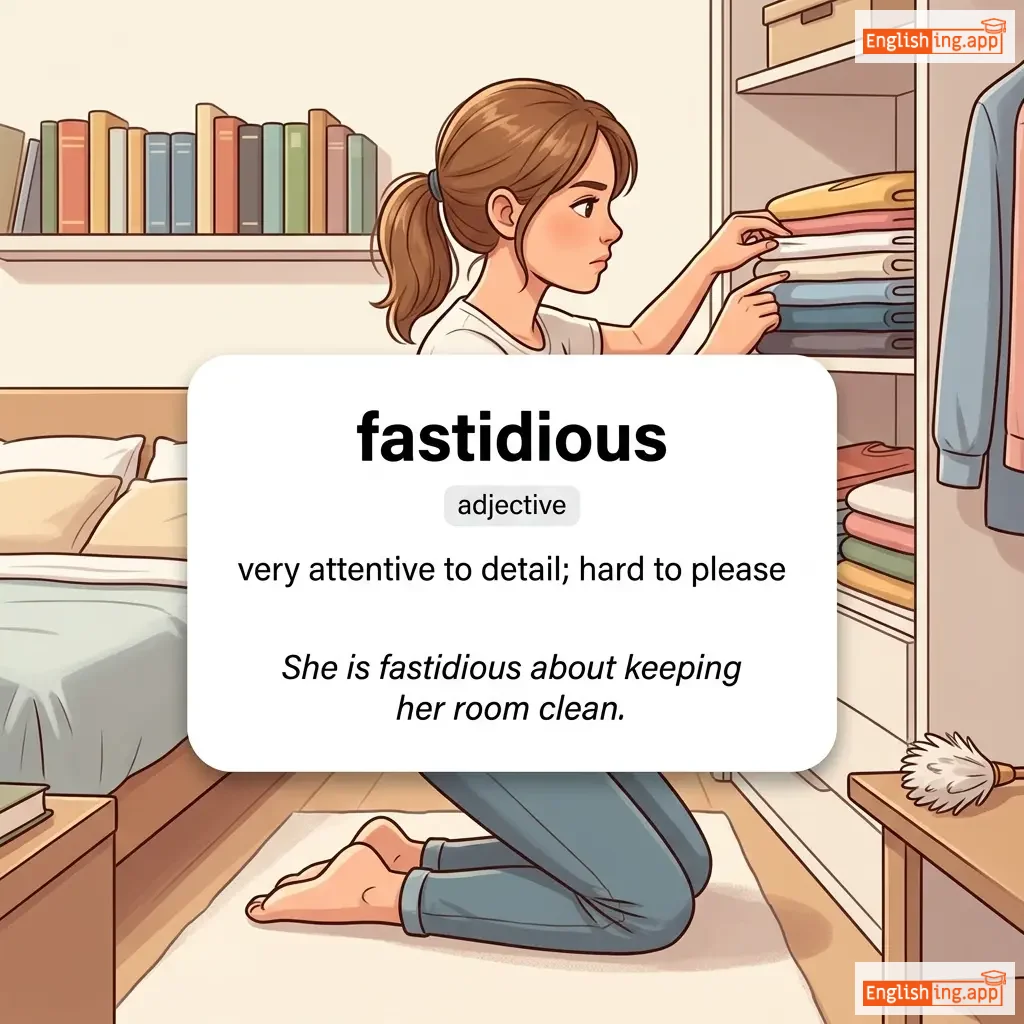
fastidious definition card — visual illustration of the meaning
adjective
/fæˈstɪdiəs/
খুঁতখুঁতে, অতিরিক্ত যত্নশীল (khutkhute, otirikto jotnoshil)

very attentive to detail; hard to please

"She is fastidious about keeping her room clean."

"সে তার রুম পরিষ্কার রাখার ব্যাপারে অত্যন্ত যত্নশীল।" (Se tar room porishkar rakhar byapare atonto jotnoshil.)
adjective, noun
/fæt/
মোটা (mota)

having a lot of excess flesh; a natural oily substance in animal bodies

"Eating too much fast food can make you fat."

"অতিরিক্ত ফাস্ট ফুড খাওয়া আপনাকে মোটা করে দিতে পারে।" (Otirikto fast food khaoa apnake mota kore dite pare.)
adjective
/ˈfeɪtl/
মারাত্মক (maratmak)

causing death; leading to disaster

"The accident proved fatal for the driver."

"দুর্ঘটনাটি চালকের জন্য মারাত্মক প্রমাণিত হয়েছিল।" (Durghotonati chaloker jonno maratmak promanito hoyechilo.)
noun
/ˈfeɪ.tə.lɪ.zəm/
দুর্যোগবাদের বিশ্বাস (durjogbader bishwas)

the belief that all events are predetermined and inevitable

"He embraced fatalism, believing that nothing he did could change his destiny."

"তিনি দুর্যোগবাদের বিশ্বাসকে গ্রহণ করেছিলেন, বিশ্বাস করেছিলেন যে তার কিছু করার দ্বারা তার ভাগ্য পরিবর্তন করা সম্ভব নয়।" (Tini durjogbader bishwaske grohon korechilen, bishwas korechilen je tar kichu korar dara tar bhagya poriborton kora sombhob noy.)
noun
/fəˈtæləti/
মৃত্যু (mrityu)

An occurrence of death by accident, disaster, or violence.

"The accident resulted in one fatality."

"দুর্ঘটনায় একজনের মৃত্যু হয়েছে।" (Durghotonay ekjoner mrityu hoyeche.)
adverb
/ˈfeɪ.təl.i/
মারাত্মকভাবে; (maratmok-bhabe)

in a way that causes death; with deadly consequences; critically

"The accident fatally injured two passengers."

"দুর্ঘটনায় দুজন যাত্রী মারাত্মকভাবে আহত হয়েছিল।" (durghotonay dujon jatri maratmok-bhabe ahoto hoyechhilo.)
noun
/feɪt/
ভাগ্য (vaggo)

the development of events beyond a person's control, regarded as determined by a supernatural power

"She believed it was her fate to become a teacher."

"সে বিশ্বাস করত যে শিক্ষক হওয়া তার ভাগ্যে লেখা ছিল।" (Se bishash korto je shikkhok howa tar vaggye lekha chilo.)
adjective
/ˈfeɪt.fəl/
নির্ধারক বা ভয়ঙ্কর (nirdharok ba voyongkor)

having significant or disastrous consequences

"Their fateful decision changed the course of history."

"তাদের নির্ধারক সিদ্ধান্ত ইতিহাসের ধারাকে পরিবর্তন করেছিল।" (Tader nirdharok siddhanto itihasher dharake poriborton korechilo.)