ভোকাবুলারিসমূহ

ইংরেজি শব্দের বাংলা অর্থ | English to Bangla Word Meaning Dictionary

noun
/frɪdʒ/
ফ্রিজ (frij)

a household appliance used to keep food and drinks cold to preserve freshness

"I put the milk back in the fridge after breakfast."

"আমি নাশতার পর দুধটা ফ্রিজে রেখে দিলাম।" (ami nashtar por dudhta frije rekhe dilam)
noun
/fraɪd raɪs/
ভাজা ভাত, মুড়ি (bhaja bhat, muri)

a dish of cooked rice that has been stir-fried in a wok or frying pan

"We ordered chicken fried rice from the Chinese restaurant."

"আমরা চাইনিজ রেস্তোরাঁ থেকে চিকেন ভাজা ভাত অর্ডার করেছি।" (amra chinese restorant theke chicken bhaja bhat order korechi)
noun
/frɛnd/
বন্ধু (bondhu)

a person with whom one has a bond of mutual affection

"He is my best friend."

"সে আমার সবচেয়ে ভালো বন্ধু।" (Se amar sobcheye bhalo bondhu.)
adjective
/ˈfrɛndli/
বন্ধুসুলভ (bondhusulobh)

Kind and pleasant; showing goodwill and affection.

"The shop owner is very friendly to new customers."

"দোকানদার নতুন ক্রেতাদের প্রতি খুব বন্ধুসুলভ।" (Dokanadar notun kretader proti khub bondhusulobh.)
noun
/ˈfrɛndʃɪp/
বন্ধুত্ব (bondhutto)

A close and trusting relationship between two or more people.

"Their friendship has lasted since childhood."

"তাদের বন্ধুত্ব শৈশব থেকে টিকে আছে।" (Tader bondhutto shoishob theke tike ache.)
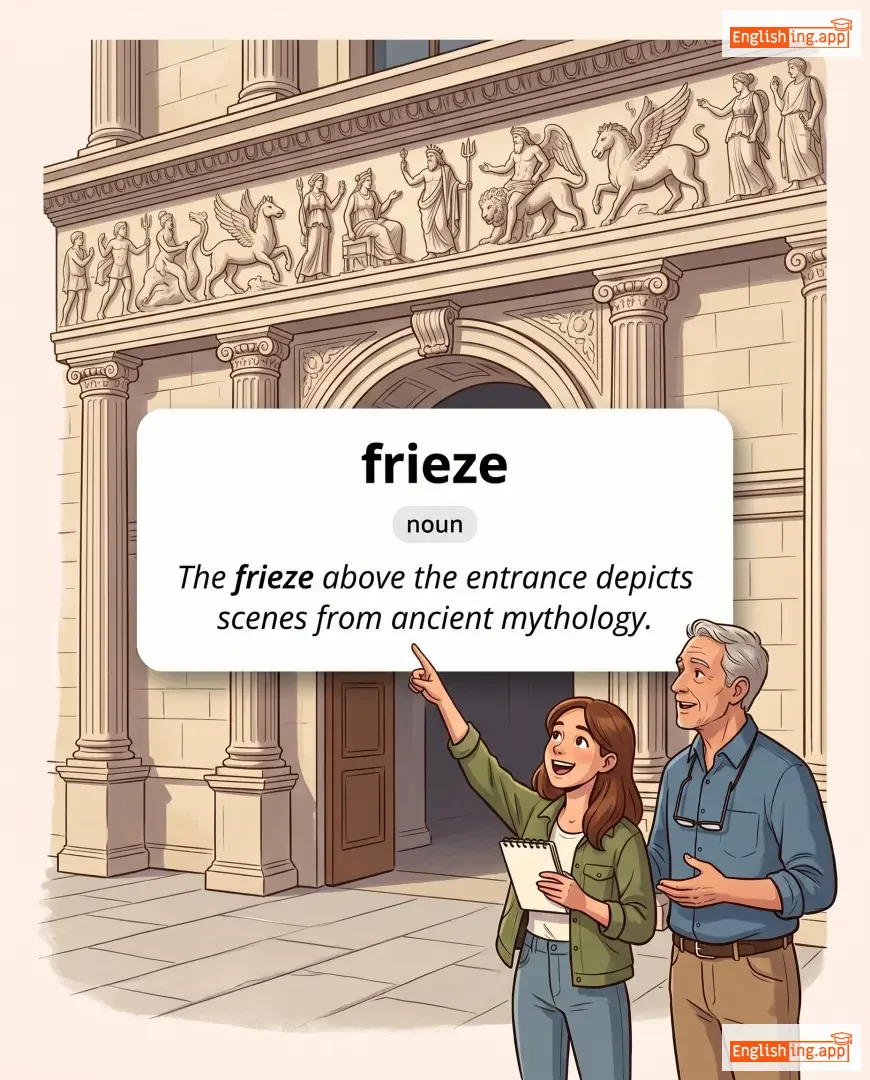
frieze definition card — visual illustration of the meaning
noun
/friːz/
অলঙ্কৃত ব্যান্ড (olonkrito band)

a decorative horizontal band, often sculpted or painted, usually on a wall near the ceiling

"The frieze above the entrance depicts scenes from ancient mythology."

"এন্ট্রান্সের উপরের ফ্রিজে প্রাচীন পুরাণের দৃশ্য খোদাই করা আছে।" (Entrance er upor frije prachin puraner drissho khodai kora ache.)
noun
/fraɪt/
আতঙ্ক; ভয়; শঙ্কা; (atongko, bhoy, shonka)

a sudden intense feeling of fear; a shock or surprise that causes fear

"The loud thunder gave her such a fright that she dropped her coffee cup."

"জোরে বজ্রধ্বনি তাকে এত ভয় দিয়েছিল যে তার কফির কাপ পড়ে গেল।" (jore bojrodhoni take eto bhoy diyechhilo je tar coffee cup pore gelo.)
verb
/ˈfraɪtən/
ভয় দেখানো (bhoy dekhano)

to cause fear or alarm in someone

"The loud noise frightened the child."

"উচ্চ শব্দটি শিশুটিকে ভয় দেখিয়েছিল।" (uccho shobdoti shishutike bhoy dekhiechilo)
adjective
/ˈfraɪtənd/
ভীত (bhito)

feeling fear or anxiety; scared

"The child was frightened by the loud noise."

"জোরে শব্দে শিশুটি ভীত হয়ে পড়েছিল।" (jore shobde shishuti bhito hoye porechilo)
adjective
/ˈfraɪtfəl/
ভয়ঙ্কর (voyonkor)

causing fear or horror; very unpleasant

"The hikers faced frightful weather conditions on the mountain."

"হাইকাররা পাহাড়ে ভয়ঙ্কর আবহাওয়ার সম্মুখীন হয়েছিল।" (Hikarra pahare voyonkor abohawar sommukhin hoyechhilo.)
adjective
/ˈfrɪdʒɪd/
অত্যন্ত শীতল (ottontho shital)

extremely cold in temperature; lacking warmth or friendliness

"The explorers endured frigid conditions in the Arctic."

"এক্সপ্লোরাররা আর্কটিকে অত্যন্ত ঠান্ডা পরিবেশ সহ্য করেছিল।" (Explorerra Arctice ottontho thanda poribesh sohho korechhilo.)
noun
/ˌfrɪdʒɪˈdɛːriəm/
ঠান্ডা স্নানাগার (thanda snanagar)

a large cold pool in ancient Roman baths used for cooling off after hot baths

"The ruins of the Roman frigidarium are still visible today."

"রোমান ফ্রিজিডারিয়ামের ধ্বংসাবশেষ আজও দেখা যায়।" (Roman frigidarium er dhongshabosesh aaj o dekha jay.)
noun
/frɪndʒ/
প্রান্ত / প্রান্তিক সজ্জা (pranto / prantik sojja)

A decorative border of threads; the outer edge or margin of something.

"The festival had a fringe of small independent performances."

"উৎসবে ছোট ছোট স্বাধীন পরিবেশনার একটি প্রান্ত ছিল।" (Utsobe choto choto shadhin poribeshonar ekti pranto chhilo.)
verb
/frɪsk/
তল্লাশি করা (tollashi kora)

To search a person by patting their clothing to check for concealed items.

"The security guard frisked the man at the entrance."

"প্রহরী প্রবেশদ্বারে লোকটিকে তল্লাশি করল।" (Prohori probeshdware loktike tollashi korlo.)
adjective
/ˈfrɪski/
প্রাণবন্ত; প্রফুল্ল; চঞ্চল; দুষ্টুমি-প্রবণ; (frisky)

lively; energetic; playful; mischievous

"The frisky puppy ran around the garden playfully."

"চঞ্চল কুকুরছানাটি বাগানে খেলাধুলা করে দৌড়াচ্ছিল।" (chonchol kukurchhanta bagane kheladhula kore dourache)
verb
/ˈfrɪtər/
অপচয় করা (opochoy kora)

To waste time, money, or energy on trivial matters.

"He frittered away his savings on unnecessary gadgets."

"সে তার সঞ্চয় অপ্রয়োজনীয় যন্ত্রে অপচয় করেছিল।" (Se tar sonchoy oprobhoyojoniyo jontre opochoy korechhilo.)
noun
/frɪˈvɒləti/
তুচ্ছতা / হালকাভাব (tuchchhota / halkabhabe)

Lack of seriousness; silly or trivial behavior.

"The teacher discouraged frivolity during the exam."

"শিক্ষক পরীক্ষার সময় তুচ্ছ আচরণ নিরুৎসাহিত করেছিলেন।" (Shikkhok porikshar somoy tuchcho acharon nirutsahit korechhilen.)
adjective
/ˈfrɪvələs/
তুচ্ছ / গুরত্বহীন (tuchcho / gurutohin)

Not having any serious purpose or value; silly or unimportant.

"She dismissed the frivolous complaint quickly."

"সে দ্রুত তুচ্ছ অভিযোগটি খারিজ করে দিল।" (Se druto tuchcho obhijogti kharij kore dilo.)
verb
/frɪz/
চুল কুঁকড়ানো বা এলোমেলো হওয়া (chul kukrano ba elomelo howa)

to form into small, tight curls or cause hair to become fuzzy and tangled

"The humid weather caused her hair to frizz."

"আর্দ্র আবহাওয়া তার চুল কুঁকড়ে দিয়েছিল।" (Ardro abohawa tar chul kukre diyechilo.)
verb
/ˈfrɪzəl/
তেলে ভাজা এবং কুঁকড়ানো (tele vaja ebong kukrano)

to fry something until it becomes crisp and curled, or to make a sizzling noise

"The bacon began to frizzle in the pan."

"বেকনটি প্যানে ভাজতে ভাজতে খসখস শব্দ করছিল।" (Bekon ti pyan e vajte vajte khoshkhos shobdo korchilo.)
noun
/frɒk/
মেয়েদের পোশাক (meyeder poshak)

a woman's or girl's dress; a loose outer garment

"She wore a beautiful frock to the party."

"সে পার্টিতে একটি সুন্দর ফ্রক পরেছিল।" (Se party te ekti sundor frok porechilo.)
noun
/frɒɡ/
ব্যাঙ (byāṅ)

a tailless amphibian with a short squat body, moist smooth skin, and very long hind legs for leaping

"The frog jumped into the pond with a splash."

"ব্যাঙটি ঝপাং শব্দে পুকুরে লাফিয়ে পড়ল।" (byāṅṭi jhopāṅ shobde pukure lāphiye poṛolo.)
verb
/ˈfrɒlɪk/
আনন্দে খেলা (anonde khela)

to play and move about cheerfully, energetically, or playfully

"The children frolicked in the garden all afternoon."

"শিশুরা বিকেল জুড়ে বাগানে আনন্দে খেলছিল।" (Shishura bikel jure bagane anonde khelchhilo.)
adjective
/ˈfrɒlɪksəm/
আনন্দপ্রিয় (anondopriyo)

full of playful spirit; lively and fun-loving

"The frolicsome puppy kept everyone entertained."

"আনন্দপ্রিয় কুকুরছানাটি সবাইকে বিনোদিত রেখেছিল।" (Anondopriyo kukurchanati sobaike binodito rekhechhilo.)
preposition
/frəm/ or /frʌm/
থেকে (theke)

Used to indicate the starting point of a journey, action, or source.

"She came from Dhaka to visit her family."

"সে পরিবারকে দেখতে ঢাকায় থেকে এসেছিল।" (Se poribarke dekhte Dhaka theke esechilo.)
noun
/frɒnd/
পাতা (pata)

A large, divided leaf of a fern, palm, or similar plant.

"The fern's frond stretched gracefully over the garden path."

"ফার্নের পাতা সুন্দরভাবে বাগানের পথের উপর ছড়িয়ে পড়েছিল।" (Farner pata sundorbhabe baganer pother upar choriye porechhilo.)
noun
/frʌnt/
সামনে (samne)

the forward-facing part of something

"The house has a garden in front."

"বাড়ির সামনে একটি বাগান আছে।" (Barir samne ekti bagan ache.)
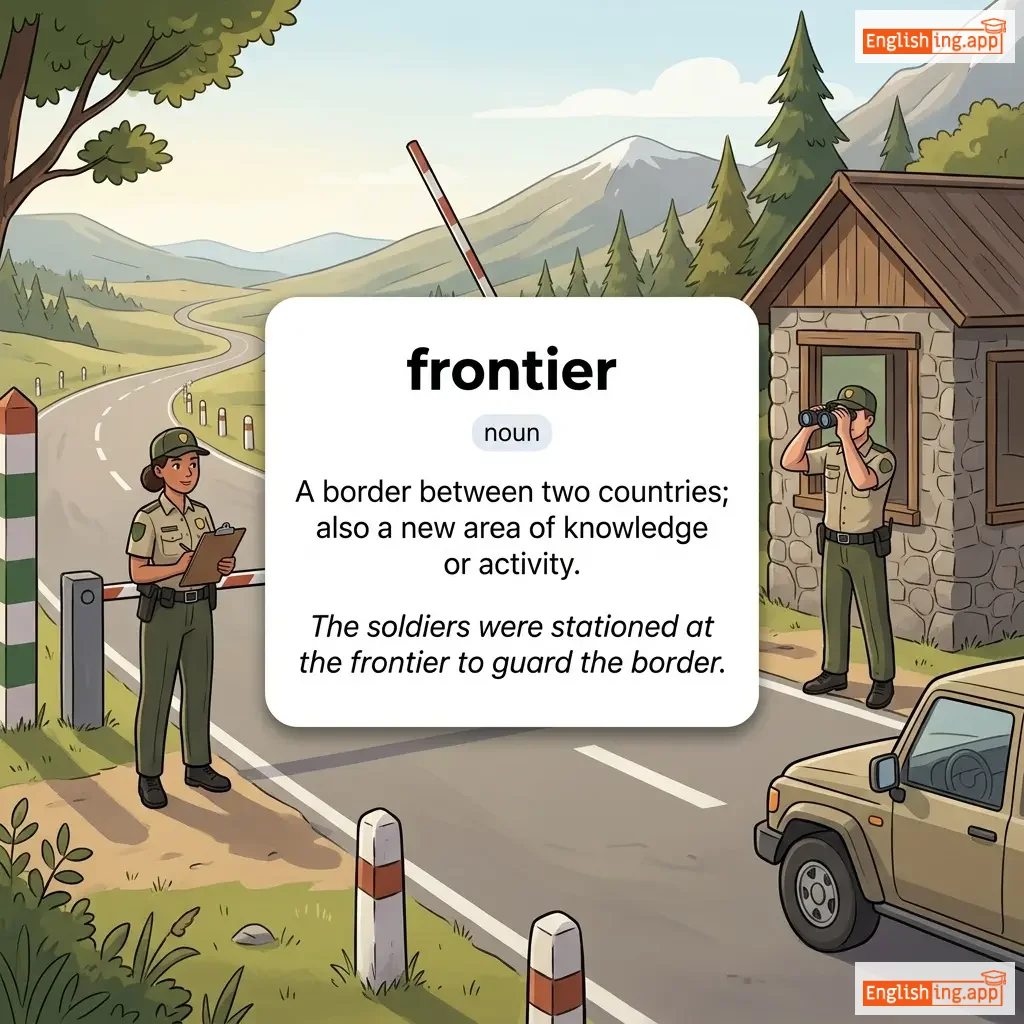
frontier definition card — visual illustration of the meaning
noun
/ˈfrʌntɪə(r)/
সীমান্ত (simanto)

A border between two countries; also a new area of knowledge or activity.

"The soldiers were stationed at the frontier to guard the border."

"সৈন্যরা সীমান্তে প্রহরার জন্য অবস্থান করেছিল।" (Soinyora simante prohorar jonno obosthan korechhilo.)
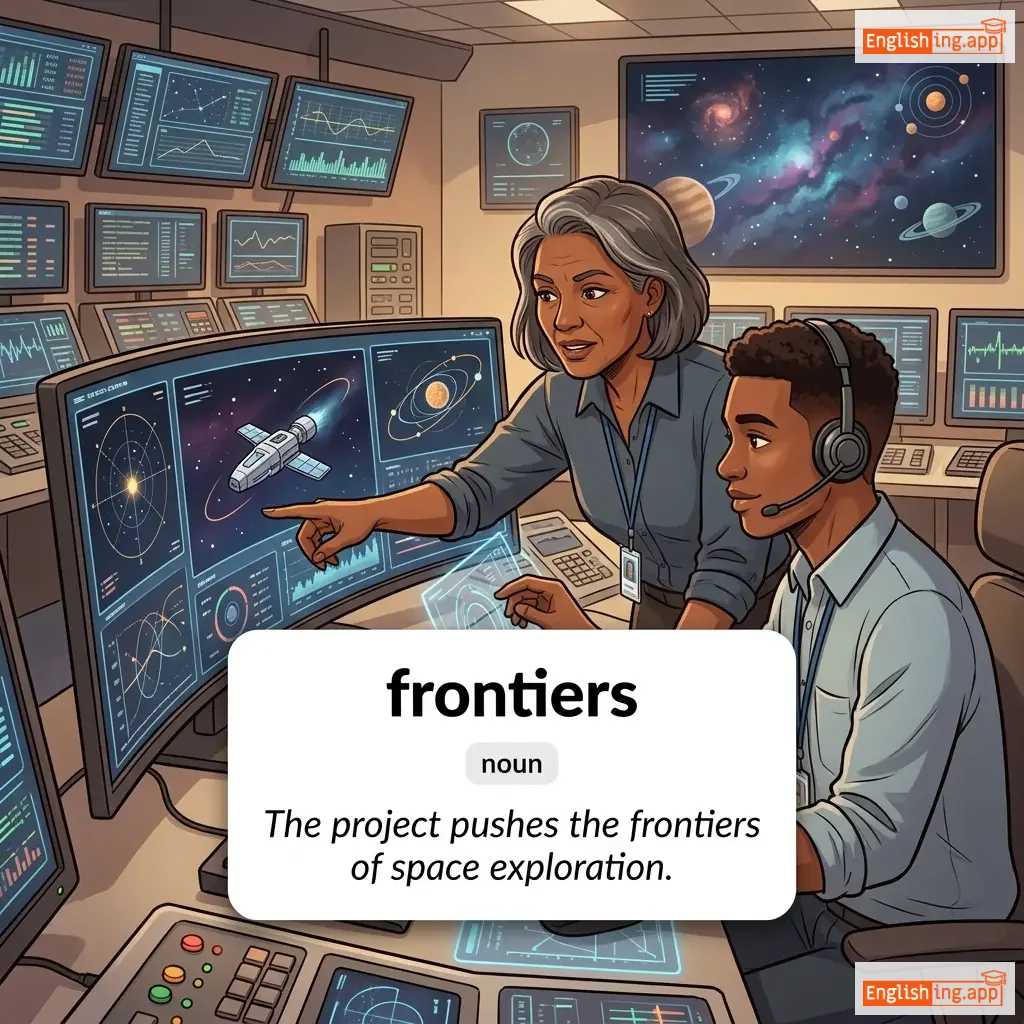
frontiers definition card — visual illustration of the meaning
noun
ˈfrʌn.tɪərz
নতুন ক্ষেত্র (notun khetro)

The extreme limit of settled land beyond which lies wilderness; the limits of knowledge or achievement in a particular field.

"The project pushes the frontiers of space exploration."

"প্রকল্পটি মহাকাশ অনুসন্ধানের নতুন ক্ষেত্র উন্মোচন করে।" (Prokolpoti mohakash onushandhaner notun khetro unmocon kore.)
adjective
/ˈfrɒθi/
ফেনাযুক্ত (fenajukto)

Full of or covered with small bubbles; light and insubstantial.

"She ordered a cup of frothy cappuccino."

"সে একটি ফেনাযুক্ত ক্যাপুচিনোর কাপ অর্ডার করেছিল।" (Se ekti fenajukto cappuccino r cup order korechhilo.)
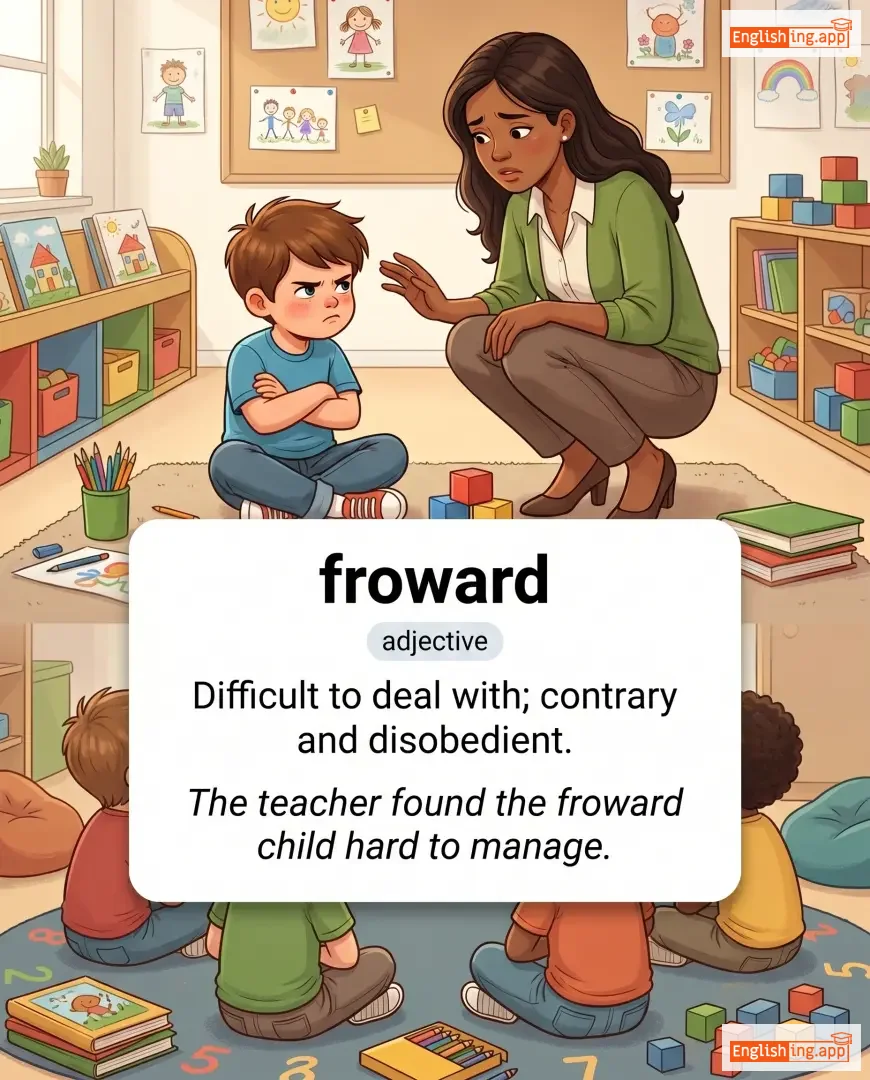
froward definition card — visual illustration of the meaning
adjective
/ˈfrəʊərd/
একগুঁয়ে (ekguye)

Difficult to deal with; contrary and disobedient.

"The teacher found the froward child hard to manage."

"শিক্ষক অবাধ্য শিশুটিকে সামলাতে কষ্ট পাচ্ছিলেন।" (Shikkhok obaddho shishutike samlate koshto pachchhilen.)
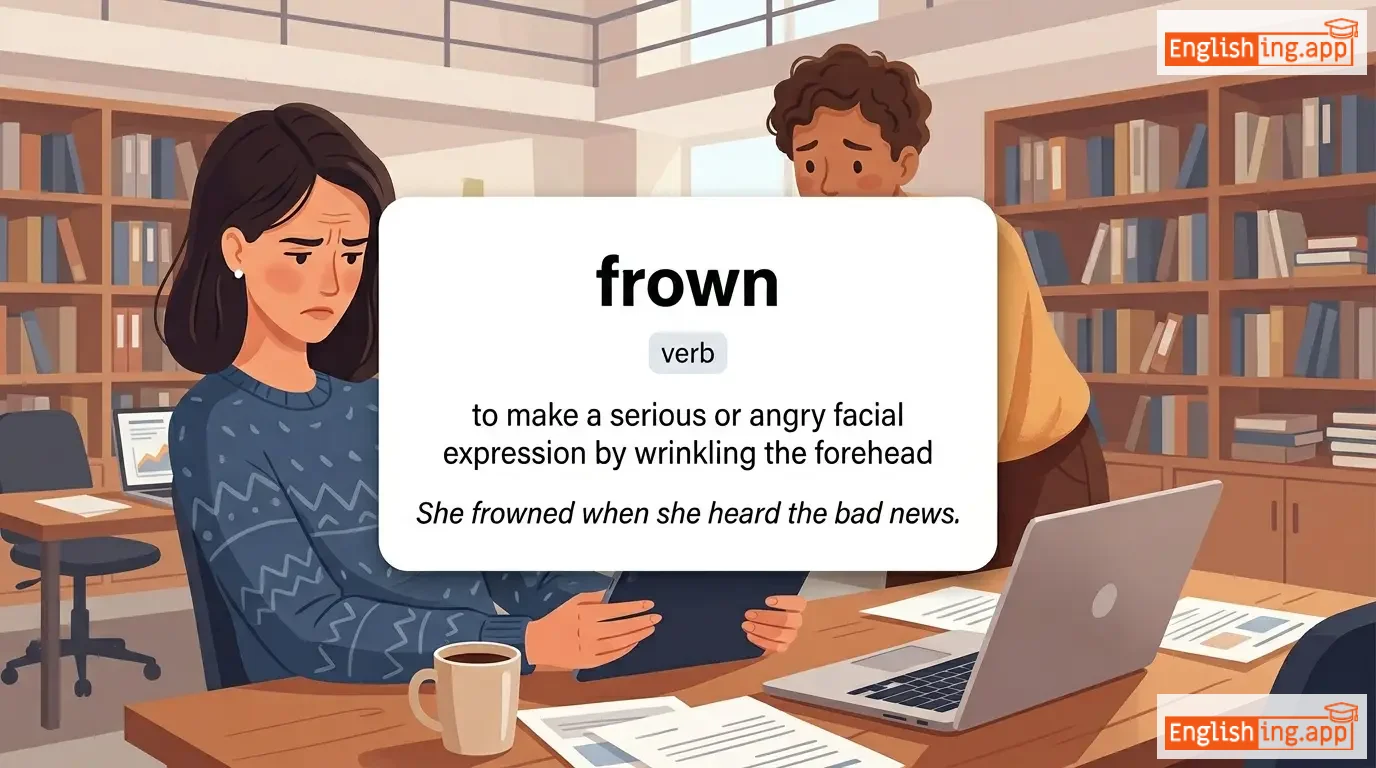
frown definition card — visual illustration of the meaning
verb
/fraʊn/
ভ্রুকুটি করা (vrikuti kora)

to make a serious or angry facial expression by wrinkling the forehead

"She frowned when she heard the bad news."

"খারাপ খবর শুনে সে ভ্রুকুটি করল।" (Kharap khobor shune se vrikuti korlo.)
adjective
/ˈfraʊzi/
অগোছালো (ogochhalo)

Scruffy and neglected in appearance; musty or stale in smell.

"He wore a frowsy old jacket that smelled of damp."

"সে একটি অগোছালো পুরোনো জ্যাকেট পরেছিল যেটাতে স্যাঁতসেঁতে গন্ধ ছিল।" (Se ekti ogochhalo purono jacket porechhilo jetate sathsate gondho chhilo.)
adjective
/ˈfraʊzi/
অপরিচ্ছন্ন (aporichchhanno)

Unkempt, messy, or having a musty, unpleasant smell.

"He entered the room with a frowzy appearance after sleeping on the couch."

"সে সোফায় ঘুমানোর পর অগোছালো চেহারা নিয়ে ঘরে প্রবেশ করল।" (Se sofay ghumano por agochhalo chehara niye ghore probesh korlo.)
adjective
/ˈfroʊzən/
জমে যাওয়া (jome jaoa)

preserved by being made extremely cold; turned into ice

"The lake was completely frozen during winter."

"শীতকালে হ্রদটি সম্পূর্ণভাবে জমে গিয়েছিল।" (Sheetkale hrodti sompurno vabe jome giyechhilo.)
verb
/ˈfrʌktɪˌfaɪ/
ফলবান করা (folban kora)

To make fruitful or productive; to bear fruit.

"The new policies will help fructify the economic potential of the region."

"নতুন নীতিগুলি অঞ্চলের অর্থনৈতিক সম্ভাবনাকে ফলবান করতে সাহায্য করবে।" (Notun nitiguli onchol er orthonaitik sombhabanake folban korte sahajjo korbe.)
adjective
/ˈfruːɡəl/
মিতব্যয়ী (mitbai)

Economical in use or expenditure; avoiding waste.

"She is very frugal and always saves a portion of her income."

"সে খুব মিতব্যয়ী এবং সর্বদা তার আয়ের একটি অংশ সঞ্চয় করে।" (Se khub mitbai ebong sorboda tar aeyer ekti angsho sonchoy kore.)
frugality definition card — visual illustration of the meaning
noun
/fruːˈɡæləti/
মিতব্যয়িতা (mitbaiyta)

The quality of being economical with resources; avoiding waste.

"His frugality allowed him to save enough money to buy a house."

"তার মিতব্যয়িতা তাকে যথেষ্ট অর্থ সঞ্চয় করতে সাহায্য করেছিল যাতে সে একটি বাড়ি কিনতে পারে।" (Tar mitbaiyta take jothoestho ortho sonchoy korte sahajjo korechhilo jate se ekti bari kin te pare.)
noun
/fruːt/
ফল (fol)

The sweet and fleshy product of a plant that contains seeds.

"Mango is my favorite fruit."

"আম আমার প্রিয় ফল।" (Am amar priyo fol.)
adjective
/ˈfruːtfəl/
ফলপ্রসূ (folproshu)

Producing good results or being productive.

"Their meeting was fruitful and led to many new ideas."

"তাদের মিটিং ফলপ্রসূ ছিল এবং অনেক নতুন ধারণা এনেছিল।" (Tader meeting folproshu chhilo ebong onek notun dharana ene chhilo.)
noun
/fruˈɪʃən/
বাস্তবায়ন (bastobayon)

The realization or fulfillment of a plan, project, or desire.

"Her dream of becoming a doctor finally came to fruition."

"ডাক্তার হওয়ার তার স্বপ্ন অবশেষে বাস্তবায়িত হলো।" (Daktar howar tar shopno obosheshe bastobayito holo.)
adjective
/ˈfruːt.ləs/
নিষ্ফল; ব্যর্থ; বিফল; (nissfol)

unsuccessful; futile; pointless;

"After hours of searching, their efforts proved fruitless."

"ঘন্টার পর ঘন্টা খোঁজার পর, তাদের প্রচেষ্টা নিষ্ফল প্রমাণিত হয়েছে।" (ghontar por ghonta khonjar por, tader prochesta nissfol promanito hoyeche)
verb
/ˈfrʌstreɪt/
হতাশ করা (hotash kora)

To prevent someone from accomplishing something; to cause feelings of annoyance or disappointment.

"The constant delays frustrated the team."

"নিরন্তর বিলম্ব দলকে হতাশ করেছিল।" (Nirontor bilomb dolke hotash korechilo.)
adjective
/ˈfrʌstreɪtɪd/
হতাশ (hotash)

feeling annoyed or upset because of inability to achieve something

"She felt frustrated after failing the exam."

"সে পরীক্ষায় ফেল করার পর ফ্রাস্ট্রেটেড অনুভব করেছিল।" (Se porikhay fel korar por frustrated onubhob korechilo.)
adjective
/ˈfrʌstreɪtɪŋ/
বিরক্তিকর (biroktikor)

causing annoyance or dissatisfaction

"The slow internet connection was really frustrating."

"ধীর ইন্টারনেট সংযোগ সত্যিই ফ্রাস্ট্রেটিং ছিল।" (Dhir internet songjog sotyi frustrating chhilo.)
noun
/frʌˈstreɪʃən/
হতাশা (hotasha)

The feeling of being upset or annoyed due to inability to achieve something.

"He felt deep frustration when his plans failed."

"তার পরিকল্পনা ব্যর্থ হলে সে গভীর হতাশা অনুভব করেছিল।" (Tar porikolpona byartho hole se gobhir hotasha onuvob korechilo.)
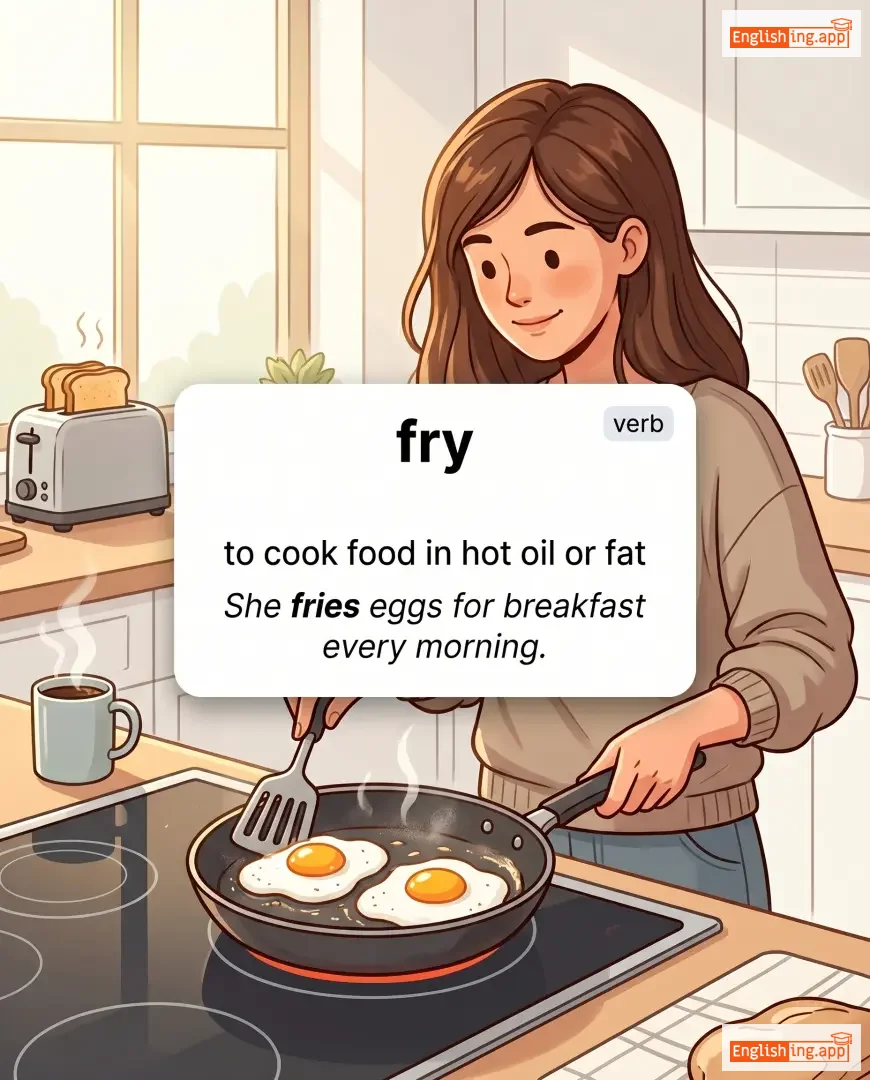
fry definition card — visual illustration of the meaning
noun
/fraɪ/
ভুঁটি মাছ (bhunti mach)

young fish; small fish; to cook food in hot fat or oil

"The fisherman caught many small fry in his net."

"জেলে তার জালে অনেক ছোট মাছ ধরেছে।" (jele tar jale onek choto mach dhoreche)
adjective, adverb (informal, vulgar)
/ˈfʌkɪŋ/
অত্যন্ত বাজে (অশালীন জোরালো শব্দ) (otonto baje (oshalin joralo shobdo))

used for emphasis, often expressing anger or frustration (vulgar slang)

"It was a fucking disaster!"

"এটা একেবারে ভয়াবহ বিপর্যয় ছিল!" (Eta ekebare bhoyaboh biporjoy chhilo!)
verb
/ˈfʌdəl/
বিভ্রান্ত করা (bibhranto kora)

To confuse or stupefy, especially with alcohol or overwhelming information.

"The complicated instructions fuddled the new employees."

"জটিল নির্দেশনাগুলি নতুন কর্মচারীদের বিভ্রান্ত করেছিল।" (Jotil nirdeshnaguli notun kormochari der bibhranto korechilo.)
noun/verb
/ˈfjuːəl/
জ্বালানি (jwalani)

A material such as coal, gas, or oil that is burned to produce energy; also to supply with energy or power.

"The car needs fuel to run efficiently."

"গাড়ি চালানোর জন্য জ্বালানি প্রয়োজন।" (Gari chalanoar jonno jwalani proyojon.)