ভোকাবুলারিসমূহ

ইংরেজি শব্দের বাংলা অর্থ | English to Bangla Word Meaning Dictionary

adjective
/ˈfræʤaɪl/
ভঙ্গুর (bhongur)

Easily broken or damaged; delicate.

"Be careful with that vase, it's very fragile."

"ওই ফুলদানি নিয়ে সাবধান থাকো, এটা খুব ভঙ্গুর।" (Oi phuldani niye sabdhan thako, eta khub bhongur.)
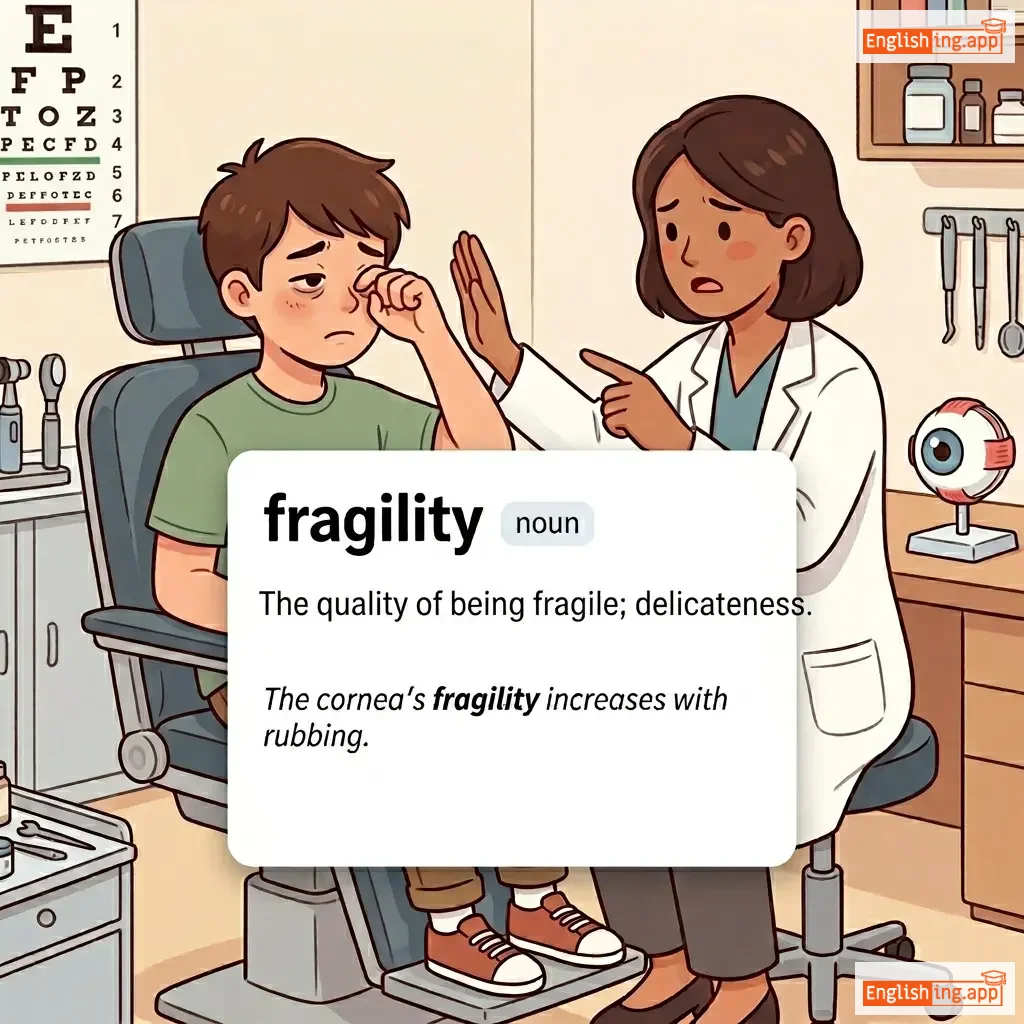
fragility definition card — visual illustration of the meaning
noun
/frəˈdʒɪl.ɪ.ti/
ভঙ্গুরতা (bhongurota)

The quality of being fragile; delicateness.

"The cornea's fragility increases with rubbing."

"চোখের কর্নিয়ার ভঙ্গুরতা ঘষার ফলে বৃদ্ধি পায়।" (Chokher korniyar bhongurota ghoshar fole briddhi pay.)
noun
/ˈfræɡmənt/
খণ্ড (khondo)

a small piece broken off something larger

"He found a fragment of ancient pottery near the river."

"সে নদীর কাছে প্রাচীন মাটির পাত্রের একটি খণ্ড খুঁজে পেয়েছিল।" (Se nodir kache prachin matir patrer ekti khondo khuje peyechhilo.)
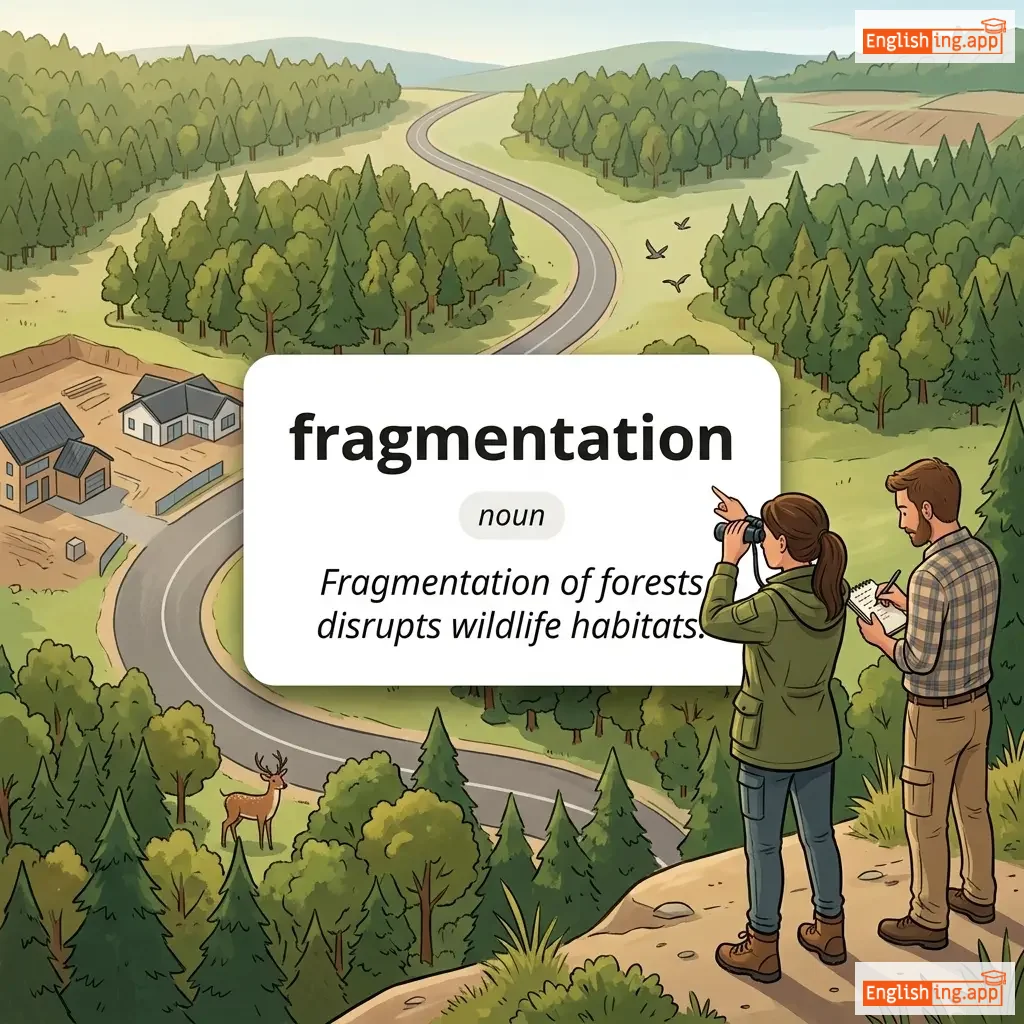
fragmentation definition card — visual illustration of the meaning
noun
/ˌfræɡ.mənˈteɪ.ʃən/
বিভাজন বা খণ্ডন (bibhajon ba khandon)

The process of breaking into fragments; division of habitat into isolated patches.

"Fragmentation of forests disrupts wildlife habitats."

"বনভূমির বিভাজন বন্যপ্রাণীর বাসস্থানকে ব্যাহত করে।" (Bonbhumir bibhajon bonnypranir bashsthankhe bahhat kore.)
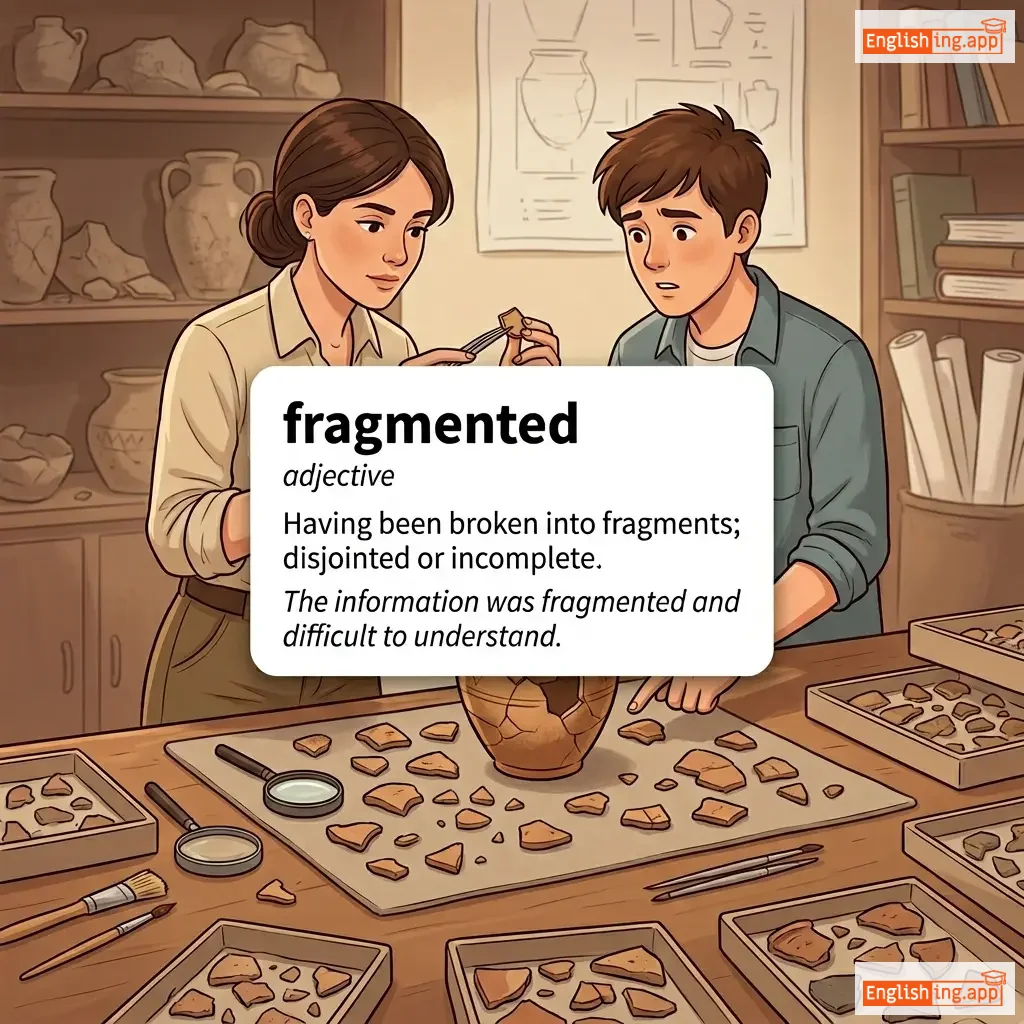
fragmented definition card — visual illustration of the meaning
adjective
/ˈfræɡməntɪd/
খণ্ডিত, বিভক্ত, অসম্পূর্ণ (khondito, bibhokto, oshompurno)

Having been broken into fragments; disjointed or incomplete.

"The information was fragmented and difficult to understand."

"তথ্যগুলো ফ্র্যাগমেন্টেড হওয়ায় বুঝতে কষ্ট হয়েছে।" (Tothyogulo fragmented hoay bujhte koshto hoyeche.)
noun
/ˈfreɪɡrəns/
সুগন্ধ (sugondho)

A pleasant, sweet smell.

"The fragrance of fresh flowers filled the room."

"তাজা ফুলের সুগন্ধ ঘর ভরে দিয়েছিল।" (Taja fuler sugondho ghor bhore diyechhilo.)
adjective
/freɪl/
দুর্বল (durbol)

Physically weak and delicate.

"The old man was too frail to walk without help."

"বৃদ্ধ মানুষটি সাহায্য ছাড়া হাঁটার জন্য খুব দুর্বল ছিলেন।" (Briddho manush ti sahajjo chara hatar jonno khub durbol chhilen.)
noun
/ˈfreɪlti/
দুর্বলতা (durbolota)

The condition of being weak, delicate, or easily broken.

"Old age often comes with physical frailty."

"বৃদ্ধ বয়স প্রায়ই শারীরিক দুর্বলতার সাথে আসে।" (Briddo boyosh prayoi sharirik durbolotar sathe ase.)
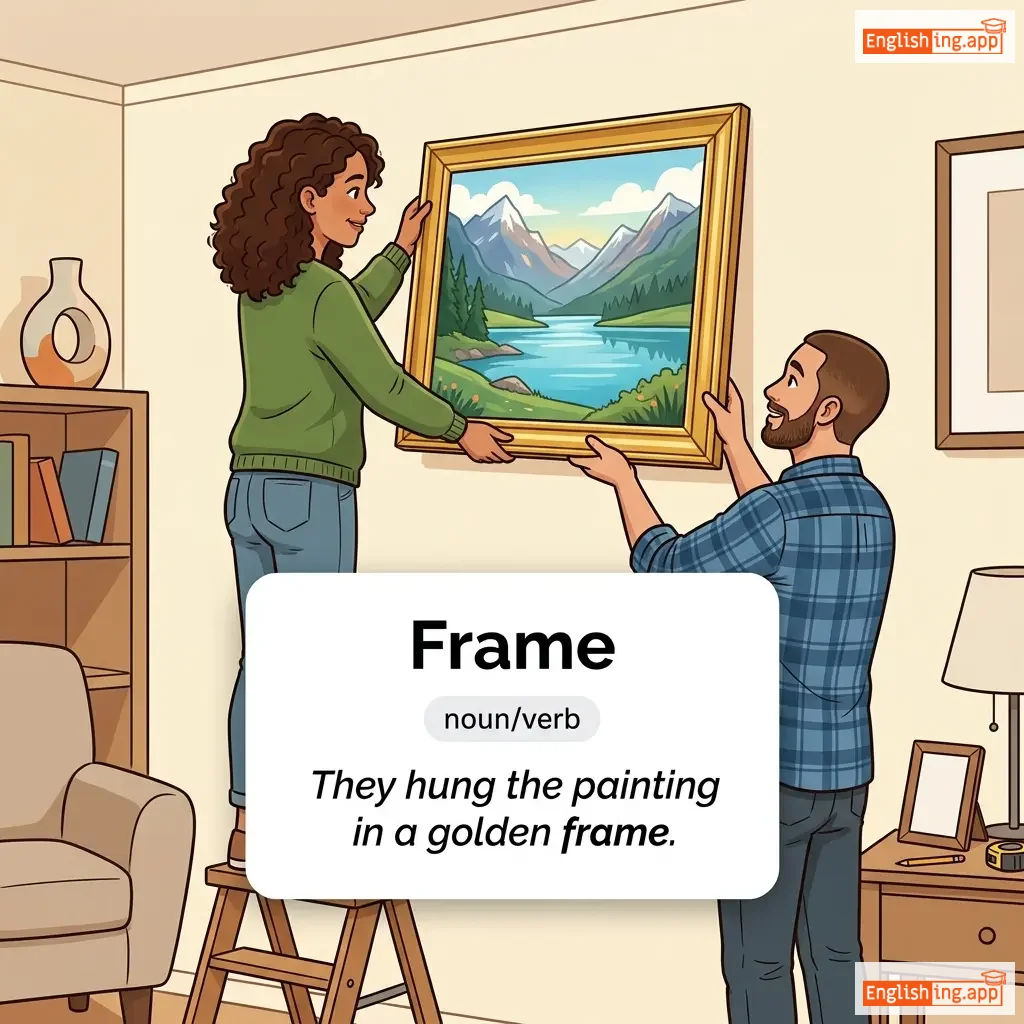
Frame definition card — visual illustration of the meaning
noun/verb
/freɪm/
ফ্রেম / কাঠামো (frem / katham)

A rigid structure that surrounds or encloses something; to construct or formulate.

"They hung the painting in a golden frame."

"তারা ছবিটি একটি সোনালি ফ্রেমে ঝুলিয়েছিল।" (tara chobiti ekti sonali freme jhuliyechilo.)
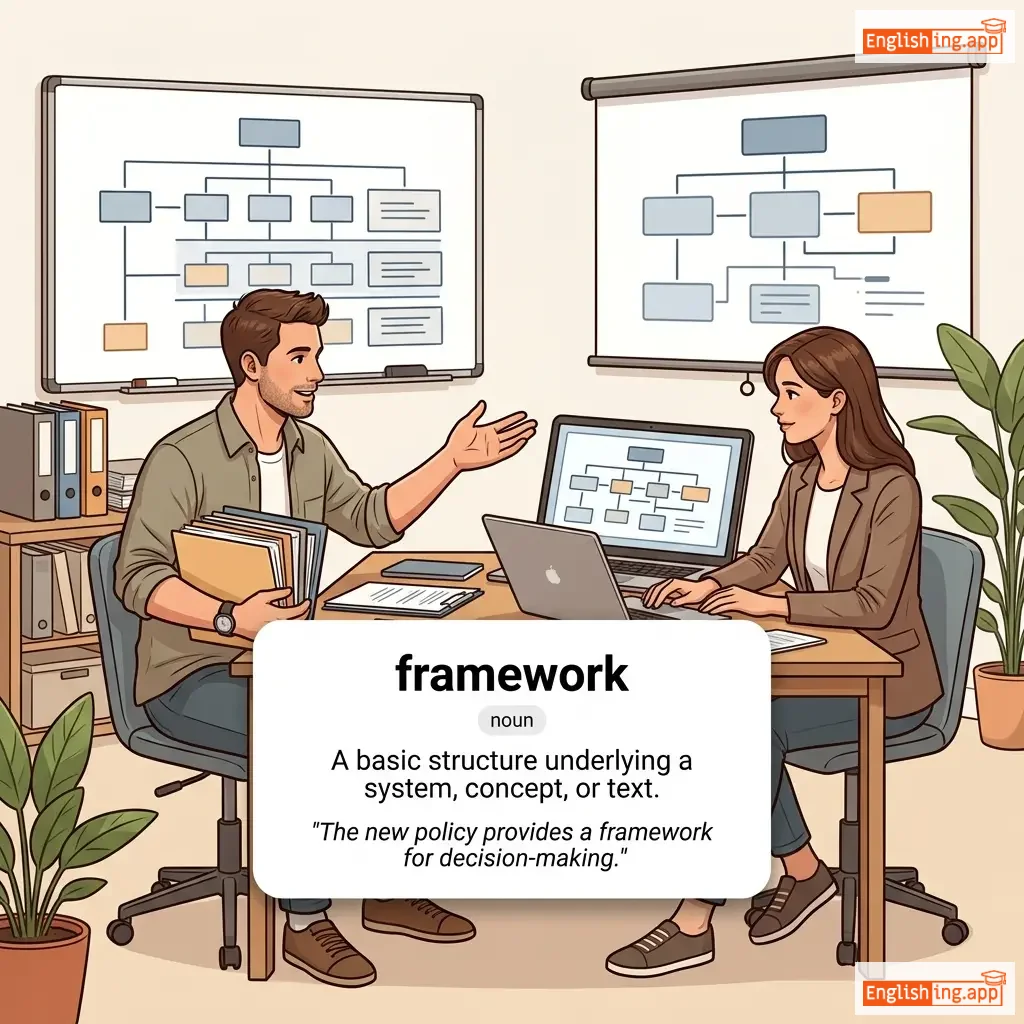
framework definition card — visual illustration of the meaning
noun
/ˈfreɪmˌwɜːrk/
কাঠামো / কাঠামোগত ভিত্তি (kathamo / kathamo-goto vitti)

A basic structure underlying a system, concept, or text.

"The new policy provides a framework for decision-making."

"নতুন নীতিটি সিদ্ধান্ত নেওয়ার জন্য একটি কাঠামো প্রদান করে।" (notun nititi siddhanto newar jonno ekti katham prodan kore.)
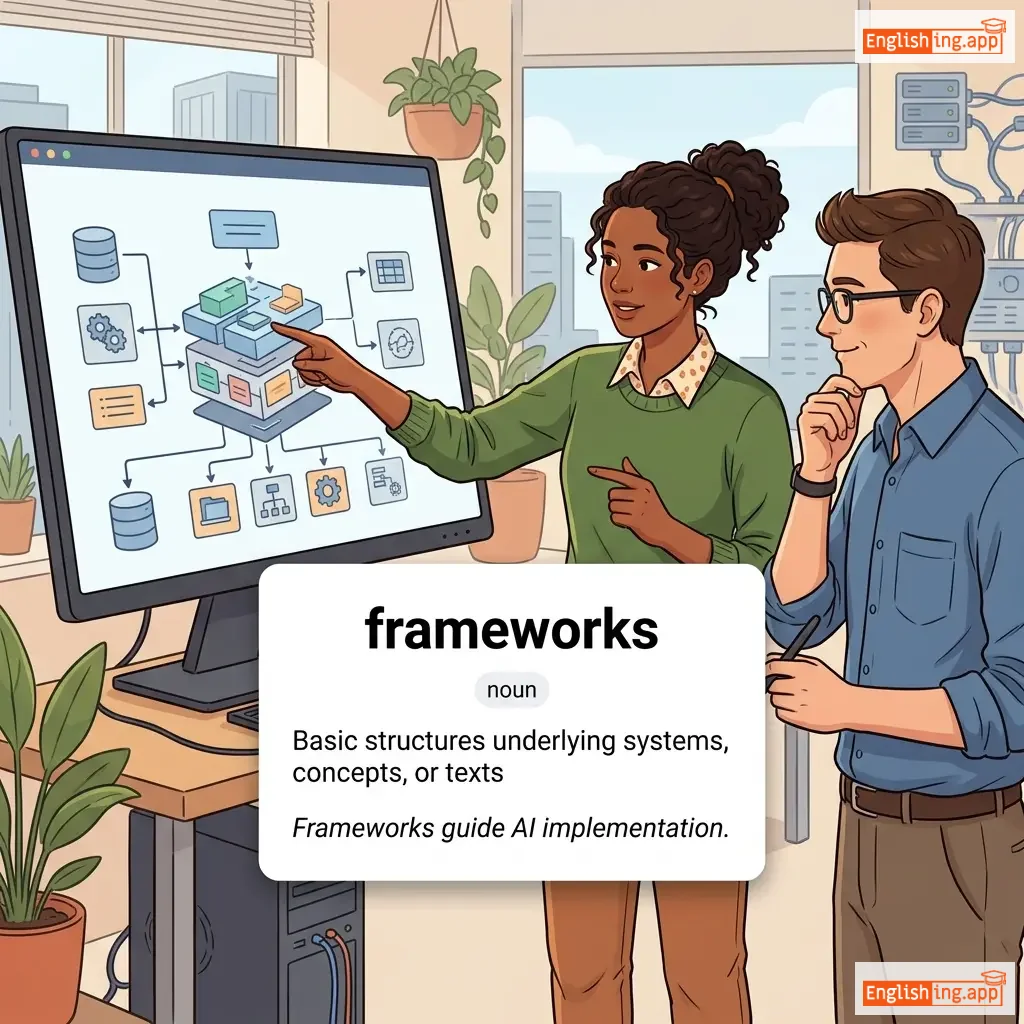
frameworks definition card — visual illustration of the meaning
noun
ˈfreɪm.wɜːks
কাঠামো (kathamo)

Basic structures underlying systems, concepts, or texts

"Frameworks guide AI implementation."

"AI বাস্তবায়নে কাঠামো দিকনির্দেশনা দেয়।" (AI bastobayane kathamo diknirdeshona dey.)
noun, verb
/ˈfrænʧaɪz/
ফ্র্যাঞ্চাইজি (franchisee)

A legal right to sell or distribute goods or services in a specific area; to grant such a right.

"He opened a new fast-food franchise in the city."

"সে শহরে একটি নতুন ফাস্ট-ফুড ফ্র্যাঞ্চাইজি খুলেছে।" (Se shohores ekti notun fast-food franchise khuleche.)
adjective
/fræŋk/
সরাসরি, খোলামেলা (sorasori, kholamela)

open, honest, and direct in speech or expression

"She was frank about her feelings on the matter."

"তিনি বিষয়টি নিয়ে তার অনুভূতির ব্যাপারে খোলামেলা ছিলেন।" (Tini bishoyti niye tar onubhuti-r byapare kholamela chilen.)
noun
/ˈfræŋkɪnsɛns/
ধূপ (dhup)

An aromatic gum resin used in incense and perfumes, often in religious ceremonies.

"The temple was filled with the sweet smell of burning frankincense."

"মন্দিরটি জ্বলন্ত ধূপের মিষ্টি গন্ধে ভরে গিয়েছিল।" (Mondirti jolonto dhuper misti gondhe bhore giyechhilo.)
adverb
/ˈfræŋkli/
খোলাখুলিভাবে (kholakhulivabe)

in an honest and direct way

"Frankly, I don’t think this plan will work."

"সত্যি বলতে, আমি মনে করি না এই পরিকল্পনা কাজ করবে।" (Sotti bolte, ami mone kori na ei porikolpona kaj korbe.)
adjective
/ˈfræntɪk/
আতঙ্কিত (atankito)

Extremely anxious, hurried, or out of control due to fear or excitement.

"She made a frantic call to her family after the accident."

"দুর্ঘটনার পরে সে তার পরিবারকে আতঙ্কিতভাবে ফোন করেছিল।" (Durghotonar pore se tar poribar ke atankitbhabe phone korechhilo.)
adjective
/frəˈtɜːrnəl/
ভ্রাতৃসুলভ (bhratrisulov)

Relating to brothers or brotherhood; friendly and supportive.

"The two nations maintain a fraternal relationship."

"দুই দেশ ভ্রাতৃসুলভ সম্পর্ক বজায় রাখে।" (Dui desh bhratrisulov somprok bojay rakhe.)
noun
/frɔːd/
প্রতারণা (protarona)

A wrongful or criminal deception intended to result in financial or personal gain.

"The company collapsed due to massive accounting fraud."

"বৃহৎ হিসাব প্রতারণার কারণে কোম্পানিটি ধ্বসে পড়েছিল।" (Brihot hisab protaronar karone kompaniti dhoshe porechhilo.)
noun
/ˈfrɔːdjʊləns/
প্রতারণামূলক অবস্থা (protarona mulok obostha)

The quality or state of being fraudulent; deceitfulness.

"The audit revealed fraudulence in the financial statements."

"অডিটে আর্থিক বিবৃতিতে প্রতারণামূলক অবস্থা প্রকাশ পায়।" (Audite arthik bibritite protarona mulok obostha prokash pay.)
adjective
/ˈfrɔːdjʊlənt/
প্রতারণামূলক (protarona mulok)

Involving or using deceit, especially criminal deception.

"He was arrested for making fraudulent insurance claims."

"তিনি প্রতারণামূলক বীমা দাবি করার জন্য গ্রেপ্তার হয়েছিলেন।" (Tini protarona mulok bima dabi korar jonno greptar hoyechhilen.)
adjective
/frɔːt/
ভরা (bhora)

Filled with or likely to result in something undesirable.

"The negotiations were fraught with tension and uncertainty."

"আলোচনাগুলো ছিল উত্তেজনা ও অনিশ্চয়তায় ভরা।" (Alochanagulo chhilo uttejona o onishchoyotay bhora.)
noun/verb
/freɪ/
লড়াই, ক্ষয় হওয়া (lorai, khoy howa)

As a noun, a fight or heated dispute; as a verb, to unravel or wear out through friction.

"He tried to stay calm, but his nerves began to fray during the argument."

"সে শান্ত থাকার চেষ্টা করেছিল, কিন্তু তর্কের সময় তার স্নায়ু ক্ষয় হতে শুরু করল।" (Se shanto thakar cheshta korechhilo, kintu torker somoy tar snayu khoy hote suru korlo.)
noun
/ˈfrek.əl/
তিল; ফোঁটা; দাগ; (til, phota, dag)

a small brownish spot on the skin, often becoming more pronounced through exposure to the sun

"Her face was covered with cute freckles that appeared every summer."

"তার মুখ সুন্দর তিল দিয়ে ঢাকা ছিল যা প্রতি গ্রীষ্মে দেখা দিত।" (tar mukh shundor til diye dhaka chhilo ja proti grishme dekha dito.)
adjective/verb/adverb
/friː/
মুক্ত / ফ্রি (mukto / free)

Not under the control or in the power of another; able to act or be done as one wishes.

"The children are free to play outside."

"শিশুরা বাইরে খেলার জন্য মুক্ত।" (shishura baire khelar jonno mukto.)
noun
/ˈfriː taɪm/
অবসর সময় (oboshor shomoy)

time when a person is not working or occupied and can do activities they enjoy

"She likes to read books in her free time."

"সে তার অবসর সময়ে বই পড়তে ভালোবাসে।" (se tar oboshor shomoye boi porte bhalobashe)
noun
/ˈfriːˌbuːtər/
দস্যু (dossu)

A pirate or plunderer who roams freely in search of wealth.

"The freebooter raided the merchant ships along the coast."

"ফ্রিবুটার উপকূল বরাবর বণিক জাহাজ আক্রমণ করেছিল।" (Freebooter upokol barabor bonik jahaj akromon korechilo.)
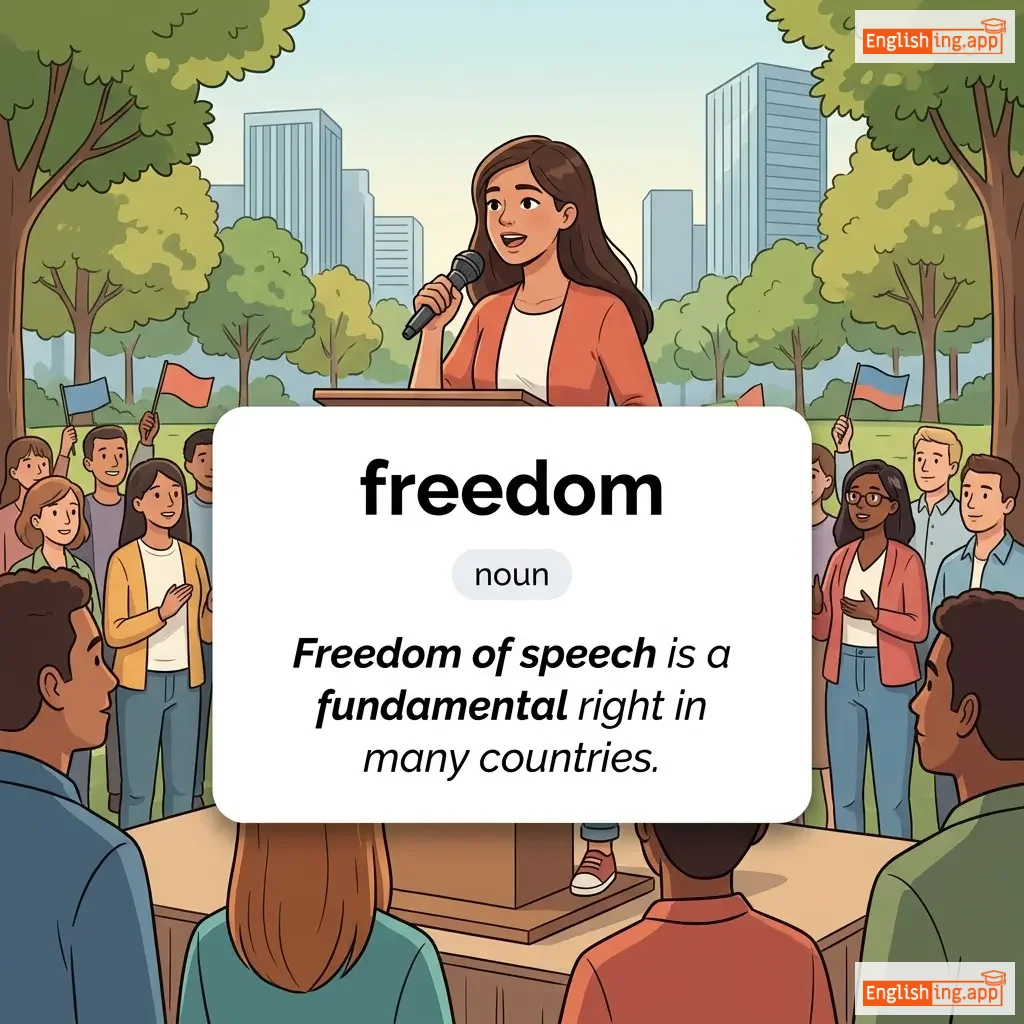
freedom definition card — visual illustration of the meaning
noun
/ˈfriːdəm/
স্বাধীনতা (swadhinota)

The state of being free; the power or right to act, speak, or think without hindrance or restraint.

"Freedom of speech is a fundamental right in many countries."

"বাকস্বাধীনতা অনেক দেশের একটি মৌলিক অধিকার।" (Bakswadhinota onek desher ekti moulik odhikar.)
noun
/ˈfriːdəm ˌfaɪtər/
মুক্তিযোদ্ধা (muktijoddha)

a person who takes part in an armed or political struggle to achieve freedom or independence for their people or country

"The freedom fighter dedicated his life to the liberation of his homeland."

"সেই মুক্তিযোদ্ধা তার মাতৃভূমির মুক্তির জন্য জীবন উৎসর্গ করেছিলেন।" (sei muktijoddha tar matribhumi-r muktir jonne jibon utsorgo korechhilen)
noun
/ˈfriːˌlænsər/
স্বাধীন কর্মী (swadhin kormi)

A person who works independently without being permanently employed by one organization.

"She works as a freelancer designing websites for different clients."

"সে একজন ফ্রিল্যান্সার হিসেবে বিভিন্ন ক্লায়েন্টের জন্য ওয়েবসাইট ডিজাইন করে।" (Se ekjon freelancer hisebe bibhinno clienter jonno website design kore.)
adverb
/ˈfriːli/
স্বাধীনভাবে (swadhinbhabe)

without restriction or control; willingly

"Information should flow freely in a democratic society."

"গণতান্ত্রিক সমাজে তথ্যের অবাধ প্রবাহ থাকা উচিত।" (Gonotantrik shomaje tothyer obadh probah thaka uchit.)
noun
/ˈfriːˌmeɪsən/
ফ্রিম্যাসন সদস্য (freemason sodosso)

A member of an international fraternity known as Freemasonry, focused on moral and spiritual values.

"His grandfather was a respected freemason in the community."

"তার দাদা সম্প্রদায়ে একজন সম্মানিত ফ্রিমেসন ছিলেন।" (Tar dada somprodaye ekjon sommanito freemason chilen.)
noun
/ˈfriːˌθɪŋkər/
স্বাধীন চিন্তাবিদ (swadhin chintabid)

A person who forms opinions based on reason and independent thought rather than tradition or authority.

"Voltaire was considered a great freethinker of his time."

"ভলতেয়ার তার সময়ের একজন মহান স্বাধীন চিন্তাবিদ হিসেবে বিবেচিত ছিলেন।" (Voltaire tar somoyer ekjon mohan swadhin chintabid hisebe bicharito chilen.)
verb
/friːz/
বরফ হওয়া (borof howa)

To turn into ice or cause to become hard due to extreme cold.

"The water in the lake will freeze during winter."

"শীতকালে লেকের পানি বরফে পরিণত হবে।" (Shitkale leker pani borofe porinoto hobe.)
adjective
/frɛntʃ/
ফরাসি (forashi)

Relating to France, its people, or their language.

"We enjoyed delicious French cuisine on our trip to Paris."

"আমরা প্যারিস ভ্রমণে সুস্বাদু ফরাসি খাবার উপভোগ করেছি।" (Amra Paris vromone suswadu forashi khabar upobhog korechi.)
adjective
/frəˈnɛtɪk/
অস্থির (osthir)

Fast and energetic in a wild or uncontrolled way.

"The stock market experienced frenetic trading after the announcement."

"ঘোষণার পর শেয়ারবাজারে অস্থির লেনদেন হয়েছিল।" (Ghosonar por sheyarbajare osthir len-den hoyechilo.)
adjective
/ˈfrɛn.zid/
উন্মত্ত (unmotto)

Wildly excited or uncontrolled

"The frenzied crowd cheered as the band took the stage."

"উন্মত্ত ভিড় ব্যান্ডটি মঞ্চে উঠতেই উল্লাস করল।" (Unmotto bhir bandti monche uthtei ullash korlo.)
noun
/ˈfrɛn.zi/
উন্মত্ততা (unmottota)

A state of uncontrolled excitement or wild behavior

"The news of the sale caused a shopping frenzy."

"সেলের খবর একটি শপিং উন্মত্ততা সৃষ্টি করল।" (Seler khobor ekti shopping unmottota sristri korlo.)
noun
/ˈfriː.kwən.si/
বারম্বারতা (barombarota)

The rate at which something occurs or is repeated over a period of time

"The frequency of bus services has been increased during rush hours."

"ভিড়ের সময় বাস সার্ভিসের বারম্বারতা বাড়ানো হয়েছে।" (Bhirer somoy bus service er barombarota barano hoyeche.)
adjective, verb
/ˈfriː.kwənt/ (adj.), /friːˈkwent/ (verb)
ঘন ঘন (ghon ghon)

Adjective: happening often; Verb: to visit a place regularly

"He is a frequent visitor to the library."

"সে লাইব্রেরিতে ঘন ঘন আসা-যাওয়া করে।" (Se library te ghon ghon asa jaoa kore.)
adverb
/ˈfriːkwəntli/
প্রায়ই (prayoi)

Happening often or at short intervals.

"He frequently visits his grandparents on weekends."

"সে প্রায়ই সপ্তাহান্তে তার দাদা-দাদিকে দেখতে যায়।" (Se prayoi soptahante tar dada-dadike dekhte jay.)
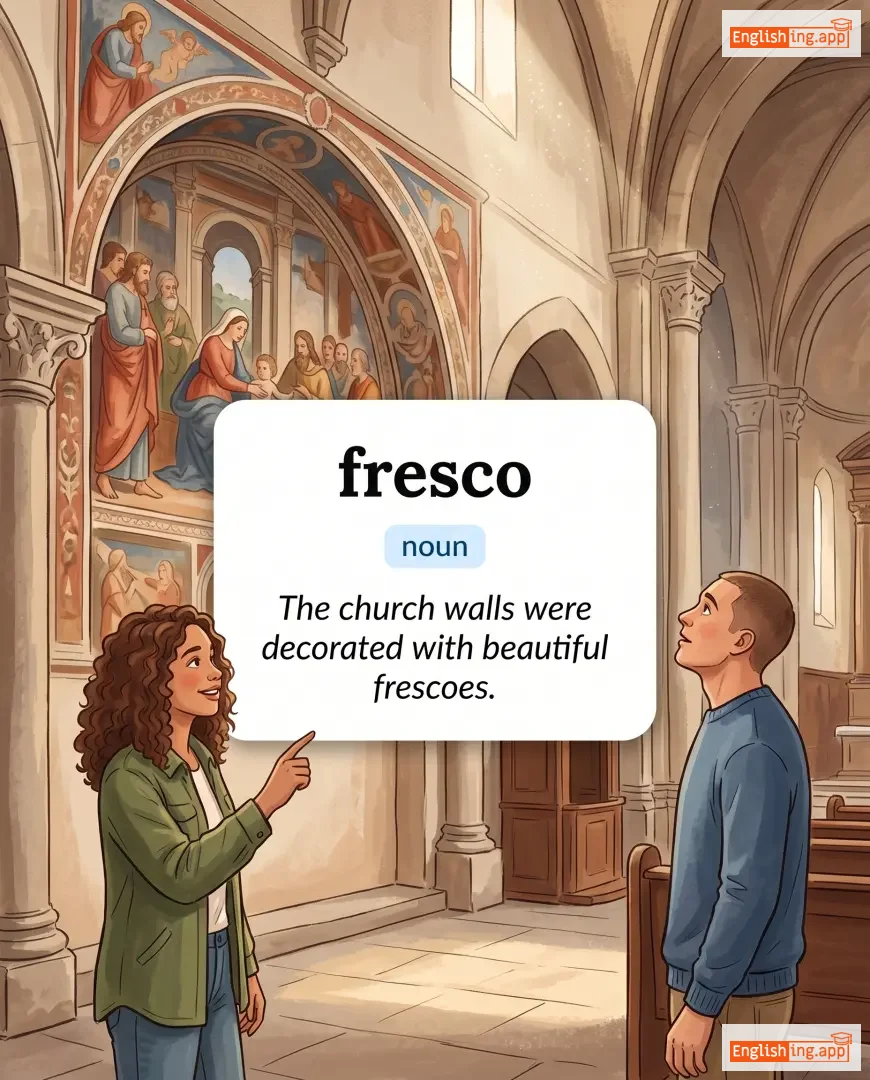
fresco definition card — visual illustration of the meaning
noun
/ˈfrɛs.koʊ/
দেয়ালচিত্র (deyalchitra)

A painting done rapidly in watercolor on wet plaster so that the colors penetrate the surface

"The church walls were decorated with beautiful frescoes."

"গির্জার দেয়ালগুলো সুন্দর দেয়ালচিত্র দিয়ে সজ্জিত ছিল।" (Girjar deyalgulo sundor deyalchitra diye sojjito chilo.)
adjective
/frɛʃ/
তাজা (taja)

new, recently made, or clean and pure

"The bread is still fresh from the oven."

"রুটি এখনও চুলা থেকে তাজা।" (Ruti ekhono chula theke taja.)
noun
/ˈfrɛʃɪt/
হঠাৎ নদীর বন্যা (hothat nodir bonna)

A sudden overflow of a stream or river caused by heavy rain or melting snow.

"After the storm, the river turned into a raging freshet."

"ঝড়ের পর নদী প্রবল ফ্রেশেটে পরিণত হয়েছিল।" (Jhorer por nodi probol freshete porinoto hoyechilo.)
noun
/ˈfreʃmən/
নবীন ছাত্র (nobin chatro)

a first-year student at a high school, college, or university

"The freshman felt nervous on his first day at university."

"ফ্রেশম্যান তার বিশ্ববিদ্যালয়ের প্রথম দিনে নার্ভাস অনুভব করছিল।" (Freshman tar bishwobiddaloyer prothom dine nervous onubhob korchhilo.)
noun
/ˈfrɛʃnəs/
তাজা ভাব (taja bhab)

The quality of being new, clean, and full of energy.

"The freshness of the morning air made everyone feel alive."

"সকালের বাতাসের তাজা ভাব সবাইকে জীবন্ত অনুভূতি দিয়েছিল।" (Sokaler bataser taja bhab sobaike jibonto onubhuti diyechilo.)
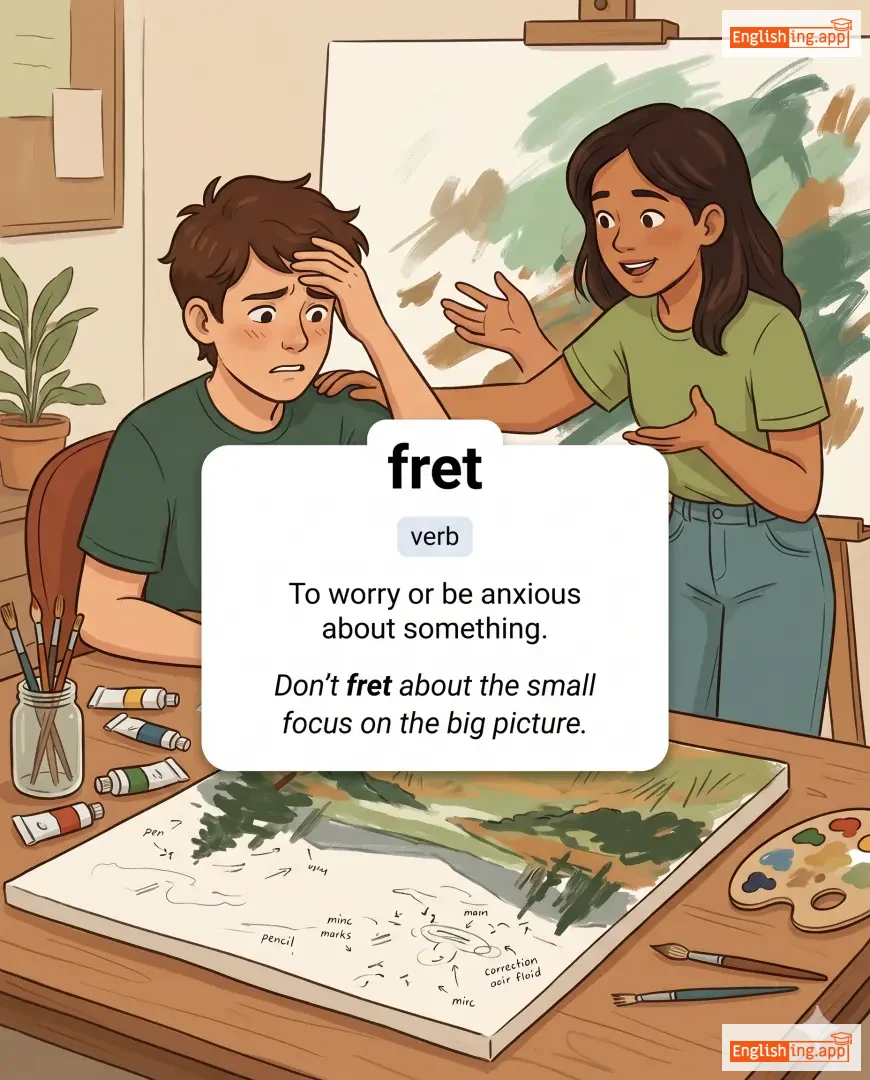
fret definition card — visual illustration of the meaning
verb
/frɛt/
উদ্বিগ্ন হওয়া (udbigno howa)

To worry or be anxious about something.

"Don't fret about the small mistakes; focus on the big picture."

"ছোট ভুল নিয়ে উদ্বিগ্ন হয়ো না; বড় ছবিতে মনোযোগ দাও।" (Choto bhul niye udbigno hoyo na; boro chobite monojog dao.)
adjective
/ˈfrɛtfəl/
অস্থির (osthir)

Feeling or showing distress or irritation.

"The baby was fretful all night and could not sleep."

"শিশুটি সারা রাত অস্থির ছিল এবং ঘুমাতে পারেনি।" (Shishuti sara rat osthir chilo ebong ghumate pareni.)
adjective
/ˈfraɪəbl/
ভঙ্গুর (bhongur)

Easily crumbled or reduced to powder.

"The old brick wall was friable and broke apart at a touch."

"পুরনো ইটের দেয়ালটি ভঙ্গুর ছিল এবং স্পর্শেই ভেঙে পড়েছিল।" (Purono iter dewalti bhongur chilo ebong sporsei venge porechilo.)
noun
/ˈfrɪkʃən/
ঘর্ষণ / বিরোধ (ghorshon / birodh)

the resistance that one surface or object encounters when moving over another; conflict or tension between people or groups

"There was friction between the two departments over resource allocation."

"রিসোর্স বণ্টন নিয়ে দুই ডিপার্টমেন্টের মধ্যে ঘর্ষণ ছিল।" (Resource bonton niye dui departmenter moddhe ghorshon chilo.)
noun
/ˈfraɪ.deɪ/
শুক্রবার (shukrobar)

the day of the week following Thursday and preceding Saturday

"We have a team meeting every Friday afternoon."

"আমাদের প্রতি শুক্রবার বিকেলে একটি দলীয় সভা হয়।" (amader proti shukrobar bikele ekti dolio shobha hoy)