ভোকাবুলারিসমূহ

ইংরেজি শব্দের বাংলা অর্থ | English to Bangla Word Meaning Dictionary

noun
/ˈdɛskænt/
অতিরিক্ত সুর (otirikto sur)

An additional melody or counterpoint sung or played above the main melody.

"The choir added a beautiful descant to the hymn."

"কায়ার ভজনগীতে একটি সুন্দর ডেস্ক্যান্ট যুক্ত করেছিল।" (Kayar bhajongite ekti sundor descant jukto korechilo.)
verb
/dɪˈsɛnd/
নেমে আসা (neme asa)

To move or fall downward; to come or go down from a higher place.

"The hikers descended the steep mountain path."

"পাহাড় আরোহীরা খাড়া পাহাড়ি পথে নেমে এলো।" (Pahar arohira khara pahari pothe neme elo.)
noun
/dɪˈsɛndənt/
বংশধর (bangshodhor)

A person who is descended from a particular ancestor.

"She is a descendant of a famous poet."

"সে একজন বিখ্যাত কবির বংশধর।" (Se ekjon bikhyat kobir bangshodhor.)
adjective
/dɪˈsɛndənt/
নিচের দিকে নামা (nicher dike nama)

Moving downward; going down or descending.

"The river followed a descendent course toward the valley."

"নদীটি উপত্যকার দিকে একটি নিম্নমুখী পথে চলেছিল।" (Noditi upottyakar dike ekti nimnmukhi pothe cholechilo.)
noun
/dɪˈsɛnt/
অবতরণ / বংশ (obotoron / bonsho)

the action of moving downward, falling, or dropping; ancestry or origin

"The climbers began their descent from the mountain peak."

"পর্বতারোহীরা পাহাড়ের চূড়া থেকে অবতরণ শুরু করল।" (porbotarohira paharer chura theke obotoron suru korlo.)
verb
/dɪˈskraɪb/
বর্ণনা করা (borona kora)

to give an account of something in words, including details

"She described the scene vividly."

"সে দৃশ্যটি জীবন্তভাবে বর্ণনা করেছিল।" (Se drishyoti jibontovabe borona korechilo.)
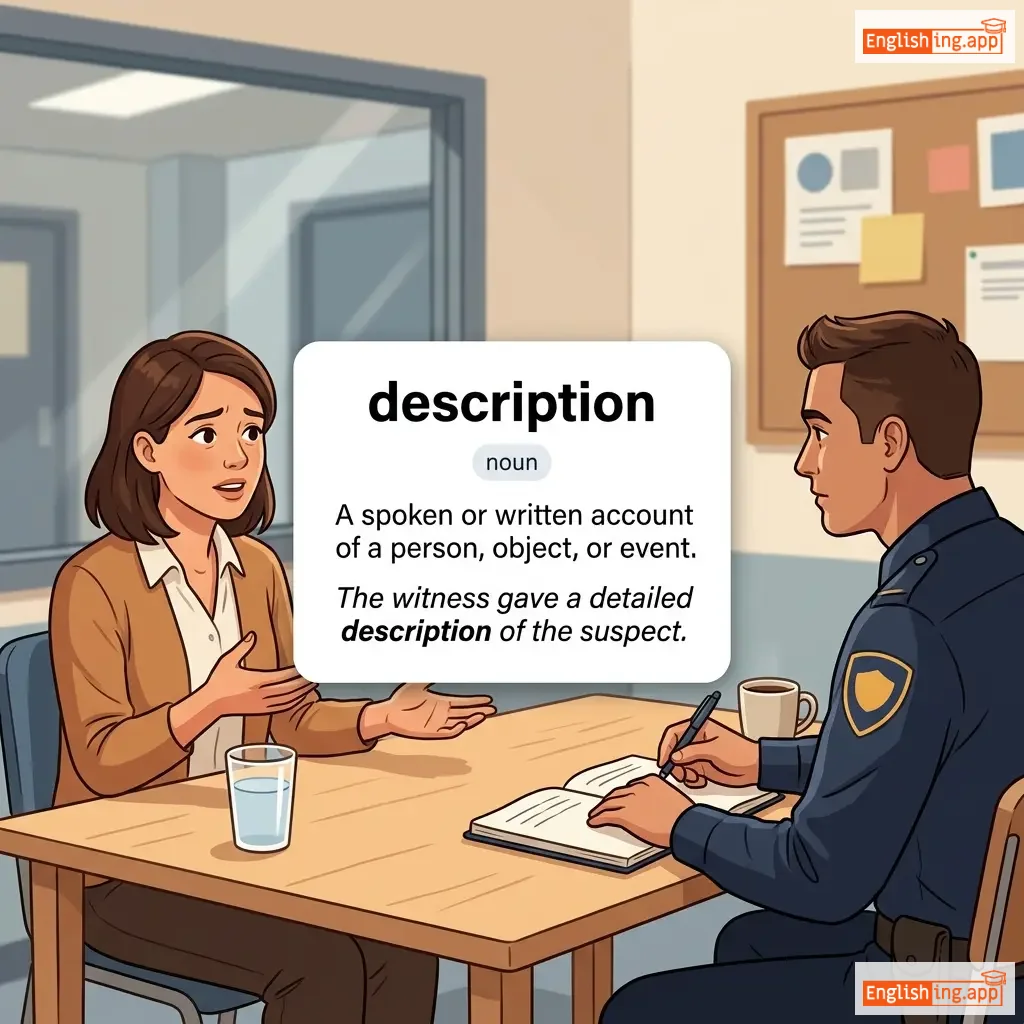
description definition card — visual illustration of the meaning
noun
/dɪˈskrɪpʃən/
বর্ণনা (bornona)

A spoken or written account of a person, object, or event.

"The witness gave a detailed description of the suspect."

"সাক্ষী সন্দেহভাজন সম্পর্কে বিস্তারিত বর্ণনা দিয়েছিল।" (Sakhi sandehobhajan somporke bistarit bornona diyechhilo.)
verb
/dɪˈskraɪ/
দূর থেকে দেখা (dur theke dekha)

to catch sight of something, especially something distant or obscure

"From the hilltop, they descried a small village in the distance."

"পাহাড়ের চূড়া থেকে তারা দূরে একটি ছোট গ্রাম দেখতে পেল।" (paharer chura theke tara dure ekti choto gram dekhte pelo.)
verb
/ˈdɛsɪkreɪt/
অপবিত্র করা (opobitro kora)

to treat a sacred place or object with disrespect or violation

"The vandals desecrated the ancient temple walls with graffiti."

"দুষ্কৃতিকারীরা প্রাচীন মন্দিরের দেয়াল গ্রাফিতি দিয়ে অপবিত্র করল।" (dushkritikarira prachin mondirer deyal grafiti diye opobitro korlo.)
desensitize definition card — visual illustration of the meaning
verb
diːˈsɛn.sɪ.taɪz
সংবেদনশীলতা কমানো (shongbedonsheelota komano)

To make someone less sensitive or reactive to something through repeated exposure.

"Constant exposure to violence can desensitize people."

"নিয়মিত সহিংসতা দেখা মানুষকে অনুভূতিহীন করতে পারে।" (Niyomito sohingshota dekha manushke onubhutiheen korte pare.)
noun, verb
/ˈdez.ɚt/ (noun/adjective), /dɪˈzɜːrt/ (verb)
মরুভূমি / ত্যাগ করা (morubhumi / tyag kora)

as a noun, a barren sandy region; as a verb, to abandon someone or something

"He deserted his friends in their time of need."

"সে প্রয়োজনে তার বন্ধুদের ত্যাগ করেছিল।" (Se proyojone tar bondhuder tyag korechilo.)
adjective
/dɪˈzɜːrtɪd/
পরিত্যক্ত (porityokto)

Empty of people; abandoned.

"The village looked completely deserted after the storm."

"ঝড়ের পরে গ্রামটি সম্পূর্ণ পরিত্যক্ত দেখাচ্ছিল।" (Jhorer pore gramti sompurno porityokto dekhachhilo.)
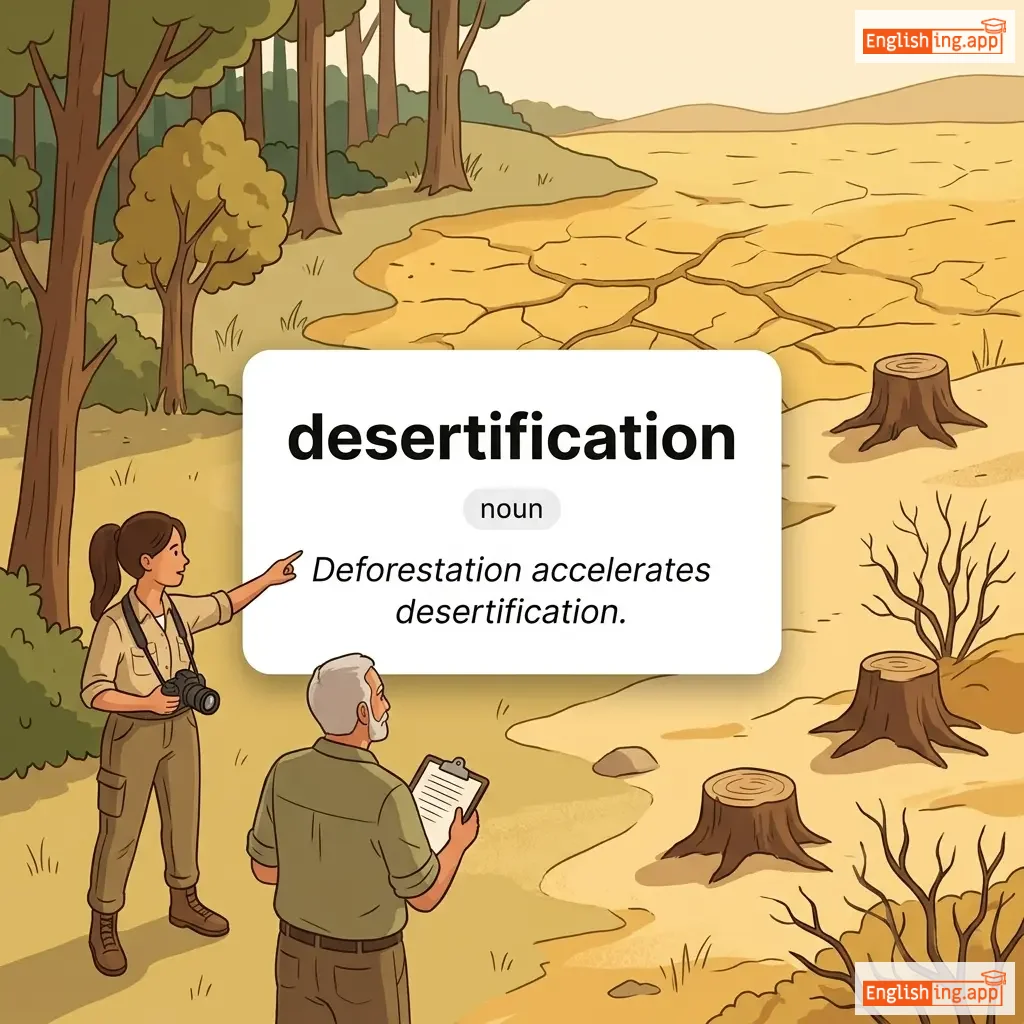
desertification definition card — visual illustration of the meaning
noun
dɪˌzɝː.t̬ə.fɪˈkeɪ.ʃən
মরুভূমিতে পরিণত হওয়া, শুকিয়ে যাওয়া (morubhumite porinoto howa, shukiye yaowa)

The process by which fertile land becomes desert, typically as a result of drought, deforestation, or inappropriate agriculture.

"Deforestation accelerates desertification."

"বন উজাড় মরুকরণ প্রক্রিয়াকে ত্বরান্বিত করে।" (Bon ujar morukoron prokriyake tworanwito kore.)
noun
/dɪˈzɜːrts/ (noun: reward or punishment deserved)
প্রাপ্য শাস্তি বা পুরস্কার (prapyo shasti ba puraskar)

what someone deserves, especially punishment or reward

"He finally got his just deserts for cheating in the exam."

"পরীক্ষায় নকল করার জন্য সে অবশেষে তার প্রাপ্য শাস্তি পেল।" (porikkhay nokol korar jonno se obosheshe tar prapyo shasti pelo.)
verb
/dɪˈzɜːrv/
প্রাপ্য (prapyo)

To be worthy of something, usually a reward or punishment.

"She worked hard and deserves recognition."

"সে কঠোর পরিশ্রম করেছে এবং স্বীকৃতির যোগ্য।" (Se kothor porishrom korechhe ebong shwikritir joggo.)
noun
/ˈdɛsɪkənt/
শুকনো পদার্থ (shukno podartho)

a substance that absorbs moisture and keeps things dry

"Silica gel packets are commonly used as a desiccant in packaging."

"প্যাকেজিংয়ে সাধারণত সিলিকা জেল প্যাকেট শুকনো পদার্থ হিসেবে ব্যবহার করা হয়।" (packaginge shamannoto silica gel packet shukno podartho hisebe byabohar kora hoy.)
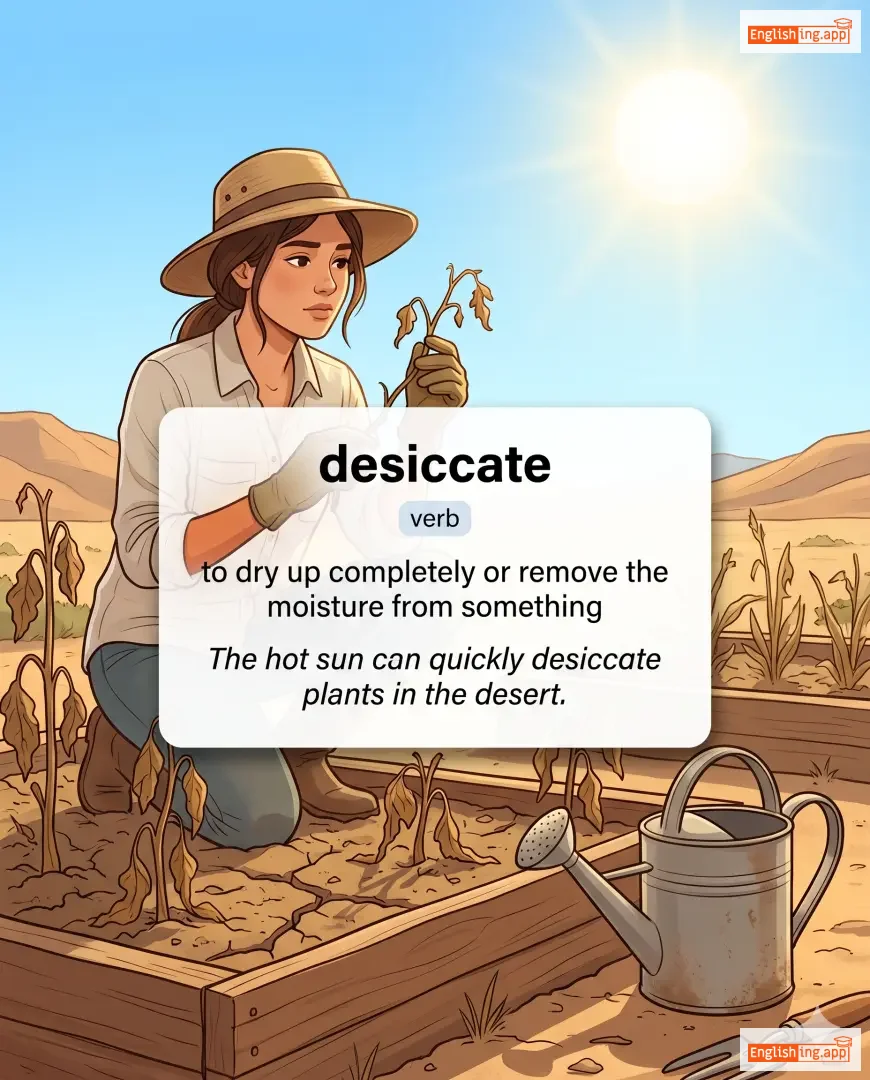
desiccate definition card — visual illustration of the meaning
verb
/ˈdɛsɪkeɪt/
শুকিয়ে ফেলা (shukiye fela)

to dry up completely or remove the moisture from something

"The hot sun can quickly desiccate plants in the desert."

"তপ্ত রোদ মরুভূমির গাছপালাকে দ্রুত শুকিয়ে ফেলতে পারে।" (Topto rod morubhumer gachpalake druto shukiye felte pare.)
adjective
/ˈdɛsɪkeɪtɪd/
শুকনো (shukno)

completely dried, having had all moisture removed

"The museum displayed desiccated specimens of plants."

"জাদুঘরে শুকনো গাছের নমুনা প্রদর্শিত হয়েছিল।" (Jadughore shukno gacher nomuna prodorshito hoyechhilo.)
noun
/dɪˌsɪdəˈreɪtəm/
অত্যাবশ্যক জিনিস (otjobosshok jinish)

something that is desired or considered necessary

"For many students, financial aid is a desideratum."

"অনেক শিক্ষার্থীর জন্য আর্থিক সহায়তা একটি অত্যাবশ্যক জিনিস।" (Onek shikharthir jonno arthik shohojota ekti otjobosshok jinish.)
verb
/dɪˈzaɪn/
পরিকল্পনা করা (porikolpona kora)

to plan and create something with a particular purpose or look

"She will design the new company logo."

"সে নতুন কোম্পানির লোগো ডিজাইন করবে।" (Se notun kompanir logo design korbe.)
verb
/ˈdɛzɪɡneɪt/
নির্ধারণ করা (nirdharon kora)

to officially assign, appoint, or indicate something or someone

"The committee will designate a new chairperson next week."

"কমিটি আগামী সপ্তাহে নতুন চেয়ারম্যানকে নির্ধারণ করবে।" (Komiti agami soptah-e notun chairman-ke nirdharon korbe.)
noun
/ˌdez.ɪɡˈneɪ.ʃən/
উপাধি; পদ; পদবী; পরিচয়সূচক; (upadhi, pod, podbi, porichoyshuchok)

the action of choosing someone for a position; a name, title, or official status

"His designation as team leader came with additional responsibilities and authority."

"টিম লিডার হিসেবে তার পদবী অতিরিক্ত দায়িত্ব ও কর্তৃত্ব নিয়ে এসেছিল।" (team leader hishebe tar podbi otirikkto dayitto o kortritwo niye eshechhilo.)
noun
/dɪˈzaɪnər/
পরিকল্পনাকারী (porikolponakari)

a person who plans and creates the form or structure of something

"The fashion designer presented her new collection."

"ফ্যাশন ডিজাইনার তার নতুন কালেকশন উপস্থাপন করলেন।" (Fashion designer tar notun collection uposthapon korlen.)
adjective
/dɪˈzaɪərəbl/
আকর্ষণীয় (akorshonio)

worth having or wanting; attractive

"The location of the house was highly desirable, with great views."

"বাড়িটির অবস্থান অত্যন্ত আকর্ষণীয় ছিল, দারুণ দৃশ্য ছিল।" (Baritir obosthan atontto akorshonio chhilo, darun drishyo chhilo.)
noun, verb
/dɪˈzaɪər/
আকাঙ্ক্ষা (akankkha)

a strong feeling of wanting something or wishing for something to happen

"He has a strong desire to travel the world."

"তার পৃথিবী ভ্রমণের প্রবল আকাঙ্ক্ষা আছে।" (Tar prithibi vromoner probal akankkha ache.)
verb
/dɪˈzɪst/
থেমে যাওয়া (theme jaoa)

to stop doing something, especially an action considered wrong or undesirable

"The judge ordered the company to desist from unfair practices."

"বিচারক কোম্পানিকে অন্যায্য কার্যকলাপ থেকে বিরত থাকার আদেশ দেন।" (Bicharak kompanike onnyay karya-kolap theke birat thakar adesh den.)
noun
/dɪˈsɪstəns/
নিরস্ত হওয়া (nirastho howa)

The act of stopping or ceasing from some action or behavior.

"The court urged his desistance from further unlawful activities."

"আদালত তাকে অবৈধ কার্যক্রম থেকে বিরত থাকতে বলেছিল।" (Adalat take oboidh karyakrom theke birat thakte bolechhilo.)
noun
/dɛsk/
টেবিল (tebil)

a piece of furniture with a flat surface used for writing or working

"The books are on the desk."

"বইগুলো ডেস্কের উপর আছে।" (Boigulo desker upor ache.)
noun
/ˈdɛsktɒp/
ডেস্কটপ (desktop)

a computer designed to be used on a desk, typically with a separate monitor, keyboard, and mouse

"I keep my documents on the desktop for easy access."

"আমি সহজ প্রবেশের জন্য আমার ডকুমেন্ট ডেস্কটপে রাখি।" (Ami sohoj probesher jonno amar document desktop-e rakhi.)
adjective
/ˈdɛsələt/
উজাড় (ujar)

Empty, bleak, and without people; feeling very sad and lonely.

"The once lively town now stood desolate after the flood."

"একসময় প্রাণবন্ত শহরটি বন্যার পরে এখন নির্জন হয়ে দাঁড়িয়ে ছিল।" (Eksomoy pranbonto shohorti bonnar pore ekhon nirjon hoye darie chhilo.)
noun
/dɪˈspɛər/
হতাশা (hotasha)

The complete loss or absence of hope.

"She was in deep despair after losing her job."

"চাকরি হারানোর পর সে গভীর হতাশায় ছিল।" (Chakri haranor por se gobhir hotashay chhilo.)
adjective
/dɪˈsperɪŋ/
হতাশাগ্রস্ত; (hotashagrosho)

feeling hopeless; in despair

"She felt despairing after losing her job."

"চাকরি হারানোর পর সে হতাশাগ্রস্ত বোধ করছিল।" (chakri haranor por she hotashagrosho bodh korchilo.)
noun
/ˌdɛspəˈrɑːdoʊ/
দুষ্কৃতিকারী (dushkritikari)

A bold, reckless, or dangerous person, often a criminal.

"The sheriff was determined to capture the desperado who terrorized the town."

"শেরিফ সেই দুষ্কৃতিকারীকে ধরতে দৃঢ়প্রতিজ্ঞ ছিলেন, যিনি শহরকে আতঙ্কিত করেছিলেন।" (Sherif sei dushkritikarike dhorte drirhoprotiggo chhilen, jini shohorke atonkito korechhilen.)
adjective
/ˈdɛspərət/
অসহায় (oshahay)

Feeling or showing a hopeless sense that a situation is so bad as to be impossible to deal with.

"He was desperate to find a job before his savings ran out."

"তার সঞ্চয় ফুরিয়ে যাওয়ার আগে সে চাকরি খুঁজতে মরিয়া ছিল।" (Tar soncoy furiye jawar age se chakri khujte moriya chhilo.)
adverb
/ˈdɛspərətli/
অত্যন্ত মরিয়া ভাবে (ottyonto moriya bhabe)

in a way that shows despair or great need

"He called for help desperately after the accident."

"দুর্ঘটনার পর সে মরিয়া হয়ে সাহায্যের জন্য ডাক দিল।" (Durghotonar por se moriya hoye sahajyer jonno dak dilo.)
adjective
/dɪˈspɪkəbl/
ঘৃণ্য (ghrino)

Deserving hatred and contempt; vile or shameful.

"His despicable actions shocked the entire community."

"তার ঘৃণ্য কাজ পুরো সমাজকে স্তম্ভিত করেছিল।" (Tar ghrino kaj puro somajke stombhito korechilo.)
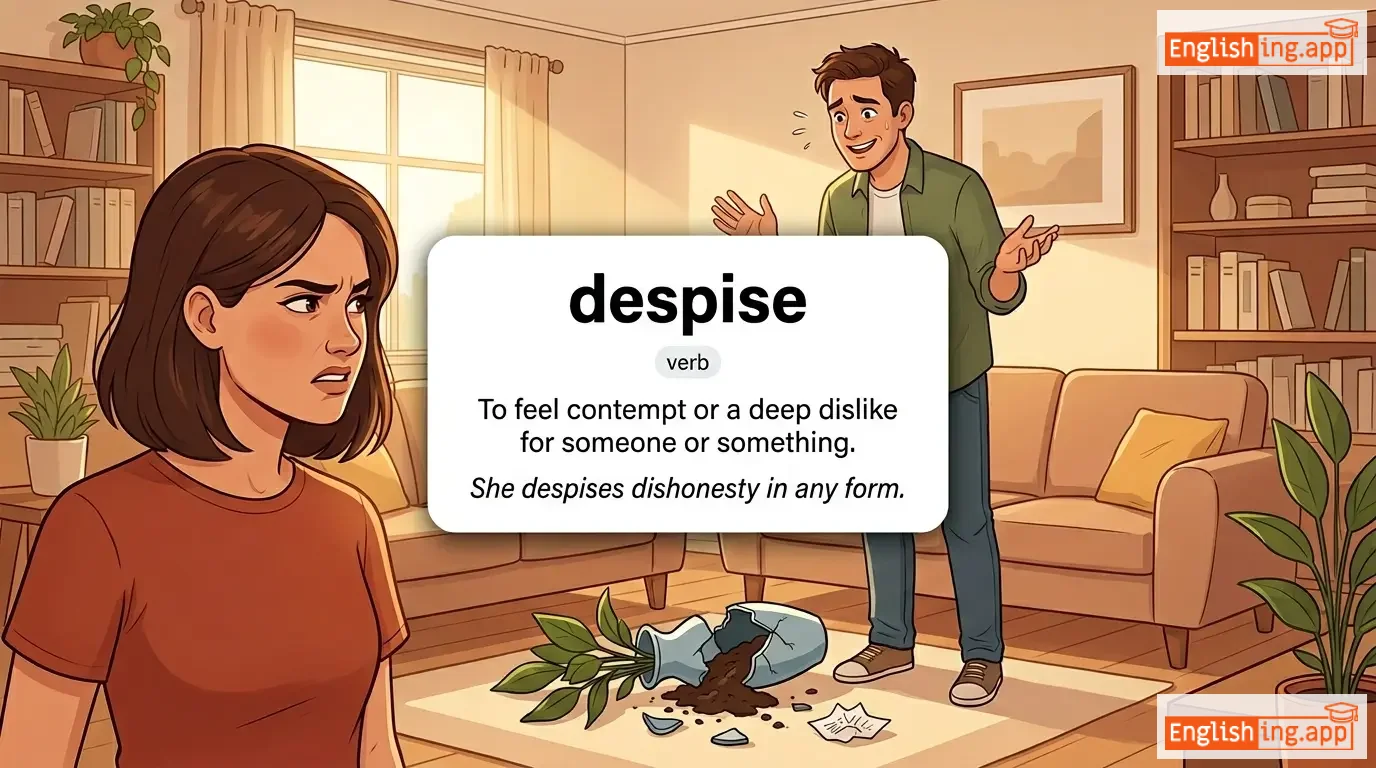
despise definition card — visual illustration of the meaning
verb
/dɪˈspaɪz/
অবজ্ঞা করা (abojna kora)

To feel contempt or a deep dislike for someone or something.

"She despises dishonesty in any form."

"সে যে কোনো রূপের অসততা ঘৃণা করে।" (Se je kono ruper asothota ghrina kore.)
preposition
/dɪˈspaɪt/
সত্ত্বেও (sottweo)

Without being affected by; in spite of.

"He continued his work despite the difficulties."

"কষ্ট সত্ত্বেও সে তার কাজ চালিয়ে গিয়েছিল।" (Kosto sottweo se tar kaj chalie giechilo.)
verb
/dɪˈspɔɪl/
লুটপাট করা (lutpat kora)

To steal or violently remove valuable possessions from a place.

"The invaders despoiled the village during the war."

"আক্রমণকারীরা যুদ্ধের সময় গ্রামটি লুটপাট করেছিল।" (Akromonkari ra juddher somoy gramti lutpat korechilo.)
noun
/dɪˈspɔɪlər/
লুটেরা (lutera)

A person who robs, plunders, or violently takes things from others.

"The despoilers left the city in ruins."

"লুটেরা শহরটিকে ধ্বংসস্তূপে পরিণত করেছিল।" (Lutera shohorti ke dhongshostupe porinoto korechilo.)
verb
/dɪˈspɒnd/
হতাশ হওয়া (hotash howa)

to lose confidence or hope; to become dejected

"After repeated failures, he began to despond."

"বারবার ব্যর্থ হওয়ার পরে, সে হতাশ হতে শুরু করল।" (Barbar byartho howar pore, se hotash hote suru korlo.)
adjective
/dɪˈspɒndənt/
হতাশ (hotash)

feeling or showing deep hopelessness or discouragement

"She felt despondent after losing her job."

"চাকরি হারানোর পরে সে হতাশ বোধ করল।" (Chakri haranor pore se hotash bodh korlo.)
noun
/ˈdɛspɒt/
নির্মম শাসক (nirmom shashok)

a ruler with absolute power, often ruling in a cruel or oppressive way

"The despot ruled the nation with fear and violence."

"নির্মম শাসক ভয় এবং সহিংসতার মাধ্যমে জাতিকে শাসন করত।" (Nirmom shashok voy ebong sohingshotar madhyome jatikey shashon korto.)
adjective
/dɛˈspɒtɪk/
স্বেচ্ছাচারী (sechachari)

exercising power in a cruel, oppressive, or authoritarian way

"The king’s despotic rule left the people in misery."

"রাজাধিরাজের স্বেচ্ছাচারী শাসন জনগণকে দুর্দশায় ফেলেছিল।" (Rajadhirajer sechachari shashon jonogonke durdoshae phelechhilo.)
noun
/ˈdɛspətɪzəm/
স্বৈরতন্ত্র (swoirotontro)

absolute power exercised in a cruel and oppressive way

"The people revolted against the era of despotism."

"জনগণ স্বৈরতন্ত্রের যুগের বিরুদ্ধে বিদ্রোহ করেছিল।" (Jonogon swoirotontorer juger biruddhe bidroho korechhilo.)
noun
/dɪˈzɜːrt/
মিষ্টান্ন (mishtanno)

the sweet course eaten at the end of a meal

"We had ice cream for dessert after dinner."

"আমরা রাতের খাবারের পরে মিষ্টান্ন হিসেবে আইসক্রিম খেয়েছিলাম।" (Amra rater khabarer pore mishtanno hisebe ice cream kheyechhilam.)
noun
/ˌdɛstɪˈneɪʃən/
গন্তব্য (gontobbo)

the place to which someone or something is going or being sent

"Paris is a popular tourist destination."

"প্যারিস একটি জনপ্রিয় পর্যটন গন্তব্য।" (Paris ekti jonopriyo porjoton gontobbo.)
noun
/ˈdɛstəni/
ভাগ্য (vaggo)

The events that will necessarily happen to a particular person or thing in the future; fate.

"She believed it was her destiny to become a doctor."

"সে বিশ্বাস করত যে ডাক্তার হওয়াই তার ভাগ্য।" (Se bishwas korto je daktar howai tar vaggo.)
adjective
/ˈdɛstɪˌtuːt/
অত্যন্ত দরিদ্র (otjonto doridro)

extremely poor and lacking the means to provide for oneself

"The earthquake left many families destitute."

"ভূমিকম্পে অনেক পরিবার অত্যন্ত দরিদ্র হয়ে পড়েছিল।" (Bhumikompe onek poribar otjonto doridro hoye porechhilo.)
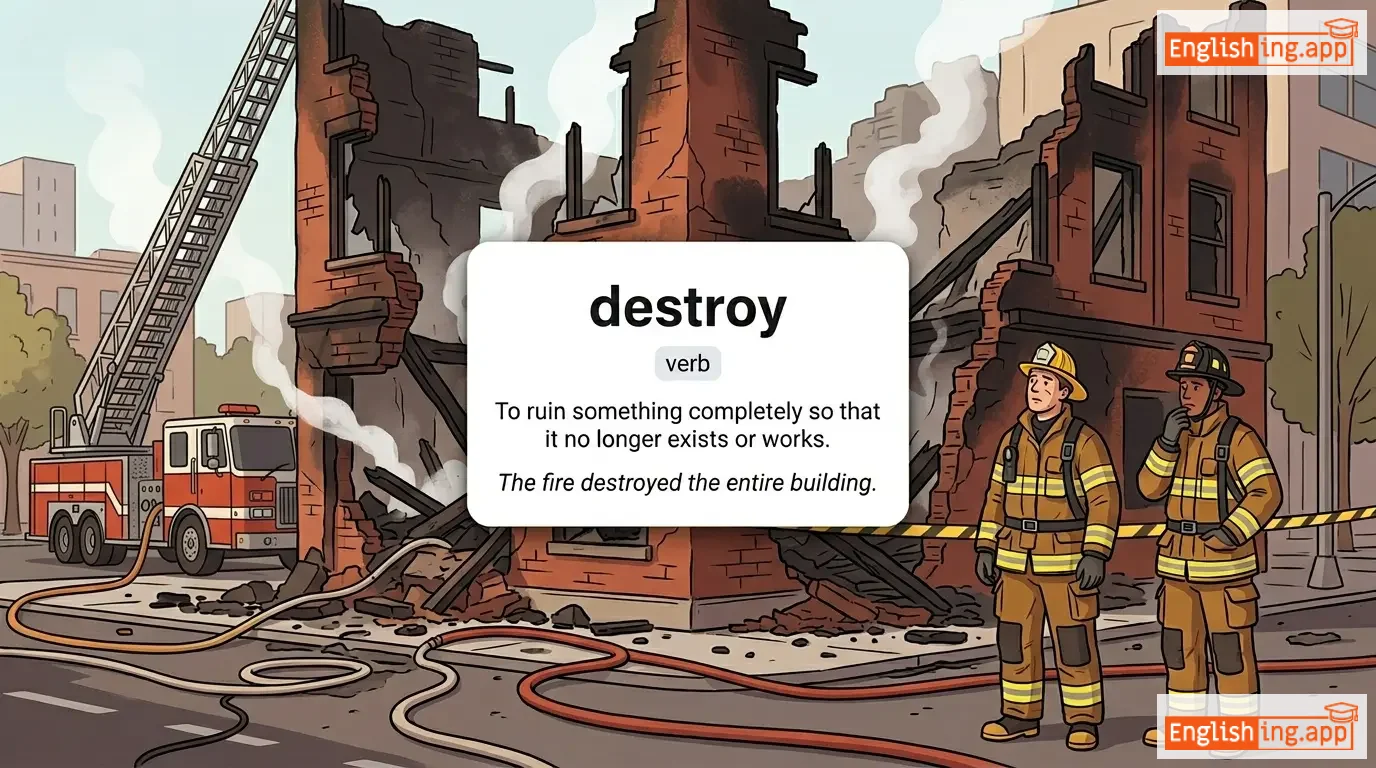
destroy definition card — visual illustration of the meaning
verb
/dɪˈstrɔɪ/
ধ্বংস করা (dhongsho kora)

To ruin something completely so that it no longer exists or works.

"The fire destroyed the entire building."

"আগুন পুরো ভবনটি ধ্বংস করে দিয়েছিল।" (Agun puro bhabonti dhongsho kore diyechhilo.)