ভোকাবুলারিসমূহ

ইংরেজি শব্দের বাংলা অর্থ | English to Bangla Word Meaning Dictionary

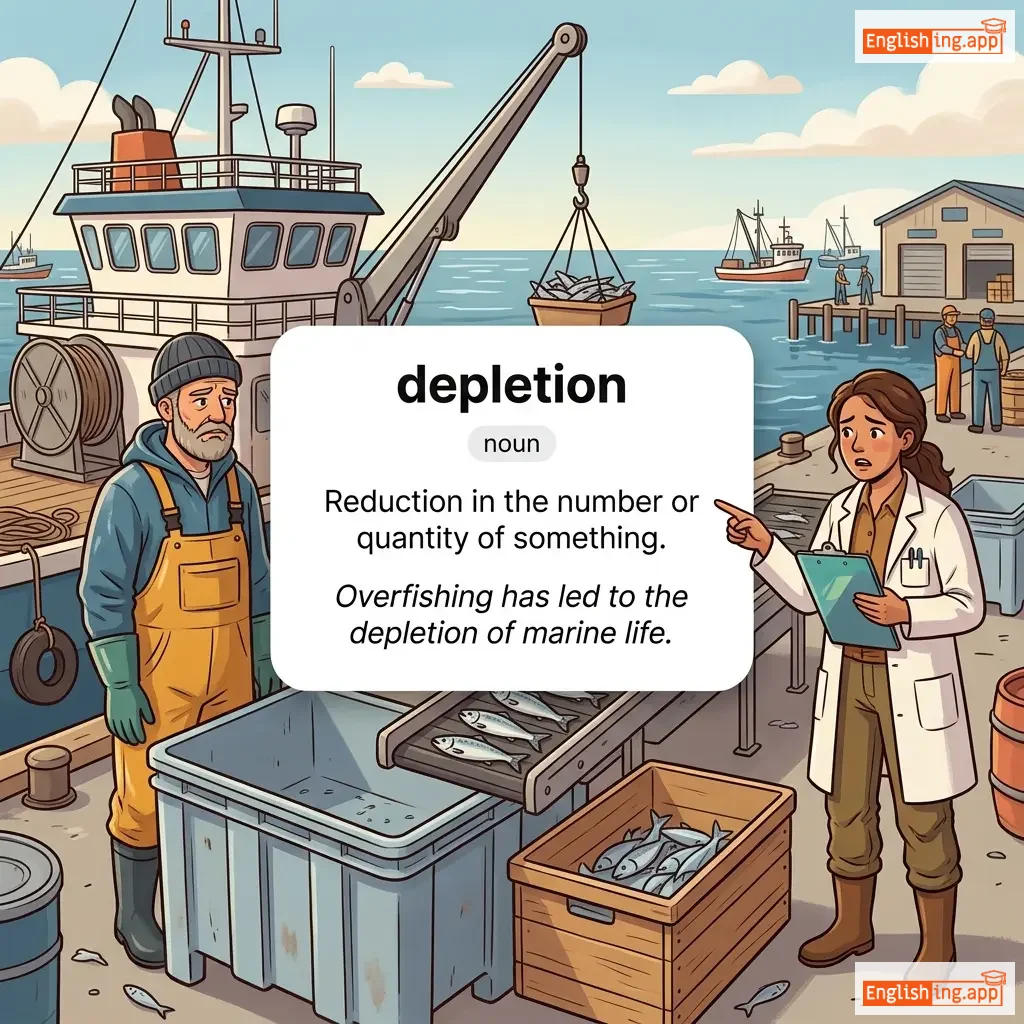
depletion definition card — visual illustration of the meaning
noun
dɪˈpliː.ʃən
হ্রাস বা নিঃশেষ হওয়া (hrash ba nishshesh howa)

Reduction in the number or quantity of something.

"Overfishing has led to the depletion of marine life."

"অতিরিক্ত মাছ ধরার ফলে সামুদ্রিক প্রাণীর হ্রাস ঘটেছে।" (Otirikto mach dhorar fole shamudrik pranir hrash ghoteche.)
adjective
/dɪˈplɔːrəbl/
অত্যন্ত নিন্দনীয় (ottyonto nindoniyo)

deserving strong condemnation; shockingly bad in quality

"The refugees were living in deplorable conditions."

"শরণার্থীরা অত্যন্ত নিন্দনীয় অবস্থায় বসবাস করছিল।" (Shoronarthishra ottyonto nindoniyo obosthay boshobash korchhilo.)
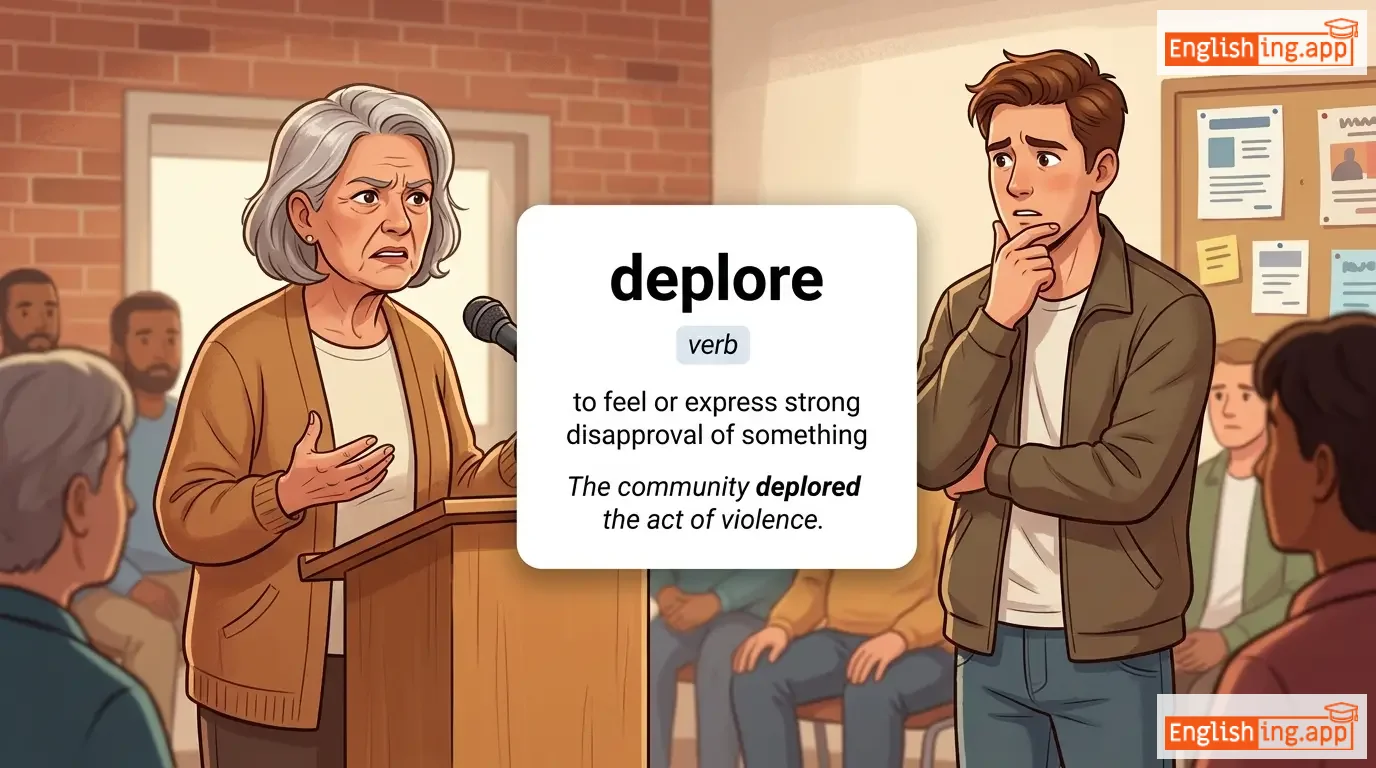
deplore definition card — visual illustration of the meaning
verb
/dɪˈplɔːr/
অত্যন্ত নিন্দা করা (ottyonto ninda kora)

to feel or express strong disapproval of something

"The community deplored the act of violence."

"সম্প্রদায় সহিংসতার কাজটিকে অত্যন্ত নিন্দা করেছে।" (Somproday shoingsotar kajtike ottyonto ninda koreche.)
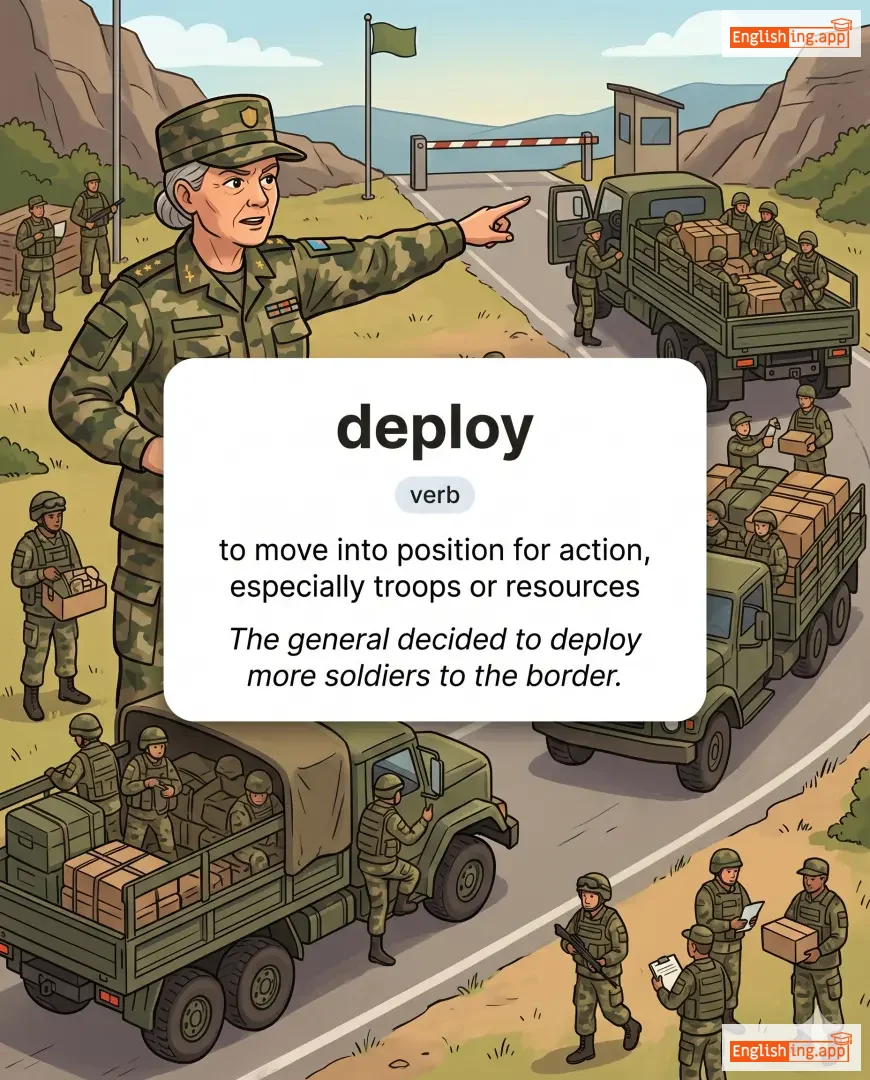
deploy definition card — visual illustration of the meaning
verb
/dɪˈplɔɪ/
মোতায়েন করা (motayen kora)

to move into position for action, especially troops or resources

"The general decided to deploy more soldiers to the border."

"জেনারেল সীমান্তে আরও সৈন্য মোতায়েন করার সিদ্ধান্ত নিলেন।" (General simante aro soinnyo motayen korar siddhanto nilen.)
deployment definition card — visual illustration of the meaning
noun
/dɪˈplɔɪmənt/
স্থাপন (sthapon)

the action of moving or positioning something into place for use

"The deployment of the new software was completed successfully."

"নতুন সফটওয়্যারটির ডিপ্লয়মেন্ট সফলভাবে সম্পন্ন হয়েছে।" (Notun software-tir deployment sofolbhabe somponno hoyeche.)
noun
/dɪˈpoʊnənt/
জবানবন্দিদাতা (jabanbondidata)

A person who gives testimony under oath, especially in a written deposition.

"The deponent confirmed the accuracy of the statement during the trial."

"ডিপোনেন্ট বিচার চলাকালীন বিবৃতির সঠিকতা নিশ্চিত করেছেন।" (Deponent bichar cholakaline bibritir shothikota nishchit korechen.)
verb
/diːˈpɒpjʊˌleɪt/
জনশূন্য করা (jonshunno kora)

To reduce the number of people living in a place.

"The war threatened to depopulate the once-thriving town."

"যুদ্ধ একসময়ের সমৃদ্ধ শহরটিকে জনশূন্য করে দেওয়ার হুমকি দিয়েছিল।" (Judhdho eksomoyer somriddho shohortike jonshunno kore deowar humki diyechhilo.)
verb
/dɪˈpɔːrt/
নির্বাসিত করা (nirbasito kora)

To expel a foreigner from a country, usually for legal or political reasons.

"The government decided to deport the illegal immigrants."

"সরকার অবৈধ অভিবাসীদের বহিষ্কার করার সিদ্ধান্ত নিয়েছিল।" (Sorkar oboidhho obhibasider bohiskar korar siddhanto niyechhilo.)
noun
/ˌdiːpɔːrˈteɪʃən/
বহিষ্কার (bohiskar)

The act of expelling a foreigner from a country.

"The deportation of hundreds of workers sparked international criticism."

"শত শত শ্রমিকের বহিষ্কার আন্তর্জাতিক সমালোচনার জন্ম দিয়েছিল।" (Shoto shoto shromiker bohiskar antorjatik somalochnar jonmo diyechhilo.)
noun
/dɪˈpɔːrtmənt/
আচরণ (achoron)

A person's behavior or manners, especially in a formal situation.

"Her deportment during the ceremony impressed everyone."

"অনুষ্ঠানের সময় তার আচরণ সবাইকে মুগ্ধ করেছিল।" (Onusthaner shomoy tar achoron shobaike mugdho korechhilo.)
verb
/dɪˈpoʊz/
পদচ্যুত করা (podochyut kora)

to remove someone from office or power, especially suddenly and forcefully

"The rebels managed to depose the dictator after years of unrest."

"বিদ্রোহীরা বছরের পর বছর অশান্তির পর একনায়ককে পদচ্যুত করতে সক্ষম হয়।" (Bidrohi ra bochorer por bochor oshantir por eknayokke podochyut korte sokkhom hoy.)
noun/verb
/dɪˈpɑːzɪt/
অগ্রিম জমা, আমানত (agrim joma, amanot)

to place money in a bank account, or a sum paid in advance as security; a layer of material left naturally

"She deposited $500 into her savings account."

"সে তার সঞ্চয়ী হিসাবে 500 ডলার জমা দিয়েছে।" (Se tar soncoyi hisabe 500 dollar joma diyeche.)
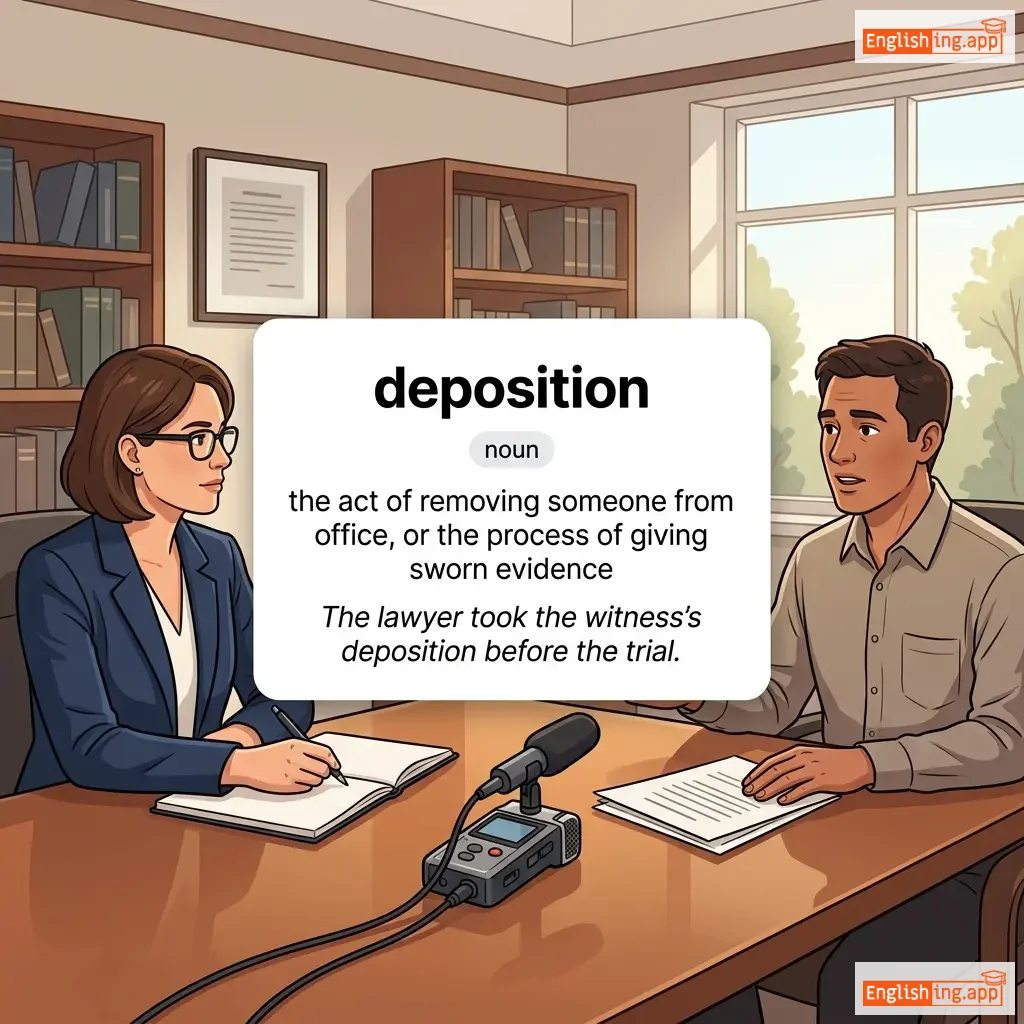
deposition definition card — visual illustration of the meaning
noun
/ˌdepəˈzɪʃən/
বিবৃতি, পদচ্যুতি (bibriti, podochyuti)

the act of removing someone from office, or the process of giving sworn evidence

"The lawyer took the witness’s deposition before the trial."

"আইনজীবী বিচার শুরু হওয়ার আগে সাক্ষীর বিবৃতি নিলেন।" (Ainjibi bichar shuru howar age sakhkir bibriti nilen.)
noun
/dɪˈpɑːzɪtər/
আমানতকারী (amanotkari)

a person who places money in a bank or financial institution

"The bank provides insurance to protect depositors’ funds."

"ব্যাংক আমানতকারীর অর্থ সুরক্ষার জন্য বীমা প্রদান করে।" (Bank amanotkarir ortho surakhar jonno bima prodan kore.)
noun
/dɪˈpɑːzətɔːri/
আমানতাগার, ভাণ্ডার (amanotagar, bhandar)

a place where things are stored or deposited, especially financial assets

"The national depository safeguards all government bonds."

"জাতীয় ডিপোজিটরি সমস্ত সরকারি বন্ডের সুরক্ষা দেয়।" (Jatio depository somosto sorkari bonder surakha dey.)
verb
/dɪˈpreɪv/
পথভ্রষ্ট করা (pothvroshto kora)

to corrupt morally; to make someone immoral or wicked

"The novel was criticized for attempting to deprave the minds of young readers."

"উপন্যাসটি তরুণ পাঠকদের মনকে পথভ্রষ্ট করার প্রচেষ্টার জন্য সমালোচিত হয়েছিল।" (Uponyasti torun pathokder monke pothvroshto korar prochestar jonno somalochito hoyechilo.)
adjective
/dɪˈpreɪvd/
অধঃপতিত (odhoptito)

morally corrupt or wicked

"The film depicts the life of a depraved criminal."

"চলচ্চিত্রটি এক অধঃপতিত অপরাধীর জীবনকে চিত্রিত করে।" (Cholocchitroti ek odhoptito oparadhir jibonke chitrito kore.)
noun
/dɪˈprævɪti/
পথভ্রষ্টতা (pothvroshtota)

moral corruption; wickedness

"The film portrays the moral depravity of a corrupt society."

"চলচ্চিত্রটি একটি দুর্নীতিগ্রস্ত সমাজের নৈতিক পথভ্রষ্টতা দেখায়।" (Cholocchitroti ekti durnitigrosto somajer noitik pothvroshtota dekhay.)
verb
/ˈdɛprɪˌkeɪt/
অসন্তোষ প্রকাশ করা (osontos prokash kora)

to express disapproval of something

"The teacher deprecated the use of slang in academic essays."

"শিক্ষক একাডেমিক প্রবন্ধে স্ল্যাং ব্যবহারের নিন্দা করেছিলেন।" (Shikkhok academic probondhe slang byaboharer ninda korechilen.)
adjective
/ˈdɛprɪkətɔːri/
অবমূল্যায়নমূলক (obomullyanmulok)

expressing disapproval or belittling

"He gave a deprecatory remark about their performance."

"সে তাদের পারফরম্যান্স নিয়ে অবমূল্যায়নমূলক মন্তব্য করেছিল।" (Se tader performance niye obomullyanmulok momonto korechilo.)
verb
/dɪˈpriːʃieɪt/
মূল্যহ্রাস (mulyohrash)

to reduce in value over time

"Cars tend to depreciate quickly in their first few years."

"গাড়িগুলি প্রথম কয়েক বছরে দ্রুত মূল্যহ্রাস পায়।" (Gariguli prothom koyek bochore druto mulyohrash pay.)
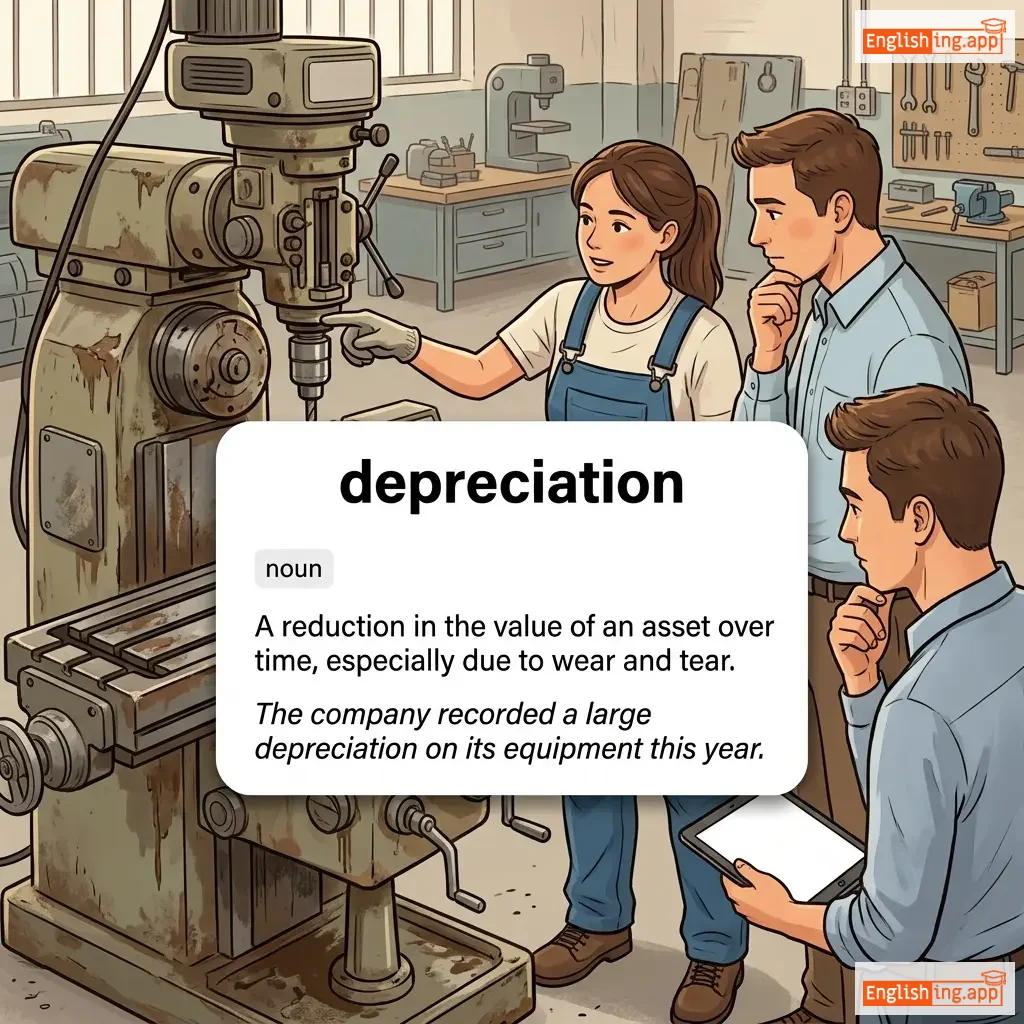
depreciation definition card — visual illustration of the meaning
noun
/dɪˌpriːʃiˈeɪʃən/
মূল্যহ্রাস (mulyohros)

A reduction in the value of an asset over time, especially due to wear and tear.

"The company recorded a large depreciation on its equipment this year."

"কোম্পানিটি এ বছর তাদের যন্ত্রপাতির বড় মূল্যহ্রাস রেকর্ড করেছে।" (Companyti e bochor tader jontrapotir boro mulyohros record koreche.)
noun
/ˌdɛprɪˈdeɪʃən/
লুটপাট (lutpat)

An act of attacking or plundering; damage caused by such acts.

"The villagers feared the depredation of wild animals at night."

"গ্রামবাসীরা রাতে বন্য প্রাণীর লুটপাটের ভয় করত।" (Grambashira rate bonno pranir lutpater bhoy korto.)
verb
/dɪˈprɛs/
মন খারাপ করা (mon kharap kora)

To make someone feel sad or without hope; to reduce the level or strength of something.

"The gloomy weather tends to depress people."

"মলিন আবহাওয়া সাধারণত মানুষের মন খারাপ করে দেয়।" (Molin abohawa sadharonto manusher mon kharap kore dey.)
noun
/dɪˈprɛsənt/
শান্তকারী ওষুধ (shantokari oshudh)

A drug that reduces functional or nervous activity in the body.

"Alcohol acts as a depressant on the central nervous system."

"অ্যালকোহল কেন্দ্রীয় স্নায়ুতন্ত্রে একটি শান্তকারী ওষুধ হিসেবে কাজ করে।" (Alcohol kendrio snayutontre ekti shantokari oshudh hisebe kaj kore.)
adjective
/dɪˈprɛst/
হতাশ (hotash)

Feeling very sad and without hope; in a state of unhappiness.

"She felt depressed after losing her job."

"চাকরি হারানোর পর সে হতাশ অনুভব করেছিল।" (Chakri haranor por se hotash onubhob korechilo.)
noun
/dɪˈprɛʃən/
বিষণ্ণতা / মন্দা (bishonnota / manda)

A state of severe sadness or hopelessness; also a prolonged downturn in economic activity.

"She has been battling depression for several months."

"সে কয়েক মাস ধরে বিষণ্ণতার সাথে লড়াই করছে।" (Se koyek mas dhore bishonnotar sathe lorai korche.)
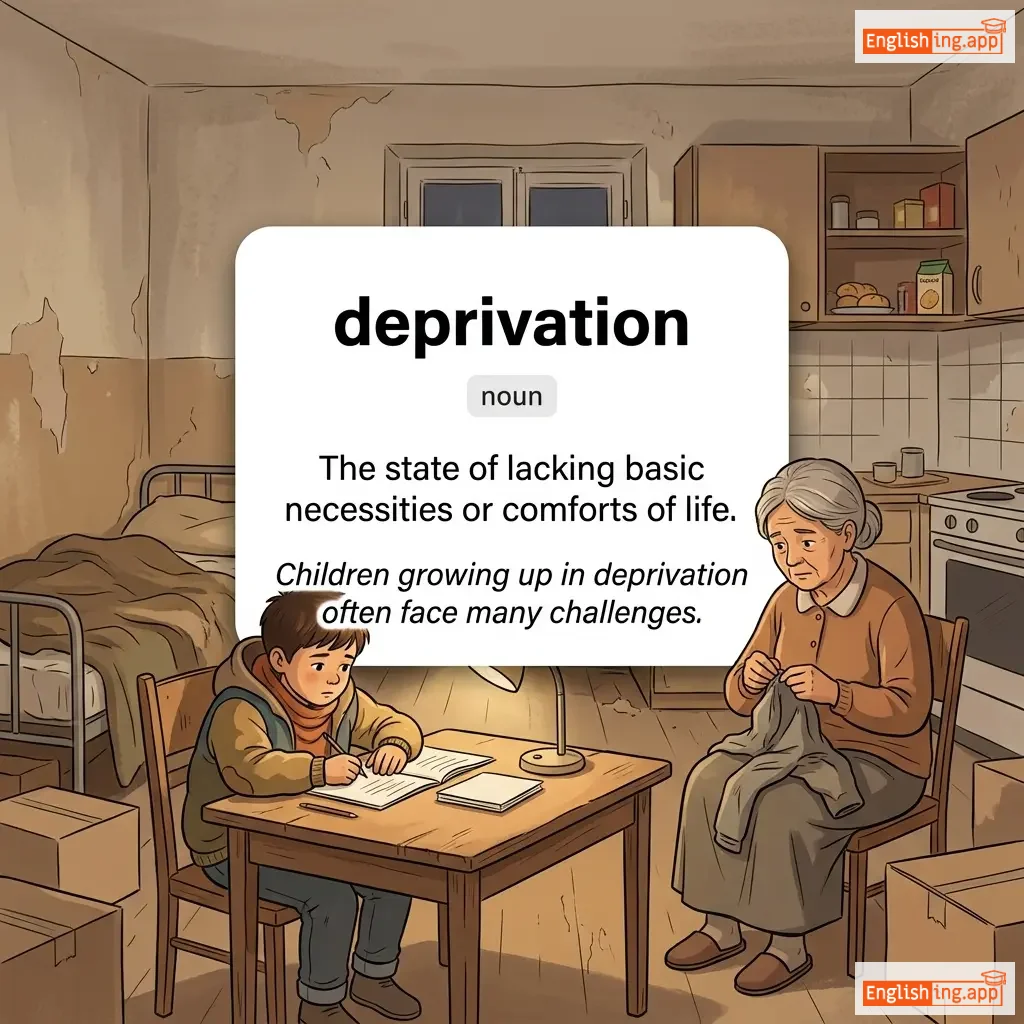
deprivation definition card — visual illustration of the meaning
noun
/ˌdɛprɪˈveɪʃən/
অভাব / বঞ্চনা (abhav / bonchona)

The state of lacking basic necessities or comforts of life.

"Children growing up in deprivation often face many challenges."

"বঞ্চনার মধ্যে বেড়ে ওঠা শিশুরা প্রায়ই অনেক চ্যালেঞ্জের মুখোমুখি হয়।" (Bonchonar moddhe bere otha shishura prai onek challenge-er mukhomukhi hoy.)
verb
/dɪˈpraɪv/
বঞ্চিত করা (bonchito kora)

to take something away from someone, or prevent them from having it

"The new law may deprive people of their rights."

"নতুন আইন মানুষকে তাদের অধিকার থেকে বঞ্চিত করতে পারে।" (Notun ain manushke tader odhikar theke bonchito korte pare.)
noun
/dɛpθ/
গভীরতা (gobhirata)

The distance from the top to the bottom of something; the intensity or complexity of a subject.

"The diver measured the depth of the ocean trench."

"ডুবুরি মহাসাগরের খাদটির গভীরতা মাপল।" (Duburi mohasagorer khad-tir gobhirata maplo.)
verb
/ˈdɛpjʊˌtaɪz/
সহকারী নিয়োগ করা (sohokari niyog kora)

To appoint someone as a deputy; to act as a substitute or representative.

"The sheriff decided to deputize several locals to help maintain order."

"শেরিফ শৃঙ্খলা বজায় রাখতে কয়েকজন স্থানীয়কে সহকারী হিসেবে নিয়োগ করার সিদ্ধান্ত নিলেন।" (Sherif shringkhola bojay rakhte koyekjon sthanio-ke sohokari hisebe niyog korar siddhanto nilen.)
noun
/ˈdɛpjʊti/
সহকারী (shohokari)

A person appointed as a substitute with power to act.

"The deputy will lead the meeting in the manager’s absence."

"ম্যানেজারের অনুপস্থিতিতে ডেপুটি মিটিং পরিচালনা করবে।" (Manager er onuposthitite deputy meeting porichalona korbe.)
verb
/dɪˈræsɪˌneɪt/
উপড়ে ফেলা / উৎখাত করা (upore fela / utkhat kora)

To uproot something completely; to displace people from their native environment or culture.

"The conflict deracinated many families from their homeland."

"সংঘাত অনেক পরিবারকে তাদের মাতৃভূমি থেকে উৎখাত করেছে।" (Songghat onek poribar-ke tader matrivumi theke utkhat koreche.)
adjective
/dɪˈreɪndʒd/
পাগল (pagol)

mentally disturbed or insane; behaving irrationally

"The deranged man shouted nonsense in the street."

"উন্মাদ লোকটি রাস্তায় বাজে কথা চিৎকার করছিল।" (Unmad lokti rastay baje kotha chitkar korchhilo.)
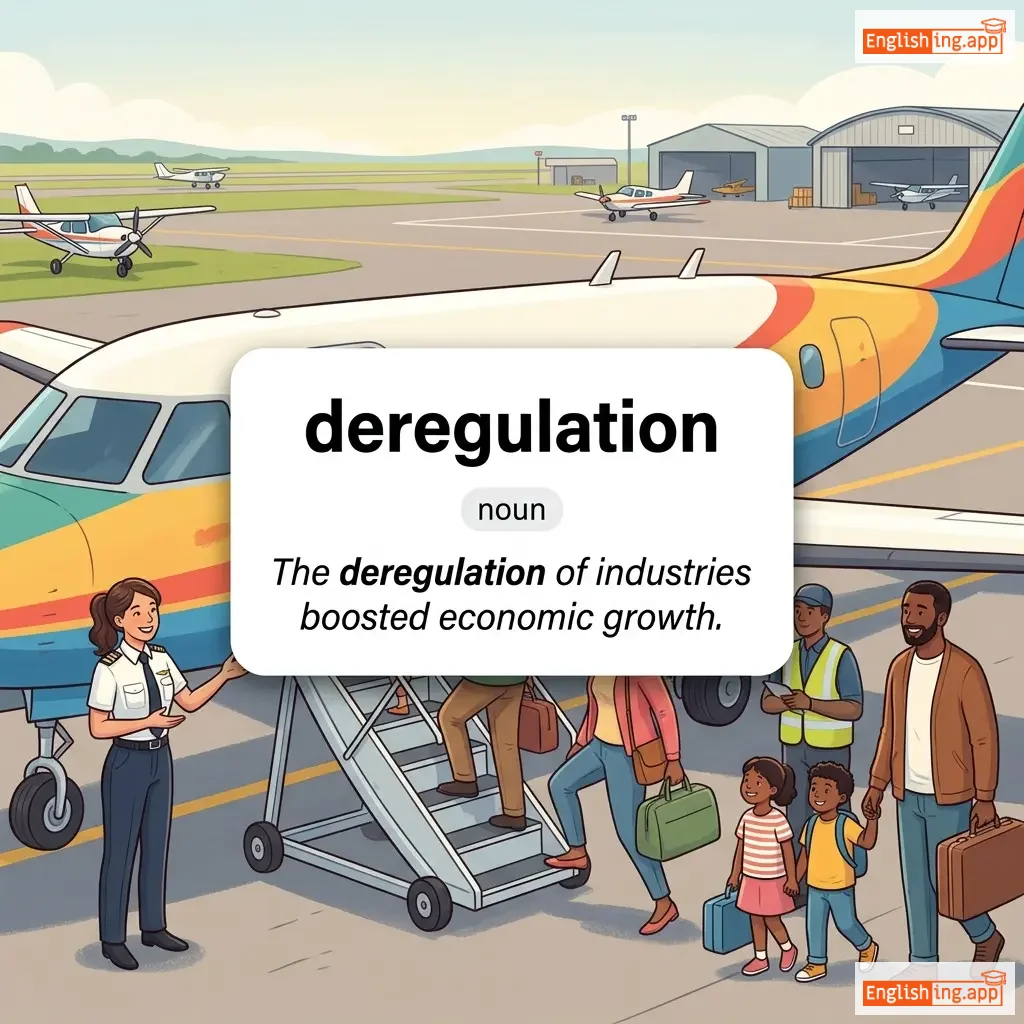
deregulation definition card — visual illustration of the meaning
noun
/ˌdiː.rɛɡ.jʊˈleɪ.ʃən/
নিয়ন্ত্রণমুক্তকরণ (niyontronmuktokoron)

The removal or reduction of government regulations and controls, often involving liberalization, free market policies, or privatization.

"The deregulation of industries boosted economic growth."

"শিল্প খাতের নিয়ন্ত্রণমুক্তকরণ অর্থনৈতিক প্রবৃদ্ধি ত্বরান্বিত করেছে।" (Shilpo khater niyontronmuktokoron orthonoitik probiddhi tworanbit koreche.)
adjective, noun
/ˈdɛrəlɪkt/
পরিত্যক্ত (porityokto)

in poor condition due to neglect or disuse; a homeless or neglected person

"The old factory stood derelict for decades."

"পুরনো কারখানাটি দশকের পর দশক পরিত্যক্ত অবস্থায় দাঁড়িয়ে ছিল।" (Purono karkhanati dosoker por dosok porityokto obosthay dariye chhilo.)
noun
/ˌdɛrɪˈlɪkʃən/
অবহেলা (obohola)

the state of being abandoned; neglect of duty

"The officer was charged with dereliction of duty."

"অফিসারকে কর্তব্যে অবহেলার অভিযোগে অভিযুক্ত করা হয়েছিল।" (Officer-ke kortobbe oboholar obhijoge obhijukto kora hoyechhilo.)
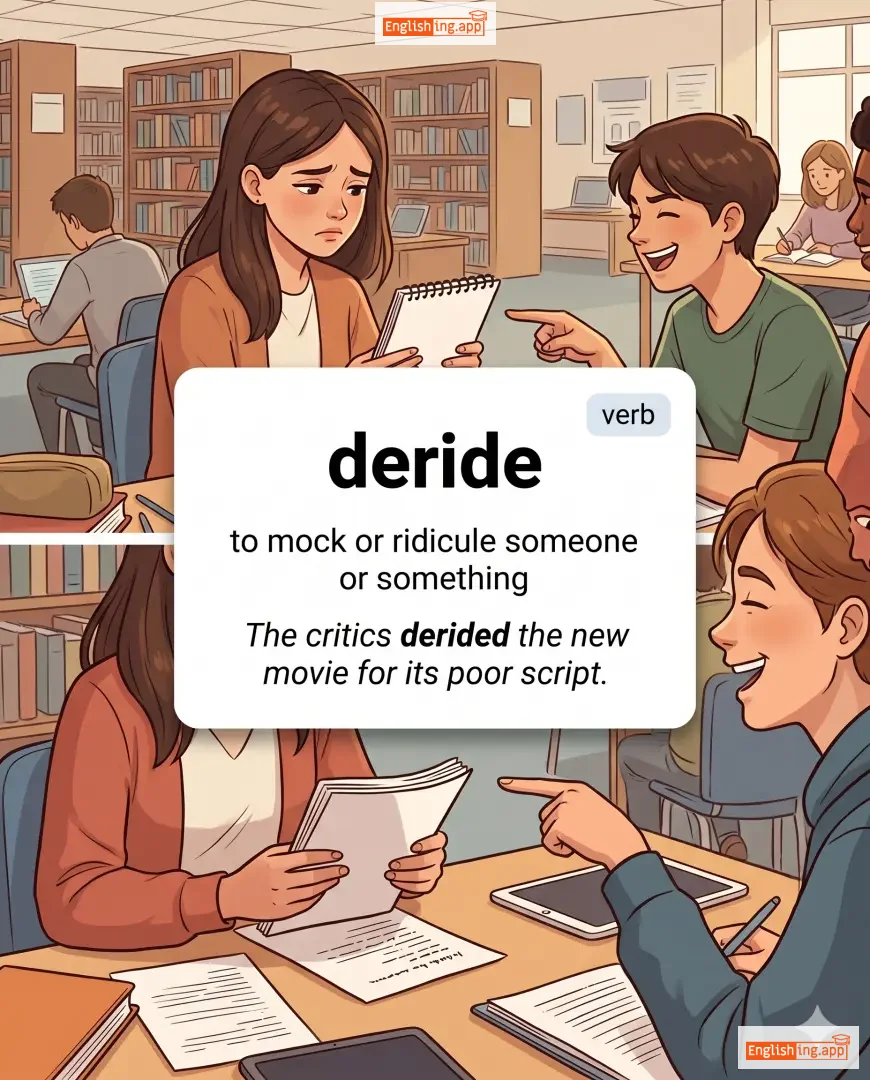
deride definition card — visual illustration of the meaning
verb
/dɪˈraɪd/
উপহাস করা (upohas kora)

to mock or ridicule someone or something

"The critics derided the new movie for its poor script."

"সমালোচকরা নতুন সিনেমাটিকে খারাপ চিত্রনাট্যের জন্য উপহাস করেছিল।" (Somalochokra notun sinemati-ke kharap chitronatyer jonno upohas korechhilo.)
adjective
/dɪˈrɪzəbl/
উপহাসযোগ্য (upohasjoggo)

deserving ridicule or mockery

"His excuse was so weak that it was plainly derisible."

"তার অজুহাত এতটাই দুর্বল ছিল যে এটি স্পষ্টত উপহাসযোগ্য।" (Tar ojuhat etotai durbol chhilo je eti spostoto upohasjoggo.)
noun
/dɪˈrɪʒən/
উপহাস (upohash)

Contemptuous ridicule or mockery.

"His ideas were greeted with derision by the audience."

"তার ধারণাগুলো শ্রোতারা উপহাসের সাথে গ্রহণ করেছিল।" (tar dharanagulo srotara upohasher sathe grohon korechilo.)
adjective
/dɪˈraɪsɪv/
উপহাসমূলক (upohashmulok)

Expressing contempt or ridicule.

"She gave a derisive laugh at his attempt to sing."

"সে তার গান গাওয়ার চেষ্টায় উপহাসমূলক হাসি দিয়েছিল।" (se tar gan gaoar chestay upohashmulok hasi diyechilo.)
noun
/ˌdɛrɪˈveɪʃən/
উৎপত্তি (utpotti)

The origin or development of something from a source.

"The derivation of the word comes from Latin."

"শব্দটির উৎপত্তি ল্যাটিন থেকে এসেছে।" (shobdoti utpotti latin theke esheche.)
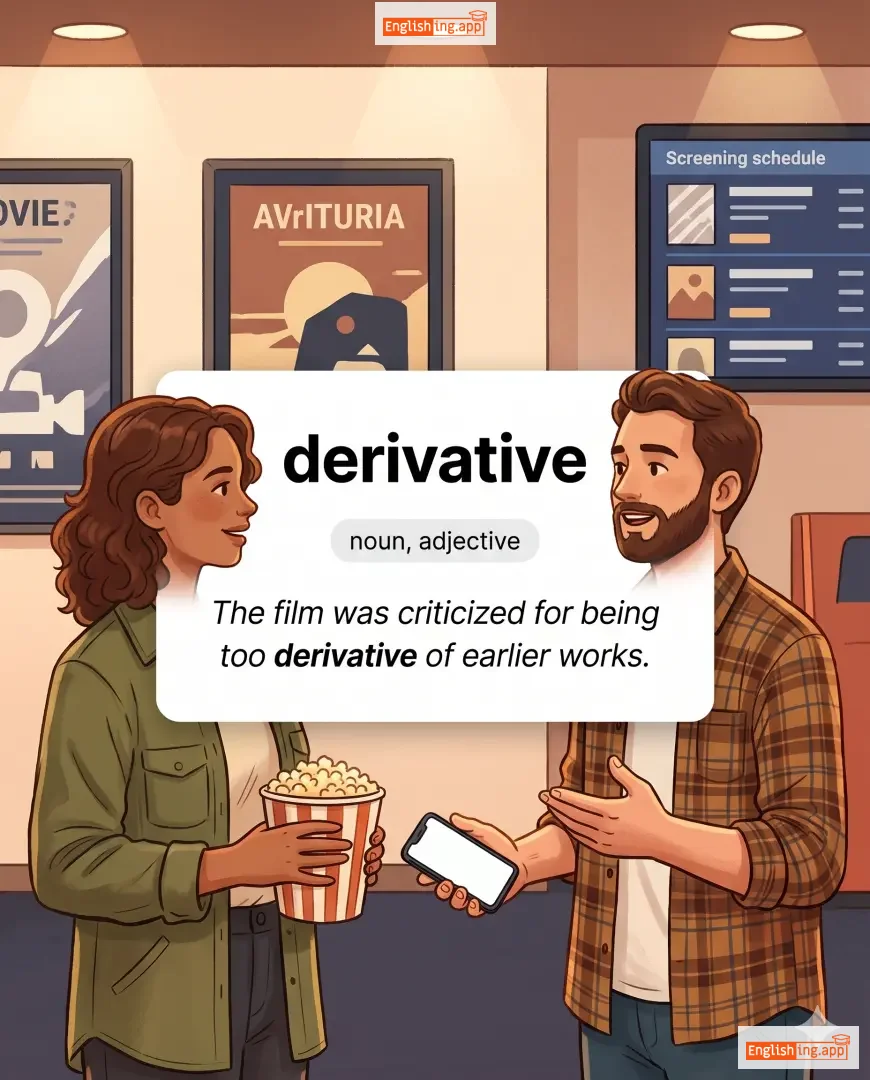
derivative definition card — visual illustration of the meaning
noun, adjective
/dɪˈrɪvətɪv/
অব্যুৎপন্ন / অনুসৃত (obyutpanno / onusrito)

Something that is based on another source; in math, a measure of how a function changes.

"The film was criticized for being too derivative of earlier works."

"ছবিটি আগের কাজগুলোর অনুসৃত হওয়ায় সমালোচিত হয়েছিল।" (chobiti ager kajgulo onusrito howay somalochito hoyechilo.)
verb
/dɪˈraɪv/
উৎস থেকে প্রাপ্ত হওয়া (uts theke prapto howa)

To obtain something from a source.

"Many English words derive from Latin."

"অনেক ইংরেজি শব্দ ল্যাটিন থেকে এসেছে।" (onek ingreji shobdo latin theke esheche.)
adjective
/dɪˈraɪvd/
উৎপন্ন (utponno)

Developed or obtained from something else; not original.

"The word is derived from Latin."

"শব্দটি ল্যাটিন থেকে উৎপন্ন হয়েছে।" (shobdoti latin theke utponno hoyeche.)
noun
/ˌdɜːrməˈtɑːlədʒɪst/
চর্মরোগ বিশেষজ্ঞ (chormorog bisheshoggo)

A doctor who specializes in the treatment of skin diseases.

"She consulted a dermatologist for her skin allergy."

"সে তার ত্বকের অ্যালার্জির জন্য একজন চর্মরোগ বিশেষজ্ঞের সাথে পরামর্শ করেছিল।" (se tar tvoker allergy r jonno ekjon chormorog bisheshogger sathe poramorsho korechilo.)
noun
/ˌdɜːrməˈtɑːlədʒi/
চর্মরোগবিদ্যা (chormorogbiddya)

The branch of medicine concerned with the skin and its diseases.

"He studied dermatology at medical school."

"সে মেডিকেল স্কুলে চর্মরোগবিদ্যা পড়েছিল।" (se medical schoole chormorogbiddya porechilo.)
adjective
/dɪˈrɒɡətɪv/
অবমাননাকর (obmanakor)

Expressing a low opinion or showing lack of respect.

"He made a derogative remark about her work."

"সে তার কাজ সম্পর্কে একটি অবমাননাকর মন্তব্য করেছিল।" (se tar kaj somporke ekti obmanakor montobbo korechilo.)
adjective
/dɪˈrɒɡətɔːri/
অবমাননাকর (obmanakor)

Showing a critical or disrespectful attitude.

"The article contained derogatory comments about the politician."

"প্রবন্ধে রাজনীতিবিদের সম্পর্কে অবমাননাকর মন্তব্য ছিল।" (probondhe rajnittibider somporke obmanakor montobbo chilo.)
noun
/ˈdɛrɪk/
তেল উত্তোলনের টাওয়ার (tel utolon er tower)

A framework or tower used for supporting a crane, especially for oil drilling or lifting heavy loads.

"The workers assembled a derrick at the oil drilling site."

"কর্মীরা তেল খনন স্থানে একটি ডেরিক স্থাপন করেছিল।" (Kormira tel khonan sthane ekti derik sthapon korechilo.)