ভোকাবুলারিসমূহ

ইংরেজি শব্দের বাংলা অর্থ | English to Bangla Word Meaning Dictionary

adjective
/ˌdɛməˈnaɪəkəl/
অসুরসদৃশ (osursodrisho)

characteristic of or resembling a demon; wildly evil

"He gave a demoniacal laugh that terrified everyone."

"সে এমন এক অসুরসদৃশ হাসি দিয়েছিল যা সবাইকে ভয় পাইয়ে দিয়েছিল।" (Se emon ek osursodrisho hasi diyechilo ja sobaike voy paie diyechilo.)
adjective
/dɪˈmɒnstrəbl/
প্রমাণযোগ্য (promanjoyo)

clearly able to be shown or proven

"There was demonstrable evidence that he was innocent."

"তার নির্দোষ হওয়ার প্রমাণযোগ্য প্রমাণ ছিল।" (Tar nirdosh howar promanjoyo proman chilo.)
verb
/ˈdɛmənˌstreɪt/
প্রদর্শন করা (prodorshon kora)

to clearly show or prove something through evidence, explanation, or action

"The teacher demonstrated the experiment to the class."

"শিক্ষক শ্রেণিকে পরীক্ষাটি প্রদর্শন করেছিলেন।" (Shikkhok shrenike porikkhati prodorshon korechilen.)
noun
/ˌdɛmənˈstreɪʃən/
প্রদর্শন, বিক্ষোভ (prodorshon, bikshov)

the act of showing something clearly, or a public protest

"The workers organized a demonstration for better wages."

"শ্রমিকরা ভালো মজুরির জন্য একটি বিক্ষোভের আয়োজন করেছিল।" (Shromikra bhalo mojurir jonno ekti bikshover ayojon korechilo.)
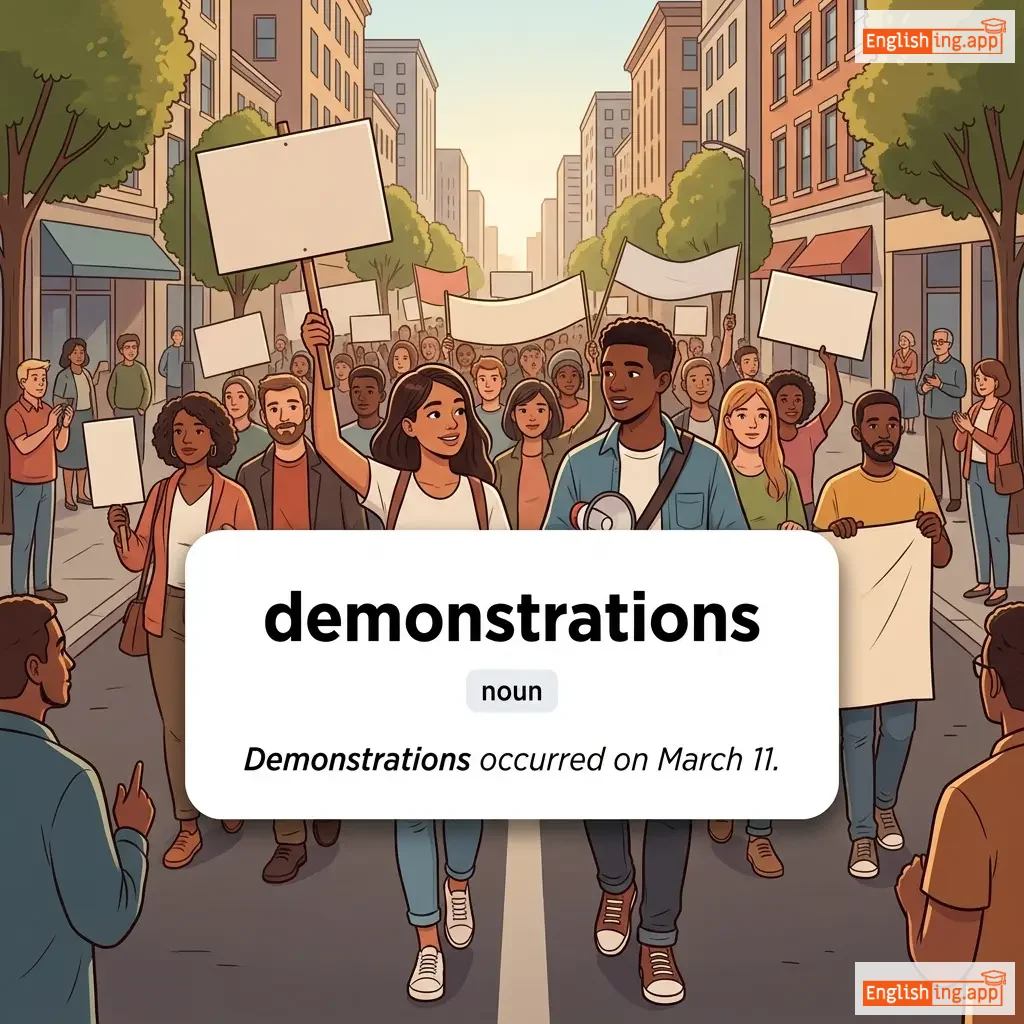
demonstrations definition card — visual illustration of the meaning
noun
ˌdemənˈstreɪʃənz
বিক্ষোভ (bikkhobh)

The action or process of showing the existence or truth of something by giving proof or evidence.

"Demonstrations occurred on March 11."

"১১ মার্চ বিক্ষোভ হয়েছিল।" (11 march bikkhobh hoyechhilo.)
adjective
/dɪˈmɒnstrətɪv/
খোলাখুলি প্রকাশক (kholakhuli prokashok)

openly showing feelings, especially affection or emotion

"She was very demonstrative with her affection towards her friends."

"সে তার বন্ধুদের প্রতি ভালোবাসা প্রকাশে খুবই খোলাখুলি ছিল।" (Se tar bondhuder proti bhalobasha prokashe khuboi kholakhuli chilo.)
noun
/ˈdɛmənˌstreɪtər/
প্রদর্শক, প্রতিবাদকারী (prodorshok, protibadkari)

a person who shows how something works or takes part in a public protest

"The demonstrators marched peacefully through the city streets."

"প্রদর্শনকারীরা শান্তিপূর্ণভাবে শহরের রাস্তায় মিছিল করল।" (Prodorshonkarira shantipurnovabe shohorer rastay michhil korlo.)
verb
/dɪˈmɔrəˌlaɪz/
মনোবল ভাঙা (monobal bhanga)

to cause someone to lose confidence or hope

"The constant criticism demoralized the young athlete."

"নিরন্তর সমালোচনা তরুণ ক্রীড়াবিদকে নিরুৎসাহিত করেছিল।" (Nirontor somalochona torun krirabidke nirutsahit korechilo.)
verb
/dɪˈmoʊt/
পদাবনতি দেওয়া (podabonoti deowa)

to reduce to a lower rank or position

"The manager decided to demote the employee for poor performance."

"ম্যানেজার খারাপ পারফরম্যান্সের জন্য কর্মীকে পদাবনতি দেওয়ার সিদ্ধান্ত নিলেন।" (Manager kharap performance er jonno kormike podabonoti deowar siddhanto nilen.)
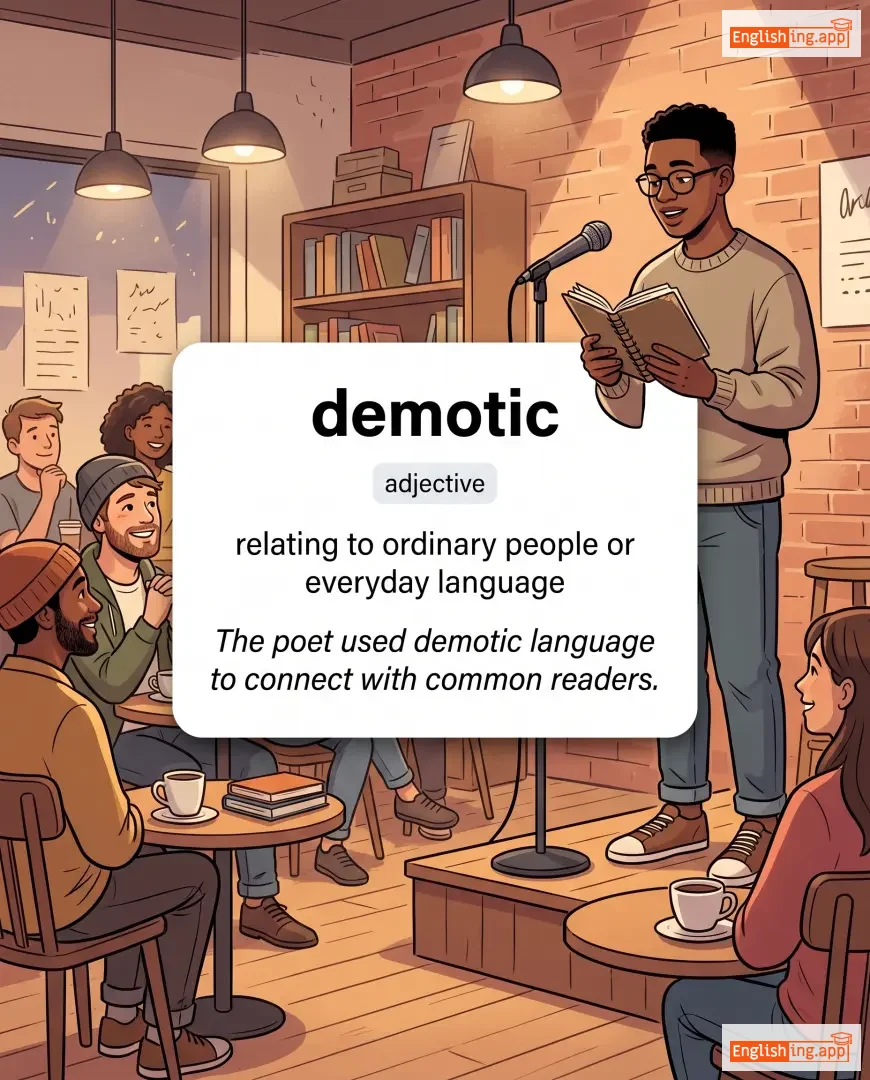
demotic definition card — visual illustration of the meaning
adjective
/dɪˈmɒtɪk/
জনসাধারণের ভাষা সম্পর্কিত (jonoshadharoner bhasa somporkito)

relating to ordinary people or everyday language

"The poet used demotic language to connect with common readers."

"কবি সাধারণ পাঠকের সাথে সংযোগ স্থাপনের জন্য জনসাধারণের ভাষা ব্যবহার করেছিলেন।" (Kobi sadharon pathoker sathe songjog sthaponer jonno jonoshadharoner bhasa byabohar korechilen.)
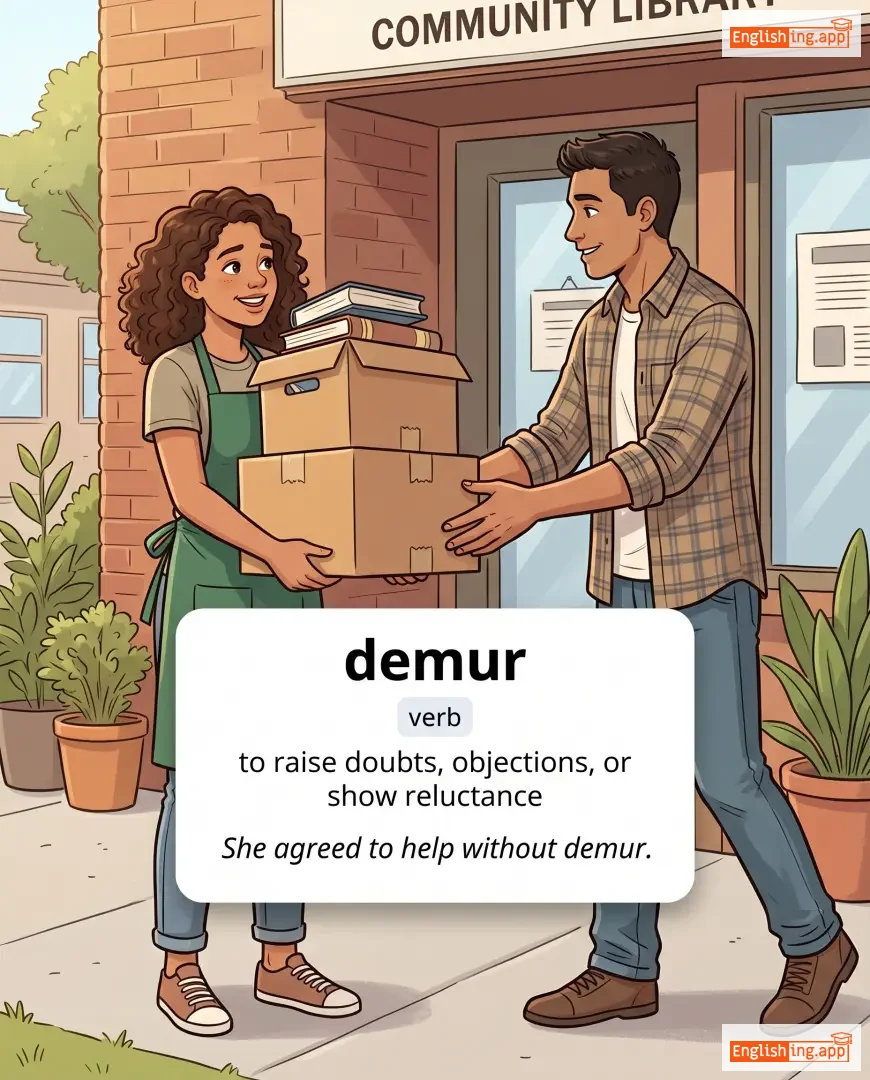
demur definition card — visual illustration of the meaning
verb
/dɪˈmɜːr/
আপত্তি জানানো (apotti janano)

to raise doubts, objections, or show reluctance

"She agreed to help without demur."

"সে কোনো আপত্তি ছাড়াই সাহায্য করতে সম্মত হয়েছিল।" (Se kono apotti charai sahajyo korte sommoto hoyechhilo.)
adjective
/dɪˈmjʊər/
লাজুক (lajuk)

reserved, modest, and shy

"She gave him a demure smile."

"সে তাকে এক লাজুক হাসি দিল।" (Se take ek lajuk hasi dilo.)
noun
/dɪˈmʌrɪdʒ/
বিলম্ব ফি (bilomb fi)

a charge payable to the owner of a ship or vehicle for not loading or unloading on time

"The company had to pay demurrage for delaying the unloading of goods."

"পণ্য আনলোডে দেরির জন্য কোম্পানিকে ডিমারেজ দিতে হয়েছিল।" (Ponno unload e derir jonyo kompani ke dimarej dite hoyechhilo.)
noun
/den/
গুহা, গর্ত (guha, gorto)

a wild animal's lair or home; a small room used for relaxation

"The bear returned to its den for winter hibernation."

"ভালুকটি শীতকালীন নিদ্রার জন্য তার গুহায় ফিরে গেল।" (bhaluk-ti shitokalin nidrar jonno tar guhay fire gelo)
verb
/diːˈnæʃənəlaɪz/
বেসরকারীকরণ করা (besorkarikoron kora)

to transfer ownership from the government to private individuals or companies

"The government decided to denationalize the bank to encourage private investment."

"সরকার বেসরকারি বিনিয়োগ উৎসাহিত করতে ব্যাংকটি বেসরকারীকরণের সিদ্ধান্ত নিল।" (Sorkar besorkari binioyog utshahit korte bankti besorkarikoroner siddhanto nilo.)
adjective
/ˈdɛndrɔɪd/
গাছের মতো আকৃতির (gacher moto akritir)

tree-shaped or branching like a tree

"The coral has a dendroid structure."

"প্রবালের একটি ডেনড্রয়েড গঠন রয়েছে।" (Probal er ekti dendroid gothon royechhe.)
noun
/dɛnˈdrɒlədʒi/
গাছবিদ্যা (gachbidya)

the scientific study of trees and woody plants

"He is studying dendrology at the university."

"সে বিশ্ববিদ্যালয়ে ডেনড্রলজি পড়ছে।" (Se bishwobidyaloye dendrology porchhe.)
noun
/dɪˈnaɪəl/
অস্বীকার (oswikar)

a statement that something is not true; the refusal to accept or believe something

"His denial of the accusations surprised everyone."

"তার অভিযোগ অস্বীকার সবাইকে বিস্মিত করেছিল।" (tar obhijog oswikar sobaike bismito korechhilo.)
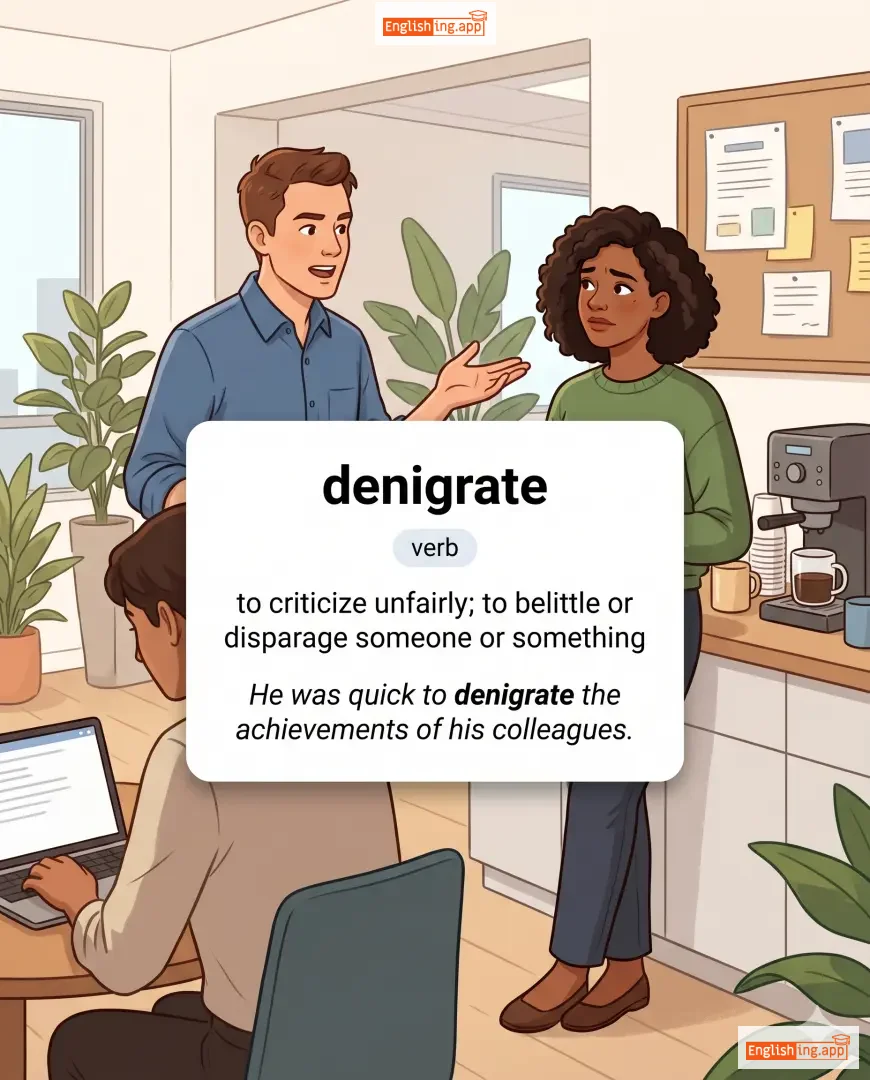
denigrate definition card — visual illustration of the meaning
verb
/ˈdɛnɪˌɡreɪt/
অবমূল্যায়ন করা (obomulayan kora)

to criticize unfairly; to belittle or disparage someone or something

"He was quick to denigrate the achievements of his colleagues."

"সে দ্রুত তার সহকর্মীদের অর্জনকে অবমূল্যায়ন করেছিল।" (Se druto tar sohkorimider orjonke obomulayan korechilo.)
noun
/ˈdɛnɪmz/
ডেনিমের প্যান্ট (denimer pant)

pants or clothes made from denim fabric, usually jeans

"He wore blue denims with a white shirt."

"সে একটি সাদা শার্টের সাথে নীল ডেনিম পরেছিল।" (Se ekti sada sharter sathe nil denim porechhilo.)
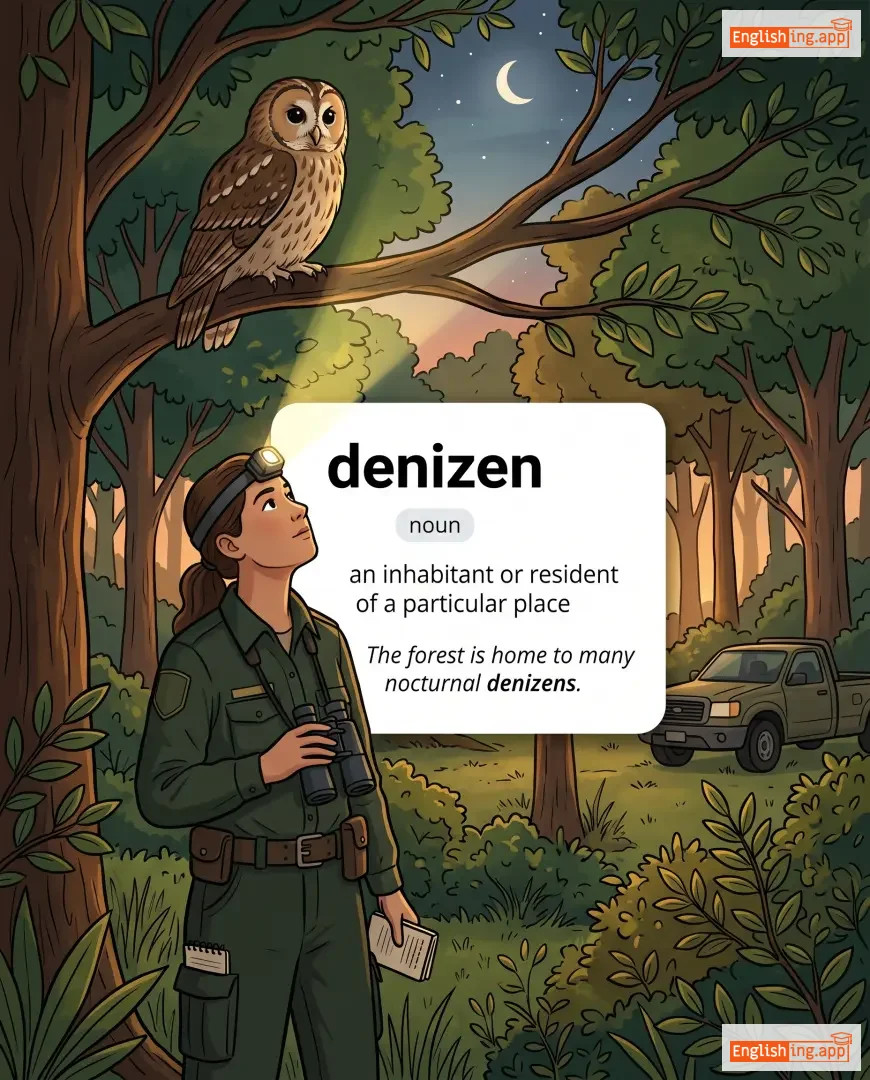
denizen definition card — visual illustration of the meaning
noun
/ˈdɛnɪzən/
বাসিন্দা (bashinda)

an inhabitant or resident of a particular place

"The forest is home to many nocturnal denizens."

"জঙ্গলটি অনেক নিশাচর বাসিন্দার আবাস।" (Jongolti onek nishachor bashindar abas.)
verb
/dɪˈnɒmɪˌneɪt/
নামকরণ করা (namkoron kora)

to give a name or designation to something

"The currency was denominated in dollars."

"মুদ্রাটি ডলারে নামকরণ করা হয়েছিল।" (Mudrati dolare namkoron kora hoyechilo.)
noun
/dɪˌnɒmɪˈneɪʃən/
উপসম্প্রদায়, মূল্যমান (uposhomprodai, mulyoman)

a recognized autonomous branch of the Christian Church; a unit of value or currency

"The church belongs to a Protestant denomination."

"গির্জাটি একটি প্রোটেস্ট্যান্ট উপসম্প্রদায়ের অন্তর্ভুক্ত।" (Girjati ekti protestant uposhomprodayer ontobhukto.)
noun
/dɪˈnɒmɪˌneɪtər/
হর (hor)

the number below the line in a fraction; a common factor in a situation

"In the fraction 3/4, the number 4 is the denominator."

"৩/৪ ভগ্নাংশে, ৪ হলো হর।" (Tin chor bhognangshe, char holo hor.)
noun
/ˌdiːnəʊˈteɪʃən/
আক্ষরিক অর্থ (akshorik ortho)

The literal or primary meaning of a word, in contrast to the feelings or ideas that the word suggests.

"The denotation of the word 'rose' is a type of flower."

"'রোজ' শব্দের ডেনোটেশন হলো একটি ফুলের নাম।" ('Rose' shobder denotation holo ekti fuler nam.)
verb
/dɪˈnəʊt/
সূচক হওয়া (suchok howa)

To be a sign of; to indicate or mean something.

"A red flag denotes danger."

"লাল পতাকা বিপদের সূচক।" (Lal potaka bipoder suchok.)
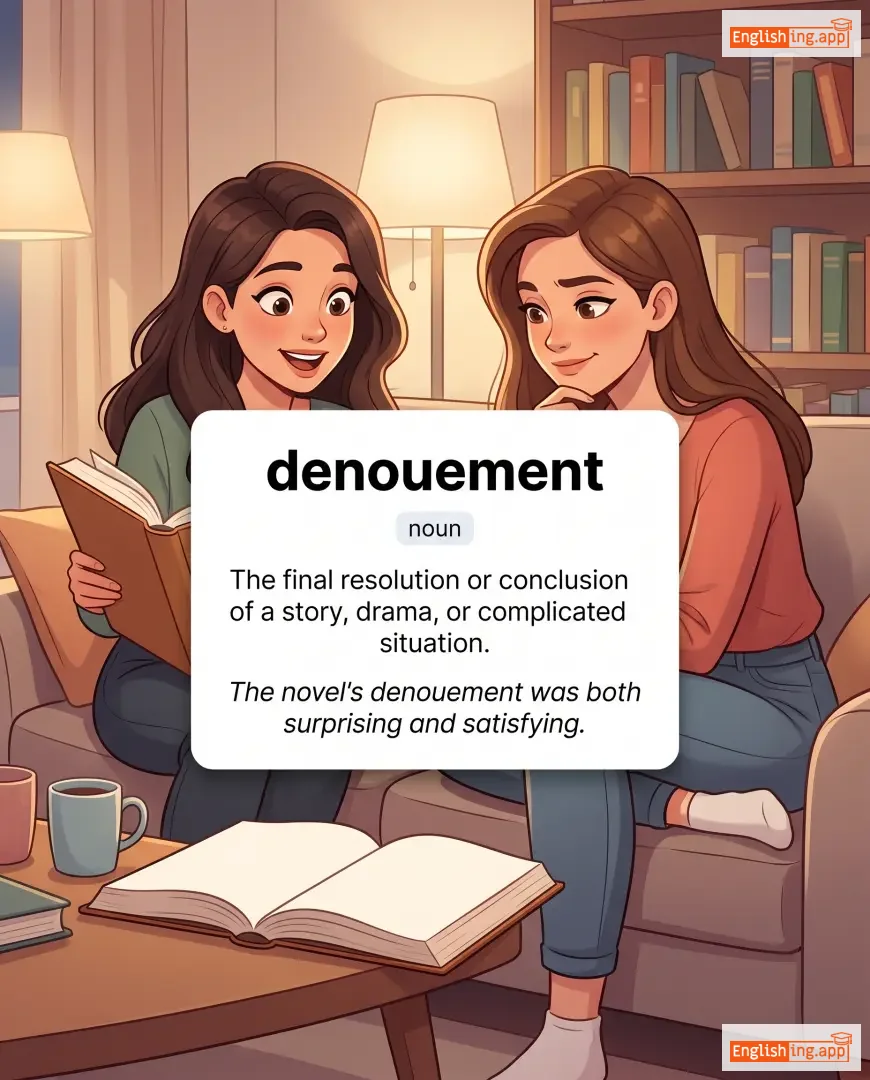
denouement definition card — visual illustration of the meaning
noun
/ˌdeɪnuːˈmɒ̃/
সমাপ্তি (shomapti)

The final resolution or conclusion of a story, drama, or complicated situation.

"The novel's denouement was both surprising and satisfying."

"উপন্যাসটির সমাপ্তি ছিল বিস্ময়কর এবং তৃপ্তিদায়ক।" (Uponyastir shomapti chilo bismoykor ebong triptidayok.)
verb
/dɪˈnaʊns/
নিন্দা করা (ninda kora)

To publicly declare something to be wrong, evil, or condemn strongly.

"The leader denounced corruption in his speech."

"নেতা তার বক্তৃতায় দুর্নীতির নিন্দা করেছেন।" (Neta tar boktritay durnitir ninda korechen.)
adjective
/dɛns/
ঘন (ghono)

Closely compacted in substance; having parts crowded together.

"The forest was so dense that little sunlight reached the ground."

"বনের ঘনত্ব এত বেশি ছিল যে সূর্যের আলো প্রায় মাটিতে পৌঁছায়নি।" (Boner ghanotto eto beshi chilo je surjer alo pray matite pouchaini.)
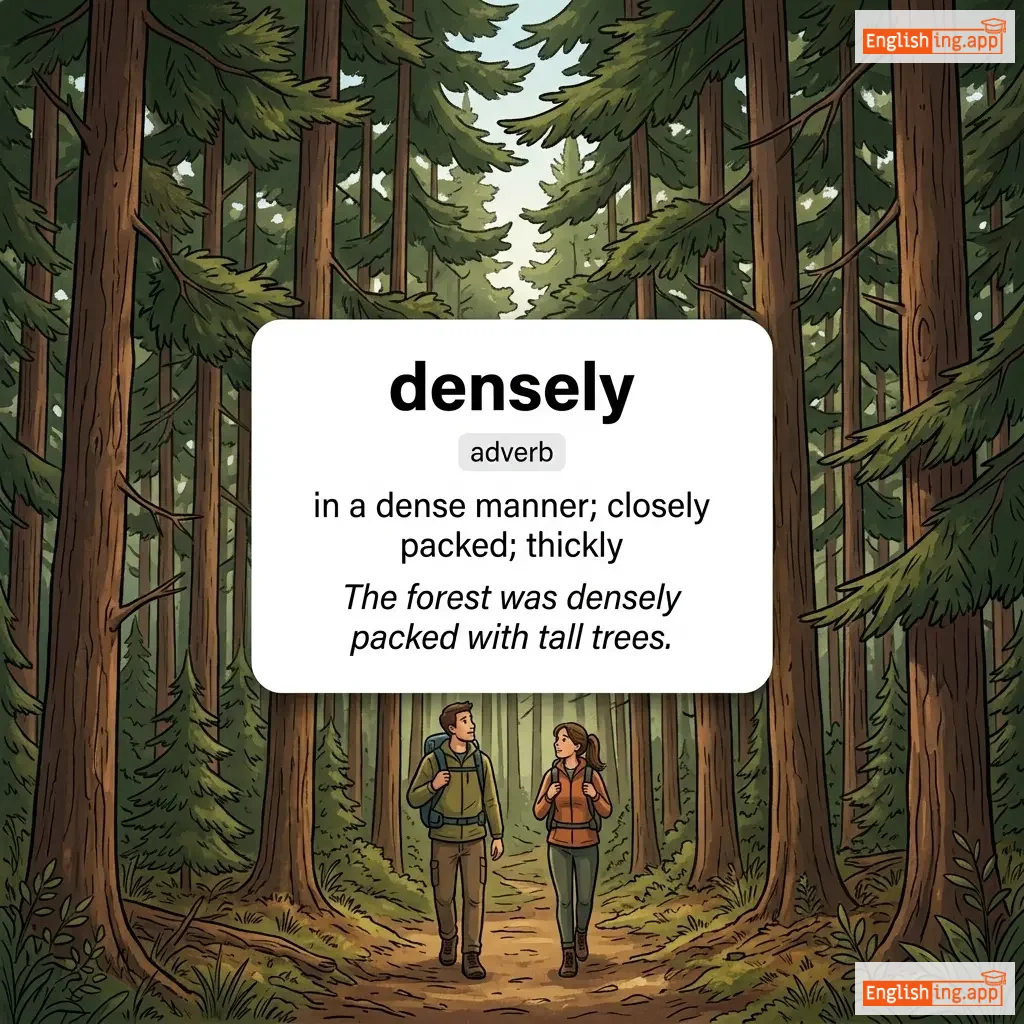
densely definition card — visual illustration of the meaning
adverb
/ˈdens.li/
ঘনভাবে; দমবন্ধভাবে; (ghonbhabe)

in a dense manner; closely packed; thickly

"The forest was densely packed with tall trees."

"বনটি উঁচু গাছে ঘনভাবে ভর্তি ছিল।" (bonti unchu gache ghonbhabe borti chilo)
noun
/ˈdɛnsɪti/
ঘনত্ব (ghonotto)

the degree of compactness or thickness of a substance or object

"The density of water is higher than that of air."

"জলের ঘনত্ব বাতাসের চেয়ে বেশি।" (Joler ghonotto bataser cheye beshi.)
noun/verb
/dɛnt/
ডেন্ট / খাঁজ (dent / khaj)

a small hollow mark on the surface of something; to make a small hollow mark

"The accident left a dent in the car door."

"দুর্ঘটনায় গাড়ির দরজায় একটি ডেন্ট পড়ে গিয়েছিল।" (Durghotonay garir dorjay ekti dent pore giyechhilo.)
adjective
/ˈdɛntəl/
দন্তসংক্রান্ত (dontosongkranto)

relating to teeth or dentistry

"She goes for a dental checkup every six months."

"সে প্রতি ছয় মাসে একবার দন্তসংক্রান্ত পরীক্ষা করায়।" (se proti choy mashe ekbar dontosongkranto porikkha koray)
noun
/ˈdɛntɪfrɪs/
দাঁত পরিষ্কার করার গুঁড়ো/পেস্ট (dat porishkar korar guro/pest)

a substance such as powder, paste, or liquid used to clean teeth

"He bought a new herbal dentifrice from the pharmacy."

"সে ফার্মেসি থেকে নতুন হারবাল দাঁতের পেস্ট কিনেছিল।" (Se pharmacy theke notun harbal dater pest kinechhilo.)
noun
/ˈden.tɪst/
দাঁতের চিকিৎসক (danter chikitsok)

a medical professional who treats teeth and oral health

"I need to visit the dentist for a regular checkup."

"নিয়মিত পরীক্ষার জন্য আমাকে দাঁতের ডাক্তারের কাছে যেতে হবে।" (niomito porikkhay jonno amake danter daktarer kache jete hobe.)
verb
/dɪˈnjuːd/
উন্মুক্ত করা / খালি করে দেওয়া (unmukto kora / khali kore deowa)

to strip something of its covering, possessions, or assets

"The forest was denuded of trees by illegal logging."

"অবৈধ কাঠ কাটার কারণে বন থেকে গাছ উন্মুক্ত হয়ে গিয়েছিল।" (Oboidh kath katar karone bon theke gach unmukto hoye giyechhilo.)
noun
/dɪˌnʌnsiˈeɪʃən/
নিন্দা / প্রকাশ্য অভিযোগ (ninda / prokashyo abijog)

the public condemnation or accusation of someone or something

"The journalist's article was a strong denunciation of corruption."

"সাংবাদিকের প্রবন্ধটি দুর্নীতির বিরুদ্ধে একটি শক্তিশালী নিন্দা ছিল।" (Sangbadiker probondhoti durnitir biruddhe ekti shoktishali ninda chhilo.)
verb
/dɪˈnaɪ/
অস্বীকার করা (oshikar kora)

to refuse to accept or admit something; to declare something untrue

"He denied stealing the money."

"সে টাকা চুরির কথা অস্বীকার করেছিল।" (Se taka churir kotha oshikar korechilo.)
noun
/diˈoʊ.dər.ənt/
দুর্গন্ধ নাশক; (durgondho nashok)

a substance that removes or conceals unpleasant smells, especially bodily odors

"She applied deodorant before going to the gym to stay fresh during workout."

"ব্যায়ামের সময় সতেজ থাকার জন্য জিমে যাওয়ার আগে তিনি দুর্গন্ধনাশক ব্যবহার করেছিলেন।" (byayamer shomoy shotej thakar jonno jime jawar age tini durgondhonashok bybohar korechhilen.)
verb
/dɪˈpɑːrt/
প্রস্থান করা (prostan kora)

to leave, especially to start a journey

"The train will depart at 9 a.m."

"ট্রেনটি সকাল ৯টায় ছেড়ে যাবে।" (Trenti shokal 9tay chere jabe.)
noun
/dɪˈpɑːrtmənt/
বিভাগ (bibagh)

a division of a large organization such as a government, university, or company

"She works in the marketing department."

"সে মার্কেটিং বিভাগে কাজ করে।" (Se marketing bibaghe kaj kore.)
noun
/dɪˈpɑːrtʃər/
বিদায়, প্রস্থান (biday, prosthan)

the act of leaving a place, especially to start a journey

"The plane’s departure was delayed due to fog."

"কুয়াশার কারণে বিমানের প্রস্থান বিলম্বিত হয়েছিল।" (Kuashar karone bimaner prosthan bilombito hoyechhilo.)
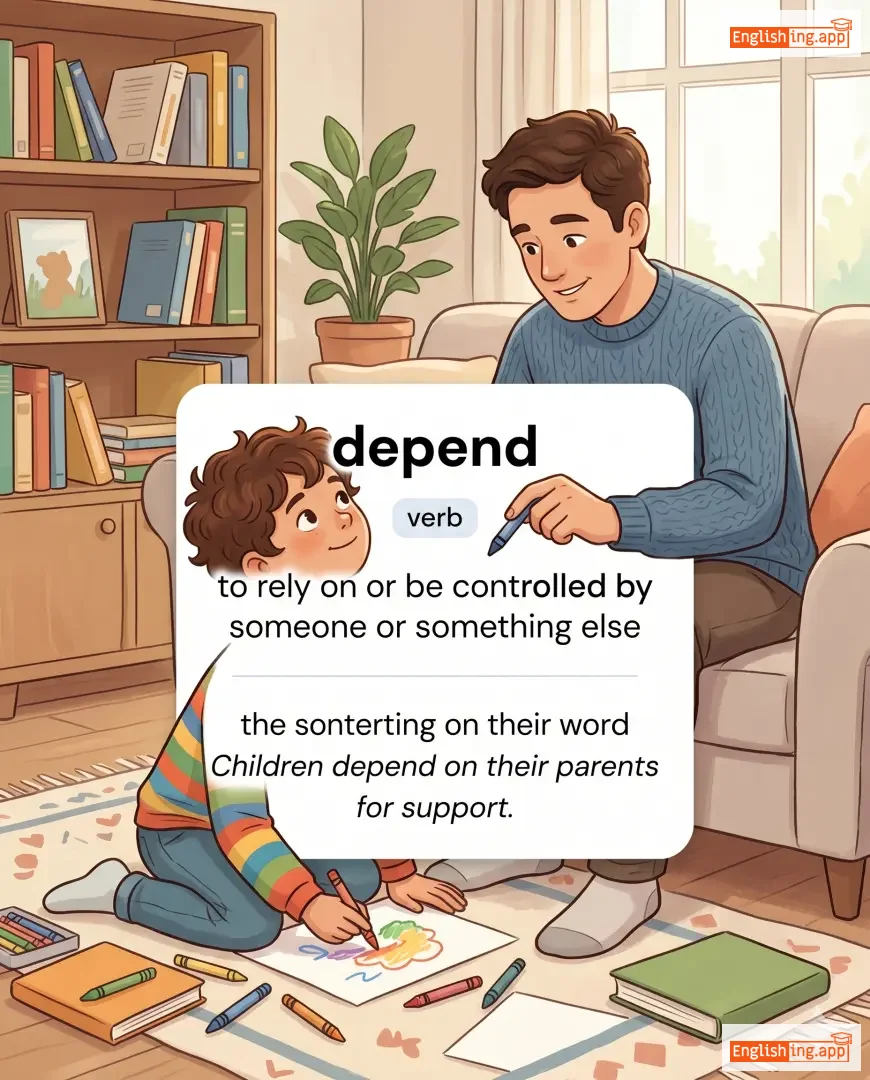
depend definition card — visual illustration of the meaning
verb
/dɪˈpɛnd/
নির্ভর করা (nirvor kora)

to rely on or be controlled by someone or something else

"Children depend on their parents for support."

"শিশুরা সহায়তার জন্য তাদের বাবা-মায়ের উপর নির্ভর করে।" (Shishura shahayatar jonno tader baba-mayer upor nirvor kore.)
adjective
/dɪˈpɛndəbl/
নির্ভরযোগ্য (nirbhorjoggo)

able to be trusted or relied on; consistently reliable

"She is a dependable colleague who always meets deadlines."

"তিনি একজন নির্ভরযোগ্য সহকর্মী যিনি সবসময় সময়সীমা মেনে চলেন।" (tini ekjon nirbhorjoggo sohokormi jini shobshomoy shomoyshima mene cholen)
noun
/dɪˈpɛndəns/
নির্ভরতা (nirbhorta)

the state of relying on or needing someone or something

"His dependence on his parents was growing as he couldn't find a job."

"তার পিতামাতার ওপর নির্ভরতা বাড়ছিল কারণ সে চাকরি পেত না।" (Tar pitamataar upor nirbhorta barcchhilo karon se chakri peto na.)
adjective
/dɪˈpɛndənt/
নির্ভরশীল (nirbhorshil)

Relying on someone or something else for support or help.

"Children are dependent on their parents for care."

"শিশুরা যত্নের জন্য তাদের পিতামাতার উপর নির্ভরশীল।" (Shishura jotner jonno tader pitamatar upor nirbhorshil.)
verb
/dɪˈpɛndɪŋ/
নির্ভর করছে (nirvor korche)

Being contingent on or influenced by something.

"The success of the plan is depending on the team's effort."

"পরিকল্পনার সফলতা দলের প্রচেষ্টার উপর নির্ভর করছে।" (Porikolpanar sofolota daler prochestar upor nirvor korche.)
verb
/dɪˈpɪkt/
চিত্রায়ণ করা / বর্ণনা করা (chitrayon kora / bornona kora)

to represent or show something in a picture, story, or other art form

"The painting depicts a beautiful sunset over the sea."

"চিত্রকর্মটিতে সমুদ্রের উপরে একটি সুন্দর সূর্যাস্ত চিত্রিত হয়েছে।" (Chitrokormotite somudrer upore ekti shundor surjasto chitrito hoyechhe.)
verb
/ˈdɛpɪleɪt/
লোম অপসারণ করা (lom opsaron kora)

to remove hair from the skin, especially by mechanical or chemical means

"She decided to depilate her legs before the event."

"সে অনুষ্ঠানের আগে তার পা থেকে লোম দূর করার সিদ্ধান্ত নিল।" (Se onusthaner age tar pa theke lom dur korar siddhanto nilo.)
verb
/dɪˈpliːt/
শূন্য করে ফেলা (shunno kore fela)

to reduce the quantity or supply of something

"The long war has depleted the country's resources."

"দীর্ঘ যুদ্ধ দেশের সম্পদ শূন্য করে ফেলেছে।" (Dirgho juddho desher shompod shunno kore feleche.)