ভোকাবুলারিসমূহ

ইংরেজি শব্দের বাংলা অর্থ | English to Bangla Word Meaning Dictionary

deliberate definition card — visual illustration of the meaning
adjective, verb
/dɪˈlɪbərət/ (adj), /dɪˈlɪbəreɪt/ (verb)
সচেতনভাবে করা / বিবেচনা করা (sochonvabe kora / bibecona kora)

done consciously and intentionally; to consider or discuss something carefully

"The committee will deliberate on the proposal tomorrow."

"কমিটি আগামীকাল প্রস্তাবটি নিয়ে আলোচনা করবে।" (Komiti agamikal prostabti nie alochona korbe.)
deliberately definition card — visual illustration of the meaning
adverb
/dɪˈlɪbərətli/
ইচ্ছাকৃতভাবে (ichhakritobhabe)

Done on purpose; intentionally.

"She deliberately ignored his question."

"সে ইচ্ছাকৃতভাবে তার প্রশ্ন উপেক্ষা করেছিল।" (Se ichhakritobhabe tar prosno upekkha korechhilo.)
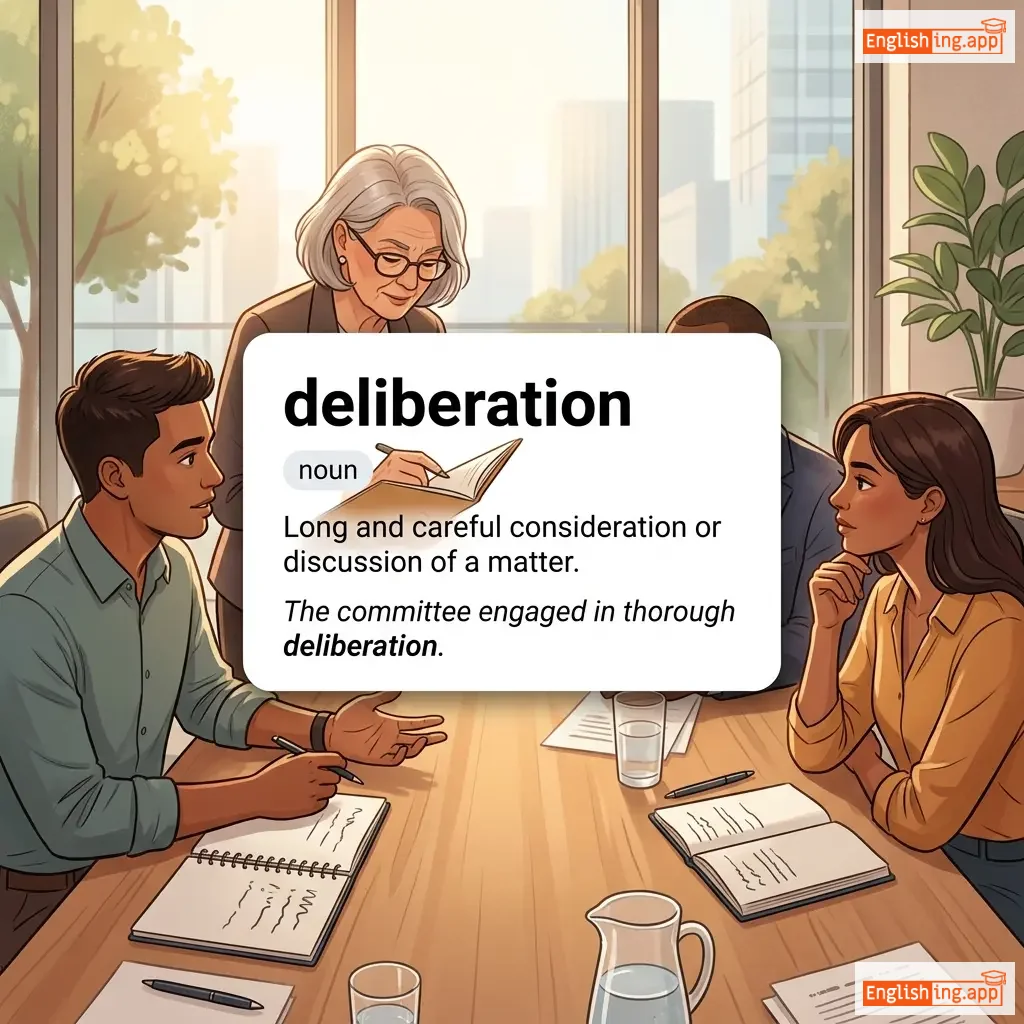
deliberation definition card — visual illustration of the meaning
noun
dɪˌlɪb.əˈreɪ.ʃən
সুচিন্তিত পর্যালোচনা, বিচার-বিবেচনা, মনোযোগী আলোচনা (shuchintito porjalocha, bichar-bibechona, monojogi alocha)

Long and careful consideration or discussion of a matter.

"The committee engaged in thorough deliberation."

"কমিটি গভীর বিচার-বিবেচনা করল।" (Komiti gobhir bichar-bibechona korolo.)
deliberations definition card — visual illustration of the meaning
noun
dɪˌlɪb.əˈreɪ.ʃənz
আলোচনা (alochona)

Long and careful consideration or discussion

"Deliberations on AI governance are ongoing."

"AI শাসনের উপর আলোচনা চলছে।" (AI shasoner upor alochona cholchhe.)
noun
/ˈdɛlɪkəsi/
দুর্লভ খাবার / সূক্ষ্মতা (durlov khabar / sukhmata)

a rare or expensive food item; fineness or sensitivity

"Caviar is considered a delicacy in many countries."

"ক্যাভিয়ারকে অনেক দেশে একটি বিরল খাবার হিসেবে ধরা হয়।" (Caviar-ke onek deshe ekti birol khabar hisebe dhora hoy.)
adjective
/ˈdɛlɪkət/
নাজুক (najuk)

Easily broken or damaged; requiring careful handling.

"The vase is very delicate, so handle it with care."

"ফুলদানি খুব নাজুক, তাই সাবধানে ধরুন।" (Phuldani khub najuk, tai sabdhane dhorun.)
adjective
/dɪˈlɪʃəs/
সুস্বাদু (suswadu)

having a very pleasant taste or smell

"The cake was so delicious that everyone asked for a second slice."

"কেকটি এত সুস্বাদু ছিল যে সবাই দ্বিতীয় টুকরো চেয়েছিল।" (Kekti eto suswadu chilo je sobai ditiyo tukro cheyechilo.)
noun, verb
/dɪˈlaɪt/
আনন্দ (anondo)

great pleasure or joy; to give someone great pleasure

"The children were filled with delight when they saw the gifts."

"শিশুরা উপহারগুলো দেখে আনন্দে ভরে উঠেছিল।" (shishura upohargulo dekhe anonde bhore uthchhilo.)
adjective
/dɪˈlaɪtɪd/
খুশি (khushi)

feeling or showing great pleasure and happiness

"She was delighted with the surprise gift."

"সে সারপ্রাইজ উপহার পেয়ে অত্যন্ত খুশি ছিল।" (Se sarproiz upohar peye atontto khushi chhilo.)
verb
/diːˈlɪmɪt/
সীমা নির্ধারণ করা (sima nirdharon kora)

to fix the boundaries or limits of something

"The treaty was signed to delimit the borders of the two countries."

"চুক্তিটি দুটি দেশের সীমানা নির্ধারণের জন্য স্বাক্ষরিত হয়েছিল।" (Chuktiti duti desher simana nirdharoner jonno shakkhorito hoyechilo.)
delineate definition card — visual illustration of the meaning
verb
/dɪˈlɪnieɪt/
সুস্পষ্টভাবে বর্ণনা করা (suspasto vabe bornona kora)

to describe, portray, or define something precisely and clearly

"The contract clearly delineates the responsibilities of each party."

"চুক্তিটি প্রতিটি পক্ষের দায়িত্ব সুস্পষ্টভাবে বর্ণনা করে।" (Chuktiti protiti pokkher dayitto suspasto vabe bornona kore.)
noun
/dɪˌlɪniˈeɪʃən/
বর্ণনা (bornona)

the precise description, drawing, or outlining of something

"The artist’s delineation of the landscape was remarkably accurate."

"শিল্পীর প্রাকৃতিক দৃশ্যের বর্ণনা অত্যন্ত সঠিক ছিল।" (Shilpir prakritik drishyer bornona otonto shothik chilo.)
verb
/ˌdɛlɪˈkwɛs/
আর্দ্রতা শোষণ করে তরলে পরিণত হওয়া (ardrota shoson kore torole porinoto howa)

to become liquid by absorbing moisture from the air

"The salt began to deliquesce after being left in the humid room."

"আর্দ্র কক্ষে রেখে দিলে লবণ তরল হয়ে যেতে শুরু করেছিল।" (Ardro kakhhe rekhe dile lobon torol hoye jete shuru korechhilo.)
adjective
/ˌdɛlɪˈkwɛsənt/
আর্দ্রতায় তরল হয় এমন (ardrotay torol hoy emon)

tending to become liquid by absorbing moisture from the air

"Sugar is not deliquescent, but salt can be."

"চিনি ডেলিকোয়েসেন্ট নয়, কিন্তু লবণ হতে পারে।" (Chini deliquescent noy, kintu lobon hote pare.)
adjective
/dɪˈlɪriəs/
অসুস্থ বা আনন্দে উন্মত্ত (osustho ba anonde unmotto)

in an extremely disturbed or excited state of mind, often due to illness or emotion

"He was delirious with fever and kept muttering nonsense."

"সে জ্বরে উন্মত্ত ছিল এবং অসংলগ্ন কথা বলছিল।" (Se jore unmotto chhilo ebong oshonglogno kotha bolchhilo.)
noun
/dɪˈlɪriəm/
বিভ্রান্তি (bibranti)

An acutely disturbed state of mind characterized by restlessness, illusions, and incoherence.

"The patient experienced delirium after the surgery due to the strong medication."

"অপারেশনের পর শক্তিশালী ওষুধের কারণে রোগী বিভ্রান্তিতে ভুগছিল।" (Oparesoner por shoktishali oshudher karone rogi bibrantite vugchhilo.)
verb
/dɪˈlɪvər/
পৌঁছানো (ponchano)

to bring or hand over something to the intended recipient

"The courier will deliver the package tomorrow."

"কুরিয়ার আগামীকাল প্যাকেজটি পৌঁছে দেবে।" (Courier agamikal package-ti ponchhe debe.)
noun
/dɪˈlɪvəri/
সরবরাহ (sorborah)

the act of taking goods, letters, or packages to people's houses or places of work

"The delivery of fresh vegetables arrives every morning."

"তাজা সবজির ডেলিভারি প্রতিদিন সকালে আসে।" (Taja shobjir delivery protidin sokale ase.)
noun
/ˈdɛltə/
ডেল্টা (delta)

A landform at the mouth of a river where it splits into several outlets.

"The Nile Delta is one of the most fertile regions in Egypt."

"নীল নদের ডেল্টা মিশরের সবচেয়ে উর্বর অঞ্চলের একটি।" (Nil nodir delta mishorer sobcheye urbor onchol er ekti.)
deltaic landscape definition card — visual illustration of the meaning
noun
delˈteɪɪk ˈlændskeɪp
ডেল্টা অঞ্চল (delta onchal)

A geographical area formed by sediment deposits at the mouth of a river, creating a triangular land formation.

"Bangladesh has a unique deltaic landscape."

"বাংলাদেশের একটি অনন্য ডেল্টা অঞ্চল রয়েছে।" (Bangladesher ekti ononno delta onchal royeche.)
verb
/dɪˈluːd/
প্রতারণা করা (protarona kora)

To mislead someone into believing something that is not true.

"He deluded himself into thinking he could win the race without training."

"সে নিজেকে প্রতারিত করেছিল যে সে প্রশিক্ষণ ছাড়াই দৌড়ে জিততে পারবে।" (Se nije ke protarit korechhilo je se proshikkhon charai dour e jitte parbe.)
noun
/ˈdɛljuːdʒ/
মহাপ্লাবন (mohaplabon)

A severe flood; an overwhelming quantity of something.

"The town was hit by a deluge of rain in just a few hours."

"কয়েক ঘণ্টার মধ্যেই শহরটি প্রবল বর্ষণে প্লাবিত হয়েছিল।" (Koyek ghontar modhyei shohorti probol borshone plabito hoyechhilo.)
noun
/dɪˈluːʒən/
ভ্রান্তি (bhranti)

A false belief or impression maintained despite being contradicted by reality.

"He lived under the delusion that he was invincible."

"সে এই ভ্রান্তির মধ্যে বাস করত যে সে অজেয়।" (Se ei bhrantir modhye bash korto je se ojeyo.)
adjective
/dɪˈluːsɪv/
ভ্রান্তিকর (vrantikor)

Giving a false or misleading impression; deceptive.

"His promises turned out to be delusive and untrustworthy."

"তার প্রতিশ্রুতিগুলো ভ্রান্তিকর এবং অবিশ্বস্ত প্রমাণিত হয়েছিল।" (tar protishrutigulo vrantikor ebong obishwasto promanito hoyechilo.)
adjective
/dɪˈluːsəri/
ভ্রান্ত ধারণামূলক (vranta dharana mulok)

Based on illusion; not real.

"He was filled with delusory hopes of becoming famous overnight."

"সে রাতারাতি বিখ্যাত হওয়ার ভ্রান্ত আশা নিয়ে ভরে গিয়েছিল।" (se ratarati bikhyato howar vranta asha niye bhore giechhilo.)
verb
/dɛlv/
খোঁজাখুঁজি করা (khonjakhunji kora)

To investigate deeply; to dig into a subject or area.

"The researcher delved into ancient manuscripts to find clues."

"গবেষক প্রাচীন পাণ্ডুলিপিতে সূত্র খুঁজতে গভীরভাবে অনুসন্ধান করেছিলেন।" (gojobhok prochin pandulipite sutro khujte gobhirbhabe onushondhan korechhilen.)
verb
/diːˈmæɡnɪtaɪz/
চৌম্বকত্বহীন করা (choumbokottohin kora)

To remove or reduce the magnetic properties of something.

"The technician demagnetized the old cassette tape."

"প্রযুক্তিবিদ পুরানো ক্যাসেট টেপের চৌম্বকত্বহীন করেছিলেন।" (projuktabid purano cassette taper choumbokottohin korechhilen.)
noun
/ˈdɛməɡɒɡ/
জনতাপ্রিয় নেতা (jonotapriyo neta)

A political leader who seeks support by appealing to popular desires and prejudices rather than by using rational argument.

"The crowd was swayed by the fiery speeches of the demagogue."

"অগ্নিময় বক্তৃতায় জনতা ওই জনতাপ্রিয় নেতার দ্বারা প্রভাবিত হয়েছিল।" (ognimoy boktritai jonota oi jonotapriyo netar dvara probhabit hoyechhilo.)
noun, verb
/dɪˈmænd/
চাহিদা (chahida)

to ask for something forcefully; the need or desire for goods or services

"Workers demanded better wages from the company."

"কর্মীরা কোম্পানির কাছে ভালো বেতনের দাবি করেছিল।" (Kormira companyr kache bhalo betoner dabi korechhilo.)
adjective
/dɪˈmændɪŋ/
কঠিন / দাবিদার (kothin / dabidar)

requiring much effort, skill, or attention; difficult to satisfy

"The job is very demanding and requires long hours of work."

"কাজটি খুব দাবিদার এবং দীর্ঘ সময় কাজ করতে হয়।" (Kajti khub dabidar ebong dirgho shomoy kaj korte hoy.)
verb
/ˈdiːmɑːrˌkeɪt/
সীমা নির্ধারণ করা (sima nirdharon kora)

to set the boundaries or limits of something

"The land was demarcated with fences to avoid disputes."

"বিরোধ এড়াতে জমিটি বেড়া দিয়ে সীমা নির্ধারণ করা হয়েছিল।" (Birodh erate jomiti bera diye sima nirdharon kora hoyechilo.)
noun
/ˌdiː.mɑːˈkeɪ.ʃən/
সীমানা নির্ধারণ; (shimana nirdharon)

the action of fixing the boundary or limits of something; separation or division

"The demarcation between public and private land was clearly marked."

"সরকারি ও বেসরকারি জমির মধ্যে সীমানা স্পষ্টভাবে চিহ্নিত ছিল।" (shorkari o beshorkari jomir moddhe shimana sposhtoybhabe chihnito chhilo.)
verb
/dɪˈmiːn/
অপমান করা (opoman kora)

to cause someone to lose dignity or respect

"The manager demeaned his employees with rude remarks."

"ম্যানেজার অশোভন মন্তব্য দিয়ে কর্মীদের অপমান করেছিলেন।" (Manager oshobhon montobbo diye kormider opoman korechilen.)
noun
/dɪˈmiːnər/
আচরণ / ব্যবহার (achoron / byabohar)

a person's outward behavior or appearance

"Her calm demeanor impressed everyone at the meeting."

"তার শান্ত ব্যবহার মিটিংয়ে সবাইকে মুগ্ধ করেছিল।" (Tar shanto byabohar mitinge sobaike mugdho korechilo.)
noun
/dɪˈmiːnər/
আচরণ (achoron)

a person's outward behavior or appearance

"Her calm demeanour impressed everyone during the meeting."

"তার শান্ত আচরণ সভায় সবাইকে মুগ্ধ করেছিল।" (Tar shanto achoron sobhay sobaike mugdho korechhilo.)
adjective
/dɪˈmɛntɪd/
পাগল / অযৌক্তিক (pagol / oyojuktik)

behaving irrationally due to mental illness or extreme excitement

"He looked demented after hearing the shocking news."

"চমকপ্রদ খবর শোনার পর সে পাগলের মতো দেখাচ্ছিল।" (Chomokprod khobor shonar por se pagoler moto dekhachhilo.)
noun
/dɪˈmɛrɪt/
ত্রুটি / শাস্তি পয়েন্ট (truti / shasti point)

A fault or disadvantage; a mark against a person for misconduct.

"He received a demerit for being late to class."

"সে ক্লাসে দেরি করার জন্য একটি ডিমেরিট পেয়েছিল।" (Se klase deri korar jonno ekti demerit peyechhilo.)
noun
/dɪˈmeɪn/
জমিদারি জমি (jomdari jomi)

Land attached to a manor and retained for the owner's use.

"The castle was surrounded by its vast demesne."

"প্রাসাদটি তার বিশাল জমিদারি জমি দ্বারা পরিবেষ্টিত ছিল।" (Prasadti tar bishal jomidari jomi dara poribestito chhilo.)
noun
/dɪˈmaɪz/
মৃত্যু / পতন (mrityu / poton)

Death or end of something, especially the end of an institution or system.

"The sudden demise of the company shocked investors."

"কোম্পানির হঠাৎ পতন বিনিয়োগকারীদের বিস্মিত করেছিল।" (Companyr hotat poton binijogkarider bismito korechhilo.)
verb
/diːˈmoʊbəlaɪz/
সেনা অব্যাহতি দেওয়া (sena obbahati deowa)

To release from military service or to disband troops.

"The government decided to demobilize the army after the war."

"যুদ্ধের পর সরকার সেনাবাহিনীকে অব্যাহতি দেওয়ার সিদ্ধান্ত নিল।" (Judher por sarkar senabahini ke obbahati deowar siddhanto nilo.)
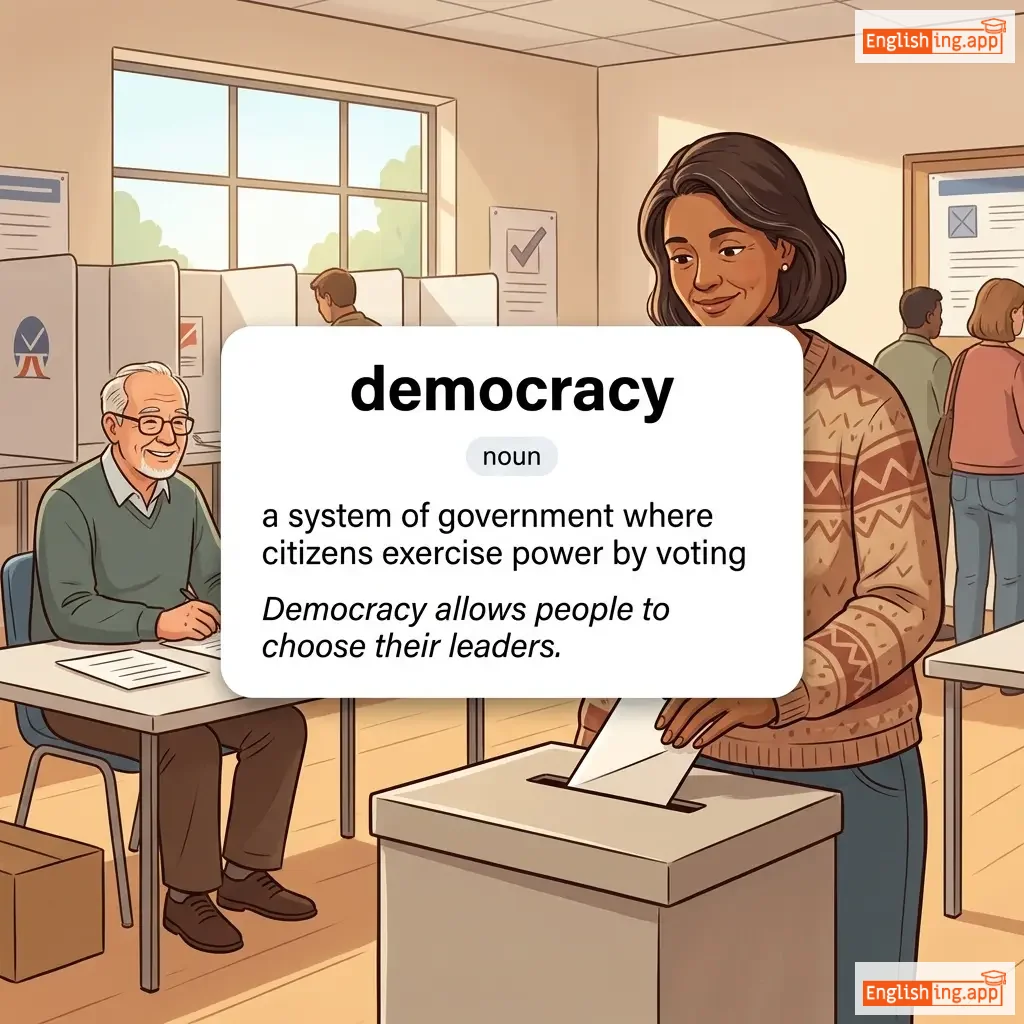
democracy definition card — visual illustration of the meaning
noun
/dɪˈmɑːkrəsi/
গণতন্ত্র (gonotontro)

a system of government where citizens exercise power by voting

"Democracy allows people to choose their leaders."

"গণতন্ত্র মানুষকে তাদের নেতা বেছে নেওয়ার সুযোগ দেয়।" (Gonotontro manushke tader neta beche newar sujog deoy.)
noun
/ˈdɛməˌkræt/
গণতন্ত্রী (gonotontree)

a supporter of democracy or a member of the Democratic Party in the US

"He is a strong democrat who believes in equal rights."

"তিনি একজন দৃঢ় গণতন্ত্রী, যিনি সমান অধিকারে বিশ্বাস করেন।" (Tini ekjon drirho gonotontree, jini shoman odhikare bishash koren.)
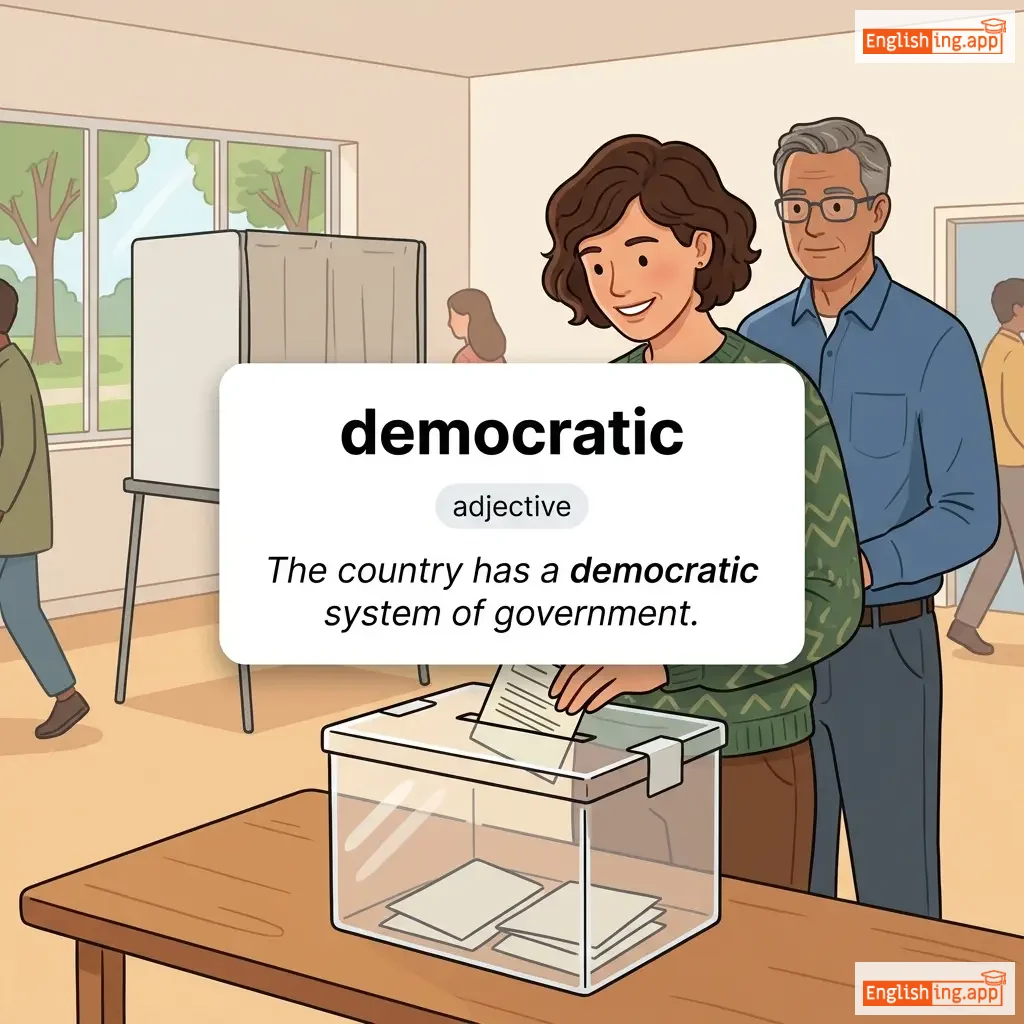
democratic definition card — visual illustration of the meaning
adjective
/ˌdɛməˈkrætɪk/
গণতান্ত্রিক (gonotantrik)

relating to or supporting democracy or its principles; characterized by equality and freedom

"The country has a democratic system of government."

"দেশটির একটি গণতান্ত্রিক সরকার ব্যবস্থা রয়েছে।" (Deshtir ekti gonotantrik shorkar byabostha royeche.)
demographic definition card — visual illustration of the meaning
adjective
/ˌdɛməˈɡræfɪk/
জনসংখ্যাগত (jonosongkhagat)

Relating to the structure of populations, such as age, race, or gender.

"The company conducted a demographic study of its customers."

"কোম্পানি তাদের গ্রাহকদের উপর একটি জনসংখ্যাগত গবেষণা পরিচালনা করেছিল।" (Company tader grahokder upar ekti jonosongkhagat gobeshona porichalona korechhilo.)
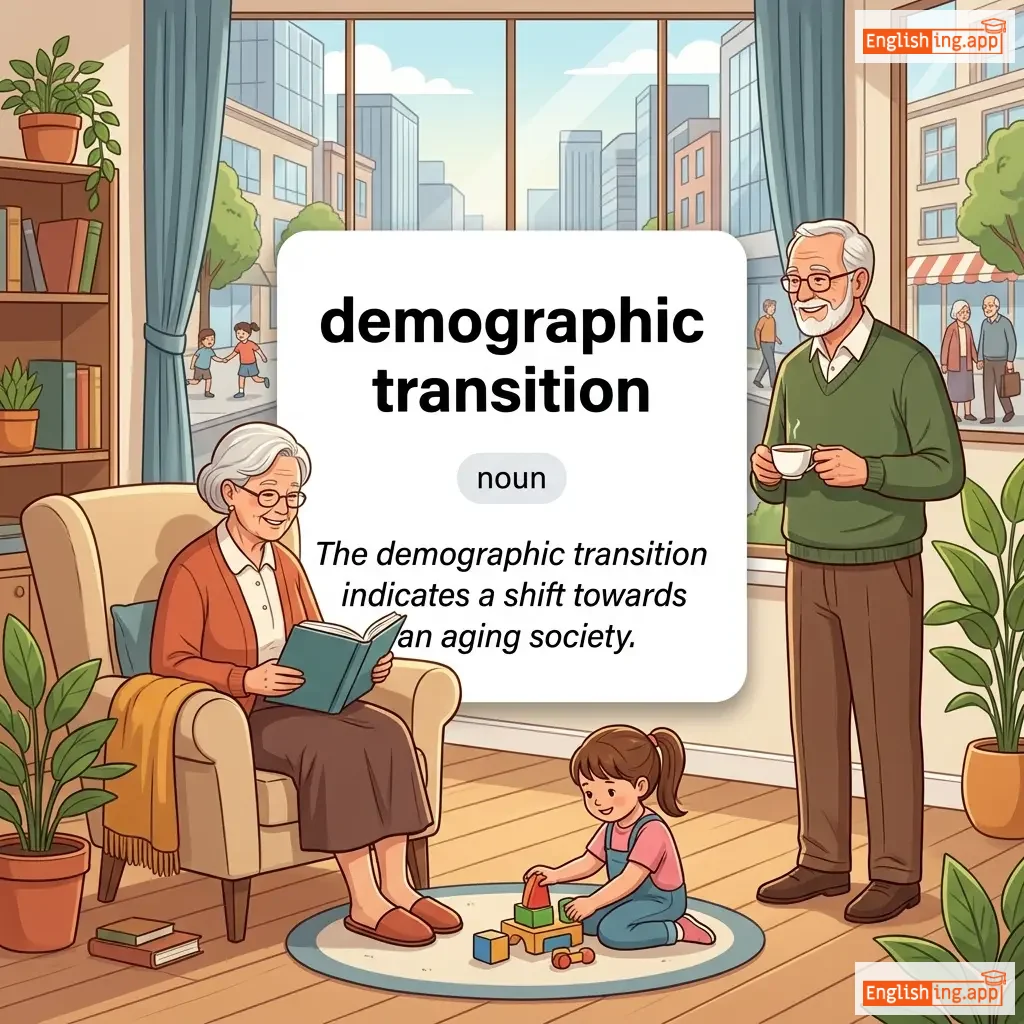
demographic transition definition card — visual illustration of the meaning
noun
ˌdɛməˈɡræfɪk trænˈzɪʃən
জনসংখ্যার রূপান্তর (jonshongkhar rupantor)

A shift in population patterns from high birth and death rates to low birth and death rates as a country develops economically

"The demographic transition indicates a shift towards an aging society."

"জনসংখ্যার রূপান্তর একটি বৃদ্ধ সমাজের দিকে নির্দেশ করে।" (Jonshongkhar rupantor ekti briddho shomajer dike nirdesh kore.)
Demographics definition card — visual illustration of the meaning
noun
/ˌdɛm.əˈɡræf.ɪks/
জনসংখ্যার বৈশিষ্ট্য, বাজার বিশ্লেষণের উপাদান (jonoshongkhar boishishtho, bajar bishleshanr upadhan)

Statistical data relating to the population and particular groups within it.

"Demographics help in targeted advertising."

"ডেমোগ্রাফিক্স লক্ষ্যভিত্তিক বিজ্ঞাপনে সহায়তা করে।" (Demographics lokkhobhittik bigggane shahayta kore.)
verb
/dɪˈmɒlɪʃ/
ধ্বংস করা (dhongsho kora)

to destroy completely, especially a building or structure

"The city decided to demolish the old stadium to build a new one."

"শহরটি নতুন একটি তৈরি করার জন্য পুরনো স্টেডিয়ামটি ধ্বংস করার সিদ্ধান্ত নিল।" (Shohoti notun ekti toiri korar jonno purono stadiumti dhongsho korar siddhanto nilo.)
noun
/ˌdɛməˈlɪʃən/
ধ্বংস (dhongsho)

the act or process of destroying a building or structure

"The demolition of the old factory took several weeks."

"পুরনো কারখানার ধ্বংস প্রক্রিয়াটি কয়েক সপ্তাহ ধরে চলেছিল।" (Purono karkhanar dhongsho prokriyati koyek soptaho dhore cholchilo.)
noun
/ˈdiːmən/
ভূত (bhut)

an evil spirit or devil

"The story was about a demon who haunted the village."

"গল্পটি ছিল এমন একটি ডিমন সম্পর্কে যা গ্রামটিকে ভয় দেখাতো।" (Golpoti chhilo emon ekti demon sommondhe ja gramti ke bhoy dekhato.)
adjective
/dɪˈmoʊniˌæk/
অসুরপ্রভাবিত (osurprabhobito)

possessed, produced, or influenced by a demon; frenzied or violent

"The soldiers fought with demoniac fury."

"সৈন্যরা অসুরপ্রভাবিত ক্রোধে যুদ্ধ করেছিল।" (Soinnora osurprabhobito krodhe juddho korechilo.)