ভোকাবুলারিসমূহ

ইংরেজি শব্দের বাংলা অর্থ | English to Bangla Word Meaning Dictionary

verb
/diːˈkoʊd/
কোড ভাঙা (kod bhanga)

to convert a coded message into a readable form; to interpret meaning

"The software can decode the hidden message within seconds."

"সফটওয়্যারটি কয়েক সেকেন্ডে লুকানো বার্তাটি ডিকোড করতে পারে।" (Softwareti koyek second e lukhano bartati decode korte pare.)
adjective
/ˌdeɪ.kɒlˈteɪ/
গভীর গলার পোশাক (gobhir golar poshak)

of a woman's dress or top, cut low so as to reveal the neck and upper chest

"She wore a decollete gown to the party."

"সে পার্টিতে একটি গভীর গলার গাউন পরেছিল।" (Se party te ekti gobhir golar gaun porechhilo.)
noun
/ˌdiː.kɒmpəˈzɪʃən/
পচন (pochon)

the process of decaying or breaking down into simpler parts

"The decomposition of leaves enriches the soil."

"পাতার পচন মাটিকে উর্বর করে তোলে।" (Patar pochon matike urbor kore tole.)
decompress definition card — visual illustration of the meaning
verb
/ˌdiː.kəmˈprɛs/
চাপমুক্ত করা বা শিথিল হওয়া (chapmukto kora ba shithil howa)

To relax and recover from stress or pressure.

"Taking deep breaths helps to decompress after a stressful day."

"গভীর শ্বাস নেওয়া একটি চাপপূর্ণ দিনের পর শিথিল হতে সহায়ক।" (Gobhir shwash neowa ekti chappurno diner por shithil hote sahayok.)
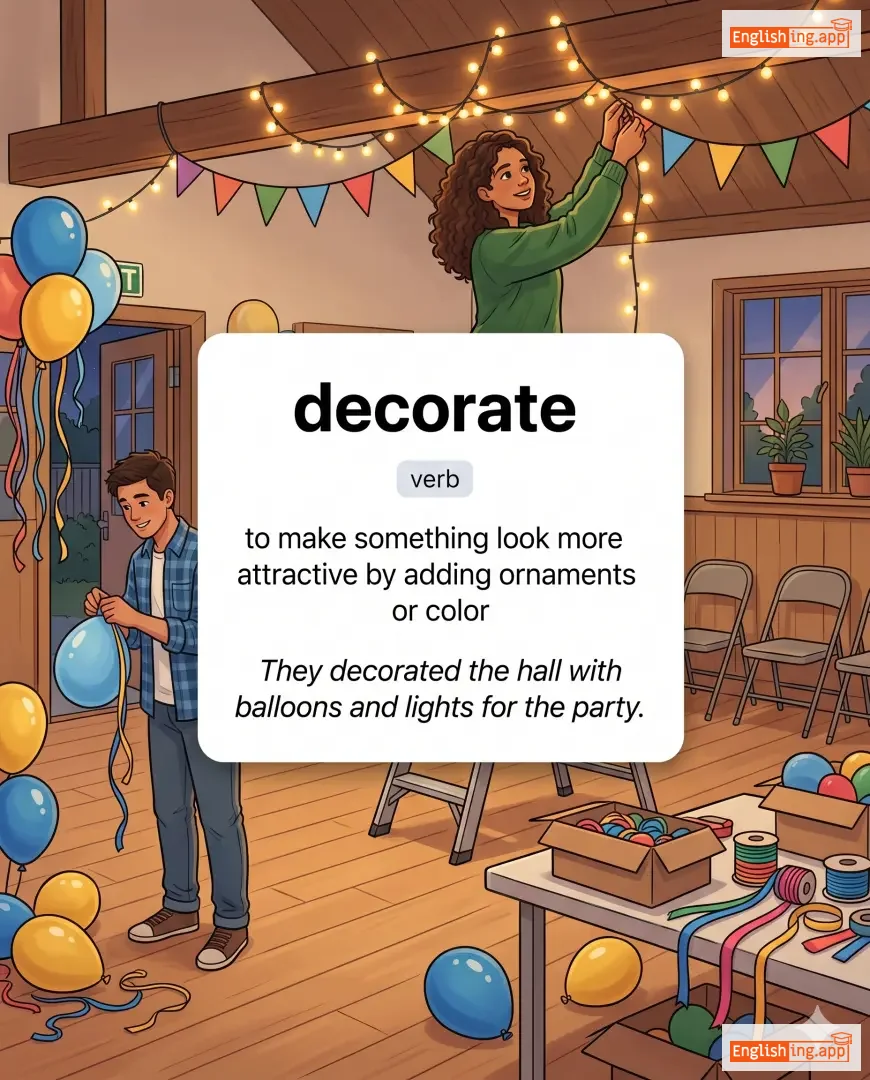
decorate definition card — visual illustration of the meaning
verb
/ˈdɛkəreɪt/
সাজানো (sajano)

to make something look more attractive by adding ornaments or color

"They decorated the hall with balloons and lights for the party."

"তারা পার্টির জন্য বেলুন ও আলো দিয়ে হলটি সাজিয়েছিল।" (tara partyr jonno belun o alo diye holti sajiechhilo.)
noun
/ˌdek.əˈreɪ.ʃən/
সাজসজ্জা; অলংকরণ; পুরস্কার; (shajsojja, olonkoron, puroshkar)

the process or art of decorating something; ornamental items used to beautify

"The Christmas decoration transformed the ordinary room into a festive wonderland."

"ক্রিসমাসের সাজসজ্জা সাধারণ ঘরটিকে একটি উৎসবমুখর স্বর্গে রূপান্তরিত করেছিল।" (christmaser shajsojja shadharon ghortike ekti utshobomukhho shorge rupantorito korechhilo.)
adjective
/ˈdekərəs/
শোভন (shobhon)

showing proper and polite behavior; marked by good taste

"The audience gave a decorous applause after the performance."

"দর্শকরা পরিবেশনার পর শোভন করতালিতে অভ্যর্থনা জানাল।" (Dorshokra poribeshonar por shobhon kortali te obhorthona janalo.)
Decorum definition card — visual illustration of the meaning
noun
/dɪˈkɔːrəm/
শালীনতা (shalinota)

behavior in keeping with good taste and propriety

"The students maintained decorum during the ceremony."

"ছাত্ররা অনুষ্ঠানের সময় শালীনতা বজায় রেখেছিল।" (Chatro ra onushthaner somoy shalinota bojay rekhechhilo.)
adjective
/dɪˈkɔːrəs/
শোভন (shovon)

characterized by propriety, good taste, and proper manners

"She maintained a decourous silence during the ceremony."

"সে অনুষ্ঠানের সময় শোভন নীরবতা বজায় রেখেছিল।" (Se onusthaner somoy shovon nirbota bajay rekhechhilo.)
noun/verb
/ˈdiːkɔɪ/
প্রলোভন (prolobhon)

something or someone used to lure or mislead

"The hunters used a wooden duck as a decoy."

"শিকারিরা কাঠের হাঁস প্রলোভন হিসেবে ব্যবহার করেছিল।" (Shikarira kater hans prolobhon hisebe byabohar korechhilo.)
verb/noun
/ˈdiːkriːs/ (noun), /dɪˈkriːs/ (verb)
হ্রাস / কমানো (hras / komano)

To become or make something smaller or fewer in number, amount, or degree.

"The population of the town has decreased over the years."

"বছরের পর বছর শহরের জনসংখ্যা হ্রাস পেয়েছে।" (Bochorer por bochor shohorer jonoshonkha hras peyechhe.)
noun/verb
/dɪˈkriː/
আদেশ (adesh)

an official order or command, often by authority

"The king issued a decree banning hunting in the forest."

"রাজা বনভূমিতে শিকার নিষিদ্ধ করার আদেশ জারি করেছিলেন।" (Raja bonbhumite shikar nishedh korar adesh jari korechhilen.)
adjective
/dɪˈkrɛpɪt/
জীর্ণ (jirno)

worn out or weakened by age or neglect

"The decrepit old house was on the verge of collapse."

"জীর্ণ পুরনো বাড়িটি ভেঙে পড়ার পথে ছিল।" (Jirno purono bariti bhenge porar pothe chhilo.)
noun
/dɪˈkrɛpɪˌtjuːd/
জরাজীর্ণতা (jarajirnota)

the state of being old, weak, and worn out

"The once-great empire fell into decrepitude."

"কখনো মহান সাম্রাজ্যটি জরাজীর্ণতায় পতিত হয়েছিল।" (Kokhono mohan samrajyoti jarajirnotay potito hoyechhilo.)
verb
/dɪˈkraɪ/
নিন্দা করা (ninda kora)

to publicly criticize or express strong disapproval of something

"Many activists decry the destruction of the rainforest."

"অনেক কর্মী বৃষ্টিবনের ধ্বংসকে নিন্দা করে।" (Onek kormi brishtiboner dhongsho ke ninda kore.)
decryption definition card — visual illustration of the meaning
noun
/dɪˈkrɪp.ʃən/
গোপন সংকেত ভাঙা বা পাঠোদ্ধার করা (gopon shongket vhanga ba pathhoddhar kora)

The process of converting encrypted information back to its original form

"Decryption of sensitive files requires a secure key."

"সংবেদনশীল ফাইলের পাঠোদ্ধার করতে একটি নিরাপদ কী দরকার।" (Shongbedonsil failer pathhoddhar korte ekti nirapod ki dorkar.)
verb
/ˈdɛdɪkeɪt/
উৎসর্গ করা (utsorgo kora)

to devote time, effort, or oneself to a particular purpose or person

"She dedicated her life to helping the poor."

"সে তার জীবন দরিদ্রদের সাহায্যে উৎসর্গ করেছিল।" (se tar jibon doridrader sahajye utsorgo korechhilo.)
adjective
/ˈdɛdɪˌkeɪtɪd/
নিষ্ঠাবান (nishthaban)

devoted to a cause, task, or purpose

"She is a dedicated teacher who goes above and beyond for her students."

"সে একটি নিষ্ঠাবান শিক্ষক, যে তার ছাত্রদের জন্য অতিরিক্ত পরিশ্রম করে।" (Se ekti nishthaban shikkhok, je tar chatroder jonno otirikto porishrom kore.)
dedication definition card — visual illustration of the meaning
noun
/ˌdɛdɪˈkeɪʃən/
অঙ্গীকার, নিবেদন (ongikar, nibedan)

the quality of being committed to a task or purpose

"Her dedication to her studies earned her top grades."

"তার পড়াশোনার প্রতি নিবেদন তাকে সর্বোচ্চ গ্রেড এনে দিয়েছে।" (Tar porashonar proti nibedan take sorbocho grade ene diyeche.)
verb
/dɪˈdjuːs/
উপসংহার টানা (uposonghar tana)

to reach a conclusion by reasoning or inference

"From the evidence, the detective deduced that the suspect was lying."

"প্রমাণ থেকে গোয়েন্দা উপসংহার টানলেন যে সন্দেহভাজন মিথ্যা বলছিল।" (Proman theke goyenda uposonghar tanlen je shondehobhajon mithya bolchilo.)
adjective
/dɪˈdjuːsəbl/
উপসংহারযোগ্য (uposongharyoggo)

able to be deduced; possible to be inferred

"The solution is deducible from the data provided."

"প্রদত্ত তথ্য থেকে সমাধানটি উপসংহারযোগ্য।" (Prodotto tothho theke somadhan ti uposongharyoggo.)
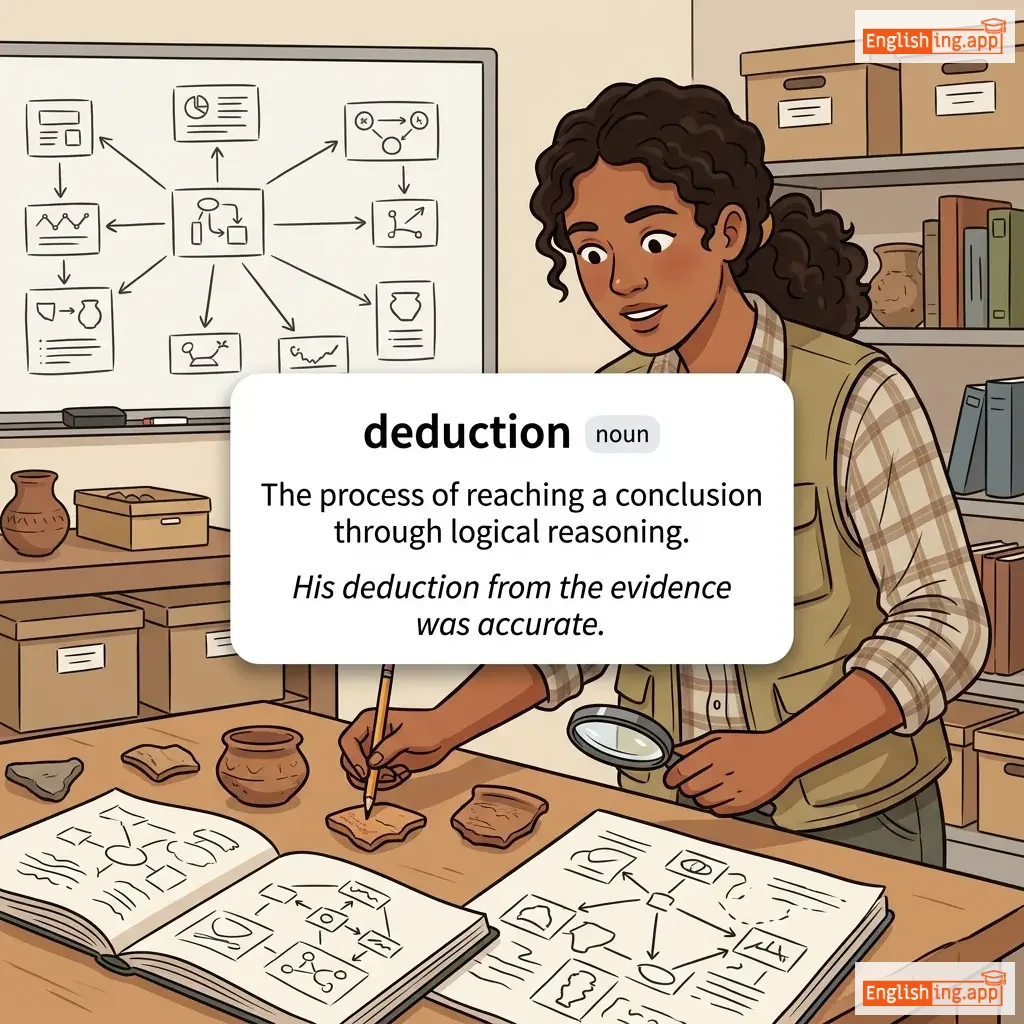
deduction definition card — visual illustration of the meaning
noun
/dɪˈdʌk.ʃən/
যুক্তিগত সিদ্ধান্ত (yuktigoto shiddhanto)

The process of reaching a conclusion through logical reasoning.

"His deduction from the evidence was accurate."

"প্রমাণ থেকে তার যুক্তিগত সিদ্ধান্ত নির্ভুল ছিল।" (Proman theke tar yuktigoto shiddhanto nirbhul chhilo.)
noun
/diːd/
কর্ম (kormo)

an action, especially a good or evil one

"His deed of kindness will never be forgotten."

"তার দয়ার কাজ কখনো ভুলে যাওয়া যাবে না।" (Tar doyar kaj kokhono bhule jaoya jabe na.)
verb
/diːm/
মনে করা, বিবেচনা করা (mone kora, bibecona kora)

to regard or consider in a specified way

"The project was deemed a success by the board."

"বোর্ড প্রকল্পটিকে সফল বলে মনে করেছে।" (Board prokolpo tike sofol bole mone koreche.)
adjective
/diːp/
গভীর (gobhir)

extending far down from the top or surface; profound or intense

"The lake is very deep in the middle."

"হ্রদের মাঝখানে খুব গভীর।" (Hroder majkhane khub gobhir.)
noun
/diːp ˈkʌlər/
গাঢ় রং (gadho rong)

a rich, intense, or dark shade of any color

"The artist used deep colours to create a dramatic effect."

"শিল্পী নাটকীয় প্রভাব সৃষ্টি করতে গাঢ় রং ব্যবহার করেছিলেন।" (shilpi natokiyo prabhab srishti korte gadho rong bybohar korechilen.)
deep sea definition card — visual illustration of the meaning
noun
/diːp siː/
গভীর সমুদ্র (gobhir shomudro)

The deep parts of the sea or ocean, typically beyond the continental shelf.

"Many deep-sea creatures produce bioluminescence for survival."

"অনেক গভীর সমুদ্রের প্রাণী বেঁচে থাকার জন্য জৈব আলোক উৎপন্ন করে।" (Onek gobhir shumdrer prani beche thakar jonno joibo alok utponno kore.)
adverb
/ˈdiːpli/
গভীরভাবে (gobhirbhabe)

to a great depth, extent, or intensity

"She was deeply moved by the speech."

"তিনি বক্তৃতা দ্বারা গভীরভাবে প্রভাবিত হয়েছিলেন।" (Tini boktrita dvara gobhirbhabe probhabit hoyechilen.)
noun
/dɪr/
হরিণ (horin)

a graceful wild animal with long legs and antlers, often living in forests

"A deer ran across the road suddenly."

"একটি হরিণ হঠাৎ করে রাস্তাটি পার হয়ে গেল।" (Ekti horin hotat kore rastati par hoye gelo.)
verb
/dɪˈfeɪs/
বিকৃত করা (bikrito kora)

to spoil the surface or appearance of something, especially by writing or drawing on it

"The vandals defaced the wall with graffiti."

"ভ্যান্ডালরা দেওয়ালে গ্রাফিতি দিয়ে বিকৃত করেছিল।" (Vandallra deowale grafiti diye bikrito korechilo.)
verb
/ˈdiːfælˌkeɪt/
অর্থ আত্মসাৎ করা (orth atmasat kora)

to misuse or embezzle money that one is responsible for

"The accountant was accused of defalcating company funds."

"হিসাবরক্ষককে কোম্পানির অর্থ আত্মসাতের অভিযোগে অভিযুক্ত করা হয়েছিল।" (Hisabrokshokke kompanir orth atmasater obhijoge obhijukto kora hoyechilo.)
noun
/ˌdɛfəˈmeɪʃən/
মানহানি (manhani)

the act of damaging someone's reputation by making false statements

"The newspaper was sued for defamation of character."

"পত্রিকাটি মানহানির মামলায় অভিযুক্ত হয়েছিল।" (Potrikati manhanir mamlay obhijukto hoyechilo.)
defame definition card — visual illustration of the meaning
verb
/dɪˈfeɪm/
মানহানি করা (manhani kora)

to harm someone's reputation by spreading false information

"He was defamed by malicious rumors."

"সে কুৎসিত গুজবের মাধ্যমে মানহানির শিকার হয়েছিল।" (Se kutsito gujober maddhome manhanir shikar hoyechilo.)
default definition card — visual illustration of the meaning
noun, verb
/dɪˈfɔːlt/
অপরিশোধ (oporisodh)

failure to fulfill an obligation, especially to repay a loan

"The company defaulted on its loan payments."

"কোম্পানিটি ঋণ পরিশোধে ব্যর্থ হয়েছিল।" (Kompani ti rin porishodhe byartho hoyechilo.)
verb
/dɪˈfiːt/
পরাজিত করা (porajito kora)

to win a victory over someone or something in a competition or battle

"Our team defeated their rivals in the final match."

"আমাদের দল ফাইনাল ম্যাচে তাদের প্রতিদ্বন্দ্বীদের পরাজিত করেছে।" (Amader dal final matche tader protiddondider porajito koreche.)
noun, adjective
/dɪˈfiːtɪst/
পরাজয়বাদী (porajoybadi)

A person who expects or is excessively ready to accept failure; showing a tendency to expect defeat.

"His defeatist attitude discouraged the rest of the team."

"তার পরাজয়বাদী মনোভাব দলের অন্যদের নিরুৎসাহিত করেছিল।" (tar porajoybadi monobhav daler onnodere nirutsahit korechhilo.)
noun, verb
/ˈdiːfɛkt/ (noun), /dɪˈfɛkt/ (verb)
ত্রুটি / দলত্যাগ করা (truti / doltyag kora)

A shortcoming, imperfection, or flaw; or to abandon a cause or group for another.

"The engineer found a defect in the software code."

"ইঞ্জিনিয়ার সফটওয়্যার কোডে একটি ত্রুটি খুঁজে পেলেন।" (injiniar software kode ekti truti khuje pelen.)
noun
/dɪˈfɛkʃən/
দলত্যাগ (doltyag)

The act of abandoning one’s country, cause, or group in favor of another.

"The politician’s defection shocked his supporters."

"রাজনীতিবিদের দলত্যাগ তার সমর্থকদের হতবাক করেছিল।" (rajnitibider doltyag tar somorthokder hotobak korechhilo.)
adjective
/dɪˈfektɪv/
ত্রুটিপূর্ণ; অপূর্ণ; (truttipurno)

having faults or defects; imperfect

"The defective product was returned to the store."

"ত্রুটিপূর্ণ পণ্যটি দোকানে ফেরত দেওয়া হয়েছিল।" (truttipurno ponnyoti dokane ferot deoya hoyechilo)
noun
/dɪˈfɛns/
প্রতিরক্ষা (protirakkha)

The act of protecting or guarding against attack, harm, or criticism.

"The castle walls were built for defence against invaders."

"দুর্গের দেয়াল আক্রমণকারীদের বিরুদ্ধে প্রতিরক্ষার জন্য তৈরি করা হয়েছিল।" (Durger deyal akromonkarider biruddhe protirakkhar jonno toiri kora hoyechhilo.)
verb
/dɪˈfɛnd/
রক্ষা করা (rokkha kora)

To protect someone or something from harm or attack.

"The lawyer worked hard to defend her client."

"আইনজীবী তার মক্কেলকে রক্ষা করার জন্য কঠোর পরিশ্রম করেছিলেন।" (Ainjibi tar mokkelke rokkha korar jonno kothor porishrom korechhilen.)
noun
/dɪˈfɛndənt/
আসামী (asami)

An individual, company, or institution sued or accused in a court of law.

"The defendant pleaded not guilty to the charges."

"আসামী অভিযোগে নিজেকে নির্দোষ দাবি করেছিল।" (asami ovijoge nije ke nirdosh dabi korechhilo.)
noun
/dɪˈfɛndər/
রক্ষক (rokhok)

a person who protects someone or something from harm or attack

"The defender blocked the shot and saved the goal."

"রক্ষকটি শটটি ব্লক করে গোলটি বাঁচিয়েছিল।" (rokkhokti shot ti blok kore golti banchiechhilo.)
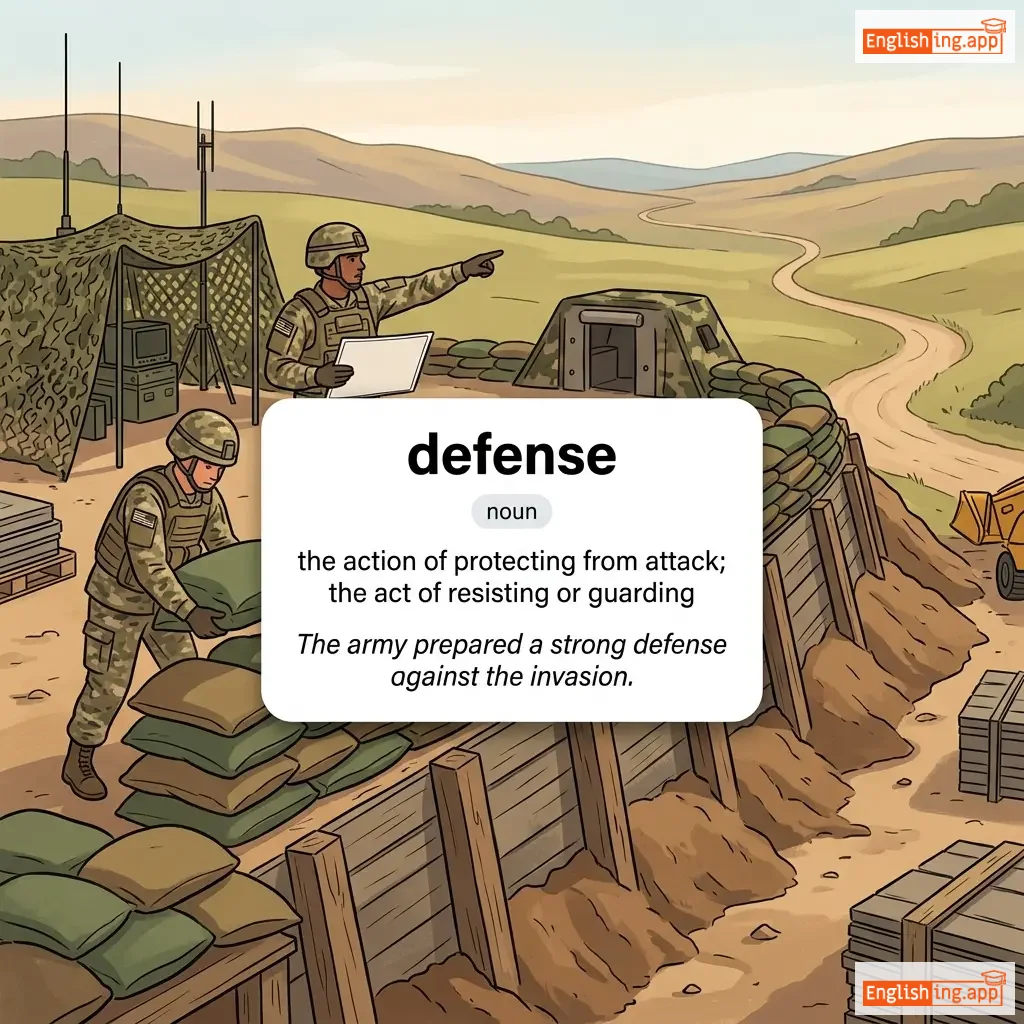
defense definition card — visual illustration of the meaning
noun
/dɪˈfɛns/
প্রতিরক্ষা (protirakkha)

the action of protecting from attack; the act of resisting or guarding

"The army prepared a strong defense against the invasion."

"সেনাবাহিনী আক্রমণের বিরুদ্ধে শক্তিশালী প্রতিরক্ষা প্রস্তুত করেছিল।" (Senabahini akromoner biruddhe shoktishali protirakkha prostut korechilo.)
adjective
/dɪˈfɛnsəbəl/
যা রক্ষা করা যায় / সঙ্গতিপূর্ণ (ja rokha kora jay / songotipurno)

Capable of being protected against attack or criticism; justifiable.

"Her decision was legally defensible."

"তার সিদ্ধান্ত আইনগতভাবে রক্ষা করার মতো ছিল।" (tar siddhanto ainigotvabe rokha korar moto chhilo.)
adjective
/dɪˈfɛnsɪv/
প্রতিরক্ষামূলক (protirakkhamulok)

Intended to protect or defend; behaving in a way to guard against criticism or attack.

"He became defensive when asked about his mistake."

"তার ভুল সম্পর্কে জিজ্ঞাসা করলে সে প্রতিরক্ষামূলক হয়ে উঠল।" (tar bhul somporke jigasha korle se protirakkhamulok hoye utlo.)
verb
/dɪˈfɜːr/
স্থগিত করা (sthogito kora)

To postpone or delay; to yield to someone else's judgment or opinion.

"The meeting was deferred until next week."

"সভাটি পরবর্তী সপ্তাহ পর্যন্ত স্থগিত করা হয়েছিল।" (sobhati poroborti soptaho porjonto sthogito kora hoyechhilo.)
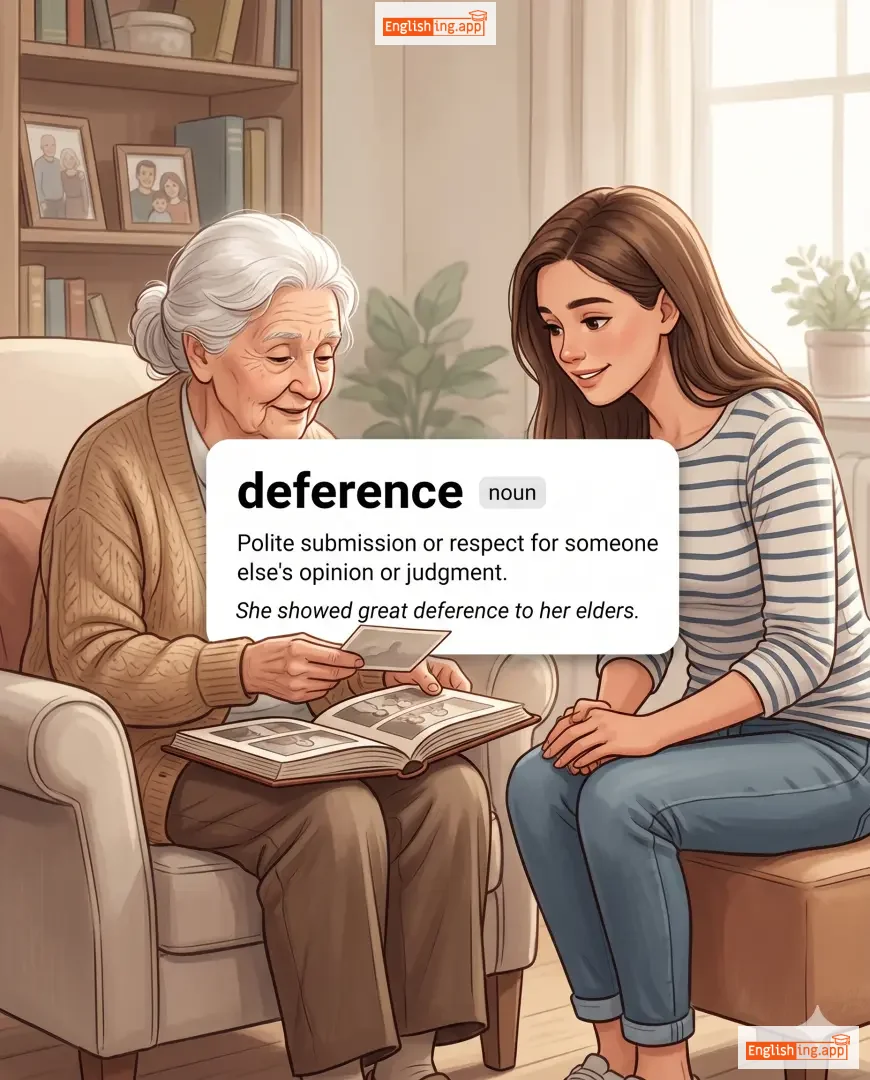
deference definition card — visual illustration of the meaning
noun
/ˈdɛfərəns/
সম্মান (somman)

Polite submission or respect for someone else's opinion or judgment.

"She showed great deference to her elders."

"সে তার বয়োজ্যেষ্ঠদের প্রতি গভীর সম্মান প্রদর্শন করেছিল।" (se tar boyojyeshthoder proti gobhir somman prodorshon korechhilo.)
adjective
/ˌdɛfəˈrɛnʃəl/
সম্মানসূচক (somman suchok)

Showing or expressing respect and high regard.

"He was always deferential toward his teachers."

"সে সবসময় তার শিক্ষকদের প্রতি সম্মানসূচক আচরণ করত।" (se sobsomoy tar shikkhokder proti somman suchok acharon korto.)
noun
/dɪˈfaɪəns/
অবাধ্যতা (obadhyata)

Open resistance or bold disobedience.

"The protest was an act of defiance against injustice."

"প্রতিবাদটি অন্যায়ের বিরুদ্ধে এক ধরনের অবাধ্যতা ছিল।" (proti badti onnyayer biruddhe ek dhoroner obadhyata chhilo.)