ভোকাবুলারিসমূহ

ইংরেজি শব্দের বাংলা অর্থ | English to Bangla Word Meaning Dictionary

debunk definition card — visual illustration of the meaning
verb
/diːˈbʌŋk/
মিথ্যা প্রমাণ করা (mithya proman kora)

To expose the falseness or exaggeration of a claim, myth, or belief.

"The scientist worked to debunk the myths about vaccines."

"বিজ্ঞানী ভ্যাকসিন সম্পর্কে মিথগুলো ভ্রান্ত প্রমাণ করতে কাজ করেছিলেন।" (Biggani vaccine somporke mithgulo bhranto proman korte kaj korechhilen.)
noun, verb
/ˈdeɪ.bjuː/
প্রথম আবির্ভাব (prothom abirbhav)

The first public appearance or performance of someone or something.

"The young actor made his debut on the big stage."

"তরুণ অভিনেতা বড় মঞ্চে তার প্রথম আবির্ভাব করেছিল।" (Torun abhineta boro monche tar prothom abirbhav korechhilo.)
noun
/ˈdeb.juː.tɑːnt/
সমাজে নতুনভাবে আসা তরুণী (somaje notunbhabe asa toruni)

A young woman making her first formal appearance in society.

"The debutante wore a white gown at the ball."

"ডেবিউট্যান্ট বল-এ তরুণীটি সাদা পোশাক পরেছিল।" (Debutante ball e toruniti sada poshak porechhilo.)
noun
/ˈdɛkeɪd/
দশক (doshok)

A period of ten years.

"The country has changed a lot in the past decade."

"গত দশকে দেশটি অনেক পরিবর্তিত হয়েছে।" (Gato doshoke deshti onek poribortito hoyeche.)
noun
/ˈdek.ə.dəns/
নৈতিক অধঃপতন (noitik odhopoton)

Moral or cultural decline characterized by excessive indulgence in pleasure or luxury.

"The novel describes the decadence of the wealthy elite."

"উপন্যাসটি ধনী অভিজাতদের নৈতিক অধঃপতন বর্ণনা করেছে।" (Uponyashti dhoni abhijatder noitik odhopoton bornona koreche.)
adjective
/ˈdɛkədənt/
অবক্ষয়িত, বিলাসী (obokkhoito, bilashi)

Characterized by or reflecting a state of moral or cultural decline; excessively self-indulgent.

"The party was filled with decadent luxury and excess."

"পার্টিটি ছিল অবক্ষয়িত বিলাসিতা ও অতিরিক্ততার ভরপুর।" (Partiti chilo obokkhoito bilashita o otirikto tar vorpur.)
noun
/ˈdɛkəˌɡɒn/
দশভুজ (doshbhuj)

A polygon with ten sides and ten angles.

"The geometry teacher drew a perfect decagon on the board."

"জ্যামিতির শিক্ষক বোর্ডে একটি নিখুঁত দশভুজ আঁকলেন।" (Jyamiti shikkhok borde ekti nikhut doshbhuj anklen.)
noun
/ˈdɛkəˌɡræm/
দশ গ্রাম (dosh gram)

A metric unit of mass equal to ten grams.

"The package weighed exactly one decagram."

"প্যাকেটটির ওজন ছিল ঠিক এক ডেকাগ্রাম।" (Packet tir ojon chilo thik ek decagram.)
noun
/ˈdɛkəˌliːtər/
দশ লিটার (dosh liter)

A metric unit of capacity equal to ten liters.

"The container could hold up to one decaliter of water."

"পাত্রটি এক ডেকালিটার পানি ধারণ করতে পারত।" (Patroti ek decaliter pani dharon korte parto.)
noun
/ˈdɛkəˌlɔːɡ/
দশ আজ্ঞা (dosh agna)

The Ten Commandments in the Bible; a set of fundamental rules or principles.

"The priest gave a sermon on the importance of the Decalogue."

"যাজক ডেকালগের গুরুত্ব নিয়ে একটি ধর্মোপদেশ দিলেন।" (Jajok decalog er gurutto niye ekti dhormopodesh dilen.)
noun
/dɪˈkæmərən/
ডেকামেরন (বোকাচ্চিওর গল্পগ্রন্থ) (dekameron)

A collection of 100 tales written by Giovanni Boccaccio in the 14th century, told by a group of people over ten days.

"The Decameron is considered a masterpiece of classical Italian literature."

"ডেকামেরন ইতালীয় সাহিত্যের একটি শ্রেষ্ঠ রচনা হিসাবে গণ্য করা হয়।" (Dekameron italiyo sahityer ekti shreshtho rochona hisabe gonno kora hoy.)
noun
/dɪˈkæmɪtər/
ডেকামিটার (dekamitar)

A metric unit of length equal to ten meters.

"The field was measured in decameters for accuracy."

"সঠিকতার জন্য মাঠটি ডেকামিটারে মাপা হয়েছিল।" (Sothikotar jonno math ti dekamitare mapa hoyechhilo.)
verb
/dɪˈkæmp/
হঠাৎ পালিয়ে যাওয়া (dikamp)

To depart suddenly or secretly, often to avoid trouble or escape.

"The thief decamped before the police arrived."

"চোরটি পুলিশ আসার আগে পালিয়ে যায়।" (Chorti police asar age paliye jay.)
verb
/dɪˈkænt/
আস্তে ঢালা (dikaant)

To pour liquid gently from one container into another, especially without disturbing the sediment.

"She carefully decanted the wine into a clean glass."

"সে সাবধানে ওয়াইনটি একটি পরিষ্কার গ্লাসে ঢালল।" (Se sabdhane wain ti ekti porishkar glass e dhallo.)
verb
/dɪˈkæpɪteɪt/
শিরশ্ছেদ করা (dikapitett)

To cut off the head of a person or animal.

"The ancient executioner decapitated the criminal."

"প্রাচীন জল্লাদ অপরাধীর মাথা কেটে ফেলেছিল।" (Prachin jollad oporadhir matha kete phelchhilo.)
noun
/ˈdɛkəˌpɒd/
দশপদ প্রাণী (doshpodo prani)

An arthropod with ten limbs, such as crabs, lobsters, and shrimps.

"The lobster is a well-known decapod."

"লবস্টার একটি সুপরিচিত দশপদ প্রাণী।" (Lobster ekti suparichito doshpodo prani.)
noun
/ˌdɛkəˈsɪləbəl/
দশ অক্ষরবিশিষ্ট পঙক্তি (dosh okkhorbishishta pongkti)

A line of verse with ten syllables.

"The poet often wrote in decasyllable form."

"কবি প্রায়ই দশ অক্ষরবিশিষ্ট ছন্দে লিখতেন।" (Kobi prayoi dosh okkhorbishishta chhonde likhten.)
verb, noun
/dɪˈkeɪ/
পচন (pochon)

The process of rotting or decomposition; to decline in quality or strength.

"The abandoned house slowly began to decay."

"পরিত্যক্ত বাড়িটি ধীরে ধীরে পচতে শুরু করল।" (Porityokto bariti dhire dhire pochte shuru korlo.)
noun
/dɪˈsiːt/
প্রতারণা (protarona)

The act of deceiving someone by concealing or misrepresenting the truth.

"His career was ruined by lies and deceit."

"তার কর্মজীবন মিথ্যা এবং প্রতারণার কারণে ধ্বংস হয়েছিল।" (Tar kormojibon mithya ebong protaronar karone dhongsho hoyechhilo.)
adjective
/dɪˈsiːtfəl/
প্রতারক (protarok)

Deliberately misleading or dishonest.

"She gave a deceitful answer to hide the truth."

"সে সত্য গোপন করতে প্রতারণামূলক উত্তর দিয়েছিল।" (Se sotto gopon korte protaronamulok uttar diyechhilo.)
verb
/dɪˈsiːv/
প্রতারিত করা (protarito kora)

To cause someone to believe something that is not true.

"He tried to deceive his friends with a fake story."

"সে তার বন্ধুদের ভুয়া গল্প দিয়ে প্রতারণা করার চেষ্টা করেছিল।" (Se tar bondhuder vua golpo diye protarona korar chesta korechhilo.)
verb
/dɪˈsɛləˌreɪt/
গতি কমানো (goti komano)

to reduce speed; to slow down

"The car began to decelerate as it approached the traffic light."

"গাড়িটি সিগন্যালে পৌঁছালে ধীরে চলতে শুরু করল।" (Gariti signal e pouchale dhire cholte shuru korlo.)
noun
/dɪˈsɛmbər/
ডিসেম্বর (disembor)

the twelfth and last month of the year in the Gregorian calendar

"December is usually cold in many countries."

"ডিসেম্বর অনেক দেশে সাধারণত ঠান্ডা হয়।" (disembor onek deshe sadharonoto thanda hoy)
noun
/ˈdiːsənsi/
শালীনতা (shalinota)

behavior that conforms to accepted standards of morality or respectability

"She showed great decency by helping the stranger in need."

"তিনি বিপদগ্রস্ত অপরিচিতকে সাহায্য করে বড় শালীনতার পরিচয় দিয়েছেন।" (Tini bipodgrosto oparichitoke sahajyo kore boro shalinotar porichoy diyechen.)
adjective
/ˈdiːsənt/
ভালো (bhalo)

conforming to standards of propriety, good taste, or morality

"He found a decent job after months of searching."

"অনেক খোঁজার পর সে একটি ভালো চাকরি পেয়েছিল।" (Onek khojar por se ekti bhalo chakri peyechilo.)
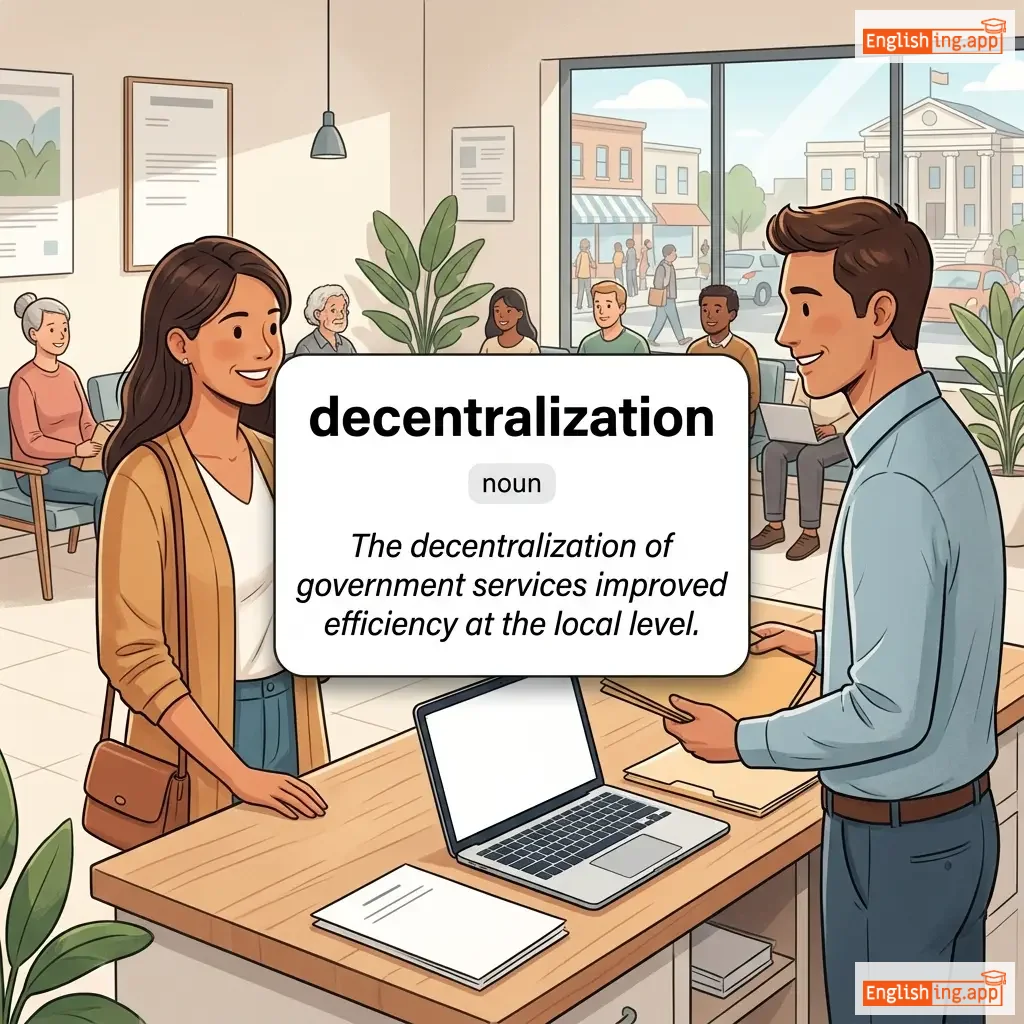
decentralization definition card — visual illustration of the meaning
noun
/diːˌsen.trə.laɪˈzeɪ.ʃən/
বিকেন্দ্রীকরণ; ক্ষমতা বিতরণ; (bikendrikoron, kkhomota bitoron)

the transfer of authority from central to local government; distribution of power

"The decentralization of government services improved efficiency at the local level."

"সরকারি সেবার বিকেন্দ্রীকরণ স্থানীয় পর্যায়ে দক্ষতা বৃদ্ধি করেছিল।" (shorkari shevar bikendrikoron sthaniyoo porjaye dokkhota briddhi korechhilo.)
decentralized definition card — visual illustration of the meaning
adjective
/diːˈsɛntrəlaɪzd/
কেন্দ্রীভূত না হওয়া, বিক্ষিপ্ত (kendribhuto na howa, bikkhipto)

Controlled by several local offices or authorities rather than one single one.

"The decentralized system allowed for more control at local levels."

"ডিসেন্ট্রালাইজড সিস্টেমটি স্থানীয় স্তরে আরও নিয়ন্ত্রণের সুযোগ প্রদান করেছিল।" (Decentralized systemti sthaniyostore aro niyontronr shujog prodan korechilo.)
noun
/dɪˈsep.ʃən/
প্রতারণা; ভুল ধারণা; ছলনা; (protarana, bhul dharona, cholona)

the action of deceiving someone; the state of being deceived

"The magician's deception amazed the audience with seemingly impossible tricks."

"জাদুকরের প্রতারণা দর্শকদের আপাত অসম্ভব কৌশল দিয়ে মুগ্ধ করেছিল।" (jadukorer protarana dorshokhder apato oshombhob koushal diye mugdho korechhilo.)
adjective
/dɪˈsɛptɪv/
প্রতারক (protarok)

Giving an appearance or impression different from the truth; misleading.

"Appearances can be deceptive."

"চেহারা প্রতারণামূলক হতে পারে।" (Chehara protaronamulok hote pare.)
noun
/ˈdɛsɪˌbɛl/
ডেসিবেল (desibel)

a unit used to measure the intensity of sound

"The noise level in the factory exceeded 90 decibels."

"কারখানার শব্দস্তর ৯০ ডেসিবেলের বেশি হয়েছিল।" (Karkhanar shobdostor 90 desibeler beshi hoyechilo.)
verb
/dɪˈsaɪd/
সিদ্ধান্ত নেওয়া (siddhanto newa)

To make a choice or judgment about something.

"She decided to study abroad after graduation."

"সে গ্র্যাজুয়েশনের পরে বিদেশে পড়াশোনা করার সিদ্ধান্ত নিয়েছিল।" (Se graduationer pore bideshe porashona korar siddhanto niyechilo.)
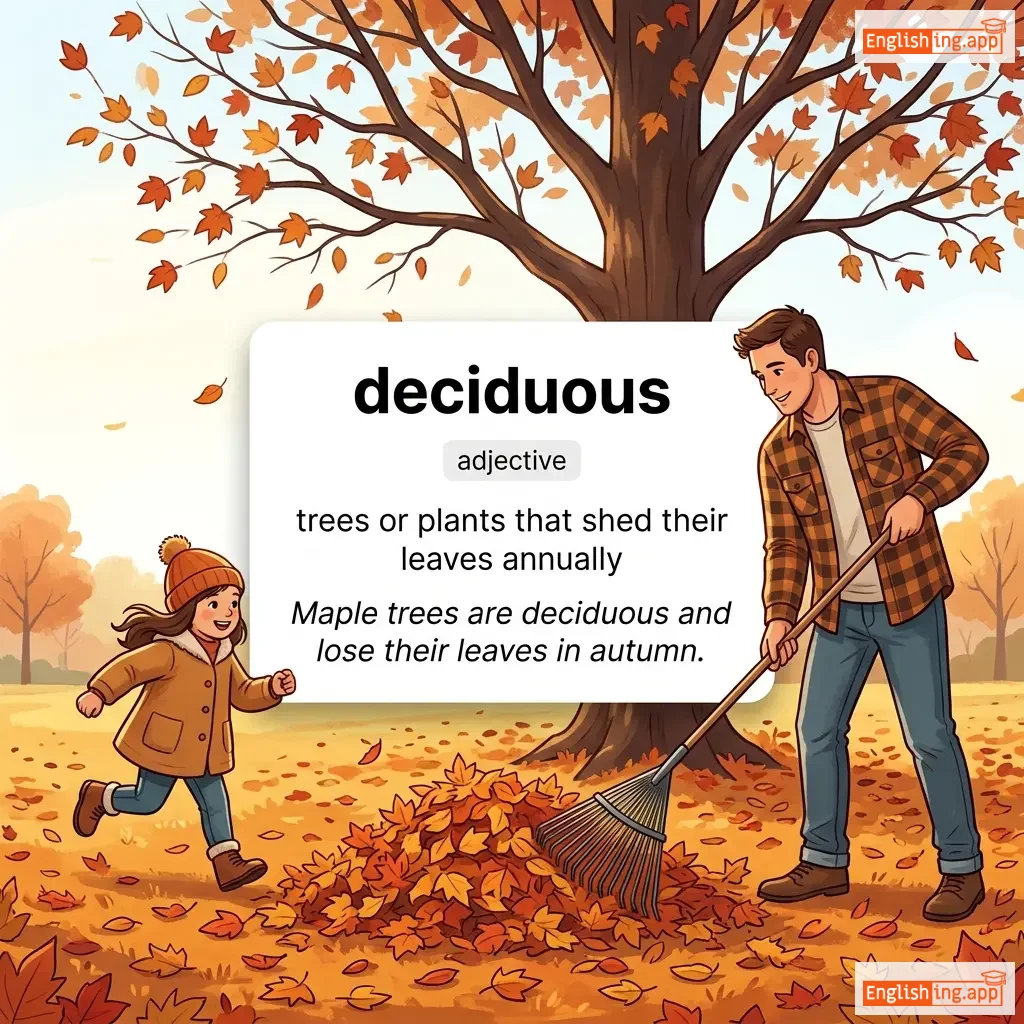
deciduous definition card — visual illustration of the meaning
adjective
/dɪˈsɪdʒuəs/
পত্রীপাতী (potripati)

trees or plants that shed their leaves annually

"Maple trees are deciduous and lose their leaves in autumn."

"ম্যাপল গাছ পত্রীপাতী এবং শরতে তাদের পাতা ঝরে যায়।" (Maple gach potripati ebong shorote tader pata jhore jay.)
noun
/ˈdɛsɪməl/
দশমিক (doshomik)

A number system based on 10; a number expressed in the base-10 system.

"The number 0.75 is a decimal."

"সংখ্যা ০.৭৫ একটি দশমিক।" (Shongkha 0.75 ekti doshomik.)
verb
/ˈdɛsɪmeɪt/
ধ্বংস করা (dhongsho kora)

To destroy or kill a large proportion of something.

"The wildfire decimated the forest."

"বনভূমি অগ্নিকাণ্ডে ধ্বংস হয়ে গেছে।" (Bonbhumi ognikande dhongsho hoye geche.)
noun
/ˌdɛsɪˈmeɪʃən/
বৃহৎ ধ্বংস (brihot dhongsho)

The act of destroying or killing a large proportion of something.

"The decimation of the city left thousands homeless."

"শহরের ব্যাপক ধ্বংসে হাজারো মানুষ গৃহহীন হয়ে পড়ে।" (Shohorer byapak dhongsho hazaro manush gruhhin hoye pore.)
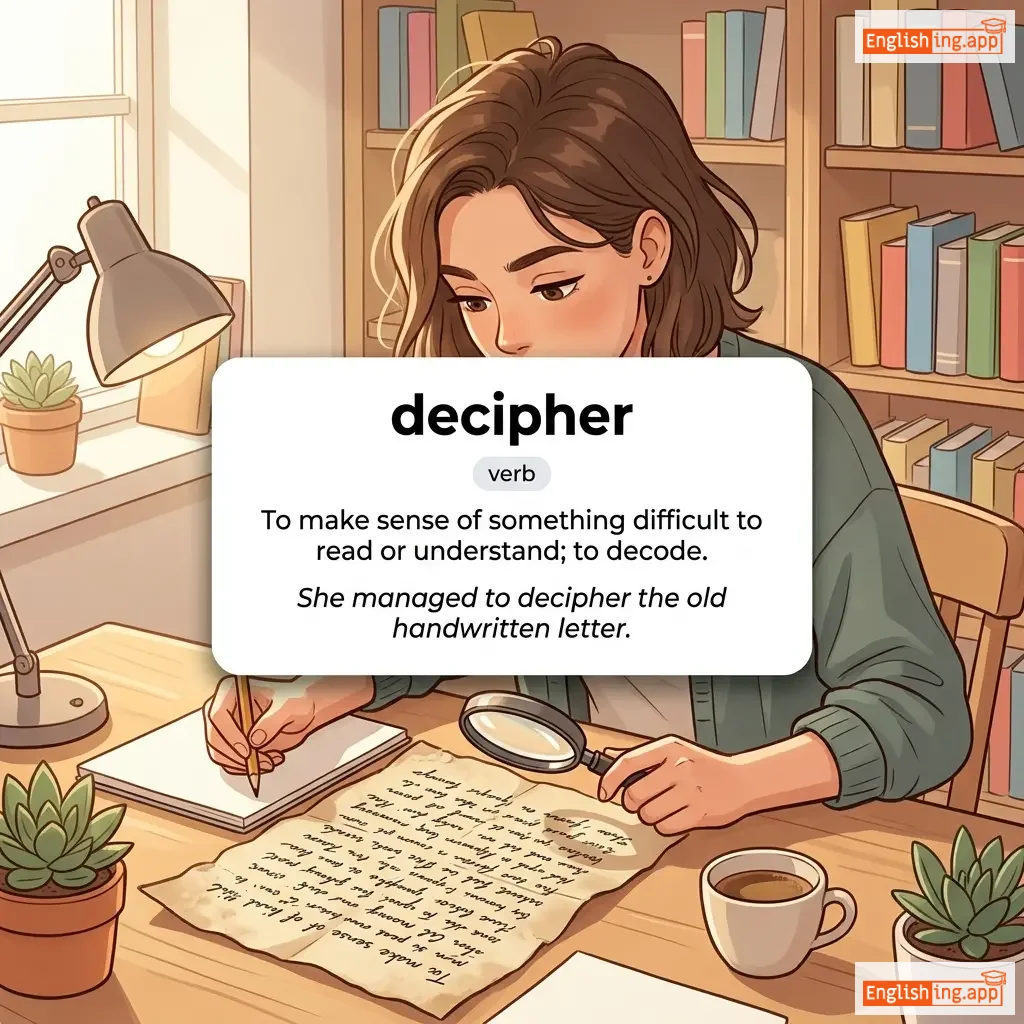
decipher definition card — visual illustration of the meaning
verb
/dɪˈsaɪfər/
পাঠোদ্ধার করা (pathoddhar kora)

To make sense of something difficult to read or understand; to decode.

"She managed to decipher the old handwritten letter."

"সে পুরনো হাতে লেখা চিঠিটি পাঠোদ্ধার করতে সক্ষম হয়েছিল।" (Se purono hate lekha chithiti pathoddhar korte shokkhom hoyechhilo.)
noun
/dɪˈsɪʒən/
সিদ্ধান্ত (siddhanto)

A conclusion or choice made after consideration.

"She made a quick decision to accept the job offer."

"সে চাকরির প্রস্তাব গ্রহণ করার দ্রুত সিদ্ধান্ত নিল।" (Se chakrir prostab grohon korar druto siddhanto nilo.)
noun
/dɪˈsɪʒənˌmeɪkɪŋ/
সিদ্ধান্ত গ্রহণ (siddhanto grohon)

the process of making decisions, especially important or business-related decisions

"The CEO's decision-making was crucial for the success of the company."

"সিইও'স সিদ্ধান্ত গ্রহণ কোম্পানির সাফল্যের জন্য গুরুত্বপূর্ণ ছিল।" (CEO's siddhanto grohon company-r safollo-r jonno goruttopurno chhilo.)
decisions definition card — visual illustration of the meaning
noun
/dɪˈsɪʒənz/
সিদ্ধান্ত (siddhanto)

A conclusion or resolution reached after consideration; the action or process of deciding something.

"Making the right decisions in time was key to the project's success."

"সময়ে সঠিক সিদ্ধান্ত গ্রহণ প্রকল্পের সাফল্যের চাবিকাঠি ছিল।" (Shomye shothik siddhanto grohon prokolper shafolyer chabikathi chilo.)
adjective
/dɪˈsaɪsɪv/
সিদ্ধান্তমূলক (shiddhantamulok)

Having the ability to make decisions quickly and effectively; determining the outcome.

"Her decisive action saved the company from collapse."

"তার সিদ্ধান্তমূলক পদক্ষেপ কোম্পানিকে পতন থেকে রক্ষা করেছিল।" (Tar shiddhantamulok podokhep kompanike poton theke rokkha korechhilo.)
decisiveness definition card — visual illustration of the meaning
noun
dɪˈsʌɪsɪvnɪs
সিদ্ধান্ত গ্রহণের ক্ষমতা (siddhanto grohoner khomota)

The ability to make decisions quickly and effectively.

"His decisiveness during the crisis saved the company."

"সংকটকালে তার সিদ্ধান্তগ্রহণ কোম্পানিকে বাঁচিয়ে দেয়।" (Shongkotokale tar siddhanto grohon companike bachiye dey.)
noun
/dɛk/
ডেক / তক্তা মঞ্চ (dek / tokta moncho)

A flat surface or platform, often on a ship or building.

"We enjoyed the sunset from the upper deck of the ferry."

"আমরা ফেরির উপরের ডেক থেকে সূর্যাস্ত উপভোগ করেছি।" (Amra ferir uporor dek theke surjasto upobhog korechi.)
verb
/dɪˈkleɪm/
আবেগপূর্ণভাবে বলা (abegpurnovabe bola)

to speak aloud in a formal, passionate, or theatrical way

"The actor declaimed his lines with great intensity."

"অভিনেতা তার সংলাপগুলি প্রবল আবেগ নিয়ে উচ্চস্বরে বললেন।" (Abhineta tar songlapguli probol abeg nie uchchoshore ballen.)
noun
/ˌdɛkləˈmeɪʃən/
আবৃত্তি (abritti)

a formal speech delivered with rhetorical or dramatic effect

"Her declamation captivated the audience at the competition."

"তার আবৃত্তি প্রতিযোগিতায় দর্শকদের মুগ্ধ করেছিল।" (Tar abritti protijogitay dorshokder mugdho korechilo.)
adjective
/dɪˈklæməˌtɔri/
নাটকীয় বক্তৃতামূলক (natokio boktritamulok)

speaking in a loud, rhetorical, or dramatic way

"The politician’s declamatory style impressed some but irritated others."

"রাজনীতিবিদের নাটকীয় বক্তৃতামূলক ভঙ্গি কিছু মানুষকে মুগ্ধ করলেও অন্যদের বিরক্ত করেছে।" (Rajniti bider natokio boktritamulok bhongi kichu manushke mugdho korelo onno der birokt koreche.)
noun
/ˌdɛkləˈreɪʃən/
ঘোষণা (ghoshona)

a formal or explicit statement or announcement

"The president made a declaration of independence."

"রাষ্ট্রপতি স্বাধীনতার ঘোষণা দিয়েছিলেন।" (Rashtrapoti swadhinotar ghoshona diyechhilen.)
adjective
/dɪˈklærətɪv/
বিবৃতিমূলক (bibrtimulok)

relating to a statement that declares something; in grammar, a sentence that makes a statement

"A declarative sentence simply states a fact or opinion."

"একটি বিবৃতিমূলক বাক্য কেবল একটি তথ্য বা মতামত প্রকাশ করে।" (Ekti bibrtimulok bakko kebol ekti totho ba motamot prokash kore.)
verb
/dɪˈklɛər/
ঘোষণা করা (ghoshona kora)

To announce something formally or officially.

"The government declared a state of emergency."

"সরকার জরুরি অবস্থা ঘোষণা করল।" (Sorkar joruri obostha ghoshona korlo.)
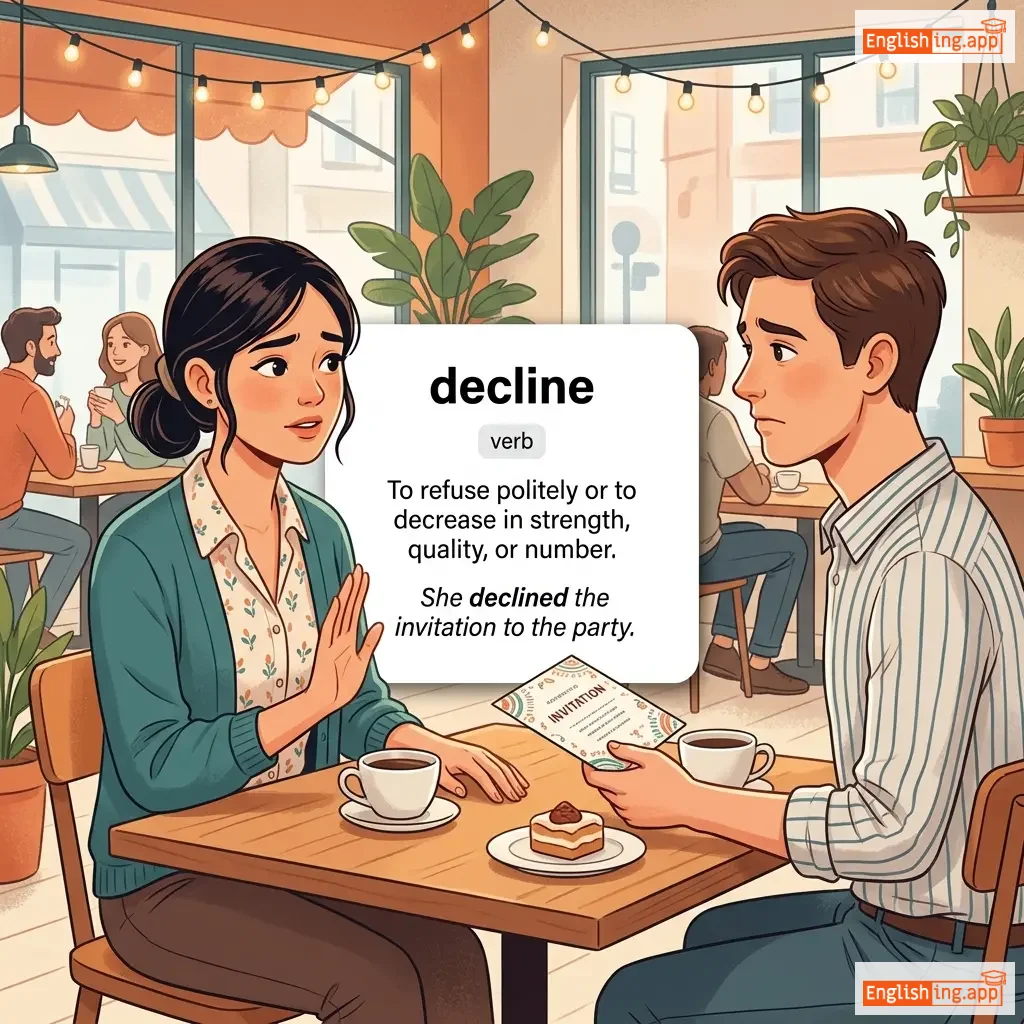
decline definition card — visual illustration of the meaning
verb
/dɪˈklaɪn/
প্রত্যাখ্যান করা / হ্রাস পাওয়া (protyakhyan kora / hras pawoa)

To refuse politely or to decrease in strength, quality, or number.

"She declined the invitation to the party."

"সে পার্টির নিমন্ত্রণ প্রত্যাখ্যান করল।" (Se partyr nimonton protyakhyan korlo.)
noun
/dɪˈklɪvɪti/
ঢাল (dhal)

a downward slope of ground

"They carefully climbed down the declivity of the hill."

"তারা সাবধানে পাহাড়ের ঢাল বেয়ে নেমে গেল।" (Tara sabdhane paharer dhal beye neme gelo.)