ভোকাবুলারিসমূহ

ইংরেজি শব্দের বাংলা অর্থ | English to Bangla Word Meaning Dictionary

noun
/dɪˌskrɪmɪˈneɪʃən/
বৈষম্য (boishommya)

Unfair treatment of people based on race, gender, age, or other differences.

"The law prohibits discrimination in the workplace."

"আইন কর্মক্ষেত্রে বৈষম্য নিষিদ্ধ করে।" (Ain kormokkhetre boishommya nishiddho kore.)
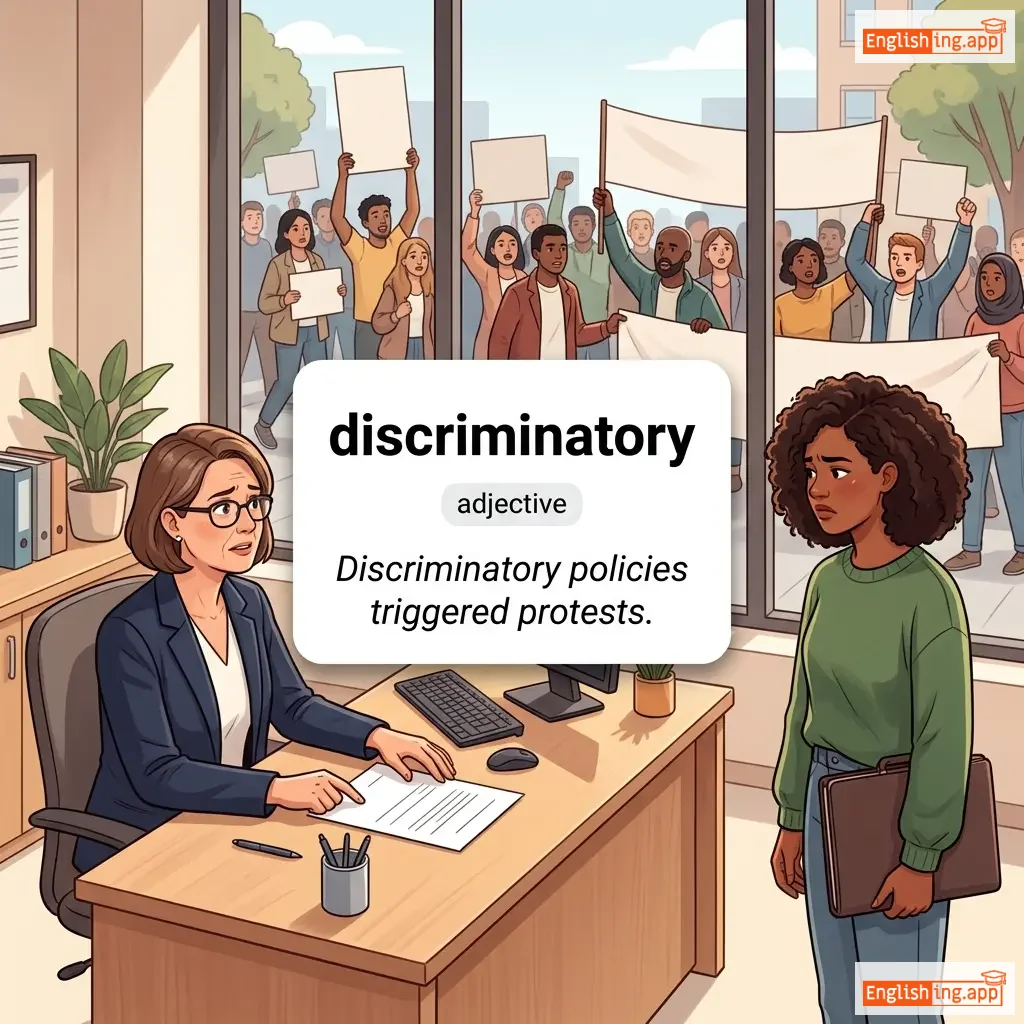
discriminatory definition card — visual illustration of the meaning
adjective
dɪˈskrɪmɪnətɔːri
বৈষম্যমূলক (boishommomulok)

Making or showing an unfair or prejudicial distinction between different categories of people or things.

"Discriminatory policies triggered protests."

"বৈষম্যমূলক নীতিগুলো প্রতিবাদ সৃষ্টি করেছিল।" (Boishommomulok nitigulo protibad srishti korechhilo.)
adjective
/dɪsˈkɜrsɪv/
বিষয়ান্তরে ভ্রমণশীল (bishoyantore vromonshil)

Tending to digress or move from topic to topic; lengthy and rambling.

"His discursive style made the lecture hard to follow."

"তার বিষয়ান্তরে ভ্রমণশীল শৈলী বক্তৃতাটি বোঝা কঠিন করে তুলেছিল।" (Tar bishoyantore vromonshil shoili boktritati bojha kothin kore tulchhilo.)
verb
/dɪˈskʌs/
আলোচনা করা (alochona kora)

To talk about something with another person or group in detail.

"We need to discuss the project before finalizing it."

"আমাদের প্রকল্পটি চূড়ান্ত করার আগে আলোচনা করতে হবে।" (Amader projoktiti churanto korar age alochona korte hobe.)
noun
/dɪˈskʌʃən/
আলোচনা (alochona)

The action or process of talking about something in order to reach a decision or share ideas.

"The project needs more discussion before moving forward."

"প্রকল্পটি এগিয়ে নেওয়ার আগে আরও আলোচনা প্রয়োজন।" (Prokolpoti egiye newar age aro alochona proyojon.)
discussions definition card — visual illustration of the meaning
noun
dɪˈskʌʃ.ənz
ডিসকাশনস। আলোচনা। (discussions. alochona.)

The action or process of talking about something in order to reach a decision or to exchange ideas.

"Discussions promote collaboration."

"আলোচনা সহযোগিতা বাড়ায়।" (Alochona shohojogita baray.)
noun/verb
/dɪsˈdeɪn/
অবজ্ঞা (obogna)

The feeling that someone or something is unworthy of respect; to regard with contempt.

"She looked at the messy room with open disdain."

"সে অবজ্ঞার সাথে এলোমেলো ঘরটির দিকে তাকাল।" (Se obognar sathe elomelo ghortir dike takalo.)
noun
/dɪˈziːz/
রোগ (rog)

An illness or medical condition that affects the body or mind.

"The doctor is researching a cure for the disease."

"ডাক্তার রোগের প্রতিষেধক নিয়ে গবেষণা করছেন।" (Daktar roger protishedhok niye gobeshona korchen.)
adjective
/dɪˈziːzd/
রোগাক্রান্ত; কষ্টগ্রস্ত; অসুস্থ; (roggakranto)

affected by disease; suffering from illness; sick

"The diseased tree had to be removed from the garden."

"রোগাক্রান্ত গাছটি বাগান থেকে সরিয়ে ফেলতে হয়েছিল।" (roggakranto gachti bagan theke soriye felte hoyechilo)
verb
/ˌdɪsɪmˈbɑːrk/
জাহাজ বা যানবাহন থেকে নামা (jahaj ba janbahan theke nama)

To leave a ship, aircraft, or other vehicle.

"The passengers disembarked from the plane after landing."

"যাত্রীরা অবতরণের পর বিমান থেকে নেমে গেল।" (Jatrira obotoroner por biman theke neme gelo.)
verb
/ˌdɪsɪnˈfræntʃaɪz/
অধিকার থেকে বঞ্চিত করা (odhikar theke bonchito kora)

To deprive someone of the right to vote or other rights.

"The new law could disenfranchise thousands of voters."

"নতুন আইন হাজার হাজার ভোটারকে অধিকার থেকে বঞ্চিত করতে পারে।" (Notun ain hajar hajar votarke odhikar theke bonchito korte pare.)
verb
/ˌdɪsɪnˈɡeɪdʒ/
মুক্ত করা (mukto kora)

To release or detach oneself from something; to withdraw.

"He tried to disengage from the heated argument."

"সে উত্তপ্ত তর্ক থেকে নিজেকে সরিয়ে নেওয়ার চেষ্টা করল।" (Se uttopto torko theke nije ke soriye newar cheshta korlo.)
verb
/ˌdɪsɪnˈtæŋɡl/
জটমুক্ত করা (jotmukto kora)

To free something or someone from a tangle or complication.

"She tried to disentangle her hair from the branches."

"সে ডালপালা থেকে চুলের জট ছাড়ানোর চেষ্টা করল।" (Se dalpala theke chuler jot charanor cheshta korlo.)
noun/verb
/dɪsˈfeɪvər/
অপ্রসাদ / অপছন্দ (oprosad / opochondo)

disapproval or dislike; to regard with disapproval

"The new policy fell into disfavor with the public."

"নতুন নীতি জনগণের অপছন্দে পড়েছিল।" (Notun niti jonogoner opochonde porechhilo.)
verb
/dɪsˈfɪɡjər/
বিকৃত করা (bikrity kora)

to spoil or damage the appearance of something

"The fire disfigured the old building."

"আগুন পুরনো ভবনটিকে বিকৃত করেছিল।" (Agun purono vobontike bikrito korechhilo.)
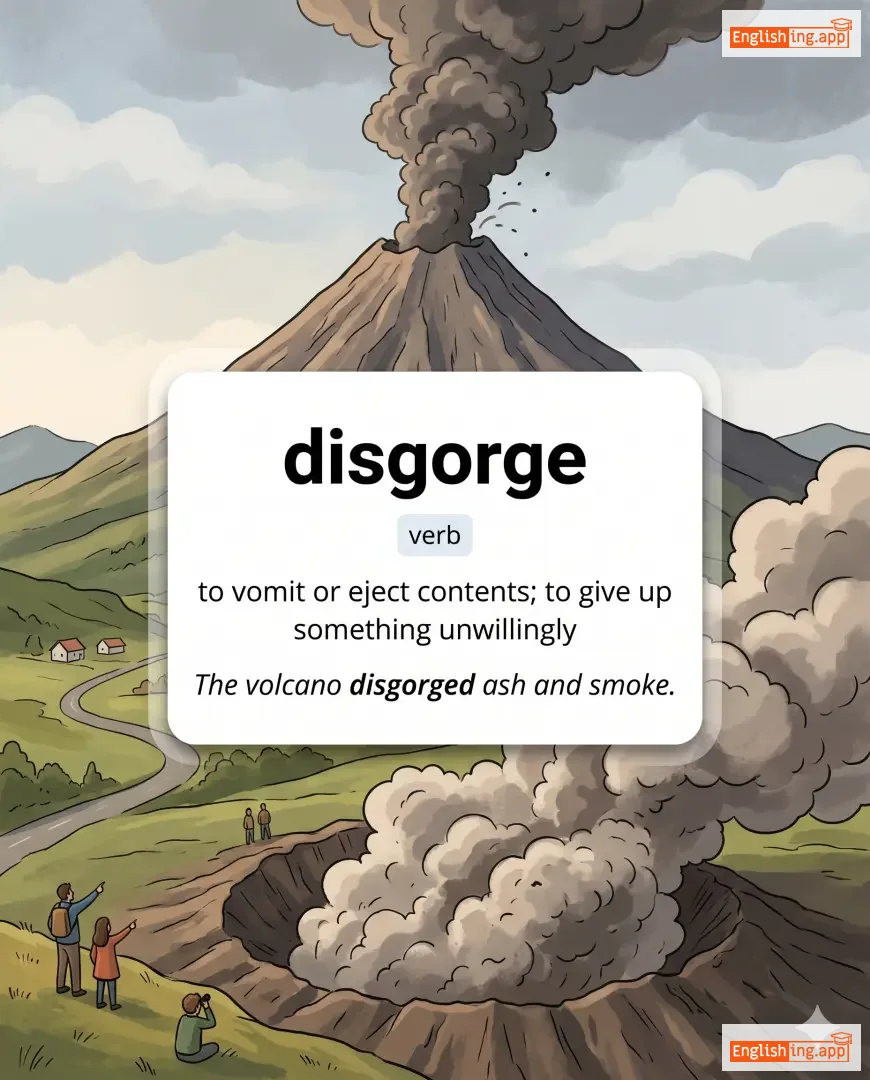
disgorge definition card — visual illustration of the meaning
verb
/dɪsˈɡɔrdʒ/
বমি করা / জোর করে বের করা (bomi kora / jor kore ber kora)

to vomit or eject contents; to give up something unwillingly

"The volcano disgorged ash and smoke."

"আগ্নেয়গিরি ছাই এবং ধোঁয়া বের করে দিয়েছিল।" (Agneyogiri chai ebong dhowa ber kore diyechhilo.)
noun
/dɪsˈɡreɪs/
লজ্জা (lojja)

Loss of respect, honor, or reputation due to shameful behavior.

"He was dismissed in disgrace after the scandal."

"কেলেঙ্কারির পর তিনি লজ্জাজনকভাবে বরখাস্ত হন।" (Kelenkarir por tini lojjajonokvabe borkhasto hon.)
adjective
/dɪsˈɡreɪsfəl/
লজ্জাজনক; অসম্মানজনক; নিন্দনীয়; (lojjajonok)

shameful; bringing dishonor; worthy of condemnation

"His disgraceful behavior shocked everyone at the party."

"তার লজ্জাজনক আচরণ পার্টিতে সবাইকে হতবাক করেছিল।" (tar lojjajonok achoron partite sobaike hotbak korechilo)
verb
/dɪsˈɡrʌntl/
অসন্তুষ্ট করা (osontushto kora)

to make someone dissatisfied or discontented

"The unfair treatment disgruntled the workers."

"অন্যায় আচরণ শ্রমিকদের অসন্তুষ্ট করেছিল।" (Onnoy acharon shromikder osontushto korechhilo.)
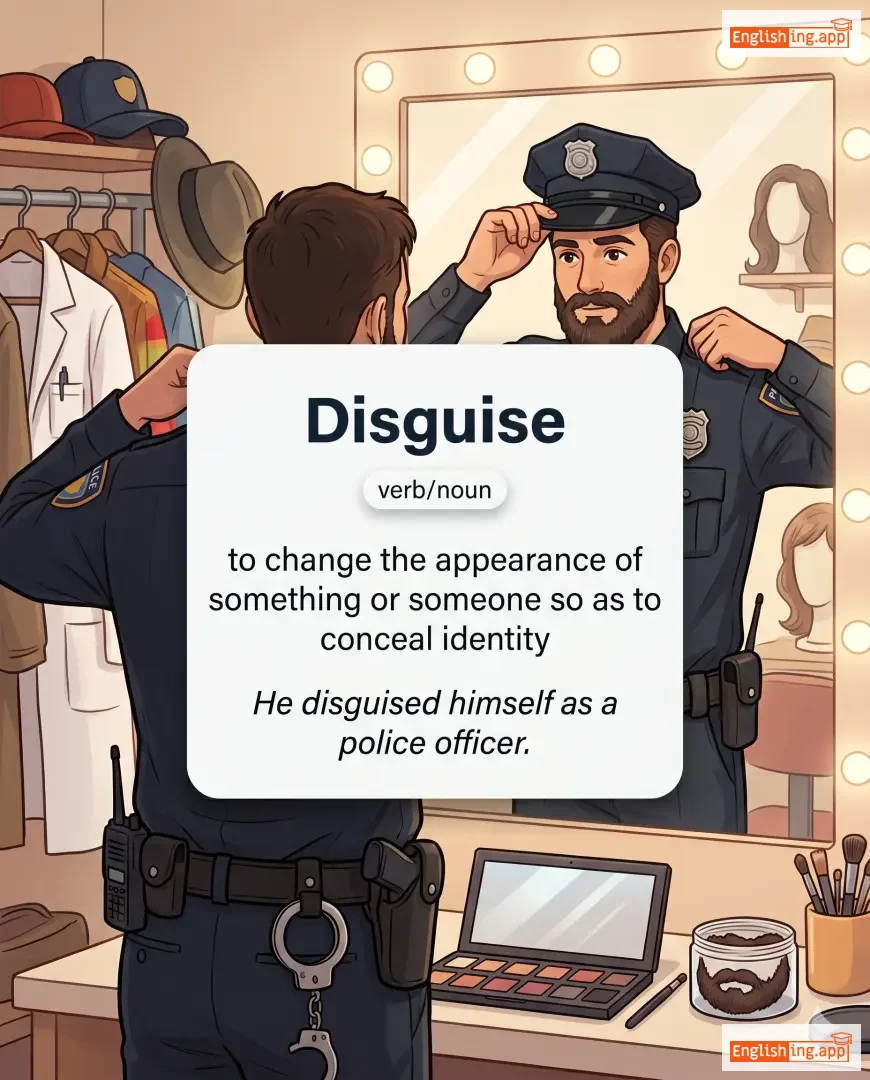
Disguise definition card — visual illustration of the meaning
verb/noun
/dɪsˈɡaɪz/
ছদ্মবেশ (choddobesh)

to change the appearance of something or someone so as to conceal identity

"He disguised himself as a police officer."

"সে নিজেকে একজন পুলিশ অফিসার হিসেবে ছদ্মবেশ নিয়েছিল।" (Se nije ekjon police officer hisebe choddobesh niechhilo.)
noun
/dɪsˈɡʌst/
বিরক্তি; ঘৃণা; (birokti, ghrina)

a feeling of revulsion or strong disapproval aroused by something unpleasant

"She expressed her disgust at the politician's corrupt behavior openly."

"তিনি রাজনীতিবিদের দুর্নীতিগ্রস্ত আচরণে তার ঘৃণা প্রকাশ্যে প্রকাশ করেছিলেন।" (tini rajnitibidr durnitgrosto acharone tar ghrina prokashye prokash korechhilen.)
adjective
/dɪsˈɡʌstɪd/
ঘৃণিত (ghrinito)

feeling a strong sense of dislike or revulsion

"She was disgusted by the way he treated the animals."

"সে পশুগুলোর প্রতি তার আচরণ দেখে ঘৃণিত ছিল।" (Se poshugulor proti tar acharon dekhe ghrinito chhilo.)
adjective
/dɪsˈɡʌstɪŋ/
ঘৃণাজনক (ghrinajonok)

extremely unpleasant or offensive; causing strong dislike or revulsion

"The smell coming from the trash can was absolutely disgusting."

"ট্র্যাশ ক্যান থেকে আসা গন্ধ পুরোপুরি ঘৃণাজনক ছিল।" (trash can theke asa gondho puropuri ghrinajonok chhilo)
noun
/dɪʃ/
থালা / খাবার (thala / khabar)

A shallow container for serving or preparing food; also a particular kind of food prepared.

"She prepared a delicious pasta dish for dinner."

"সে ডিনারের জন্য সুস্বাদু পাস্তার ডিশ প্রস্তুত করেছিল।" (Se dinner er jonno suswadu pasta dish prostut korechilo.)
noun
/ˈdɪʃ ˌwɒʃər/
বাসন পরিষ্কারক (bashon porishkarok)

an appliance for washing dishes automatically

"We installed a new dishwasher in our kitchen last week."

"আমরা গত সপ্তাহে আমাদের রান্নাঘরে একটি নতুন বাসন ধোয়ার মেশিন স্থাপন করেছি।" (amra gato shoptahe amader rannaghore ekti notun bashon dhowar meshin sthapan korechi)
noun
/ˌdɪʃəˈbiːl/
অসজ্জিত অবস্থা (osojjito obostha)

The state of being only partly or loosely dressed; casual or careless attire.

"She answered the door in a state of dishabille, wearing just a robe."

"সে শুধু একটি গাউন পরে অসজ্জিত অবস্থায় দরজা খুলেছিল।" (Se shudhu ekti gown pore osojjito obosthay dorja khulechilo.)
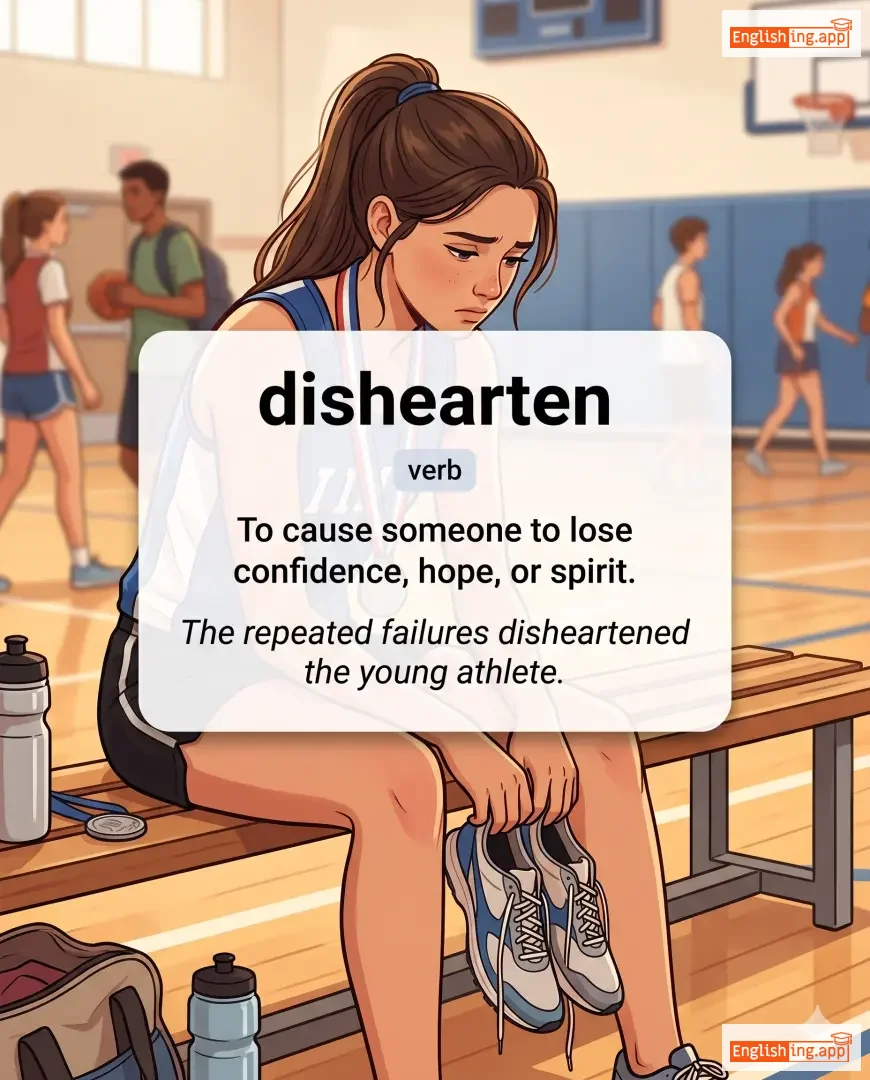
dishearten definition card — visual illustration of the meaning
verb
/dɪsˈhɑːrtən/
হতাশ করা (hotash kora)

To cause someone to lose confidence, hope, or spirit.

"The repeated failures disheartened the young athlete."

"বারবার ব্যর্থতা তরুণ খেলোয়াড়কে হতাশ করেছিল।" (Barbar byarthota torun khelowarke hotash korechilo.)
adjective
/dɪsˈhɑːrtənd/
হতাশ (hotash)

Having lost confidence, hope, or spirit; discouraged.

"She looked disheartened after receiving the bad news."

"খারাপ খবর পাওয়ার পর সে হতাশ লাগছিল।" (Kharap khobor pawar por se hotash lagchhilo.)
adjective
/dɪˈʃɛvəld/
অগোছালো (ogochalo)

Untidy, messy, or in disorder, especially of hair or clothing.

"He arrived with disheveled hair and wrinkled clothes."

"সে অগোছালো চুল ও কুঁচকানো পোশাক পরে এসেছিল।" (Se ogochalo chul o kuchkano poshak pore esechilo.)
adjective
/dɪsˈɑːnɪst/
অসৎ (osot)

Behaving in an untruthful or deceitful way; not honest.

"It is dishonest to cheat in exams."

"পরীক্ষায় নকল করা অসৎ কাজ।" (Porikkhay nokol kora osot kaj.)
noun, verb
/dɪsˈɑːnər/
অপমান (opoman)

a state of shame or loss of respect; to bring shame upon someone or something

"The soldier felt he had brought dishonor to his family."

"সৈনিক মনে করেছিল যে সে তার পরিবারকে অপমান করেছে।" (Soinik mone korechilo je se tar poribar ke opoman koreche.)
noun
/dɪsˈɒn.ər/
অপমান; অসম্মান; অবমাননা; (opoman, oshomman, obomannona)

a state of shame or disgrace; lack of honor or integrity; failure to fulfill obligations

"Breaking his promise brought dishonour to his name and family legacy."

"তার প্রতিশ্রুতি ভঙ্গ তার নাম এবং পারিবারিক ঐতিহ্যে অসম্মান এনেছিল।" (tar protishruti bhongo tar nam ebong paribarik oitihye oshomman enechhilo.)
verb, noun
/ˌdɪsɪˈluːʒən/
মোহভঙ্গ (mohvongo)

to cause someone to realize that something is not as good as they believed

"The scandal disillusioned many voters."

"কেলেঙ্কারিটি অনেক ভোটারের মোহভঙ্গ করেছিল।" (Kelenkariti onek votarer mohvongo korechilo.)
disillusionment definition card — visual illustration of the meaning
noun
/ˌdɪs.ɪˈluː.ʒən.mənt/
ভ্রমভঙ্গ বা আশাভঙ্গ (bhromobhongo ba ashabongo)

A feeling of disappointment resulting from the discovery that something is not as good as one believed it to be.

"His disillusionment with politics made him withdraw from activism."

"রাজনীতির প্রতি তার ভ্রমভঙ্গ তাকে সক্রিয়তা থেকে বিরত রেখেছে।" (Rajnitir proti tar bhromobhongo take sokriyota theke birot rekheche.)
noun
/ˌdɪsɪnklɪˈneɪʃən/
অনিচ্ছা (onichcha)

a lack of willingness or desire to do something

"She showed a clear disinclination to join the meeting."

"সে মিটিংয়ে যোগ দিতে স্পষ্ট অনিচ্ছা দেখিয়েছিল।" (Se meetinge jog dite sposto onichcha dekhiechhilo.)
verb
/ˌdɪsɪnˈfɛkt/
জীবাণুমুক্ত করা (jibanumukto kora)

to clean something thoroughly to destroy bacteria or viruses

"The nurse disinfected the wound before applying a bandage."

"নার্স ব্যান্ডেজ লাগানোর আগে ক্ষতটি জীবাণুমুক্ত করেছিল।" (Nars bandage laganor age khototi jibanumukto korechhilo.)
noun
/ˌdɪsɪnˈfɛktənt/
জীবাণুনাশক (jibanunashok)

a chemical substance used to kill harmful microorganisms on surfaces

"The cleaner sprayed disinfectant on the table."

"পরিচ্ছন্নতাকর্মী টেবিলে জীবাণুনাশক ছিটিয়েছিল।" (Porichchhonnokormi tebil e jibanunashok chhitiyechhilo.)
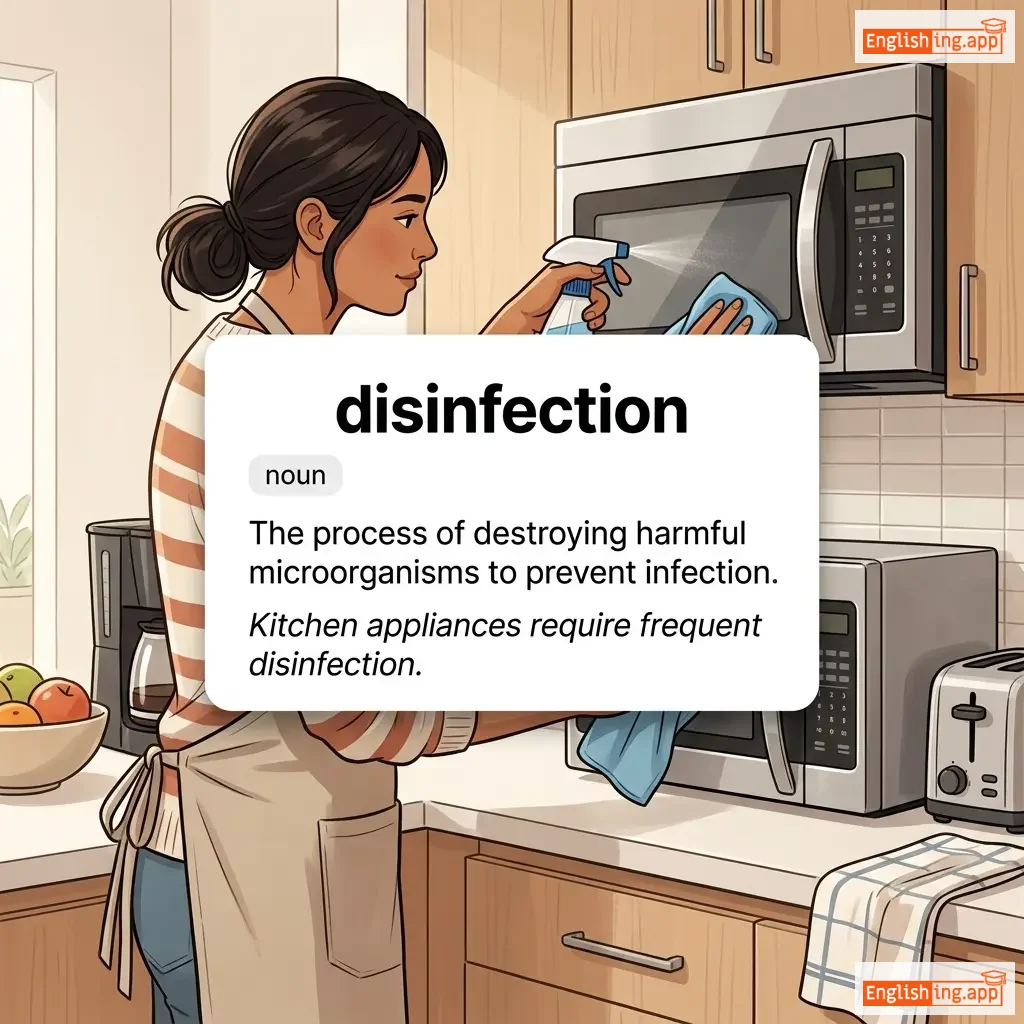
disinfection definition card — visual illustration of the meaning
noun
ˌdɪs.ɪnˈfek.ʃən
রোগজীবাণু দূরীকরণ (rogjibanu durikaron)

The process of destroying harmful microorganisms to prevent infection.

"Kitchen appliances require frequent disinfection."

"রান্নাঘরের যন্ত্রপাতিতে নিয়মিত জীবাণুনাশ প্রয়োজন।" (Rannaghorer jontropatite niyomit jibanunas proyojon.)
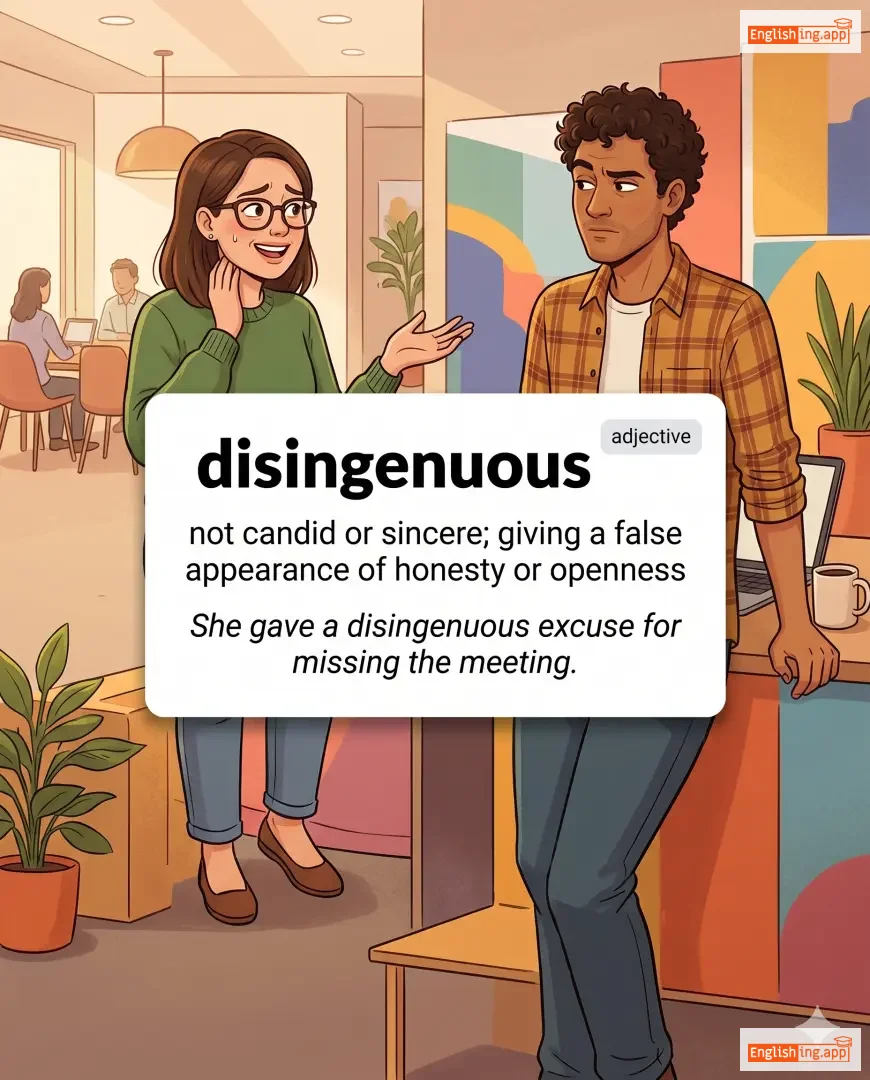
disingenuous definition card — visual illustration of the meaning
adjective
/ˌdɪsɪnˈdʒɛnjʊəs/
অসৎ (osot)

not candid or sincere; giving a false appearance of honesty or openness

"She gave a disingenuous excuse for missing the meeting."

"সে মিটিং এ না আসার জন্য একটি অসৎ অজুহাত দিল।" (Se meeting e na asar jonno ekti osot ojuhaat dilo.)
verb
/ˌdɪsɪnˈhɛrɪt/
উত্তরাধিকার থেকে বঞ্চিত করা (uttoradhikar theke bonchito kora)

to deprive someone, especially a child, of inheritance or right to property

"The father threatened to disinherit his son for his reckless actions."

"বাবা তার বেপরোয়া কাজের জন্য ছেলেকে উত্তরাধিকার থেকে বঞ্চিত করার হুমকি দিলেন।" (Baba tar beporoa kajer jonno cheleke uttaradhikar theke bonchito korar humki dilen.)
verb
/ˌdɪsɪnˈtɜːr/
কবর খুঁড়ে তোলা (kobor khune tola)

to dig up something buried, especially a body

"The archaeologists disinterred ancient remains from the site."

"পুরাতাত্ত্বিকরা সাইট থেকে প্রাচীন দেহাবশেষ খুঁড়ে তুলল।" (Puratatwikra site theke prachin dehobosesh khune tull.)
noun
/dɪsˈɪntrəst/
অবজ্ঞা (obojna)

lack of interest or concern

"His disinterest in the project was obvious."

"প্রকল্পটির প্রতি তার অবজ্ঞা স্পষ্ট ছিল।" (Prokolpoter proti tar obojna sposto chilo.)
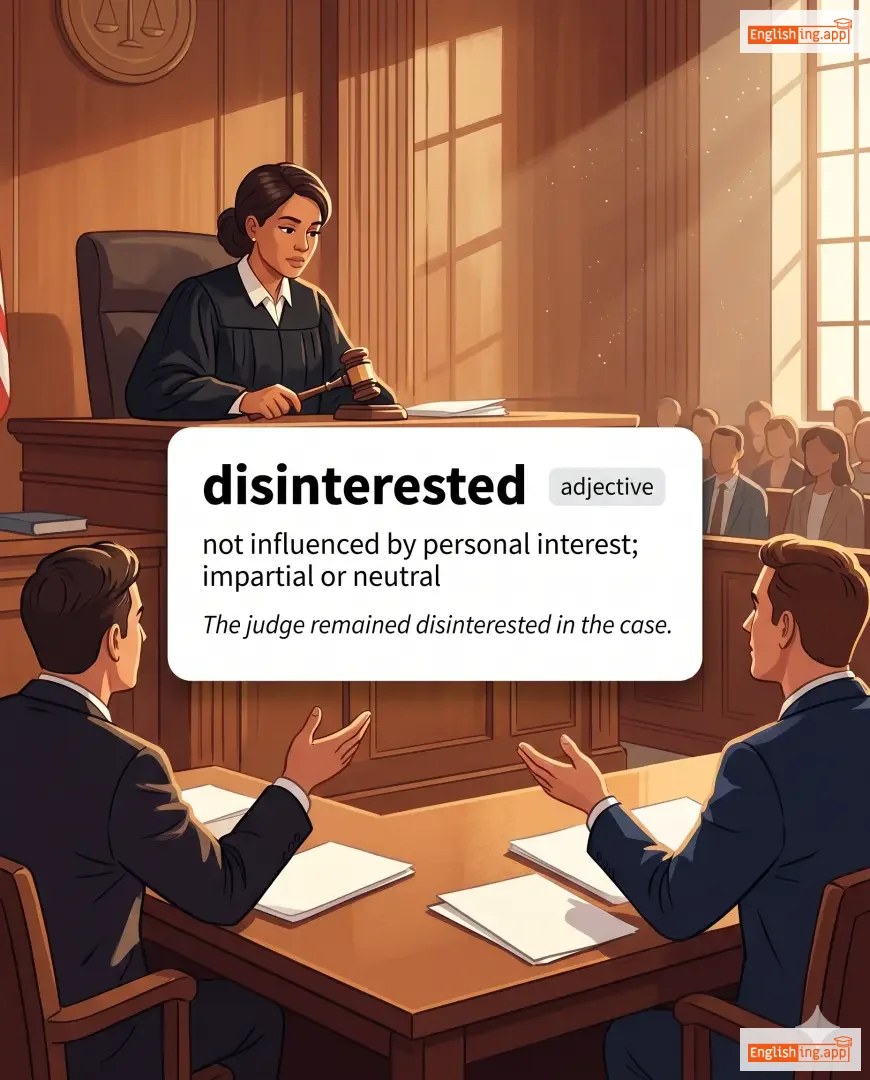
disinterested definition card — visual illustration of the meaning
adjective
/dɪsˈɪntrəstɪd/
নিরপেক্ষ (niropekkho)

not influenced by personal interest; impartial or neutral

"The judge remained disinterested in the case."

"বিচারক মামলায় নিরপেক্ষ রইলেন।" (Bicharak mamlay niropekkho roilen.)
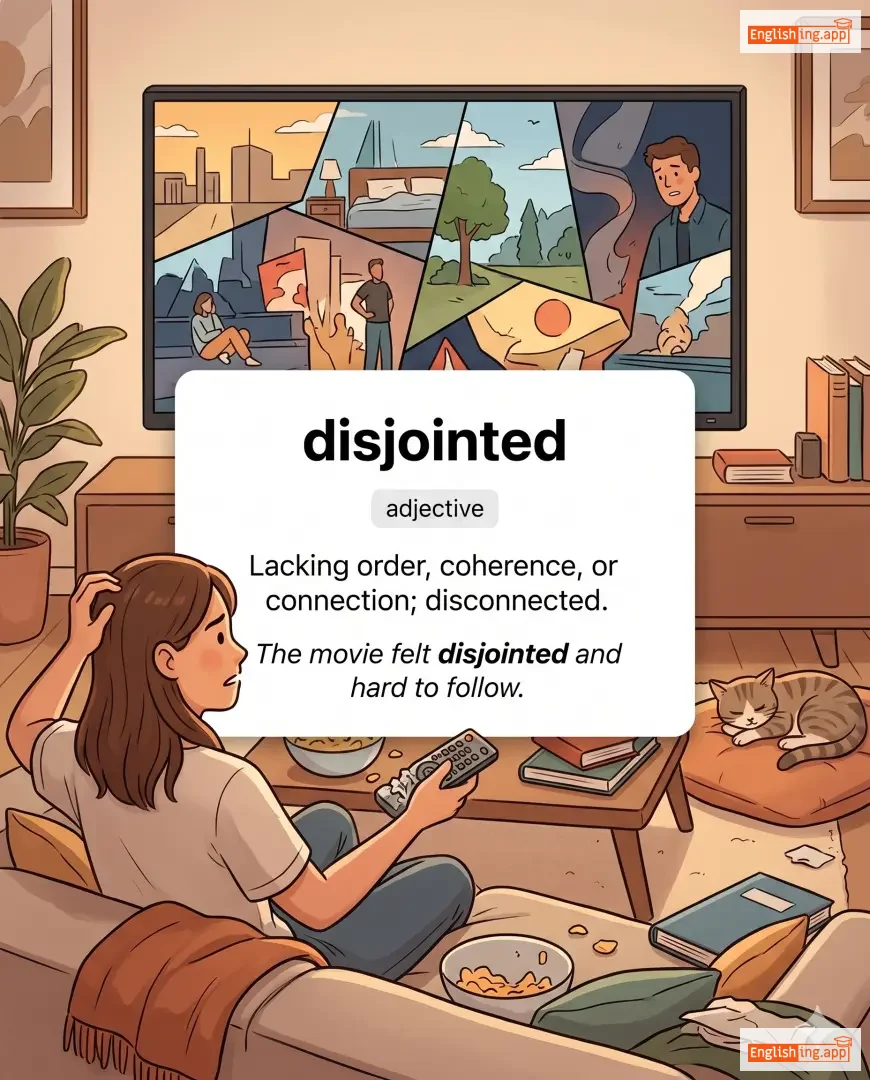
disjointed definition card — visual illustration of the meaning
adjective
/dɪsˈdʒɔɪntɪd/
অসংগঠিত (asongothito)

Lacking order, coherence, or connection; disconnected.

"The movie felt disjointed and hard to follow."

"ছবিটি অসংগঠিত মনে হয়েছে এবং অনুসরণ করা কঠিন ছিল।" (Chobiti asongothito mone hoyeche ebong onusoron kora kothin chhilo.)
noun
/dɪsˈdʒʌŋkʃən/
বিচ্ছেদ (bichched)

A lack of connection between things; separation or disunity.

"There is a clear disjunction between theory and practice."

"তত্ত্ব ও প্রয়োগের মধ্যে একটি স্পষ্ট বিচ্ছেদ রয়েছে।" (Totto o proyoger modhe ekti spostho bichched royeche.)
adjective
/dɪsˈdʒʌŋktɪv/
বিচ্ছিন্নকারী (bichchhinnokari)

Serving to separate or divide; expressing a choice between alternatives.

"In grammar, 'or' is a disjunctive conjunction."

"ব্যাকরণে, 'or' একটি বিচ্ছিন্নকারী সংযোজক।" (Byakorone, 'or' ekti bichchhinnokari songojok.)
noun
/dɪsk/
ডিস্ক / তথ্য সংরক্ষণ যন্ত্র (disk / tothyo songrokkhon jontra)

a flat, circular object, often used to store data electronically

"All the data is saved on a hard disk."

"সব তথ্য একটি হার্ড ডিস্কে সংরক্ষিত আছে।" (Shob tothyo ekti hard disk e songrokhito ache.)
verb, noun
/dɪsˈlaɪk/
অপছন্দ করা (opochondo kora)

to feel distaste or aversion for someone or something; a feeling of aversion

"I really dislike eating spicy food."

"আমি সত্যিই মশলাদার খাবার খেতে অপছন্দ করি।" (ami sotti'i moshaladar khabar khete opochondo kori)
verb
/ˈdɪsləkeɪt/
স্থানচ্যুত করা (sthanchyuto kora)

To disturb the normal position of something, especially a joint in the body.

"He dislocated his shoulder while playing football."

"ফুটবল খেলার সময় সে তার কাঁধ স্থানচ্যুত করেছিল।" (Football khelar somoy se tar kandho sthanchyuto korechhilo.)
verb
/dɪsˈlɒdʒ/
অপসারণ করা (opsaron kora)

To remove or force out from a position, especially one that is fixed or hard to move.

"The troops dislodged the enemy from the hill."

"সেনারা শত্রুকে পাহাড় থেকে অপসারণ করেছিল।" (Senara shotruke pahar theke opsaron korechhilo.)