ভোকাবুলারিসমূহ

ইংরেজি শব্দের বাংলা অর্থ | English to Bangla Word Meaning Dictionary

verb
/ˌdɪfəˈrɛnʃieɪt/
পার্থক্য করা (parthokko kora)

To recognize or make a distinction between things.

"It is important to differentiate between fact and opinion."

"তথ্য ও মতামতের মধ্যে পার্থক্য করা গুরুত্বপূর্ণ।" (Tothyo o motamotir moddhe parthokko kora guruttopurno.)
differentiation definition card — visual illustration of the meaning
noun
/ˌdɪf.ə.ren.ʃiˈeɪ.ʃən/
পার্থক্য, স্বতন্ত্রতা, বিশেষীকরণ (porthokko, shotontrata, bisheshikoron)

The action or process of differentiating or distinguishing between two or more things or people.

"Strong differentiation sets brands apart from competitors."

"শক্তিশালী ডিফারেনশিয়েশন ব্র্যান্ডকে প্রতিযোগীদের থেকে আলাদা করে।" (Shokishali differentiation brandke protijogider theke alada kore.)
adverb
/ˈdɪfərəntli/
ভিন্নভাবে (bhinnobhabe)

in a way that is not the same as another or as expected

"She approached the problem differently than her colleagues."

"সে সমস্যাটির কাছে ভিন্নভাবে গিয়েছিল তার সহকর্মীদের থেকে।" (Se shomosyartir kache vinner bhabe giyechhilo tar shokormider theke.)
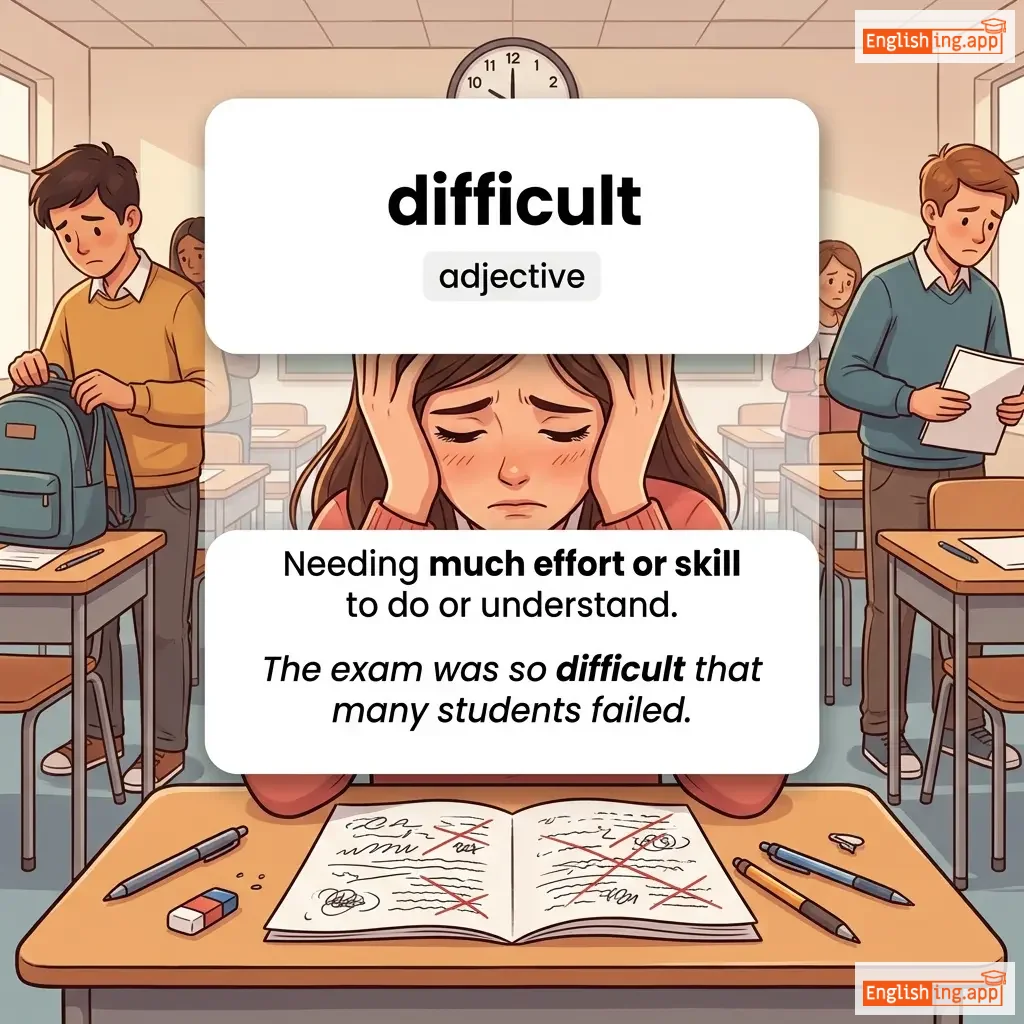
difficult definition card — visual illustration of the meaning
adjective
/ˈdɪf.ɪ.kəlt/
কঠিন (kothin)

Needing much effort or skill to do or understand.

"The exam was so difficult that many students failed."

"পরীক্ষাটি এত কঠিন ছিল যে অনেক ছাত্র ব্যর্থ হয়েছিল।" (Porikkhati eto kothin chhilo je onek chatro byartho hoyechhilo.)
noun
/ˈdɪfɪkəlti/
কষ্ট, অসুবিধা (koshto, oshubidha)

the state or condition of being hard to do, deal with, or understand

"He faced great difficulty in learning a new language."

"সে একটি নতুন ভাষা শেখার সময় প্রচণ্ড অসুবিধার মুখোমুখি হয়েছিল।" (Se ekti notun bhasa shekhar somoy prochondo oshubidhar mukhomukhi hoyechhilo.)
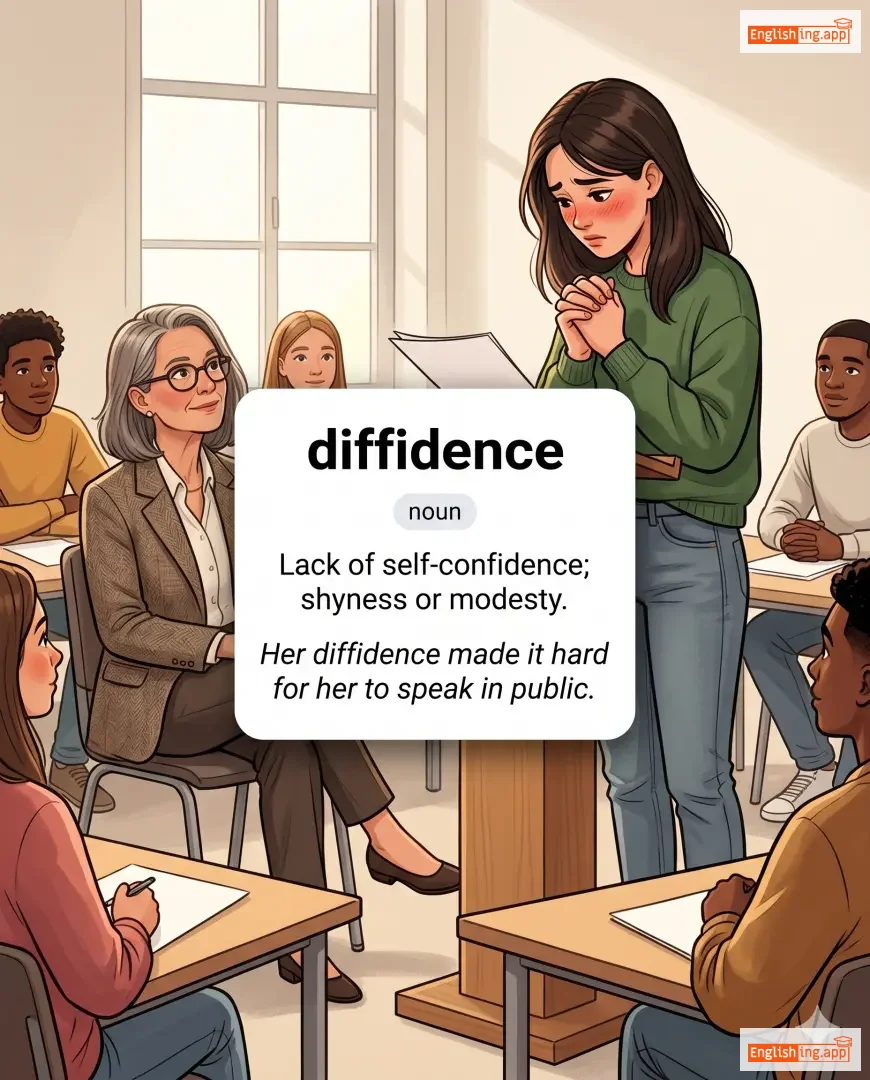
diffidence definition card — visual illustration of the meaning
noun
/ˈdɪfɪdəns/
আত্মবিশ্বাসের অভাব (atmabiswasher obhab)

Lack of self-confidence; shyness or modesty.

"Her diffidence made it hard for her to speak in public."

"তার আত্মবিশ্বাসের অভাব তাকে জনসমক্ষে কথা বলতে কষ্টকর করেছিল।" (Tar atmabiswasher obhab take jonsomokhe kotha bolte kostokor korechilo.)
adjective
/ˈdɪfɪdənt/
আত্মবিশ্বাসহীন (atmabiswashhin)

Shy or lacking confidence in one's own abilities.

"He was too diffident to ask a question in class."

"সে ক্লাসে প্রশ্ন করার জন্য খুবই আত্মবিশ্বাসহীন ছিল।" (Se klase prosno korar jonno khuboi atmabiswashhin chilo.)
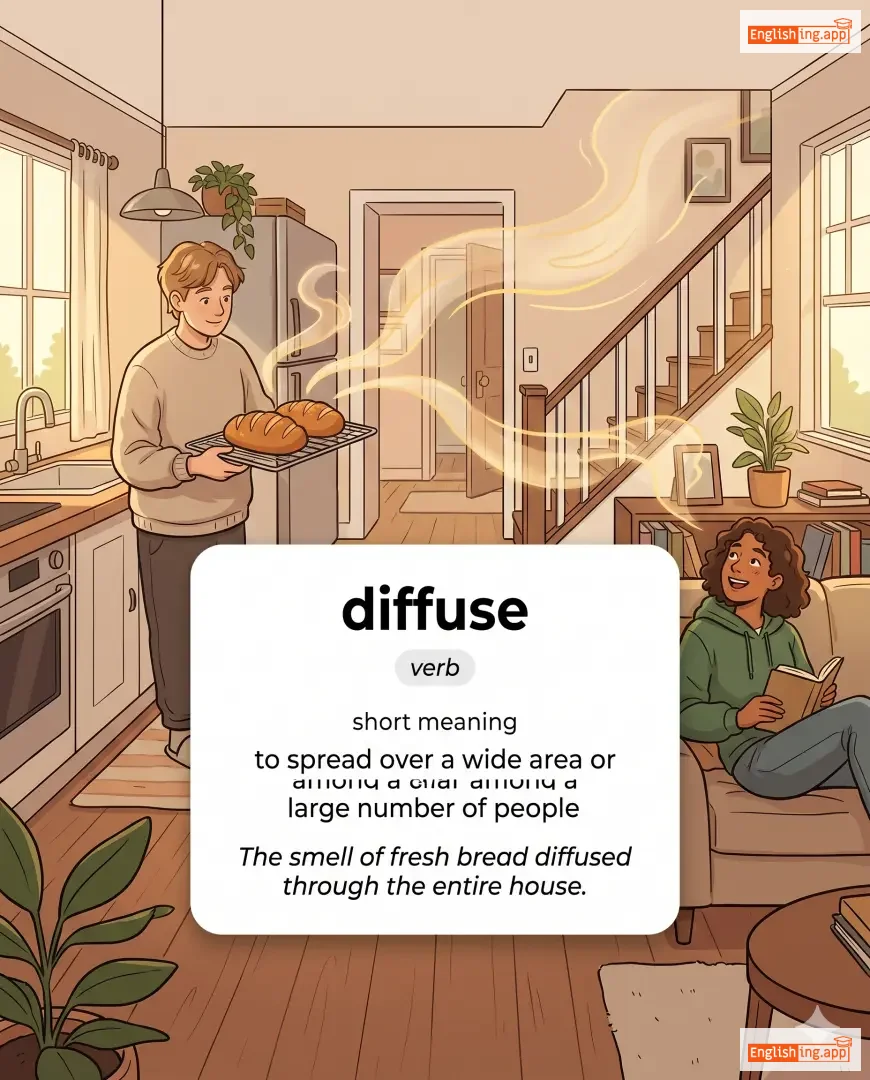
diffuse definition card — visual illustration of the meaning
verb
/dɪˈfjuːz/
প্রসারিত করা (prosharito kora)

to spread over a wide area or among a large number of people

"The smell of fresh bread diffused through the entire house."

"তাজা রুটির গন্ধ পুরো বাড়ি জুড়ে ছড়িয়ে পড়েছিল।" (Taja rutir gondho puro bari jure choriye porechhilo.)
adjective
/dɪˈfjuːzəbl/
প্রসারণযোগ্য (prosharonjoggo)

able to spread or be spread through a medium

"Oxygen is diffusible through cell membranes."

"অক্সিজেন কোষ ঝিল্লির মধ্য দিয়ে প্রসারিত হতে পারে।" (Oxygen kosh jhillir moddhe diye prosharito hote pare.)
noun
/dɪˈfjuːʒən/
প্রসারণ (prosharon)

the spreading of something more widely or the movement of particles from high to low concentration

"The diffusion of information on social media is rapid."

"সামাজিক মাধ্যমে তথ্যের প্রসারণ দ্রুত হয়।" (Samajik madhome tothyer prosharon druto hoy.)
verb
/dɪɡ/
খোঁড়া (khora)

to break up and move earth with a tool or machine, or with hands, paws, etc.

"They decided to dig a hole for the new tree."

"তারা নতুন গাছের জন্য একটি গর্ত খোঁড়ার সিদ্ধান্ত নিল।" (Tara notun gacher jonno ekti gorto khorar siddhanto nilo.)
digest definition card — visual illustration of the meaning
verb
/daɪˈdʒest/
হজম করা (hajom kora)

to break down food in the body; to think about and understand

"It takes time to digest a heavy meal."

"ভারী খাবার হজম করতে সময় লাগে।" (Bhari khabar hajom korte shomoy lage.)
digestive definition card — visual illustration of the meaning
adjective
daɪˈdʒes.tɪv
পরিপাকসংক্রান্ত (poripakshongkranto)

Relating to the digestion of food.

"Digestive enzymes help break down food."

"পরিপাক এনজাইম খাদ্য ভাঙতে সহায়তা করে।" (Poripak enzyme khadyo bhangte sahayota kore.)
noun
/ˈdɪdʒɪt/
সংখ্যা / আঙুল (shonkha / angul)

a numeral from 0 to 9; also a finger or toe

"You must enter a four-digit code to unlock the phone."

"ফোন আনলক করতে আপনাকে একটি চার সংখ্যার কোড প্রবেশ করতে হবে।" (Phone unlock korte apnake ekti char shonkhar code probesh korte hobe.)
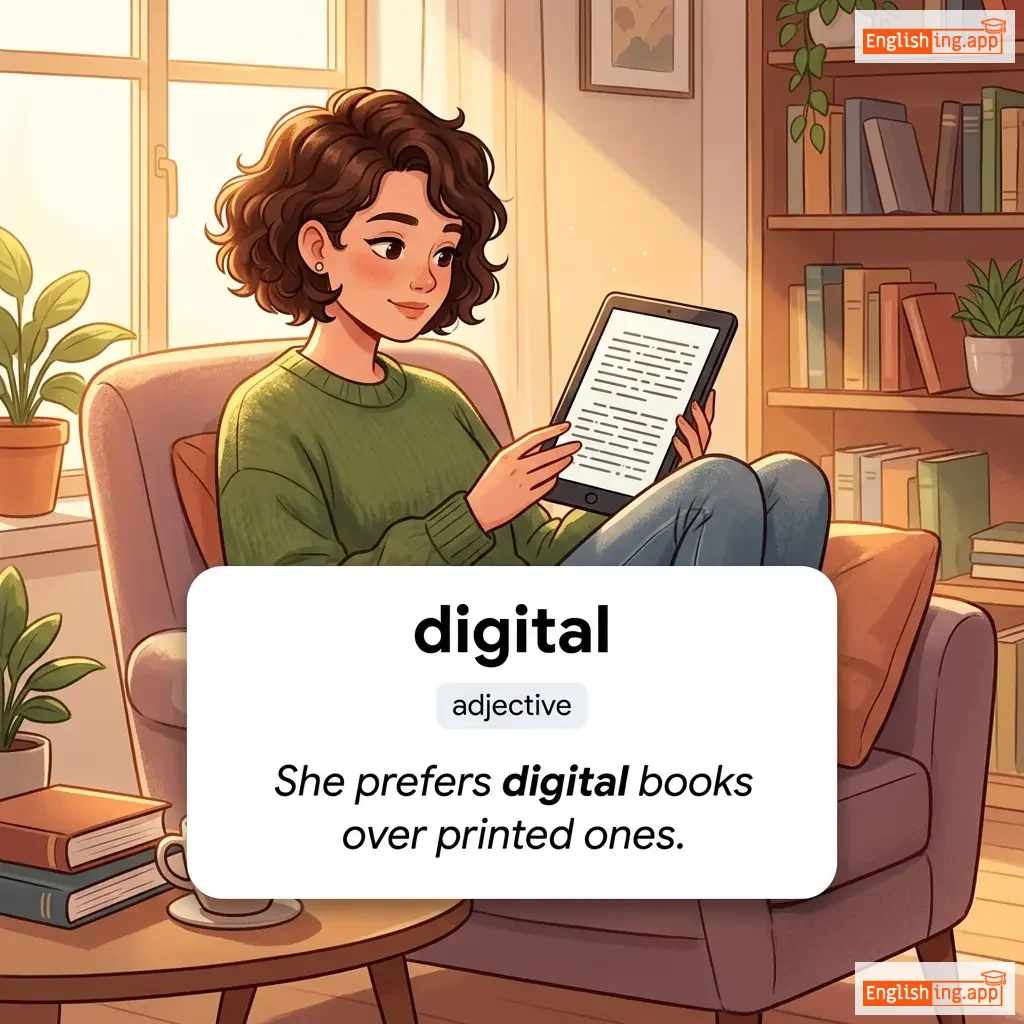
digital definition card — visual illustration of the meaning
adjective
/ˈdɪdʒɪtl/
ডিজিটাল (digital)

relating to technology that uses signals or data in the form of numbers (0s and 1s)

"She prefers digital books over printed ones."

"সে মুদ্রিত বইয়ের চেয়ে ডিজিটাল বই পছন্দ করে।" (Se mudrito boiyer cheye digital boi pochhondo kore.)
digital detox definition card — visual illustration of the meaning
noun
/ˈdɪdʒɪtl ˈdɛtɒks/
ডিজিটাল ব্যবহারের বিরতি (digital byaboharer birti)

A period of time during which a person refrains from using electronic devices such as smartphones or computers, regarded as an opportunity to reduce stress or focus on social interaction in the physical world.

"A digital detox can help improve mental clarity and reduce stress."

"ডিজিটাল ডিটক্স মানসিক স্পষ্টতা উন্নত করতে এবং চাপ কমাতে সাহায্য করতে পারে।" (Digital detox manoshik sposhthota unnoto korte ebong chap komate shahajjo korte pare.)
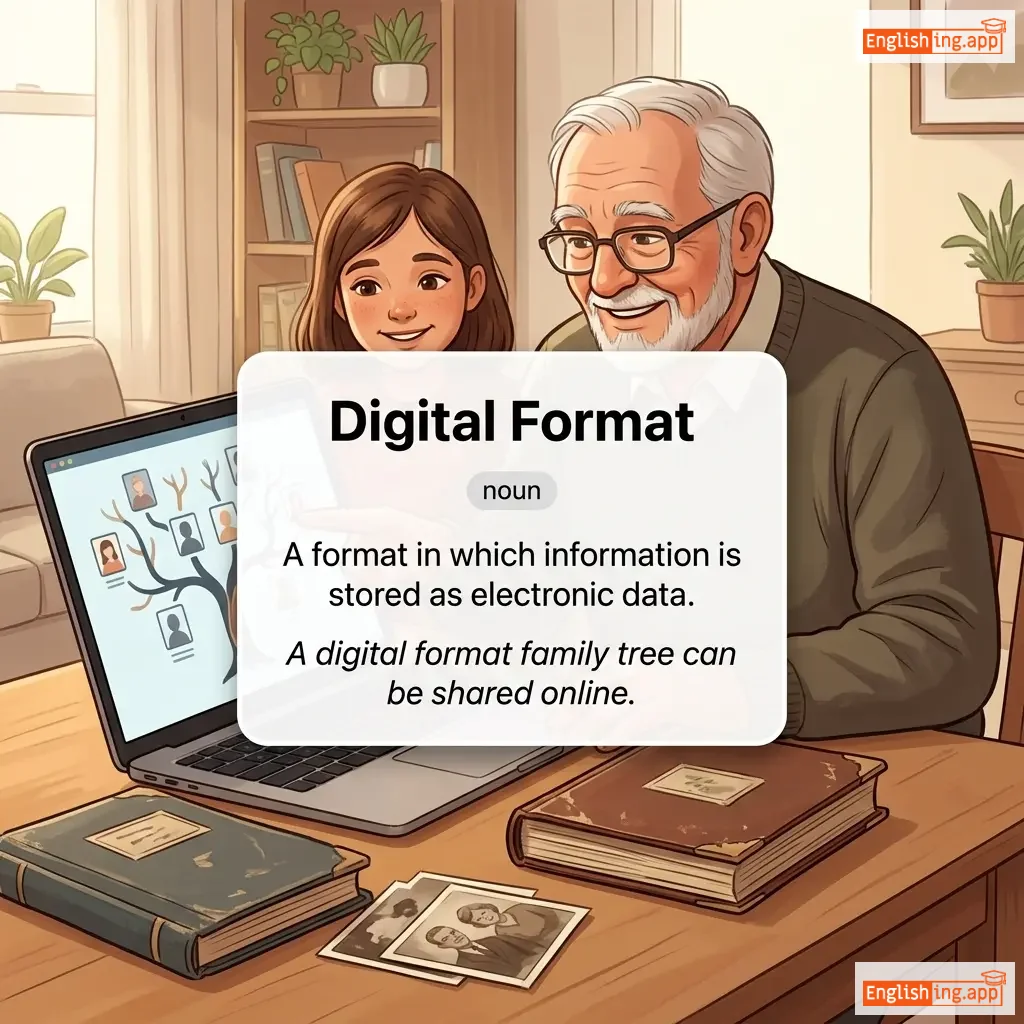
Digital Format definition card — visual illustration of the meaning
noun
ˈdɪdʒɪtəl ˈfɔːrmæt
ডিজিটাল বিন্যাস (digital binnyaash)

A format in which information is stored as electronic data.

"A digital format family tree can be shared online."

"একটি ডিজিটাল ফরম্যাট পারিবারিক গাছ অনলাইনে শেয়ার করা যেতে পারে।" (Ekti digital format paribaarik gaach onlaaine sheyaar koraa yete paare.)
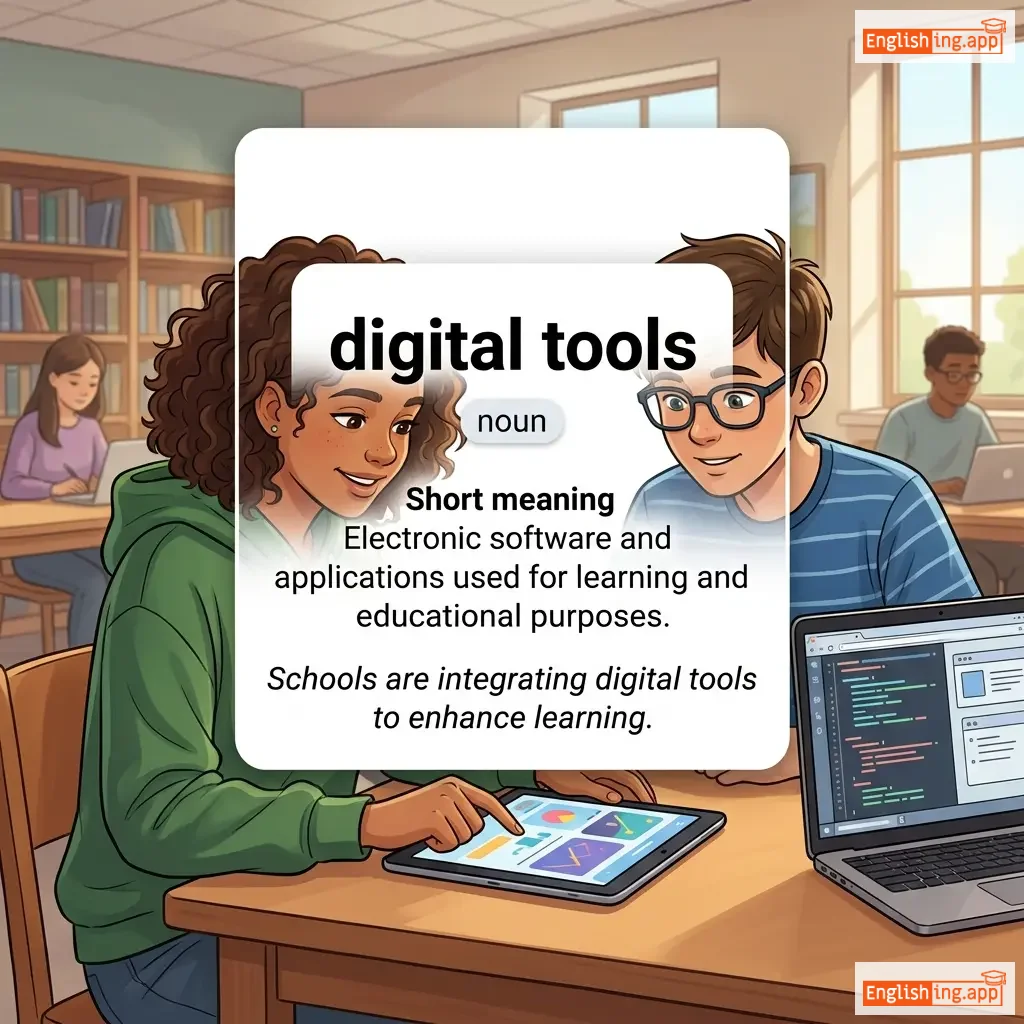
digital tools definition card — visual illustration of the meaning
noun
ˈdɪdʒ.ɪ.təl tuːlz
ডিজিটাল সরঞ্জাম (digital shornjam)

Electronic software and applications used for learning and educational purposes.

"Schools are integrating digital tools to enhance learning."

"বিদ্যালয়গুলো শিক্ষার মান উন্নয়নে ডিজিটাল সরঞ্জাম সংযোজন করছে।" (Biddaloyguloo shikhkhar man unnoyene digital shornjam shongjojn korche.)
noun
/ˈdɪɡnɪˌtɛri/
গুরুত্বপূর্ণ ব্যক্তি (guruttopurno bekti)

a person considered to be important because of high rank or office

"Several foreign dignitaries attended the state banquet."

"রাষ্ট্র ভোজে কয়েকজন বিদেশি গণ্যমান্য ব্যক্তি উপস্থিত ছিলেন।" (Rastro bhoje koyekjon bideshi gonnyomanno bekti uposthit chhilen.)
noun
/ˈdɪɡnəti/
মর্যাদা (morjada)

the state or quality of being worthy of respect or honor

"He faced the difficult situation with calm and dignity."

"সে শান্তভাবে ও মর্যাদার সাথে কঠিন পরিস্থিতির মুখোমুখি হয়েছিল।" (Se shantobhabe o morjadar sathe kothin poristhitir mukhomukhi hoyechhilo.)
noun
/ˈdaɪɡræf/
দ্বিবর্ণ (dwiborno)

A pair of letters representing a single sound, such as 'sh' in 'ship'.

"In the word 'phone', the letters 'ph' form a digraph."

"'ফোন' শব্দে 'ফ' অক্ষরগুলো একটি দ্বিবর্ণ তৈরি করে।" ('phone' shobde 'ph' okkorgulo ekti dwiborno toiri kore.)
verb
/daɪˈɡrɛs/
মূল বিষয় থেকে সরে যাওয়া (mul bishoy theke sore jaoa)

To leave the main subject temporarily in speech or writing.

"The professor began to digress from the main topic of the lecture."

"অধ্যাপক মূল আলোচনার বিষয় থেকে সরে যেতে শুরু করলেন।" (Odhapok mul alochonar bishoy theke sore jete suru korlen.)
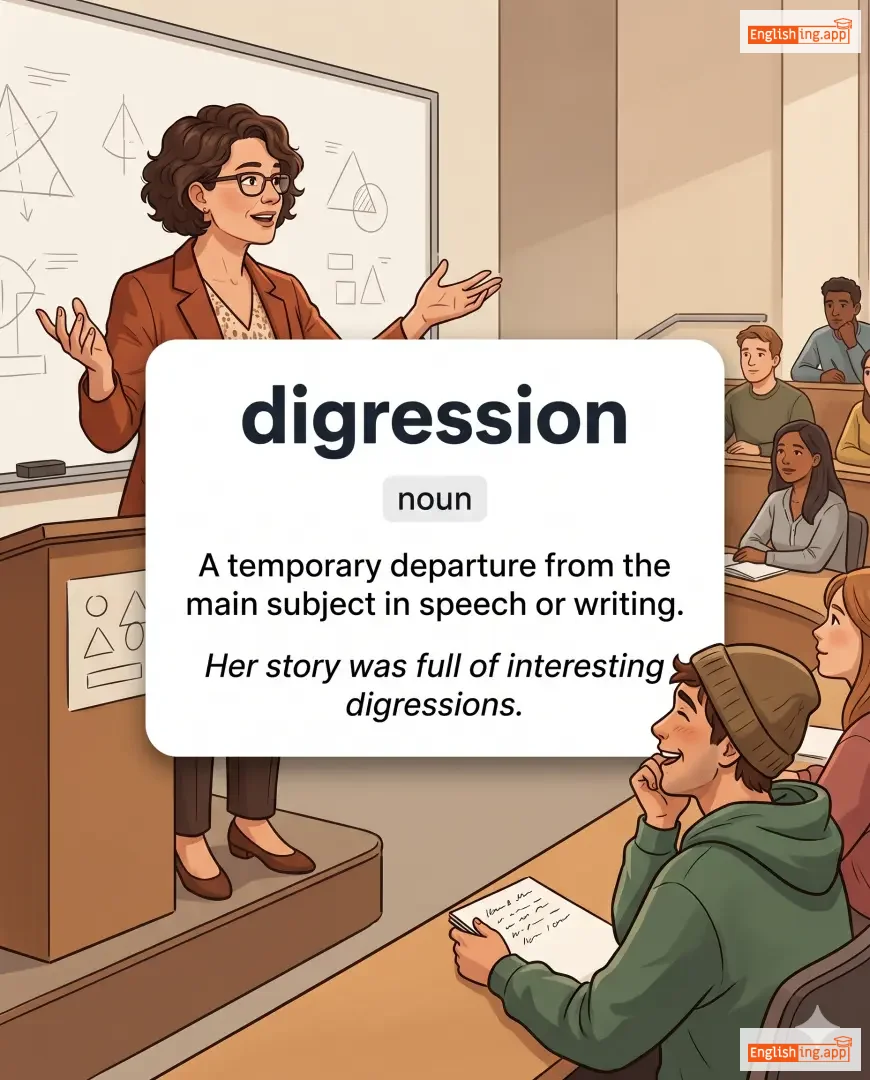
digression definition card — visual illustration of the meaning
noun
/daɪˈɡrɛʃən/
বিষয় থেকে সরে যাওয়া (bishoy theke sore jaoa)

A temporary departure from the main subject in speech or writing.

"Her story was full of interesting digressions."

"তার গল্পে অনেক আকর্ষণীয় বিষয় থেকে সরে যাওয়া অংশ ছিল।" (Tar golpe onek akorshoniyo bishoy theke sore jaoa angsho chhilo.)
adjective
/daɪˈɡrɛsɪv/
বিষয় থেকে সরে যাওয়ার প্রবণতাযুক্ত (bishoy theke sore jaoar pronnotajukto)

Tending to depart from the main subject in speech or writing.

"The speaker's digressive style made the lecture difficult to follow."

"বক্তার ডাইগ্রেসিভ স্টাইলের কারণে লেকচার অনুসরণ করা কঠিন ছিল।" (Boktar digressive style er karone lecture onusoron kora kothin chhilo.)
verb
/dɪˈlæpɪdeɪt/
ধ্বংসপ্রাপ্ত করা (dhongshopropto kora)

To cause something, especially a building, to fall into ruin or disrepair.

"The abandoned house began to dilapidate over the years."

"পরিত্যক্ত বাড়িটি বছরের পর বছর ধরে ধ্বংসপ্রাপ্ত হতে শুরু করেছিল।" (Porityokto bariti bochorer por bochor dhore dhongshopropto hote suru korechhilo.)
adjective
/dɪˈlæpɪˌdeɪtɪd/
জীর্ণশীর্ণ (jirno shirno)

Fallen into disrepair or ruin due to neglect or age.

"The family lived in a dilapidated house at the edge of town."

"পরিবারটি শহরের প্রান্তে একটি জীর্ণশীর্ণ ঘরে থাকত।" (Poribarti shohorer prante ekti jirno shirno ghore thakto.)
noun
/dɪˌlæpɪˈdeɪʃən/
ধ্বংসাবস্থা (dhongshobostha)

The state of disrepair or ruin as a result of neglect.

"The old temple was in a state of dilapidation."

"পুরনো মন্দিরটি ধ্বংসাবস্থায় ছিল।" (Purono mondirti dhongshobosthay chilo.)
verb
/daɪˈleɪt/
প্রসারিত করা (prosarit kora)

To make wider, larger, or more open.

"The doctor used drops to dilate the patient's pupils."

"ডাক্তার রোগীর চোখের মণি প্রসারিত করতে ওষুধ ব্যবহার করেছিলেন।" (Daktar rogir chokher moni prosarit korte oshudh byabohar korechilen.)
adjective
/ˈdɪlətɔːri/
অলস (olos)

Tending to cause delay; slow to act.

"The committee was criticized for its dilatory response to the crisis."

"কমিটিকে সংকটের প্রতি তাদের ধীর প্রতিক্রিয়ার জন্য সমালোচনা করা হয়েছিল।" (Komitike songkoter proti tader dhir protikriar jonno somalochona kora hoyechilo.)
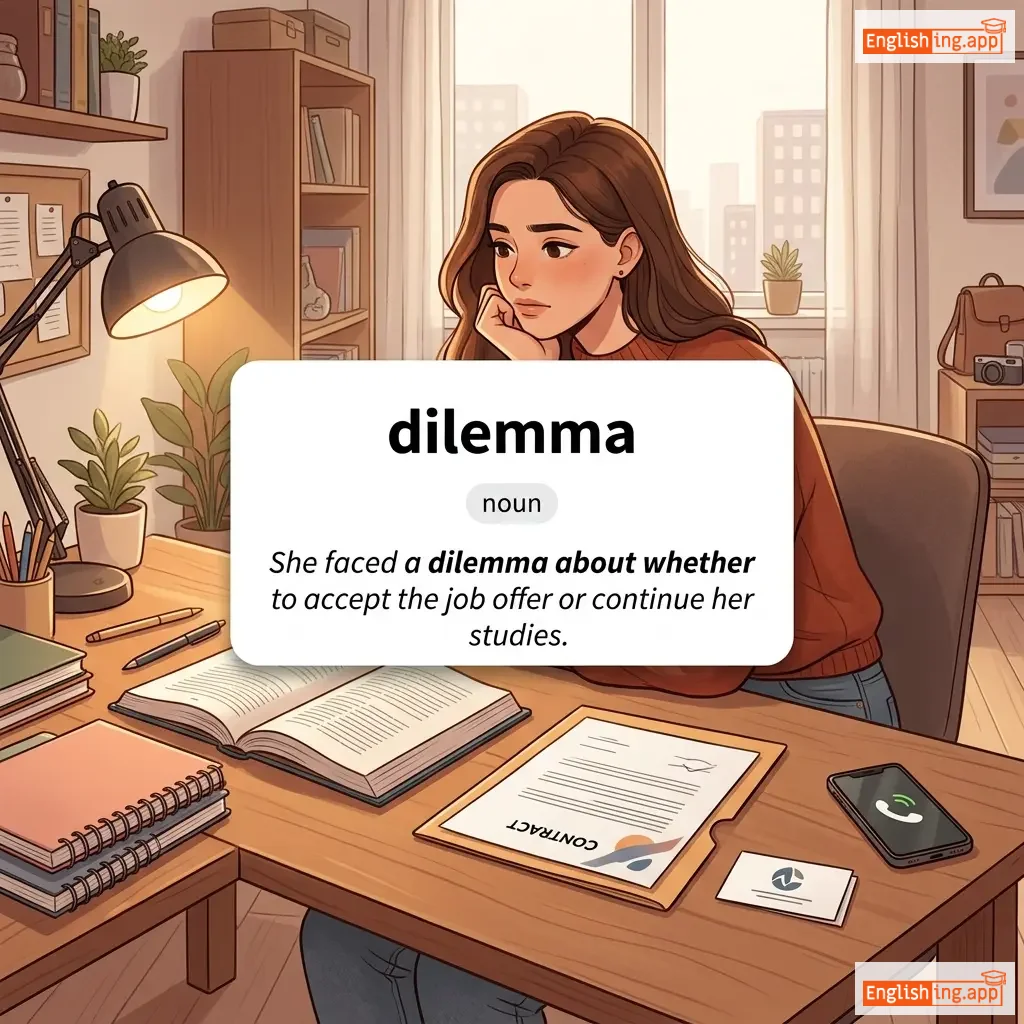
dilemma definition card — visual illustration of the meaning
noun
/daɪˈlɛmə/
দ্বিধা (dvidha)

A situation in which a difficult choice has to be made between two or more alternatives.

"She faced a dilemma about whether to accept the job offer or continue her studies."

"সে চাকরির প্রস্তাব গ্রহণ করবে নাকি পড়াশোনা চালিয়ে যাবে তা নিয়ে দ্বিধায় পড়েছিল।" (Se chakrir prostab grohon korbe naki porashona chaliye jabe ta niye dvidhay porechilo.)
noun
/ˌdɪləˈtænt/
শৌখিন (shaukhine)

A person who takes up an art, activity, or subject merely for amusement, especially in a superficial way.

"He was dismissed as a dilettante in the art world because he lacked formal training."

"তাকে শিল্প জগতে শৌখিন বলে উপেক্ষা করা হয়েছিল কারণ তার আনুষ্ঠানিক প্রশিক্ষণ ছিল না।" (Take shilpo jogote shaukhine bole upekkha kora hoyechhilo karon tar anusthanik proshikkhon chhilo na.)
diligence definition card — visual illustration of the meaning
noun
/ˈdɪlɪdʒəns/
অধ্যবসায় (odhyoboshay)

Careful and persistent work or effort.

"Through diligence and determination, she completed her research on time."

"অধ্যবসায় ও দৃঢ়তার মাধ্যমে সে সময়মতো তার গবেষণা শেষ করেছে।" (Odhjoboshay o drirhotar maddhome se somoymoto tar gobeshona shesh korechhe.)
adjective
/ˈdɪlɪdʒənt/
অধ্যবসায়ী (odhyobosayi)

Showing care and conscientiousness in one's work or duties.

"She is a diligent student who always finishes her assignments on time."

"সে একজন অধ্যবসায়ী ছাত্রী, যিনি সবসময় সময়মতো কাজ শেষ করেন।" (Se ekjon odhyobosayi chatri, jini shobshomoy somoymoto kaj shesh koren.)
verb
/daɪˈluːt/
পাতলা করা (patla kora)

To make a liquid thinner or weaker by adding water or another solvent.

"You should dilute the juice with water before serving it to children."

"শিশুদের পরিবেশনের আগে জুসে পানি মিশিয়ে পাতলা করা উচিত।" (Shishuder poribeshoner age juse pani misheye patla kora uchit.)
adjective
/dɪm/
ম্লানরং (mlanorong)

not bright; having little light; not clearly visible

"The room was dim because the curtains were closed."

"ঘরটি ম্লান ছিল কারণ পর্দাগুলি বন্ধ ছিল।" (ghorti mlan chilo karon pordaguli bondho chilo.)
noun
/daɪm/
১০ সেন্টের কয়েন (10 cent-er koyen)

a small coin, especially a U.S. coin worth ten cents

"He gave me a dime for the phone call."

"সে আমাকে ফোন কলের জন্য একটি ডাইম দিয়েছিল।" (Se amake phone kolar jonno ekti dime diyechhilo.)
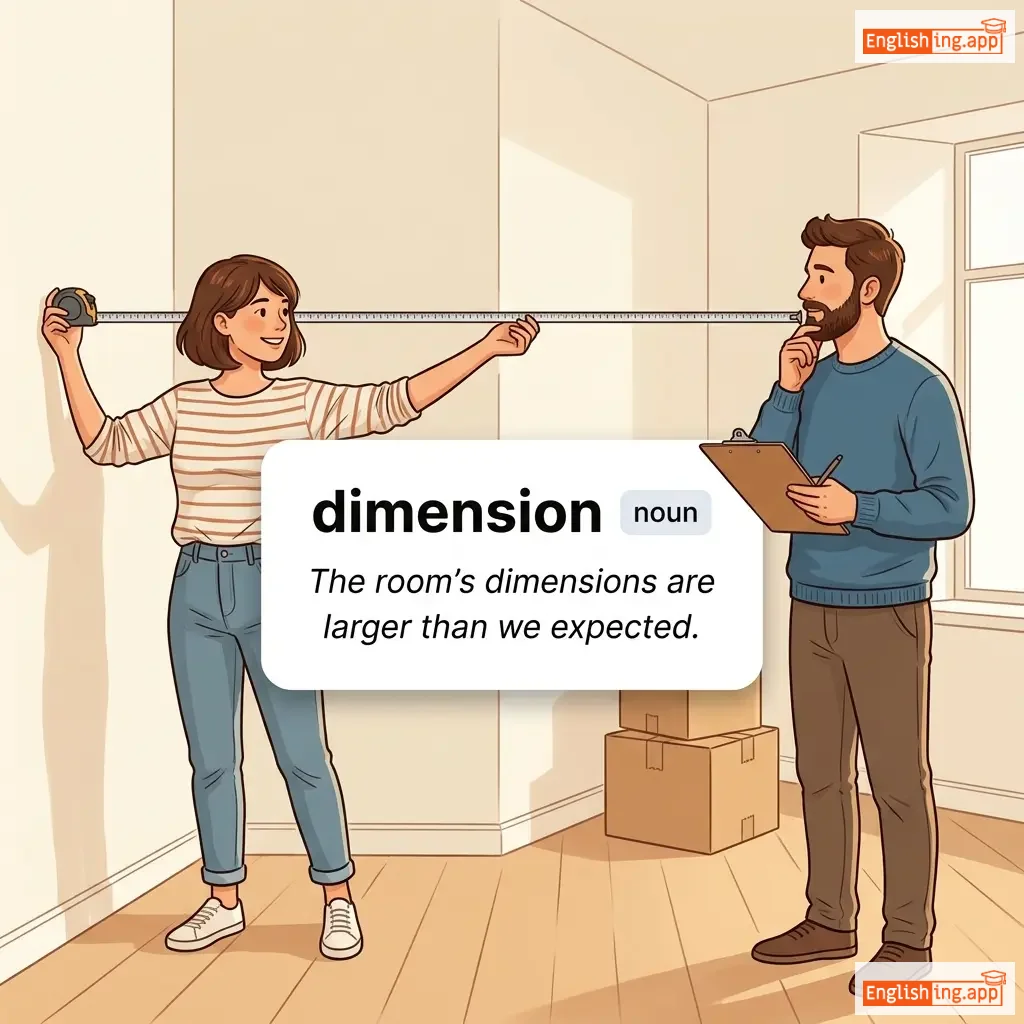
dimension definition card — visual illustration of the meaning
noun
/dɪˈmɛnʃən/
মাত্রা (matra)

A measurable extent of a particular kind, such as length, breadth, depth, or height.

"The room’s dimensions are larger than we expected."

"ঘরের মাত্রা আমাদের প্রত্যাশার চেয়ে বড়।" (Ghorer matra amader protyashar cheye boro.)
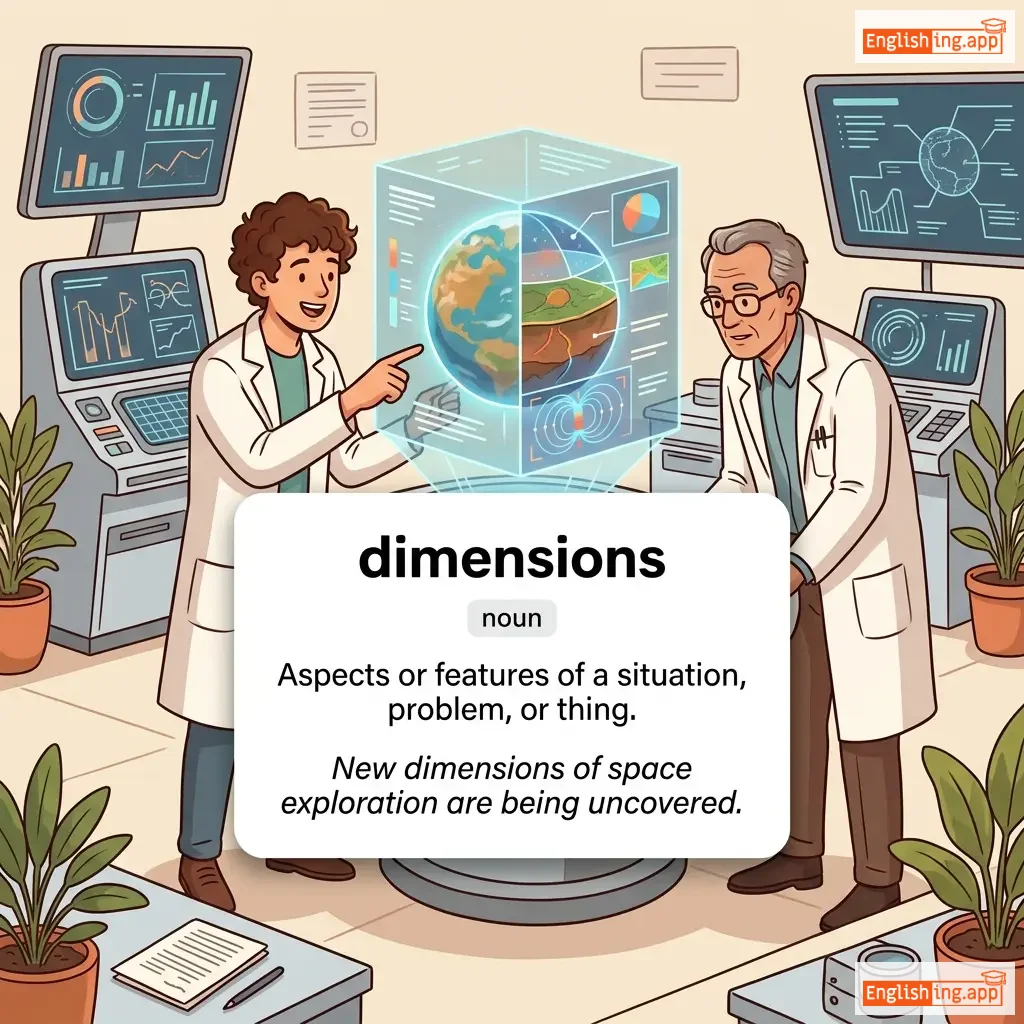
dimensions definition card — visual illustration of the meaning
noun
/daɪˈmen.ʃənz/
মাত্রা (matra)

Aspects or features of a situation, problem, or thing.

"New dimensions of space exploration are being uncovered."

"মহাকাশ অনুসন্ধানের নতুন মাত্রা উন্মোচিত হচ্ছে।" (Mohakash onusandhaner notun matra unmochito hochhe.)
verb
/dɪˈmɪnɪʃ/
হ্রাস করা (hras kora)

to make or become less; to reduce in size, importance, or value

"Over time, his influence in the company began to diminish."

"সময়ের সাথে সাথে কোম্পানিতে তার প্রভাব হ্রাস পেতে শুরু করল।" (somoyer sathe sathe kompanite tar prabhav hras pete suru korlo.)
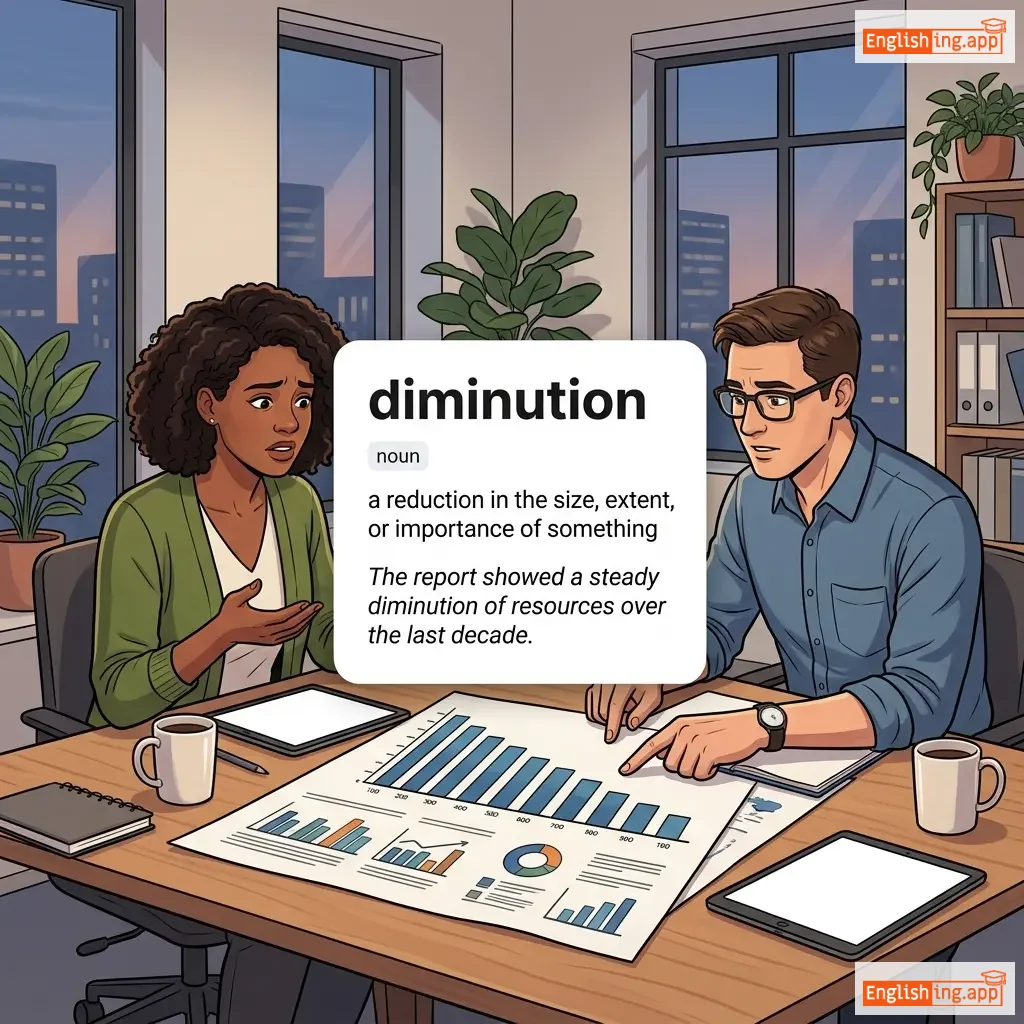
diminution definition card — visual illustration of the meaning
noun
/ˌdɪmɪˈnjuːʃən/
হ্রাস (hras)

a reduction in the size, extent, or importance of something

"The report showed a steady diminution of resources over the last decade."

"প্রতিবেদনটি গত দশকে সম্পদের ধারাবাহিক হ্রাস দেখিয়েছে।" (protibedonti got dosoke sompod er dharabahik hras dekhiyese.)
adjective
/dɪˈmɪnjətɪv/
অতিক্ষুদ্র (otikshudro)

extremely or unusually small

"Despite his diminutive size, he was a powerful leader."

"তার অতিক্ষুদ্র দেহকাঠামো সত্ত্বেও, তিনি ছিলেন একজন শক্তিশালী নেতা।" (tar otikshudro dehokathamo sottweo, tini chilen ekti shoktishali neta.)
adverb
/ˈdɪmli/
ম্লানভাবে (mlanvabe)

in a faint or unclear way; with little light

"The room was dimly lit by a single candle."

"ঘরটি একটি মোমবাতির আলোয় ম্লানভাবে আলোকিত ছিল।" (ghorti ekti mombatir aloy mlanvabe alokito chilo.)
noun
/ˈdɪm.pəl/
গালে টোল; (galey tol)

a small depression in the flesh, either one that exists permanently or one that forms when smiling

"Her charming dimples appeared whenever she smiled at the children."

"যখনই তিনি শিশুদের দিকে হাসতেন তখনই তার মনোমুগ্ধকর গালের টোল দেখা যেত।" (jokhonoi tini shishude dike hashten tokhonoi tar monomugdhokoro galer tol dekha jeto.)
noun
/dɪn/
কোলাহল (kolahol)

a loud, unpleasant, and prolonged noise

"The din of traffic outside made it hard to concentrate."

"বাইরের যানবাহনের কোলাহল মনোযোগ দেওয়া কঠিন করে তুলেছিল।" (baireer janbahoner kolahol monojog deowa kothin kore tulchilo.)
verb
/daɪn/
ভোজন করা (bhojon kora)

to eat a meal, especially the main meal of the day

"We usually dine at seven o'clock in the evening."

"আমরা সাধারণত সন্ধ্যা সাতটায় ভোজন করি।" (amra sadharonoto sondhya shaatay bhojon kori.)
noun
/ˈdɪŋɡi/
ডিঙ্গি নৌকা (dingi nouka)

a small boat, often carried or towed by a larger vessel, used for short trips or as a lifeboat

"They rowed the dinghy back to the yacht."

"তারা ইয়টে ফেরার জন্য ডিঙ্গি নৌকায় দাঁড় টেনেছিল।" (tara yate ferar jonno dingi noukay dar tenechhilo.)
adjective
/ˈdɪndʒi/
মলিন (molin)

gloomy and drab; dirty or discolored

"The old hotel room looked dark and dingy."

"পুরানো হোটেল ঘরটি অন্ধকার এবং মলিন দেখাচ্ছিল।" (purano hotel ghor-ti ondhokar ebong molin dekhachhilo.)
noun
/ˈdaɪnɪŋ/
খাওয়া-দাওয়া (khaowa-dawa)

the act of eating a meal, especially in a formal setting

"We enjoyed fine dining at the new restaurant."

"আমরা নতুন রেস্টুরেন্টে দারুণ খাওয়া-দাওয়া উপভোগ করেছি।" (Amra notun restaurant e darun khaowa-dawa upobhog korechhi.)
noun
/ˈdɪnər/
রাতের খাবার (rater khabar)

the main meal of the day, usually eaten in the evening

"We had a lovely dinner at a new restaurant last night."

"আমরা গতরাতে একটি নতুন রেস্টুরেন্টে সুন্দর ডিনার করেছিলাম।" (Amra gotrate ekti notun restaurant e sundor dinner korechilam.)
noun
/dɪnt/
প্রচেষ্টা, আঘাতের দাগ (prochesta, aghater dag)

an impression or hollow made by a blow; force or power

"By dint of hard work, he achieved success."

"কঠোর পরিশ্রমের কারণে, সে সাফল্য অর্জন করেছিল।" (kothor porishromer karone, se safollo orjon korechhilo.)