ভোকাবুলারিসমূহ

ইংরেজি শব্দের বাংলা অর্থ | English to Bangla Word Meaning Dictionary

noun
/ˈdɛvɪlri/
অসুরকর্ম (osur kormo)

Wicked or cruel behavior; mischievous actions.

"The children were full of devilry on Halloween night."

"হ্যালোউইনের রাতে শিশুরা দুষ্টামিতে ভরা ছিল।" (Halloween er rate shishura dushtamite bhora chilo.)
noun
/ˈdɛvɪltrɪ/
অসুরের কাজ (osurer kaj)

Cruel or malicious behavior; mischief with an evil aspect.

"The villain’s deviltry terrified the townsfolk."

"খলনায়কের দুষ্টামি শহরের মানুষদের আতঙ্কিত করেছিল।" (Kholnayoker dushtami shohorer manusher atonkito korechilo.)
adjective
/ˈdiːviəs/
কপট (kopot)

Skillful at using underhanded tactics to achieve goals; not straightforward.

"He used a devious plan to gain control of the company."

"সে কোম্পানির নিয়ন্ত্রণ নিতে একটি কপট পরিকল্পনা ব্যবহার করেছিল।" (Se companyr niyontron nite ekti kopot porikolpona byabohar korechilo.)
verb
/dɪˈvaɪz/
পরিকল্পনা করা (porikolpona kora)

To plan or invent something carefully.

"The engineers devised a new method to reduce costs."

"প্রকৌশলীরা খরচ কমানোর জন্য একটি নতুন পদ্ধতি পরিকল্পনা করেছিলেন।" (Prokousholira khoroch komanor jonno ekti notun poddhoti porikolpona korechilen.)
adjective
/dɪˈvɔɪd/
শূন্য (shunno)

Completely lacking or without something.

"His speech was devoid of any real emotion."

"তার বক্তৃতা ছিল প্রকৃত আবেগ থেকে শূন্য।" (tar boktrita chilo prokrito abeg theke shunno.)
verb
/dɪˈvɒlv/
হস্তান্তর করা (hostantor kora)

To pass power, responsibility, or duties to another person or group.

"The responsibility will devolve on the new manager."

"দায়িত্ব নতুন ম্যানেজারের উপর হস্তান্তরিত হবে।" (dayitto notun manazerer upor hostantorito hobe.)
verb
/dɪˈvoʊt/
উৎসর্গ করা (utsorgo kora)

to give time, effort, or resources to something

"She devotes much of her time to helping the poor."

"সে গরিবদের সাহায্য করতে তার অনেক সময় উৎসর্গ করে।" (Se goribder sahajyo korte tar onek somoy utsorgo kore.)
adjective
/dɪˈvoʊtɪd/
নিষ্ঠাবান (nisthaban)

Very loving, loyal, or dedicated.

"She is a devoted mother who always puts her children first."

"তিনি একজন নিষ্ঠাবান মা যিনি সবসময় তার সন্তানদের আগে রাখেন।" (tini ekjon nisthaban ma jini sobsomoy tar shontander age rakhen.)
noun
/ˌdɛvəˈtiː/
ভক্ত (bhokto)

A person who is very enthusiastic about or strongly dedicated to something or someone.

"He is a great devotee of classical music."

"তিনি শাস্ত্রীয় সঙ্গীতের একজন বড় ভক্ত।" (tini shastriyo shongiter ekjon boro bhokto.)
noun
/dɪˈvoʊ.ʃən/
আনুরাগ; ভক্তি; আরাধনা; (anurag, bhokti, aradhona)

love, loyalty, or enthusiasm for a person, activity, or cause

"Her devotion to helping others made her a beloved figure in the community."

"অন্যদের সাহায্য করার প্রতি তার আনুগত্য তাকে সম্প্রদায়ের একজন প্রিয় ব্যক্তিত্ব করে তুলেছিল।" (onnoder shahajyo korar proti tar anugoryo take shomprodayer ekjon priyo byoktitto kore tulechhilo.)
adjective
/dɪˈvaʊt/
ধর্মপ্রাণ (dhormopran)

Deeply religious or sincere.

"He is a devout believer who prays every day."

"তিনি একজন ধর্মপ্রাণ বিশ্বাসী যিনি প্রতিদিন প্রার্থনা করেন।" (tini ekjon dhormopran bishwashi jini protidin prarthona koren.)
noun
/djuː/
শিশির (shishir)

Tiny drops of water that form on cool surfaces at night from condensation.

"The grass was wet with morning dew."

"ঘাসে সকালের শিশিরে ভিজে ছিল।" (Ghase sokaler shishire vije chhilo.)
dexterity definition card — visual illustration of the meaning
noun
/dɛkˈstɛrɪti/
দক্ষতা (dokkhota)

Skill in using the hands or body; mental quickness.

"She showed great dexterity in playing the piano."

"সে পিয়ানো বাজাতে অসাধারণ দক্ষতা দেখিয়েছে।" (Se piano bajate osadharon dokkhota dekhieche.)
dexterous definition card — visual illustration of the meaning
adjective
/ˈdɛkstrəs/
দক্ষ (dokkh)

Skillful and quick, especially with the hands.

"The craftsman was dexterous in carving wood."

"কারিগর কাঠ খোদাইয়ে অত্যন্ত দক্ষ ছিল।" (Karigor kath khodaie otonto dokkh chhilo.)
noun
/ˈduːti/
ধুতি (dhuti)

a traditional Indian garment for men consisting of a piece of unstitched cloth worn around the waist and legs

"The elderly man wore a white dhuti during the religious ceremony."

"বয়স্ক লোকটি ধর্মীয় অনুষ্ঠানে একটি সাদা ধুতি পরেছিলেন।" (boyoshko lokti dhormio onushthaney ekti shada dhuti porechilen.)
noun
/ˌdaɪəˈbiːtiːz/
ডায়াবেটিস (diabetes)

a medical condition in which the body cannot properly control the level of sugar in the blood

"He was diagnosed with type 2 diabetes last year."

"গত বছর তার টাইপ ২ ডায়াবেটিস শনাক্ত করা হয়েছিল।" (Gato bochor tar type 2 diabetes shonakto kora hoyechhilo.)
adjective
/ˌdaɪəˈbɒlɪk/
অশুভ (oshubh)

Extremely evil or cruel; characteristic of the devil.

"The villain devised a diabolic scheme."

"খলনায়ক একটি অশুভ ষড়যন্ত্র তৈরি করেছিল।" (Kholnayok ekti oshubh shorojontro toiri korechhilo.)
adjective
/ˌdaɪəˈbɒlɪkəl/
পাশবিক (pashbik)

Wicked, cruel, or outrageously bad; resembling the devil.

"The dictator’s diabolical rule brought misery to the nation."

"স্বৈরশাসকের পাশবিক শাসন জাতির জন্য দুর্ভোগ বয়ে এনেছিল।" (Shoirashasker pashbik shashon jatiro jonyo durbhog boye ene chhilo.)
adjective
/ˌdaɪəˈkrɪtɪkəl/
মাত্রার চিহ্নসংক্রান্ত (matrar chihnosongkranto)

Relating to a mark added to a letter to indicate a different pronunciation or stress.

"The word résumé has diacritical marks that change its meaning from resume."

"‘রিজিউমে’ শব্দে ডায়াক্রিটিকাল চিহ্ন রয়েছে যা এর অর্থ পরিবর্তন করে।" (‘Rijume’ shobde diacritical chihno royeche ja er ortho poriborton kore.)
noun
/ˈdaɪəˌdɛm/
মুকুট (mukut)

A crown or headband worn as a symbol of royalty or authority.

"The queen wore a glittering diadem at the coronation."

"রানী অভিষেক অনুষ্ঠানে একটি ঝলমলে মুকুট পরেছিলেন।" (Rani obhishek onusthane ekti jholmole mukut porichilen.)
verb
/ˌdaɪəɡˈnoʊz/
রোগ নির্ণয় করা (rog nirnoy kora)

To identify a disease, condition, or problem by examining symptoms.

"The doctor diagnosed him with pneumonia."

"ডাক্তার তাকে নিউমোনিয়া হিসেবে রোগ নির্ণয় করেছিলেন।" (Daktar take pneumonia hisebe rog nirnoy korechilen.)
noun
/ˌdaɪəɡˈnoʊsɪs/
রোগ নির্ণয় (rog nirnoy)

The identification of a disease, condition, or problem through examination of symptoms.

"The diagnosis confirmed that she had diabetes."

"নির্ণয় নিশ্চিত করেছিল যে তার ডায়াবেটিস হয়েছে।" (Nirnoy nishchit korechilo je tar diabetes hoyeche.)
noun
/ˈdaɪəɡræm/
চিত্র (chitro)

a simplified drawing that shows the structure, relationship, or process of something

"The teacher explained the system using a clear diagram."

"শিক্ষক একটি পরিষ্কার চিত্র ব্যবহার করে সিস্টেমটি ব্যাখ্যা করেছিলেন।" (shikkhok ekti porishkar chitro byabohar kore sistemti byakkha korechhilen)
noun
/ˈdaɪəˌlɛkt/
উপভাষা (upobhasha)

A particular form of a language spoken in a specific region or by a specific group.

"He speaks a dialect of Bengali that is common in rural areas."

"সে এমন একটি বাংলা উপভাষায় কথা বলে যা গ্রামীণ এলাকায় প্রচলিত।" (Se emon ekti bangla upobhashay kotha bole ja gramim elakay procholito.)
noun
/ˌdaɪəˈlɛktɪk/
যুক্তিবিদ্যা (juktibidya)

A method of argument or reasoning by dialogue, especially as a means of investigating truth.

"The philosopher used dialectic to challenge his students' assumptions."

"দার্শনিক তার ছাত্রদের ধারণাকে চ্যালেঞ্জ করতে ডায়ালেকটিক ব্যবহার করেছিলেন।" (Darshonik tar chatroder dharanake challenge korte dialectic byabohar korechilen.)
adjective
/ˌdaɪəˈlɛktɪkəl/
যুক্তিভিত্তিক (juktibhittik)

Relating to the logical discussion of ideas and opinions.

"She took a dialectical approach to solve the complex issue."

"তিনি জটিল সমস্যার সমাধান করতে একটি যুক্তিভিত্তিক পদ্ধতি গ্রহণ করেছিলেন।" (Tini jotil somossar somadhan korte ekti juktibhittik poddhoti grohon korechilen.)
noun
/ˌdaɪələˈtɪʃən/
যুক্তিবিদ (juktibid)

A person skilled in dialectic or logical argument.

"Socrates is often considered the greatest dialectician in history."

"সক্রেটিসকে প্রায়শই ইতিহাসের সর্বশ্রেষ্ঠ যুক্তিবিদ হিসেবে গণ্য করা হয়।" (Socrates ke prayoshoy itihasher sorbosreshtho juktibid hisebe gonno kora hoy.)
noun
/ˈdaɪəlɔːɡ/
আলোচনা (alochona)

A conversation between two or more people, or a discussion aimed at reaching understanding.

"The two countries engaged in a dialogue to resolve their differences."

"দুই দেশ তাদের মতপার্থক্য মেটাতে আলোচনায় যুক্ত হয়েছিল।" (Dui desh tader motoparthokko metate alochonay jukto hoyechilo.)
noun
/ˈdaɪəmənd/
হীরা (hira)

a precious hard stone, usually clear and colorless, valued as a gemstone

"She wore a beautiful diamond necklace at the party."

"সে পার্টিতে একটি সুন্দর হীরার নেকলেস পরেছিল।" (Se partyte ekti shundor hirar necklace porechhilo.)
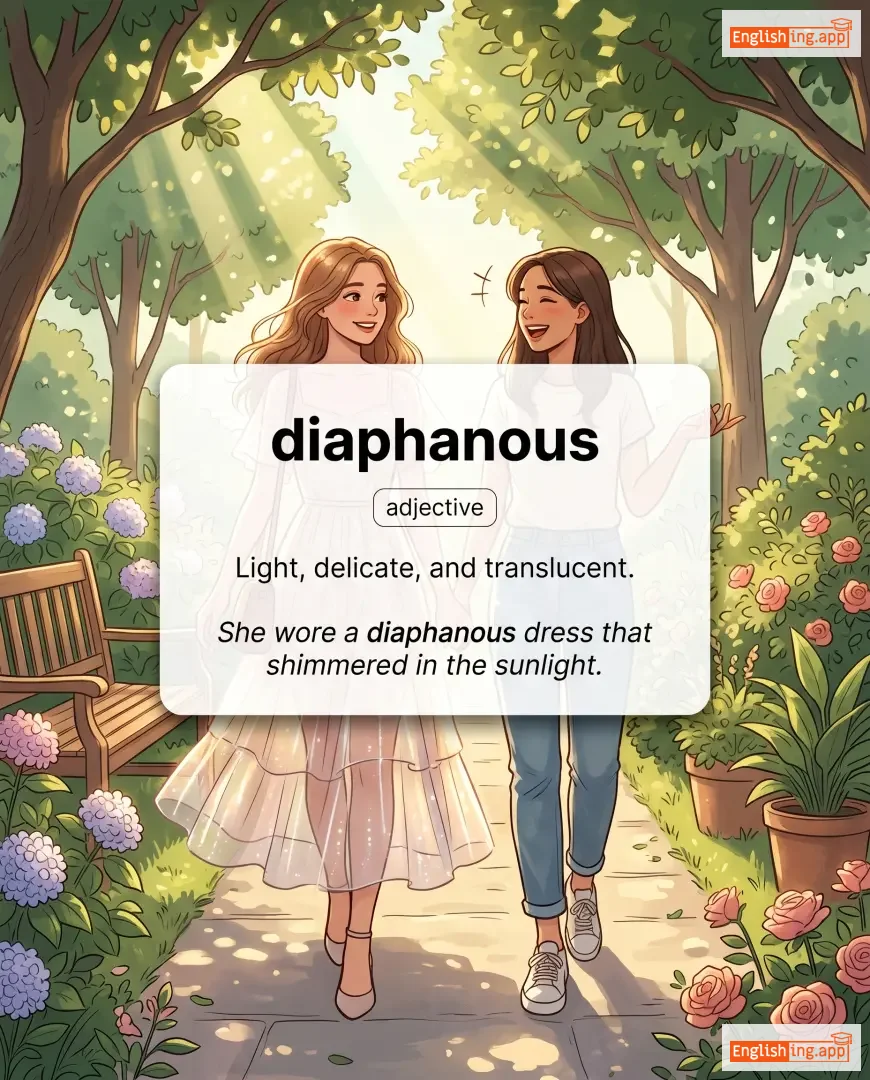
diaphanous definition card — visual illustration of the meaning
adjective
/daɪˈæfənəs/
অতিসূক্ষ্ম (otisukhmo)

Light, delicate, and translucent.

"She wore a diaphanous dress that shimmered in the sunlight."

"তিনি একটি অতিসূক্ষ্ম পোশাক পরেছিলেন যা সূর্যালোকে ঝিকমিক করছিল।" (Tini ekti otisukhmo poshak porechilen ja surjyaloke jhikmik korchhilo.)
noun
/ˈdaɪəri/
ডায়েরি (daieri)

a book in which one keeps a daily record of events and experiences

"She wrote about her day in her diary before going to bed."

"সে ঘুমাতে যাওয়ার আগে তার দিনটি তার ডায়েরিতে লিখেছিল।" (Se ghumate jawar age tar dineti tar daierite likhechhilo.)
adjective
/ˌdaɪəˈtɒmɪk/
দ্বি-পরমাণুক (dwi-paramanuk)

Consisting of two atoms.

"Oxygen is a diatomic molecule."

"অক্সিজেন একটি দ্বি-পরমাণুক অণু।" (Oksijen ekti dwi-paramanuk onu.)
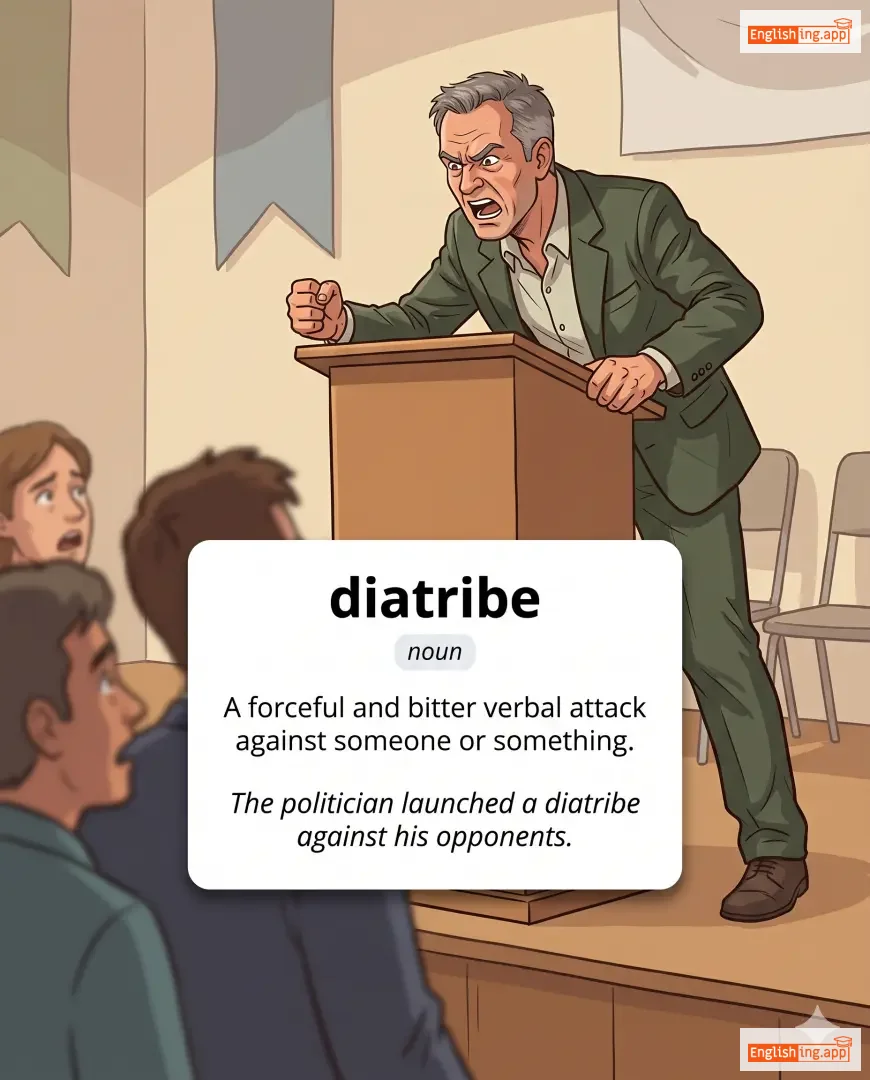
diatribe definition card — visual illustration of the meaning
noun
/ˈdaɪətraɪb/
কঠোর সমালোচনা (kothor samalochona)

A forceful and bitter verbal attack against someone or something.

"The politician launched a diatribe against his opponents."

"রাজনীতিবিদ তার প্রতিদ্বন্দ্বীদের বিরুদ্ধে কঠোর সমালোচনা চালান।" (Rajnaitibid tar protidondider biruddhe kothor samalochona chalan.)
adjective
/ˈdaɪ.si/
ঝুঁকিপূর্ণ (jhukipurno)

Risky or unpredictable; potentially dangerous.

"Investing in that company looks pretty dicey right now."

"ওই কোম্পানিতে বিনিয়োগ করা এখন বেশ ঝুঁকিপূর্ণ মনে হচ্ছে।" (Oi kompanite biniyog kora ekhono besh jhukipurno mone hochhe.)
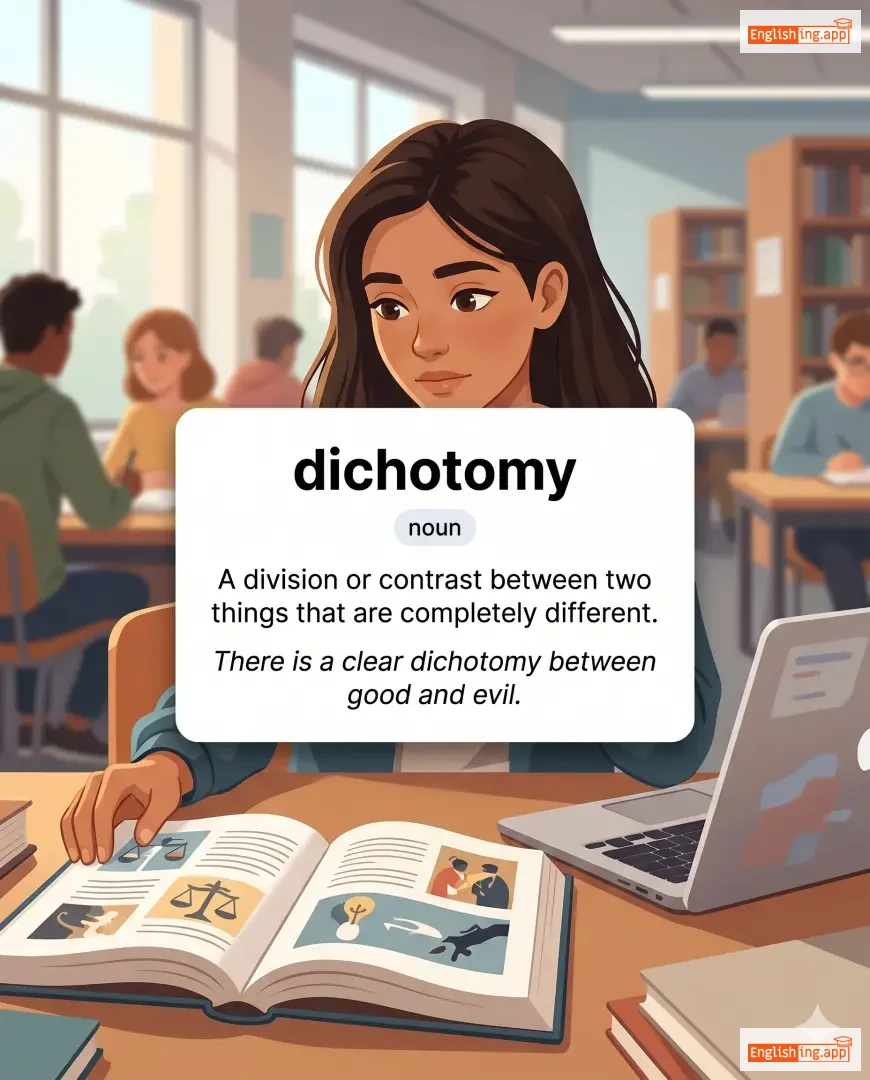
dichotomy definition card — visual illustration of the meaning
noun
/daɪˈkɒtəmi/
দ্বৈত বিভাজন (dwait bibhajan)

A division or contrast between two things that are completely different.

"There is a clear dichotomy between good and evil."

"ভাল এবং মন্দের মধ্যে একটি স্পষ্ট দ্বৈত বিভাজন রয়েছে।" (Val o mond er modhye ekti sposto dwait bibhajan royeche.)
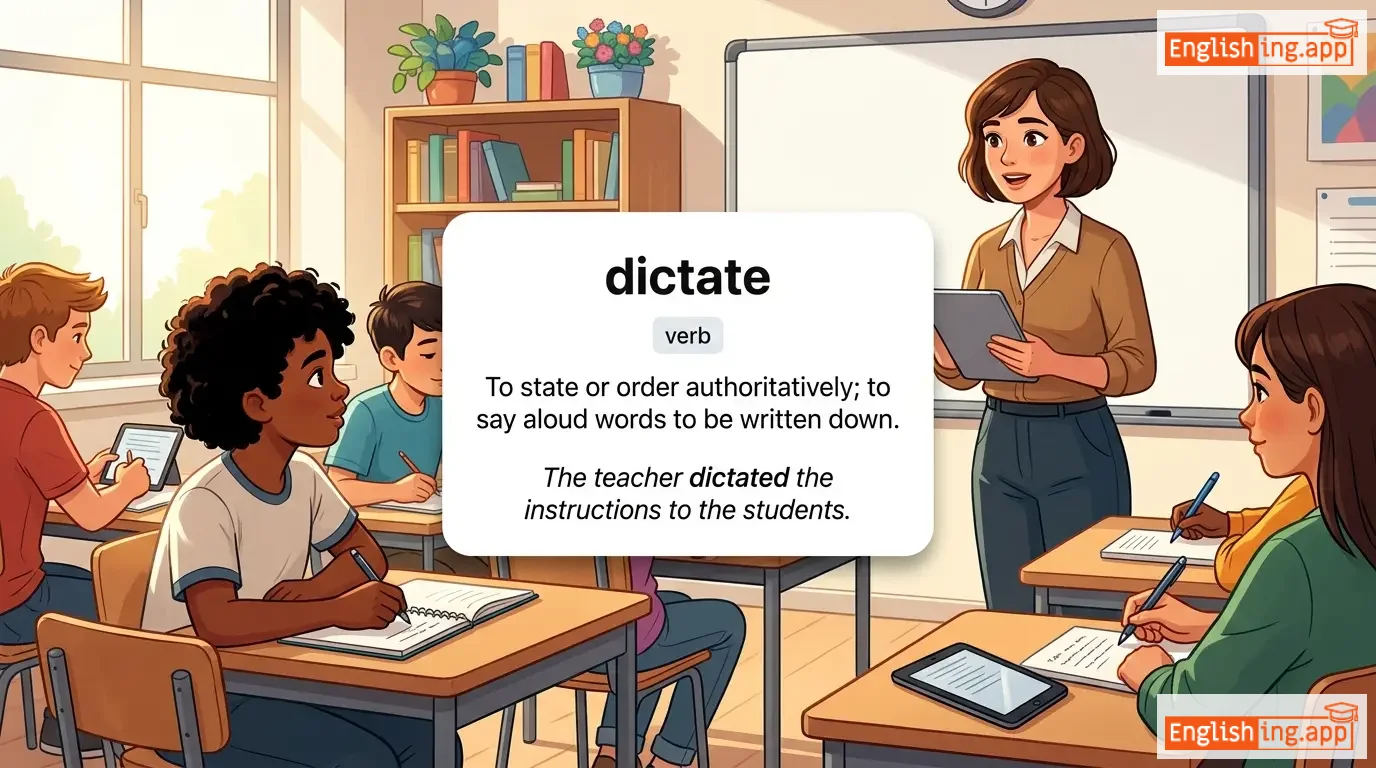
dictate definition card — visual illustration of the meaning
verb
/dɪkˈteɪt/
আদেশ করা (adesh kora)

To state or order authoritatively; to say aloud words to be written down.

"The teacher dictated the instructions to the students."

"শিক্ষক ছাত্রদেরকে নির্দেশগুলো মুখে বললেন।" (Shikkhok chatroderke nirdeshgulo mukhe bollen.)
noun
/dɪkˈteɪtə/
একনায়ক (eknayok)

a ruler with total power over a country, typically one who has obtained control by force

"The dictator ruled the country with an iron fist."

"ডিকটেটর দেশটিকে লোহার আঙ্গুল দিয়ে শাসন করেছিল।" (Diktetor deshtike lohar angul diye shashon korechhilo.)
adjective
/ˌdɪktəˈtɔːriəl/
স্বৈরাচারী (shoirachari)

Having or showing a tendency to tell people what to do in an autocratic way.

"His dictatorial style made him unpopular among colleagues."

"তার স্বৈরাচারী ধরণ তাকে সহকর্মীদের কাছে অজনপ্রিয় করে তুলেছিল।" (Tar shoirachari dhoron take shokormider kache ojonopriyo kore tulchilo.)
diction definition card — visual illustration of the meaning
noun
ˈdɪk.ʃən
উচ্চারণ বা শব্দচয়ন (uchcharon ba shabdochoyon)

The style of pronunciation and word choice in speaking or writing.

"A strong diction enhances communication skills."

"শক্তিশালী শব্দচয়ন যোগাযোগ দক্ষতা বৃদ্ধি করে।" (Shoktishali shabdochoyon jogajog dokkhota briddhi kore.)
noun
/ˈdɪkʃəˌnɛri/
অভিধান (abhidhan)

A reference book or electronic resource containing words, usually arranged alphabetically, with information about their meanings, pronunciations, etymologies, and usage.

"I looked up the word in the dictionary to understand its meaning."

"আমি শব্দের অর্থ বোঝার জন্য অভিধানে দেখেছি।" (Ami shobder ortho bojhar jonno abhidhan-e dekhechi.)
noun
/ˈdɪktəm/
প্রবাদ / নীতি (probad / niti)

A formal pronouncement, authoritative statement, or maxim.

"The judge’s dictum clarified the principle of equality before the law."

"বিচারকের ডিকটাম সমতার নীতি স্পষ্ট করেছিল।" (Bicharoker dictum somotar niti sposto korechilo.)
adjective
/daɪˈdæktɪk/
শিক্ষামূলক (shikkhamulok)

Intended to teach, often with a moral lesson.

"The novel is not just entertaining but also didactic in nature."

"উপন্যাসটি শুধু বিনোদনমূলক নয়, এটি শিক্ষামূলক প্রকৃতিরও।" (Uponnastti shudhu binodonmulok noy, eti shikkhamulok prokritiro.)
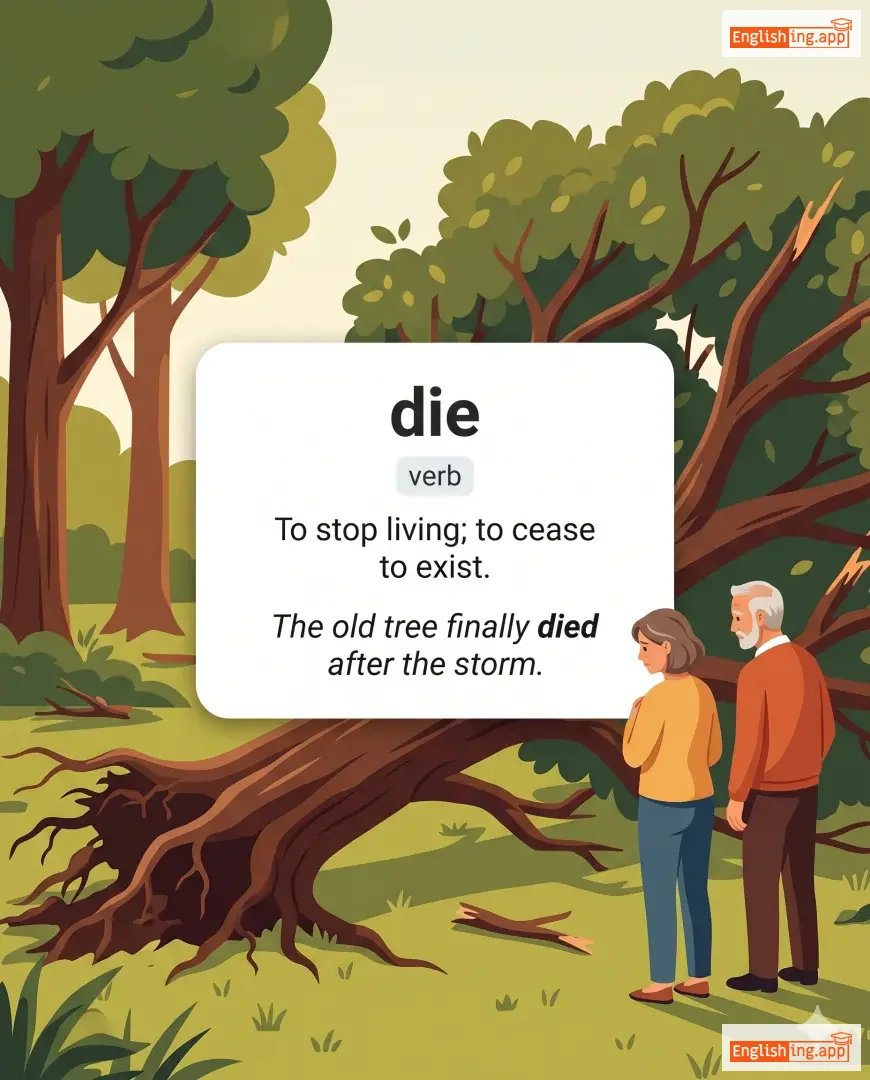
die definition card — visual illustration of the meaning
verb
/daɪ/
মারা যাওয়া (mara jaoya)

To stop living; to cease to exist.

"The old tree finally died after the storm."

"ঝড়ের পর পুরনো গাছটি অবশেষে মারা গেল।" (Jhorrer por purono gachti obosheshe mara gelo.)
noun
/ˈdaɪhɑːrd/
অটল ভক্ত (otol bhokto)

A person who strongly resists change and remains loyal to a belief or cause.

"He is a diehard fan of classic rock music."

"সে ক্লাসিক রক মিউজিকের অটল ভক্ত।" (Se classic rock music er otol bhokto.)
noun
/ˈdaɪət/
খাদ্যাভ্যাস (khadyabhass)

the kinds of food that a person usually eats

"He follows a strict vegetarian diet."

"সে একটি কঠোর নিরামিষ খাদ্যাভ্যাস অনুসরণ করে।" (Se ekti kothor niramish khadyabhass onusoron kore.)
verb
/ˈdɪfər/
ভিন্ন হওয়া (vinno howa)

to be unlike or distinct from something else

"Opinions differ on this issue."

"এই বিষয়ে মতামত ভিন্ন হয়।" (Ei bishoye motamot vinno hoy.)
noun
/ˈdɪfərəns/
পার্থক্য (parthokko)

A point or way in which things are not the same.

"There is a big difference between theory and practice."

"তত্ত্ব এবং practically মধ্যে একটি বড় পার্থক্য আছে।" (Totto ebong practically moddhe ekti boro parthokko ache.)
adjective
/ˈdɪf.ər.ənt/
ভিন্ন (bhinnno)

Not the same as another; distinct or unlike.

"Her opinion was completely different from mine."

"তার মতামত আমার থেকে সম্পূর্ণ ভিন্ন ছিল।" (Tar motamot amar theke sompurno vhinno chhilo.)
noun
/ˌdɪfəˈrɛnʃə/
পার্থক্যসূচক বৈশিষ্ট্য (parthokyosuchok boishishto)

A distinguishing characteristic that sets one thing apart from another.

"The differentia of humans is their ability to reason abstractly."

"মানুষের ডিফারেনশিয়া হলো তাদের বিমূর্তভাবে চিন্তা করার ক্ষমতা।" (Manusher differentia holo tader bimurtovabe chinta korar khomota.)
adjective
/ˌdɪfəˈrɛnʃəl/
পার্থক্যমূলক (parthokyamulok)

Relating to or showing a difference; involving a distinction.

"There is a differential treatment between the two groups."

"দুই দলের মধ্যে পার্থক্যমূলক আচরণ রয়েছে।" (Dui daler moddhe parthokyamulok acharon royeche.)