ভোকাবুলারিসমূহ

ইংরেজি শব্দের বাংলা অর্থ | English to Bangla Word Meaning Dictionary

noun
/kriˈeɪʃən/
সৃষ্টি (srishti)

The act of bringing something into existence; something that has been made or produced.

"The artist’s latest creation was admired by everyone at the gallery."

"শিল্পীর সর্বশেষ সৃষ্টি সবাই প্রশংসা করেছিল গ্যালারিতে।" (Shilpir sorboshesh srishti sobai prosongsa korechhilo gallerite.)
creations definition card — visual illustration of the meaning
noun
/kriˈeɪ.ʃənz/
সৃষ্টি (srishti)

Things that have been created, especially works of art or imaginative works.

"His creations astonished the world."

"তার সৃষ্টি বিশ্বকে বিস্মিত করেছিল।" (Tar srishti bishwoke bismito korechilo.)
adjective
/kriˈeɪtɪv/
সৃজনশীল (srijonshil)

Having the ability to produce new and original ideas or things.

"She is very creative in her writing."

"সে তার লেখায় খুব সৃজনশীল।" (Se tar lekhay khub srijonshil.)
creative exhibits definition card — visual illustration of the meaning
adjective + noun
kriˈeɪtɪv ɪɡˈzɪbɪts
সৃজনশীল প্রদর্শনী (srijonshil prodorshoni)

Artistic displays or presentations that show originality and imagination.

"The creative exhibits highlighted recycling possibilities."

"সৃজনশীল প্রদর্শনী পুনর্ব্যবহারের সম্ভাবনাকে তুলে ধরেছে।" (Srijonshil prodorshoni punorbbyobahrer shombhabonatake tule dhorechhe.)
creativity definition card — visual illustration of the meaning
noun
/ˌkriːeɪˈtɪvɪti/
সৃজনশীলতা (srijonshilota)

the ability to produce original and imaginative ideas

"Her creativity impressed everyone in the art class."

"তার সৃজনশীলতা আর্ট ক্লাসের সবাইকে মুগ্ধ করেছিল।" (Tar srijonshilota art classer sobaike mugdho korechhilo.)
noun
/krɪˈeɪtə/
সৃষ্টিকর্তা (srishthikorta)

a person who brings something into existence

"He is the creator of many successful startups."

"তিনি অনেক সফল স্টার্টআপের সৃষ্টিকর্তা।" (Tini onek sofol startup-er srishthikorta.)
noun
/ˈkriːtʃər/
প্রাণী (prani)

A living being, especially an animal.

"The forest is full of strange creatures."

"অরণ্য অদ্ভুত প্রাণীতে পরিপূর্ণ।" (Aronno oddbhut pranite poripurno.)
credence definition card — visual illustration of the meaning
noun
/ˈkriː.dəns/
বিশ্বাস, মান্যতা (bishwas, manyota)

belief in or acceptance of something as true

"The witness gave credence to the defendant's alibi."

"সাক্ষী অভিযুক্তের আলিবিকে বিশ্বাসযোগ্যতা প্রদান করলেন।" (Sakhi obhijukter alibike bishwasjoggo pradan korlen.)
noun
/krɪˈden.ʃəl/
প্রমাণপত্র, যোগ্যতার দলিল (pramanpotro, jogyotar dalil)

a qualification, achievement, or aspect of a person's background used to indicate suitability for something

"She presented her credentials before starting the new job."

"তিনি নতুন চাকরি শুরু করার আগে তার প্রমাণপত্র উপস্থাপন করলেন।" (Tini notun chakri shuru korar age tar pramanpotro uposthapon korlen.)
credibility definition card — visual illustration of the meaning
noun
/ˌkrɛd.ɪˈbɪl.ɪ.ti/
বিশ্বাসযোগ্যতা (bishwasjoggota)

the quality of being trusted and believed in

"The journalist's credibility was questioned after the report."

"প্রতিবেদনের পরে সাংবাদিকের বিশ্বাসযোগ্যতা প্রশ্নবিদ্ধ হয়।" (Protibedoner pore sangbadiker bishwasjoggota prosnobiddho hoy.)
adjective
/ˈkrɛd.ɪ.bəl/
বিশ্বাসযোগ্য, মান্য (bishwasjoggo, manyo)

able to be believed; convincing

"Her explanation was credible enough to convince the committee."

"তার ব্যাখ্যা কমিটিকে সন্তুষ্ট করার জন্য যথেষ্ট বিশ্বাসযোগ্য ছিল।" (Tar byakhya komitike santushto korar jonno jothesto bishwasjoggo chhilo.)
noun, verb
/ˈkrɛdɪt/
ঋণ, স্বীকৃতি (rin, shikriti)

As a noun: the ability to obtain goods or services before payment; recognition for an achievement. As a verb: to publicly acknowledge someone's contribution.

"She received credit for her contribution to the project."

"প্রকল্পে তার অবদানের জন্য সে স্বীকৃতি পেয়েছিল।" (Prokolpe tar obdaner jonno se shikriti peyechhilo.)
adjective
/ˈkrɛdɪtəbl/
প্রশংসনীয় (proshongshoniya)

Deserving praise or acknowledgment, though not necessarily outstanding.

"She made a creditable effort in completing the project on time."

"সে সময়মতো প্রকল্প সম্পন্ন করার জন্য প্রশংসনীয় প্রচেষ্টা করেছে।" (Se shomoymoto projokto somponno korar jonno proshongshoniya prochesta koreche.)
credo definition card — visual illustration of the meaning
noun
/ˈkriːdoʊ/
বিশ্বাসের নীতি (bishasher niti)

A statement of the beliefs or aims that guide someone's actions.

"Honesty has always been the central credo of his life."

"সততা সবসময়ই তার জীবনের মূল বিশ্বাসের নীতি ছিল।" (Shotota shobshomoyi tar jiboner mul bishasher niti chilo.)
noun
/krəˈdjuːlɪti/
সহজবিশ্বাসী স্বভাব (sohojbishashi shobhab)

A tendency to be too ready to believe that something is real or true.

"The scam succeeded because of the victim's credulity."

"প্রতারণা সফল হয়েছিল ভুক্তভোগীর অতিরিক্ত সহজবিশ্বাসী স্বভাবের কারণে।" (Protarona sofol hoyechilo bhuktovogir otirikto sohojbishashi shobhaper karone.)
adjective
/ˈkrɛdʒʊləs/
অতিরিক্ত বিশ্বাসপ্রবণ (otirikto bishashprabon)

Having or showing too great a readiness to believe things.

"The credulous child believed every story she heard."

"অতিরিক্ত বিশ্বাসপ্রবণ শিশু প্রতিটি গল্পকেই সত্যি মনে করেছিল।" (Otirikto bishashprabon shishu protiti golpokei sotyi mone korechilo.)
noun
/kriːd/
বিশ্বাস, নীতি (bishash, niti)

A system of religious or spiritual beliefs or a guiding principle.

"Freedom of speech is part of his personal creed."

"মত প্রকাশের স্বাধীনতা তার ব্যক্তিগত নীতির একটি অংশ।" (Moto prokash er shadhinota tar bektigoto nitir ekti angsho.)
noun
/kriːk/
ছোট নদী (chhoto nodi)

a small stream or narrow river

"We went fishing by the creek near our house."

"আমরা আমাদের বাড়ির কাছে ক্রিকের ধারে মাছ ধরতে গিয়েছিলাম।" (Amra amader barir kache criker dhare mach dhorte giyechhilam.)
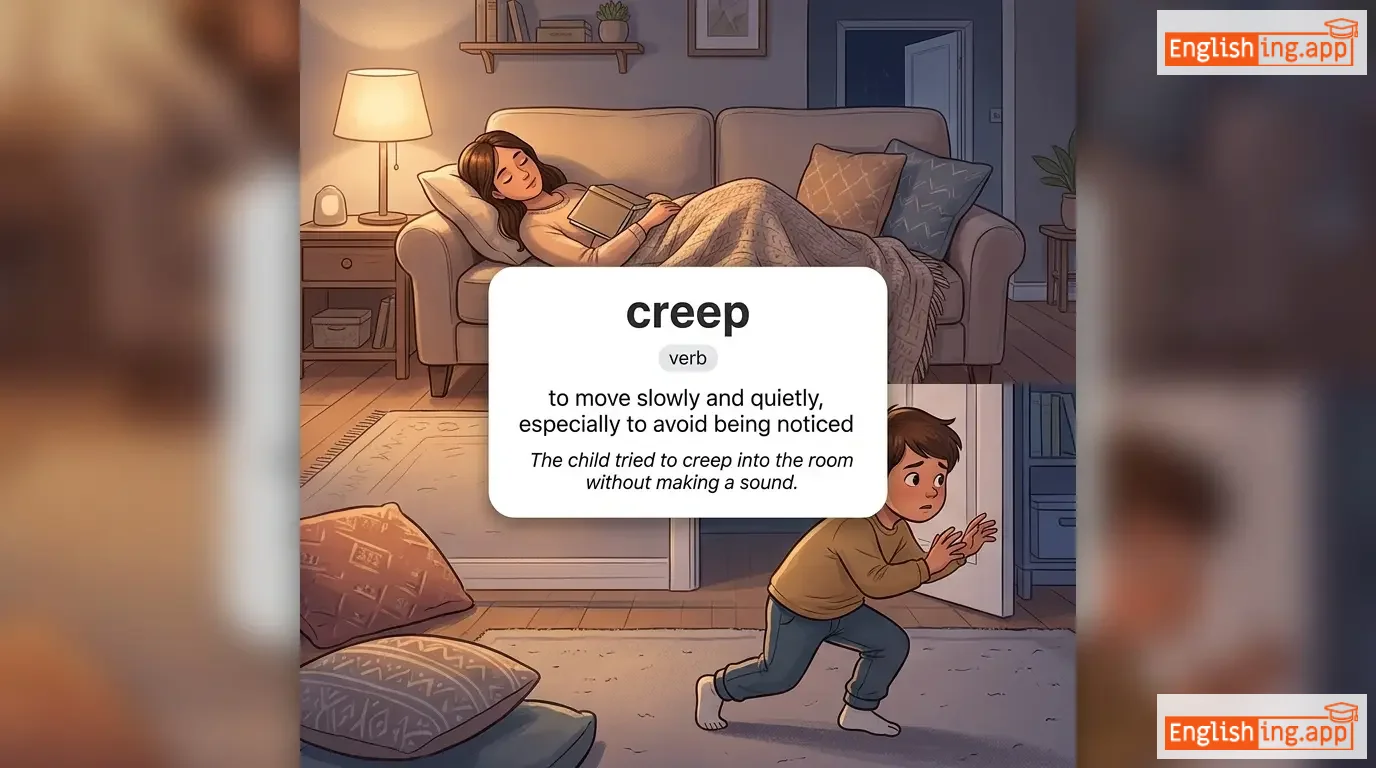
creep definition card — visual illustration of the meaning
verb
/kriːp/
গোপনে চলা (gopone chola)

to move slowly and quietly, especially to avoid being noticed

"The child tried to creep into the room without making a sound."

"শিশুটি শব্দ না করে ঘরে ঢোকার চেষ্টা করছিল।" (Shishuti shobdo na kore ghore dhokar cheshta korchhilo.)
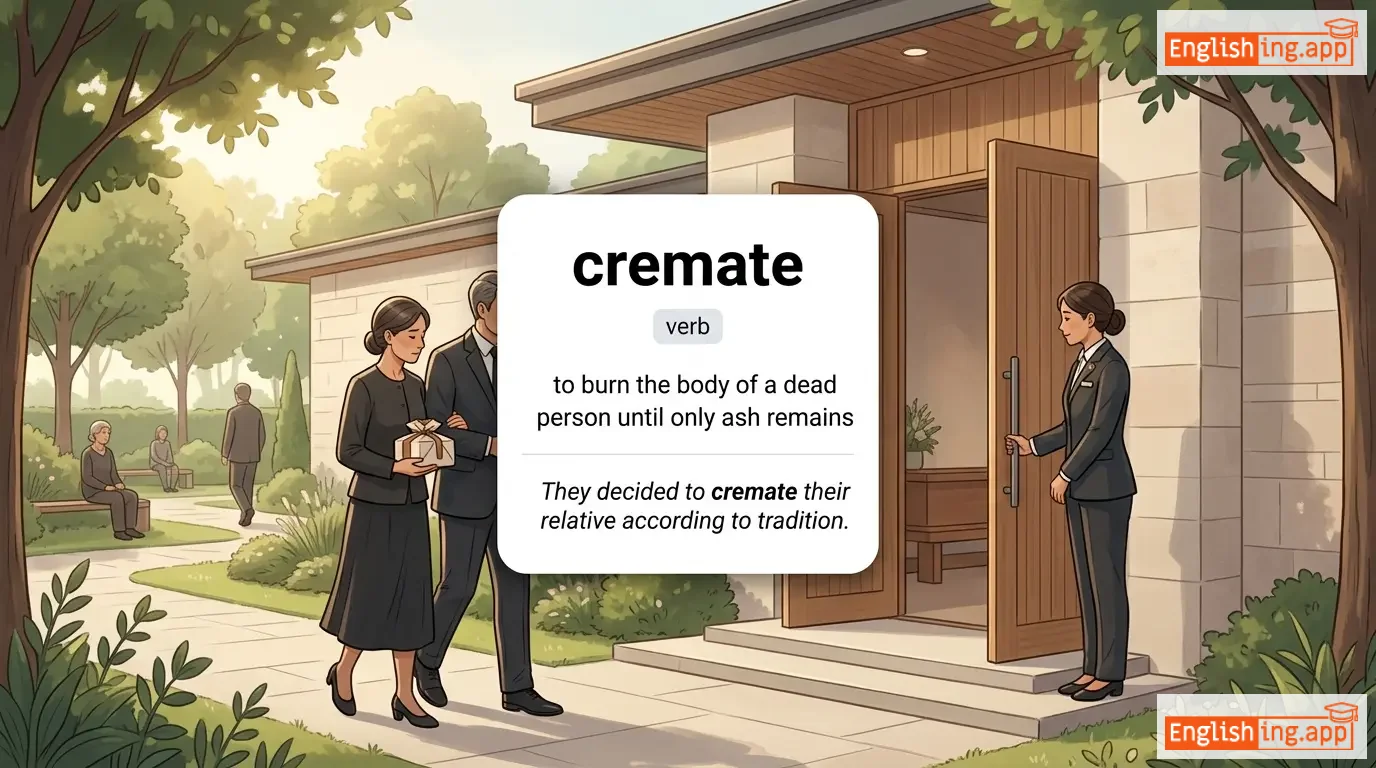
cremate definition card — visual illustration of the meaning
verb
/ˈkriː.meɪt/
দাহ করা (dah kora)

to burn the body of a dead person until only ash remains

"They decided to cremate their relative according to tradition."

"তারা প্রথা অনুযায়ী তাদের আত্মীয়কে দাহ করার সিদ্ধান্ত নিল।" (Tara protha onujayi tader atniyke dah korar siddhanto nilo.)
noun
/ˈkrɛməˌtɔːri/
শ্মশানঘর (shmoshan ghor)

a place where dead bodies are cremated

"The crematory was located near the cemetery."

"শ্মশানঘরটি কবরস্থানের কাছে ছিল।" (Shmoshanghorti koborsthaner kache chhilo.)
adjective
/krɪˈpʌskjʊlər/
গোধূলি সম্পর্কিত (godhuli shomporkito)

relating to twilight or active during twilight

"Bats are crepuscular animals, most active at dawn and dusk."

"বাদুড় হলো গোধূলি সময়ের প্রাণী, যা ভোর এবং সন্ধ্যায় সবচেয়ে সক্রিয়।" (Badur holo godhuli shomoyer prani, ja vor ebong sondhay shobcheye sokriyo.)
noun
/krəˈʃɛndoʊ/
শব্দের ক্রমবর্ধমানতা (shobder kromboddhomanota)

a gradual increase in loudness or intensity, especially in music

"The orchestra built to a powerful crescendo before the finale."

"অর্কেস্ট্রা ফাইনালের আগে একটি শক্তিশালী ক্রেশেন্ডোতে পৌঁছেছিল।" (Orkestra finaler age ekti shoktishali crescendo te pouchhechilo.)
noun
/krɛst/
শীর্ষবিন্দু (shirsobindu)

the top of a hill, wave, or mountain; a symbol of identity

"The hikers reached the crest of the mountain at sunrise."

"হাইকাররা সূর্যোদয়ের সময় পাহাড়ের চূড়ায় পৌঁছেছিল।" (Haikar ra surjodoyer somoy paharer churay pouchhechilo.)
adjective
/ˈkrɛstˌfɔːlən/
হতাশ (hotash)

sad and disappointed

"He looked crestfallen after hearing the bad news."

"খারাপ খবর শোনার পর সে হতাশ দেখাচ্ছিল।" (Kharap khobor shonar por se hotash dekhachhilo.)
noun
/krəˈvæs/
গভীর ফাটল (gobhir fatal)

a deep crack in a glacier or the earth’s surface

"The climbers carefully crossed the icy crevasse."

"আরোহীরা সাবধানে বরফের ফাটল পার হয়েছিল।" (Arohira sabdhane borof er fatal par hoyechhilo.)
noun
/ˈkrɛvɪs/
চিড় (chir)

a narrow crack or opening, especially in a rock or wall

"The lizard hid in a crevice between the stones."

"টিকটিকি পাথরের মাঝের ফাঁকে লুকিয়েছিল।" (Tiktiki pathorer majher fake lukiyechhilo.)
👨‍✈️

crew (ক্রু)

noun
/kruː/
কর্মীদল (kormidol)

A group of people working together, especially on a ship, aircraft, or project.

"The ship's crew worked tirelessly during the storm."

"ঝড়ের সময় জাহাজের কর্মীদল ক্লান্তিহীনভাবে কাজ করেছে।" (Jhorer somoy jahajer kormidol klantihinbhabe kaj koreche.)
noun
/ˈkrɪk.ɪt/
ঝিঁঝিঁপোকা (jhinjhi poka)

a jumping insect that makes a chirping sound by rubbing its wings together

"We could hear crickets chirping in the evening."

"আমরা সন্ধ্যায় ঝিঁঝিঁপোকার ডাক শুনতে পেলাম।" (amra sondhyay jhinjhi pokar dak shunte pelam.)
noun
/kraɪm/
অপরাধ (oporadh)

An illegal act punishable by law.

"The police are investigating the crime."

"পুলিশ অপরাধটি তদন্ত করছে।" (Polish oporadh ti tothonto korche.)
noun, adjective
/ˈkrɪmɪnəl/
অপরাধী (oporadhi)

A person who has committed a crime; relating to crime

"The police arrested a dangerous criminal last night."

"পুলিশ গত রাতে এক বিপজ্জনক অপরাধীকে গ্রেপ্তার করেছে।" (Polish got rate ek bipodjonok oporadhike greptar koreche.)
adjective
/ˈkrɪm.zən/
গাঢ় লাল (krimson)

a deep purplish-red color

"The crimson sunset painted the sky with beautiful shades."

"গাঢ় লাল সূর্যাস্ত আকাশকে সুন্দর ছায়ায় রাঙিয়ে দিয়েছিল।" (gadho lal surjashto akashke shundor chayay rangiye diyechilo.)
verb
/krɪndʒ/
সঙ্কুচিত হওয়া (sonkuchito howa)

To shrink back in fear, embarrassment, or discomfort.

"She cringed when she remembered her mistake."

"সে যখন তার ভুলের কথা মনে করল, তখন সঙ্কুচিত হলো।" (Se jokhon tar bhuler kotha mone korlo, tokhon sonkuchito holo.)
verb
/ˈkrɪŋ.kəl/
ভাঁজ পড়া (bhaj pora)

To form small creases or wrinkles.

"She crinkled her nose at the strange smell."

"সে অদ্ভুত গন্ধে তার নাক কুঁচকাল।" (Se oddhuto gondhe tar nak kuchkalo.)
crisis definition card — visual illustration of the meaning
noun
/ˈkraɪsɪs/
সংকট (songkot)

A time of intense difficulty or danger

"The company faced a financial crisis during the recession."

"মন্দার সময় কোম্পানি আর্থিক সংকটের মুখোমুখি হয়েছিল।" (Mondar somoy company arthik songkoter mukhomukhi hoyechilo.)
noun
/kraɪˈtɪəriə/
মানদণ্ড (mandondo)

Standards or principles by which something is judged or decided.

"The candidates were evaluated based on strict criteria."

"প্রার্থীদের কঠোর মানদণ্ডের ভিত্তিতে মূল্যায়ন করা হয়েছিল।" (Prarthider kothor mandonder vitti te mulloyan kora hoyechhilo.)
noun
/kraɪˈtɪəriən/
মানদণ্ড (mandondo)

A standard or rule used to make a judgment or decision.

"Honesty is an important criterion for this job."

"এই কাজের জন্য সততা একটি গুরুত্বপূর্ণ মানদণ্ড।" (Ei kajer jonno sotota ekti guruttopurno mandondo.)
noun
/ˈkrɪtɪk/
সমালোচক (somalochok)

A person who judges the merits of something, especially art or literature

"The film critic praised the director's latest movie."

"চলচ্চিত্র সমালোচক পরিচালক এর সর্বশেষ ছবিকে প্রশংসা করেছেন।" (Cholocchitro somalochok porichalok er sorbosesh chobike proshongsha korechen.)
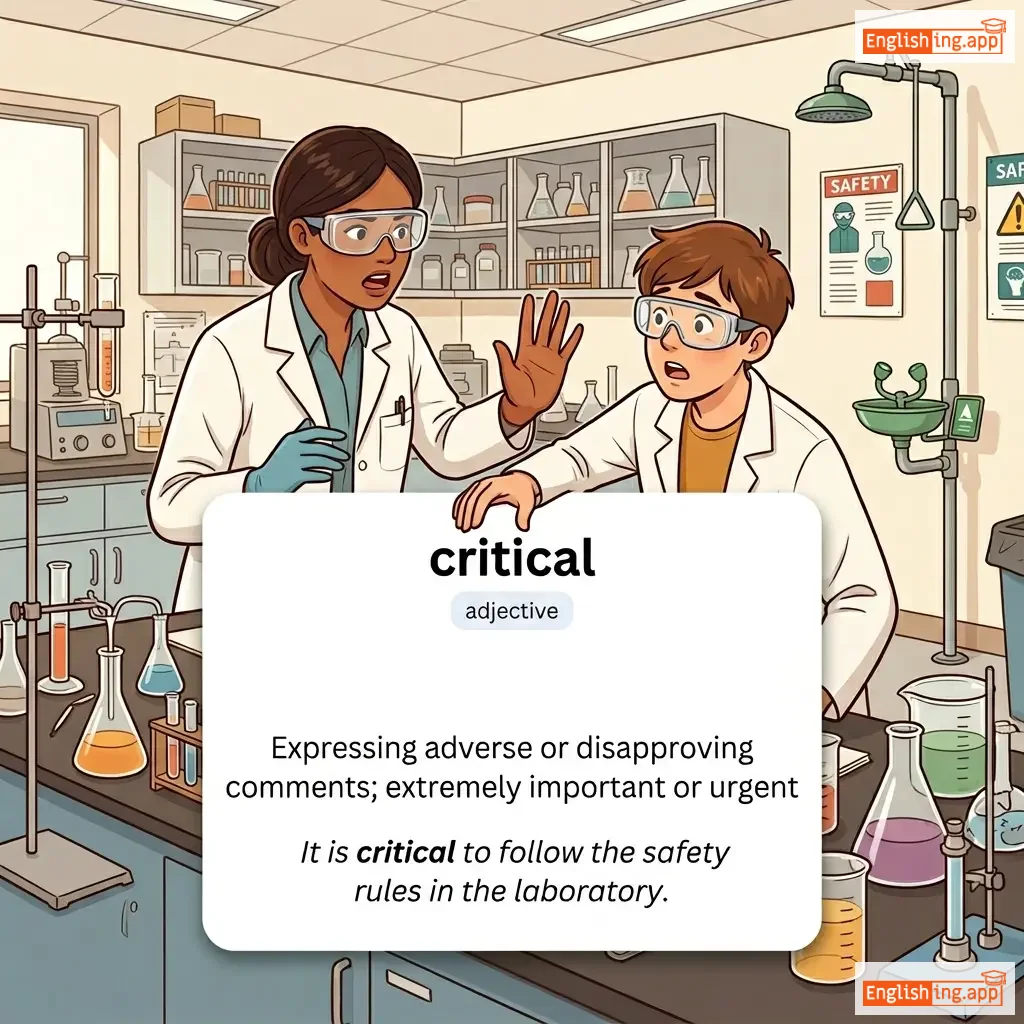
critical definition card — visual illustration of the meaning
adjective
/ˈkrɪtɪkəl/
গুরুত্বপূর্ণ / সংকটজনক (guruttopurno / songkotjonok)

Expressing adverse or disapproving comments; extremely important or urgent

"It is critical to follow the safety rules in the laboratory."

"ল্যাবরেটরিতে নিরাপত্তা নিয়ম মেনে চলা অত্যন্ত গুরুত্বপূর্ণ।" (Laboratoryte nirapotta niyom mene chola otonto guruttopurno.)
critical thinking definition card — visual illustration of the meaning
noun
ˈkrɪt.ɪ.kəl ˈθɪŋ.kɪŋ
যুক্তিপূর্ণ বিশ্লেষণ, মূল্যায়নমূলক চিন্তাভাবনা, যৌক্তিক সিদ্ধান্ত গ্রহণ (jukti purno bishlekhon, mullayon mulok chinta bhavona, jouktik siddhanto grohon)

The objective analysis and evaluation of an issue in order to form a judgment.

"Critical thinking helps in making informed decisions."

"ক্রিটিকাল থিংকিং সচেতন সিদ্ধান্ত গ্রহণে সহায়তা করে।" (Critical thinking shocheton siddhanto grohone shahayyota kore.)
adverb
/ˈkrɪtɪkli/
গুরুতরভাবে (gurutorbabe)

in a way that expresses disapproval or a very serious, important way

"He was critically injured in the accident."

"সে দুর্ঘটনায় গুরুতর আহত হয়েছিল।" (Se durghotnay gurutor ahoto hoyechhilo.)
noun
/ˈkrɪtɪˌsɪzəm/
সমালোচনা (somalochona)

The expression of disapproval or judgment of the merits of something

"The new policy has faced a lot of criticism from the public."

"নতুন নীতি জনসাধারণের কাছ থেকে অনেক সমালোচনার সম্মুখীন হয়েছে।" (Notun niti jonsadharoner kach theke onek somalochanar sommukhin hoyeche.)
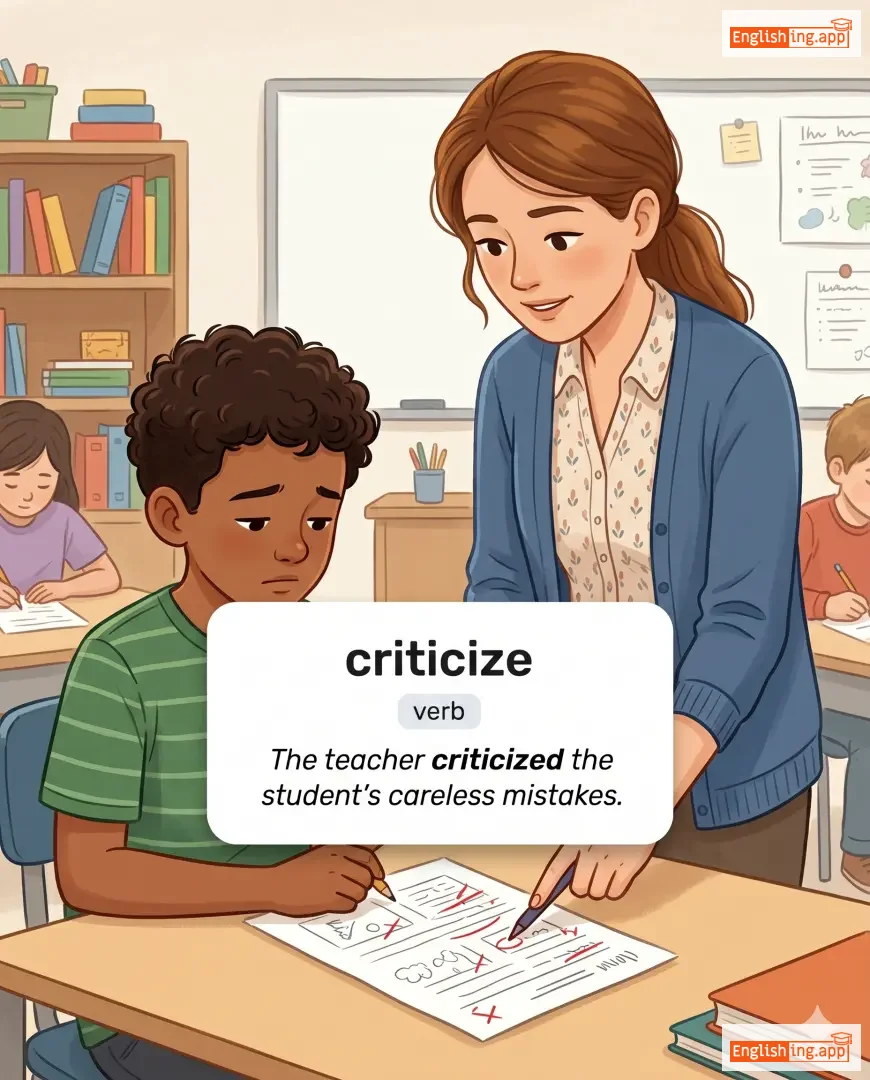
criticize definition card — visual illustration of the meaning
verb
/ˈkrɪtɪsaɪz/
সমালোচনা করা (somalochona kora)

to express disapproval of someone or something by pointing out faults or shortcomings

"The teacher criticized the student's careless mistakes."

"শিক্ষক ছাত্রের অসাবধানী ভুলের সমালোচনা করেছিলেন।" (Shikkhok chatrer osabdhani bhuler somalochona korechilen.)
noun/verb
/krɪˈtiːk/
সমালোচনা (somalochona)

A detailed analysis and assessment of something, especially a literary, philosophical, or political theory; to evaluate critically.

"The professor asked the students to critique each other's essays."

"অধ্যাপক শিক্ষার্থীদের একে অপরের প্রবন্ধ সমালোচনা করতে বললেন।" (Odhapok shikharthider eke operer probondho somalochona korte bollen.)
noun/verb
/kroʊˈʃeɪ/
কাঁথার কাজ (kanthar kaj)

Needlework made by interlocking loops of thread with a hooked needle; the act of making such items.

"She learned how to crochet a scarf for winter."

"সে শীতের জন্য একটি স্কার্ফ ক্রোশে করা শিখেছিল।" (Se shiter jonno ekti scarf crochet kora shikhechilo.)
noun
/krɑk pɑt/
অলস পাত্র (krok pot)

an electric cooking pot that cooks food slowly at low temperatures

"I put the chicken and vegetables in the crock pot before going to work."

"কাজে যাওয়ার আগে আমি মুরগি এবং সবজি ক্রক পটে রাখলাম।" (kaje jaoyar age ami murgi ebong shobji krok pote rakhlam)
noun
/ˈkrɒkəri/
পাত্রাদি (patradi)

Dishes, plates, cups, and other items made of earthenware or china.

"The hotel provided clean crockery for the guests."

"হোটেল অতিথিদের জন্য পরিষ্কার পাত্রাদি সরবরাহ করেছিল।" (Hotel otithider jonno porishkar patradi sorborah korechilo.)
noun
/ˈkrɒk.ə.daɪl/
কুমির (kumir)

a large reptile with a long mouth and sharp teeth that lives in rivers and lakes in hot countries

"The crocodile slowly moved through the murky water."

"কুমিরটি ধীরে ধীরে ঘোলা পানির মধ্য দিয়ে চলে গেল।" (kumirṭi dhire dhire ghola panir modhyo diye chole gelo)
noun
/kroʊn/
বৃদ্ধা নারী (briddha nari)

An old woman, often one who is thin and ugly, sometimes associated with witch-like qualities.

"The children were scared by the story of the wicked crone in the forest."

"শিশুরা বনে থাকা দুষ্টু বৃদ্ধার গল্পে ভয় পেয়েছিল।" (Shishura bone thaka dustu briddhar golpe voy peyechilo.)
noun
/ˈkroʊniˌɪzəm/
পক্ষপাতিত্ব (pokkhopatitto)

The practice of favoring friends or associates, especially in political appointments or business deals.

"The company was accused of cronyism in hiring practices."

"কোম্পানিটি নিয়োগ প্রক্রিয়ায় পক্ষপাতিত্বের অভিযোগে অভিযুক্ত হয়েছিল।" (Companyti niyog prokriyay pokkhopatitter obhijoge obhijukto hoyechilo.)