ভোকাবুলারিসমূহ

ইংরেজি শব্দের বাংলা অর্থ | English to Bangla Word Meaning Dictionary

verb
/bɪˈsiːdʒ/
অবরোধ করা (oborodh kora)

to surround a place with armed forces to capture it; to overwhelm with requests or attention

"The city was besieged by enemy troops."

"শহরটি শত্রু সৈন্যদের দ্বারা অবরোধ করা হয়েছিল।" (Shohorti shotru soinikder dara oborodh kora hoyechilo.)
verb
/bɪˈsmɪər/
মলিন করা (molin kora)

to smear or cover with a sticky or dirty substance; to soil

"His clothes were besmeared with mud."

"তার জামাকাপড় কাদায় মলিন হয়ে গিয়েছিল।" (Tar jamakapod kaday molin hoye giyechilo.)
verb
/bɪˈsmɜːrtʃ/
কলঙ্কিত করা (kolonkito kora)

to damage someone's reputation; to make dirty or stained

"He tried to besmirch her good name with false rumors."

"সে মিথ্যা গুজব দিয়ে তার ভালো নাম কলঙ্কিত করার চেষ্টা করেছিল।" (Se mithya gujob diye tar bhalo nam kolonkito korar cheshta korechilo.)
adjective
/bɪˈsɒtɪd/
মুগ্ধ, প্রেমে অন্ধ (mugdho, preme ondho)

strongly infatuated or obsessed with someone or something

"He was completely besotted with her charm."

"সে সম্পূর্ণভাবে তার আকর্ষণে মুগ্ধ ছিল।" (Se sompurno vabe tar akorshone mugdho chilo.)
adjective
/bɛst/
সেরা (sera)

Of the highest quality, excellence, or standing.

"She is the best student in the class."

"সে ক্লাসের সেরা ছাত্রী।" (se klaser sera chatri.)
best effort definition card — visual illustration of the meaning
phrase
bɛst ˈɛf.ərt
সর্বোচ্চ প্রচেষ্টা (shorbochcho procheshta)

The maximum amount of effort or energy that someone can give.

"He gave his best effort to complete the task on time."

"সে সময়মতো কাজ সম্পন্ন করার জন্য সর্বোচ্চ প্রচেষ্টা দিয়েছে।" (She shoymotho kaj shompnno korar jonno shorbochcho procheshta diyechhe.)
adjective
/ˈbiːstiəl/
পাশবিক (pashbik)

Relating to beasts; showing savagery, brutality, or lacking human sensibility.

"The prisoners were treated in a bestial manner."

"বন্দিদের পাশবিকভাবে আচরণ করা হয়েছিল।" (Bondider pashbikbhabe acharon kora hoyechhilo.)
verb
/bɪˈstoʊ/
প্রদান করা (prodan kora)

To give or present something as a gift or honor.

"The king bestowed honors upon the brave soldiers."

"রাজা সাহসী সৈন্যদের সম্মান প্রদান করেছিলেন।" (Raja sahosi soinyoder somman prodan korechhilen.)
verb
/bɪˈstruː/
বিক্ষিপ্ত করা (bikshipto kora)

To scatter or cover something with objects or substances.

"The ground was bestrewn with autumn leaves."

"মাটি শরতের পাতায় ছড়িয়ে ছিল।" (Mati shoroter patay chhorie chhilo.)
verb
/bɪˈstraɪd/
আধিপত্য বিস্তার করা (adhipotto bistar kora)

To sit or stand astride something; to dominate over.

"The statue bestrides the city square."

"ভাস্কর্যটি শহরের চত্বরে আধিপত্য বিস্তার করে দাঁড়িয়ে আছে।" (Bhaskarjoti shohorer chottore adhipotto bistar kore dariye ache.)
bet definition card — visual illustration of the meaning
verb, noun
/bɛt/
পণ ধরা / বাজি ধরা (pon dhora / baji dhora)

to risk money or something valuable on the result of a future event

"He likes to bet on football matches."

"সে ফুটবল ম্যাচে বাজি ধরতে পছন্দ করে।" (Se football matche baji dhorte pochhondo kore.)
verb
/bɪˈteɪk/
গমন করা বা আশ্রয় নেওয়া (gomon kora ba ashroy neowa)

to go or resort to a place or course of action, especially as a response; to apply oneself

"After dinner, she betook herself to her room to read."

"রাতের খাবারের পর সে পড়ার জন্য নিজের ঘরে গেল।" (rater khabarer por se porar jonne nijer ghore gelo)
noun
/ˌbeɪt ˈnwɑːr/
অভিশাপ (ovishap)

A person or thing that one particularly dislikes or fears.

"Grammar has always been his bete noire."

"ব্যাকরণ সবসময়ই তার অভিশাপ ছিল।" (Byakoron sobsomoyi tar ovishap chhilo.)
noun
/ˈbiː.təl nʌt/
সুপারি (shupari)

seed of the areca palm tree, often chewed as a stimulant

"Betel-nut is commonly chewed in many South Asian countries."

"দক্ষিণ এশিয়ার অনেক দেশে সুপারি সাধারণত চিবানো হয়।" (dokkhin eshiyar onek deshe shupari shadharnoto chibano hoy)
verb
/bɪˈθɪŋk/
স্মরণ করা (smoron kora)

to cause oneself to consider or remember something

"He bethought himself of the promise he had made."

"সে নিজেকে তার দেওয়া প্রতিশ্রুতির কথা স্মরণ করল।" (Se nijeke tar deowa protishrutiler kotha smoron korlo.)
verb
/bɪˈtaɪd/
ঘটা (ghota)

to happen or occur, usually of something that befalls someone

"Woe betide anyone who breaks the rules."

"যে কেউ নিয়ম ভাঙবে তার সর্বনাশ ঘটবে।" (Je keu niyom bhangbe tar sorbonash ghotbe.)
adverb
/bɪˈtaɪmz/
আগেভাগে (agebhage)

early; in good time

"She rose betimes to finish her work."

"সে তার কাজ শেষ করতে আগেভাগে উঠল।" (Se tar kaj shesh korte agebhage uthlo.)
verb
/bɪˈtəʊkən/
সংকেত দেওয়া (songket deowa)

to be a sign or indication of something

"Dark clouds betoken an approaching storm."

"কালো মেঘ একটি আসন্ন ঝড়ের ইঙ্গিত দেয়।" (Kalo megh ekti asonna jhorer ingit deoy.)
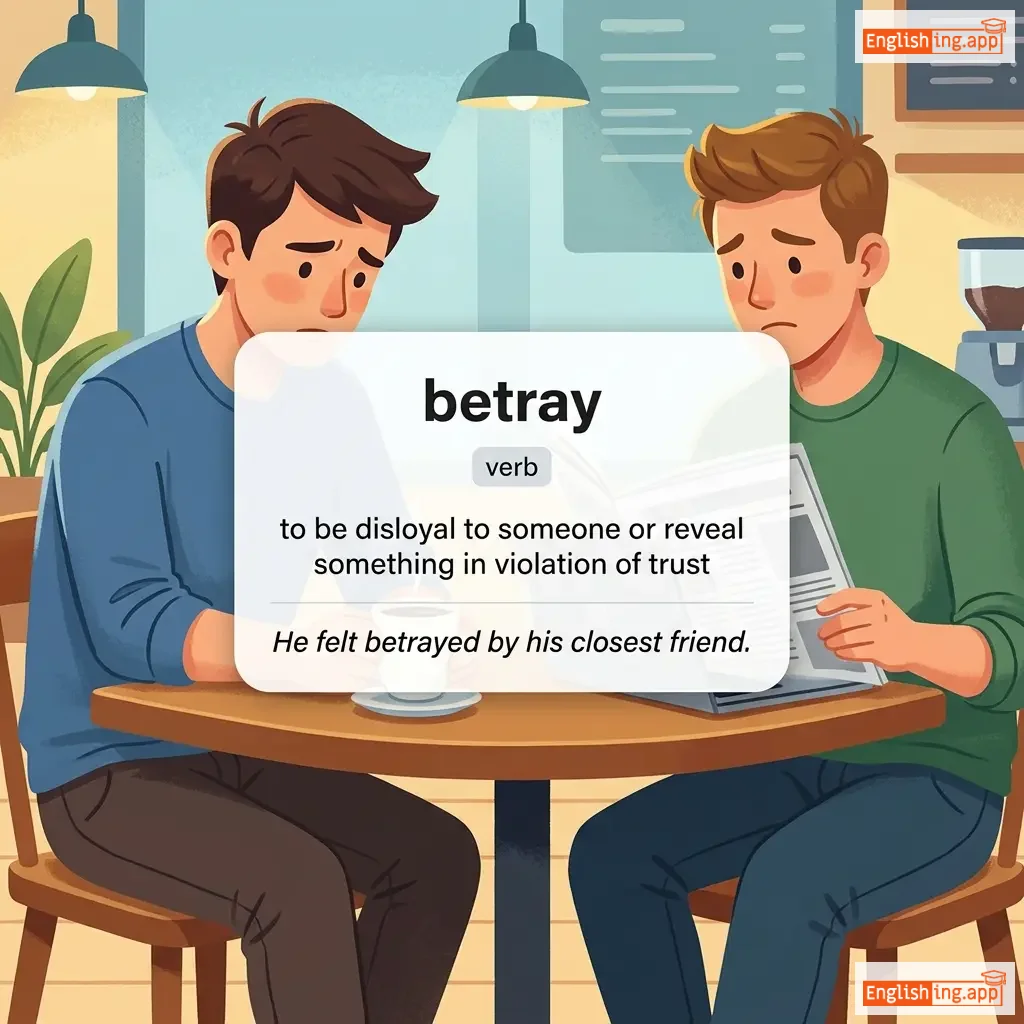
betray definition card — visual illustration of the meaning
verb
/bɪˈtreɪ/
বিশ্বাসঘাতকতা করা (bishashghatokota kora)

to be disloyal to someone or reveal something in violation of trust

"He felt betrayed by his closest friend."

"সে তার সবচেয়ে ঘনিষ্ঠ বন্ধুর দ্বারা প্রতারিত অনুভব করল।" (Se tar sobcheye ghonishto bondhur dara protarit onubhob korlo.)
noun
/bɪˈtreɪəl/
বিশ্বাসঘাতকতা; বেঈমানি; (bishshashghatokota, beimani)

the action of betraying one's country, group, or person; disloyalty

"His betrayal of their friendship hurt her deeply."

"তাদের বন্ধুত্বের সাথে তার বিশ্বাসঘাতকতা তাকে গভীরভাবে আঘাত করেছিল।" (tader bondhuttyer sathe tar bishshashghatokota take gobhirbhabey aghat korechilo)
noun
/bɪˈtreɪər/
বিশ্বাসঘাতক; প্রবঞ্চক; (bishshashghatak, probonchok)

a person who betrays someone or something; one who is disloyal

"The betrayer was exposed and faced severe consequences."

"বিশ্বাসঘাতকের পরিচয় প্রকাশ পেয়েছিল এবং তাকে কঠোর পরিণতি ভোগ করতে হয়েছিল।" (bishshashghatker porichoy prokash peyechilo ebong take kothor porinoti bhog kortey hoyechilo)
verb
/bɪˈtroʊð/
বাগদান করা (bagdan kora)

To formally promise to marry someone; to engage.

"He was betrothed to the princess at a young age."

"তিনি অল্প বয়সেই রাজকন্যার সাথে বাগদান করেছিলেন।" (Tini olpo boyoshei rajkonnar sathe bagdan korechilen.)
noun
/bɪˈtroʊðəl/
বাগদান (bagdan)

The formal engagement to be married.

"Their betrothal was announced to the whole village."

"তাদের বাগদান পুরো গ্রামে ঘোষণা করা হয়েছিল।" (Tader bagdan puro grame ghoshona kora hoyechhilo.)
adjective, noun
/bɪˈtroʊðd/
বাগদত্ত (bagdatto)

Engaged to be married; a person who is engaged.

"She introduced him as her betrothed."

"সে তাকে তার বাগদত্ত হিসেবে পরিচয় করিয়ে দিল।" (Se take tar bagdatto hisebe porichoy koriye dilo.)
adjective, adverb, verb
/ˈbɛtər/
ভালো (valo)

of a more excellent or effective type or quality; to surpass or improve

"He felt better after taking the medicine."

"ওষুধ খাওয়ার পর সে ভালো বোধ করলো।" (Oshudh khawar por se valo bodh korlo.)
preposition, adverb
/bɪˈtwiːn/
মধ্যে (moddhe)

at, into, or across the space separating two objects or regions

"She sat between her two friends."

"সে তার দুই বন্ধুর মধ্যে বসেছিল।" (Se tar dui bondhur moddhe boshechilo.)
noun, verb
/ˈbɛvəl/
তির্যক প্রান্ত (tirjok pranto)

A sloping edge or surface; to cut or shape an edge at an angle.

"The carpenter beveled the edges of the table."

"কারিগর টেবিলের প্রান্তগুলো তির্যকভাবে কাটলেন।" (Karigor tebiler prantogulo tirjokbhabe katlen.)
noun
/ˈbɛvərɪdʒ/
পানীয় (paniyo)

a drink, especially one other than water

"I ordered a cold beverage to cool down on a hot day."

"আমি একটি ঠান্ডা পানীয় অর্ডার করেছি গরম দিনে ঠান্ডা হতে।" (Ami ekti thanda paniyo order korechi gorom dine thanda hote.)
noun
/ˈbɛvi/
ঝাঁক, দল (jhank, dol)

A large group of people or things of a particular kind.

"A bevy of swans floated on the lake."

"এক ঝাঁক রাজহাঁস হ্রদে ভেসে বেড়াচ্ছিল।" (Ek jhank rajhans hrade bhese berachhilo.)
verb
/bɪˈweɪl/
শোক প্রকাশ করা (shok prokash kora)

to express deep sorrow or regret over something; to mourn openly

"She bewailed the loss of her childhood home."

"সে তার শৈশবের বাড়ি হারানোর জন্য শোক প্রকাশ করেছিল।" (se tar shoishober bari haranor jonno shok prokash korechhilo)
verb
/bɪˈwɛər/
সতর্ক হওয়া (sotorko howa)

to be cautious or alert about a potential danger or problem

"Beware of the dog near the gate."

"গেটের কাছে কুকুর থেকে সাবধান থাকুন।" (Geter kache kukur theke sabdhan thakun.)
verb
/bɪˈwɪldər/
হতবুদ্ধি করা (hotobuddhi kora)

to cause someone to be confused or puzzled

"The complex instructions bewildered the students."

"জটিল নির্দেশাবলী ছাত্রদের হতবুদ্ধি করে দিয়েছিল।" (Jotil nirdeshaboli chatrader hotobuddhi kore diyechhilo.)
verb
/bɪˈwɪtʃ/
মন্ত্রমুগ্ধ করা (montrumugdhho kora)

to enchant or fascinate someone as if by magic

"The dancer's performance bewitched the audience."

"নৃত্যশিল্পীর পরিবেশনা দর্শকদের মুগ্ধ করেছিল।" (Nrityoshilpir poribeshona dorshokder mugdhho korechhilo.)
adjective
/bɪˈwɪtʃɪŋ/
মুগ্ধকর (mugdhokor)

charming, enchanting, or captivating in a magical or irresistible way

"She wore a bewitching smile that captivated everyone in the room."

"সে এমন এক মুগ্ধকর হাসি দিয়েছিল যা ঘরের সবাইকে আকৃষ্ট করেছিল।" (Se emon ek mugdhokor hasi diyechhilo ja ghorer sobaike akrishto korechhilo.)
preposition, adverb
/bɪˈjɒnd/
পারের বাইরে (parer baire)

at or to the further side of; more than

"The village lies beyond the river."

"গ্রামটি নদীর ওপারে অবস্থিত।" (Gramti nodir opere obosthito.)
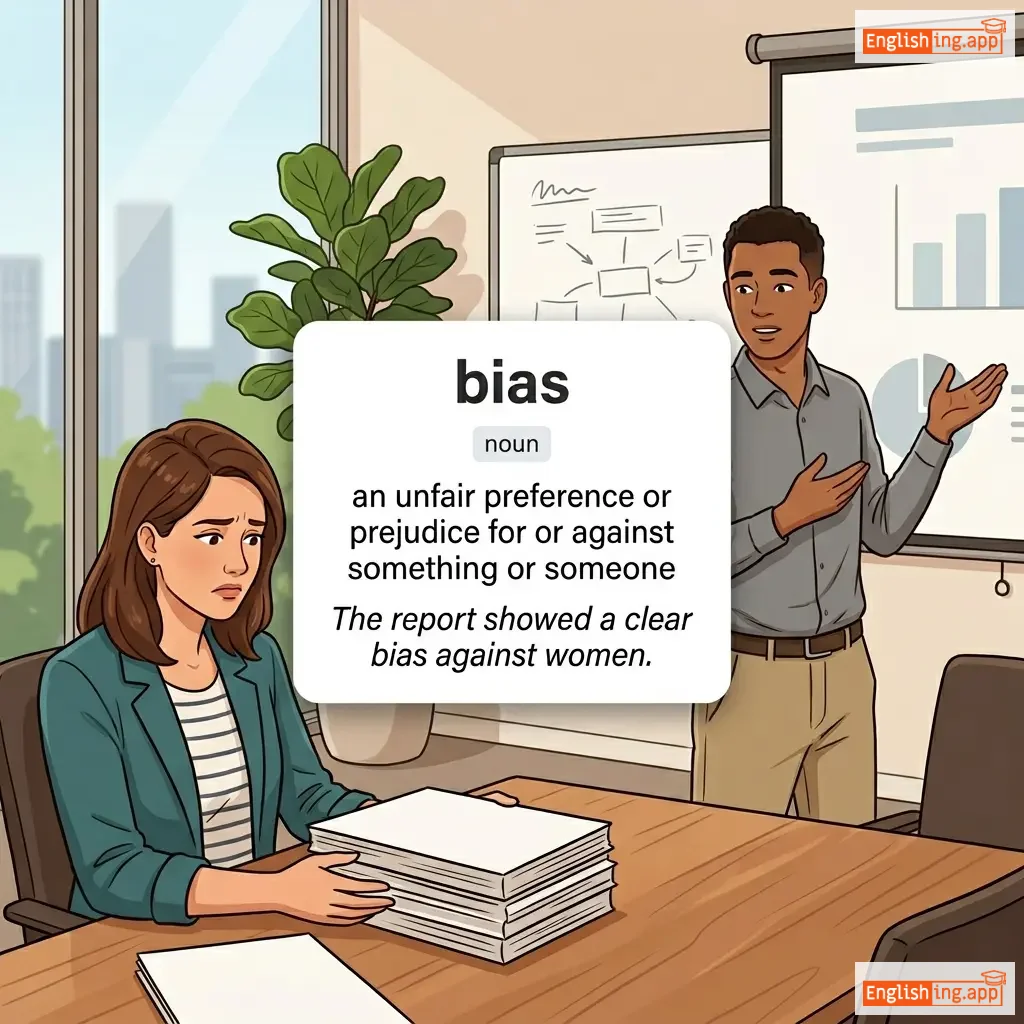
bias definition card — visual illustration of the meaning
noun
/ˈbaɪəs/
পক্ষপাত (pokkhopat)

an unfair preference or prejudice for or against something or someone

"The report showed a clear bias against women."

"প্রতিবেদনটি মহিলাদের বিরুদ্ধে স্পষ্ট পক্ষপাত দেখিয়েছিল।" (Protibedonti mohilader biruddhe spostho pokkhopat dekhiyechhilo.)
adjective
/ˈbaɪəst/
পক্ষপাতদুষ্ট (pokkhopatdushto)

having or showing an unfair tendency to favor one side or opinion

"The judge must not be biased in the case."

"বিচারককে মামলায় পক্ষপাতদুষ্ট হওয়া উচিত নয়।" (Bicharokke mamlay pokkhopatdushto howa uchit noy.)
noun
/ˈbaɪbəl/
বাইবেল (baibel)

the Christian scriptures consisting of the Old and New Testaments; also used for any authoritative book

"She reads the Bible every morning."

"সে প্রতিদিন সকালে বাইবেল পড়ে।" (Se protidin sokale baibel pore.)
noun
/ˌbɪbliˈɒɡrəfi/
তথ্যসূত্র তালিকা (totthosutra talika)

a list of books, articles, or other sources used or referred to in scholarly work

"The report includes a detailed bibliography at the end."

"রিপোর্টের শেষে একটি বিস্তারিত তথ্যসূত্র তালিকা অন্তর্ভুক্ত রয়েছে।" (Reporter sheshe ekti bistarito totthosutra talika ontorbhukto royechhe.)
noun
/ˌbɪbliəʊˈmeɪniə/
বই-প্রীতি (boi-priti)

An extreme obsession with collecting or possessing books.

"His bibliomania led him to fill every room with books."

"তার বই-প্রীতি তাকে প্রতিটি ঘর বইয়ে ভরিয়ে তুলেছিল।" (tar boi-priti take protiti ghor boiye voriye tulechilo.)
noun
/ˈbɪbliəfaɪl/
বইপ্রেমী (boipremi)

A person who loves or collects books.

"She is a true bibliophile who spends weekends at old bookstores."

"সে একজন প্রকৃত বইপ্রেমী, যিনি সাপ্তাহিক ছুটিতে পুরনো বইয়ের দোকানে সময় কাটান।" (se ekjon prokrito boipremi, jini saptahik chutite purono boir dokane somoy katan.)
adjective
/ˈbɪbjələs/
মদ্যপ্রীত (modyopriti)

Excessively fond of drinking alcohol.

"His bibulous habits worried his family."

"তার মদ্যপ্রীতির অভ্যাস তার পরিবারকে চিন্তিত করেছিল।" (tar modyopritir obhyas tar poribar ke chintito korechilo.)
adjective
/baɪˈkæmərəl/
দ্বিকক্ষবিশিষ্ট (dwikokkhobishishto)

Having two branches or chambers, especially in a legislature.

"The United States has a bicameral legislature consisting of the Senate and the House of Representatives."

"যুক্তরাষ্ট্রের একটি দ্বিকক্ষবিশিষ্ট আইনসভা রয়েছে, যা সিনেট এবং প্রতিনিধি পরিষদ নিয়ে গঠিত।" (juktorastrer ekti dwikokkhobishishto ainsova royeche, ja Senate ebong protiphidhi parishod niye gothito.)
verb
/ˈbɪkər/
তুচ্ছ ঝগড়া করা (tuchcho jhogra kora)

To argue or quarrel about trivial matters.

"The children began to bicker over the last piece of cake."

"শিশুরা শেষ টুকরো কেক নিয়ে তর্ক করতে শুরু করল।" (shishura shesh tukro cake niye torko korte shuru korlo.)
noun
/ˈbaɪsɪkl/
সাইকেল (saikel)

a vehicle with two wheels that you ride by pedaling

"He rides his bicycle to school every day."

"সে প্রতিদিন তার সাইকেলে করে স্কুলে যায়।" (Se protidin tar saikele kore schoole jay.)
verb
/bɪd/
প্রস্তাব (prostab)

to offer a certain amount of money for something, especially at an auction

"She bid $200 for the antique vase."

"সে প্রাচীন ফুলদানি কেনার জন্য ২০০ ডলার প্রস্তাব করেছিল।" (Se prachin phuldani kenar jonyo 200 dollar prostab korechilo.)
verb
/baɪd/
অপেক্ষা করা (opekkha kora)

to wait patiently for the right time or opportunity

"He decided to bide his time before making a move."

"সে পদক্ষেপ নেওয়ার আগে সময়ের জন্য অপেক্ষা করার সিদ্ধান্ত নিয়েছিল।" (Se podokkhep newar age somoyer jonyo opekkha korar siddhanto niechilo.)
adjective
/baɪˈɛniəl/
দ্বিবার্ষিক (dwibarshik)

happening every two years

"The biennial festival attracts thousands of visitors."

"দ্বিবার্ষিক উৎসব হাজার হাজার দর্শনার্থী আকর্ষণ করে।" (Dwibarshik utsob hajar hajar dorshonarthi akorshon kore.)
noun
/bɪər/
শববাহী কাঠামো (shobbahi kathamo)

a frame or stand on which a coffin or body is placed before burial or cremation

"The coffin was placed on the bier during the funeral service."

"অন্ত্যেষ্টিক্রিয়া অনুষ্ঠানে কফিনটি শববাহী কাঠামোর উপর রাখা হয়েছিল।" (Ontestikriya onusthane kofinti shobbahi kathamor upor rakha hoyechilo.)
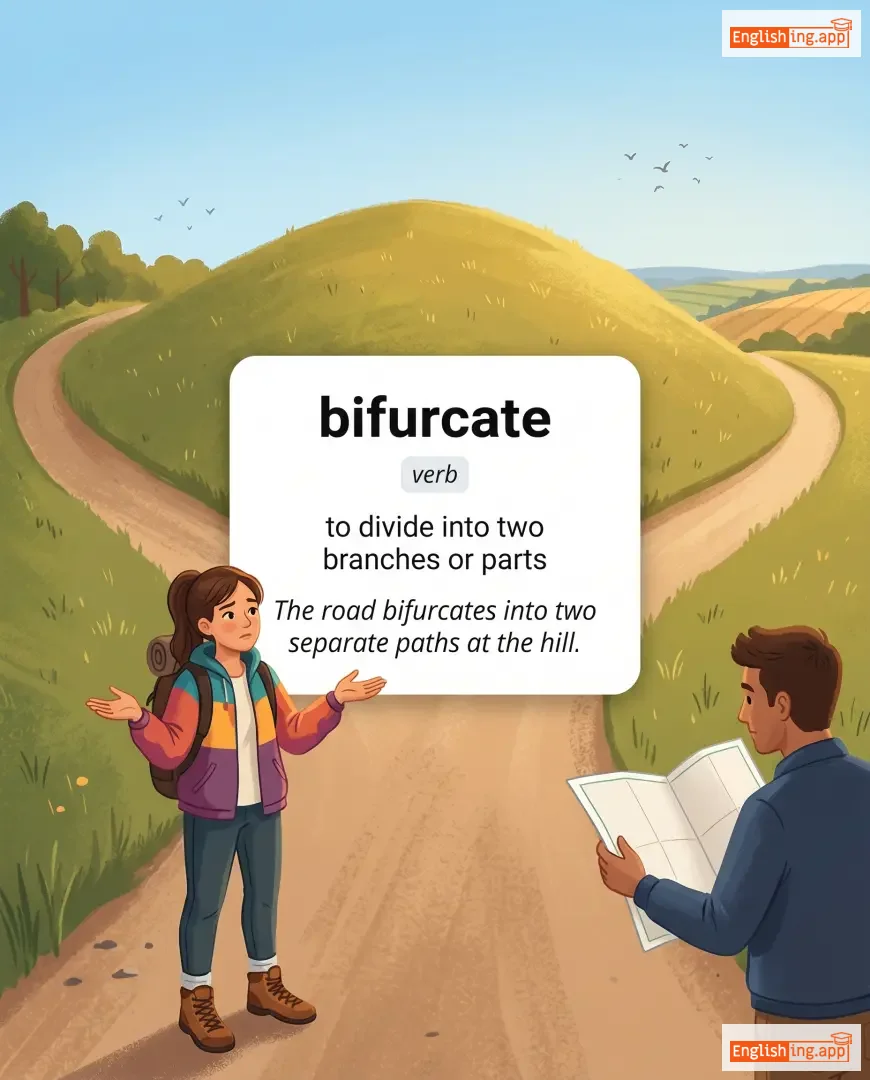
bifurcate definition card — visual illustration of the meaning
verb
/ˈbaɪfərˌkeɪt/
দুই শাখায় বিভক্ত হওয়া (dui shakhae bivokto howa)

to divide into two branches or parts

"The road bifurcates into two separate paths at the hill."

"রাস্তা পাহাড়ের কাছে দুই ভাগে বিভক্ত হয়েছে।" (Rasta paharer kache dui bhage bivokto hoyeche.)