ভোকাবুলারিসমূহ

ইংরেজি শব্দের বাংলা অর্থ | English to Bangla Word Meaning Dictionary

noun
/bɪˈliːvər/
বিশ্বাসী (bishashi)

a person who believes in something, especially a religious faith, idea, or principle

"She is a strong believer in hard work and honesty."

"সে কঠোর পরিশ্রম ও সততার প্রতি দৃঢ় বিশ্বাসী।" (se kothor porishrom o shototar proti drirho bishashi)
verb
/bɪˈlɪtl/
হেয় করা (heya kora)

To make someone or something seem less important or less valuable.

"He often belittled his coworkers to feel superior."

"সে প্রায়ই নিজেকে শ্রেষ্ঠ দেখাতে সহকর্মীদের হেয় করত।" (Se prayoi nije shreshtho dekhate shokormider heya korto.)
noun
/bɛl/
ঘণ্টা (ghonta)

a hollow object, usually made of metal, that makes a ringing sound when struck

"The school bell rang loudly at noon."

"দুপুরে স্কুলের ঘণ্টা জোরে বেজে উঠল।" (dupure schooler ghonta jore beje uthlo.)
noun
/bel ˈæp.əl/
জামরুল (jamrul)

a tropical fruit with a crisp texture and sweet taste, scientifically known as Syzygium malaccense

"The bell apple tree produces beautiful red fruits that are popular in tropical regions."

"জামরুল গাছ সুন্দর লাল ফল উৎপাদন করে যা গ্রীষ্মমন্ডলীয় অঞ্চলে জনপ্রিয়।" (Jamrul gach shundor lal fol utpadon kore ja grishshomondoliya onchale jonopriyo.)
noun
/bɛl/
সুন্দরী মহিলা (shundori mohila)

A beautiful woman, especially the most attractive woman at a gathering.

"She was the belle of the ball that evening."

"সেই সন্ধ্যায় তিনি ছিলেন অনুষ্ঠানের সবচেয়ে সুন্দরী মহিলা।" (Sei sondhyae tini chhilen onusthaner shobcheye shundori mohila.)
adjective
/ˈbɛlɪˌkoʊs/
যুদ্ধপ্রবণ (juddhoprobonno)

Showing a tendency to argue or fight; aggressive.

"His bellicose attitude often got him into unnecessary conflicts."

"তার যুদ্ধপ্রবণ মনোভাব তাকে প্রায়ই অপ্রয়োজনীয় বিরোধে ফেলত।" (Tar juddhoprobonno monobhav take prayoi oproyojoniyo birodhe felt.)
belligerent definition card — visual illustration of the meaning
adjective
/bəˈlɪdʒərənt/
আক্রমণাত্মক (akromanatmak)

Hostile and aggressive; eager to fight.

"She became belligerent when the waiter got her order wrong."

"ওয়েটার তার অর্ডার ভুল করলে সে আক্রমণাত্মক হয়ে উঠল।" (Waiter tar order bhul korle se akromanatmak hoye uthlo.)
noun
/ˈbɛlˌwɛðər/
অগ্রদূত (ogrudut)

A person or thing that leads or indicates a trend.

"The company is seen as a bellwether of the technology industry."

"কোম্পানিটি প্রযুক্তি শিল্পের অগ্রদূত হিসেবে দেখা হয়।" (KompaniTi projukti shilper ogrudut hisebe dekha hoy.)
noun
/ˈbɛli/
পেট (pet)

The front part of the human body below the chest; stomach or abdomen.

"He rubbed his belly after the big meal."

"বড় খাবারের পর সে তার পেটে হাত বুলালো।" (boro khabarer por se tar pete hat bulalo.)
verb
/bɪˈlɒŋ/
অন্তর্ভুক্ত হওয়া (ontorbhukto howa)

to be in the right place or to be a member of a group

"She felt she truly belonged to the team."

"সে অনুভব করেছিল যে সে সত্যিই দলের অংশ।" (se onubhob korechilo je se sotyi daler angsho.)
adjective
/bɪˈlʌvɪd/
প্রিয় (priyo)

dearly loved, highly regarded

"She was the beloved queen of the kingdom."

"তিনি রাজ্যের প্রিয় রানী ছিলেন।" (Tini rajyer priyo rani chhilen.)
preposition
/bɪˈloʊ/
নিচে (niche)

At a lower level or position than something else.

"The basement is below the ground floor."

"বেজমেন্টটি মাটির তলার নিচে।" (bezhmenti matir talar niche.)
noun
/bɛlt/
বেল্ট (belt)

a strip of material worn around the waist to support clothes or as decoration

"He tightened his belt before leaving for work."

"কাজে যাওয়ার আগে সে তার বেল্ট আঁট করল।" (kaje jawar age se tar belt at korlo.)
verb
/bɪˈmoʊn/
শোক করা (shok kora)

To express discontent or sorrow over something.

"Critics bemoaned the lack of diversity in the film."

"সমালোচকরা চলচ্চিত্রে বৈচিত্র্যের অভাব নিয়ে শোক প্রকাশ করেছেন।" (Somalochokra cholochitre boichittrer obhab niye shok prokash korechen.)
verb
/bɪˈmjuːz/
বিভ্রান্ত করা (bibhranto kora)

To confuse or puzzle someone.

"The complex instructions bemused the new employees."

"জটিল নির্দেশনা নতুন কর্মচারীদের বিভ্রান্ত করেছিল।" (Jotil nirdeshona notun kormochariDer bibhranto korechilo.)
adjective
/bɪˈmjuːzd/
বিস্মিত, বিভ্রান্ত (bismito, bibhranto)

confused, puzzled, or lost in thought

"She looked bemused when he asked the strange question."

"সে অদ্ভুত প্রশ্ন করার সময় বিভ্রান্ত দেখাচ্ছিল।" (Se oddhbhut proshno korar somoy bibhranto dekhachhilo.)
noun
/bɛntʃ/
বেঞ্চ (bench)

a long seat for several people, typically made of wood or stone

"They sat on the park bench watching the sunset."

"তারা পার্কের বেঞ্চে বসে সূর্যাস্ত দেখছিল।" (tara parker benche bose surjasto dekhchilo.)
benchmark definition card — visual illustration of the meaning
noun
/ˈbɛntʃmɑːrk/
মানদণ্ড (mandondo)

a standard or point of reference against which things are compared or assessed

"The company set a new benchmark for customer service."

"কোম্পানিটি গ্রাহক সেবার জন্য একটি নতুন মানদণ্ড স্থাপন করেছিল।" (Kompaniṭi grahok sebar jonno ekti notun mandondo sthapan korechhilo.)
benchmarking definition card — visual illustration of the meaning
noun
/ˈbɛntʃˌmɑːr.kɪŋ/
মানদণ্ড নির্ধারণ (mandondo nirddharon)

Comparing with a specific industry or competitor to set standards

"Companies use benchmarking to assess their performance."

"কোম্পানিগুলো তাদের কার্যক্ষমতা মূল্যায়নে মানদণ্ড নির্ধারণ কৌশল ব্যবহার করে।" (Kompanigulo tader karyokkhomota mulyayane mandondo nirddharon koushal byabohar kore.)
verb
/bɛnd/
বাঁকানো / নত হওয়া (bankano / noto howa)

to curve something or cause it to change shape; to move the body or part of it downward or forward

"She had to bend down to pick up the coin."

"সে কয়েনটি তুলতে নত হতে হয়েছিল।" (Se koyenti tulte noto hote hoyechilo.)
adjective
/ˈbɛndi/
নমনীয় (namoniyo)

Easily curved or flexible.

"The bendy straw made it easier to drink from the cup."

"বেন্ডি স্ট্রো কাপ থেকে পান করা সহজ করে তুলেছিল।" (bendi stro kap theke pan kora sohoj kore tulchhilo.)
preposition
/bɪˈniːθ/
নিচে / তলায় (niche / tolai)

in or to a lower position than something; under

"The cat was hiding beneath the bed."

"বিড়ালটি খাটের নিচে লুকিয়েছিল।" (Biralti khater niche lukiechhilo.)
noun
/ˌbɛnɪˈdɪkʃən/
আশীর্বাদ (ashirbad)

a blessing or expression of good wishes, often at the end of a religious service

"The priest gave a final benediction before the congregation left."

"সমাবেশ শেষ হওয়ার আগে পুরোহিত শেষ আশীর্বাদ দিলেন।" (Somabesh shesh howar age purohit shesh ashirbad dilen.)
noun
/ˈbɛnɪˌfæktər/
দানকারী, উপকারকারী (danokari, upokarkari)

a person who gives money or help to a cause or individual

"The school received a large donation from an anonymous benefactor."

"বিদ্যালয় একজন অজ্ঞাত দাতার কাছ থেকে বড় অনুদান পেয়েছে।" (Biddaloy ekjon oggyato datar kach theke boro onudan peyechhe.)
noun
/ˈbɛnɪfɪs/
গির্জার পদ (girjar podo)

a permanent church appointment for which property and income are provided

"The bishop appointed him to a wealthy benefice."

"বিশপ তাকে একটি ধনী গির্জার পদে নিয়োগ করলেন।" (Bishop take ekti dhoni girjar pode niyog korlen.)
beneficent definition card — visual illustration of the meaning
adjective
/bəˈnɛfɪsənt/
উপকারকারী, দয়ালু (upokarkari, doyaloo)

generous or doing good

"The beneficent leader donated funds to build a hospital."

"উপকারকারী নেতা একটি হাসপাতাল তৈরির জন্য অর্থ দান করলেন।" (Upokarkari neta ekti hospital toirir jonno ortho dan korlen.)
beneficial definition card — visual illustration of the meaning
adjective
/ˌbɛnɪˈfɪʃəl/
উপকারী (upokari)

producing good or helpful results; favorable or advantageous

"Regular exercise is beneficial for your health."

"নিয়মিত ব্যায়াম আপনার স্বাস্থ্যের জন্য উপকারী।" (Niyomito byayam apnar shasther jonno upokari.)
noun
/ˌbɛnɪˈfɪʃəri/
লাভগ্রাহী (labhgrahi)

a person who receives something, especially money or property, from a will or insurance policy

"She is the sole beneficiary of her father’s estate."

"তিনি তার বাবার সম্পত্তির একমাত্র লাভগ্রাহী।" (Tini tar babar sompottir ekmatro labhgrahi.)
noun/verb
/ˈbɛnɪfɪt/
সুবিধা / উপকার (subidha / upokar)

an advantage, profit, or good effect; to receive help or an advantage

"Employees benefit from the company’s health insurance program."

"কর্মচারীরা কোম্পানির স্বাস্থ্য বীমা প্রোগ্রাম থেকে উপকৃত হয়।" (Kormochari ra companyr shastho bima program theke upokrito hoy.)
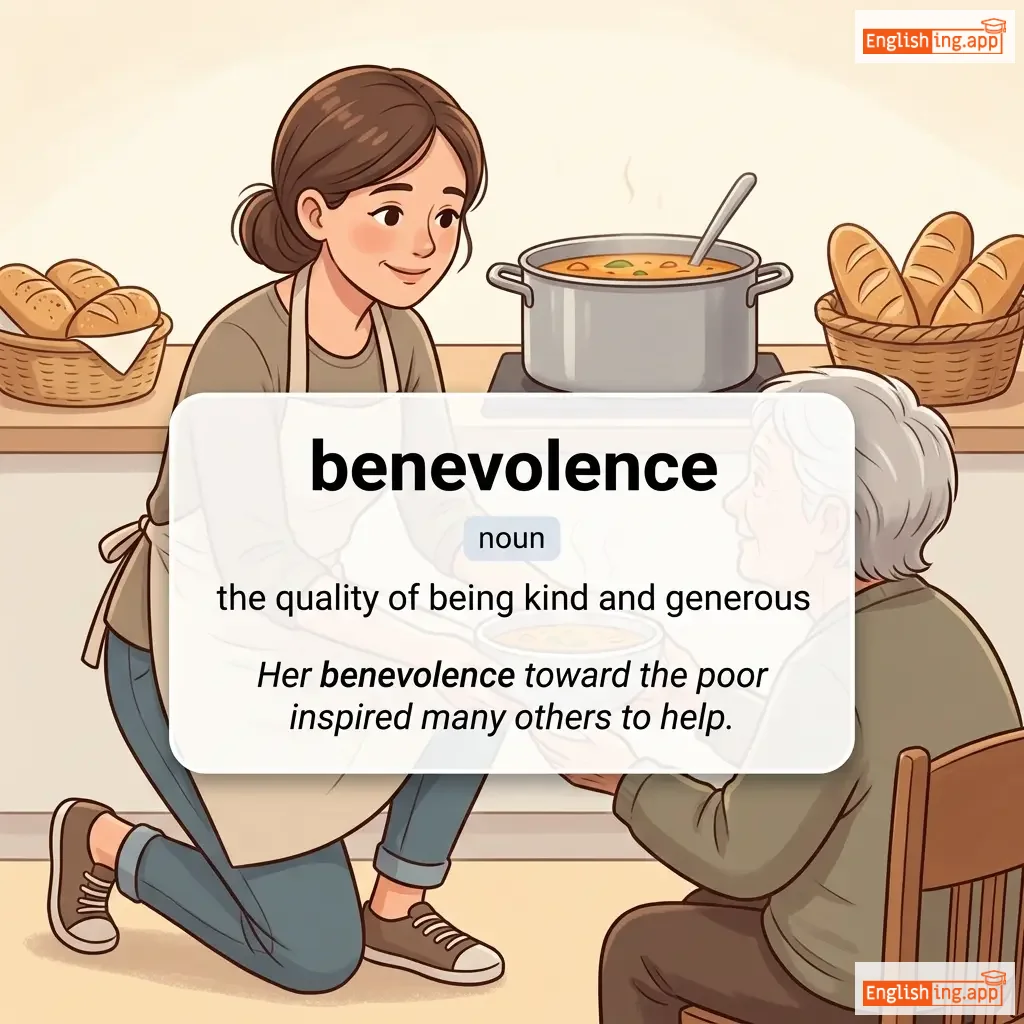
benevolence definition card — visual illustration of the meaning
noun
/bəˈnɛvələns/
পরোপকারিতা (poropkarita)

the quality of being kind and generous

"Her benevolence toward the poor inspired many others to help."

"গরীবদের প্রতি তার পরোপকারিতা অনেককে সাহায্য করতে অনুপ্রাণিত করেছে।" (Goribder proti tar poropkarita onekke sahajyo korte onupranito koreche.)
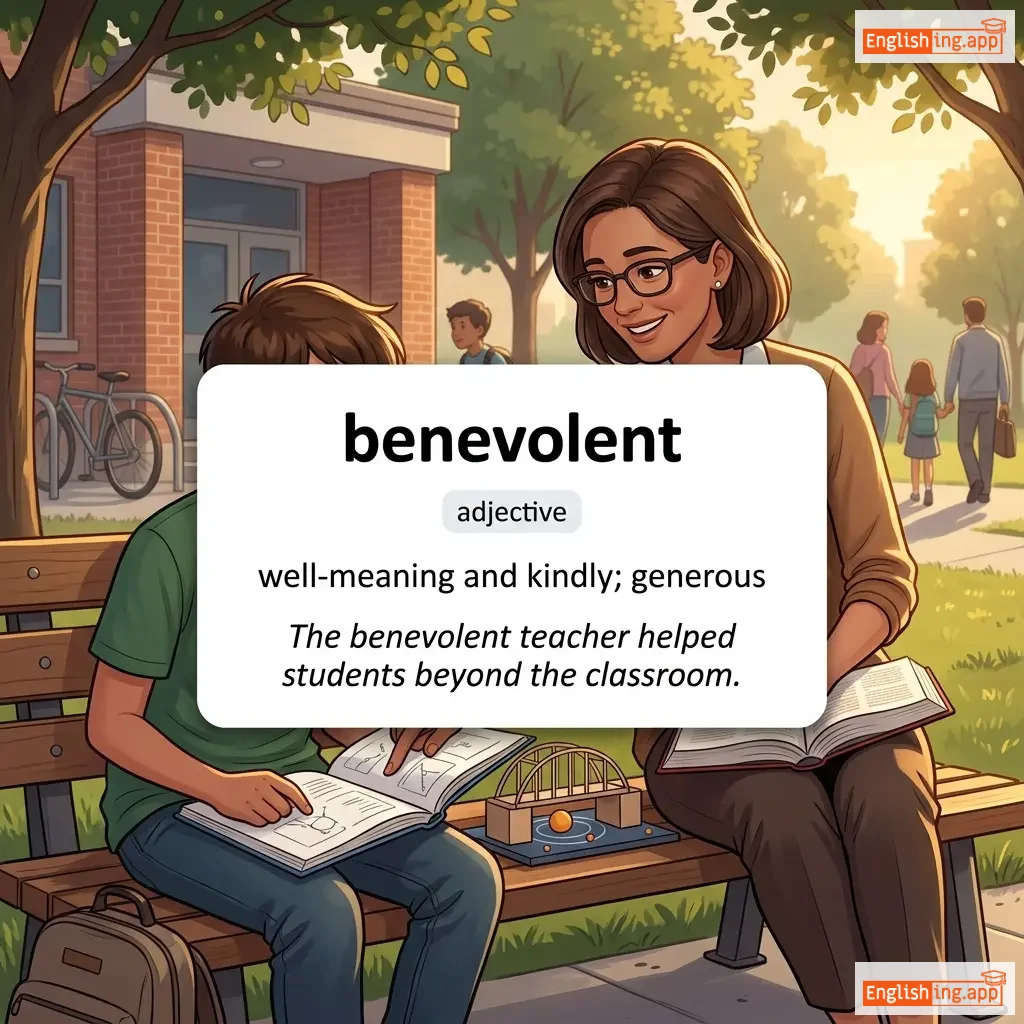
benevolent definition card — visual illustration of the meaning
adjective
/bəˈnɛvələnt/
দয়ালু (doyalu)

well-meaning and kindly; generous

"The benevolent teacher helped students beyond the classroom."

"দয়ালু শিক্ষক শ্রেণিকক্ষের বাইরেও শিক্ষার্থীদের সাহায্য করেছিলেন।" (Doyalu shikkhok shrenikokher baireo shikkharthider sahajyo korechilen.)
adjective
/bɪˈnaɪtɪd/
অন্ধকারাচ্ছন্ন, অশিক্ষিত (andhakarachchhanno, ashikkhito)

In a state of intellectual or moral ignorance; overtaken by darkness.

"The explorers were lost in the benighted forest without any guide."

"অন্বেষকরা কোন গাইড ছাড়া অন্ধকারাচ্ছন্ন জঙ্গলে হারিয়ে গিয়েছিল।" (Onbeshokra kono guide chara andhakarachchhanno jongole hariye giyechhilo.)
adjective
/bɪˈnaɪn/
সদয়, ক্ষতিহীন (shodoy, khotihin)

Gentle, kind, or not harmful (especially of a disease or tumor).

"The doctor assured her that the tumor was benign."

"ডাক্তার তাকে আশ্বস্ত করলেন যে টিউমারটি ক্ষতিহীন।" (Daktar take asbosto korlen je tumor ti khotihin.)
adjective
/bɪˈnɪɡnənt/
দয়ালু, সদয় (doyalu, shodoy)

Kindly and benevolent in nature.

"The teacher’s benignant attitude made the students feel comfortable."

"শিক্ষকের দয়ালু মনোভাব ছাত্রদের স্বস্তি দিয়েছিল।" (Shikkhoker doyalu monobhav chatroder shosti diyechhilo.)
noun
/bɪˈnɪɡnəti/
সদয়তা, দয়াশীলতা (shodoyota, doyasheelta)

The quality of being kind and gentle.

"She treated everyone with benignity and respect."

"সে সবাইকে সদয়তা ও সম্মানের সাথে আচরণ করত।" (Se shobai ke shodoyota o shommaner sathe acharon korto.)
noun
/ˈbɛnɪsən/
আশীর্বাদ (ashirbad)

A blessing or benefit.

"The rain was a benison for the drought-stricken farmers."

"বৃষ্টিটি খরাগ্রস্ত কৃষকদের জন্য আশীর্বাদ ছিল।" (Brishtiti khoragrosto krishokder jonno ashirbad chhilo.)
adjective
/bɛnt/
দৃঢ়প্রতিজ্ঞ / ঝোঁক (drirhoprotiggo / jhok)

strongly determined or having a natural talent or inclination for something

"She is bent on becoming a successful lawyer."

"সে একজন সফল আইনজীবী হওয়ার জন্য দৃঢ়প্রতিজ্ঞ।" (Se ekjon sofol ainjibi howar jonno drirhoprotiggo.)
verb
/bɪˈnʌm/
অবশ করা (obosh kora)

to make physically numb or without sensation; to make mentally dull or insensitive

"The freezing wind seemed to benumb his fingers within minutes."

"হিমশীতল বাতাস কয়েক মিনিটের মধ্যেই তার আঙুলগুলো অবশ করে দিল।" (himshit ol batas koek miniter modhye tar angulgulo obosh kore dilo)
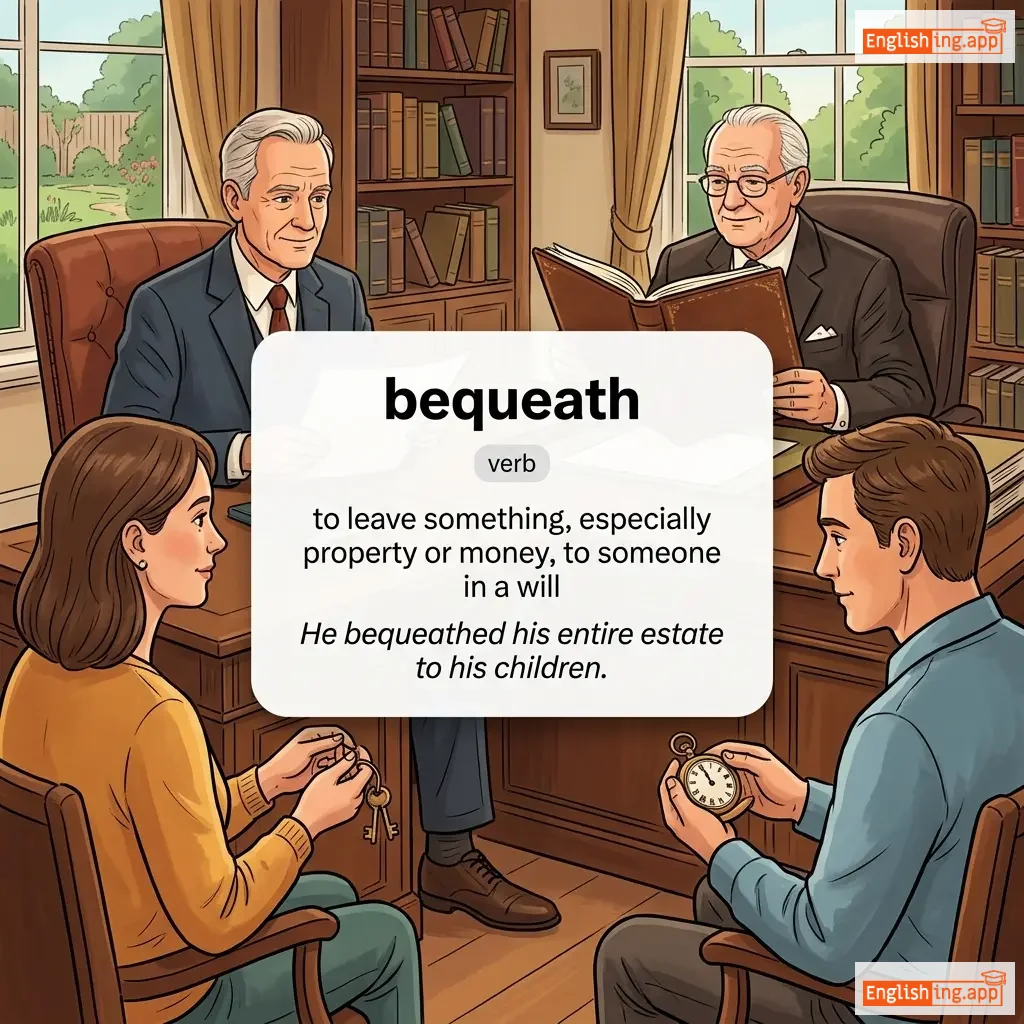
bequeath definition card — visual illustration of the meaning
verb
/bɪˈkwiːð/
উইল করে দিয়ে যাওয়া (wil kore diye jaoya)

to leave something, especially property or money, to someone in a will

"He bequeathed his entire estate to his children."

"সে তার সমস্ত সম্পত্তি তার সন্তানদের নামে উইল করে দিয়েছিল।" (Se tar somosto sompotti tar shontander name wil kore diyechilo.)
verb
/bɪˈreɪt/
কঠোরভাবে ধমকানো (kothorbhave dhamkano)

to scold or criticize angrily

"The teacher berated the student for being late."

"শিক্ষক দেরি করার জন্য ছাত্রকে কঠোরভাবে ধমক দিলেন।" (Shikkhok deri korar jonno chatroke kothorbhave dhamka dilen.)
verb
/bɪˈriːv/
প্রিয়জন হারানো (priyojon harano)

to deprive someone of a loved one through death

"She was bereaved of her husband last year."

"গত বছর সে তার স্বামীকে হারিয়েছিল।" (Gato bochor se tar swamike hariyechilo.)
adjective
/bɪˈriːvd/
প্রিয়জন হারানো (priyojon harano)

suffering the loss of a loved one through death

"The bereaved mother wept silently at the funeral."

"শোকে ভেঙে পড়া মা নীরবে কাঁদছিলেন অন্ত্যেষ্টিক্রিয়ায়।" (Shoke bhege pora ma nirobe kadchilen antyestikriyay.)
noun
/bɪˈriːvmənt/
শোক (shok)

The state of having lost a loved one through death.

"She received many letters of sympathy during her time of bereavement."

"তার শোকের সময়ে তিনি অনেক সমবেদনার চিঠি পেয়েছিলেন।" (tar shoker somoye tini onek sombedonar chithi peyechhilen.)
adjective
/bɪˈrɛft/
বঞ্চিত (bonchito)

Deprived of or lacking something, especially a nonmaterial asset.

"After the betrayal, he felt bereft of hope and trust."

"বিশ্বাসঘাতকতার পর সে আশা এবং আস্থাহীন বোধ করেছিল।" (bishwashghatokotar por se asha ebong astahin bodh korechhilo.)
adjective
/bəˈzɜːrk/
উন্মত্ত (unmotto)

Out of control with anger or excitement; wild or frenzied.

"The fans went berserk when their team won the championship."

"তাদের দল চ্যাম্পিয়নশিপ জিতলে ভক্তরা উন্মত্ত হয়ে উঠেছিল।" (tader dal championship jitole bhoktara unmotto hoye uthchhilo.)
noun
/bɜːrθ/
শয্যা / নোঙরের স্থান (shojja / nongorer sthan)

A place to sleep on a ship or train; a ship's allocated place at a dock.

"They reserved a lower berth on the overnight train."

"তারা রাতের ট্রেনে একটি নিচের বার্থ সংরক্ষণ করেছিল।" (tara rater trene ekti nicher berth songrokkhon korechhilo.)
verb
/bɪˈsiːtʃ/
অনুনয় করা (onunoy kora)

To ask someone urgently and fervently to do something; to beg.

"He beseeched the judge for mercy."

"সে বিচারকের কাছে দয়া প্রার্থনা করেছিল।" (se bicharoker kache doya prarthona korechhilo.)
verb
/bɪˈsɛt/
ঘিরে ফেলা, পীড়িত করা (ghire fela, pirit kora)

to trouble, harass, or attack on all sides

"The village was beset by constant floods."

"গ্রামটি বারবার বন্যায় ঘেরা ছিল।" (Gramti barbar bonnay ghera chilo.)
preposition
/bɪˈsaɪd/
পাশে / কোলঘেঁষে (pashe / kolgheshe)

next to or at the side of someone or something

"She sat beside her best friend during the ceremony."

"সে অনুষ্ঠানের সময় তার সেরা বন্ধুর পাশে বসেছিল।" (Se onusthoner somoy tar sera bondhur pashe boshechhilo.)
adverb, preposition
/bɪˈsaɪdz/
ছাড়াও / অতিরিক্ত (charao / otirikto)

in addition to; apart from

"Besides English, he also speaks French."

"ইংরেজি ছাড়াও সে ফরাসি ভাষায় কথা বলে।" (Ingreji charao se farashi bhasay kotha bole.)