ভোকাবুলারিসমূহ

ইংরেজি শব্দের বাংলা অর্থ | English to Bangla Word Meaning Dictionary

noun
/biːf/
গরুর মাংস (gorur mangsho)

the flesh of a cow, bull, or ox, used as food; also a complaint or dispute

"He ordered a plate of grilled beef for dinner."

"সে রাতের খাবারের জন্য গ্রিল করা গরুর মাংসের একটি প্লেট অর্ডার করেছিল।" (Se rater khabarer jonno grill kora gorur mangsher ekti plate order korechhilo.)
noun
/ˈbiːlaɪn/
সোজাসুজি পথ (sojasuji poth)

a straight, direct route to a destination

"He made a beeline for the food table as soon as he entered the party."

"পার্টিতে ঢুকেই সে সরাসরি খাবারের টেবিলের দিকে গেল।" (Partite dhukei se sorasori khabarer tebil er dike gelo.)
noun
/bɪər/
বিয়ার (biyaar)

An alcoholic drink made from yeast-fermented malt flavored with hops.

"He ordered a glass of cold beer at the bar."

"সে বারে এক গ্লাস ঠান্ডা বিয়ার অর্ডার করল।" (se bare ek glass thanda biyaar order korlo.)
noun
/biːt/
বীট (beet)

a plant with a round dark red root that is eaten as a vegetable

"Roasted beet with goat cheese makes a delicious salad."

"ছাগলের পনির সহ ভাজা বীট একটি সুস্বাদু সালাদ তৈরি করে।" (chagoler ponir soho bhaja beet ekti shuswadu salad toiri kore.)
noun
/ˈbiː.təl/
গুবরে পোকা (gubre poka)

a hard-bodied insect with wing covers

"The black beetle scurried across the garden path."

"কালো গুবরে পোকাটি বাগানের পথ জুড়ে দৌড়ে গেল।" (kalo gubre pokati baganer poth jure doure gelo.)
verb
/bɪˈfɪt/
উপযুক্ত হওয়া (upojukto howa)

to be suitable for; to be appropriate to

"Formal attire befits the seriousness of the occasion."

"আনুষ্ঠানিক পোশাক অনুষ্ঠানের গম্ভীরতার সঙ্গে উপযুক্ত।" (anushthanik poshak anushthaner gambhirtar shonge upojukto)
adjective
/bɪˈfɪt.ɪŋ/
উপযুক্ত; মানানসই; (bifiting)

appropriate; suitable; proper for a particular situation or person

"He wore formal attire befitting the important occasion."

"তিনি গুরুত্বপূর্ণ অনুষ্ঠানের উপযুক্ত আনুষ্ঠানিক পোশাক পরেছিলেন।" (tini guruttopoorno onushtaner upoukto anushthanic poshak porechilen.)
verb
/bɪˈfɒɡ/
অস্পষ্ট করা (osposto kora)

to confuse or make unclear; to cover with fog or mist

"His mind was befogged by exhaustion."

"ক্লান্তির কারণে তার মন বিভ্রান্ত ছিল।" (Klantir karone tar mon bivranto chilo.)
adjective
/bɪˈfɒɡd/
অস্পষ্ট, বিভ্রান্ত (osposhto, bivhranto)

Confused or clouded in mind; made unclear like being surrounded by fog.

"His mind felt befogged after the long and exhausting meeting."

"দীর্ঘ ও ক্লান্তিকর বৈঠকের পর তার মন বিভ্রান্ত অনুভব করছিল।" (dirgho o klantikoro boithoker por tar mon bivhranto onubhob korchhilo.)
verb
/bɪˈfuːl/
প্রতারণা করা (protarona kora)

to deceive or trick someone into believing something false; to make someone appear foolish

"The scammer tried to befool innocent people with fake promises."

"প্রতারক নিরীহ মানুষদের ভুয়া প্রতিশ্রুতি দিয়ে বোকা বানাতে চেয়েছিল।" (protarok niriho manushder bhua protishruti diye boka banate cheyechhilo)
preposition/adverb/conjunction
/bɪˈfɔːr/
আগে (age)

At an earlier time; in front of in order or place.

"She arrived before the meeting started."

"সে বৈঠক শুরু হওয়ার আগে পৌঁছেছিল।" (se boithok shuru howar age pouchhechhilo.)
adverb
/bɪˈfɔːr.hænd/
আগে থেকেই; পূর্বেই; পূর্বাহ্নে; (age thekeii, purvei, purbahnne)

in advance; ahead of time; earlier

"We prepared everything beforehand."

"আমরা আগে থেকেই সবকিছু প্রস্তুত করেছিলাম।" (amra age thekeii shobkichu prostut korechilam)
verb
/bɪˈfaʊl/
দূষিত করা (dushito kora)

to make dirty or polluted; to disgrace or corrupt

"The factory waste befouled the river."

"কারখানার বর্জ্য নদীটিকে দূষিত করেছিল।" (karkhanar borjyo noditike dushito korechhilo)
verb
/bɪˈfrɛnd/
বন্ধুত্ব করা (bondhutto kora)

to act as a friend to someone; to make friends with

"She befriended the new student at school."

"সে স্কুলে নতুন ছাত্রের সাথে বন্ধুত্ব করেছিল।" (Se skule notun chatrer sathe bondhutto korechilo.)
verb
/bɪˈfʌdəl/
বিভ্রান্ত করা (bivranto kora)

to confuse someone completely; to make someone unable to think clearly

"The complex instructions befuddled the students."

"জটিল নির্দেশাবলী ছাত্রদের বিভ্রান্ত করেছিল।" (Jotil nirdeshaboli chatroder bivranto korechilo.)
adjective
/bɪˈfʌdld/
বিহ্বল (bihbol)

confused, unable to think clearly

"He looked befuddled after hearing the complex instructions."

"জটিল নির্দেশনা শোনার পর সে বিহ্বল লাগছিল।" (Jotil nirdeshona shonar por se bihbol lagchhilo.)
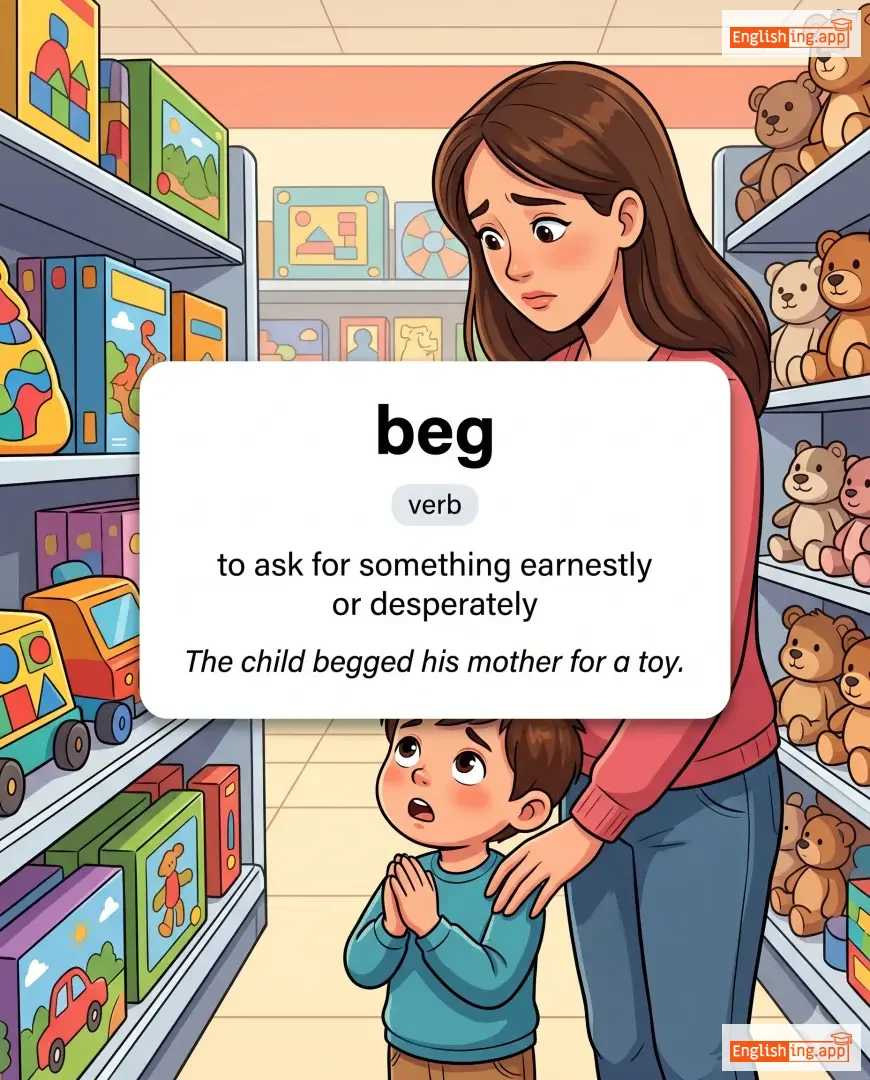
beg definition card — visual illustration of the meaning
verb
/bɛɡ/
ভিক্ষা করা / অনুরোধ করা (bhikkha kora / onurodh kora)

to ask for something earnestly or desperately

"The child begged his mother for a toy."

"শিশুটি খেলনার জন্য মাকে অনুরোধ করল।" (Shishuti khelonar jonno make onurodh korlo.)
verb
/bɪˈɡɛt/
উৎপন্ন করা / জন্ম দেওয়া (utpanno kora / jonmo dewa)

to bring about or give rise to; to father or produce

"Violence begets more violence."

"সহিংসতা আরও সহিংসতা জন্ম দেয়।" (Shohingshota aro shohingshota jonmo deya.)
noun
/ˈbeɡər/
ভিক্ষুক (bhikkhuk)

a person who lives by asking for money or food

"The beggar sat by the temple asking for alms."

"ভিক্ষুক মন্দিরের পাশে বসে ভিক্ষা চাইছিল।" (bhikkhuk mondirerr pashe boshe bhikkha chaichhilo)
begin definition card — visual illustration of the meaning
verb
/bɪˈɡɪn/
শুরু করা (shuru kora)

To start something; to perform the first part of an action.

"They will begin the project tomorrow."

"তারা আগামীকাল প্রকল্পটি শুরু করবে।" (tara agamikal prokolpoti shuru korbe.)
noun
/bɪˈɡɪnɪŋ/
শুরু (shuru)

The start or first part of something.

"The beginning of the story was very interesting."

"গল্পের শুরুটা ছিল খুবই আকর্ষণীয়।" (golper shuruta chhilo khuboi akorshoniyo.)
verb
/bɪˈɡrʌdʒ/
অসন্তুষ্ট হওয়া / অনিচ্ছায় দেওয়া (osontushto howa / onichchhaye dewa)

to resent someone for having something; to give reluctantly

"She did not begrudge him his success."

"তিনি তার সাফল্যে অসন্তুষ্ট হননি।" (Tini tar safoloye osontushto honni.)
verb
/bɪˈɡaɪl/
মোহিত করা / প্রতারণা করে আকৃষ্ট করা (mohito kora / protorona kore akrishto kora)

to charm or enchant someone, often in a deceptive way

"She beguiled the audience with her storytelling."

"তিনি তার গল্প বলার মাধ্যমে শ্রোতাদের মোহিত করেছিলেন।" (Tini tar golpo bolar maddhome srotader mohito korechhilen.)
noun
/bɪˈhɑːf/
পক্ষে (pokkhe)

as a representative of someone; in the interest of someone

"She accepted the award on behalf of her team."

"সে তার দলের পক্ষ থেকে পুরস্কার গ্রহণ করেছিল।" (Se tar daler pokkhe puraskar grohon korechhilo.)
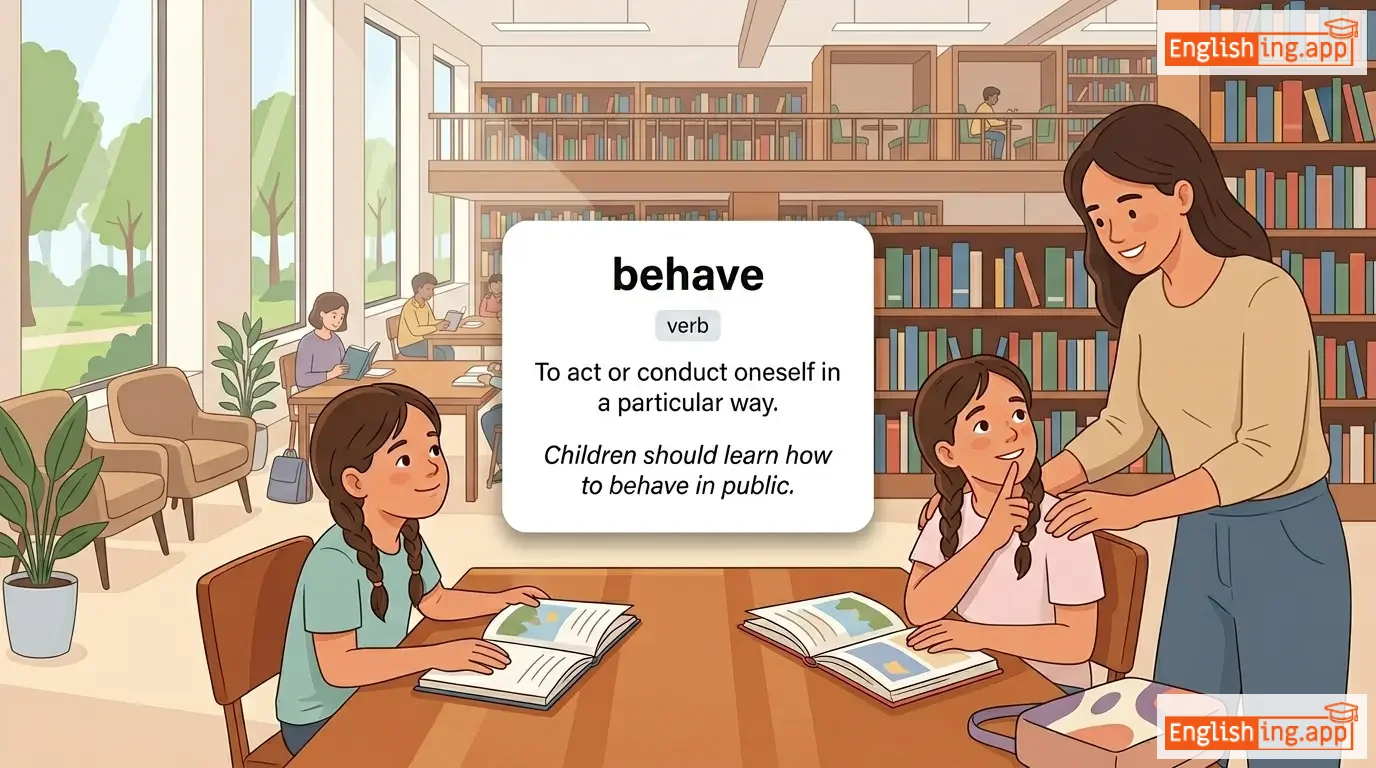
behave definition card — visual illustration of the meaning
verb
/bɪˈheɪv/
আচরণ করা (achoron kora)

To act or conduct oneself in a particular way.

"Children should learn how to behave in public."

"শিশুদের শেখা উচিত কিভাবে জনসমক্ষে আচরণ করতে হয়।" (shishuder shekha uchit kivabe jonsomokkhe achoron korte hoy.)
noun
/bɪˈheɪvjər/
আচরণ (achoron)

The way in which one acts or conducts oneself, especially toward others.

"The teacher praised her good behavior in class."

"শিক্ষক ক্লাসে তার ভাল আচরণের প্রশংসা করলেন।" (shikkhok klase tar bhalo acharoner proshongsha korlen.)
adjective
/bɪˈheɪvjərəl/
আচরণগত (achorongoto)

relating to the way a person or animal acts

"The psychologist studied the child's behavioral patterns."

"মনোবিজ্ঞানী শিশুর আচরণগত ধরণগুলি পর্যবেক্ষণ করেছিলেন।" (Monobiggani shishur achorongoto dhoronguli porjobekkhon korechhilen.)
noun
/bɪˈheɪ.vjər/
আচরণ; ব্যবহার; স্বভাব; (acharon, byebohar, shobhab)

the way a person or animal acts or conducts themselves

"His behaviour at the meeting was very professional."

"সভায় তার আচরণ ছিল অত্যন্ত পেশাদার।" (Shobhay tar acharon chilo ottonto peshadar.)
verb
/bɪˈhɛd/
শিরচ্ছেদ করা (shirchhed kora)

to cut off a person's or animal's head; to remove the leader or most important part

"The historical account describes how the traitor was beheaded as punishment."

"ঐতিহাসিক বিবরণে বলা হয়েছে যে শাস্তি হিসেবে বিশ্বাসঘাতককে শিরচ্ছেদ করা হয়েছিল।" (oitihashik biborone bola hoyeche je shasti hisebe bishashghatokke shirchhed kora hoyechilo)
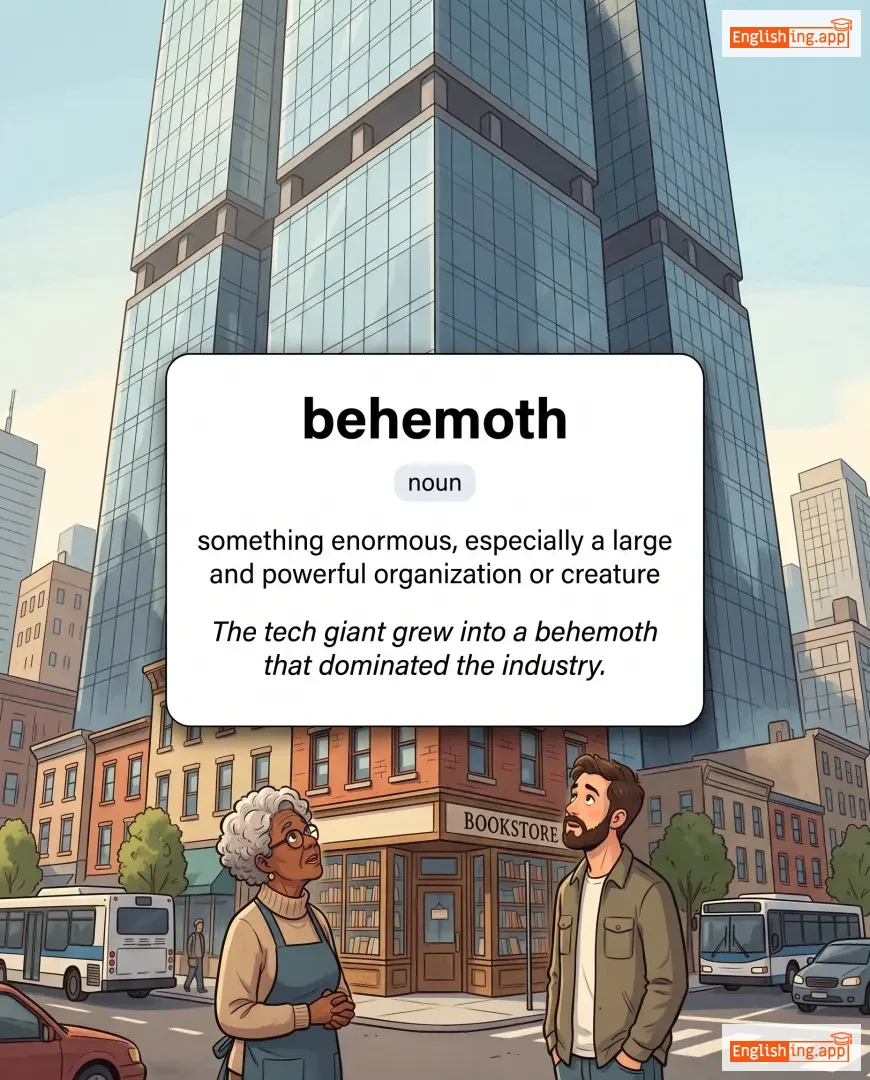
behemoth definition card — visual illustration of the meaning
noun
/bɪˈhiːməθ/
বিরাট শক্তিশালী প্রতিষ্ঠান বা প্রাণী (birat shoktishali protisthan ba prani)

something enormous, especially a large and powerful organization or creature

"The tech giant grew into a behemoth that dominated the industry."

"প্রযুক্তি জায়ান্টটি এমন এক বিরাট শক্তিশালী প্রতিষ্ঠানে পরিণত হয়েছিল যা শিল্পকে দখল করেছিল।" (Projukti giantti emon ek birat shoktishali protisthane porinoto hoyechilo ja shilpke dokhol korechilo.)
preposition/adverb
/bɪˈhaɪnd/
পিছনে (pichhane)

At or to the back of something; in a position further back.

"The cat is hiding behind the curtain."

"বিড়ালটি পর্দার পিছনে লুকিয়ে আছে।" (biralti pardar pichhane lukiye ache.)
verb
/bɪˈhoʊld/
দেখা; প্রত্যক্ষ করা (dekha; protokkho kora)

to see or observe something, especially something remarkable or impressive

"She stood quietly to behold the sunrise over the hills."

"সে পাহাড়ের ওপর সূর্যোদয় দেখার জন্য নীরবে দাঁড়িয়েছিল।" (se paharer upor surjodoy dekhar jonne nirbe darie chilo)
adjective
/bɪˈhoʊldən/
ঋণী বা বাধ্য (rini ba baddho)

indebted or obliged to someone for a service or help

"He felt beholden to his mentor for all the guidance."

"সে তার পরামর্শদাতার কাছে সব নির্দেশনার জন্য ঋণী অনুভব করেছিল।" (Se tar poramorshodatar kache sob nirdeshnar jonno rini onuvob korechilo.)
verb
/bɪˈhuːv/
যথাযথ হওয়া বা প্রয়োজনীয় হওয়া (jothajoth howa ba proyojoniyo howa)

to be necessary, proper, or appropriate for someone to do

"It would behoove you to study before the exam."

"পরীক্ষার আগে তোমার পড়াশোনা করা প্রয়োজন।" (Porikhar age tomar porashona kora proyojon.)
verb
/bɪˈhuːvz/
যথাযথ বা প্রয়োজনীয় হয় (jothajoth ba proyojoniyo hoy)

third person singular form of 'behoove'; means it is proper or necessary

"It behooves every citizen to follow the law."

"প্রত্যেক নাগরিকের জন্য আইন মেনে চলা প্রয়োজন।" (Protek nagoriker jonno ain mene chola proyojon.)
verb
/bɪˈhəʊv/
প্রয়োজনীয় হওয়া (proyojoniyo howa)

British spelling of 'behoove'; to be appropriate or necessary

"It would behove the company to listen to its customers."

"কোম্পানির উচিত তার গ্রাহকদের কথা শোনা।" (Companyr uchit tar grahokder kotha shona.)
noun/verb
/ˈbiːɪŋ/
অস্তিত্ব / সত্তা (ostitto / shotto)

Existence; the state of living; a living creature.

"Kindness is part of being human."

"মানবিকতা মানব সত্তার একটি অংশ।" (manobikota manob sottar ekti angsho.)
verb
/bɪˈleɪbər/
অতিরিক্ত আলোচনা করা (otirikto alochona kora)

to argue or elaborate on a subject in excessive detail; to attack verbally or physically

"The professor belabored the point until the students grew restless."

"অধ্যাপক বিষয়টি এত বেশি আলোচনা করলেন যে শিক্ষার্থীরা অস্থির হয়ে উঠল।" (Odhapok bishoyti eto beshi alochona korlen je shikkharthira osthir hoye uthlo.)
verb
/bɪˈleɪbə/
অতিরিক্তভাবে ব্যাখ্যা করা (otirikto bhabe byakkha kora)

to explain something repeatedly or with excessive detail; to criticize or attack verbally at length

"The teacher did not belabour the point once the students understood it."

"শিক্ষক বিষয়টি অতিরিক্তভাবে ব্যাখ্যা করেননি যখন শিক্ষার্থীরা তা বুঝে গেছে।" (shikkhok bishoyti otirikto bhabe byakkha korenni jokhon shikkharthira ta bujhe geche)
verb
/bɪˈleɪt/
বিলম্বিত করা (bilombito kora)

to delay or make late

"Heavy traffic belated our arrival at the party."

"ভারি যানজট আমাদের পার্টিতে পৌঁছানোতে দেরি করিয়ে দিল।" (Bhari janjot amader partite pouchhano te deri koriye dilo.)
adjective
/bɪˈleɪtɪd/
বিলম্বিত (bilombito)

coming or happening later than expected or usual

"She sent me a belated birthday card."

"সে আমাকে একটি বিলম্বিত জন্মদিনের কার্ড পাঠিয়েছিল।" (Se amake ekti bilombito jonmodiner card pathiechhilo.)
verb
/bɪˈleɪ/
দড়ি সুরক্ষিত করা (dori surakkhito kora)

to secure a rope by winding it around an object; to stop or cancel an order (nautical/military use)

"The climber asked his partner to belay the rope tightly."

"পাহাড় আরোহী তার সঙ্গীকে দড়ি শক্তভাবে সুরক্ষিত করতে বলল।" (Pahar arohi tar songike dori shoktovabe surakkhito korte boll.)
verb; noun
/beltʃ/
ঢেঁকুর তোলা (dhekur tola)

to expel air noisily from the stomach through the mouth; to emit or pour out suddenly and forcefully

"After drinking the soda, he belched loudly."

"সোডা পান করার পরে সে জোরে ঢেঁকুর তুলল।" (soda pan korar pore se jore dhekur tullo)
noun
/ˈbeɪleɪ/
বেলে মাছ (bele mach)

a type of freshwater fish found in South Asian rivers, known for its distinctive appearance

"The bele fish is commonly caught in the rivers of Bangladesh."

"বেলে মাছ সাধারণত বাংলাদেশের নদীগুলিতে ধরা হয়।" (bele mach shadharonoto bangladesher nodi gulite dhora hoy)
verb
/bɪˈliːɡər/
বেষ্টন করা, হয়রান করা (beston kora, hoyran kora)

to cause difficulties, troubles, or harassment; to surround with military forces

"The company was beleaguered by constant complaints from its customers."

"কোম্পানিটি ক্রেতাদের অবিরাম অভিযোগে হয়রান হচ্ছিল।" (Companyti kretader abiram obhijoge hoyran hochhilo.)
noun
/ˈbɛlfri/
ঘণ্টাঘর (ghontaghor)

A bell tower, especially one attached to a church or building.

"The church belfry housed a large bronze bell."

"চার্চের ঘণ্টাঘরে একটি বড় ব্রোঞ্জের ঘণ্টা ছিল।" (Chorcher ghontaghore ekti boro bronzer ghonta chhilo.)
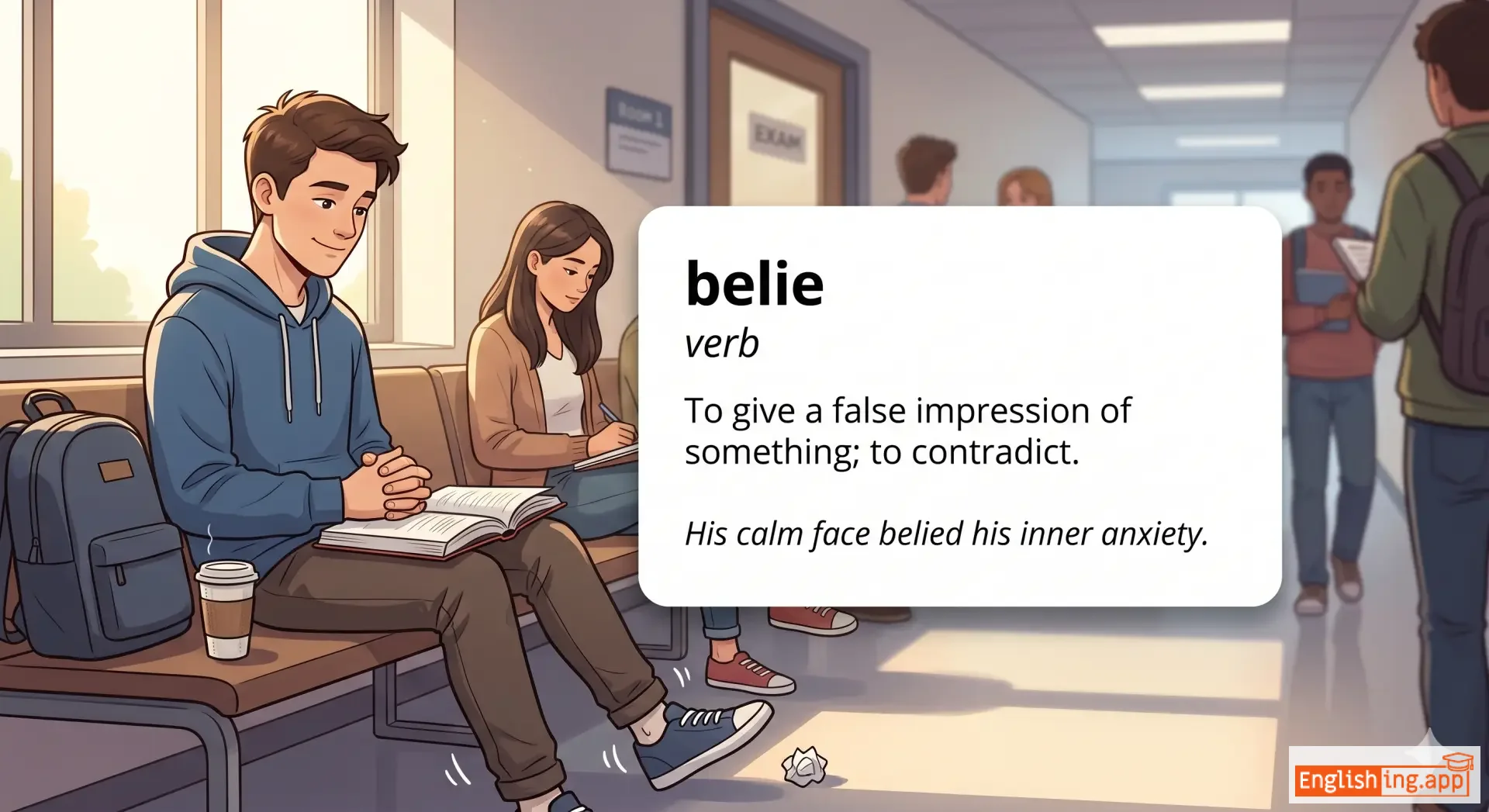
belie definition card — visual illustration of the meaning
verb
/bɪˈlaɪ/
মিথ্যা প্রমাণ করা (mithya proman kora)

To give a false impression of something; to contradict.

"His calm face belied his inner anxiety."

"তার শান্ত মুখ তার ভেতরের উদ্বেগকে গোপন করেছিল।" (Tar shanto mukh tar bhetorer udbege gopon korechhilo.)
noun
/bɪˈliːf/
বিশ্বাস (bishwas)

an acceptance that something exists or is true, especially without proof

"Her belief in kindness inspired many people."

"তার দয়ার প্রতি বিশ্বাস অনেক মানুষকে অনুপ্রাণিত করেছে।" (tar doyar proti bishwas onek manushke onupranito koreche.)
adjective
/bɪˈliːvəbl̩/
বিশ্বাসযোগ্য (bishshashjoggo)

Able to be trusted or accepted as true or reasonable.

"Her story was so detailed that it sounded believable."

"তার গল্প এত বিস্তারিত ছিল যে এটি বিশ্বাসযোগ্য শোনাচ্ছিল।" (tar golpo eto bistari to chhilo je eti bishshashjoggo shonachchhilo.)
believe definition card — visual illustration of the meaning
verb
/bɪˈliːv/
বিশ্বাস করা (bishash kora)

To accept something as true; to have faith or confidence in.

"She believes in the power of kindness."

"সে দয়ার শক্তিতে বিশ্বাস করে।" (Se doyar shoktite bishash kore.)