ভোকাবুলারিসমূহ

ইংরেজি শব্দের বাংলা অর্থ | English to Bangla Word Meaning Dictionary

aesthetics definition card — visual illustration of the meaning
noun
esˈθet.ɪks
সৌন্দর্যবোধ (shoundorjobodh)

A set of principles concerned with the nature and appreciation of beauty, especially in art and design.

"Interior design focuses on aesthetics and functionality."

"ইন্টেরিয়র ডিজাইন নান্দনিকতা এবং কার্যকারিতার উপর গুরুত্ব দেয়।" (Interior design nandonikota ebong karjokariter upor gurutbo dey.)
adjective
/ˈæfəbəl/
অমায়িক (amayiik)

friendly, easy to talk to, and pleasant in manner

"He is such an affable host that everyone feels comfortable at his parties."

"তিনি এত অমায়িক স্বাগতিক যে তার পার্টিতে সবাই স্বাচ্ছন্দ্যবোধ করে।" (Tini eto amayiik swagotik je tar partite sobai swachchhondobodh kore.)
noun
/əˈfɛər/
ঘটনা / সম্পর্ক (ghotona / somporko)

an event, situation, or relationship, often one that is private or romantic

"The scandal became the most talked-about affair of the year."

"স্ক্যান্ডালটি বছরের সবচেয়ে আলোচিত ঘটনা হয়ে উঠেছিল।" (Skandalti bachorer sobcheye alochito ghotona hoye uthchilo.)
verb
/əˈfɛkt/
প্রভাবিত করা (probhavit kora)

to influence or make a difference to something

"The weather can greatly affect our mood."

"আবহাওয়া আমাদের মেজাজকে ব্যাপকভাবে প্রভাবিত করতে পারে।" (Abhawa amader mejajke byapakvabe probhavit korte pare.)
noun
/ˌæfɛkˈteɪʃən/
কৃত্রিম ভান (kritrim vhan)

an unnatural behavior or speech intended to impress others

"Her British accent was just an affectation to sound sophisticated."

"তার ব্রিটিশ উচ্চারণ ছিল কেবল পরিশীলিত শোনানোর জন্য একটি ভান।" (Tar British uchcharon chilo kebol porishilito shonanor jonno ekti vhan.)
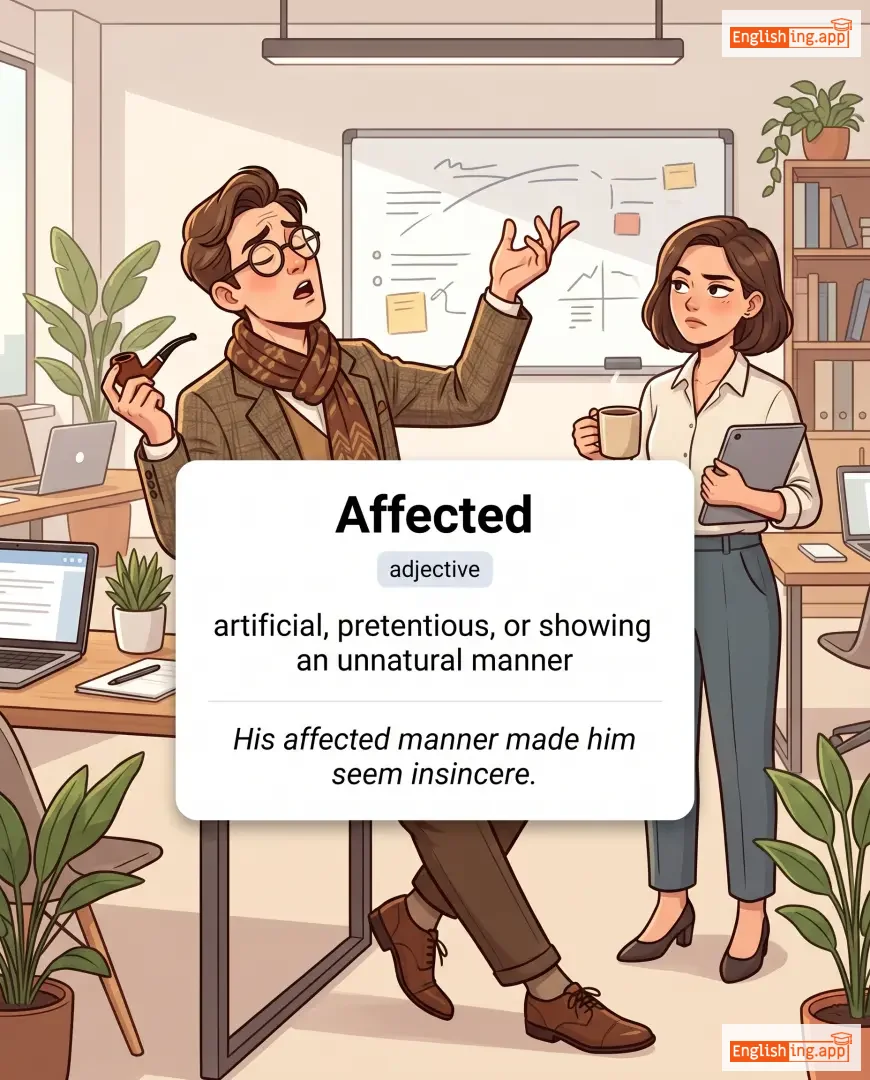
Affected definition card — visual illustration of the meaning
adjective
/əˈfɛktɪd/
ভান করা (vhan kora)

artificial, pretentious, or showing an unnatural manner

"His affected manner made him seem insincere."

"তার ভানপূর্ণ আচরণ তাকে অসৎ মনে করিয়েছিল।" (Tar vhanpurno acharon take oshot mone koriyechilo.)
noun
/əˈfɛkʃən/
স্নেহ (sneh)

a gentle feeling of fondness or liking

"She showed great affection for her younger brother."

"সে তার ছোট ভাইয়ের প্রতি গভীর স্নেহ দেখিয়েছিল।" (Se tar choto bhaier proti gobhir sneh dekhieche.)
adjective
/əˈfekʃənət/
স্নেহশীল; মায়াময়; মমতাময়; (snehoshil)

loving; caring; tender; showing affection

"She is very affectionate towards her children."

"তিনি তার সন্তানদের প্রতি খুবই স্নেহশীল।" (tini tar shontanoder proti khuboi snehoshil.)
adverb
/əˈfek.ʃən.ət.li/
স্নেহের সাথে; স্নেহভরে; (sneher sathe)

in a way that shows feelings of liking or love; with fondness and care

"She hugged her grandmother affectionately."

"তিনি তার দাদীকে স্নেহভরে আলিঙ্গন করলেন।" (tini tar dadike snehobhore alingon korlen)
adjective
/ˈæfərənt/
সংবাহী (songbahi)

carrying impulses toward a central organ or part, especially toward the brain or spinal cord

"Afferent nerves carry signals from the body to the brain."

"অ্যাফারেন্ট স্নায়ুগুলো শরীর থেকে মস্তিষ্কে সংকেত বহন করে।" (Afferent snayugulo shorir theke mostishke sonket bohon kore.)
verb
/əˈfaɪəns/
বাগদান করা (bagdan kora)

to promise or pledge marriage; to formally engage

"They decided to affiance after years of friendship."

"বছরের পর বছর বন্ধুত্বের পরে তারা বাগদান করার সিদ্ধান্ত নিল।" (bochhorer por bochhor bondhutter pore tara bagdan korar siddhanto nilo)
noun
/ˌæfəˈdeɪvɪt/
শপথনামা (shopothnama)

a written statement confirmed by oath or affirmation, used as evidence in court

"The witness submitted an affidavit to the court."

"সাক্ষী আদালতে একটি শপথনামা জমা দিয়েছিল।" (Sakhi adalote ekti shopothnama joma diyechilo.)
verb
/əˈfɪliˌeɪt/
সংযুক্ত করা (songjukto kora)

to officially attach or connect (a group or organization) to a larger body

"The school is affiliated with the local university."

"বিদ্যালয়টি স্থানীয় বিশ্ববিদ্যালয়ের সাথে সংযুক্ত।" (Bidyaloyti sthanio bishwobidyaloyer sathe songjukto.)
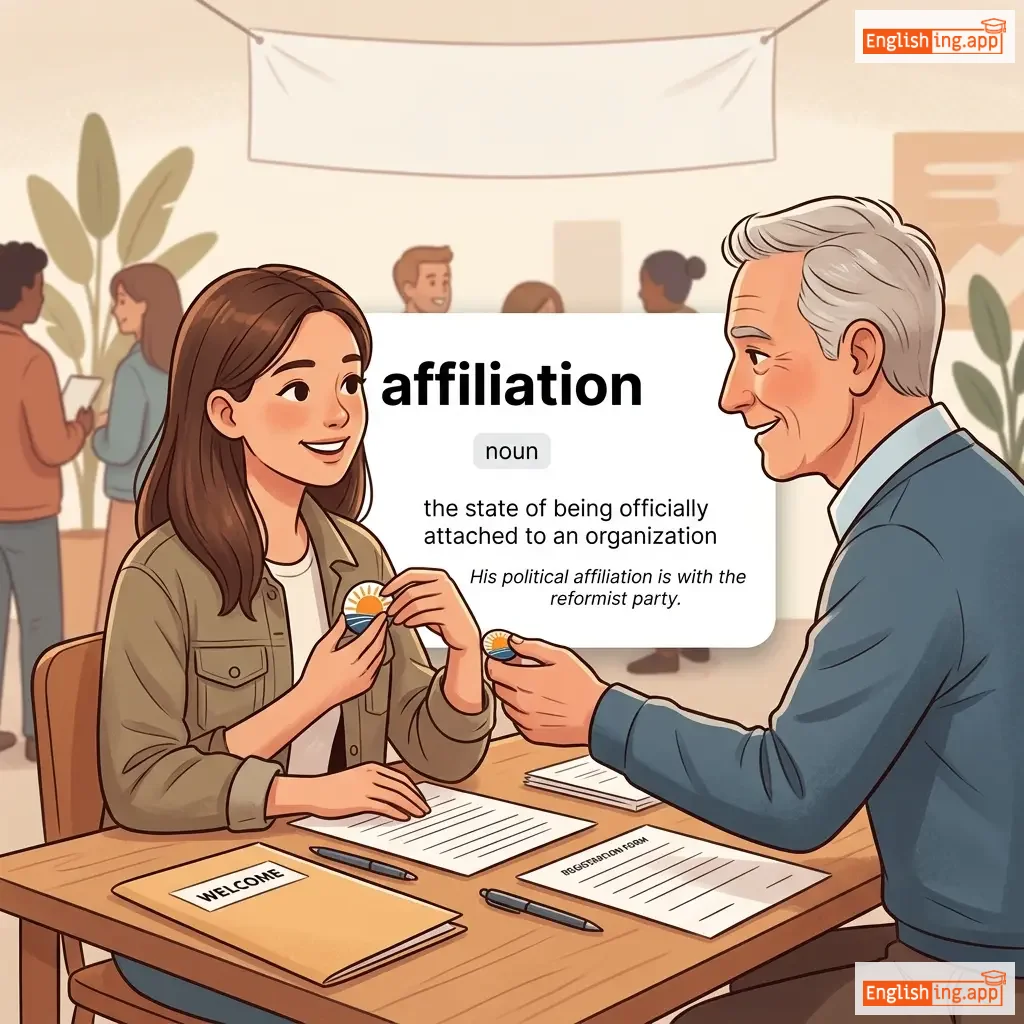
affiliation definition card — visual illustration of the meaning
noun
/əˌfɪliˈeɪʃən/
সংযুক্তি (songjukti)

the state of being officially attached to an organization

"His political affiliation is with the reformist party."

"তার রাজনৈতিক সংযুক্তি সংস্কারপন্থী দলের সাথে।" (Tar rajnaitik songjukti songkaroponthis daler sathe.)
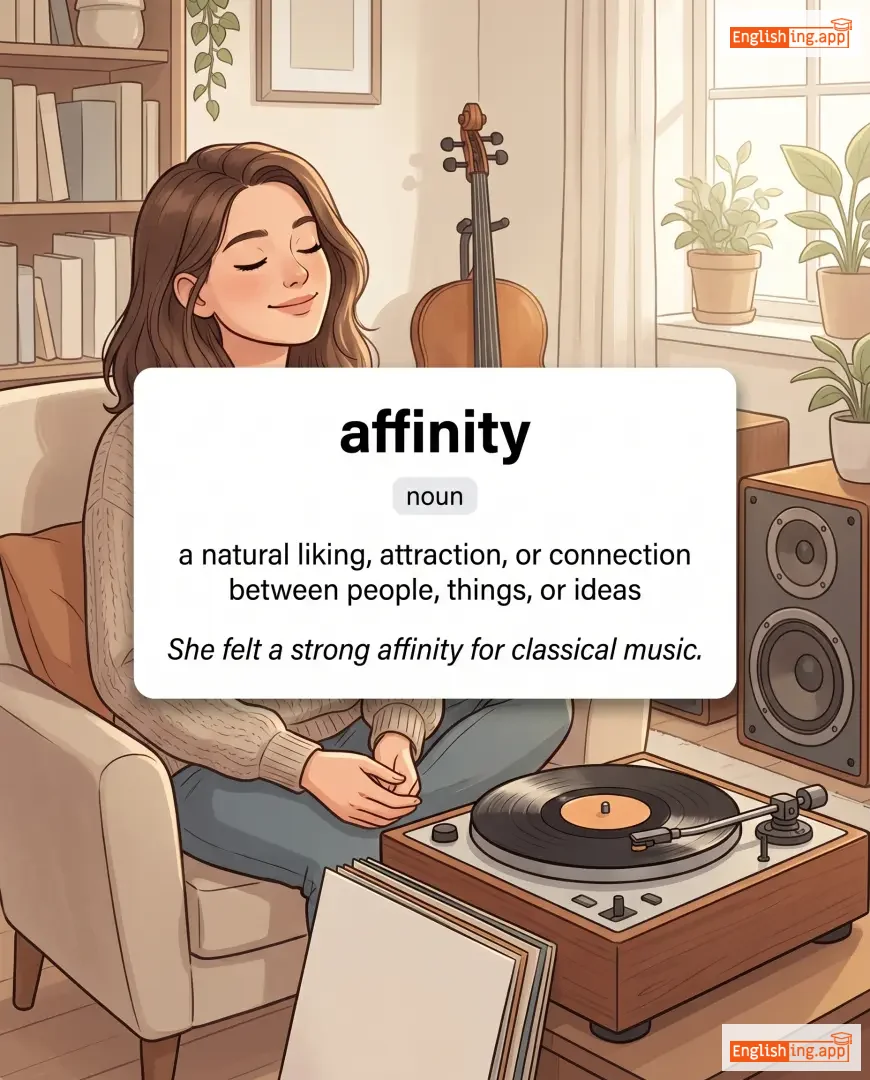
affinity definition card — visual illustration of the meaning
noun
/əˈfɪnɪti/
আকর্ষণ / সম্পর্ক (akarson / somporko)

a natural liking, attraction, or connection between people, things, or ideas

"She felt a strong affinity for classical music."

"সে শাস্ত্রীয় সংগীতের প্রতি একটি শক্তিশালী আকর্ষণ অনুভব করেছিল।" (Se shastriyo songiter proti ekta shoktishali akarson onuvob korechilo.)
affirmation definition card — visual illustration of the meaning
noun
/ˌæfərˈmeɪʃən/
প্রত্যয় / নিশ্চিতকরণ (protyoy / nischitkoron)

the act of confirming or stating something positively; a declaration of support or belief

"Daily affirmation helps to build confidence and positivity."

"দৈনিক প্রত্যয় আত্মবিশ্বাস এবং ইতিবাচকতা গড়ে তুলতে সাহায্য করে।" (Doinik protyoy atmobishash ebong itibachokota gore tulte sahajyo kore.)
adjective
/əˈfɜːrmətɪv/
ইতিবাচক / অনুমোদনমূলক (itibachok / onumodonmulok)

expressing agreement, approval, or a positive response

"She gave an affirmative answer to the proposal."

"সে প্রস্তাবটির প্রতি একটি ইতিবাচক উত্তর দিয়েছিল।" (Se prostabtir proti ekti itibachok uttor diyechilo.)
verb
/əˈfɪks/
সংযুক্ত করা / লাগানো (songjukto kora / lagano)

to attach or stick something firmly to another thing

"Please affix the stamp to the envelope."

"দয়া করে খামের সাথে ডাকটিকিট লাগান।" (Doya kore khamer sathe daktikit lagan.)
noun
/əˈfleɪtəs/
দৈব অনুপ্রেরণা (doib onuprerana)

a sudden divine inspiration or creative impulse

"The poet wrote the verses under a sudden afflatus of inspiration."

"কবি হঠাৎ এক অনুপ্রেরণার প্রভাবে কবিতা লিখলেন।" (Kobi hotat ek onupreranay prabhabe kobita likhlen.)
verb
/əˈflɪkt/
পীড়া দেওয়া (pira deowa)

to cause pain, suffering, or distress to someone or something

"Many people are afflicted by seasonal allergies."

"অনেক মানুষ ঋতুভিত্তিক অ্যালার্জিতে পীড়িত হয়।" (Onek manush rituvittik allergyte pirito hoy.)
noun
/əˈflɪkʃən/
পীড়া (pira)

a state of pain, suffering, or distress

"Poverty is a common affliction in many parts of the world."

"বিশ্বের অনেক স্থানে দারিদ্র্য একটি সাধারণ পীড়া।" (Bishwer onek sthane daridryo ekti shadharon pira.)
affluence definition card — visual illustration of the meaning
noun
/ˈæfluəns/
ধনসম্পদ (dhonosompod)

the state of having a great deal of money or wealth

"His lifestyle shows signs of great affluence."

"তার জীবনযাত্রায় প্রচুর ধনসম্পদের লক্ষণ দেখা যায়।" (Tar jibonjatray prochur dhonosompoder lokkho dekhajay.)
adjective
/ˈæfluənt/
ধনী (dhoni)

having a great deal of money; wealthy

"She grew up in an affluent neighborhood."

"সে একটি ধনী এলাকায় বেড়ে উঠেছিল।" (Se ekti dhoni elakay bere uthchilo.)
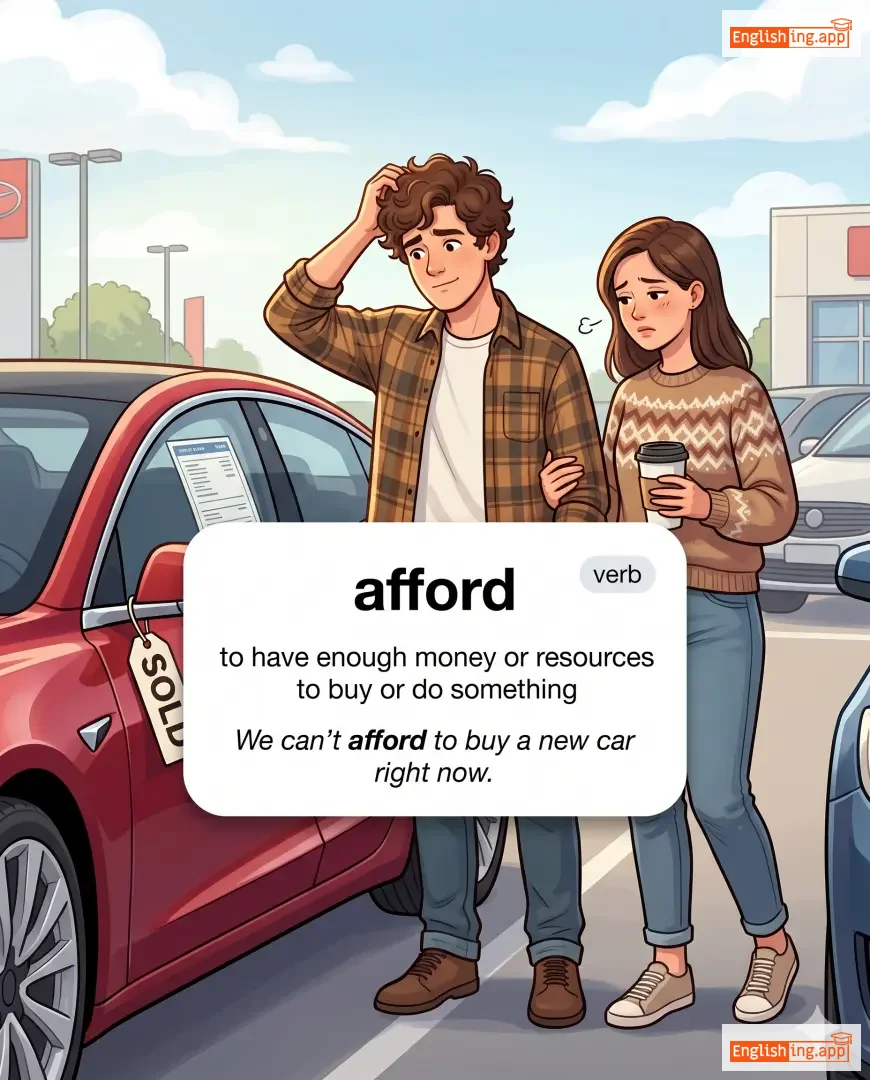
afford definition card — visual illustration of the meaning
verb
/əˈfɔːrd/
সক্ষম হওয়া (shokkhom howa)

to have enough money or resources to buy or do something

"We can’t afford to buy a new car right now."

"আমরা এখনই নতুন গাড়ি কেনার সামর্থ্য রাখি না।" (Amra ekhono notun gari kenar samortho rakhi na.)
adjective
/əˈfɔːdəbl/
সাশ্রয়ী (sashroyi)

inexpensive and within one's financial means

"This restaurant offers affordable meals for families."

"এই রেস্তোরাঁটি পরিবারগুলির জন্য সাশ্রয়ী মূল্যে খাবার অফার করে।" (Ei restaurantti poribar-gulir jonno sashroyi mulye khabar offer kore.)
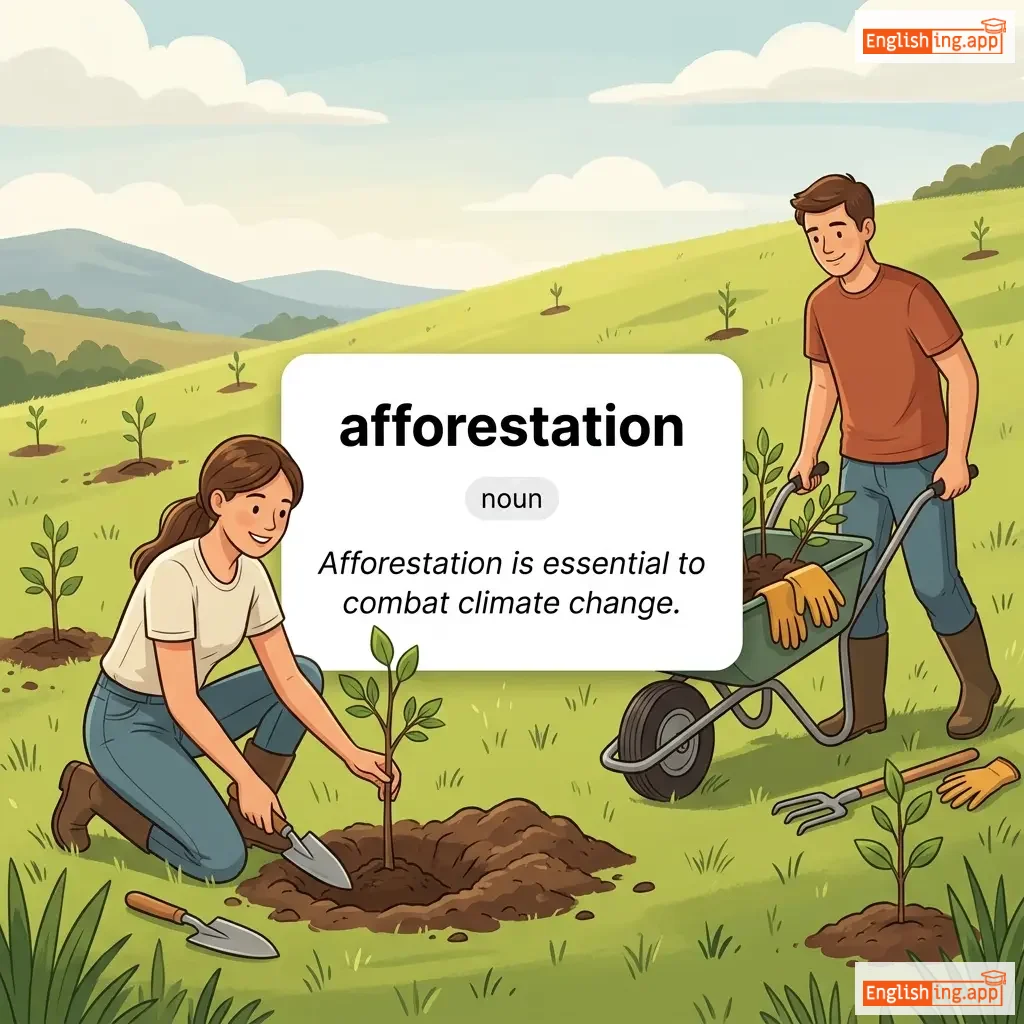
afforestation definition card — visual illustration of the meaning
noun
ˌæfɔːˈreɪʃən
বনায়ন (bonayjon)

The process of establishing a forest, especially on land that was not recently forested.

"Afforestation is essential to combat climate change."

"বনায়ন জলবায়ু পরিবর্তনের বিরুদ্ধে লড়াইয়ের জন্য অপরিহার্য।" (Bonayjon jolbayu poribortoner biruddhe loraier jonno oporiharjo.)
noun
/əˈfreɪ/
দাঙ্গা (danga)

A public fight or noisy disturbance that causes alarm.

"The police were called to break up an affray outside the stadium."

"স্টেডিয়ামের বাইরে একটি দাঙ্গা থামাতে পুলিশ ডাকা হয়েছিল।" (Stadiumer baire ekti danga thamate police daka hoyechilo.)
noun, verb
/əˈfrʌnt/
অপমান (opoman)

An action or remark that causes outrage or offense.

"He took her criticism as a personal affront."

"সে তার সমালোচনাকে ব্যক্তিগত অপমান হিসেবে নিয়েছিল।" (Se tar somalochanake bektigoto opoman hisebe niyechilo.)
adjective, adverb
/əˈfʊt/
চলমান (choloman)

In progress; happening or being prepared.

"There are several new projects afoot in the company."

"কোম্পানিতে কয়েকটি নতুন প্রকল্প চলমান রয়েছে।" (Company te koyekti notun prokolpo choloman royeche.)
adjective
/əˈfɔːrˌsɛd/
পূর্বোক্ত (purbokto)

Mentioned earlier; previously stated.

"The aforesaid conditions must be met before the contract is signed."

"চুক্তি স্বাক্ষরের আগে পূর্বোক্ত শর্তগুলি পূরণ করতে হবে।" (Chukti shakkhorer age purbokto shortoguli puron korte hobe.)
adjective
/əˈfreɪd/
ভীত (bhito)

feeling fear or anxiety; worried that something undesirable will happen

"She was afraid of the dark."

"সে অন্ধকারকে ভয় পেত।" (Se ondhokarke bhoy peto.)
adverb
/əˈfrɛʃ/
নতুনভাবে (notunbhabe)

From the beginning, in a new way.

"After the failure, they started the project afresh."

"ব্যর্থতার পর তারা প্রকল্পটি নতুনভাবে শুরু করল।" (Byarthatar por tara prokolpoti notunbhabe shuru korlo.)
adjective
/ˈæfrɪkən/
আফ্রিকান (afrikan)

relating to Africa or its people

"She studied African culture in university."

"সে বিশ্ববিদ্যালয়ে আফ্রিকান সংস্কৃতি অধ্যয়ন করেছিল।" (Se bishwobidyaloye afrikan sonskrity oddhoyon korechilo.)
noun/adjective
/ˌæfrɪkən əˈmɛrɪkən/
আফ্রিকান-আমেরিকান (afrikan-american)

A person of African descent living in or originating from the United States; relating to such people.

"She is proud of her African-American heritage."

"সে তার আফ্রিকান-আমেরিকান ঐতিহ্য নিয়ে গর্বিত।" (Se tar afrikan-american oitihho niye gorbito.)
preposition, conjunction, adverb
/ˈæftər/
পরে (pore)

in the time following an event or another action

"We went for ice cream after the movie."

"আমরা সিনেমার পর আইসক্রিম খেতে গিয়েছিলাম।" (Amra sinemar por ice cream khete giechilam.)
noun
/ˈæftərˌlaɪf/
পরকাল (porokal)

Life or existence that some believe continues after physical death.

"Many cultures have different beliefs about the afterlife."

"অনেক সংস্কৃতির পরকালের বিষয়ে ভিন্ন বিশ্বাস রয়েছে।" (onek sonkritir porokaler bisoye bhinno bishash royeche.)
noun
/ˈɑːftərmɑːθ/
দুর্দশার পরিণতি (dur-dosha-r porinoti)

the consequences or aftereffects of an event or situation, especially a disastrous one

"The aftermath of the earthquake was devastating."

"ভূমিকম্পের পরিণতি ছিল বিধ্বংসী।" (Bhumikomper porinoti chhilo bhidwongshi.)
noun
/ˌæftərˈnuːn/
বিকেল (bikel)

The part of the day between noon and evening.

"We met in the afternoon for coffee."

"আমরা বিকেলে কফির জন্য দেখা করেছিলাম।" (Amra bikele kofir jonno dekha korechhilam.)
noun
/ˈæftərˌθɔːt/
পরবর্তী চিন্তা (poroborti chinta)

Something added or considered later than originally planned.

"The gift seemed like an afterthought rather than a genuine gesture."

"উপহারটি একটি প্রকৃত ইঙ্গিতের পরিবর্তে পরবর্তী চিন্তার মতো মনে হচ্ছিল।" (upoharti ekti prokrito ingiter poriborte poroborti chintar moto mone hochhilo.)
adverb
/ˈɑːftərwərd/
পরে (pore)

at a later or subsequent time

"She went home afterward."

"সে পরে বাড়ি চলে গিয়েছিল।" (She pore bari chole giyechhilo.)
adverb
/ˈɑːf.tə.wərdz/
পরে; পরবর্তীকালে; শেষে; (pore)

at a later time; after an event or time that has already been mentioned

"We had dinner and afterwards we watched a movie."

"আমরা রাতের খাবার খেয়েছিলাম এবং পরে একটি সিনেমা দেখেছিলাম।" (amra rater khabar kheyechilam ebong pore ekti sinema dekhechilam)
adverb
/əˈɡɛn/ or /əˈɡeɪn/
আবার (abar)

Once more; another time.

"She read the book again to understand it better."

"সে বইটি আবার পড়ল ভালোভাবে বুঝতে।" (Se boiti abar porlo bhalo vabe bujhte.)
preposition
/əˈɡɛnst/ or /əˈɡeɪnst/
বিরুদ্ধে (biruddhe)

In opposition to; contrary to; touching or resting on.

"They voted against the proposal."

"তারা প্রস্তাবের বিরুদ্ধে ভোট দিয়েছিল।" (Tara prostaber biruddhe vote diyechhilo.)
adjective
/əˈɡeɪp/ or /əˈɡɑːp/
বিস্মিত (bismito)

With the mouth wide open in surprise or wonder.

"She stood agape at the breathtaking view."

"সে বিস্ময়ে মুখ হা করে মনোমুগ্ধকর দৃশ্যটির দিকে তাকিয়ে ছিল।" (se bismoye mukh ha kore monomugdhokor drishtitir dike takiye chhilo.)
noun/verb
/eɪdʒ/
বয়স (boyosh)

The length of time that a person has lived; to grow older.

"She asked his age politely."

"সে ভদ্রভাবে তার বয়স জিজ্ঞাসা করল।" (Se bhadro vabe tar boyosh jigasha korlo.)
adjective
/eɪdʒd/
বয়স্ক (boishko)

having lived for a specified number of years; old

"The aged man sat in the park, watching the children play."

"বয়স্ক লোকটি পার্কে বসে ছিল, শিশুদের খেলা দেখতে।" (Boishko lokti parke bose chhilo, shishuder khela dekhte.)
noun
/ˈeɪ.dʒən.si/
সংস্থা (songshta)

An organization or business that provides a particular service.

"She works at a travel agency."

"সে একটি ট্রাভেল এজেন্সিতে কাজ করে।" (Se ekti travel agency te kaj kore.)
noun
/əˈdʒɛndə/
সূচিপত্র (suchipotro)

A list of items to be discussed or acted upon in a meeting or plan.

"The manager reviewed the agenda before the meeting began."

"ম্যানেজার সভা শুরু হওয়ার আগে এজেন্ডাটি পর্যালোচনা করেছিলেন।" (manager shova shuru howar age agendati porjalochona korechhilen.)
noun
/ˈeɪ.dʒənt/
প্রতিনিধি (protinidhi)

A person who acts on behalf of another person or organization.

"The real estate agent showed us several houses."

"রিয়েল এস্টেট এজেন্ট আমাদের কয়েকটি বাড়ি দেখিয়েছে।" (Real estate agent amader koyekti bari dekhieche.)
verb
/əˈɡlɒməˌreɪt/
গুচ্ছিত করা (guchchito kora)

To collect or form into a mass or group.

"The dust particles began to agglomerate into larger clusters."

"ধুলিকণাগুলো বড় ক্লাস্টারে গুচ্ছিত হতে শুরু করল।" (dhulikonagulo boro cluster e guchchito hote shuru korlo.)